The Letter That Changed Everything
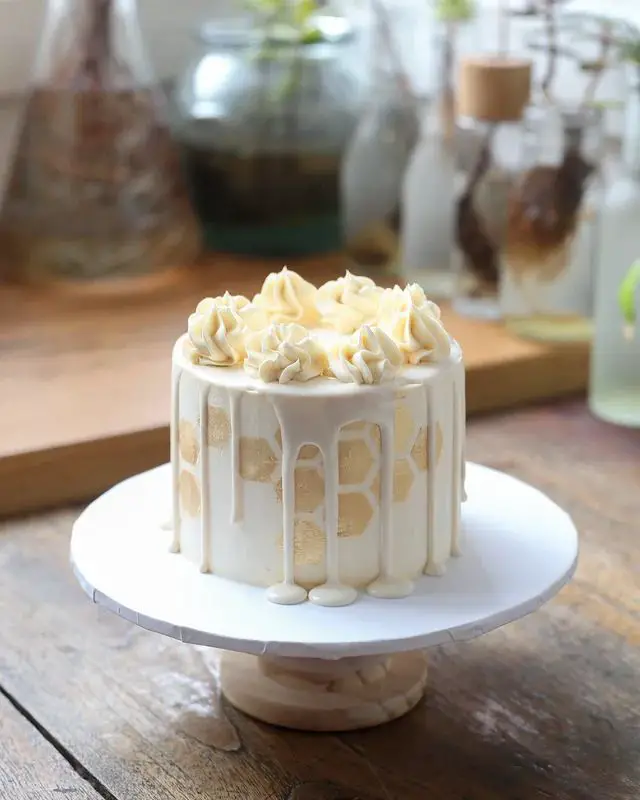
The cake cost two hundred dollars.
I knew this because I’d carefully saved for three months to afford it—setting aside twenty dollars here, thirty dollars there from my modest retirement checks. The bakery on Rosewood Street had been Emma’s favorite since she was eight years old, and I’d wanted her forty-fifth birthday to be special.
I stood in her foyer holding that cake, the candles already positioned in a careful circle, my hands trembling slightly from the weight and from something else I couldn’t quite name. Anticipation, maybe. Hope. The foolish, desperate hope of a mother who still believed that this time would be different.
Through the archway, I could see Emma in her kitchen, her back to me, phone pressed to her ear. She was laughing at something someone said—a genuine, unguarded laugh I hadn’t heard directed at me in years.
“Mom’s here,” I heard her say, and the way her voice changed—flattened, cooled—made something twist in my chest. “Yeah, I know. I know. Listen, I have to go.”
She ended the call and turned to face me, her expression already arranged into that familiar mask of patient irritation.
“Hi, Mom,” she said. Not warm. Not cold. Just… empty.
“Happy almost birthday, sweetheart.” I lifted the cake slightly, smiling. “I got your favorite. Red velvet with cream cheese frosting. The one with the little—”
“Mom.” She cut me off, one hand rising in a stop gesture. “I told you we were busy this week.”
“I know, but I thought—”
“You always think.” Her voice had an edge now. “You always just show up with your surprises and your expectations, and you never consider that maybe we have our own lives, our own plans.”
I felt the weight of the cake in my hands, suddenly heavier. “I just wanted to—”
“To what? To make me feel guilty? To remind me that I owe you something?” Her voice rose slightly, and I saw her husband, David, appear in the doorway behind her, his face carefully neutral. “I’m forty-five years old, Mom. Forty-five. And you still treat me like I’m a child who needs you hovering over every moment of my life.”
“Emma, I’m not hovering. I just brought you a cake—”
“It’s not about the cake!” She stepped forward, and I instinctively stepped back. “It’s about the constant calls. The showing up unannounced. The guilt trips about not visiting enough, not calling enough, not being grateful enough. It’s exhausting, Mom. You’re exhausting.”
The words landed like physical blows. I felt my arms begin to shake, and one of the candles tilted dangerously.
“I don’t mean to—”
“You know what I wish?” Emma’s eyes were bright now, whether with tears or anger, I couldn’t tell. “I wish you would just disappear from my life. That would be the best birthday present ever.”
Silence.
The kind of silence that has weight and texture and the power to change everything that comes after it.
I stood there, seventy-two years old, holding a two-hundred-dollar cake in the house I’d helped buy, looking at the daughter I’d given everything to, and I felt something inside me simply… stop.
Not break. Stop.
“Okay,” I heard myself say. My voice sounded strange, distant, like it belonged to someone else.
Emma blinked. “What?”
“Okay,” I repeated. I walked slowly to her kitchen counter and set the cake down carefully, making sure it was centered, making sure the candles were still upright. Then I picked up my purse from where I’d set it by the door.
“Mom—”
“You’ll get your wish,” I said quietly. “Happy birthday, Emma.”
I walked out before she could say anything else. Before David could try to mediate. Before the confused voices of my grandchildren could drift down from upstairs asking if Grandma was leaving already.
I got into my car—a 2008 Honda with 180,000 miles that I’d been driving for fifteen years—and I drove home in complete silence. No radio. No tears. Just the sound of the engine and my own breathing and the growing realization that something fundamental had shifted inside me.
My apartment was small—a one-bedroom in a building full of other retirees. After Emma’s father died twelve years ago, I’d sold our house and moved here, putting most of the proceeds into helping Emma and David with their down payment. “You need it more than I do,” I’d told her. “I don’t need much space.”
That night, I sat on my worn sofa—the same one Emma and I had picked out together twenty years ago, back when she still seemed to enjoy my company—and I began to pull out papers.
Bank statements. Receipts. Bills. Documents I’d kept meticulously over the years, not out of resentment, but because I was a nurse for forty-three years and nurses keep records. It’s what we do.
I started with her childhood.
The emergency room visit when she was three and developed that terrible infection. The antibiotics alone had cost $1,200 because our insurance had lapsed when her father was between jobs. I remembered holding her tiny, fevered body, promising her she’d be okay, promising myself I’d find the money somehow.
The orthodontist bills when she was thirteen. $6,500 over three years for braces she insisted she needed because “everyone else has them.” I’d picked up weekend shifts at the hospital, working seventy hours a week, my feet aching so badly I could barely stand, just to make those monthly payments.
The prom dress when she was sixteen. $800 for a dress she wore once, but I still remembered how her face lit up when she looked in the mirror, how beautiful she felt. Worth every overtime shift.
College. $42,000 in tuition over six years because she’d changed majors three times—from biology to art history to business—trying to “find herself.” I’d refinanced my car, then sold it entirely and took the bus to work for two years. “Education is important,” I’d told her. “Don’t worry about the money.”
Her wedding. $35,000 for a single day. The dress, the venue, the flowers, the photographer. “But Mom, it’s my special day,” she’d said, and I’d worked doubles for eight months straight, my back screaming, my legs swollen, sleeping four hours a night, because how could I say no to my daughter’s special day?
The house. $150,000 for the down payment that made their dream home possible. I’d liquidated my entire retirement savings, what was left after her father’s medical bills. “I’ll rebuild it,” I’d told myself. “I still have time.”
But I never did rebuild it. Because then came the grandchildren, and the babysitting—”Mom, you’re retired, you have time”—five nights a week while they had “date nights” and “needed couple time.” And then David lost his job, and I’d covered eight months of their mortgage, $2,400 a month, eating ramen noodles and canned soup in my apartment so they wouldn’t lose the house.
By 3 a.m., I had everything spread across my kitchen table. The numbers stared up at me, undeniable.
$467,000.
Almost half a million dollars. Almost my entire lifetime of work, distilled into receipts and bank transfers and sacrifices I’d never mentioned because that’s not what mothers do. We don’t keep score. We don’t demand receipts. We just love.
But apparently, I’d done it wrong. Apparently, my love had become a burden. An exhausting presence she wanted to disappear.
I should have cried. I’d cried so many times over the years—in hospital break rooms, in my car after difficult visits, in my bed late at night. But now, staring at the evidence of a lifetime of giving, I felt something else entirely.
Clarity.
Cold, sharp, liberating clarity.
I wasn’t angry. Anger is hot and impulsive and destructive. What I felt was far more dangerous than anger. I felt… resolved.
By dawn, I had a plan. Not a revenge plan—I’m not vindictive. But a plan born from the simple realization that I had spent seventy-two years putting everyone else first, and maybe, just maybe, it was time to put myself first for once.
The first call I made was to my lawyer, Richard Chen, a kind man I’d known for thirty years. He’d handled my will, my late husband’s estate, all the small legal matters that accumulate over a lifetime.
“Richard,” I said when he answered. “I need to make some changes.”
Over the next week, I worked methodically. No crying. No dramatic confrontations. Just quiet, deliberate action.
I closed the joint bank account Emma had access to—the one I’d set up “for emergencies” that she’d used twice in the past year for “unexpected expenses” that turned out to be a vacation and a kitchen remodel.
I called the mortgage company and informed them I would no longer be making supplemental payments on Emma’s house. The customer service representative was confused—”But ma’am, you’ve been helping with these payments for so long”—but I was firm. “Not anymore.”
I contacted my financial advisor and redirected my modest pension and social security payments to a new account, one Emma didn’t know about.
I changed my will. The one that had left everything to Emma—not that there was much left, but still—now left the bulk to various charities. The children’s hospital where I’d worked. The nursing scholarship fund. The animal shelter Emma had never let me donate to because “that money should go to family.”
And then I wrote the letter.
It took me three days and twenty-three pages. I wrote it by hand because typing felt too cold, too impersonal. This needed to be from my heart, even if my heart was breaking.
I didn’t write in anger. I wrote in truth.
On the morning of Emma’s forty-fifth birthday, I woke before dawn. I packed two suitcases—just the essentials. Clothes, photographs, a few books. My late husband’s watch. The small things that actually mattered.
I called my sister in Arizona, the one I hadn’t seen in five years because “Mom, you can’t just leave, we need you here.”
“Susan,” I said. “Is your spare room still available?”
“Of course,” she said, her voice warm with surprise. “Are you finally coming to visit?”
“Not to visit,” I replied. “To stay. At least for a while.”
I arranged for a moving company to collect the rest of my belongings the following week. I gave my landlord notice. I transferred utilities, changed my address, updated my doctors.
And then, with my car packed and ready, I drove one last time to Emma’s house.
It was 7 a.m. She and David would both be at work. The kids at school. The house would be empty.
I used the key she’d never asked me to return and let myself in one final time.
The kitchen smelled like coffee and toast—the ordinary scent of a family morning. I felt a pang of something—not regret, but sadness for what might have been if things had been different.
I set the envelope on the kitchen table, right where Emma would see it when she came home. Beside it, I placed her house key, the credit card she’d given me “for emergencies,” and the small jewelry box containing the diamond earrings I’d planned to give her for her birthday.
Then I walked out, locked the door behind me, and drove away.
I didn’t cry. I didn’t look back. I just drove, the morning sun rising ahead of me, lighting the road west.
The letter I left behind said everything I’d never been able to say to her face:
My dearest Emma,
By the time you read this, I’ll be gone. You asked me to disappear from your life, and I’ve decided to give you exactly what you wanted.
I want you to understand that I’m not doing this to hurt you or punish you. I’m doing this because I’ve finally realized something that should have been obvious years ago: my love for you has become a burden you no longer want to carry, and I’ve been too blind, too stubborn, and too afraid to accept that truth.
I’ve spent the last week calculating everything I’ve given you over the past 45 years. Not because I expect repayment—love shouldn’t come with invoices—but because I needed to see it written down to understand why I feel so empty despite having given so much.
The total is $467,000. Almost half a million dollars, earned through forty-three years of nursing shifts, double shifts, weekend shifts, holiday shifts. Hours spent on my feet until my legs swelled and my back screamed. Years of living on nothing so you could have everything.
But money is just money. What I can’t calculate is the cost of the other things I gave you:
Every “me too” moment I missed because I was babysitting your children while you enjoyed your life.
Every friendship that faded because I was too tired to maintain it after working all week and watching your kids all weekend.
Every dream I deferred—the trip to Ireland, the pottery class, the book club, the volunteer work I wanted to do—because “Mom, we need you.”
Every year of my retirement I spent serving your needs instead of discovering who I was beyond “Mom.”
I gave you everything, Emma. And I don’t regret that—not exactly. Because that’s what mothers do. We pour ourselves out like water, hoping we’re nourishing something beautiful.
But here’s what I’ve learned this week: you can’t nourish someone who doesn’t want to drink. You can’t help someone who sees your presence as an intrusion. You can’t love someone into loving you back.
You called me exhausting. You said I hover. You told me to disappear.
And you’re right.
I have been hovering, calling too much, showing up unannounced. Not because I wanted to control you or make you feel guilty, but because after your father died, you and the grandchildren were all I had left. My entire identity became wrapped up in being needed by you.
But you don’t need me anymore. Maybe you haven’t for a long time, and I was too desperate to see it.
So I’m giving you what you asked for: I’m disappearing.
I’ve closed the joint bank account. I’ve stopped making supplemental mortgage payments. I’ve changed my will—the bulk of my estate now goes to charity. I’ve terminated the credit card you’ve been using. I’ve moved out of my apartment, and I’m going to stay with Aunt Susan in Arizona.
I won’t be calling anymore. I won’t be showing up unannounced. I won’t be available for last-minute babysitting or emergency loans or any of the other ways I’ve made myself useful over the years.
You wanted me to disappear, and I have.
But before I go completely, I need to tell you some things I should have said a long time ago:
I’m sorry I loved you so much that I forgot to teach you gratitude. I gave you everything you wanted so easily that you never learned the value of sacrifice or the beauty of earning something yourself.
I’m sorry I never set boundaries. I said yes to everything—every request, every demand, every expectation—until you came to believe that’s what I was for. A yes-machine that existed to serve your needs.
I’m sorry I didn’t love myself enough to show you what self-respect looks like. I let you treat me as less than because I was afraid that if I demanded more, you’d love me less. And in trying to earn your love through service, I taught you that I was worth exactly as much as I could give.
But I’m done apologizing for taking up space. I’m done making myself smaller so you can feel bigger. I’m done sacrificing myself on the altar of your comfort.
I’m seventy-two years old, Emma. I don’t know how many years I have left, but however many they are, I’m going to spend them living for myself for the first time in my life.
I’m going to travel. I’m going to make new friends. I’m going to try all the things I deferred because I was too busy being everything to you.
And I’m going to do it without the weight of your resentment, without the fear of your annoyance, without the constant anxiety that I’m being too much, asking too much, loving too much.
I hope you have a wonderful forty-fifth birthday. I hope your life continues to be full and happy and successful. I genuinely mean that.
But I won’t be there to see it.
You asked me to disappear, and I’m granting that wish. Not because I stopped loving you—I don’t think I’ll ever stop loving you. But because I finally love myself enough to walk away from a relationship that has become nothing but painful obligation on both sides.
Take care of yourself, Emma. Take care of your family. Live your life fully and joyfully.
Just do it without me.
All my love, even now,
Mom
P.S. The enclosed documents show every penny I’ve spent on you over the past 45 years. I’m not asking for repayment—what’s given in love should never be returned. But I want you to see it. I want you to understand what you’re calling a burden. And maybe, someday, when you’re older and your own children have grown, you’ll understand that a mother’s love—even exhausting, hovering, inconvenient love—is a gift you’ll miss when it’s gone.
Emma called three hours after I crossed the state line. I was stopped at a rest area, drinking terrible vending machine coffee, when my phone began to ring.
I looked at her name on the screen and felt… nothing. No impulse to answer. No desperate hope that she was calling to apologize. Just a calm, distant acknowledgment that this was happening.
I let it go to voicemail.
She called six more times that evening. Then David called. Then her calls became texts:
Mom, please answer
Mom, we need to talk
This is crazy
You can’t just leave
What about the kids?
Mom, PLEASE
I turned my phone off and kept driving.
I arrived at Susan’s house in Scottsdale two days later. She met me at the door with a hug that lasted a full minute, and when she pulled back, there were tears in her eyes.
“I’ve been waiting for this for years,” she said. “Waiting for you to realize you deserved better.”
“Better late than never,” I replied.
“Never too late,” she corrected. “Come in. I made up the guest room. It’s yours for as long as you want it.”
The first week was strange. I woke each morning without purpose, without demands, without anyone needing me. It felt disorienting, like floating in open water after a lifetime of being tethered to shore.
But slowly, something began to shift.
I started sleeping past six a.m. for the first time in fifty years.
I read entire books in a single sitting.
I went to a pottery class—something I’d wanted to try since I was forty.
Susan and I took long walks in the desert, the heat and space and endless sky making me feel both insignificant and free.
I didn’t call Emma. I didn’t check her social media. I simply… let go.
Meanwhile, my phone filled with increasingly desperate messages. Not just from Emma now, but from David, from the kids’ school (apparently I’d been listed as the emergency contact), from Emma’s friends.
After three weeks, I finally listened to one of Emma’s voicemails.
Her voice was different. Smaller. Broken.
“Mom… I read the letter. All of it. I read it over and over. And I… I don’t know what to say except I’m sorry. I’m so, so sorry. I didn’t realize… I didn’t see… Please call me back. Please. I need to talk to you. I need to—”
The message cut off there, the time limit reached.
I deleted it and didn’t call back.
Two months after I left, Emma showed up at Susan’s door.
I didn’t know she was coming—she’d driven eight hours without warning, probably afraid I’d tell her not to come if she asked.
Susan answered the door, and I heard Emma’s voice from where I sat in the living room, reading in the afternoon light.
“Is she here? Is my mom here? Please, I just need to see her.”
Susan looked at me, asking silently what I wanted. I could have said no. I could have hidden. I could have made her feel the rejection I’d felt standing in her kitchen with a birthday cake and a heart full of hope.
But I’m not built that way. Never have been.
“Let her in,” I said quietly.
Emma appeared in the doorway, and I barely recognized her. She’d lost weight. Her hair was pulled back in a messy ponytail. She wore sweatpants and no makeup. She looked exhausted and young and broken.
“Mom,” she whispered.
“Hello, Emma.”
She stood there for a moment, hands twisting together, eyes filling with tears. Then she crossed the room and collapsed onto her knees in front of my chair.
“I’m sorry,” she sobbed. “I’m so, so sorry. I read your letter. I saw all the receipts, all the numbers, everything you did, everything you gave up. And I realized… I realized I’ve been horrible to you. Ungrateful and selfish and cruel.”
I sat very still, letting her cry.
“I don’t know how to make this right,” she continued. “I don’t know if I can make this right. But I need you to know that I see it now. I see everything. And I’m ashamed. I’m so ashamed.”
“Emma,” I said softly. “Look at me.”
She lifted her head, her face blotchy and wet.
“I didn’t leave to punish you,” I said. “I left to save myself.”
“I know. I know that now. And you were right to leave. You were right about everything.” She wiped her face with her sleeve. “I took you for granted. I used you. I treated your love like it was worthless because it came so easily. And then when you asked for nothing in return except to be in my life, I couldn’t even give you that.”
I studied my daughter—this woman I’d raised, this stranger I’d discovered, this complex person who was both the child I loved and the adult who’d hurt me.
“What do you want, Emma?” I asked. “Why did you drive eight hours to say all this?”
“Because I want you back in my life,” she said immediately. “Not the old way—I know we can’t go back to that, and honestly, we shouldn’t. But a new way. A better way. A way where I appreciate you and respect you and treat you like the incredible woman you are instead of just taking, taking, taking.”
“That’s a nice speech,” I said, not unkindly. “But words are easy. Change is hard.”
“I know,” she said. “Which is why I’ve been doing more than just talking.”
She pulled out her phone and showed me her screen. Bank transfers. “I’ve been paying you back. I can’t pay it all—not yet, maybe not ever—but I’ve transferred $5,000 so far. I sold some furniture, some jewelry. I picked up extra freelance work. It’s not enough, it’ll never be enough, but it’s a start.”
I looked at the numbers, surprised.
“And I’ve started therapy,” she continued. “Real therapy, not just the kind where you complain about your problems. I’m working on understanding why I treated you the way I did, why I couldn’t see what I was doing.”
“And what have you learned?” I asked.
She took a shaky breath. “That I was angry at you for things that weren’t your fault. That when Dad died, I blamed you for not being him. That I resented you for still being alive when he wasn’t. That I was jealous of how much the kids loved you. That I felt like I could never be as good a mother as you were, so I pushed you away instead of learning from you.”
These were not easy things to admit. I could see the effort it took her to say them.
“And I learned,” she continued, her voice dropping to a whisper, “that I’m terrified of turning into you. Of sacrificing everything for my kids and ending up alone and used and unappreciated. So I overcorrected. I built walls. I pushed away the one person who would never hurt me, never abandon me, never stop loving me. Because I was too scared to be vulnerable. Too scared to need you.”
She reached for my hand, and I let her take it.
“I can’t promise I’ll be perfect,” she said. “I’m probably going to mess up. I’m probably going to forget to call when I should, or say the wrong thing, or fall back into old patterns. But I promise I’ll try. I promise I’ll do better. I promise I’ll treat you like you matter, because you do. You matter so much, and it took losing you for me to see that.”
I sat with her words for a long moment, feeling the weight of them, testing them for truth.
“Emma,” I said finally, “I love you. I will always love you. But I’m not coming back to the way things were.”
Her face crumpled. “I understand. I do. I just—”
“I’m not finished,” I interrupted gently. “I’m not coming back to the way things were because that wasn’t healthy for either of us. I gave too much, and you took too much, and we both need to learn better patterns.”
Hope flickered in her eyes. “So… what does that mean?”
“It means I’m staying here with Susan for now. It means you and I are going to rebuild our relationship slowly, carefully, with boundaries and respect. It means I’m not going to be your emergency babysitter or your ATM or your solution to every problem. It means I’m going to live my life, and you’re going to live yours, and we’ll find ways to be part of each other’s lives without consuming them.”
“I’ll take it,” she said quickly. “Whatever terms you want. However long it takes. I’ll take it.”
“And it means,” I continued, “that you’re going to therapy with me. Family therapy. Because we have decades of unhealthy patterns to unpack, and we’re not going to fix this with good intentions alone.”
She nodded vigorously. “Yes. Absolutely. Whatever you need.”
I looked at my daughter—really looked at her—and saw both the child she’d been and the woman she was becoming. Imperfect. Flawed. Human. But maybe, just maybe, capable of change.
“Okay,” I said. “We can try.”
She let out a sob of relief and leaned forward, and I wrapped my arms around her as she cried against my shoulder. Not the same way I’d held her a thousand times before—not with the desperate need to fix everything, to absorb all her pain, to sacrifice myself for her comfort.
But with love. Complicated, conditional, carefully boundaried love.
The kind of love that might actually last.
That was two years ago.
Emma and I talk now, but not every day. We visit, but not every week. We’re learning to have a relationship built on mutual respect rather than one-sided sacrifice.
She’s been paying me back steadily—not because I asked, but because she wanted to. She’s taken over her own mortgage payments, found her own babysitters, learned to manage her own emergencies.
And slowly, painfully, we’ve been building something new. Something healthier.
I’m still in Arizona. I’ve made friends here. I volunteer at a community center. I take pottery classes twice a week. I’ve traveled to places I always dreamed of seeing. I’ve learned to paint. I’ve joined a book club.
I’ve discovered who Margaret is when she’s not just “Mom.”
And I like her.
Emma came to visit last month and brought the grandchildren. We spent three days together—not me serving them, but all of us sharing time. Cooking together. Laughing together. Building memories that felt equal instead of extractive.
On the last night, after the kids were asleep, Emma and I sat on Susan’s patio under the stars.
“I know I’ve said this before,” Emma said quietly, “but I’m sorry. For everything.”
“I know,” I replied.
“Do you forgive me?”
I thought about that question. Forgiveness is complicated—not a single moment but a choice you make over and over.
“I’m working on it,” I said honestly. “Some days are easier than others. But yes, I think I do. Or I will.”
She nodded, accepting that. “That’s fair.”
We sat in silence for a while, listening to the desert night sounds.
“Mom?” Emma said eventually.
“Yes?”
“Thank you for leaving. I know that sounds awful, but… thank you. If you hadn’t left, I never would have woken up. I would have kept taking you for granted until you were gone for real, and then it would have been too late.”
“You’re welcome,” I said.
And I meant it.
Because sometimes the greatest gift you can give someone isn’t your presence.
It’s your absence.
It’s the space that lets them finally see what they had, what they lost, and who they want to become.
I disappeared from Emma’s life just like she asked.
And in that disappearance, we both found ourselves.
THE END