The Empty Chairs
The chapel was quieter than any place I’d ever known.
Not the peaceful quiet of Sunday mornings or library corners, but the hollow kind—the kind that presses against your eardrums and makes you aware of your own breathing, your own heartbeat, the terrible rhythm of being alone.
I sat in the front row, my black coat buttoned to the throat against the October cold that somehow seeped through the chapel walls. The funeral director stood near the back, shifting his weight from foot to foot, glancing at his watch, then at the door, then at me. Waiting for someone. Anyone.
But I already knew the truth that he was slowly discovering: no one else was coming.
My name is Margaret Holloway. I’m seventy-nine years old, and three days ago, my husband of fifty-six years died in our bedroom with my hand wrapped around his. George had been sick for eight months—cancer, the kind that moves slow enough to let you hope and fast enough to steal that hope away piece by piece.
Through it all, I’d been there. Every doctor’s appointment, every midnight coughing fit, every moment when the morphine wore off and the pain came crawling back. I held his hand through the tremors. I read him the newspaper when his eyes grew too tired. I learned to cook soft foods and measure pills and pretend I wasn’t watching him disappear.
We have two children. Peter, our son, is fifty-two. He lives four hours away in a glass-walled house with a pool and a wife who collects modern art. He’s a corporate lawyer—successful, busy, always traveling for “important clients.” Celia, our daughter, is forty-eight. She lives twenty minutes from us in a townhouse she redesigned three times in five years. She works in real estate and spends her weekends at spinning classes, brunch reservations, and anywhere that isn’t here.
I called them both when George got his diagnosis. I called them when he started chemotherapy. I called them when the doctor said there was nothing left to try.
Peter sent flowers. Celia sent a fruit basket.
Neither of them came.
“They’re busy, Margaret,” George said one afternoon, his voice weak but still trying to excuse them. “They have their own lives.”
I didn’t argue. What was the point? He knew the truth as well as I did. We’d spent decades making excuses for our children—justifying their absence at holidays, their forgotten birthdays, their clipped phone calls that always ended with “I have to run.”
But I’d thought—foolishly, perhaps—that death would be different. That when the end came, they would put down their calendars and their ambitions and their trivial appointments. That they would remember, just for a moment, what it meant to be a son, a daughter.
I was wrong.
The funeral director cleared his throat for the third time. His name was Mr. Brennan, and he had kind eyes that couldn’t quite hide his discomfort.
“Mrs. Holloway,” he said gently, approaching my row. “Would you like us to wait a few more minutes? Perhaps there’s traffic, or—”
“No,” I said, my voice steady. “Start. George would’ve hated a delay.”
George was a man of precision. He set his alarm for six-thirty every morning for forty years. He folded the newspaper into perfect thirds. He measured coffee grounds with the same blue scoop every single day. Even at the end, when the cancer ravaged his body, he insisted on keeping schedules—pills at eight, noon, four, and bedtime. Order in the chaos.
He wouldn’t want us waiting for people who weren’t coming.
Mr. Brennan nodded slowly and retreated to signal the pastor. I heard the soft rustle of papers, the clearing of a throat, and then the service began.
The chapel had seating for a hundred. Five chairs sat in the front row. Forty more stretched behind me in neat, expectant lines. Every single one of them empty.
I’d chosen this chapel because it was George’s favorite. He’d come here sometimes on Sunday mornings, not because he was particularly religious, but because he liked the stained glass windows. He said they turned ordinary sunlight into something worth looking at. Today, the October clouds blocked most of the light, and the windows looked dull, their colors muted and sad.
The pastor—Reverend Greene, a man I’d met only twice before—opened his Bible and began to read. His voice was professional, smooth, practiced. He spoke about eternal rest and the comfort of faith and the promise of reunion in heaven. Generic words that could have applied to anyone.
Because he didn’t know George. Not really.
He didn’t know that George built birdhouses in our garage every winter, dozens of them, and hung them in the neighborhood trees each spring. He didn’t know that George cried exactly twice in our marriage—once when Peter was born, and once when he learned he was dying. He didn’t know that George’s favorite meal was pot roast with carrots, that he hated neckties, that he could fix almost anything with a screwdriver and patience.
The pastor didn’t know these things because the people who did know them weren’t here to tell him.
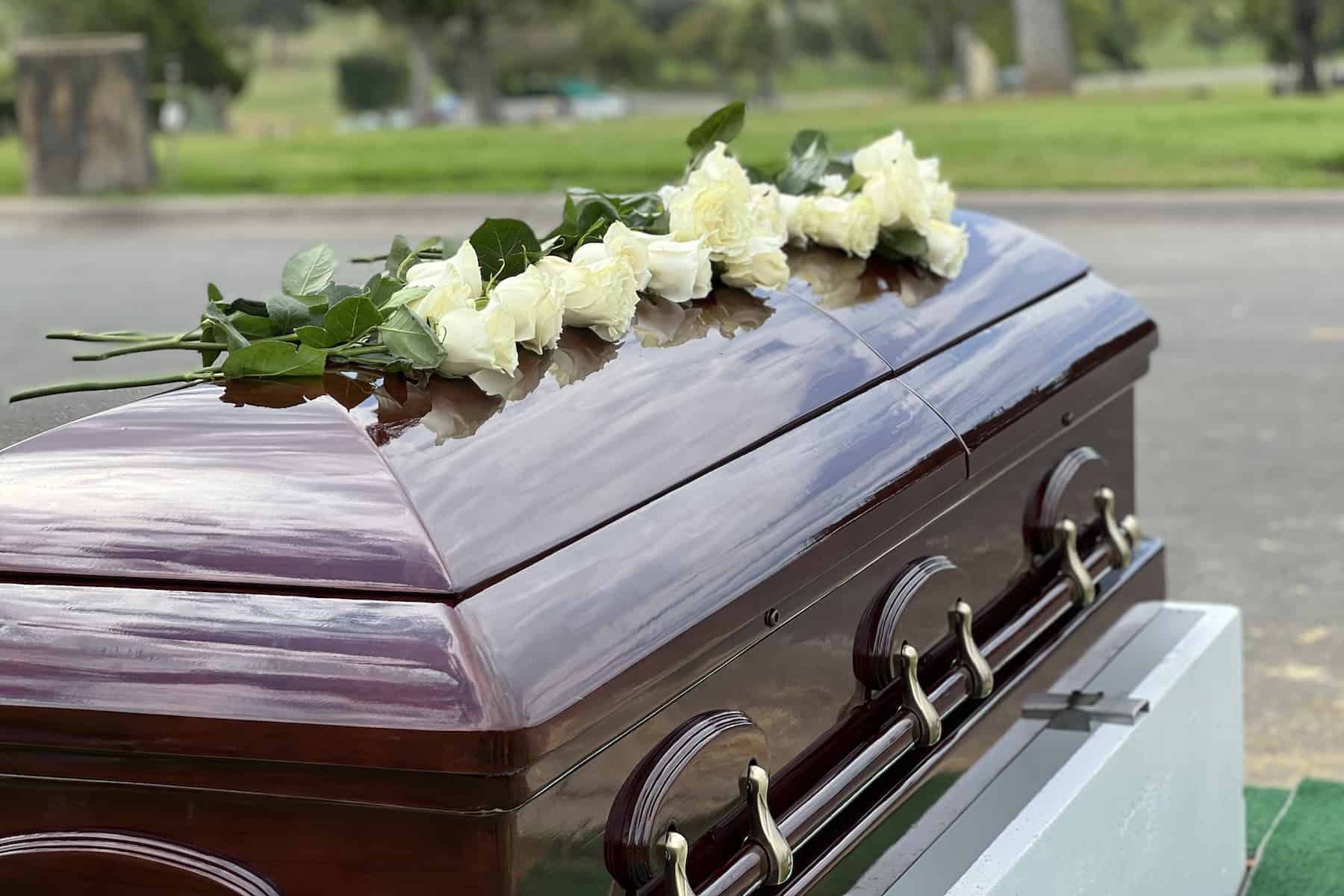
I stared at the polished mahogany coffin at the front of the chapel. It looked too big, too grand. George would have laughed at the expense. “Just wrap me in a sheet and plant me under a tree,” he used to joke. But I’d wanted to honor him properly, so I’d chosen the nicest option, the flowers, the engraved plaque.
Now it all felt like decoration on an empty stage.
My phone had buzzed that morning while I was buttoning my coat. A text from Peter.
Sorry, Mom. Something came up. Can’t make it.
Six words. No follow-up. No phone call. Just a message delivered with the same casual tone he’d use to cancel a lunch reservation.
I’d stared at those words for a long time, standing in our bedroom—the same room where George died, where the hospital bed still sat unmade, where his slippers were still tucked neatly beside the dresser. I’d read the message three times, as if repetition might change the meaning.
Then I’d slipped the phone into my purse and finished getting dressed.
Celia hadn’t even sent a text that morning. Her last communication had been a voicemail two days earlier, left while I was sitting with the funeral director, choosing hymns and discussing logistics.
“Hi, Mom! Listen, I really can’t cancel my nail appointment on Thursday—you know how booked Sienna gets, and I have that open house this weekend. I need to look presentable. Tell Dad I’ll visit next week, okay? We’ll do lunch or something. Love you! Gotta run!”
Her voice had been bright, energetic, completely oblivious.
Next week.
As if the dead could wait.
As if George would still be here, sitting in his recliner, waiting for a daughter who never came.
I’d deleted the voicemail without responding.
The service lasted twenty-three minutes. I know because I watched the clock on the wall, its second hand ticking forward with relentless consistency. Twenty-three minutes to summarize a man’s entire life. Twenty-three minutes of scripture and platitudes and a closing prayer that felt like a period on a sentence no one had been listening to.
When it ended, Reverend Greene closed his Bible and offered me a sympathetic smile. Mr. Brennan approached and asked quietly if I was ready to proceed to the cemetery.
I nodded.
The pallbearers—hired men who’d never met George—wheeled the coffin toward the waiting hearse. I followed behind, my heels clicking against the chapel’s tile floor, each step echoing in the cavernous silence.
Outside, the October wind hit me like a slap. It tore at my coat, tangled my gray hair, and stung my eyes. The sky was the color of concrete, heavy and low. Leaves skittered across the parking lot in frantic circles, as if they too were searching for somewhere to belong.
The hearse’s engine hummed. The driver, a young man with carefully neutral features, held the door open for me. I climbed into the car that would follow the hearse, and we began the slow procession to the cemetery.
There was no line of cars behind us. No procession of mourners with their headlights on, no family caravan winding through town. Just the hearse, my car, and the empty road stretching ahead.
I watched the familiar streets pass by—the grocery store where George and I shopped every Saturday, the park where we used to take the kids when they were small, the library where he’d check out thick biographies and read them cover to cover. Places that held our life together, now blurring past like scenes from someone else’s memory.
The cemetery was older than the town itself, with headstones dating back to the 1800s. Massive oak trees lined the paths, their branches nearly bare now, a few stubborn leaves clinging on despite the wind. George’s plot was in the newer section, near a small pond where ducks sometimes gathered.
He’d picked it himself six months ago, on one of his clearer days.
“I like it here,” he’d said, standing in almost the exact spot where they’d now lower him into the ground. “Quiet. Peaceful. Good view of the water.”
I’d held his hand and nodded, unable to speak past the lump in my throat.
Now I stood in that same spot, watching the pallbearers position the coffin over the open grave. The mechanism that would lower him down sat waiting, all metal and efficiency. Reverend Greene positioned himself at the head of the grave, prayer book in hand.
The groundskeeper stood at a respectful distance, leaning on his shovel, cap pulled low. He was an old man, probably not much younger than me, with weathered hands and tired eyes. He’d seen this ritual a thousand times—the lowering, the prayers, the departure of the living.
But probably not often like this. Probably not often with just one mourner standing alone.
Reverend Greene began the committal service. “Ashes to ashes, dust to dust…”
The words drifted over me like smoke. I barely heard them. Instead, I heard George’s voice from a hundred different moments—laughing at one of his own jokes, singing off-key in the shower, murmuring “I love you” in the dark before sleep.
I heard the silence where our children’s voices should have been.
The coffin began its descent. Slowly, smoothly, it sank into the earth. I watched until it settled at the bottom, until the only thing visible was the polished wood surface reflecting the gray sky above.
Reverend Greene sprinkled a handful of dirt over the coffin, the grains pattering against the wood like rain. Then he held out the small silver container to me.
I took it with shaking hands.
The dirt was cool, slightly damp from morning dew. I held it for a moment, feeling its weight, and then I let it fall. It scattered across George’s coffin in a dark spray, marking the beginning of burial, the final separation between the living and the dead.
“May he rest in peace,” Reverend Greene said.
“Amen,” I whispered.
And then it was done.
The pastor offered his condolences, shook my hand with practiced gentleness, and retreated to his car. Mr. Brennan did the same, though he lingered a moment longer, as if worried about leaving me alone.
“We’ll handle everything from here, Mrs. Holloway,” he said. “Take all the time you need.”
Then he too was gone, and it was just me and the groundskeeper and the grave.
I stood there as the wind picked up, as the clouds grew darker, as the first drops of rain began to fall. Cold drops that landed on my face, my hands, George’s temporary grave marker—just a metal plaque on a stake, waiting for the permanent stone we’d ordered.
GEORGE HOLLOWAY
BELOVED HUSBAND, FATHER
The words looked small against the vast cemetery, against all that death and memory stretching out in every direction. Beloved husband. I could agree with that. Beloved father?
I wanted to cross out that last word and write what I really felt: Forgotten.
I don’t know how long I stood there. Long enough for the rain to soak through my coat. Long enough for my feet to ache. Long enough for the groundskeeper to start his work, the shovel biting into the pile of dirt, each load falling with a hollow thump against the coffin below.
Finally, I turned away.
My car sat alone in the parking area, rain streaming down its windows. I walked to it slowly, each step feeling like I was leaving something precious behind. Because I was. I was leaving George in that cold ground, in that solitary grave, with no voices to remember him, no stories to keep him alive.
I climbed into the driver’s seat and sat there, engine off, staring at nothing.
My phone buzzed. A text from Celia.
How did it go? Sorry I couldn’t be there. Crazy busy day. Send pics of the flowers?
Send pics of the flowers.
As if this were a garden party. As if her father’s funeral were a photo opportunity she’d missed.
I didn’t respond. Instead, I set the phone on the passenger seat and started the engine.
The drive home took fifteen minutes. Fifteen minutes through rain-slicked streets, past houses with warm lights in the windows, past families probably sitting down to dinner, together.
Our house was dark when I pulled into the driveway. I’d left in such a hurry that morning that I hadn’t thought to turn on any lamps. Now it sat like a tomb itself, empty and waiting.
I unlocked the front door and stepped inside.
The silence was immediate and absolute. No television humming in the living room. No shuffle of George’s slippers on the hardwood. No voice calling out, “That you, Margaret?”
Just silence.
I took off my wet coat and hung it carefully on the rack. I removed my shoes and lined them up beside the door. Then I walked through the house, turning on lights as I went, trying to fill the emptiness with something, anything.
In the living room, George’s recliner sat at its usual angle, the remote control still on the armrest where he’d left it. His reading glasses lay folded on the side table. The blanket I’d draped over his legs on cold evenings was still bunched in the corner of the chair.
I picked up the blanket and held it to my face. It smelled like him—like Old Spice and soap and the menthol cream he used for his aching joints.
And finally, standing there alone in our empty house, holding a blanket that would never warm him again, I cried.
I cried for the husband I’d lost. I cried for the children who’d abandoned us. I cried for fifty-six years of marriage that ended with only one witness. I cried until my throat ached and my eyes burned and there was nothing left inside me but a hollow, exhausted grief.
The days after the funeral blurred together. I went through motions—eating because I had to, sleeping because exhaustion demanded it, existing because stopping seemed like too much effort.
Peter called three days later.
“Hey, Mom,” he said, his voice bright and casual. “Sorry I missed the funeral. Work’s been insane. How are you holding up?”
How was I holding up?
I stared at the phone, at this device carrying my son’s voice from four hours away, and I felt something inside me harden.
“I’m fine,” I said.
“That’s good. Listen, I know this is hard, but we need to talk about the house. Have you thought about selling? That’s a lot of space for one person, and the market’s really—”
“Goodbye, Peter.”
I hung up before he could finish.
The phone rang again immediately. I didn’t answer.
Celia appeared at my door a week later, breezing in with shopping bags and apologies.
“Mom! I’m so sorry about the funeral. You wouldn’t believe how crazy things have been. I brought lunch—that Italian place you like.”
She set the bags on the kitchen counter and started unpacking containers of pasta and salad, chattering about her open houses and her yoga instructor and some trip to Napa she was planning.
I watched her move through my kitchen like a stranger, touching nothing that mattered, seeing nothing real.
“Celia,” I said quietly.
She turned, bright smile still in place. “Yeah, Mom?”
“Your father died.”
The smile faltered. “I know, Mom. That’s why I’m here. I wanted to—”
“You wanted to what? Check a box? Fulfill an obligation? Make yourself feel better about missing his funeral?”
Her face flushed. “That’s not fair. I told you I had that appointment—”
“Your nails,” I said. “Yes, I remember. Your nails were more important than saying goodbye to your father.”
“Mom, you’re being dramatic. I said I’d visit next week—”
“He died, Celia!” My voice rose, surprising both of us. “He died and you couldn’t be bothered to cancel a nail appointment. Do you understand how that felt? Do you have any idea what it was like to sit in that chapel alone, to watch them lower your father into the ground with no one there to mourn him?”
She stepped back, her expression caught between guilt and defensiveness. “I’m sorry, okay? I’m sorry I wasn’t there. But I’m here now. Doesn’t that count for something?”
I looked at my daughter—this woman I’d raised, nursed through illnesses, driven to soccer practices, cheered for at graduations—and I barely recognized her.
“No,” I said softly. “It doesn’t.”
She left twenty minutes later, lunch containers still unopened on the counter, her goodbye stiff and wounded.
I didn’t call her back.
Winter came early that year. By mid-November, snow covered the cemetery, turning everything white and clean. I visited George’s grave every week, bringing flowers even though they’d freeze, sitting on the cold bench nearby even though it made my arthritis flare.
The permanent headstone had been installed. It was simple, elegant—exactly what George would have wanted.
GEORGE HOLLOWAY
1944 – 2023
BELOVED HUSBAND
“He built beautiful things”
I’d removed the word “father” from the inscription. Mr. Brennan at the monument company had looked at me with concern when I’d made that request, but he’d honored it without comment.
Because George deserved to be remembered for what was true. He was beloved by me. He did build beautiful things—those birdhouses, our garden shed, the bookshelf in the den, a lifetime of small, careful craftsmanship.
But he was not, in the end, a beloved father. Not by them.
One December afternoon, as I sat by his grave brushing snow off the headstone, my phone rang. Peter.
I almost didn’t answer. But something—curiosity, maybe, or the faint hope that suffering might have taught him something—made me press the green button.
“Mom?” His voice was different. Quieter. “I, uh… I’m in town. Can I come see you?”
“Why?”
A pause. “Because you’re my mother. Because I want to talk.”
Twenty minutes later, he stood in my living room, looking uncomfortable and out of place. He’d gained weight since I’d last seen him, and there were new lines around his eyes. He kept glancing around like he was cataloging what might be valuable, what might need to be dealt with.
“The house looks good,” he said.
“It looks the same,” I replied.
He sat on the couch, hands clasped between his knees. “Mom, I know you’re upset with me. And I get it. I should have been at the funeral. I should have been around more when Dad was sick.”
“Yes,” I said. “You should have.”
He winced. “I want to make it right.”
“You can’t.”
“I can try. I can be here more. I can call every week. I can—”
“Peter.” I said his name like a period. “Do you know what your father said three days before he died?”
He shook his head, looking miserable.
“He said, ‘Margaret, you’re enough. You’ve always been enough.’ Do you know why he said that?”
Peter’s eyes were shining now, tears threatening.
“Because he knew,” I continued. “He knew you weren’t coming. He knew Celia wasn’t coming. And he was trying to comfort me, to tell me that I didn’t need you there for his death to matter. But here’s the thing, Peter—I did need you there. Not for him. For me. I needed my children to stand beside me and help me carry the weight of losing the man I loved for fifty-six years. And you chose a golf game or a meeting or whatever it was that seemed more important.”
“Mom—”
“I’m not finished.” My voice was steady, cold. “You can’t make this right. You can’t rewind time and show up. You can’t undo standing there alone while they lowered your father into the ground. You can’t fix that. And I’m not sure I want you to try.”
He stared at me, and I watched him realize that something fundamental had shifted. That I was no longer the mother who made excuses for him, who justified his absence, who accepted crumbs of affection and called it love.
“What are you saying?” he whispered.
“I’m saying that you have to live with your choices. Just like I have to live with mine.”
“You’re my mother.”
“And you were his son.”
Peter left shortly after, his shoulders slumped, his face gray. I watched him drive away and felt nothing—not satisfaction, not regret. Just a vast, empty acknowledgment that some bridges burn so completely that not even ashes remain.
Christmas came and went. I spent it alone, by choice. Both Peter and Celia sent invitations—awkward, guilty invitations that arrived too late to mean anything. I declined them both.
On Christmas morning, I made George’s favorite breakfast—eggs over easy, crispy bacon, toast with butter and strawberry jam. I set two places at the table out of habit, then ate alone while snow fell outside the window.
After breakfast, I put on my coat and drove to the cemetery.
George’s grave was covered in snow, but I’d brought a small broom. I cleared it carefully, revealing the headstone beneath. Then I sat on my portable chair—I’d started bringing one after that first frozen visit—and talked to him.
I told him about the cardinal that had been visiting our bird feeder. I told him about the book I was reading. I told him about the new neighbors who’d moved in down the street. Small things. Daily things. The ordinary details of a life continuing without him.
“The kids didn’t come for Christmas,” I said finally. “I didn’t expect them to. But I thought you should know.”
The wind moved through the bare trees, making them creak and sway.
“I’m okay, though,” I continued. “I really am. It hurt for a long time, George. It hurt so badly I thought it might kill me. But pain isn’t fatal, it turns out. It just changes you.”
I stood, brushing snow from my coat.
“I’ll be back next week,” I promised. “Same as always.”
Spring came eventually, as it always does. The snow melted, revealing the brown grass beneath. Then tiny green shoots began pushing up through the earth, defiant and determined. The oak trees budded. The ducks returned to the pond.
And I kept living.
Not the life I’d imagined when George and I were young, full of grandchildren and family dinners and a house filled with laughter. But a different life. A quieter one. One where I’d learned that family isn’t always who you’re born to—sometimes it’s who you choose, who chooses you back.
Mrs. Chen from next door started inviting me for tea every Thursday. The librarian, Robert, always saved new biographies for me, remembering George’s love for them. My friend Dorothy from church called every Sunday evening without fail.
Small kindnesses. Steady presences. People who showed up.
On the first anniversary of George’s death, I planted a dogwood tree beside his grave. The cemetery allowed it, and I chose dogwood because George always loved them—the way they bloomed pink and white each spring, delicate and strong at the same time.
I dug the hole myself, despite my aching joints. I placed the young tree carefully, filled in the earth, and watered it thoroughly. Then I stood back and looked at what I’d created.
A living memorial. Something that would grow and change and bloom year after year. Something that wouldn’t be forgotten.
My phone buzzed. A text from Celia.
Mom, it’s been a year. Don’t you think it’s time to move past this? We’re still your family.
I read the message twice, then typed my response carefully.
Family is proven through actions, not claimed through blood. You had your chance to prove it. You chose not to.
I sent it and then, with a finality that felt like freedom, I blocked both numbers.
It was time to stop waiting for them to become the people I’d hoped they’d be. Time to stop making excuses. Time to let go of the fantasy of a family that had never really existed.
George would have understood. In fact, I think he’d have been proud.
Two years after George’s death, I stood in our kitchen—my kitchen now—making coffee in the blue scoop he’d used every morning. Sunshine streamed through the window. Birds sang in the trees he’d hung with houses.
The doorbell rang.
I wasn’t expecting anyone, but when I opened the door, a young woman stood there, maybe thirty, with kind eyes and a nervous smile.
“Mrs. Holloway?” she asked.
“Yes?”
“My name is Amanda. I… this is going to sound strange, but I work at the cemetery. I’m the new groundskeeper.”
I studied her, curious. “All right.”
“I’ve seen you visiting every week. For two years now. Always the same day, always bringing flowers.” She shifted her weight. “And I just… I wanted you to know that I think it’s beautiful. The way you tend that grave. The tree you planted. The way you talk to him.”
My throat tightened.
“My own grandmother died last year,” Amanda continued. “Nobody visits her grave. Not once in a year. And seeing you there, seeing how you honor him… it made me realize I should be doing that too.”
She reached into her pocket and pulled out a small card.
“I started visiting her every week. Like you do. And I wanted to thank you for showing me what love looks like. Real love. The kind that doesn’t end.”
I took the card with shaking hands. It was a simple thank-you note, but the words blurred as tears filled my eyes.
“You’re welcome,” I managed to say.
After she left, I stood in my doorway holding that card, and I realized something profound: George’s funeral might have been empty, but his death hadn’t been meaningless. His life hadn’t been forgotten. Because I remembered. Because I honored him. Because I refused to let his absence speak louder than his presence.
And maybe that was enough.
Maybe that was everything.
I’m eighty-one now. George has been gone for two years. I still visit his grave every week. I still talk to him. I still make his favorite breakfast on our anniversary.
Peter and Celia exist somewhere in the world, living their lives, making their choices. I don’t hate them. I’ve moved past hate into something more honest—indifference mixed with sadness for what could have been.
But I’ve also learned that I don’t need them to validate my grief or my love. I don’t need them to make George’s life matter.
Because it mattered to me.
And in the end, isn’t that what love is? Not grand gestures or crowded funerals or perfect families in perfect houses. Just showing up. Being present. Honoring what was real.
George and I had fifty-six years together. Fifty-six years of ordinary moments that added up to an extraordinary life. Morning coffee. Evening news. Hands held in the dark. Laughter over burnt toast. Comfort during sorrow.
That’s what I choose to remember.
Not the empty chairs at his funeral.
Not the children who didn’t come.
But the man who loved me, whom I loved back, and the life we built together one unremarkable, precious day at a time.
THE END