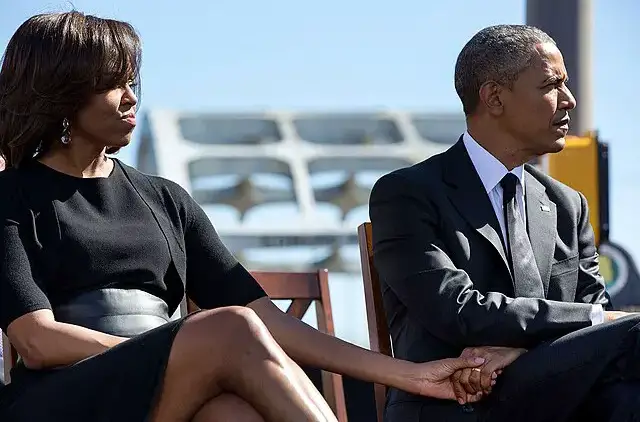
Behind the Scenes of America’s Most Famous Marriage: A Family’s Untold Story
In a rare and intimate revelation that offers unprecedented insight into one of America’s most celebrated relationships, new details have emerged about the early days of a romance that would eventually captivate the nation and inspire millions around the world. The story, shared through candid family reflections, reveals the deeply human moments that preceded a partnership destined to make history.
These revelations provide a fascinating glimpse into how America’s most admired couple navigated the universal challenges of family approval, first impressions, and the delicate dance of winning over protective relatives. The intimate details, filled with humor, skepticism, and ultimately profound respect, demonstrate that even the most extraordinary love stories begin with surprisingly ordinary moments.
The Foundation of an American Love Story
Michelle Obama and Barack Obama’s relationship has captivated the public for decades, evolving from a chance meeting at a Chicago law firm in 1989 into one of the most enduring partnerships in modern American history. From their historic years in the White House to their current post-presidential lives, their marriage has been admired, analyzed, and celebrated across political divides and cultural boundaries.
Yet behind the polished public image that millions have come to know and love lies a more complex story of family dynamics, protective instincts, and the natural skepticism that often accompanies new relationships. The Obama marriage, while extraordinary in its public visibility and impact, began like countless others—with family members sizing up the new person in their loved one’s life.
Recently, Michelle Obama’s older brother, Craig Robinson, shared remarkably candid reflections on those formative early days during a conversation on The IMO Podcast. His memories illuminate not just the Obama family’s private moments, but also the universal way first impressions can shape family perceptions—and how time, trust, and shared experiences can transform initial doubts into lasting respect and admiration.
These revelations offer a unique window into the personal dynamics that shaped one of America’s most influential couples, revealing that even relationships destined for greatness must pass the most basic test of all: family approval.
Growing Up Robinson: The Foundation of Protective Love
Craig Robinson has always spoken openly about his profound bond with his sister Michelle, a relationship forged in the tight-knit community of Chicago’s South Side under the steady, principled guidance of their parents, Marian and Fraser Robinson. The Robinson household was one where values like hard work, education, integrity, and family loyalty weren’t just taught—they were lived daily.
Growing up together in this environment, Craig and Michelle developed a relationship grounded in unwavering loyalty and mutual care that would define their interactions well into adulthood. The Robinson children learned early that family came first, that education was non-negotiable, and that protecting those you love was both a privilege and a responsibility.
So when Michelle introduced a young man named Barack Obama into this carefully constructed family dynamic, Craig’s instincts as an older brother immediately activated. The protective nature that their parents had cultivated in him, combined with his natural skepticism about anyone seeking to join their close-knit family circle, created the perfect storm for what would become a legendary first encounter.
This protective instinct wasn’t born from negativity or closed-mindedness—quite the opposite. It stemmed from the deep love and respect the Robinson siblings had for each other, and from Craig’s understanding that Michelle deserved only the very best in a life partner.
A Brother’s Skeptical First Impression
With characteristic humor and honesty, Craig Robinson recently admitted that his first reaction to meeting Barack Obama was considerably less than encouraging. The moment that would later become family folklore began with what seemed like a simple enough introduction, but Craig’s response revealed the depth of his protective instincts.
“Barack? Who’s got a name like Barack?” he joked during the podcast conversation, recalling with self-deprecating humor that he initially thought this new relationship would last no more than a month. His reaction wasn’t unique—many people in 1989 America were unfamiliar with the name Barack, and Craig’s confusion was perhaps more common than unusual.
However, his teasing underscored something deeper than simple unfamiliarity with an uncommon name. It reflected both his naturally protective nature as an older brother and the healthy skepticism that many siblings feel when meeting a loved one’s new romantic partner. For Craig, this stranger represented a potential threat to the family dynamic he cherished and sought to protect.
Michelle, displaying the confidence and assertiveness that would later make her one of America’s most admired First Ladies, didn’t let her brother’s skepticism go unchallenged. She pushed back in her usual playful but determined manner, reminding Craig that she had been in serious, long-term relationships before and was perfectly capable of making sound romantic decisions.
Craig, never one to miss an opportunity for sibling teasing, quipped that he didn’t consider those previous men “real boyfriends”—a comment that simultaneously revealed his high standards for anyone dating his sister and his willingness to engage in the kind of good-natured ribbing that characterizes close family relationships.
The exchange, filled with laughter and genuine affection despite the underlying skepticism, perfectly showcased the warmth and closeness of the Robinson family dynamic. It also established the challenge that Barack Obama would need to overcome: winning over not just Michelle, but her entire protective family unit.
A Mother’s Contrasting Perspective
While Craig harbored his brotherly doubts about this new suitor, the Robinson family matriarch, Marian Robinson, offered a strikingly different initial reaction to Barack Obama. Her response highlighted how different family members can have vastly different first impressions of the same person, and how these varying perspectives often balance each other out in healthy family dynamics.
Marian was immediately struck by Barack’s impressive height—at 6’1″, he quite literally stood out in most rooms he entered. While this might seem like a superficial observation, Marian’s positive comment about his stature carried more weight than might initially appear. In many families, particularly those where physical presence and confidence are valued, height can be seen as an indicator of strength, protection, and reliability.
More importantly, Marian’s welcoming reaction demonstrated the intuitive ability that many mothers possess to sense character and potential in their children’s romantic partners. Her immediate acceptance contrasted sharply with Craig’s suspicion, creating an interesting family dynamic where Michelle received mixed signals about her new boyfriend.
Yet as Craig would later acknowledge with characteristic honesty, it would take much more than an impressive stature or even his mother’s approval to earn his genuine respect and acceptance. For a man who had dedicated much of his life to athletics and competition, the true measure of Barack Obama’s character would need to be demonstrated in a more familiar arena.
The Legendary Basketball Test
Basketball represented far more than mere recreation in Craig Robinson’s worldview. Having played the sport at Princeton University and later transitioning into college coaching, Craig had internalized his father’s wisdom that “you can tell a lot about someone by the way they play basketball.” This wasn’t just athletic philosophy—it was a comprehensive approach to character assessment.
Fraser Robinson had taught his son that basketball revealed essential personality traits: how someone handled competition, whether they were selfish or team-oriented, how they responded to pressure, whether they respected opponents and teammates, and most importantly, how they conducted themselves when they thought no one important was watching.
When Michelle suggested that Craig invite Barack to join a basketball game, Craig initially hesitated. The invitation represented more than social courtesy—it was essentially a character examination disguised as recreational activity. Craig understood that this game would either confirm his skepticism or force him to reconsider his initial judgment.
Eventually, Craig agreed to extend the invitation, and the resulting basketball game proved to be absolutely pivotal in shaping the Obama family’s future dynamics. What unfolded on that court would become the stuff of family legend and would fundamentally alter Craig’s perception of his sister’s boyfriend.
On the basketball court, Barack demonstrated qualities that transcended mere athletic ability. He showed genuine teamwork, displaying an understanding that individual success meant nothing without collective achievement. He exhibited humility, never trying to dominate the game or show off his skills at others’ expense. Most importantly, he demonstrated respect for every other player, regardless of their skill level.
Barack didn’t attempt to be the star of the game or to impress anyone with flashy moves or aggressive play. Instead, he fit seamlessly into the group dynamic, playing with an attitude and approach that spoke volumes about his fundamental character. He understood when to lead and when to follow, when to take shots and when to pass, when to be aggressive and when to step back.
For Craig Robinson, watching Barack navigate these social and competitive dynamics provided invaluable insight into the kind of man his sister was dating. The basketball court became a laboratory where Barack’s true personality emerged, unfiltered by the politeness and careful behavior that often characterizes early family meetings.
The Transformation: From Skepticism to Respect
The basketball game marked a definitive turning point in Craig Robinson’s assessment of Barack Obama. What he had initially assumed was merely another short-lived romance began to look like something much deeper and more substantial. Barack had not only impressed Michelle with his intellect and ambition, but he had also earned the grudging respect of her protective older brother through actions rather than words.
This transformation in Craig’s perspective wasn’t sudden or dramatic—it was gradual and thoughtful, reflecting the careful way he approached all important judgments. Over time, as he observed Barack’s consistent behavior, his treatment of Michelle, and his integration into family gatherings, Craig’s skepticism gave way to genuine admiration.
The evolution of Craig’s opinion also reflected his growing understanding that Barack possessed qualities that complemented Michelle perfectly. Where Michelle was direct and assertive, Barack was diplomatic and thoughtful. Where she was passionate and outspoken, he was calm and measured. Rather than competing with each other, they seemed to bring out the best in one another.
Craig began to see that his sister hadn’t just found a boyfriend—she had found a true partner, someone who respected her intelligence, supported her ambitions, and shared her fundamental values about family, service, and making a positive difference in the world.
Building a Life Together: The Early Years
Michelle and Barack Obama married in 1992, beginning a partnership that would span more than three decades and fundamentally shape both of their individual destinies. Their early married years, like those of most couples, were characterized by the typical challenges of building a life together: establishing careers, defining shared goals, navigating family relationships, and learning to compromise.
During these formative years, Craig had numerous opportunities to observe the couple’s relationship up close. He watched as they supported each other through career transitions, celebrated each other’s successes, and weathered the inevitable storms that test all marriages. With each passing year, his initial skepticism seemed more and more misguided.
What impressed Craig most was the consistency of Barack’s character. The qualities he had demonstrated on the basketball court—teamwork, humility, respect for others—proved to be genuine personality traits rather than temporary displays meant to impress a potential brother-in-law. Barack treated Michelle with the same respect and consideration whether they were alone, with family, or in public settings.
This consistency became even more important as Barack’s political ambitions began to emerge. Rather than allowing career aspirations to overshadow his commitment to family, Barack found ways to pursue his goals while maintaining his dedication to Michelle and, eventually, their daughters Malia and Sasha.
The Crucible of Public Life
The Obama marriage faced its most significant tests during Barack’s rise in politics, particularly during his presidency from 2009 to 2017. The demands of political life, especially at the highest levels, can strain even the strongest relationships, and the Obamas were not immune to these pressures.
Both Barack and Michelle have spoken candidly about the struggles they endured during these years, particularly the way political responsibilities sometimes left Michelle feeling isolated and overwhelmed. In her bestselling memoir “Becoming,” Michelle described moments of frustration and sacrifice, honestly admitting that the demands of political life often left her feeling like a single parent despite being married.
Barack has also acknowledged that his consuming career ambitions sometimes put unfair strain on their relationship. The long hours, constant travel, security concerns, and public scrutiny that define political life created challenges that most couples never face. Yet rather than allowing these pressures to drive them apart, the Obamas found ways to grow stronger together.
Their openness about these challenges only adds to their credibility as a couple. Their story isn’t one of effortless romance or perfect partnership, but rather of two people committed to working through difficulties together. They have demonstrated that enduring love isn’t about avoiding problems—it’s about facing them as a team.
Craig Robinson, observing from his unique perspective as Michelle’s brother, watched the couple navigate these extraordinary pressures while maintaining the fundamental respect and partnership that had impressed him from the beginning. The man who had once doubted whether this relationship would last a month was witnessing a marriage that could withstand the most intense public scrutiny imaginable.
Family as the Cornerstone
Throughout all the changes and challenges of their remarkable journey, the Robinson family remained a central stabilizing force in the Obamas’ lives. Craig’s initial protectiveness evolved into genuine admiration and unwavering support, while Marian Robinson’s early acceptance proved prophetic.
During the Obama presidency, Marian Robinson made the extraordinary decision to move into the White House, providing stability for the family and helping care for Malia and Sasha during their formative teenage years. Her presence represented the continuation of Robinson family values within the most powerful household in America.
Craig has frequently spoken about how the principles their parents emphasized—discipline, humility, integrity, hard work, and family loyalty—continue to influence both him and Michelle in their adult lives. These values, instilled during their South Side Chicago childhood, proved strong enough to withstand the pressures of global fame and political power.
The Robinson family’s influence on the Obama marriage cannot be overstated. The protective love that Craig initially expressed through skepticism evolved into a supportive foundation that helped sustain Barack and Michelle through their most challenging moments. Craig’s podcast reflections remind listeners that even extraordinary public figures come from ordinary family backgrounds, complete with teasing siblings, concerned parents, and the everyday dynamics that shape all of our lives.
Life in the Post-Presidential Era
Since leaving the White House in January 2017, Barack and Michelle Obama have continued to embody the partnership and shared values that first impressed Craig Robinson all those years ago. Through their production company, Higher Ground, they have focused on storytelling projects that uplift underrepresented voices and promote civic engagement.
Their individual projects—Barack’s books and speaking engagements, Michelle’s memoir and advocacy work—have been pursued with mutual support and encouragement. Rather than competing for attention or pursuing separate paths, they have found ways to complement each other’s work while maintaining their strong partnership.
Podcast conversations like the one on The IMO Podcast offer valuable windows into their family’s private dynamics, blending humor with heartfelt reflection. For listeners, these glimpses behind the public facade serve as reminders that behind the global figures are siblings, parents, and partners navigating life much like anyone else.
Craig’s willingness to share these intimate family memories demonstrates the same openness and authenticity that has characterized the entire Obama family’s approach to public life. Rather than maintaining artificial distance or pretending their relationships are perfect, they have consistently shared both their struggles and their joys.
Universal Lessons from a Unique Story
Craig Robinson’s recollections of initially doubting his sister’s relationship with Barack Obama offer much more than entertaining family anecdotes. They illuminate universal truths about family relationships, first impressions, and the way lasting partnerships develop over time.
First, his story demonstrates that initial impressions, even from people who know us best, aren’t always accurate. Even close family members, motivated by love and protective instincts, can misjudge a romantic partner during first encounters. What seems like incompatibility or unsuitability may simply reflect unfamiliarity or natural caution.
Second, Craig’s experience shows how protectiveness can sometimes cloud judgment. His early doubts about Barack stemmed not from any genuine shortcomings in Barack’s character, but from his deep love for Michelle and his natural desire to protect her from potential heartbreak. This protective instinct, while admirable, initially prevented him from seeing Barack’s genuine qualities.
Third, the basketball game story illustrates how actions often reveal character more clearly than words ever could. Barack’s conduct on the court—his teamwork, humility, and respect for others—demonstrated his fundamental personality traits in ways that formal conversations or careful first impressions never could have achieved.
Finally, the Obamas’ enduring marriage shows how strong partnerships can survive and even thrive under intense scrutiny and pressure. Their relationship, tested by family skepticism, political demands, and constant public attention, has endured for more than thirty years because it’s built on genuine compatibility, shared values, and unwavering mutual respect.
The Enduring Power of Authentic Partnership
Today, the Obama marriage is admired around the world, not because it has been free of challenges or conflicts, but because Barack and Michelle have navigated those challenges with remarkable honesty, resilience, and unwavering commitment to each other and their shared values.
Their relationship serves as a powerful example of what authentic partnership looks like—two individuals who maintain their distinct identities while building something greater together. They have shown that lasting love isn’t about finding someone perfect, but about finding someone worth working with through life’s inevitable imperfections.
Through Craig Robinson’s eyes, we see that the foundation of even the most extraordinary love stories lies in everyday moments—protective siblings testing new boyfriends, cautious parents offering measured approval, and small tests of character that reveal who someone truly is when they think no one important is watching.
The basketball game that changed Craig’s mind about Barack Obama has become more than just family lore—it represents the kind of authentic character assessment that forms the basis of all meaningful relationships. In that simple game, Barack demonstrated the qualities that would later make him an effective leader, devoted husband, and loving father: the ability to work well with others, to put team success above personal glory, and to treat everyone with dignity and respect.
Conclusion: The Humanity Behind the History
Craig Robinson’s candid memories of initially doubting his sister’s relationship with Barack Obama offer a refreshing and deeply human perspective on one of America’s most celebrated partnerships. His playful skepticism, gradual acceptance, and eventual deep respect illustrate the ordinary family dynamics that preceded an extraordinary love story.
The Obama marriage resonates with people across cultural, political, and geographic boundaries precisely because it began with such recognizable, universal experiences. The protective brother, the uncertain first meeting, the character tests, the gradual building of trust and respect—these elements define countless relationships around the world.
What makes the Obama story unique isn’t that they avoided these common relationship challenges, but that they navigated them with such grace, authenticity, and mutual support. They have demonstrated that even relationships destined for historical significance must pass the most basic tests of human connection: earning family approval, demonstrating consistent character, and proving worthy of lasting trust.
Through Craig’s perspective, we understand that the foundation of the Obama partnership wasn’t built on political ambition or public recognition, but on the same elements that sustain all successful relationships: genuine compatibility, shared values, mutual respect, and the willingness to support each other through both triumphs and challenges.
And perhaps most importantly, Craig’s story reminds us that behind every public success story are private moments of doubt, testing, and gradual acceptance that shape the relationships we eventually celebrate. The Obama marriage succeeded not despite these human elements, but because of them—because it was built on authentic foundations that could withstand any pressure or scrutiny.
That, ultimately, is what makes the Obamas’ story not just historically significant, but profoundly and enduringly human.