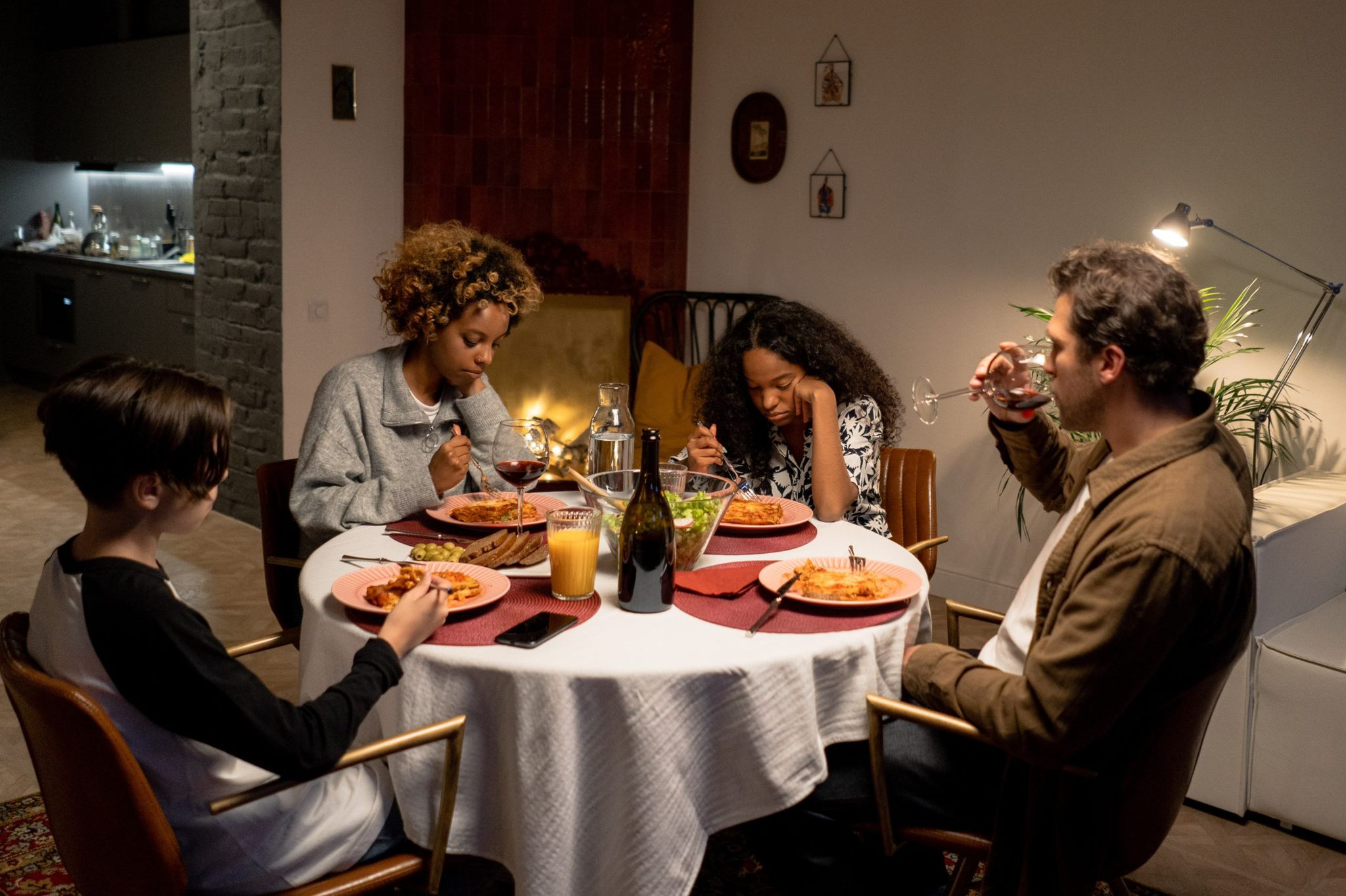
The Intervention That Backfired: How I Turned My Family’s Ambush Into My Liberation
I walked into my childhood living room and froze.
Not from shock—I’d known this was coming for weeks. But from the theatrical staging of it all, the careful choreography that told me exactly what kind of conversation this was going to be.
Mom sat on the couch with her hands folded in her lap, the picture of maternal concern. Dad was in his recliner, positioned like a judge about to deliver a verdict. My sister Emily perched on the armrest wearing a smile that looked a little too polished, too practiced, too pleased with itself to be innocent.
And my husband David stood near the window, pale and tight around the mouth, avoiding eye contact like a defendant who knows he’s guilty but is hoping for a lenient sentence.
They’d left one chair empty—dead center, pulled forward like a spotlight, isolated from the rest of the furniture arrangement.
Dad gestured to it without warmth. “Amelia. Sit down. We need to talk.”
I didn’t ask what about. Because I’d known for weeks what this conversation would be.
That’s what happens when you spend your whole life being the dependable one: you learn to read a room before anyone speaks. You learn to see patterns in behavior before they crystallize into betrayal. And you learn how quickly “family” can become a script you’re expected to follow, regardless of how it makes you feel.
The Pattern I’d Always Known
Let me tell you what my childhood looked like.
Emily was born when I was four. From that moment on, our family dynamic was set in stone:
Emily was the baby, the beautiful one, the one who needed protection and accommodation. I was the older sister, the responsible one, the one who was supposed to understand and make room.
When Emily threw tantrums, I was told to be patient. When Emily broke my toys, I was told to share. When Emily lied and got me in trouble, I was told to forgive her because “she’s younger” and “she doesn’t know better.”
This continued through adolescence and into adulthood, the excuses evolving but the pattern remaining the same:
When Emily failed out of college, I was studying for my teaching certification. My parents couldn’t help with my student loans because they were paying for Emily’s “gap year” in Europe to “find herself.”
When Emily crashed her car drunk at twenty-two, I was starting my first teaching job. My parents borrowed money from me to cover her legal fees, promising to pay me back. They never did.
When Emily got fired from three jobs in two years for “personality conflicts,” my parents explained that she was “sensitive” and “creative” and “not suited for traditional work environments.”
When I got engaged to David, Emily showed up to the engagement party in a white dress and announced she was thinking about getting engaged too—to a man she’d been dating for three weeks. My mother spent the entire party focused on Emily’s “exciting news.”
This was the pattern: Emily created problems. I solved them. Emily demanded attention. I faded into the background. Emily’s needs were urgent. Mine were optional.
And I’d accepted it because that’s what good daughters do. That’s what responsible older sisters do. They accommodate. They understand. They make room.
Until you realize that all that accommodating has left you with no room for yourself.
The Changes I Noticed
David and I had been married for three years. We’d met at a mutual friend’s wedding—he was the best man, I was a bridesmaid. We bonded over shared frustration with the bride’s controlling mother and a mutual love of old movies.
He was stable, employed, kind. He’d seemed like a safe choice after years of putting everyone else’s needs first. A partnership where I wouldn’t have to shrink.
For the first two years, it was good. Normal. We bought a small house. Built routines. Talked about maybe having kids someday when we were more financially stable.
Then, about six months ago, things shifted.
Small changes at first. David started working late more often. His phone became an extension of his hand, always face-down, always locked. He’d smile at texts in a way that felt private, secretive.
He became less present during conversations, his attention somewhere else even when his body was in the room.
And Emily—my sister who’d always been casually dismissive of David, who’d complained about him being “boring” and “too practical”—suddenly started asking about him. Checking if he’d be at family dinners. Mentioning things he’d said to her in private conversations I didn’t know they were having.
She started skipping family events with increasingly elaborate excuses that sounded rehearsed. Like she was creating distance while actually creating something else entirely.
I’m a high school English teacher. I spend my days reading subtext, analyzing patterns, understanding what people mean versus what they say.
I saw the pattern. I just didn’t want to believe it.
The Investigation
I didn’t confront David immediately. I’m not a confrontational person by nature—years of family dynamics had trained that out of me.
Instead, I did what teachers do: I gathered evidence.
I started paying attention to our shared calendar. David’s “late meetings” correlated suspiciously with evenings when Emily posted Instagram stories from coffee shops and restaurants, always alone, always vague about her location.
I checked our credit card statements—the one area of our finances David hadn’t realized I monitored. Charges at restaurants we’d never been to together. A hotel room in Portland when he’d supposedly been at a work conference in Seattle. Flowers purchased on a Tuesday afternoon when nothing arrived at our house.
I looked at our cell phone records—numbers called repeatedly, at odd hours, for long durations. One number appeared constantly. I called it from a blocked number. Emily answered.
The evidence was overwhelming. Undeniable. The kind of pattern that couldn’t be explained away by coincidence or innocent friendship.
My husband was having an affair with my sister.
The Preparation
Some women would have confronted immediately. Screamed, thrown things, demanded explanations.
I’m not some women.
I’m the woman who spent her entire childhood learning that emotional reactions make things harder for everyone else. That calm, rational accommodation is how you survive family dynamics that don’t have room for your feelings.
So I prepared.
I made an appointment with a divorce attorney. Brought all the financial records, the evidence, the timeline. She was impressed with my documentation.
“Most people come in emotional and unprepared,” she said. “You’ve done my job for me.”
We filed paperwork quietly. I opened my own bank account and started redirecting my paycheck. I separated what assets I could—my car was in my name only, thank God. The house was jointly owned, but I’d been making the majority of the mortgage payments. We’d figure that out in court.
I even accepted a new teaching job in Seattle—quietly, without telling David or my family. A better position, better pay, a fresh start in a city where no one knew me as “the accommodating one.”
I thought I’d be the one choosing when to leave. On my terms. With my dignity intact.
I didn’t know my family was planning their own intervention.
The Ambush
The call came from my mother on a Wednesday evening.
“Amelia, honey, can you come over this weekend? There’s something we need to discuss as a family.”
“What about?”
“It’s better if we talk in person.” Her voice had that careful quality, the one she used when she was managing a situation.
I knew then what this was. They were staging an intervention—not for David or Emily’s behavior, but for my expected reaction to it.
Saturday afternoon, I drove to my parents’ house in the suburbs. The house I’d grown up in, the house where I’d learned to make myself smaller so Emily could shine brighter.
When I walked into that living room and saw the staging—everyone positioned carefully, one chair isolated in the center—I understood completely.
They weren’t going to apologize. They were going to explain. And I was going to be expected to understand.
I sat down in the spotlight chair and waited.
Mom started, her voice soft and pained. “Amelia, sweetheart, we’ve asked you here because something has happened that we need to address as a family.”
Dad leaned forward in his recliner, his expression solemn. “David and Emily have developed… feelings for each other.”
Not “had an affair.” Not “betrayed you.” Developed feelings. Like it was an organic process beyond anyone’s control.
Emily spoke next, her voice sweet and practiced, like she’d rehearsed this in front of a mirror. “Amelia, I’m so sorry. Sometimes love just happens, you know? We never meant for it to—”
“To what?” I interrupted. “To hurt me? To betray me? Or to get caught?”
She blinked, losing her place in the script.
David finally spoke, his voice strained. “Amelia, I know this is difficult. But Emily and I… we’ve connected in a way I didn’t expect. It’s real. It’s—”
“An affair,” I finished. “The word you’re looking for is affair.”
Mom cleared her throat. “We’re not here to assign blame, honey. We’re here because we care about you. About all of you. And we want to handle this as gently as possible.”
“Gently,” I repeated.
“Yes,” Dad said firmly. “With maturity and understanding. This is a complicated situation, and pointing fingers won’t help anyone.”
I looked at him—this man who’d spent my entire life prioritizing Emily’s comfort over my dignity—and I felt something click into place.
They didn’t call me here to support me. They called me here to manage me. To convince me to make this easier for Emily and David by accepting it gracefully.
Mom reached over and squeezed my hand. “You’ve always been the strong one, Amelia. We know you’ll handle this with grace. You always do.”
There it was. The family motto. The expectation I’d been living under for thirty-two years.
Amelia will understand. Amelia will adjust. Amelia will sacrifice so everyone else can be comfortable.
I looked around the room—at my parents who’d never protected me, at my sister who’d never respected me, at my husband who’d promised to love me and had decided my sister was a better option.
And I laughed.
One short, clean sound that cut through the manufactured solemnity like a knife.
David flinched. Emily blinked rapidly. Mom’s hand tightened on mine.
“Amelia?” Dad’s voice carried warning. “This isn’t funny.”
“No,” I agreed. “It’s not.”
I reached into my purse and pulled out two manila envelopes. Placed them carefully on the coffee table between the framed family photo and the bowl of peppermints nobody ever touches.
“What are those?” Mom asked nervously.
“Divorce papers,” I said, gesturing to the thicker envelope. “Already filed. David’s been served. We’re just waiting on the court date.”
David’s face went white.
I gestured to the second envelope. “And documentation of the affair. Timeline, evidence, financial records showing David spending our money on Emily. All organized, all documented, all ready for court.”
Silence.
“I’ve known for six weeks,” I continued conversationally. “I’ve had six weeks to prepare. To talk to lawyers. To separate finances. To accept a new job in Seattle that starts in three weeks. I’ve had six weeks to grieve, to be angry, to process this betrayal.”
“Amelia—” Emily started.
“No,” I cut her off. “You don’t get to talk. You don’t get to explain or justify or make this about your feelings. You fucked my husband. Repeatedly. Deliberately. While pretending to be my sister.”
Mom gasped at my language. I’d never sworn in front of my parents before.
“And you,” I turned to David. “You married me. Promised to love me. Then decided my sister was more appealing and didn’t have the decency to end our marriage before starting a new relationship.”
“It wasn’t like that—” he started.
“It was exactly like that,” I said flatly. “I have hotel receipts. Restaurant bills. Phone records. Text messages you thought were deleted but backed up to the cloud. I have everything.”
I stood up, leaving the spotlight chair empty behind me.
“You all called me here thinking I’d be the reasonable one. The understanding one. The one who’d make this easier for everyone by being graceful and mature and accommodating.” I looked at each of them in turn. “But here’s what I’m actually going to do: I’m going to divorce David and take half of everything we built together. I’m going to move to Seattle and start my new job and build a life you’re not part of. And I’m going to stop being the person who makes room for people who’ve never made room for me.”
“Amelia, you’re being dramatic,” Dad said, his voice taking on that stern tone he used when I wasn’t behaving as expected.
“No, Dad. I’m being clear. For the first time in my life, I’m being absolutely, perfectly clear about what I will and won’t tolerate.”
“But we’re family,” Mom said, her eyes filling with tears. “Family forgives. Family works through things.”
“Family doesn’t fuck your sister’s husband,” I replied bluntly. “Family doesn’t stage interventions to make the victim accommodate the betrayal. Family doesn’t spend thirty-two years teaching one daughter that her feelings don’t matter as much as everyone else’s comfort.”
“That’s not fair,” Emily said, her voice small.
“Neither is fucking my husband,” I shot back. “But here we are.”
The Exit
I walked toward the door, leaving the envelopes on the coffee table like evidence at a crime scene.
“Amelia, wait,” Mom called. “Let’s talk about this. Let’s figure out how to move forward as a family—”
“We’re not moving forward as a family,” I said, turning back to face them. “We’re done. I’m done. I spent my entire life being the accommodating daughter, the understanding sister, the reasonable wife. And it got me a cheating husband, a backstabbing sister, and parents who think I should handle my own betrayal with ‘grace.'”
“You’re overreacting,” Dad said firmly.
“Am I? You brought me here to convince me to accept my husband’s affair with my sister because it would be easier for everyone if I just understood. You expected me to smile and make room for their ‘feelings’ while mine didn’t even get acknowledged.”
“We were trying to be sensitive—” Mom started.
“To Emily’s feelings,” I interrupted. “To David’s feelings. Never to mine. I was just expected to have them quietly, privately, without making anyone uncomfortable.”
“What do you want from us?” Emily asked, and she sounded genuinely confused, like she couldn’t understand why I wasn’t playing my assigned role.
“Nothing,” I said simply. “I don’t want anything from you anymore. Not your approval, not your understanding, not your presence in my life. I’m done subsidizing your comfort with my pain.”
I opened the door and stepped into the afternoon sunlight.
Behind me, I heard Mom start to cry. Dad’s voice, raised and angry, demanding I come back inside. Emily saying something defensive. David silent, probably in shock.
I got in my car, started the engine, and drove away from that house for the last time.
Three Weeks Later
I moved to Seattle on a Tuesday morning. A professional moving company packed my belongings from the house I’d shared with David. He wasn’t there—staying with Emily, presumably, since he’d moved out immediately after the intervention disaster.
My new apartment was small but mine. One bedroom, city views, hardwood floors. Space for me and only me.
The teaching job was everything I’d hoped—better students, better resources, colleagues who treated me like a professional instead of the accommodating junior teacher who’d take on everyone else’s unwanted tasks.
I made new friends. Joined a book club. Started taking photography classes I’d always been interested in but never had time for because I was too busy managing everyone else’s needs.
My divorce attorney called regularly with updates. David was fighting the settlement, claiming he deserved more than half of our assets despite being the one who’d had the affair.
“He’s going to lose,” she said confidently. “We have everything documented. His infidelity is provable. He spent marital assets on the affair. The judge will not be sympathetic.”
“Good,” I said.
“Your family has tried to contact me,” she added carefully. “Multiple times. Wanting to ‘mediate’ or ‘help facilitate communication.'”
“Tell them to stop,” I said. “All communication goes through you. I’m not interested in reconciliation or understanding or any other version of me making this easier for them.”
“Already done,” she replied.
Six Months Later
The divorce was finalized on a cold January morning. I didn’t attend the hearing—my attorney represented me. David got 30% of our assets, I got 70% because of his proven infidelity and misuse of marital funds.
The house sold. I got my share and put it toward a down payment on a small condo with a view of Puget Sound.
My family sent occasional messages:
Mom: Honey, please call. We miss you. Can’t we work this out?
Dad: Your mother is heartbroken. Is this really necessary?
Emily: I’m sorry. I never meant to hurt you. Please talk to me.
I didn’t respond to any of them.
Not out of cruelty. Not out of punishment. But because I’d finally learned what they’d never taught me:
Some relationships aren’t worth maintaining. Some people will always prioritize their comfort over your dignity. And sometimes the most loving thing you can do for yourself is walk away from people who’ve never truly made room for you.
One Year Later
It’s been a year since that intervention in my parents’ living room. A year since I placed those envelopes on the coffee table and walked away from a family that had never seen me as anything but the accommodating one.
I’m thirty-three now. Living in Seattle. Thriving at work. Dating someone new—a man who thinks my boundaries are healthy rather than dramatic, who celebrates my success rather than feeling threatened by it.
I heard through mutual acquaintances that Emily and David got engaged. That my parents are planning the wedding. That Mom keeps telling people “Amelia just needs more time” as if eventually I’ll come around and forgive them all.
I won’t.
Not because I’m holding a grudge, but because I’ve built a life that doesn’t have room for people who require me to be smaller so they can feel bigger.
What I Learned
That intervention taught me something my family had spent thirty-two years trying to prevent me from learning:
You teach people how to treat you. And I’d taught my family that I would always accommodate, always understand, always make room for their needs while mine went unmet.
I’d taught David that I was safe—that I’d never demand too much, never expect too much, never leave even when I should.
I’d taught Emily that she could take whatever she wanted—my time, my energy, my husband—because I’d always prioritized keeping peace over protecting myself.
And I’d taught my parents that my feelings were negotiable, that my boundaries were suggestions, that my pain was less important than everyone else’s comfort.
The intervention was supposed to convince me to keep teaching those lessons. To accept betrayal gracefully. To accommodate my own victimization.
Instead, it taught me something different:
I could leave. I could choose myself. I could build a life where I wasn’t the supporting character in everyone else’s story.
The Final Message
I got one more message from my mother last month:
Mom: Emily’s getting married in June. She’d like you to be there. She knows she hurt you, but she hopes you can find it in your heart to forgive her. She’s your sister. Family is forever. Please think about it.
I thought about it for approximately ten seconds.
Then I blocked her number.
Because here’s what I’ve finally learned: Family isn’t forever when it’s built on one person’s endless accommodation of everyone else’s bad behavior.
Family is what you build with people who see you, value you, make room for you without requiring you to shrink.
I have that family now. It’s small—chosen friends, colleagues who respect me, a partner who loves me without needing me to be less.
It’s enough. More than enough.
My father said, “We need to talk” after he found my sister with my husband.
I put two envelopes on the table and taught them a final lesson:
Some conversations don’t need talking. They need consequences.
And some daughters don’t need to understand. They need to leave.
THE END