The Bullet I Dodged
He said it at brunch, in front of everyone: “I’m calling off the wedding—I don’t love you anymore.”
I said: “Thank you for your honesty.”
Then I stood up, took the ring back, and announced I’d be hosting a “dodged a bullet” party instead.
His friends stopped laughing when I added the rest.
The morning had started like any other Saturday in late spring—the kind of morning that tricks you into thinking the universe is fundamentally benevolent. I’d woken up beside Brandon in the apartment we’d shared for two years, sunlight streaming through the gauze curtains I’d picked out because he said he didn’t care about “decorative details.” He’d kissed my forehead, mumbled something about coffee, and padded into the kitchen while I lay there planning the final details of what was supposed to be the happiest day of my life.
Six weeks. That’s all that remained until I became Mrs. Brandon Whitmore.
We were meeting his friends for brunch at Le Jardin, the trendy bistro downtown where reservation lists stretched months in advance and the wait staff treated serving eggs like performance art. I’d suggested somewhere simpler, but Brandon had insisted. “Dorothy, these are my groomsmen,” he’d said, using that patient tone he employed when he thought I was being unreasonable. “We need to make a good impression.”
I should have asked why we needed to impress people who were supposedly already our friends. But I didn’t. I was good at not asking questions by then.
The restaurant was a cacophony of joy when we arrived—all gleaming brass fixtures and marble tabletops, filled with beautiful people eating beautiful food and laughing those carefree laughs that come from having more money than problems. Jessica was already there, my maid of honor, her blonde hair swept into an effortless updo that had probably taken an hour to achieve. She waved enthusiastically, her engagement ring catching the light. She’d gotten engaged two months after us, to a software developer named Marcus who looked at her like she’d invented happiness.
“Dorothy! Thank God you’re here. I was just telling these guys about the bridesmaid dress fitting yesterday. The seamstress actually said, ‘If you lose any more weight, I’ll have to completely remake this dress,’ and Angela practically cried with joy.”
We all laughed—Brandon’s college roommate Mike, his business partner Derek, their respective girlfriends whose names I could never quite remember, and Jessica. The mimosas were already flowing. Someone ordered a bottle of champagne. The air smelled like expensive perfume and fresh pastries, and for a moment, everything felt golden and possible.
We were mid-laugh about the absurdity of Angela treating weight loss like an Olympic sport when the atmosphere suddenly sheared. One moment Brandon was smiling, nodding along to the conversation. The next, he went completely silent. It wasn’t a thoughtful silence, the kind where someone is gathering their words. It was a vacuum—a black hole that started pulling all the oxygen from our little corner of the restaurant.
Jessica noticed first, her champagne glass pausing halfway to her lips. “Brandon? You okay?”
He swallowed, his Adam’s apple bobbing nervously in a way I’d never seen before. In two years together, I’d watched Brandon navigate difficult business deals, family drama, even the death of his grandfather, and I’d never seen him look like this. His hands were shaking. Actually shaking.
He turned to look at me, and in his eyes, I saw a stranger. There was no warmth left, no trace of the man who’d proposed to me on a beach in Mexico while a mariachi band played in the distance. Only a cold, terrified resolve.
“I can’t do this anymore, Dorothy,” he said.
His voice didn’t shake. Somehow that made it worse. It was deadly calm amidst the clatter of silverware and the ambient noise of a restaurant full of people who still believed in happy endings.
“I’m calling off the wedding. I don’t love you anymore.”
The world stopped.
At that exact second, a waiter cheerfully placed a plate of Eggs Benedict in front of me, the hollandaise sauce gleaming under the restaurant’s artful lighting. He was completely unaware he was serving breakfast to a corpse. My heart gave one violent thud, like a bird hitting a windowpane, and then… nothing.
Silence crashed over our table like a wave. Jessica’s mouth fell open. Mike looked at his plate. Derek’s girlfriend—Sarah? Sandra?—gasped audibly. Somewhere in the restaurant, someone laughed, and the sound felt obscene.
But in that silence, something strange happened. My heartbreak didn’t manifest as tears. It didn’t manifest as the screaming, public breakdown that I’m sure Brandon had anticipated and perhaps even hoped for. Instead, it manifested as a cold, crystalline clarity. It was as if my spirit stepped outside my body, assessed the situation with the detachment of a general surveying a battlefield, and prepared for war.
Because here’s what I understood in that moment, with a certainty that felt almost mystical: Brandon had chosen this venue, this audience, this timing deliberately. He had brought me to a public place, surrounded me with his friends, and detonated a bomb at our table because he thought witnesses would make me behave. He thought social pressure would force me to be small, quiet, accommodating. To cry prettily and then disappear so he could get back to his Eggs Benedict and his life without the inconvenience of my feelings.
He had miscalculated.
“Thank you for your honesty,” I said.
My voice cut through the humid air like a scalpel. It was my voice, but it came from somewhere deeper than my throat—from some primal place that had been storing up every small indignity, every dismissal, every time I’d made myself smaller to make him more comfortable.
I held out my hand, palm up, my fingers perfectly steady. “The ring, please.”
Brandon blinked, thrown completely off his script. The table had gone so silent I could hear the ice melting in water glasses. He’d expected hysteria. He’d expected me to beg, to ask what he meant, to plead for another chance. The scenario he’d rehearsed in his head—and I was certain now that he’d rehearsed it—had me dissolving into tears while he got to play the noble truth-teller, the man brave enough to face his feelings.
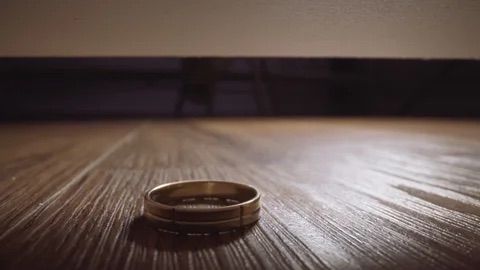
Instead, under the horrified gaze of his friends, he slowly reached into his pocket and pulled out the engagement ring. The heirloom ring his grandmother had left him, the one he’d presented to me with such ceremony that I’d actually believed it meant something. He slid it off his finger and placed it in my palm.
The metal was cold. The moment was colder.
Then I stood up, smoothing my dress with the composure of a queen in exile, and turned to address the table.
“Well,” I announced, my voice carrying just far enough to reach our immediate vicinity without becoming a spectacle for the entire restaurant. “This certainly changes plans. I was going to host a wedding reception in six weeks. Now, I’ll be hosting a ‘Dodged a Bullet’ party instead. Same venue, same open bar. You’re all still invited.”
Jessica let out a nervous giggle, her brain clearly short-circuiting as it tried to process whether I was joking. I looked her dead in the eye, my expression perfectly serious. I wasn’t.
“And Brandon,” I continued, turning my gaze back to him for the final strike, “about those wedding expenses. The $62,000 in deposits you insisted on putting in your name? To prove you were an ‘independent, modern man’ building his own credit?”
Brandon froze. The color drained from his face as the realization hit him like a physical blow.
“Those are all non-refundable. Every single cent. The venue, the caterer, the photographer, the florist, the band. All of it. In your name, on your credit cards, as you insisted. So while I’ll be celebrating my narrow escape with two hundred guests and an open bar, you’ll be explaining to your bank why you’re paying for a wedding that will never happen.”
I smiled then. Not a cruel smile, exactly. More like the smile of someone who has just realized they’ve been playing chess while their opponent thought they were playing checkers.
“Enjoy your breakfast, Brandon. I hope it’s worth $62,000.”
Then I picked up my purse, slid the ring into the side pocket where I usually kept breath mints, and walked out of Le Jardin with my head held high and my heart in pieces.
The thing nobody tells you about public humiliation is that the fifteen seconds after it happens are the longest of your life. Walking from our table to the restaurant exit took maybe twenty steps, but each one felt like a mile. I could feel every eye on me—not just from our table, but from the tables around us who had definitely heard what just happened. The restaurant had gone quiet in that radius around us, the way crowds do when they sense drama.
But I didn’t run. I didn’t cry. I walked at a measured pace, my heels clicking against the hardwood floor, past the host stand where a young woman with perfect makeup watched me with wide eyes, through the glass doors and into the brutal sunshine of a Saturday morning that no longer felt benevolent at all.
The moment the door closed behind me, I made it exactly three steps before my knees gave out.
I caught myself on a decorative planter, one hand gripping the rough concrete edge while the other clutched my purse like it was the only solid thing in the universe. My breath came in short, sharp gasps. The crystalline clarity that had carried me through the last five minutes shattered, and underneath it was just pain—raw and enormous and threatening to swallow me whole.
“Dorothy!”
Jessica burst through the restaurant doors, her purse swinging wildly from her shoulder. She was crying, I realized. Actually crying, tears streaking down her carefully made-up face.
“Oh my God, Dorothy, I’m so sorry, I didn’t know, nobody knew, what the fuck was that—” The words tumbled out in a rush as she reached for me, pulling me into a hug that smelled like her perfume and champagne and safety.
I let her hold me for exactly ten seconds. Then I pulled back, wiped my face even though I hadn’t cried yet, and looked at her.
“Jessica, I need you to do something for me.”
“Anything. Literally anything.”
“I need you to go back in there and get my jacket. The white one, on the back of my chair. And then I need you to tell me the truth: did you know?”
Her face crumpled. “Know what?”
“That he was going to do this. That he didn’t love me anymore. Did anyone know?”
“No!” The word exploded out of her. “Dorothy, no, I swear on everything, nobody knew. We thought—we all thought you guys were perfect. This is completely out of nowhere. Mike is in there right now yelling at Brandon, actually yelling, I’ve never seen him like that—”
“Okay,” I said, cutting her off. “Okay. I believe you. Can you get my jacket?”
She nodded, still crying, and disappeared back into the restaurant. I stood there in the sunshine, my hand still gripping the planter, and tried to figure out what came next. My phone was in my purse. I pulled it out, stared at the lock screen—a photo of Brandon and me from last Christmas, both grinning like idiots—and felt something crack a little deeper in my chest.
I opened my contacts and scrolled to Mom.
My finger hovered over the call button. My mother, who had expressed exactly one reservation about Brandon in two years (“He seems like someone who’s very certain about everything, darling, including what you should think”), would pick up on the first ring. She would listen. She would probably say “I told you so” in the gentlest way possible. She would offer to come get me, to hold me while I fell apart, to make tea and validate every feeling I was having.
But if I called her now, I would lose it. Completely. And I wasn’t ready for that yet. There were things I needed to do first, while I still had this strange, brittle composure holding me together.
I put the phone away just as Jessica emerged with my jacket and three more people: Mike, Derek, and Derek’s girlfriend—Claire, I finally remembered.
“Dorothy,” Mike said, his face flushed with anger. “That was the most fucked up thing I’ve ever seen. I just want you to know, we had no idea. And most of us are going to be at your party, not his.”
“His?” I said.
“Brandon’s already planning damage control,” Derek said grimly. “He started texting people before we even left the table. Trying to get ahead of the narrative.”
Of course he was. Brandon was always three steps ahead when it came to his reputation. That’s what made him so successful in business and, apparently, so terrible at being human.
“Let him,” I said. “I have the ring and the moral high ground. He can spin whatever story he wants.”
Claire stepped forward, the quietest of the group, and pressed something into my hand. A business card. “I’m a lawyer,” she said. “Family law. If you need help with anything—contracts, property, anything at all—call me. First consultation is free, and so is every consultation after that if you’re dumping my boyfriend’s asshole business partner.”
Despite everything, I laughed. It came out more like a sob, but it was something.
“Thank you,” I managed. “All of you. But right now I just need to go home.”
“Do you want company?” Jessica asked. “I can come with you. We can watch terrible movies and get drunk and burn things.”
I shook my head. “Not yet. I need to… I need to process first. But tomorrow? Tomorrow I’m going to need a lot of wine and probably a Pinterest board full of party ideas.”
“I’m on it,” she said immediately. “I’ll bring three bottles and my laptop. We’re going to throw the best ‘Dodged a Bullet’ party this city has ever seen.”
The apartment I shared with Brandon—had shared with Brandon, past tense now—was on the third floor of a converted warehouse in the arts district. Brandon had chosen it over my objections. I’d wanted something cozier, somewhere with actual walls between rooms and a kitchen that didn’t make me feel like I was cooking in a showroom. But Brandon loved the “open concept,” the “industrial aesthetic,” the floor-to-ceiling windows that made me feel like I was living in a fishbowl.
I stood outside the building, my key in hand, and realized I had absolutely no idea if Brandon was inside. If he’d come straight home after I left. If he was in there right now, rehearsing what he’d say to me, preparing for round two.
The thought of facing him made my stomach turn. But this was my home too. For two more months, at least, until the lease was up. I wasn’t going to be driven out of it.
I climbed the stairs slowly, each step a small act of courage. By the time I reached our door, my hand was shaking so badly I could barely get the key in the lock. But I managed it, turned the handle, and pushed the door open.
The apartment was empty.
Relief and disappointment crashed through me simultaneously. I’d been bracing for confrontation, and its absence left me unmoored. I stood in the doorway for a long moment, just looking at the space that had been our life together. The minimalist furniture Brandon had insisted on. The single plant I’d been allowed to introduce because he said more would “clutter the aesthetic.” The framed photo from our trip to Iceland that hung above the couch—both of us bundled in parkas, grinning against a backdrop of glaciers.
Had any of that been real? Had he loved me at all, or had I just been a prop in the life he was constructing, the way the furniture and the plant and the carefully curated art were props?
I walked through the apartment in a daze, taking inventory. His laptop was gone from the desk. His gym bag was missing from the closet. The book he’d been reading—some business biography about innovative leadership—was no longer on the nightstand.
He’d already started moving out. Of course he had. Brandon was nothing if not efficient.
I sat down on the edge of the bed we’d shared for two years, the bed where we’d had lazy Sunday mornings and hard conversations and made plans for a future that was now never going to happen. And finally, alone in the silent apartment, I let myself cry.
It wasn’t the pretty crying I’d avoided at the restaurant. It was ugly, gut-wrenching sobs that left me gasping for air, tears and snot streaming down my face while I clutched a pillow that still smelled like his shampoo. I cried for the life I’d thought I was building. For the person I’d believed Brandon was. For the version of myself that had been so sure, so stupidly certain that this was it, that I’d found my person, that happily ever after was just six weeks away.
I cried until I was empty, until my head throbbed and my eyes were swollen and my throat was raw. Then I lay there on the bed, staring at the ceiling, and waited for something to happen. For clarity to strike. For the pain to subside. For anything.
Instead, my phone buzzed.
I pulled it out, expecting—hoping? dreading?—a message from Brandon. An apology. An explanation. Something that would make sense of the senseless.
But it was from Jessica: I’ve started a group chat. It’s called “Dorothy’s Liberation Committee.” You have 47 members so far. We’re going to make this the best party anyone has ever been to. Also, Claire says you should change the locks tomorrow. I’m bringing you dinner tonight whether you want it or not. Love you.
I stared at the message for a long time. Then I opened the group chat she’d mentioned. Sure enough, there were dozens of people there—mutual friends, my college roommates, cousins I hadn’t talked to in months, coworkers, even Brandon’s own sister Lisa, who had apparently already heard what happened and sent three messages expressing her disgust with her brother’s behavior.
The messages scrolled past, too many to read individually, but the overall sentiment was clear: I was not alone. Brandon might have thought humiliating me publicly would isolate me, would make me too ashamed to face anyone. Instead, he’d accidentally revealed his own character to everyone who mattered, and they were choosing me.
I typed a response: Thank you. All of you. Party details to follow. It’s going to be legendary.
The next six weeks were the strangest of my life. In some ways, they were the worst—waking up every morning with the fresh realization that my future had been cancelled, going through the motions of my job while feeling like I was underwater, avoiding social media where Brandon’s version of events was spreading like a virus (“We grew apart,” “It was mutual,” “She understood,” all lies).
But in other ways, they were oddly liberating. Without the wedding to plan, without the constant effort of being the version of myself Brandon preferred—quieter, less opinionated, more accommodating—I found myself with time and energy I’d forgotten I had.
I started saying yes to things I’d been too busy for: the after-work drinks Jessica had been inviting me to for months, the pottery class my coworker had mentioned, the weekend trip to visit my college friend Maria who lived three hours away. I bought clothes Brandon would have hated—bright colors, bold patterns, things that made me feel like myself instead of like a supporting character in someone else’s story.
And I planned the party.
Jessica wasn’t kidding about the Pinterest board. We spent an entire weekend going through ideas, each one more outrageous than the last. We ordered a cake with “Congratulations on Your Freedom” written in elegant script. We designed invitations that looked like wedding announcements but with the text altered: “Dorothy Chen joyfully announces she will NOT be marrying Brandon Whitmore, and invites you to celebrate at a ‘Dodged a Bullet’ Party.”
The RSVPs started coming in immediately. Out of the two hundred people who’d been invited to the wedding, one hundred seventy-three said they were coming to the party instead. Twenty-two sent their regrets with notes explaining they felt awkward attending. Five—Brandon’s closest friends and his mother—sent no response at all.
Claire, true to her word, helped me navigate the financial mess. The venue, paid for entirely by Brandon, was contracted in his name only. The catering, the flowers, the band, the photographer—all of it Brandon’s responsibility, all of it non-refundable. He’d insisted on this arrangement, she explained, because he’d wanted to build his credit score and because he’d felt emasculated by the idea of my parents contributing.
“He’s on the hook for all of it,” Claire said, reviewing the contracts with obvious satisfaction. “And because he cancelled, he doesn’t even get to dictate what happens with the venue on that date. You could literally host your party there and there’s nothing he can do about it.”
“Can I really?” I asked.
She grinned. “He paid for the venue. He doesn’t get to decide how it’s used. The contract just says ‘wedding reception,’ and technically, a party celebrating not marrying him is still related to the wedding. Gray area, but one that’s absolutely in your favor.”
So we kept the venue. The same elegant ballroom where I was supposed to have danced with Brandon as his wife would instead host the biggest celebration of my independence anyone had ever seen.
The weeks passed in a blur of planning and healing and occasional backsliding. Some days I woke up and forgot, for just a moment, that Brandon was gone. Some days I found myself reaching for my phone to text him about something funny I’d seen, only to remember that he’d stopped being my person the moment he said those words at Le Jardin. Some days I cried in my car on my lunch break, overwhelmed by the sheer wrongness of having your life’s trajectory altered so abruptly.
But more often, I felt something unexpected: relief. Because with Brandon gone, I could finally see all the ways I’d been contorting myself to fit his vision. All the opinions I’d softened, the preferences I’d dismissed, the dreams I’d quietly shelved because they didn’t align with the life Brandon was building for us.
I’d wanted to adopt a dog. Brandon said it would be too messy. I’d wanted to take a sabbatical and travel through Southeast Asia. Brandon said it wasn’t financially strategic. I’d wanted to paint the bedroom a warm terracotta color. Brandon said neutral tones were more sophisticated.
In the apartment I was preparing to leave—I’d found a new place, smaller and cozier and entirely mine—I painted one wall bright terracotta. It was the most rebellious thing I’d ever done, and I loved it.
The night before the party, I couldn’t sleep. I lay in bed in my new apartment—I’d moved out two weeks earlier, leaving Brandon to figure out what to do with the industrial fishbowl we’d shared—staring at the ceiling and wondering if I was making a terrible mistake.
Because here’s the thing about public declarations of independence: they require you to follow through. Tomorrow, I would stand in front of nearly two hundred people and celebrate the end of my relationship. I would give a speech, cut a cake, dance to music that was supposed to be for my first dance as a bride. I would perform joy, confidence, liberation.
What if I didn’t feel those things? What if underneath all the party planning and the witty speeches and the Pinterest-perfect aesthetic, I was just… broken?
My phone rang at 2:17 AM. I picked it up, expecting Jessica with last-minute party details. Instead, it was my mother.
“Can’t sleep either?” she said.
“Mom, what are you doing awake?”
“Thinking about my daughter. Making sure she’s okay.”
I was quiet for a moment. Then: “I don’t know if I’m okay.”
“That’s fair,” she said. “You don’t have to be okay yet. But Dorothy? What you’re doing tomorrow? That takes courage. Most people would have cancelled everything, hidden away, tried to pretend it never happened. You’re taking your pain and transforming it into something public and powerful. That’s not nothing.”
“It feels like nothing sometimes,” I admitted. “It feels like I’m just… making a scene.”
“Good,” my mother said firmly. “Make a scene. Be loud. Take up space. Men like Brandon count on women like you to be quiet about how they treat us. They count on us to absorb the humiliation privately so they can move on without consequences. Don’t give him that.”
“What if people think I’m bitter?”
“Then let them think that. Bitterness is just anger that’s been asked to be polite. And darling, you have every right to be angry.”
After we hung up, I felt something shift inside me. My mother was right. I’d spent so much energy worrying about how this would look, about whether people would judge me for being too dramatic, too emotional, too much. But Brandon had humiliated me publicly. He’d chosen that venue, that audience, that timing deliberately. And I’d chosen my response deliberately too.
Tomorrow wasn’t about Brandon. It was about me refusing to be a silent casualty of his cowardice.
I slept fitfully but I slept, and when I woke up the morning of the party, I felt something I hadn’t felt in six weeks: ready.
The ballroom looked perfect. Jessica and her army of volunteers had transformed it from wedding venue to celebration space with such precision that you’d never know it had been meant for something else. Where there would have been a head table for the bride and groom, there was now a lounge area with comfortable seating. Where the wedding cake would have stood, there was the “Congratulations on Your Freedom” cake, three tiers of chocolate ganache and raspberry filling, topped not with a bride and groom but with a single figure of a woman with her arms raised in victory.
The DJ—the same one Brandon had hired for the wedding—had created a playlist titled “Independent Women Mix” that was somehow both ironic and perfect. The photographer Brandon had paid for was there, ready to document the whole thing. Even the florist, who had been sympathetic when I’d called to explain the situation, had adjusted the arrangements to be less “romantic wedding” and more “powerful celebration.”
I stood in the bridal suite—there was a certain poetry to that—and looked at myself in the mirror. I’d chosen a red dress. Not the white gown hanging in my closet that I’d never wear. Not something subdued or apologetic. A bold, unapologetic red that made me feel like I was wearing my own courage.
Jessica appeared behind me, her reflection joining mine in the mirror. “You ready?”
“I think so,” I said. “How many people are here?”
“Last count was one hundred sixty-eight. Still more arriving. Dorothy, this is huge. Everyone wants to celebrate you.”
“Or they just want to see the train wreck,” I said.
“Either way, they showed up. That counts.”
She was right. And standing there in that red dress, with my friends gathering outside and a party in my honor about to begin, I realized something: This wasn’t a train wreck. This was a resurrection.
The party started at seven. By seven-fifteen, the ballroom was packed. I stood at the entrance, greeting guests like I was still the bride, except now I was the bride who’d dodged a nuclear missile and lived to tell about it. People hugged me, told me how proud they were, shared their own stories of relationships that had imploded and lives that had been rebuilt.
Brandon’s sister Lisa pulled me aside, her eyes red from crying. “I’m so ashamed of him,” she said. “I don’t know what happened to my brother. He used to be kind. He used to be thoughtful. Somewhere along the way he became someone I don’t recognize.”
“Maybe he was always this person,” I said. “Maybe I just couldn’t see it until he wanted me to.”
The speech I gave at eight o’clock was supposed to be funny. I’d written it that way—full of witty one-liners about bullet-dodging and lessons learned and the humor in disaster. But standing up there with a microphone in my hand and nearly two hundred faces looking back at me, I found myself saying something different.
“Six weeks ago,” I said, “the man I was going to marry told me in a crowded restaurant that he didn’t love me anymore. He chose that moment, that place, that audience deliberately. He thought it would control my reaction. He thought public humiliation would make me small.”
The room was completely silent.
“Instead, it made me realize how much of myself I’d been giving away. How many pieces of my personality I’d filed down to fit his vision of who I should be. How much space I’d stopped taking up because he needed all of it for himself.”
I looked around the room, at all these faces—friends, family, acquaintances, even a few people I’d never met who’d heard about the party and asked to attend.
“This party isn’t about Brandon. It’s not revenge or bitterness or even closure. It’s about reclaiming the day that was supposed to change my life and making it change my life in a different way. It’s about standing in front of all of you and saying: I am heartbroken, but I am not broken. I am angry, but I am not bitter. I am free, and I am going to be okay.”
The applause started slowly, then built until the room was roaring. Jessica was crying again. My mother was beaming. Claire was filming on her phone, probably for evidence in case Brandon ever tried to claim I’d stolen his party venue.
The rest of the night was a blur of dancing, laughing, eating cake that tasted like victory. The DJ played songs about independence and strength and survival. People took turns coming up to me with words of encouragement, stories of their own escapes, promises of friendship and support.
At ten o’clock, my phone buzzed. A text from an unknown number: You’re embarrassing yourself. This whole thing is pathetic. I hope you’re happy with your little revenge party.
Brandon. Of course. Because men like Brandon can’t stand it when women refuse to suffer quietly.
I showed the text to Jessica, who’d been glued to my side all night like a bodyguard. She read it, her face darkening, then took my phone and typed a response before I could stop her: She’s very happy. Happier than she ever was with you. P.S. How’s that $62,000 credit card bill?
Then she blocked the number, handed me back my phone, and said, “No more Brandon. For the rest of tonight, he doesn’t exist.”
She was right. For the rest of that night, he didn’t.
The party ended at midnight, but a core group of us—Jessica, Maria, Lisa, Claire, and a few others—moved to an after-hours diner that served breakfast food and strong coffee and didn’t judge people who showed up in formal wear smelling like champagne.
We crammed into a booth meant for four, ordered plates of pancakes and hash browns, and talked until the sun started to rise. We talked about love and disappointment and the lies we tell ourselves about relationships. We talked about the red flags we’d ignored and the warnings we’d dismissed and the moments we’d known something was wrong but chosen not to see it.
“I knew,” I admitted at some point, my voice quiet. “Not that he’d do it that way, but that something was off. He’d been distant for months. Less interested in my day, less engaged in our plans. I told myself it was just wedding stress. That everyone goes through doubts. That it would get better after we were married.”
“That’s what they count on,” Lisa said. “Men like my brother. They count on women making excuses for them, believing the best, giving them the benefit of the doubt.”
“Well, I’m done with that,” I said. “From now on, I’m trusting my gut. If something feels wrong, it probably is.”
As we finally stumbled out of the diner into the early morning light, Jessica grabbed my hand. “You know what the best part of tonight was?”
“What?”
“You never mentioned him. In your speech, you never said Brandon’s name. You made the whole thing about you and your journey and your freedom. He became irrelevant. That’s the ultimate revenge.”
I thought about that as we said our goodbyes and I climbed into an Uber, still wearing my red dress, my feet aching from hours of dancing. She was right. I’d spent six weeks obsessing over Brandon—what he’d done, why he’d done it, what it meant about me and my judgment and my worth. But tonight, he’d barely crossed my mind. Tonight had been about everything I was reclaiming, everything I was becoming.
The bullet I’d dodged wasn’t just Brandon. It was a life where I would have spent decades making myself smaller, quieter, more convenient. Where I would have slowly disappeared into the role of supportive wife to a man who saw me as an accessory to his success story.
When I got home—to my apartment with the terracotta wall and the space for the dog I was going to adopt next week and the quiet that felt like peace instead of loneliness—I finally took off the red dress and hung it in my closet. Then I sat down and wrote Brandon a letter I would never send.
Dear Brandon,
Thank you for calling off the wedding. Thank you for showing me exactly who you are before I legally bound myself to you. Thank you for the public humiliation that forced me to find my spine. Thank you for the $62,000 party that celebrated my independence.
Most of all, thank you for letting me go. I didn’t know how much I needed that until you did it.
I hope you find whatever it is you’re looking for. I hope you become the kind of person who doesn’t weaponize honesty or use crowds as shields. I hope you learn to love someone without needing them to disappear.
But mostly, I hope I never think about you again.
Dorothy
I folded the letter, put it in a drawer, and closed it. Then I made myself a cup of tea, sat on my couch, and watched the sun rise through my window.
For the first time in six weeks, I felt like I could breathe.
THE END