The Morning I Left
The house was still dark when I made my decision. No fanfare, no dramatic announcement—just me, a packed suitcase, and the quiet certainty that sometimes the bravest thing you can do is walk away from the life you’ve built when it no longer wants you in it.
I stood at the front door, hand on the handle, listening to the silence of the home I’d lived in for forty years. Behind me lay decades of memories, sacrifices, and unconditional love. Ahead of me lay the unknown. And for the first time in my life, the unknown felt like a gift.
The morning of my 60th birthday began the same way every morning had begun for the past three years—in darkness, in silence, and in service to everyone but myself.
At 5:00 a.m., I was already in the kitchen, the same kitchen where I’d cooked tens of thousands of meals, celebrated countless holidays, and comforted my son through scraped knees and broken hearts. The tile floor was cold beneath my slippers. Outside, the world was still sleeping, wrapped in that particular stillness that exists only in the hours before dawn.
I moved through my routine with practiced efficiency. Pancakes for Ryan—buttermilk, just the way he’d always liked them, with the edges slightly crispy. A green smoothie for Megan—kale, spinach, banana, almond milk, and a scoop of the expensive protein powder she ordered online. Scrambled eggs for Leo, my seven-year-old grandson, soft and buttery, the way children prefer them.
Three different breakfasts. Three different preferences. Three people who would eat without thinking about the hands that prepared their food.
I’d circled this date on the calendar months ago, a bright red circle around November 14th. Sixty years old. It felt significant somehow, like a milestone that deserved acknowledgment. When you’re young, birthdays are automatic celebrations. When you’re older, they become quiet markers of time passing, meaningful only if someone else remembers to make them meaningful.
I’d dropped hints all week. Subtle ones at first—mentioning the date in passing, commenting on how quickly the years go by. Then, as the day approached and no one seemed to register what I was saying, I’d been more direct.
“Next Thursday is my birthday,” I’d said three days prior, while folding laundry in the living room.
“Mm-hmm,” Ryan had responded, eyes fixed on his laptop screen.
“I’ll be sixty,” I’d added, hoping the number itself might spark something.
“That’s great, Mom,” he’d said absently.
That should have been my first clue. But hope is a stubborn thing, and I’d allowed myself to believe that maybe they were planning something, that my directness had ruined a surprise.
Now, standing in the pre-dawn kitchen flipping pancakes by the light of the range hood, I knew better. There was no surprise. There was only another day of being invisible in my own home.
The floorboards above my head creaked—someone was awake. I glanced at the clock: 6:15 a.m. Right on schedule. Megan would be down in exactly eight minutes. She was nothing if not punctual.
I poured the smoothie into her favorite glass, the tall one with the motivational quote etched on the side: “Be the energy you want to attract.” I’d always found that ironic, given how little positive energy she seemed to generate in this house.
The thought made me feel guilty immediately. Megan wasn’t a bad person. She was just… busy. Focused. Practical. She had her career, her fitness routine, her social obligations. And I’d never been particularly high on her priority list, which I’d accepted years ago when Ryan first brought her home.
“You’ll love her, Mom,” he’d said back then, eyes shining with new love. “She’s ambitious, driven, really going places.”
What he hadn’t mentioned was that “going places” meant she had very little patience for anything—or anyone—that slowed her down.
Footsteps on the stairs. I arranged the smoothie on the counter, next to the vitamins she took every morning with military precision.
Megan appeared in the doorway, already dressed in her yoga pants and fitted top, her hair wrapped in one of those elaborate silk scarves she’d ordered after watching some wellness influencer on social media.
She didn’t say good morning. She said: “Can you keep the noise down? I have an important morning ahead.”
I’d been as quiet as a mouse. The only sounds had been the soft sizzle of the griddle and the hum of the blender. But I swallowed my defense and simply nodded.
“Sorry,” I murmured.
She moved to the counter, picked up her smoothie, and took a long sip while checking her phone. For a moment, I thought she might say something else—acknowledge my presence in some way beyond a complaint. Instead, she started scrolling.
“Oh, and please remember the plumber is coming at nine,” she said, still not looking at me. “Could you wait here while he works? I have back-to-back meetings this morning. And for dinner, could you prepare something light? My parents are visiting, and you know how my mother is about heavy food.”
Each request fell like a small stone into still water, creating ripples that I was supposed to navigate around. My own plans—nonexistent as they were—didn’t factor into the equation. I was the help. The built-in convenience. The extra pair of hands that required no salary and no days off.
I opened my mouth, gently, carefully. “It’s my—”
“Thanks, Helen,” Megan interrupted, flashing me that polite smile that wasn’t really a smile at all. “You’re such a help. I don’t know what we’d do without you.”
The words might have been complimentary in a different context, from a different person. But the way she said them—the way she’d been saying them for three years now—made it clear that “help” was exactly what I was. Not family. Not Ryan’s mother. Not the woman who’d raised the man she’d married. Just help.
She disappeared back upstairs, probably to do her morning meditation or yoga flow or whatever wellness routine she was currently invested in. I turned back to the stove, flipping Ryan’s pancakes with more force than necessary.
By the time Ryan came down twenty minutes later, I’d plated his breakfast and set it at his usual spot. He walked in scrolling through his phone, a habit that had become so natural I wasn’t sure he even realized he was doing it anymore.
“Mom, is my coffee ready?” he asked, finally glancing up. His eyes skimmed past me like I was part of the kitchen fixtures. “Oh—and could you pick up lobster for tonight? Megan’s dad really likes it, and I want to impress him.”
Lobster. For Megan’s father. On my birthday.
I could have cried. Instead, I heard myself say, “Of course.”
This was my son. My baby boy. The child I’d carried, birthed, nursed, raised. The boy who’d clung to my hand on his first day of kindergarten. The teenager who’d confided in me about his first heartbreak. The young man I’d helped through college, supporting him emotionally and financially even after his father died.
When had I become just “Mom” in the sense of a service provider rather than a person? When had my needs, my feelings, my very existence become so secondary that he couldn’t remember—or didn’t care to remember—my birthday?
Once upon a time, this same boy had made birthday cards out of notebook paper, decorating them with crayon drawings of the two of us holding hands. He’d told everyone at his elementary school that I made “the best pancakes in America.” He’d saved his allowance to buy me drugstore perfume and had beamed when I’d worn it to his school play.
Where had that boy gone?
Ryan sat down, took a bite of his pancakes, and continued scrolling. I waited—stupidly, hopefully—for some flicker of recognition. Maybe he’d suddenly remember. Maybe he’d look up and say, “Wait, Mom, isn’t today…?”
But he didn’t. He just ate, scrolled, and eventually stood up, leaving his plate on the table for me to clear.
“Thanks for breakfast,” he said, already heading toward the door. “Don’t forget about the lobster.”
And then he was gone, off to his office downtown, leaving me standing in the kitchen surrounded by dirty dishes and the weight of my own invisibility.
Little Leo came down around 7:30, still in his pajamas, rubbing sleep from his eyes. Of all the people in this house, he was the only one whose company I genuinely enjoyed without reservation. He was seven, innocent, unaware of the complicated dynamics between adults.
“Morning, Grandma,” he said, climbing onto his usual chair.
“Good morning, sweetheart,” I replied, setting his eggs in front of him. “How did you sleep?”
“Good. I had a dream about dinosaurs.” He picked up his fork and dug in enthusiastically. “These are the best eggs.”
My heart squeezed. Such a simple compliment, but it meant more to me than he could possibly understand.
“Grandma,” he said between bites, “can you help me with my art project later?”
“Of course, honey. What’s the project?”
“We have to draw our family tree. Mrs. Patterson said we should include the people who are most important to us.”
“That sounds wonderful. I’d love to help.”
He smiled at me, and for a moment, the heaviness in my chest lifted. At least someone in this house still saw me as more than a convenience.
Megan came back downstairs just as Leo finished eating, now dressed in her work clothes—a sharp blazer and tailored pants that screamed success and ambition.
“Leo, go brush your teeth,” she instructed. “We’re leaving in ten minutes.”
“But Grandma was going to help me with—”
“Not now, honey. You can do that later. Grandma has things to do today.”
Leo’s face fell, but he obeyed, sliding off his chair and trudging toward the stairs. Megan didn’t notice—or if she did, she didn’t care. She was already checking her phone again, firing off a text with her thumbs moving at lightning speed.
“Helen, I left a list on the counter,” she said without looking up. “Just some things we need from the store. And don’t forget about the plumber.”
She was gone before I could respond, sweeping out of the kitchen like a woman who had important places to be and no time for small talk with the help.
I looked at the list. Twelve items, all specific brands, some requiring trips to multiple stores. Below the list, she’d written: “Please have everything done before dinner. Thanks!”
No acknowledgment of my birthday. No recognition that I might have my own plans. Just expectations and instructions.
I picked up the list, folded it carefully, and slipped it into my pocket. Then I began clearing the breakfast dishes, moving through the familiar motions while my mind wandered to places I usually didn’t let it go.
When had this become my life? Not the caregiving—I’d always been a caregiver, and I’d never resented it. But when had the care become so one-sided? When had I become so thoroughly erased?
The plumber arrived at 9:00 sharp, a middle-aged man with kind eyes and a worn toolbox. He introduced himself as Mike and got straight to work on the leaky faucet in the upstairs bathroom.
I made him coffee and brought it up to him around 10:30. He accepted it gratefully, taking a break to sit on the edge of the bathtub.
“You’re very kind, ma’am,” he said. “Most people just point me to the problem and disappear.”
“It’s no trouble,” I replied.
He glanced at the calendar I kept hanging on the back of the bathroom door—a holdover from when I used to track appointments and Ryan’s school activities. I’d circled today’s date in red marker, a visual reminder of the significance I’d attached to it.
Mike noticed the circle, then looked at me. “Is today your birthday?”
The question caught me off guard. For a moment, I couldn’t speak. Then, quietly: “Yes. Yes, it is.”
“Well, happy birthday, ma’am!” His smile was genuine, warm. “Sixty’s a big one. Are you doing something special tonight?”
I thought about the lobster I was supposed to buy, the dinner I was supposed to cook, the evening I would spend serving Megan’s parents while everyone talked around me.
“Just a quiet family dinner,” I said, managing a smile.
“That sounds nice. My wife just turned sixty last month. We took her to the coast for the weekend, just the two of us. She said it was the best birthday she’d ever had.” He took another sip of coffee. “It’s important, you know. Celebrating the people who matter.”
I felt my throat tighten. “That sounds lovely.”
“She deserves it. Forty years of putting everyone else first.” He shook his head admiringly. “Sometimes I think women like her—like you, probably—forget that they matter too.”
I excused myself before the tears could come, mumbling something about needing to start on the shopping. But his words followed me down the stairs, echoing in my head.
Women like you forget that they matter too.
Did I matter? In this house, in this life I’d built, did I actually matter to anyone beyond what I could do for them?
I spent the afternoon running errands. Three different stores for Megan’s specific brands. The seafood market for Ryan’s lobster. The bakery for the artisan bread Megan’s mother preferred. By the time I returned home, my feet ached and my arms were heavy with bags.
The house was empty—Ryan still at work, Megan at her meetings, Leo at school. I put away the groceries and began preparing dinner, following Megan’s specifications for “something light” while also ensuring there was enough lobster to impress her father.
Around 4:30, I heard the front door open. Voices filled the hallway—Megan’s parents had arrived early. I quickly wiped my hands and went to greet them.
“Helen,” Megan’s mother said coolly, offering me her cheek to kiss. “The house looks lovely.”
“Thank you, Patricia.”
Megan’s father, Robert, gave me a warmer greeting, at least shaking my hand. “Something smells wonderful. You’ve outdone yourself.”
I showed them to the living room, offered drinks, and returned to the kitchen to finish preparations. Through the wall, I could hear their conversation—updates about their recent cruise, gossip about neighbors, plans for the upcoming holidays.
No one called for me. No one asked if I needed help. I was simply expected to appear when the food was ready.
By 6:30, everyone was home. Ryan arrived with Leo, both of them in good spirits. Megan returned shortly after, immediately changing into something more casual and joining her parents in the living room.
I set the table for six, putting out the good china and the cloth napkins Megan insisted on for her parents’ visits. I plated the food carefully, arranged the lobster tails artistically, and called everyone to dinner.
They gathered around the table, talking and laughing. Ryan carved the lobster with enthusiasm, making a show of it for Robert. Megan discussed her latest work project, her voice animated in a way it never was when she spoke to me. Leo told a story about something funny that happened at school.
I served, refilled glasses, brought out extra bread. I smiled when appropriate, nodded along to conversations, and made myself as unobtrusive as possible.
Not once did anyone acknowledge that it was my birthday.
Not once did anyone say my name except to request something.
I was a ghost at my own life’s table.
Then, halfway through the meal, Patricia paused mid-sentence. Her fork hovered over her plate as she looked at me with sudden realization.
“Wait,” she said slowly. “Isn’t it Helen’s birthday today?”
The table went silent. I saw Ryan’s face change, the color draining slightly as memory—guilt—flickered in his eyes. Megan blinked, her mouth opening slightly, then closing again.
“Oh my God,” Megan said, standing abruptly. “I completely forgot.”
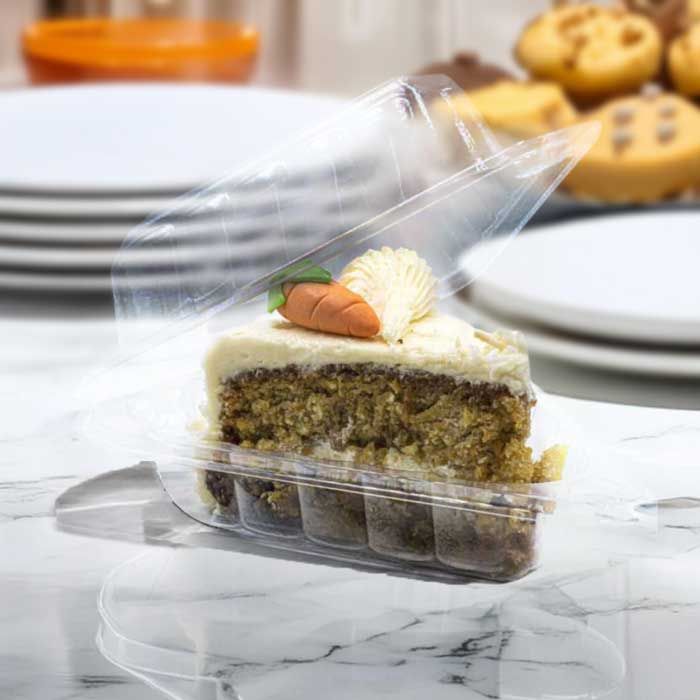
She disappeared into the kitchen and returned moments later with a small sheet cake in a clear plastic container. The box still had a bright orange clearance sticker on it: $15.00, marked down from $23.99.
She’d bought it on her way home, I realized. A last-minute grab from the grocery store bakery section, something to cover the oversight.
They sang “Happy Birthday,” but it was rushed, half-hearted. Ryan didn’t meet my eyes. Megan smiled too brightly, overcompensating. Patricia and Robert joined in awkwardly, clearly uncomfortable with the tension they’d inadvertently exposed.
Leo was the only one who sang with genuine enthusiasm, his little voice carrying over the others.
When they finished, Megan cut the cake quickly and distributed slices. Then, as if relieved to move past the uncomfortable moment, everyone returned to their previous conversations.
The cake tasted like cardboard. Or maybe that was just my tears, salting everything.
After dinner, I insisted on cleaning up alone. I needed the space, the silence, the ability to move through the kitchen without anyone watching me fall apart.
I scraped plates, loaded the dishwasher, wiped down counters. Through the doorway, I could see them all in the living room—comfortable, content, already moved on from the birthday that meant so little to them and everything to me.
I was putting away the last of the dishes when I heard Megan’s voice drift in from the living room. She was speaking quietly, but the house had excellent acoustics, and her voice carried.
“She seems really tired lately,” Megan said. “Have you noticed?”
“She’s getting older,” Ryan replied, his tone matter-of-fact. “It’s natural.”
“I just wonder if this arrangement is sustainable long-term.” There was a pause. “Maybe it’s time to look into other options.”
My hands stilled on the dish towel.
“What kind of options?” Ryan asked.
“You know. Long-term care facilities. Senior living communities. Places where she’d have people her own age, activities, professional care.”
“She seems fine here,” Ryan said, but his voice was uncertain.
“For now. But what happens when she needs more help? We both work full-time. Leo has school and activities. We can’t be her caregivers.”
“She’s not sick, Megan.”
“Not yet. But we need to plan ahead. Be practical about this.”
There was a longer pause. I could picture Ryan processing, weighing his options the way he always did—analytically, without much emotion.
“Let’s see how things go,” he finally said. “She’s still helping around the house for now. When that changes, we’ll reassess.”
Still helping around the house for now.
As if my value was measured entirely in my usefulness. As if the moment I became a burden rather than a benefit, I would be discarded like an old appliance that no longer worked.
They weren’t arguing. They weren’t upset. Their voices were calm, rational, practical.
They were discussing my future the way you might discuss reorganizing furniture or refinancing a mortgage—as a problem to be solved, an inconvenience to be managed.
Something inside me crystallized in that moment. Not anger, exactly. Not even hurt, though that was certainly there. What I felt was clarity. The kind of clarity that comes when you finally stop lying to yourself about a situation.
I didn’t belong here. Not anymore. Maybe I never really had, not in the way I’d wanted to.
I set down the dish towel, turned off the kitchen lights, and walked upstairs to my bedroom—the small guest room I’d moved into when Ryan and Megan claimed the master after their wedding.
I locked the door.
From my nightstand drawer, I pulled out the small digital voice recorder my late husband had once used for work notes. He’d been a meticulous man, always documenting things, and I’d kept it after he died, though I’d never had reason to use it until now.
If they were going to discuss my future, I wanted documentation. I wanted to remember their exact words, the tone, the casualness with which they planned to dispose of me.
I went back downstairs as quietly as possible, slipping the recorder into my cardigan pocket. I positioned myself in the kitchen where I could still hear their voices and pressed record.
For the next hour, I listened and documented. They talked about senior facilities. About costs. About how much “easier” things would be once I was “settled somewhere appropriate.” About whether to sell the house or keep it.
My house. The house my husband and I had worked decades to pay off. The house where I’d raised Ryan, where every room held memories of a life I’d poured myself into.
They talked about it like it was already theirs.
When they finally said goodnight and headed upstairs, I stopped the recording and returned to my room.
I sat on my bed for a long time, just staring at the recorder in my hands. Then I opened my laptop and began searching.
Willow Creek Senior Living. I’d driven past it dozens of times over the years, always thinking how nice it looked with its manicured grounds and cheerful exterior. I’d never imagined I’d be looking at it as a potential home.
But as I scrolled through the website, reading about independent living apartments, community activities, and a life where I might actually matter to people again, something stirred in my chest.
Not sadness. Not defeat.
Hope.
I spent the next two hours researching, making phone calls to 24-hour inquiry lines, and learning about my options. By midnight, I had a plan.
Then I sat down and wrote three letters.
The first was to Ryan. I told him I loved him, that I always would, but that I couldn’t continue living in a house where I was treated as hired help rather than family. I reminded him of the man his father had been, of the values we’d tried to instill in him, and expressed my disappointment—not in him as a person, but in the choices he’d been making.
The second was to Megan. It was shorter, more direct. I thanked her for the years we’d lived under the same roof and acknowledged that we’d never truly connected the way I’d hoped we might. I told her I bore her no ill will but that I needed to choose myself for once.
The third was to Leo. That one was the hardest to write. I told him I loved him, that I would always be his grandmother, and that sometimes adults had to make difficult choices to take care of themselves. I promised him we’d still see each other, that this wasn’t goodbye forever, just a change in circumstances.
I folded each letter carefully, wrote names on the envelopes, and set them on my dresser alongside the voice recorder.
Then I pulled my suitcase from the closet and began to pack.
I didn’t take much. Clothes, toiletries, a few photographs, my jewelry box, my mother’s Bible. The things that were truly mine, that carried meaning beyond their material value.
I packed slowly, methodically, taking my time with each item. This wasn’t a dramatic escape. This was a deliberate choice, made with a clear head and an open heart.
By 4:00 a.m., I was ready.
I sat on the edge of my bed, looking around the small room that had been my sanctuary for the past three years. It wasn’t much—nothing like the master bedroom I’d once shared with my husband—but it had been mine. Private. Safe.
But safety, I realized, wasn’t enough. Not when it came at the cost of dignity.
I called for a taxi, giving them the address and asking them to park at the curb rather than honking. Then I carried my suitcase downstairs, moving as quietly as possible.
In the kitchen, I left the letters and the voice recorder on the counter where Ryan would find them when he came down for breakfast. Part of me wanted to write more, explain more, justify my decision. But I’d said what needed to be said. Anything more would just be repetition.
I stood at the front door, suitcase by my side, and looked back at the darkened house one last time.
Forty years of memories lived in these walls. First steps. First words. Birthday parties. Christmases. The sound of my husband’s laughter. The feeling of Ryan hugging me tight when he was small enough to fit in my arms.
But memories alone weren’t enough to make this a home. Not anymore.
The taxi’s headlights appeared down the street. I opened the door and stepped out into the pre-dawn chill.
“Mom?”
I turned. Ryan stood at the top of the stairs, shirtless, hair disheveled, eyes confused and still half-asleep.
“Where are you going?”
For a moment, I almost wavered. Almost went back upstairs, unpacked my suitcase, resumed my position as the invisible woman who kept his household running.
But I thought about the clearance-sticker cake. The forgotten birthday. The casual conversation about sending me away.
I thought about the plumber who’d shown me more kindness in five minutes than my own son had shown me in months.
I thought about women like me who forget that they matter too.
“For the first time in sixty years,” I said, my voice steady and calm, “I’m going somewhere where I’m appreciated, not taken for granted.”
“What? Mom, wait—”
But I was already walking toward the taxi, pulling my suitcase behind me. The driver, a kind-faced older gentleman, got out and helped me load the suitcase into the trunk.
“Where to, ma’am?” he asked gently.
I looked back at the house one more time. Ryan had come down to the doorway, his face a mixture of confusion and slowly dawning realization. Behind him, a light clicked on upstairs. Megan, probably, woken by the voices.
I turned away.
“Willow Creek Senior Living,” I said. “It’s time to start a new chapter.”
As the taxi pulled away from the curb, I watched my old life recede in the rearview mirror. The house growing smaller. The porch light flickering off. The shape of my son standing in the doorway, finally—too late—wondering where his mother had gone.
I didn’t cry. Instead, I felt something I hadn’t felt in years: the lightness of freedom, the quiet thrill of possibility, the sense that maybe, just maybe, the best parts of my life were still ahead of me.
The sun was just beginning to rise as we drove through the empty streets, painting the sky in shades of pink and gold. A new day. A new beginning.
And for the first time in longer than I could remember, I was choosing it for myself.
Behind me, in that kitchen where I’d spent so many invisible mornings, the voice recorder waited. Eventually, Ryan would find it. Eventually, he would press play.
And eventually, he would hear his own voice, his wife’s voice, discussing his mother’s future with all the emotion of planning a grocery list.
Maybe it would change something. Maybe it wouldn’t.
But either way, I would be where I chose to be, living the life I decided to live, finally—finally—putting myself first.
The taxi turned the corner, and the house disappeared from view completely.
I smiled, settled back in my seat, and watched the sunrise.
THE END