When My Family Skipped My Wedding
The morning of my wedding, I stood in front of the full-length mirror in the bridal suite and realized I was counting something I shouldn’t have been counting. Not the minutes until the ceremony. Not the buttons on my dress. Not even my own heartbeats, though those were loud enough to hear.
I was counting empty chairs.
The wedding coordinator knocked softly, clipboard in hand, that practiced smile already in place. “Fifteen minutes, Commander Carter. Your father should be taking his position now.” She glanced past me toward the hallway, expecting to see someone. Anyone.
“He won’t be coming,” I said. The words came out clean and flat, the way I’d learned to deliver bad news to recruits who weren’t going to make the cut. “None of them will.”
Her smile faltered, reset, then settled into something closer to genuine sympathy. “I’m so sorry. Do you need a moment?”
“No.” I smoothed the skirt of my dress, white silk that caught the morning light streaming through the old church windows. “Let’s start on time. That’s what we planned.”
She nodded and left, heels clicking down the hardwood hallway. Through the wall, I could hear the organ beginning its prelude, those deep notes that shake your chest and make you believe in something larger than yourself. I’d chosen this church for that organ, for these windows, for the way the morning sun turned Virginia into something holy.
What I hadn’t chosen was to walk that aisle alone.
My phone sat on the vanity table, screen dark, notifications silent. I’d checked it thirty-seven times since midnight. No calls. No texts. No last-minute explanations or apologies or even the courtesy of a lie about traffic or illness. Just silence, which is somehow louder than any argument we’d ever had.
I picked up my bouquet—white roses, eucalyptus, small blue forget-me-nots tucked between the blooms—and made myself look at my reflection one more time. Commander Emily Carter. United States Navy. Thirty-two years old. Bachelor’s degree from the Naval Academy, Master’s in logistics, currently training the next generation of naval aviators at Oceana. I’d stood on aircraft carriers in the middle of the Pacific, coordinated supply chains across three continents, and briefed admirals who could end my career with a signature.
But I’d never felt as exposed as I did in that moment, holding flowers and wearing white, about to walk into a room where three entire pews would sit empty.
The coordinator returned. “It’s time.”
The sanctuary doors opened, and the organ shifted into the processional. I could see down the length of the aisle—white runner, candles glowing in brass stands, garlands of flowers marking each row, and at the end, David. David with his steady carpenter’s hands and his engineer’s mind, wearing the navy suit we’d picked out together, looking at me like I was the only thing in the world that mattered.
Behind him stood his groomsmen. In the pews sat his family—his mother in the front row, already dabbing at her eyes with a tissue, his sister beside her, his cousins and uncles and aunts filling the space with presence and love and the kind of continuity I’d spent my whole life chasing.
On my side: coworkers in dress uniforms, a few friends from my academy days, my mentor Captain Richardson in the third row, and enough empty space to park a fighter jet.
Three pews. Front and center. White ribbons tied to the ends. Reserved seating for ghosts.
I started walking.
Every step felt measured, like I was pacing the deck of a ship in rough seas, trusting that the next footfall would find solid ground. The guests rose. Faces turned toward me—some smiling, some carefully neutral, all of them seeing what wasn’t there as clearly as what was.
David’s eyes never left mine. He didn’t look at the empty pews. He didn’t offer pity or awkward reassurance. He just watched me walk toward him with that engine-builder’s calm, that absolute certainty that every part would fit together eventually, that every problem had a solution if you were patient and precise enough.
When I reached the altar, he took my hand. His thumb brushed across my knuckles once—a small gesture, barely visible, but it said everything: I’m here. We’re here. That’s enough.
The chaplain began. “Dearly beloved, we are gathered here today…”
I heard the words. I said my vows. I meant them with everything I had. But part of me was still counting those chairs, still calculating the geometry of absence, still wondering how my parents and my younger brother James could decide that one day of my life—this day—wasn’t worth their time.
The reception happened in bright hotel ballroom light that tried its best to look like moonlight. Crystal chandeliers, round tables draped in ivory linen, a band playing Sinatra and Motown, a cake with four layers and sugar flowers so delicate they looked like they might blow away. David’s mother, Susan, pulled me aside between the salad course and the speeches.
“Emily,” she said, taking both my hands in hers. They were warm and solid and calloused from her own work as a furniture restorer. “You’re part of our family now. I know that doesn’t replace… I know it’s not the same. But you have us. All of us.”
She hugged me then, and I let myself hold on longer than I probably should have. It felt like a bandage—well-meaning, carefully applied, but not quite reaching the wound.
“Thank you,” I whispered into her shoulder. “Thank you for being here.”
“Where else would I be?”
It was a simple question. It shouldn’t have hurt. But it carved out a hollow space in my chest that the champagne and the laughter and the first dance couldn’t quite fill.
David and I left the reception early, driving through Norfolk streets that gleamed with rain, heading back to our house overlooking the harbor. Ships moved in the darkness, their lights marking paths across the water, their engines humming a low frequency I could feel more than hear. I stood on our balcony in my wedding dress, barefoot, veil discarded somewhere inside, and watched the Atlantic do its ancient work of arriving and leaving, arriving and leaving.
My phone stayed dark. No well-wishes. No apologies. No acknowledgment that I’d gotten married at all.
I told myself silence was just air, just the absence of sound, just a temporary condition that would eventually correct itself.
It felt like stone settling into the foundation of everything.
We took a week for our honeymoon, driving up the Virginia coast and into the Carolinas. Small towns with diners that served coffee in heavy ceramic mugs. Maritime museums filled with ships’ wheels and captains’ logs and stories about people who went to sea and came back changed. Hand-painted signs on two-lane roads advertising boiled peanuts and fireworks and salvation.
David talked to everyone—waitresses, dock workers, the old man selling bait near Morehead City, the teenage girl at the gas station who’d just gotten her acceptance letter to NC State. He had this way of making people feel like they mattered, like their stories were worth hearing, like the world was fundamentally a good place full of fundamentally good people.
For a week, I let myself believe that too.
Then we came home, and the quiet settled in.
Not the peaceful kind of quiet. The heavy kind, the kind that presses against your eardrums and makes you aware of your own breathing. I threw myself into work—training recruits at dawn, signing off on logistics reports at noon, mentoring young officers who thought a few medals and a clean record could somehow fill the holes their own families had left behind.
I understood them better than I wanted to admit.
At night, I scrolled through old photos on my phone. Thanksgiving dinner three years ago, James and I laughing over something stupid while Mom carved the turkey. My college graduation, Dad’s hand on my shoulder, his face almost proud. An anniversary dinner for my parents’ thirtieth, all of us dressed up and pretending we knew how to be the kind of family that stayed in touch.
In every photo, I was wearing my uniform. Dress whites. Service khakis. Even the casual pictures showed me in Navy workout gear, dog tags visible, hair regulation length.
It occurred to me, scrolling through those images in our bedroom while David slept beside me, that maybe I’d become a mirror they didn’t want to look into. A reminder of choices they didn’t understand, of a life they couldn’t control, of a daughter who’d left and built something they couldn’t claim as their own.
The text came on a Tuesday.
Need $8,400 for your brother’s wedding. Venue deposit is due Friday. You’ve always been the responsible one. Don’t let James down.
I sat in my office at the base, staring at those words on my phone screen, and I laughed. Not the funny kind. The kind that scrapes your throat and tastes like bile.
Eight thousand four hundred dollars.
For James’s wedding.
The wedding I’d undoubtedly be invited to after they’d paid for everything with my money.
I opened my banking app. Found Dad’s contact information, still saved from years ago when we split the cost of replacing Mom’s car. And I sent him exactly one dollar.
The note attached said: Best wishes to James and his bride.
Then I called David at his workshop. “Hey, can you change the locks this weekend?”
“Everything okay?”
“It will be.”
The next message came within an hour. This is petty, Emily. We raised you better than this. Don’t embarrass us at the wedding next month. James wants you there.
I put the phone face down on my desk. That evening, I took my medals out of their cases—the Navy and Marine Corps Achievement Medal, the Meritorious Service Medal, the various ribbons and commendations I’d earned over a decade of service—and I polished them one by one at the kitchen table until they caught the light and threw it back like tiny mirrors, like pieces of a person I’d built from scratch without anyone’s permission.
David watched from the doorway. “You okay?”
“Getting there.”
The next week, one of my colleagues pulled me aside after a briefing. “Hey, Commander, heads up—some guy was asking about you down at the civilian docks yesterday. Older, claiming to be family, wanted to know what base you were stationed at and how to get in touch with you.”
“Description?”
“Sixties, gray hair, kept mentioning you by name. Said he was your father.”
I felt something cold slide down my spine. “If he shows up again, don’t give him anything.”
“Already didn’t. Just thought you should know.”
I went to the base chapel that night, before sunrise, when the building was empty and the only light came from the eternal candle near the altar. The chaplain found me there, sitting in a pew, hands folded, trying to pray but mostly just breathing.
He sat down beside me without asking permission. “Rough night, Commander?”
“Long year.”
“Want to talk about it?”
I told him. Not everything, but enough. The wedding. The silence. The demand for money. The way my father was circling closer, testing boundaries, looking for leverage.
The chaplain listened without interrupting. When I finished, he was quiet for a long moment, and then he said, “Some battles aren’t about winning. They’re about keeping your heart alive.”
I nodded. I wrote it down in my phone so I wouldn’t forget. I repeated it to myself driving home as the sun came up over Norfolk and turned the harbor gold.
Keep your heart alive.
The letter arrived on a Saturday, hard edges, hard handwriting, my name and address in aggressive capital letters.
Emily,
You’ve forgotten where you came from. You’ve built this new life with your medals and your important friends, and you think you’re better than us now. Keep your trophies. You’ll end up alone with them. James doesn’t need a sister who can’t even help family. Don’t bother coming to his wedding. We’ll celebrate without you, just like you celebrated without us.
—Dad
I read it once. Twice. Then I folded it carefully and tucked it under the cutlery drawer, filed away with the other sharp things that could cut you if you weren’t careful.
David found me standing in the kitchen, staring at nothing.
“Another message?” he asked.
“Letter this time.”
“What did it say?”
“That I’ll die alone with my medals.”
He wrapped his arms around me from behind, chin resting on my shoulder. “Joke’s on him. You’ve got me, and I’m terrible at leaving.”
I laughed, and this time it was the real kind, the kind that loosens the knot in your chest just enough to breathe again.
“Thank you,” I whispered.
“For what?”
“For staying.”
The knock came three weeks later, on a Wednesday evening when David and I were making dinner together—pasta, garlic bread, a salad with too many different kinds of lettuce because we could never decide which one we actually liked.
My phone rang first. Unknown number.
“Commander Carter?”
“Speaking.”
“This is Officer Grant with Norfolk Police Department. We’re currently outside your residence with a Mr. Thomas Carter. He says he’s your father and that there’s a domestic matter that needs to be resolved. Can you confirm you live at this address?”
The kitchen tilted. I grabbed the counter edge, knuckles white. “Yes, I live here.”
“Can you come outside, please? We need to speak with you.”
I hung up. Looked at David. “My father’s here. With police.”
His face went still. “What?”
“I don’t know.”
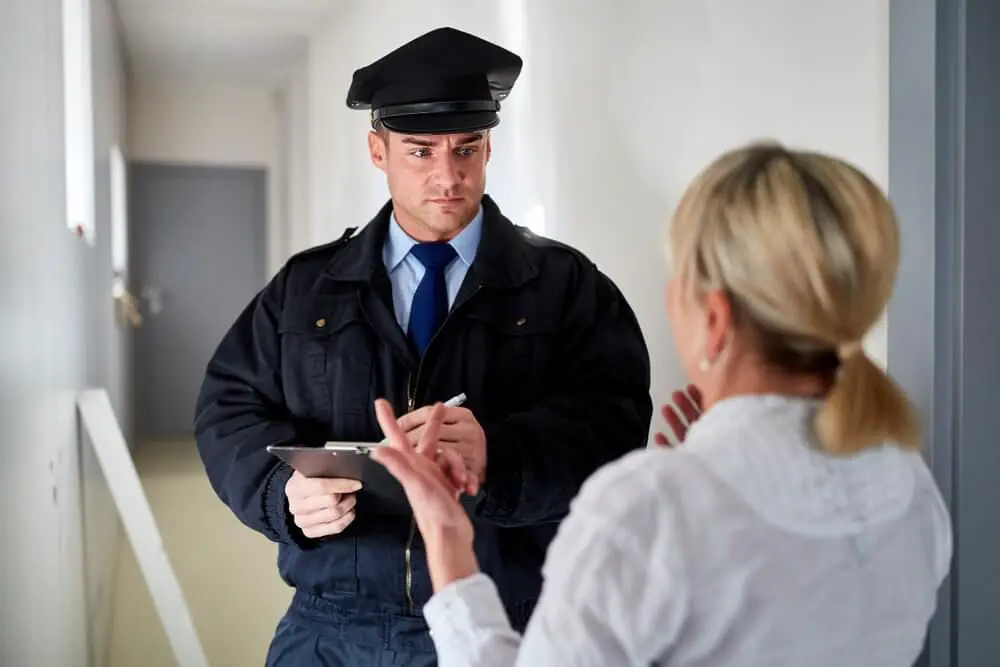
We walked to the front door together. Through the window, I could see them: two Norfolk PD cruisers parked at the curb, lights off but still imposing, their dark bulk and official insignia making everything feel suddenly dangerous. Between the two vehicles stood my father, arms crossed, face flushed red with anger or exertion or both, flanked by two uniformed officers.
He saw me through the window. Saw my dress blues—I’d come home from work an hour ago and hadn’t changed yet. And he smiled. Not a warm smile. The performative kind, the one that said gotcha.
I opened the door. The evening air moved across our porch, carrying the salt smell of the harbor and something else, something metallic and bitter.
“Finally decided to show up, Commander,” my father said, letting the title sting like a slap.
I ignored him. Looked at the older of the two officers, a sergeant with gray at his temples and the careful expression of someone who’d worked plenty of domestic calls. “What’s this about?”
“Domestic theft,” he said, the words chosen carefully, professionally. “Mr. Carter here claims you withdrew significant funds from a family account without his consent.”
One dollar. Best wishes. A door key turning in a new lock.
I felt David step up beside me, not crowding, just present. Our flag hung on the porch post, red and white and blue, stirring once in the breeze and then going still.
“I’d like to see evidence of this withdrawal,” I said, my voice steady, running through the checklist like I was briefing a mission instead of defending my own integrity on my own front steps.
My father pointed past the officers, toward our house. “That house is built on our name. The money we gave you for college, the money we gave you for the down payment—”
“You didn’t give me money for college,” I said, each word measured and precise. “I had a full ROTC scholarship. And you didn’t give me money for a down payment. I saved for six years and bought this house with my own salary.”
“That’s not—” he started.
I held up my phone. “Officer, you want to see the transaction he’s talking about?”
The sergeant stepped forward. I pulled up my banking app, showed him the record. One dollar. Sent to Thomas Carter. Note: Best wishes to James and his bride.
The officer’s expression didn’t change, but something shifted in his eyes. He looked at my father. Then back at me.
“Ma’am, is there any other financial interaction between you and Mr. Carter that could be considered theft?”
“No, sir. That’s the only money I’ve sent him in over a year. Before that, I split the cost of a car repair for my mother. I have records of everything.”
My father’s face darkened. “She owes us. We raised her. We gave her everything.”
“You gave me nothing,” I said, and the words came out quiet but absolute. “You didn’t come to my wedding. You didn’t call on my birthday. You asked for money and then told me I’d die alone when I wouldn’t give it to you. And now you’re standing on my property with police officers, accusing me of theft because I sent you one dollar.”
The second officer, younger, shifted his weight uncomfortably. The sergeant pinched the bridge of his nose.
“Mr. Carter,” the sergeant said, “based on what I’m seeing here, there’s no evidence of theft. If you have a civil dispute with your daughter regarding other financial matters, you’ll need to pursue that through appropriate legal channels. We can’t help you with this.”
“She’s lying,” my father said. “She’s always been a liar. Manipulative. Turned my own family against me—”
“Sir,” the sergeant interrupted, firm but not unkind, “we’re going to need you to calm down.”
“I won’t calm down! That’s my daughter, and she’s stolen from me, and you’re just going to let her—”
“Mr. Carter.” The sergeant’s voice hardened. “You need to leave this property now. If you don’t, I’ll charge you with filing a false report and disturbing the peace.”
My father stared at him. Then at me. And in his eyes, I saw something I’d seen before but never named: he didn’t see me as a person. He saw me as a possession, as a resource, as something that was supposed to serve his needs and validate his choices.
I’d spent thirty-two years trying to earn his approval. And in that moment, standing on my own porch in my dress uniform with my husband beside me and the United States flag at my back, I finally understood: his approval wasn’t worth having.
“Goodbye, Dad,” I said.
He opened his mouth. Closed it. Turned and walked back toward his car—not one of the cruisers, but an old Buick parked further down the street, the same car he’d been driving since I was in high school.
The officers followed him to make sure he left. The sergeant paused at the bottom of our steps.
“Commander, if he shows up again, call us immediately. And you might want to consider a restraining order.”
“Thank you, Officer.”
They waited until my father’s car pulled away, taillights disappearing around the corner. Then they got back in their cruisers and left too, and the street was quiet again, just houses and streetlights and the distant sound of the harbor.
David and I stood on the porch for a long moment, not speaking.
“You okay?” he finally asked.
“I don’t know.”
“That was—”
“A lot.”
“Yeah.”
I leaned against him, and he wrapped his arm around my shoulders, and we watched the sky turn from blue to purple to black, stars appearing one by one overhead.
Inside, the pasta had gone cold. The garlic bread was probably burnt. Neither of us cared.
We ordered pizza instead and ate it on the couch, watching nothing in particular on TV, his hand in mine, the house quiet and safe and ours.
My phone stayed silent. No angry follow-up texts. No voicemails. No letters.
Just silence.
And this time, it didn’t feel like stone.
It felt like peace.
Six months later, I received a wedding invitation in the mail. Cream cardstock, elegant script, James Carter and Rebecca Mills request the honor of your presence.
No personal note. No phone call. Just the formal invitation, like I was a distant acquaintance instead of his sister.
I held it for a long time, running my thumb over the embossed letters. David found me in the kitchen, staring at it.
“What are you going to do?” he asked.
“I don’t know.”
“Do you want to go?”
I thought about it. Really thought about it. Pictured myself walking into another church, another ceremony, another family gathering where I’d be tolerated but not welcomed, acknowledged but not embraced.
“No,” I said finally. “I don’t think I do.”
“Then don’t.”
“It’s that simple?”
“It’s that simple.”
I wrote a short note—Congratulations on your marriage. Wishing you both every happiness.—and sent it with a small check, a reasonable wedding gift, nothing more. Then I threw the invitation away and took David out to dinner instead, just the two of us, at a seafood place overlooking the water where we talked about everything except my family.
A month after James’s wedding, my mother called. I almost didn’t answer.
“Emily?”
“Hi, Mom.”
“I wanted to… Your father told me what happened. About the police. He said you were very disrespectful.”
I waited.
“Were you?” she asked, and her voice was smaller than I remembered.
“I was honest,” I said. “That’s all I’ve ever been.”
Silence on the line. Then: “James’s wedding was beautiful.”
“I’m glad.”
“He asked about you.”
“Did he?”
“He wanted to know why you didn’t come.”
“What did you tell him?”
Another pause. “I told him you were busy with work.”
I closed my eyes. “Mom, I didn’t come because I wasn’t welcome. You know that. Dad made it very clear.”
“He just… He doesn’t understand your choices, Emily. The military, the life you’ve built, all of it. It’s not what he wanted for you.”
“I know.”
“But it doesn’t mean he doesn’t love you.”
And there it was. The old script. The familiar excuse. The same justification I’d heard my entire life for why love looked like criticism, why care looked like control, why family looked like conditional acceptance.
“Mom,” I said gently, “love without respect isn’t love. It’s just obligation wearing a mask.”
She didn’t say anything for a long time. When she finally spoke, her voice was thick. “I wish things were different.”
“So do I.”
“Can we… Do you think we could try again? Start over?”
I thought about empty pews. About one dollar. About a letter tucked under sharp things. About my father standing on my porch with police, trying to weaponize the law against his own daughter because she’d set a boundary.
“I don’t think so,” I said. “Not right now. Maybe not ever. I’m sorry, Mom.”
“I understand.”
“Do you?”
“I’m trying to.”
We said goodbye, and I hung up, and I stood in the kitchen of my house overlooking the harbor, my house that I’d bought with my own money, my house where I lived with a man who thought I was worth showing up for, and I felt something shift.
Not breaking. Not cracking.
Settling.
Like a ship finding its proper trim in the water, like everything finally balanced the way it was supposed to be.
A year passed. Then two. Life moved forward the way life does—deployments and promotions, holidays with David’s family, Sunday mornings reading the paper on our porch, weeknight dinners that tasted better because we cooked them together.
I stopped checking my phone for messages that never came. Stopped rehearsing conversations I’d never have. Stopped trying to fix something that was broken long before I understood what broken meant.
I built a life instead. A good one. Full of people who showed up, who kept their promises, who understood that love was a verb, not just a noun.
Captain Richardson retired, and I gave a speech at his ceremony that made him cry, this tough old naval officer who’d seen combat and guided a thousand young sailors through their careers. He pulled me aside afterward.
“You’ve come far, Commander.”
“Thank you, sir.”
“I’m not just talking about rank.”
I smiled. “I know.”
David’s mother hosted Thanksgiving that year, and Christmas, and Easter, and the Fourth of July. She always set a place for me at the table, always introduced me as “our Emily,” always made sure I knew I belonged.
It didn’t replace what I’d lost. But it filled the space with something better.
Three years after my wedding, I got promoted to Captain. David surprised me with a party—nothing huge, just close friends and colleagues, cake and champagne and stories about my early days in the Navy when I was still figuring out how to lead without apologizing for it.
Susan gave a toast. “To Emily, who taught me that family isn’t just blood. It’s choice. It’s showing up. It’s love that doesn’t come with conditions.”
I cried. The good kind of crying, the kind that means you’re happy and grateful and exactly where you’re supposed to be.
That night, lying in bed next to David, I said, “Thank you.”
“For what?”
“For meeting me at the end of that aisle.”
“Where else would I be?”
It was the same question his mother had asked at our wedding. And three years later, it still had the same simple, perfect answer.
Nowhere else.
Just here.
Five years after my wedding, I received one final letter. Different handwriting this time. My mother’s.
Emily,
Your father had a stroke last month. He’s recovering, but the doctors say it’s changed him. Made him quieter. Made him think about things differently.
He asked me to write to you. He won’t admit it, but I think he wants to apologize. Or at least, he wants to try.
I’m not asking you to forgive him. I’m not asking you to come visit. I just thought you should know.
I’m sorry for the way things happened. I’m sorry I didn’t stand up for you when I should have. I’m sorry it took this long to say it.
If you ever want to talk, I’m here.
Love, Mom
I read it three times. Showed it to David. Sat with it for a week.
Then I wrote back.
Mom,
I’m sorry to hear about Dad’s stroke. I hope his recovery goes well.
I appreciate you reaching out. I appreciate the apology. It means more than you might think.
But I’m not ready to reconnect. Maybe someday. Maybe not. I need to respect my own boundaries and protect my own peace. I hope you can understand that.
I do wish you well. Both of you.
—Emily
I sent it. And then I let it go.
Not with anger. Not with bitterness. Just with the quiet certainty that I’d made the right choice for myself, that I’d built a life worth protecting, that some doors were meant to close so other ones could stay open.
Ten years after my wedding, David and I sat on our porch on a Sunday morning, coffee in hand, watching the harbor wake up. Ships moved across the water, heading out to sea or coming home, doing their ancient work of departure and return.
“Do you ever regret it?” he asked. “The way things happened with your family?”
“Regret what? That they didn’t come to our wedding?”
“All of it.”
I thought about it. Really thought about it.
“No,” I said finally. “I regret that they chose to make it this way. But I don’t regret the life we’ve built. I don’t regret the boundaries I set. I don’t regret choosing people who choose me back.”
He reached over and took my hand.
“Good,” he said.
We sat there as the sun climbed higher, turning the Atlantic silver and gold, lighting up our little corner of Virginia with the kind of light that makes you believe in new beginnings.
Inside, on the mantel, sat a wedding photo—David and me at the altar, his mother standing beside us, Captain Richardson in the background, no empty pews visible in the frame. Just the people who showed up. Just the people who stayed.
It was enough.
More than enough.
It was everything.
THE END