The Price of Disrespect
The borrowed dress still hung in my closet, a thin blue thing on a cheap plastic hanger. I sat at my marble kitchen island in my Midtown penthouse, fingers wrapped around a sweating glass of iced tea, watching the sunrise paint the neighboring high-rises in shades of gold and rose. My phone kept lighting up with notifications—financial alerts, news updates, messages I wasn’t ready to read. Somewhere far below, the city was waking up, oblivious to the fact that everything had changed in the span of a single dinner.
I hadn’t slept. How could I? When you’ve just set fire to a two-billion-dollar deal and watched a man’s empire begin to crack, sleep feels like a luxury you haven’t earned yet.
The wine had surged through my veins like liquid fire as I watched William Harrington’s mouth shape the words. My fingernails dug crescent moons into my palms as the room around me blurred at the edges. His voice was both muffled and painfully clear, slicing through the chandelier-lit hush of the Harrington dining room like a blade through silk.
“My son deserves better than someone from the gutter,” he announced, loud enough for the crystal stemware to tremble on the mahogany table. “Street garbage in a borrowed dress, pretending to belong in our world.”
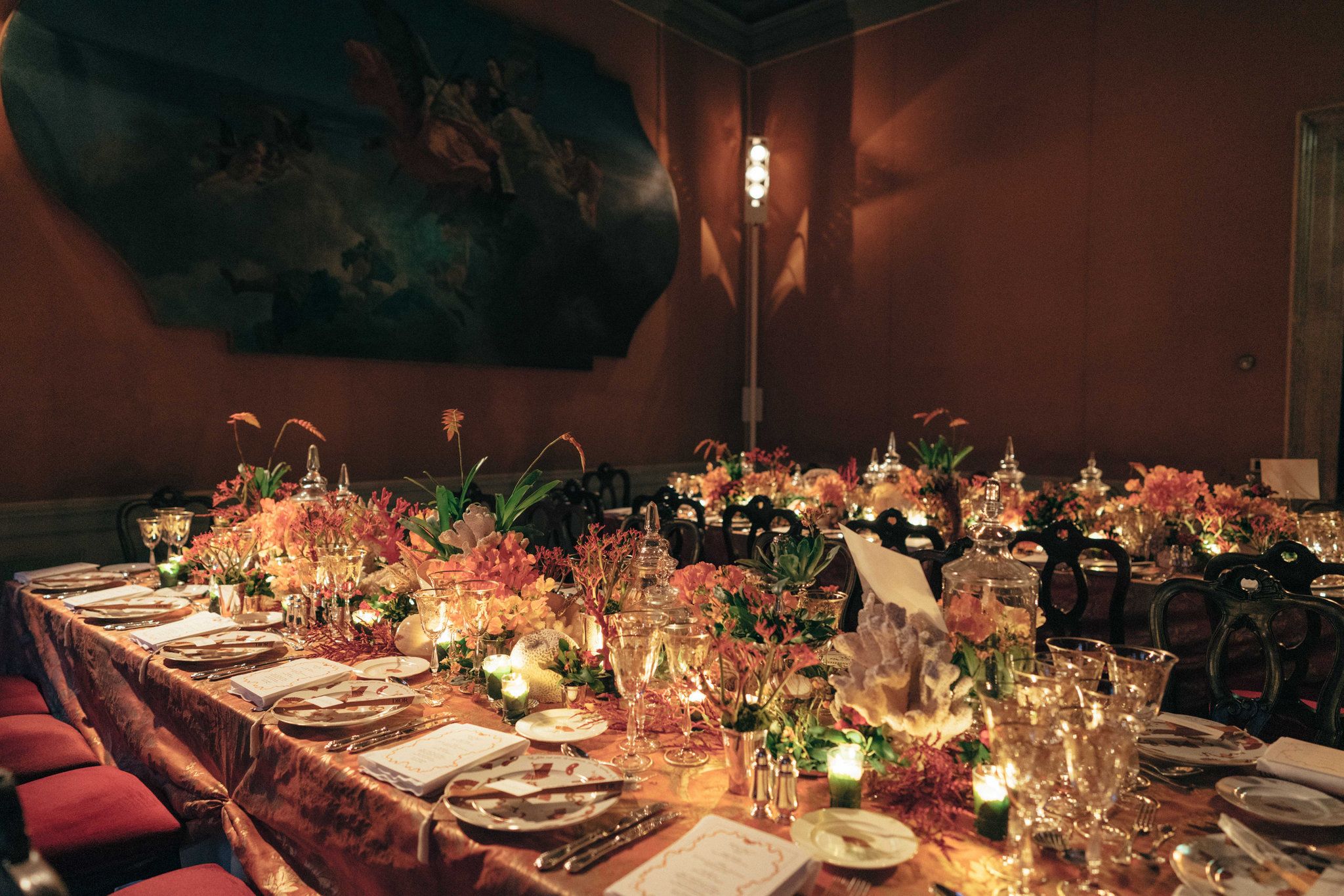
Twenty-three pairs of eyes pivoted between William and me. The guests—country club friends, business associates, family members—waited to see if the nobody dating the prince would dare respond to the king. Silverware froze midair. Candlelight winked off his Rolex and the ridiculous centerpiece made of orchids flown in from some country I’d never visited, probably couldn’t afford to visit, definitely wasn’t welcome to visit according to the man holding court at the head of his table.
I felt each heartbeat ticking in my throat like a countdown timer as I carefully folded the linen napkin. The fabric was thick, soft, weighty between my fingers—probably more expensive than my first month’s rent had been in that basement apartment in Queens. I smoothed it once, twice, pressing the tremor out of my hands and into the cloth.
Then I set it down beside my untouched plate of salmon and met his gaze head-on.
“Thank you for dinner, Mr. Harrington,” I said, my voice steady as I rose to my feet. My chair scraped against the polished floor, the sound sharp as a gavel in the sudden silence. “And thank you for finally being honest about how you feel.”
A muscle jumped in his jaw, but his eyes gleamed with satisfaction. He was savoring this moment, this public execution of the girl who’d dared to touch his son.
“For anyone wondering,” I continued, lifting my chin and letting my gaze sweep slowly across the frozen tableau of Manhattan’s elite, “my name is Zephra Cross. I grew up on the side of town your GPS tells you to avoid after dark. I’ve waited tables, stocked warehouses at midnight, and fallen asleep over community college textbooks on buses that smelled like old fries and desperation.” I paused, watching understanding dawn on a few faces. “I’m thirty-two years old and a self-made entrepreneur. What you just witnessed? This is the opening chapter of the story of how I turned a public humiliation into the most expensive lesson William Harrington ever learned.”
“Zeph, don’t.” Quinn’s voice came out hoarse, desperate. His hand shot out under the table, fingers wrapping around mine with almost painful pressure. His blue eyes—his mother’s eyes, the only soft thing he’d inherited from his family—were wide and pleading.
I squeezed his hand gently, memorizing the warmth of his palm against mine, then let go.
“It’s fine, love,” I said softly, though my tone carried steel underneath the endearment. “Your father’s right. I should know my place.”
A satisfied smirk crawled across William’s face, and I filed it away in my memory. It was the expression of a man who thought he’d won, who believed he’d finally driven away the street rat who’d been contaminating his bloodline for the past year.
If only he knew what was coming.
I walked out of that dining room with my spine straight and my head high. Past the Monet in the hallway that William always made a point to mention was “not a print, you understand, an original.” Past the household staff who suddenly found the marble floor fascinating. Past the Bentley in the circular driveway that William had casually pointed out cost more than I’d make in five years—at least, more than he thought I made.
My dress swished around my knees, the cheap polyester whispering over imported Italian marble like it knew it didn’t belong. The thing had cost me fifty dollars and a favor from a friend who owned a boutique in Brooklyn. It fit better than any designer label in that room, because I’d earned every thread.
The cool night air hit my face as I stepped outside, and I pulled it into my lungs like I’d been drowning. My sensible silver Toyota sat at the edge of the circular drive, looking distinctly out of place among the luxury vehicles lined up like expensive jewelry in a display case. William had sneered at it when I pulled up. “Reliable transportation,” I’d said pleasantly. He’d snorted.
“Zeph, wait!”
Quinn caught up to me just as my fingers closed around the door handle. His tie was crooked, his perfect Harrington hair mussed from raking his hand through it. There were tears tracking down his face, and the sight of them cracked something in my chest.
“I’m so sorry,” he gasped out. “I had no idea he would—I never thought—”
I pulled him close, burying my face in the familiar scent of his cologne mixed with the salt of his tears. For one heartbeat, the world shrank to just his arms around me and the way his chest shook with suppressed sobs.
“This isn’t your fault,” I murmured into his shoulder. “You don’t control him. You never could.”
“I’ll talk to him,” Quinn insisted, pulling back to search my face with desperate eyes. “I’ll make him apologize. I’ll tell him he can’t treat you like that, that he has to—”
“No.” I reached up and tucked a strand of his dark hair behind his ear, a gesture I’d done a hundred times in softer moments. “No more apologizing for him. No more making excuses. He just said out loud what he’s been thinking since the day you introduced us. At least now we know exactly where we stand.”
“Zephra, please.” My name broke in the middle when he said it. “Don’t let him ruin us.”
I kissed his forehead, feeling my heart split cleanly down the center. “He can’t ruin what’s real, Quinn. I promise you that.”
I opened the door and slid into the driver’s seat, wrapping my fingers around the steering wheel until my knuckles went white.
“I’ll call you tomorrow,” I said. “Okay?”
He nodded reluctantly, stepping back as I started the engine. In my rearview mirror, I watched the Harrington mansion grow smaller, its windows glowing warm and golden against the dark sky like a constellation I’d supposedly never reach.
My phone started buzzing before I even hit the main road. The caller ID flashed “Rachel Harrington,” then “Patricia Harrington.” His mother and sister, probably armed with the same tired script: he didn’t mean it, he’d had too much wine, you know how he gets, we’re so embarrassed, please don’t be mad.
They weren’t bad people. Just trapped. Too afraid of William’s moods and money to do anything but orbit around his gravitational pull like debris circling a black hole.
I had other calls to make.
“Call Danielle,” I said, my voice steady as I merged onto the highway and the city skyline rose up ahead of me like a gauntlet.
The Bluetooth chimed. “Calling Danielle.”
She picked up on the second ring. “Miss Cross, I know it’s late. Is everything all right?”
Danielle Chen had been with me for six years—long before the world had any clue who actually owned Cross Technologies. She could read my mood faster than any algorithm.
“Cancel the Harrington Industries merger,” I said.
The silence that followed was thick enough to spread on toast.
“Ma’am,” she said carefully, “we’re supposed to sign on Monday. Due diligence is complete. Financing is secured. The board has already approved. The press releases are drafted.”
“I’m aware of the timeline.” My mouth tasted like copper and rage. “Kill it. Tonight.”
“The termination fees alone will cost us—”
“I don’t care about the fees,” I cut in. “Send formal notice to their legal team within the hour. Cite irreconcilable differences in corporate culture and vision alignment.”
Another pause. Then, quietly, “Zephra.”
Danielle only dropped the formalities when she thought I was about to drive my entire company off a cliff.
“This is a two-billion-dollar deal,” she reminded me, her voice gentle but firm. “What happened at that dinner?”
“He called me garbage,” I said flatly. “In front of twenty-three people. Made it abundantly clear that someone like me—someone from my background—will never be good enough for his family. Or, by extension, his company.”
“That absolute—” She cut herself off with a hiss. I could already hear her fingers flying across her keyboard through the car speakers. “Okay. I’ll have legal draft the termination papers within the hour. Do you want me to leak it to the financial press? Because they will eat this alive.”
“Not yet.” I switched lanes, lights from a passing semi washing over my dashboard in a wave of white. “Let him wake up to the official notice first. We’ll let the media have it by noon tomorrow.”
“With pleasure,” she said, and I could hear the feral satisfaction in her voice. “Anything else?”
“Yes.” The idea was crystallizing in my mind, sharp and cold and perfect. “Set up a meeting with Fairchild Corporation for Monday morning. If Harrington Industries doesn’t want our partnership, maybe their biggest competitor will appreciate it more.”
“You’re going to acquire his rival instead,” Danielle said slowly, admiringly.
“Why not?” I asked. “Garbage has to stick together, right?”
I hung up and drove the rest of the way to my building in silence, the city lights blurring past like fallen stars. Each one reminded me of how far I’d climbed from the kid who’d slept in shelters and survived on free school lunches and the kindness of strangers who saw potential instead of poverty.
William Harrington thought he knew me. He thought he’d dug deep enough to understand exactly what kind of woman his son had brought home. He knew about the foster homes and the warehouses and the community college textbooks. That was the part he’d liked to mention in front of his friends—his son’s little charity case with “a good head on her shoulders” and “admirable work ethic.”
What he didn’t know was that the scrappy girl he looked down on had built a corporate empire in the shadows while he was busy attending galas and golf tournaments.
He didn’t know that Cross Technologies—the company his own firm was desperately trying to merge with to stay relevant in the rapidly evolving digital landscape—was mine. My company. My vision. My patents, my team, my decade of ruthless strategy and calculated risks.
He didn’t know because I’d made absolutely certain he didn’t.
Real power doesn’t announce itself. It doesn’t need to. I’d learned early that being underestimated was an advantage, that it was infinitely safer to let blowhards like William Harrington believe they were negotiating with a convenient figurehead instead of the architect of their future.
By the time I pulled into my building’s underground garage, my phone was lighting up again.
HARRINGTON CFO – MARTIN KEATING.
That was faster than I’d expected.
Martin had my personal number from previous late-night negotiations about “urgent matters.” He was competent, detail-oriented, and terrified of his boss. He also knew where all the bodies were buried—or at least where the less-than-stellar quarterly reports were hidden in supplementary footnotes.
I put the car in park and answered.
“Martin,” I said.
“Ms. Cross.” He sounded like he’d just sprinted up ten flights of stairs. “I’m so sorry to call so late, but we just received a notice from Cross Technologies formally terminating the merger agreement. There must be some kind of mistake.”
“No mistake,” I said, unbuckling my seat belt. “The notice is accurate. The merger is dead.”
“But we’re set to sign Monday,” he said, panic barely leashed in his voice. “The board already approved. Our shareholders are expecting the announcement. The stock price has already adjusted based on anticipated synergies—”
“Then the board should have thought about that before their CEO decided to publicly humiliate me at dinner tonight,” I said calmly.
The silence stretched so long I thought the call had dropped.
“What…” Martin’s voice dropped to barely above a whisper. “What did William do?”
“Ask him yourself,” I said. “I’m sure he’ll give you his version of events.”
I ended the call before he could respond and headed upstairs.
In my penthouse, I traded the borrowed dress for an old college T-shirt and soft joggers, poured myself two fingers of very good Scotch, and stepped out onto the balcony. The city hummed below, traffic threading down the avenues like blood vessels lit up in red and white, carrying the lifeblood of ambition and desperation through Manhattan’s concrete arteries.
Somewhere out there, William Harrington was having his evening systematically destroyed. I wondered if he’d make the connection immediately, or if it would take him a few hours to realize that the “garbage” he’d dismissed so casually controlled the one thing his company desperately needed to survive the next fiscal year.
Either way, his education had officially begun. The tuition was going to be steep.
My phone buzzed on the patio table. Quinn’s name flashed across the screen, his contact photo smiling up at me—a candid shot I’d taken of him at a farmer’s market, laughing at something ridiculous I’d said, looking young and free and nothing like the carefully controlled Harrington heir.
I watched the phone until it went dark again. I loved him too much to trust myself to separate my fury at his father from my feelings for him, not while the wound was still this fresh and bleeding.
Some battles you can’t avoid. You can only choose how prepared you are when they inevitably find you.
By morning, my phone had logged forty-seven missed calls.
Six of them were from William himself. The great William Harrington, reduced to hitting redial on a number belonging to the woman he’d labeled trash just twelve hours earlier.
I was halfway through reviewing quarterly projections, a mug of black coffee cooling beside my laptop, when Danielle called.
“Morning,” I answered.
“The financial press caught wind of something,” she said without preamble. “Bloomberg wants a statement. So do the Wall Street Journal, CNBC, and three industry-specific outlets. Word on the street is Harrington stock dropped four percent at market open.”
“Tell them,” I said slowly, “that Cross Technologies has decided to explore other opportunities that better align with our values and vision for the future.”
“Vague and absolutely devastating,” Danielle said with clear approval in her voice. “I love it.”
She hesitated for just a moment.
“Also,” she added carefully, “William Harrington is currently in our building lobby.”
I almost spilled my coffee. “He’s here? Now?”
“Showed up about twenty minutes ago,” she confirmed. “Security won’t let him up without your explicit approval, but he’s making quite a scene. Lot of raised voices and threats about lawyers. Do you want me to have him removed? I can call building management and—”
“No,” I said slowly, an idea forming. “Send him up. But make him wait in Conference Room C for…” I glanced at my watch. “Thirty minutes. I’m finishing my breakfast.”
“You’re absolutely ruthless,” Danielle said, sounding delighted. “I’ll prep Conference Room C. I’ll make sure they set the AC one degree too cold and put out the worst coffee from the break room.”
“You’re a treasure,” I said.
Forty-five minutes later—because making him wait thirty-five minutes instead of thirty felt right—I walked into Conference Room C and barely recognized the man standing by the window.
William’s usually perfect silver hair was disheveled. His tailored navy suit looked slept in, the kind of wrinkled that happens when you’ve been sitting in a car or pacing for hours. The man who’d played king at his own dinner table now looked like what he really was: a desperate CEO watching his carefully constructed future evaporate in real-time.
“Ms. Cross,” he said, straightening immediately as I entered. “Thank you for seeing me.”
I took my seat at the head of the conference table without offering a handshake or any other social pleasantry. “You have five minutes.”
He swallowed hard, the motion visible. “I owe you an apology for last night. My words were inappropriate and uncalled for.”
“Inappropriate?” I laughed, the sound sharp and cold in the overly air-conditioned room. “You called me garbage, William. Street garbage. In front of your entire social circle. You humiliated me in your home, at your table, while I was there as your invited guest and your son’s girlfriend.”
“I was drunk,” he said quickly, desperately. “It was a lapse in judgment. I didn’t mean—”
“No.” I cut him off with a raised hand. “You were honest. Drunk words are sober thoughts, isn’t that the saying? You thought I was beneath you from the second Quinn introduced us a year ago. Last night, you just finally ran out of self-control and said it out loud.”
His jaw clenched. Even now, even desperate and diminished, I could see the disdain simmering beneath the surface like magma under a thin crust. He couldn’t quite believe he had to grovel to the girl from the wrong side of the expressway.
“What do you want?” he asked finally, dropping the pretense. “An apology? You have it. A public statement? I’ll make one. Money? Name the number. Just—” His composure cracked visibly. “The merger needs to happen. You know it does. Your company knows it does.”
“Why?” I asked simply.
He blinked. “Excuse me?”
“Why does it need to happen?” I repeated, leaning back in my chair. “Give me one genuinely good reason I should do business with someone who fundamentally disrespects who I am.”
“Because it’s business,” he said, leaning forward with barely controlled frustration bleeding into his voice. “It’s not personal. This is about shareholders and market position and—”
“Everything is personal when you make it personal,” I interrupted quietly.
I stood and moved toward the window, looking down at the miniature people and cars moving like pieces on an elaborate game board forty stories below.
“You researched me before Quinn brought me to meet the family, didn’t you?” I asked without turning around. “Had your people dig into my background. Found out about the foster care system. The free lunch programs. The night shifts at warehouses to pay for textbooks.”
He nodded once, grudgingly. I saw the reflection of the gesture in the window glass.
“But you stopped there,” I said. “You saw where I came from and decided that was enough information to define me completely. You never bothered to look at where I was going.”
I turned back to face him directly.
“Do you know why Cross Technologies is successful, William?” I asked.
“Because you have innovative products and good engineers,” he said tightly.
“Because I remember being hungry,” I said. “Because I remember being dismissed, overlooked, systematically underestimated. Every person we hire, every deal we make, every product we launch, I ask myself one question: are we creating genuine opportunity, or are we just protecting inherited privilege?”
I held his gaze steadily.
“Your company represents everything I built mine to actively push back against. Old money guarding old ideas, keeping the door closed to anyone who didn’t inherit their seat at the table through birth lottery.”
“That’s not fair—” he started.
“Name one person on your board of directors who didn’t attend an Ivy League school,” I said. “One executive who grew up below the poverty line. One senior manager who had to work three jobs to put themselves through community college.”
His silence was its own damning answer.
“The merger is dead, William,” I said quietly. “Not just because you insulted me, though that certainly lit the fuse. It’s dead because you showed me who you really are beneath the expensive suits and social graces—and more importantly, who your company really is at its core.”
“This will destroy us,” he said, the words barely more than breath. “Without this merger, Harrington Industries won’t survive the next two years. The market is shifting. Our infrastructure is outdated. We need your technology, your talent pipeline, your—”
“Then maybe it shouldn’t survive,” I said.
I walked to the door and wrapped my fingers around the handle.
“Maybe it’s time for the old guard to step aside and make way for companies that judge people by their potential and their merit, not their pedigree and prep school connections.”
“Wait.”
He stood so abruptly his chair tipped over backward, clattering against the floor.
“What about Quinn?” he demanded, playing what he clearly thought was his trump card. “You’re going to destroy his father’s company. His inheritance. His family legacy. You think he’ll forgive you for that?”
I paused with my hand on the doorframe, considering.
“Quinn is brilliant, talented, and genuinely capable,” I said. “He doesn’t need to inherit success. He can build it himself. That’s the fundamental difference between us, William. You see inheritance as destiny, as a birthright. I see it as a crutch that often prevents people from discovering what they’re actually capable of.”
“He’ll never forgive you,” William repeated desperately.
“Maybe not,” I acknowledged. “But he’ll know I have principles that can’t be bought or intimidated or scared away. Can you say the same?”
I left him standing in the middle of that cold little conference room and walked back to my office, my pulse finally starting to return to something approaching normal.
Danielle was waiting outside my door with a neat stack of messages and a knowing expression.
“Status report?” I asked.
“Fairchild Corporation confirmed for Monday morning,” she said crisply. “They’re very interested in discussing a potential acquisition. Also, several Harrington board members have been calling our offices. Off the record, of course. They seem very concerned about the company’s strategic direction.”
“Excellent,” I said. “Make sure William hears about the Fairchild meeting by this afternoon. Through unofficial channels.”
“Already arranged for that information to leak through a mutual contact,” she said with a satisfied smile. “Also…” She lowered her voice. “Quinn Harrington is waiting in your private office. He’s been there about an hour.”
My heart stuttered. “How did he seem?”
“Wrecked,” she said honestly. “I brought him coffee and tissues. He asked very politely if he could wait, said he understood if you didn’t want to see him but he had to try.”
“Thank you,” I said, meaning it deeply.
I pushed open the door to my private office and found Quinn curled up in my desk chair, his long legs pulled in, his eyes red-rimmed but currently dry. He looked up when he heard me enter, and for a second all I saw was the earnest boy who’d shown up at a tech networking event three years ago with ink on his fingers and a pitch deck under his arm, trying so desperately hard to prove he wasn’t just “the Harrington kid” riding his father’s coattails.
“Hey,” he said softly.
“Hey yourself.”
He stood as I came closer, searching my face like he was afraid of what he might find there.
“I heard what you told him,” he said. “Danielle let me watch the security feed from the conference room.”
“Of course she did,” I said, making a mental note to either fire or promote Danielle—I hadn’t decided which yet. “And?”
“And I think…” He exhaled hard, then came to stand directly in front of me. “I think I’ve been a coward for a very long time.”
“Quinn—”
“Let me finish,” he said, taking my hands in his. His thumbs brushed over the faint crescent marks still visible in my palms from where my nails had dug in. “I’ve spent my entire life benefiting from his prejudices without meaningfully challenging them. Letting him treat people the way he did last night. The way he’s always treated people who don’t fit his narrow definition of worthiness. Sometimes I’d push back in private, argue with him behind closed doors, but mostly… I pretended it would get better if I just kept the peace.”
His voice dropped lower.
“Last night, watching him go after you like that, I was ashamed,” he said. “Not of you. Never of you. Of him. And of myself. For not standing up to him years ago.”
“What are you saying?” I asked quietly.
“I’m saying that if you’ll still have me,” he said, his eyes steady on mine, “I want to build something genuinely new with you. Without my family’s money or connections or conditional approval. Without the Harrington name hanging over everything we do.”
My throat tightened with emotion.
“Are you absolutely sure?” I asked. “He’s right about one thing, Quinn. Walking away from that inheritance isn’t a small decision. That’s generations of accumulated wealth, connections, opportunities—”
He laughed, the sound shaky but authentic.
“Zephra Cross,” he said. “You just torched a two-billion-dollar merger because my father disrespected you. I think between the two of us, we’ll figure out the money part.”
I closed my eyes for a moment, letting the words and the weight of them sink fully in, then opened them and pulled him in for a kiss that tasted like salt and coffee and relief and something we’d both been too scared to fully name before this moment.
“I love you,” I said against his lips, meaning it more fiercely than I ever had.
“I love you too,” he said. “Even though you just declared corporate war on my father.”
“Especially because I declared corporate war on your father,” I corrected.
“Especially because of that,” he agreed with a small smile.
My phone buzzed insistently on the desk between us. Danielle’s name flashed on the screen.
I hit speaker. “Yes?”
“Ma’am, we’re hearing through our sources that William has called an emergency board meeting for this afternoon,” she reported. “Early word is that several directors are discussing the possibility of reaching out to you directly. Over his head.”
I glanced at Quinn. His eyebrows shot up toward his hairline.
“Tell them,” I said carefully, “that Cross Technologies might be willing to revisit a potential merger with Harrington Industries under new leadership.” I let the words hang in the air for a meaningful beat. “Strong emphasis on the ‘new’ part.”
Quinn’s eyes widened. “You’re going to push my father out of his own company.”
“I’m going to give the board a choice,” I corrected. “Evolve or perish. What they ultimately do with that choice is entirely up to them.”
He considered that for a long moment, then nodded slowly. “He won’t go quietly.”
“I wouldn’t expect him to,” I said honestly. “This is going to get very messy before it gets better.”
“My mother will cry,” he said with a slight wince.
“Almost certainly,” I agreed.
“My sister will probably write another terrible song about family drama and post it on Instagram,” he added.
“God help us all,” I muttered.
He smiled then, and it was sharp and beautiful and just a little bit dangerous. “So,” he said. “When do we start?”
I thought about the borrowed dress crumpled over the back of a chair in my bedroom, and the linen napkin I’d folded like a white flag I would never actually wave, and all the kids like I’d been who were watching to see if people like us could actually change anything that mattered.
“How about right now?” I said.
And that’s how the nobody dating the prince became the woman who toppled a kingdom—not with violence or spectacle, but with a contract clause and an unshakable understanding that respect isn’t inherited. It’s earned.
And when it’s earned and still systematically denied, some of us remember. We take detailed notes. We build leverage methodically. We learn how to turn the word “garbage” into the sound of a very expensive door closing.
By the following Monday, William Harrington was no longer CEO of Harrington Industries. The board carefully framed it as a “mutual decision to pursue new opportunities and allow for fresh strategic vision,” but everyone in our world understood he’d been pushed.
By Tuesday, Cross Technologies announced a merger with the newly restructured Harrington Industries on terms far more favorable to my company. Fairchild Corporation politely stepped back from negotiations—after securing a tidy partnership deal with us that made William’s old guard connections grind their teeth in impotent fury.
By Wednesday, Quinn had formally accepted a position as our new Head of Strategic Development, turning down his father’s last-ditch spite-fueled offer to fund a rival venture for him.
And by Thursday, William Harrington finally understood the real cost of calling someone like me trash in front of witnesses.
He’d thought the price was a few cheap laughs at his dinner table.
The actual invoice was closer to two billion dollars, one CEO position, and whatever remained of his reputation.
THE END