The Service Entrance
The security guard looked at me like I didn’t belong there. His eyes swept over my outfit with barely concealed judgment, and before I could say a word, he was pointing me toward the side of the building. I should have corrected him right then. I should have explained exactly who I was and why I had every right to walk through those gleaming front doors. But sometimes, the best lessons are the ones people teach themselves—and I had a feeling this was going to be one of those nights.
The cold Chicago wind rolled in off the river as I stood there, watching well-dressed guests stream through the revolving doors of the Grand Meridian Hotel. The glass awning above them reflected the city lights, and the whole scene looked like something out of a magazine. Tuxedos, designer dresses, the kind of shoes that cost more than most people’s monthly rent—this was the world my sister Madison had been desperate to join.
The security guard shifted his weight, blocking my path more deliberately now. He was young, maybe on the job for all of three days based on how nervous his confidence looked.
“Ma’am,” he said again, his tone making it clear he thought I was confused about where I should be. “Deliveries use the side entrance.”
“I’m here for the Wong-Ashford engagement party,” I replied, keeping my voice steady.
The smirk that crossed his face was the kind that made my jaw clench. He actually laughed—a short, disbelieving sound that carried more contempt than humor. Then he raised one thick finger and pointed toward the corner of the building where a small metal sign read: SERVICE ENTRANCE.
My name is Kinsley Wong. I’m thirty-two years old, and at that moment, standing in my deliberately casual jeans and faded college sweatshirt, I probably looked like I’d gotten lost on my way to deliver someone’s dinner order. The irony wasn’t lost on me. Not at all. But I kept my mouth shut and let him think whatever he wanted to think.
Because sometimes, the best revenge isn’t served hot. It’s served in courses, like a five-star tasting menu, each bite more satisfying than the last.
Two weeks earlier, Madison had called me with the kind of forced enthusiasm that made it sound like she was inviting me to witness something painful.
“I need you there, Kinsley,” she’d said, her voice breathless with that edge of anxiety she got when she was trying to impress people. I could hear New York traffic humming in the background, taxi horns and sirens mixing with her words. “The Ashfords are… they’re very particular people. Very traditional. So please, just try to look presentable for once, okay?”
The way she said “presentable” told me everything I needed to know. She didn’t just mean clean clothes or brushed hair. She meant the version of presentable that fit into her carefully constructed world of appearances and status symbols.
And then she’d added, so casually it was almost insulting, that maybe I shouldn’t talk too much about my “little online business thing” because the Ashfords were old money and they “wouldn’t really understand internet jobs.”
I’d almost laughed. Almost.
Madison had been building this fantasy for months—years, really. The successful marketing professional living in Manhattan, dating a man from one of those families that have been attending the same country clubs since before World War II, planning a wedding that would prove once and for all that she’d made it. That she belonged in that world of generational wealth and casual elegance.
She’d been so focused on climbing that social ladder that she’d stopped looking at the people holding it steady at the bottom.
Back in the present, standing outside the hotel, the security guard’s radio crackled with updates about table assignments and valet parking. I could have ended this right there. I could have pulled out my phone, made one call, and watched his entire attitude shift like flipping a light switch. But where was the education in that? Where was the lesson?
Instead, I smiled like I had all the time in the world and started walking toward that service entrance. My sneakers squeaked against the wet pavement, and the cold wind bit through my sweatshirt as I rounded the corner of the building.
I’d barely made it ten feet when I heard it.
“Kinsley?”
My sister’s voice, sharp with confusion and something close to panic.
Madison came clicking across the parking lot like she was on a runway, her heels making sharp sounds against the asphalt. She wore a dress that probably cost more than most people’s monthly salary—all flowing fabric and careful tailoring, the kind of thing you see in magazines next to articles about “effortless elegance.” Her hair was perfect. Her makeup was perfect. Everything about her screamed carefully curated success.
Her expression, though—that was pure horror.
She looked at me, then through me, then her eyes darted to the security guard who’d followed her out.
“Sir,” she said, slightly out of breath from her speed-walk across the lot, “I told you earlier, the delivery people should go around back. The guests use the main entrance.”
The guard nodded, looking pleased with himself.
“I sent her to the service door, ma’am,” he said, gesturing toward where I stood. “She was trying to go in the front.”
Madison actually giggled. It was the same nervous, high-pitched laugh she’d perfected in high school when she’d pretend not to know me in front of the popular kids. When she’d walk past my locker like we weren’t related, like I was just some stranger she happened to share DNA with.
“These people,” she said, waving one perfectly manicured hand in a gesture of dismissal. “They always get confused about where they’re supposed to be.”
These people.
Her own sister.
I stood there, feeling the cold seep through my clothes, tasting something bitter in the back of my throat. I could have said something. I could have made her see me, really see me, right then and there. But I didn’t. I bit down on my tongue until I tasted copper, lifted my chin, and walked through that service entrance with my head held high.
If Madison wanted to pretend she didn’t know me, fine. I’d let her have her perfect night. Right up until the moment I pulled back the curtain and showed everyone exactly what all this glittering perfection was built on.
The kitchen hit me like a physical wave.
Heat and noise and the smell of garlic, herbs, searing meat—all of it swirling together in the organized chaos that only exists in high-end hotel kitchens. Stainless steel surfaces gleamed under harsh fluorescent lights. Pots hissed on industrial burners. Timers beeped. Someone shouted in Spanish. Someone else shouted back in French. A dishwasher in the corner was singing off-key to a pop song playing on a small radio, his hands moving through suds and plates with practiced efficiency.
The main ballroom might have been all illusion and elegance, but this was where the real work happened. This was reality, unfiltered and honest.
A sous chef spotted me almost immediately. He was young, intense, wearing a white jacket with rolled-up sleeves and an expression that said he’d already dealt with seventeen small disasters that evening and didn’t have patience for the eighteenth.
“You’re late,” he snapped, shoving a black apron into my hands before I could respond. “Lockers are down the hall on the left. We need hands on shrimp prep, right now.”
“I’m not actually—”
But he was already gone, pivoting to yell at someone for chopping herbs wrong, his voice rising over the general din.
The head chef, a massive man who looked like he’d been carved from granite and raised on nothing but espresso and disappointment, turned when he heard my half-formed protest. His name tag said “Felipe.” He looked me up and down with the kind of assessment that could strip paint off walls.
He said something in rapid French that I was pretty sure wasn’t a compliment, then jabbed one thick finger toward a large metal pan filled with ice and shrimp.
“Shrimp station,” he said in accented English. “You peel, you devein, you don’t talk. Move.”
So I moved.
Within minutes, I was elbow-deep in shrimp, standing shoulder-to-shoulder with three other workers who moved with the kind of synchronized efficiency that comes from doing the same task a thousand times. Nobody cared who I was or why I was there. If you had hands and you could work without getting in the way, you belonged. Titles didn’t matter here. Only speed and skill mattered.
And God, they were busy talking about my sister.
“She sent back three champagne deliveries yesterday,” one server said, balancing a tray of glasses with casual expertise as she waited for the bartender. “Said they weren’t ‘champagne-colored’ enough. I still don’t know what that means.”
A prep cook snorted. “Means she’s going to make someone cry before dessert service.”
“She already made the pastry chef cry,” someone else added. “Twice.”
They all laughed, but it wasn’t kind laughter. It was the laughter of people who’d been on the receiving end of unreasonable demands and impossible standards.
I kept my head down and my hands moving, but I listened to every word.
Over the next hour, working through mountains of shrimp while the kitchen swirled around me, I learned more about Madison’s behavior than I’d learned in years of strained holiday dinners. She’d been terrorizing the staff for weeks. Changing the menu seventeen times. Rejecting flower arrangements for looking “too local.” Insisting on roses flown in from Ecuador because Chicago flowers were “too pedestrian.” She’d made impossible demands about lighting, sent back table linens for being the wrong shade of cream, and asked if they could “do something about the view” because she wanted to see more of the skyline.
“Her future mother-in-law is even worse,” the bartender said, polishing wine glasses until they gleamed. “Mrs. Ashford came in three days ago to ‘inspect’ the venue. Told me her family’s been hosting parties since before this hotel was even built. Then she gave me a lecture about the proper way to fold napkins, like I haven’t been doing this for fifteen years.”
“She name-dropped so many dead relatives,” another server said, “we should’ve just set up a memorial table.”
The kitchen door slammed open with enough force to rattle the pots hanging above the prep station.
Madison.
Her face was that particular shade of red that meant someone, somewhere, had committed the cardinal sin of not reading her mind. Her dress sparkled under the harsh kitchen lights, making her look like a diamond that was about to shatter from internal pressure. Her heels clicked against the tile floor like angry typewriter keys as she cut a straight path through the controlled chaos.
“Why,” she demanded, her voice sharp enough to cut glass, “is the champagne not chilled to exactly thirty-seven point five degrees?”
Felipe didn’t even flinch. He continued plating appetizers with steady hands.
“The champagne is at the correct serving temperature, madam.”
“That’s not what I asked,” Madison said, her voice rising. “My future in-laws have very refined tastes. Very particular standards. If this champagne isn’t perfect, it reflects on our families. Do you understand what I’m saying? Do you understand what’s at stake here?”
I watched from behind my mountain of shrimp, my hands still working automatically, as my sister stood there expecting everyone to scramble at her displeasure. Felipe kept working. His team kept working. The kitchen didn’t stop for anyone’s tantrum, no matter how expensive their dress was.
Madison swept past the prep station where I stood, close enough that I could smell her perfume—the same expensive bottle she’d “borrowed” from my apartment three years ago and never returned. Her eyes moved over the workers, the burners, the organized chaos of food preparation.
She looked right past me.
In that moment, I wasn’t her sister. I wasn’t even a person. I was just a pair of hands, an interchangeable body contributing to the machinery of her perfect evening.
When she finally stormed back toward the ballroom, slamming through the swinging doors hard enough to make them bounce, the entire kitchen seemed to exhale collectively.
“Future Mrs. Ashford is losing it,” the young server muttered. “My cousin works at the country club in Connecticut where the Ashfords are members. She said Mrs. Ashford has been on the phone for weeks, talking about how to convince her son to call off the engagement before it’s ‘too late.'”
I kept peeling shrimp, but my mind was racing now.
So the Ashfords were trying to sabotage my sister’s engagement while my sister was terrorizing staff to impress them. And meanwhile, I was standing in the kitchen of a hotel I owned, being treated like invisible help.
It was turning into quite the production. And the real show hadn’t even started yet.
I finished my assigned shrimp duty and told Felipe I needed a bathroom break. He waved me away without looking up from his station. I slipped out of the kitchen with my apron still on and made my way to the service elevator.
The doors closed and the noise cut off instantly.
For the first time that evening, I was alone in the quiet.
I pressed the button for the penthouse level—not the ballroom floor where the party was happening, but the executive floor above it. The elevator rose smoothly past conference rooms and guest floors and the club level where business travelers paid extra for free breakfast and evening cocktails.
My reflection in the brushed metal walls looked nothing like what people expect when they hear “hotel owner.” No designer dress, no impressive jewelry, no expensive haircut. Just an old sweatshirt, messy bun, and a face that showed every late night I’d worked and every difficult decision I’d made to get here.
Three years ago, I’d signed the papers that changed everything.
I bought the Grand Meridian Hotel chain.
Not just this building in Chicago, but all seventeen properties across the country. The one near Times Square where tourists packed the lobby from morning until night. The one in Phoenix where business travelers lived at the bar after six. The one in San Francisco that had the best view of the Golden Gate Bridge from its top-floor restaurant. All of them.
The deal had run through my holding company, KU Enterprises. My personal name was deliberately buried under layers of LLCs and corporate structures. It was cleaner that way. Safer. It also meant I could walk through my own hotels without every conversation changing the second someone realized who was listening.
You learn the truth about your business when people think you’re just “the help.”
The elevator chimed softly. The doors opened onto the quiet executive floor where thick carpet swallowed sound and everything smelled like expensive furniture polish and success. I walked down the hallway to my office, pressed my thumb to the biometric lock, and stepped into a completely different world.
Floor-to-ceiling windows framed the Chicago skyline. Glass and steel towers reaching toward a darkening sky. The river cutting its dark path below, boats drifting lazily under ornate bridges. The city lights were just starting to flicker on as the sun dropped below the horizon, painting everything in shades of gold and shadow.
My desk sat in front of those windows, covered in neatly stacked reports my assistant had left earlier. But my attention went straight to the wall of security monitors that showed live feeds from every public space in the hotel.
I sat down, adjusted one of the camera angles, and zoomed in on the ballroom.
There they were. The Ashfords.
Mrs. Ashford looked like she’d been vacuum-sealed into her dress—everything pulled, smoothed, and preserved within an inch of its life. Her face had that particular tightness that comes from very expensive plastic surgery and very specific expectations about how the world should work. She stood near the bar with a cluster of other women, all of them in designer gowns that probably came from different stores but definitely came from the same mindset.
Her posture said everything: This is my stage. Watch me perform.
I leaned back in my chair, a slow smile tugging at the corner of my mouth.
The story of how I’d built all this while my family thought I was barely scraping by with “some little internet thing” still made me laugh sometimes. Madison had spent years forwarding me job postings for entry-level positions, talking slowly about “stability” and “benefits” like I was a child who needed basic concepts explained. She was so proud of her marketing role at a mid-tier Manhattan company, so proud of her overpriced apartment that she could barely afford, so proud of sounding like she belonged in the world of glossy magazines and Instagram perfection.
Meanwhile, I’d been building something real.
It had started with a software platform—nothing fancy, just a better way to manage hotel bookings and reservations. Small independent hotels started using it because it was cheaper and more efficient than the existing systems. The profits from that became seed money for my first real property: a sad, carpet-stained hotel in Ohio that smelled like decades of air freshener and crushed dreams.
I’d signed that first loan with hands that shook so badly I could barely hold the pen. I was twenty-six years old and betting everything on a property that most people wouldn’t have touched with protective gloves on.
But I’d learned fast. I painted walls myself. I stripped rooms down to the studs and rebuilt them. I learned how boilers worked and why occupancy rates mattered and how to make a continental breakfast look appealing at six in the morning. I spent nights at the front desk when staff called in sick. I scrubbed floors when housekeeping was short-handed.
That hotel turned a profit within a year.
Then I bought another one. Then another. Each property taught me something new. Each success gave me leverage for the next deal.
Until one day, a broker called and asked if I’d ever considered something bigger. Something like the Grand Meridian chain.
Now here I was, watching my sister’s engagement party unfold on security monitors in my own building, while everyone downstairs assumed I was just some confused delivery person who’d wandered in through the wrong door.
On the screens, I saw something that made me sit up straighter.
Mrs. Ashford was talking to a man I didn’t recognize. He wasn’t part of my regular staff—no uniform, no name tag, just a nondescript gray suit and the nervous posture of someone who knew they were doing something they shouldn’t be doing. She was holding something in her hand. Cash.
She pressed it into his palm, leaning in close to say something I couldn’t hear from the camera angle.
He nodded quickly, glanced around like he was checking for witnesses, and headed toward the service hallway that led to the audio-visual equipment room.
I rewound the footage by five minutes and watched their interaction in full. The audio was too faint to pick up words, but body language was a language I’d learned to read fluently in boardrooms and negotiations. Her lips were tight. Her fingers pointed toward the DJ booth, the speakers, the head table. His shoulders hunched defensively, his head bobbing in agreement like one of those dashboard ornaments.
Whatever she was planning, it had nothing to do with napkin arrangements.
I grabbed my phone and called my head of security.
“There’s a man in a gray suit who just came through the south entrance,” I said, keeping my voice calm and professional. “He took cash from Mrs. Ashford. Don’t intervene yet. Just watch him and make sure every camera feed in that area is backed up to the secure server.”
“Already on it, Ms. Wong,” he replied.
That’s why I paid him well. He was good at his job, and he didn’t ask unnecessary questions.
I set the phone down and looked at my reflection in the dark screen between camera feeds. My hair was still messy from being in the kitchen. My sweatshirt had a small stain on the sleeve from the shrimp station. I looked nothing like a hotel magnate. Nothing like someone who’d built an empire.
And that was exactly the advantage I needed.
If Mrs. Ashford wanted to play games in my house, she was about to learn a very simple truth: the house always wins.
I rode the executive elevator back down, slipped into the service hallway, grabbed a tray of champagne glasses from a passing server, and pushed through the side door into the ballroom.
The transformation was instant and complete.
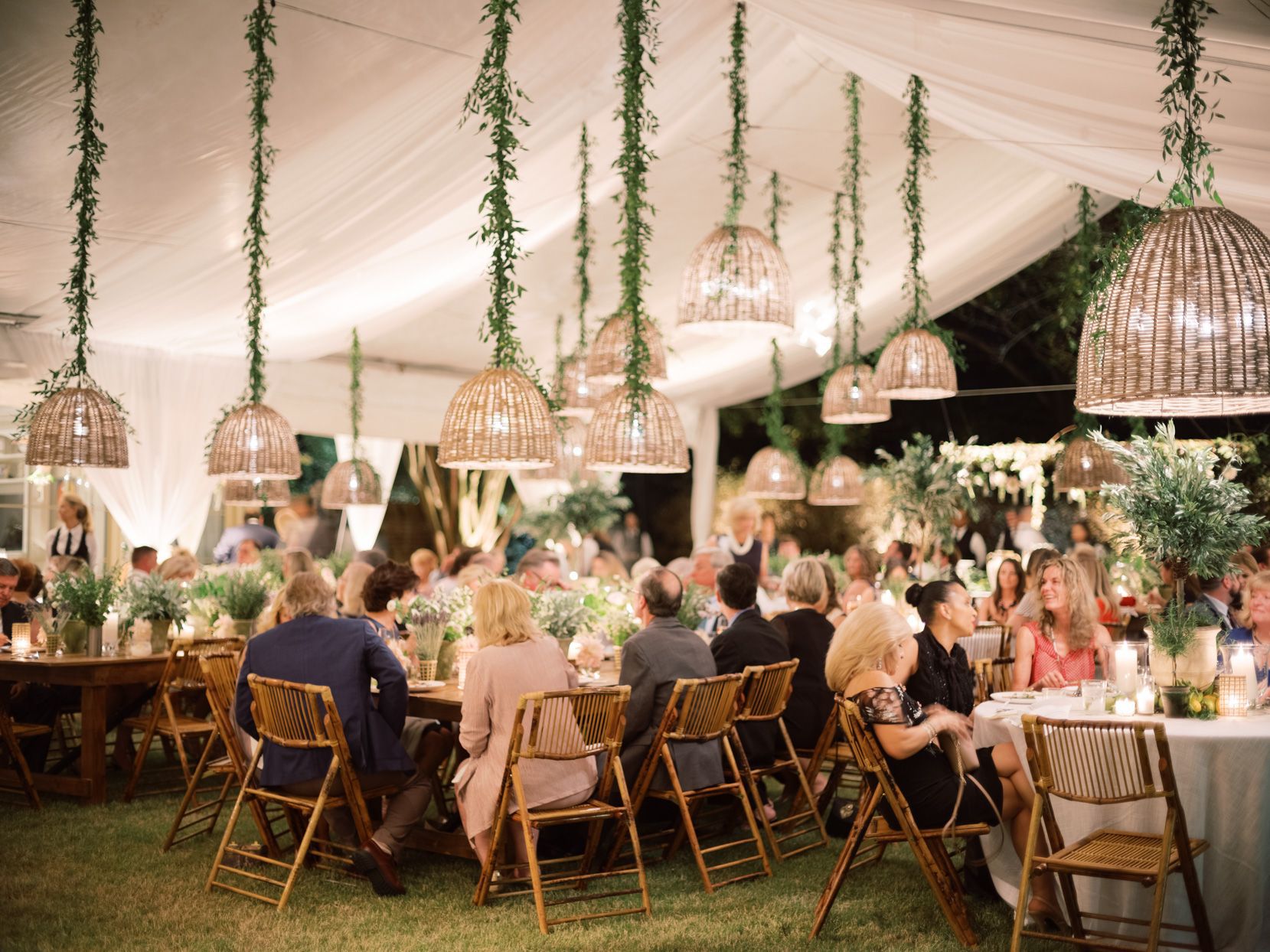
One second I was in a narrow corridor that smelled like industrial cleaner and housed mop buckets. The next, I was standing in a space that looked like it had been designed specifically for magazine photo shoots. Crystal chandeliers hung from the ceiling, competing with LED uplighting that painted the walls in soft gold. Towering floral centerpieces made it nearly impossible to see across some of the tables. Candles everywhere—on tables, on windowsills, in tall glass cylinders—creating the kind of atmospheric glow that made everything look softer, prettier, more romantic than it actually was.
Madison had gone for what I could only describe as Kardashian meets Downton Abbey, and somehow it almost worked. The mix of modern glamour and traditional elegance created a space that felt expensive and carefully curated and just a little bit desperate to impress.
The Ashfords stood in the center of it all like they owned everything in sight.
They didn’t. But they certainly acted like they did.
Their son Brett stood between his parents—broad-shouldered, square-jawed, the kind of conventionally handsome you’d find modeling suits in department store catalogs. He smiled when people approached, but his eyes looked tired. Trapped. Like he was trying to calculate escape routes while maintaining polite conversation.
I moved through the crowd with my tray held high, slipping into that particular kind of invisibility that service workers master. People took champagne glasses from me without looking at my face. They reached out, grabbed a glass, and turned back to their conversations about hedge funds and real estate and summer homes without ever registering that I was a person.
It was fascinating, really. The way wealth and status created blindness.
“Good help is just impossible to find these days,” Mrs. Ashford was saying as I approached her group. “Our estate in Connecticut used to run like absolute clockwork. But now, between staffing issues and declining standards everywhere, it’s like the entire world has forgotten how to take pride in their work.”
The irony of her saying this while taking a champagne flute from my tray without a single glance at my face was almost artistic.
Her husband nodded vaguely, though his eyes kept flicking toward the bar, the exits, the projection screens showing a slideshow of Madison and Brett’s engagement photos. Central Park in autumn. A vineyard in Napa Valley. A rooftop terrace overlooking Manhattan. Each photo perfectly staged, perfectly filtered, perfectly curated to show a love story that looked like it came straight out of a romantic movie.
And then I heard it—the sentence that made everything snap into sharp focus.
“We’ll need to sit down soon and discuss the financial arrangements,” Mrs. Ashford said to Madison, her tone light but with an edge underneath. “Of course, your family will be contributing to Brett’s investment portfolio. It’s only fair, considering the kind of lifestyle you’ll both be maintaining. I understand your sister has done quite well for herself in investments.”
Madison’s smile didn’t change, but her eyes flickered briefly toward the crowd.
“My sister’s doing incredibly well,” she said quickly. “She’s very quiet about it—you know how some people are—but she has this online company, and she invests, and she’ll definitely want to support us when we’re married.”
I nearly dropped the tray.
My sister, who had literally sent me to the service entrance an hour ago and giggled about “these people” not knowing where they belonged, had just turned me into her imaginary ATM. Her financial safety net. Her answer to whatever the Ashfords were demanding.
I moved on before my expression could give anything away, setting the empty tray down at the service station and picking up a full one. My mind was racing now, putting pieces together that I hadn’t wanted to see before.
At the bar, Brett’s brother—Chase, because of course that was his name—slid up next to me while I was waiting for champagne refills.
He looked exactly like what you’d expect: slicked-back hair that probably required expensive product and a mirror check every thirty minutes, a watch that cost more than most people’s cars, and that particular slouch that comes from never having to worry about rent or bills or consequences.
“Hey,” he said, his eyes moving slowly from my face down to my apron and back up in a way that made my skin crawl. “You working this whole event, or do you get breaks?”
“I’ll be working until the job’s done,” I replied, keeping my tone neutral.
He smiled like we were sharing some private joke.
“Well, if you want to make some real money later,” he said, his voice dropping to what he probably thought was an appealing murmur, “you should find me. I’m actually in crypto. I change people’s lives.”
Crypto had crashed spectacularly three months ago. If he was still claiming to be “in crypto,” the only thing he was changing was how many creditor calls he could ignore in a day.
But I smiled politely and walked away, adding him to my rapidly growing list of reasons this evening was going to end very differently than anyone expected.
During a brief lull in service, I slipped into the business center off the main ballroom, closed and locked the door, and pulled out my phone. My fingers moved quickly across the screen, running searches, sending texts to contacts in banking and Connecticut real estate, calling in a favor from someone who owed me one.
It didn’t take long to get the information I needed.
The Ashfords weren’t just struggling financially. They were drowning.
Three mortgages on the family estate. Investment accounts that had been liquidated two years ago. Liens filed against the property. Pending lawsuits. Credit cards maxed out across the board. Their “legacy property” that Mrs. Ashford loved to mention had more legal paper filed against it than some small businesses generated in a year.
Suddenly, everything made perfect, terrible sense.
They weren’t trying to stop the wedding because Madison wasn’t good enough for their son. They were desperate for the wedding to happen because they thought Madison’s family had money. Money they needed. Money they were counting on.
The “financial arrangements” Mrs. Ashford kept mentioning weren’t about combining two families in some traditional social ritual.
They were looking for a bailout.
I went back to the ballroom with my tray, but now I was seeing everything through a different lens. Every time Mrs. Ashford opened her mouth, I listened more carefully. Every time Madison laughed too loudly or tossed her hair with too much performance, I watched more closely.
The noise level in the ballroom climbed as more drinks flowed and people relaxed into the evening. The man in the gray suit—the one Mrs. Ashford had bribed—was near the sound system now, his back to the crowd. I watched him pull something small from his pocket. A USB drive. He bent down quickly, plugged it into the audio equipment, and straightened up like nothing had happened.
Whatever sabotage she’d ordered was now loaded and ready.
At the same moment, I saw David, my general manager, appear at the ballroom entrance. He wore his usual navy suit and calm expression, his eyes scanning the room with practiced efficiency. In his hand, he held a dark folder that I recognized immediately.
That was the folder we used for payment issues.
The Ashfords’ check had bounced.
The evening shifted from interesting to dangerous in the space of a heartbeat.
I ducked back into the business center and started making rapid calls. My CFO confirmed what I already suspected: the Ashfords were about six weeks away from losing the Connecticut estate to foreclosure. My legal team started preparing documentation in case this situation escalated beyond a simple family drama. And then I called David directly.
“Give me twenty minutes,” I told him, keeping my voice low. “Don’t talk to the Ashfords yet. Don’t talk to my family. Just wait.”
He hesitated for only a second.
“Yes, Ms. Wong,” he said. “Twenty minutes.”
That’s exactly why he was worth every penny of his six-figure salary—steady, loyal, sharp, and probably sitting on more actual net worth than the entire Ashford clan combined.
When I stepped back into the ballroom, Madison was near the DJ booth, microphone in hand, the lights catching the sparkle of her dress as she prepared to address the crowd.
“Thank you all so much for being here tonight,” she said, her voice amplified through the speakers and echoing slightly off the high ceilings. “Brett and I are just so grateful to have all of you here celebrating with us. Two families coming together in this beautiful city—it’s more than we ever dreamed of.”
Mrs. Ashford’s face contorted into what might have been a smile if her forehead could still move. Instead, it looked like she was trying to solve complex mathematical equations in her head while maintaining the appearance of pleasure.
Madison continued, her voice gaining confidence.
“I especially want to thank my family,” she said. “My parents, who have worked so incredibly hard their whole lives. And my sister—my extremely successful investor sister—who is actually here tonight, observing everything. She’ll be making a significant announcement about the wedding later this evening.”
I actually choked on air.
My sister had turned me into some kind of mysterious benefactor. A financial fairy godmother. A prop in her elaborate fantasy about the kind of family she wished she had.
All while I stood ten feet away holding a tray of appetizers she’d earlier described as “a bit basic.”
Near the sound system, the man with the USB drive was finishing up whatever he’d been paid to do. I recognized the setup—it was exactly what DJs used when they wanted to preload their own music tracks. In about five minutes, something was going to blast through those expensive speakers, and I was willing to bet it wasn’t on Madison’s carefully curated playlist.
I pulled out my phone and texted my head of security.
“Copy the contents of that USB to a secure folder. Disable external device playback. Back up all ballroom camera feeds from the last three hours.”
The reply came back almost immediately: “Done.”
If Mrs. Ashford wanted a show, I’d give her one. Just not the one she’d paid for.
The rest of the evening escalated in small, relentless ways that built toward something inevitable.
Chase cornered me again, this time with his hand at the small of my back in a way that made me want to throw champagne in his face. He talked about his “crypto ventures” and how he could “take me out of this kind of life” if I was “nice” to him.
Felipe emerged from the kitchen looking like he’d survived combat. Madison had texted him three more times with “urgent” changes to the dinner schedule—move it up, push it back, switch to a completely different menu, then change it all back.
The kitchen staff was approaching mutiny.
“Serve the original menu at the original time,” I told Felipe quietly when he came out to survey the ballroom setup. “Anything else, anyone can talk to me directly.”
He looked at me—really looked at me—for the first time that night. Something in my tone, in the way I stood, registered as authority. As someone who knew exactly what she owned and wasn’t asking for permission.
He nodded once and disappeared back into his domain.
On my phone, the security footage I’d requested finished downloading. I opened the files and scrubbed through them, feeling a cold satisfaction settle in my chest as I watched.
We had Mrs. Ashford bribing the man in the gray suit. We had her going through Madison’s purse when my sister left it unattended at the table, photographing something inside—probably ID cards for a background check. We had every word she’d said to her husband about “financial arrangements” and “investment contributions.”
They weren’t just broke. They were desperate and reckless and counting on my sister to be their salvation.
The band transitioned into smooth jazz—the kind of generic music that fills expensive ballrooms when nobody wants to risk offending anyone. David entered with his folder and started making his way through the crowd.
He moved toward the head table where both families sat. The Ashfords looked polished and stiff, like mannequins that had been posed for maximum elegance. My parents looked uncomfortable in their simple clothes, probably wishing they were home watching television instead of pretending to understand truffle oil and champagne pairings.
I watched from across the room as David leaned in to speak quietly.
Madison’s face lit up instantly.
“Oh, that must be for me,” she said to the table, smoothing her dress as she started to stand. “The staff always need me when there’s an important decision to make. I’ve practically been running this entire event for weeks.”
David walked right past her.
He scanned the ballroom once, twice, and then his eyes locked on mine—standing there with my messy bun, my stained apron, my tray of champagne glasses, looking nothing like what anyone expected.
I set the tray down on a nearby service table and walked forward.
“Kinsley?” Madison’s voice cracked behind me, confusion bleeding into panic. “Where is he going? He’s supposed to be talking to me. I’m Ms. Wong here.”
David stopped directly in front of me and held out the folder with a respectful nod. His voice carried just enough to reach the tables around us, cutting through the background jazz and ambient conversation.
“Ms. Wong,” he said clearly, “we have a situation with the Ashford party payment. The check has been returned for insufficient funds.”
The silence that followed was absolute.
Total. Complete. The kind of silence where you could hear people’s thoughts changing direction, where you could feel the shift in atmosphere like a drop in barometric pressure before a storm.
The background music might as well have stopped. Even the clink of glasses went quiet. For several long seconds, all anyone could hear was the soft hum of the air conditioning and the distant sound of Chicago traffic filtering up from the street below.
Madison’s face went through three distinct stages in rapid succession: confusion, horror, and then something close to rage.
“This isn’t funny,” she snapped, her voice too loud in the sudden quiet. “Kinsley, what are you doing? Are you trying to embarrass me? Is this some kind of joke? Security, someone needs to escort her out of here. This is completely insane.”
That was the moment I’d been waiting for since I walked through that service entrance.
I reached behind me, untied my apron slowly and deliberately, folded it with care, and handed it to a nearby server who looked like she was watching the most entertaining show of her life.
Then I turned to face the entire room.
“I think,” I said, letting my voice settle into the calm, practiced tone I used in boardrooms and investor meetings and high-stakes negotiations, “there’s been some confusion tonight.”
I paused, letting the moment stretch just long enough to pull every single eye in that ballroom toward me.
“My name is Kinsley Wong,” I said clearly. “And I own this hotel. In fact, I own all seventeen Grand Meridian hotels across the United States.”
The gasp that went through the room was almost physical—a wave of shock and realization and sudden recalculation rippling outward from where I stood.