The Burden
The key didn’t fit.
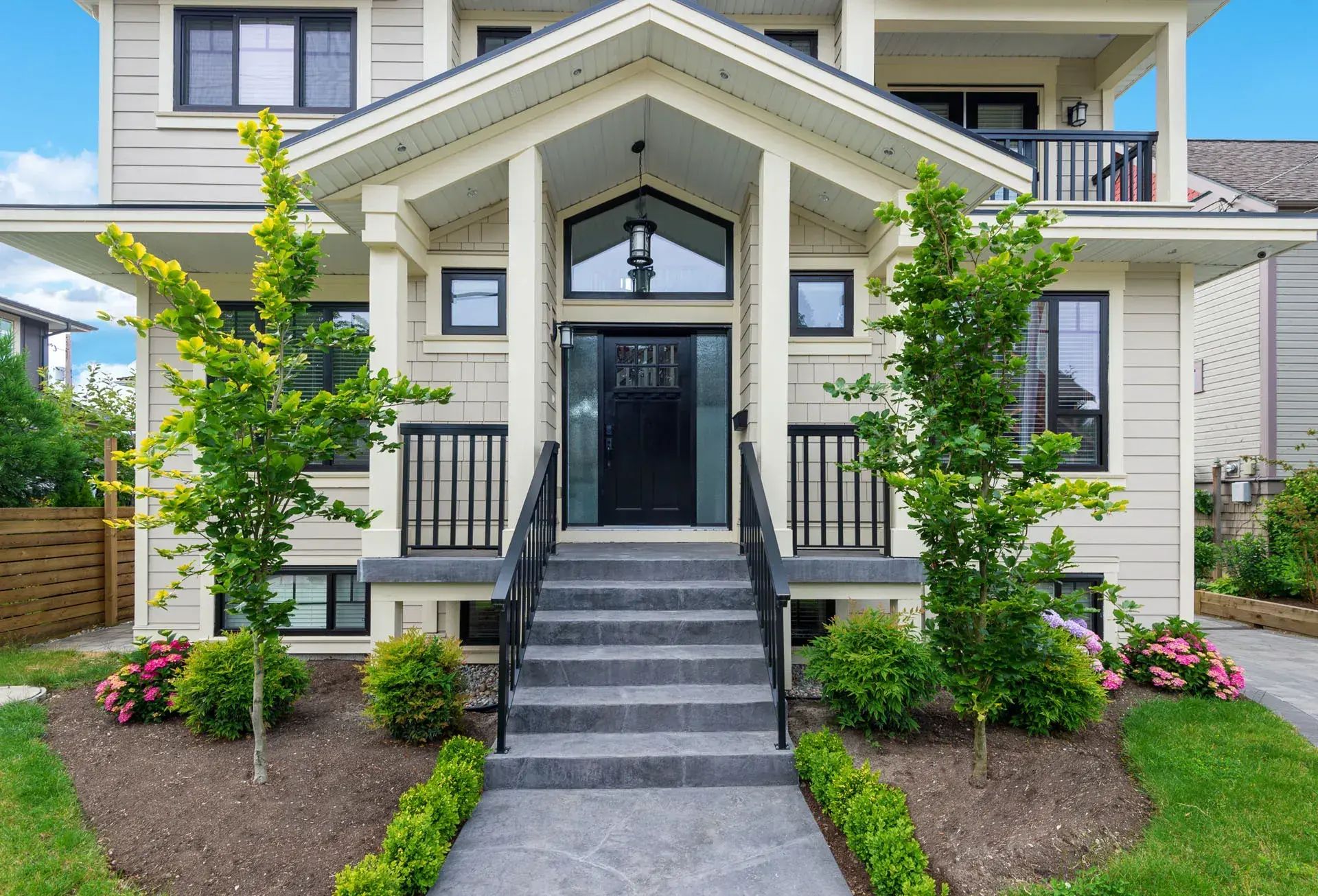
I watched from across the street, hidden behind the tinted windows of my rental car, as my father jiggled the house key in the lock for the third time. Then the fourth. His face, still tan from ten days in Italy, was beginning to flush that particular shade of red I knew so well—the color that preceded explosions.
My mother set down her designer luggage on the porch—luggage I had paid for—and pressed her face against the living room window, cupping her hands around her eyes to block the afternoon glare.
“Harold,” she said, her voice carrying across the quiet suburban street. “Why are all the lights off? Where’s Annabelle’s car?”
I took a sip of cold coffee and settled deeper into my seat. This was going to be good.
My father kicked the door. Once. Twice. The solid thud echoed down the block, and Mrs. Dawson, my former neighbor, peeked through her curtains with undisguised curiosity.
“The lock is changed,” my father said, his voice climbing. “She changed the damn locks.”
My mother’s hand flew to her mouth. She pulled out her phone, and seconds later, mine buzzed in the cupholder beside me. I didn’t answer. I just watched as confusion transformed into panic, then into rage.
They had no idea I was watching. They had no idea what I’d done. And they had absolutely no idea why.
But they were about to find out.
Two Weeks Earlier
My father didn’t mean to leave the line open. It was a technological fumble from a man who still typed with his index finger and called every streaming service “the Netflix.”
I had called him from my kitchen on a Tuesday afternoon, asking about a warranty receipt for the dripping faucet that had been driving me slowly insane for weeks. The conversation was brief, perfunctory, the kind of exchange we’d perfected over the years—efficient, polite, emotionally vacant.
“I’ll look for it,” he’d said. “Probably in the filing cabinet somewhere.”
“Thanks, Dad.”
I heard the rustle of movement, the muffled sound of fabric against the phone’s microphone, and then… nothing. Or what I thought was nothing. I should have hung up. That’s what a polite daughter would do. A normal daughter.
But I didn’t.
I set the phone down on the counter, putting it on speaker while I returned to washing dishes, and that’s when I heard it—the unmistakable clink of silverware against china, the gurgle of wine being poured, and then my mother’s voice, clear as a bell.
“Who was that?”
My hands, submerged in soapy water, went still.
“Annabelle,” my father grunted, his voice heavy with irritation. “Asking about the sink again. There’s always something wrong with that house. She can’t handle basic maintenance.”
I pulled my hands from the water slowly, suds sliding down my wrists. The kitchen suddenly felt colder.
“Well,” my mother sighed, and I could picture her perfectly—sitting at the dining room table with her wine glass, probably wearing one of the cashmere sweaters I’d bought her last Christmas. “That’s what happens when a girl gets handed a fortune she didn’t earn. Your mother should have left the deed to us, Harold. We would have leveraged it. Used it wisely. Built something.”
The dish in my hand—one of my grandmother’s good plates—slipped back into the water with a soft splash.
My grandmother. Lorraine. The woman who had raised me more than they ever did. The woman who had left me this house three years ago because she trusted me, because she believed in me, because she saw something in me that my own parents never had.
“Don’t worry, Marilyn,” my father said, his voice dropping to that conspiratorial tone I’d heard him use with salesmen and insurance agents. “Once we get back from Europe, we’re going to sit her down. We need to talk about our retirement situation. She needs to understand that this house is our future, not her personal playground. It’s ridiculous that it’s only in her name.”
My chest tightened. The air felt thinner.
“She feels guilty so easily,” my mother added, and there was something almost gleeful in her voice. “Just push a little. Mention your back pain. Mention the doctor bills. That always gets her. She’ll sign whatever we need to keep the peace. She hates confrontation.”
The room tilted slightly. This wasn’t parental concern. This wasn’t worry about my wellbeing or their future. This was strategy. This was predatory.
“And if she resists?” my father asked, his mouth clearly full of food.
“Remind her what we sacrificed for her,” my mother replied smoothly, as if she’d rehearsed this script. “All those years. All that money. She owes us. By next year, Harold, the deed will have our names on it. We’ll finally have what we deserve.”
I gripped the edge of the sink, my knuckles bone-white.
“She’s always been a burden anyway,” my father said, exhaling the words like he was finally releasing a truth he’d held for decades. “From the moment she was born. Expensive, needy, complicated. Just… a burden.”
The laugh that followed—first his deep chuckle, then her high, tinkling giggle—broke something cleanly inside me. It wasn’t a crack. It was a snap, sudden and complete, like a dry branch breaking under too much weight.
I didn’t scream. I didn’t interrupt. I didn’t throw the phone across the room, though my body was screaming at me to do something, anything, to release the pressure building in my chest.
Instead, I stayed perfectly quiet, listening to the sounds of their dinner—the scrape of forks, the satisfied hum of people enjoying a meal in the home I provided, funded by the inheritance they’d tried to talk me out of accepting.
When they finally moved away from the table, when I heard the distant sound of the television clicking on, I reached over and pressed the red button.
End call.
I stood in the kitchen for a long time, staring at nothing. The faucet continued its steady drip. Drip. Drip. Drip. Each drop felt like a second ticking away, counting down to something inevitable.
They thought I was a burden.
Fine.
I would show them what a real burden looked like. And then I would disappear.
The Architecture of My Childhood
To understand what happened next, you need to understand where I came from.
Growing up, I learned early that love in the Vance household came with conditions, receipts, and a running tally of debts I could never quite pay off.
We lived in a narrow house on a potholed street in a working-class suburb. The kind of place where the paint peeled in long, sad strips and the windows rattled when trucks passed. My father worked in middle management at a manufacturing plant. My mother did bookkeeping from home, her lips pursed in permanent disapproval at a world that hadn’t given her what she felt she deserved.
Money was always tight, but more than that, it was weaponized.
“You think we have money to burn?” my father would snap whenever I needed lunch money or new shoes. “Be grateful we keep a roof over your head. Most kids don’t have what you have.”
I learned to be grateful. Or at least, I learned to perform gratitude. I made myself smaller. I ate less. I asked for nothing. I apologized for existing.
My only escape came on Friday afternoons when I was allowed—no, tolerated being allowed—to visit Grandma Lorraine across town.
Her house existed in a different universe. Wide porches, ancient oak trees, a garden that smelled like lavender and fresh earth and possibility. She would meet me at the screen door with a hug that didn’t calculate its worth, with questions about my week that she actually wanted answered.
In that house, I learned that silence didn’t have to be sharp. That love didn’t require justification. That I could simply exist without apology.
“You’re capable, Annabelle,” she told me once while we planted hydrangeas along the back fence. “You have a good head and a kind heart. Don’t let anyone convince you otherwise. Not even your parents.”
I didn’t understand what she meant then. I do now.
When she passed suddenly from a stroke at seventy-eight, the grief carved me hollow. But the reading of her will sent shockwaves through the family that I wasn’t prepared for.
She left my parents twenty thousand dollars—money they burned through in less than a month on a new car and clothes and dinners at restaurants they couldn’t actually afford.
To me, she left the house.
The entire house. Fully paid off. Worth nearly a million dollars in a rapidly appreciating market.
My parents were furious, though they tried to hide it behind thin smiles and false congratulations.
“Well,” my mother had said at the lawyer’s office, her voice tight. “That’s quite a responsibility for someone your age. You’ll need help managing it.”
I was thirty-two. I had a degree in real estate. I knew exactly what she was really saying.
Within two weeks of the funeral, they sold their house and moved in with me “temporarily” to help me “transition” into homeownership.
That temporary arrangement became three years.
Three years of never contributing to property taxes, utilities, or maintenance. Three years of my mother redecorating rooms without asking. Three years of my father’s greasy recliner planted in the living room like a flag of conquest.
Three years of them slowly, methodically convincing themselves that this house was theirs. That I was just the name on the deed, a technicality they would eventually correct.
Until the phone call.
Until I finally heard the truth.
The Vanishing Act
For the next forty-eight hours, I moved through the house like a ghost, quiet and methodical.
I called in sick to work—my first sick day in two years—because I couldn’t trust my voice not to crack, couldn’t trust myself not to explode in the middle of a team meeting.
Every time I passed my parents in the hallway or made coffee in the morning, that sentence echoed in my head.
She’s always been a burden.
I played the part one last time. The dutiful daughter. The accommodating host. I drove them to the airport for their Italy trip—the trip I had funded after my mother spent weeks sighing about how they’d “never get to see Europe before they died.”
“Don’t forget to water the plants,” my mother said at the terminal, adjusting her silk scarf. “And call the plumber about that sink. It’s getting worse.”
“I’ll take care of everything,” I said, my voice steady. “Have a wonderful time.”
I even hugged them. My father’s cologne was overwhelming. My mother’s perfume cloying.
“We’ll bring you back something nice,” she promised.
I smiled. “I can’t wait.”
As soon as their plane disappeared into the clouds, I drove home and opened my laptop.
The first call I made was to Vivien Hale, a property attorney I’d worked with professionally. Sharp, efficient, unflappable.
“Vivien,” I said. “I need to sell my house. Quietly. Quickly. And I need to do it before my parents come home.”
There was a pause.
“Are they on the deed?” she asked carefully.
“No. It’s solely in my name. They’re residents but there’s no lease, no rental agreement. They’ve contributed nothing financially.”
“Then legally,” Vivien said slowly, “you can do whatever you want with the property. But I have to ask—why the rush? Why the secrecy?”
I told her. Not everything, but enough. About the phone call. About their plan. About the word burden and how it had detonated my life.
When I finished, she was quiet for a moment.
“I know someone,” she finally said. “A private buyer. He’s been looking in your neighborhood for months. If you’re serious about this, I can have a cash offer by tomorrow morning.”
“I’m serious.”
“Okay. Give me twenty-four hours.”
The next call was to Ethan Shaw, an investor colleague.
“Ethan, I need a clean sale. No listing, no signs, no open houses. Cash. Fast close. Can you do it?”
“How fast?”
“Seventy-two hours.”
He whistled low. “You’re serious.”
“Completely.”
“I can do $980,000 if you waive inspection.”
“Done.”
Within six hours, I had a contract. Within twenty-four, I had a closing date set for five days before my parents returned.
And then I began erasing myself.
I walked through every room with a notebook, cataloging everything into three categories: Mine. Theirs. Trash.
I didn’t want accusations later. I wasn’t stealing. I was severing.
My belongings were packed into boxes labeled for a long-distance moving company. Their belongings—the recliner, the clothes, the decorative garbage my mother had scattered throughout the house—were stacked separately.
I rented a storage unit across town under their names and paid six months upfront. I arranged for a separate moving crew to transfer their things the same day I left.
My own belongings would be delivered to a furnished apartment in Richmond, two hours away, where I’d already secured a transfer with my company.
Then came the digital amputation. New bank accounts. New phone number. New email. Updated passwords on every account from Netflix to my retirement fund.
I changed the beneficiaries on my life insurance. I updated my will. I deleted every photo of them from my phone.
Each task felt like cutting a thread, and with each cut, I felt lighter.
On the final night, the house was empty. Not just empty of people—empty of everything. The walls echoed. My footsteps sounded hollow and strange.
I walked through the rooms one last time, saying goodbye not to them but to my grandmother, to the version of myself who had lived here, who had tried so hard to be enough.
In the garden, the lavender was in bloom, the scent heavy and sweet in the cooling evening air. I crouched down, touching the velvet petals.
“I’m not the burden,” I whispered. “And I’m not carrying them anymore.”
The next morning, the moving trucks arrived at dawn. By noon, the house was empty. I did a final walk-through, left the new keys on the kitchen counter—the only object remaining in the entire house—and locked the front door from the inside.
I left through the garage, punching in the code one last time to close it behind me.
As I pulled out of the driveway for the last time, my phone buzzed with an automated airline notification.
Flight Landing: Harold and Marilyn Vance. Arrival: 4:00 PM Today.
I checked my watch. 12:30 PM.
Perfect timing.
I drove to a coffee shop three blocks away, parked across from the house with a clear view, and waited.
The Reckoning
They arrived in an Uber at 4:17 PM, tanned and laughing, probably still buzzing with stories about Tuscan wine and cobblestone streets.
My father tipped the driver poorly—I could tell from the driver’s expression—and they hauled their expensive luggage up the driveway.
My mother noticed my car wasn’t there first.
“She must be at the store,” she said, loud enough for me to hear through the open car window. “Probably getting groceries for dinner.”
My father grunted, digging in his pocket for his keys.
This was it.
He inserted the key. Turned it. Nothing. The lock didn’t budge.
Confusion flickered across his face. He tried again. Then again, harder.
“What the hell?” he muttered.
“What’s wrong?” my mother asked, setting down her bags.
“The key doesn’t work. She must have… did she change the locks?”
My mother’s face shifted from confusion to irritation. She pressed her face against the living room window, cupping her hands around her eyes.
“Harold. The house is empty. There’s nothing inside.”
“What?”
He joined her at the window. I watched both their faces drain of color.
“Where’s the furniture?” my mother whispered. “Where’s… everything?”
My father pulled out his phone. Called me. I watched it ring through, my old phone sitting on the passenger seat beside me, vibrating impotently.
He tried the back door. The side door. Checked every window. All locked.
Mrs. Dawson came out onto her porch, arms crossed, watching with undisguised interest.
“Everything okay?” she called.
“Have you seen Annabelle?” my father shouted.
“Not for a few days,” she said, and I could hear the lie in her voice. She knew. I’d told her exactly what I was doing, and bless her, she’d been thrilled. “Is something wrong?”
“The house is empty!” my mother shrieked. “Everything is gone!”
Mrs. Dawson’s hand flew to her mouth in mock surprise. “Oh my goodness!”
My father stalked around to the garage, peering through the small windows. That’s when he saw it.
The note I’d taped to the inside of the window, facing out.
I watched him read it, watched his face transform from confusion to rage.
The note was simple:
Your belongings are in Storage Unit 4B at City-Side Storage, paid through December. This house has been sold. Do not contact me. – A Burden
My mother snatched the phone from his hand and dialed. I watched her face crumble when it went to a disconnected number message.
“She changed her number,” she whispered. “Harold, she changed her number.”
The reality was sinking in. I could see it in their faces—the slow, dawning horror of consequences they’d never imagined.
My father kicked the garage door. Once. Twice. Hard enough that Mrs. Dawson retreated into her house and I saw several other neighbors peeking through curtains.
“ANNABELLE!” he roared. “I KNOW YOU CAN HEAR ME!”
But I couldn’t. Not really. Or rather, I chose not to.
I started my car, took one last look at them standing in the driveway, surrounded by their luggage, homeless and furious and finally, finally understanding what it felt like to have the ground pulled out from under them.
I didn’t feel guilty.
I felt free.
I drove away.
The Aftermath
They tried, of course. For weeks, they tried.
Voicemails on my old phone that I never listened to. Emails to an address I’d closed. They even tracked down my new workplace—I never found out how—and called repeatedly until HR got involved.
“Ms. Vance, we have an escalating situation,” my manager said gently. “Your parents are calling daily, claiming emergency situations. We need to know how to handle this.”
“They’re not emergencies,” I said calmly. “They’re manipulation attempts. Please block their numbers. If they show up in person, call security. I’ll file a restraining order if necessary.”
His eyebrows rose. “Are you in danger?”
“No. But I’ve ended a toxic relationship, and they’re not accepting it.”
He nodded slowly. “Understood. Consider it handled.”
The calls stopped.
But four weeks after I’d left, I received a certified letter at my new address—they must have hired a PI to find me.
Inside was a demand letter from an attorney.
They were threatening to sue me for elder abuse, for illegal eviction, for emotional distress. The language was aggressive, threatening, designed to scare me back into compliance.
I called Vivien.
“Send it to me,” she said. “Don’t respond directly.”
Three days later, she called back, and I could hear the smile in her voice.
“Their attorney is an ambulance chaser who didn’t do his research. I sent him copies of the deed, proof of ownership, documentation showing they contributed nothing financially, and a recording of the phone call where they discussed their plan to manipulate you into signing over the house.”
“You kept the recording?”
“Of course I kept the recording. And Annabelle? Their lawyer withdrew immediately. You won’t hear from him again.”
“And my parents?”
“They’re on their own.”
Months passed. Then a year.
I moved through my new life in Richmond like someone learning to breathe correctly for the first time. My apartment was smaller than Grandma’s house, simpler, but every corner belonged to me.
No lingering tension. No footsteps that made my stomach clench. No demands disguised as love.
I made new friends. I got promoted at work. I started therapy to unpack thirty years of conditioning that had taught me my worth was measured by how much I could give.
“You were trained to be a resource,” my therapist told me. “Not a person. You’re relearning that you’re allowed to exist without utility.”
It was harder than I expected. The guilt came in waves, usually late at night. The voice in my head that sounded like my mother, telling me I was selfish, cruel, ungrateful.
But slowly, those voices got quieter.
One afternoon, unpacking a box I’d forgotten about, I found a letter in my grandmother’s handwriting. I’d read it dozens of times, but this time, the words hit differently:
“Never doubt your worth, Annabelle. Never let anyone take from you what you’ve earned. You are the gardener of your own life. Weed out what kills you.”
I walked to my small balcony. I’d planted lavender in a terracotta pot. It was small, fragile, but it was growing.
I touched the leaves, the scent rising to meet me, and I thought about burdens.
I thought about how I’d spent my entire life trying to prove I wasn’t one, contorting myself into impossible shapes, sacrificing pieces of myself to earn love that came with interest rates and hidden fees.
I thought about the moment I’d heard my father call me a burden, and how that word had detonated everything.
But here, in the quiet of my own space, I realized something:
I had never been the burden.
They were.
I was the one who had carried them for years—financially, emotionally, practically—and I had finally put them down.
And without that weight, I was learning how to stand.
Two Years Later
The email came on a Tuesday morning.
I almost deleted it, but something made me open it.
The sender was an attorney I didn’t recognize, with a subject line that read: “Estate of Harold Vance.”
My father had died. A heart attack. Quick, the lawyer said, as if that mattered.
The email went on to explain that I was listed as next of kin, that there were arrangements to be made, an estate to settle.
I stared at the screen for a long time.
I felt… nothing. Not grief. Not satisfaction. Just a distant, neutral acknowledgment of information.
I called Vivien.
“What do I do?” I asked.
“You don’t have to do anything,” she said. “You’re not obligated to claim a body, arrange a funeral, or settle debts. You can decline.”
“What about my mother?”
“According to the attorney’s email, she has no assets, no resources. But again, Annabelle—not your problem unless you choose to make it one.”
I thought about it for three days.
In the end, I paid for a simple cremation. I did it not for him, but for the version of me that had once been a little girl who wanted her father’s approval.
I didn’t attend any service. I didn’t contact my mother. I simply signed the papers, made the payment, and closed the file.
A week later, a small package arrived.
Inside was a letter from my mother. Her handwriting was shaky, older than I remembered.
“Annabelle, Your father is gone. I have nothing. No home, no savings. I’m living in a senior apartment on government assistance. I don’t know if you’ll read this. I don’t know if you care. But I want you to know that we were wrong. About everything. About you. I’m sorry. I’m so sorry. I don’t expect forgiveness. I just wanted you to know that before I die, I finally understand what we did to you. You weren’t the burden. We were. I hope you’re happy. I hope you’re free. That’s more than I deserve to hope for, but I hope it anyway. – Mom”
I read it twice. Then I folded it back into the envelope and placed it in a drawer.
I didn’t respond.
Maybe someday I would. Maybe I wouldn’t. But for now, the silence felt right.
That evening, I sat on my balcony with a glass of wine, watching the sun set over Richmond. The lavender had grown wild and full, spilling over the edges of the pot.
I thought about burdens and freedom and the long, difficult journey between the two.
I thought about the girl I’d been, so desperate to be loved that she’d accepted crumbs and called it a feast.
And I thought about the woman I’d become—the one who’d finally learned that love shouldn’t cost you your dignity, that family shouldn’t require your destruction, that you’re allowed to walk away from people who hurt you, even if they’re blood.
Especially if they’re blood.
The wind picked up, carrying the scent of lavender through the cooling air.
I raised my glass to the empty chair beside me, to the grandmother who’d known long before I did that some gardens need pruning to grow, that sometimes the kindest thing you can do is cut away what’s dying to save what’s alive.
“Thank you,” I whispered.
And then I let it all go.
The guilt. The anger. The grief for the family I’d never really had.
I let it go, and in the space it left behind, I planted something new.
Hope.
THE END