“Arlo, that drone does in ten minutes what your old mutt does in a whole day. He’s half blind and he’s costing us vet bills. Honestly? It’s time to put him down.”
My son-in-law said that at my own Thanksgiving table, in the house I was born in, about twenty-five miles north of Murdo, South Dakota, while my dog was lying on the rug under my chair with his chin on my boot.
He said it while he was cutting his turkey. He didn’t even look up. Like he was telling me the weather.
My daughter Jessica said, “Brayden.” That’s all. Just his name.
My grandson Wyatt, who’s eight, dropped his fork on his plate.
And under my chair, Moss lifted his head off my boot and looked at me, with his one good eye and his one cloudy one, the way he does when he hears his name in a voice he doesn’t like.
I’m going to tell you about Moss. And about the drone. And about the night ten days later when three hundred and forty cows went through a fence in a blizzard and drifted south toward Interstate 90 in the dark, and what happened at the fence line.
My name is Arlo Brandt. I’m seventy-four years old. I’ve been running cattle on this ground my whole life. My grandfather homesteaded it in 1909. Two thousand, two hundred acres of shortgrass prairie and buffalo grass and breaks, in Jones County, with the White River to the south and nothing but wind in every other direction. My wife Carol and I ran about four hundred mother cows here for forty-one years. Carol died in 2020. Cancer. We’d been married forty-seven years. I still set two cups out for coffee in the morning sometimes before I remember.
Our daughter Jessica married Brayden Huber in 2015. He’s from Sioux Falls. He went to State, in Brookings, for agricultural business. He’s smart. I’ll say that for him. He knows spreadsheets and futures markets and how to talk to the banker. He doesn’t know much about cows, but he thinks he does, and he thinks I don’t know anything about anything that happened after 1990.
Two years ago, my knees went and my back went and the doctor said I had to quit. So I turned the cattle operation over to Jessica and Brayden. I sold them the cows, the four hundred head, on a contract, at a good price, and they financed it with an operating loan from Farm Credit. I kept the land. I lease them the grass for a dollar a year. I kept the house. They built a new one, a big modular with a three-car garage, about a mile down the section line. I’m supposed to be retired.
I’m not much good at being retired.
And I kept Moss.
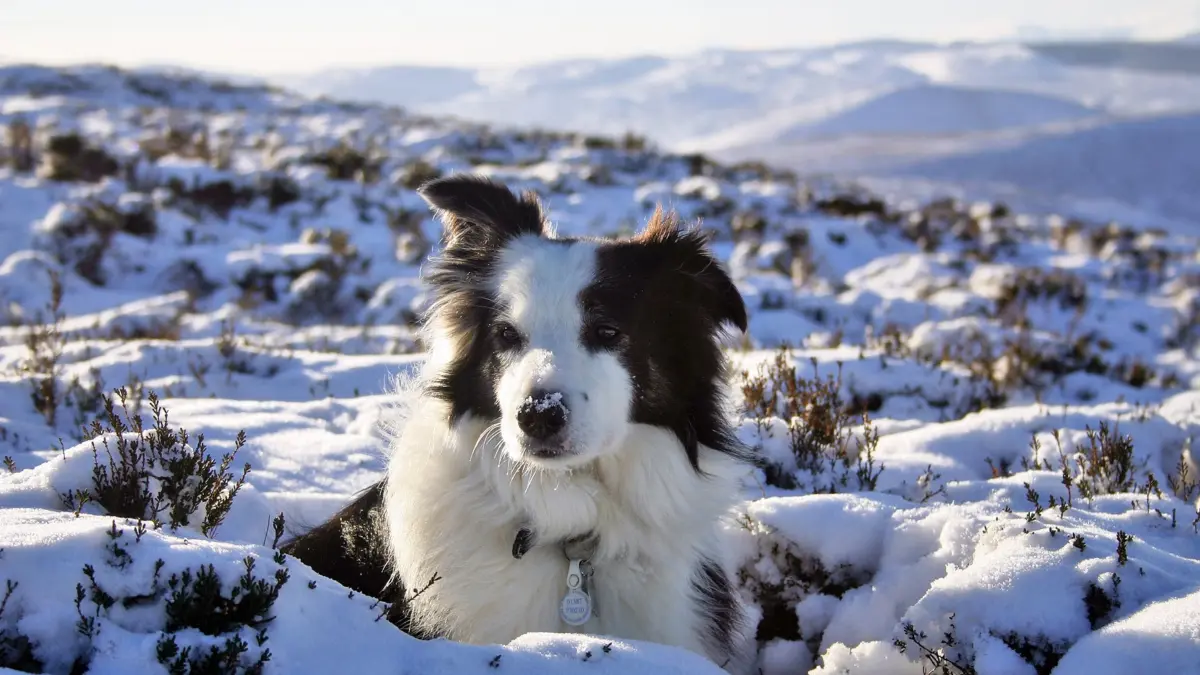
Moss is a border collie. Black and white, with a white ruff and one ear up and one ear tipped over. He’s eleven. I paid a neighbor kid twenty dollars for him in 2014, out of a litter of seven under a granary. The runt. He wouldn’t stop chasing my boot laces. Carol said, “Arlo, that one’s yours.”
I trained him myself. Every morning, every evening, for two years. The whistles. Come by, that’s clockwise around the stock. Away to me, counterclockwise. Walk up. Lie down. That’ll do. Each one has its own whistle, and I use the same old steel whistle my grandfather used, that hangs on a string on a nail by my kitchen door. Moss knows them all. He knows them in the dark. He knows them in a blizzard. He knows them a mile away.
For nine years, Moss and I gathered every cow on this place. Every spring for branding. Every fall for weaning and shipping. Every time a storm came through and they drifted. Two thousand, two hundred acres. He could bring three hundred head up out of a draw by himself while I sat on my horse and drank my coffee. Carol used to say he was the best hand we ever had, and he didn’t take wages.
Last year, his left eye started to go cloudy. Cataract, the vet in Pierre said. He can still see out of it some. He can see fine out of the right one. He’s a little slower. He sleeps more. He still goes out with me every morning to check the water tanks, riding in the back of my pickup with his nose in the wind.
Now the drone.
In September, Brayden bought a drone. It’s a big black thing with four propellers and lights on it and a speaker underneath that makes a siren noise, and a camera, and he flies it with a controller that has a screen on it, sitting in the cab of his pickup with the heater on. It cost four thousand, one hundred dollars, he told me. It’s supposed to be for herding cattle. There are videos on the internet of people moving whole herds with them. He showed me one on his phone at the kitchen table.
“See, Arlo? No horse. No dog. No guys on four-wheelers. One guy in a heated cab with a coffee. The future.”
“What happens in the wind?” I asked him.
“It’s rated for thirty miles an hour.”
“We get sixty out here,” I said.
He laughed. “Not very often.”
He moved the cows with it in October, from the summer pasture to the winter pasture by the house. It worked, mostly. It took him most of a day, and he had to come back the next morning for about forty head that went down into a draw where he lost them in the trees. Moss and I could have done it by noon. I didn’t say so.
He sold my horse in October, too. Old Buck. Twenty-two years old. He said we didn’t need horses anymore, with the drone. He sold Buck to a man from Kadoka for nine hundred dollars without asking me. Jessica cried about it. I didn’t, in front of them.
That’s how it was when Thanksgiving came.
Jessica cooked, at my house, because it’s bigger in the kitchen and because her mother always did it there. Brayden’s parents came out from Sioux Falls. My sister came from Pierre. Wyatt sat next to me. He always sits next to me. Moss lay under my chair.
Brayden’s father asked about the drone. Brayden got going. He talked about it for about twenty minutes. Thermal imaging. GPS. How he could see every cow on the place from his phone. How it was going to save them thirty thousand dollars a year in labor.
“And honestly,” he said, cutting his turkey, “it’s time to retire some of the old ways. Like the dog.”
“Moss is retired,” I said. “He’s my dog. He’s not on your payroll.”
“He’s on my vet bill.” Brayden looked at Jessica. “Jess, didn’t Doc Larson charge us four hundred bucks in October for his eye? And his hips are going. He limps.” He shook his head. “Arlo, that drone does in ten minutes what your old mutt does in a whole day. He’s half blind and he’s costing us vet bills. Honestly? It’s time to put him down.”
Jessica said, “Brayden.”
Brayden’s mother looked at her plate.
Wyatt dropped his fork.
“I paid that vet bill myself,” I said. “Out of my own pocket. Not the operation’s.”
“Whatever. The point is, he’s done. He can’t work anymore. He’s suffering, probably. It’s kinder.” Brayden shrugged. “My dad had a lab like that. We put him down when he couldn’t jump in the truck. It’s just what you do on a ranch.”
“You don’t know what you do on a ranch,” I said.
That got quiet.
Brayden put down his fork. He looked at me across Carol’s table, in Carol’s dining room, with Carol’s good china.
“I run this ranch now, Arlo,” he said. “Not you. You sold it to us. Remember? I’ve got a loan from Farm Credit for four hundred thousand dollars with my name on it. I make the calls now. And I don’t need a half-blind dog or a broke-down horse or an old man telling me how his granddad did it in 1909. I’ve got a four-thousand-dollar drone with thermal imaging. You need to let go.”
Wyatt was looking at me. Then he looked under my chair at Moss. Then up at his dad.
“Dad,” he said. “Moss isn’t half blind. He saw a jackrabbit yesterday from the truck. Grandpa said.”
“Wyatt. Eat your dinner.”
“Are you going to shoot Moss?”
“Nobody’s shooting anybody, buddy. The vet does it. It doesn’t hurt. He just goes to sleep.”
Wyatt’s lip started to go. He’s eight. He loves that dog. He’s been riding in the back of my truck with Moss since he could walk.
“Grandpa,” he said. “Why does Dad get to say Moss has to die? He’s your dog. You said he’s the best hand you ever had. Why does Dad get to decide?”
I didn’t answer him right away. Nobody said anything. Brayden’s father cleared his throat. My sister got up to get more coffee.
Brayden looked at me. He wasn’t angry, exactly. He was tired of me. I could see it.
“Arlo,” he said. “I’m not trying to be the bad guy. I’m really not. But you need to understand something. This isn’t your operation anymore. You don’t get a vote. Okay? Do you understand that?”
I looked at my son-in-law across Carol’s table.
“Understood,” I said.
And I reached down under my chair and put my hand on Moss’s head, on his old white ruff, and kept it there through the rest of dinner, and through the pie, and through Brayden’s parents’ long goodbye at the door.
That was Thanksgiving.
On the Monday after, Jessica came up the section line in her Tahoe and sat in my kitchen with her coat still on. She wouldn’t take coffee. She kept turning her car keys over in her hands.
“Daddy, I need to tell you something, and I don’t want you to get mad.”
“I’ve been mad since Thursday,” I said. “Go ahead.”
“Brayden called Doc Larson’s this morning. He made an appointment. For Moss.” She looked at the rug by the door, where Moss was asleep with his paws crossed. “December ninth. Ten o’clock. He wrote it on the calendar on our fridge. Moss, vet. Like it was a booster shot.”
I didn’t say anything for a while. The furnace kicked on. Moss’s ear twitched in his sleep, the tipped one.
“He thinks he’s doing you a favor,” Jessica said. “He really does. He says you’ll never do it yourself because you’re too attached, so somebody has to. He says it’s like with Buck.”
“Buck’s alive in Kadoka,” I said. “Moss isn’t a horse you can sell.”
After she left, I called the clinic in Murdo myself. The girl at the front desk, Kelsey, put me through to Doc Larson. He’s been doctoring my cattle since 1994. He pulled calves for Carol and me in the middle of the night more times than I can count.
“Arlo,” he said, before I got a word out. “I know why you’re calling. I saw the appointment. I was going to call you.”
“Who owns that dog, Doc?”
“You do. He’s in my records under your name. Your address. You’ve paid every bill on him for eleven years.” He sighed into the phone. “Brayden said the dog was ranch property. Part of the operation. I told him I’d need the owner to sign the form. He said you’d sign it. I said I’d believe that when I saw it.”
“You won’t see it.”
“I didn’t figure I would,” he said. “I’ll take it off the book. And Arlo? That eye isn’t hurting him. I’d tell you if it was. I’ve put down a lot of dogs that needed it. That one doesn’t.”
I hung up and sat there a long time with my hand on Moss’s back. Then I got up and took the old steel whistle off its nail by the door and turned it over in my fingers. My grandfather’s initials are scratched into the side with a nail. H.B. Henry Brandt. He used it on a dog named Tip in the 1930s, in the dust years, when this whole country was blowing away and the cattle were starving and a good dog was the only help a man could afford. I hung it back up. Moss watched me do it.
Ten days later, on the first Sunday of December, the blizzard came.
They’d been talking about it on KCCR out of Pierre since Thursday. A big one. An Alberta clipper with a lot of moisture behind it, coming down out of Montana. Eight to fourteen inches of snow, with northwest winds sustained at forty and gusts to sixty-five. Visibility near zero. Wind chills thirty below. They said I-90 would probably close between Chamberlain and Rapid City. They said if you have livestock, get them in shelter.
Brayden moved the cows on Friday, with the drone, into the big winter pasture south of the house, where there’s a long shelterbelt of cedars and Russian olives my granddad planted in the 1930s. Good protection. Three hundred and forty head of bred cows, due to calve in March. Every cow the operation owned. About six hundred thousand dollars of cattle, at last fall’s prices. Every one of them financed.
That winter pasture runs south about two miles. At the south end, there’s a fence. A four-wire barbed fence. And past that fence, about a half mile of a neighbor’s hayground. And past that, Interstate 90.
I told Brayden on Friday that south fence was weak in a couple of places, down by the creek crossing, where the snow drifts. I’d been meaning to fix it for two years. He said he’d check it with the drone. I don’t know if he did.
Saturday morning, the day before the storm, I went down there myself on the four-wheeler with Moss in the dog box, because I couldn’t stand not to. It was still and gray and about twenty degrees, the kind of quiet you get out here before a big one, when even the meadowlarks have left and the cows stand around with their heads up, smelling it.
The two corner posts at the creek crossing were just what I remembered. Cedar posts my dad set in 1971. Rotted off at the ground line, both of them, held up by nothing but the wire and habit. I could push the top of one over with my hand.
I had six steel T-posts and a driver in the back of the four-wheeler. I got one of them driven about halfway. Then my back went, low on the left side, where it always goes, and I had to sit down on the creek bank in the snow for ten minutes before I could stand up again. Moss sat next to me and leaned his whole weight against my shoulder the entire time, the way he does.
I called Brayden from the creek bank. “Those two posts at the crossing are gone,” I said. “If the cows drift, that’s where they’ll go through. You need to get down here today with the tractor and set some new ones.”
“Arlo, I’ve got the drone flying the whole pasture this afternoon. Thermal. If there’s a problem, I’ll see it.”
“The drone can’t see rot.”
“I’ll get to it Monday,” he said. “The storm’s not supposed to hit till tomorrow night anyway. Go home and rest your back. Seriously.”
I went home. I took two Aleve and lay on the living room floor with my knees up, the way the physical therapist in Pierre showed me, and Moss lay down next to me with his chin on my chest. I watched the sky go the color of an old nickel through the picture window and listened to the weather radio say the same things over and over.
The storm hit about four in the afternoon on Sunday. By six, you couldn’t see the barn from my kitchen window. The wind was coming straight out of the northwest and screaming. The house shook. The power went out at seven-ten. I lit the kerosene lamp Carol kept in the pantry.
Cattle drift in a blizzard. That’s the thing about them. They turn their tails to the wind and walk, and they keep walking, with the wind, until something stops them. A fence. A shelterbelt. A draw. Or nothing. In the blizzard of 1949, my granddad lost two hundred head that drifted forty miles, all the way to the White River, and walked out onto the ice, and went through.
At about nine-thirty, my phone rang. I still had a charge. It was Jessica.
“Daddy.” She was crying. “The cows are gone. They went through the south fence. All of them. Brayden had the drone up on thermal, before the wind got too bad, and he saw them going through it at the creek crossing. They’re drifting south. Toward the interstate.”
“Is the interstate closed?”
“They closed it at Murdo an hour ago. But there are trucks still on it, Daddy. Stuck. Jackknifed. The highway patrol called. A trooper hit a cow just west of the exit. He’s okay, but the cow’s dead. They said if the whole herd gets up on the highway with those trucks out there in the dark, people are going to die.”
“Where’s Brayden?”
“He went after them. In the side-by-side. With the drone. He’s been gone an hour. Daddy, the drone won’t fly. It’s too windy. It flew for about three minutes and then the wind flipped it and it crashed somewhere in the hayground. And the side-by-side’s stuck in a drift by the creek. He called me. He’s walking. He can’t see anything. He’s lost them. He says he can’t find them, he can’t see his hand, he doesn’t know which way they went.” She was sobbing now. “Daddy, he’s going to lose all of them. Everything. The whole loan. And somebody’s going to get killed on that highway.”
I looked at the kerosene lamp on the kitchen table.
Then I looked at Moss. He was lying on the rug by the door, in front of my boots. His head was up. His ears were up, both of them, even the tipped one. He’d heard me say cows.
“Jessie,” I said. “Where exactly is Brayden?”
“By the creek crossing. At the south fence. Where they went through. He’s at the side-by-side. He said he’s going to stay with it so he doesn’t get lost.”
“Tell him to stay right there. Tell him to turn on his headlights and leave them on. I’m coming.”
“Daddy, no. You’re seventy-four. You can’t. There’s no horse. You can’t walk two miles in that.”
“I’m not walking,” I said.
I’ve got a four-wheeler. An old Honda Foreman, 1998, red, with a snowplow blade on the front that I never took off and a dog box on the back that Moss rides in. Brayden made fun of it for two years. He said it belonged in a museum.
I put on my insulated coveralls and my Carhartt coat and my wool cap with the earflaps and Carol’s knit scarf, wrapped twice, and my big leather mitts. I put my grandfather’s steel whistle on its string around my neck, inside my scarf, against my skin, so it wouldn’t freeze. I got the big flashlight and a coil of rope and the shovel.
Moss was standing at the door. Waiting. Shaking. Not from cold.
“You want to go, old man?”
He barked once. He hasn’t barked inside in about six years.
I put him in the dog box on the back of the four-wheeler, in the lee of the house, and pulled the tarp down over the top so only his face stuck out. I got on. I started it. It started on the second try, the way it always does.
And we went out into it.
I’m not going to tell you much about that ride. I can’t, really. I couldn’t see. The snow was coming sideways so hard it hissed against my goggles. I drove by the fence. The east fence of the winter pasture, which runs straight south two miles from my house to the creek crossing. I kept my left hand reaching out to touch the top wire every few seconds, through my mitt, so I’d know I was still next to it. When I couldn’t reach it, I stopped and found it again. Moss rode in his box behind me with his face in the wind the whole way. He never made a sound.
It took me forty-five minutes to go two miles.
When I got to the creek crossing, I saw headlights. Two little yellow smudges in the white. Brayden’s side-by-side, buried up to the doors in a drift, with the lights on.
Brayden was standing next to it. He’d gotten out. He didn’t have the right clothes. He had on his good Carhartt jacket and jeans and some insulated gloves and a stocking cap, and he was covered in snow and shaking so hard I could see it from twenty feet. His face was white, and red at the cheeks, where the frostbite starts.
He saw my headlight coming along the fence. He saw it was me.
“Arlo?” he yelled. I could barely hear him over the wind. “What are you doing out here? You’re going to die!”
“Probably,” I yelled back. “Where’d they go?”
“I don’t know! I don’t know! They went through here!” He pointed at the fence. There was a gap. The posts were down, two of them, broken off at the ground, and the wire was buried under a drift. “I can’t see them! The drone’s gone! I can’t find them! They could be anywhere!” He grabbed my arm. “Arlo, the interstate’s right there. It’s a half mile. There’s trucks. The trooper said—”
“I know what the trooper said.”
I got off the four-wheeler. I went around to the dog box and pulled back the tarp.
Moss jumped down into the snow. It came up to his chest. He stood there with the wind blowing his black and white coat backward, looking south, through the gap in the fence, into the white. His nose was going. His ears were straight up, both of them. His cloudy eye and his good eye were both pointed the same direction.
Brayden stared at him.
“You brought the dog,” he said. “Arlo. You brought the half-blind dog.”
“I brought the dog,” I said.
“He can’t see in this! Nobody can see in this!”
“He doesn’t need to see,” I said. “He needs to smell, and he needs to hear. And he can hear this a mile off.”
I took off my mitt with my teeth. I reached inside Carol’s scarf and pulled out my grandfather’s steel whistle, warm from my neck. My fingers were already numb.
Brayden looked at the whistle. Then at me. Then at the dog.
“Arlo,” he said. “That’s three hundred and forty cows out there. In a blizzard. In the dark. On the way to the interstate. You can’t seriously think—”
I put the whistle to my lips.
Moss dropped flat in the snow. Belly down. Ears forward. Head low, pointed through the gap into the white. Waiting.
I’ll tell you what happened. You’d never believe it if you didn’t know a good dog.
I blew Away to me. Two long notes, down and up. And Moss went through that gap in the fence like a black and white bullet and was gone in the snow in about one second. Gone. Brayden yelled something. I didn’t hear it.
I stood at that fence for twenty-two minutes. I timed it later, by the call log on Jessica’s phone. I stood there with the whistle in my mouth and my bare hand going numb and then dead, and I blew. Every thirty seconds. Away to me. Away to me. So he’d know where I was. So he’d know which way to bring them. Brayden stood next to me and didn’t say a word.
I couldn’t hear anything but the wind. I couldn’t see anything but white.
Then, at about the fifteen-minute mark, I heard a cow bawl. Off to the southwest. Close. Then another. Then a lot of them.
And then I heard Moss. One bark. Sharp. Way out there in the white. The bark he gives when he’s got them turned.
I switched the whistle. Walk up. Short, short, long.
Out of the snow, in front of us, a cow came. A big black Angus cow, white with snow all down her back, walking with her head down. Then another. Then ten. Then a whole wall of them, coming at us out of the white, bawling, walking into the wind, which cows will never do on their own, never in their lives, unless something’s making them. Coming back toward the gap in the fence. Coming home.
Behind them, low to the ground, back and forth, back and forth, I saw a little black and white shape. Working them. Pushing them. Holding them in a bunch so they wouldn’t scatter. In the dark, in a blizzard, at sixty miles an hour of wind, with one good eye.
“Brayden,” I yelled. “Get on the side of the gap. Spread your arms out. Make yourself big. Don’t let them go around you.”
He did. He stood there on the east side of that gap with his arms out like a scarecrow, crying, the tears freezing on his face. I stood on the west side with mine. And three hundred and some cows walked through that gap in the fence between us, back into the winter pasture, in a long steaming line, and when the last one was through, Moss came through behind them, low, with his tongue out and snow packed in his coat, and lay down in the snow at my feet, and looked up at me.
“That’ll do,” I said. My voice wasn’t working right. “That’ll do, Moss.”
Here’s the rest.
The Highway Patrol counted. We lost four cows that night. Four. One hit by the trooper’s car west of the exit, before any of it started. Three that got out ahead of the rest and made it all the way to the highway right-of-way and were hit by a semi stuck on the shoulder that was trying to back up. The driver wasn’t hurt. Nobody was. Three hundred and thirty-six cows came back through that gap. Brayden and I and Moss got them up into the shelterbelt, and we propped the broken fence posts with whatever we could find, the shovel and the side-by-side and my four-wheeler, and we made it home along the east fence at about one-thirty in the morning, Brayden riding on the back of my four-wheeler with his arms around my waist, and Moss in the dog box.
Jessica was at my house when we came in. She’d driven the mile up the section line in the Tahoe with Wyatt, creeping along at five miles an hour with her face against the windshield, after I left. She said she couldn’t sit alone in that big new house and wait for the phone. When we came through the door, all three of us white from head to toe, she screamed. Then she grabbed Brayden and wouldn’t let go of him.
She heated a pot of water on the propane stove, lukewarm, not hot, the way the nurse on the hospital line in Pierre told her, and held his hands in it while he cried from the pain of the feeling coming back. I sat at the table with my right hand in one of Carol’s mixing bowls. Neither one of us said much. The kerosene lamp hissed.
Wyatt came out of the spare bedroom in his pajamas with his hair standing straight up and saw Moss lying on the rug by the door, with the snow melting off him into a puddle. He didn’t say anything to any of us. He just went over and lay down on the wet rug next to that dog and put his arm over him, and Moss let him.
“Moss found them,” Brayden said, to nobody. His teeth were still chattering. “Jess. The dog found them. In that. I couldn’t see my own hand in front of my face.”
“I know, baby,” Jessica said. “I know.”
At some point I looked over and Wyatt was asleep on the rug with his face buried in Moss’s ruff.
Brayden lost the tips of two fingers on his left hand to frostbite. He lost his drone. They found it in April, when the snow melted, in the middle of the neighbor’s hayground. It was in pieces. He didn’t try to fix it.
I lost most of the feeling in my right hand for about a month. It came back.
Moss slept for two days on the rug by my door. He wouldn’t eat till the second evening. Doc Larson came out from Murdo and looked at him and said he was just tired. He said, “Arlo, that dog’s eleven years old with a cataract and bad hips, and he brought three hundred head back into the wind in a blizzard. I’ve been doing this thirty years and I’ve never heard of anything like it.”
Brayden paid that vet bill. And the next one.
He came to my house on the Wednesday after the storm, with his left hand all bandaged up. Jessica drove him. It was December ninth. I noticed the clock on the stove said ten o’clock in the morning. I didn’t say anything about it, and neither did Jessica, but I saw her look at it too. He came in and sat at Carol’s kitchen table, in the same chair he’d sat in at Thanksgiving, and he didn’t say anything for a long time.
Moss was on the rug by the door. Brayden kept looking at him.
“I said you should put him down,” he finally said. “At Thanksgiving. In front of Wyatt.”
“You did.”
“I said he was half blind.”
“He is,” I said. “Mostly the left side.”
Brayden laughed. Then he put his good hand over his eyes.
“We’d have lost everything,” he said. “The whole herd. The loan. Jess and I would have lost the ranch. Wyatt’s—everything. And maybe somebody’d have died on that highway. Some trucker. Because I was too proud to—” He stopped. “Because I had a drone.”
“It’s a good drone,” I said. “For a nice day.”
He looked at me. Then he laughed again, really laughed this time, for the first time I’d ever heard. Carol would have liked that laugh.
“Arlo,” he said. “Would you teach me? The whistles. The dog stuff. Not with Moss. I know he’s yours. But if I got a pup.”
“Moss has a daughter,” I said. “Down at the Sorensons’ place on the other side of Draper. She had a litter in October. Seven pups. Under a granary.”
I bought him one in January. The runt. A little black and white female who wouldn’t stop chasing his boot laces. Twenty-five dollars. Prices have gone up. Wyatt named her Drone, which Brayden did not think was funny, and which Jessica and I thought was the funniest thing we’d heard in years. Brayden calls her Dee.
I’m teaching all three of them now. Brayden and Wyatt and Dee. Every Saturday morning, in the round pen by the barn, with a dozen old cows. Come by. Away to me. Walk up. Lie down. That’ll do. Brayden’s terrible at the whistle. His frostbit fingers make it hard. Wyatt’s better. He’s eight. He’s got my granddad’s whistle around his neck on a string, and I gave him the spare.
In March, the cows calved. All three hundred and thirty-six. We lost a few calves to the usual things, the way you always do. But we had three hundred and nineteen live calves on the ground by the first of May. Jessica cried when she counted the last one. Brayden made the Farm Credit payment in June, on time, with the calf money. He showed me the receipt. He didn’t have to. I think he wanted to.
He bought another horse in the spring. Two, actually. And in April, he drove to Kadoka and found the man he’d sold old Buck to, and bought Buck back for twelve hundred dollars, three hundred more than he’d sold him for. He didn’t tell me. He just pulled into my yard with Buck in the trailer and turned him out in the pasture behind my house.
“Figured Moss would want somebody to ride with,” he said.
Moss is twelve now. He sleeps on the rug by my door most of the day. His left eye’s all the way cloudy now. His hips are worse. He doesn’t gather cows anymore. He’s retired. For real this time.
But every morning, he still rides in the dog box on the back of my old four-wheeler, out to check the water tanks, with his nose in the wind. And every Saturday, he lies at the edge of the round pen with his chin on his paws and watches Dee work, and when she gets it wrong, which she does, he lifts his head and looks at me.
Like he’s saying, she’ll get there.
She will.