“Retta, I’ve seen better-looking animals at the rendering plant. Seventy-five dollars for that jackass, and you overpaid. You ought to put him on the barbecue and save yourself the hay.”
My ex-brother-in-law said that in the middle of the Junction Feed and Supply on the Saturday after Thanksgiving, loud enough for the whole store to hear, and three men by the mineral blocks laughed like it was the funniest thing they’d heard all year.
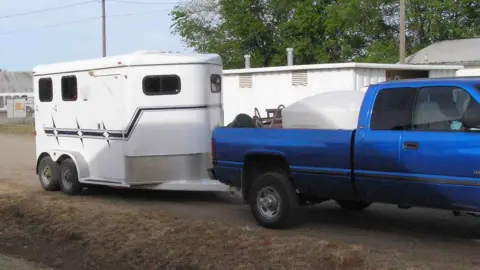
My donkey was standing outside in the bed of my pickup in the parking lot, behind the stock racks, with his long ears sticking up over the top, braying at the traffic on Main Street. That’s how they knew which jackass Clint meant.
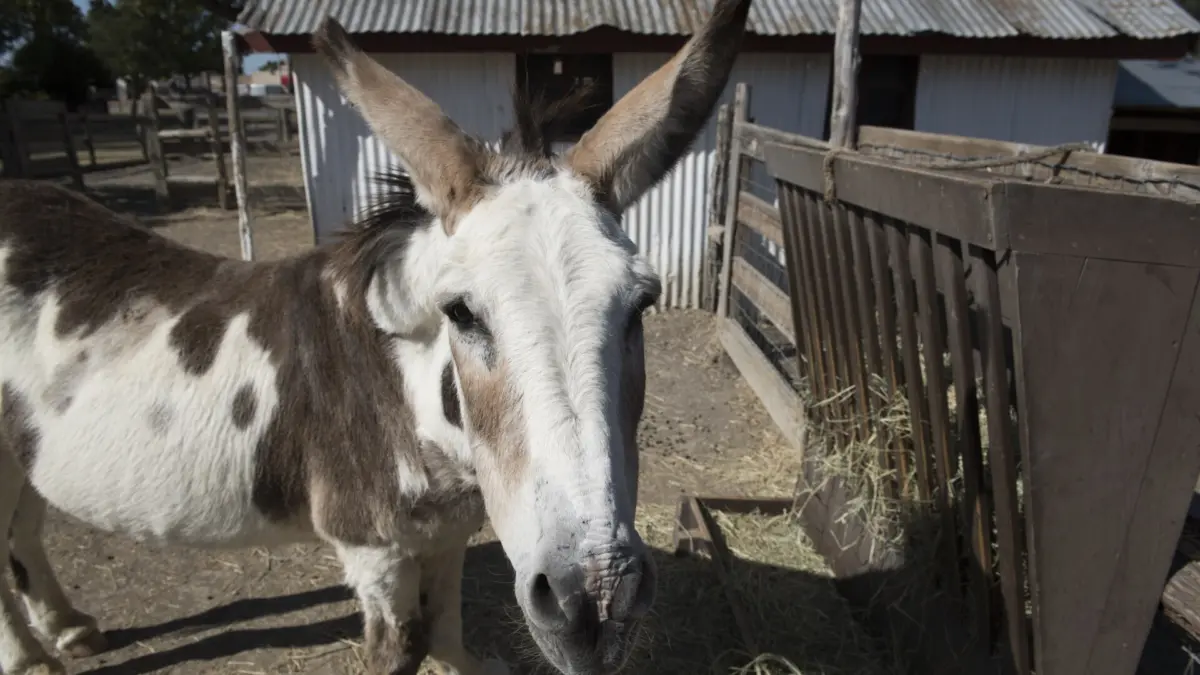
His name is Pancho. He’s a standard donkey, gray-brown, with a dark stripe down his back and another across his shoulders like a cross, the way donkeys have, and a white nose and white rings around his eyes, so he always looks a little surprised. He’s about fourteen years old. He stands about forty-four inches at the shoulder. He has one ear that flops sideways when he’s thinking. He brays at trucks, at airplanes, at the mail carrier, at the moon. He has terrible manners.
He cost me seventy-five dollars at the sale barn in Mason in 2019. He was the last animal through the ring that day, at the very end of the sale, and nobody bid on him, and the auctioneer said, “Folks, I’ll take seventy-five and he’s yours, I’m tired,” and I raised my hand before I’d thought about it.
I’d had him in the back of my truck that morning because I’d taken him to the vet in town for his teeth. Donkeys need their teeth floated, same as horses. That was seventy-five dollars too, as it happens. Pancho’s not a cheap date.
I didn’t say anything back to Clint. I paid for my goat feed and my mineral and walked out to my truck. Pancho brayed at me like I’d been gone a year.
But I’m going to tell you what Clint didn’t know, and what the three men by the mineral blocks didn’t know, because two weeks later, at one in the morning, in the dark, it mattered more than anything.
My name is Loretta Boone. Everybody calls me Retta. I’m sixty-eight years old. I live on two hundred and forty acres of cedar and live oak and limestone on the South Llano River, about nine miles outside Junction, Texas, in Kimble County, which is about as far into the Hill Country as you can go before it turns into West Texas. It’s goat country out here. Always has been. Angoras for mohair, back when my daddy was young. Now mostly Boers, for meat and for show.
This is my daddy’s place. He bought it in 1952. He ran sheep and Angora goats on it his whole life, about four hundred head, and he lost a lot of them, every year, to coyotes, until 1971, when an old Mexican rancher down by Rocksprings told him something that changed his life.
“Get a burro,” the old man said. “A jack. A good mean one. Put him in with your goats. Coyotes won’t come near.”
Daddy laughed at him. Everybody did, back then. But he bought a donkey for twenty dollars, a mean old gray jack named Chuy, and turned him in with the nannies in the kidding pasture. And his losses that spring dropped from about forty kids to three.
He never ran goats without a donkey again. Neither have I.
I was eight years old the first time I saw Chuy work. It was a spring night in 1965, and Daddy woke me up and carried me out on the porch in my nightgown, wrapped in a quilt, because he said I ought to see it once in my life. There was a coyote at the edge of the kidding pasture, in the moonlight, slinking toward the nannies along the creek. And there was Chuy, coming at it across the pasture at a dead run, braying like the end of the world, with his ears pinned back flat. The coyote turned tail and ran so fast it left a dust cloud. Chuy chased it clear to the fence and stood there braying at the dark for ten minutes after.
Daddy held me on the porch and laughed and laughed. “Twenty dollars, Retta,” he said. “Best twenty dollars I ever spent. You remember that. Don’t ever let anybody tell you a burro’s worth nothing.”
I’ve remembered it every day of my life.
Here’s what most people don’t know about donkeys. They hate canines. Coyotes, stray dogs, foxes, even a neighbor’s border collie. It’s bred into them, from back when they were wild in the deserts of Africa and had to fight off wild dogs to survive. A horse sees a coyote, it runs. A donkey sees a coyote, it charges. It’ll bray to wake the dead and put its ears flat back and go straight at that coyote with its mouth open and strike with its front feet and spin and kick with its back ones. I’ve seen Pancho stomp a coyote into the dirt. It’s not pretty. It’s not supposed to be.
A good guard donkey, in with the goats, is worth more than any fence or any gun or any dog. Daddy used to say that. A dog sleeps. A dog wanders off after a rabbit. A dog gets lonesome. A donkey just stands there all night with the goats, watching, with his ears going.
Pancho lives with my forty Boer nannies in the pasture behind my house. In fourteen years of kidding on this place, with Pancho and the two donkeys before him, I’ve lost exactly two kids to coyotes. Two. My neighbors lose dozens.
That’s what Clint didn’t know. Or didn’t believe.
Now I’ll tell you about Clint.
Clint Mabry is sixty years old. He’s my ex-husband’s younger brother. My ex-husband, Ronnie, left me in 2014 for a girl who worked at the bank in Junction. He was fifty-four. She was thirty-one. They live in San Antonio now, and good luck to them. Clint took Ronnie’s side in all of it. He told people at the café that I’d driven Ronnie off with my mouth. Maybe I did. I’ve got one. But I didn’t take up with anybody from the bank.
Before the divorce, Clint ate Sunday dinner at my table for twenty years. Chicken-fried steak and cream gravy and mashed potatoes, every Sunday after church, because his own wife couldn’t cook and said so. He’d bring his boys. He’d sit at the end of the table and tell stories about the rodeo, and I’d laugh. When his wife was in the hospital in San Angelo with her gallbladder in 2009, I kept his boys for two weeks. When their daddy died, I made the food for the funeral, all of it, for a hundred and forty people. After Ronnie left, Clint never sat at my table again. Not once. He’d see me at the post office and look the other way. That hurt more than Ronnie did, if I’m honest. I expected it from Ronnie.
Clint owns the place next to mine. Three hundred acres on my east fence line. Ronnie and Clint’s daddy split the old Mabry place between his boys, and Ronnie sold his half to me in the divorce, so now Clint and I share a fence. Two miles of it.
Clint raises show goats. Boers. Fancy ones. Registered, with papers, with names like Diamond Jack and Lady Lynette. He takes them to the big shows in San Antonio and Houston and Fort Worth, and he sells breeding stock to 4-H kids all over Texas for more money than I’d pay for a truck. His herd sire, Diamond Jack, he paid twelve thousand dollars for at a sale in San Angelo. He told everybody in Kimble County. He also told them about his kidding barn, a big new metal building with heat lamps and cameras and a hospital pen, and his two Anatolian Shepherd guard dog pups, which he bought from a breeder in Oklahoma for three thousand dollars apiece.
Clint kids his does in December, so the kids are big enough for the spring shows. Sixty does, every year.
Here’s the thing about the fence.
Last summer, in July, a coyote came through the cedar along our shared fence line in the middle of the afternoon, hunting. Pancho saw it from my side. He went through the fence after it. Right through the wire. He chased that coyote across about two hundred yards of Clint’s pasture, braying, and through Clint’s kidding barn lot, and nearly ran over Clint’s two Anatolian pups, who were six months old and had never seen anything like him and ran under the porch and wouldn’t come out. Then Pancho came home on his own, through the same hole, very pleased with himself.
Clint came over that evening in his truck and stood in my yard and told me if that jackass set one foot on his property again, he’d shoot it. He meant it. He’s got the gun to do it.
He also sent me a letter, two weeks later, from a lawyer in Kerrville, saying that the shared fence was in poor repair, that Mr. Mabry intended to replace it, and that he expected me to pay half. Four thousand, two hundred dollars. My half.
I paid it. I didn’t fight it. The fence did need doing. But I didn’t speak to Clint for the rest of the summer.
Then came the feed store, on the Saturday after Thanksgiving.
I’d heard, at church, that Clint had been losing kids. He’d started kidding early in November that year, and he’d lost five or six already. Coyotes. Everybody’s coyotes had been bad that fall. It was dry, and the jackrabbits were down, and they were hungry. Clint’s Anatolians were barely a year old. Too young. Guard dogs aren’t any good till they’re two, Daddy used to say. Before that, they’re just big puppies who want to play with the coyotes, or run from them.
So at the feed store, I’ll be honest. I went over to him. I’d thought about it all week. I went up to him by the mineral blocks, where he was talking with those three men, and I said, “Clint. I heard you’ve been losing kids.”
He looked at me like I was something on his boot.
“What’s it to you?”
“I’ve got Pancho,” I said. “He’s out in the truck. If you want, you could borrow him through kidding. Turn him in with your does. He’ll stop it. I’ve seen him do it a hundred times.”
Clint stared at me for a second. Then he laughed. Loud. The three men laughed with him.
“Borrow your jackass. To guard my goats. I’ve got twelve-thousand-dollar animals in that barn, Retta. I’ve got six thousand dollars of guard dogs.”
“Your guard dogs are puppies, Clint. They’re scared of their own shadows. I watched them run under your porch from Pancho.”
That made him mad. I saw it.
“I’ve got a game camera and a thermal scope and a .22-250, and I’m going to sit up and shoot every coyote on that place,” he said. “I don’t need a seventy-five-dollar sale-barn jackass with no manners. Last time he came on my place, he tore up my fence and terrorized my dogs.”
That’s when he said the thing about the rendering plant, and the barbecue. And the three men laughed. And somebody said, “Barbecue jackass, now there’s an idea, Clint,” and they laughed harder.
His granddaughter was standing at the end of the aisle, by the rabbit feed. Kaylee. She’s fourteen. She shows goats for Clint in 4-H, and she’s good at it, and she used to come over to my place before the divorce to pet Pancho’s predecessor, an old jenny named Maria. Kaylee had a bag of show feed in her arms, and she’d heard all of it.
“Granddaddy,” she said, in that voice teenagers use when they’re about to embarrass you and know it. “Why won’t you just let her help? We lost three more kids on Thursday. Thanksgiving. I found them. You said yourself you don’t know what to do.”
Clint’s face went red.
“Kaylee. Go get in the truck.”
“But Granddaddy, Miss Retta’s donkey saved all her goats. Everybody knows it. Why do you hate her? Is it because of Uncle Ronnie?”
The whole feed store went quiet. The man at the register stopped ringing.
“Kaylee. Truck. Now.”
She went. But she looked back at me as she went out the door, and she mouthed something. I think it was sorry.
Clint turned back to me. His jaw was tight.
“You stay off my place, Retta. You and your jackass both. I meant what I said in July. He sets one foot through that fence, I’ll shoot him. And I won’t lose any sleep over it. You understand me?”
I looked at him for a long time. Ronnie’s little brother. I’d known him since he was nineteen. I’d fed him Sunday dinner for twenty years.
“Understood,” I said.
And I paid for my feed and walked out to my truck and drove Pancho home.
That was the Saturday after Thanksgiving. Here’s what happened two weeks later.
It was the second week of December. A Thursday night. Cold, for us, about twenty-eight degrees, with a sky so clear you could see the whole Milky Way over the cedar breaks. A full moon coming up late, over the river.
I was in bed at about ten minutes to one when Pancho started braying.
Not his ordinary bray. Not the airplane bray or the mail-truck bray. This was the other one. The one I’ve only heard maybe a dozen times in fourteen years. Long and loud and high and over and over, like a siren that won’t stop.
The coyote bray.
I got up and put on my robe and my boots and got my big flashlight and my old Winchester and went out on the back porch.
Pancho was at the east fence. The shared fence. Clint’s fence. He was standing right at the wire, with his head up and his ears straight out toward Clint’s place, braying his head off. My nannies were bunched up behind him in a tight little knot, all forty of them, the way they do when there’s danger.
And then I heard it from across the fence. From down in the draw, toward Clint’s kidding barn, about three hundred yards away, through the cedar.
Coyotes. A lot of them. That yipping, howling, crazy sound a pack makes when it’s on a kill. And under it, goats screaming. Kids. Little ones. That high, terrible bleat a baby goat makes, like a human baby crying. More than one. A lot more than one.
I stood on my porch in my robe with my flashlight.
Across the draw, at Clint’s house, a light came on. Then a floodlight. Then I heard a door slam, and I heard Clint’s voice, yelling, and a gunshot. And then another one. And the coyotes didn’t stop. The goats didn’t stop. I heard Clint yelling for his dogs. “Bo! Duke! Get ’em! Get ’em!” I didn’t hear any dogs. I found out later they were under the porch.
Another gunshot. Then Clint’s voice again, closer to the barn, cussing. Then a scream from a goat so loud it went right through me. Then the pack, yipping, all around the barn, from every direction at once, it sounded like.
My phone rang in the pocket of my robe.
It was a number I didn’t know. I answered it.
“Miss Retta?” A girl’s voice. Crying. “It’s Kaylee. Kaylee Mabry. I’m at Granddaddy’s. I’m staying over. Miss Retta, they’re everywhere. They got in the kidding pen. There’s like eight of them. Granddaddy can’t see them in the dark, they’re too fast, he can’t shoot them without hitting the goats. Diamond Jack’s in there. The babies are in there. They’re killing the babies.” She was sobbing. “Miss Retta, please. Please bring Pancho. Please.”
I looked at Pancho at the fence, braying.
“Kaylee,” I said. “Does your granddaddy know you’re calling me?”
“No. He’d kill me. Please, Miss Retta. Please come.”
I thought about it. I’m going to be honest. For about five seconds, I thought about it. About the feed store. About the rendering plant and the barbecue. About the three men laughing. About the lawyer’s letter and four thousand, two hundred dollars. About July. About He sets one foot through that fence, I’ll shoot him.
And I thought about my daddy, and old Chuy, and that old Mexican rancher down by Rocksprings who said, Get a burro.
I put the phone back in my pocket.
“I’m coming,” I said.
I put the Winchester down on the porch. I wasn’t going to need it. I got a halter and a lead rope off the hook by the back door, and I walked out to the east fence in my robe and my boots with my flashlight.
Pancho was still braying. He was shaking all over. When I came up, he swung his big gray head around and looked at me, and his floppy ear stood straight up for once.
I put the halter on him.
There’s a gate in the shared fence, about two hundred yards down from the house. An old wire gate, from when it was all one place, with a chain and a padlock on it. Clint put the padlock on it after the divorce. I’ve never had a key.
I didn’t need one. I had Daddy’s fence pliers in my robe pocket. I’ve carried them in every pocket I’ve ever owned. I cut the chain.
The gate swung open.
The screaming from the barn was louder now. The yipping was everywhere.
I looked down at Pancho. He was looking through the open gate at Clint’s place, at the dark, at the draw, at the barn lights down at the bottom, with his ears pinned flat back against his head and his nostrils wide open and his whole body trembling like a wire in the wind.
I unbuckled his halter. I took it off. I let it drop in the dirt.
“Go get ’em, Pancho,” I said.
I’ll tell you what happened. I saw it. Kaylee saw it. Clint saw it. And I don’t think any of us will ever forget it.
Pancho went through that gate like he’d been fired out of a cannon. Braying. Down the slope through the cedar toward the barn lights, in the moonlight, faster than I’ve ever seen a donkey move in my life, with his head low and his ears flat and his mouth open.
I ran after him. I’m sixty-eight. I didn’t run very fast.
By the time I got to the bottom of the draw, to the floodlights around Clint’s kidding pens, it was already happening.
The pens were a mess. Panels knocked over. Does running everywhere, screaming. Little white kids bleating from under the feeders, from behind the water troughs, from wherever they could squeeze. Blood on the gravel. Clint was standing by the barn door with his rifle up and his flashlight in his other hand, swinging both of them back and forth, not shooting, because there were goats everywhere, and the coyotes kept darting in and out of the light faster than he could follow.
And in the middle of all of it was Pancho.
He went straight at the biggest coyote, the one who had a kid by the back leg, by the feed bunk. He hit it with his chest at a dead run and knocked it ten feet. It let go of the kid. It rolled and came up snarling, and Pancho reared up on his back legs, all forty-four inches of him, and came down on it with both front hooves, braying the whole time, and the coyote screamed and ran.
Two more came at him from the side. He spun around on his front feet like a cutting horse and kicked with both back legs at once, and caught one of them square, and I heard it yelp and go flying into the fence panels. The other one bit him on the hindquarters. Pancho whirled and grabbed it by the scruff of the neck with his big donkey teeth and shook it like a rag and threw it.
Then he stood in the middle of that kidding pen, in the floodlights, with his head up and his ears straight back and blood on his hindquarters, and he brayed.
He brayed so loud it echoed off the limestone bluffs across the river. He brayed so loud I swear it rattled the windows of Clint’s house.
And every coyote in that draw turned around and ran. I saw their eyes in the flashlight beam, green, going away, up the hill into the cedar. Eight of them. Maybe more. Gone.
Pancho brayed after them for a long time. Then he stopped. And he stood there, breathing hard, steam coming off him in the cold. And all around him, the does started coming out from where they’d been hiding. Slow at first. Then all of them. Coming in close to him, like my nannies do at home. Bunching up around that seventy-five-dollar donkey in the middle of the pen, with their kids under their bellies. Clint’s twelve-thousand-dollar buck, Diamond Jack, came out from behind the barn and walked right up and stood next to him.
Clint lowered his rifle.
He stood there in the floodlight in his long johns and his boots and his coat, with his mouth open, looking at Pancho standing in the middle of his goats. Then he looked at me, standing at the edge of the light in my robe, out of breath, with Daddy’s fence pliers still in my hand.
Kaylee came running out of the house in her pajamas and stopped next to her granddaddy and looked at Pancho and burst into tears.
Nobody said anything for a long time.
Clint lost six kids that night. Six. Which was terrible. But there were fifty-one more in that barn, and every one of them lived, and so did every doe, and so did Diamond Jack. The vet came out from Junction at dawn. She said if Pancho had gotten there even fifteen minutes later, with a pack that size, inside the pens, it would have been forty dead, or more.
Pancho had a bite on his hindquarters and two more on his front legs. The vet cleaned them and gave him a shot of antibiotics and some stitches. Pancho kicked her, because he has no manners. She laughed. She said she’d been kicked by worse.
Clint paid the vet bill. He didn’t ask. He just went out to her truck and wrote the check.
Kaylee and I sat on a hay bale in the barn aisle till the sun came up, with a horse blanket over both of us, watching Pancho stand guard in the middle of that kidding pen. He wouldn’t leave it. The does wouldn’t let him. Every time he took a step toward the gate, they’d crowd in around him and bleat, and he’d stop and stand there with his ear flopped over, looking embarrassed.
Kaylee told me about Thanksgiving morning. How she’d gone out at six to check the pens before the family came, and found the three kids by the water trough. How she’d sat down in the gravel and cried. How her granddaddy had come out and stood over her and said, “Well, that’s ranching,” and gone back in the house, and then she’d heard him in the kitchen, through the window, slamming cabinet doors so hard a plate broke.
“He’s not mean, Miss Retta,” she said. “He’s just proud. He doesn’t know how to need anybody.”
“I know it, honey,” I said. “I was married to his brother.”
She laughed, and wiped her nose on her pajama sleeve.
“Do you think Pancho knows what he did?” she said.
I watched him in the pen, with the steam coming off his back in the cold and all those does pressed up against him.
“He knows,” I said. “Donkeys always know. They just don’t brag about it. Not like people.”
At about seven in the morning, he walked up the hill to my house. He’d changed his clothes. He stood at the bottom of my porch steps with his hat in his hands, the way men out here do when they’ve got something hard to say.
“Retta,” he said.
“Clint.”
“I cut your chain,” I said, before he could say anything. “On the gate. I’ll pay for a new one.”
He shook his head. “Don’t.”
He looked over at my pasture, where Pancho was back with my nannies, eating hay like nothing had happened, with his ear flopped over sideways and a white bandage on his hip.
“I said I’d shoot him,” Clint said.
“You did.”
“In front of my granddaughter. In front of the whole feed store.” He turned his hat around in his hands. “Rendering plant. Barbecue. I said all that.”
“You did.”
He didn’t say anything for a while.
“I’d like to buy him,” he finally said. “I’ll give you two thousand dollars. Cash. Today.”
I laughed. I couldn’t help it.
“Clint, he’s not for sale. Not for two thousand. Not for twenty. He’s mine. And he’s guarding forty nannies who are going to kid in March.”
He nodded. He’d known I’d say that.
“Then where do I get one?” he said. “Like him.”
I thought about it.
“There’s a sale in Mason, the first Saturday of every month,” I said. “Last ones through the ring, at the very end of the day, when everybody’s gone home. Nobody wants them. That’s where.”
“How do I know which one?”
“You don’t. I’ll go with you.”
He looked at me for a long time. Ronnie’s little brother.
“I’d appreciate that, Retta,” he said.
We went the first Saturday in January. We bought two. A big gray jack and a little brown jenny, both about six years old, both mean as snakes. Fifty dollars and seventy-five dollars. Clint paid. Kaylee named them. The jack is Pancho Junior, though he’s no relation. The jenny is Retta, which I told Kaylee was not funny, and she laughed for about five minutes.
I want to tell you about that sale, because it was something. The Mason sale barn on a cold January Saturday, with the bleachers full of ranchers in their winter coats and the auctioneer going a mile a minute and the smell of cattle and coffee and diesel. Clint and I sat together on the top row of the bleachers all day, through the cattle and the sheep and the goats and the horses, and didn’t say a dozen words to each other. People looked at us. Everybody in three counties knew about the divorce, and about the fence, and about the feed store. By noon, I think everybody knew about the coyotes too.
At about four-thirty in the afternoon, when the bleachers were mostly empty and the auctioneer was hoarse, they ran the last few animals through. An old mule with a sway back. A pony. And then two donkeys, one at a time, both of them braying their heads off at the auctioneer, at the ring man, at each other.
“That’s them,” I said.
“How do you know?”
“Look at the jack’s ears. Look how he’s watching the ring man’s dog.”
The ring man had a little blue heeler that worked the gates. The gray jack had his ears pinned flat and his eyes on that dog every second, and when the dog came too close, he struck at it with a front foot so fast the dog yelped and jumped the rail.
Clint laughed. First time I’d heard him laugh at anything but me in eleven years.
He raised his hand at fifty dollars, and nobody bid against him.
Then the little brown jenny came through, braying and kicking at the gate, and Clint looked over at me. I nodded. He raised his hand again, at seventy-five.
“Same as Pancho,” he said.
“Same as Pancho,” I said.
The auctioneer banged his gavel and said, “Sold, to the couple on the top row,” and Clint turned so red I thought he’d have a stroke, and I laughed so hard I had to hold onto the rail.
Clint hasn’t lost a kid to a coyote since.
He took the padlock off the gate between our places in February. He didn’t put a new one on. He fixed the chain himself, and he hung it so it just loops over the post. Anybody can open it. He told Kaylee she can bring her show goats over to visit Pancho anytime she wants, and she does. She’s working with him. She says she’s going to teach him to walk on a lead rope without braying at every truck that goes by. I told her good luck.
In March, I got a check in the mail from Clint. Four thousand, two hundred dollars. My half of the fence. There wasn’t a letter with it. Just the check. On the memo line, in Clint’s handwriting, it said: Fence. Pancho paid.
Clint’s still Ronnie’s brother. We’re not exactly friends. He still says things at the café sometimes. I’ve heard about it. People out here talk.
But at the San Antonio Stock Show in February, Kaylee won Reserve Champion with a Boer doeling born in Clint’s barn on the second night of December last year. One of the fifty-one. Her name on her registration papers is Retta’s Pancho Lady. Kaylee named her that. Clint let her.
There’s a picture of it in the Junction Eagle, Kaylee and the doeling in the show ring with a big purple ribbon. It’s pinned up on the bulletin board at the Junction Feed and Supply, right over the mineral blocks.
Pancho brays at it every time I bring him to town.