“Glenda, that mare’s worth exactly what you paid for her. One dollar. Do us all a favor and haul her to the sale barn before she drops dead in your yard and stinks up the whole road.”
Tiffany said that at the counter of the feed store in Laramie, on the Saturday before Thanksgiving, loud enough that the two Rasmussen boys stacking mineral tubs in the back stopped and looked up. She had a cart full of senior feed and a bag of those fancy horse treats shaped like little stars, and she was wearing a vest that cost more than my first car.
My granddaughter Kenzie was standing next to me holding the receipt for my four bags of oats. She’s eleven. She turned and looked at Tiffany with her mouth open.
Dwayne at the register looked at the cash drawer like there was something very interesting in it.
I’m Glenda Mahler. I’m sixty-seven years old. I was married to Gary Mahler for forty-one years, and for forty of those years we ran cattle and raised horses on the home place west of Laramie, about four miles north of Interstate 80, on a gravel county road that doesn’t have a name, just a number. Gary’s granddad bought the ground in 1919. We ran about two hundred mother cows and kept a band of twenty-some saddle horses, and every year we raised a few colts and sold them to ranch families around Albany and Carbon County. Good, honest ranch horses. Not fancy. Nobody ever paid forty-five thousand dollars for one of ours.
In 2020, Gary went to a cutting horse show in Fort Worth with a neighbor, and he met Tiffany. She was thirty-nine and rode cutting horses for a trainer down there. He came home and was different. He bought new jeans. He started going to the gym in town. In March of 2021, he sat me down at the kitchen table I’d eaten at for forty years and told me he was in love with somebody else and wanted a divorce. He cried when he said it. I didn’t. I cried later, in the barn, with my face in Penny’s mane.
Penny is a sorrel quarter horse mare with a white blaze and one white sock, on the left hind. She’s twenty-eight years old now. I foaled her out myself in April of 1998 in a spring blizzard, in the old calving shed, at two in the morning, with Gary asleep in the house because he said the mare would be fine. The mare wasn’t fine. The foal was coming wrong. I had my arm in that mare up to the shoulder, turning a leg, with my flashlight in my teeth. When Penny finally came out, she wasn’t breathing. I cleared her nose with my fingers and rubbed her with a feed sack till she sneezed. Her mother died two days later. I raised Penny on a bottle in my kitchen for the first week, in a playpen we’d used for our daughter Amber.
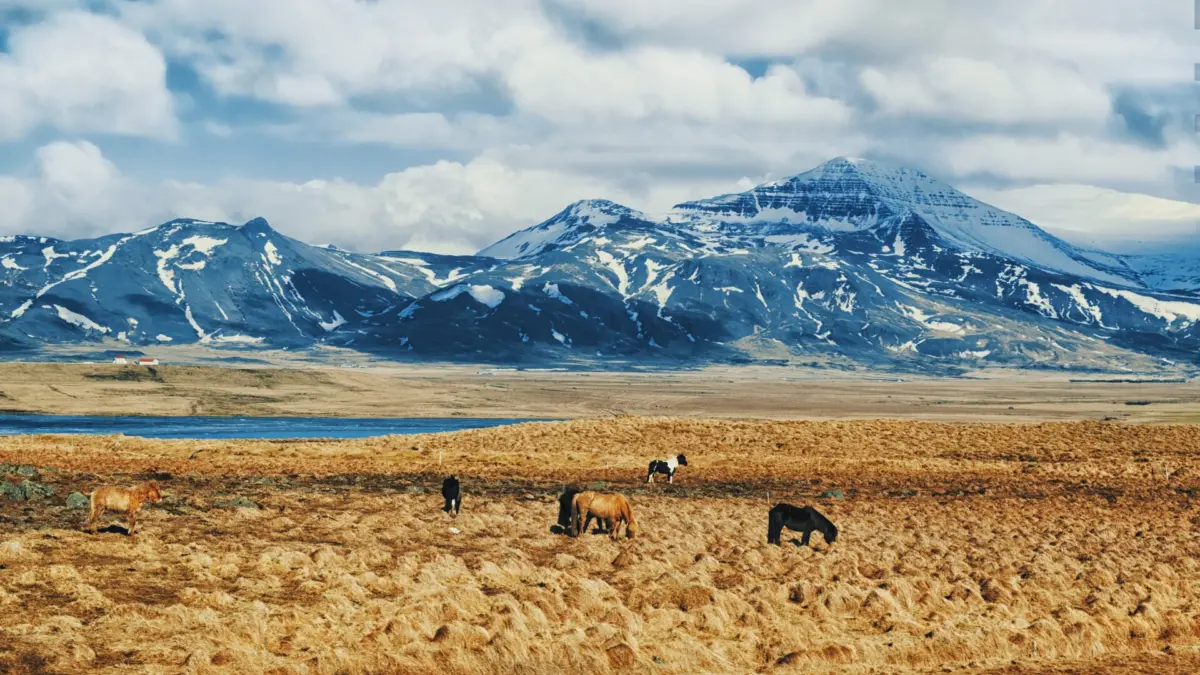
She’s been the boss of every horse on that place since she was six years old. Lead mare. If you’ve never been around horses, you might not know what that means. In a herd, there’s always one mare that decides. Where to graze. When to go to water. When to run and which way. The geldings and the young horses and even the studs, they all watch her. When there’s a storm, she’s the one who takes them to the shelter of the trees. When something scares them, she’s the one they run toward. Penny was that mare for twenty-two years. When I wanted to bring the horses in from the big pasture, I never chased them. I just haltered Penny and walked her to the barn, and every horse on the place came in behind her in a line like ducks.
In the divorce, our lawyers split everything up. It took most of a year. Mine was Ruth Ann Pettibone, in Laramie, who’s been practicing out there since the seventies and doesn’t take any nonsense. Gary got the home place, the twelve hundred deeded acres and the house and the barns and the cattle and the horses. I got the eighty acres across the county road, where Gary’s granddad’s original homestead house still stands, a little two-bedroom with a porch, and a one-hundred-and-fifty-thousand-dollar equalization payment, to be paid out at one thousand, two hundred and fifty dollars a month for ten years. That’s what Ruth Ann got for me. It was fair, she said, given what the land was worth and what the bank owed on it.
But there was one more thing.
In the list of assets, Gary’s lawyer had written the horses down by name. Twenty-three head. And at the bottom, he’d written: “Penny, sorrel mare, age 23, no value.”
No value.
I asked for her. Ruth Ann asked for her for me, in the conference room in her office on Grand Avenue, across the table from Gary and his lawyer. Gary laughed a little. He said I could have the old nag if I wanted to feed her.
“It has to be a sale,” his lawyer said. “For the paperwork. So it’s clean.”
“Fine,” Gary said. “A dollar.”
So Ruth Ann typed up a bill of sale right there, on her computer, and printed it out, and I still have it. It’s in a frame on my kitchen wall now, next to the window. It says: “For the sum of One Dollar ($1.00) and other good and valuable consideration, Gary L. Mahler hereby sells, transfers and conveys to Glenda R. Mahler one sorrel Quarter Horse mare known as ‘Penny,’ foaled 1998, blaze, left hind sock.” It’s signed by both of us, and dated November 9th, 2021. I gave Gary a one-dollar bill out of my wallet. He folded it and put it in his shirt pocket like it was a joke.
I moved across the road into the homestead house in December of 2021. Penny came with me. I fixed up the little three-sided shed behind the house for her and fenced off about twenty acres of it as her pasture, along the county road.
Gary married Tiffany in June of 2022. In our church. Well, his church now. I don’t go there anymore.
Here’s the thing about Penny. Every evening since I moved across the road, at about the time the light starts to go, she walks to the corner of her pasture by the county road and stands there with her head up, looking across the road at the home place, at the big pasture where the horses are. And she calls them. A big, deep whinny that you can hear a mile off. And every evening, from across the road, the horses answer her. All of them, in a chorus. They come down to their fence and stand there and call back, and she calls again, and they go back and forth like that till it’s dark.
Twenty-two horses, across a gravel road, talking to their old boss every night. Four years now.
Tiffany hates it.
“It’s like living next to a screaming woman,” she told Gary once. He told me she said it. He thought it was funny.
That fall, in October, Tiffany bought a cutting horse. A big, dark bay gelding with a white star, five years old, registered as High Plains Ace. She calls him Ace. She paid forty-five thousand dollars for him from a trainer in Weatherford, Texas. She posted about it on Facebook. My daughter Amber showed me on her phone. There was a picture of Tiffany with her arms around the horse’s neck and the words “Dreams do come true” and about three hundred hearts underneath.
I happened to know, that same month, that Gary was three months behind on my payments.
I knew because I’m not good with computers, but I’m good with my mailbox. My statements from First Interstate Bank come on the fifth of every month, and I read them at the kitchen table with my coffee and a pencil. August, nothing. September, nothing. October, nothing. Three thousand, seven hundred and fifty dollars. That’s my propane. That’s my property taxes on the eighty acres, which are due in two halves. That’s the blood pressure pills and the Medicare supplement and half of what I live on, along with my Social Security.
I called Gary. He didn’t pick up. I texted him, the way Amber taught me. He wrote back two days later: “Cash flow is tight. Calves don’t sell till November. Be patient.”
And then that horse showed up on Facebook. Forty-five thousand dollars.
I took the statements to Ruth Ann. She looked at them over the top of her glasses and said, “Well, that’s not going to fly.” She sent Gary a letter on her letterhead. A polite one. It said he was ninety days behind on the payments ordered in the decree and asked him to bring it current within thirty days. That letter went out on November 10th, by certified mail. He signed for it. I know because Ruth Ann got the green card back.
Which is why, I think, Tiffany was so ugly to me at the feed store eleven days later.
“Do us all a favor and haul her to the sale barn before she drops dead in your yard and stinks up the whole road.”
Kenzie’s hand found mine. Her fingers were cold.
“And another thing,” Tiffany said. “Your nag stands at that fence every night screaming at our horses. Every single night. It gets them all riled up. Ace won’t settle. He paces the fence. He’s going to hurt himself, and he’s worth more than your whole place. I want her moved. Away from the road. Put her behind your house or something.”
“It’s my pasture,” I said. “She’s been in that corner for four years.”
“I don’t care. And while we’re at it.” She leaned closer. She smelled like expensive shampoo. “You and your lawyer can stop sending Gary letters. He’s paying you what he can. You’re not entitled to bleed him dry while you sit over there in that shack with your one-dollar horse. You got what you got in the divorce. Let it go.”
I didn’t say anything. I’ve learned that over the years. When somebody’s yelling, the quietest person in the room usually wins.
Kenzie said it, though.
“Grandma,” she said. Not to Tiffany. To me. Her voice was high and shaky. “Why did Grandpa only give you Penny? Why didn’t he give you any of the good horses? Did he think you weren’t worth anything either?”
I felt that one right in the middle of my chest. Kids hear everything. She’d heard “no value.” Somehow, from somebody, she’d heard it.
Tiffany laughed. Not a big laugh. Just a little puff through her nose.
“Honey,” she said to Kenzie, “your grandpa gave her exactly what she was worth.”
Then she turned to me. “So we understand each other? The mare gets moved off the road. The letters stop. And you stay on your side. You understand me, Glenda?”
Dwayne at the register was still staring at his cash drawer. The Rasmussen boys had gone very still in the back.
I looked at the woman my husband left me for.
“Understood,” I said.
And I picked up my four bags of oats, one at a time, and carried them out to my pickup myself, even though my shoulder’s bad and Dwayne always sends one of the boys out to load. I didn’t let anybody help me. Kenzie carried the receipt.
In the truck, she cried. I let her. I drove home slow, on the county road, and when we came around the last curve, there was Penny at the corner of her pasture, with her head up, waiting for us. She nickered when she saw my truck. She always does.
“I’m sorry, Grandma,” Kenzie said. “I didn’t mean you weren’t worth anything.”
“I know you didn’t, baby.”
“Are you going to move Penny?”
“No,” I said.
That’s all I said. I didn’t move her.
That night, at dusk, Penny walked to the corner and called across the road, the way she always does. And twenty-two horses came down to Gary’s fence and answered her. I sat on the porch in my coat and listened to it till it got dark. I don’t know what it sounded like to Tiffany. To me it sounded like the only thing on that whole place that still remembered I used to live there.
Thanksgiving came and went. Amber came out from Laramie after her shift at Ivinson Memorial. She’s an ER nurse. She works nights and has Kenzie stay with me on the nights she works, which is most of them. We had a little turkey breast and boxed stuffing and a pie from the grocery store, and it was nice. The three of us. We said grace. Kenzie said she was thankful for Penny. Amber looked at me over her daughter’s head.
“She told me about the feed store,” she said, later, while we were doing dishes. “Mom. Why didn’t you say anything back to her?”
“What was I going to say?”
“I don’t know. Something. She’s awful.”
“She’s young,” I said. “And she’s scared. Anybody who talks like that is scared of something.”
“Scared of what? She’s got everything. She’s got Dad. She’s got the ranch. She’s got your house.”
“She’s got a horse she can’t afford,” I said, “and a husband who’s seventy years old with a bad knee and a lawyer’s letter in the kitchen drawer. And she knows every horse on that place still answers to the one she called worthless.”
Amber dried a plate for a long time.
“Gary’s getting his knee done tomorrow,” she finally said. “In Casper. He called me. He wanted me to know, in case something happened. He’ll be in the hospital two nights. Tiffany’s going to be alone over there with all the horses.”
“She’ll be fine,” I said.
I was wrong about that.
The Saturday after Thanksgiving, it was clear and cold and still, about fifteen degrees, the kind of December evening where the sky goes orange and then pink and then a deep blue you only see out here, and the snow on the Snowy Range to the west turns the color of a peach. Sunset’s at about twenty to five that time of year.
I was in the kitchen making soup. Kenzie was at the table doing her homework, sort of. Mostly she was on the iPad Amber gave her.
“Grandma,” she said. “Tiffany’s live on Facebook.”
“What’s she doing?”
“Feeding the horses. She’s filming it. She says it’s golden hour.” Kenzie turned the iPad around so I could see. There was Tiffany, in a white puffy coat and a cowboy hat, walking down the lane between the barn and the big pasture with a flake of hay in each hand and her phone on a stick, talking to the camera, with the sunset behind her. “She’s got the big gate open. Behind her. See? The one on the lane.”
I looked. I saw it. The big pipe gate at the end of the lane, the one that opens onto the county road. Wide open. And the pasture gate beside it, open too, because she’d driven the feed truck through it and was carrying hay in by hand for the camera.
“Kenzie,” I said. “Turn that off and go look out the front window.”
She didn’t even have to get up. We heard it first.
If you’ve never heard twenty-two horses running on a frozen gravel road, I can’t really describe it. It’s like thunder that comes up out of the ground instead of down from the sky. The windows rattled. The soup pot buzzed on the stove. Penny, out in her shed, let out a scream I’d never heard from her in twenty-eight years.
Kenzie ran to the front window. I came behind her, with the soup spoon still in my hand.
They came past my house in the dusk in a dark wave, all of them, bucking and kicking and squealing, with their tails up, the way loose horses do when they get out and they’re half scared and half having the time of their lives. They went past my mailbox and around the curve and south. Toward the interstate. Four miles of open county road and then the frontage road and then the interchange. Saturday after Thanksgiving. The biggest travel weekend of the year. Every semi and every family in a minivan between Salt Lake and Omaha coming down that hill west of Laramie at seventy-five miles an hour, with the sun just gone and their headlights barely on.
The last one past my window was a big dark bay with a white star, running out in front of the rest like he was proud of himself.
Ace.
Behind them, about a minute later, here came Tiffany in Gary’s big Dodge, with her flashers on, honking the horn and flashing the brights, roaring down the road after them. Which is the worst thing you can possibly do. Chasing loose horses with a truck just makes them run faster. They think something’s after them. Because something is.
“She’s going to run them right onto the interstate,” I said.
Kenzie was already pulling on her boots. “Grandma, what do we do? Call 911?”
“Call 911,” I said. “Tell them twenty-two head of loose horses on County Road 12, headed south toward I-80. Tell them to call the Highway Patrol and WYDOT and get somebody to the interchange with lights. And then call your mom.”
I went out to the shed.
Penny was standing in the middle of her pen with her head up so high I could see the whites of her eyes. Every muscle on her shaking. Looking south, down the road, where the noise had gone. Calling, over and over. A different whinny than the one she does at dusk. Higher. Sharper.
I took her halter off the nail. Her old rope halter, the blue one, faded almost to gray. I put it on her. My hands were shaking so bad I could hardly tie the knot. I grabbed a coffee can and filled it halfway with oats from the bin and shook it, and she turned her head and looked at me.
Kenzie came running out of the house with the phone. “They said a deputy’s coming. And the Highway Patrol. But they said it’ll be twenty minutes. Grandma, they’ll be on the interstate in twenty minutes.”
“I know.”
“Are you going to ride her?”
“No. I’m going to walk her.”
“Grandma, it’s four miles.”
“Not if they stop,” I said.
That’s when Tiffany’s truck came back. She’d gotten down the road far enough to see what she was doing, I guess. Or she’d lost them in the dark. She came roaring back up the county road and slid to a stop in front of my mailbox and jumped out and ran up my driveway in her white coat, crying, with mascara all down her face. Her phone was still in her hand. I don’t know if it was still live.
“Glenda! Glenda, I need your truck! Gary’s stock trailer has a flat, I need your trailer, I have to catch them, Ace is—” She saw Penny, standing there in her halter, and me with the coffee can. She stopped dead in my driveway.
“What are you doing?” she said. “Glenda. What are you doing with that thing?”
“I’m going to go get your horses,” I said.
“With her? With that?” Her voice went high. “Are you crazy? There’s twenty-two horses out there running loose in the dark, and Ace is out in front, and he’s the fastest horse in the county, and they’re going to be on the interstate, and somebody’s going to die, and you’re going to go get them with a dollar horse and a coffee can?”
“Yes,” I said.
“You can’t catch Ace on foot! Nobody can! He’s a cutting horse! He’s trained to be faster than anything!”
“I’m not going to catch him,” I said. “She is.”
Kenzie came up beside me. She’d put on her 4-H jacket over her pajamas. She took the coffee can out of my hand without asking and held it against her chest.
“I’m coming,” she said.
I didn’t argue. I should have, maybe. But I didn’t.
We walked out of my driveway onto the county road in the blue dusk. Me in my barn coat and my overshoes, with Penny’s lead rope in my hand. Kenzie on the other side of Penny with the coffee can. Tiffany stood in my driveway behind us in her white coat with her phone hanging down by her side.
We walked south. Penny walked faster than I’d seen her walk in five years. I had to almost jog to keep up with her. Her head was up and her ears were pointed straight down the road like two arrows. Every few steps, she called. And from somewhere down there in the dark, over the curve, I couldn’t tell how far, something answered her. One horse. Then another.
We got to the top of the long rise about a mile and a quarter south of my place. It’s the high point on the county road. From up there in the daytime, you can see all the way down to the interstate, the long gray line of it cutting across the valley, with the trucks going by like toys. Now, in the dark, all I could see was the river of headlights and taillights, white one way and red the other, steady, endless, coming down the hill from Elk Mountain. And between us and that river, out there on the dark flat about two miles off, near where the county road meets the frontage road, I could just see shapes moving. Dark shapes against the gray snow. Milling around. Not running anymore. Not yet. Stopped, maybe. Confused. Bunched up near the right-of-way fence, with nothing but four strands of wire between them and the traffic.
And one of them, out away from the others, closer to the highway, a big dark shape with something white on his face. Pacing back and forth along the wire. Looking for a way through.
Tiffany’s truck pulled up behind us at the top of the rise. She’d followed us at a crawl, with her lights off, which was the first smart thing I’d seen her do. She got out and stood next to me. She was breathing hard.
“That’s Ace,” she said. “By the fence. Glenda, he’s going to go through. He’s going to go through the wire. Oh my God. Oh my God, he’s right there.”
I gave Kenzie a look, and she gave Penny a little shake of the coffee can. Penny didn’t even look at it. She was staring down at that dark flat, at those horses, with every hair on her body standing up.
I unbuckled the halter. I slipped it off her head.
“Glenda!” Tiffany grabbed my arm. “What are you doing? You’re letting her go? She’ll run off! She’ll run down there with the rest of them! Then you’ll have twenty-three horses on the interstate!”
“She won’t run off,” I said.
“How do you know that?”
“Because she’s not one of them,” I said. “They’re hers.”
Penny lifted her head as high as it would go. She stretched her neck out long toward the highway. Her sides went in and out, filling up.
Tiffany’s hand was still on my arm. She was shaking.
I’ll tell you what happened. I’ve thought about it every day since.
Penny let out a whinny I didn’t know she had in her. It wasn’t the dusk call. It wasn’t the scream from the shed. It was something deep and low and long that came up out of her chest and rolled down that hill in the cold air like a bell, and went on, and on, and when it finally stopped, there wasn’t a sound anywhere except the trucks on the interstate.
And then, down there on the dark flat, every one of those horses stopped moving.
Every head came up. I could see it, even in the dark. Twenty-some heads, all turning the same direction. Up the hill. Toward us.
Penny called again. Shorter this time. Sharp. The way she used to call them in to water.
And they came.
They came up out of that flat in a long dark line, one after another, at a trot and then at a lope, up the county road toward us, with their breath smoking in the cold. Not wild anymore. Not running from anything. Coming to something. Coming to her.
All except one.
Down by the wire, the big bay with the white star had stopped pacing. He stood there, by himself, by the fence, with his head up, looking at the highway. Then he looked back at the herd going away from him up the hill. Then at the highway. I watched him try to decide. I thought my heart was going to stop.
A semi came down the hill from the west and saw him, I guess, a horse standing right at the edge of the right-of-way in its headlights. The trucker hit his jake brake. It went off like a machine gun in the cold air. And the big bay spun around on his hind legs, like the cutting horse he was, and took off up the hill after the others, flat out, with his tail straight out behind him, faster than anything I’ve ever seen on four legs.
“Ace,” Tiffany said. “Ace. Ace. Oh, thank God.”
The horses came up over the rise and slowed down when they got to Penny, and stopped, and stood around her in a big steaming bunch, blowing and snorting and shoving each other, the way horses do. Some of them put their noses on her. Some of them just stood close. One old gray gelding of Gary’s, Smoke, who must be twenty-four now, came right up and put his whole head over her neck and left it there. Ace came in last and stood out at the edge, wild-eyed and lathered, not sure about any of it. He was new. He’d only been on the place two months. He didn’t know her.
Penny turned her head and looked at him. Just looked. Pinned her ears, a little.
He dropped his head and walked in among the others like a kid who’d been called to the principal’s office.
Kenzie was laughing and crying at the same time, holding the coffee can.
I put Penny’s halter back on her. I turned her around. And I started walking back up the county road toward home, toward the home place, with my old dollar mare on a lead rope, and twenty-two horses walking behind her in the dark in a long, quiet line, like ducks. Just like they used to. Tiffany drove behind us with her flashers on, slow, to keep the cars off us. Not that there were any.
The deputy met us about halfway. Deputy Lansing, a young fellow. He’d come up from the interchange with his lights going. He pulled over in the ditch and got out and just stood there by his car with his hat in his hand and watched us go by. He didn’t say anything. Then he got back in his car and turned his lights off and followed along behind Tiffany.
It took us an hour and ten minutes to walk them home. Four miles, give or take. Kenzie walked the whole way next to me. When we got to the home place, I walked Penny through the big pipe gate at the end of the lane and down the lane to the big pasture, the way I’d done a thousand times. Every horse followed her through the gate. Tiffany got out of the truck and closed the big pipe gate behind them, and chained it, and stood there holding the chain.
I took Penny’s halter off in the big pasture and let her stand with them for a while. She went around and smelled every one of them. She bit one of the young geldings on the rump for something he said, I guess. Then she walked back over to me at the gate and put her head down on my chest, the way she does when she’s tired.
“Come on, old girl,” I said. “Let’s go home.”
I led her out. Back down the lane. Back across the county road. Back to her twenty acres and her little shed, behind the homestead house. Kenzie closed her gate.
Behind us, across the road, twenty-two horses came down to Gary’s fence and stood there in the dark. Penny turned around in her pen and called to them. Soft. Like she was saying good night.
They answered.
Tiffany came over about an hour later. I’d put Kenzie to bed. I was sitting at the kitchen table with my soup, which had gone cold, and my hands around a cup of tea. She knocked on the door like a stranger. I let her in.
She’d taken off the white coat. It had mud on it, and horse slobber, and something that might’ve been blood from where Ace had cut his knee a little on the wire. Doc Hardesty would come out the next day and stitch him up, and he’d be fine. She sat down across from me at my little table in the homestead house. She looked at the bill of sale in its frame, on the wall by the window. She read it. I watched her lips move.
“No value,” she said.
“That’s what his lawyer wrote.”
“I said she wasn’t worth anything. At the feed store. In front of your granddaughter. I said Gary gave you what you were worth.”
“You did.”
She put her face in her hands. She didn’t cry, exactly. She just sat there.
“The live video,” she said, through her hands. “It was still going. The whole time. When I ran up your driveway. When you took her down the road. It recorded the whole thing till my phone died. There’s eleven thousand people who’ve watched it.” She looked up. “They saw me leave the gate open. They saw everything.”
“I’m sorry,” I said. I was, a little.
“Don’t be.” She laughed, kind of. “I deserve it.”
She sat there a while longer. Then she reached in her jeans pocket and took out a folded piece of paper and slid it across the table to me. It was a check. Gary’s ranch checking account at First Interstate, with his signature on it, already signed, dated the 25th of November. Three thousand, seven hundred and fifty dollars. Made out to me.
“He wrote it before he went to Casper,” she said. “After your lawyer’s letter. He told me to mail it Monday. I was going to… I was going to hold onto it for a while. Make you wait. Because of the letters.” She shook her head. “I’m not proud of that.”
I looked at the check for a long time.
“Tell him to set up the automatic payments,” I said. “Through the bank. On the first of the month. So nobody has to mail anything, and nobody has to hold onto anything, ever again.”
“I’ll tell him.” She stood up. At the door, she stopped. “Glenda. Would she let me… would it be okay if I came over sometimes? To see her? I don’t know anything about horses. Not really. I know about cutting. About shows. I don’t know about… that.”
“About what?”
“About whatever she did out there tonight.”
“She’s a horse,” I said. “She does what horses do. She just does it better than most.”
Tiffany comes over now. Not every day. A couple of times a week. She brings carrots, not those star-shaped treats, after I told her Penny thought they were silly. She stands at the fence with Penny and scratches her withers and doesn’t say much. Sometimes Kenzie goes out and stands with them. Last week, I saw the two of them out there in the snow together, the girl and the woman who called her grandmother worthless, both of them with their arms on the top rail, and Penny in between them, eating a carrot. I didn’t go out. I let them be.
Gary set up the automatic payments the week after his surgery. They come out on the first of every month now, from his ranch account to mine. Ruth Ann checked. He’s never been late since. He’s never said a word to me about any of it, either. Not about the horses, not about the check, not about the feed store. Amber says he’s embarrassed. I don’t know what he is. I haven’t really talked to Gary in four years, and I’m not sure I’m going to start now.
Ace healed up fine. Tiffany took him to a cutting in Denver in January and placed fourth. She sent me a picture. In the background, if you look close, you can see she’s wearing the old blue rope halter Penny used to wear, the faded one, hanging off her belt like a good luck charm. I’d given it to her after that night. I got Penny a new one.
Dwayne at the feed store told me, a couple of weeks later, that Tiffany had come in and paid off my account. All of it. Eight months of oats and mineral and hay. About nineteen hundred dollars. I hadn’t asked her to. I called her and told her I didn’t want it. She said too bad, it was done, and Dwayne wouldn’t take it back.
The Rasmussen boys load my oats now without me asking. Every time.
Penny’s twenty-eight. She’s slower than she was. Her back’s starting to sway, and she’s got some gray coming in around her eyes. Doc Hardesty says she’s got a few good years left if I keep her teeth floated and keep her warm in the winter. I will.
And every evening, at about the time the light starts to go, she walks down to the corner of her pasture by the county road and lifts her head and calls across to the home place.
And twenty-two horses come down to the fence, and answer her.
Twenty-three, now. Tiffany bought a little sorrel filly in the spring, a yearling, to keep Ace company. She asked me to name her. I told her to call her Dollar.