The alert came in at 3:12 on a Saturday afternoon. I was standing at the nurses’ station on the fourth floor of Atrium Health in Charlotte, halfway through a twelve-hour shift, charting a medication change for a patient in 409.
My phone buzzed in the pocket of my scrubs. I almost ignored it. I’d been getting notifications from the security company all week, ever since closing, mostly little test messages from the installer and reminders to download their app. But this one made a different sound. It was a sharp double tone I hadn’t heard before.
I pulled out the phone and looked at the screen.
“ADMIN ALERT: Keypad access code changed at Front Entry. 3:12 PM.”
I stood there and read it three times. I was the only person with the admin code. I’d closed on the house four days earlier. I hadn’t even moved a single box in yet. The only furniture inside was a sectional the delivery men had dropped off on Thursday, a dining set, and a mattress still wrapped in plastic upstairs.
“Rachel?” said Denise, the charge nurse from the other unit. “You okay? You look like you saw a ghost.”
“I think somebody’s in my house,” I said.
My name is Rachel Bennett. I’m thirty-eight years old, and I’ve been a nurse for sixteen years, the last nine of them in intensive care. I’ve worked every holiday you can name. I’ve done doubles and picked up overtime shifts so many times that the staffing office has my cell number saved under “Rachel – Always Says Yes.” I never married. I drove the same Honda Civic for eleven years. For twelve of those years, I put money into a savings account at the credit union every two weeks, and I didn’t touch it, not for vacations or new clothes or the kitchen remodel my old apartment desperately needed.
That money was for one thing. I wanted a house on the water. I’d wanted it since I was a little girl, when my grandmother used to take me fishing on Lake Norman on Sunday afternoons and tell me that the lake doesn’t care who you are, only whether you showed up.
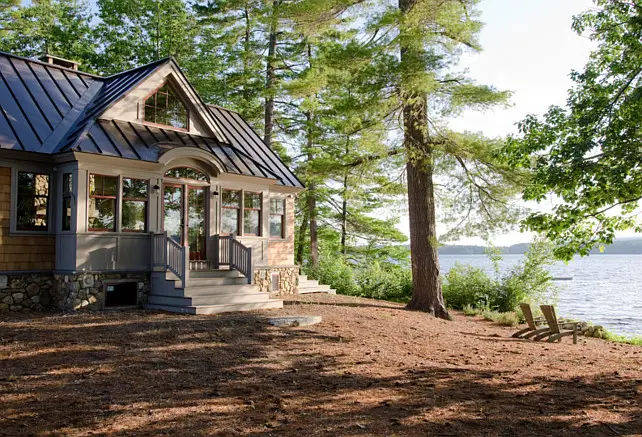
The house I bought was on a little cove on the west side of the lake, about forty minutes north of the city. It’s not a mansion. It’s a three-bedroom with gray cedar shingles and a stone wall along the driveway and big glass doors in the back that look straight out at the water through a stand of pines. The price was $587,000. I put down $142,000 from my savings. The rest is a thirty-year mortgage with a payment that still makes my stomach flip when I look at it. I closed on Tuesday at Lakeside Title in Mooresville, and I signed my name so many times my hand cramped. The wire confirmation came through at 11:42 that morning. I still have the email.
And I hadn’t told my family.
I want to explain that part, because people always ask about it. They ask why a grown woman would keep a house a secret from her own parents. The honest answer is my brother, Owen.
Owen is two years younger than me. He’s charming. Everybody says so. He’s got my father’s big laugh and my mother’s blue eyes, and he can walk into a room full of strangers and leave with three new best friends and somebody’s boat for the weekend. He’s also never held a job longer than eighteen months in his life. He’s been a car salesman, a mortgage broker, and a “partner” in a food truck that lasted one summer. Then there was a fitness business that never had a single client. Every time something fell apart, it was somebody else’s fault, and every time, my parents caught him.
They cosigned his truck, and when he stopped making the payments, they made them. When he and his wife, Heather, got behind on their rent in Huntersville, my mother called me and asked if I could “help out just this once.” I lent him eight thousand dollars. That was four years ago. I’ve never seen a dime of it back, and the one time I brought it up at Thanksgiving, my father told me I was being petty in front of the boys.
The boys are Owen’s sons. Mason is seven and Cody is five. I love them more than I can say. It’s the only reason I kept answering the phone for as long as I did.
Here’s what I learned over the years. Every time I built something, my family found a way to make it partly Owen’s. When I bought my Civic, my mother asked if Owen could borrow it while his truck was in the shop, and he kept it for two months. When I got my promotion to senior ICU nurse, my father said, “Good, then you can help your brother more.” When I paid off my student loans, my mother said, “Must be nice,” in a tone I still hear sometimes when I’m falling asleep.
So when I started looking at houses on the lake, I didn’t tell anybody but my best friend, Tessa, and my attorney, Nina Okafor. Nina and I had gone to high school together in Concord. She handled my closing, and she was the one who told me, very calmly, over lunch at a Panera, “Rachel, if you’re worried about your family, keep the address to yourself until you’re moved in and the locks are yours.”
I took her advice. I almost got away with it.
Standing at the nurses’ station, I opened the security app with my thumb shaking. The front camera was mounted over the garage, and it showed the driveway and the stone wall and the walk up to the front door.
There were cars in my driveway. Four of them. There was a silver minivan with a dent in the back bumper, and I knew it right away. It was Owen and Heather’s.
Behind it was my parents’ white Buick.
I switched to the inside camera. The installer had put one in the main room, facing the kitchen and the glass doors. It showed my brother standing in my living room with his arms spread wide, laughing, while Heather carried a big foil tray of something into my kitchen. My mother was standing near the front entry by the keypad, holding her purse against her chest. I could see Mason and Cody running across the empty floor in their socks, sliding, the way little boys do on a new floor.
Then a white van pulled into the driveway. The side said “Lake Norman Party Rentals.”
“Denise,” I said. “I need someone to cover my patients.”
“What’s going on?”
“I’ll explain later. I have to make a phone call.”
I went into the supply room, shut the door, and called Nina.
She picked up on the third ring. “Rach? Aren’t you working?”
“My brother is in my house,” I said. “My parents are there. They changed the code on the keypad. There’s a party rental van in my driveway.”
There was a short silence on the line.
“Are you sure it’s the house on the cove?”
“I’m looking at it right now on the camera.”
“Okay,” Nina said. Her voice changed. It got slower and lower, the voice she uses in court. “Listen to me. Do not call them. Do not text them. Do not post anything. Can the app save recordings?”
“It’s saving everything to the cloud.”
“Good. Take screenshots anyway. Every few minutes. Get faces and timestamps.” I heard her moving around, keys jingling. “I’m going to call the security company and get their log on that code change. Can you leave work?”
“I’m trying.”
“When can you be there?”
“If I leave now, six-thirty. Maybe seven.”
“I’ll meet you at the end of your street. Don’t go in alone. Rachel? Don’t go in alone.”
My supervisor let me go at five, after I’d given report on my patients and stood in the bathroom for two minutes with my hands on the sink, breathing. I called Tessa from the parking garage. She’s a respiratory therapist on the second floor, and she’d been off that day.
“I’m in Cornelius,” she said. “I’ll meet you there.”
On the drive up I-77, I kept checking the app at red lights, which I’m not proud of. Every time I looked, there were more people. My Aunt Linda came, my mother’s sister. My cousin Melissa came with her husband. A couple I didn’t recognize at all, holding a gift bag. Some of Owen’s friends from his old gym. By six o’clock, I counted more than twenty people in my house.
There were balloons. They’d tied silver and blue ones to the pendant lights over my kitchen island, the lights I’d picked out myself after looking at three hundred photos online. There was a banner hung across the glass doors. I couldn’t read it on the little screen until I zoomed in.
It said “WELCOME HOME, BENNETT BOYS.”
I had to pull over onto the shoulder near the Langtree exit. I sat there with the hazards blinking and cried so hard I couldn’t see. Then I wiped my face on my scrub sleeve and got back on the highway.
Nina was waiting at the end of my road in her black Audi, with the window down. Tessa pulled in right behind me. It was almost dark. The pines were black against the sky, and down the road I could hear music, the thump of a bass speaker coming from my house.
Nina got out of her car holding two thick folders.
“The security company confirmed it,” she said. “Somebody used the temporary admin code, the one the installer gave you at setup, to log into the keypad and change the access code at 3:12. They pulled the emergency log for me. It’s in here.” She held up the second folder. “So is your closing packet, the recorded deed, the title report, the wire confirmation, and the camera stills I’ve been printing in my car on a portable printer like a lunatic.”
“Where would they get the temporary code?” Tessa asked.
I knew. I felt sick.
“It was on the installer’s setup sheet,” I said. “In my closing folder. On my desk. In my apartment.” I closed my eyes. “My mom has a key to my apartment. She waters my plants when I work long weeks. She was there last Wednesday.”
Nina nodded slowly, like she’d already figured that out.
“I called the sheriff’s office,” she said. “Iredell County. Two deputies are on the way. I told them it’s a possible unlawful entry and that the owner is on scene with documentation. They’ll meet us at the house.”
“Should we wait for them?”
“We’ll walk up together when they get here,” Nina said. “You don’t go in first. You let them see everything with their own eyes.”
The deputies’ cruiser came around the bend about ten minutes later. Two of them got out, a tall older one with a gray mustache named Deputy Harlan and a younger one named Deputy Ruiz. Nina shook their hands and showed them the deed under the dome light of the cruiser. Harlan read it with a flashlight. He looked at the address on the mailbox. He looked at the cars in the driveway. Then he looked at me in my wrinkled navy scrubs with mascara still smudged under my eyes.
“You’re the owner?”
“Yes, sir.”
“And you didn’t give anybody permission to be in there.”
“No, sir. Nobody.”
“Alright,” he said. “Let’s go see what’s going on.”
We walked up the driveway past the minivan and the Buick and the party rental van. Through the front windows I could see the lights on in every room. People were holding glasses. Somebody had put a speaker on my kitchen counter, and it was playing a Luke Combs song. The front door was propped open with a cooler.
When we got to the doorway, I heard Owen’s voice. He was standing on the second step of my staircase, so everybody could see him, holding up a champagne flute. My father stood next to him with his chest out. My mother was a little behind, by the coat closet, smiling the nervous smile she gets at church.
“I just want to say,” Owen said, “thank you all for coming out. It’s been a rough couple of years for us. Everybody knows it. But we’re finally home. Heather and the boys and me, we’re finally home. So here’s to the Bennetts and to new beginnings. To our new home!”
Everybody raised their glasses. “To your new home!”
And I walked through my own front door.
I didn’t plan to say anything. I just stood in the foyer with Nina beside me and the two deputies in their uniforms right behind us. And one by one, people noticed. The music kept playing, but the talking stopped like somebody had pulled a plug. Aunt Linda saw me first and lowered her plate. Then Melissa, and then the couple with the gift bag. Then Heather, who was sitting up on my kitchen island with a glass of red wine, swinging her legs.
Then my mother saw me, and every bit of color left her face.
Owen saw me last. His glass stopped halfway to his mouth.
“Rach,” he said. He started to smile, the big friendly smile. “Hey! What are you doing here? We were going to call you.”
I didn’t answer him. I held out the deed to Deputy Harlan.
He took it from my hand carefully, the way people handle something when they realize a whole room has been built on a lie.
“Rachel Bennett,” he read out loud. Then he looked up at the room. “Sole owner.”
The silence in my lakeside foyer turned heavy and strange. Somebody finally turned off the speaker. You could hear the refrigerator humming.
Owen’s champagne glass lowered an inch.
Heather’s face changed first. It wasn’t shock. It was recognition, a fast, ugly flicker of panic in her eyes before she tried to smooth it away. She slid down off my island and set her wine glass on the counter.
My mother stared at the floor.
My father kept his chin up, like being confident could beat paperwork.
Nina stepped up beside me and handed Deputy Harlan the second folder.
“Closing packet, title report, wire confirmation, and camera timestamps,” she said. “There’s also the security provider’s emergency log, showing the keypad code was changed at 3:12 this afternoon. My client did not authorize that change.”
Harlan nodded and started turning pages.
Owen laughed once, too loud. “This is insane. Rachel, are you seriously doing this? In front of everybody?”
I looked at the balloons tied to my pendant lights. I looked at the trays of food on my counter, the deviled eggs and the barbecue sliders and a sheet cake with blue frosting that said “Welcome Home” in white cursive. There were fingerprints all over the glass doors, little hand-sized ones and big ones, and somebody had left a red juice stain on the counter near the sink.
“You did this in front of everybody,” I said.
That made a few faces drop. People had been perfectly comfortable while the story was a flattering one. Paperwork made them nervous.
Heather crossed her arms tight across her chest. “Nobody stole anything. His mother said this place was for family.”
Deputy Harlan turned to my mother. “Ma’am, did you tell these folks they had permission to be here?”
She finally looked up. The pearls my grandmother left her shook against her throat.
“I told them Rachel wouldn’t mind helping Owen get settled,” she said softly.
Helping, she called it. Like she’d borrowed a cup of sugar from a neighbor. Like she hadn’t gone through my folder while she was watering my ferns and copied down my private security code, then stood there and watched my brother throw a party in a house she knew I’d worked myself sick to afford.
My father stepped in before anybody else could speak. “Officer, this doesn’t need to turn into a scene. They’re brother and sister. We can handle this ourselves, as a family.”
Nina’s voice stayed calm. “It became a scene when they entered the property without permission, altered the security access, and invited twenty guests.”
Aunt Linda slowly set her plate down on my entry table. Melissa took one step backward toward the door. It was a room full of people who’d shown up for a party and were now doing the math on whether they were witnesses.
Owen spread his hands and put on the hurt expression that had gotten him out of trouble since middle school.
“Rach, come on. You weren’t even living here yet. The boys were so excited. Mom said you bought it as an investment property. We figured maybe you’d let us stay a while, just until we got back on our feet.”
He kept saying “we” and “figured,” because those words make intentions blurry. They make taking something sound like hoping for something.
“Then why,” I said, “did you toast it as your home?”
His jaw tightened. Nobody answered.
Deputy Harlan was looking through the camera stills Nina had printed. I could see them over his arm. One showed Owen at my front keypad with his finger on the screen. Another showed my mother standing right beside him with her purse. In the third, Heather was waving guests into my living room with a tray in her hands. Every one had a timestamp in the corner, down to the second. It was the kind of precision that embarrasses liars.
Then my father made the worst decision of the night.
He reached out and grabbed for the deed in Harlan’s hand. “That’s enough,” he snapped.
Harlan pulled it back instantly. Deputy Ruiz stepped forward. The movement was small, but it changed the air in the room. Until then, my family had still been pretending this was a private family squabble. That one grab made it official.
“Sir,” Ruiz said, his voice flat, “step back.”
My father froze. Then his face went dark red. “This is my daughter’s house,” he said.
“Exactly,” said Nina.
That landed harder than anything else that night. It wasn’t his son’s house, or the family’s, and it wasn’t shared or temporary. It was his daughter’s house. He’d said it himself, and he couldn’t take it back.
Heather’s panic turned sharp and angry. She pointed at me across the kitchen.
“You did this on purpose. You kept it a secret because you knew Owen needed help.”
I almost laughed. It wasn’t funny. It was just astonishing how fast people can turn your boundaries into your betrayal.
“I kept it secret,” I said, “because every time I build something, somebody in this family decides it belongs to Owen more than it belongs to me.”
My mother started crying then. She did it quietly and carefully, the way she always cried when she wanted sympathy and didn’t want to answer for anything.
“I was only trying to keep the peace,” she whispered.
Nina looked at her with a lawyer’s stillness.
“Mrs. Bennett, you obtained a private access code from your daughter’s personal documents and gave it to people who had no right to be here,” she said. “That isn’t keeping the peace.”
Then Deputy Harlan asked the question I’d been waiting for. “Who changed the keypad code?”
Nobody moved. Owen looked at my father. My father looked at the ceiling.
Then a little voice came from the hallway.
“Grandma typed it.”
The room went dead silent again. It was Mason, my seven-year-old nephew, standing in the hallway in his socks and a little button-down shirt somebody had made him wear for the party. Children ruin lies with frightening efficiency.
My mother covered her mouth.
Cody, the five-year-old, was standing behind his brother holding a balloon. He pointed toward the panel by the front door.
“She said Aunt Rachel wouldn’t need the old one anymore,” he said.
Aunt Linda sat down hard on one of my dining chairs. Melissa whispered, “Oh my God,” under her breath.
My father whirled around on the boys. “Enough. Both of you. Go outside.”
But it was too late. That sentence had already crossed the whole room and settled into every corner of it.
The deputies split up. Ruiz stayed by the front door. Harlan asked Owen, Heather, and my parents for their driver’s licenses. Owen got his wallet out slowly, and when he handed his license over, his friendly voice finally cracked.
“You’re acting like we broke in,” he said.
Harlan didn’t bother softening his tone.
“According to the owner, the entry was unauthorized. According to the security log, the code was altered. According to these recordings, you hosted guests in this home while representing the property as yours,” he said. “So yes, sir. Right now, that’s exactly how this is being treated.”
For the first time all night, Owen looked at me instead of performing for the room. There was hate in his face. Real hate. A bully can live through being embarrassed. What he can’t live through is losing control of the script.
Heather tried a new angle. “Rachel, think about the boys. Don’t traumatize them over paperwork.”
I’d expected a lot of things that night. I hadn’t expected to hear the word trauma from the woman who’d been drinking wine on my kitchen island thirty minutes earlier.
“You brought them into a house you knew wasn’t yours,” I said. “You did that.”
Nina touched my elbow lightly. “Rachel, there’s one more thing.”
She pulled a printed email out of the back of her folder and handed it to me. I recognized the subject line right away. It was the closing confirmation from Lakeside Title, the one with my name and the address and the purchase price. But this copy was different. At the top it said “FW:” It had been forwarded two days ago.
To Heather.
Heather’s shoulders went tight when she saw what I was holding.
Nina said it loud enough for both deputies to hear. “Lakeside Title notified us this evening that someone opened a closing confirmation email without authorization and forwarded it outside the company. They traced the login. It belonged to a former part-time user account that was still active under Mrs. Heather Bennett-Crawford’s old credentials.”
Heather’s mouth opened, and then it closed.
So that was how. It hadn’t been a hunch, or luck, or somebody driving by and seeing a SOLD sign. Heather had worked the front desk at Lakeside Title part-time two summers ago. Nobody had ever shut off her account. She’d seen my name come through. She’d seen the address, the closing date, and the ownership. She took it to my mother, and my mother took the code out of my paperwork, and then Owen took the house. Each of them did their part, one step after another, on purpose.
My brother hadn’t just wandered into my life and made a mess, the way he always did. They’d planned this together.
Deputy Harlan took the email from me and read it. Then he looked up at Heather.
“Ma’am, is that true? Did you access private transaction records at your former job?”
Heather’s voice came out thin. “I used to work there. I still had a login. I just looked. I didn’t think—”
“No,” Nina cut in. “You did think. That’s why you forwarded it.”
My father tried one last time to put some authority back into the room. “We’re leaving,” he said. “All of us. Right now. And this ends tonight.”
“You leaving tonight isn’t the end,” Nina said. “It’s the beginning of the record.”
That sentence hit him so hard he actually took a step back.
The deputies started telling the guests to collect their things and head outside. Some of my relatives wouldn’t meet my eyes. A couple gave me wounded looks on their way out, like I’d ruined a perfectly nice evening by objecting to my own robbery. A few were genuinely shaken. Melissa’s husband shook his head at Owen and said, “Man, you told us she gave it to you,” and walked out without his coat.
Aunt Linda stopped next to me on her way to the door. She leaned close and whispered, “I didn’t know. Rachel, honey, I swear I didn’t know.”
I believed her. She had the embarrassed face of somebody who’d been told a comfortable story and never bothered to check it. I didn’t comfort her, though. I didn’t have anything left for that.
Heather went down the hallway to gather the boys and their things. Owen stayed planted in the middle of my living room, like moving at all would mean surrender.
“You always do this,” he muttered.
“Do what?”
“Act like you’re better than everyone.”
I looked at him standing in my house, under ribbons I never bought, next to the stone fireplace I’d paid for with three years of night shifts. And I realized something that should have come to me a long time ago. He honestly believed that my effort insulted him. Every hour I worked and every boundary I drew felt like an accusation to him. So did every bill I paid on time, and every mess of his I refused to clean up. He didn’t see any of it as responsibility. He saw it as judgment. And because he felt judged, he felt like he had the right to punish me for it.
“No,” I said quietly. “I just stopped making your life possible.”
Deputy Ruiz came back from the front entry, where he’d been looking at the keypad with a flashlight. He said something to Harlan in a low voice. Then he turned to the room.
“The access code was changed using the owner’s original temporary admin credentials,” he said. “We’ve documented the tampering.”
My mother looked like she might faint. My father reached out to steady her, and she pulled away from him. I think, maybe for the first time all night, she understood there wasn’t any motherly excuse left to hide behind.
Harlan turned to me. “Ms. Bennett, do you want everybody formally trespassed from the property?”
“Yes,” I said.
My mother gasped softly, like the word itself was cruel. But the cruel part had already happened. I was just calling it what it was.
One by one, the deputies took names and read each person the warning. If they came back onto my property without my permission, they could be arrested. The legal words made my relatives stand differently. They stood up straighter and somehow looked smaller at the same time. It burned off all the family fog. This wasn’t a misunderstanding anymore, or a disagreement over Sunday dinner. It was a recorded removal from private property, with names written down in a sheriff’s deputy’s notebook.
Heather came back down the hall with the boys and a diaper bag full of their things. Her mascara was smudged under one eye. She was angry enough to be reckless.
“This won’t stay private,” she said to me. “People are going to hear about how you treated your own family.”
I held up my phone. On the screen was the camera feed, still recording, still sending every second up to the cloud.
“Good,” I said.
For the first time, she had nothing to say. Owen’s face went pale behind her.
Nina took over from there with the efficiency of a surgeon. She told the deputies which digital copies she’d send them that night. She told me to photograph every room before any cleanup. She told me not to throw away a single cup or bottle until we’d documented any damage. She told Owen, in a voice so even it felt like ice, that any attempt to come back to the property or contact vendors using this address would be considered more evidence.
Then she said something that made Heather sway on her feet.
“And by morning, Lakeside Title’s compliance office will have this email chain, the access logs, and the video,” Nina said. “So will their lawyers.”
“Owen,” Heather whispered.
He didn’t look at her. There was a new problem now, bigger than me or the deputies. It was Heather’s job history, her login, and the trail she’d left behind her.
The guests filed out into the night carrying casserole dishes and wrapped gifts they’d brought to celebrate my theft. Somebody took the sheet cake. Tail lights blinked one by one beyond the stone wall. The lake was black and still behind the house. Somewhere down the shore, a dog barked.
My father was one of the last to leave. He stopped in the doorway and looked at me with the old disappointment he always used whenever I refused to sacrifice quietly.
“You humiliated us,” he said.
I answered before the old reflex could stop me.
“You walked into my home and raised a glass to it,” I said. “You did that yourselves.”
He didn’t have a reply. He followed my mother out to the Buick.
Owen stayed one second longer, after Heather called his name from the front path. He looked around the foyer like he was memorizing what he’d failed to keep. Then he said, low enough that only Nina and I could hear him, “This isn’t over.”
Nina smiled without any warmth at all. “Now it definitely is.”
He left. The front door closed behind him, and the whole house let out its breath.
There wasn’t any music now or any laughing. Nobody else’s voice was in the house. There was only silence and the faint hum of the refrigerator.
I stood in the wreckage of a celebration that had been meant to erase me. There were cup rings on my counter. Somebody had moved my flowers, the white hydrangeas Tessa brought me on closing day, from the island to the windowsill. A blue ribbon had fallen onto the floor by the stairs. There were fingerprints all over the glass doors that face the lake.
I thought I’d cry then. I didn’t.
Instead I walked from room to room with my phone and photographed everything. I got the smudges on the hallway wall, where it looked like somebody had dragged a cooler, and the black scuff near the fireplace. There was a wet ring on the wood nightstand in the primary bedroom, where somebody had set a drink. So somebody had gone upstairs. Somebody had been in my bedroom. I photographed the plastic on my mattress, which had been torn open at one corner.
In the guest bathroom, one of Heather’s gold hoop earrings was lying beside the sink. I put it in a plastic sandwich bag from the kitchen without saying a word. I’d gather evidence first and deal with my feelings later.
By the time I finished, the deputies had gone. Harlan gave me a card with a report number on it before he left.
“You did everything right, ma’am,” he said. “Most folks would’ve gone in there swinging.”
“I thought about it,” I said.
“I know you did,” he said, and tipped his head and went out to his cruiser.
Tessa had started gathering the obvious trash into a pile on the kitchen floor without touching anything that mattered. She didn’t say much. She’s known me since nursing school, and she knows when talking doesn’t help. Nina was out on the back deck taking one last phone call. The lake light was silvering the edge of her hair.
I stood at the kitchen island, the same island Heather had sat on like a queen, and pressed both my palms flat against the cool stone.
Mine.
The word didn’t come with any triumph. It came with exhaustion. Winning back something that was already yours is a strange kind of victory. It was necessary, and it was even satisfying, but it was heavy.
Tessa came over and wrapped an arm around my shoulders from the side. “You okay?”
I looked around my kitchen. The balloons were still floating up near the ceiling, silver and blue, ridiculous and cheerful in a room that had just found out the truth.
“Not yet,” I said.
Nina came back in from the deck and set her keys down on the counter.
“Here’s what happens next,” she said. “Tonight, we send preservation letters, so nobody can delete texts or emails or social media posts about this. We notify Lakeside Title in writing. We ask the security company for a certified copy of their log, so it holds up if we need it to. And if any of them try to spin this publicly, we already have the timeline, minute by minute.”
Her confidence felt like clean air.
“Do it,” I said. “All of it.”
Tessa stayed the night. We slept on the new sectional in the living room under two beach towels she found in her car, because I didn’t have a single blanket in the house. Around two in the morning, I woke up and saw that she’d gotten up and checked the front door lock. Then she lay back down without saying anything. I pretended to be asleep.
The next morning, a locksmith from Mooresville came at eight, on a Sunday, for double his normal rate. He changed every lock in the house and set up a brand new admin code on the keypad while I stood right next to him. Then I called the security company and had them delete the temporary installer code entirely. The young man on the phone apologized four times.
“Ma’am, that code was supposed to expire after setup,” he said. “I don’t know why it didn’t. I’m documenting it.”
“Please do,” I said.
The next week moved with an efficiency my family never expected from me, because they’d always mistaken my patience for softness.
Lakeside Title opened an internal investigation within twenty-four hours. The compliance manager, a woman named Joyce Pettigrew, called me personally on Monday afternoon. She was very formal and very upset.
“Ms. Bennett, I want you to know we take this extremely seriously,” she said. “The account should have been deactivated when her contract ended. That’s on us. We’re reviewing all of our former user access now.”
It turned out Heather’s trail was worse than she knew. She hadn’t only opened my closing confirmation. She’d forwarded the property details, the purchase price, and my loan information to her personal Gmail account. The title company froze the old login right away and turned the whole matter over to their attorneys.
Owen called me three times on Sunday morning. I didn’t answer. Then he texted once.
“We can settle this privately.”
Nina answered for me, from her office email, on her letterhead. She told him there would be no further direct contact with her client and that any communication should go through her.
My mother sent me a long message full of tears and half-apologies. She said she’d only wanted to help Owen because the boys needed stability. She said she and my father couldn’t keep having Owen’s family in the back bedroom forever, and she’d thought the house was just sitting there empty. She said she’d believed I would forgive it once everyone calmed down. She said family should never involve the police.
I read it twice at my kitchen table. Then I forwarded it straight to Nina too.
My father never apologized. He sent one line, on Tuesday night.
“You’ve made your point.”
He still thought the point was drama. He didn’t see that the point was ownership, or consent, or that I was finished being turned into somebody’s rescue plan for Owen.
I didn’t answer him.
On Wednesday, I went back to work. Denise was at the nurses’ station when I came in. She looked up at me and raised her eyebrows.
“Well?”
“My brother threw himself a housewarming party in my house,” I said. “With balloons.”
She stared at me. “Did you call the cops?”
“My lawyer did.”
“Good for you,” Denise said. Then she handed me my assignment sheet. “You’ve got 409 again. He asked for you. Said you’re the only one who explains things to him.”
That night, I sat with Mr. Hollis in 409 for twenty minutes after his evening meds and explained to him why the doctor wanted to change his blood pressure medicine. He’d had a heart attack the week before. He was a retired machinist, eighty-one, and he’d built his own house in Statesville by hand in 1967. He told me all about it. It was the most normal conversation I’d had in a week.
By Friday, Lakeside Title had terminated whatever was left of Heather’s contract privileges and scheduled a formal interview with their legal counsel present. Nina didn’t tell me every detail. She only told me enough to understand that professional consequences had arrived for Heather and that more were on the way.
“Is she going to be charged with something?” I asked.
“That’s not up to us,” Nina said. “The title company and the sheriff’s office have everything. The evidence will go where it goes.”
“And Owen?”
“The trespass warning stands. If he sets foot on that property, he can be arrested. That’s what you asked for.” She paused. “Do you want to pursue the damages? The wall, the nightstand, the mattress, the locksmith?”
I thought about it. The locksmith had been three hundred and forty dollars. The nightstand could probably be refinished. The mattress was still under warranty if I said a guest had damaged it. Owen didn’t have three hundred and forty dollars, and everybody knew it.
“Let me think about it,” I said.
“Take your time,” Nina said. “It doesn’t expire this week.”
I still haven’t decided. Some days I think about sending him the locksmith’s invoice just so he has to look at the number. Other days I don’t want his name on anything that has my address on it.
By Saturday, several relatives had called me on their own to ask what really happened. I gave every one of them the same answer.
“They went into my home without permission and claimed it as theirs on camera.”
I didn’t say anything else. Facts travel farther than anger.
Aunt Linda sent flowers, a big arrangement of white lilies, delivered to my apartment, because she didn’t know the lake address and didn’t ask for it. The card said, “I’m sorry I was there. I’m sorry I didn’t ask questions. Love, Linda.” Melissa sent a text that said, “I’m so sorry I was there. I really thought you’d given it to them.” I appreciated both of them. Neither one changed what had come out into the open in my living room that night.
I didn’t hear from Owen again. I heard through Melissa that he and Heather were still living in my parents’ back bedroom with the boys. I heard Heather was looking for work. I heard my father had stopped going to his Thursday morning breakfast at the Waffle House, because one of the men there was Melissa’s father-in-law, and everybody at that table knew.
I didn’t hear anything from my mother after that long message. I don’t know if she’s waiting for me to call, or if she’s ashamed, or if she’s telling herself I’m the one who owes her an apology. Maybe all three. I’ve picked up the phone to call her twice. Both times I put it back down.
I do miss the boys. That’s the part I didn’t expect to hurt so much. Mason sent me a drawing through Melissa. It was a picture of a house by a blue lake, with a stick-figure woman standing on the dock. In crayon underneath he’d written, “AUNT RACHEL’S HOUSE.” Not his house, or Owen’s, or the family’s. He’d gotten it exactly right. I put it on my refrigerator at the apartment. I’m going to move it to the lake house when I move.
The next Sunday afternoon, I drove back to the house alone.
For the first time since the party, the place felt quiet in a way that belonged to me. The pines moved a little outside the windows. The sun flashed across the water of the cove. Somebody’s pontoon boat went by slowly out past the point, with an old man at the wheel in a Panthers cap.
I opened the back glass doors and let the air in.
There was still cleanup to do. I’d have to learn the new routines of the house, and the smell of it in the mornings, and someday, maybe, I’d have new memories laid on top of the old ones.
I took down every balloon myself. I’d left them up for a week on purpose, because Nina wanted the photos and because some stubborn part of me wanted to see them deflate. They hung low now, wrinkled, bumping against the pendant lights. One blue ribbon had tangled itself around the light fixture over the island. I stood on one of my dining chairs and unwound it carefully, then dropped it into a black trash bag that was already full of plastic cups and paper napkins and the last scraps of somebody else’s celebration.
I washed the fingerprints off the glass doors with Windex and paper towels. The little ones were low, at about the height of a five-year-old. I stood there a minute before I wiped those.
When the kitchen was clear, I made coffee in the new coffeemaker I’d bought at Target on the way up and carried the mug out to the deck.
The house looked different in daylight. The walls hadn’t changed, but I had.
For years, I’d treated my family’s entitlement like the weather, something unpleasant that kept coming back and was easier to wait out than to fight. I thought secrecy would protect me. I thought distance would be enough. I thought if I just worked hard enough, I could build something nobody could touch.
I was wrong about that last part. People can touch what you build. They can crowd into it and hang a banner across it with their name on it and toast themselves inside it. But they can’t keep it if you finally decide to defend it.
My phone buzzed once on the deck table. It was a new message from a number I didn’t recognize, with a 704 area code.
I opened it. It was just one line.
“You should be proud of yourself.”
There was no name. I didn’t know who sent it. Maybe it was one of the relatives who’d stood in my living room with a paper plate and understood, maybe too late, what they’d been part of. Maybe it was Owen, being sarcastic. I read it a few times and honestly couldn’t tell which, and I decided I didn’t need to know.
I set the phone face down on the table and looked out over the water. Down the shore, the same dog I’d heard the night of the party was barking at the pontoon boat. The old man in the Panthers cap waved at me. I waved back.
I sat out there until my coffee went cold and the sun started dropping behind the pines on the far side of the cove. Then I went inside, rinsed my mug in the sink, and set it upside down on a dish towel next to Tessa’s hydrangeas, which were starting to brown at the edges. I’d have to buy a vase that actually fit them. I’d have to buy a lot of things. Towels, for one. Blankets. A real shower curtain.
I wrote a list on the back of the locksmith’s invoice, standing at the counter. Then I punched my new code into the keypad by the front door, the one only I know, and locked it behind me, and drove back down to the city to pack.