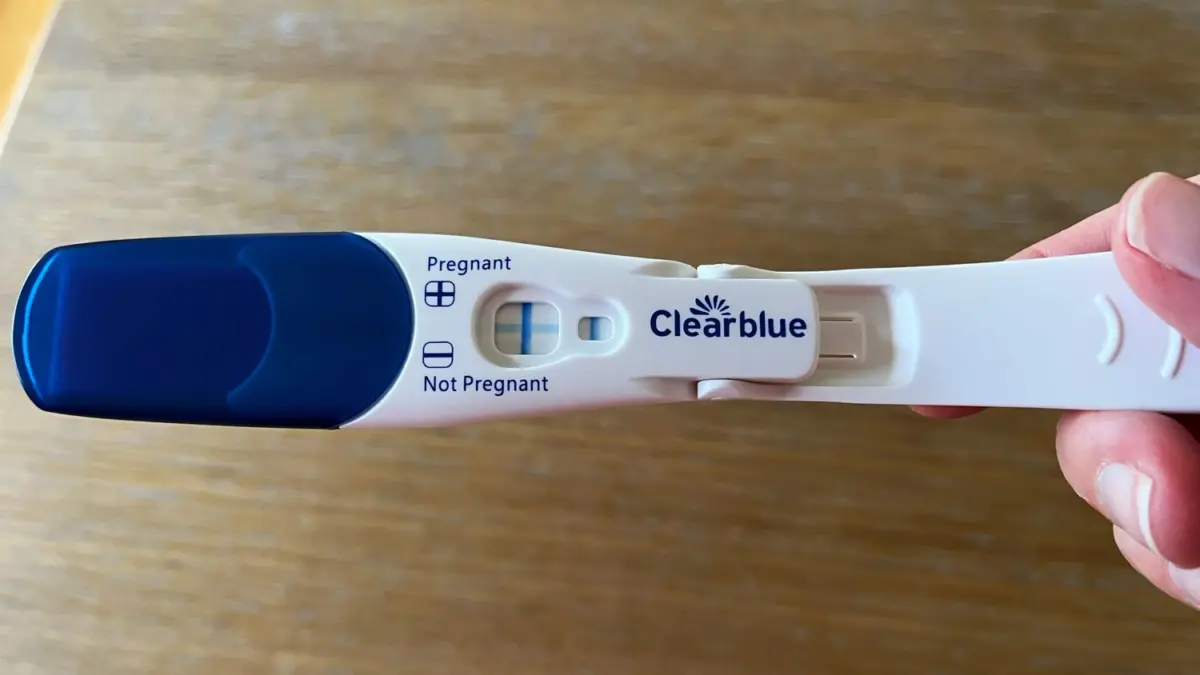
The test said pregnant before I’d even finished washing my hands.
I stood in the little upstairs bathroom of our house on post at Fort Liberty, North Carolina, at six-forty on a Tuesday morning in my pajama pants and an old Army T-shirt. I held that plastic stick under the light over the sink and stared at the two pink lines until they went blurry. I had to sit down on the edge of the bathtub. I’d been staring at single pink lines for eight years. I’d stopped buying the expensive tests because the cheap ones broke my heart for less money.
My name is Sarah Mitchell. I was thirty-two years old that spring, a captain in the United States Army Medical Corps, a family medicine physician at the clinic on post. I’d been in uniform for almost ten years. I’d done a deployment to Kuwait and one to Iraq. I’d treated soldiers with gunshot wounds and soldiers with the flu, and I’d sat up through more twenty-hour shifts than I could count.
My husband, Major Michael Mitchell, was an operations officer with one of the brigades. He was the kind of officer people noticed when he walked into a room. He was tall and square-jawed, with enough ribbons on his dress uniform to impress almost anybody. We’d met at a hospital fundraiser in San Antonio when I was in residency, and he’d made me laugh so hard I spilled wine on my dress. We’d been married eight years. We’d survived deployments in opposite directions, holidays spent on video calls with bad connections, and years of trying for the family we both wanted so badly that we’d stopped talking about it at dinner.
I went downstairs holding the test.
Michael was standing at the kitchen counter in his PT uniform, drinking coffee out of the mug I’d given him for our fifth anniversary, the one that said WORLD’S OKAYEST HUSBAND. He was scrolling through emails on his phone.
“Michael,” I whispered. I held up the test. “I’m pregnant.”
He lowered his coffee cup slowly.
I waited for his face to change. I’d pictured this moment a thousand times. I’d pictured him dropping the mug, picking me up off the floor, crying. He’d cried at the fertility clinic two years earlier when the doctor said our chances were “challenging but not hopeless.”
His face changed, all right. It went cold.
“That’s impossible,” he said.
I blinked at him. “What?”
“I had a vasectomy two months ago, Sarah.”
Something inside me collapsed.
The vasectomy had been his idea. Last winter, after the third failed round at the fertility clinic in Raleigh, he’d sat me down at this same kitchen table and said he couldn’t do it anymore. The appointments, the waiting, the hope and then the crash every month. He said he thought we should stop trying, for both our sakes. He said the procedure would take the pressure off. I’d cried. Then I’d agreed. I’d driven him to the urology appointment myself, because he wasn’t supposed to drive afterward.
“Michael,” I said. “The urologist told us. You were there. He said it isn’t effective right away. You’re supposed to do the follow-up test before you rely on it. You haven’t done the follow-up.”
He slammed his coffee cup down on the counter so hard coffee splashed onto his phone.
“Who’s the father, Captain?”
I stared at him.
He hadn’t called me Sarah. He’d called me by my rank, across our own kitchen, like I was a soldier standing in front of his desk for misconduct.
“Michael,” I said. “You’re my husband.”
“Don’t insult my intelligence.”
His voice filled the whole kitchen.
“Was it Reynolds?” he said. “Captain Reynolds? From your clinic?”
My stomach twisted. Thomas Reynolds was a physician in my department. He had a wife named Rachel and two little girls whose pictures covered half his desk.
“Reynolds is married,” I said. “He’s my colleague. Michael, what are you talking about?”
He stepped closer to me.
“You’ve embarrassed me in front of the entire battalion.”
Those words did something to me that the accusation hadn’t. It wasn’t that he didn’t believe me. It was that the first thing he thought about, holding the news of the child we’d prayed for, was how it would look to his battalion.
That evening, he packed his duffel bag. His big green Army one, the one that had gone to Afghanistan twice. I stood in the bedroom doorway and watched him fill it. He moved fast, like a man who’d already decided what to take.
“Where are you going?”
“I’m moving into Jessica’s apartment.”
Jessica Parker was a civilian administrative assistant who worked with his command staff. She was maybe twenty-eight, blond, pretty, always laughing. She’d come to our house for unit dinners. She’d complimented my lasagna and asked for the recipe. She’d hugged me in the parking lot before I left for Iraq and told me to stay safe.
“You’re leaving your pregnant wife,” I said, “for your mistress?”
He didn’t even deny it. He zipped the duffel shut.
“Jessica respects me,” he said.
Then he walked past me down the stairs and out the front door, and I heard his truck start in the driveway.
The next morning, at seven-thirty, my mother-in-law was standing on my front porch. Margaret Mitchell had driven over from Fayetteville. She was holding two black garbage bags.
“I’ve come for the rest of my son’s things,” she said. “My son is an honorable officer.”
I looked at her.
“Then why is he sleeping with another woman, Margaret?”
Her face went hard as a brick.
“Because you humiliated him,” she said.
Within a week, the rumors were all over the installation. Somebody said I’d gotten involved with another officer during a field training exercise. Somebody else said my pregnancy was proof of it. At the clinic, a nurse I’d worked with for three years stopped saying good morning to me. At the commissary, two women I knew from the officers’ spouses’ club stopped talking when I walked past them in the cereal aisle.
Then Michael posted a photo on Facebook. It was him and Jessica at an expensive steakhouse in Raleigh, clinking wine glasses, with candles on the table. The caption said:
“Sometimes loyalty means knowing when to walk away from betrayal.”
I saw it sitting on the bathroom floor at five in the morning, fighting morning sickness, with my cheek against the cold tile.
I’d worn an Army uniform for nearly ten years. I’d treated wounded soldiers. I’d worked through sleepless nights on deployment. And the man who’d promised to stand next to me was trying to destroy my reputation in front of everyone I worked with.
Two weeks after he left, Michael texted me and asked to meet at the officers’ club. One o’clock on a Thursday.
Jessica was sitting next to him at a table by the window. She was wearing a cream-colored dress and a diamond necklace, a big teardrop stone on a thin gold chain. I’d never seen it before.
Michael slid a folder across the table to me.
“I want a divorce.”
I opened it. There were divorce papers, already drawn up. They said I’d give up my interest in our house, the one we owned together in a subdivision off post that we were renting out. They laid out his terms for custody. They demanded a paternity test after the baby was born.
And under all of that, there was another document. It was a written statement, typed, with a line at the bottom for my signature. It said that I, Captain Sarah Mitchell, admitted to having engaged in an inappropriate relationship with another military officer.
My hands started shaking.
“You want me to confess to something I never did?”
Michael leaned forward over the table.
“Sign it,” he said, “and this won’t become a command issue.”
Jessica smiled at me across the table.
“Think about your career, Sarah,” she said softly.
I closed the folder slowly.
“I’ve spent ten years protecting soldiers,” I said. “I’m not going to let one dishonest major scare me into destroying myself.”
Michael’s face went red.
“Watch your mouth, Captain.”
I stood up.
“You’re not my commanding officer, Michael,” I said.
And I walked out of the officers’ club and left the folder on the table.
I barely slept that night. Every car that went by outside on our street made me sit up in bed.
The next morning, I put on my Army service uniform. I straightened my ribbons in the bathroom mirror. And I drove by myself to Womack Army Medical Center for my first ultrasound.
The waiting room in obstetrics was full. There were soldiers in uniform and military wives and young couples holding hands. A sergeant in his camouflage uniform sat across from me with his pregnant wife, holding her hand on his knee, rubbing his thumb back and forth across her knuckles. For a minute, watching them, I almost lost it right there in the plastic chair.
Then a nurse called my name.
“Captain Mitchell?”
I followed her down the hall into an exam room. A few minutes later, an ultrasound technician, a kind woman in her forties named Deb, squirted cold gel on my stomach and started moving the probe around.
I stared at the monitor on the wall. I was looking for anything that would tell me my baby was okay.
Then Deb stopped moving the probe.
Her face changed. She adjusted something on the machine. She looked closer at the screen. Then she checked it again.
“Is something wrong?” I whispered.
She didn’t answer right away. She reached over and picked up the phone on the wall.
“I need the attending in here, please,” she said quietly.
My heart started pounding.
“Please. Is my baby okay?”
A few minutes later, Lieutenant Colonel Rebecca Hayes came in. She was the senior obstetrician at Womack, a tall, calm woman in her fifties with gray hair pulled back in a bun. She looked at the screen for a long time.
Then she turned to me.
“Captain Mitchell,” she said, “when exactly did your husband have his procedure?”
“Two months ago. Eight weeks.”
“And did he complete the follow-up testing afterward?”
I shook my head. “Not that I know of.”
Dr. Hayes looked at Deb. Then she pointed at the screen.
“Sarah,” she said gently, “first, I need you to understand something. Your husband’s surgery does not prove this baby couldn’t be his.”
My eyes filled up. “I tried to tell him that.”
“But there’s something else,” Dr. Hayes said.
Before she could say what it was, somebody knocked on the door. Hard.
A military police officer was standing in the hallway, a captain in uniform.
“Lieutenant Colonel Hayes,” he said. “I need to speak with Captain Mitchell. Now.”
Dr. Hayes frowned. “She’s in the middle of an exam.”
The officer looked straight at me.
“Ma’am,” he said, “Major Michael Mitchell has just filed a formal allegation against you.”
My stomach dropped through the floor.
“But during the preliminary review,” the officer went on, “investigators found something in your husband’s medical records that changes things.”
Dr. Hayes turned slowly back to the screen.
“The pregnancy is measuring almost twelve weeks,” she said.
I stared at her. “What?”
“Eleven weeks and six days,” she said. “By crown-rump length. That’s the most accurate way we have to date a pregnancy this early. There’s a small margin of error. It’s not enough to change what matters.”
I tried to do the math, but my thoughts were crashing into each other. Michael’s vasectomy had been eight weeks ago.
Dr. Hayes saw me struggling.
“This pregnancy started before your husband’s procedure,” she said.
For a few seconds, the only sound in the room was the hum of the machine.
I looked back at the screen. There was a tiny shape, with a heartbeat flickering in the middle of it. This little life had existed before the morning Michael came home from his appointment sore and grumpy, carrying discharge instructions he wouldn’t let me read because he said he understood them perfectly well.
“Before?” I whispered.
“Based on what I’m seeing,” Dr. Hayes said, “yes.”
My eyes filled up. I didn’t feel like I’d won anything. There’s nothing to win when the husband who walked out on you was walking out on the child you’d both prayed for. There was only grief. And under the grief there was something colder. A question.
Why had Michael been so sure?
The MP officer cleared his throat. “Captain, there’s more.”
Dr. Hayes gave him a sharp look. “Does this have to happen right now?”
“I’m afraid it may be connected to what you just found.”
He introduced himself as Captain Daniel Cho, from the installation’s military police investigations section. He was about my age, quiet and careful, almost apologetic.
“Major Mitchell attached medical documentation to his allegation,” he said.
“What documentation?”
“A post-vasectomy lab report.”
I stared at him. “He told me he never did the follow-up.”
“The report he submitted says otherwise,” Cho said. “It says he had a semen analysis twenty-one days after the procedure, and the result showed no sperm.”
Dr. Hayes frowned right away. “Twenty-one days? Nobody would treat that as proof of anything. That’s far too early.”
“I understand that,” Cho said.
I knew it too. So did Michael. He’d sat next to me in that urologist’s office with the pale walls and the anatomy chart, joking about doctors liking to give orders, while the urologist explained that the procedure wasn’t effective right away. It took time, and lab confirmation, before you could rely on it.
“When we checked the report against the hospital’s laboratory system,” Cho said, “the accession number on it doesn’t match the patient information on the copy Major Mitchell gave us.”
My mouth went dry. “What does that mean?”
“It means we can’t currently verify the document is real.”
The room seemed to tilt. Dr. Hayes pulled a chair over. “Sarah, sit down.”
I sat.
“There’s also a problem with the procedure record,” Cho said. “The hospital’s schedule shows his appointment that morning. But the surgeon’s operative note was entered several days later, and it’s been amended.”
“Amended by who?”
“We’re working on that.”
“What exactly did Michael say I did?” I asked.
“That you knowingly carried on an inappropriate relationship with another officer and hid it,” Cho said. “He specifically cited the timing of the pregnancy and his own sterility as proof.”
I almost laughed. After two weeks of whispers and stares and an affair confession pushed across a table at the officers’ club, the whole thing was suddenly so ridiculous I couldn’t stand it.
“He filed a complaint,” I said, “based on a medical conclusion he had no way of making.”
“That’s one of the issues being looked at,” Cho said.
My hand went to my stomach without my meaning it to. On the screen, the heartbeat kept going, fast and steady.
“Can you tell from this who the father is?” I asked Dr. Hayes.
“No,” she said. “An ultrasound can’t establish paternity.”
I appreciated that. There wasn’t any magic machine, just dates and facts.
“But it does establish,” she went on, “that Major Mitchell’s claim that the baby had to be conceived after his vasectomy doesn’t match what we’re seeing.”
Cho’s phone buzzed. He looked at it, and his face changed. “Excuse me.”
He stepped out into the hallway. Through the half-open door I heard bits and pieces. “Audit log.” “Authorized access.” Then nothing.
Dr. Hayes sat down beside me. She wasn’t talking to Captain Mitchell anymore. She was talking to a scared woman on an exam table.
“Sarah,” she said. “Your baby looks healthy.”
That’s what finally broke me. I put my hands over my face and cried. Dr. Hayes didn’t make any promises or say anything to make it better. She just kept her hand on my shoulder until it passed.
“Can I hear it again?” I asked Deb.
She smiled. “Of course.”
The heartbeat filled the little room, fast and certain. For about thirty seconds, I didn’t let myself hear anything else.
Then Captain Cho came back in and shut the door behind him.
“Captain Mitchell, I have to ask you something. Have you ever given Major Mitchell permission to access your medical records outside of normal channels?”
“No.”
“Has Jessica Parker ever been involved in your medical care in any way?”
“No. Why?”
He glanced at Dr. Hayes. “We just got the preliminary access audit on your medical record.”
“What access audit?”
Cho took a slow breath.
“Your pregnancy test result was opened electronically two days before you told your husband you were pregnant.”
The room went completely still.
“That’s not possible,” I said. “I took a home test.”
Dr. Hayes looked at me. “Did you have any blood work done recently?”
Then I remembered. Three days before the home test, I’d gone to sick call at my own clinic because I’d been so tired I could barely get through my shifts. A physician assistant had ordered routine labs. Apparently that had included a pregnancy test. I’d never checked the patient portal. I’d never even thought to.
“I didn’t even know,” I said.
“Somebody did,” Cho said.
“Who?”
He hesitated. “The account belonged to an administrative employee.”
I knew before he said it.
“Jessica.”
He didn’t say anything. He didn’t have to.
“An administrative employee opened a captain’s pregnancy result,” Dr. Hayes said, and her voice had gone sharp, “with no documented need?”
“That appears to be what happened,” Cho said.
I thought about Jessica at the officers’ club in her cream dress and her diamond necklace, smiling at me. “Think about your career, Sarah.”
Michael had known. He’d known before I ran down the stairs holding the test. Before he slammed his coffee cup down. Before he looked me in the eye and asked me whose child I was carrying.
It came together quietly, from little things I’d ignored. He hadn’t looked surprised in the kitchen. He’d looked ready. His duffel bag had been packed awfully fast that night. The divorce papers showed up in two weeks. He’d named Reynolds right away, like he’d already picked him out. And the confession had already been typed up.
None of this started with my pregnancy. My pregnancy just gave him the moment he’d been waiting for.
“He didn’t accuse me because he thought I cheated,” I said to Cho. “He already knew I was pregnant. So he had time to build a story.”
Out in the hallway, a cart rattled by. Somewhere a baby was crying.
Cho opened his notebook. “There’s one more thing. The lab report Major Mitchell submitted carries the electronic identifier of another service member’s test.”
“Whose?”
“We’re still confirming that before I can say.”
He turned the notebook around on his knee. There was a date written on the page. I recognized it. It was the date Michael had supposedly done his follow-up test. Under it was a name, and Cho had his thumb over most of it.
But not all of it. I could read the last name.
Reynolds.
I left the hospital with three things. A printed ultrasound picture. A referral for prenatal care. And instructions from Captain Cho not to contact Michael about the investigation.
It was raining. I sat in my car in the parking garage for almost fifteen minutes without starting it, holding the ultrasound picture in my palm. Eleven weeks and six days.
For eight years, Michael and I had treated having a baby like a place we’d get to if we just held on long enough. We’d tracked my cycles on a calendar on the refrigerator. We’d sat in waiting rooms in Raleigh and Durham. We’d taken leave for appointments. We’d argued about whether hoping was helpful or just cruel.
Four years earlier, I’d had a miscarriage, so early nobody else ever knew. That night, Michael held me in bed while I cried.
“I wanted that baby too,” he whispered.
I’d believed him. Maybe he’d meant it. That was the hardest part. People want villains to be simple. But Michael hadn’t always been the man who called me Captain across our kitchen. He’d once driven six hours after a field exercise because I’d mentioned on the phone that my mom was having surgery. He’d mailed me handwritten letters when I was deployed, because the internet kept going down. He’d learned to make my dad’s chili recipe, badly, and served it to me with enormous pride. The love had been real. Whatever he’d turned into didn’t erase that, and it being real didn’t excuse any of what he’d done.
I started the car. My phone had seventeen notifications. Three from coworkers. Two from numbers I didn’t know. One from Margaret. Nine from Michael.
I didn’t open any of them. I called the only person in the world I trusted completely.
“Sarah?” My big sister, Emily, picked up on the second ring.
“I need somewhere to go tonight,” I said.
She didn’t ask a single question. “Come here.”
“I can’t leave the area.”
“Then I’ll come to you.”
“You’re four hours away, Em.”
“Then I’ll be there before supper.”
That’s Emily. She lives in Asheville and teaches high school chemistry, and she’s never in her life waited for someone to explain before she started moving.
When I pulled up to our house, there was a gray government sedan parked across the street. Captain Cho got out.
“Sorry,” he said. “I didn’t mean to scare you.”
“You did anyway.”
“Fair.” He stayed a few feet away from me. “I wanted to let you know the investigation has expanded. Possible unauthorized access to medical records. Possible alteration or misuse of official documents. And possible retaliation, connected to a complaint against another service member.”
“Me.”
“Yes.”
“What happens now?”
“You keep doing your job unless your chain of command tells you otherwise. You don’t talk to witnesses about it. You don’t delete any messages. You save everything.”
“I’ve saved everything.”
“Good.” He looked at the house. “Do you feel safe here?”
“Michael’s never threatened me physically.”
“That’s not exactly what I asked.”
I looked at the front door, and at the curtains Michael and I had picked out together, and at the porch where we’d eaten Chinese takeout by candlelight during a power outage two summers ago.
“I don’t know,” I admitted.
“My sister’s coming tonight,” I added.
“Good.” He handed me his card. “Call me if anything unusual happens.”
He started back toward his car. “Captain?” I said. He stopped. “Why Reynolds?”
“We don’t know yet.”
“You know more than you’re telling me.”
“Yes,” he said.
I liked him better for not pretending.
“Is Reynolds in trouble?”
“Right now, we’re treating him as somebody whose records may have been misused.”
Inside the house, I found out Michael had been there while I was at the hospital. His side of the closet was almost empty. Our wedding picture was gone from the dresser. So was the wooden box where we kept our important papers.
I opened the filing cabinet in the spare room. The tax returns were there. The insurance policies. My deployment orders. But the thick folder labeled FERTILITY / MEDICAL was gone. It had held eight years of records. My test results. Michael’s test results. All our paperwork from the fertility clinic. His original referral to the urologist.
I called Cho.
“Don’t touch the cabinet again,” he said. “Photograph it the way it is. An investigator will contact you.”
Emily got there at a quarter to seven. She found me sitting at the kitchen table in front of a plate of food I hadn’t touched.
She put her overnight bag down. “You look terrible.”
“Thank you.”
“You know what I mean.”
She hugged me. I let myself lean on her for about three seconds before I started to cry. She sat next to me until it was over. Then I told her everything. The ultrasound. The dates. Jessica opening my records. The fake lab report. Reynolds.
Emily listened without interrupting once. When I was done, she stared at the table.
“So he knew,” she said. “Before you told him. And he still stood right there in this kitchen and accused you.”
“Yes.”
Her eyes filled up with anger. I put my hand on hers.
“Don’t, Em,” I said. “Don’t get madder than I can afford to be right now.”
She looked at me. “That’s the most Sarah sentence you’ve ever said in your life.”
“I need to think.”
“No. You need to eat.”
I laughed in spite of everything. It only lasted a second, but it mattered.
The next morning I went to work.
I expected whispers, and there were some. But there were also people who looked me straight in the eye and said good morning.
Lieutenant Colonel Marcus Bell, my department chief, called me into his office. He was a big, broad-shouldered family doctor with a gray mustache who had a rare way of making silence feel comforting instead of threatening.
“Close the door,” he said. “Sit.”
I sat.
“I’ve been told an allegation was filed against you,” he said. “I’ve also been told it’s under investigation. I’m not the one investigating it. Your clinical work hasn’t changed. Your schedule hasn’t changed. If the investigators need time with you, we’ll make it work.”
My throat went tight. “Thank you, sir.”
“Captain Mitchell,” he said, “you don’t have to thank me for not punishing you because of gossip.” He leaned back in his chair. “If anybody in this department treats rumor like fact, you send them to me.”
“Yes, sir.”
I stood up to go.
“Sarah,” he said. I turned around. His face had softened. “Congratulations.”
It took me a second to understand what he meant. Then I smiled for the first time since the ultrasound.
That afternoon, Thomas Reynolds knocked on my office door.
He was thirty-five, soft-spoken, good at his job, and so devoted to his wife and daughters that he talked about them at every lunch whether anybody asked or not. He came in and shut the door. Neither of us said anything for a minute.
“I know,” he said finally.
My face went hot. “Thomas…”
“You don’t need to explain anything to me.”
“Michael named you.”
“I know. I was interviewed this morning.”
“I’m so sorry.”
“You didn’t do it, Sarah,” he said gently.
“Why your lab record?” I asked.
He let out a breath. “Rachel and I did a fertility evaluation last year. We were thinking about trying for a third. The identifier on the report your husband turned in matches one of my samples.”
My stomach turned over. “How would Michael get that?”
“No idea.” Then his face changed. “We talked about it once. At the unit barbecue last summer. He asked if we were trying for another baby. I said maybe. He made a joke about how our wives had turned us into walking medical charts.” Thomas looked uncomfortable. “Then he asked me where I’d gotten tested.”
A chill went up my arms. “Did that seem strange to you?”
“Not then. You two were so open about the fertility stuff. I figured he wanted a recommendation.”
There was a knock. Lieutenant Colonel Bell opened the door. “Captain Reynolds. The investigators are looking for you again.”
Thomas nodded. At the door he turned back.
“Whatever happens,” he said, “my wife knows the truth.”
That stuck with me. Michael didn’t need to prove I’d cheated. He’d only needed people to wonder.
That night, Michael finally left a voicemail. I listened to it with Emily sitting next to me on the couch.
“Sarah, we need to talk. You’ve apparently turned this into some kind of investigation. I don’t know what you’ve been telling people, but you’re turning a private marriage problem into something that could hurt a lot of careers. Call me before this gets out of hand.”
Emily stared at the phone. “He’s the one who filed the complaint. He made it official. And now he’s blaming you because it’s official?”
“Yes.”
“I dislike him,” she said, “with impressive efficiency.”
A text came in. It wasn’t from Michael. It was from Jessica.
“We should talk woman to woman. You don’t know the whole story.”
“No,” Emily said.
“I wasn’t going to answer.”
Five minutes later, another one came.
“Michael lied to me too.”
Emily’s face changed. “That one might matter.”
I forwarded both of them to Captain Cho. He called me back in ten minutes.
“Don’t meet her alone.”
“I wasn’t planning to. Is she cooperating?”
“I can’t discuss that.”
“Captain Cho.”
There was a pause. “She’s hired a lawyer,” he said.
That told me plenty.
Two days later, I sat in a little conference room at the legal assistance office on post with Captain Elena Ruiz, an Army lawyer with short dark hair and sharp eyes and the patient face of somebody who meets people during the worst weeks of their lives. She turned through Michael’s divorce papers one page at a time.
“This proposed agreement is remarkably bad for you,” she said. “And it’s got language in it that seems designed to get admissions out of you that have nothing to do with the divorce.”
“The affair confession.”
“Yes. Don’t sign anything. And don’t negotiate with him directly.” She tapped the page. “Why does he want the house so badly?”
“I don’t know.”
“Whose names are on the mortgage?”
“Both of ours.”
“Any unusual money moving around? Big withdrawals, new accounts, loans?”
“I haven’t looked.”
“Look,” Ruiz said.
That night, Emily and I sat at my kitchen table with my laptop and opened every account I had a legal right to see. For an hour, nothing jumped out. Then I found a credit card on our joint account that Michael had switched to paperless billing six months before.
There were hotel charges in Raleigh and Wilmington, and restaurants. And a jewelry store in Raleigh, four thousand eight hundred dollars, from February.
“The necklace,” I said.
Emily muttered something I won’t repeat.
Then I found two more charges. The first was six hundred and fifty dollars, to a private document-preparation service in Fayetteville, three months before I found out I was pregnant. The description just said, “Family transition consultation.”
“He was planning the divorce before he knew,” I said.
The second charge was a hundred and eighty-five dollars, to an independent medical lab in Dunn, thirty miles from post. It was dated one week before his vasectomy.
“Why would he go to an outside lab before the surgery?” Emily asked.
“I don’t know.”
I sent the statement to Ruiz and Cho the next morning. Cho called me that afternoon.
“Where’d you get this?”
“Our joint account.”
“Don’t go into anything you wouldn’t normally have a legal right to access.”
“I haven’t. Does the lab matter?”
“We’re checking,” he said. His voice told me it did.
Three days went by. Then four. Michael stopped calling. Jessica stopped texting. The whispers at the clinic got quieter, because there was real work to do. I saw patients. I threw up twice in the staff bathroom. I bought prenatal vitamins. In the evenings, Emily helped me pack Michael’s leftover things into boxes without opening or looking at any of them.
On Friday afternoon, Captain Cho asked me to come to his office. When I got there, Dr. Hayes was sitting there too. So was Captain Ruiz. That combination scared me before anybody said a word.
“We’ve confirmed the pregnancy dating with your medical team,” Cho said. “Again, it doesn’t prove paternity. But it badly contradicts the timeline Major Mitchell gave in his complaint.”
“And the lab report?”
Cho opened a folder. “It was altered. The accession number came from Captain Reynolds’s real lab result. The name, date of birth, and collection date on the copy Major Mitchell gave us had been changed.”
“Changed by who?”
“We don’t have a final answer on that yet,” Cho said.
“That distinction matters,” Ruiz said gently.
“The outside lab charge you found led us to another record,” Cho said. “Before his vasectomy, Major Mitchell paid for his own semen analysis at a private lab. It showed viable sperm.”
“That isn’t surprising,” I said. “Before a vasectomy, it wouldn’t be.”
“No,” Dr. Hayes said. “The important question isn’t what that first test showed. It’s what happened after.”
Cho slid a typed timeline across the table. The private lab test. The vasectomy appointment. My blood test at the clinic. Jessica opening it. My announcement in the kitchen. Michael leaving. The fake lab report. His formal allegation.
And between the vasectomy and my blood test, one more line I’d never seen.
“UROLOGY FOLLOW-UP — PROCEDURE COMPLETION STATUS DISPUTED.”
“What does that mean?” I asked.
“The surgeon who did Michael’s procedure has been interviewed,” Dr. Hayes said carefully. “He remembers a complication. He was only able to isolate one side that day. He recommended Michael come back for a second procedure to finish it.”
I stared at her. “Michael told me it was done.”
“According to the original operative note,” Dr. Hayes said, “it wasn’t.”
“Then why does the medical record say it was?”
“Because the operative note was amended later,” Cho said. “Not by the surgeon.”
The room seemed smaller.
“Who had access?”
“Several people,” Cho said.
I suddenly understood why all three of them were there. “One of them was Jessica.”
“Not directly,” Cho said. “Jessica didn’t have clinical privileges to change an operative note. But investigators found messages where she asked a medical records technician how amendments get processed.”
“Sarah,” Ruiz said quietly, “this may be bigger than your divorce.”
“It already is.”
“Yes. But I don’t think you understand how much bigger.”
Cho turned one more page in the folder. “There’s one more message. Between Michael and Jessica. I can’t show you the whole exchange. But I’m allowed to read you one line, because it concerns the allegation against you directly. Major Mitchell sent it four days before you found out you were pregnant.”
He read it out loud.
“If Sarah turns out to be pregnant, the timeline has to be after the procedure. Otherwise none of this works.”
For a few seconds, all I could hear was my own heartbeat.
“What did he mean,” I said, “by ‘none of this works’?”
Cho closed the folder. “That’s what we’re trying to find out.”
Jessica asked to meet with me again the next Monday. This time, the request came through lawyers.
“Her attorney says she has information about both the divorce and the investigation,” Ruiz told me on the phone. “The investigators don’t object, as long as it’s voluntary and counsel is present.”
“Do I have to go?”
“No.”
That mattered more than I can say. For weeks, everybody had been treating my choices like obstacles. Michael wanted me to sign. Margaret wanted me to disappear quietly. The rumors wanted me to defend myself. Here was somebody telling me I got to decide.
“I’ll go,” I said.
We met in a conference room at the legal office, away from Michael’s building. Jessica looked different without the polish she’d had at the officers’ club. Her hair was in a plain ponytail. There were dark circles under her eyes. She held a paper cup of coffee with both hands and didn’t drink it. Her lawyer, a civilian man in a gray suit, sat next to her. Ruiz sat next to me.
For almost a minute, Jessica didn’t say anything. Then she looked up.
“I’m sorry,” she said.
I didn’t feel anything. I was too tired to.
“I know that doesn’t help,” she said.
“No,” I said. “It doesn’t.”
“I thought you were having an affair,” she said. “Because Michael told me you were. Six months ago.”
That was before his vasectomy. Before my pregnancy. Before the divorce papers.
“He told me the marriage was over except on paper,” Jessica said. “That you two only stayed together because of your careers and the money. He said you’d gotten close to another officer.”
“Reynolds.”
“Yes. He showed me messages. Screenshots of texts between you and Captain Reynolds.”
My stomach dropped. “There aren’t any messages.”
“I know that now. The investigators showed me the timestamps and the formatting didn’t match up.”
So Michael hadn’t just waited for something suspicious to happen. He’d made the suspicion himself.
“Did you help him make them?”
“No,” she said quickly. Her lawyer put a hand on her arm. She slowed down. “No. I didn’t know they were fake.”
I believed her, maybe. That didn’t let her off the hook for the rest.
“You opened my medical record.”
She went pale. “Yes. Michael asked me to. He said he needed to know if you were lying to him.”
“You didn’t even know I was pregnant when you opened it. Neither did I.”
That seemed to hit her. “I know.”
“Tell me what happened,” I said.
She took a breath. “Michael had been talking about leaving you for months. But he was worried a divorce would get complicated if there was a pregnancy. He told me you’d quietly stopped using birth control without telling him. That you were trying to trap him.”
I stared at her. “We’d been trying for eight years. With a fertility clinic. That’s not true.”
“I know that now,” she said.
I almost laughed. He’d told every person a different story, built exactly for them. To me, he was the betrayed husband. To Jessica, he was the trapped husband. To his command, he’d be the disciplined officer handling a messy situation with his wife. Different stories, with the same man at the middle of every one.
“He scheduled the vasectomy because of me,” Jessica said quietly. “He told me he didn’t want children anymore. He said he wanted a clean start.”
I couldn’t speak for a moment. Eight years of conversations about nursery colors and baby names and whether our kid would get my stubbornness or his terrible singing voice.
“He told me it was to take the pressure off us,” I said.
Jessica closed her eyes.
Something in me let go then. It wasn’t a break. That had already happened weeks earlier. This was quieter, like the last thread on a button. I’d spent weeks trying to make the man I loved fit together with the man who accused me. Now I understood they didn’t need to fit. Both had been real. People can mean a promise on Tuesday and break it on Wednesday.
“The message,” I said. “‘If Sarah turns out to be pregnant, the timeline has to be after the procedure. Otherwise none of this works.’ What did he mean?”
Jessica’s lawyer looked at her. She nodded slightly.
“He wanted the divorce to look like it happened because you cheated,” she said. “He’d already been warned once by his commander about keeping professional boundaries. With me. He was afraid that if people found out about us, it’d hurt his career. He thought if everybody believed you cheated first, then him being with me would look like something that happened after the marriage was already over.”
“So he needed me to be the villain.”
“Yes.”
“And when I turned out to be pregnant…”
“He panicked. Because the timing would show you two were still together.”
The truth was almost disappointingly ordinary. There wasn’t any big conspiracy or hidden fortune behind it. It was just a man afraid his choices would change how people looked at him. Fear and a sense that he deserved better than consequences had been enough to make him start rewriting other people’s lives.
“Why did you ask about amending the medical records?”
“Michael said his surgeon made a documentation mistake and it was messing up his insurance. I believed him at first. Then he asked me to find out whether the old version of a note stayed visible after it got amended.”
My hands went cold. “Did you find out?”
“Yes. I told him the audit history is kept.”
“And what did he say?”
Jessica’s face tightened. “He said, ‘That’s inconvenient.'”
Ruiz stopped writing. For the first time, even she looked shaken.
“Why are you telling me this now?” I asked.
Jessica looked straight at me. “Because he told the investigators everything involving your records was my idea.”
There it was. She wasn’t looking for redemption. She was protecting herself. Strangely, that made her easier to believe.
“There’s one more thing,” she said. “My lawyer got some of the materials from the allegation. Not your full record. But I saw the ultrasound date. And I understood something. Michael knew it was possible the baby was his. Because the night before his vasectomy, he almost canceled it. He told me the next morning that you two had slept together the night before.”
The room disappeared around me.
I remembered that night. There’d been a thunderstorm. Michael had come home late from field training, soaked. The power kept flickering. Neither of us felt like cooking, so we sat on the living room floor in the dark eating cereal out of the box. For one evening, all the distance between us just went away. He apologized for being so far away lately. I apologized for turning every conversation into another fertility appointment. We laughed about something stupid. And then we went upstairs. It wasn’t planned or clinical, and it had nothing to do with trying for a baby. It was just us. Or what I’d thought was us.
“He told you?”
“The next morning. And then he went and had the procedure anyway.”
He’d known the possibility was there. And when Jessica opened my lab result weeks later, the possibility became a fact. He’d had a choice between telling the truth and building another lie. He chose the lie.
Outside in the parking lot afterward, Ruiz walked me to my car.
“You all right?”
“No.”
“Reasonable answer.”
I leaned against my car door. “Is something wrong with me that I still remember good things about him?”
“No,” she said.
“I keep wanting the past to tell me which version of him was the real one.”
“Maybe that’s asking the past to do something it can’t.” She shrugged. “People aren’t court exhibits, Sarah. One good thing a man does doesn’t prove he’s good his whole life. One terrible thing doesn’t make every good memory fake.”
I thought about that. “That’s inconvenient.”
“The truth usually is,” she said.
That evening I went to my next prenatal appointment, and Emily came with me. The baby had grown. When the heartbeat came through the speaker, Emily put her hand over her mouth.
“Oh, Sarah,” she whispered.
For the first time, I didn’t think about Michael when I looked at the screen. I thought about tiny fingers wrapping around mine someday. Sleepless nights. Daycare schedules. The terror of being responsible for somebody who already mattered more to me than my own comfort.
“Everything looks good,” Dr. Hayes said when she came in.
“Really?”
“Really. You’re allowed to have good news without looking suspicious of it.”
“I’m out of practice.”
“You’ll relearn,” she said. Then her face turned serious. “The investigators asked me to clarify the conception window again. I think they’re getting ready to interview Major Mitchell again.”
They did, the next day. I wasn’t there. Cho told me about it afterward.
Michael came with a lawyer. He denied making the fake lab report. He said he’d never told Jessica to open my records. He said the messages about my pregnancy timeline were taken out of context.
Then they asked him why he’d named Captain Reynolds in his complaint. Michael said Reynolds had always made him uncomfortable.
So the investigators showed him a message he’d apparently forgotten about. He’d sent it to Jessica five months earlier.
“Reynolds is perfect. Sarah works with him, he’s married, and people will believe there was something to hide.”
Michael stopped answering questions after that.
When Cho told me, I didn’t feel happy about it. I just felt hollow.
“Is that enough to end his career?” I asked.
“That isn’t my decision,” Cho said carefully. “The evidence goes where it goes.”
I started saying that to myself after that. The evidence goes where it goes. It doesn’t go where anger wants it to, or fear, or somebody’s reputation.
Two weeks later, the allegation against me was closed as unsubstantiated. Lieutenant Colonel Bell called me into his office and handed me the notice. I read it twice.
“That’s it?”
“For your case, yes.”
I sat down. I’d always pictured myself crying at this moment. Instead I just felt tired.
“Clearing your name doesn’t give you back the weeks you spent waiting for it,” Bell said. “But it matters.” He handed me another envelope. “So does this.”
Inside was a selection notice for a competitive advanced training program I’d applied to months earlier, before any of this started.
“I thought this got delayed,” I said.
“It did. Pending clarification.” He tapped the letter. “Read the second page.”
My selection had been confirmed. The program would start after my maternity leave, with accommodations to be worked out through my command.
“You fought for this?”
“I reminded the board that an allegation is not a finding,” he said.
My eyes went blurry. “Thank you, sir.”
“Earn it,” he said.
“I will.”
That evening, I set the letter on my kitchen table next to the ultrasound picture. For the first time in weeks, my future didn’t feel like something Michael had his hands on.
Then somebody knocked on the front door.
Emily was in the kitchen. She looked at me. “Expecting anybody?”
“No.”
I looked through the window. It was Margaret. Alone.
I opened the door but didn’t ask her in. She looked smaller than I remembered, standing on my porch in a cardigan with her purse clutched in both hands.
“Sarah,” she said.
“Margaret.”
“I need to talk to you.”
“I don’t think there’s anything left to say.”
“There is.” She looked at my stomach, which had started to show under my shirt. Her face didn’t have any anger in it this time. It was fear. She took an envelope out of her purse. “I found this in his father’s things years ago. It’s a letter Michael wrote when he was twenty.”
“Why does that matter now?”
“Because this isn’t the first time my son has tried to change a record,” Margaret said, “when he was scared of what the truth would cost him.”
I didn’t open the envelope that night. It sat on the dining room table while Emily made tea and pretended not to watch me look at it.
“You don’t have to read it,” she said. “You don’t have to decide tonight.”
“I know.”
“You’re very annoying when you know everything.”
“So I’ve been told.”
Margaret had gone home by then. She hadn’t asked to come inside, and she hadn’t defended Michael. That alone made it different from her first visit. Before she left, she’d said one thing I couldn’t stop thinking about.
“I spent years thinking protecting my son meant protecting him from consequences,” she said. “I was wrong.”
She didn’t ask me to forgive her. I respected that.
Around midnight, I opened it.
It was an old, creased letter in Michael’s handwriting, written when he was in college on an ROTC scholarship, to his father. He’d missed a deadline on an assignment. He was terrified it would cost him his scholarship. So he’d changed the date on a supporting document. A professor noticed. Michael panicked. His father had stepped in. He didn’t make it go away. He talked Michael into confessing before it turned into something worse.
The last lines stopped me cold.
“Dad says mistakes don’t define you. What you do after you’re caught does. I don’t know why telling the truth feels harder to me than fixing the thing so nobody sees it.”
I read it three times. Twenty-year-old Michael had understood himself better than forty-year-old Michael did. Or maybe he’d just stopped fighting the thing he’d once recognized in himself.
It didn’t prove anything about the investigation. I gave it to Captain Ruiz, and she told me not to pass it around.
“His mother wanted me to have it,” I said.
“Why do you think?”
“I think she was apologizing.”
Ruiz nodded. “Then maybe it’s worth something personal, not legal.”
That mattered to me. Not everything had to be ammunition. I was tired of living like every memory was a weapon.
The pregnancy went on. At sixteen weeks, I started feeling these tiny flutters. At first I blamed my lunch.
“Could be either,” Dr. Hayes said when I told her.
“Very reassuring.”
“Medicine thrives on uncertainty.”
Then one evening I was reading on the couch, and I felt it again. A little movement, very deliberate. I froze.
Emily had basically moved into the guest room by then. She looked up from her laptop. “What?”
“I think…”
It happened again. My hand flew to my stomach. Emily’s eyes went wide. “The baby?”
I nodded, and we both started laughing. Nothing was funny. Sometimes happiness just gets in through the tiniest crack and demands room.
The divorce went slower. Michael dropped his demand that I sign an admission. Then he dropped his custody language. His lawyer sent over a new agreement that was much more ordinary.
“The tone’s changed,” Ruiz said.
“Because of the investigation?”
“Possibly. Or because he’s figured out bullying isn’t working.”
We negotiated. The house and our joint accounts would be divided the normal legal way. No fake admissions. No made-up story written into the paperwork. Custody would be worked out after the baby was born, under normal family law, not by a document Michael had written before paternity was even established.
The word paternity didn’t scare me anymore. If Michael wanted a test after the baby was born, I’d agree to it. Facts had become my shelter.
Then Michael asked, through his lawyer, to talk to me. He said he wanted to apologize.
“Do you think I should hear him out?” I asked Ruiz.
“That’s not a legal decision.”
I thought about the kitchen, and the officers’ club, and the missing folder, and Thomas Reynolds. Then I thought about eight years. They didn’t obligate me to anything. I just wanted to know if I could sit across from him without turning back into the woman begging him to believe her.
“I’ll meet him,” I said.
It was in a mediation room, with lawyers sitting nearby. Michael came in wearing civilian clothes. For the first time since I’d known him, he looked older than he was. He sat down across from me. His eyes went to my stomach, then away.
“Sarah.”
“Michael.”
He rubbed his hands together. “I don’t know where to start.”
“The truth would be interesting.”
He winced. Once upon a time, I’d have apologized for saying that. I didn’t.
“I handled everything badly,” he said.
“Badly?”
“I know that sounds insufficient.”
“It sounds inaccurate.”
He looked down. “I was afraid. Of losing my career. Losing respect. Of being the officer whose marriage blew up because he was sleeping with somebody connected to his workplace.”
“So you made me the officer whose marriage blew up because she was supposedly sleeping with a colleague.”
His jaw tightened. “When you say it like that…”
“How should I say it?”
He didn’t have an answer.
“Did you change the lab report?” I asked.
His lawyer spoke up right away. “Michael, don’t answer anything about the pending investigation.”
“That tells me enough,” I said.
“It shouldn’t,” his lawyer said.
“You’re right,” I said. “I won’t ask again.”
Michael swallowed. “I did love you.”
I almost laughed. Instead I said, “I know.”
He looked startled.
“That doesn’t make it easier,” I said.
“I think part of me wanted you to be guilty,” he said quietly.
“Why?”
“Because then I wouldn’t have to be.”
It might have been the first completely honest sentence he’d said to me in months.
“When Jessica found the pregnancy result,” he said, staring at the table, “I panicked. I knew we’d been together before the procedure. I knew the procedure hadn’t been finished the way I told you.”
“Why didn’t you go back and finish it?”
“I kept putting it off.”
“Why lie about it?”
“Because I’d already told Jessica it was done.”
One small lie to protect an image, and then another one, and another.
“I need to ask you one thing,” I said. “When I told you I was pregnant in the kitchen, did you know the baby could be yours?”
His eyes filled up. That was answer enough. But I waited.
“Yes,” he said, so quietly I barely heard it.
“You knew. And you accused me anyway.”
“Yes.”
“And Reynolds?”
He looked away. “Because people knew you worked together.”
“He has a wife, Michael. He has two little girls. You were willing to wreck his family too.”
His voice cracked. “I wasn’t thinking clearly.”
“No,” I said. I stood up.
“Sarah.” He looked up at me. “I’m sorry.”
I believed he was. That was the strangest part. He regretted it. But regret didn’t undo the decision. It didn’t erase the fake story or give me back the weeks I’d spent afraid my command would look at me through his lies.
“Do you hate me?” he asked. He sounded almost like a little boy.
I thought about it. “No,” I said. “I don’t want to spend the energy.”
Then I left.
Outside, Ruiz walked with me to the elevator. “How was it?”
“Useful.”
“That sounds ominous.”
“It isn’t. I kept waiting to feel like I’d won. I just feel sad.”
“Probably healthier,” she said.
“Was that legal advice?”
“Absolutely not.”
Three days later, Cho called me into his office.
“We’ve finished a big part of the digital forensics,” he said. “The altered lab document was created on Major Mitchell’s personal laptop. There was an earlier autosaved version of the file. Captain Reynolds’s original name hadn’t been replaced yet.”
I closed my eyes.
“Investigators also recovered a draft of the written allegation against you,” Cho said. “It’s dated nine days before you told him you were pregnant.”
“But he didn’t know I was pregnant nine days before. Jessica hadn’t even opened my result yet.”
“Correct. The first draft didn’t mention a pregnancy at all. It said you and Captain Reynolds had an inappropriate relationship during a training exercise.”
My heart sank. “He was going to accuse me anyway.”
“Yes.”
“The pregnancy just gave him what he thought was proof.”
“Yes.”
I looked out his window at the cars going by on the road outside. People were going to lunch and to appointments, and the world didn’t care that I’d just found out the last six months were even worse than I’d thought. Michael’s accusation had never been a reaction to anything. It had been a plan.
“There’s another thing,” Cho said. “Jessica’s cooperation led investigators to your missing fertility folder. It was in a storage box at her apartment. She says Michael brought boxes when he moved in, and she didn’t know your records were in one of them. We think it’s intact. You’ll get it back when it’s released.”
I let out a long breath.
“And for what it’s worth,” he said, “Captain Reynolds has been formally notified that the allegations about him are unsupported. He asked me to give you a message.”
“What?”
Cho almost smiled. “He’d like you to stop apologizing every time you see him.”
I laughed out loud. It surprised us both.
Life got strangely normal after that. Michael was still under investigation. Jessica resigned while her own case was reviewed. Margaret texted me every couple of weeks asking how the pregnancy was going, and sometimes I answered. Thomas went back to complaining about the hospital coffee. Emily finally went home to Asheville, after making me promise to call if I needed her.
I bought a crib. It came in forty-three pieces. I took that as a personal insult.
Thomas and his wife Rachel came over on a Saturday to help me put it together. Afterward, Rachel handed me a little stuffed bear with a pink bow.
“Our girls picked it out,” she said.
I had to swallow hard. “Thank you.”
She hugged me, without any awkwardness at all. Michael had tried to plant doubt in their marriage, and he’d underestimated how strong trust is when it’s been built honestly.
At twenty weeks, I had the anatomy scan. Dr. Hayes moved the probe slowly over my stomach.
“Spine looks good. Heart, four chambers, looks good. Brain measurements look right.”
I let out a breath every time she said good.
Finally she smiled. “Do you want to know the sex?”
Michael and I used to argue about that, playfully, whether we’d find out or wait. The memory went through me, but it didn’t grab hold.
“Yes,” I said.
She turned the screen. “It’s a girl.”
I laughed and cried at the same time. “A girl.”
Michael and I had kept a list of baby names for years. I decided right there I wouldn’t use any of them. It wasn’t spite. She deserved a name that belonged to the life in front of her, not the plans behind me.
I called Emily that night. She screamed so loud I had to hold the phone away from my ear.
“Name?” she asked.
“I don’t know yet. The old ones don’t fit.”
“Then we’ll find one that does.”
After we hung up, I stood in the half-finished nursery with my hand on my stomach. “You and me,” I whispered. Then I thought about Emily, and Thomas and Rachel, and Lieutenant Colonel Bell and Dr. Hayes, and even Margaret in whatever careful place she might end up in someday. It wasn’t just the two of us.
My phone rang. It was Ruiz.
“Sarah, are you sitting down?”
“Yes.”
“The command has finished its preliminary legal review of Michael’s case. Several allegations against him have been substantiated for command action. False official statements. Misuse of records. Retaliation. The fabricated allegation. The final outcome will come through official channels. Michael has offered to accept responsibility on several findings, in exchange for not contesting everything. Your statement as the affected party may be requested.”
“What do they want me to say?”
“The truth.”
My daughter kicked.
“I can do that,” I said.
If Michael’s career ended, it wouldn’t be because I was angry. It’d be because of the choices he made, all of them written down, while he tried to control a story that was never his to write alone.
I wrote my statement three times. The first draft was angry, and I deleted it. The second was all dates and messages and documents, lined up like instruments on a surgical tray. I saved that one but didn’t send it.
The third one started with one sentence.
“My husband did not destroy my career, but for several weeks he made me believe he could.”
I wrote about how fast suspicion moves on a military post. How an accusation can change the way a hallway feels when you walk down it. How a woman carrying a baby she’d wanted for eight years had spent her first trimester defending her integrity instead of picking out paint colors. I wrote about Thomas Reynolds, and what was done to him only because Michael needed a name people would believe. I wrote about Jessica without pretending she hadn’t done anything wrong, and without pretending she hadn’t eventually told the truth. And I wrote about Michael. I described him as a man, the way I’d known him, not as a monster. What frightened me most in the end was how ordinary the road had been. He’d been scared of being embarrassed. He told one lie, and then another to hold the first one up. Then he changed a document and encouraged a rumor and filed an accusation, and each step made the next one easier to justify.
I ended it like this: “I do not ask the command for revenge. I ask only that the facts be taken seriously, because rank and reputation cannot become tools for making someone else’s truth disappear.”
I sent it to Ruiz. Then I went back to work.
My belly grew. My uniform stopped fitting right. Patients started smiling at me before they told me what was wrong with them. One old retired sergeant major looked at my stomach during a blood pressure check and said, “Ma’am, that baby outranks all of us.”
“She certainly thinks so,” I said.
The divorce was final in early spring. Michael and I signed the last papers in separate rooms at the Cumberland County courthouse. The house would be sold and the money split. Our accounts would be divided. Questions about the baby would be handled after she was born, through the proper legal process.
I walked out of the courthouse holding nothing but my purse. It was a bright afternoon, and somebody was mowing the grass across the street. Emily was waiting by her car.
“Well?”
“It’s done.”
She opened her arms, and I hugged her. Then she said, “Tacos?”
“Tacos.”
That’s how eight years of marriage officially ended, with paperwork and a parking lot and tacos.
At thirty-two weeks, Margaret asked to meet me at a coffee shop off post. She looked at my stomach and smiled carefully.
“How are you feeling?”
“Large.”
She laughed. “I remember that.” Then she set a small box on the table. “I brought something.”
Inside was a white knitted baby blanket, soft as a cloud.
“My mother made it before Michael was born,” she said. “We never used it. If you don’t want it, I understand.”
“You’ve changed, Margaret,” I said.
“So have you.”
“I had to.”
“So did I.” She folded her hands. “I defended Michael because admitting what he did felt like admitting I’d failed as his mother. And then I realized I was still making his behavior about me.” She looked at me. “I don’t know what kind of relationship you’ll let me have with the baby.”
“Neither do I.”
“I’ll respect that.”
I closed the box. “Thank you.” Her eyes filled up. “For the blanket,” I clarified.
She smiled a little. “I’ll take it.”
As we walked to our cars, she said, “Michael’s going to counseling. I won’t tell you about him again unless it affects the baby. But he asked me what you’re naming her.”
“I haven’t decided,” I said.
That wasn’t exactly true. I’d decided the night before. But the name still belonged to just me, and to her.
Two weeks later, I was called to Lieutenant Colonel Bell’s office. Ruiz was there, and a representative from Michael’s chain of command. They told me the process was finished. I wouldn’t get every detail, because some personnel matters stay private. But they told me what concerned me. Michael had been held accountable through formal channels for false statements, misuse of documents, and retaliation connected to the allegation against me. He’d been removed from his position. His chances of promotion were over. Separation proceedings had been started. In a separate process, Jessica had lost her job on post over the unauthorized access.
“Captain Mitchell,” the representative said, “do you have any questions?”
I had one. “Was Captain Reynolds’s record cleared completely?”
“Yes.”
“Then that was my only question.”
The representative looked surprised. Ruiz didn’t.
Walking back to the clinic, she said, “You don’t want to know if Michael’s angry? If he blames you?”
“He can feel whatever he wants,” I said. “Six months ago, I thought clearing my name would feel like the end of the world, in a good way. Now it just feels like paperwork.”
“Sometimes that’s all justice looks like,” Ruiz said.
At thirty-seven weeks, I woke up at two in the morning with a pain wrapping around my back.
I stared at the ceiling. “No.”
Twelve minutes later, another one.
I called Emily. She answered half asleep. “Hello?”
“I think she’s coming.”
The sleep vanished. “I’M COMING.”
“Don’t drive like a criminal.”
“I make no promises.”
I drove myself to Womack once the contractions were regular enough to satisfy the triage nurse on the phone. Halfway there, I started laughing. Seven months earlier, I’d driven to that same hospital by myself, terrified my first ultrasound would show something wrong.
At the entrance, a nurse met me with a wheelchair.
“I can walk.”
“Humor me.”
“I’m a doctor.”
“Tonight you’re a patient,” she said.
Apparently rank and a medical degree don’t protect you from labor and delivery nurses.
Emily got there twenty minutes later with two bags, three phone chargers, a pillow, and no idea what was in any of the bags. “I panicked,” she said.
“I can see that.”
“How far apart?”
“Five minutes.”
She went pale. “Should I panic more?”
“No.”
“Excellent.”
Labor wasn’t poetic or graceful. It was hours of exhaustion counted out in centimeters. Dr. Hayes came by twice. The second time, she squeezed my hand.
“Remember your first ultrasound?” she said. “You asked me if your baby was safe.”
I breathed through another contraction. “Yes.”
“She seems determined to answer you personally.”
At 4:17 that afternoon, my daughter was born.
The room changed the second she cried. I don’t know how else to put it. The walls and the lights were the same, and I was still exhausted, but everything in the room suddenly seemed arranged around the fact that she was here.
The nurse laid her on my chest. She was warm and red-faced and furious and perfect.
“Oh,” I whispered.
One tiny hand opened against my skin. Emily stood next to the bed crying with no dignity whatsoever.
“She has your nose,” Emily said.
“She was born thirty seconds ago.”
“Still.”
My daughter quieted down little by little. She opened her eyes for just a moment. They were dark and unfocused, searching without knowing what searching was.
“Hello,” I whispered. “I’ll always tell you the truth.”
Emily wiped her face. “Do you have a name? Finally?”
“Claire.”
“Claire Mitchell?”
I’d thought hard about the last name. I’d carried Mitchell through two deployments. I’d signed it on thousands of patient charts. I’d earned my rank under it. Michael didn’t own it. My daughter could carry it without carrying his mistakes.
“Claire Sarah Mitchell?” Emily said softly.
“No,” I said. I smiled at her. “Claire Elizabeth Mitchell.”
Emily’s mouth fell open. “That’s my middle name.”
“It is.”
She started crying all over again. “You named your baby after me!”
“Partly.”
“It still counts.”
Late that evening, after everybody left and the room got quiet, a nurse came in.
“Captain Mitchell? There’s someone asking if you’d be willing to receive a letter. From Major Mitchell. He’s not here. Just the letter.”
I looked at Claire asleep in the plastic bassinet. Then I nodded.
It was one handwritten page.
“Sarah,
“I was told Claire was born today. I won’t ask you to forgive me. I understand now that asking would just be another way of demanding something from you.
“I spent months trying to control how everybody saw me, and I turned into somebody I don’t recognize. That’s not an excuse.
“I’ve agreed to the paternity testing whenever your attorney says it’s appropriate. I know what the result will likely be.
“I hope someday Claire knows that the circumstances around her birth were never hers to carry.
“I’m sorry.
“Michael”
I folded it up. There weren’t any demands in it, or excuses dressed up as explanations, or requests for a phone call. I put it in my bag. Maybe Claire would read it someday. Maybe she wouldn’t. That didn’t have to be decided tonight.
A week later, the legal paternity test was done. The result came back exactly the way everybody expected. Michael was Claire’s father.
The piece of paper felt strangely anticlimactic. For months, everybody had treated paternity like the big question. It never had been. The real question had always been about trust, and character, and what a person does when the truth gets inconvenient.
After that, Michael only contacted me through the lawyers. He asked for a chance to build a responsible relationship with Claire when the time was right. My attorney and I handled it carefully. I didn’t use Claire to punish him. I also didn’t pretend biology alone could put trust back together. Being a parent isn’t something DNA proves. You prove it over and over, by showing up and being honest and being consistent, for a long time.
Six months after Claire was born, I went back to work.
That morning, I stood in front of the bathroom mirror in my uniform longer than usual. My ribbons were the same and my rank was the same, but the woman wearing them wasn’t. Claire sat in her bouncy seat in the hallway, kicking her feet, while Emily tried to entertain her with a stuffed giraffe. Emily had driven down for the week to babysit until the daycare spot opened up.
“Ready?” Emily asked.
I fastened the last button. “Yes.”
“Nervous?”
“Very.”
“Good,” she said. “It means you care.”
I kissed Claire on her forehead. “Be nice to Aunt Emily.”
“She adores me,” Emily said.
Claire immediately sneezed on her. I laughed all the way to the car.
At the clinic, Lieutenant Colonel Bell met me at the door with a cup of coffee. “Welcome back, Captain. Remember how to do this?”
“Probably.”
“Comforting.”
Thomas Reynolds came around the corner with a chart. “Mitchell.”
“Reynolds.”
“Your first patient’s already complaining.”
“Now it feels like home,” I said.
The day went by. Patients, notes, phone calls, consults. Ordinary work, wonderfully ordinary.
At lunch I walked past the hallway that leads to obstetrics, and I stopped for a minute. I could see the waiting room down at the end. The same chairs and the same TV on mute. Months earlier, I’d sat there by myself, watching a sergeant hold his wife’s hand, wondering what I’d done to deserve being left alone.
I knew the answer now. I hadn’t done anything. I wasn’t perfect. But another person refusing to face the truth was never proof that I was guilty.
Dr. Hayes saw me standing there. “Sarah? How’s Claire?”
“Loud.”
“Healthy?”
“Very.”
“Then loud is good,” she said.
“Do you remember what you told me?” I asked her. “That his surgery didn’t prove the baby couldn’t be his. That sentence changed everything.”
She shook her head. “The truth changed everything. I just pointed at it.”
That evening I picked Claire up from Emily at the house and took her out on the front porch. The sky was streaked gold and purple over the neighborhood. Down the street, some kids were riding bikes. A soldier in running gear jogged past and waved.
Claire stared at everything with this very solemn look on her face, like she was taking inspection.
“You know,” I told her, “your very first picture caused quite a commotion.”
She blinked at me.
“I’ll explain when you’re older,” I said.
Her hand closed around my finger.
My phone buzzed. It was an email from the advanced training program, with my final start date. I read it twice, one-handed.
Emily called before I’d even finished reading it.
“Did you get the email?”
“How do you always know everything?”
“I have sources.”
“You are my source.”
“Details,” she said.
I laughed. Claire startled at the sound, and then she laughed too. It was her first real laugh, a little hiccupy giggle that came out of nowhere.
I froze. “Emily.”
“What?”
“She laughed.”
“Put me on speaker! Right now!”
“You can’t order a six-month-old to repeat a laugh.”
“Claire Elizabeth Mitchell,” Emily said through the speaker, in her best classroom voice, “Aunt Emily commands you to perform.”
Claire stared at the phone very seriously for a long moment.
Then she laughed again.
I sat down on the porch steps, laughing and crying at the same time, with my daughter in my lap and my sister yelling happily through the phone. The sun went down behind the houses across the street, and the porch light came on by itself, and Claire reached up and grabbed a fistful of my hair and wouldn’t let go.