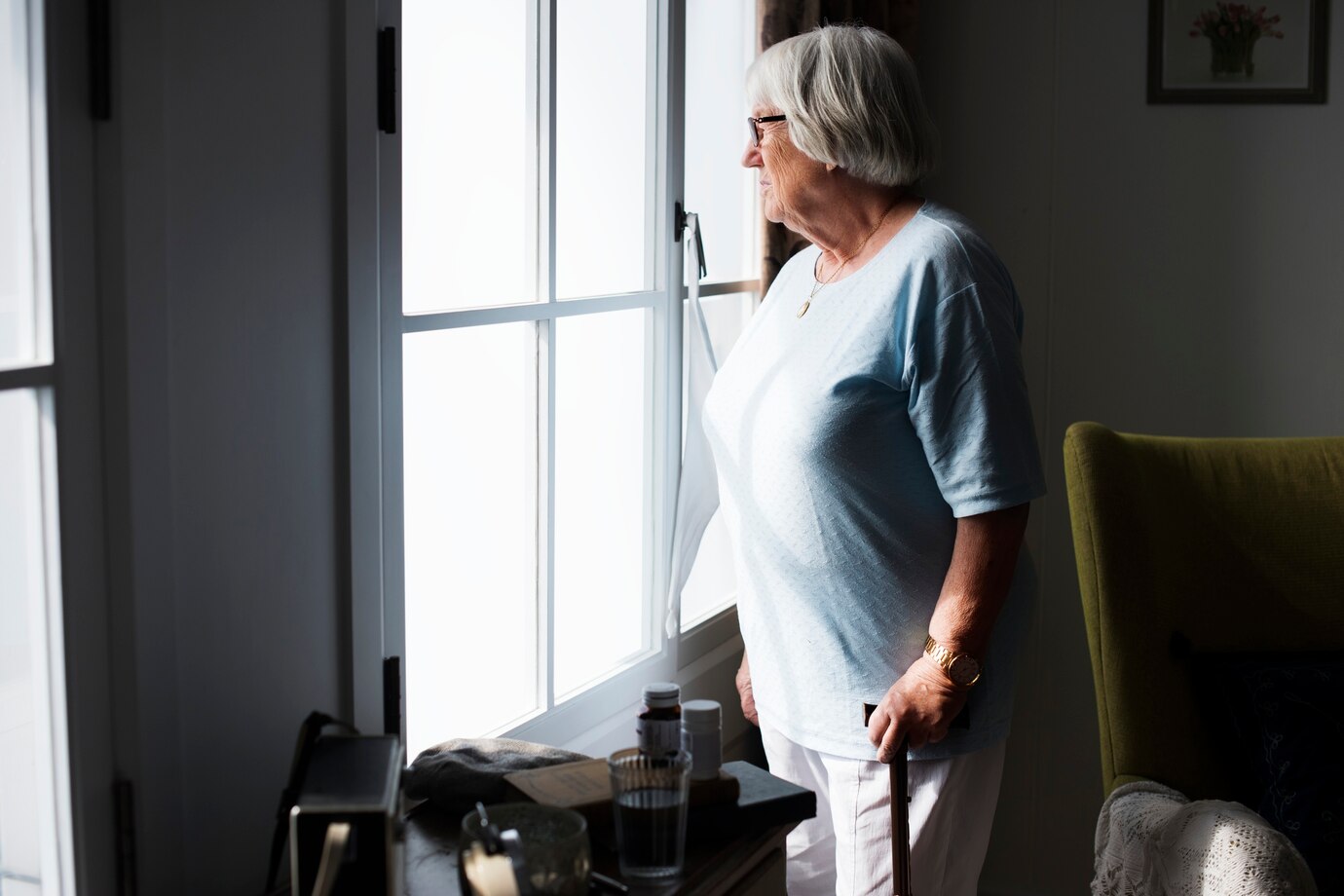
My name is Hilda Brandt. I’m seventy years old, and for thirty-four years I was the school secretary at Hawthorne Elementary in Sioux Falls, South Dakota. If your child went to Hawthorne between 1985 and 2019, I took their temperature in the front office, called you when they threw up in the lunchroom, and handed them a spare pair of pants from the lost and found when they had an accident on the playground. I know most of the families on the north side of town by their last names. I can still tell you which first-graders from 1993 couldn’t tie their shoes.
My husband, Gerald, passed away nine years ago this March. It was a stroke, at the kitchen table, on an ordinary Tuesday morning while he was doing the crossword. He was sixty-three. We’d been married thirty-eight years. He was a mail carrier for the post office for thirty years, and after he retired he built birdhouses in the garage and sold them at the farmers market downtown for twelve dollars apiece. There are still about forty of them stacked out there in the garage. I can’t make myself sell them, and I can’t make myself throw them away.
We had one son, Merrill. He’s forty-one now.
Merrill married Annabeth seven years ago, in a big wedding at a country club in Kansas City, Missouri, where her parents live. They have two little girls. Lucy is five, with her grandpa Gerald’s ears and her daddy’s stubborn chin. Junie is three, and she’s round and loud and sings all day long, mostly songs she makes up herself about her socks and the dog next door. I love those two little girls more than anything I have left in this world. I’m not ashamed to say it.
Annabeth’s parents are wealthy. Her father, Dr. Howard Whitcomb, is a retired heart surgeon. Her mother, Carolyn, served on the board of the art museum in Kansas City. They live in a big stone house in a neighborhood called Mission Hills, with a circular driveway and a fountain in the front yard. I’ve seen it once, at the wedding. It has more bathrooms than my house has rooms.
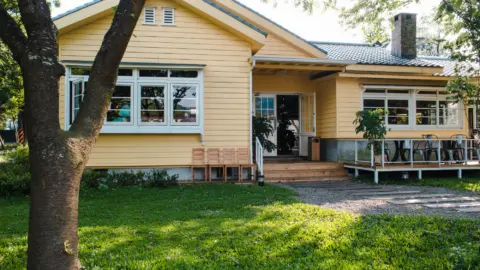
I’m not wealthy. I want to be honest about that, because it matters to this story. I live in the same little two-bedroom ranch house on North Prairie Avenue that Gerald and I bought in 1981 for forty-two thousand dollars. It’s paid off, at least. I live on my pension from the Sioux Falls School District, which comes to about two thousand one hundred dollars a month, and Gerald’s survivor benefit from the post office, and a little savings. At the start of last year, I had about thirty-four thousand dollars in my savings account at the Sioux Falls Federal Credit Union. That was my cushion. That was for if the furnace went out, or the roof leaked, or I fell and needed help, or someday a nursing home. That was everything.
But I’ve always tried to help.
When Lucy was born, I started babysitting. Three days a week, Monday, Wednesday, and Friday, from seven-thirty in the morning until five-thirty at night. When Junie came along, I took her too. I’ve never charged them a dime. I wouldn’t know how. I pack the girls’ lunches. I take them to the library on Wednesdays for story time and to the park on Fridays when the weather’s nice. I pay for their swimming lessons at the YMCA on Main Avenue, ninety-five dollars a month for both girls, because Merrill said they couldn’t swing it and I didn’t want them to grow up afraid of water.
Two years ago, Merrill lost his job. He’d been a sales manager for a company that made farm equipment, and they closed the Sioux Falls office and moved everybody to Omaha, and Merrill didn’t want to move. He was out of work for almost five months. I paid their rent for four of those months. It was fourteen hundred and fifty dollars a month, for their townhouse over on the south side by Lake Lorraine. Five thousand eight hundred dollars altogether. Merrill said he’d pay me back when he got on his feet. He got a new job selling medical equipment that fall. He never brought up paying me back, and I never asked.
I didn’t mind. I want you to understand that. I didn’t do any of it to be paid back. That’s what you do. That’s what family is. Gerald and I always said that’s what money is for, if you’re lucky enough to have a little extra. You help the people you love.
In November, Merrill called me.
It was the Sunday before Thanksgiving. I was at the kitchen table writing out my Christmas card list, the way I do every year. Ninety-one cards. I still send them to teachers I worked with in 1987.
“Mom,” Merrill said. “How are you doing?”
“I’m fine, honey. How are my girls?”
“They’re good. Junie learned a new song about a turkey.” He laughed. Then he got quiet. “Mom, listen. Things are kind of tight for us this year. The new job, the commissions haven’t been what they promised. And the car needed a transmission. I hate asking you this.”
“Ask me, honey.”
“Could you help us out with Christmas? For the girls. Presents, a tree, maybe a nice dinner. I just want them to have a good Christmas. A real one.” He paused. “Eight thousand would really help.”
I sat there at my kitchen table with my pen in my hand.
Eight thousand dollars was a lot of money to me. It was almost a quarter of my savings. It was more than I’d ever spent on anything in my life except my house and Gerald’s funeral.
But it was for my granddaughters. For Lucy and Junie. For their Christmas.
“Of course,” I said. “Of course I’ll help.”
“Thank you, Mom. Seriously. Thank you.”
“Will I see you for Christmas?” I asked. “I’d love to see the girls open their presents.”
“Yeah, of course,” he said. “We’ll figure it out. We’ll have you over. Christmas morning.”
I went to the credit union on Monday morning and had them wire eight thousand dollars to Merrill’s checking account. The young woman at the teller window, a girl named Kayla whose mother I’d known from the PTA, asked me if I was sure. She said it very gently. They’re trained to ask, with older people, she said. In case it’s a scam.
“It’s my son,” I said. “It’s for my grandkids’ Christmas.”
She smiled and pushed the button.
The rest of November went by. Thanksgiving was at my house, the way it’s been every year since Gerald died. Merrill and Annabeth and the girls came at noon, and I made a turkey and stuffing and Gerald’s mother’s cranberry relish with the oranges ground up in it, and Junie sat on my lap and sang the turkey song for me four times. Annabeth didn’t eat much. She was on her phone a lot. She said her mother was texting her about something.
December came. I baked cookies with the girls on a Wednesday, sugar cookies shaped like stars and trees, and we covered them with so many sprinkles that my kitchen floor crunched for a week. I bought the girls each a present out of my grocery money, which was all I had left over that month. A baby doll with a little stroller for Junie. A set of watercolor paints and a real wooden easel for Lucy, because she draws on everything, including the walls. I wrapped them in paper with snowmen on it and put them under the little tabletop tree in my living room.
On December 20th, a Saturday, I texted Merrill.
“Hi honey. What time should I come over Christmas morning? I’ll bring my cinnamon rolls.”
He didn’t answer.
On Sunday, I texted again. “Merrill? Let me know about Christmas.”
Nothing.
I figured he was busy. Work, the holidays. I didn’t want to be a pest.
Then, on Monday night, the 22nd, my phone rang. It wasn’t Merrill. It was Annabeth.
Annabeth almost never calls me. In seven years, I could count the times on my fingers.
“Hilda,” she said. “Hi. I meant to tell you sooner. It’s been so crazy. We’re actually going away for Christmas this year.”
“Oh,” I said. I was standing in my kitchen in my bathrobe, holding a dish towel. “Going away? Where?”
“Aspen,” she said. “Colorado. Skiing. A family trip. We leave Wednesday morning.”
“Oh,” I said again. I didn’t know what else to say. “Aspen. That sounds… that sounds very nice.”
“My parents are coming too,” she said.
“Your parents are coming?”
“Well, yes,” she said, like I’d asked something silly. “It’s my family’s trip.”
I stood there in the kitchen. Under the little tabletop tree in the living room, I could see the two presents wrapped in snowman paper. The doll and the stroller. The easel and the paints.
“Could I come?” I said. I hated how it sounded as soon as it left my mouth. Like a child asking to go to the fair. “Even for a day or two? I wouldn’t need much. I could stay in a motel. I just… I’d like to see the girls on Christmas.”
Annabeth laughed. Just a little laugh.
“Hilda,” she said. “You don’t ski. You’d slow us down. And honestly, it’s a small cabin. It’s more of a my-side-of-the-family thing this year. You understand.”
I didn’t understand. I didn’t say anything for a minute.
“Merrill told me the money was for the girls’ Christmas,” I said finally. “The eight thousand dollars. He said it was for presents. And a tree. And a nice dinner.”
The line went quiet. When Annabeth spoke again, her voice had gone cold.
“It is for the girls,” she said. “They’re going skiing. In Aspen. That’s their Christmas. Most kids would kill for a Christmas like that. You should be happy for them instead of trying to make this all about you, Hilda.”
“I’m not trying to make it about…”
“I have to go. We’ve got so much packing to do. Merry Christmas.”
She hung up.
I stood in my kitchen for a long time holding the dish towel. Then I folded it and hung it on the oven door handle, the way Gerald used to tease me for doing, and I went to bed.
I didn’t hear from Merrill at all. Not that night, and not on Tuesday, when I called him twice and texted him once. “Have a safe trip, honey. Kiss the girls for me.” He didn’t answer.
On Wednesday morning, I drove past their townhouse on the way to the grocery store. Their car was gone. There was a newspaper on the front step.
On Christmas Eve, Annabeth posted photos online.
I don’t do much on Facebook. Gerald and I set up an account a few years before he died, mostly to look at pictures of the girls. I have it on my iPad. I opened it Christmas Eve afternoon to see if anybody from church had posted the time for the candlelight service, and there they were, right at the top.
There were twelve pictures.
Merrill and the girls on the ski slope, in matching red snowsuits and little helmets, with mountains behind them and snow coming down. Lucy grinning with two front teeth missing. Junie on Merrill’s shoulders in a pink hat with a pom-pom. Annabeth and her parents, Dr. Whitcomb and Carolyn, standing in front of a huge stone fireplace with a fire roaring in it, holding glasses of red wine. A long wooden table full of food, with candles, and a ham, and crystal glasses. The outside of the “small cabin.” It was three stories tall, made of logs and glass, with snow on the roof and lights in every window.
The caption said: “Christmas in Aspen with my favorite people!! Thank you Mom and Dad for always making the holidays so magical! ❤️❄️⛷️ #blessed #familyfirst”
I scrolled through all twelve pictures twice.
There was no mention of me. Not anywhere. Not in the caption, not in the comments, not in the pictures.
I sat there at my kitchen table with my iPad and looked at that big log house with the lights in every window for a long time. Then I turned the iPad over, face down, and went to the candlelight service at Augustana Lutheran by myself.
I spent Christmas Day alone.
I made a small turkey breast. A little one, a two-pound one from the Hy-Vee, enough for one person and one sandwich the next day. I made a few mashed potatoes. I didn’t make the cranberry relish. It didn’t seem worth it for one.
I watched an old movie on TV. It’s a Wonderful Life, the way Gerald and I did every Christmas for thirty-eight years. He always cried at the end when Harry Bailey makes the toast. I always pretended not to notice.
At two o’clock in the afternoon, I called Merrill’s phone, to wish the girls a Merry Christmas. It rang and rang and went to voicemail.
At four o’clock, I called again. Voicemail.
At six-thirty, I called Annabeth’s phone. It rang once and went to voicemail. Like somebody had pushed the button.
I didn’t leave a message.
I said, “Alright,” out loud to myself in my empty kitchen.
Then I washed the one plate I’d used, and the one fork, and the one glass, and I dried them and put them away. I turned off the light on the little tabletop tree. The two presents wrapped in snowman paper were still sitting under it.
What Annabeth didn’t know was that her father and I had met once before. Not just at the wedding, when we shook hands in a receiving line with three hundred other people. We’d met at Lucy’s baptism, five years ago, at Augustana Lutheran, my church, here in Sioux Falls.
It was a cold, gray Sunday in March. The Whitcombs had flown up from Kansas City for it. After the service, during the coffee hour in the fellowship hall, I found Dr. Whitcomb standing by himself at the window, holding a little foam cup of church coffee, looking out at the snow. Everybody else was crowded around Annabeth and the baby. I brought him a lemon bar from the dessert table.
“These are the only thing worth eating here,” I told him. “The church ladies have been making them since 1962.”
He laughed and took one. We stood there at the window for maybe twenty minutes. He told me about his practice in Kansas City. I told him about Hawthorne Elementary and Gerald and his birdhouses. He asked me a lot of questions. He was a good listener, which surprised me, for a surgeon.
When he left, he reached into the pocket of his suit coat and gave me his card. A heavy white business card with his name and his phone number in raised letters.
“Hilda,” he said. “If you ever need anything. Anything at all. Call me. I mean that.”
I thanked him and put the card in my purse. Then I moved it to the drawer by my telephone in the kitchen, where I keep the important numbers. The plumber. The doctor. The man who plows my driveway.
I never called him. I never needed anything.
On December 27th, two days after Christmas, I finally did.
I’d been sitting at my kitchen table all morning, thinking. I’d looked at those twelve pictures on Facebook again. I’d looked at the big log house in Aspen. I’d looked at the long table full of food, and the crystal glasses, and the fire in the stone fireplace. “Thank you Mom and Dad for always making the holidays so magical.”
I took the card out of the drawer by the phone. It was a little bent at one corner now, and yellowed. I dialed the number.
It rang four times. Then a man’s voice answered. Deep and calm.
“Howard Whitcomb.”
“Dr. Whitcomb,” I said. “This is Hilda Brandt. Merrill’s mother. From Sioux Falls. We met at Lucy’s baptism. I brought you a lemon bar.”
There was a short pause.
“Hilda,” he said. His voice warmed up. “Of course. Of course I remember you. How are you? Is everything all right? Are the girls all right?”
“The girls are fine, as far as I know,” I said. “I’m sorry to bother you. I know you’ve just gotten back from your trip.”
“Not at all. We just got in last night, actually. What can I do for you?”
I didn’t yell. I didn’t complain. I didn’t cry. I’d decided before I picked up the phone that I wasn’t going to do any of those things. I’d been a school secretary for thirty-four years. I’d had a lot of practice asking parents hard questions in a calm voice.
I just asked him one simple question.
“Dr. Whitcomb,” I said, “did you know who paid for your ski trip?”
There was a long silence on the line.
It went on so long that I thought maybe the call had dropped. I could hear him breathing.
“No,” he said finally, slowly. “I didn’t. Annabeth told us the trip was their Christmas gift to us. To Carolyn and me. She said she and Merrill had been saving for it all year. She said it was their way of thanking us for everything we’d done for them.” He paused. “Hilda. Why are you asking me this?”
“It was my savings,” I said. “Eight thousand dollars. Merrill called me in November. He said things were tight this year. He asked me to help with the girls’ Christmas. Presents, a tree, a nice dinner. He told me it was for the girls.”
Dr. Whitcomb didn’t say anything.
“I’m seventy years old,” I said. “I’m a retired school secretary. I live on my pension. That was almost a quarter of everything I have. I wired it to Merrill on the twenty-fourth of November. I still have the receipt from the credit union.”
He still didn’t say anything. The silence went on for a very long time.
“I spent Christmas by myself,” I said. “Annabeth told me I’d slow you down. She said it was a my-side-of-the-family thing. I called the girls three times on Christmas Day. Nobody answered.”
I stopped. I’d said everything I’d decided to say.
“I’m not calling to ask you for anything, Dr. Whitcomb,” I said. “I just thought you should know.”
The silence went on for another few seconds.
Then he said, very quietly, “Thank you for telling me, Hilda.”
And he hung up.
I sat at my kitchen table with the phone in my hand for a long time after that. I didn’t know if I’d done the right thing. Part of me thought I should call back and apologize. Part of me was afraid I’d just made everything worse. That Annabeth would find out I’d called her father, and she’d be furious, and I’d never get to see the girls again.
I put the phone down on the table.
“Alright,” I said.
The family came home from Aspen on December 30th. I knew because Annabeth posted a picture from the airport in Denver. The two girls asleep across three chairs at the gate, with their snowsuits on and their little helmets in their laps. “Back to reality 😭 Best Christmas ever!!”
Nobody called me.
On New Year’s Eve, December 31st, at nine o’clock in the morning, my doorbell rang.
I was in the kitchen in my housecoat, making coffee. I wasn’t expecting anybody. Nobody ever rings my doorbell except the man who reads the gas meter and the Jehovah’s Witnesses.
I went to the front door and looked through the little window.
Dr. Howard Whitcomb was standing on my front porch, in the snow, in a long gray wool coat with the collar turned up. He was a tall man, older than I’d remembered, with white hair and a white beard. He had a gray wool scarf around his neck, and he was holding something in his gloved hand.
Behind him, in my driveway, parked behind my old Buick, there was a big black Mercedes with Missouri plates. The engine was running. Through the passenger side window, I could see Annabeth sitting in the front seat.
She was crying. She had her hands over her face.
I opened the door.
“Dr. Whitcomb,” I said. “What on earth? You drove all the way up from Kansas City?”
“We flew up yesterday,” he said. “Carolyn’s back at the hotel. I rented the car.” He looked over his shoulder at the Mercedes. Then he looked back at me. “May I come in, Hilda? Just for a few minutes.”
“Of course,” I said. “Of course. Come in. It’s freezing out there. What about Annabeth?”
“Annabeth is going to wait in the car for now,” he said. “Until I’ve said what I came to say.”
I let him in. He stamped the snow off his good leather shoes on my mat, very carefully, and took off his gloves and put them in his coat pocket.
He held out a thick white envelope. It had my name written on the front in neat, old-fashioned handwriting. Mrs. Hilda Brandt.
“Hilda,” he said. “Before you open this, I need to tell you what my daughter did.”
I took him into the kitchen and sat him down at the table. I poured him a cup of coffee. He held it in both hands and didn’t drink it. I set the envelope down on the table between us, and I didn’t open it.
“After you called me,” Dr. Whitcomb said, “I sat in my study for about an hour. Then I went and found Carolyn, and I told her. And then we called Annabeth and Merrill and asked them to come over to the house. That same night.”
He turned the coffee cup around in his hands.
“I asked them about the money,” he said. “Straight out. Who paid for Aspen. Merrill went white as a sheet. He didn’t say a word. He just looked at the floor. Annabeth tried to tell me you’d offered it. That you’d said you wanted them to have a nice trip. That you’d insisted.” He shook his head. “I told her I’d spoken to you myself. That you’d told me Merrill asked you for it. For the girls’ presents. For a tree. And then she started to cry.”
He set the cup down.
“The house in Aspen,” he said. “It wasn’t eight thousand dollars, Hilda. It was eleven thousand, four hundred, for the week. A rental. Through a company out of Denver. Annabeth put the deposit down in October, before Merrill ever called you. She’d already booked it. Your eight thousand dollars paid for most of the rest. The lift tickets. The ski rentals. A private ski instructor for the girls. And a dinner at a restaurant in Aspen on Christmas night that cost, Merrill told me, nine hundred and forty dollars.” He paused. “Carolyn and I paid for our own flights. That’s all we paid for. We thought it was a gift.”
I didn’t say anything. I couldn’t.
“But that’s not all of it,” Dr. Whitcomb said. “That’s not even the worst of it.” He looked at me across the table. “When Carolyn asked Annabeth, in October, whether you’d be coming along to Aspen, Annabeth told us you’d been invited. She said she’d asked you herself. And she said you’d said no. That you didn’t like to travel in the winter. That you had plans with your friends from church. That you’d rather stay home.” He took a breath. “She told us you’d said, ‘You young people go have fun.'”
I put my hand over my mouth.
“I believed her,” he said. “God help me. Carolyn believed her. We had no reason not to. On Christmas morning, in that big house, Carolyn asked Annabeth if we should call you. To wish you a Merry Christmas. To let the girls talk to you. Annabeth said she’d already called you that morning, while we were all asleep. She said you were at a friend’s house for brunch and sounded very happy.” He shook his head slowly. “I found out the other night, from Merrill, that she’d turned off the girls’ tablets so they couldn’t call you. Lucy asked to call Grandma Hilda on Christmas Eve, to tell you about the ski lessons. Annabeth told her you were busy.”
I sat there at my kitchen table and I cried. I couldn’t help it. I’d held it together through Christmas Eve and Christmas Day and the pictures on Facebook and the phone call with Annabeth, and I’d held it together on the phone with this man. But I couldn’t hold it together anymore. Lucy had asked to call me.
Dr. Whitcomb didn’t say anything. He reached into his coat pocket and took out a clean white handkerchief, folded in a perfect square, and set it on the table in front of me. Then he waited. He was a good waiter. I supposed you had to be, in his line of work.
When I could talk again, I wiped my eyes with his handkerchief.
“Why are you telling me all of this?” I asked. “You didn’t have to fly all the way up here. You didn’t have to tell me any of it. You could have just let it go.”
“No,” he said. “I couldn’t. Not after you called me.”
He looked out my kitchen window, at the snow in my backyard, and Gerald’s old bird feeder hanging from the clothesline.
“I’ve done a lot of things in my life that I’m proud of, Hilda,” he said. “I’ve done a few that I’m not. And I’ve spent a lot of years telling myself that whatever Annabeth did, it was her business and Merrill’s. That they were grown. That it wasn’t my place.” He looked back at me. “My wife and I gave Annabeth everything. Everything she ever wanted. Ponies. A car at sixteen. College. A wedding at the club. And somewhere along the way, I think she learned that if she wanted something, she could just tell people whatever she needed to tell them to get it. And I let it happen, because it was easier than saying no to her.”
He tapped the envelope on the table with one finger.
“Open it,” he said.
I picked it up. It was heavy. I slid my finger under the flap and opened it.
Inside, there was a cashier’s check from Commerce Bank in Kansas City. It was made out to Hilda M. Brandt. The amount was eight thousand dollars.
Behind it, there was a second check. Also made out to me. It was for five thousand, eight hundred dollars.
I looked up at him.
“Merrill told me,” Dr. Whitcomb said, “about the rent. Two years ago. When he lost his job. Four months. He said he never paid you back. He said he never even offered.” He paused. “He told me about the swimming lessons, too. And the babysitting. Three days a week. For five years. Without one dime.” He shook his head. “Annabeth always told us you were paid for that. She told us they paid you three hundred dollars a week.”
“They never paid me a penny,” I said. “I never asked.”
“I know,” he said. “Merrill told me that too.”
There was a third thing in the envelope. A folded sheet of heavy cream-colored paper. A letter, handwritten, in that same neat, old-fashioned hand.
“Dear Mrs. Brandt,” it said. “My husband has told me everything. I am so deeply sorry. If I had known, I would never have set foot in that house. Please don’t think of us the way you must be thinking of us now. Carolyn Whitcomb.”
I set the letter down on the table.
“I can’t take this,” I said, pushing the checks back across the table toward him. “Dr. Whitcomb. This isn’t your money to pay back. This is Merrill’s debt. Merrill and Annabeth’s. Not yours.”
“I know it isn’t,” he said. He didn’t touch the checks. “That’s why Annabeth is going to pay me back. Every cent. Thirteen thousand, eight hundred dollars. She’s going to sign a promissory note with my attorney on Monday morning. Two hundred dollars a month, out of her own paycheck. She works three days a week at an interior design firm, and she’s going to start working five.” He folded his hands on the table. “But you shouldn’t have to wait three years for her to pay you back, Hilda. You’re seventy years old. That was your savings. You need it now. So I’m paying you now, and she’s paying me later. That’s how it’s going to work.”
“And Merrill?”
Dr. Whitcomb was quiet for a moment.
“Merrill,” he said, “is going to be here this afternoon. By himself. To talk to you. He asked me to ask you if that’s all right. He said he didn’t think you’d open the door if he just showed up.” He paused. “He’s ashamed, Hilda. Truly. I’ve known that young man for nine years, and I’ve never seen him like he was the other night. He went along with it. He shouldn’t have. He knows that. But it was Annabeth’s idea, all of it. The trip. The money. What to tell you. What to tell us. Merrill just didn’t say no.”
“He never does,” I said. “Not since he was a little boy. He hates to make anybody mad at him.”
“I know,” Dr. Whitcomb said. “Neither did I.”
We sat there at my kitchen table for a while without saying anything. He drank his coffee finally. It must have been cold by then. He drank it anyway.
“Annabeth wants to come in and apologize,” he said finally. “She’s been sitting in that car for half an hour. She cried the whole way here from the hotel. She cried all through the night. Carolyn was up with her until three in the morning.” He looked at me. “But it’s your house, Hilda. And it’s your decision. If you don’t want her to come in, she won’t come in. I’ll drive her back to the hotel.”
I looked out the kitchen window, past the bird feeder, toward the driveway. I could just see the corner of the black Mercedes, with its engine still running and the exhaust going up in a white cloud in the cold.
I thought about Lucy asking to call me on Christmas Eve.
“Let her come in,” I said.
Dr. Whitcomb got up and went out to the car. I sat at the table and waited. I folded his handkerchief back into a square, the way he’d given it to me.
A few minutes later, Annabeth came in through my front door. Her father was behind her with his hand on her shoulder, like you’d walk a child into the principal’s office. She was wearing a long white puffy coat, and her makeup was smeared under her eyes, and her nose was red. She stopped in the doorway of my kitchen and didn’t come any further.
She looked at me sitting at the table. She looked at the envelope with the checks in it.
“Hilda,” she said. Her voice was thick. “I’m sorry.”
I didn’t say anything.
“I’m sorry about the money,” she said. “And about Christmas. I shouldn’t have said what I said to you on the phone. About you slowing us down. That was a really mean thing to say.”
I waited.
“I just…” She looked at the floor. “My parents always do these big things for us. Every Christmas. Every vacation. And I wanted, for once, to be the one who did something big for them. To show them we could. To show them we were doing well. And Merrill’s commissions weren’t coming through, and I’d already put the deposit down, and I didn’t know what to do.” She wiped her nose with the back of her hand. “I didn’t think you’d mind that much. You always say you just want us to be happy.”
I looked at my daughter-in-law standing in my kitchen doorway.
“Annabeth,” I said. “I do want you to be happy. I always have. That isn’t what this was about. You didn’t need to lie to me about the money. If you’d asked me to help you take your parents to Aspen, I might have said no. I might have said yes. But I’d have known what I was saying yes to. You took that from me. And then you told me I’d slow you down.”
She started to cry again.
“And you told your parents I didn’t want to go,” I said. “And you told my granddaughter I was busy on Christmas Eve when she asked to call me.”
Annabeth put her hand over her mouth.
“That’s the part I can’t get past,” I said. “Not the money. I can get past the money. Lucy asked to call her grandma on Christmas Eve, and you told her I was busy.”
Annabeth didn’t say anything. She stood there in the kitchen doorway and cried. Her father stood behind her with his hand on her shoulder and didn’t say anything either.
After a minute, I got up from the table and went to the counter and got the box of tissues. I held it out to her. She took one. She didn’t take a step closer.
“I’m sorry,” she said again, into the tissue.
“I heard you,” I said.
That was all I could give her that morning. It wasn’t forgiveness. I don’t think she expected it to be. I’m not sure she’d have known what to do with it.
Dr. Whitcomb drove her back to the hotel. Before he left, he shook my hand at the front door.
“Carolyn would like to have you to dinner,” he said. “Tonight. New Year’s Eve. At the hotel restaurant, downtown. Just the three of us. If you’ll come.”
“I don’t know, Dr. Whitcomb,” I said.
“Howard,” he said. “Please. After all this, I think you’d better call me Howard.”
“Howard,” I said. “I’ll think about it.”
“That’s all I ask.”
He walked back down my front walk in the snow in his long gray coat and got in the black Mercedes and backed it carefully out of my driveway.
Merrill came at three o’clock that afternoon.
He rang the bell. When I opened the door, he was standing on the porch with his hands in his coat pockets, looking at his feet, the same way he used to stand on the porch after school when he’d gotten in trouble and the principal had called me. I’d been the school secretary. The principal always called me first.
“Hi, Mom,” he said.
“Hi, Merrill.”
“Can I come in?”
I let him in. We sat in the living room. He sat on the couch, and I sat in Gerald’s old recliner. He looked at the little tabletop tree in the corner, with the two presents still sitting under it in their snowman paper.
“Those for the girls?” he asked.
“Yes.”
He looked at them for a long time.
“Mom,” he said. “I’m sorry. I’m so sorry. I don’t know what I was thinking. Annabeth had it all figured out, and she said you’d never know, and she said it was basically for the girls anyway, because they were going, and I just…” He stopped. “I knew it was wrong. When I called you. I knew it the whole time. I just didn’t say anything.”
“You never do, honey,” I said. “That’s the problem.”
He looked up at me. His eyes were wet. He looked about nine years old.
“When Howard called us over to their house,” Merrill said, “and asked about the money, I couldn’t even look at him. I just sat there. He’s never said one hard word to me in nine years, and he looked at me like…” He shook his head. “Like he was disappointed in me. And then I thought about how Dad would’ve looked at me. And I couldn’t breathe.”
I didn’t say anything. I didn’t need to.
“Lucy asked for you,” he said. “On Christmas Eve. In the cabin. She wanted to show you her ski helmet. She had it all ready, on the tablet. And Annabeth said you were busy. And I knew you weren’t. I knew you were at home alone. And I didn’t say anything.” He put his face in his hands. “I let my daughter think her grandma was too busy to talk to her on Christmas Eve.”
I got up out of Gerald’s recliner. My knees cracked. I went over and sat down on the couch next to my son and put my arm around his shoulders, the way I used to when he was small and had a nightmare.
“You’re going to have to start saying things, Merrill,” I said. “Even when it makes people mad at you. You’re going to have to start saying no. To Annabeth. To me, too, sometimes. To everybody. You’re a father now. Those girls are going to need you to say no to people.”
“I know, Mom.”
“And I’m not paying for the swimming lessons anymore,” I said.
He looked up at me, surprised.
“I’ll keep babysitting,” I said. “I’ll keep babysitting those girls as long as I’m able, because I love them and it’s the best part of my week. But the swimming lessons are yours now. And the rent is yours. And if you need money, you’re going to ask me straight, and tell me the truth about what it’s for, or you’re not going to ask me at all.”
He nodded slowly. “Okay, Mom. That’s fair.”
“It’s more than fair,” I said.
He stayed for about an hour. Before he left, he asked if he could bring the girls over the next day, New Year’s Day, to open their presents from under my tree. I said yes. Then he hugged me at the front door for a long time without saying anything, like his father used to.
I went to dinner that night with Howard and Carolyn Whitcomb, at the restaurant in the Hotel on Phillips downtown. Carolyn was a thin, elegant woman with silver hair and pearls, and she cried twice during the soup. She told me Annabeth had been a difficult child, even as a little girl, and that she’d always blamed herself. I told her that every mother blames herself for something. She asked me about Gerald, and I told her about the birdhouses in the garage, and she asked if she could buy one. I told her I’d give her one. She said she’d only take it if I let her pay, and we argued about it until dessert, and finally Howard made us split the difference at six dollars.
We watched the fireworks over the Big Sioux River from the hotel window at midnight. Carolyn held my hand.
I deposited both checks at the Sioux Falls Federal Credit Union on January 2nd. Kayla was at the teller window again. She looked at the checks, and at the amounts, and at me.
“Merry Christmas, Mrs. Brandt,” she said.
“It is now,” I said.
On New Year’s Day, Merrill brought the girls over at ten o’clock in the morning. Just Merrill and the girls. Annabeth didn’t come. Merrill said she was at the hotel with her parents, and that she’d see me next week, when she dropped the girls off on Monday morning.
Lucy came running in the front door in her red snowsuit with her little ski helmet under her arm.
“Grandma Hilda! Grandma Hilda! Look! I can ski! I went down the bunny hill nine times! I want to show you my helmet!” She held it up. It had a pink unicorn sticker on the side. “I tried to call you on Christmas Eve to show you, but Mommy said you were busy.”
I knelt down on my living room carpet, even though my knees don’t like it anymore, and took the helmet and turned it over in my hands like it was the most beautiful thing I’d ever seen.
“I wasn’t busy, honey,” I said. “I’ll never be too busy for you. Not ever. You remember that.”
Lucy looked at me very seriously. Then she nodded.
“Okay,” she said.
Junie came in behind her, singing a new song she’d made up about a moose she’d seen in Colorado. Merrill stood in the doorway with his coat still on.
The girls opened their presents from under my little tabletop tree. Junie put her new baby doll in the stroller and pushed it around my living room in circles until she crashed it into Gerald’s recliner. Lucy set up her easel by the front window and painted a picture of a mountain covered in snow, with four little stick people at the bottom. One big, two little, and one in a pink hat.
“Who’s that?” I asked her, pointing to the fourth stick person.
“That’s you, Grandma,” Lucy said. “Next time you’re coming.”
Merrill was standing behind us, looking at the painting over my shoulder.
“She’s right, Mom,” he said quietly. “Next time.”
“We’ll see,” I said.
Lucy gave me the painting when it dried. It’s on my refrigerator now, held up with a magnet shaped like a birdhouse.