“Sweetie, this is God’s house, not a hoedown.”
Brittany said it without even looking at my daughter. She was looking at the sopranos, and she was smiling, and she said it in that bright teacher voice she uses when she wants everybody in the room to know she’s being patient. Then she laughed. Not a big laugh. Just a little one, through her nose, like Ellie had told a joke that wasn’t very good.
“We’ll stick with the organ,” she said. “Okay? Now, altos, let’s take it from the top of page three.”
It was the first Wednesday in December, choir rehearsal in the fellowship hall at First Methodist in Council Grove. Twelve women in folding chairs with their music in black binders, a plate of store-bought sugar cookies on the piano, and the big coffee urn gurgling in the corner. I was sitting in the back row of the altos, the way I have every December since I was nineteen. Ellie was sitting in the chair next to the door with her coat still on and her fiddle case across her knees.
She’d waited the whole first half of rehearsal to ask. She’d stood up during the break with the case in both arms, and she’d walked up to the piano in front of all those women, and she’d said, very politely, “Mrs. Dalton, could I play one song at the Christmas Eve service? On my fiddle? I know Silent Night all the way through.”
That was when Brittany said it.
A couple of the women laughed along with her. Most of them looked at their music. Gloria Penner, who’s sung soprano in that choir since the Nixon administration, looked straight at me and raised her eyebrows about an inch.
Ellie said, “Okay.” That was all. She walked back to her chair by the door and slid the case underneath it and sat down and folded her hands in her lap. She didn’t cry. She’s eleven, and she’s already better at not crying in front of people than I’ll ever be.
I sang the rest of rehearsal. I don’t know how. I sang “O Come All Ye Faithful” and “Hark! The Herald Angels Sing” and the descant on “Joy to the World” that I’ve sung for twenty-two years, and the whole time I was watching the back of Brittany’s head as she waved her arms at the sopranos, and I was thinking things I’m not going to put in writing.
Ellie didn’t say a word on the drive home. When we got to the house she went straight to her room and shut the door.
Around nine o’clock I went to tell her to brush her teeth. I stopped outside her door with my hand on the knob.
She was playing. Very quietly, so quiet I almost couldn’t hear it, with the mute on the bridge. Silent Night. All the way through, slow, every note right. Then she started it again from the beginning.
I stood there in the hallway and listened to her play it four times. Then I went back to the kitchen and sat down at the table and didn’t brush anybody’s teeth.
I should tell you how Brittany ended up in charge of the choir at my church. It’s not a complicated story, but it’s the kind of thing that only happens in a town of two thousand people.
Mark and I got divorced four years ago. We’d been married twelve years. He’s not a bad man. He’s a good dad, mostly, in the way a lot of men are good dads, which is that he shows up when it’s his weekend and he pays his child support on time and he doesn’t ask a lot of questions. We just stopped liking each other somewhere along the way, and by the end we were two people who lived in the same house and talked about the electric bill.
I do hair. I’ve had my own chair at Shear Madness on Main Street for fifteen years. Half the women in that choir sit in my chair every six weeks, and I know more about this town than the newspaper does. Mark works for the county road department. We split everything down the middle in the divorce, including Ellie. One week on, one week off, alternating holidays. That year, it was my turn for Christmas Eve until nine o’clock, and his turn for Christmas morning.
Mark married Brittany two years after the divorce. She’s from Topeka. She’s thirty-one, very organized, very pretty, very sure of herself. She has a degree in music education and she teaches music at the grade school, so Ellie has had her for music class twice a week for two years, which is a whole other story.
About a month after the wedding, Brittany joined First Methodist.
That’s my church. I was baptized in that church. I was confirmed there and married there, to Mark, in a dress my mother made. My dad’s funeral was there. There are three Methodist churches within twenty miles of Council Grove, and a Lutheran one, and a Catholic one, and a big new nondenominational one out by the highway with a coffee bar and a rock band. Brittany picked mine.
By the next fall, she was choir director. Old Harold Wiens had directed the choir for thirty-one years, and his arthritis finally got too bad for him to play, and the worship committee asked Brittany because she was the only person in the church with a music degree. Nobody asked me what I thought about it. Why would they? I’m just the alto in the back row who does their hair.
I thought about quitting. I thought about it a lot, that first year. But I’d sung in that choir since I was a teenager, and my mother had sung in it before me, and I wasn’t going to let anybody chase me out of my own church. So I stayed. I kept my head down and sang my part and never said one word to Brittany Dalton that wasn’t about the music.
And she never said one word to me that wasn’t about the music either. Until she said one to my daughter.
The fiddle came from a pawn shop in Emporia.
Ellie had wanted one since she was nine, when she heard an old man play at the Morris County Fair in a tent next to the 4-H rabbit barn. She stood in front of that tent for an hour with a corn dog in her hand, not eating it. On the way home she asked if she could take violin lessons. I told her violins were expensive and lessons were expensive and we’d see. That’s what you say when you mean no but don’t want to say it.
She asked again on her tenth birthday. And her eleventh. On her eleventh birthday her grandma gave her forty dollars in a card, and her aunt gave her twenty, and she’d saved another thirty from babysitting the Nelson kids, and she asked me to drive her to Emporia.
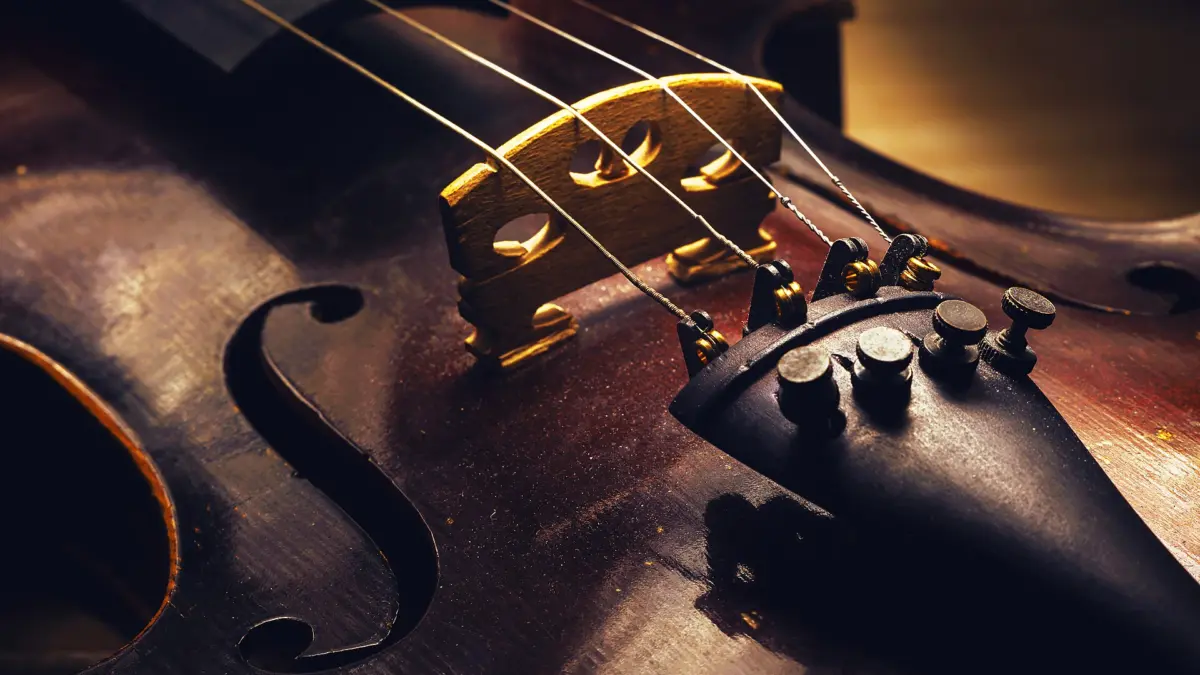
The pawn shop was in a strip mall between a nail salon and a vape store. It had guitars hanging on the walls and a glass case full of rings and a whole shelf of chainsaws. In the back corner, on the floor next to a broken drum set, there was a violin case covered in old stickers. Inside was a fiddle with a dark reddish finish worn through to bare wood on one shoulder, and a crack along the side that somebody had glued with what looked like Elmer’s. One of the tuning pegs slipped if you looked at it wrong. The bow was missing half its hair.
The man behind the counter wanted sixty dollars for it. Ellie talked him down to forty. I’ve never been so proud of her in my life.
She spent the other fifty dollars on a new bow and a set of strings and a cake of rosin and a book called “Fiddling for Beginners” that she ordered online. For the first two months, it sounded like somebody was killing a cat in her bedroom. I’m not going to lie about that. Our neighbor, Mrs. Hiebert, came over one evening to ask if everything was all right.
Then she found Mr. Ferris.
Ellie’s Girl Scout troop went to Pine Ridge nursing home every second Saturday to do crafts with the residents. Mostly it was coloring pages and making ornaments out of popsicle sticks. The girls would go room to room with a cart, and most of the old people would smile and say how pretty they were and then go back to watching the television.
Mr. Ferris was in room 14, at the end of the hall. He was ninety-one years old. He had big hands with knuckles like walnuts and white hair that stuck straight up, and he never wanted to color anything. The first time Ellie’s troop came to his door, he waved them away. The second time, Ellie was the one pushing the cart, and she saw a fiddle case leaning in the corner by his closet.
“Is that a fiddle?” she said.
He looked at her for a long time. “Who wants to know?”
“I have one,” she said. “I’m learning. I’m not very good yet.”
“Nobody’s any good at first,” he said. “Bring it next time. Let’s hear how bad you are.”
She brought it the next Saturday. She played him “Twinkle, Twinkle, Little Star,” which was about the only thing she could play all the way through. He listened with his eyes closed. When she was done, he opened them and said, “Well, that’s terrible,” and then he laughed so hard he started coughing, and a nurse came running in to check on him.
Then he reached over and took the fiddle out of her hands and tuned it. It took him a long time, because his fingers shook. He fixed the slipping peg by rubbing some chalk on it from a little box in his drawer. Then he tucked it under his chin, and he played.
Ellie told me about it in the car afterward. She couldn’t sit still.
“Mom, he played like a whole band,” she said. “He played this song called ‘Soldier’s Joy’ and his fingers were going so fast, and then he played a really slow sad one, and one of the nurses cried. He said he used to play barn dances. He said he played every Saturday night from 1952 to 1968 at the Grange hall in Dunlap, and people came from three counties.”
From then on, she went to Pine Ridge every Sunday afternoon by herself. I’d drop her off at two and pick her up at four. The activity director, a nice woman named Pam, told me later that Ellie was the only regular visitor Mr. Ferris had. His wife had died in 2009. His only daughter lived in Wichita and came at Christmas and on his birthday. His friends were all gone. For years he’d sat in room 14 with that fiddle case in the corner and the television on, waiting for nothing in particular.
“Since your girl started coming,” Pam said, “he’s eating again. He’s asking what day it is. He asked me last week if Sunday was coming. He hasn’t cared what day it was in three years.”
Mr. Ferris taught Ellie everything that year. How to hold the bow loose, like you’re holding a baby bird. How to tune by ear. How to play a shuffle and a double stop and a slide. He taught her a dozen old fiddle tunes with names like “Bonaparte’s Retreat” and “Ragtime Annie,” and she’d come home and play them in the kitchen while I made supper.
In September, she told him she wanted to learn Silent Night.
“That’s not a fiddle tune,” he said. “That’s a church song.”
“I want to play it at Christmas,” she said. “At church. On Christmas Eve, when everybody has the candles.”
He thought about that for a while. Then he nodded. “Then we better learn it right.”
They worked on it every Sunday in September and October and November. Pam said you could hear them all the way down the hall. Mr. Ferris made her play it slower and slower, until it was almost too slow to stand. “Let it breathe,” he’d tell her. “It’s a lullaby. You’re singing a baby to sleep. You don’t rush a baby.”
By Thanksgiving, she could play it through without one mistake.
She practiced it at home for a week after that, every night, and then she asked me if she could ask Mrs. Dalton. I knew what was going to happen. I think part of me did, anyway. But I didn’t say so, because she was eleven and she’d worked so hard, and you can’t protect your kids from everything. Sometimes you have to let them walk up to the piano.
So she did. And Brittany laughed.
I want to be fair to Brittany. I’ve had a lot of time to think about it since, and I’m trying to be. It was her first Christmas Eve as choir director. The church had bought a brand-new Allen digital organ in 2019 with an eighty-six thousand dollar memorial gift from the Kesler family, and Brittany was proud of that organ. She’d planned every note of that service since August. She’d printed programs. She wanted it perfect, and she wanted it hers, and she didn’t want an eleven-year-old with a forty-dollar pawn-shop fiddle messing it up.
And I think she didn’t want it to be my kid. I think that was part of it too. I’ll never know for sure.
Mark didn’t say anything about it. I called him that Thursday and told him what happened. He was quiet for a minute and then said, “Brit says the service is already planned out. She can’t just add things.”
“She laughed at her, Mark.”
“I’m sure she didn’t mean it like that,” he said.
That’s Mark. That’s always been Mark.
Ellie went to Pine Ridge that Sunday like always. When I picked her up at four, she was quiet in the car. I asked her if she’d told Mr. Ferris.
“Yeah.”
“What did he say?”
She looked out the window at the bare trees along Main Street. “He said a fiddle’s no good in a closet. He said bring it anyway.”
“Bring it where?”
“To church. On Christmas Eve.” She turned around and looked at me. “He said, ‘You bring it, and you sit with it, and you wait. Sometimes the Lord makes room for you. And if he doesn’t, well, you got to sit in church with your fiddle, and there’s worse things.'”
I laughed. I couldn’t help it. “He said that?”
“He said a lot of other stuff too. Some of it was swears.”
That week I talked to Pam, the activity director at Pine Ridge. I asked her if there was any way Mr. Ferris could come to the Christmas Eve service at First Methodist. I figured if Ellie wasn’t going to get to play, at least he could hear the music and sit with her. Pam said the nursing home van was taking a group of residents to the candlelight service at the Catholic church, and she’d see if she could drop Mr. Ferris at ours on the way. She called me back the next day and said yes.
I didn’t tell Ellie. I wanted it to be a surprise.
The week before Christmas, the weather people on the Wichita station started talking about ice. A storm was coming up from Oklahoma, they said, with freezing rain on Christmas Eve, a quarter to a half inch of ice, maybe more. Power outages likely. Travel not recommended. Every year they say things like that and every year it’s mostly nothing, so nobody paid much attention.
Christmas Eve came in gray and cold and wet. The rain started around four in the afternoon, and by five-thirty it was freezing on everything it touched. The trees on Main Street were bent over with ice. The power lines were sagging. My front steps were a skating rink, and I had to salt them twice before Ellie and I could get to the car.
She came out of her room in her green velvet Christmas dress and her black church shoes, carrying her fiddle case.
I looked at the case. She looked at me.
“Mr. Ferris said bring it anyway,” she said.
“Okay,” I said. “Bring it.”
We drove to church at about fifteen miles an hour with the defroster on full blast. When we got there, the parking lot was already almost full. People were inching up the sidewalk to the front doors holding onto each other’s arms. The sanctuary was packed. It always is on Christmas Eve, even in an ice storm, because in a town like ours it’s the one night a year when everybody comes, the Methodists and the backsliders and the people who only show up for weddings and funerals.
The choir sat in the choir loft up front, so I went up there in my red robe. Ellie sat in the third pew on the left side, next to Gloria Penner’s husband Walt, with her fiddle case on the floor between her feet.
About five minutes before the service started, the side door opened, and Pam wheeled Mr. Ferris in. She parked his wheelchair at the end of the second row, on the aisle, right in front of Ellie. He was wearing a brown suit that was too big for him now and a red bow tie. Ellie saw him and her whole face lit up like the Christmas tree. He turned around in his chair and winked at her. Then he looked down at the fiddle case between her feet, and he nodded, once.
The service started at seven. Pastor Jim Ewert welcomed everybody and made a joke about the ice, and then the choir stood up and Brittany went to the organ.
She looked beautiful. I’ll give her that. She had on a long black skirt and a red sweater and her hair up, and she sat down at that big Allen organ like she’d been born there. She played the introduction to “O Come All Ye Faithful,” big and full, with all the stops pulled out so the whole sanctuary shook a little. Then the congregation stood up and started singing. Two hundred people, all singing at once. It’s my favorite sound in the world.
We got through the first verse. We were partway into the second, the part that goes “Sing, choirs of angels, sing in exultation,” when the lights flickered.
Everybody kept singing. The lights flickered again, longer this time. Somebody in the back said “uh oh” loud enough for people to laugh.
Then there was a pop. A big one, outside, like a gunshot, and a blue flash through the stained glass windows on the east side. It was the transformer on the pole on Elm Street. And every light in the church went out at the same time.
The organ stopped in the middle of a chord. When an electric organ loses power, it doesn’t fade out. It just quits, like somebody slammed a door on it. The singing stumbled and fell apart. For a second there was just silence and darkness, total darkness, the kind you only get in the country in the middle of a storm. Then a baby started crying somewhere in the back, and people started murmuring, and a few people laughed nervously.
Phone flashlights started coming on, one by one, little white circles bobbing around in the dark.
Pastor Jim was standing at the front with his phone held up, trying to see his notes. “Well, folks,” he said, “I guess we’re going to find out how good everybody’s memory is.”
Some people laughed.
Up in the choir loft, I could see Brittany by the light of somebody’s phone. She was still sitting at the organ. She was pressing the power button on the side of the console. Then she pressed some of the keys, hard, like maybe they’d come back if she pushed hard enough. Then she pressed the button again. Her face looked white in the phone light. She looked at the choir, and then out at the congregation, and then down at the dead organ, and she didn’t know what to do. I’d never seen her not know what to do before.
At the back of the church, the ushers had started handing out the candles. Every year we hand out little white candles with paper drip guards for the last song, and the ushers light the first one off the Christ candle on the altar and then everybody passes the flame down the rows. Somebody’s grandpa, old Arnie Schmidt, had decided we needed them now instead of later. He was going down the aisle with a lighter, lighting the end candle on every row.
The flame went down the pews one by one. The church filled up with little points of yellow light, two hundred of them, and people’s faces came out of the dark lit from underneath.
That’s when I saw Ellie stand up.
She picked up the fiddle case from between her feet and set it on the pew. She opened it. She took out the fiddle and the bow and tightened the bow, the way Mr. Ferris had taught her, and she closed the case again. Then she stepped out into the center aisle in her green velvet dress and her black church shoes.
Walt Penner looked up at her with his candle in his hand. He didn’t stop her.
She walked up the center aisle toward the front of the church. She walked right past Mr. Ferris in his wheelchair, and he reached out and touched her arm as she went by. She walked past the front pew, and past Pastor Jim, who stepped back to make room for her without saying anything. She walked past the choir loft, past Brittany sitting at the dead organ. She didn’t look up at her. She went and stood next to the altar, by the big Christ candle, where there was the most light.
She tucked that cracked fiddle under her chin. She closed her eyes.
And she started to play Silent Night.
There was no microphone. Nothing was plugged into anything. It was just one eleven-year-old girl with a forty-dollar fiddle from a pawn shop in Emporia, in a dark church full of candles, in the middle of an ice storm. She played it slow, the way Mr. Ferris had taught her. Let it breathe. You don’t rush a baby.
In a church that quiet, a fiddle sounds bigger than you’d ever think. It filled up the whole room. It went up into the rafters and came back down.
By the second line, people were singing. Just a few at first, the old ones in the front pews, very softly. “All is calm, all is bright.” By the third line there were more. By the second verse, the whole church was singing, two hundred people holding candles, singing with my daughter. The choir was singing. I was singing, or trying to, but I was crying too hard to get much out. Gloria Penner had her hand on my back.
I looked down from the loft at Mr. Ferris. He was sitting in his wheelchair at the end of the second row with the candle light on his face, and he was crying. Tears were just running down into the collar of his too-big suit, and he wasn’t even trying to wipe them. He was keeping time on his knee with one hand. Slow. One, two, three.
Ellie played it through three times. The third time she played it all by herself, with nobody singing, very soft. When she finished the last note, she held it, and held it, and then let the bow come off the string.
Nobody moved. Nobody clapped. You don’t clap in church, not at our church, and anyway nobody could have. It was the quietest I’ve ever heard two hundred people be. You could hear the ice ticking against the windows.
Then Pastor Jim cleared his throat. He was standing in the dark off to the side with his phone in his hand, not even pointed at anything anymore.
“Well,” he said. His voice cracked a little. “I think the Lord just fixed the music.”
The power stayed out until two in the morning, people found out later. The whole east side of Council Grove was dark. But nobody wanted to go home right away. We finished the service by candlelight. Pastor Jim read the Christmas story from Luke by the light of three candles that Arnie Schmidt held up for him. We sang “Joy to the World” without any organ, a little ragged, everybody in different keys, and it was the best “Joy to the World” I’ve ever heard.
Afterward, in the dark narthex, people kept coming up to Ellie. Old ladies hugged her. Men she’d never met shook her hand. One of the teenage boys from the youth group, who I’d seen roll his eyes at everything for three years running, told her it was “actually really cool.” Somebody asked her where she’d learned to play like that, and she turned around and pointed at Mr. Ferris, who Pam was wheeling toward the side door, and said, “From him.”
So then everybody went over to Mr. Ferris. They crowded around his wheelchair and shook his hand and told him how wonderful it was. A couple of the oldest men remembered him. One of them said, “Ferris! I danced to you at the Grange hall in Dunlap in 1958. I proposed to my wife on a Saturday night you were playing.” Mr. Ferris laughed so hard he started coughing again, and Pam had to pound him on the back.
Mark came over and gave Ellie a hug. He looked like he wanted to say something, and then he didn’t. He just hugged her for a long time, and then he went back to find Brittany.
I didn’t see Brittany after that. Gloria said later she’d gone out the side door by the choir room as soon as the service was over. She didn’t say anything to Ellie that night. She hasn’t said anything to her about it since.
Ellie and I drove home at ten miles an hour with the whole town dark around us. There were candles in some of the windows. She sat in the passenger seat with the fiddle case on her lap and her hand on top of it, and she didn’t say anything until we were in our driveway.
“Mom,” she said. “Was it okay that I did that? Without asking?”
I turned the car off. I thought about it. I thought about Brittany’s face in the phone light, and about Mr. Ferris crying in his wheelchair, and about two hundred people singing in the dark.
“I think,” I said, “that sometimes the Lord makes room for you.”
She grinned at me. “That’s what Mr. Ferris said.”
“I know,” I said. “I was listening.”
The choir schedule for the spring came in the mail the second week of January. It comes every year in a long white church envelope, one printed page with the anthems for every Sunday through Easter. I almost threw it out with the grocery ads.
Ellie found it on the kitchen counter. She read it standing there in her socks, eating a piece of toast. Then she stopped chewing.
“Mom,” she said. “Look at the bottom.”
At the very bottom of the page, under Easter Sunday, under the anthem and the hymns and the postlude, someone had typed one more line.
“Special music: Ellie R., violin.”
I read it twice. Brittany types the choir schedule. She’s always typed it. But Pastor Jim has to approve it, and the worship committee sees it too, and Gloria Penner is on the worship committee, and so is Pam’s sister. Anybody could have added that line. Somebody did.
I asked Gloria about it at my salon the next week, while I was putting her color on.
“I don’t know a thing about it,” she said, looking at me in the mirror with a perfectly straight face. “Why would I know anything about that?”
I never found out who did it. Ellie says it doesn’t matter.
She went back to Pine Ridge every Sunday that winter. Mr. Ferris was slowing down. Some Sundays he was too tired to play, and he’d just sit in his chair and listen while she played for him, and he’d tell her what she was doing wrong with his eyes closed. Some Sundays he slept through most of it. Pam said that was normal, at his age, in winter.
On the last Sunday in January, he asked her to play “Soldier’s Joy” as fast as she could. She did. He laughed and clapped his big knotty hands and said, “Now that’s a fiddle tune.” Then he asked her to play Silent Night one more time, slow.
She did that too.
Mr. Ferris died in his sleep on the eleventh of February. He was ninety-two. Pam called me at the salon. I had a woman in my chair with foils in her hair, and I went into the back room and sat on a box of shampoo and cried.
The funeral was small. His daughter Joanne drove up from Wichita, and there were a few people from Pine Ridge, and a few old men from Dunlap who remembered the barn dances. Ellie played “Soldier’s Joy” at the graveside, because he’d told Pam that was what he wanted. It’s a strange thing to hear a happy fiddle tune at a funeral. Everybody was smiling and crying at the same time.
After the burial, Joanne came over to us. She was holding Mr. Ferris’s fiddle case. The real one, the one that had leaned in the corner of room 14.
“Dad had a will,” she said. “Not much in it. He didn’t have much. But there was one line in it about this.” She held out the case. “He left his fiddle to Ellie. And two thousand dollars from his savings account at the bank in Council Grove, for lessons. He wrote it in his own handwriting and had Pam and one of the nurses witness it, back in October. The lawyer says it’s good.”
Ellie just stared at the case.
“There’s a note inside,” Joanne said. “I didn’t read it. It’s addressed to you.”
Ellie opened the case right there in the cemetery. Inside was Mr. Ferris’s fiddle, dark and old and glowing like honey, with a folded piece of Pine Ridge stationery tucked under the strings. She unfolded it. It said, in big shaky capital letters: “FOR LESSONS. NOT FOR ANYTHING SENSIBLE.”
She laughed and cried at the same time, holding it.
Ellie played at the Easter service in April, on Mr. Ferris’s fiddle. She played “Were You There,” slow, the way he taught her. Brittany played the organ underneath her, soft, just the chords, without being asked. Afterward, in the choir room, Brittany nodded at her once from across the room. That was all. She didn’t come over. She didn’t say anything.
Ellie doesn’t seem to need her to. She takes lessons every Tuesday now from a woman in Emporia who used to play in the Wichita Symphony, paid for out of the two thousand dollars, and she practices every night in her room with the door open.
The pawn-shop fiddle hangs on the wall above her bed, on a nail, with the crack still glued with Elmer’s.