“We are not doing a horse show, Dana. Dale would be mortified.”
Bonnie said it to me, but she said it loud enough for the whole room to hear, and the room was full. Gary Voss had put us at the long oak table in the back of Voss Funeral Home, the one with the box of tissues at every other chair and the binder of caskets open in the middle. My ex-husband Jason sat at one end with his sister Carol. Bonnie sat in the middle with her purse in her lap like she was waiting for a bus. I sat next to our daughter Maddie, and Maddie sat with a sandwich bag in her hands with a folded piece of paper inside it.
“It’s a funeral,” Bonnie went on. “Not the county fair. I’m not having people talk about it for ten years.”
Gary cleared his throat and turned a page in the binder like he hadn’t heard anything. I’m sure he had heard worse. He’d buried half of Washington County by then.
“We can absolutely honor Dale’s wishes in a lot of ways,” he said. “Some families put a saddle or a harness by the casket at the visitation. It’s a nice touch.”
“There,” Bonnie said. “That’s fine. Put the harness by the casket.”
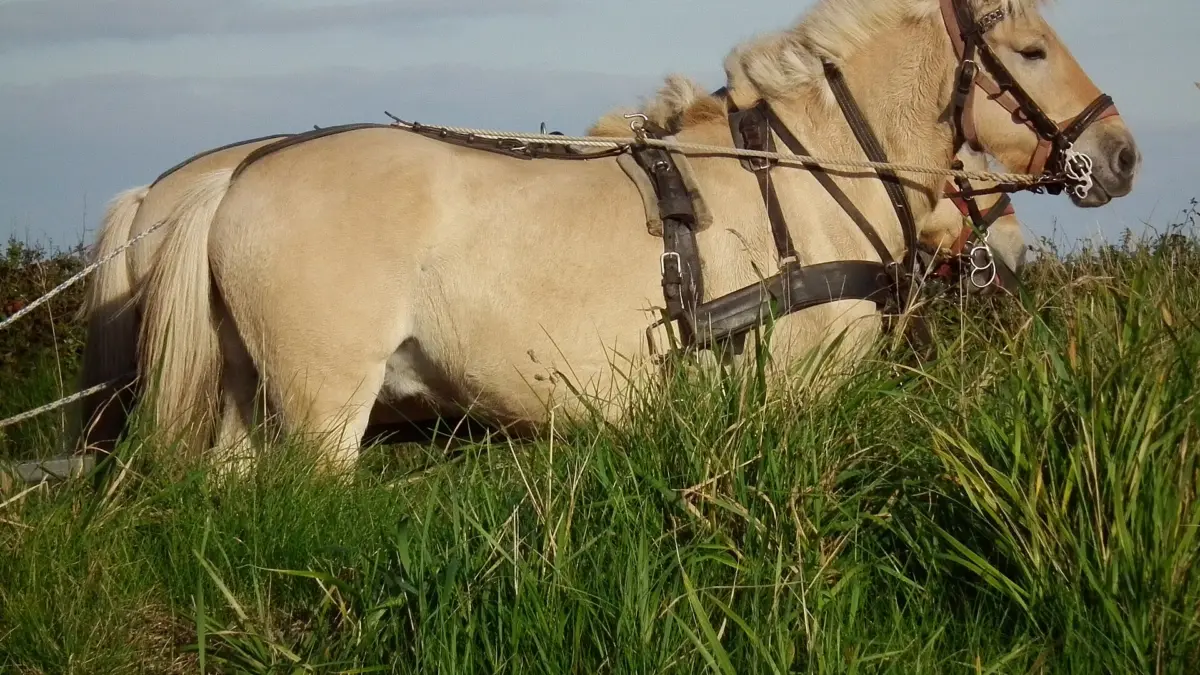
Maddie looked down at the sandwich bag in her hands. Inside it was the back of a feed receipt from the co-op in Kalona, the yellow kind, and on the back of it in her grandpa’s shaky handwriting it said, “I want Maddie and the girls to take me up the hill. No hearse on the gravel. Dale.” The girls were two dun Norwegian Fjord mares named Inga and Bets. They were standing in our barn right then eating hay that Bonnie had called a waste of money every Sunday for four years.
Maddie held the bag up so her grandma could see it. “Grandma, he wrote it himself. He signed it.”
“He was on a lot of morphine, honey.”
“He knew exactly what he was writing.”
“Don’t you take that tone with me in front of Gary,” Bonnie said. She didn’t even look at the bag.
Now Maddie folded the bag in half and put it in the pocket of her coat. She is sixteen. She has never once let that woman see her cry, not when Jason moved out, not when Bonnie skipped her confirmation because it was at my church instead of theirs, not ever. She wasn’t going to start at a table in a funeral home.
Gary ran through the rest of it. Visitation Wednesday night, service Thursday at ten at Sugar Creek Mennonite, burial after at the old cemetery on the ridge where four generations of Brennemans were already lying. The package came to $9,800 with the vault, the casket, the flowers and the hearse. Bonnie wrote the check right there at the table without looking at the number. She had the checkbook in her purse the whole time.
Then she capped her pen and said the part I’d been waiting for since Dale passed.
“And after the funeral, those horses go on the sale bill.”
Jason looked up. “Mom.”
“I’m not feeding two horses and a girl’s hobby on a widow’s Social Security, Jason. Jim Lindquist is doing the estate sale in March with the machinery. They’ll bring something. Maybe somebody’s fool enough to pay what your father paid.”
Maddie’s hand found my knee under the table. That was all. Just her hand, squeezing once.
I could have said plenty. I wanted to. I wanted to tell Bonnie that her husband had paid for every bale those mares ate, and that he had paid for it gladly, and that he had told me so himself in the hospice room with the oxygen hissing in his nose. But I’m the ex-daughter-in-law. I’ve been the ex for five years now. Bonnie was his wife for fifty-two of them. I was there for the casket binder because Dale had asked for me to be there, and because Maddie needed a ride, and for no other reason anybody at that table would have accepted.
So I said, “Thank you, Gary. Thursday at ten,” and I stood up, and Maddie stood up with me.
Out in the parking lot it had started to drizzle. Maddie got in my car and buckled her seatbelt and stared straight ahead through the windshield wipers. I waited until we were past the Casey’s on the edge of town before I said anything.
“You okay?”
“She can’t sell them,” Maddie said. “Can she?”
“I don’t know, baby. I really don’t.”
That was the truth. I didn’t know whose name was on the paperwork for those mares. Dale had paid for them, and Dale had kept them at our place, and Dale had bought the harness and fixed up the wagon, but I had never once seen a bill of sale. Farm people around here don’t always do paperwork between family. You shake on it and you go home.
We drove the rest of the way in quiet. When we got home, Maddie went straight to the barn in her good funeral-home clothes and didn’t come back in for supper. I took a plate out to her around seven. She was sitting on an overturned bucket in Inga’s stall with a curry comb in her lap, not combing anything. Bets had her head over the stall divider, chewing on Maddie’s hair.
“Grandpa said she’d fight it,” Maddie said, without looking up.
“He said that to you?”
“He said, ‘Grandma’s going to fight it, and you let her. Just have the girls ready.’ That’s what he said. That was the last thing he said to me that made any sense.”
I set the plate down on the hay bale next to her and sat on the bale. Bets reached over and tried to eat my sleeve.
“Then I guess we have them ready,” I said.
People around here who know the story always want to start it at the funeral, because that’s the part everybody saw. But it really starts four years earlier, on a Wednesday in March at the Kalona sale barn, which is about the only place in Iowa where you can buy a horse, a buggy, a box of canning jars and a pie in the same afternoon.
Dale took Maddie to the sale every couple of months from the time she was seven. He didn’t buy much. Mostly he liked to sit in the bleachers with a cup of coffee and a cinnamon roll and tell her about every horse that came through the ring, who had bred it and who had ruined it and who had sold the last one just like it for twice the money in 1988. Maddie loved it. She’d come home smelling like sawdust and horse manure with powdered sugar on her coat, talking a mile a minute about Belgians and Percherons and something called a Haflinger.
That March day the last lot was a pair of little dun mares nobody wanted. They were short and thick, about the size of a big pony, with that two-tone mane Fjords have, black down the middle and cream on the outside, cut short so it stood straight up like a brush. They’d come out of an Amish family’s estate near Riverside. They were broke to drive single and double, eight and nine years old, and they had a little bit of a reputation for being stubborn, which in a Fjord means they were smart.
The auctioneer opened them at three thousand for the pair. Nothing. Twenty-five hundred. Nothing. He came down to two thousand and looked out at the crowd like he was personally embarrassed. Somebody in the back said “dog food” not quite under his breath, and a couple of men laughed.
Maddie told me later that she grabbed her grandpa’s arm and said, “Grandpa, they’re going to the killers.”
“Nah,” Dale said. “Nobody’s going to the killers today.”
He put his hand up at fifteen hundred. The auctioneer about fell off his stool. Nobody else bid. Dale paid cash at the office window, and he and Maddie led those two mares out to his old stock trailer in the parking lot with Maddie holding both lead ropes and grinning like she’d won the lottery.
He called me from the truck.
“Dana, how do you feel about a couple of horses in your barn?”
“Dale, what did you do?”
“Well, I didn’t have room at our place,” he said. “And Bonnie doesn’t know yet.”
Bonnie found out at Sunday dinner. I wasn’t there, because by then Jason and I were already separated and I wasn’t invited to Sunday dinners anymore. But Maddie was there, and Maddie told me every word.
“Fifteen hundred dollars,” Bonnie had said, setting the potatoes down hard enough to rattle the gravy boat. “On two horses we can’t use, for a girl who’ll be bored of them by summer. That’s a waste of good hay money, Dale.”
And Dale, who had been married to that woman since 1972 and knew exactly where all her soft spots and hard spots were, buttered his roll and said, “Hay’s cheap, Bon. Granddaughters aren’t.”
She said it every Sunday after that. Waste of good hay money. She said it when Dale bought the harness from a Mennonite man in Wellman for six hundred dollars. She said it when he spent all of one winter in his shop sanding down an old green John Deere running gear and building a wooden wagon bed on top of it, with a spring seat he’d found at a farm sale and reupholstered himself in green vinyl. She said it at Maddie’s thirteenth birthday and at her fourteenth. She said it the Christmas that Dale gave Maddie a pair of real leather driving gloves. By the end it wasn’t even mean anymore, exactly. It was just a thing Bonnie said, like other people say “bless you” when you sneeze.
And every Sunday, Dale came over to my place after church and dinner, and he and Maddie hitched Inga and Bets to that green wagon, and they drove the gravel roads for two hours.
I’d watch them pull out of the yard from my kitchen window. Dale on the right side of the seat with his feed cap on and his arm across the back. Maddie on the left with the lines. Those little mares trotting along with their ears up, the wagon rattling, and Dale pointing at things in the fields. They’d go south past the Graber place and down to the creek bridge and back up the long way by the township hall. People waved at them. Old Elmer Graber started coming out to his mailbox every Sunday at two-thirty just to watch them go by.
Dale taught her to drive the way he’d been taught by his own father. “You don’t hold the lines like you’re hanging onto a rope,” he’d tell her. “You hold them like you’re carrying a bird. Light. They feel everything you do, all the way down to their mouths.” Maddie would come home and practice on me with a pair of baling twine strings tied to the kitchen chairs.
Sometimes on those drives he told her stories. Most of them were about horses, and a lot of them she’d heard before. But there was one he told her the summer she was fifteen, when they’d taken the long way around and come past the bottom of Cemetery Hill.
“That’s where we took my grandpa up,” Dale said, pointing with his chin. “Nineteen sixty-one. Dad hitched our team and we hauled him up in the hay wagon. Rained like the devil that day too. I was eleven years old, sitting in the back with my hand on the box so it wouldn’t slide.”
“Did you cry?” Maddie asked him.
“Bawled the whole way up,” Dale said. “So did Dad. The horses didn’t, though. Horses are good at funerals. They just keep walking.”
The doctors found the cancer in October. It was in his pancreas, and it had already gone to his liver, and the young doctor at the University hospital in Iowa City had a way of saying “months” that made it clear he meant not very many of them. Three, he said. Maybe a little more.
Dale got five weeks.
Bonnie did what Bonnie does, which is organize. She had a spiral notebook for medications and another one for visitors and a third one for casseroles, and she called every one of their friends from church and told them which nights to bring supper and what not to bring because Dale couldn’t keep down anything spicy. She called the hospice people. She called Jim Lindquist, the lawyer in Washington who’d done their wills back in 2009, and had him come out to the house to “go over things.” She did not cry in front of anybody. I’m sure she cried somewhere. I just never saw it, and I don’t think Dale did either.
I’ll say this for her. She never once kept me away. I was a nurse on nights at the hospital in Washington, and I’d stop at their place on my way home in the morning to check his lines and flush his port and help get him turned. Bonnie would have coffee ready at the counter. We wouldn’t talk much. She’d ask me how his color looked, and I’d tell her the truth, and she’d nod and write something in the notebook.
Maddie went over every day after school. She’d sit on the edge of the hospital bed they’d put in the living room and tell her grandpa about the mares. How Bets had figured out how to open the latch on the grain bin again. How Inga had a little bit of a cough that turned out to be nothing. How the farrier said their feet were the best-looking feet in the county. Dale would listen with his eyes closed and smile.
The second week of November he had a good afternoon. That happens sometimes near the end. They wake up clear and hungry and talk like they’ve been away on a trip. He asked Maddie for a pen and his reading glasses. She found the glasses in his shirt pocket, but she couldn’t find a pen anywhere except the one in Bonnie’s medication notebook, and you didn’t touch the medication notebook. So she dug around in his jacket on the coat hook and came back with a yellow co-op receipt and a carpenter’s pencil.
He wrote it slowly, propped up on two pillows, with the receipt on top of a Farm Journal magazine. Then he signed it and handed it to her.
“That’s for Grandma,” he said. “But you hang onto it.”
That night, when Maddie had gone home and Bonnie had gone to bed, I was alone with him for a while, checking his pump. He opened his eyes and looked at me.
“Dana,” he said. “Bonnie’s going to fight it.”
“Fight what, Dale?”
“The girls. The hill. All of it.” He swallowed and it took him a long time. “She’s going to fight it because she’s scared to death and she doesn’t know what else to do with her hands. You let her. Don’t you argue with her. You hear me? Just have them ready.”
I said I would. He went back to sleep. Nine days later, on a Friday morning a little before six, with Maddie holding one hand and Bonnie holding the other, he died.
Jason called me Tuesday night, the day after the funeral home. He doesn’t call me much anymore. When he does it’s usually about money for Maddie’s braces or who’s taking her to the dentist, and he gets right to the point. This time he didn’t. He talked about the weather for a minute and then asked how Maddie was doing, and then he got quiet on the line.
“Mom’s not doing great,” he finally said.
“I know, Jason. Nobody would be.”
“She’s been up all night going through Dad’s desk. She’s got every bill he ever paid sorted into piles on the dining room table.” He sighed. “Look. I know what Dad wrote on that receipt. I’m not saying he didn’t mean it. But I’ve got to live with her after this, Dana. Carol lives in Des Moines. I’m the one who’s fifteen minutes away.”
“I’m not asking you to do anything.”
“I just don’t want a scene on Thursday. That’s all I’m saying. Not at Dad’s funeral.”
“There won’t be a scene,” I said. And I meant it.
After he hung up, I sat at the kitchen table for a while and then did something I probably shouldn’t have. I called Jim Lindquist’s office. It was after seven, so I figured I’d get the machine, but Jim picked up himself. He’s about seventy and he still answers his own phone at night, which tells you most of what you need to know about him.
I told him who I was, which he already knew, and I asked him straight out who owned the two Fjord mares in my barn.
“Dana,” he said, “you know I can’t talk about Dale’s estate with you before I sit down with Bonnie and the family. That’s not me being difficult. That’s the law.”
“I understand.”
There was a little pause on the line. I could hear him tapping a pen on something.
“But if I were Maddie,” he said, “I wouldn’t load those horses on anybody’s trailer just yet. Not for any sale. You have a good night now.”
I sat there holding the phone for a long time after that.
The visitation was Wednesday evening at Voss. Gary had done what Bonnie asked. Dale’s driving harness was laid over a wooden stand next to the casket, the leather oiled and the brass buckles shined, with a little card next to it that just said “Inga and Bets.” I don’t know who wrote the card. Gary said it wasn’t him.
Half the county came through the line. Old farmers in their good coats, women from Bonnie’s quilting circle, the young guys from the co-op where Dale had bought feed for forty years. A surprising number of them stopped to talk to Maddie, not Bonnie. They told her they used to see her and her grandpa on the gravel on Sunday afternoons. One man I’d never met said he’d timed his trip to the elevator so he could pass them on the creek road.
Elmer Graber came through near the end in a brown suit that must have been forty years old. He held Maddie’s hand in both of his.
“Two-thirty,” he said, and his chin shook. “I’m going to miss two-thirty.”
The weather service had a flood watch out for Thursday. The rain started Wednesday night around nine and came down steady all night, the kind of cold November rain that doesn’t stop and doesn’t let up and gets into everything. By morning the gauge on my porch post said three inches. The ditches along our road were running full.
I had been scheduled to work Wednesday night. I traded with a girl named Kristen who owed me two shifts from the summer, and I didn’t sleep much anyway. Around four in the morning I heard the back door. When I looked out the kitchen window, the barn light was on.
Maddie had the mares cross-tied in the alley and was washing them with warm water from the bucket heater, one leg at a time, in her coveralls and her grandpa’s old feed cap. She didn’t look surprised to see me.
“Have them ready anyway,” she said. “That’s what he said, so that’s what I’m doing.”
So I got the other bucket. We washed them both and dried them with old towels and a hair dryer plugged into the extension cord. Maddie braided their manes the way Dale had shown her, short tight braids along the crest with a little bit of black ribbon worked into each one. I don’t know where she got the ribbon. I wiped down the green wagon with Murphy’s Oil Soap and a rag while she oiled the harness, the spare set Dale had kept at our place, which was older and plainer than the one at the funeral home but fit them better.
Around six-thirty, Elmer Graber pulled in with his flatbed and his gooseneck stock trailer. I hadn’t called him. Maddie had.
“Figured you’d need a hand with the wagon,” he said, like he showed up to people’s barns before daylight every week.
He and I got the wagon up on his flatbed with a come-along and a lot of grunting. Maddie loaded Inga and Bets in the stock trailer. They walked right in, both of them, like they’d been waiting for it. We pulled out of the yard with my car following his truck, and we drove the six miles over to Cemetery Hill with the windshield wipers going as fast as they would go.
Cemetery Hill is a mile of gravel road straight up off the blacktop. The cemetery is on top of the ridge, an old Mennonite burial ground with a white wooden fence and a row of cedars and about two hundred stones, some of them so old you can’t read the names anymore. Four generations of Brennemans are buried up there. The road is narrow and steep, with ditches on both sides, and the county grades it twice a year whether it needs it or not.
At the bottom of the hill there’s a little patch of mowed grass next to the township sign. We parked there. Elmer unloaded the wagon and helped Maddie hitch the mares, and then he stood back by his truck with his hands in his coat pockets, getting rained on.
My phone buzzed. It was a text from Jason.
“Mom heard you have the horses at the hill. Please don’t do this today.”
I typed back, “We are parked in the grass at the bottom. We’re not in anybody’s way. That’s all.” Then I put the phone in my pocket and didn’t look at it again.
We went to the service. Elmer said he’d stay with the mares, and he did, the whole time, standing out there in the rain like a fence post.
Sugar Creek Mennonite is a plain white church with clear glass windows and wooden pews that seat about three hundred. It was full. People stood along the back wall and out into the entryway. Dale’s casket was up front, closed, with a spray of white mums and wheat on top that Bonnie had picked out. Bonnie sat in the front pew with Jason on one side and Carol on the other. Maddie and I sat about six rows back, on the aisle.
Pastor Ken Gingerich did the sermon. He’d known Dale for thirty years and he talked about him the way you talk about somebody you actually liked, which isn’t always the case at funerals. He talked about Dale serving on the church council and fixing the furnace for free every winter. Then he talked about the Sunday drives.
“Some of you saw them,” he said. “Dale and his granddaughter on that green wagon, with those two little yellow horses. I saw them more Sundays than I can count. And I’ll be honest with you, I don’t think I ever saw Dale Brenneman look happier than he did on that wagon seat, not even the day the new furnace fired up on the first try.”
People laughed a little at that. I saw Bonnie’s shoulders move. I couldn’t tell if she was laughing or crying.
During the last hymn, Maddie touched my arm. We slipped out the side door while everybody was standing and singing “Precious Lord, Take My Hand,” and we drove the six miles back to the bottom of the hill in the rain. Elmer was right where we’d left him. The mares were wet and steaming and calm. Maddie stood at their heads in her good black coat, with the lines in her hands and the leather gloves Dale had given her on her fingers.
We waited.
A little after eleven, we saw the headlights. The procession came down the blacktop from the church, slow, with Gary’s black Cadillac hearse in front and a long line of cars behind it, every one of them with its lights on and flashers going. There must have been forty cars. They came over the rise and down toward the bottom of the hill, and the hearse put on its blinker and turned onto the gravel.
It made maybe three hundred feet.
Then the back tires started to spin. You could hear it from where we were standing, that high whine and the gravel spitting out behind. The driver backed off and tried again, and the back end of the hearse slid sideways, real slow, the way a car does on ice. It slid until the back wheels were down in the ditch on the right side and the whole thing sat tipped at an angle with its nose pointed up the hill.
The driver got out. He was a young man in a black suit, one of Gary’s nephews, and he stood next to the hearse in the rain with his hands on his hips, looking at the back tire, which was buried to the hubcap in mud.
Behind him, forty cars sat on the blacktop with their flashers blinking.
The passenger door of the first car opened, and Bonnie got out under a black umbrella.
She looked up the hill, at the hearse in the ditch. Then she turned and looked down at the bottom, at the township sign, where my daughter was standing with two wet dun mares hitched to a green wagon.
Nobody said a word for a long time.
Jason jumped out of the car behind her. “Mom. Mom, wait.”
She didn’t wait. Bonnie walked down the gravel toward us in her funeral shoes, fast, straight through the mud, with forty cars of people watching. She didn’t go around the puddles. She stopped in front of the team. And she reached out and laid her hand flat on Inga’s wet neck.
She stood there like that for a long time. Inga turned her head and blew warm air on Bonnie’s coat sleeve, the way she does with people she likes. Bets just stood there dripping.
“He told you to have them ready,” Bonnie said. She wasn’t looking at Maddie. She was looking at the horse. “Didn’t he.”
“Yes, ma’am,” Maddie said.
“That stubborn old man.” Bonnie’s voice cracked right down the middle. “Fifty-two years, and he still had to have the last word.”
She turned around. Gary had come down from the second car by then, holding his own umbrella, his good shoes ruined. Jason was right behind him, and behind Jason half the procession had gotten out of their cars and was standing on the blacktop in the rain.
“Gary,” Bonnie said. “Bring him down here. He’s going up the hill on the wagon.”
Gary didn’t argue. I don’t think it ever crossed his mind to argue. He just nodded and turned around and said something to the pallbearers.
There were six of them. Jason and his cousin Mark and four of Dale’s grandsons and nephews. They opened the back of the hearse where it sat crooked in the ditch, and they slid Dale’s casket out on its rollers and lifted it, and they carried it down the gravel road to the bottom of the hill through the mud, slipping and catching each other. Jason was on the front left corner. When they got to the wagon, he looked at me over the top of the casket. I don’t know what that look meant exactly. I’ve thought about it a lot since. I think it was the closest thing to a thank-you I’ve ever gotten from that man, and I’ll take it.
They set the casket in the wagon bed on top of a horse blanket Maddie had spread out. Elmer handed them two ratchet straps and they snugged it down so it wouldn’t slide, the same thing Dale had done for his own grandfather with his hand in 1961.
Maddie climbed up onto the left side of the seat. She gathered the lines.
Bonnie looked at the wagon seat. Then she looked at me.
“I’m riding up front,” she said. “If that’s all right with her.”
Maddie scooted over to make room. Elmer and I helped Bonnie up the step, which was not easy in a long black coat and church shoes. She sat down on the right side of the seat, Dale’s side, and she opened her umbrella and held it out over the both of them.
Maddie clucked once.
Inga and Bets leaned into their collars together, and the green wagon rolled forward, and they started up Cemetery Hill.
I walked behind the wagon. So did everybody else. You couldn’t drive up that road after the hearse had slid, not with forty cars and that much mud, so people just got out and walked. Old men with canes. Women in skirts and nylons, holding their shoes. Kids. Bonnie’s whole quilting circle under a cluster of umbrellas. Pastor Ken with his Bible inside his coat to keep it dry. When I looked back from about halfway up, there was a line of people stretching down the gravel all the way to the blacktop.
The mares never slipped once. They walked the whole mile with their heads low, picking their feet up and setting them down careful in the mud, steady as a clock. Maddie held the lines light, like she was carrying a bird. Bonnie held the umbrella over both of them. I noticed it was tipped so far toward Maddie that the rain was running right down the back of Bonnie’s coat, and she didn’t seem to care.
At the top, Maddie drove the team through the cemetery gate and stopped them at the edge of the plot, next to the grave the township boys had dug the day before. She set the brake. The pallbearers lifted Dale down. Pastor Ken read the twenty-third psalm with the rain running off the end of his nose, and then he read something else that I don’t remember, and then they lowered the casket while three hundred people stood around in the wet grass with no umbrellas left to share.
Bonnie stood next to Maddie the whole time. I saw her reach over and take Maddie’s hand. Maddie let her. They stood there holding hands until it was over, and then for a while after that, until the township boys started looking at their shovels.
The luncheon was in the church basement afterward. Ham sandwiches on buns, three kinds of Jell-O salad, potato chips and coffee in the big percolator, same as every Mennonite funeral I’ve ever been to. People came down the stairs soaked to the skin and stood around the heat registers steaming like the horses had. Bonnie sat at the head table and didn’t eat much. People kept coming up to her and saying it was the most beautiful funeral they’d ever seen. She’d nod and say thank you and look at her plate.
Elmer took the mares home in his trailer while we were at the luncheon. When Maddie and I got home around three, they were in their stalls, rubbed down and blanketed with hay in front of them. He’d even hung up the harness.
The will reading was the next Tuesday, at Jim Lindquist’s office upstairs over the old bank building on the square in Washington. Jim had asked for Bonnie, Jason, Carol, and to my surprise, me and Maddie.
“Dale asked that the two of you be here,” Jim said, when we came in. “He was specific about it.”
Bonnie was already sitting in a leather chair by the window. She looked at us when we walked in, and she nodded, and that was all. But she didn’t look surprised.
Most of it was what you’d expect. The house and the 240 acres went to Bonnie for her lifetime and then to Jason and Carol. There were some bequests to the church and the Mennonite relief sale. The machinery would be sold in March and the money put into Bonnie’s account. Jim read through it all in his flat lawyer voice while the radiator clanked.
Then he took off his glasses and picked up a second, shorter document.
“This is a codicil,” he said. “An amendment to the will. Dale signed it on October twenty-first, in his living room, with Elmer Graber and my paralegal as witnesses. It’s valid under Iowa law. I’ll read it exactly as written.”
He put his glasses back on.
“I give my team of Norwegian Fjord mares, known as Inga and Bets, together with their harness, my green wagon and the spring seat, to my granddaughter, Madeline Brenneman. I further give the sum of ten thousand dollars to Dana Brenneman, as custodian for Madeline under the Iowa Uniform Transfers to Minors Act, to be used for the care and feeding of said horses until Madeline turns twenty-one. It is my wish that nobody tell my granddaughter she can’t afford hay.”
Nobody said anything. The radiator clanked again.
Maddie was holding my hand so hard it hurt.
Bonnie was looking out the window at the courthouse across the square. After a while she said, “He never told me about that.”
“No,” Jim said. “He told me you’d fight it.”
And Bonnie laughed. It wasn’t much, just a short little sound through her nose. But it was the first time I’d heard her laugh since October.
“He always did get his way,” she said. Then she turned to Jim. “Take them off the sale bill. They were never mine to put on there anyhow, were they.”
“No, ma’am,” Jim said. “They weren’t.”
That was a year ago this month.
Bonnie still calls those mares a waste of good hay money. She says it about every Sunday. She said it last week when Bets got into the grain bin again and ate half a bag of oats and had to have the vet out for a bellyache, which cost three hundred and eighty dollars that came out of the ten thousand. She says it the way she always did, like other people say bless you. Maddie doesn’t even hear it anymore.
But she rides along most Sundays now.
She comes over after church dinner in her slacks and her good wool coat and a scarf tied over her hair, and Maddie helps her up the step, and she sits on the right side of the wagon seat. Dale’s side. Maddie drives. They go south past the Graber place and down to the creek bridge and back up the long way by the township hall. Bonnie points at things in the fields and tells Maddie who used to farm them and who ruined them and who sold out for twice what they were worth in 1988. Some of the stories are even true.
Elmer Graber still comes out to his mailbox at two-thirty.
Jason hasn’t come along yet. He says he’ll come in the spring. Maddie saved him a spot in the back of the wagon anyway, next to the horse blanket.
She keeps the feed receipt in the glove box of the truck she bought this summer with her own money from waitressing at the café in Kalona. It’s still in the sandwich bag. There’s a little bit of mud on one corner from that morning at the bottom of the hill, and she won’t let anybody wipe it off.