“My dad didn’t ask you to come with me because he wanted me to have a date.”
Georgia said it quietly. She was sitting in the passenger seat of my uncle’s old Buick with the door half open, one silver shoe already on the asphalt of the parking lot. The music from the banquet hall was thumping through the walls. Kids in tuxedos and long dresses were laughing their way toward the entrance in little groups.
She didn’t look at any of them.
She looked at me.
“He chose you for another reason,” she said.
I’d been smiling. Trying to make the night less awkward. I stopped.
“What do you mean?”
She glanced toward the building. Then back at me.
“And he didn’t set this up because he was worried about my prom,” she said.
I stared at her.
Until that moment, I’d believed I was doing my boss a simple favor. Put on a suit. Drive his daughter to a dance. Be polite. Get paid. Go home.
But the look on Georgia’s face told me there was something much more serious going on.
“Georgia,” I said. “What are you talking about?”
She took a breath.
And I sat there with my hands on the steering wheel and realized that Sheldon had never told me the real reason he wanted me there.
I was nineteen when I started working for Sheldon Hollis.
At the time, that job meant everything to me.
Hollis Building Supply sits on the edge of town, on Route 4, between a tire place and a church that used to be a Pizza Hut. Lumber yard out back. Hardware store up front. Two delivery trucks with HOLLIS painted on the doors in green letters. Sheldon’s father started it in 1979. Sheldon took it over when he was thirty.
I worked the yard. Loading lumber. Cutting plywood. Running deliveries to contractors all over the county. Sometimes I worked the register when Doris, who’d been the cashier since before I was born, needed a break.
It was hard work. Hot in summer. Freezing in winter. My hands were always cut up.
I loved it anyway.
My mother was raising my little sister on her own.
Mia was eleven. Smart and loud and always reading. Mom worked at the hospital laundry, folding sheets and scrubs for eight hours a night, standing on concrete. She came home every morning at seven with her feet swollen and her back aching.
Money was always tight.
Some months, we barely had enough for groceries and the electric bill. I remember a winter when we kept the heat at sixty-two degrees and all three of us slept in the living room under every blanket we owned, because it was the only room with a space heater.
So whenever I got paid, I gave Mom part of my check.
Sometimes it went to the electric company. Sometimes it paid for Mia’s school supplies. Sometimes it just put food on the table.
Mom hated taking it.
“You should be saving this, Brent,” she’d say, holding the envelope like it was hot. “For school. For a car. For your life.”
“This is my life,” I’d tell her.
She’d look at me for a long time. Then she’d hug me so hard my ribs hurt. And she’d take the envelope.
I couldn’t afford to lose that job.
So I took it seriously.
I came in early. I almost never missed a shift. I never complained when Sheldon asked me to stay late. If a delivery needed to go out, I took it. If someone had to close up after everyone else went home, I raised my hand.
After about a year, Sheldon trusted me with nearly everything. He gave me a key to the yard gate. He let me drive the big truck. He started calling me when something went wrong instead of calling his manager, Phil, who’d been there twenty years and mostly sat in the office eating sunflower seeds.
I thought he appreciated my work.
And I believed we had a good relationship.
There was one day in particular I thought about later.
It was in February. A contractor named Dale Kimbrough came into the store drunk at two in the afternoon. He’d been fighting with Sheldon about an unpaid account for months. He walked straight up to the register and started yelling at Doris. Doris is sixty-eight. She’s five feet tall.
He slammed his fist on the counter so hard the pens jumped out of their cup.
I was stocking shelves in aisle three.
I didn’t think about it. I just walked up to the counter and stood next to Doris. Not in front of her. Next to her. Close enough that he’d have to deal with both of us.
“Mr. Kimbrough,” I said. “Sheldon’s on his way up from the yard. Why don’t you come sit down in the office and wait for him? I’ll get you a coffee.”
He turned on me. He was big. Bigger than me. Red in the face. He stuck his finger in my chest.
“Who the hell are you?”
“I’m Brent,” I said. “I work the yard. Come on. Let’s get you that coffee.”
I didn’t raise my voice. I didn’t touch him. I just kept talking. Low and steady. The way I’d learned to talk a long time ago.
After a minute, his shoulders came down a little.
After two minutes, he was sitting in the office with a Styrofoam cup of coffee.
When Sheldon came up from the yard, Dale Kimbrough was crying about his divorce.
Sheldon called me into his office that afternoon. After Dale left.
He sat behind his desk and looked at me for a long time.
“Where’d you learn to do that?” he said.
I shrugged. “Do what?”
“Talk a man down like that. Most nineteen-year-olds would’ve either run or thrown a punch.”
I didn’t answer right away.
“Home, I guess,” I said.
He looked at me like he wanted to ask more.
He didn’t.
But I think, looking back, he remembered.
Then, one Friday afternoon in May, he called me into his office again.
I was covered in sawdust. I’d just finished loading a truck for a deck job out in Millbrook.
“Brent,” he said. “Shut the door. Have a seat.”
I sat down in the plastic chair across from his desk. It squeaked.
He didn’t say anything for a minute. He was rolling a pen between his fingers. He looked tired. More tired than usual. There were dark circles under his eyes.
“Can I ask you for a personal favor?” he said.
I nodded.
“Sure, boss. What do you need?”
He leaned back in his chair.
“My daughter has her senior prom tomorrow night,” he said.
I knew he had a daughter. Georgia. She was eighteen. I’d seen her around the store a handful of times. She’d come in after school sometimes to do homework in the back office. Or to borrow her dad’s credit card. Or to bring him lunch.
We’d said hi. That was about it. She seemed nice. Quiet. She always had her face in a book or her phone.
I didn’t know what any of that had to do with me.
“The boy who was supposed to take her,” Sheldon said, “backed out at the last minute.”
I wasn’t sure why he was telling me this.
Then he looked straight at me.
“I’d like you to take her instead,” he said.
For a second, I thought I’d heard him wrong.
“Me?”
“Yes. You.”
I laughed. An uncomfortable laugh. The kind you do when you don’t know what else to do.
“Sir, Georgia barely knows me.”
“That’s not a problem,” he said. “You’re a decent young man. I know I can count on you.”
I hesitated.
I’d never expected my boss to ask me something like that. It felt strange. A little embarrassing. I thought about Georgia, eighteen, getting ready for her senior prom, and her father showing up with one of his yard guys in a borrowed suit.
She was going to hate this.
Sheldon must have seen it on my face.
“Listen, Brent,” he said. “Do this for me, and I’ll make it worth your time.”
That got my attention.
I’m not proud of it. But it’s the truth.
Mom had been worrying about the bills for weeks. The car insurance was due. The landlord had raised the rent fifty dollars. Mia needed new sneakers because her old ones had a hole in the toe and she’d been stuffing it with tissue so nobody at school would notice. And she had a science fair project coming up that needed a poster board and supplies she’d been too proud to ask for.
Extra money would make a real difference.
I thought about saying no.
But Sheldon had always treated me fairly. He’d given me a job when nobody else would. He’d let me leave early the day Mia broke her arm on the monkey bars. He’d never once yelled at me, even the time I backed the truck into the gate post.
And all he was asking for was what sounded like a simple favor.
Take his daughter to prom.
How hard could it be?
“Alright,” I said finally. “I’ll do it.”
Sheldon smiled.
But it was a strange smile. Relieved. Almost too relieved.
“Good,” he said. “I knew I could depend on you.”
He stood up. He reached across the desk and shook my hand.
His hand was cold.
When I got home that night, I told Mom.
She was sitting at the kitchen table with her feet in a bucket of warm water, the way she did every evening before her shift. Mia was across from her, doing math homework and humming.
“Prom?” Mom said. She looked up at me. “With your boss’s daughter?”
“Her date canceled.”
Mom raised her eyebrows. “And he asked you?”
“I guess he trusts me.”
Mia put down her pencil. “Is she pretty?”
“Mia.”
“I’m just asking. Is she?”
I thought about Georgia. Dark hair. Big brown eyes. Glasses she pushed up on her nose when she was reading.
“I don’t know,” I said. “I guess.”
Mia grinned. “You’re blushing.”
“I’m not blushing.”
“You’re blushing so hard.”
Mom didn’t laugh.
She was looking at me with a funny expression.
“Did he say why?” she asked. “Why you, specifically?”
“He said he could count on me.”
She was quiet for a second.
“That’s all?”
“That’s all.”
She looked down at her feet in the water.
“Be careful, Brent,” she said.
“Mom, it’s a prom. What’s going to happen?”
She didn’t answer.
Later that night, she came into my room while I was trying on my suit.
It was the only one I owned. Navy blue. I’d bought it at a thrift store for my grandfather’s funeral two years before. The sleeves were a little short now. The pants were a little tight.
Mom stood in the doorway and looked at me.
“You look like your grandpa,” she said softly.
She came over and fixed my collar. She brushed some lint off my shoulder.
Then she said, “Your dad never took me to prom.”
I looked at her. She never talked about my father. He’d left when I was three. I didn’t remember him.
“He said dances were stupid,” she said. “I went with my cousin instead. I had a nice time. But I always wished somebody had wanted to take me.”
She smoothed my lapel.
“Be nice to that girl,” she said. “Whatever happens. Make sure she has a good night.”
“I will, Mom.”
She patted my chest. Twice. Then she left for work.
The next evening, I borrowed my uncle Frank’s car.
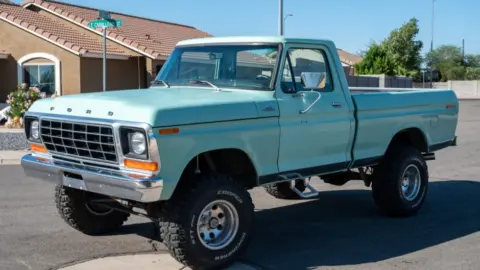
It was a 2004 Buick LeSabre the color of a Band-Aid. It smelled like cigarettes and pine air freshener. But it was clean, and it ran, and it was better than showing up in a lumber truck.
I put on my suit. I checked myself in the bathroom mirror. Then I checked again. Then once more.
Mia sat on the edge of the bathtub and watched.
“Your tie’s crooked.”
I fixed it.
“Now it’s crooked the other way.”
I fixed it again.
“Brent.”
“What?”
“You’re going to be fine,” she said. “You’re nice. Girls like nice.”
I looked at my eleven-year-old sister in her Pokémon pajamas, giving me dating advice from a bathtub.
“Thanks, Mia.”
“Bring me back a mint,” she said. “From the table. They always have mints.”
I was nervous on the drive over.
Not because I expected anything romantic to happen. I didn’t. Georgia was my boss’s daughter. She was in high school. I worked in a lumber yard. We had nothing in common.
I just didn’t want to embarrass her. Or let Sheldon down.
Sheldon’s house was on the north side of town. In one of the nicer neighborhoods. Big trees. Two-car garages. Basketball hoops in the driveways.
It wasn’t a mansion. Just a nice brick house with blue shutters and a porch swing.
When I rang the bell, Sheldon opened the door himself.
He looked unusually tense.
He was wearing jeans and a flannel shirt, like always. But he’d shaved, which he didn’t always do on Saturdays. And his eyes kept going past me. To the street. To the cars parked along the curb. Left. Right. Left again.
“Brent,” he said. “Glad you’re here.”
“Good evening, sir.”
He let me in. He closed the door behind me.
Then he locked it.
Both locks. The deadbolt and the chain.
I noticed that. I didn’t think much about it at the time. Just that it was a little strange to lock the chain when we were about to leave.
He glanced toward the staircase.
“Just make sure Georgia has a nice time tonight, alright?”
“I’ll do my best.”
He nodded. But something about his face bothered me.
He looked a lot more worried than a father setting up a last-minute prom date should look.
He looked like a man waiting for bad news.
Before I could think about it too much, Georgia appeared at the top of the stairs.
She looked beautiful.
I’m not going to pretend she didn’t. She was wearing a long dark green dress. Simple. No sparkles. Her dark hair was up, with a few pieces falling down around her face. No glasses. Silver shoes.
She looked like somebody from a movie.
But when she came down the stairs and saw me standing next to her father, her face changed.
Her smile disappeared.
For a moment, she just stared at me.
Not at my too-short suit. Not at my crooked tie.
At me. Like she was trying to figure something out.
I gave her a nervous smile.
“Hey, Georgia.”
“Hi, Brent.”
Her voice was quiet.
She glanced at her father. Something passed between them. A look I didn’t understand.
Then she looked away.
I figured she was disappointed. Her original date had canceled at the last minute, and her dad had replaced him with one of his employees.
I couldn’t blame her.
That probably wasn’t how she’d imagined her senior prom.
Sheldon insisted on taking pictures.
He got his phone out. He had us stand in front of the fireplace. Then by the stairs. Then on the front porch.
“Closer,” he said. “Brent, put your arm around her. It’s okay.”
I put my arm around her. Very lightly. Barely touching her back.
Georgia stood there and did what she was told. She barely smiled.
I tried to make things less awkward.
“Don’t worry,” I whispered out of the side of my mouth. “I’m not going to make you dance if you don’t want to.”
She gave me a small smile.
Then it was gone again.
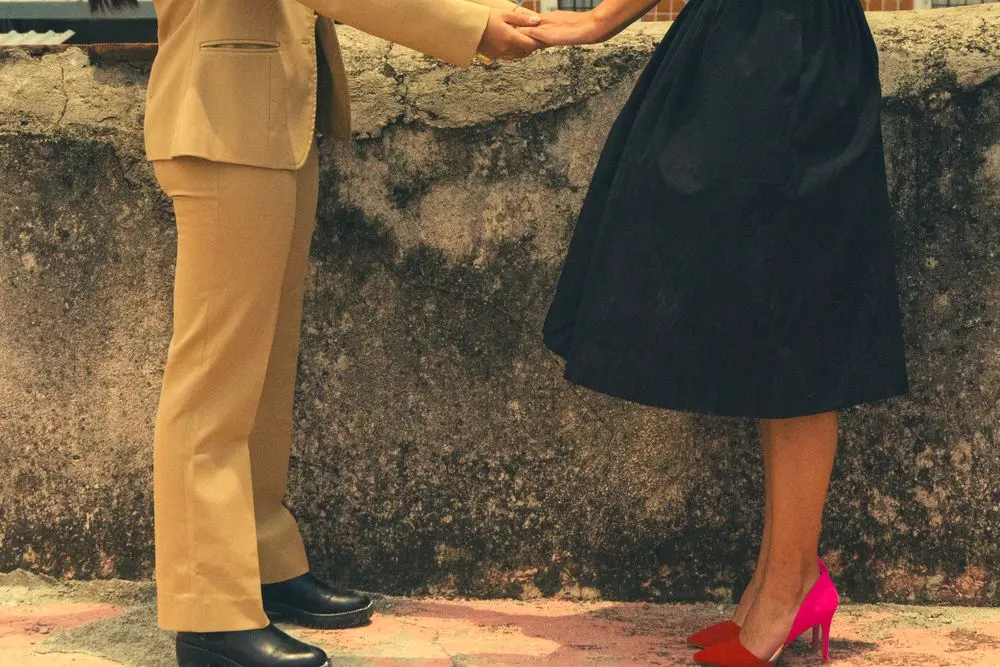
There was a corsage in the refrigerator. Sheldon had bought it. White roses with a green ribbon to match her dress. He handed it to me, and I slipped it onto her wrist, and my hands were shaking so bad I almost dropped it.
“Sorry,” I said.
“It’s fine,” she said.
Sheldon walked us to the car.
He opened Georgia’s door for her. He waited while she got in and arranged her dress.
Then he leaned down and said something to her. Very quietly. I couldn’t hear it.
She nodded.
He closed the door.
He came around to my side.
“Brent,” he said.
“Yes, sir?”
He looked at me for a long time. Like he was going to say something important.
Then he just said, “Drive safe.”
And he stepped back.
When I pulled out of the driveway, I looked in the rearview mirror.
He was standing at the end of the driveway with his hands in his pockets.
Watching the street.
The silence in the car got uncomfortable fast.
I tried.
“So. Are you excited about tonight?”
“A little.”
“Do you have a lot of friends going?”
“Yeah.”
I waited for her to say more.
She didn’t.
I tried something else.
“What kind of music do you like?”
“Pretty much anything.”
Then she turned toward the passenger window and looked outside.
I glanced over at her.
She seemed distracted. She kept checking the side mirror. And her phone. She’d look at the screen, then turn it over in her lap, then pick it up and look again a minute later.
Almost like she was waiting for something.
Or afraid of something.
I figured she was upset about the boy who canceled.
So I didn’t push.
We drove the rest of the way with the radio on low and almost no conversation. I thought about Mia’s mint. I thought about how much money Sheldon would give me. I thought about Mia’s sneakers.
The prom was at the Briarwood, a banquet hall on the other side of town, by the river. Big white building with columns. A ballroom inside with crystal chandeliers. Every wedding and quinceañera and retirement party in the county happened at the Briarwood.
The parking lot was already crowded when we got there.
Kids were arriving in groups. Laughing. Taking pictures. A stretch limo pulled up at the front door, and eight girls in sparkly dresses piled out screaming.
I found a parking space near the back. I turned off the engine.
For a moment, neither of us moved.
Then I gave Georgia an awkward smile.
“Well,” I said. “We’re here.”
She looked toward the entrance.
She didn’t say anything.
I kept going.
“I know this probably isn’t how you wanted tonight to go,” I said. “But I’ll try not to make it miserable.”
She didn’t laugh.
“Your dad must have really wanted you to come,” I added.
Georgia slowly reached for the door handle.
She opened the door.
But she didn’t get out.
She sat there with the door open and the cool May air coming in and the music thumping from the building.
Then she turned toward me.
“Brent, wait.”
That’s where we started.
“What are you talking about?” I said again.
Georgia closed the car door.
She sat back in the seat. She looked down at the corsage on her wrist. White roses. Green ribbon.
“Did my dad tell you anything?” she said. “Anything at all? About why Owen canceled?”
“Owen’s the boy?”
“Owen Patel. Yeah.”
“No. He just said he backed out last minute.”
Georgia laughed. A short, bitter little laugh.
“Of course he did,” she said.
She took her phone out of her purse.
She unlocked it. She scrolled. Then she handed it to me.
It was a photograph.
A car. A little silver Honda Civic, parked in a driveway. Every window was smashed. The windshield was a spiderweb of cracked glass. All four tires were flat.
And across the hood, in red spray paint, someone had written:
SHE’S NOT YOURS
I stared at it.
“That’s Owen’s car,” Georgia said. “Thursday night. In his parents’ driveway.”
“Who did this?”
She didn’t answer right away.
She took the phone back. She scrolled again. She handed it to me.
Another picture. A text message. From a number with no name.
Tell your little boyfriend if he shows up Saturday he’s going to need more than a new windshield.
“Owen’s parents wouldn’t let him come after that,” Georgia said quietly. “I don’t blame them. I wouldn’t have let him come either.”
She looked out the window. At the kids walking toward the building.
“His name is Colton Pierce,” she said.
She told me the story in the car.
With the door closed and the music thumping and kids laughing their way past the windows.
She’d dated Colton for almost a year. Since the beginning of junior year.
At first, he was sweet. Everybody liked him. He was on the baseball team. He had nice manners. He called her father “sir.” He brought her flowers on their one-month anniversary and their two-month anniversary and their three-month anniversary.
“My dad liked him,” Georgia said. “That’s the worst part. My dad thought he was great.”
Then things started to change.
He wanted to know where she was all the time. Who she was with. What she was doing. He’d text her thirty times in an hour if she didn’t answer.
He didn’t like her friends. He said they were a bad influence. He said they talked about her behind her back.
He went through her phone. He made her share her location.
He got angry if she talked to other boys. Any boys. Even her lab partner in chemistry.
“He never hit me,” Georgia said. She said it fast. Like she’d had to say it many times before. “Everybody always asks that first. He never hit me.”
She looked down at her hands.
“He grabbed my arm once,” she said. “Hard. In the school parking lot. I had bruises for a week. I told my dad I hit it on a locker.”
She broke up with him in January.
It took her three tries. The first two times, he cried and begged and promised he’d change. And she believed him.
The third time, she told him over text. Because she was too scared to do it in person.
That’s when it got bad.
He showed up at her house at two in the morning, pounding on the door.
He sat outside in his truck for hours, watching her bedroom window.
He made fake accounts to message her after she blocked him. Dozens of them.
He told everybody at school that she’d cheated on him. That she was crazy. That she was a liar.
He showed up at the hardware store one afternoon while she was doing homework in the back office. Sheldon walked him out to the parking lot himself.
“That’s when my dad found out how bad it was,” Georgia said. “He saw his face. He told me later he’d never seen anybody look at someone like that.”
In March, they went to court.
The judge granted a protective order. Colton wasn’t allowed within five hundred feet of Georgia. Wasn’t allowed to contact her. Wasn’t allowed at her house or the store.
The school moved his classes so they wouldn’t be in the same hallways. They told him he couldn’t come to prom.
“For a while, it worked,” Georgia said. “He stopped. Mostly. I’d see his truck sometimes. Driving past the house. Not stopping. Just driving past. But nothing I could prove.”
She took a breath.
“Then Owen asked me to prom,” she said. “Three weeks ago. In the cafeteria. With a big sign. Everybody saw.”
I looked down at the phone in my hand. At the smashed Civic. SHE’S NOT YOURS.
“And now he’s mad,” I said.
“Now he’s mad,” Georgia said.
“So why me?” I said.
It came out sharper than I meant it to. I couldn’t help it. I was sitting in a borrowed car in a borrowed suit, holding a picture of a car somebody had smashed because a boy asked a girl to a dance.
And my boss had sent me here without telling me.
“Why’d your dad pick me?” I said. “I’m not a bodyguard. I’m not a cop. I’m not even that big. I’m five-ten. I weigh a hundred and sixty pounds. If this guy’s on the baseball team—”
“He’s six-two,” Georgia said.
“Great. That’s great.”
She looked at me.
For the first time all night, she really looked at me. Not past me. Not out the window. At me.
“He didn’t pick you because you’re big,” she said.
“Then why?”
She was quiet for a second.
“Because of Dale Kimbrough,” she said.
I blinked. “What?”
“He told me about it. That night. At dinner. He said this nineteen-year-old kid from the yard walked up to a drunk man twice his size who was screaming at Doris. And instead of fighting him or running away, he just stood next to her. And talked. Real calm. Until the guy sat down and drank a coffee and cried about his wife.”
She paused.
“He talked about it for like twenty minutes,” she said. “He said he’d never seen anything like it. He said, ‘That kid knows how to keep people safe without making it worse.’”
I didn’t say anything.
I didn’t know what to say.
“And there’s something else,” Georgia said.
She hesitated.
“He heard you,” she said. “A couple months ago. In the break room. You were talking to Doris. About your mom.”
My stomach dropped.
I knew exactly what conversation she meant.
It was a slow afternoon in March. Raining. Doris and I were eating lunch in the break room. She’d asked me about my family. I’d told her a little. More than I usually told anybody.
I didn’t know Sheldon was in the hallway.
“He said you told Doris about Mia’s dad,” Georgia said quietly. “About what he used to do. And about the night you stood in the doorway.”
I need to tell you about Ray.
Ray Dunn was Mia’s father. Not mine. Mom met him when I was six. He moved in when I was seven. Mia was born when I was eight.
At first, he was fine. He fixed things around the house. He took me fishing once. He made pancakes on Sundays.
Then he started drinking more.
Then he started yelling.
Then he started breaking things.
He never hit me. He mostly ignored me.
He hit Mom.
Not every day. Not every week. But enough. Enough that I learned to listen to the sound of his truck in the driveway and know from the way he slammed the door what kind of night it was going to be.
Enough that I learned to take Mia into my room and put on music and read her stories with the volume turned up.
Enough that I learned to talk.
Low. Calm. Steady.
“Hey, Ray. You hungry? Mom made meatloaf. You want me to heat some up?”
Sometimes it worked. Sometimes he’d sit down and eat and fall asleep on the couch.
Sometimes it didn’t.
When I was thirteen, it didn’t.
He had Mom backed up against the kitchen counter. He had his hand around her wrist. Mia was five. She was standing in the hallway in her nightgown, crying.
I don’t know what made me do it.
I walked into the kitchen. I didn’t say anything. I just walked over and stood next to Mom. Right next to her. Shoulder to shoulder.
And I looked at Ray.
“You need to let go of her,” I said.
I said it quietly. My voice was shaking. My legs were shaking. I thought I was going to throw up.
But I said it.
He stared at me.
He was so much bigger than me. I was thirteen. I was skinny. I weighed maybe ninety pounds.
He could have done anything.
He let go of her wrist.
He walked out the back door. He got in his truck. He drove away.
Mom called the police that night. For the first time.
She got a protective order the next week.
Ray never came back.
I’d never told anybody that whole story except Doris. Not my friends. Not my teachers. Not even my uncle Frank.
And now my boss’s daughter was sitting in a Buick in a banquet hall parking lot, telling it back to me.
“He said you’ve done this before,” Georgia said softly. “Stood between somebody and something bad. Without starting a fight. Without making it worse.”
She looked down at her hands.
“He said that’s what I needed tonight,” she said. “Not somebody tough. Somebody who knows how to stay calm when everybody else panics.”
I stared out the windshield.
At the white columns. At the chandeliers glowing through the tall windows. At the kids in their tuxedos and sparkly dresses.
“He should have told me,” I said.
My voice came out rough.
“I know,” Georgia said.
“He should have told me, Georgia. He should have sat me down and told me all of it. He shouldn’t have just—offered me money and let me walk in here blind.”
“I know,” she said again. “I told him that. Last night. We had a huge fight.”
She turned toward me in the passenger seat.
“I didn’t want him to do this,” she said. “When Owen canceled, I wanted to just stay home. Skip it. It’s just a dance. It doesn’t matter.”
“Then why didn’t you?”
She was quiet for a long moment.
“Because it does matter,” she said. “To me. It’s my senior prom. I’ve been looking forward to it since freshman year. My friends are all going to be there. And Colton already took so much from me. He took a whole year. He took my friends. He took my sleep. I check my locks three times before bed now. I check my mirrors every time I drive.”
Her voice cracked.
“I didn’t want him to take this too,” she said.
“So your dad found me.”
“So my dad found you.” She wiped her eyes carefully, so her makeup wouldn’t run. “And he didn’t tell you, because he was scared you’d say no. And because he was ashamed. He’s been so ashamed this whole year. That he liked Colton. That he didn’t see it. That he let him in our house.”
She took a breath.
“He told me he’d tell you himself,” she said. “Before we left. He promised me. And then you were standing there in the hallway, and he just—he couldn’t do it.”
I thought about Sheldon at the door. Locking both locks. Looking at the street.
I thought about his cold hand when he shook mine.
I thought about him bending down to say something to Georgia in the car. And then coming around to my side and saying only, “Drive safe.”
“What did he say to you?” I asked. “When he leaned into the car.”
Georgia looked at me.
“He said, ‘Tell him. If I can’t, you tell him.’”
We sat there in silence for a while.
The music thumped. A group of boys ran past the car, laughing, one of them carrying his date’s shoes.
“You can leave,” Georgia said finally. “If you want. I mean it. I’ll call my dad. He’ll come get me. I won’t blame you. Nobody would blame you.”
I looked at her.
At the green dress. The silver shoes. The corsage I’d put on her wrist with shaking hands.
“Is the school doing anything?” I said. “Since you know he made threats?”
“There’s a police officer,” Georgia said. “Off-duty. They hire one every year. Officer Danvers. And the vice principal knows. Mr. Gutierrez. They’ve got Colton’s picture at the door. He’s not supposed to get in.”
“Not supposed to.”
“Not supposed to.”
I thought about my mother. Standing in front of the bathroom mirror the night before, fixing my collar.
Be nice to that girl. Whatever happens. Make sure she has a good night.
“I’m not leaving,” I said.
Georgia looked at me.
“I’m not your bodyguard,” I said. “I want to be clear about that. If something happens, I’m going to get a teacher, and I’m going to get Officer Danvers, and I’m going to call 911. I’m not going to be a hero.”
“Okay.”
“And I’m going to have a real conversation with your father tomorrow.”
“Okay,” she said. “That’s fair.”
“But I’m not leaving.”
She looked at me for a long time.
Then, for the first time all night, she really smiled.
It changed her whole face.
“Okay,” she said.
I got out of the car. I came around to her side. I opened her door.
She took my hand to step out. Her fingers were ice cold.
“You’re freezing,” I said.
“I’m scared,” she said simply.
“Me too,” I said.
She laughed.
We walked toward the building together.
Mr. Gutierrez was standing at the front door. A short, round man with a mustache and a clipboard. He saw Georgia, and his face changed.
“Georgia,” he said. “Good. You made it. Everything okay?”
“Everything’s okay, Mr. G.”
He looked at me.
“And you are?”
“Brent,” I said. “Brent Kowalski. I’m her date.”
He looked at me for a second longer than necessary. Then he looked at Georgia. She nodded.
“Okay,” he said. “Officer Danvers is by the side door. If you see anything, anything, you come get one of us. Right away.”
“We will.”
He stepped aside.
The ballroom was huge.
Chandeliers. Tall windows. A dance floor in the middle with colored lights flashing. A DJ on a stage playing something loud. Round tables with white tablecloths and centerpieces made of mason jars full of fairy lights.
And a table near the door with a big glass bowl of mints.
I took two. One for me. One for Mia. I put hers in my jacket pocket.
Georgia’s friends found us almost right away.
There were three of them. Priya, who was tall and loud and had a nose ring. Jasmine, who was small and quiet and wore a yellow dress. And a boy named Theo, in a purple velvet tuxedo, who hugged Georgia so hard he lifted her off the ground.
“You came,” Priya said. “Oh my God. We thought you weren’t coming.”
“I almost didn’t.”
Priya looked at me. Up and down. My thrift store suit. My too-short sleeves.
“And who’s this?”
“This is Brent,” Georgia said. “He works for my dad.”
“Hi,” I said.
Priya narrowed her eyes. “Your dad sent you a babysitter?”
Georgia hesitated.
“No,” I said. “Her dad sent her a date. I’m the date.”
Priya looked at me for a long moment.
Then she grinned.
“Okay, Brent,” she said. “Let’s see if you can dance.”
I couldn’t dance.
That became clear in about thirty seconds.
But it turns out it doesn’t matter. Nobody at prom can dance. Everybody just jumps up and down and yells the words to songs and holds their phones up and laughs.
So I jumped up and down. And I yelled the words to the songs I knew. And I laughed.
And somewhere in the middle of the third song, I looked over and saw Georgia laughing too.
Really laughing. With her head thrown back. With her arms around Priya and Jasmine, and Theo spinning in circles in his purple tuxedo.
For a few minutes, she looked like she’d forgotten all about Colton Pierce.
I hadn’t.
I kept checking the doors.
It happened at 9:40.
The DJ had just switched to a slow song. Couples were pairing up on the dance floor. Theo had grabbed Jasmine. Priya had gone to the bathroom.
Georgia looked at me.
“I don’t have to—” I started.
“Come on,” she said. “One dance.”
So we danced.
Badly. I stepped on her foot twice. She laughed both times. We swayed back and forth under the colored lights with my hand very carefully on her waist and her hand on my shoulder.
“You’re not bad,” she said.
“I’m terrible.”
“You’re terrible,” she agreed. “But you’re not bad.”
After the song, she said she needed some air.
There was a terrace off the side of the ballroom. Big glass doors leading out to a stone patio overlooking the river. String lights in the trees. A few couples were out there, talking and taking pictures.
We went out.
The air was cool. The river was dark and slow. Somewhere a frog was croaking.
Georgia leaned against the stone railing and closed her eyes.
“This is nice,” she said.
“It is.”
“Thank you, Brent. Really. For staying.”
I was about to say something back.
I don’t remember what.
Because that’s when I saw him.
He came around the side of the building. From the parking lot. Through the trees, along the path by the river. Not through the front door. Not through the side door where Officer Danvers was.
From the dark.
He was tall. Six-two, like she’d said. Broad shoulders. A baseball cap pulled low. Jeans and a gray hoodie.
No tuxedo.
He wasn’t here for the dance.
Georgia saw him a second after I did.
I felt her go completely still beside me.
“Brent,” she whispered.
He walked up the steps from the river path onto the terrace.
The couples near the doors looked over. A girl in a red dress said, “Isn’t that Colton?” Someone else said, “He’s not supposed to be here.”
Colton didn’t look at any of them.
He was looking at Georgia.
“Hey, Georgie,” he said.
He smiled. He had a nice smile. That was the scariest part. A nice, friendly, all-American smile, like he’d just bumped into her at the grocery store.
“You look really pretty tonight,” he said.
Georgia didn’t answer.
She was gripping the stone railing so hard her knuckles were white.
I’d been thinking about this moment all night.
I’d had a plan. Get a teacher. Get Officer Danvers. Call 911.
But the glass doors to the ballroom were twenty feet behind us. And Colton was ten feet in front of us. Between us and the steps.
If I ran for help, Georgia would be alone with him.
I did the only thing I knew how to do.
I took one step to the side.
Not in front of her. Next to her. Shoulder to shoulder.
Close enough that he’d have to deal with both of us.
Colton’s eyes moved to me.
For the first time, he looked at me. Really looked. My cheap suit. My skinny arms. My crooked tie.
He laughed.
“Who the hell are you?”
“I’m Brent,” I said.
My voice was shaking. I made it stop.
“Hey, Colton. You’re not supposed to be here, man. You know that. There’s a protective order.”
His smile went away.
“Do I know you?”
“No.”
“Then why don’t you mind your own business?”
He took a step closer.
Behind me, I heard the glass door open. Somebody ran inside. I heard a girl’s voice yelling, “Get Mr. G! Get the cop!”
Good.
I just had to keep him talking.
“I’m not trying to start anything,” I said. Low. Calm. Steady. The way I used to talk to Ray. “Nobody wants a fight. You want to talk to somebody, there’s a teacher coming. Mr. Gutierrez. You can talk to him.”
“I don’t want to talk to Gutierrez.” He took another step. “I want to talk to her.”
“She doesn’t want to talk to you.”
“How would you know what she wants?”
He was close now. Five feet. I could smell beer on him.
“Georgia,” he said. Past me. “Georgie, come on. Five minutes. That’s all I’m asking. Just let me talk to you. You owe me that.”
Georgia spoke.
For the first time.
Her voice was small. But it was clear.
“I don’t owe you anything, Colton.”
Something changed in his face.
I’d seen that change before. In a kitchen, when I was thirteen. The moment when a man stops pretending.
“You think this guy’s going to protect you?” he said. “This guy? Look at him.”
He laughed again. Uglier this time.
“Your dad hired some janitor to babysit you?”
“I work in a lumber yard,” I said. “Not a janitor. But close enough.”
I didn’t move.
“The police are on their way, Colton,” I said. “You should go. Right now. Before they get here. Walk back down those steps and go home. And this is just a thing that happened.”
For a second, I thought he might.
He looked at the glass doors. He looked at the steps.
Then he looked at Georgia again.
And he reached past me for her arm.
I didn’t think.
I stepped into his way.
His hand hit my chest instead of her arm. He shoved me. Hard. I stumbled back against the stone railing. Pain shot up my spine.
But I didn’t move away from Georgia.
I came right back. Same spot. Shoulder to shoulder with her.
“Don’t touch her,” I said.
He swung at me.
I saw it coming. I could have ducked. I could have swung back.
I didn’t.
I’d made a promise in the car. I’m not going to be a hero. I’m not going to start a fight.
And something else, something older, from a kitchen when I was thirteen, told me that if I hit him back, this would turn into a fight. And in a fight, people get hurt. People who aren’t supposed to.
So I just turned my head.
His fist caught me on the side of the mouth.
I tasted blood right away.
My ears rang. The string lights in the trees blurred and swam. My knees went soft.
But I didn’t fall down.
I put one hand on the stone railing to hold myself up.
And I stayed next to Georgia.
“Is that it?” I said.
I don’t know where it came from. My mouth was full of blood. My voice came out thick and strange.
“Is that what you came here for? To hit somebody at a prom? In front of all these people? With a protective order?”
I spat blood onto the stone.
“Look around, Colton,” I said. “Everybody’s watching. Everybody’s filming. Is this who you want to be?”
He looked around.
He saw them.
Forty kids crowded in the glass doors. Phones up. Recording. The girl in the red dress. Theo in his purple tuxedo. Priya with her hand over her mouth.
And then Officer Danvers came through the doors.
He was a big man. Gray hair. In plain clothes, a blue blazer, with his badge clipped on his belt. He moved fast for a big man.
Mr. Gutierrez was right behind him. And two more teachers.
“Colton Pierce,” Officer Danvers said. “Turn around. Put your hands on the railing.”
For one second, Colton looked like he might run.
Toward the river. Toward the dark.
Then his shoulders slumped.
He turned around. He put his hands on the stone railing.
Officer Danvers handcuffed him.
As they walked him past us, Colton looked at Georgia one last time.
She looked back at him.
She didn’t look away.
She didn’t say anything.
She just stood there, in her green dress, with her chin up, until he was gone.
My lip was split. My jaw was swelling. There was blood on my white shirt. My only white shirt.
Mr. Gutierrez sat me down on a bench inside and got me a bag of ice from the kitchen. A paramedic came about twenty minutes later and looked at my mouth and said I didn’t need stitches, but I’d look like a boxer for a week.
Officer Danvers took my statement. Then Georgia’s. Then about ten other kids’ who’d been on the terrace and seen everything. A lot of them had video.
“You did good, son,” Officer Danvers said, when he was done writing. “You know that? You did real good.”
“I didn’t do anything,” I said. “I just stood there.”
He looked at me.
“Kid,” he said, “most people don’t know that standing there is the hard part.”
Georgia sat next to me the whole time.
She didn’t say much. She just held the ice to my face when my arm got tired. And every couple of minutes, she’d look at the blood on my shirt and her face would crumple, and she’d look away.
“I’m sorry,” she kept saying. “I’m so sorry, Brent. This is my fault.”
“It’s not your fault.”
“You got hit because of me.”
“I got hit because of him,” I said. “That’s different.”
Her father showed up at 10:30.
I saw him come through the front doors of the Briarwood. Still in his jeans and flannel shirt. His hair sticking up like he’d been running his hands through it.
He looked around the ballroom like a man looking for a fire.
Then he saw Georgia.
He crossed the room so fast he knocked a chair over.
He grabbed her. He held her. He held on to her so tight I thought he’d break her. He was saying something into her hair, over and over. I couldn’t hear what.
Georgia was crying. So was he.
When he let go of her, he looked at me.
At my swollen jaw. At my split lip. At the blood all over my only white shirt.
His face went gray.
“How did you get here so fast?” Georgia said. “It’s a twenty-minute drive.”
Sheldon didn’t answer right away.
“I wasn’t at home,” he said.
“Where were you?”
He looked down at his boots.
“In the parking lot,” he said. “In my truck. At the back. By the dumpsters.”
Georgia stared at him.
“Since when?”
“Since you got here,” Sheldon said quietly. “I followed you. I’ve been sitting out there all night. Watching the doors.”
He looked at me.
“I saw the police lights,” he said. “From the back of the lot. I couldn’t see what happened. I thought—”
He stopped.
He couldn’t finish.
I drove Georgia home.
Sheldon followed us in his truck. I could see his headlights in my rearview mirror the whole way.
Georgia didn’t say anything in the car. She sat with her hands in her lap and looked out the window.
But this time it was a different kind of quiet.
At a red light, she reached over and took my hand.
She didn’t say anything. She just held it.
Until the light turned green.
When we pulled into the driveway, Sheldon was already standing at the bottom of the porch steps.
Georgia got out. She looked at me through the window.
“Thank you,” she said.
“You don’t have to keep saying that.”
“I’m going to keep saying it anyway,” she said.
She went inside.
Sheldon came over to the car.
I got out. I stood in his driveway in my bloody shirt.
We looked at each other.
“Brent,” he said.
“You should’ve told me,” I said.
I didn’t yell it. I wanted to. But I didn’t.
“You should have told me everything,” I said. “In your office. On Friday. You should have sat me down and said, ‘There’s a boy who’s been stalking my daughter. He smashed up the last kid’s car. He might show up. I need someone I can trust.’ You should have told me.”
“I know.”
“You let me walk in there blind. With nothing. Thinking it was just a dance. Thinking I was getting paid to be polite.”
“I know, Brent.”
“What if I’d frozen? What if I didn’t know what to do? What if I’d panicked and run? What if he’d had a knife? What if—”
My voice cracked.
“What if something happened to her,” I said. “Because you didn’t tell me.”
Sheldon didn’t argue.
He didn’t make excuses.
He just stood there in his driveway with his hands at his sides and took it.
When I was done, he was quiet for a long time.
“You’re right,” he said finally. “You’re right about all of it.”
He looked down at the concrete.
“I was scared,” he said. “That’s the truth. I was scared you’d say no. And I was scared to say it out loud. To you. To anybody. That I’d let that boy into my house. That I shook his hand. That I told my daughter what a nice young man he was. For a year.”
He swallowed.
“I didn’t see it,” he said. “My own kid. Right in front of me. I didn’t see it until it was almost too late.”
He looked up at me.
“When I heard you in the break room with Doris,” he said, “talking about your mother. About standing in that doorway when you were thirteen. I went out to my truck and sat there for half an hour.”
He shook his head.
“A thirteen-year-old kid,” he said. “Did what I couldn’t do. Stood up and said no.”
I didn’t say anything.
“I’m sorry, Brent,” he said. “I’m sorry I lied to you. I’m sorry I made it about money. I’m sorry you got hurt. I should have told you. You deserved to be asked straight. Like a man. Not paid off like a kid.”
He reached into his back pocket.
He took out an envelope. A thick one.
He held it out to me.
I looked at it.
I thought about Mia’s sneakers. The tissue stuffed in the toe. The science fair poster board. The rent going up fifty dollars. Mom’s feet in the bucket of warm water.
I thought about how much I needed that envelope.
“I’ll take what you promised,” I said. “For tonight. For taking her to the dance. That was the deal, and I did it.”
Sheldon nodded.
“But not the rest,” I said. “Whatever extra’s in there for getting hit. I don’t want it.”
Sheldon frowned. “Brent—”
“I didn’t stand there for money,” I said. “I need you to understand that. I’d have done it anyway. If you’d just asked me. I’d have done it for free.”
Sheldon looked at me for a long time.
Then, slowly, he opened the envelope.
He counted out the money he’d promised me on Friday. He handed it to me.
He put the rest back in his pocket.
“Okay,” he said quietly. “Okay, son.”
When I got home, Mom was awake.
She wasn’t supposed to be. She had Saturday night off, but she usually slept. She was sitting at the kitchen table in her bathrobe, with a cup of tea.
She looked up when I came in.
She saw my face.
She was on her feet before I’d even closed the door.
“Brent. Oh my God. Brent. What happened?”
I told her.
All of it. Colton. The smashed car. Sheldon in the parking lot. The terrace. The punch.
When I got to the part about stepping next to Georgia, Mom sat back down.
She put both hands over her mouth.
She didn’t say anything for a long time.
“You stood next to her,” she said finally. “Not in front of her. Next to her.”
“Yeah.”
She closed her eyes.
“That’s what you did,” she said. “For me. In the kitchen.”
“I know.”
“You were thirteen.”
“I know, Mom.”
She started crying.
Not loud. Just quietly. Tears running down her face.
“I’m sorry,” she said. “I’m so sorry you had to learn how to do that. A kid shouldn’t have to know how to do that.”
I sat down next to her.
“Maybe not,” I said. “But somebody needed to know how tonight.”
She held my face very gently in her hands. Careful of the swelling.
She looked at my split lip. My bloody shirt.
“Did she have a good night?” Mom asked. “The girl. Georgia. Before?”
I thought about Georgia on the dance floor with her head thrown back, laughing, with her arms around her friends. Before the terrace. Before any of it.
“Yeah,” I said. “She did. For a while.”
Mom nodded.
“Good,” she said. “That’s good.”
I reached into my jacket pocket.
I took out the mint. The one from the glass bowl by the door. A little crushed now. Still in its wrapper.
I left it on the kitchen table.
In the morning, Mia found it. She came into my room at seven a.m. and jumped on my bed, waving it.
Then she saw my face and screamed.
The next few weeks were hard.
The videos went around the school by Sunday morning. Then around town. By Wednesday, somebody had posted one online. It got a lot of views.
People said nice things about me. Some of them said things that weren’t nice. Why didn’t he fight back? Why’d he just stand there? Coward.
I tried not to read them.
Colton Pierce was charged with violating a protective order and assault.
His parents got him a good lawyer. There were hearings. Georgia had to go to court twice. The second time, I went too. I sat in the back row in my thrift store suit, which Mom had gotten the blood out of with salt and cold water and about three hours of scrubbing.
Georgia testified.
Her hands were shaking the whole time. But her voice didn’t.
In July, Colton took a plea deal.
He got probation. Two years. Mandatory counseling. And the protective order was extended for five more years.
He moved to his aunt’s house in Indiana.
Georgia hasn’t seen him since.
On the Monday after prom, I went to work like normal.
My face was purple and green. Doris took one look at me and burst into tears and made me sit down while she brought me coffee. Then she told everybody who came to the register for the rest of the day that I was a hero.
I told her to stop.
She didn’t.
At three o’clock, Sheldon called me into his office.
I sat in the squeaky plastic chair.
He was quiet for a minute. Rolling his pen between his fingers.
“Phil’s retiring,” he said. “End of summer. Twenty years. Says his back’s done.”
I nodded. I didn’t know where this was going.
“I need a yard manager,” Sheldon said. “Somebody who can run the crew. Handle the contractors. Deal with people when they get loud.”
He looked at me.
“I’d like it to be you,” he said.
I stared at him.
“Sir, I’m nineteen.”
“You’re twenty in September.”
“Phil’s been here twenty years.”
“And Phil,” Sheldon said, “would have sat in the office eating sunflower seeds while Dale Kimbrough screamed at Doris.”
I didn’t know what to say.
“It comes with a raise,” Sheldon said. “A real one. Not an envelope. A salary. Health insurance. For you and your mom and your sister, if you want it.”
My throat went tight.
“This isn’t because of prom,” Sheldon said. “I want to be clear about that. I’d been thinking about it since February. Since Kimbrough. I was going to tell you in the summer.”
He looked down at his desk.
“But I learned something this week,” he said. “About not saying things. About waiting too long to tell people what they need to know.”
He looked up at me.
“So I’m telling you now,” he said. “You’ve earned it. You’ve earned it every single day.”
I took the job.
I gave Mom the news that night.
She didn’t cry this time.
She laughed. She laughed so hard she had to sit down on the kitchen floor. Then she called my uncle Frank and told him. Then she called her sister in Ohio and told her. Then she called the hospital and told her supervisor she wanted to talk about switching to part-time.
“Part-time?” I said.
“Part-time,” Mom said. “I want to be home at night. With Mia. I’ve missed so much.”
Mia got new sneakers that weekend.
Purple ones. With silver stripes.
She also got her science fair poster board. And markers. And a little plastic model of the solar system.
She won second place.
Georgia came by the store in June.
She’d graduated the week before. She was going to the state university in the fall. Two hours away. To study criminal justice.
“I want to work with victims,” she told me. We were sitting on the tailgate of one of the delivery trucks in the yard. Eating sandwiches from the deli down the street. “People like me. In court. I want to be the person who sits next to them. The way you sat next to me.”
“I didn’t sit next to you. I stood.”
“You know what I mean.”
She looked at the scar on my lip. It was small now. A little white line on the left side.
“Does it still hurt?” she asked.
“Only when I smile.”
“So it hurts a lot, then,” she said. “Because you smile all the time.”
I laughed.
It hurt.
“Can I ask you something?” she said.
“Sure.”
She looked down at her sandwich.
“That night. In the car. When I told you everything. You could have left. I told you that you could. Nobody would have blamed you.”
“I know.”
“So why didn’t you?”
I thought about it.
I thought about Mom at the bathroom mirror. Be nice to that girl. Whatever happens.
I thought about standing in the kitchen when I was thirteen. Shoulder to shoulder.
I thought about Georgia’s cold fingers when she took my hand to get out of the car.
I’m scared.
Me too.
“Because you were going in either way,” I said. “With me or without me. And I didn’t want you to be alone.”
She looked at me for a long time.
Then she leaned over and kissed me on the cheek.
On the right side. Away from the scar.
“Thank you, Brent,” she said.
“You have to stop saying that.”
“Never,” she said.
That was a year ago.
Georgia’s in her second year at State now. She calls her dad every Sunday night. She’s taking self-defense classes. She’s started volunteering at a women’s shelter on weekends, answering the phones.
She doesn’t check her locks three times before bed anymore.
Two, she says. Two is normal. Everybody checks twice.
She and I talk a lot. Mostly texting. Sometimes long phone calls late at night when she can’t sleep, or when I’m closing up the yard and there’s nobody around.
She came home for Thanksgiving. She brought a pie to our apartment. Pumpkin. She’d made it herself, and it was terrible, and Mia ate three slices just to be polite.
At Christmas, she gave me a new white shirt.
“To replace the one Colton ruined,” she said.
“Mom got the blood out.”
“I know,” she said. “But you deserve one that was never in a fight.”
In March, she called me on a Tuesday night.
She sounded nervous. Georgia doesn’t sound nervous anymore. Not usually.
“So,” she said. “There’s a formal. At school. In April. Like a spring dance thing.”
“Okay.”
“It’s kind of dumb.”
“Okay.”
“Would you want to go?”
I didn’t say anything for a second.
“With you?” I said.
She laughed. “No, Brent. With my roommate. Yes, with me.”
“Is your dad paying me?” I said.
There was a pause.
Then she laughed so hard she had to put the phone down.
“No,” she said, when she could talk again. “Nobody’s paying you. Nobody’s in the parking lot. Nobody’s hiding anything. It’s just me. Asking you. Straight.”
I looked at the scar on my lip in the bathroom mirror.
I thought about Sheldon in his driveway, with the envelope in his hand. You deserved to be asked straight.
“Yeah,” I said. “I’d like that a lot.”
I wore the new white shirt.
And the navy suit. Mom had let out the sleeves. Doris had found me a tie that didn’t look like it came from a funeral.
Uncle Frank let me borrow the Buick again. Still the color of a Band-Aid. Still smelled like pine air freshener.
Mia sat on the edge of the bathtub and watched me get ready. She was twelve now. Taller. Still in pajamas.
“Your tie’s crooked.”
I fixed it.
“Now it’s perfect,” she said.
She looked at me for a long moment.
“You like her,” she said. “Like, actually like her. Don’t you?”
I didn’t answer.
Mia grinned.
“You’re blushing,” she said.
“I’m not blushing.”
“You’re blushing so hard.”
I drove two hours to the university.
Georgia was waiting on the steps of her dorm in a blue dress. No corsage this time. She’d told me not to bother.
I brought one anyway.
White roses. Green ribbon.
She saw it, and her face did something complicated.
“You remembered,” she said.
“I remember everything about that night,” I said.
I slipped it onto her wrist.
My hands weren’t shaking this time.
We danced terribly. I stepped on her foot twice. She laughed both times.
Nobody came out of the dark. Nobody threw a punch. Nobody was watching from the parking lot.
It was just a dance.
And at the end of the night, standing on the steps of her dorm under a streetlight, with the corsage on her wrist and my scar aching from smiling too much, Georgia looked up at me.
“This is the first dance I’ve been to in two years,” she said, “where I didn’t check the doors.”
I thought about that for a long time on the drive home.
About doors. About doorways. About standing in them.
About how sometimes the bravest thing you can do for somebody isn’t fighting for them.
It’s just standing next to them, close enough that they know they’re not alone.
Until they don’t need you to anymore.