“Hey, Grandma! What rank did they give you back when dinosaurs were still around?”
I kept eating my chili.
I’d driven forty minutes for that meal, and I wasn’t going to let a stranger ruin it.
It was good chili. Thursday chili. Heavy on the beans, light on the meat, with a square of cornbread on the side that was a little too dry. It tasted exactly the way it had tasted for the last twenty years.
“Excuse me, ma’am. I’m talking to you.”
I looked up.
Three soldiers were standing beside my table.
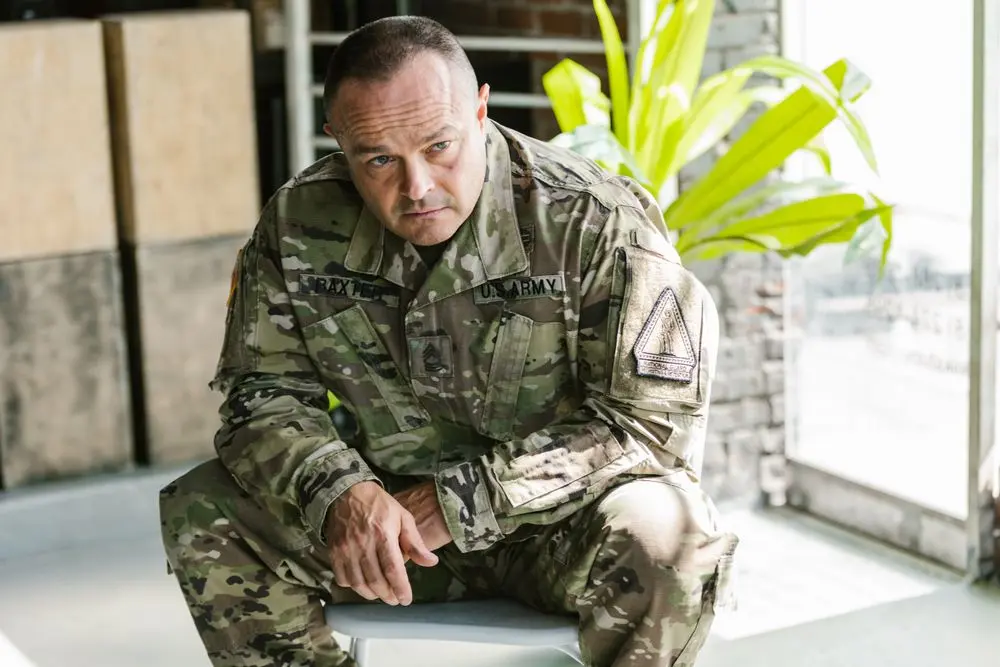
The loudest one was a broad-shouldered young man, maybe twenty-seven, with thick arms and the kind of voice that’s built for a parade field and doesn’t know how to come indoors. His name tape said REESE. Three stripes and a rocker on his chest. A staff sergeant.
The other two stood a half step behind him. A tall, skinny specialist with acne scars along his jaw. A sergeant with a shaved head who was grinning like he’d been promised a show.
I looked at Reese for a second.
Then I went back to my chili.
My name is Quinn Braddock.
I’m eighty-one years old, and I live by myself in a yellow house in Clarksville, Tennessee. The house has more stairs than my knees appreciate these days. Eleven out front, fourteen inside going up to the bedroom. I count them every night.
For thirty-one years, I worked as a school nurse at Northeast Elementary. I put ice on bumped heads and checked for lice and handed out a whole lot of saltine crackers. I knew every child’s allergies by heart. I sent them home with fevers and notes for their mothers.
Before that, I lived a very different life.
But that was a long time ago.
On this particular Thursday, I was at Fort Campbell, Kentucky, sitting in a dining facility the soldiers call a DFAC, which still sounds to me like something you’d need a prescription for.
I was wearing my favorite gray wool coat and the shoes I usually save for church. Black, low heels, very sensible. My white hair was pinned up the way my mother taught me.
All around me, the dining hall was full of young soldiers in camouflage uniforms. Nearly two hundred of them. Talking. Laughing. Scraping trays. Most of them were young enough to be my grandchildren. Some of them were young enough to be my great-grandchildren, if I’m being honest, and I try to be.
Reese leaned closer.
“You understand this is an Army installation?” he said. “You can’t just wander in here whenever you feel like it.”
His friends chuckled.
“Where’s your visitor pass?” he went on. “Or did somebody drop you off from the retirement home because you heard we had free food?”
More laughter. The sergeant with the shaved head actually slapped his thigh.
And then the room began to go quiet.
It didn’t happen all at once. It went table by table. Like a ripple moving out across a pond. The tables closest to mine stopped talking first. Then the next ones. Then the ones by the windows.
I could hear forks scraping on trays. Somebody’s chair creaking.
Nobody wanted to stare. But everybody was listening.
I set my spoon down beside the bowl.
Calmly. The way you set something down when you’ve decided you’re going to finish it later.
Reese seemed to take that as an insult.
He put his tray down on the next table with a bang. Then he leaned over mine and planted both of his palms flat on it, on either side of my bowl. His face was close enough that I could smell his aftershave. Something sharp and blue.
There was an eagle tattooed along his forearm. Wings spread from his wrist almost to his elbow.
“Look at me when I’m talking to you,” he said. “We have rules here. This isn’t some public cafeteria where anybody can walk in off the street and take a seat.”
I didn’t say anything.
“So I’m going to ask you one more time,” he said. “Who are you? And why are you on my post?”
At the next table, a young female soldier lifted her head.
She was small and dark-haired, with her hair pulled back in a tight regulation bun. She looked barely twenty. Her name tape said ORTIZ. A single chevron on her chest. A private first class.
For a moment, she looked like she was going to say something. I watched her mouth open.
Then her eyes went to the stripes on Reese’s chest.
And she lowered her gaze to her tray.
I didn’t blame her. I’d been twenty once, too.
I finally looked at the sergeant properly.
He had the face of someone who might have been a decent young man under different circumstances. A square jaw. A little scar through one eyebrow. Freckles across his nose that didn’t go with the rest of him.
But he carried himself like a person who had always been the strongest in the room, and had decided somewhere along the way that strongest and most important meant the same thing.
I looked at his name tape again.
Then at the patch on his shoulder. The Screaming Eagle. The 101st.
Then at the small crest pinned above his right pocket.
A blue shield. A white bird standing on one leg in the middle of it, its long neck curved.
I knew that bird.
I’d have known it anywhere.
Still, I didn’t say anything.
I reached for my water glass instead.
One of Reese’s friends snorted. The skinny specialist.
“Maybe she can’t hear you, Sarge.”
Reese straightened up.
“I said I want to see your identification,” he said, louder.
He snapped his fingers at me. Right in front of my face. Twice.
“Right now.”
Here’s the thing.
He had no business doing any of this.
Checking a visitor’s authorization isn’t a staff sergeant’s job. It’s the job of the gate guards, and the military police, and the people the Army has trained and assigned to do it. A staff sergeant doesn’t get to appoint himself the gatekeeper just because he doesn’t like the look of someone eating chili in his dining hall.
And the soldiers around us knew it. I could see it on some of their faces. A wince here. A sideways glance there.
I did have a visitor pass.
It was in my purse, which was on the chair beside me. It was hanging from a blue lanyard, with my photograph on it, laminated and dated and perfectly valid. The young man at the visitor center had printed it for me that morning and wished me a nice day.
I could have pulled it out and ended the whole thing in five seconds.
I chose not to.
My late husband, Walt, used to say my stubbornness deserved its own monument.
“Somewhere in Washington,” he’d say. “Right next to Lincoln. A big granite statue of you with your arms crossed. ‘No.’”
Perhaps he was right.
But I hadn’t driven forty minutes to prove I had a right to exist to a young man who hadn’t learned basic courtesy.
I lifted my glass and took a drink.
My hand didn’t shake.
At eighty-one, I count that as a small blessing.
Reese’s cheeks started to go red.
He’d made himself the center of attention, and now the whole dining hall was watching him try to get a response out of an old woman eating her lunch. And failing.
“That’s enough,” he snapped.
He pointed toward the doors.
“You’re coming with me to the gate. Stand up.”
I stayed in my chair.
He looked me over. Slowly. From my white hair down to my church shoes. Like he was looking for something else to use. Another reason.
Then his eyes stopped on my coat collar.
There was a small brass pin fastened there.
It had gone dull with age. The enamel was chipped in one corner. But the design was still clear as anything.
A blue shield.
A white bird.
The same insignia he wore over his pocket.
The difference was that mine was fifty-six years old.
Reese narrowed his eyes.
“Where’d you get that?”
I set my water glass down on the table.
He pointed straight at the pin. His finger came close enough to my neck that I could feel the air move.
“That’s my battalion’s crest,” he said.
I waited.
“People have fought and died wearing that,” he said. “You don’t get to buy one at a flea market and pretend you earned it so you can get a free lunch here.”
His voice was getting louder. It carried all the way to the serving line now.
“Take it off.”
I looked him in the eye.
“No,” I said.
It was the first direct thing I’d said to him.
His face went hard.
“I said take it off.”
I didn’t move.
“Either you take it off,” he said, “or I’ll take it off myself.”
The young woman at the next table stood straight up. PFC Ortiz. Her chair scraped back loud on the floor.
I caught her eye.
I shook my head. Just slightly.
She hesitated. Her hands were in fists at her sides. She looked at me, then at Reese, then at me again.
Then, slowly, she sat back down.
I turned back to Reese.
He was standing over me with his chest out, absolutely sure that three stripes and a rocker gave him the right to threaten an old woman.
I wasn’t frightened.
I’ve met far more frightening men in my life. Some of them were trying to kill me at the time.
But I was disappointed.
He wore a crest whose history he obviously didn’t understand.
And the proof was right behind him.
I looked past his shoulder.
Toward the wall above the serving line.
Large blue letters, almost a foot high, stretched across the white cinderblock. They’d been painted there for years. They’d been there the whole three years Reese had been stationed at Fort Campbell, I’d later learn. He’d probably eaten under them hundreds of times. Walked past them every single day with his tray.
He’d never once thought about what they meant.
I folded my hands on the table.
“Sergeant Reese,” I said quietly.
He leaned in closer. “What?”
“Before you decide to put your hands on me,” I said, “I’d like you to do something for me.”
He frowned. “What are you talking about?”
I nodded toward the wall behind him.
“Turn around,” I said, “and read those words.”
For the first time since he’d walked up to my table, he didn’t have anything clever to say.
And nearly two hundred soldiers held their breath to see whether he’d do it.
He didn’t want to.
I could see that. Turning around meant doing what I told him. In front of everybody. It meant the old lady was giving the orders now.
But he couldn’t not do it either. Because now every soldier in that dining hall was looking at the wall.
The skinny specialist turned around first. Then the sergeant with the shaved head.
Reese stood there for a second longer.
Then he turned around.
The words were painted in the same blue as the shield on the crest. Big, square letters. Across the whole width of the wall.
UNTIL THEY’RE ALL HOME.
Reese read it out loud. Flat. Like a man reading a cereal box.
“‘Until they’re all home.’ Yeah. It’s the battalion motto. So what?”
“Read the rest,” I said.
He looked at me over his shoulder. Annoyed.
Then back at the wall.
Underneath the big blue letters, in smaller black ones, there was a second line. Neat and plain. You had to be closer to read it easily. Or you had to look.
He squinted.
He read it out loud. Slower this time.
“‘Spoken by First Lieutenant Quinn Harlan, Army Nurse Corps. Landing Zone Heron. March 12, 1970.’”
The dining hall was completely silent.
Reese turned back to me.
“Okay,” he said. “And?”
He actually didn’t get it. I could see it on his face. He looked genuinely confused.
“That’s not your name,” he said. “You said—”
“I didn’t say anything,” I said. “You never asked my name. You asked for my identification.”
That was when the young woman at the next table spoke.
PFC Ortiz. Very quietly.
“Sergeant,” she said. “Harlan’s a maiden name.”
Reese turned to look at her.
She’d gone red to the ears. She was looking down at her tray again. But she kept going.
“Women change their names when they get married,” she said. “Sometimes.”
The skinny specialist made a small noise. Like a balloon losing air.
The sergeant with the shaved head took one step backward. Then another.
Reese looked at the wall.
Then at my pin.
Then at me.
I watched it land on him. I watched it go all the way down. His face went from red to white so fast it was like someone had pulled a plug.
“Ma’am,” he said.
His voice had changed completely.
“Are you—”
“I was,” I said. “Fifty-six years ago. I’ve been Quinn Braddock since 1974.”
Somebody at the back of the dining hall had gone to get someone.
I don’t know who. I never found out. But about thirty seconds later, the side door by the serving line banged open, and a big man came through it moving very fast.
Command Sergeant Major Marcus Bell.
He was fifty-two, with a shaved head and a gray mustache and a chest full of ribbons. He’d been the battalion’s senior enlisted soldier for two years. I’d met him the March before, at the anniversary ceremony. He’d held my elbow down the stairs of the reviewing stand and told me about his granddaughter.
He came across the dining hall like a train.
Soldiers scrambled out of his way.
He stopped at my table.
He didn’t even look at Reese.
“Mrs. Braddock,” he said. “Ma’am. Are you all right?”
“I’m fine, Sergeant Major,” I said. “My chili’s getting cold.”
He looked at the bowl. Then at me.
Then, very slowly, he turned his head and looked at Staff Sergeant Reese.
I’ve seen a lot of faces in my life. I’ve seen men looking at the wrong end of a rifle. I’ve seen men looking at the inside of a helicopter that’s about to go down.
I don’t think I’ve ever seen anybody look quite as sick as Cody Reese did right then.
“Staff Sergeant Reese,” the Sergeant Major said. Very quietly. Which was worse than loud.
“Sergeant Major.”
“Do you know who this is?”
Reese swallowed.
“I do now, Sergeant Major.”
“You do now.” The Sergeant Major nodded slowly. “And before now?”
Reese didn’t answer.
“Before now,” the Sergeant Major said, “you thought it would be a good idea to walk up to an elderly woman eating her lunch and interrogate her about her credentials. In my dining hall. In front of my battalion.”
“Sergeant Major, I—”
“You thought you’d threaten to put your hands on her.”
Reese’s mouth opened. Nothing came out.
The Sergeant Major turned to the skinny specialist and the sergeant with the shaved head.
“You two. Name and unit. Now.”
They gave them. Fast. In voices about an octave higher than they’d been laughing in a minute before.
“Go stand by the door,” the Sergeant Major said. “Don’t move. Don’t talk. Don’t breathe loud.”
They went.
Then he turned back to Reese.
“Mrs. Braddock,” he said, without taking his eyes off the young man, “is the reason that crest is on your uniform, Staff Sergeant. She’s the reason those words are on that wall. She is the reason this battalion has a ceremony every March that you have stood in formation for three times.”
He paused.
“Were you listening, Staff Sergeant? At the ceremony? Any of the three times?”
Reese looked at the floor.
“No, Sergeant Major.”
“No,” the Sergeant Major said. “I didn’t think so.”
I put my hand on the Sergeant Major’s arm.
“Marcus,” I said. “Sit down a minute. You’re making the whole room nervous.”
He looked down at me.
“Ma’am, with respect, I need to—”
“You need to sit down,” I said. “And so does he.”
I pointed at the empty chair across from me.
“Sergeant Reese,” I said. “Get your tray. Sit.”
Reese stared at me.
So did the Sergeant Major.
So did roughly two hundred soldiers.
“Ma’am?” Reese said.
“You asked who I am and why I’m here,” I said. “You were rude about it. But they’re fair questions. If you sit down and eat your lunch like a civilized person, I’ll answer them.”
The Sergeant Major looked at me for a long moment.
Then something in his face shifted. Not softer, exactly. But he understood.
“You heard her, Staff Sergeant,” he said. “Get your tray.”
Reese picked up his tray from the next table.
His hands weren’t quite steady.
He sat down across from me. The Sergeant Major pulled up a chair at the end of the table, between us, like a referee.
At the next table, PFC Ortiz had gone very still. She was pretending to eat her macaroni. She wasn’t eating anything.
“Private Ortiz,” I said. “Bring your tray over too.”
She jumped. “Ma’am?”
“You were going to stand up for me. Twice. I’d like to buy you lunch.”
“It’s—it’s free, ma’am. It’s the DFAC.”
“Then I’d like to sit with you while you eat it.”
She looked at the Sergeant Major.
He nodded once.
She brought her tray over and sat down next to me. Close. Like she’d decided she was going to guard me now, whether I needed it or not.
Around us, the dining hall slowly started to breathe again. People went back to their food. Conversations started up. Quieter than before. But they started.
Nobody was really eating, though. Everybody was watching our table.
Reese sat across from me with his tray in front of him. A cheeseburger. Fries. A carton of chocolate milk.
He didn’t touch any of it.
“Ma’am,” he said. “I’m sorry. I—”
“Eat your lunch first,” I said. “Then you can apologize. An apology on an empty stomach usually isn’t worth much.”
He picked up a French fry.
He looked at it.
He put it down.
“I can’t eat, ma’am.”
“Try.”
He ate the French fry.
Then another one.
I went back to my chili. It had gone lukewarm. I ate it anyway.
The Sergeant Major sat at the end of the table with his arms folded, watching Reese like a hawk watching a field mouse.
After a while, I put my spoon down.
“You want to know where I got the pin,” I said.
Reese looked up.
“Yes, ma’am,” he said quietly.
I’ll tell you what I told him.
In 1967, I was twenty-two years old and had just finished nursing school in Memphis.
I was Quinn Harlan then. The third of five children. My father ran a feed store in Dyersburg. My mother sewed for half the county. I had red hair, which is hard to believe now, and freckles like Sergeant Reese’s, and a mouth that got me sent out of Sunday school more times than I can count.
My older brother, Tommy, was in Vietnam. With the Marines.
His letters came every two weeks. Short ones. Weather’s hot. Food’s bad. Don’t worry about me.
In the fall of 1967, they stopped coming.
He came home in January of ‘68.
Alive. With his left leg gone below the knee.
He spent four months at a Navy hospital in Philadelphia. My mother and I went up on the bus to see him. Twenty-two hours each way.
I sat by his bed every day for two weeks.
The nurses there were extraordinary. I watched them. The way they moved. The way they talked to the boys. The way they could change a dressing on a wound that made me want to faint and keep up a conversation about baseball the whole time.
One of them, a big Navy lieutenant named Bernice, caught me watching her one afternoon.
“You a nurse, honey?” she said.
“Yes, ma’am. Just graduated.”
She looked at me for a long moment.
“They need us over there,” she said. “More than they need us here.”
I joined the Army Nurse Corps in June of 1968.
My mother cried for a week. My father didn’t speak to me for a month.
Tommy was the one who drove me to the bus station. On his new leg. He’d been practicing.
“Don’t be a hero, Quinnie,” he said at the station.
“I’m going to be a nurse.”
“Same thing over there,” he said.
I got to Vietnam in May of 1969.
They assigned me to the 47th Evacuation Hospital, in the Central Highlands. A cluster of Quonset huts and tents and sandbags on a red-dirt hill, surrounded by wire. Three hundred beds. Twelve operating tables. Helicopters coming in day and night.
I was twenty-four.
I won’t tell you everything about that year. Some of it I’ve never told anybody. Not even Walt.
But I’ll tell you this.
The helicopters never stopped.
The medevac birds. Dustoff, the boys called them. Hueys with big red crosses on their noses, coming in low over the trees with their rotors thumping so loud you felt it in your teeth. Day and night. Rain or shine. Sometimes six or eight at a time.
And every one of them was full of boys.
Boys with names like Danny and Ray and Luis and Bobby. Eighteen. Nineteen. Twenty. With their arms and legs and bellies torn open. Calling for their mothers. Calling for the medic. Calling for me.
I worked twelve-hour shifts that turned into eighteen-hour shifts that turned into thirty-hour shifts. I learned to sleep standing up. I learned to eat a can of peaches in ninety seconds. I learned to hold a boy’s hand with one of mine and hang a bag of blood with the other.
I learned what it sounds like when a nineteen-year-old dies saying “Mama.”
There was a medical battalion attached to our hospital. The aviation and evacuation companies that flew the Dustoff missions. They were a new unit. Activated in 1969.
Their crest was a blue shield with a white bird on it. A heron. Standing on one leg.
The herons were everywhere in the highlands. In the rice paddies. In the rivers. Tall and white and still. The pilots said they’d see them from the air, standing in the water like they were waiting for something.
“Waiting to take somebody home,” one of the crew chiefs told me. A big Texan named Earl. “That’s what we do. We wait. Then we take ’em home.”
March 12, 1970.
There was a firebase about forty miles west of us. Up on a ridge near the Cambodian border. They called it Landing Zone Heron, after the bird. Because of the marsh at the bottom of the hill where the herons stood in the mornings.
That night, it got hit.
Hard.
We heard about it on the radio around four in the afternoon. A North Vietnamese battalion had hit the firebase from three sides. It was being overrun. Heavy casualties. The battalion surgeon at the firebase had been killed in the first hour. Both medics were wounded.
There was nobody left up there to treat the wounded.
The first Dustoff bird went in at four-thirty. It got shot up so bad it barely made it back. The crew chief, Earl, the big Texan, was hit in the shoulder.
The second bird went in at five-fifteen. It got eight wounded out. The pilot said there were at least fifteen more on the ground. He said the landing zone was so hot he didn’t know if anybody could get in again before dark.
I was standing by the helipad when the second bird landed.
I helped them unload. Eight boys. Two of them died before we got them to the operating room.
The pilot was a warrant officer named Frank Delacroix. Twenty-six. From New Orleans. He climbed out of the cockpit and stood on the helipad with blood all over his flight suit, and he was crying.
“They’re just lying there,” he said. “On the hill. In the open. There’s nobody up there to help them. Nobody.”
I don’t remember deciding.
I just remember walking up to the hospital commander. A colonel named Hardesty. I remember standing in front of him in my bloody scrubs.
“Sir,” I said. “I want to go.”
He looked at me like I’d lost my mind.
“Lieutenant,” he said. “Nurses don’t go into hot landing zones.”
“Sir, there are fifteen wounded men up there and nobody to treat them. If they can’t get a bird in again before dark, half of them will be dead by morning.”
“Absolutely not.”
“Sir—”
“Lieutenant Harlan,” he said. “Absolutely not.”
I went to find Frank Delacroix anyway.
He was sitting on an ammo crate by his helicopter, smoking a cigarette with shaking hands.
“Are you going back up?” I said.
He looked at me. “Before dark. One more try. If they can hold the LZ for five minutes.”
“Take me with you.”
He stared at me.
“Ma’am,” he said. “No.”
“I can save them, Mr. Delacroix. Some of them. Maybe most of them. If I’m there. If somebody’s there.”
“The colonel—”
“I’ll deal with the colonel.”
He looked at me for a long time.
He finished his cigarette. He ground it out under his boot.
“Get a helmet,” he said. “And a flak vest. And whatever you can carry. We go in ten minutes.”
I’ll never forget that flight.
Forty miles. Twenty-two minutes. The sun going down red over the mountains. The door gunners hanging out the sides of the Huey with their guns.
I sat on the floor in the back with two big canvas bags of everything I could steal from the supply tent. Bandages. Morphine. IV bags. Clamps. Plasma. Saline. Tourniquets. A suture kit. Flashlights.
Earl was in the back too. With his shoulder bandaged. He wasn’t supposed to be there. He’d climbed on anyway.
“Somebody’s gotta watch out for the nurse,” he said.
When we came over the ridge, I saw the firebase.
It was on fire.
There was smoke everywhere. Muzzle flashes along the treeline below. Tracers going up at us, green and red, like somebody throwing fistfuls of glowing marbles into the sky.
Frank brought the bird down so fast my stomach went up into my throat.
We hit the landing zone hard. Bounced. Settled.
“GO!” Earl yelled. “GO GO GO!”
I jumped out.
There were soldiers running toward the helicopter. Carrying wounded men. Dragging them. On ponchos. On stretchers made of rifles and shirts.
We loaded them as fast as we could.
Six. Seven. Eight.
The helicopter was full.
There were still eleven men lying on the ground at the edge of the landing zone.
Frank was screaming at me from the cockpit.
“LIEUTENANT! GET ON! WE’RE FULL! WE’RE TAKING FIRE! GET ON THE BIRD!”
I looked at the eleven men on the ground.
I looked at the helicopter. Full. Overloaded. Shaking with the weight of eight wounded men and a crew.
There was one spot left. On the floor. By the door.
Mine.
There was a boy lying at my feet.
He couldn’t have been older than nineteen. He had a radio on his back, still strapped on. His leg was torn open from the knee to the hip. He’d lost a lot of blood. He was very pale.
He was looking up at me.
I knelt down. I grabbed Earl’s arm.
“Put him in my spot,” I said.
Earl stared at me. “Ma’am—”
“Put him in my spot, Earl. He won’t make it till morning. The rest of them might.”
Earl looked at me for one second.
Then he grabbed the boy under the arms and hauled him up into the helicopter. Into the spot by the door.
“LIEUTENANT!” Frank screamed. “GET ON!”
I stood up.
I yelled back at him over the rotors. As loud as I could.
“I’M STAYING! COME BACK AT FIRST LIGHT!”
“WE CAN’T LEAVE YOU HERE!”
“YOU’RE NOT LEAVING ME! YOU’RE COMING BACK! WE’LL STAY UNTIL THEY’RE ALL HOME!”
Frank stared at me through the windshield.
I’ll never forget his face.
Then the helicopter lifted off.
And I was standing on the landing zone at Firebase Heron with two canvas bags of medical supplies, ten wounded men, and the sun going down.
I won’t tell you everything about that night.
I’ll tell you that it was the longest night of my life.
I’ll tell you that the firebase held. Barely. The soldiers still on their feet fought all night. There were times I could hear the enemy talking in the treeline. There were times the mortars came so close the dirt rained down on us.
I’ll tell you that we dragged the ten wounded men into a bunker made of sandbags and logs at the edge of the landing zone. A space about the size of a kitchen.
I’ll tell you that I worked by flashlight all night long. With a red filter over the lens so the enemy couldn’t see it.
I’ll tell you that I put in six IVs, stopped eleven bleeds, and gave the last of my morphine at two in the morning.
I’ll tell you that a soldier named Specialist Ray Hollins, from Biloxi, Mississippi, twenty years old, died in my arms at 3:40 a.m. He’d been shot through the lung. I couldn’t fix it. There wasn’t anything I could do but hold him.
He asked me to sing.
I sang “Amazing Grace.” It was the only song I could remember.
He died before I got to the third verse.
And I’ll tell you that at 6:12 a.m., just as the sun was coming up over the ridge, I heard the rotors.
Three Dustoff birds. Coming in low over the marsh at the bottom of the hill. Where the herons were standing in the water.
Frank Delacroix was flying the first one.
We got the nine other men out by 6:30.
Nine. Out of ten.
All nine of them lived.
I was the last one on the last bird.
I sat on the floor by the door. I looked down at the firebase going away beneath us. At the smoke. At the marsh at the bottom of the hill.
There was a heron standing in the water.
Just standing there. White. On one leg. Like it had been waiting all night.
I stopped talking.
The dining hall was silent.
I hadn’t noticed how quiet it had gotten. I’d been looking at my chili bowl the whole time. When I looked up, I realized that everybody at the tables around us had stopped eating. A lot of them had turned their chairs around.
Private Ortiz was crying. Silently. Tears just running down her face. She didn’t wipe them.
The Sergeant Major was looking at the table.
And Staff Sergeant Reese was sitting across from me with his hands flat on either side of his tray, very still, like a man who’d been told to stay where he was.
“The battalion commander came to the hospital the next week,” I said. “A lieutenant colonel named Whitaker. He wanted to pin a medal on me. Colonel Hardesty wanted to court-martial me for disobeying a direct order.”
The Sergeant Major made a small noise. Almost a laugh.
“They compromised,” I said. “I got a Bronze Star with a V device. And a letter of reprimand in my file. Same week.”
“Colonel Whitaker gave me something else too,” I said.
I touched the pin on my collar.
“He said, ‘Lieutenant, you’re not in my battalion. You’re a nurse. You’re in a hospital. But as far as I’m concerned, you’re one of us now.’”
I looked at Reese.
“He took this off his own uniform,” I said. “And he pinned it on mine.”
Reese closed his eyes.
“The next year, the battalion adopted the motto,” I said. “Until They’re All Home. Frank Delacroix put the idea in. He told everybody what I yelled at him from the landing zone. They put it on the unit flag. Later they painted it on the walls. When the battalion came home and was stationed at Fort Campbell, they brought it with them.”
I nodded toward the wall.
“They added my name in 1995,” I said. “For the twenty-fifth anniversary. I asked them not to. Nobody listened. Nobody ever listens to me.”
“Ma’am,” Reese said.
His voice cracked on the word.
I waited.
“The boy,” he said. “The radio operator. The one you put in your spot on the helicopter. Did he—”
I smiled.
“He lived,” I said.
“What happened to him?”
“He came looking for me,” I said. “Four years later. In 1974. He’d been trying to find me for years. He didn’t know my name. He just knew there’d been a red-haired nurse on the LZ who gave him her seat. He wrote letters to the Army. He wrote to the hospital. He called every Harlan in Tennessee.”
I looked down at my wedding ring. Gold. Worn thin.
“He found me at a hospital in Memphis,” I said. “He walked in with flowers. I didn’t recognize him. He had to show me the scar on his leg.”
“His name was Walter Braddock,” I said.
The dining hall was silent.
“We were married for forty-nine years,” I said. “He died three years ago. In March. On the twelfth.”
I looked at Reese.
“Fifty-three years to the day,” I said. “After that night on the hill.”
Private Ortiz put her face in her hands.
The Sergeant Major was looking at the wall. At the words. He was blinking very fast.
And Staff Sergeant Cody Reese, twenty-seven years old, a squad leader in the battalion whose motto I gave it on a burning hill in 1970, sat across from me in the dining hall at Fort Campbell, Kentucky, and cried.
He didn’t make a sound.
He just sat there with his hands flat on the table and his face red and tears running down into his collar.
Nobody laughed at him.
Not one person in that whole room.
“I come here every year,” I said. “In March, for the ceremony. They put me on the reviewing stand. They read the citation. The colonel makes a speech. Somebody always helps me down the stairs.”
I looked at the Sergeant Major. He nodded.
“But I come here other times too,” I said. “Once a month or so. On a Thursday. Because Thursday’s chili day. And because Walt and I used to come together. For twenty years. Every month. He’d eat two bowls, and I’d tell him he’d regret it, and he’d regret it.”
I smiled.
“He liked to look at the young soldiers,” I said. “He said it made him feel like the world was going to be all right. He said, ‘Look at them, Quinnie. Look at all those kids. They’re going to take care of each other.’”
I looked at Reese.
“Today,” I said, “is the first Thursday I’ve come by myself.”
Reese put his face in his hands.
I let him sit there for a while.
Then I reached across the table.
I put my hand on his arm. On the eagle tattoo. The wings spread from his wrist almost to his elbow.
“Look at me, Sergeant,” I said.
He looked up.
“Why did you come over to my table?” I said. “The truth. Not the excuse.”
He wiped his face with the back of his hand.
He took a long time to answer.
“Because the guys were bored,” he said finally. “And you were sitting there by yourself. And you looked—”
He stopped.
“I looked like an easy target,” I said.
He closed his eyes.
“Yes, ma’am.”
“And the pin?”
“I really thought you bought it,” he said. “I’ve seen people do it. Guys at the gas station wearing Ranger tabs they didn’t earn. Stolen valor. I thought—I don’t know what I thought. I thought I was protecting something.”
“You were,” I said.
He looked at me.
“You were protecting something,” I said. “That crest. That bird. The men who wore it. That’s not a bad instinct, Sergeant. That’s a good one.”
I leaned forward.
“But you were so busy protecting the symbol,” I said, “that you forgot what it stands for.”
I pointed at the wall.
“Until they’re all home,” I said. “That’s not a motto about being tough. It’s not about being the strongest man in the room. It’s about staying. It’s about taking care of the people who can’t take care of themselves. It’s about looking at the person nobody else is looking at, and staying with them until they’re safe.”
I looked at him.
“You walked up to an eighty-one-year-old woman eating lunch alone,” I said, “and you made her a target. In front of everybody. Because your friends were bored.”
He didn’t say anything.
He didn’t need to.
“Ma’am,” the Sergeant Major said quietly. “He’ll be dealt with. I promise you that. Through his chain of command. Properly.”
“I know he will, Marcus,” I said. “I’m not asking you to go easy on him.”
I looked at Reese.
“But I’m asking you not to just punish him and forget about it,” I said. “Punishment teaches a man to get caught less. I want him to learn something.”
The Sergeant Major looked at me for a long moment.
“What do you have in mind, ma’am?”
I want to be honest about what happened next. Because it would make a better story if everything went smoothly. It didn’t.
Reese was removed as squad leader that afternoon. Pending an investigation.
The Sergeant Major told me later that there’d been a formal counseling. A written statement in his file. An apology letter required by his company commander.
His two friends, the specialist and the sergeant, got their own counselings. The sergeant with the shaved head lost his spot at a promotion board that month.
Somebody in the dining hall had filmed part of it on their phone. Of course they had. It went around the battalion by dinnertime. Then around the division. By the weekend, a version of it with captions was on the internet, and a man from a news station in Nashville was calling my house.
I didn’t answer.
The video only showed the first part.
Reese leaning over my table. Snapping his fingers in my face. “Take it off. Either you take it off or I’ll take it off myself.”
It didn’t show what came after. The story. The chili. Him crying at the table.
So the internet decided who he was.
People found his social media. People found his hometown. People sent messages to his mother in Ohio. People called him things I won’t repeat.
One man found his wife’s phone number and called her at two in the morning.
I found out about all of that from Private Ortiz.
She called me on Sunday. She’d gotten my number from the Sergeant Major.
“Ma’am,” she said. “I’m sorry to bother you. I just thought you should know. It’s bad. What people are saying about him. It’s really bad.”
I sat in my kitchen in my yellow house in Clarksville and listened to her tell me.
When she was done, I sat there for a long time.
Then I called the Sergeant Major.
On Monday morning, I drove back to Fort Campbell.
Forty minutes. My church shoes. My gray coat. The pin.
The battalion commander met me at the headquarters building. Lieutenant Colonel Andrea Whitlock. Forty-four years old, sharp-eyed, with gray at her temples. Her office had a window that looked out at the parade field.
She’d already seen the video. Everyone had.
“Mrs. Braddock,” she said. “I am so sorry. On behalf of the whole battalion.”
“I appreciate that, Colonel. But that’s not why I’m here.”
I told her what I wanted.
She listened. Then she shook her head slowly.
“Ma’am, with respect, are you sure? After what he did?”
“I’m sure.”
“The internet—”
“The internet wasn’t there,” I said. “I was.”
That afternoon, the battalion’s public affairs office posted a short statement.
And a photograph.
It was me and Staff Sergeant Reese at the table in the dining hall. Somebody had taken it after the story, when the room had gone back to quiet. He was sitting across from me with his face red and swollen. I had my hand on his arm.
The statement was short. I wrote it myself. Colonel Whitlock only changed two words.
The video you’ve seen shows a young soldier making a serious mistake. It’s being handled by his chain of command, and it should be.
What the video doesn’t show is what happened afterward. He sat down. He listened. He apologized. He cried.
I am the woman in that video. I am asking you to stop calling his mother. Stop calling his wife.
In 1970, I stayed on a hill all night with ten wounded strangers because nobody should be left alone when they’re at their worst. I’m not going to leave this young man alone at his worst either.
Until they’re all home.
— Quinn Harlan Braddock, 1LT, ANC (Ret.)
I don’t know if it helped.
I like to think it did.
The calls to his mother stopped by the end of the week. The man from the Nashville station stopped calling me. A lot of people shared the statement. A lot of them said kind things about me that I didn’t deserve.
A few of them said kind things about him.
That was what I’d wanted.
He showed up at my house two Saturdays later.
I was on the front porch, sitting in my rocking chair with my coffee. It was early. Just after seven. The mist was still coming off the grass.
A gray pickup truck pulled up at the curb.
He got out.
He was wearing jeans and a flannel shirt and work boots. No uniform. He looked younger out of it. He stood at the bottom of my eleven front steps holding a big orange toolbox in one hand and a paper bag in the other.
He looked up at me.
“Ma’am,” he said. “Good morning.”
“Sergeant Reese,” I said. “How did you find my house?”
“The Sergeant Major gave me the address. I asked him.” He shifted the toolbox. “He said you might throw something at me.”
“I might.”
“That’s fair.”
He held up the paper bag.
“I brought donuts,” he said. “From the Krispy Kreme on Wilma Rudolph Boulevard. The Sergeant Major said you like the plain glazed.”
“The Sergeant Major talks too much.”
“Yes, ma’am.”
“What’s the toolbox for?”
He looked at my front steps.
Eleven of them. Concrete. No railing. Walt had always meant to put one in. He’d talked about it for years. He’d bought the lumber in 2019. It was still in the garage.
“You said your stairs were hard on your knees,” Reese said. “At lunch. You mentioned it. When you were telling the story. You said there were eleven out front and fourteen inside.”
I stared at him.
I didn’t remember saying that.
“I’m good with my hands,” he said. “My dad was a contractor. I figured—if it’s okay with you—I could put in a railing. Out front. And maybe inside, too. If you want.”
I looked at him for a long time.
“Did the Army make you do this?” I said. “Is this part of your punishment?”
“No, ma’am,” he said. “This is my day off. Nobody knows I’m here except the Sergeant Major.”
He looked down at the toolbox.
“I just wanted to do something useful,” he said. “Something that actually helped. Instead of just—saying sorry.”
I sat there in my rocking chair with my coffee going cold.
I thought about Walt. About the lumber in the garage. About all those years he’d said, I’ll get to it, Quinnie, I’ll get to the railing.
“The wood’s in the garage,” I said finally. “Walt bought it. In 2019. It’s probably warped.”
Reese smiled. Just a little.
“Let me take a look,” he said.
He worked on that railing for three Saturdays.
The wood was warped. He bought new wood with his own money and wouldn’t let me pay him back. He measured everything three times. He drilled into the concrete with a big loud drill that made every dog on the street bark.
I sat on the porch in my rocking chair and watched him.
And we talked.
He told me about his father.
His father was a drill sergeant for eleven years, at Fort Benning, then a contractor in Ohio after he got out. A big, loud man. The kind of man who thought being respected and being feared were the same thing.
“He used to say, ‘If they’re not scared of you, they’re not listening to you,’” Reese said, on the second Saturday. He was kneeling on my front steps, sanding a board. “I heard that my whole life. I believed it.”
“Did your father have friends?” I asked.
Reese stopped sanding.
He thought about it for a long time.
“No, ma’am,” he said. “Not really.”
He told me about his wife. Her name was Kayla. She was a dental hygienist. She was pregnant with their first baby. A girl. Due in August.
“She was so ashamed of me,” he said quietly. “After the video. She wouldn’t look at me for two days.”
“And now?”
“Now she says she’s waiting to see who I turn into.”
I nodded.
“That’s a smart woman,” I said.
“Yes, ma’am. Smarter than me.”
“Most of them are, Sergeant.”
On the third Saturday, he finished the front railing.
It was beautiful. Smooth cedar, stained dark, bolted into the concrete on steel posts. It ran all the way down both sides of my eleven front steps.
He stood at the bottom and looked at it.
Then he looked up at me.
“Try it,” he said.
I got up out of my rocking chair.
I went to the top of the steps. I put my hand on the railing.
It didn’t move. Not even a little.
I walked all the way down. Eleven steps. My knees complained. But I had something to hold on to the whole way.
At the bottom, I stood next to him on the sidewalk.
I looked back up at the porch.
Then, for some reason I couldn’t explain, I started crying.
Reese didn’t say anything.
He just stood next to me on the sidewalk and waited.
Like the herons in the marsh.
“Walt always said he’d get to it,” I said, when I could talk again. “For years. ‘I’ll get to the railing, Quinnie. I’ll get to it.’”
“I’m sorry he didn’t get to it,” Reese said.
I wiped my eyes.
“He’d have liked you,” I said. “Eventually. After he got done wanting to punch you.”
Reese laughed. A real laugh. The first one I’d heard from him.
“Yes, ma’am,” he said. “I’d have deserved it.”
The next Saturday, he came back and did the fourteen stairs inside.
Private Ortiz came to see me too.
Her first name was Daniela. She was nineteen. From San Antonio. She was a combat medic, a 68W, which I didn’t find out until the second time she visited. She’d been in the Army eleven months.
She came for coffee on a Sunday afternoon and stayed for four hours.
She asked me everything. About the hospital. About the helicopters. About the night on the hill. What I did for the boy with the chest wound. What I would have done if I’d had more supplies. How I knew which ones to treat first.
She wrote it all down in a little notebook.
At the end of the afternoon, she sat on my porch steps, next to the new railing, and looked out at the street.
“I should have stood up,” she said. “In the dining hall. Right away. When he first came over. I wanted to. I just—he’s a staff sergeant. I’m a private. I froze.”
“You did stand up,” I said.
“After he threatened you. That’s too late.”
“And I told you to sit down.”
She looked at me.
“Why?” she said. “Why did you tell me to sit down?”
I thought about it.
“Because you were nineteen,” I said. “And he outranked you by about five grades. And if you’d stood up to him in front of everybody, I’d have been fine. I’d have finished my chili and gone home. But you’d have been in that battalion for another three years. With him. And his friends.”
I looked at her.
“I didn’t want you to pay for my stubbornness,” I said.
She was quiet for a long time.
“But next time,” I said, “if it’s somebody who isn’t an old woman with a pin and a story? Somebody who doesn’t have anybody to stand up for them? You stand up. Even if you’re scared. Even if you’re the lowest-ranking person in the room.”
I touched the pin on my collar.
“That’s what this means,” I said. “It doesn’t mean you’re never scared. It means you stay anyway.”
She nodded.
She wrote it down in her notebook.
In August, Kayla Reese had her baby.
A girl. Seven pounds, two ounces. Bald as an egg.
Reese texted me a picture from the hospital at three in the morning. I was awake. I’m always awake at three in the morning. Old nurses never really learn to sleep through the night.
The picture was of the baby wrapped in a pink blanket, asleep on her father’s chest. His big hand was spread across her back. The eagle tattoo was right there along his forearm.
Under the picture, he’d written:
Her name is Harlan. Kayla picked it. I hope that’s okay.
I sat in my kitchen in the dark with the phone in my hand.
I didn’t answer for a long time.
Then I wrote back.
It’s more than okay. Tell her the woman she’s named after says to be stubborn.
The following March, I went back to Fort Campbell for the anniversary ceremony.
Fifty-seven years.
It was a cold, bright morning. The whole battalion was in formation on the parade field. Nearly six hundred soldiers. The flags snapping in the wind. The blue battalion flag with the white heron and the words underneath. UNTIL THEY’RE ALL HOME.
I sat on the reviewing stand in my gray coat and my church shoes and the pin. Colonel Whitlock sat on one side of me. The Sergeant Major sat on the other.
They read the citation. The same one they read every year. 1LT Quinn Harlan. Landing Zone Heron. March 12, 1970. Remained with ten wounded soldiers through the night under hostile fire. Nine survived.
I listened to it the way I always do.
I thought about Ray Hollins from Biloxi. Who died at 3:40 a.m. while I sang “Amazing Grace.” Who didn’t make it to the third verse.
I always think about Ray.
Then Colonel Whitlock stood up to make her speech.
She didn’t.
She said, “This year, I’ve asked someone else to speak.”
Staff Sergeant Cody Reese walked out to the front of the formation.
He’d gotten his squad back in January. The Sergeant Major told me. He’d earned it. He’d been working nights to finish an online degree. He’d started running a mentorship program for the new privates in the company. He’d volunteered for every detail nobody else wanted.
Private Ortiz was in the second rank. I could see her. Standing very straight. She’d been promoted to specialist in December. She was applying for flight medic school in the spring.
Reese stood in front of six hundred soldiers.
He took a piece of paper out of his pocket. He unfolded it.
His hands were shaking. I could see it from the reviewing stand.
He looked at the paper.
Then he folded it back up and put it in his pocket.
“A year ago,” he said, “I walked up to an eighty-one-year-old woman eating chili in the DFAC and I tried to humiliate her.”
The formation went completely still.
“I asked for her ID,” Reese said. “I snapped my fingers in her face. I told her she didn’t earn that pin on her collar. I told her I’d take it off her myself.”
He took a breath.
“Most of you saw the video,” he said. “Some of you were there.”
He turned around.
He looked up at the reviewing stand. At me.
“She told me to turn around and read the wall,” he said. “I’d walked past it every day for three years. I’d never read it. Not once. Not really.”
He turned back to the formation.
“I thought being a soldier meant being the toughest guy in the room,” he said. “I thought it meant people should be scared of you. I thought it meant protecting the symbol on your chest.”
He touched the crest over his pocket. The blue shield. The white heron.
“It doesn’t,” he said. “That’s not what this bird means.”
He told them the story.
Not all of it. Not the way I’d told it. His own version. Shorter. Plainer. The landing zone. The helicopter. The seat she gave to a radio operator with a torn leg. The night in the bunker. The red flashlight. Ray Hollins. Amazing Grace. The three birds coming over the marsh at dawn.
Six hundred soldiers listened without moving.
“She stayed,” Reese said. “That’s all. That’s the whole thing. She stayed. She didn’t have to. Nobody would have blamed her for getting on that bird. She stayed with ten strangers because they were alone and hurt and scared, and she decided they weren’t going to be alone.”
He looked down at the ground.
“And a year ago,” he said, “when I was the one who’d screwed up, when the whole internet was coming after me and my wife wouldn’t look at me and I didn’t know how I was going to fix any of it—”
His voice cracked.
“She stayed with me too,” he said.
He looked out at the formation.
At the new privates in the back rows. Eighteen. Nineteen. Twenty.
“So here’s what I want you to know,” he said. “When you walk into the DFAC this afternoon. Look at the wall. Read it. Every single day. And then look around the room. Look for the person sitting by themselves. The one who looks like they don’t belong. The one who looks like an easy target.”
He paused.
“And go sit with them,” he said. “That’s what that bird means. Until they’re all home.”
He saluted the formation.
Then he turned around and saluted me.
I stood up.
The Sergeant Major reached for my elbow to help me. I shook my head.
I stood up by myself.
And I returned the salute.
After the ceremony, I went to the dining hall.
It was Thursday. It’s always Thursday. They schedule it that way for me.
I got my chili. Heavy on the beans, light on the meat. A square of cornbread that was a little too dry.
I carried my tray to my usual table. The one by the window. Under the wall.
I sat down.
I’d barely picked up my spoon when a tray landed across from me.
Staff Sergeant Reese. With a cheeseburger and fries and a carton of chocolate milk.
Then another tray, beside me. Specialist Ortiz. Macaroni and cheese and a salad she wasn’t going to eat.
Then the Sergeant Major. Two bowls of chili. He set one down in front of the empty chair at the end of the table.
“For Walt,” he said.
I looked at the bowl.
I didn’t say anything for a while.
Then another tray.
A young private I didn’t know. A skinny boy with big ears and a brand-new uniform. He looked about eighteen. He stood there holding his tray, uncertain.
“Uh,” he said. “Is this seat taken? Staff Sergeant Reese said—he said we should come sit with you. If that’s okay.”
I looked at Reese.
He was suddenly very interested in his cheeseburger.
“Sit down, son,” I said.
Then another. And another.
By the time I’d finished my chili, there were eleven soldiers at my table. And four more at the next table, turned around in their chairs. And more standing.
They wanted to hear about the hill.
So I told them.
I’m eighty-two now.
I still live in my yellow house in Clarksville. With eleven steps out front and fourteen inside. Both with railings now. Cedar. Stained dark. Bolted in good.
I hold on to them every day.
I still drive to Fort Campbell on Thursdays. Forty minutes. For the chili.
I don’t eat alone anymore.
Sometimes it’s Reese. Sometimes it’s Ortiz, when she’s home from flight medic school at Fort Rucker. Sometimes it’s the Sergeant Major. Sometimes it’s a table full of eighteen-year-old privates who’ve heard there’s an old lady who sits under the wall and tells stories, and they want to see if it’s true.
Last month, Reese brought Harlan.
She’s seven months old now. She has her father’s freckles and her mother’s eyes. She sat in a high chair at the end of my table and threw cornbread at the Sergeant Major and screamed with joy every time it hit him.
He let her do it eleven times.
Before I left, Reese walked me out to my car.
He helped me down the steps of the dining hall. He didn’t need to. I let him anyway.
At my car, he stopped.
He looked at my collar. At the pin.
“Ma’am,” he said. “Can I ask you something?”
“You can ask.”
“When you go,” he said. Carefully. “Someday. A long time from now. What happens to the pin?”
I looked at him.
I thought about Colonel Whitaker in 1970, unpinning it from his own uniform. Pinning it on mine. You’re one of us now.
I thought about fifty-seven years of wearing it. Through Walt. Through the school. Through the children. Through all the Thursdays.
“I’ve left instructions,” I said.
“With who?”
“With my lawyer.”
He waited.
“It goes to the battalion,” I said. “To be given to a soldier. Not the toughest one. Not the strongest. Not the loudest.”
I looked at him.
“The one who stays,” I said.
He didn’t say anything for a long time.
Then he nodded.
He opened my car door for me. He waited while I got in. He stood in the parking lot with his hands in his pockets and watched me back out.
When I looked in my rearview mirror at the end of the lot, he was still standing there.
Waiting.
Like the herons.