Fritz Paid Us for 61 Tons of Alfalfa When He’d Hauled Away 80. So My Daughter and I Followed His Semi to the Co-op Scale.
The dew was still on the stack yard when Jo set the last bale on Fritz Ellerbrock’s flatbed. It was a Tuesday in July, and we were putting up second cutting. The bales were the big three-by-four squares, about eleven hundred pounds apiece, and she ran the squeeze on our old loader the way her grandfather taught her, slow and square, so nothing would shift on the highway.
She climbed down, took the stub of pencil from behind her ear, and wrote in a little green notebook she keeps in her shirt pocket. I saw the number over her shoulder. Thirty-six.
She has done that every load since she was twelve. I had never once asked to read it.
Fritz was walking around his trailer throwing straps. He’s sixty-one, a broad, quiet man in a white feed cap with the co-op logo on it. He has farmed the ground east of us for as long as I’ve been married to Lars, which is twenty-three years. He came to my father’s funeral. He stood in our kitchen and ate my bars afterward, and he told Lars that if we ever needed help with the cattle, he was a phone call away. I want that on the record, because it’s part of why this was so hard.
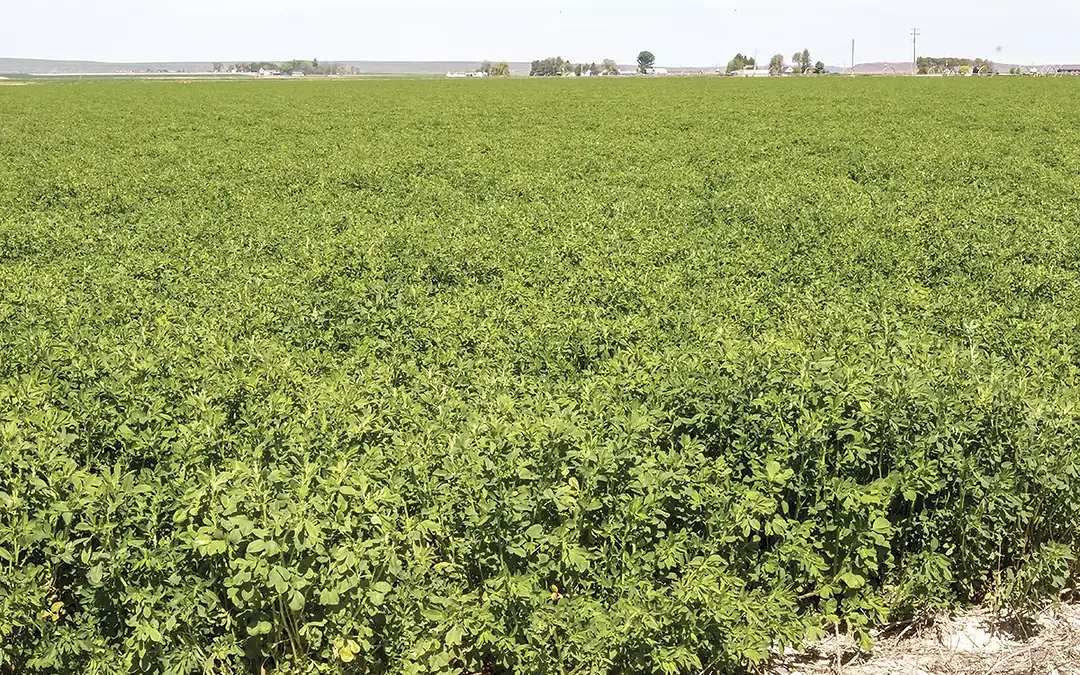
In June he had bought eighty tons of our first cutting at $210 a ton. That’s a fair price for good dairy-quality alfalfa in a dry year, and ours was good. We’d tested it. He hauled it in four loads on that same flatbed, twenty tons a load, give or take. Each time he took it home and ran it across the old platform scale at his place, and each time he mailed us a check with the weight written on the stub.
When I added up the stubs, they came to sixty-one tons.
I stood at my kitchen counter with a calculator and did it three times. Nineteen tons short, at $210 a ton, came to $3,990. That money was Jo’s books and her dorm room for the fall. She’s starting her second year at the state college, in animal science. She’d worked two summers at the vet clinic to cover her tuition, and Lars and I had promised her the rest would come out of the hay.
Lars drove over to Fritz’s in the second week of July and asked him about it, as gently as Lars does anything. He came home and sat in the truck in the yard for a while before he came in.
“He says our bales must be lighter than they look,” Lars said. “He says his scale’s been weighing his own cattle for thirty years and he’s never had a complaint.”
I had stacked every one of those bales. They were not light. I know what an eleven-hundred-pound bale does to the back end of a loader, and I know what a seven-hundred-pound bale does, and these were not seven hundred.
But I also knew there was no sense standing in the church parking lot calling a neighbor a cheat. I’d have needed a number, and I didn’t have one. Fritz had his scale, and I had my back and my stacking, and in a small town that’s one person’s word against another’s. People pick sides by who they sat next to in high school.
The co-op scale in town is a different thing. It’s state-certified, with a sticker on the scale house window that shows the date it was last tested. Every truck of wheat in the county crosses it. People argue about the price of wheat at that window all day long. Nobody argues about the weight.
So when Fritz threw his last strap that Tuesday morning and started for his cab, I walked across the stack yard and stopped at his door.
“Fritz,” I said. “We’re going to follow you to town. I want this load on the co-op scale.”
He had one boot on the step. He took it down again and looked at me for a long time.
I knew some of what was going on in his life, because everybody does around here. He’d contracted a pen of bred heifers in the winter to a buyer in the next state. The buyer had backed out in May when prices fell. Fritz ended up running them through the sale barn at a loss. Lars had heard it was close to thirty thousand dollars. I was sorry about that, and I meant it. I also knew it wasn’t my hay’s fault.
“Suit yourself,” Fritz said.
He climbed into his cab and shut the door.
Lars was down at the river field baling while the dew held, and you don’t stop a baler on a morning like that for anything short of a fire. So it was Jo and me. I sent him a text that just said “Going to town with Fritz’s load.” Then Jo and I got in the pickup.
Jo didn’t say anything as we pulled out behind the semi. She had the notebook in her lap.
“You don’t have to come in,” I told her. “You can sit in the truck.”
“I’m coming in, Mom.”
It’s nine miles to town. The road follows the river for the first part, under the red cliffs. I’ve driven it ten thousand times and I still look at them. We passed our church, where Fritz’s wife, Doris, plays the organ on the second and fourth Sundays. We passed the cafe where Fritz gets his coffee every morning at six-thirty with the same four men. His semi went by it at forty miles an hour, and I wondered if any of them were at the window.
I want to be honest about how I felt on that drive. I wasn’t brave about it. My stomach hurt. Part of me hoped the co-op scale would say sixty-one tons’ worth, so I could go home ashamed of myself and that would be the end of it. Being wrong would have been simpler than what I was afraid I’d find.
“Do you think he did it on purpose?” Jo asked, somewhere past the church.
“I don’t know, honey.”
“Grandpa liked him.”
“Grandpa liked everybody,” I said. That wasn’t true, and she knew it, and she let it go.
The co-op sits at the east end of town by the tracks. It has two big concrete elevators, a feed mill, a fertilizer shed, and the scale. The scale is a long concrete deck set flush in the ground, with a little white scale house at one end and a sliding window. Ruben Ochoa has run that window for twenty years. He’s a heavyset man with reading glasses on a cord around his neck, and he has weighed every bushel my husband and his father ever sold.
Fritz pulled up short of the deck and waited. I parked off to the side and walked to the window. Jo came behind me.
Ruben looked at me and then out at Fritz’s rig. Then he looked at me again. I’d been working out on the drive how to explain it, and he didn’t ask me one question. He has stood at that window long enough to know what it means when a hay farmer follows a hay buyer into town.
He leaned toward the little microphone and said, “Pull her on, Fritz.”
The semi rolled up onto the concrete and stopped. The deck didn’t move at all. That’s how you know it’s a good scale.
I stood on the apron in my straw hat with my arms crossed. Jo went and stood by the corner of the scale house. Fritz got down and stood by his cab door, with his hand on the grab bar, and he didn’t look at either of us. He looked at the elevator.
Ruben watched his screen until the number settled. He wrote it on a ticket with a pen. He didn’t say it out loud, and I couldn’t see it.
Then he slid the window open a few inches. “Now I need her empty,” he said. “Loaded is only half a number.”
He was right, of course. A scale tells you what the whole rig weighs, truck and trailer and fuel and hay. To find out what the hay weighs, you weigh the truck again after it’s unloaded and subtract. Any farm kid knows that. I hadn’t thought it through that far. I’d only been thinking about getting him onto the scale.
Fritz stood by his door for a minute. He could have driven home and never come back. Nobody could have made him. He would have unloaded at his place, and Ruben would have one ticket with half a number on it. I’d have had nothing.
He knew what that would say about him, though. So did everybody in that lot. There were a couple of men at the fertilizer shed by then, pretending to read a price board.
“I’ll be back,” Fritz said, to nobody in particular. He climbed up and pulled off the scale and turned around in the lot and headed out the way we’d come.
It’s nine miles each way, plus the time to unload with his own loader. I figured an hour and a half. Jo and I sat down on the bench along the scale house wall in the shade. Ruben pushed a paper cup of water out through the window without saying anything, and then another one.
After a while Jo took the green notebook out of her pocket and held it out to me.
“You should look at this,” she said.
I had never opened it. It had always seemed like hers. It’s a cheap spiral pad, the kind they sell at the hardware store by the register, and the cover was soft and bent from eight summers in a shirt pocket. On the inside of the cover was a strip of masking tape. Written on it in blue ballpoint, in my father’s shaky hand, were the words “Count what leaves the yard, Jo.”
My father had a tremor the last few years of his life. He was proud of his handwriting and he hated what happened to it. He’d have written that sitting at our kitchen table, probably with his elbow braced.
“He gave it to me the summer I turned twelve,” Jo said. “The first summer he let me run the loader. He said a farm that doesn’t count what goes out the gate will be poor no matter how much it grows. He said he learned that the hard way in 1985.”
I knew about 1985. That was the year he nearly lost the place. He never talked about the details, and I never found out who did what to whom. I only know he went to work at the sugar beet plant every winter after that until he was sixty-two.
I turned the pages. Each one had a date and a buyer’s name and a column of little pencil marks, bundled by fives, like counting days in a cartoon jail. Next to each bundle she had written the cutting and the field. Some pages had notes. “Rain on windrows 2 days, bales heavy, wet edges.” “Larsen said he’d pay Friday, paid Tuesday.” There was a page from when she was fourteen with “Dad yelled at me for going too fast,” and under it, in different ink, “He was right.”
Then I came to June of this year. There were four pages, one for each of Fritz’s loads. There were thirty-six marks on one page and thirty-six on the next, then thirty-five and thirty-seven. That made a hundred and forty-four bales. In the margin of the last page, she had written down the weights from the check stubs. She must have gotten them off my counter. Beside each stub weight she had divided it out by her bale count. The bales came to around eight hundred and thirty pounds apiece.
At the bottom she’d written, “Our bales are not 830. Ask Mom.”
She hadn’t asked me. I didn’t ask her why not. I think I know. I’d come home from town in June with the first check in my hand, saying how lucky we were to have a buyer right next door who’d take eighty tons in a dry year. She’d heard me say it.
My father has been gone six years. I closed the notebook and gave it back to her and looked at the cliffs for a while.
“I should have looked at this a month ago,” I said.
“You’d have still had to bring him here,” she said. “A notebook’s just me saying so.”
She’s nineteen. I don’t know where she gets it.
My phone buzzed at nine. It was Lars. “Still baling. What’s happening?” I wrote back, “Waiting on the empty weight.” He sent back one word, which was “Good.”
At twenty to ten Fritz’s semi came back down the road with an empty deck. The straps were rolled up and hanging off the headache rack.
By then three grain trucks were lined up behind the scale, all of them full of wheat. It was harvest, and they’d come in from the fields south of town. The drivers had climbed down to stretch their legs. I knew two of them. One was Arlo Brandt, who farms next to Fritz on the other side, and the other was the youngest Pfeiffer boy, who isn’t really a boy anymore. Ruben had been weighing them through one at a time while we waited. Now he held them.
Nobody had told them anything. They could see Fritz’s rig, and they could see me in my hat on the bench, and they could add. They stood by their trucks and watched. Nobody said a word.
Fritz pulled onto the scale and set his brakes. The air hissed out. He climbed down and stood by his door again, with his hand on the grab bar.
Ruben looked at his screen for a long moment. He looked down at the paper with the loaded weight on it. He took his glasses off the cord and put them on, which he hadn’t done all morning, and did the subtraction on the ticket with his pen. I watched him do it twice.
Then he slid the window open all the way and leaned out.
“Fritz,” he said, “what did your scale say on this load?”
The lot was quiet. A train was coming in somewhere east of town, and I could hear the horn at the crossing.
Fritz didn’t answer right away. I’ll give him that he didn’t lie. He took a folded slip of paper out of his shirt pocket. I hadn’t known he’d brought it. He walked over to the window and handed it in.
Ruben read it. He laid it on the counter next to his own ticket and looked at them side by side.
“Your scale says fifteen point three tons,” he said. He didn’t say it loud, but he didn’t keep it down either. “Mine says twenty point oh nine.”
Arlo Brandt let out a breath through his nose. The Pfeiffer boy looked at the ground.
Ruben tore off the co-op’s ticket and handed it out the window to me, not to Fritz. It was printed with the gross weight and the tare weight and the net. At the bottom it had the scale certification number and the date and Ruben’s initials. Net weight, 40,180 pounds. Thirty-six bales into that is eleven hundred and sixteen pounds a bale.
I stood there holding it. I had been so sure. I had stood in my kitchen and added up those check stubs three times, and I’d been sure every time. And now that I had it printed and initialed, my legs went weak, and I had to put my hand on the scale house wall.
Fritz’s scale was reading short by almost a quarter. Twenty-four percent. On every load.
“That’s a lot of hay to lose between here and your place, Fritz,” Ruben said.
Fritz took his cap off. His hair was flat and gray underneath and wet at the band. He looked older than I’d ever seen him.
“I know what it is,” he said.
I didn’t understand him at first.
“The scale,” he said. He was looking at me now, for the first time all morning. “I know it reads light, Ingrid. I’ve known since April.”
I didn’t say anything. Jo had come up beside me.
“I ran the heifers across it in April, before the contract fell through,” he said. “Weighed them at home so I’d know what I had. When I took them to the sale barn in May, they weighed better than three hundred pounds a head heavier than I had them at home. I thought the barn’s scale was wrong. I called the barn and asked. They got theirs tested every six months. Theirs wasn’t wrong.” He turned his cap around in his hands. “Mine’s from 1971. My dad bought it at an auction. The pit floods every spring and I never had anybody out to look at it. I figured the load cells were rotted.”
“You figured that out in May,” I said. “And you bought our hay in June.”
“I did.”
“And weighed it on that scale anyway. And paid us for what it said.”
He didn’t answer. He didn’t need to.
It was very quiet in that lot. Arlo Brandt had walked a few steps closer. He was looking at Fritz like a man looking at something he’d found in his barn that he didn’t want to find.
“I lost thirty-one thousand on those heifers,” Fritz said. He said it to the concrete. “Doris doesn’t know the whole number yet. The bank’s been calling. And there was that scale reading light, and I thought, well, everybody always says weight’s what the scale says, and the scale’s the scale. I told myself that. I told myself if anybody asked I’d say I didn’t know.” He looked up at me. “Lars asked. I said your bales were light. I said that to his face. That’s the worst of it, I guess.”
I’d been angry for a month. I’d spent the drive to town getting myself ready to be angrier. Now I was standing in front of him, and I found I mostly felt tired.
“It’s three thousand nine hundred and ninety dollars,” I said. “That’s what you shorted us in June. Jo’s books and her dorm room are in that number.”
He looked at Jo. She looked back at him. She didn’t say anything, and she didn’t look away either.
“And this load,” I said. “Twenty point oh nine tons. At two-ten. Four thousand two hundred and eighteen dollars and ninety cents. Not what your scale says.”
“Yes,” Fritz said.
“I’d like it this week.”
“You’ll have it Friday,” he said. “I’ll have to move some things around.”
Ruben cleared his throat from the window. “Fritz. That scale of yours. You’re not using it to buy anything else.”
“No.”
“I’m going to call the state about it anyhow,” Ruben said. “You know I’ve got to. A scale somebody’s buying hay across isn’t a cattle scale anymore. They’ll want to come look at it.”
Fritz nodded slowly. I didn’t know then what that meant for him, and I’m still not sure. I know the state inspects scales that are used to buy and sell. I don’t know what they do when they find one that’s wrong. I didn’t ask, and nobody told me.
“Can I go?” Fritz said.
“You’re empty,” Ruben said. “Go on.”
Fritz put his cap back on and climbed into his cab. He pulled off the scale slowly, and the grain trucks backed up to let him through. Arlo Brandt stood by his fender with his arms folded as the semi went past. Fritz didn’t look at him. He turned left out of the lot, toward the cafe, and then at the corner he turned the other way, toward home.
The Pfeiffer boy climbed back in his truck and pulled onto the scale. Ruben slid his window to the microphone and said, “Okay, Danny.” Everything went back to how it had been.
I stood there holding the ticket.
“You all right?” Ruben said through the window, quietly.
“I don’t know,” I said.
“Your dad used to stand right there,” he said. “When I first started. He’d watch every number. I thought he was the most suspicious man I’d ever met.” He took his glasses off and let them drop on the cord. “Then I figured out he wasn’t suspicious. He just wanted to know.”
Jo and I drove home the long way, over the bench road, because I didn’t want to pass the cafe. She held the ticket in her lap on top of the notebook.
“Are you going to tell Dad first, or am I?” she said.
“You can tell him.”
“I’ll let you,” she said. “You’ve been waiting a month.”
Lars came in off the baler at noon, when the dew was gone and the hay got too dry to bale. He had chaff in his eyebrows. I put the ticket on the kitchen table in front of him without saying anything, and he read it standing up. Then he sat down.
“Twenty point oh nine,” he said.
“His scale said fifteen point three.”
He looked at it a long time. Then he did what I should have known he’d do. He went to the window over the sink and looked across the section line toward Fritz’s place.
“He came to your dad’s funeral,” he said.
“I know.”
“He brought a ham.”
“I know, Lars.”
He’s a gentle man, my husband, and he takes a betrayal like a cold that won’t go away. He was quiet the rest of the day. That night he went out after supper and changed the oil in the swather, which didn’t need it.
The check came on Friday, by mail. There were two of them. One was for $3,990.00, with “June hay, short weight” written on the memo line. The other was for $4,218.90. Fritz wrote that memo line out in full, “20.09 T @ 210 co-op weight.” There wasn’t any note.
I put both checks in the bank on Monday. The teller, Sharon, has known me since kindergarten. She looked at the memo lines and then at me. “Huh,” she said. That was all she said. By Wednesday everybody in town knew anyway.
I hadn’t thought about that part. I’d only thought about getting our money. It hadn’t occurred to me that eleven men in the cafe would hear about it by the weekend, and that half of them had sold to Fritz or bought from him at some point. Arlo Brandt sold him corn silage every fall. I heard Arlo went home that night and dug out six years of check stubs, and that he and Fritz had words about it in the co-op parking lot. I don’t know what came of it. Arlo hasn’t told me and I haven’t asked.
The state did come and look at the scale. A man in a white pickup with a state seal on the door drove past our place in August, and we saw him at Fritz’s for most of an afternoon. Lars heard later that the scale was condemned. Fritz would have to get a new one if he wanted one. A new platform scale big enough for a semi costs more than all the hay we sold him put together. Lars said Fritz hasn’t put in a new one. He hauls his cattle to the sale barn to weigh them now, like most people do.
Doris stopped speaking to me after that. I don’t know how much he told her, or whether he told her it was my fault. She’d always nodded to me at church, and she quit. On the second Sunday in September she played the organ the way she always does, and when I went up for communion she kept her eyes on the music. I’ve thought about going to her. I haven’t. I don’t know what I’d say that wouldn’t make it worse.
Fritz still comes to church. He sits on the left side, about three pews back, where he’s always sat. I sit on the right. After the service we both stand in the fellowship hall and drink bad coffee out of the same urn, and we don’t talk. We nod. That’s how it has been since July. I don’t know if it’ll ever be different. I’m not sure I want it to be, and I’m not sure that’s a good thing to feel in a church basement.
Some people in town think I should have handled it quietly. Gladys Moen said as much to me in the grocery store, that it was a shame to shame a man in front of the whole co-op when everybody knew he’d had a bad year. I told her I hadn’t shamed him. I’d asked for a weight. She said that came to the same thing in a town this size. I didn’t have a good answer. I’m not sure she’s wrong.
Other people have stopped me to say thank you, which surprised me more. The Pfeiffer boy’s mother caught me at the post office and said she’d heard. Then she lowered her voice and said they’d sold Fritz straw three winters running. She said she’d always wondered why it came out lighter than she’d figured.
Jo went back to school the third week of August. We drove her down together, Lars and I, with her things packed in the back of the pickup. Her books were $611 at the campus store. I paid at the register with the debit card and the girl handed me the receipt, and I folded it up and put it in my purse. I still have it.
Her dorm room is on the fourth floor of a building with no air conditioning. She has a roommate from a dairy in the next county who keeps a picture of her favorite cow taped to the wall. Jo thought that was the most normal thing in the world. They get along.
Before we left, Jo walked us to the truck. She hugged Lars and then me, and then she took the green notebook out of her back pocket.
“You keep it this year,” she said.
“Honey, it’s yours.”
“I won’t be there for third cutting,” she said. “Somebody has to count.”
So I’ve been counting. Third cutting came off the first week of September. We sold it to a dairy forty miles west that weighs on a certified scale and sends us the tickets. I stood in the stack yard with a pencil and made a mark for every bale. My marks aren’t as neat as Jo’s. Seventy-two bales went out in two loads. When the tickets came back I divided them out at the kitchen table. They came to eleven hundred and eight pounds a bale.
I wrote that in the margin, the way she does.
In October, Fritz’s semi went down our road one morning hauling somebody else’s hay. I was out at the mailbox. He slowed down as he came past, which you have to do there, because of the culvert. I lifted my hand. I don’t know why. It’s just what you do on a county road.
He lifted two fingers off the steering wheel and kept going.
I stood by the mailbox for a minute after he’d gone. Then I went up to the house. Jo had called the night before. She’d gotten a B-plus on her first chemistry exam and was furious about the plus. I wanted to write her a letter about it before I lost my nerve, about her grandpa and the cliffs and what Ruben had said at the window. It took me most of the morning. I said more in it than I’ve ever said to her out loud, and when I read it over I almost didn’t send it.
I mailed it that afternoon. I put the notebook back in the drawer by the stove where I keep it now, with the pencil, and the masking tape on the cover facing up.