I packed two water bottles before I remembered I only needed one.
I was standing at the kitchen counter in the gray light before seven, filling them at the sink, the way I’d done every race morning for six years. One for me. One for Sandra. Because Sandra always forgot hers.
Every single time.
She’d come thundering down the stairs in her running shoes with her hair half in a ponytail, grab a banana, kiss me on the cheek, and be halfway out the door before I held up the bottle.
“Water.”
“Mom, it’s a 10K. I’ll survive.”
“Water.”
She’d roll her eyes and take it. And at the finish line, she’d always drink the whole thing in one go and say, “Okay, fine. You were right.”
I stood there with the second bottle in my hand.
Then I put it in my bag anyway.
Maybe somebody would need it.
I’d buried my daughter seven months earlier.
My phone was on the counter. I checked it while I tied my shoes.
My message from the evening before was still sitting there. Delivered. Not read.
Thinking of you, sweetheart. Tomorrow’s going to be hard. I’ll be there if you want company.
Before the funeral, Jacob always answered me. Always. Within minutes, usually. Sometimes with a real answer. Sometimes with a photograph of Sandra stealing his fries, her hand caught in the blur halfway to her mouth, her eyes huge and guilty. Underneath, he’d write: CAUGHT IN THE ACT. PLEASE ADVISE.
I had about forty of those pictures saved on my phone. I’d counted them, back in the spring. During one of the nights I couldn’t sleep.
Now he didn’t answer at all.
I put the phone in my bag.
Then I took it out and checked it again.
Then I put it away for real.
Across the kitchen, the calendar hung on its nail by the back door.
It was still on October. I hadn’t turned it to November yet. I’d been avoiding it.
Today’s date was circled in red marker. Sandra had done that back in January, when she’d hung up the new calendar. She’d gone through the whole year, circling things. My birthday. Her graduation. The Fourth of July barbecue at the Hales’ house next door. Thanksgiving.
And this. The third Saturday in October. The Riverside 10K.
Beside the circle, she’d drawn a little shoe. A sneaker, with laces and a swoosh and two little lines behind it to show it was moving fast.
I couldn’t bear to spend the morning staring at that square.
So I picked up my keys and went.
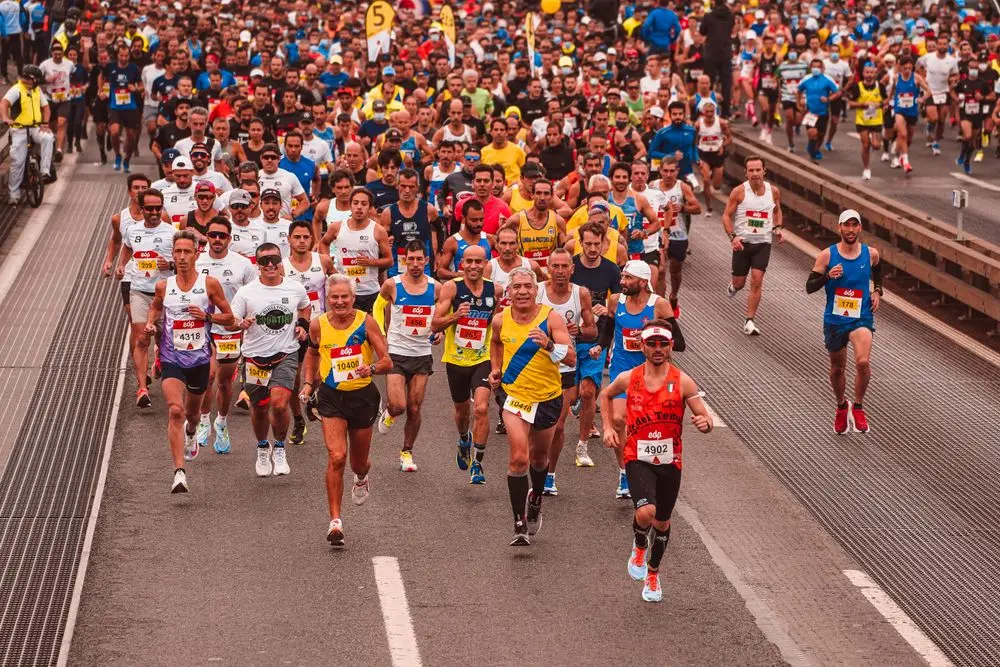
The race was in Riverside Park, by the river, on the east side of town. It was the same race Sandra had run every fall since she was sixteen. A small one, maybe four hundred runners. It raised money for a children’s literacy charity that Sandra had volunteered with in college, reading to second graders on Thursday afternoons.
In August, a woman from the charity called me.
Her name was Deb. She sounded nervous on the phone.
“Mrs. Morrow, I hope this isn’t too much,” she said. “We were all so sorry about Sandra. The kids still ask about her. And we were wondering. Would you mind if we dedicated this year’s race to her?”
I’d been sitting on the edge of Sandra’s bed when the phone rang. I’d been doing that a lot. Just sitting there.
I couldn’t say anything for a long time.
“Mrs. Morrow? I’m so sorry. If it’s too much—”
“No,” I said. “No. She’d love that.”
At the park, I stopped by the registration tent.
Sandra’s photograph was there.
They’d blown it up and put it on an easel beneath the charity’s banner. Someone had placed flowers beside it. White roses. And sunflowers, which made me smile, because sunflowers were her favorite and only a few people knew that.
IN LOVING MEMORY OF SANDRA MORROW, the sign said. RUNNER. READER. FRIEND.
I remembered taking that picture.
It was at last year’s race. At the finish line. She was standing there in her pink running top with her medal around her neck, sweaty and red-faced and grinning.
And Jacob had been making faces behind my shoulder.
I didn’t know it at the time. I was trying to get her to smile normally. She kept laughing. I kept saying, “Sandra, just look at the camera,” and she kept looking past me and cracking up.
Finally, I turned around and caught him. Crossing his eyes and sticking out his tongue.
“Jacob,” I said. “Behave.”
Then I turned back to Sandra and saw her expression. Half outrage, half delight. And I laughed so hard I nearly dropped the phone.
That was the picture. Sandra, mid-laugh, looking just past the camera at somebody she loved.
Neither of them had ever listened particularly well.
I touched the edge of the photograph.
Then I turned toward the runners gathering at the start.
And I saw the pink.
For one foolish second, I searched the crowd for Sandra’s face.
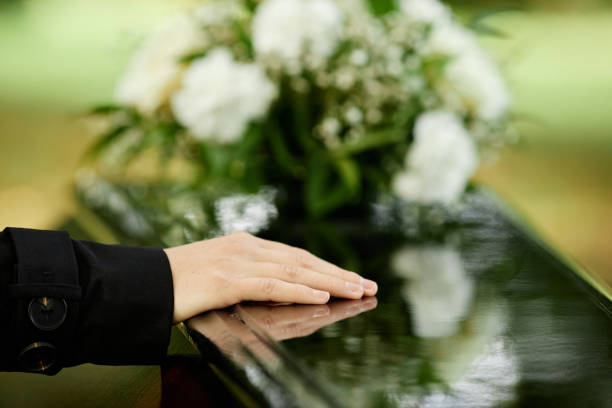
I knew it was impossible. Of course I knew. I’d stood beside her casket. I’d chosen her dress. I’d thrown the first handful of dirt.
But the body doesn’t know. The body just sees bright pink in a crowd of runners on the third Saturday in October, and it turns around, and it looks for her.
It was Jacob.
He was standing near the starting line, adjusting his race bib. Head down. Shoulders hunched. He looked thinner than I remembered. His hair was longer. He hadn’t shaved.
I hadn’t known he would be running.
He was wearing Sandra’s running top.
The oversized pink one. With the giant number 8 stretched across the chest in white.
I knew it before I even saw the hem.
But I looked anyway.
Last spring, she’d snagged it on a fence post on a trail run and torn the seam along the bottom, about four inches. She’d brought it to me in the kitchen with a tragic face.
“Can you fix it? Please? It’s my lucky shirt.”
I’d sat at the kitchen table that night with my sewing kit. I didn’t have pink thread. The closest I had was a sort of salmon color, left over from a Halloween costume years before.
“I’m sorry,” I said, holding it up. “It doesn’t really match.”
Sandra had looked at it and laughed.
“Nobody’s looking at my hem, Mom.”
My uneven stitches showed just below Jacob’s hand.
The thread that wasn’t quite pink.
I covered my mouth with my hand.
I stayed behind the barrier. I couldn’t move.
I hadn’t seen Jacob since the funeral.
Seven months. Seven months of unanswered messages. Seven months of him not coming to the door, not waving from the driveway next door, not walking past the house. Seven months of him somehow disappearing from a street he’d lived on for seventeen years.
And now here he was. Carrying something of hers toward the start.
I started toward him. I didn’t know what I was going to say. I just started.
The signal went off.
The horn. Then the crowd surging forward. Four hundred runners moving at once.
He disappeared among them.
I stood at the barrier until the last runners had passed.
Then I walked slowly toward the finish line, gripping both bottle caps through the fabric of my bag.
Jacob’s family moved onto our street seventeen years ago.
I remember the day. It was August. Hot. A big orange moving truck pulled up in front of the empty house next door. The Coopers had moved to Florida in June, and the house had been sitting there with a FOR SALE sign for weeks.
A man and a woman got out of a station wagon. Tom and Renee Hale. And a little boy with a buzz cut and a T-Rex on his shirt.
He was five. Just like Sandra.
She introduced herself before his parents had even finished unloading.
She marched across our front lawn and through the hedge, which she wasn’t supposed to do, in her purple shorts and her light-up sneakers. She stopped in front of the little boy. She looked him up and down.
“Do you like dinosaurs?” she said.
The boy looked down at his shirt. Then back at her.
“Yeah,” he said.
“What’s your favorite?”
“Stegosaurus.”
Sandra considered this.
“Okay,” she said. “Mine’s pterodactyl. Want to see my fossils?”
Her fossils were rocks from our driveway that she’d painted brown.
Apparently, he did.
Soon, his shoes were always next to ours by the front door.
Little blue sneakers with Velcro straps, then bigger ones, then soccer cleats, then enormous running shoes that I tripped over at least once a week.
They went to the same school. In third grade, they ended up in the same classroom, with Mrs. Delgado, and they spent the whole year passing notes and getting their desks moved apart.
Their homework spread across my kitchen table most afternoons. Spelling lists. Math worksheets. Science fair projects that took over the whole dining room.
Jacob once scratched my kitchen table with his compass.
They were in sixth grade, doing geometry. He was drawing circles, pressing too hard, and the point slipped and dragged a long, deep line across the wood.
He froze. He looked up at Sandra in horror.
Sandra didn’t hesitate. She slid her notebook over the damage immediately. Then she went right back to her homework like nothing had happened.
I was standing at the stove, stirring soup. I saw the whole thing.
They thought I’d missed it.
I never said a word.
That scratch is still there. Right in front of the chair that became his chair. Over the years, I’d catch him running his thumb along it while he did his homework. Like he was checking it was still there.
When my husband died, the afternoons continued.
Paul had a stroke at forty-four. Sandra was ten. One morning he was making pancakes and complaining about the Cubs. Two days later, he was gone.
I don’t remember much of that year. I remember the casseroles. I remember Renee Hale on my doorstep every Tuesday and Friday with a dish covered in foil. Lasagna. Chicken and rice. Shepherd’s pie. She’d hand it to me and squeeze my arm and leave, without making me talk.
Tom Hale mowed our lawn all summer. I never asked him to. I’d just look out the window and there he’d be.
And Jacob kept coming over.
Every afternoon after school. Same as always. He’d drop his backpack by the door, kick off his shoes, and sit at the kitchen table across from Sandra. And they’d argue about pencils. And whose turn it was to use the good eraser. And whether Pluto was a planet.
Some days, that noise was the only thing that got me out of bed.
I’d be lying there at three in the afternoon in the dark, and I’d hear the front door bang open, and two eleven-year-olds yelling about long division.
And I’d get up.
Years later, when they were seventeen, Sandra came home one evening wearing Jacob’s sweatshirt.
His cross-country sweatshirt. Navy blue, with HALE across the back in white letters.
She came in through the back door. She hung her keys on the hook. She went to the refrigerator. She didn’t look at me.
I was at the kitchen table, paying bills.
I didn’t say anything.
She poured herself a glass of orange juice. She drank it standing at the counter. She still didn’t look at me.
I kept writing checks.
Finally, she set the glass down.
“Okay,” she said. “Fine. We’re dating, Mom.”
She stood there in his sweatshirt, which was three sizes too big for her, with the sleeves pulled down over her hands. Studying my face. Waiting.
I could see how nervous she was. I could see her bracing for something. A lecture, maybe. A warning.
I got up from the table and hugged her before she could worry.
“Finally,” I said into her hair.
She pulled back. “Finally?”
“Sweetheart. The whole street’s been waiting for this since you were five.”
She stared at me.
Then she started laughing. And she couldn’t stop. And she laughed so hard she had to sit down on the kitchen floor.
Honestly, the running surprised me more than their relationship.
Jacob was a star on their high school’s cross-country team. He ran every morning before school. He went to state twice. He got a partial scholarship to the university for it.
Sandra, on the other hand, considered gym class an unnecessary interruption of her day.
She was a reader. A thinker. A sitter-down. She’d once written a three-page essay for her English class titled “Why Dodgeball Is a Human Rights Violation.” She got an A.
So it was a shock when, the summer they were sixteen, she started going with him on Saturday mornings.
After her first attempt, she came home and collapsed face-down across our couch.
She was purple. She was soaked with sweat. She was making a sound like a dying goose.
“Hills,” she said into the cushion, “should be illegal.”
Jacob stood behind her in the doorway, laughing so hard into his water bottle that he snorted some of it out of his nose.
“She did two miles,” he told me. “She stopped twice to tell me she hated me.”
“Three times,” Sandra said into the couch.
“Three times.”
The next Saturday, she tried again.
And the next.
And the one after that.
By the end of that summer, she could run five miles without stopping. By the next year, she’d run her first race. The Riverside 10K. She finished in an hour and four minutes.
I was at the finish line. Waiting.
I always was.
Eventually, she bought that pink running set.
It was the summer before college. She ordered it online. Oversized top and matching shorts. The most aggressively, unapologetically bright pink I had ever seen.
She had her favorite number printed on the front. The 8.
“Why eight?” I asked her once.
She held up her hand and drew it in the air with her finger. Around and around.
“Because it never ends,” she said. “Turn it sideways and it’s infinity. It’s just infinity standing up.”
Jacob teased her about it endlessly.
“You’re visible from space,” he said, the first time she wore it. “You’re visible across an entire forest. Hunters are going to see you from three counties away.”
“Good,” Sandra said.
She pulled it over her head. She tugged it straight. She looked at him.
“Then you won’t leave me behind,” she said.
Around me now, spectators were leaning forward against the barrier.
The first runners were coming back.
I’d walked to the finish line while I was remembering. I didn’t remember doing it. I was just there, suddenly, standing in the crowd with my bag on my shoulder and both water bottles inside it.
A mother next to me held a sign above her head. GO TYLER GO!!! with three exclamation points and a drawing of a cheetah.
Another woman was filming on her phone and shouting her son’s name.
Once, I recorded Sandra’s entire finish with my camera reversed.
It was her second race. I was so excited I hit the wrong button. When we watched the video afterward, sitting on a picnic blanket in the grass, it was forty-five seconds of my own shoes bouncing around the screen while I screamed, “GO! GO SANDRA! YOU’RE DOING IT! GO!”
Sandra laughed until she cried. She laughed until she needed tissues. Jacob had to lie down in the grass.
She made me send it to her. She watched it every year before the race. For luck.
I moved closer to the barrier.
I checked the course. The long straight stretch along the river, where the runners came around the last bend.
Pink.
When Jacob came into view, I almost called Sandra’s name.
It came up into my throat. All by itself. I had to close my mouth to keep it in.
He wasn’t running well.
I could see that even from a distance. He was a good runner, a real runner, and he should have finished in forty minutes. It had been almost an hour. He was running heavy and uneven, his arms crossing in front of his body, his head down.
But he was running.
He crossed the line.
Then he stumbled past the timing mats.
He took four more steps.
And then he dropped to his knees on the asphalt.
A volunteer in a yellow vest rushed over to him.
I was already moving.
I pushed through the people by the barrier. I found the opening where the volunteers came in and out. I went through it. Someone said, “Ma’am, you can’t—” and I didn’t stop.
Jacob was on his knees with his hands flat on the ground.
His shoulders were shaking.
The volunteer was crouching next to him. A young woman, maybe twenty. “Sir? Are you okay? Do you need medical?”
“I’m not hurt,” he said. Between sobs. “I’m not hurt. I’m not hurt.”
She stayed nearby, looking worried.
I knelt down beside him.
His shirt was damp under my hands.
Sandra’s shirt. Damp with his sweat. The 8 across his chest.
I put my arms around him.
I held him the way I’d wanted to after the funeral.
At the funeral, he’d stood at the graveside next to his parents. When the priest finished the prayers and they started lowering the casket, his knees buckled.
His father caught him.
Tom Hale. Sixty years old. Caught his grown son under both arms before he hit the ground.
I saw it from across the grave. I wanted to go to him. I tried. But my sister was holding one of my hands and my aunt was holding the other, and the priest was saying something to me, and people kept coming up to hug me and say how sorry they were.
By the time my relatives let me go, Jacob had gone.
His father told me later he’d walked to the car and sat in it until everyone left.
I never got to hold him.
I held him now.
On the asphalt past the finish line of the Riverside 10K. With runners streaming past us. With the volunteer in the yellow vest watching. With the woman with the cheetah sign cheering for Tyler.
“Sandra would be so proud of you,” I whispered.
He leaned against me.
Just for a moment. His whole weight. Like a little boy.
“Thank you,” I said into his damp hair. “Thank you for doing this for my girl.”
Jacob pulled away.
Suddenly. Like I’d burned him.
He sat back on his heels and wiped his face with his sleeve. Sandra’s sleeve.
“Please,” he said. “Don’t thank me.”
I lowered my hands to my lap.
I didn’t understand.
He was staring at the ground between us.
“There’s something I haven’t told you,” he said.
Somebody nearby cheered as another runner finished. A woman in a purple hat, crossing the line with her arms in the air.
I waited for Jacob to look at me.
He didn’t.
“I can’t keep lying to you anymore, Annie,” he said.
He rubbed his palms against his shorts. Back and forth. Back and forth.
Then he finally met my eyes.
“You don’t know what happened the night she died,” he said.
I glanced at the volunteer. She’d stepped back a little, to give us room.
I looked back at Jacob.
“Sandra was in a car accident,” I said.
My voice came out very calm. Very flat. The way I’d learned to say it. Over and over. To the insurance company. To the bank. To her professors. To the woman at the DMV who asked if I wanted to keep her license.
Sandra was in a car accident.
Jacob nodded.
But he didn’t look reassured. If anything, he looked worse.
“I know what the police told you,” he said.
He looked over toward the families gathering along the barrier. Hugging their runners. Taking pictures. Handing out bananas and medals.
“Could we go somewhere quieter?” he said.
We found an empty bench at the edge of the parking lot.
It was quieter there. Just the sound of car doors and engines and somebody’s radio playing faintly in the distance.
I sat down. Jacob sat at the other end of the bench. Not touching me.
I opened my bag.
I took out the second water bottle. The one I’d packed by mistake. The one for Sandra.
I held it out to him.
He looked at it for a long moment.
Then he took it. He held it between his knees. He didn’t open it.
“Were you with her before the accident?” I asked.
He nodded. He was watching his hands.
“She came to my house that evening,” he said.
I tried to remember everything the officer had told me.
It was so hard to remember. That whole night is broken into pieces in my head. Like a mirror someone dropped.
There was a knock at the door just after ten-thirty.
I was in the laundry room. Folding towels. Sandra’s laundry was in the dryer. She’d put a load in before she left that evening and asked me to switch it over, and I’d done it, and I was waiting for it to finish so I could fold it for her.
I heard the knock and thought it was her. That she’d forgotten her key again.
I opened the door with a towel still in my hand.
It was a police officer. A young one. Younger than Sandra, it seemed to me. With a round face and his hat in his hands.
He said there’d been an accident on Route 9. Near the Sunoco.
He said another car had crossed the center line into Sandra’s lane. A man driving a delivery van. Coming off a double shift. They thought he’d fallen asleep.
He said Sandra had swerved to avoid him. Her car had gone out of control. It had gone off the road and into the trees.
He said they’d done everything they could.
I kept asking him where she was.
That’s what I remember most. I kept saying, “But where is she? Where is she right now?” Like if I knew where she was, I could go there. I could go get her.
And then I kept telling him she was only twenty-two.
“She’s only twenty-two,” I said. Over and over. Like I was correcting a mistake on a form. Like he’d gotten something wrong, and if I just explained it, he’d fix it. “She’s only twenty-two. She’s only twenty-two.”
The young officer stood there on my porch with his hat in his hands and let me say it.
Behind me, in the laundry room, Sandra’s clothes were still turning in the dryer.
I could hear them. Thump. Thump. Thump. A button hitting the drum.
I didn’t turn it off until the next afternoon.
“Did the police know she’d been with you?” I asked Jacob.
He rubbed his thumb against the label of the water bottle. Making a crease in it.
“I told them when she left,” he said. “They came to my house the next morning. I told them she left around ten. I told them she seemed fine.”
I turned toward him on the bench.
“Then why couldn’t you tell me?”
His thumb stopped moving.
“Every time your name came up on my phone,” he said, “I remembered our conversation. Hers and mine. That night. And I just—”
He stopped.
“I couldn’t,” he said.
I’d bought his favorite cookies twice since the funeral.
Double chocolate chip, the soft kind, from the bakery section at Kroger. He’d been eating them at my kitchen table since he was nine. I’d bought them the week after the funeral, thinking he’d come by.
He didn’t.
I’d bought them again in June, on his birthday, thinking maybe.
He didn’t.
Both packages were still in my cupboard. Unopened. Behind the cereal.
“I thought you didn’t want to see me,” I whispered.
He shook his head. Hard. He was blinking fast.
“I didn’t know how to face you,” he said.
A car door slammed across the parking lot.
He jumped. He looked toward the sound.
I waited until he stopped looking.
“What did she say, Jacob?”
He pressed the bottle against his thigh.
“She needed to confess something,” he said.
I couldn’t keep my voice quiet anymore.
“Confess what?”
It came out too loud. A man walking to his car turned and looked at us.
Jacob looked at me immediately. Straight at me. For the first time.
“She wanted us to move,” he said. “After graduation.”
For several seconds, I didn’t say anything.
I watched a runner sitting on the curb a few cars down. A woman in a green tank top. Untying her shoes. Slowly. One lace at a time.
“Move where?” I finally asked.
Jacob waited until I turned back to him.
“Denver,” he said.
He’d been applying for jobs there since the spring. Engineering firms. He’d always wanted to live near the mountains. To run the trails out there. He’d talked about it since high school.
And Sandra had started looking too.
“She had an interview,” he said. “With an environmental group. Water conservation. The kind of thing she’d always wanted to do. She’d done two phone interviews already. They wanted her to fly out. She had the video call that afternoon. The final one.”
I reached into my bag.
Then I forgot what I was looking for.
I just held my hand there, inside the bag, among the tissues and the keys and the empty spot where the second water bottle had been.
She’d told me she’d be busy that afternoon.
I remembered it now. She’d come into the kitchen at lunch and said, “I’ve got something at three, so don’t bug me, okay? I’ll be in my room.”
I’d assumed she meant coursework. A paper. A study group.
I’d made her a grilled cheese and left it outside her door. I’d knocked softly and whispered, “Lunch,” and gone back downstairs.
She’d been in her room. Interviewing for a job in Denver. Eleven hundred miles away.
“She wanted to leave me?” I said.
Jacob shifted toward me on the bench. Very careful. Like I was something that might break.
“She wanted to move, Annie,” he said gently.
“That’s the same thing.”
“It’s not.”
He let me look away before he kept going.
“She wasn’t trying to stop being your daughter,” he said.
I watched the cars edging slowly toward the parking lot exit. One after another. Families going home. Runners with medals hanging from their rearview mirrors.
Sandra had never mentioned Denver to me.
Not once.
Not even as a joke. Not even as a someday.
“Why couldn’t she tell me herself?” I said.
Jacob looked down at the water bottle. The label was wet from his hands now. He started peeling it off. Slowly. A strip at a time.
“She worried about what you’d do without her,” he said.
I wanted to tell him that was ridiculous.
I wanted to explain that I was a grown woman. That I’d been a grown woman for a long time. That I’d buried a husband and raised a daughter on my own and kept a house running and paid every bill on time for twelve years. That I was perfectly capable.
Instead, I remembered the last invitation I’d turned down.
It was in September. A few weeks before. My friend Carol had called. Carol Bennett. We’d worked together at the library for fifteen years before I retired early.
“A few of us are doing a Saturday morning walk now,” she said. “Around the reservoir. Nothing serious. Coffee afterward. You should come.”
“Oh, I’d love to,” I said. “But Sandra’s got a race coming up, and I want to be around in case she needs anything. Maybe next month?”
“You said that last month, Annie.”
“I know. I know. Next month. Really.”
Sandra had heard me.
She’d been in the kitchen when I hung up. Standing in front of the open refrigerator, looking for something.
She didn’t turn around.
“Mom,” she said into the refrigerator. “You don’t have to wait for me.”
I’d laughed. I’d handed her an apple from the bowl on the counter.
“I’m not waiting for you,” I said. “Here. Eat something real. And drink some water. You never drink enough water.”
She took the apple.
She looked at me for a second. A strange, long look.
Then she went upstairs.
At the time, I thought she meant I should exercise.
I thought she was telling me to go walk with Carol. To get out of the house more. To take care of myself.
I didn’t understand what she was really saying.
You don’t have to wait for me.
Jacob watched me, without asking what I was remembering.
“She said you hardly went anywhere anymore, Annie,” he said quietly.
I smoothed the strap of my bag across my knees.
Over and over. Smoothing it flat.
“Did she feel trapped?” I asked.
He hesitated.
He hesitated long enough that I wished I hadn’t asked.
“She felt responsible for you being alone,” he said.
After Paul died, the house sounded so empty.
That’s the only way I can describe it. Not quiet. Empty. Like the house itself was holding its breath.
I’d stand in the kitchen at night after Sandra went to bed and listen to the refrigerator hum and the clock tick and the furnace click on and off. And I’d think, this is what the rest of my life sounds like.
Then Sandra grew up.
She got old enough to fill the quiet.
She talked to me while I cooked. She told me about her friends and her teachers and the books she was reading. She played music too loud. She sang in the shower. She argued with me about politics at the dinner table and laughed at my terrible jokes and watched old movies with me on Friday nights under the same blanket.
And the house stopped holding its breath.
I’d never asked her to stay.
Never. Not once. I was sure of that.
But sitting there on that bench, I realized I couldn’t remember ever telling her she didn’t have to.
But that wasn’t the whole story either.
I had to remember that.
She’d still had a life. She brought friends home and stayed out too late. She’d come in at two in the morning, giggling, trying to be quiet on the stairs, and I’d lie in bed pretending to be asleep and smiling in the dark.
We argued about the dishes she never put in the dishwasher. About the clothes she borrowed from my closet without asking and never returned. About who got the good parking spot in front of the house. We had a whole running war about that parking spot.
She hadn’t spent every day of her life tending to my loneliness.
She’d been happy. We’d been happy together.
I needed to remember that too.
But being happy together didn’t mean she wanted to stay forever.
“Did you argue?” I asked. “That night?”
Jacob shook his head firmly.
“No,” he said. “She cried. And we talked.”
He told me about it.
She’d come over around six-thirty. Right after her interview. She was so excited she could barely sit still. She said it went great. She said they loved her. She said they’d probably make her an offer within the week.
And then she’d started crying.
Right in the middle of telling him. Sitting on the edge of his bed. She just started crying and couldn’t stop.
“She said, ‘How am I supposed to tell my mom?’” Jacob said. “She said, ‘She’s going to be all alone in that house, Jake. She doesn’t even drive on the highway.’”
I closed my eyes.
That was true. I didn’t drive on the highway. I hadn’t since Paul died. He’d always been the one who drove on the highway.
“I told her she should take the job,” Jacob said. “If they offered it. I told her she’d be miserable if she didn’t. I told her you’d be okay. I told her you were stronger than she thought.”
He looked down at the bottle.
“I said I’d help her talk to you,” he said. “Afterward. When she was ready. I said we’d do it together. Sit down at your kitchen table and tell you. Both of us.”
They’d talked for a long time. Longer than either of them meant to. About Denver. About apartments. About whether they could afford a place with a yard. About whether I’d come visit. About whether I’d hate them.
“I kissed her goodbye at the door,” Jacob said.
He pulled the loose strip of label apart.
“She said she’d call me tomorrow.”
I let him finish tearing it before I spoke.
“And that’s why you couldn’t answer me?” I said.
His face crumpled again.
“I should have let her leave earlier,” he said.
He stared at the bottle between his shoes.
“If I’d just let her go home at nine,” he said. “If I hadn’t kept her talking. If I’d said, ‘We’ll figure it out tomorrow,’ and sent her home. She would have been home before that car came. She would have been in her own bed. She’d be alive.”
I sat very still.
Because I’d heard that exact thought before.
I’d repeated it to myself every single sleepless night for seven months. Lying in my bed in the dark. Staring at the ceiling. Going over it and over it and over it.
Only the details were different.
“I asked her to stop for milk,” I said.
Jacob lifted his head.
I’d never told anyone that. Not my sister. Not the grief counselor I’d seen twice and stopped seeing. Not the police.
“I sent her a text,” I said. “At nine fifty-two. I was in the kitchen. I opened the fridge, and we were out of milk. And I thought, Sandra’s out anyway, she can grab some on the way home. For breakfast. So I wouldn’t have to go out in the morning.”
I took a breath.
“Can you grab milk on the way home? Love you.”
My voice broke.
“The Sunoco on Route 9,” I said. “That’s where she’d stop for milk. That’s where she always stopped.”
I’d sent that message without thinking about anything except breakfast.
Without thinking about anything except cereal and coffee and not wanting to put my shoes on in the morning.
For seven months, I’d wanted to reach backward through time and delete it.
Jacob was staring at me.
“You couldn’t have known,” he said.
I put my hand down on the bench. Right beside his.
“Neither could you,” I said.
He looked down at our hands. Mine, small and wrinkled, with my wedding ring still on it. His, big and chapped from the cold, with Sandra’s hair tie still around his wrist. I hadn’t noticed that before. A purple one.
“But we talked for so long,” he said.
I waited until he looked at me again.
“You didn’t know that car would be there,” I said. “Neither did I. Neither did she. Nobody knew. That’s what an accident is, sweetheart. That’s what the word means.”
He looked at me for a long time.
Then, finally, he opened the water bottle.
He drank.
He drank the whole thing. All of it. In one go. The way Sandra used to at the finish line.
We sat there while he drank.
Neither of us offered another explanation.
There wasn’t one. There was just the bench and the parking lot and the cars going home.
After a while, Jacob glanced toward the registration tent.
“She had something planned for you today,” he said.
I followed his gaze.
A smaller group of people was gathering on the grass near the tent. Older people, mostly. Some parents with strollers. A few kids. A woman with a dog.
The family walk. It always started after the runners were done. A slow loop around the park. One mile.
“She wanted you to take part this year,” Jacob said.
I looked down at my sneakers.
My old gray ones. The ones I wore for errands. To the grocery store and the post office and the pharmacy. They were eight years old. The soles were worn smooth. The left one had a hole starting above the little toe.
“She never asked me,” I said.
Jacob picked at the last little piece of bottle label stuck to the plastic.
“She wanted to surprise you first,” he said.
Then he told me what she’d said.
That night. Sitting on the edge of his bed. After she’d stopped crying. After they’d talked about Denver and apartments and whether I’d hate them.
“Mom’s always waiting at the finish line,” she’d said.
He paused. He let the sentence settle between us. On the bench. In the cold.
Then he told me the rest.
“I want to wait for her this time.”
I covered my face with both hands.
I didn’t cry right away. I just sat there with my hands over my face. In the dark behind my fingers.
Mom’s always waiting at the finish line.
I want to wait for her this time.
Then I cried.
Jacob stayed beside me.
He didn’t say anything. He didn’t touch me. He just stayed. On his end of the bench. While I cried into my hands in a parking lot with strangers walking past.
He was always good at that. Even when he was five. Sandra would fall off her bike or skin her knee, and Jacob wouldn’t try to make her feel better. He’d just sit down next to her on the sidewalk and wait.
When I could speak again, I wiped my face. I looked at him.
I asked about the shirt.
He looked down at it. The pink. The 8. My uneven stitches along the hem.
“She left her running things at my place,” he said. “That week. We trained together on Wednesday. On the river trail. She changed at my house afterward and forgot her bag.”
He touched the 8.
“I washed them,” he said. “I meant to bring them back to you. I had them folded on my dresser for seven months. I just. I couldn’t.”
He looked at me.
“I didn’t think you’d mind,” he added quietly. “Me wearing it.”
I reached over.
I touched the hem of the shirt. Right where my stitches were. The thread that wasn’t quite pink.
Nobody’s looking at my hem, Mom.
“I’m glad you wore it,” I said.
We sat there and watched the family walk begin.
The little group set off across the grass. Slowly. A man pushing a stroller. A woman with a cane. Two little girls holding hands and skipping.
We watched them go around the first bend by the river.
We didn’t join them.
Later, I followed him home in my car.
He drove his old Civic. I drove behind him. Through town. Past the high school. Past the library where Carol still worked. Onto our street.
He pulled into his parents’ driveway.
I pulled into mine.
For a second, I sat there with the engine running. Looking at the two houses. Ours and the Hales’. Side by side. With the gap in the hedge between them that Sandra had pushed through seventeen years ago in her light-up sneakers.
Nobody had ever fixed that gap.
I walked across the lawn and through the hedge.
Tom Hale opened the door before I knocked.
He was older. Grayer. He’d lost weight. He looked at me standing on his doorstep, and then at his son behind me in Sandra’s pink shirt, and he didn’t say anything.
He just held me.
Briefly. A big, quick, hard hug.
“Renee’s at her sister’s,” he said. “She’ll be sorry she missed you.”
“Tell her I said hello.”
“I will.”
Jacob went upstairs.
I stood in the Hales’ front hall. Looking at the family photos on the wall. Jacob at five, with the T-Rex shirt and the buzz cut. Jacob and Sandra at eight, in matching Halloween costumes. A stegosaurus and a pterodactyl. Jacob and Sandra at their senior prom. Him in a navy suit. Her in a green dress. Both of them laughing at something off-camera.
I’d taken that one too.
Jacob came back down carrying a cardboard box.
A shoe box, but bigger. Wrapped in pink tissue paper that had come loose at one corner.
“She asked me to hide this,” he said. “Until race morning. She didn’t want you to find it in the house.”
He held it out.
“It’s been in my closet,” he said. “Since.”
He didn’t finish the sentence.
He didn’t have to.
I took the box.
I sat down on the Hales’ stairs. The third step from the bottom. I put the box on my knees.
I opened it.
Inside, wrapped in tissue paper, was a pair of walking shoes.
White and pale gray, with pink laces. A good brand. The kind with the thick soft soles that runners buy.
And under them, folded neatly, was a shirt.
Bright pink.
The same aggressive, unapologetic, visible-from-space pink as Sandra’s.
Over the heart, small, in white, was the number 8.
I lifted one of the shoes out of the box.
I ran my thumb around the heel. The padding was soft. The tag was still on.
“She checked your size,” Jacob explained.
And I remembered.
A few weeks before, in September. I’d come downstairs one morning and found Sandra sitting on the floor of the front hall, holding one of my old gray sneakers.
She was examining it. Turning it over. Pressing her thumb against the sole, right where it was worn smooth.
“What are you doing?” I’d said.
She looked up. She didn’t look even a little bit guilty.
“Mom,” she said. “These are disgusting. When did you buy these?”
“They’re fine.”
“There’s a hole in the toe.”
“They have plenty of life left in them.”
She’d looked at me for a long moment.
Then she’d put the shoe back down by the door. Next to the other one. Lined up neatly.
“Okay,” she said. “If you say so.”
Apparently, she’d disagreed.
I slipped the new shoes on while Jacob waited.
I took off my old gray ones. I put on the new ones. I tied the pink laces.
For once, my toes weren’t squeezed.
For once, nothing pinched.
I stood up.
I stood there in the Hales’ front hall in the new shoes, with Tom watching from the kitchen doorway and Jacob standing at the bottom of the stairs.
Then I sat back down. Fast. Before the tears started.
Jacob pushed the tissue box on the hall table within reach.
I pulled one out. Then another.
“I couldn’t bring myself to bring those over,” he said.
He was looking down at the open box. At the pink shirt, still folded.
“I thought you’d blame me,” he said. “For Denver. For encouraging her. For keeping her late. For all of it. I thought if I came over and gave you this, you’d look at me and know. And you’d hate me.”
I wiped my cheeks.
“I wish you’d come to me, sweetheart,” I said.
He nodded.
He didn’t defend himself. He didn’t make excuses. He just nodded and stood there and took it.
For a moment, I wanted to leave the shoes there.
I wanted to take them off and put them back in the box and leave it on the Hales’ stairs and go home.
Because accepting them felt different now. Now that I knew what they meant. Now that I understood her plans.
She’d bought me walking shoes so I’d have something to do when she was gone. So I’d have somewhere to go. So I’d have a reason to leave the house on Saturday mornings when she was eleven hundred miles away in Denver, living her life.
She’d bought me shoes so I could stop waiting for her.
I took them off.
I put them back in the box myself. Carefully. Wrapped in the tissue paper. Laces tucked in.
But she’d remembered how badly my old shoes pinched.
She’d remembered the hole in the toe.
She’d sat on the floor of our front hall and pressed her thumb into my worn-out sole and decided I deserved better.
I let Jacob help me close the box.
Then I looked up at him.
“Come over for tea?” I asked.
Jacob glanced at his father.
Tom Hale nodded once. Very slightly.
Jacob reached for his keys on the hall table. Then he put them down again, because he didn’t need them. It was thirty feet.
Back home, he pulled out his usual kitchen chair.
The one at the end of the table. With the compass scratch in front of it.
He didn’t even think about it. He just walked in through the back door and pulled it out and sat down, the way he’d done ten thousand times.
He ran his thumb along the scratch.
I saw him do it.
I didn’t say anything.
I put the kettle on.
I went to the cupboard. I moved the cereal boxes aside. Behind them, the two packages of double chocolate chip cookies. The soft kind.
I took out the first package. I checked the date. It was fine. Barely.
I put them on a plate.
He still took two sugars in his tea.
Some things don’t change.
When I sat down, he glanced at Sandra’s place.
The chair across from his. Where she’d sat since she was five. Where she’d slid her notebook over the scratch.
It was empty.
Neither of us moved it.
We sat there for a while, drinking our tea.
The clock ticked. The refrigerator hummed. Outside, a car went past.
“I’ve missed you, sweetheart,” I said.
He looked up from the cup between his hands.
“Not just hearing stories about Sandra,” I added. “Not just having someone to remember her with.”
I reached across the scratched table.
“You,” I said.
His hand closed around mine.
He didn’t say anything. His eyes filled up and he looked down at the table.
But his hand held on.
I still wanted to ask why he’d waited so long.
He’d already answered. He’d told me on the bench. He’d told me in the Hales’ front hall.
But the empty months hadn’t gone anywhere just because he’d explained them. Seven months of messages delivered and not read. Seven months of watching his car pull in and out of the driveway next door and wondering what I’d done wrong. Seven months of two unopened packages of cookies behind the cereal.
That was real too.
I didn’t tell him everything was all right.
Because it wasn’t. Not yet. Maybe someday. Not yet.
Instead, I pushed the plate of cookies closer to him.
And I stayed beside him.
After a while, I asked about his interviews.
He looked up, surprised.
“In Denver,” I said. “Did anything come of them?”
He hesitated.
“There’s an opening,” he said slowly. “At a firm out there. Civil engineering. Water infrastructure. They called me last month for a second interview. I haven’t called them back.”
“Why not?”
He looked at Sandra’s empty chair.
“It was supposed to be both of us,” he said.
I nodded.
“Tell me about it,” I said. “The job.”
He started explaining. The firm. The projects. Dams and reservoirs and pipelines in places that didn’t have enough water. The mountains you could see from the office windows.
His voice changed while he talked. Got a little lighter. A little faster.
Then he stopped. He’d caught himself. He was watching my face.
Waiting to see if it hurt me.
It did.
Of course it did.
But I asked him anyway.
“When do they expect to hear back from you?”
He stared at me.
“Annie—”
“When?”
“They said by the end of the month.”
“Then you should call them,” I said. “Monday.”
He didn’t say anything for a long time.
Then he said, very quietly, “Okay.”
Before he left, he accepted an invitation for Sunday dinner.
“Pot roast,” I said. “Like always.”
“Like always,” he said.
He stood at the back door for a moment. Like he wanted to say something else.
Then he hugged me. Quick and hard. Like his father.
And he went home. Through the gap in the hedge.
After Jacob left, I sat at the kitchen table for a long time.
Then I picked up my phone and called Carol.
She answered on the third ring.
“Annie,” she said. “I was going to call you. How was the race?”
I told her.
Not everything. Not Denver. Not the milk. Not yet.
But I told her about the pink shirt crossing the finish line. And Jacob on his knees on the asphalt. And the bench in the parking lot.
She listened without interrupting. Carol always listens without interrupting. It’s what made her such a good librarian.
When I was done, she was quiet for a second.
Then she said, carefully, “The walking group’s meeting on Tuesday. Around the reservoir. If you wanted company.”
I looked across the kitchen.
At the box. On the counter where I’d set it down. The lid open. The pink laces showing through the tissue paper.
“Could we start with something short?” I said.
Carol didn’t say anything for a second.
I could hear her smiling. You can do that, with people you’ve known long enough.
“How about a loop around your neighborhood?” she said. “Just the two of us. We can do the reservoir another week. When you’re ready.”
“Around the neighborhood.”
“Maybe a mile. If that.”
“Tuesday,” I said.
I almost checked whether Jacob had plans Tuesday morning.
My hand actually moved toward my phone. To text him. To ask if he wanted to come. To make sure I wouldn’t be alone.
Then I stopped.
Instead, I got up and went to the calendar.
I turned the page from October to November.
I took the red marker off the hook. The same one Sandra had used in January to circle all the important days of the year.
“Tuesday works,” I said to Carol.
She waited while I wrote it down.
TUESDAY. WALK WITH CAROL. 9 AM.
“And Annie?” Carol said.
I held the pen above the paper.
“You don’t have to be cheerful,” she said. “On Tuesday. You don’t have to talk. You don’t have to be okay. You just have to show up in your shoes.”
I laughed.
My eyes were wet again. I wiped them with the back of my hand.
“That’s probably for the best,” I said.
After I hung up, I carried the box upstairs to my bedroom.
I passed the bathroom on the way.
Sandra’s towel was still hanging beside mine on the rack. The yellow one, with the frayed edge. It had been hanging there for seven months.
I stopped in the doorway.
I looked at it.
I left it where it was.
I went back downstairs with the box.
I took out the shoes. I set them beside the front door. Right where Sandra used to line up hers. Right where Jacob’s little Velcro sneakers used to sit, seventeen years ago.
I took out the pink shirt and shook it out. It was huge. Bright as a traffic cone.
I hung it over the shoes, ready for Tuesday.
On Tuesday morning, I walked one mile around my neighborhood with Carol Bennett.
It took us thirty-four minutes. We stopped twice. Once so I could catch my breath at the top of the hill on Linden Street. Once so I could cry for a minute in front of the Abernathys’ mailbox, for no reason I could explain.
Carol didn’t say anything either time. She just stood beside me and waited.
When we got back to my front door, I was sweaty and red-faced and out of breath.
“Hills,” I said, “should be illegal.”
Carol looked at me strangely. “What?”
“Nothing,” I said. “Something Sandra used to say.”
The next Tuesday, I went again.
And the one after that.
In December, I walked around the reservoir with the whole group for the first time. Six women and one retired mailman named Gus who walked faster than all of us. Three miles. Coffee afterward at a little place called the Daily Grind.
Nobody asked me to be cheerful.
Sometimes, I was anyway.
Jacob called the firm in Denver on Monday.
They offered him the job in November.
He came over and told me at the kitchen table. Sitting in his chair. Running his thumb along the scratch. He looked like he was confessing to a crime.
“Congratulations,” I said.
“Annie, you don’t have to—”
“Congratulations, Jacob.”
He looked at me.
Then he started crying. And then laughing. And then both.
He left in January.
I stood in the Hales’ driveway with Tom and Renee and watched him load his old Civic. Running shoes. Boxes of books. A framed picture of Sandra from the race, the one with her mid-laugh, looking just past the camera at someone she loved.
Before he got in the car, he hugged his mother. Then his father.
Then me.
“I’ll call,” he said.
“You’d better.”
“Every Sunday. Before your pot roast.”
“I’ll hold you to that.”
He did call. Every Sunday.
And he sent pictures.
Mountains, mostly. The trail he ran every morning above Boulder. A coyote in his parking lot. His tiny apartment with its tiny balcony.
And once, in March, a picture of his plate at a diner. With a bite-sized gap in his fries.
Underneath, he’d written: SOMEBODY HAS TO KEEP UP THE TRADITION.
I laughed so hard I had to sit down.
The third Saturday in October came around again.
I packed one water bottle.
Just one.
I looked at it on the counter for a long time. Then I put it in my bag.
I wore the pink shirt.
The bright, visible-from-space, unapologetic pink, with the little 8 over the heart.
And the walking shoes, now broken in, scuffed at the toes, with a little dried mud on the left heel from the reservoir path.
Deb from the literacy charity had called again in August.
“We’d like to keep dedicating the race to Sandra,” she said. “Every year, if that’s okay with you.”
And then, more carefully: “And we were wondering. Would you like to do the family walk this year?”
“No,” I said.
The line went quiet.
“I’d like to do the 5K,” I said.
It had been Carol’s idea. Back in the spring.
“You’re doing three miles every Saturday now,” she’d said. “That’s a 5K, Annie. You do know that’s a 5K.”
I hadn’t known that.
There were about two hundred people at the start of the 5K.
I stood near the back. With Carol on one side of me, and Gus the retired mailman on the other, and four other women from the walking group in a little cluster around us.
All of us in pink.
Carol had ordered the shirts. She wouldn’t let me pay for them.
Sandra’s photograph was by the registration tent again. Someone had brought sunflowers.
I touched the edge of the frame before I went to the start.
The horn went off.
I walked. Fast. Then a little faster. Then, for a few hundred feet on the flat stretch along the river, I actually jogged. Badly. With my elbows flapping.
Carol laughed at me.
I laughed at me too.
It took me fifty-one minutes.
It was the longest fifty-one minutes of my life. My knees hurt. My lungs burned. At the hill by the old boathouse, I stopped and put my hands on my thighs and told Carol I hated her, three times.
But I kept going.
And when I came around the last bend by the river, onto the long straight stretch toward the finish line, I saw him.
Standing at the barrier. Right by the timing mats.
He’d flown in from Denver the night before. He hadn’t told me.
Jacob.
In Sandra’s pink shirt. The big one. With the 8 across his chest and my not-quite-pink stitches along the hem.
He wasn’t running.
He was waiting.
He saw me.
And he started yelling.
“GO! GO ANNIE! YOU’RE DOING IT! GO! GO!”
Waving both arms over his head. Jumping up and down. Like an idiot. Like a little boy.
People turned to look at him. He didn’t care.
He had his phone up. He was filming.
I crossed the finish line.
My legs gave out a little, just past the timing mats. Not all the way. I didn’t fall. But I stumbled, and Jacob came through the opening in the barrier, and he caught me.
Under both arms. The way his father had caught him at the graveside.
“I’ve got you,” he said. “I’ve got you.”
I held on to him.
I was laughing and crying and sweating and couldn’t breathe. My knees were shaking. My face was purple.
“She wanted to wait for you,” Jacob said into my hair. “This time. She wanted to be the one waiting.”
“I know.”
“So I waited.”
“I know, sweetheart. I know.”
He handed me a water bottle.
I drank the whole thing. In one go.
“Okay,” I said, when I could breathe again. “Fine. She was right.”
Later, sitting on a picnic blanket in the grass with Carol and Gus and the walking group and Jacob and the Hales, Jacob showed me the video he’d taken.
Forty-five seconds.
The camera was reversed.
It was forty-five seconds of Jacob’s own face, red and wet and enormous, filling the whole screen. Yelling, “GO! GO ANNIE! YOU’RE DOING IT! GO!”
We watched it twice.
I laughed until I needed tissues.
Sandra’s towel still hangs beside mine in the bathroom.
I haven’t moved it. I don’t know if I ever will. Maybe someday. Not yet.
Her chair is still at the kitchen table, across from Jacob’s. With the scratch in front of it.
Some things you leave where they are.
But every Tuesday and Saturday morning, my walking shoes are lined up by the front door. Right where hers used to be.
The pink shirt hangs over them.
And I put them on, and I fill one water bottle, and I go.
I don’t wait at the finish line anymore.
I’ve learned how to cross it.