The pills went into the plastic organizer in rows. Morning, noon, evening, bedtime. There were seven little compartments for each, with the days stamped on the lids in raised letters, and I filled them every Sunday night at the kitchen table after Lucy was asleep. There was the anti-nausea one, which was small and white, and the steroid, which was round and yellow. The pain pills I kept in a separate locked box on top of the refrigerator, because Lucy was four and could climb anything. I had a spreadsheet on my laptop that tracked which ones he’d taken and when, color-coded, with a column for side effects and a column for questions to ask Dr. Okafor at the next appointment.
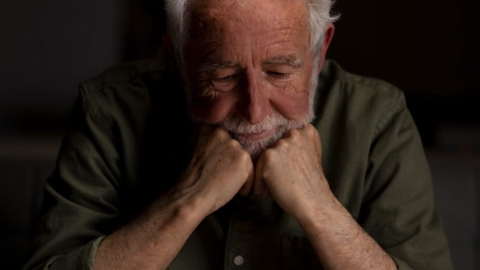
Jack sat across from me in his gray hoodie with his elbows on the table, watching me do it.
“You know you don’t have to control every second of the day, right?” he said.
I didn’t look up. “I’m six months pregnant, Lucy is four, and my husband has cancer. Which part should I stop controlling?”
“Maybe start with me.”
“You’re the least trustworthy one.”
“We’ve been together since high school.”
“Exactly,” I said. “I have evidence.”
He smiled at me. It was a tired smile now. The chemo had taken his eyebrows and most of the color out of his face, but it hadn’t touched the smile. “You’re terrifying,” he said.
“Good. Cancer should be terrified of me.”
He laughed. Then the laugh turned into a cough, and the cough kept going, and he had to grip the edge of the table with both hands until it passed. I got up and got him a glass of water and stood behind him with my hand on his back, feeling his shoulder blades through the hoodie, sharp as wings.
That was us. I organized. Jack joked. Neither of us ever said the obvious thing out loud.
My name is Claire. I was thirty-five that year, living in a little three-bedroom ranch house in Westerville, outside Columbus, Ohio, with a fenced backyard and a maple tree Lucy called “the big one.” I worked part-time as a medical billing specialist for an orthopedic practice, mostly from home, which turned out to be the only thing that made the last eight months possible. Jack was a high school history teacher at Westerville North. He taught sophomores about the Civil War and the Great Depression, and they loved him, because he did all the voices.
We met when we were sixteen, in Mr. Hargrove’s chemistry class, on September 14th. He was the new kid. He’d come from a group home on the east side of Columbus and was living with a foster family three streets from my parents. He sat down next to me and knocked over my beaker of copper sulfate in the first ten minutes, and he spent the rest of the period apologizing. By October, I’d decided I was going to marry him. It took him until he was twenty-four to figure that out for himself.
He was diagnosed in January with stage four pancreatic cancer. By the time they found it, it had already spread to his liver. Dr. Okafor at the James Cancer Hospital was very kind and very honest. He said the word “months,” and then he said “treatment can sometimes extend that,” and I wrote both of those things down in my notebook because I didn’t know what else to do with my hands.
For eight months after that, my whole life was lists. There were medication times and oncology appointments. I made calls to the insurance company, who denied his second line of chemo twice before an appeal finally went through. Bills came in faster than I could open them. Lucy’s preschool schedule was on the refrigerator, and my prenatal appointments were taped next to it. I was pregnant with our second daughter. We’d found out two weeks before the diagnosis. Jack cried in the ultrasound room when they told us it was a girl. He said, “Lucy’s going to have somebody.”
During his last couple of months, Jack started disappearing.
The first time, I came back from Lucy’s swim lesson at the Y and his car was gone. He wasn’t supposed to be driving. He was on enough pain medication to knock out a horse. He came home three hours later, gray and shaking, and went straight to bed.
“Where were you?” I asked him, standing in the bedroom doorway.
“Out.”
“For three hours?”
“I needed air.”
“Jack, you can barely walk through Target.”
“I’m fine.”
He took off his jacket and laid it over the chair, and something rustled in the inside pocket. Papers. A thick folded stack of them.
“What’s in your jacket?”
“Nothing.”
“Those are papers.”
“Claire.”
“And you were on your laptop at two o’clock this morning. I heard you typing.”
He came over to me in the doorway and kissed my forehead. He smelled like hospital soap and the outside air.
“Please don’t interrogate the dying man,” he said.
“I hate that joke.”
“I know.”
It kept happening. Three or four times in those last two months, he’d disappear for an afternoon. Twice I came downstairs at night and found him at the kitchen table with his laptop open and a legal pad covered in notes, and he’d close the laptop when he heard me. Once I saw a name written on the legal pad before he turned it over. It looked like it started with an E.
One night in early August, I finally sat down across from him.
“Whatever you’re doing,” I said, “you can tell me.”
“I wish I could.”
“Then tell me.”
He looked down at the papers in front of him. He put his hand flat on top of them.
“You already have enough to carry,” he said.
“That’s not your decision.”
“It should be sometimes.”
“What does that mean?”
He looked at me for a long time. “It means if someone needed help tomorrow, you’d forget to ask whether you could afford to give it.”
“That sounds like a compliment.”
“It scares me,” he said.
“Why?”
“Because you never know when to let someone else be the problem.”
I didn’t push him after that. I decided that he deserved one corner of his life where cancer, and I, weren’t watching him. Everything else he had was charted and measured and color-coded. I could give him one thing that was just his.
That decision became the first thing I regretted after he died.
Five weeks later, in September, he got much worse. He stopped eating. He slept most of the day. Dr. Okafor talked to us about hospice, and Jack said he’d rather stay at the James a little longer if they’d let him, because he didn’t want Lucy’s memory of the house to be the place where Daddy died. They let him. They put him in a room on the eleventh floor with a window that looked out toward the football stadium.
On a Tuesday night, I sat beside his bed and held his hand. The baby was kicking. I’d put his other hand on my stomach so he could feel it, and he’d smiled with his eyes closed.
Then he opened his eyes and looked at me.
“You look scared,” he whispered.
“So do you.”
“I’m allowed.”
“So am I.”
He almost smiled. “You’ll be okay.”
“Don’t say that.”
“You will.”
“No, Jack.”
“Promise me you’ll keep going.”
“I don’t know how.”
“You’ll figure it out,” he said. “You always do.”
Those were the last clear words he said to me. He slipped into sleep that night and didn’t really come back out of it. He died on Friday morning at 6:20, with the sun coming up over the stadium and me holding his hand. He was thirty-six years old.
Three days later, I sat at our kitchen table with a funeral bill and two overdue notices and a woman from the bank on speakerphone.
The funeral home was Schoedinger on Polaris Parkway. They were very kind, and their bill was $9,840. I’d picked the cheapest casket they had that didn’t look cheap. The overdue notices were from the electric company and from the hospital billing department, for the part of his last hospital stay our insurance wouldn’t pay. The woman from the bank was named Janet. She worked at the branch of Huntington where we had our checking account and our home equity line of credit.
Janet cleared her throat on the phone. “Mrs. Callahan, I want to be honest with you. There isn’t enough in your checking to cover next month’s payments.”
“I know.”
“And the loan against the house…”
“I know about the loan.” I’d signed for it in April. It was a $60,000 home equity line, taken against the house we’d bought in 2017, to pay for a clinical trial treatment at the James that our insurance considered “experimental.” Jack had begged me not to. I’d done it anyway.
“Do you have any other savings?” Janet asked.
“We spent them.”
“Anything you could sell?”
“I already sold my jewelry.” My grandmother’s diamond ring, and my engagement ring, and the gold necklace Jack gave me for our tenth anniversary. A jeweler on High Street gave me $4,100 for all of it. I’d cried in my car in his parking lot.
“I’m so sorry.”
“So am I.”
There was a pause. “Was it for his treatment?”
“Yes.”
“And the home equity line too?”
“When someone offers you one more treatment,” I said, “you don’t ask whether you can afford hope.”
Janet went quiet on the other end of the line. I could hear her breathing.
Then hope dies, and the bills stay. That’s the part nobody tells you.
A week after the funeral, I went back to the James to pick up Jack’s belongings. They’d been holding them at the nurses’ station on eleven. I left Lucy with my mother and drove downtown and sat in the parking garage for ten minutes before I could make myself go up.
A nurse named Rachel met me at the desk. She’d been one of his night nurses. She was in her forties, with reading glasses pushed up on her head, and she’d always brought Jack extra ginger ale and laughed at his terrible jokes.
“Claire,” she said. “I’m so sorry.” She came around the desk and hugged me, carefully, around the baby.
“Thank you. Thank you for everything you did for him.”
She handed me a white plastic bag with “PATIENT BELONGINGS” printed on the side. I opened it standing right there at the desk. His watch, the Timex I’d bought him for his thirtieth birthday. His phone charger. His toiletry bag. A paperback copy of Lonesome Dove with a bookmark two-thirds of the way through. He’d never finish it now. I’d have to finish it for him.
And at the bottom of the bag, folded neatly, there was a women’s cardigan.
It was gray, a soft heather gray, a little worn at the cuffs. I held it up. It wasn’t mine. I’d never seen it before.
“This isn’t mine,” I said.
Rachel looked at the cardigan. Then she looked at me. Something in her face changed, very slightly.
“Oh,” she said. “I thought it belonged to the woman who visited him.”
“What woman?”
“I assumed she was family.”
“Jack didn’t have family,” I said. “He grew up in foster care. He didn’t have anybody but me and Lucy.”
Rachel’s face went red. “I’m sorry. I didn’t realize.”
“How often was she here?”
“Several times. Over the last month or so. Sometimes she stayed a few hours.”
“What did she look like?”
“Dark hair. Early forties, maybe. Slim. Very polite.”
I held the cardigan. It smelled faintly like some kind of perfume, something with vanilla in it. “Did they argue?”
“Not that I saw.”
“What did they do?”
Rachel hesitated. “Mostly talked. There were usually papers everywhere. All over his tray table. Folders.”
“Papers,” I repeated.
“Yes.”
I remembered the documents in Jack’s jacket pocket. I remembered the legal pad he turned over when I came into the kitchen.
“Can I see the security footage?” I asked.
Rachel looked genuinely sorry. “I can’t show you hospital surveillance, Claire. I’m not allowed. That has to go through patient relations and security.”
“Then tell me who she was.”
“I honestly don’t know her name. She signed in at the front desk downstairs. They’d have it, maybe.”
It took me four days and a lot of phone calls. I talked to patient relations. I talked to a woman in risk management. I talked to the head of security for the medical center, a retired Columbus police lieutenant named Mr. Hollis, who finally agreed to let me view a few clips in his office, with him sitting there, on the grounds that I was the patient’s widow and the next of kin. He wouldn’t let me take copies. He wouldn’t give me her name from the visitor log either, because the hospital’s policy was to protect visitor information. But he let me watch.
The footage was black and white and a little grainy. It showed the hallway outside Jack’s room on eleven.
A woman walked down the hall toward his door. She had dark hair pulled back in a low ponytail. She was wearing jeans and a long coat, and she was carrying a thick folder against her chest. She knocked on the door, waited, and went in.
“I’ve never seen her before,” I said.
“She came carrying that folder every time,” Mr. Hollis said.
“How long did she stay?”
He checked the timestamps. “This one, almost two hours.”
He clicked to the next clip. “This is the following day.”
It was the same woman, coming out of Jack’s room. She stopped in the hallway with the door closing behind her, and she put her hand over her face, and her shoulders shook.
“She’s crying,” I said.
“Yes.”
“Were they alone? In there?”
Mr. Hollis looked at me. “Mrs. Callahan…”
“Were they?”
“Mostly,” he said quietly. “Nurses came in and out.”
I stared at the frozen image on the screen. A woman with dark hair crying in a hallway outside my dying husband’s room.
For three days after that, I couldn’t stop thinking about it. I replayed everything. The secret drives and the hidden papers. The laptop at two in the morning and the legal pad turned face down. “You already have enough to carry.” I lay in our bed at night with my hand on my stomach and Jack’s side of the mattress cold, and I went over all of it again and again.
At two in the morning on the third night, I whispered into the dark, “Were you cheating on me?”
I hated myself for asking a dead man that. I hated myself for even thinking it. I’d known him since I was sixteen years old. But I couldn’t make it stop.
The next afternoon, somebody knocked on my front door.
Lucy was at the kitchen table coloring a picture of a stegosaurus. She’s been in a dinosaur phase since she was three. She looked up. “Mommy, who’s here?”
“I don’t know, baby.”
I went to the door and opened it.
It was her. The woman from the footage. She had the same dark hair pulled back, and she was wearing the same long coat. She was holding a white envelope against her chest with both hands, the way she’d held the folder in the hospital hallway.
“Are you Claire?” she said.
“Who are you?”
“My name is Mara.”
My heart was pounding so hard I could feel it in my throat. “Why were you visiting my husband?”
“Jack asked me to bring you this.”
“That wasn’t my question.”
“I know.” She held out the envelope. “He asked me to give this to you only after his death. Not before. He was very clear about that.”
I didn’t take it. “What is it?”
Mara looked at me strangely. It wasn’t pity exactly. It was more like surprise. “So you really don’t know what he left you?” she said.
That sentence scared me more than the cardigan ever had.
I snatched the envelope out of her hand. It wasn’t sealed. Inside there was a single folded sheet of yellow legal paper. Jack’s handwriting was on it, his slanty, cramped teacher’s handwriting, the same handwriting he used to write “See me!” on his sophomores’ essays.
“Claire,
“I’m sorry you’re learning this without me.
“There’s a five-year-old boy named Ethan.
“You don’t owe him anything. If you want to stop here, stop.
“But if you find him, you’ll understand why I couldn’t walk away.
“I’m sorry I never told you.
“Jack”
I read it twice. Then I looked up at the woman on my porch.
“Ethan who?”
Mara didn’t say anything.
“Is Ethan your son?”
“No.”
“Were you sleeping with Jack?”
“No,” she said. She said it immediately and plainly, without getting offended, like she’d expected me to ask.
“Then who is he?”
“I can’t tell you.”
I actually laughed. It came out of me ugly and loud. “You come to a pregnant widow’s house with a letter from her dead husband telling her to find a five-year-old boy, and you can’t tell me who he is?”
“Jack wanted you to decide whether to keep looking.”
“Why?”
“Because once you know, you can’t unknow it.”
“Stop talking like you’re in a movie.”
She flinched. “You’re right,” she said. “I’m sorry. I’ve been rehearsing this in my car for a week and it all sounds stupid out loud.”
That disarmed me a little. Not much. A little.
“Who are you?” I said again.
“I grew up in care,” Mara said. “In the county system. Jack and I knew each other from the children’s home on Parsons Avenue. We were there at the same time, for about two years. I was twelve. He was thirteen.”
That stopped me cold.
Jack almost never talked about those years. In nineteen years, I’d gotten maybe a dozen stories out of him, and most of them were funny ones. A food fight. A counselor who sang Elvis in the van. He never talked about the hard parts, though I knew there were hard parts, because sometimes he’d wake up in the night and not know where he was.
“You knew him as a kid,” I said.
“Yes.”
“And now?”
“I’m a social worker. I work with families and children moving through the system. Foster care, kinship placements. I work for Franklin County Children Services.”
“Was that why you were at the hospital?”
“I was helping him locate Ethan,” she said. “And understand what options existed. Legally.”
I swallowed. Behind me, I could hear Lucy humming to herself in the kitchen.
“Then whose child is Ethan?” I asked.
Mara shook her head. “I promised Jack I wouldn’t tell you who Ethan was.”
“That’s ridiculous.”
“Maybe. But he wanted you to decide whether you wanted to keep looking. He didn’t want me putting another responsibility in your lap the week he died. He said you’d already carried enough for ten people.”
“Did he have another family?” I asked.
“That’s exactly the question Jack made me promise not to answer.”
“So that’s a yes.”
“It means,” Mara said, “that if you want the answer, you’ll have to keep looking.”
She took a business card out of her coat pocket and held it out. “Mara Delgado, LSW.” There was a phone number. I took it.
“I’m sorry,” she said. “I really am. He loved you. He talked about you constantly. I know that doesn’t help.”
Then she turned and walked back down my front walk to a blue Honda parked at the curb, and she drove away.
I stood in the doorway holding the letter and the card. By the time her car turned the corner, I’d convinced myself completely. Jack had a son. A five-year-old son. Somewhere out there, with some other woman, and he’d spent the last weeks of his life with papers and folders trying to take care of him behind my back.
I went back into the kitchen and put the letter face down on the counter and made Lucy a grilled cheese sandwich, and I burned it, and she ate it anyway.
The next morning, after I dropped Lucy at preschool, I sat down at the kitchen table and opened Jack’s laptop.
He’d changed the password.
I tried everything I could think of. Lucy’s birthday, and our anniversary. The name of his first car, a Ford Escort he’d called “the Tank.” His school ID number. His favorite Ohio State quarterback. After twenty minutes, I was ready to throw it across the room.
Then I tried 091404. September 14th, 2004. The day he knocked over my beaker in Mr. Hargrove’s chemistry class.
It opened.
“Seriously, Jack?” I said out loud to the empty kitchen.
I started going through everything. His email, which was mostly school stuff and fantasy football. His documents folder. His browser history. One name kept coming up over and over again, in file names and in email subject lines and on the notes app.
“Ethan C.”
“Who are you?” I said to the screen.
There was a folder on the desktop named “E.” Inside, there were invoices from a law firm in downtown Columbus called Whitfield & Moss. There were receipts. There was an invoice for “childcare expenses — Oct.” and another for “childcare expenses — Nov.” There were documents I didn’t understand at all, with legal language and case numbers. And there was a spreadsheet. Of course there was a spreadsheet. It was named “ETHAN TRUST.”
I opened it. There were columns of numbers, deposits and dates. At the bottom, there was a balance of $38,600.
“You had a trust for him,” I whispered.
I sat there in the kitchen with my hand over my mouth. Thirty-eight thousand dollars. While I was selling my grandmother’s ring on High Street. While I was signing a home equity loan at Huntington. While I was on the phone with Janet hearing that there wasn’t enough for next month.
I went through the rest of the folder in a kind of cold fury, clicking on everything.
Then I found the insurance documents.
They weren’t in the “E” folder. They were in a different folder, named “C + L + Baby.” There was a life insurance policy, a twenty-year term policy through Northwestern Mutual. He’d bought it in 2018, the year after we bought the house, and I’d never known about it. The death benefit was $500,000. The beneficiary designation listed me as primary beneficiary. Below that, he’d set up a separate contingent arrangement so that if anything happened to me, it would go into a trust for Lucy and “unborn child, female.” There was a note in a text file next to it, with a phone number for the agent and a list of instructions. The note said, in his voice, “Claire. Call Doug at this number. Don’t let them stall. Don’t sign anything without reading it twice, which I know you’ll do anyway. Pay off the HELOC first. Then breathe.”
I read it, and then I put my head down on the kitchen table and cried for a long time.
He’d protected us. All of us. Me and Lucy and the baby he’d never meet. He’d been paying premiums on that policy for eight years out of his teacher’s paycheck, and he’d never said a word, because he knew I’d say we couldn’t afford it.
But he’d also set up a trust for a little boy named Ethan C., and he’d hidden it from me.
When I picked Lucy up from preschool, she climbed into her car seat and saw my face.
“Mommy, did you cry?”
“A little.”
“Why?”
“I was looking at Daddy’s computer.”
That evening, I had the laptop open again on the kitchen table while she ate her macaroni. She leaned over to look at the screen.
“Is that Daddy’s computer?”
“Yes, baby.”
“Is Daddy in the computer?”
My throat closed. “No, sweetheart. Mommy’s just looking for something.”
She ate some macaroni and thought about it. “Are you mad at Daddy?”
“I don’t know yet.”
She watched me click through files. “Are you still mad?”
“Yes.”
“At Daddy?”
“I think so.”
“Why?”
“Because he should have told me something.”
“Can you ask him?”
My hand froze on the mouse. “No, baby,” I said. “I can’t.”
“Oh,” Lucy said. She went back to her macaroni.
After she was asleep, I found the maps. Jack’s browser history was full of Google Maps searches, the same address searched again and again, with directions from the James and directions from our house. It was a street in Pickerington, a suburb on the other side of Columbus, about forty minutes from us. The searches went back to last November. There were dozens of them.
The same address. Again and again.
I called the number on Mara’s card. It was almost ten o’clock at night. She picked up on the second ring.
“This is Mara.”
“I found the money,” I said.
There was a long silence on the line.
“Claire…”
“I found the trust. Thirty-eight thousand dollars. I found the law firm. I found the address in Pickerington. I’m going there tomorrow.”
“Please,” Mara said. “Please don’t show up angry.”
“So he is Jack’s son.”
“I didn’t say that.”
“You didn’t have to.”
“Claire, listen to me. Whatever you think Jack did, don’t make Ethan pay for it. He’s five years old. He’s been through more than you can imagine.”
“I would never hurt a child,” I said. “Never.”
“I know,” she said. “That’s why Jack trusted you.”
“Don’t tell me what my husband thought.”
She was quiet for a second. “Then go,” she said finally. “But go for the truth, not for revenge.”
I hung up on her.
The next morning, my mother came over to watch Lucy. I didn’t tell her where I was going. I said I had a doctor’s appointment. I got in my car and put the address into my phone and drove across Columbus on I-270, through the morning traffic, with Jack’s letter on the passenger seat. I was completely certain I was about to meet the proof that my marriage had been a lie.
The address in Pickerington was a two-story house on a cul-de-sac. It had beige siding and a basketball hoop in the driveway, and three bicycles leaning against the garage, different sizes. There was a hand-painted sign on the front door that said “WELCOME — ALL SIZES OF SHOES OFF PLEASE.”
I sat in my car for a while. Then I got out and rang the doorbell.
A woman opened the door. She was in her fifties, Black, with gray-streaked hair cut short and a dish towel over one shoulder. Somewhere behind her, a baby was crying and a TV was playing cartoons.
“Can I help you?”
“I’m sorry to just show up,” I said. “My name is Claire.”
“I’m Denise.”
“I’m looking for… there’s a boy here, I think. Named Ethan.”
Her expression changed completely. It went from polite to something careful and almost sad.
“You’re Jack’s wife,” she said.
“You knew him?”
“He visited Ethan,” Denise said. “Here.”
My knees nearly gave out. I put my hand on the doorframe. “Can I see him?”
Denise studied me for a long moment, like she was reading something in my face. Then she looked down at my belly. Then she sighed.
“Come in,” she said. “Shoes off.”
I took my shoes off in the front hall next to a pile of maybe fifteen other pairs, sneakers and sandals and rain boots. The house smelled like toast and laundry detergent. She led me into a living room with a big sectional couch and a playpen in the corner where a baby was standing up holding the rail, red-faced, mid-wail. Denise scooped the baby up on the way past without breaking stride.
In the middle of the living room floor, a little boy was building a train track.
It was one of those wooden tracks, the kind that fits together in curves and straight pieces. He’d built it in a huge loop around the coffee table with a bridge over a pile of books. He was kneeling with his tongue sticking out the corner of his mouth, trying to fit a curved piece into place.
He looked up.
He had dark eyes, very dark brown, almost black, with long eyelashes. And he had a stubborn cowlick right at the front of his hairline, sticking straight up, the kind no amount of water will flatten.
I grabbed the back of a chair.
“Oh my God,” I said.
Denise stepped closer, bouncing the baby on her hip. “Are you okay?”
“He looks like Jack.”
He did. I’d spent nineteen years looking at those eyes. Jack had that exact cowlick. When we were dating, I used to lick my thumb and try to flatten it, and he’d swat my hand away. Lucy had it too, a little.
Denise glanced at Ethan. She didn’t say anything.
“He does,” I said. “Doesn’t he?”
“I suppose a little,” she said carefully.
A little. This was his son. There was no other explanation. I was so sure of it that I stopped even thinking about any other possibility.
“Ethan,” Denise said gently. “This is Claire.”
His whole face lit up. “I know,” he said.
I stared at him. “You know me?”
“Jack showed me your picture,” he said. “On his phone.”
“He did?”
“And Lucy’s.” He fit the curved piece of track into place and looked up at me again. “She likes dinosaurs.”
Despite everything, I smiled. “She does.”
“Her favorite is the stegosaurus because it has plates,” Ethan said. “My favorite is the brachiosaurus because it has the longest neck. And you make pancakes on Sundays. With chocolate chips. And sometimes you make them in a shape.”
My smile disappeared.
Jack had talked about us. Here. In this house, to this little boy, he’d talked about my Sunday pancakes.
“How often did he come here?” I asked Denise.
She hesitated. “Quite a few times. Since about last November. Every couple of weeks at first. More this summer.”
“Alone?”
“Not always.”
“Who came with him?”
“Mara, sometimes. The social worker. And an older woman. A Mrs. Bennett.”
The name hit me right away. Mrs. Bennett. I’d seen that name in Jack’s laptop, in his contacts and in a couple of emails. I hadn’t paid attention to it, because it was mixed in with all the legal stuff.
“What did she tell you about Ethan?” I asked.
“Almost nothing.”
“Nothing?”
“Claire,” Denise said. She shifted the baby to her other hip. “This is a licensed foster home. I’ve got four kids here right now. That one, and Ethan, and two teenage girls who are at school. I’ve been doing this nineteen years. We’re given the information we need to take care of these children. Their medical needs. Their schedules. What they’re allergic to. We are not given every detail of their families.”
“But you knew Jack.”
“I knew he cared about Ethan,” she said. “I knew he came here sick as a dog and sat on that floor and built train tracks for two hours. I knew he cried in my kitchen once when he thought nobody was looking.”
“As his father?” I said.
Denise’s face tightened. “I can’t answer that.”
“Because you’re not allowed to?”
“Because I honestly don’t know,” she said.
I stared at Ethan on the floor. He’d gone back to his train track. He was pushing a little blue engine around the loop, making a chugging noise under his breath.
I thought I was finally close to the truth.
I took out my phone. I went to my contacts. I’d copied some numbers off Jack’s laptop the night before, everything that looked important, and Mrs. Bennett’s was one of them.
“She knows,” I said.
“Who knows what?” Denise said.
“Who Ethan is,” I said, and I hit call.
It rang four times. Then a woman answered. Her voice was old and thin and very precise. “Hello?”
“Mrs. Bennett?”
“Yes?”
“My name is Claire Callahan. I’m Jack’s wife.”
There was a pause.
“Oh,” she said.
That one word told me I’d found the right person.
“Jack contacted you last year,” I said.
“Yes. He did.”
“I need to know why.”
There was a long silence. Then Mrs. Bennett said, “Can you come to me? I don’t drive anymore. And I don’t think this is a telephone conversation.”
Two hours later, I was sitting at a small kitchen table in an apartment in a senior living building in Bexley, across from an eighty-one-year-old woman.
Her name was Lorraine Bennett. She had white hair in a neat bun and large glasses and hands that shook a little when she poured the tea. Her apartment was small and very tidy, full of photographs. Dozens and dozens of photographs of children. They were in frames on every surface, on the walls, on the refrigerator.
“I was a house mother at the Parsons Avenue children’s home for thirty-one years,” she said. “From 1978 to 2009. I knew Jack when he was a boy. I’ve known a lot of boys.” She looked around at the photographs. “These are some of them.”
She pushed an old photograph across the table toward me. It was a square snapshot, faded orange the way old color photos get, with a white border. It showed two little boys sitting on the front steps of a brick building. They were maybe four and six. They were both in striped T-shirts, squinting into the sun. The smaller one had his arm around the bigger one’s neck.
“Which one is Jack?” I said.
Mrs. Bennett reached out with one shaking finger and touched the taller boy.
I looked at him. I’d never seen a picture of Jack younger than about twelve. He’d told me there weren’t any. He had the cowlick, sticking straight up.
“And the other one?”
“Daniel,” she said.
“Who’s Daniel?”
“Jack’s brother.”
I stared at her. “Jack didn’t have a brother.”
“He did.”
“No,” I said. “He grew up believing he had no family. He told me that the first week I knew him. Nobody. No parents, no brothers, no sisters, no aunts.”
“Because he didn’t know,” Mrs. Bennett said gently.
I looked back down at the photograph. “How is that possible?”
She folded her hands on the table. “Their parents were killed in a car accident on Route 33 in 1994. Jack was six. Daniel was four. They came into county care together. They were at Parsons Avenue together for about four months. This picture was taken there. I took it.” She touched the edge of it. “Then Jack went to a foster placement in Grove City, and Daniel went to a different placement in Marion, because nobody had room for both of them. That happens more than you’d think. There were mistakes in the records. Jack’s file listed him as an only child. Somebody typed it wrong, or somebody didn’t fill in a box. Daniel’s file was transferred to Marion County. And they lost track of each other.”
“Nobody told Jack?”
“He was six. And then he was eight, and then he was ten, in three different homes. By then, I think he didn’t remember. Or he remembered a little boy and thought he’d dreamed him.” She took off her glasses and rubbed her eyes. “When he came back to Parsons Avenue at thirteen, I’d moved to the girls’ wing. I didn’t put it together. I had so many children. I’m ashamed of that.”
“And Jack only found out last year?”
“Yes. After his diagnosis. He requested his full records from the county. All of them. He said he wanted to know where he came from before he went. He didn’t expect anything. And there it was, in a court document from 1994. ‘Minor children: Jackson Callahan, age 6, and Daniel Callahan, age 4.'”
I put my hand over my mouth.
“He called me,” Mrs. Bennett said. “He found my name in the records, as the house mother. He wanted to know if I remembered. I did. I’d kept this picture for thirty years. I didn’t know why.”
“Did he find Daniel?” I asked.
Mrs. Bennett looked down at the table.
“He tried,” she said.
“What happened?”
“Daniel had already died.”
I thought of Ethan, sitting on Denise’s living room floor with his blue train engine.
“No,” I said.
“Two years ago,” Mrs. Bennett said quietly. “In Marion. An overdose. He’d struggled for a long time. He’d aged out of foster care at eighteen with nothing, the way a lot of them do. He worked at a warehouse. He’d been sober for a while, Mara told me. Then he wasn’t.”
She held my eyes.
“Ethan is Daniel’s son,” she said.
For a second, I couldn’t speak at all.
“So Jack wasn’t…”
“No,” Mrs. Bennett said. “Jack wasn’t Ethan’s father. He was his uncle.”
I looked at the two little boys in the faded photograph again. The smaller one with his arm around his big brother’s neck.
“He spent his whole life thinking he had no family,” I said.
“Yes.”
“And when he finally found his brother, he was already gone.”
“Yes,” Mrs. Bennett said. “But his son wasn’t.”
Ethan. The cowlick, and the dark eyes. A little boy who looked like Jack because he looked like Jack’s brother, who must have looked like their father.
Suddenly everything Jack had done looked completely different to me. The secret drives. The papers. The laptop at two in the morning. The trust.
“That’s why he couldn’t walk away,” I said.
Mrs. Bennett nodded.
“Ethan’s mother?” I asked.
“Her rights were terminated last year,” Mrs. Bennett said. “I don’t know the details. Mara does. She’s somewhere in Kentucky, I think. Ethan’s been in foster care since he was three. He’s been at Denise’s for a year and a half. He’s in kindergarten now.”
I sat there in her little kitchen with my cold tea and the photograph, and I cried. Mrs. Bennett got up and got me a box of Kleenex and stood next to my chair with her shaking hand on my shoulder, the way she must have stood next to a thousand crying children.
“He loved you very much,” she said. “He told me so. He said, ‘Mrs. B., she’s the best person I’ve ever met, and I’m going to leave her with a mess.'”
That night, Mara came back to my house. I called her and asked her to. She sat on my couch in her long coat with a cup of coffee I’d made her, and I sat across from her in Jack’s recliner, and Lucy was asleep down the hall.
“Why didn’t he tell me?” I asked her.
Mara looked at my stomach. “You really need me to answer that?”
“Yes.”
“He watched you sell your jewelry, Claire.”
“I chose to.”
“You took a loan against your house.”
“I chose that too.”
“You were six months pregnant. You were raising Lucy and driving him to treatment and fighting with the insurance company and barely sleeping. He told me you were up at four every morning doing the pill organizer.”
“So?”
“So he knew exactly what you’d do if he told you about Ethan.”
“What?”
“Say yes,” Mara said. “Immediately. Help him. Take on the lawyers and the county. Maybe even offer to take Ethan into this house before you ever stopped to ask whether you could handle it. Pregnant, with a four-year-old, with a dying husband and no money.”
I didn’t say anything.
“He thought I’d do that?” I said finally.
“He knew you would,” Mara said. “He said it was the thing he loved most about you and the thing that scared him most.”
“Then why leave me the letter at all?”
“Because telling you Ethan existed wasn’t the same as deciding his future for you,” Mara said. “He didn’t want to hide him from you forever. He just didn’t want to hand him to you while you were drowning. He wanted you to be able to choose. After.”
I looked away from her, out the dark front window.
“He should have told me,” I said.
“Yes,” Mara said. “He should have.”
“I loved him. That doesn’t make what he did right.”
“No. It doesn’t.”
“But now I understand it.”
“That’s different from forgiving him,” she said.
“I know.”
We were quiet for a while. A car went by outside.
“And the money?” I said. “The thirty-eight thousand?”
“Most of it isn’t from Jack,” Mara said. “When Daniel died, he had a small life insurance policy through his warehouse job. Forty thousand. Ethan was the beneficiary. But there was nobody to manage it for him. It was just sitting with the insurance company in limbo. Jack hired Whitfield & Moss to get a guardian of the estate appointed through probate court and set up a proper trust, so the money would actually be there for Ethan when he’s older. The legal fees came out of Jack’s pocket. And some of the childcare expenses. Denise’s agency gets a stipend, but Jack paid for Ethan’s after-school program, and swim lessons, and a speech therapist the county wouldn’t cover.”
“From where? We didn’t have any money.”
“He sold his baseball card collection,” Mara said. “Did you know that?”
I didn’t. Jack had been collecting baseball cards since he was ten, in the group home. He had a binder of them he’d kept with him through every placement, the one thing he’d always carried. He’d told me in April that he’d “put them in storage.”
“He sold them on eBay,” Mara said. “In June. He got about eleven thousand dollars. A Ken Griffey Jr. rookie card. He was very proud of himself.”
I started laughing, and crying, both at the same time.
“And he protected your benefits too,” Mara said. “He told me about the life insurance. He made sure none of it was tangled up with Ethan’s trust. He made sure everything for you and Lucy and the baby was completely separate. He had his lawyer check it twice.”
“Of course he made spreadsheets,” I said, wiping my face.
“So many spreadsheets,” Mara said. “He showed me a color-coded one once. Green for Ethan, blue for you. I told him he’d caught it from you.”
“He knew I’d investigate,” I said.
“Absolutely.”
“He knew I’d be furious.”
“Terrified, actually,” Mara said. “He said you’d find the cardigan first and think the worst.”
I looked at her. “The cardigan’s yours?”
“I left it on the chair in his room the day before he died,” she said. “I’m sorry. I wasn’t thinking.”
For the first time since the funeral, I really laughed.
I still wasn’t ready to become Ethan’s family. I wasn’t ready for anything. But for the first time, I was ready to ask whether I could.
The next couple of weeks, I made a lot of phone calls. I called Doug at Northwestern Mutual about the life insurance claim, and I read every page twice before I signed anything, exactly like Jack knew I would. When the payout came through, the first thing I did was drive to the Huntington branch and pay off the home equity line in full. Janet came out from behind her desk and hugged me. Then I went home and sat in my car in the driveway for twenty minutes and breathed, like the note told me to.
I called Ethan’s caseworker at Franklin County Children Services, a young man named Terrence, who was polite and overworked and told me that as Ethan’s aunt by marriage, I could be considered as a kinship placement if I wanted to be, but that it would take time, and a home study, and background checks, and classes. I met with Denise again, this time with Mara there, and we sat at her kitchen table while Ethan and the two teenage girls watched a movie in the living room. I met with an attorney, a woman named Patricia Moss at Whitfield & Moss, the same firm Jack had hired. She had silver hair and a big office looking out at the Scioto River and a framed photo on her desk of what looked like nine grandchildren.
She went through everything with me for an hour. The trust, the probate court, what kinship placement meant, and what guardianship would mean down the road. Then she leaned back in her chair.
“Can I ask you something personal?” she said.
“Sure.”
“Can you actually afford another child? Right now?”
I thought about it. I thought about the baby due in December. I thought about Lucy, and my part-time job, and the life insurance money that had to last us for years. I thought about how tired I was.
“Not right now,” I said. “No.”
“Good,” Patricia said.
I blinked at her. “That’s a strange response.”
“It means you’re thinking before you promise,” she said. “Most of the people who sit in that chair and say yes right away are the ones who fall apart six months later. And then the child goes back into the system, and that’s worse than never leaving it. Your husband understood that. He told me, in this office, that you’d say yes before I finished the sentence. He asked me to make sure you didn’t.”
“I’m starting to understand that,” I said.
“There are a lot of ways to be family to a child,” Patricia said. “Not all of them mean moving him into your house next week.”
My daughter, Josephine, was born on December 11th, at Riverside Methodist, at 3:52 in the morning. Seven pounds, four ounces, with a full head of dark hair and, yes, a cowlick. My mother was there, and Lucy came to the hospital the next morning wearing a stegosaurus sweatshirt and announced to the nurses that she was a big sister now and in charge.
Two weeks after that, on a cold Sunday afternoon, I drove to Green Lawn Cemetery on the south side of Columbus with Josephine bundled in her car seat. I left Lucy with my mother. It was the first time I’d been back to Jack’s grave since the funeral. There’s no headstone yet. The funeral home said it would be spring. There’s just a small temporary metal marker with his name on it, and the frozen ground, and the flowers I’d brought, which were already wilting in the cold.
I sat down on the edge of the grave on a blanket with Josephine in her car seat beside me. I took the old orange photograph out of my coat pocket. Mrs. Bennett had given it to me. She said she’d kept it thirty years and it was time for it to go to family. I propped it against the little metal marker. The two brothers on the brick steps, squinting into the sun.
“You found him too late,” I said to Jack. “But you found Ethan.”
Josephine made a little squeak in her sleep. I put my hand on her blanket.
“So did I,” I said.
I sat there for a while longer. The wind came through the trees. Somewhere off across the cemetery, somebody was raking leaves.
“I’m doing this my way, Jack,” I said. “You’re going to have to live with that.”
I smiled. I think he would have too.
The kinship process is still moving. It’s slow. There have been three home visits from a woman named Gloria at the county, who looks under my sinks and inside my refrigerator and asks how I’ll handle bedtime with three children, and to whom I said, honestly, “Badly at first.” I’ve taken two of the foster parent classes on Tuesday nights at a community center on Cleveland Avenue, with Josephine asleep in a carrier on my chest. Denise says there’s no rush, and Terrence says there’s no rush, and Patricia Moss says there’s no rush. For once in my life, I’m trying to believe people when they tell me that.
I don’t know what our family will look like a year from now. I don’t have a plan for it. There’s no spreadsheet. But Ethan comes to our house every other Sunday now, and Denise drops him off at ten and picks him up at four.
The first Sunday he came, he walked into our kitchen and looked around very seriously, like he was checking it against something in his head. Then he looked at the stove.
“Are there pancakes?” he said.
“There are pancakes,” I said.
“With chocolate chips?”
“With chocolate chips.”
“In a shape?”
“What shape do you want?”
He thought about it. “Brachiosaurus.”
“Stegosaurus!” Lucy yelled from the table.
“Brachiosaurus has the longest neck,” Ethan told her.
“Stegosaurus has plates,” Lucy said.
They argued about it the whole time I was cooking. Josephine screamed in her bouncy seat because nobody was paying attention to her. I tried to make a brachiosaurus and a stegosaurus out of pancake batter in the same pan, and the brachiosaurus’s neck broke off when I flipped it, and the stegosaurus came out looking like a potato. Ethan ate the neck separately. Lucy said her stegosaurus was “the best one ever made in history,” and put so much syrup on it that it floated.
I stood at the stove with the spatula in my hand and syrup on my sleeve and listened to the two of them, my daughter and Jack’s nephew, arguing at my kitchen table about which dinosaur was better. Then I went and got a wet paper towel and wiped Lucy’s face, and Ethan’s cowlick was sticking straight up, and without thinking about it I licked my thumb and tried to flatten it.
He swatted my hand away.