“Family helping family. That’s funny, Lyle. Isn’t that the thing you wouldn’t do in April? Call your banker. Maybe he’ll come plow you out.”
That’s what my wife’s brother said on the speakerphone at 2:17 in the morning on the last Sunday in November. Then he hung up.
My daughter was sitting on the edge of our bed, in her flannel nightgown, with a bath towel under her, holding her belly with both hands. Her water had broken nineteen minutes earlier. Her husband was seven thousand miles away in Kuwait. And between our farmhouse and the ambulance that was waiting for us out on the blacktop, there were three miles of gravel road under four-foot snowdrifts.
My wife Patty stood there holding the phone and looking at it. Her own little brother. She’d changed his diapers.
“He hung up,” she said. “Lyle. He hung up on me.”
I’ll back up so you understand how we got to that phone call. It goes back further than that night. It goes back to April, and to 2014, and to a big gray envelope I’d kept in the bottom of my gun safe for almost ten years without telling a soul. Not even Patty.
My name is Lyle Brennan. I’m sixty-seven years old. I farm three hundred and twenty acres of corn and beans in Winneshiek County, in the far northeast corner of Iowa, about six miles north of a little town called Ridgeway. My grandfather bought the home place in 1938. My father milked sixty cows here until 1989. I milked them until 2003, when my knees and the milk price both gave out about the same year, and I went to row crops.
Patty and I have been married forty-three years. She taught fourth grade in Cresco for thirty years and she can still make a room full of nine-year-olds go quiet just by standing up straight. We have two kids. Our son Ben farms with me and lives in the old tenant house across the section. Our daughter Megan is twenty-nine. She teaches kindergarten in Decorah, which is the bigger town about eighteen miles southeast of us, where the hospital is.
Megan married Nick Dvorak three years ago. Nick’s a good kid. A staff sergeant in the Iowa National Guard, and an electrician the rest of the time. His unit got sent to Kuwait in June. He’s supposed to be home in February. When they found out Megan was pregnant last spring, Nick about cried on the phone, and then he did cry, and then he said, “Lyle, you’ll watch out for her, right?”
I said, “Son, that’s my girl. You don’t have to ask.”
Megan’s due date was December twelfth. In October she gave up the lease on their little apartment in Decorah and moved back home with us, into her old bedroom with the pink walls she painted when she was thirteen. She said she didn’t want to be alone when it happened. Patty was over the moon about it. She started knitting about forty hats.
Now I have to tell you about Roger.
Roger Kuehl is Patty’s younger brother. He’s fifty-eight. He lives a mile and a half down our gravel road, on an acreage that used to be part of the Kuehl family farm before their dad sold most of it. He drives truck for the co-op in Ridgeway in the summer and fall, and in the winter he runs a snowplow business. He’s got a big white 2022 Ram 3500 with a nine-foot V-plow on the front that cost him, as he tells it, more than my first house. He plows the co-op lot, and the Casey’s, and the Lutheran church, and about thirty driveways up and down the county roads.
Roger is a hard worker. I’ll say that for him. He’s also proud and loud, and he’s been in trouble with money most of his life. He got divorced in 2015. His ex-wife Deb took the kids to Rochester. He’s been mostly alone out there since.
In April of this year, Roger came over to our place on a Sunday afternoon and sat down at our kitchen table and asked me to co-sign a loan for him at Farmers and Merchants Savings Bank in Ridgeway. Eighty-five thousand dollars. He wanted a skid steer and a second plow truck so he could take on the big contract for the school district parking lots.
“It’s a sure thing, Lyle,” he said. “I’ve got the contract lined up. I just need somebody with land behind them to sign. Gene Halvorsen at the bank said if you’ll sign, he’ll do it.”
I said no.
I said it quietly. I said, “Roger, I’m sorry. I can’t do it.”
He looked at me like I’d slapped him.
“Why the hell not?”
“I have my reasons.”
“What reasons? You’ve got three hundred and twenty acres free and clear. You’ve got more money than God. You’d be signing a piece of paper.”
“I’m not going to do it, Roger.”
Patty was standing at the sink. She turned around and said, “Lyle. He’s my brother.”
“I know who he is, Patty.”
Roger stood up. He knocked his coffee cup over doing it. He pointed his finger at me across the table.
“You know what you are? You’re a cheap, tight-fisted son of a gun who’d let your own family go under before you’d put your name on a piece of paper.”
He walked out. He didn’t come to Megan’s baby shower in September. He didn’t come to Thanksgiving. At Easter, at Patty’s mother’s place in Cresco, he’d said in front of everybody, “Patty, your husband would let me go bankrupt before he’d sign his name.”
Patty asked me a dozen times after that why I wouldn’t do it. I wouldn’t tell her. I just said I had my reasons. She stopped asking after a while, but I knew it was eating at her. She loves her brother. And she thought I was being stubborn, and maybe cheap, and she didn’t understand.
I had my reasons. They were in the gun safe.
But I’ll get to that.
The snow came on the Saturday after Thanksgiving. It was the first real snow of the year. The radio out of Decorah, KDEC, had been talking about it for days. Eight to twelve inches, they said, with northwest winds gusting to forty-five. A “significant winter weather event.” They said stay home if you can.
It started about four in the afternoon. By supper there were five inches and the wind was picking up. By ten, when we went to bed, you couldn’t see the machine shed from the kitchen window, and it’s only sixty yards away. The yard light was just a blur.
Megan had been having little cramps all evening. She said they were nothing. Braxton-Hicks, she called them. The practice ones. She said the doctor told her she might get them for weeks.
At 1:58 in the morning, she knocked on our bedroom door.
“Mom,” she said. “Mom, Dad. I think my water just broke.”
Patty was out of bed before I’d even got my eyes open. I heard her say, “Okay, honey. Okay. Sit down. Here, sit right here,” and then she said, “Lyle, get the towels,” in her fourth-grade teacher voice, and I got the towels.
Megan sat on the edge of our bed with a towel under her. She was white as a sheet. She was trying to be brave about it.
“It’s two weeks early,” she said. “Mom, it’s two weeks early. Is that okay?”
“Two weeks is fine, honey. You were two weeks early.”
“Was I?”
“You were. You came in the middle of a blizzard too. Your dad had to drive me to Cresco behind a snowplow.”
Megan laughed a little. Then she grabbed her belly and stopped laughing and breathed through her teeth for about thirty seconds.
“That one was real,” she said.
I looked at my watch. 2:01.
The next one came at 2:07.
“Six minutes,” Patty said. “We need to go. Lyle, get the truck warmed up.”
I put on my coveralls over my pajamas and my boots and my Carhartt hat and I went out the back door into the snow.
I’ve lived on this farm my whole life. I’ve seen a lot of snow. I’ve seen the blizzard of ’75, when the drifts went over the top of the machine shed, and the Halloween storm of ’91. But I want to tell you, when I stepped off the back porch that night, I couldn’t see my own hand in front of my face. The wind was coming out of the northwest across the open fields like a freight train, and the snow wasn’t falling, it was flying sideways, and it was already up to my knees in the yard where it had blown off the field.
I got to the pickup. It’s a 2019 Ford F-150, four-wheel drive. I started it and let it run. I cleaned off the windshield. Then I backed it around and tried to get it down the lane.
Our lane is about two hundred yards long, from the house out to the gravel road. There’s a row of old cottonwoods along the west side that my grandfather planted, and in a northwest wind, the snow blows through those trees and piles up on the lane like sand behind a fence.
I got about a hundred and fifty yards. Then I hit the drift.
It was over the hood. I didn’t see it until I was in it. The truck just stopped. I put it in reverse and the wheels spun. I put it in four-low and rocked it back and forth. Nothing. I got out with the flashlight and looked. I was high-centered on packed snow, with the front end buried to the windshield.
I stood there in the wind looking at that drift, and I thought, Lord, she’s going to have this baby in my kitchen.
I walked back to the house. It took me about ten minutes to walk a hundred and fifty yards. When I got back in, Megan was on the couch in the living room with Patty kneeling next to her, and she was breathing hard.
“2:11,” Patty said. “And 2:15. They’re getting closer, Lyle. Where’s the truck?”
“In a drift at the end of the lane.”
Patty looked at me. She didn’t say anything. She just picked up the phone and called 911.
The dispatcher in Decorah was a man named Curt. Patty put him on speaker. He was calm. He asked a lot of questions. How far apart. How long since the water broke. Was there any bleeding. Was this her first.
Then he said, “Okay, Mrs. Brennan. Here’s the situation. We’ve got an ambulance from Decorah we can send. But I’m going to be straight with you. The county pulled the plows off the gravel roads at nine o’clock. Nobody’s going to plow the gravel until six a.m. at the earliest. Where exactly are you?”
“Fourteen-forty-two Pioneer Road. North of Ridgeway.”
There was a pause. I could hear him typing.
“Okay. You’re about three miles of gravel off the blacktop at County Road A-34. Our ambulance can get to A-34. The county’s been keeping the blacktop open. But they won’t be able to get down your gravel road. It’s drifted shut all over the north end of the county. We’ve already got a crew stuck on a gravel road by Castalia.”
“So what do we do?” Patty said.
“If you can get her to the blacktop at A-34 and Pioneer, we’ll have an ambulance waiting there for you. I can have them there in about thirty-five minutes. If you can’t, then I need you to stay on the line with me, and we’ll talk about how to deliver the baby at home if it comes to that.”
Megan started crying. Patty took her hand.
“We’ll get her to the blacktop,” I said.
“How?” Curt said.
I didn’t know yet.
“Send the ambulance,” I said. “We’ll be there.”
He said he would. He said to call back if anything changed.
I stood in the kitchen and looked out the window at the white nothing.
Three miles. The truck was stuck. Ben’s pickup across the section would be no better, and Ben couldn’t even get to us. But a mile and a half down Pioneer Road, between us and the blacktop, there was a white Ram 3500 with a nine-foot plow on the front, parked in a heated shop.
Patty was already looking at me. She knew what I was thinking.
“I’ll call him,” she said.
“Patty—”
“He’s my brother, Lyle. It’s his niece. He’ll come.”
She called him. It rang six times. Then he picked up, groggy.
“Patty? It’s two in the morning.”
“Roger, Megan’s in labor. Her water broke. We’re stuck. The truck’s in a drift at the end of the lane. The ambulance can only get to A-34. We need you to plow us out to the blacktop. Please. Right now.”
There was a long quiet on the line.
“Is Lyle there?”
“He’s right here.”
“Put me on speaker.”
She did.
“Lyle,” Roger said. “You there?”
“I’m here, Roger.”
“You need me to plow you out.”
“We need you to plow us out. For Megan.”
Roger laughed. Not much of a laugh.
“Family helping family. That’s funny, Lyle. Isn’t that the thing you wouldn’t do in April? Call your banker. Maybe he’ll come plow you out.”
“Roger,” Patty said. “Please.”
“I’ve got the Casey’s lot at four and the co-op at five. I’ve got contracts. I’m not running my truck into a three-mile drift for a guy who called me a credit risk to my face.”
“I never called you that,” I said.
“You didn’t have to.”
And he hung up.
Patty stood there holding the phone.
“He hung up,” she said. “Lyle. He hung up on me.”
Behind us, on the couch, Megan let out a sound I’d never heard her make. Long and low. When it was over, she looked up at me. Her face was wet. She looked about six years old.
“Daddy,” she said. “Is my baby going to be okay?”
I’ve been asked a lot of hard questions in my life. When my dad was dying in the hospital in Decorah, he asked me if the corn was up. It wasn’t. I told him it was. But I never got asked a question that hit me as hard as that one.
I knelt down by the couch and took her hand.
“Yes, honey,” I said. “Your baby’s going to be fine.”
Then the phone rang again. Patty picked it up. It was Roger.
I thought maybe he’d changed his mind. I thought maybe he’d sat there in the dark for a minute and thought about his little niece he used to give piggyback rides to.
“Patty,” he said. “Put Lyle on.”
She held out the phone.
“Lyle,” Roger said. “I just want to make sure you understand something. You don’t get to treat me like dirt all year and then call me at two in the morning when you need something. That’s not how it works. That’s all I wanted to say. You understand me?”
I looked at my daughter on the couch.
“Understood,” I said.
And I handed the phone back to Patty, and I put my hat back on, and I went out to the machine shed.
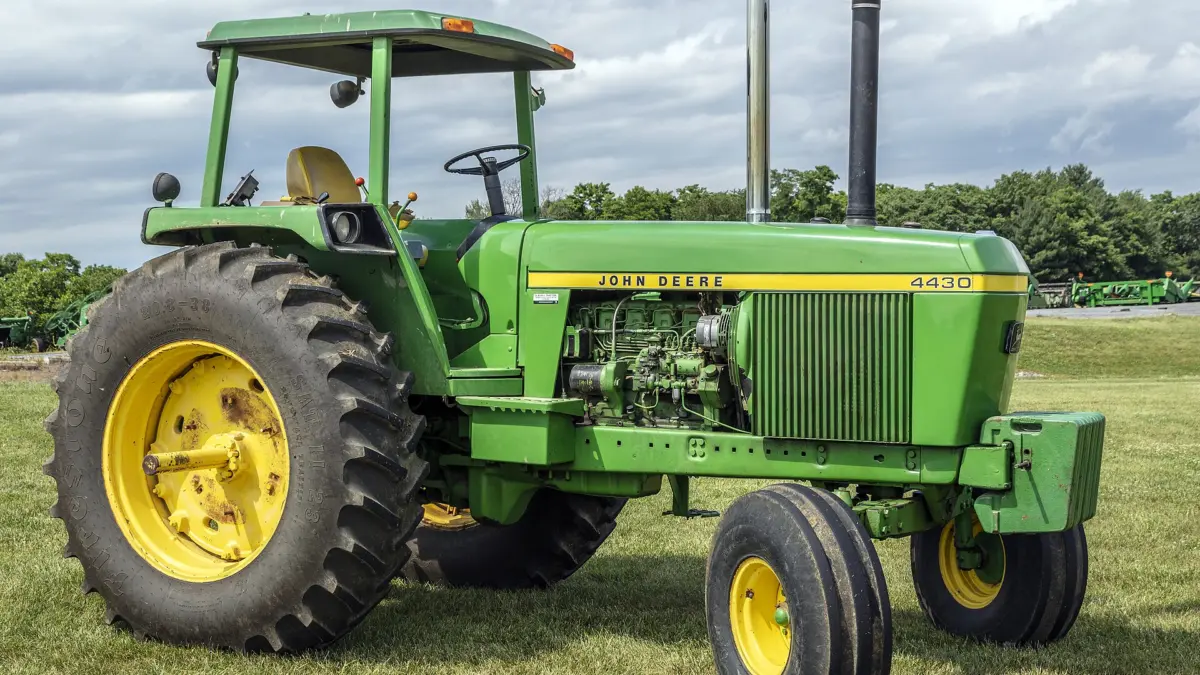
My father bought a brand-new John Deere 4430 in the spring of 1976. It was green and yellow and it had a cab on it, the Sound-Gard body, which was a big deal back then. You could sit in there in January with the heater going and the radio on and not hear the engine. My father paid nineteen thousand eight hundred dollars for it. He’d saved for it for four years. He used to say it was the only new thing he ever bought in his life.
He drove it for twenty-five years. I drove it for twenty more. In 2006, I put a Westendorf loader on the front so I could move snow and bales and manure with it. When I bought a newer tractor in 2014, I didn’t sell the 4430. Patty said I should. A man from Waukon offered me fourteen thousand dollars for it two years ago. I told him no. Patty asked me why. I said it was my dad’s.
It has eleven thousand four hundred hours on it. It leaks a little oil. The heater works when it wants to. It sits in the back corner of the machine shed most of the year, and I use it to push snow in the yard and not much else.
I’d plugged in its block heater that night before bed. Habit. My father taught me to plug in the tractors anytime it was going to get below twenty. “A diesel’s like an old man,” he used to say. “Keep him warm and he’ll go all day.”
I climbed up into the cab. The seat was ice cold. I turned the key.
It cranked once. Twice. Three times. And then it caught, and that old six-cylinder diesel coughed and rumbled and settled down into the sound I’ve known since I was nine years old, and I sat there with my hands on the wheel and said, out loud, “Thanks, Dad.”
I let it warm up for three minutes. I couldn’t wait longer than that. Then I put the loader bucket down and drove out of the machine shed into the storm.
Patty had Megan bundled up by the back door in my old barn coat and three blankets and a stocking cap with a pom-pom. Patty had the hospital bag Megan packed in October. She had a stack of towels. She’d thought of everything, the way she always does.
Here’s what I’d figured out, walking to the shed. I couldn’t put Megan in the tractor cab. There’s only one seat in a 4430, and a little fender perch beside it, and she couldn’t ride on that having contractions. But I could break the trail with the tractor and the loader, and tow the pickup behind me on a log chain, with Megan and Patty inside it with the heater running.
I got the tractor out to the stuck pickup at the end of the lane. I scooped the drift off its hood and away from its front end with the bucket. Then I backed around, and Patty helped me hook a twenty-foot log chain from the drawbar of the tractor to the front tow hooks on the truck. My fingers were so cold I couldn’t feel the chain. Patty did the last hook herself.
“Get in the truck,” I said. “Put it in neutral. Steer it. Don’t touch the brakes unless I stop. Keep the heater going.”
“Lyle, I’ve never been towed.”
“Patty, you’ve been married to me for forty-three years. You’ve been towed.”
She laughed at that. Just for a second. Then she got Megan into the passenger seat and climbed behind the wheel.
It was 2:41 in the morning when we pulled out onto Pioneer Road.
I want to tell you about those three miles. But I don’t know if I can make you see them.
There was no road. There was just white. My headlights went about thirty feet and stopped, like they’d hit a wall. The only way I knew where the road was, was the fence posts. On our side of the road there’s a barbed-wire fence that my father and I put in in 1979, with steel posts every rod, and the tops of those posts were sticking up out of the snow on my right. I drove with my eyes on those fence posts and nothing else.
Where the road was open, the snow was a foot deep and I could drive right through it in third gear at about eight miles an hour. Where it was drifted, I’d stop, drop the bucket, and push. Back up. Push again. Lift the bucket and dump it off to the side. Back up. Push. The old 4430 would grind and dig in and shove that snow off the road like a bulldozer. Then I’d ease forward and feel the chain go tight behind me, and the pickup would come along.
At the first big drift, about half a mile from home, I had to push it five times. It took eleven minutes. When I got through, I looked back at the pickup in my mirror. I could see Patty’s face in the dashboard light, and Megan’s head down, and Patty’s hand on Megan’s back.
I had my phone on the dash of the tractor. Patty called me on it every time Megan had a contraction. 2:48. 2:52. 2:56. They were getting to four minutes apart.
“Lyle,” Patty said, on the fourth call. “She says she feels like pushing.”
“Tell her not to.”
“I told her. She told me what I could do with that.”
At about a mile and a half, we came up on Roger’s place.
His acreage sits on the east side of Pioneer Road, with a big windbreak of spruce trees on the north side of it. In a northwest wind, the snow comes off the field and around the end of those spruces and lays right across the road in front of his driveway. It’s the worst drift on the whole road every winter. Everybody knows it. The county plow driver calls it Kuehl’s Hill.
His yard light was on. His shop light was on. I could see the white Ram sitting in the open door of his heated shop with the plow on it, all lit up, about a hundred yards away.
I could see a light on in his kitchen.
And the drift in front of his place was as high as the tractor’s hood.
I stopped. I sat there and looked at it. Six feet, maybe. Packed hard by the wind, like plaster. Sixty feet across.
My phone rang. Patty.
“Lyle. Her contractions are three minutes. She’s scared. I’m scared.”
“I know, Patty.”
“Are we at Roger’s?”
“We’re at Roger’s.”
She was quiet for a second.
“Is his light on?”
“His light’s on.”
“Okay,” she said. Very quietly. “Okay.”
I dropped the bucket and I hit that drift.
The front of the tractor went up on it and the back wheels dug in and spun, and the old engine roared, and the whole cab shook. I backed off. I hit it again. I got about four feet. Backed off. Hit it again. On the fifth try, I felt something give in the loader. I heard a hiss. I looked down and saw hydraulic fluid spraying out of a hose by the left loader arm, pink in my headlights, steaming in the cold.
The bucket dropped. It wouldn’t lift.
I sat there in that cab and I’ll be honest with you. I didn’t know what to do. For about ten seconds, I didn’t know what to do.
Then I thought about my father. About the time in 1982 when we lost a loader hose in the middle of moving round bales, and he cut a piece of garden hose and two hose clamps and fixed it right there in the field. He said, “Lyle, a farmer’s got to fix it where it breaks. Nobody’s coming.”
I always carried two hose clamps and a roll of electrical tape and a knife in the toolbox on that tractor, because he did.
I climbed down into the snow. I couldn’t fix the hose, it was a high-pressure line. But I could pinch off the left side of the loader circuit, and I had baling wire in the toolbox, and I wired the bucket up in the transport position, high enough to clear the snow, just enough to see over. And I tightened down the clamps on the line as best I could, and I wrapped it with tape, and I climbed back in.
It took me eight minutes. The phone rang twice while I was out there. I didn’t answer.
Then I put the bucket down as far as it would go, about a foot off the ground, and I came at that drift at an angle, from the west side, the way you’d come at a wave in a boat. I didn’t try to push it anymore. I tried to cut it. A little at a time. A foot at a time. Back up. Cut. Back up. Cut. Like a man digging a ditch with a spoon.
Fourteen minutes.
The whole time, the light was on in Roger’s kitchen. And the white Ram sat in his shop door with its nine-foot plow, a hundred yards away, lit up like a Christmas display.
Nobody came out.
At 3:31, I broke through the far side of Kuehl’s Hill. I felt the tractor drop down off the drift onto the open road, and I felt the chain go tight, and in the mirror I saw the pickup come lurching over the top behind me.
The last mile was mostly open. The wind had blown it clean down to the gravel in places. I drove that last mile in fourth gear at about twelve miles an hour, and when I came over the little rise at the Ostrem place, I saw red lights flashing at the corner of A-34.
The ambulance was there. And behind it, a county plow truck with its orange lights going, and a sheriff’s deputy in his Tahoe. They’d been waiting thirty minutes.
I stopped the tractor right at the corner. Two paramedics came running through the snow with a stretcher. They got Megan out of the pickup and onto it and into the back of the ambulance in about a minute and a half. Patty climbed in with her. One of the paramedics, a young woman, looked at Megan and then looked at her partner and said, “We’re going right now.”
Patty yelled at me out the back door of the ambulance, “Lyle, follow us!”
And they were gone, with the lights and the siren, down A-34 toward Decorah, and the county plow went in front of them.
The deputy walked up to the tractor and looked up at me in the cab. He was a young fellow I didn’t know. He looked at the bucket wired up with baling wire, and the hydraulic fluid frozen pink all down the side of the loader arm, and the chain to the pickup.
“Sir,” he said. “Did you just drive that tractor three miles of Pioneer Road?”
“Yes,” I said.
“In this?”
“It was my dad’s,” I said. I don’t know why I said that. It was the only thing I could think of.
He helped me unhook the chain. He followed me in the pickup to Decorah, with the tractor parked at the corner of A-34 with its flashers on. I’d come back for it later.
My granddaughter was born at 4:52 in the morning at the hospital in Decorah. Six pounds, nine ounces. Nineteen inches. A full head of black hair, like Nick’s. They named her Hazel, after my mother.
I wasn’t in the room. I was in the waiting room, still in my coveralls over my pajamas, with snow melting off my boots into a puddle on the floor. Patty came out at 5:10 and said, “It’s a girl. She’s perfect. Megan’s perfect.” And then she sat down next to me and put her head on my shoulder and cried for about ten minutes, and I let her.
At 5:30, the nurse let me in. Megan was in the bed with the baby on her chest. She had her phone propped up on the tray table, and on the screen was Nick, in his Army T-shirt, in some tent in Kuwait where it was two in the afternoon, with tears running down his face.
“Lyle,” he said, when he saw me. “Lyle, you did it.”
“Megan did it,” I said.
“Dad,” Megan said. “Hold her.”
I held her. She weighed about as much as a five-pound bag of flour. She opened one eye and looked at me for about a second, and then closed it again, like she’d seen enough.
“Hi, Hazel,” I said. “I’m your grandpa. I’ve got a tractor I want to show you.”
I drove home at about seven in the morning to do chores. Ben had made it over by then, on the snowmobile. The sun was coming up pink over the fields, and the wind had quit, and everything was so white and so still it hurt your eyes.
When I turned onto Pioneer Road from A-34, I saw something I didn’t expect.
The road was plowed. All the way. Three miles, curb to curb, the drifts pushed back in big clean walls on both sides. Including Kuehl’s Hill.
And at the end of my lane, there was the white Ram 3500 with the nine-foot plow, just pulling out. Roger was in the cab.
He saw me. He stopped. He rolled down his window. I rolled down mine. We sat there in our trucks with our engines running, about ten feet apart.
“Patty texted me,” he said. “A girl?”
“A girl. Hazel.”
He nodded. He looked down at his steering wheel.
“I saw you,” he said. “Last night. Out my kitchen window. At the Hill.”
“I know you did.”
“I was going to come out.”
“But you didn’t.”
“No,” he said. “I didn’t.”
He didn’t say anything else. Neither did I. After a minute, he rolled up his window and drove off down Pioneer Road toward town.
That afternoon, after I’d slept a couple hours and gone back to Decorah and held Hazel again and come home, I went down to the basement and opened the gun safe.
The envelope was at the bottom, under my father’s old twelve-gauge and the box with my discharge papers from the Army. A big gray envelope from Farmers and Merchants Savings Bank. I’d put it in there on March 3, 2016, and I hadn’t taken it out since.
I’m going to tell you what was in it, because I’ve told Patty and I’ve told Roger, and it doesn’t need to be a secret anymore.
In 2014, Roger asked me to co-sign a loan for him at the bank. Forty thousand dollars, for a used dump truck. He was going to haul gravel. I signed it. I didn’t think twice. He was my wife’s little brother.
In 2015, Deb left him and took the kids to Rochester, and Roger fell apart for a while. He stopped paying on the truck. He stopped paying on a lot of things. In January of 2016, Gene Halvorsen at the bank called me in, because I was on the note. Roger was four months behind and the bank was going to take the truck and come after the co-signer for the rest. That’s what a co-signer is. I knew that when I signed.
The balance was twenty-three thousand four hundred and twelve dollars and sixty-six cents.
I paid it. Out of our savings and some of our seed money for that spring. Patty thought the seed bill was higher that year because of prices. I let her think that. I told Gene I didn’t want Roger to know who paid it. I said Roger had enough on his plate, and I didn’t want him to feel like he owed me anything. Gene said he’d have to tell Roger the loan was satisfied, but he didn’t have to say by who. Roger kept the dump truck and sold it a year later. He thought the bank had worked something out on account of his divorce. He told people the bank had “forgiven” it.
Inside the envelope was the payoff letter, on bank letterhead, with Gene’s signature. Loan paid in full by guarantor Lyle J. Brennan. And a copy of the cashier’s check. And the original note, with Roger’s signature and mine, and PAID stamped across it in red.
That’s why I wouldn’t co-sign in April. I’m sixty-seven years old. I couldn’t afford to pay for another truck. And I wasn’t going to do it to Patty twice without telling her.
I took that envelope upstairs and put it on the kitchen table. When Patty got home from the hospital that night, she found it there. I sat across from her while she read it.
She read it twice. Then she put it down and looked at me for a long time.
“Twenty-three thousand dollars,” she said.
“Yes.”
“Our seed money.”
“Some of it.”
“You didn’t tell me. For nine years.”
“I didn’t want you to have to be mad at him.”
“Well, now I’m mad at both of you.” She stood up and went to the sink and stood there with her back to me. I thought she was crying. She wasn’t. She was thinking. After a while, she said, “You should have told me, Lyle. That was our money. We’re supposed to decide things like that together.”
“I know.”
“Don’t you ever do that again.”
“I won’t.”
She came back to the table. She picked up the envelope.
“I’m going to take this to him,” she said. “Tomorrow. Myself.”
She did. I don’t know everything that was said in Roger’s kitchen. Patty doesn’t talk about it much. She said he read it standing up, and then he sat down, and then he didn’t talk for a long time. She said he asked her why I never told him. She said she told him, “Because Lyle didn’t want you to feel like a charity case, you damn fool.”
She said he cried. I’ve never seen Roger Kuehl cry in my life, and I’ve known him since he was fifteen.
That was a year ago. I’ll tell you how it’s gone since, as best I can.
Roger came to Hazel’s baptism at St. Olaf’s in January, in a suit that didn’t fit him. He stood in the back. After, at the lunch in the church basement, he came up to me with a plate of ham sandwiches and stood there next to me for a while without saying anything. Then he said, “That was a hell of a thing. With the tractor.”
“It was a hell of a thing with the drift,” I said.
He laughed. That was about it.
He hasn’t paid back the twenty-three thousand. He said he would. He said it’ll take him a while. I don’t expect to see it. Patty says she does. We’ll see. He didn’t get the school district contract either, because he couldn’t get the loan without a co-signer, and somebody from Decorah got it instead. He’s still plowing the Casey’s and the co-op.
But every time it snows now, before the county ever gets out, Roger plows Pioneer Road. All three miles. Including the Hill. And he plows my lane, all two hundred yards of it, and he never sends a bill and he never says a word about it. I’ll go out at five in the morning to do chores and it’ll just be done, with his tire tracks at the end of the lane.
Nick came home in February. He held Hazel for about four hours straight the first day. Then he went down to the machine shed with me, and I showed him the 4430 with its new hydraulic hose, which cost me a hundred and eighty-four dollars at the John Deere dealer in Decorah. He walked all the way around it. He put his hand on the hood.
“Lyle,” he said. “Don’t you ever sell this tractor.”
I told him I wasn’t going to. I told him I’d already put it in my will. It goes to Hazel. Ben thinks that’s a little crazy. Patty thinks it’s the most romantic thing I’ve ever done, which tells you something about what kind of husband I’ve been.
The man from Waukon called again last spring and offered me sixteen thousand for it. I told him it wasn’t for sale. He asked why.
“It’s my granddaughter’s,” I said.