“It’s a twenty-five-dollar barn cat, Rita. It’s not a person. Put it in the barn where it belongs, or Lindsey and the kids are going to a motel in Chillicothe tonight. Your choice.”
My sister-in-law said that to me in my own kitchen on Thanksgiving Day, at about seven o’clock in the evening, with the dishes still in the sink and the pie still on the table. She said it while pointing at my cat with a fork.
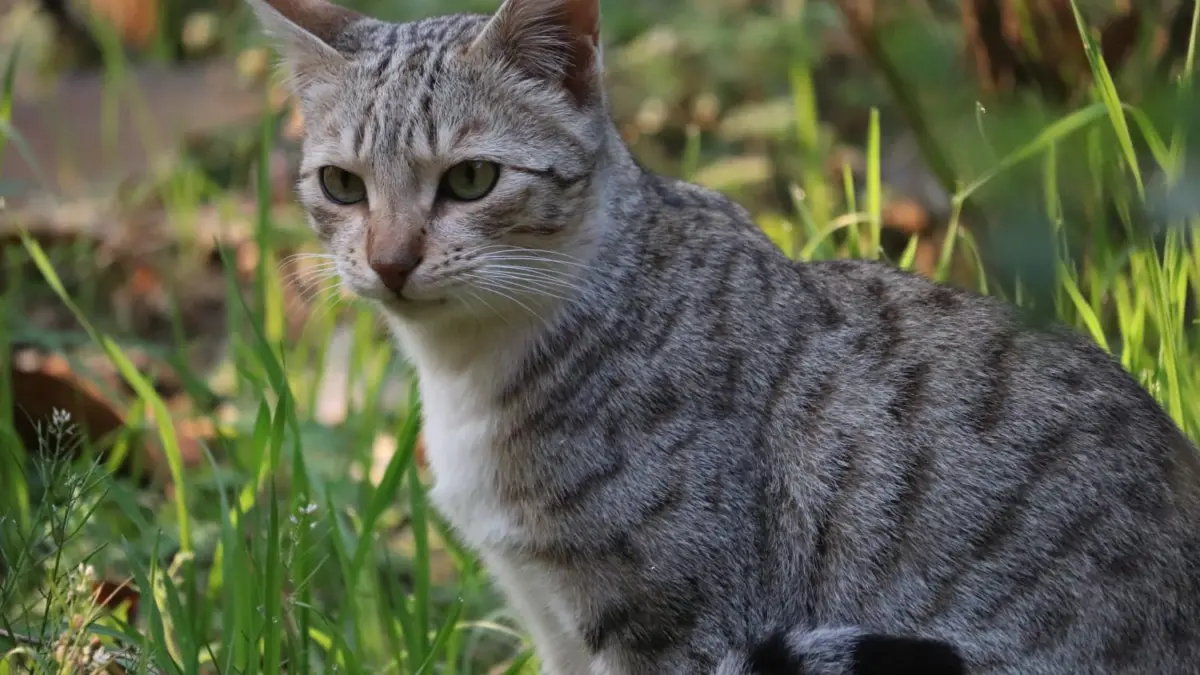
My cat’s name is Dusty. He was sitting on the rug in front of the floor register by the kitchen table, where he sits every winter night of his life, with his paws tucked under him and his eyes half closed, soaking up the warm air coming out of the furnace. He’s a gray tabby tomcat with a white chin and white socks on his front feet and half of his left ear missing from some fight he had in his youth. He’s eleven years old. He weighs about fourteen pounds. He was purring.
He opened one eye and looked at Pam when she said it. Then he closed it again. Dusty has never cared much what Pam thinks.
“Pam,” I said. “He sleeps right there every night. He’s been sleeping there every winter for four years. He doesn’t bother anybody.”
“Paisley has allergies.”
“Paisley petted him for twenty minutes this afternoon. She didn’t sneeze once.”
“That’s not the point.” Pam put the fork down. “The point is it’s a barn animal. It’s been out in the barn all day, in the manure and the mice and God knows what. And it’s in the kitchen. Where we eat. I watched it walk across your counter.”
“He was getting down off the windowsill.”
“I’m not having it. Gene.” She turned to my brother, who was sitting at the end of the table pretending to read the Chillicothe paper. “Gene, tell your sister.”
Gene lowered the paper. He looked at me. He looked at Pam. He’s been married to her forty-three years, and in forty-three years I don’t think I’ve ever seen him win one.
“Rita,” he said. “Just put the cat out. It’s one night.”
I looked at Dusty, warm on his rug, purring.
“All right,” I said.
I picked him up. He went limp in my arms, the way he does, like a sack of warm flour. I carried him to the back door and opened it. It was nineteen degrees outside, the thermometer on the porch post said, with a little wind out of the north and some snow from the night before still lying in the yard.
“I’m sorry, buddy,” I said. “Go on to the barn. There’s straw in the stall.”
I set him down on the back porch. He looked up at me. Then he looked past me, into the warm kitchen, at Pam. Then he turned around and walked off the porch into the dark, very slow, with his tail straight up, which is how a cat tells you what he thinks of you.
I shut the door.
That was seven o’clock. At 3:07 in the morning, that cat came back.
I’ll tell you what happened. But I have to tell you some other things first, or it won’t make sense.
My name is Rita Hensley. I’m seventy-one years old. I live on a farm in Livingston County, Missouri, about eight miles north of Chillicothe, on two hundred and eighty acres where my brother Gene and I grew up. Our parents bought the place in 1951. The house is a big white two-story farmhouse built in 1912, with a porch on three sides and a cellar under the kitchen and a little finished room up in the attic, with a slanted ceiling and one round window, that Dad fixed up for Gene in 1966 when he turned thirteen and wanted his own room.
My husband Carl and I moved back here in 1997 to take care of Mother, after Dad passed. Gene was living in Kansas City by then, in the suburbs, in Overland Park. He’s a retired insurance man. In 2004, after Mother died, Carl and I bought out Gene’s half of the farm. We paid him a hundred and eighty thousand dollars, which was more than it was worth at the time. The appraiser from the bank said so. We had to take out a loan at Citizens Bank and Trust in Chillicothe to do it, and it took us eleven years to pay it off.
Pam has always said Gene got cheated. She says it every Thanksgiving, in one way or another. She says it about the house. “Gene’s childhood home.” She says it about the land, now that it’s worth three times what it was. “If Gene had kept his half, Lindsey would have something to inherit.” She says it like I stole it.
I don’t argue with her about it anymore. Carl used to. Carl would say, “Pam, we’ve got the canceled checks. You want to see them?” Carl died four years ago. It was his heart. He was seventy-three.
Carl was a volunteer firefighter for thirty-one years. With the Chillicothe Rural Fire Protection District. He was the assistant chief for the last eleven of those years. He went on every kind of call there is out here. Barn fires and grass fires and wrecks on Highway 65 and people who fell through the ice on farm ponds. He used to come home and tell me about them at the kitchen table, sometimes, when he couldn’t sleep.
The ones that bothered him the most were the carbon monoxide calls.
He told me about one in the winter of 2003. A family on a farm out by Wheeling. Mom, Dad, three kids. The furnace flue got blocked. They’d all been sick for two days, headaches and throwing up, and they thought it was the flu going around. They went to bed. The neighbor found them the next morning when the kids didn’t get on the school bus.
Carl sat at the kitchen table that night and cried. I’d never seen him cry before. Then he got up and went to the Walmart in Chillicothe at ten o’clock at night and bought a carbon monoxide detector and put it in the upstairs hallway of this house. And every November after that, the day we turned on the furnace, he’d change the battery in it and push the test button, and it would scream, and he’d say, “Good.”
And he’d say the same thing to me, every single year. I can hear him saying it.
“Rita. Listen to me. If you ever wake up in the middle of the night in the winter with a headache and your stomach sick and you’re dizzy, and you can’t figure out why, that’s not the flu. You get out of the house. You don’t stop to look for your shoes. You get out first and figure it out on the porch.”
He said it so many times I used to roll my eyes at him.
Now I’ll tell you about Dusty.
The summer after Carl died, I had mice in the barn. Bad. They were in the feed, in the hay, in the tack room. They chewed through the wiring on the old tractor. My neighbor Darlene told me I needed a barn cat, a real one, a mouser, and she said the humane society had a table at the Livingston County Fair that week with a sign that said BARN CAT SPECIAL. Twenty-five dollars, neutered and vaccinated.
I went to the fair. There were about six cats in cages at that table. Five of them were sweet young things, kittens mostly, rubbing on the bars and meowing at people. The sixth one was in the cage on the end. He was a big gray tom with half an ear, and he was sitting in the very back of the cage with his back to everybody, like he was too good for all of it.
The girl at the table said, “Oh, you don’t want him. He’s seven. Nobody wants a seven-year-old cat. He came from a farm sale. The family moved to town and left him.”
I said, “Does he catch mice?”
She said, “Ma’am, he’s been in that cage three weeks, and he’s caught two mice that got in the building. Through the bars.”
I said, “I’ll take him.”
I paid my twenty-five dollars and took him home in a cardboard box with holes cut in the top. When I opened the box in the barn, he jumped out and stood there and looked around, at the stalls and the hay and the old tractor. Then he looked at me. Then he walked off into the hay without a word, and I didn’t see him again for two days.
On the third day, there were nine dead mice lined up on the step of the tack room door. In a row.
Darlene said, “Well, Rita. I’d say you got your money’s worth.”
That first winter, it got down to four below in December. I went out to the barn on the coldest night to check on him. He was curled up in the straw in the horse stall, with his tail over his nose, shivering. He looked up at me.
“Oh, come on, then,” I said.
I carried him into the house. I put him down on the kitchen floor. He walked straight to the floor register by the table, where the warm air comes up from the furnace in the cellar, and lay down on the rug in front of it, and went to sleep. And he’s slept there every winter night since. I put him out in the morning when I go out to feed. He comes back in at dark, when I come in. He’s caught every mouse on the place. He sleeps on the foot of my bed sometimes, when it’s really cold.
He’s not much of a talker. That’s the thing you need to know about Dusty. Some cats yowl and carry on about everything. Dusty doesn’t. In four years, I’ve maybe heard him meow ten times. When he wants in, he sits on the back porch rail and waits until I notice him. He’s a very patient cat.
So that’s Dusty.
Now. Thanksgiving.
Gene and Pam drove up from Overland Park on Thanksgiving morning. Their daughter Lindsey came too, with her husband Trent and their two kids. Trent’s a lawyer. He does business contracts for a company in Kansas City. He’s a nice enough young man, quiet. Their kids are Gavin, who’s fifteen, and Paisley, who’s eight.
They were all going to stay overnight. They do every year. They drive up Thursday morning and go home Friday after breakfast. Gene and Pam take the big front bedroom upstairs, the one that was Mother and Dad’s. Lindsey and Trent take the middle bedroom, and Paisley sleeps on a cot in there with them. Gavin always gets the attic room. Gene’s old room. He loves it up there. He says it’s like a tree house. He takes his phone and his earbuds up there and we don’t see him till breakfast.
I sleep downstairs now, in what used to be the sewing room, off the kitchen. My knees don’t like the stairs anymore.
It was a nice day, mostly. I want to be fair. I roasted a twenty-pound turkey. I made Mother’s oyster dressing, which Gene loves and nobody else will touch, and a regular cornbread dressing for everybody else. Lindsey brought a sweet potato casserole. Pam brought a store-bought pumpkin pie and a store-bought pecan pie from the Price Chopper and put them in my pie plates and said she made them. Everybody knows she didn’t. Nobody says anything.
Paisley played with Dusty in the afternoon, on the living room rug, with a piece of yarn. She laughed every time he batted at it. She didn’t sneeze once. I watched.
Gavin spent most of the day out in the barn with me. He likes the cattle. He helped me feed and check water. He’s a quiet boy, gentle, tall and skinny like Gene was at that age. He asked me a lot of questions about the farm. How many acres. How many cows. What it cost to run it. I told him. He said, “Aunt Rita, do you think somebody could still make a living farming?” I said, “Somebody who doesn’t mind being broke all the time, sure.” He laughed.
At dinner, Pam started in about the house.
“Rita, it’s so cold in here. Can’t you turn the heat up?”
“It’s sixty-eight, Pam.”
“It’s freezing. Gene, isn’t it freezing?” Gene didn’t answer. “This old furnace. When’s the last time anybody looked at it?”
“MFA Propane came out and checked it in October,” I said. “Like they do every year. Eighty-nine dollars. The man said it was fine.”
“That furnace is older than Gavin and Paisley put together.”
“It’s a 1998. Carl put it in.”
“Well, you ought to replace it. With what you’ve got.” She looked around the kitchen. “Two hundred and eighty acres.”
I didn’t say anything.
Then, at seven, after pie, she saw Dusty come in from the porch and walk across the kitchen to his rug. And that’s when she said it, with the fork.
“It’s a twenty-five-dollar barn cat, Rita. It’s not a person. Put it in the barn where it belongs, or Lindsey and the kids are going to a motel in Chillicothe tonight. Your choice.”
And I put him out.
We played cards until about ten. Then everybody went up to bed. I heard them all up there, walking around, the floors creaking, the bathroom door. I heard Gavin’s feet going up the narrow attic stairs. Then the house got quiet.
I washed the last of the dishes. I turned the thermostat up to seventy, since Pam was cold. I looked out the back door window. Dusty wasn’t on the porch. I figured he’d gone to the barn.
I went to bed about 10:30.
I didn’t know it, but about eleven o’clock that night, the carbon monoxide detector in the upstairs hallway started to chirp. One little chirp every forty seconds or so. That’s what they do when the battery’s getting low. It was right outside Gene and Pam’s door.
Pam got up and pulled the battery out of it.
I found that out later. I’ll tell you how.
At 3:07 in the morning, I woke up.
I didn’t know what woke me at first. I lay there in the dark. My head was pounding. Not a regular headache. A big, heavy pounding, all over, like my head was too full. My stomach was turning over. I thought I was going to be sick.
Then I heard it again.
Scratching. On the window screen. Right by my bed. The window in my bedroom looks out on the back porch, and there’s an old wooden screen on it, on the outside, that Carl never took down.
And then I heard the sound.
I’d never heard Dusty make that sound. I’d never heard any cat make that sound. A long, low, rising yowl, like a siren starting up. It went on and on. Then the scratching again, frantic, claws on the screen. Then the yowl.
I sat up. And the whole room went sideways.
I grabbed for the headboard. I missed. I fell. I came down on the floor between the bed and the dresser on my hands and knees, and I was dizzy, so dizzy, and I threw up on the rug. I couldn’t figure out where I was for a second. I couldn’t figure out which way the window was.
The yowling went on. And the scratching.
I crawled toward it. I got to the window. I pulled myself up on the sill. I fumbled with the latch and pushed the window up, I don’t know how, and the cold air came in. Nineteen degrees. It hit my face like a bucket of water.
And there was Dusty. On the porch rail, right outside the screen, in the light from the yard light. His fur was standing straight up. His ears were back. His eyes were huge and black. He had one paw hooked in the screen, and he was looking right at me, and he yowled again, right in my face.
I knelt there at the window with the cold air coming in and my head pounding and my stomach sick, and I thought, What is wrong with me? Is it the flu? Something I ate? The oyster dressing?
And then I heard Carl.
I don’t mean I heard his voice. I mean I heard him, in my head, at the kitchen table, the way he said it every November. If you ever wake up in the middle of the night in the winter with a headache and your stomach sick and you’re dizzy, and you can’t figure out why, that’s not the flu.
I looked up at my ceiling.
Upstairs were Gene and Pam. Lindsey and Trent and Paisley. And up above them, in the attic, Gavin.
You get out of the house. You don’t stop to look for your shoes.
I didn’t look for my shoes.
I went out of my bedroom holding onto the wall. Through the kitchen. I grabbed the phone off the wall by the refrigerator on my way, the old cordless one, and I went out the back door onto the porch in my nightgown and bare feet. Dusty jumped off the rail and ran to me and wound around my legs.
I called 911. My hands were shaking so hard I hit the wrong numbers twice.
The dispatcher answered. I told her my name and my address and I said, “I think it’s carbon monoxide. I’m sick. I’m dizzy. There’s six more people upstairs.”
“Ma’am, are you outside the house right now?”
“Yes.”
“Stay outside. Do not go back in. Help is on the way. Can you get the other people out?”
I didn’t answer her. I put the phone down on the porch rail. I took the biggest breath of cold air I could take. I went back in the house.
Carl would have killed me. I know that. You don’t go back in. But Carl wasn’t here, and those were my people up there.
I went up those stairs on my hands and feet, like a dog, because I was too dizzy to stand. I was screaming. “GENE! GENE! GET UP! GET EVERYBODY UP! GET OUT OF THE HOUSE!”
I banged on Gene and Pam’s door. I heard Pam moan. I opened the door. Gene was sitting on the side of the bed holding his head. Pam was lying there with her eyes open, looking at the ceiling, and she didn’t seem to know who I was.
“Gene,” I said. “It’s carbon monoxide. We’ve got to get out. Now.”
Gene looked at me. He’s my big brother. When I was little, he used to carry me piggyback across the creek. He looked at me like a little boy.
“Rita,” he said. “I feel funny.”
“I know you do. Get Pam. Get her down the stairs. Don’t stop.”
I banged on Lindsey and Trent’s door. Trent opened it. He was white and swaying, but he was on his feet. Lindsey was throwing up in the wastebasket. Paisley was lying on the cot and wouldn’t wake up when Lindsey shook her. Trent picked her up. She was limp. Her arms hung down.
“Out,” I said. “Go. Out the front door. Go.”
They went. I heard them going down the stairs, stumbling, Gene half carrying Pam, Trent with Paisley.
I came down behind them. I got them out the front door onto the porch and down the steps into the snow in the yard. Nineteen degrees. Everybody in their pajamas. Pam was sitting in the snow. Lindsey had Paisley in her arms, rubbing her face, saying her name over and over.
And then Paisley opened her eyes and started to cry. I’ve never been so glad to hear a child cry in my life.
I stood there in the yard, barefoot in the snow, counting. Gene. Pam. Lindsey. Trent. Paisley.
“Where’s Gavin?” I said.
Lindsey looked up.
“He’s— he’s in the den,” she said. “He came down. He said he couldn’t sleep. He said he was going to watch TV in the den.”
“When?”
“I don’t know. Midnight? I heard him on the stairs.”
I looked at the house. At the den window, on the side. It was dark. No light from the TV.
“Gavin!” Lindsey screamed. “GAVIN!”
Nothing.
Trent put Paisley down in the snow next to Pam and started back toward the house. He made it up two steps and his legs went out from under him and he sat down hard on the porch steps. He’d been breathing that air upstairs for hours longer than I had.
And Dusty went past him.
He went past Trent like a gray streak, up the steps and across the porch and in the front door, which was standing wide open. I yelled at him. He didn’t stop. I heard him go across the living room floor. And then I heard him on the stairs.
Not the den. The stairs.
He went straight up the stairs to the second floor. And then I heard him on the narrow attic stairs, his claws scrabbling on the old wood. And then I heard him yowl. That same awful yowl from my window. From way up at the top of the house.
From the attic.
“He’s not in the den,” I said. “He went back up.”
I don’t remember deciding. I just went. I grabbed the dish towel off the porch rail where I’d left it to dry that afternoon, and I scooped up a handful of snow off the railing and pressed it into the towel and held it over my nose and mouth, and I went back in that house.
The second time was worse. I knew it would be. My legs didn’t want to work. Everything was swimming. I went up the stairs on my hands and knees again. I could hear Dusty up above me, yowling and yowling. I followed the sound. Up the second staircase. The attic stairs are narrow and steep, and I hit my head on the slanted ceiling at the top, hard, and I didn’t even feel it.
The attic door was shut. Dusty was standing in front of it, clawing at the bottom of it with both front paws, yowling.
I opened it.
Gavin was lying on the bed under Gene’s old quilt, on his side, with his earbuds in and his phone glowing on the pillow next to his face. He’d come back up. He’d never gone to the den at all. Or he went and came back. I never did find out which.
He didn’t move when I came in. He didn’t move when Dusty jumped on the bed and put both front paws on his chest and yowled right in his face.
“Gavin,” I said. “Gavin, honey.”
I shook him. His head rolled on the pillow. His lips were a funny color. His skin was flushed bright pink, like he had a sunburn, in the light from the phone.
He was breathing. Slow. But breathing.
I couldn’t carry him. He’s fifteen and almost six feet tall. I’m seventy-one and five foot two. But I got him by the arms and I pulled him off that bed onto the floor, quilt and all, and I dragged him. Across the attic floor. To the top of those narrow stairs. I don’t know how. I’ve thought about it a hundred times since, and I don’t know how.
At the top of the stairs, I couldn’t do any more. My arms quit. My legs quit. I sat down on the top step with Gavin’s head in my lap and the room going around and around, and I thought, Carl, I’m sorry. I’m so sorry. You told me.
And then I heard boots on the stairs below me. And a big light in my face. And a man’s voice I knew.
“Rita? Rita Hensley? Oh, Lord. Get the boy. Get her too. Move.”
It was Dwayne Ross. The chief of the Chillicothe Rural Fire. Carl’s best friend for thirty years. He’d been a pallbearer at Carl’s funeral.
They carried Gavin down first. Then Dwayne carried me down himself, like a sack of feed over his shoulder, down two flights of stairs and out the front door and down the porch steps, and set me in the snow by an ambulance with its lights going, and put an oxygen mask over my face.
The last thing I remember before I passed out is Dusty. He’d come out of the house behind us. He came and sat in the snow next to me by the ambulance tire, with his fur still standing up, and put one paw on my hand.
I’ll tell you the rest plain, as best I know it.
Dwayne’s men took readings in the house with their meter. He told me what they were later, at the hospital. In my bedroom downstairs, by the window I’d opened, it was about ninety. Upstairs in the hallway, it was over three hundred. In the attic, at the top of the house, where the heat and the air all rise, with the door shut, it was a little over five hundred.
He said those numbers to me, and then he didn’t say anything for a while.
“Another hour, Rita,” he said finally. “Maybe less. Up there. For the boy. And probably for the rest of them not much longer.”
They took all seven of us to the hospital in Chillicothe. They gave us oxygen. Everybody was sick for a couple of days, headaches and throwing up. They sent Gavin on to a hospital in Kansas City that has a special chamber where they put you in pure oxygen under pressure, for the bad cases. He was in there three times over two days. He was home in Overland Park by the next Tuesday. The doctors said he’d be fine. He’s had some headaches since, and some trouble remembering things for a few months. But he’s fine. He’s back at school. He made the junior varsity basketball team.
Paisley was fine. Pam and Gene were fine, once the headaches went away.
The fire marshal came out to the house on Saturday. A man named Hollis Briggs, from the state. He went down in my cellar with Dwayne and a flashlight and looked at Carl’s old furnace and then went up on the roof and looked down the chimney.
The flue liner had cracked. It’s old clay tile, from when the house was built, and a piece of it had broken loose and fallen down inside the chimney and blocked it about halfway. Nobody could have seen it from the cellar. The MFA man in October couldn’t have seen it. The exhaust from the furnace couldn’t go up the chimney the way it was supposed to. So it came back down and went into the house through the registers. All night long. Because I’d turned the thermostat up to seventy for Pam, the furnace ran more. And every time it ran, it pushed more of that air into the house.
Including right out of the register by the kitchen table. On Dusty’s rug. Right where he sleeps every night.
Mr. Briggs went upstairs last. He came back down with the carbon monoxide detector from the hallway in one hand, and a nine-volt battery in the other.
“Mrs. Hensley,” he said. “Do you know why this battery was out of this detector? It was sitting on the dresser in the front bedroom.”
I didn’t know. I said so.
Pam was there. She and Gene had come back from the hospital in Chillicothe that morning to get their things. She was standing in my kitchen with her purse.
She said, “It was chirping. In the middle of the night. It woke me up. I took the battery out so I could sleep. I was going to tell Rita in the morning.”
Mr. Briggs looked at her for a long time.
“Ma’am,” he said. “It was chirping because the battery was low. A low battery still works. For a week or more. That’s why it chirps instead of just quitting.” He held up the detector. “I tested it with a new battery. It works fine. If that battery had been in it, this would have gone off in that hallway, right outside your door, around midnight. Maybe earlier.”
Nobody said anything.
Gene sat down at the kitchen table. He put his face in his hands.
Pam didn’t say anything at all. She picked up her overnight bag and went out to the car.
I’ll tell you about Pam, since you’re wondering. She’s never said she’s sorry. Not to me. I don’t think she can. A week after, Lindsey told me on the phone that Pam was telling people at their church in Overland Park that my old house almost killed her grandchildren. That I’d let the furnace go. Lindsey said she told her mother to stop it. She said Trent told her too. I don’t know if she has.
In December, I got a letter from my homeowner’s insurance company. Pam had called them. She’d asked about filing a claim against my policy for “medical expenses and pain and suffering.”
I called Trent. I didn’t know what else to do. He’s a lawyer.
He was quiet on the phone for a long time. Then he said, “Aunt Rita, I’ll take care of it.”
I don’t know what he said to her. But a week later, I got another letter from the insurance company saying the inquiry had been withdrawn. And Trent mailed me a copy of the fire marshal’s report, with a sticky note on it. It said, In case you ever need this. —T.
Gene called me on Christmas Eve. By himself, from his car, in the parking lot of a Hy-Vee. He said Pam didn’t know he was calling. He said, “Rita, I’m sorry. About the cat. About all of it. About Pam. About the farm, all these years, the things she says. I should’ve said something a long time ago.”
“You should have, Gene.”
“I know.” He was crying. My big brother. “I’m saying it now.”
That’s where it is with Gene and Pam. They didn’t come for Easter. I don’t know about next Thanksgiving. I suppose I’ll find out.
I had MFA put in a new furnace the week after. A high-efficiency one that vents out the side of the house through a plastic pipe and doesn’t use the chimney at all. Seven thousand four hundred dollars. My homeowner’s insurance didn’t pay a dime of it, because it was “wear and tear.” I paid for it out of my savings. And I had the chimney capped and sealed. And I bought nine carbon monoxide detectors, the kind that plug into the wall with a battery backup and talk to you, and I put one in every room in the house. Including the attic. Including the barn.
Gavin came back in March. By himself. He’s got his learner’s permit now, and his dad drove up with him and let him drive most of the way. He spent a week of his spring break helping me calve. He was good at it. He pulled his first calf on a Tuesday night at two in the morning, a big bull calf from a heifer that was having trouble, and when it came out and started breathing, he sat down in the straw and laughed and laughed.
He asked if he could sleep in the attic again.
I said, “Not without checking the detector first.”
He went up and pushed the button on it. It screamed. He came back down grinning.
“Good,” he said.
I had to go out on the back porch for a minute after that.
Dusty sleeps on his rug by the register every night now. Nobody puts him out. When Gavin was here in March, he slept up in the attic with Gavin every single night. Curled up on the foot of Gene’s old quilt. I’d go up in the morning to wake Gavin for chores and there would be Dusty, with one eye open, watching the door.
Gavin got him a Christmas present, by the way. It came in the mail in December, from Overland Park, addressed to MR. DUSTY HENSLEY. It was a heated cat bed, the kind that plugs in. Forty-nine dollars, the box said.
Dusty won’t sleep in it. He sleeps on the rug.
I use it for my feet.