“Charlie, those mules are older than half the kids on this wagon put together. Let ’em die in your barn. Not in front of the Sunday school.”
My ex-brother-in-law said that to me in the parking lot of Spring Creek Lutheran Church at 4:30 on the second Sunday in December, with about thirty people standing around in their snow boots, waiting to load up for the caroling hayride.
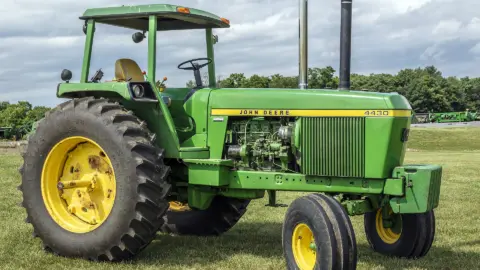
He was sitting up in the cab of a brand-new orange Kubota tractor with the door open and the heater blowing and a string of LED Christmas lights wrapped around the roof. He’d hitched it to the church’s big hay rack, which is a flatbed wagon with wooden sides, loaded with straw bales for people to sit on. He’d had the tractor for three weeks. Ninety thousand dollars, financed through Farm Credit Services in Lewistown. He’d told everybody at the church coffee hour that morning. He told them about the heated seat and the Bluetooth radio and the GPS that could steer the thing by itself.
I was standing in the parking lot next to my mules.
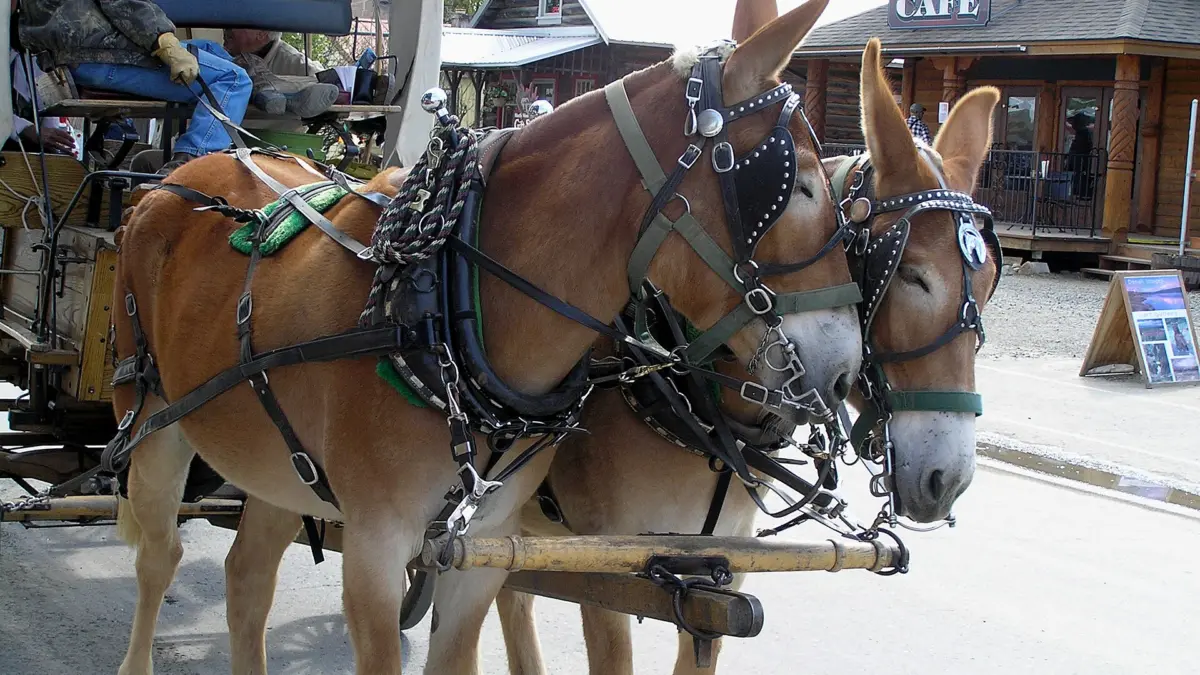
Their names are Pete and Polly. Pete’s a john mule and Polly’s a molly. They’re half brother and sister, out of the same mare by different jacks, and they’re both bay, a kind of dark reddish brown, with black manes they keep roached short, and those long ears that turn every which way like satellite dishes. Pete is thirty-one. Polly is thirty. They’ve been pulling together since they were three.
For twenty-two years, Pete and Polly pulled the caroling hayride at Spring Creek Lutheran. Every second Sunday in December. Me driving, the church hay rack behind, the Sunday school kids and their folks and whoever else wanted to come riding on the straw bales, all the way up the Spring Creek Road to sing at the farmhouses of the old folks who couldn’t get to church anymore. Twelve houses. About nine miles round trip. It took three hours. The kids drank hot chocolate out of thermoses and threw straw at each other, and the old folks came out on their porches in their bathrobes and cried.
This year Wade said the church didn’t need my mules anymore.
He’d been elected president of the church council in October. At the November meeting, which I didn’t go to, he made a motion that the hayride “modernize.” He said the mules were too old and too slow and it was “a liability issue.” He said he’d donate the use of his new tractor. The council voted yes, five to two.
Pastor Jill called me afterward. She was upset about it. She said she’d voted no. She asked if I’d at least come along and ride.
So I came. And I brought Pete and Polly in the trailer, hitched to my feed sled, because I’m stubborn, and because I thought maybe the kids would want to pet them. I thought maybe, if I just showed up, Wade would let me pull the hayride one last time, for old times’ sake.
He didn’t.
I’ll tell you about Wade so you understand.
My name is Charlene Pike. Most people call me Charlie. I’m sixty-one. I ranch eleven hundred acres on Spring Creek, about fourteen miles northeast of Lewistown, Montana, in the middle of the state, where the Judith Mountains come down to the prairie. It’s my father’s place. He was Bud Larkin. He packed mules for the Forest Service in the Bob Marshall Wilderness for thirty years, and then he came home and ranched, and he never quit using mules for anything he could do with mules. He fed his cattle with a mule team and a sled every winter until the year he died, 2008, and I’ve done the same ever since.
I was married to Dean Pike for nineteen years. Dean is Wade’s older brother. The Pike place is right across Spring Creek from mine, two miles down the road. Big ranch, four thousand acres, been in their family since 1911. Dean and I lived there for the first sixteen years we were married. Then my dad got sick and we moved over to my place to take care of him, and after Dad died, Dean decided ranching wasn’t for him, and neither was I. He moved to Billings in 2012 with a woman who sold real estate. We divorced that spring.
Dean signed his share of the Pike place over to Wade in the divorce, because he didn’t want it. And I kept my dad’s place, and my dad’s mules, and my dad’s old feed sled.
Wade never got over that. I don’t know why exactly. I think he always thought my place should have gone to the Pikes. It sits right between their summer pasture and the road, and he’s had to trail his cows across the corner of my land every spring and fall for the last thirteen years, and he’s never once asked me. He’s offered to buy it four times. The last time, two years ago, he offered seven hundred and fifty an acre. I said no. He said, “You can’t run a ranch with a couple of mules and an attitude, Charlie.” I said watch me.
Since then, he’s said things. At the sale barn. At the café. At church. That I’m too old to be out there alone. That my fences are falling down, which they’re not. That my mules are a joke.
I’ve never said much back. My dad taught me you don’t argue with a man who’s already made up his mind.
But I’ll tell you who’s never once said a bad word about me. Edna Pike. Wade and Dean’s mother. She’s eighty-eight. She still lives in the old Pike house, the stone one by the creek, with Wade and his wife Shawna in the new house up the hill. She’s been calling me “my girl” since I was twenty-two years old and married her son. She called me “my girl” the day the divorce was final, on the phone. She said, “Dean’s a fool, and I’m sorry I raised one. You’re still my girl.”
Edna was on that hay rack that night, bundled up in a sleeping bag on a straw bale in the front, with a thermos of coffee and her hearing aids turned all the way up. She hasn’t missed a caroling hayride in sixty years.
Now I’ll tell you about Pete and Polly.
Dad bought them in the fall of 1995 from a mule man in Augusta, Montana, Pete as a yearling and Polly as a weanling. Three hundred dollars apiece. He broke them to harness himself the winter they turned three, and he drove them every winter after that, feeding cows. When Dad got too sick to drive, I took over. That was 2006. I’ve fed cows with Pete and Polly every single winter morning since. Nineteen winters.
Here’s how it works. Every morning in the winter, I harness the team in the barn and hitch them to the feed sled. It’s a big flat wooden sled on steel runners, eight feet wide and sixteen long, that my dad built in 1972. I load it with hay bales. Then we go out into the pasture, and I drop the lines, and Pete and Polly walk along by themselves in a big slow circle while I stand on the back of the sled and cut the strings and throw the hay off to the cows. They don’t need me to drive them. They know the route. They know every gate and every fence line and every drift on eleven hundred acres. They’ve walked it about three thousand times.
And they know the way home.
There’s an old saying out here. Dad used to say it all the time. “You can get lost in a blizzard. A horse can get lost in a blizzard. But a mule will always find the barn.”
I’ve seen it. In the winter of 2011, there was a ground blizzard while I was out feeding on the north end, the kind where the wind picks up the snow off the ground and you can’t see the mules in front of you, can’t see your own hands. I couldn’t tell which way was north. I sat down on the sled and dropped the lines and said, “Take us home, Pete.” And forty minutes later, the sled bumped up against the barn door.
Now. Back to the parking lot.
When Wade said that about the Sunday school, some of the people standing around laughed. Not many. A couple of the men from the council. Shawna, Wade’s wife, laughed a little and then looked away.
Most of the kids didn’t laugh. They’d come running over to Pete and Polly as soon as I got them out of the trailer. Kids love mules. They wanted to touch their ears. Pete stood there like a statue while about nine of them petted his nose. Polly nibbled one little girl’s mitten and she shrieked and giggled.
One of them was Wade’s own granddaughter. Harper. She’s seven. She’s his daughter Kristen’s girl. Harper has ridden behind Pete and Polly on the caroling hayride every year since she was born. The first year, she was two weeks old, in Kristen’s arms in a snowsuit.
Harper looked up at her grandpa in the cab of the tractor.
“Grandpa, why can’t Pete and Polly pull us?”
“Because we’ve got a tractor now, sweetheart. With a heater.”
“But I like Pete and Polly.”
“They’re too old, honey. They might get hurt.”
Harper looked at Pete for a long time. Then she said, “Are they going to die?”
Wade didn’t answer her. He just said, “Everybody load up. Let’s go. We’re burning daylight.”
Pastor Jill came over to me. She put her hand on my arm.
“Ride with us, Charlie. Please. Sit up front by Edna.”
I looked at the mules. I looked at the sky.
The sky had been bothering me all afternoon. In the morning it had been clear and cold, about fifteen degrees. Around two, it had gone a flat, pale gray, low over the Judiths, and the wind had shifted around to the northwest. My hip had been aching since lunch. My dad’s hip used to ache before a storm, too.
The radio had been calling for “a chance of snow showers and blowing snow late.” That’s what they say every day in December. Nobody pays attention.
“I’ll stay with the mules, Pastor,” I said. “I’ll take them home. You all go on.”
I watched them load. Twenty-eight people. Fourteen kids from the Sunday school, from about four years old to twelve. Ten parents. Pastor Jill. Two older ladies from the church choir, Doris and Marlys. And Edna, in the front, in her sleeping bag, waving at me.
“Charlie,” she called. “My girl. You’re not coming?”
“Not this time, Edna.”
She looked at the tractor. Then at Wade. Then back at me. Edna doesn’t miss much.
“Hmph,” she said.
Wade put the tractor in gear and pulled out of the parking lot with the LED lights blinking on the roof and the Bluetooth radio playing “Rockin’ Around the Christmas Tree” out of the speakers. The hay rack bumped along behind, with everybody waving and singing. They turned up the Spring Creek Road, heading north.
I loaded Pete and Polly back in the trailer and drove the two miles home.
I want to tell you exactly when the weather turned, because people have asked me. It was 5:22. I know because I’d just turned out the mules in the corral by the barn, still in their harness, while I went in the house for a cup of coffee, and the clock on the stove said 5:22 when the kitchen window went white.
Not snowing white. White. Like somebody had thrown a sheet over the house.
I went out on the porch. The wind hit me so hard it knocked me back a step against the door. It was coming out of the northwest at what I’d guess was fifty miles an hour, maybe more, and it was picking up all the snow that had been lying on the prairie for three weeks, all the old dry powder, and throwing it across the country in a solid wall. That’s a ground blizzard. It’s not always snowing from the sky. It’s the ground itself coming up at you. You can’t see. You can’t breathe. And it can come on in about thirty seconds and last for hours.
I couldn’t see the barn. It’s eighty feet from my porch. I couldn’t see the yard light on the pole by the barn, and it’s a thousand watts.
I stood there and thought about that hay rack. Twenty-eight people on straw bales in an open wagon, with no sides higher than three feet, out on the Spring Creek Road. Kids in snowsuits. Edna, eighty-eight, in a sleeping bag.
I went back in and called Wade’s cell phone. It didn’t ring. It went straight to a recording that said the customer was not available. I called Pastor Jill. Same thing. There’s a stretch of the Spring Creek Road, about four miles up, between the Halstead place and the old Moore schoolhouse, where there isn’t any cell service at all. Never has been. It’s down in a draw between two ridges. I figured that’s where they were.
I called the sheriff’s office in Lewistown. A dispatcher I didn’t know answered. I told her.
“Ma’am, we’ve got a ground blizzard warning for all of Fergus County,” she said. “We’ve had it for about ten minutes. Highway 87 is closed. We’ve got people stuck everywhere. Where exactly is this wagon?”
“Somewhere on the Spring Creek Road. Between four and six miles north of the church.”
“Do you know exactly?”
“No.”
“Ma’am, I’ll get somebody out there as soon as I can. But I’m being honest with you. Our search and rescue people are coming from Lewistown, and the roads are drifting shut, and in a whiteout, they’re not going to be able to find a wagon unless they know where it is. They could drive right past it.”
I hung up. I stood in my kitchen.
And then my phone rang.
It was a number I didn’t recognize. When I answered, all I could hear at first was wind. Wind and static and somebody crying. Then a woman’s voice. Kristen. Wade’s daughter. Harper’s mother.
“Charlie? Charlie, is that you? I’ve got one bar. I climbed up on the tractor. Can you hear me?”
“I hear you, Kristen. Where are you?”
“I don’t know. I don’t know! Dad drove us off the road. He couldn’t see. The tractor’s in the ditch, it’s tipped over on its side, the wagon’s stuck— Charlie, it’s so cold. The kids are crying. Dad hurt his leg getting out. He can’t walk. We can’t see anything. We can’t see the road. Grandma Edna—”
“What about Edna?”
“She’s okay. She’s okay, she’s talking. But she’s so cold, Charlie. We’re all huddled on the wagon. Pastor Jill’s got the kids in the middle. Nobody knows where we are.”
“What do you remember? Before it went white? Think, Kristen.”
“We’d just sung at the Halsteads’. We were going to the Moores’ next. We’d just gone over the cattle guard. And then everything went white and Dad kept driving and then the tractor tipped—”
The phone went dead.
I tried to call her back. It wouldn’t go through.
I stood there for maybe ten seconds. Then I put my coffee cup in the sink, and put on my dad’s old canvas coat, the one with the sheepskin collar, and my wool cap and my good mitts, and I went out to the barn.
The cattle guard past the Halstead place. I knew exactly where that was. It’s the north boundary of the old Moore section, on the east side of Spring Creek, about four and a half miles from my house by the road. But by the road was the long way. By the road, you go two miles south to the church first and then turn back north.
Across my own pasture, and then across the corner of the Pike place, and up along the creek, it was about two and a half miles.
Pete and Polly knew that country. Every foot of it. We’d fed cows on the north end of my place for nineteen winters. And the Pike summer pasture is right there, past my north fence. Dad used to pack salt to Pike’s cows for them across that same corner, with Pete and Polly, back before the divorce, when we were all still family.
I found the mules by walking along the corral fence with my hand on the top rail. They were standing in the lee of the barn with their tails to the wind, in their harness, waiting for me. They always wait. Pete swung his big head around and pushed it against my chest.
“I know, Pete,” I said. “I know.”
I hitched them to the feed sled in the barn. I threw on every blanket I had in the tack room, horse blankets and saddle blankets and two old quilts. I threw on the big lantern, the battery one that floods, and a flashlight, and a coil of rope, and a thermos of the coffee I hadn’t drunk. I threw on eight bales of hay, two rows, to make a windbreak for people to sit behind. And I climbed up on the front of the sled, and took the lines, and said, “Pete. Polly. Hup.”
They walked out of the barn into that white wall like it was a summer morning.
I’m going to try to tell you what it was like. I’m not sure I can.
You couldn’t see Pete and Polly. They were eight feet in front of me, and I couldn’t see their heads. I could see their rumps, sometimes, when the wind dropped for a second. I could hear the harness jingle and the runners scraping on the snow and the wind screaming over everything. That’s all.
I drove them through my north pasture by memory. Theirs, mostly. Mine was no good. I couldn’t see anything to remember by.
At the north fence, Pete stopped on his own, the way he always does at the gate. I climbed down and felt my way along the wire until I found the gate post, and I opened the gate and led them through and closed it behind me. Dad always said, no matter what, you close the gate. Then we were on the Pike place.
I knew roughly where I was going. North along the creek, about a mile and a half, to where the Spring Creek Road crosses over at the cattle guard. But I couldn’t see the creek. I couldn’t see anything. Every few minutes, I’d stop the mules and stand up on the sled and scream as loud as I could into the wind. “HELLO! HELLO!”
Nothing. Just the wind.
After about forty minutes, I didn’t know where I was. I’ll be honest with you. I didn’t know where I was at all.
I stopped the mules. I stood up on the sled. I yelled again. Nothing.
I sat down on the sled with my back against a hay bale. I was so cold. My face was so cold I couldn’t feel it. My mitts had snow packed inside them. I thought about twenty-eight people on a hay rack in a ditch somewhere in all this white. I thought about Edna. I thought about little Harper asking her grandpa if Pete and Polly were going to die.
And then I thought about my dad. About what he’d say.
“A mule will always find the barn.”
But I didn’t need the barn. I needed a wagon. A wagon they’d never been to, on a road they hadn’t walked on in years.
I stood up anyway. I didn’t know what else to do. I wrapped the lines around the front stake of the sled and let them go slack. I didn’t drive. I didn’t steer. I just put my hand flat on Pete’s rump, and I said, as loud as I could over that wind,
“Pete. They’re out here somewhere. Please.”
I don’t know if he understood me. I don’t think a mule understands words like that. But he understood something.
Pete stood there for a long moment with his head up. His long ears were turning. Left. Right. Back. Forward. They went around like radar dishes, every which way, the way mule ears do, listening.
Then they stopped.
Both of them. Pointed hard to the right. Off to the east. Away from the creek. Away from where I thought we were going.
Polly’s ears swung around the same way a second later.
And then I heard it too. Way off in the wind, so faint it was almost nothing. Just a scrap of something, coming and going between the gusts.
Singing.
Twenty-eight people on a hay rack in a ditch, freezing, in the dark, in a ground blizzard, singing “Joy to the World” as loud as they could. I found out later Pastor Jill had started it, to keep the kids from panicking. To keep them awake.
“Joy to the world, the Lord is come—”
Pete brayed. That big, rusty, see-sawing bray a mule makes, the loudest sound I’ve ever heard an animal make. Right into the wind.
And off in the white, the singing stopped.
Then a little voice screamed, so high and thin I barely heard it.
“PETE!”
It was Harper.
Pete leaned into his collar and started walking. Fast. Faster than I’d seen him walk in years. Polly right beside him. Straight east, into the wind, through drifts up to their bellies. I grabbed the front stake and held on. I didn’t touch the lines.
It took about six minutes. Then a shape came up out of the white in front of us, black and orange. The tractor. On its side in the ditch with its LED Christmas lights still blinking red and green under the snow. And behind it, the hay rack, tipped at an angle with one wheel down in the ditch, and people huddled together in the middle of it under every coat and blanket they had, all their faces turned toward us in the lantern light.
Pete walked right up to the side of that hay rack and stopped. He put his big head over the side of it, over the wooden rail, right in the middle of all those kids.
Harper grabbed him around the nose with both arms and hung on.
I’ll tell you the rest plain, because there’s a lot of it and it’s not all pretty.
We got everybody onto the feed sled. It’s big. Dad built it to haul two tons of hay. Fourteen kids and fourteen grown-ups, packed in behind the hay bales under all my blankets, sitting on each other, holding each other. Pastor Jill counted heads three times. Kristen had Harper in her lap. Doris and Marlys had Edna between them in her sleeping bag. She was white and shaking and her lips were blue, but she was talking, and the first thing she said when she saw me was, “My girl. I knew it’d be you.”
Wade was the last one. He’d broken his ankle climbing out of the tractor cab when it went over. He’d been sitting on the side of the hay rack in the snow for an hour and a half, with his foot all twisted. Two of the dads had to carry him to the sled. He didn’t say anything to me. He wouldn’t look at me. He just sat down in the back of the sled, against a hay bale, with his face turned away.
When everybody was on, I climbed up front. I picked up the lines. I didn’t know which way home was. I didn’t have any idea at all.
So I did what Dad taught me. I dropped them again.
“Pete,” I said. “Polly. Take us home.”
And they did.
Two and a half miles. I’m told it took an hour and ten minutes. I don’t remember most of it. I remember the kids singing again, all the Christmas carols they knew, over and over, because Pastor Jill told them to. I remember Edna singing too, in her old cracked alto, “Silent Night” in German, the way her mother taught her. I remember the sled stopping, out of nowhere, and me thinking something was wrong, and then climbing down and finding my north gate under my hand. I opened it. I led them through. I closed it behind me.
I remember the sled bumping up against something solid in the dark and not moving anymore. And I put my hand out, and it was my barn door.
I got everybody in the house. Twenty-nine people in a farmhouse built for six. I put every kid in front of the woodstove. I ran the bathtub full of warm water, not hot, and put kids’ hands and feet in it, two at a time. I made coffee and hot chocolate till I ran out of milk, and then I made it with water. I put Edna in my bed with three electric blankets and a hot water bottle. I put Wade on the couch with his ankle propped up on a pillow and a bag of frozen peas on it.
The search and rescue people from Lewistown got there about 9:30, when the wind finally laid down a little. They’d been out on the Spring Creek Road for two hours and never found the wagon. They found Wade’s tractor the next morning, by the blinking lights.
Nobody died. I want you to know that. Two of the kids had mild frostbite on their fingers. One of the dads had frostbite on his ears. Edna spent two nights in the hospital in Lewistown with hypothermia and was home for Christmas, mad as a wet hen about the hospital food. Wade had surgery on his ankle and was on crutches until March.
The tractor was totaled. The insurance adjuster said it rolled when it went into the ditch and cracked the frame. The tow bill alone was twenty-four hundred dollars. Wade’s insurance paid most of it, I heard, but not all.
I’ll tell you about Wade. Since you’ve been listening this long.
He came over in February. On crutches. Shawna drove him. He sat in my kitchen for about fifteen minutes and talked about the weather and the calf prices and his ankle. Then he got to it.
“I want to say something to you, Charlie.”
“Go ahead.”
“I said a lot of things. About your mules. In the parking lot. And before that.” He looked at the table. “Harper asked me something. A couple weeks after. She asked me if I was sorry I said Pete and Polly should die in the barn.”
“What’d you tell her?”
“I told her yes.” He rubbed his face. “She said I should tell you. So I’m telling you.”
“All right,” I said.
“And the other thing.” He took an envelope out of his coat. “You know I’ve been trailing my cows across your corner for thirteen years. Never asked you.”
“I know it.”
“I had Mike Shaw, the lawyer in Lewistown, draw up an easement. A legal one. Recorded. Says I’ve got the right to cross. And says I pay you for it. A thousand a year. Started this year.” He slid the envelope across the table. There was a check in it. “That’s back pay. For the last thirteen. Thirteen thousand.”
I looked at that check for a long time.
“I can’t take that, Wade.”
“You can,” he said. “Mom said if you don’t, she’ll write it to you herself out of her savings, and then she’ll take it out of my inheritance. She said that in front of my lawyer.”
I laughed. I couldn’t help it. That’s Edna.
I took the check. I put it in the bank in Lewistown. I didn’t spend it. I’m not sure what I’ll do with it yet.
That’s not the end of it, though. Wade still thinks I ought to sell. He said so in May, at the brandings, when he’d had a few beers. He said, “You can’t run that place forever, Charlie.” I said, “Watch me.” So nothing’s all the way fixed. Some things don’t get all the way fixed. Dad used to say that, too.
The church council met again in March. Pastor Jill made a motion that the caroling hayride go back to the old way. Pete and Polly, and Charlie Pike driving. It passed six to one. Wade was the one. He told me afterward he voted no because he wanted to be the one to ask me himself. I don’t know if that’s true. Maybe.
He did ask me, though. He called in November.
“Charlie,” he said. “Would you and your mules pull the hayride this year?”
“Pete’s thirty-two now, Wade. Polly’s thirty-one.”
“I know it.”
“They might die in front of the Sunday school.”
He was quiet on the phone for a long time.
“Then I’ll be the one who carries them home,” he said.
We did it last Sunday. Second Sunday in December. Me driving. Pete and Polly in front. The church hay rack behind, with straw bales and thermoses and thirty-one people this year, because a lot of new folks heard about it.
Edna rode in the front in her sleeping bag. Wade rode beside her, with a cane. Harper rode on the front of the hay rack right behind Pete, close enough to touch his tail, and she talked to him the whole way, nine miles, about her second-grade teacher and her new puppy and what she wanted for Christmas.
When we pulled up at the Moore place, the last house, by the cattle guard, the kids all piled off and lined up in the yard to sing “Joy to the World” to old Mrs. Moore on her porch.
And when they got to the part about heaven and nature, Pete threw up his big head and brayed. Right along with them.
Everybody laughed. Old Mrs. Moore laughed so hard she had to hold onto her porch post.
Wade laughed too. I watched him. He laughed, and then he wiped his eyes with the back of his glove, and then he reached up and put his hand on Pete’s big rump and just left it there, the whole rest of the song.