My Brother Sold $47,000 of Gravel Off My Half of Dad’s Farm. Monday at 6 A.M. His First Dump Truck Found Me Parked Across the Road on Dad’s Tractor.
Dad split his farm so his two kids could never fight over it. He said so at the kitchen table the year before he died, with the will in front of him and his reading glasses down on his nose. He had 160 acres on a bend of the Gasconade River, and he cut it in two halves of eighty.
My brother, Kristof, got the house and the east eighty for his cows. I got the west eighty, which is mostly timber and bottom ground, and the gravel bar on the old creek bend where Dad taught us both to swim.
“Even,” Dad said, and tapped the paper. “Nobody gets to say different.”
I teach high school science in Columbia, two hours north. I’ve been gone from that farm since I was eighteen. Kristof never left. He’s four years older than I am, and he ran Dad’s cows beside him for twenty years and then by himself after the funeral. I knew he thought the split was unfair. He never said it to my face, so I let myself believe he’d made his peace with it.
On a Wednesday in October, I was eating lunch at my desk when my phone buzzed. It was a text from Lottie Baumgartner, who has lived across the county road from our place since before I was born. There wasn’t any message, only a photograph.
It showed a yellow excavator sitting in the middle of my gravel bar. Behind it was a hole in the ground I could have parked my classroom in.
I called my brother that night after my kids were in bed.
“Kris, there’s a track hoe on the bar.”
“I know there is.” He sounded tired, and not surprised to hear from me. “It’s my creek, Beth.”
“It’s not your creek. The bar’s on the west eighty.”
“The creek’s the line. It’s always been the line. Lem Pratt’s been paying me two thirty-five a ton since August.” He stopped for a second. “Forty-seven thousand. It’s spent.”
I couldn’t say anything. I sat down on the stairs.
Then he said the part I still hear. “You went off to college. I stayed and ran Dad’s cows twenty years. Go grade your papers.”
He hung up.
My husband, Rusty, found me on the stairs with the phone in my lap. He’s a diesel mechanic and a patient man, and he asked me one question. “What do you want to do?”
“I want the trucks stopped.”
“We can call a lawyer in the morning.”
“A lawyer is a year,” I said. “It’s a year of letters and court dates, with my only brother on the other side of a table. I want the trucks stopped Monday morning. After that I’ll think about the rest.”
I did my homework first. I’m a science teacher, and I don’t like to say a thing I can’t back up.
On Thursday during my planning period, I called the county road district office. The gravel had been going to them for the low-water crossings south of Vienna. A clerk with a kind voice told me scale tickets on county purchases were public record, and she emailed me the whole stack by the end of the day. I added them up twice at my kitchen counter. Twenty thousand tons had left my bar since the second week of August. Each ticket had a line for the source of the material, and each one said KESSLER PIT, K. KESSLER, OWNER.
He had signed for it as the owner.
On Thursday night I went to the fireproof box in our bedroom closet. Dad paid a surveyor $1,200 in 1998 to settle the boundaries of the whole place, and when the estate closed, the attorney gave each of us a copy of the plat. Mine was folded in a manila envelope with Dad’s handwriting on the front. “WEST 80. BETH.”
I spread it on the bed. The surveyor had drawn the line between the two eighties dead straight, north to south, from an iron pin at the county road to an iron pin on the river bluff. The creek crosses that line and comes back and crosses it again. The whole gravel bar, every foot of it, sits on the west side.
The line is straight. The creek is what wanders.
I remembered the day that survey was done. I was seventeen. I carried the sandwiches. Kristof was twenty-one, and he held the rod for the surveyor all afternoon, standing on that very bar in his rubber boots.
On Friday I called Pratt Sand and Gravel. A young woman answered.
“I need to speak with Mr. Pratt about the pit on the Kessler farm. My name is Bethel Rowan. I own the ground he’s digging.”
“Mr. Pratt has a signed agreement with the landowner, ma’am.”
“He has a signed agreement with my brother. I’m the landowner.”
There was a pause, and I heard her typing. “Mr. Pratt’s out until Monday. I’ll leave him a message.”
“Please tell him I have the survey,” I said. “And that I’ll be there Monday.”
We drove down on Saturday with the kids and stayed at Lottie’s. I didn’t go to the house. I could see Kristof’s truck in the yard from her porch, and I’m sure he could see our car.
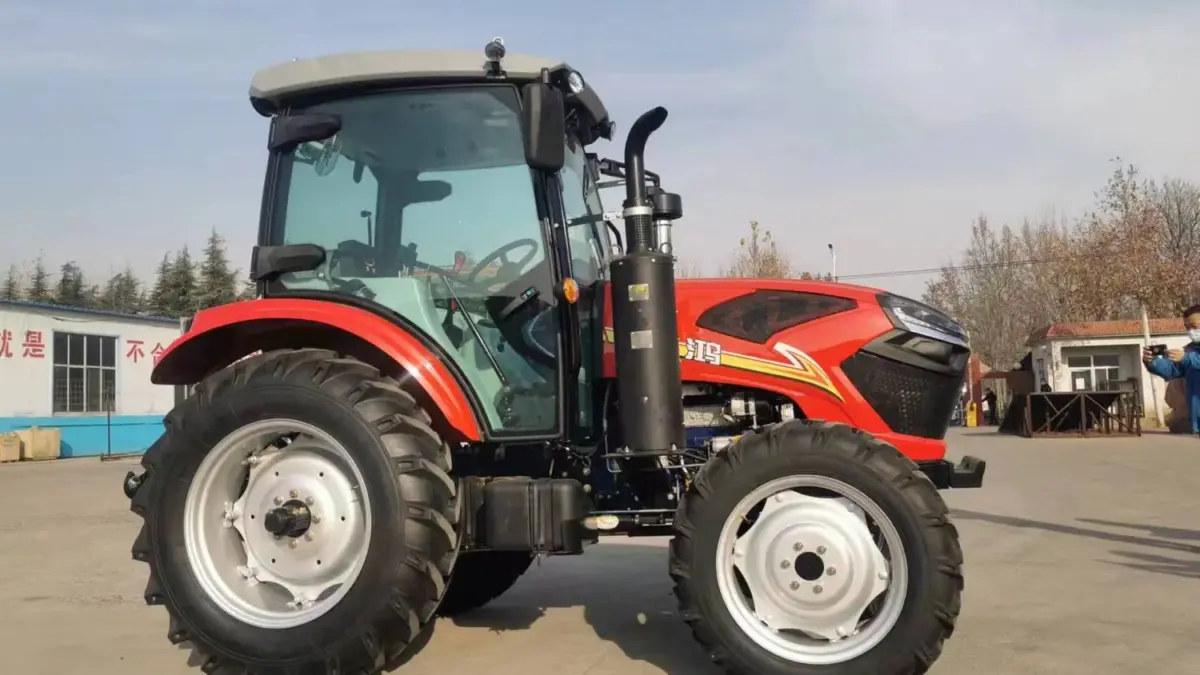
Dad’s old Farmall was in the machine shed on my side, where it has sat since he quit using it. It’s a 1953, red where it isn’t rust. Dad let me steer it down the lane when I was six years old. He’d stand on the drawbar behind me with one hand on the fender and hum hymns, mostly the slow ones, and tell me to quit looking at my hands and look where I was going.
Rusty spent all of Sunday getting it to turn over. He put in a new battery and fresh gas. He took the carburetor apart on a feed sack and cleaned out thirty years of varnish with a wire and a can of spray. Along about four in the afternoon it coughed, blew a cloud of blue smoke out the stack, and ran.
My son cheered. Lottie came out on her porch to see what the noise was.
Rusty had to take the kids home that night so they’d make the bus in the morning. He stood by the car door a long time before he got in.
“Call me the minute anybody raises his voice,” he said.
“Nobody’s going to raise his voice.”
“Beth. The minute.”
I took a personal day. I set an alarm for five and didn’t need it.
I was on the seat before six. I had driven the Farmall down the lane in the dark and parked it crossways in the pit road, where the haul trucks come in off the county gravel. The road is cut through a bank there, and there’s no room to go around. I shut the engine off. I had a thermos on my knee and the survey inside my coat, and there was frost on the grass.
I’ll admit I was scared. I’m a forty-five-year-old chemistry teacher. I break up arguments over lab partners. I had never in my life blocked a road.
The first dump truck came down the lane at six, right on time. It was a big white tandem with its lights on. It came around the bend and its brakes hissed, and it stopped about ten feet from my front tire.
The driver leaned out the window. He was a man in his fifties with a gray beard and a stocking cap.
“Ma’am, you’re in my road.”
“It’s my road,” I said. My voice shook a little, and I hated that. “And that’s my gravel.”
He looked at me for a long time. He looked at the tractor, and he looked at the thermos. I think he was deciding whether I was crazy.
He didn’t argue with me. He shut the truck off and took out his phone and called somebody. I heard him say, “Lem, there’s a lady on a Farmall in the pit road. No, I’m not kidding. She says it’s hers.” Then he listened and said, “Yes, sir,” and put the phone away.
He sat back in his cab and waited with me. After a while he poured himself coffee out of his own thermos. The sun came up behind the sycamores, and neither of us said a word for most of an hour.
A little after seven, my brother came striding down the haul road from the direction of the house. He had on a ball cap and brown bibs, and his arms were out at his sides as if I’d lost my mind.
“Beth, get off that tractor.”
I didn’t.
“Dutch has eleven more loads today,” he said. “The county’s waiting on that rock. You’re costing a man money.”
“I’ve already been cost forty-seven thousand dollars. I can stand to cost somebody a morning.”
I pulled the survey out of my coat and held it down to him. He wouldn’t take it. He put his hands in his bib pockets.
“That paper’s older than your kids. Everybody knows the creek’s the line.”
“You held the rod, Kris.”
His face changed for a second. “What?”
“In 1998. You held the rod for the surveyor, standing right over there. I brought the sandwiches. You know where the pins are better than I do.”
He looked off at the river. A muscle was jumping in his jaw. He didn’t answer.
That was when a green pickup came down the lane and pulled in behind the dump truck. The man who climbed out was heavyset and slow-moving, in a canvas coat. I knew who he was before he reached us. Lemuel Pratt is sixty-three, and he has been hauling Gasconade gravel since before I was born. His name is on half the trucks in three counties.
He didn’t look at Kristof. He walked straight to the tractor and held out his hand.
“You’d be the sister.”
“Bethel,” I said. “I called your office Friday.”
“I heard.” His hand was as rough as a brick. “I knew your daddy. Emil sold me fence posts in 1984.”
I climbed down. My knees were stiff from the cold. I unfolded the survey and spread it across the red hood of Dad’s Farmall and held the corners down with my gloves.
Mr. Pratt took a pair of glasses out of his shirt pocket. He read it once. Then he read it again, slower, with his finger on the line. He followed it from the pin on the county road to the pin on the bluff. He found the creek and counted the places it crossed. He looked up at the bar and back down at the paper.
Nobody said a word. Dutch had gotten out of his truck and was standing by his fender with his cap in his hand. The excavator sat quiet on the bar behind us.
Mr. Pratt straightened up and folded his glasses. He looked up the road at my brother.
“Kris,” he said. “Come here a minute.”
Kristof came. He walked like a boy called to the front of the class.
“Put your finger on the property line for me.”
“Lem, that survey’s—”
“It’s recorded. I can see the book and page right there in the corner. Put your finger on it.”
My brother put his finger on the line.
“Now show me the bar.”
Kristof moved his finger about an inch to the left, to my side, and held it there.
Mr. Pratt nodded slowly. “You sat in my office in July and signed a paper that said you owned this gravel free and clear. I took your word, because I knew your daddy and I’ve known you since you were in diapers. I didn’t pull the plat. That’s on me.” He tapped the hood. “I’ve got a permit with the state that lists you as the landowner. I’ve sold twenty thousand ton of this woman’s rock to the county. Do you understand the fix you’ve put me in?”
“Dad always said the creek,” Kristof said. It came out thin.
“Your dad paid a surveyor so nobody’d have to go by what anybody always said.” Mr. Pratt turned his head. “Dutch. Take her back up to the yard. We’re shut down here.”
Dutch nodded. He climbed in his cab, and I walked over and started the Farmall and backed it far enough for him to turn around. He raised two fingers off the steering wheel to me as he went by.
When the truck was gone, it was very quiet. I could hear the river.
Mr. Pratt looked at me. “Mrs. Rowan, I’m not hauling another pound off this place until I have your name on a paper. If you don’t want it hauled at all, that’s your right, and I’ll have my hoe off your ground by noon.”
“I don’t know yet what I want,” I said. “I wanted it stopped.”
“Well, it’s stopped.” He looked at my brother again, and his face was sad more than angry. “I paid you forty-seven thousand dollars for something that wasn’t yours to sell, Kris. By rights I ought to want it back from you, and she ought to want it from me. I’ve been in business forty years, and I’ve seen this end with lawyers taking most of it.” He put his glasses back in his pocket. “You two have a kitchen up there. I’d go sit in it. I’ll be at my office when you’ve decided something.”
He shook my hand again and got in his pickup.
Kristof and I stood in the pit road with the tractor ticking as it cooled.
“You’ve got coffee on up there?” I asked.
He didn’t look at me. He turned and started walking toward the house, and I followed him.
I hadn’t been in that kitchen since the funeral. It was the same table and the same yellow curtains, and Dad’s seed-corn calendar was still on the wall, three years out of date. The sink was full of dishes. My brother’s wife left six years ago, and he’d been keeping house about as well as he ever did.
There was a stack of mail on the table. He swept it toward himself as he sat down, but he wasn’t fast enough. The top envelope was from Maries County Bank, and it had PAST DUE stamped across it in red.
I poured two cups and sat down across from him.
“How much, Kris?”
“How much what?”
“The bank.”
He turned the cup around in his hands for a while. He has Dad’s hands, big-knuckled, with a scar across the left thumb from a baler.
“Thirty-one thousand on the operating note,” he said finally. “I’d been rolling it over since the drought year. Hay was two hundred a bale that winter and I bought it anyway, because I wasn’t going to sell Dad’s cows. Then the calves didn’t bring it back, and the next year they didn’t either.” He rubbed his eyes. “In June, Ed Schroeder at the bank called me in. He said they couldn’t carry it past September. I’d put the east eighty up against that note, Beth. The house too.”
“Why didn’t you call me?”
He laughed, and there wasn’t any humor in it. “And say what? That I stayed home to run the farm, and ran it into the ground in three years without him?”
I didn’t have an answer.
“Lem came by in July about the bar,” he said. “He’d been after Dad for that gravel for years, and Dad always told him no. He offered two thirty-five. I figured it out on the back of a feed ticket. It would clear the note and the taxes, and there’d be some left for a squeeze chute, so I wouldn’t keep getting kicked.” He looked at the table. “I told myself the creek was the line. I said it enough times that I about believed it.”
“You held the rod.”
“I know I held the rod.” His voice cracked. “I know where the pins are. There’s one under the big sycamore with a bottle cap on it. I mow around it.”
He put his face down in his hands. I had not seen my brother cry since he was fourteen and his 4-H steer went to the sale. I looked at the calendar so he could have a minute.
“You said I went off to college,” I said after a while.
“I shouldn’t have said that.”
“You said it because you meant it. So let’s have it out. You think Dad should have left you the whole place.”
He wiped his face with his sleeve. He took a long time.
“I think I gave him twenty years,” he said. “I pulled calves at two in the morning in February. I sat with him every night that last winter when he couldn’t get out of the chair. You came down at Christmas and Easter. And he sat at this table and cut it right down the middle, like we’d done the same.”
“We hadn’t done the same.”
He looked up. I don’t think he’d expected me to agree.
“You gave him a lot more than I did,” I said. “I know that. I’ve known it since the funeral, and I never said it to you, and I should have. I think he knew it too. But it was his farm, and that’s how he cut it, and half of it’s mine. You don’t get to fix his will with an excavator.”
“No,” he said. “I guess I don’t.”
I called Rusty from the porch. “Nobody raised his voice,” I told him. He let out a breath I could hear from two hours away.
Before I left that afternoon, I walked down to the bar by myself. I hadn’t looked at it up close. The hole was ten or twelve feet deep and about as wide as a ball diamond, and it had filled partway with brown water. The riffle at the head of the bar was gone. That’s where Dad showed me how to turn over rocks and find hellbenders, the big wrinkled salamanders that only live in clean Ozark streams. I’ve taught a unit on them for fifteen years. The gravel they hide under is in a low-water crossing south of Vienna now.
I stood there a good while. Forty-seven thousand dollars is a number, and a number can be paid back. The riffle can’t be. A river will rebuild a gravel bar, but it takes thirty or forty years. I’ll be an old woman.
I didn’t tell Kristof about the hellbenders. He wouldn’t have known what to say, and I didn’t want him to try.
We met that Thursday at the office of Ruth Ann Helmig, the attorney in Vienna who had drawn up Dad’s will. I took another day off. Kristof wore a clean shirt. Mr. Pratt came too, with his hat on his knee, because I had asked him.
Ruth Ann is in her seventies and doesn’t waste words. She had pulled the recorded plat herself. She laid it next to the agreement Kristof had signed, and she looked at him over her glasses until he looked away.
“Your sister could make this very hard for you,” she told him. “I want you to understand that before she tells you what she’s decided.”
I had thought about it for three nights. I’d talked it over with Rusty until we were both hoarse.
“I want the forty-seven thousand back,” I said. “All of it. I don’t want interest. You’ll sign a note, and you’ll pay it out of the calf check every November. Forty-seven hundred a year for ten years.”
Kristof nodded. He was looking at his hands.
“I want the line staked again, with new pins and caps, so there’s never another conversation about where it is. You’re paying the surveyor.”
“All right.”
“And Mr. Pratt and I are going to talk about the bar. If I let any more go out, it’ll be under my name and on my terms.”
Mr. Pratt cleared his throat. “Since we’re being honest in here, I’ll say something. Two thirty-five was a price for a man in a hurry. The going rate’s nearer three.” He didn’t look at my brother. “I’d pay you two eighty-five, Mrs. Rowan.”
Kristof’s ears went red. He’d been cheated on the price of gravel he’d had no right to sell.
“There’s one more thing,” I said, and I turned to my brother. “If trucks are coming in and out, somebody has to be on the place. Somebody has to open the gate and keep the road up and count the loads against the scale tickets. I’m two hours away. I’d pay a quarter a ton for that.”
It took him a moment to understand me.
“You’d hire me,” he said.
“You’re the one who stayed.”
Ruth Ann put down her pen. Mr. Pratt studied the ceiling. My brother looked at me across that office for a long time, and then he nodded, once, and looked back at his hands.
He signed the note. Ruth Ann filed what she needed to file at the courthouse, so that I’d stand ahead of anyone else if the cattle business went under. She explained it to me twice, and I’m still not sure I could explain it to you. I signed a two-year agreement with Pratt Sand and Gravel. It covers the upstream end of the bar only. They have to stay fifty feet back from the water, and they can’t haul at all in the spring when the fish are on the gravel. Mr. Pratt read those conditions and said he’d never had a landowner hand him a list before. Then he signed it.
I wish I could tell you that fixed things between my brother and me. It didn’t, or it hasn’t yet.
He never said he was sorry in so many words. At Thanksgiving he brought a smoked ham to my house and hardly spoke through dinner. Afterward he spent two hours in the garage helping Rusty bleed the brakes on our old truck. Rusty says he talked the whole time out there. My daughter asked me why Uncle Kris was so quiet at the table, and I told her he had a lot on his mind.
The surveyor came in December. The new pins have orange plastic caps on them. I’m told you can see them from the county road.
The first payment arrived the week after the calf sale. It was a plain envelope with a check in it for $4,700, in his blocky printing. There wasn’t a note. On the memo line he’d written “gravel.” I looked at that word for a while. Then I deposited the check in the account where Rusty and I are saving for the kids’ college, which seemed about right.
The second payment was three hundred dollars short. A check for the difference came in January with no explanation. I didn’t ask.
There are things I haven’t settled in my own mind. I still don’t know if a quarter a ton was generosity or guilt. I don’t know whether Dad was right to cut the place down the middle. Maybe he should have asked us. Some nights I’m still angry about the riffle, and I expect I will be for years.
In April I drove down by myself on a Saturday to see how the bar had come through the high water. The river had already pushed a little new gravel into the downstream end of the hole. It wasn’t much, a skim maybe a foot deep, but it was clean, and it was a start.
The Farmall was back in the shed. I hadn’t put it there. Somebody had drained the carburetor and thrown a tarp over the seat, and the battery was sitting on a block of wood with a trickle charger clipped to it.
I walked the line on my way out. Under the big sycamore the grass had been mowed in a neat circle around an orange cap. Across the fence, Kristof was on his four-wheeler in the east pasture, checking calves. He saw me and stopped. He raised two fingers off the handlebar.
I raised mine. Then I walked back up the lane to my car.