She stood at the foot of the stairs with her hand on the banister and her mouth open, and for a long moment nobody said anything.
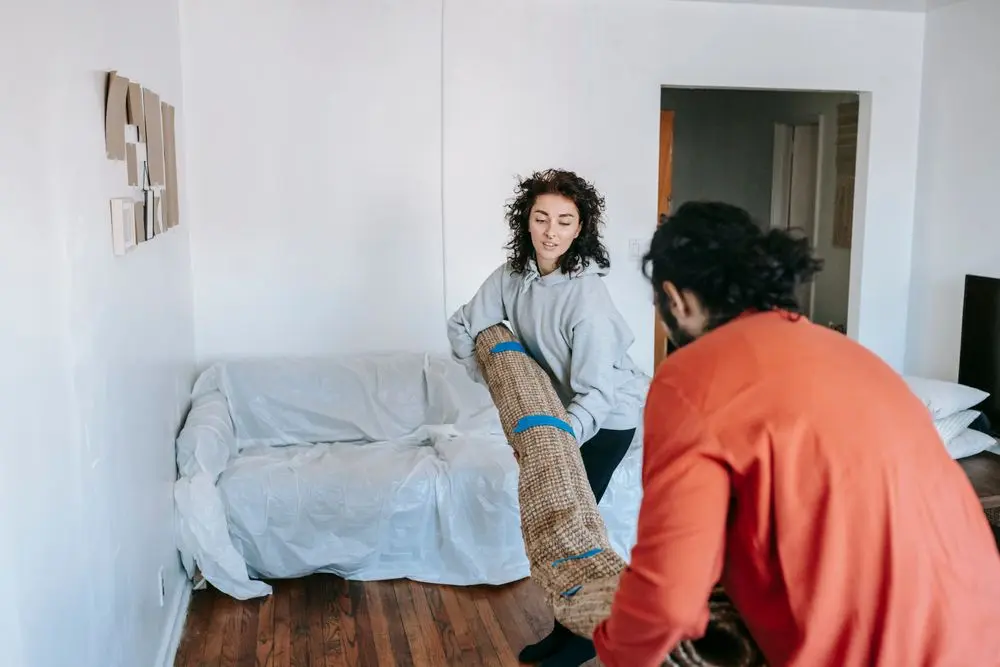
Nate had the bottom of the cabinet. I had the top. The upper we were carrying was the one that used to hang over the coffee maker, the one with the spice rack inside the door that Nate built from scrap poplar the first winter we lived up there. It weighed about forty pounds. My arms were shaking, and not only from the weight.
Darlene looked at her son, then at me, then at the bare wall at the top of the stairs.
The stair window up there faces east. At one o’clock in April the light comes in long and yellow across the landing and straight through the open kitchen door. For six years that light had landed on white cabinets, a row of mason jars, and a calendar from the feed mill.
Now it fell on a wall with nothing on it. You could see the faint outline where each cabinet had hung, paler than the paint around it, plus a few small holes where the screws had been.
“What are you doing?” Darlene said.
Her voice was very quiet.
But to explain how we got to that staircase, I have to go back six years.
My name is Kelsey Weaver. I’m thirty-one. My husband is Nate Weaver. He’s thirty-three. He drives a bulk feed truck for the Juniata Valley Feed Mill. He hauls ground corn and soybean meal to dairy farms and hog barns all over Juniata and Perry and Mifflin counties. He’s up at four-thirty every morning and home by four. He can back a forty-foot trailer up a muddy farm lane in the dark without hitting a single fencepost.
He doesn’t argue.
He fixes things.
We met at Juniata High School. He was a senior. I was a sophomore. He sat behind me in study hall and spent three weeks working up the nerve to ask if he could borrow a pencil, which he did not need, because he had four of them in his shirt pocket.
I gave him one anyway.
He still has it. It’s in his tackle box.
We got married when I was twenty-two. At the Lutheran church in Richfield. In June. Under a tent in my parents’ side yard afterward, with a pig roast and a bluegrass band from Thompsontown and my Uncle Dale doing the chicken dance at eleven o’clock at night.
For the first year, we rented a half of a double in McAlisterville. Six hundred a month. Thin walls. A neighbor who played Metallica at two in the morning.
Then I got pregnant with Eli.
Nate’s parents live on a farm outside Richfield, in the western end of Juniata County.
Eighty acres. Most of it rented out to a neighbor for corn and hay. A red bank barn built in 1886. A spring house. A stone farmhouse with a big front porch and a slate roof and walls two feet thick.
Darlene and Myron bought it in 1984. They were twenty-four and twenty-six. They couldn’t have bought it without help. Darlene’s older sister, Bonnie, lent them the down payment. Eleven thousand dollars. Bonnie’s husband had just sold his welding business.
Darlene paid it back over nine years. She’s told that story at every Christmas dinner I’ve ever been to.
“Bonnie gave us our start,” she’d say. “I’ll never forget it.”
The farmhouse is big. Too big for two people.
The upstairs had been empty since Nate’s older sister, Carrie, moved to Harrisburg in 2010. Four rooms and a bathroom. Plaster walls. Old pine floors. A tiny kitchen somebody had put in back in the fifties when Myron’s grandmother lived up there. A two-burner stove, a cracked enamel sink, and a refrigerator from the Carter administration.
When I was seven months along with Eli, Darlene called.
“Why are you two throwing money away on rent?” she said. “There’s a whole upstairs sitting here empty. Come live with us. Save your money. Fix it up however you want.”
She paused.
“It’ll be yours someday anyway,” she said. “Myron and I aren’t going to live forever. It’s going to be Nate’s. Might as well start making it yours now.”
Nate looked at me across the kitchen table in our half of a double, with the Metallica coming through the wall.
I looked at him.
We moved in that August.
The first winter, we froze.
The upstairs had baseboard heat that worked when it felt like it. The windows rattled. Frost grew on the inside of the glass. I nursed Eli wrapped in two quilts with a space heater pointed at my feet.
The kitchen was miserable. The two-burner stove only had one burner that worked. The sink leaked into a bucket. The refrigerator made a noise like a dying cow.
The bathroom had a clawfoot tub with rust stains and a toilet that ran all night.
So we started fixing it.
It took us four years.
Every spare dollar. Every Saturday. Every vacation day Nate had.
We started with the bathroom.
Nate gutted it down to the studs himself. He watched YouTube videos at the kitchen table at night after Eli went to sleep. He learned plumbing from a guy named Matt on YouTube and a retired plumber from church named Herb Swartz, who came over three Saturdays in a row and wouldn’t take a dime.
New subway tile. A real shower. A vanity from Lowe’s in Lewistown. We had the old clawfoot tub reglazed by a man from Selinsgrove and kept it. It was the nicest thing in the house.
Ninety-four hundred dollars, all in.
Then the kitchen.
That took two years.
Nate tore out the fifties cabinets and the broken stove and the cracked sink. He put in new wiring with an electrician friend from the feed mill. He patched the plaster. He laid new oak floors over the old pine, because the pine was too far gone to save.
We bought cabinets from an Amish shop near Belleville in Big Valley. White painted maple. Shaker style. Solid wood, not particleboard. Joel Peachey and his sons built them in a shop with no electricity, powered by a diesel engine and a line shaft. They took eleven weeks.
They cost eleven thousand four hundred dollars.
It was the most money I’d ever spent on anything.
We bought butcher block counters. Maple. From a lumberyard in Mifflinburg. Nate oiled them himself. Six coats.
We bought a farm sink. A big white fireclay one. Deep enough to bathe a baby in, which I did, more than once.
We bought a range. A real one. A five-burner gas range from a scratch-and-dent sale at an appliance store in State College. It had a dent in the side you couldn’t see once it was installed.
And open shelves Nate built from barn boards out of the hayloft. With Myron’s permission. Myron helped him pick them.
Thirty-eight thousand dollars.
That’s what we put into that upstairs. Over six years. I know, because I kept every receipt in a manila folder in the bottom drawer of the dresser.
Lowe’s. Home Depot. The Amish cabinet shop. The lumberyard. The plumbing supply place in Lewistown. The appliance store in State College. The electrician. The tile guy.
Thirty-eight thousand, one hundred and twelve dollars and forty-one cents.
It was beautiful when it was done.
It was the most beautiful kitchen I’d ever been in.
White cabinets. Warm wood counters. That big white sink under the window that looks out over the back pasture and the bank barn and the hills beyond. Morning sun coming in. Mason jars of beans and rice and pasta on the barn-board shelves.
Nate built a little window seat under the east window. With a cushion I sewed myself out of an old quilt of my grandmother’s.
Eli learned to walk across that oak floor.
Ada was born while we were upstairs. Five years ago. We brought her home from Lewistown Hospital and laid her in a bassinet next to the window seat. She took her first steps from the window seat to the farm sink.
It was ours.
That’s what we thought.
That was the promise.
We didn’t pay rent.
That was the arrangement. Darlene had said so the day we moved in. “Don’t you dare pay us rent. You’re family. Put it into the house.”
So we didn’t.
We paid our own electric, on a separate meter Nate had installed. We paid our share of the propane. We paid for every single thing we did to that upstairs.
And Nate helped with the farm. Every weekend. Mowing the hay field. Fixing the barn roof after a storm. Putting in a new well pump in 2021 when the old one died. Hauling firewood. Clearing snow.
He replaced the roof on the spring house. He rebuilt the back porch steps. He re-hung the barn door that had been dragging since 1998.
He never asked for anything.
There was no lease. No deed. No piece of paper.
There was just Darlene, standing in her kitchen the first week we moved in, saying, “It’ll be yours someday anyway.”
And us believing her.
I found out I was pregnant with our third in December.
I was twenty weeks along by the beginning of March.
We waited to tell anybody. I’d lost one between Eli and Ada. At nine weeks. We’d told everybody that time, and then we’d had to untell everybody. I didn’t want to do that again.
So we waited until we were safe.
Then we told the kids. Eli is eight. He wanted a brother. Ada is five. She wanted a sister, and if not a sister, a puppy.
Then, on the first Sunday in March, we told Darlene and Myron.
Sunday dinner at the farmhouse is at one o’clock. Every Sunday. After church.
Darlene plays piano at St. Paul’s Lutheran in Richfield. She’s played every Sunday service since 1987. She comes home and changes out of her church blouse into her apron and puts the roast in.
Pot roast. Mashed potatoes. Green beans with bacon. Applesauce she cans herself every fall. Dinner rolls from the Amish bakery in McAlisterville. And pie. Always pie. Shoofly or apple or whatever’s in season.
We eat at her big dining room table. Oak. Heavy. With a lace tablecloth that only comes out on Sundays.
I waited until the pie.
I’d been nervous all morning. I didn’t know why.
“Darlene,” I said. “Myron. We have some news.”
Darlene looked up.
“We’re having another baby,” I said. “In August. The twentieth.”
Myron smiled.
Myron doesn’t smile much. He’s sixty-eight. Tall and thin and bent, with big hands and a face like a weathered fencepost. He was a dairy farmer for thirty years. He sold the herd in 2012, when milk prices went to nothing. Since then he’s worked part-time at the hardware store in Mifflintown and spends most of his days in the barn, fixing old tractors.
He doesn’t say much. In six years, I could count on one hand the number of whole conversations I’d had with Myron Weaver.
But he smiled.
“Well,” he said. “Good.”
That was all.
It was more than enough.
Darlene set her fork down.
She didn’t say anything for a long moment.
She looked at me. At my stomach. At Nate.
“Well,” she said. “Five won’t fit up there.”
I didn’t understand.
“I’m sorry?” I said.
“Five people,” Darlene said. “Upstairs. In four rooms. It won’t fit. You’ll be on top of each other.”
She picked her fork back up.
She cut a piece of pie.
“Tanner can take it at Easter,” she said.
The room went quiet.
Tanner is her sister’s grandson.
Bonnie’s daughter’s boy. Bonnie’s daughter is Lisa. Lisa had Tanner when she was nineteen. Tanner’s father was never around.
Tanner is twenty-four. He grew up in Lewistown. He’s had a rough few years. He dropped out of community college. He got a DUI in 2022. He’s been living on his mother’s couch in a trailer in Burnham.
I’d met him maybe six times. At Christmas. At Bonnie’s eightieth birthday party. He seemed nice enough. Quiet. He played with Eli on the floor with Legos for two hours at the birthday party, longer than any of the grown men.
“Tanner,” Nate said slowly. “Aunt Bonnie’s Tanner?”
“Lisa’s boy,” Darlene said. “Bonnie’s grandson.”
“What does Tanner have to do with anything?”
Darlene took a bite of pie.
She chewed it. She swallowed.
“He needs a fresh start,” she said. “Lisa called me in January. He’s been sober a year. He just got a job at the Empire Kosher plant in Mifflintown. Second shift. He needs a place to live. Out of that trailer. Away from those people he was running with.”
She set her fork down.
“Bonnie asked me,” Darlene said. “Bonnie’s never asked me for one thing in forty years. Not one. She gave us our start on this farm. I owe her.”
“So you promised him the upstairs,” Nate said.
“I told Lisa I’d see what I could do,” Darlene said.
She looked at me.
“And now you’re having another baby,” she said. “So it works out. You’ll need more room anyway. You’ll want your own place. And Tanner needs a start. Easter’s the first of April. That gives you almost a month.”
Nate looked at his mother for a long time.
Nate doesn’t argue. I’ve been married to him for nine years. I’ve seen him argue maybe four times.
He looked at her for so long that Ada, sitting in her booster seat next to me, said, “Daddy? Are you sad?”
“Mom,” Nate said finally. Very quietly. “We put thirty-eight thousand dollars into that upstairs.”
Darlene didn’t blink.
“And you’ve had six years of free rent,” she said.
Myron stood up.
He didn’t say anything.
He folded his napkin and put it next to his plate. He pushed his chair in.
And he walked out the back door to the barn.
Before the pie.
He didn’t come back.
I don’t remember the drive back upstairs.
It’s only one flight. Through the hallway, up the narrow back staircase, into our kitchen.
I don’t remember any of it.
I remember standing at my farm sink with my hands flat on the butcher block counter. Looking out the window at the bank barn. At the light on in the workshop where Myron was.
I remember Eli asking if we were moving.
I remember Ada asking if Tanner was going to sleep in her bed.
That night, after the kids were asleep, Nate sat on the edge of our bed.
He was holding a pencil.
A yellow No. 2. The kind he keeps four of in his shirt pocket. He had a spiral notebook open on his knee. The kind Eli uses for school.
He was making a list.
“What are you doing?” I said.
He didn’t answer right away.
He kept writing.
“I called a lawyer,” he said finally. “Today. After dinner. From the truck. A guy in Lewistown. Doug Kauffman. Herb Swartz’s nephew.”
“On a Sunday?”
“He picked up.”
Nate set the pencil down.
“He said we don’t have much of a case,” Nate said. “For the money. No lease. No deed. No written agreement. Nothing on paper. He said if we sued, a judge would probably say six years of free rent cancels out most of what we put in.”
He looked at the notebook.
“He said six years of rent around here, for four rooms and a bath, would’ve been something like forty, forty-five thousand,” Nate said. “He said a judge would call it a wash.”
I didn’t say anything.
I sat down on the bed next to him.
“But he said something else,” Nate said.
He turned the notebook so I could see it.
“He said the cabinets are ours,” Nate said.
I looked at him.
“Anything that’s not attached to the structure of the house,” Nate said. “Anything we bought with our own money and installed ourselves and can take out without damaging the building. Doug said that’s personal property. It’s ours. We can take it.”
He tapped the list.
“The cabinets. The butcher block counters. The farm sink. The range. The vanity in the bathroom. The light fixtures. The open shelves, even. They were from Dad’s barn, but we built them. The window seat.”
He looked at me.
“Doug said we just have to leave it the way we found it,” he said. “Or close to it. We can’t tear out walls. We can’t rip out plumbing that was there before us. But anything we added that comes out clean, we can take.”
I looked at the list.
It was two pages long. In his small, careful handwriting. Every single thing we’d put into that upstairs.
Upper cabinets (7). Lower cabinets (6). Pantry cabinet (1).
Butcher block counters (3 pieces).
Farm sink. Faucet.
Range.
Range hood.
Open shelves (4).
Window seat + cushion.
Pendant lights (3).
Bathroom vanity + mirror + faucet.
Towel bars (2).
Shower curtain rod.
Medicine cabinet.
“Nate,” I said. “Are you sure?”
He was quiet for a long time.
“She told us it’d be ours,” he said. “She said it. In this kitchen. The first week.”
He looked down at the notebook.
“I’m not going to fight my mother,” he said. “I’m not going to sue her. I’m not going to scream at her. That’s not who I am.”
He picked up the pencil again.
“But I’m not leaving her a thirty-eight-thousand-dollar kitchen for Tanner either,” he said.
He looked at me.
“Every screw we put in,” he said, “we take out.”
“Okay.”
“Nothing in the walls. Nothing that leaves a hole she has to patch. I’ll fill every screw hole. I’ll leave the old fifties sink in the barn where we put it, and I’ll put it back. And the old stove. I’ll hook it back up. She’ll get back exactly what she gave us.”
He swallowed.
“Exactly what she gave us,” he said again. “Not one thing more.”
We found a rental in Mifflintown two weeks later.
A little brick house on Cherry Street. Three bedrooms. One bath. A small kitchen with laminate counters and cheap oak cabinets from the 1990s and a big empty wall where somebody had torn out a hutch.
A fenced backyard. A swing set the last tenants left.
Eleven hundred dollars a month.
The landlord was an old man named Mr. Stine who’d been a math teacher at Juniata High School for thirty years. He’d had Nate in algebra.
“Nathan Weaver,” he said. When we came to look at it. “You fell asleep in my class every day for a year.”
“Yes, sir.”
“You still got a B.”
“Yes, sir.”
Mr. Stine looked around the little kitchen. At the cheap oak cabinets.
“I hear you’re handy,” he said.
“I can fix most things.”
“These cabinets,” Mr. Stine said, “are terrible. If you want to swap them out for something better, and you put the old ones in my garage when you leave, I won’t say a word.”
We signed the lease on the Tuesday of Holy Week.
We didn’t tell Darlene.
I want to be honest about that part.
We didn’t tell her.
Not because we were trying to trick her. Not exactly.
Because every time I thought about telling her, I’d remember her sitting at that dining room table, cutting a piece of pie, saying, And you’ve had six years of free rent.
And I couldn’t.
Nate didn’t tell her either.
He said he’d tell her on Good Friday. After. When it was done. When there was nothing left to argue about.
“She’ll be at church,” he said. “Playing for the noon service. Three hours. That’s enough.”
I asked him if he was sure.
He was quiet for a long time.
“No,” he said finally. “But I don’t know any other way to do it.”
On Good Friday morning, Ada stood in the kitchen doorway in her pajamas.
She had her stuffed rabbit, Mr. Buttons, under one arm. She’d had him since she was born. He’s missing an eye.
She looked around the kitchen.
At the boxes on the floor. At the mason jars, empty now, packed in newspaper. At the bare barn-board shelves.
At Nate, kneeling on the floor in front of the farm sink with a wrench and a flashlight.
“Daddy,” she said. “Is the kitchen moving too?”
Nate set down the wrench.
He stood up. His knees cracked.
He walked over and picked her up. Rabbit and all.
He held her on his hip.
“A kitchen goes where the family goes, sweet pea,” he said.
Ada thought about it.
“Even the sink?”
“Even the sink.”
“Even my window seat?”
“Especially your window seat.”
She looked at the big white farm sink under the window.
“I learned to walk to that sink,” she said.
“You did.”
“Mommy says.”
“Mommy’s right.”
Ada leaned her head on his shoulder.
“Okay,” she said. “Then it should come.”
I took the kids to my mother’s house in Port Royal.
Mom met me at the door. She didn’t ask any questions. She knew. I’d called her the Sunday after the dinner and cried for an hour on the phone.
She took Eli and Ada inside.
Then she came back out to my car. She leaned down to the window.
“Kelsey,” she said. “Be careful on those stairs. You’re twenty weeks.”
“I know, Mom.”
“I mean it. Let Nate carry the heavy things.”
“I’ll be careful.”
She looked at me for a long time.
“You’re going to carry something anyway,” she said. “Aren’t you?”
“Yes.”
She sighed.
“Your father was the same way,” she said.
She kissed my forehead through the window.
I drove back to the farm.
I went upstairs.
I put on my gray maternity T-shirt. The one that’s stretched out at the neck because I wore it through Eli and Ada too. And my oldest faded jeans. The ones with the elastic panel. The ones with paint on the knee from when we painted Ada’s room yellow.
Darlene’s Buick was gone from the driveway.
She was at St. Paul’s. Playing for the noon Good Friday service. “O Sacred Head, Now Wounded.” “Were You There.” She plays it every year.
She’d be gone until at least three.
Myron’s truck was by the barn.
The workshop light was on.
Nate shut off the water under the sink.
He’d already done most of the prep work. Over the past two weeks. At night. After the kids were asleep. Quietly.
He’d moved the old fifties sink and the old two-burner stove out of the hayloft where they’d been sitting for six years. He’d cleaned them. Scrubbed them. He’d gotten the stove working again. He’d bought a new faucet for the old sink. A plain chrome one. Forty-two dollars at the hardware store in Mifflintown where Myron works.
Myron rang it up.
Neither of them said anything about it.
He’d rented a U-Haul. A fifteen-footer. It was parked behind the barn where Darlene wouldn’t see it from the road.
He’d borrowed two furniture dollies from a guy at the feed mill.
He’d bought a box of contractor bags and two rolls of moving blankets and three boxes of drywall patch.
He started on the uppers.
Every cabinet came down in one piece.
I don’t know if you’ve ever watched somebody take down kitchen cabinets carefully. It’s slow. It’s quiet. It takes a lot of patience.
Nate did it the way he does everything. Slowly. Carefully. Without hurrying.
He took the doors off first. Each one. He numbered them with a Sharpie on a piece of blue painter’s tape on the inside. U1-L. U1-R. U2-L. U2-R.
He put every hinge in a Ziploc bag. He labeled every bag.
Then he took out the screws holding each cabinet box to the wall. He saved every single screw. In a Folgers coffee can. He counted them as they went in.
I held each box steady while he worked.
When the last screw came out, he lifted the cabinet off the wall and set it on a moving blanket on the floor.
By one o’clock, the wall above the counter was bare.
You could see exactly where they’d hung.
Paler rectangles on the painted plaster. Little holes where the screws had been. A strip of slightly different-colored paint where the top of the cabinets had met the wall.
Six years.
I stood in the middle of the kitchen and looked at it.
The window seat was still there. The farm sink. The butcher block counters. The range.
But the wall was bare.
And for the first time in six years, the room looked like somebody else’s.
“You okay?” Nate said.
“Yeah.”
“You sure?”
I looked at him.
He was standing by the bare wall in his red flannel shirt and his feed mill ball cap. Sweat on his forehead. A Sharpie behind his ear. Holding the Folgers can full of screws.
“I’m sure,” I said.
We started down the stairs with the first white upper cabinet.
The one from over the coffee maker. U2. With the spice rack inside the door that Nate built from scrap poplar the first winter. Twenty-four inches wide. Thirty inches tall. Solid maple.
About forty pounds.
Those stairs are narrow. Old farmhouse stairs. Steep and twisting, with a turn at the bottom. Built in 1891 for people who were smaller than us and didn’t own anything bigger than a chair.
Nate went first.
Backing down. One step at a time. In his ball cap. Holding the bottom of the cabinet against his chest.
I held the top end.
Twenty weeks along.
I wasn’t letting go.
“Slow,” Nate said. “One step. Then stop.”
“I know.”
“You tell me if it’s too heavy.”
“I’ll tell you.”
“Kelsey. I mean it.”
“I know you mean it. Keep going.”
We went down one step.
Then another.
Then another.
Halfway down, the back door opened downstairs.
She’d come in through her own kitchen.
The back door. The one that opens from the side porch straight into Darlene’s kitchen. Not the front door. Not the side porch on our end of the house, where the U-Haul ramp was and the moving blankets were piled up and the lower cabinets were already wrapped and waiting.
She hadn’t seen the porch.
The service had ended early. We found out later. The pastor had laryngitis. He cut the sermon to four minutes.
Darlene came around the corner from her kitchen.
In her lavender blouse. The one she wears for Holy Week. With a little gold cross on a chain around her neck. Her church shoes. Her pocketbook over her arm.
She was humming “Were You There.”
She stopped at the foot of the stairs.
Her hand went to the banister.
She looked at Nate.
In his red flannel. Halfway down her staircase. Backing down. Holding the bottom end of a white maple cabinet against his chest.
She looked up past him.
At me.
Twenty weeks pregnant. In my gray maternity T-shirt. Holding the top end.
Then she looked past both of us.
At the top of the stairs.
At the open kitchen door.
At the bare wall above the counter, where the daylight from the stair window fell on nothing at all.
Her mouth opened.
“What are you doing?” Darlene said.
Very quietly.
Nobody said anything.
The cabinet was getting heavy. My arms were shaking.
Nate didn’t move.
He just stood there. On the seventh step. Holding the cabinet. Looking down at his mother.
“Nathan,” Darlene said. “What are you doing?”
“Mom,” Nate said. “Can you move out of the way? Kelsey’s pregnant. This is heavy.”
Darlene didn’t move.
“You can’t take that,” she said.
“We can,” Nate said.
“That’s part of the house.”
“It’s not, Mom. It’s ours. We bought it. We put it in. I called a lawyer. Doug Kauffman. In Lewistown. Herb Swartz’s nephew. He said anything we bought and installed ourselves that comes out clean is ours. The cabinets. The counters. The sink. The range.”
Darlene’s face went white.
“You called a lawyer,” she said. “On your own mother.”
“I called a lawyer,” Nate said. “To find out what’s fair. Because you gave us till Easter. And we’ve got a baby coming in August. And we put thirty-eight thousand dollars into your upstairs.”
“I told you,” Darlene said. “You’ve had six years of free rent.”
“I know.”
“That’s worth something.”
“I know it is, Mom. Doug said the same thing. He said six years of rent cancels out most of it.”
Nate shifted the cabinet against his chest.
“So we’re not asking for the money,” he said. “We’re not suing you. We’re not asking you for anything.”
He looked down at her.
“We’re just taking the kitchen,” he said.
Darlene stared at him.
“What about Tanner?” she said.
“Tanner can have the upstairs,” Nate said. “Exactly the way you gave it to us.”
“What does that mean?”
“It means the old sink’s going back in,” Nate said. “The fifties one. From the hayloft. I cleaned it up. I put a new faucet on it. And the old two-burner stove. I got it working again. I’m putting them back in this afternoon. Right where they were.”
He looked at her.
“He’ll get exactly what we got, Mom,” he said. “Six years ago. When you said it’d be ours someday.”
Darlene didn’t say anything.
“Every screw we put in,” Nate said, “I’m taking out. Every hole, I’m filling. I’m not touching the walls. I’m not touching your plumbing. I’m not touching the bathroom tile or the floors. Those stay. Those are part of the house.”
He swallowed.
“But the cabinets are coming with us,” he said. “And the sink. And the counters. And the range. And Ada’s window seat.”
“Where are you going?” Darlene said.
Her voice was very small.
“Mifflintown,” Nate said. “Cherry Street. Mr. Stine’s rental. We signed the lease Tuesday.”
“Tuesday,” Darlene said. “You signed a lease Tuesday. And you didn’t tell me.”
Nate didn’t answer.
“You were going to just leave,” Darlene said. “You were going to just pack up my grandchildren and leave. On Good Friday. While I was at church. Without saying a word.”
“Mom,” Nate said. “You gave us till Easter. That’s Sunday. We’re leaving Friday. We’re doing what you asked.”
The cabinet was too heavy.
My arms were shaking so hard I could feel it in my shoulders. My lower back was screaming. The baby kicked. Hard. Right under my ribs.
“Nate,” I said. “I need to set it down.”
Nate looked up at me.
Then at his mother.
“Mom,” he said. “Please move.”
Darlene didn’t move.
She stood at the bottom of the stairs with her hand on the banister. In her lavender blouse. With her pocketbook over her arm.
She was staring at me.
At my stomach.
“Nate,” I said again. “I can’t hold it.”
That’s when the back door opened again.
Myron came around the corner from Darlene’s kitchen.
In his barn coat. His work boots. A smear of grease on his cheek. Sawdust on his sleeves.
He stopped next to Darlene.
He looked up the stairs.
At Nate. At me. At the cabinet.
At my arms, shaking.
He didn’t say anything.
He walked past his wife.
He came up the stairs.
Two at a time. For a sixty-eight-year-old man with bad knees, he moved fast.
He came up past Nate. On the inside of the staircase, where there was barely room. He squeezed past his son.
He stopped on the step just below me.
And he took the top of the cabinet out of my hands.
“I’ve got it,” Myron said.
Three words.
“Go sit down,” he said to me. “On the landing. Put your feet up.”
Five more.
I let go.
My arms were shaking so hard I couldn’t feel my fingers.
I sat down on the top step. On the landing. In the yellow light from the stair window.
Myron and Nate carried the cabinet down the rest of the stairs.
Past Darlene.
Out through her kitchen. Out the back door. Around the side of the house to the porch where the U-Haul ramp was.
Darlene stood at the bottom of the stairs.
She watched them go.
She didn’t say anything.
Then she looked up at me.
Sitting on the top step.
We looked at each other for a long time.
Then she turned around.
And she walked into her kitchen.
And I heard her pocketbook hit the table.
And I heard her start to cry.
Myron came back up the stairs.
He walked past me on the landing. Into our kitchen. Into the bare room with the pale rectangles on the wall where the cabinets used to hang.
He stood in the middle of it.
He looked around.
At the window seat. At the farm sink. At the butcher block counters. At the barn-board shelves.
The barn boards. From his hayloft.
“Nathan,” he said.
Nate came in behind him.
“Yeah, Dad.”
“What’s next?”
Nate looked at him.
“Dad,” he said. “You don’t have to—”
“What’s next,” Myron said again.
Not a question.
Nate swallowed.
“The other uppers,” he said. “Five more. Then the lowers.”
Myron nodded.
He took off his barn coat. He folded it and laid it on the window seat.
He rolled up his sleeves.
“Show me how you’re numbering the doors,” he said.
They worked all afternoon.
The two of them. Father and son. In the bare kitchen at the top of the stairs.
They didn’t talk much.
Neither of them talks much.
But I sat on the window seat with my feet up, the way Myron told me to, and I watched them.
Myron held each cabinet while Nate took out the screws. Nate passed each screw to Myron. Myron put it in the Folgers can. He counted out loud. Very quietly. Under his breath.
“Forty-one. Forty-two. Forty-three.”
When they got to the lowers, Myron got down on his knees on the oak floor.
I heard both his knees crack.
He held the flashlight while Nate disconnected the farm sink. He handed Nate the wrench before Nate asked for it.
Around three o’clock, Myron stopped.
He was holding a cabinet door. L4-R. The one from under the sink. The one where we kept the trash can and the dish soap.
He was looking at the inside of it.
On the inside of that door, in pencil, there were little marks.
Lines. With dates next to them. And names.
ELI — 3 yrs. ELI — 4 yrs. ELI — 5 yrs. ADA — 1 yr. ADA — 2 yrs. ADA — 3 yrs.
We’d measured the kids against the inside of that cabinet door every birthday. Because it was the only place we could do it where nobody would see the pencil marks.
The top mark said ELI — 8 yrs. Dated last October.
Myron looked at that door for a long time.
He ran his thumb along the marks.
“I didn’t know you did this,” he said.
“Every birthday,” Nate said.
Myron was quiet.
“Your mother did that,” he said finally. “On the pantry door downstairs. For you and Carrie.”
“I know.”
“She painted over it. When she redid the kitchen in 2003. I told her not to.”
He set the door down very carefully on the moving blanket.
Face up.
So the pencil marks wouldn’t rub.
By five o’clock, the kitchen was empty.
Every cabinet. Every door. Every hinge. Every shelf. The butcher block counters. The farm sink. The range. The range hood. The pendant lights. The window seat. The cushion I’d sewn from my grandmother’s quilt.
All of it. Wrapped in moving blankets. Loaded into the U-Haul behind the barn.
Nate filled every screw hole with drywall patch. He sanded it smooth. He touched it up with leftover paint from the basement.
Then he and Myron carried the old fifties sink up the stairs. The one from the hayloft. They set it back on its old metal legs, right where it had been six years earlier, under the window.
Nate hooked up the new forty-two-dollar faucet.
He turned the water back on.
It worked.
Then they carried the old two-burner stove up. They set it where it had been. Nate hooked up the gas line. He lit the burners.
Both of them worked.
The kitchen looked exactly the way it had looked the day we moved in.
Bare plaster walls. Pale rectangles where the cabinets had been, painted over now, almost invisible. The old sink. The old stove. The oak floors Nate laid, because those were part of the house now and couldn’t come out.
Empty.
Myron stood in the doorway.
He looked at it for a long time.
He didn’t say anything.
Darlene didn’t come upstairs all afternoon.
She stayed in her kitchen. I could hear her down there sometimes. The radio. Water running. A chair scraping.
Once, around four o’clock, I heard her playing the piano. In the front room. “Were You There.” Very slowly. Over and over.
When we were done, Nate went downstairs.
I followed him.
Darlene was sitting at her kitchen table. In her lavender blouse. With a cup of coffee in front of her she hadn’t touched.
Her eyes were red.
She didn’t look up.
Nate stood in the doorway.
“Mom,” he said. “We’re done. Everything’s out. The old sink’s back in. And the stove. Every hole’s patched. You can go look.”
Darlene didn’t say anything.
“The kids are at Kelsey’s mom’s,” Nate said. “We’ll come back tomorrow for the rest. The beds and the dressers and the clothes. We’ll be out by Saturday night. Before Easter. Like you said.”
Darlene looked up.
She looked at her son for a long time.
“You took the window seat,” she said.
It wasn’t what I expected her to say.
I don’t think it was what Nate expected either.
“Ada’s window seat,” Darlene said. “You took it.”
“She learned to walk from it, Mom.”
“I know she did,” Darlene said.
Her voice broke.
“I was there,” she said. “I was standing in your kitchen. She let go of the cushion and walked four steps to the sink. And then she fell down and laughed. I was there.”
Nate didn’t say anything.
Darlene put her face in her hands.
“I didn’t think you’d go,” she said. Into her hands. “I thought you’d stay. I thought you’d find a way to make it work. I thought you’d fight me on it. I thought you’d yell. Or cry. Or something.”
She looked up.
“You never yell,” she said. “You never yell, Nathan. You’ve never yelled at me once in your whole life. Not even when you were a teenager. You just go quiet. And you fix things.”
She wiped her eyes.
“And I thought you’d fix this too,” she said. “I thought you’d find a way to fit five people up there. Build a wall. Add a room. Something. I didn’t think you’d just leave.”
“You didn’t leave us any room, Mom,” Nate said quietly. “You gave the upstairs to Tanner. At Sunday dinner. In front of my kids. You didn’t ask. You didn’t talk to me first. You just said five won’t fit and Tanner can take it at Easter.”
He looked at her.
“There wasn’t anything to fix,” he said.
That’s when Myron spoke.
He’d been standing in the back doorway. Behind us. In his barn coat. Holding the Folgers can of screws.
“Darlene,” he said.
She looked at him.
“You told them it would be theirs,” Myron said.
Darlene stared at him.
“Myron—”
“You stood in that kitchen,” Myron said, “six years ago. The first week. I was there. You said, ‘It’ll be yours someday anyway.’”
He set the Folgers can down on the counter.
“I didn’t say anything then,” he said. “I should have. I should have said, ‘Let’s write it down.’ I didn’t.”
He looked at his wife.
“And at Sunday dinner,” he said, “I didn’t say anything either. I went out to the barn. Because I didn’t know what to say.”
He took a breath.
It was the longest I’d ever heard him talk.
“I’m saying it now,” Myron said. “You were wrong, Darlene.”
Darlene stared at him.
In forty years of marriage, I don’t think Myron Weaver had ever said those words to her.
“You owe Bonnie,” Myron said. “I know that. I know what she did for us. I was there. I signed the papers. But you don’t pay Bonnie back by taking it out of our son.”
He picked the Folgers can back up.
“You could have asked Nate,” he said. “You could have said, ‘Bonnie needs help with Tanner. What can we do?’ And he’d have figured something out. He always figures something out.”
He looked at his son.
“He’d have put Tanner in the spring house,” Myron said. “Fixed it up. Insulated it. Put in a woodstove. He’d have done it in a month.”
Nate looked at his father.
“I would have,” he said quietly.
“I know you would have,” Myron said.
Darlene didn’t say anything for a long time.
The kitchen clock ticked. The refrigerator hummed.
Outside, the sun was going down over the back pasture. Golden. The light coming through the window over Darlene’s sink.
“I didn’t think,” Darlene said finally.
Very quietly.
“Lisa called me in January. She was crying. She said Tanner was doing so good. A year sober. A real job. And he was still sleeping on her couch in that trailer, with those people from his old life coming by every weekend. She said if he didn’t get out of there, he’d go back.”
She looked at her hands.
“And Bonnie got on the phone,” she said. “Bonnie. Eighty-three. With her oxygen. And she said, ‘Dar, I’ve never asked you for anything.’”
She wiped her eyes.
“And I thought about the eleven thousand dollars,” she said. “In 1984. When we didn’t have anything. When Myron’s father wouldn’t help us. When the bank said no. And Bonnie just wrote the check. She didn’t even make us sign anything.”
She looked up at Nate.
“She didn’t make us sign anything,” Darlene said again. “And I paid her back. Every penny. But I never felt like I paid her back. Not really.”
“So you gave Tanner our upstairs,” Nate said.
“I gave Tanner your upstairs,” Darlene said. “And I told myself you’d be fine. You’ve got your job. You’ve got Kelsey. You’ve got everything Tanner doesn’t.”
She looked at me.
At my stomach.
“And then she said she was pregnant,” Darlene said. “At dinner. And I panicked. And I said the first thing that came into my head. Five won’t fit. Tanner can take it at Easter.”
She put her hand over her mouth.
“I didn’t mean it to come out like that,” she said. “I didn’t mean it to sound like that.”
“But you meant it,” Nate said.
Darlene closed her eyes.
“I meant it,” she said.
Nobody said anything for a long time.
Then I spoke.
I don’t know where it came from.
“Darlene,” I said. “Does Tanner know?”
She looked at me.
“Know what?”
“That we put thirty-eight thousand dollars into it,” I said. “That we had to find a rental. That we’re moving out on Good Friday with a baby coming. Does he know any of that?”
Darlene didn’t answer right away.
“I told Lisa you were planning to move anyway,” she said. “Because of the baby. I said you wanted your own place.”
Tanner came on Saturday.
We were loading the last of it. The beds. The dressers. The kids’ toys. Boxes of clothes. Nate was carrying Eli’s mattress down the narrow stairs, and I was in the upstairs hallway with a box of books.
A beat-up blue Chevy pulled into the driveway. A 2008 Cobalt with a cracked windshield and a Mifflin County Huskies sticker on the bumper.
Tanner got out.
He’s tall. Skinny. Shaggy brown hair. He was wearing a gray hoodie and work boots. He had his Empire Kosher ID badge clipped to his belt.
He stood in the driveway looking at the U-Haul.
Then he came to the side porch door.
He knocked.
I came downstairs.
“Hi, Tanner,” I said.
“Hi, Kelsey.” He looked nervous. “Aunt Dar said I could come look at the upstairs today. To see where I’m going to put my stuff.”
He looked past me at the U-Haul. At Nate, carrying the mattress down the side porch steps.
“Are you guys… are you moving today?”
“We are.”
“Because of the baby? Aunt Dar said you wanted your own place.”
I looked at him.
Twenty-four. Skinny. A year sober. Nervous. Standing on the porch of a farmhouse where he’d been promised a fresh start.
He didn’t know.
I could have lied.
I thought about it.
I thought about saying, Yes, Tanner, we wanted our own place. Good luck with the upstairs.
I didn’t.
“Come upstairs,” I said. “I’ll show you.”
I walked him up the narrow stairs.
Into the kitchen.
The bare walls. The pale rectangles where the cabinets used to be, painted over. The old fifties sink on its metal legs. The two-burner stove. The oak floors.
Tanner stood in the doorway.
He looked around.
“Huh,” he said. “It’s smaller than I thought.”
“It was different,” I said. “Yesterday.”
He looked at me.
I took out my phone.
I showed him a picture. From last Christmas. The kitchen. With the white Amish cabinets and the butcher block counters and the big farm sink and Ada’s window seat and the barn-board shelves full of mason jars. With a little Christmas tree on the counter. Eli and Ada in their pajamas. Nate in an apron, flipping pancakes on the five-burner range.
Tanner stared at the picture.
He looked up at the bare room.
He looked back at the picture.
“What happened?” he said.
So I told him.
All of it.
The six years. The thirty-eight thousand dollars. The Amish cabinets from Belleville. The butcher block from Mifflinburg. The bathroom Nate gutted down to the studs. Herb Swartz on three Saturdays in a row.
Sunday dinner. Five won’t fit up there. Tanner can take it at Easter.
The lawyer. The rental on Cherry Street. The Folgers can of screws.
Good Friday.
Tanner didn’t say anything for a long time.
He walked over to the old fifties sink. He put his hand on the edge of it.
He looked out the window. At the bank barn. At Myron’s workshop. At the back pasture.
“She told my mom you wanted to move,” he said finally. Quietly. “She said you were glad. That it worked out for everybody.”
He turned around.
“I wouldn’t have taken it,” he said. “If I knew. I swear to God, Kelsey. I wouldn’t have. I’d have stayed on my mom’s couch.”
“I know,” I said.
He looked at the pale rectangles on the wall.
“Thirty-eight thousand dollars,” he said.
“Thirty-eight thousand, one hundred and twelve dollars and forty-one cents.”
He almost laughed.
“You kept track.”
“I kept every receipt.”
Tanner shook his head slowly.
“I make fourteen-fifty an hour,” he said. “At the chicken plant. Second shift. Pulling guts out of chickens. I couldn’t pay you back in ten years.”
“Nobody’s asking you to pay anything back.”
He looked at me for a long time.
“Why are you telling me?” he said.
I thought about it.
“Because you deserve to know,” I said. “You’re starting over. You shouldn’t start over in a place you don’t know the truth about.”
Tanner went downstairs.
I heard him go into Darlene’s kitchen.
I heard his voice. And hers. I couldn’t make out the words.
It went on for a long time.
Then the back door slammed.
And I watched out the window as Tanner walked across the yard. Past the U-Haul. Past Nate, who was loading the last dresser.
To the barn.
To Myron’s workshop.
He was in there for an hour.
When he came out, Myron was with him.
They walked across the yard together. Past the house. To the spring house.
The little stone building by the creek, about fifty yards from the barn. Built in 1890. One room. Stone walls two feet thick. A slate roof Nate replaced in 2022. An old woodstove in the corner that hadn’t been lit in twenty years.
Myron opened the door.
He and Tanner went inside.
Tanner moved into the spring house in June.
Myron and Nate fixed it up. Over six Saturdays. Nate drove out from Mifflintown every weekend.
They insulated the walls. They put in a little bathroom with a shower stall in what used to be the milk room. They ran electric from the barn. They got the old woodstove working again. They built a loft for a bed.
Tanner helped. Every Saturday. Before his shift.
He’s not very good with tools.
But he learned.
Darlene paid for all of it.
Every board. Every sheet of insulation. Every foot of wire. Out of her own savings. She wouldn’t let Myron or Nate or Tanner pay a dime.
It cost about nine thousand dollars.
She wrote the checks herself.
The upstairs sat empty all summer.
The old fifties sink. The two-burner stove. The bare walls.
Nobody moved in.
We moved into the little brick house on Cherry Street on the Saturday before Easter.
That first week, Nate took out Mr. Stine’s cheap oak cabinets. He wrapped every one in a moving blanket and stacked them in Mr. Stine’s garage, exactly the way Mr. Stine asked.
Then he started putting ours in.
It took him three weeks.
The kitchen on Cherry Street is smaller than the one upstairs at the farm. Some of the cabinets didn’t fit. Nate had to leave two of the uppers in the basement. The butcher block counters were too long. He cut them down with a circular saw and a lot of cursing.
The farm sink fit perfectly.
The range fit perfectly.
And Ada’s window seat fit under the kitchen window.
Like it was built for it.
When it was done, Ada stood in the kitchen doorway in her pajamas.
With Mr. Buttons under her arm.
She looked around.
At the white cabinets. At the butcher block. At the big white sink. At the window seat with the cushion made from her great-grandmother’s quilt.
“It moved,” she said.
“It moved,” Nate said.
“Even the sink.”
“Even the sink.”
She ran across the kitchen and climbed onto the window seat.
She sat there for a long time with her face against the glass. Looking out at the little fenced backyard and the swing set and the alley.
“It’s different out the window,” she said.
“It is.”
“There’s no barn.”
“No. No barn.”
She thought about it.
“That’s okay,” she said. “The window seat’s the same.”
Nate put up the cabinet door from under the sink last.
L4-R.
The one with the pencil marks.
He hung it under the new sink. Exactly where it was before.
Then he got down on his knees on the floor. With a pencil from his shirt pocket.
And he measured Ada against the inside of it.
ADA — 5½ yrs. CHERRY ST.
Our daughter was born on August 17th.
Three days early. At Lewistown Hospital. Seven pounds, six ounces. Dark hair. Nate’s chin.
We named her Ruth. After my grandmother. The one whose quilt is on the window seat.
Darlene came to the hospital.
She came alone. She didn’t call first. She just showed up at the nurses’ station on the second day and asked for me.
She stood in the doorway of my room for a long time.
In her lavender blouse.
Holding a casserole dish wrapped in a dish towel.
“Can I come in?” she said.
I looked at her.
We hadn’t talked much since Good Friday. A few phone calls. Some texts about the kids. She’d come to Ada’s kindergarten graduation in June and sat in the back row. She’d waved. I’d waved back.
That was about it.
“Come in,” I said.
She came in.
She set the casserole on the windowsill. Chicken and dumplings. I could smell it through the foil.
She looked at Ruth in the bassinet next to my bed.
“Can I?” she said.
“Yes.”
She picked her up.
Very carefully. The way you pick up something that’s made of glass.
She held Ruth for a long time. She didn’t say anything. She just looked at her.
“She has Nathan’s chin,” Darlene said finally.
“She does.”
“And Myron’s ears.”
“Poor thing.”
Darlene laughed. A small, wet laugh.
Then she looked at me.
“Kelsey,” she said. “I owe you an apology.”
I didn’t say anything.
“I told you five wouldn’t fit,” Darlene said. “In front of your children. At my table. I gave away something that wasn’t mine to give. I told myself it was mine because it was my house. But you’d made it yours. You and Nathan. You’d put your whole life into it. And I didn’t even see it.”
She looked down at Ruth.
“I went up there last week,” she said. “Upstairs. First time since Easter. I stood in that kitchen with the old sink and the old stove. And I looked at those walls.”
She swallowed.
“You could still see where the cabinets were,” she said. “Even with the paint. If the light hit it right. Little rectangles.”
She looked up at me.
“I’m sorry,” she said. “I’m so sorry, Kelsey. For all of it.”
I looked at her.
Sixty-four years old. Standing in my hospital room in her lavender blouse. Holding my daughter.
“Thank you,” I said.
I didn’t say it was okay.
It wasn’t okay.
But it was something.
It’s December now.
We still live on Cherry Street. Nate likes it. He’s twenty minutes closer to the feed mill. Eli has a best friend two doors down. Ada walks to school.
Mr. Stine comes over sometimes. He sits on the window seat and drinks coffee and tells Nate he should have studied harder in algebra.
Tanner still lives in the spring house.
He’s eighteen months sober now. He got promoted at the chicken plant. Line lead. Seventeen dollars an hour. He goes to meetings in Lewistown on Tuesday nights. He’s taking an online class through Penn State Mont Alto. Business.
Every Saturday morning, he and Myron work on old tractors in the barn.
Myron says Tanner’s getting pretty good with a wrench.
That’s a lot of words for Myron.
Bonnie died in October. Peacefully. At home in Lewistown. With Lisa and Tanner and Darlene by her bed.
Darlene told me at the funeral lunch that right before she died, Bonnie looked at her and said, “Dar. You paid me back the first year. You know that, right? Everything after was you being stubborn.”
Darlene laughed so hard telling it that she had to go sit in her car.
The upstairs is still empty.
Darlene asked us in September if we wanted to move back.
She stood in our kitchen on Cherry Street, by the farm sink, and asked.
She said she’d put it in writing this time. A deed. To Nate. For the upstairs and an acre around the house. She’d already called Doug Kauffman in Lewistown. She’d already paid him.
“It’ll be yours,” she said. “For real this time. On paper.”
Nate looked at me.
I looked at him.
We said no.
Not yet.
Maybe someday. When the kids are older. When it feels like home again.
But not yet.
Darlene nodded.
She didn’t argue.
“Okay,” she said. “Then it’ll be there. Whenever you’re ready.”
She looked around our little kitchen on Cherry Street. At the white cabinets. At the butcher block. At Ada’s window seat.
“It looks good here,” she said quietly. “It looks like it belongs.”
Sunday dinner is at our house now.
Once a month. The first Sunday.
Darlene and Myron come in from Richfield after church. Darlene brings the pie. Myron brings Tanner.
We eat at our kitchen table. It’s too small for everybody. We squeeze. Eli sits on a stool. Ada sits on the window seat. Ruth sits on somebody’s lap. Usually Myron’s. He’s the only one she’ll stop crying for.
Last Sunday, after the pie, Myron stood up from the table.
He folded his napkin and put it next to his plate.
He didn’t go out to the barn.
There isn’t a barn on Cherry Street.
He went over to the sink. And he started washing the dishes.
Darlene stared at him.
“Myron,” she said. “What are you doing?”
“Dishes,” Myron said.
“You’ve never washed a dish in forty-two years.”
“Then it’s about time,” Myron said.
Nate got up and dried.
Tanner put them away.
Darlene sat at the table with Ruth in her lap and watched the three of them at my farm sink. Under my window. In my kitchen.
She looked over at me.
I was sitting on the window seat next to Ada.
“Kelsey,” Darlene said. “Can I ask you something?”
“Sure.”
“That Good Friday. When I came around the corner. And you two were on the stairs with that cabinet.”
“I remember.”
“What were you going to do?” Darlene said. “If Myron hadn’t come in. If I hadn’t moved out of the way.”
I thought about it.
I thought about standing on that seventh step with forty pounds of white maple cabinet in my arms. Twenty weeks pregnant. Shaking. With the daylight from the stair window falling on a bare wall above me.
“Hold on,” I said.
Darlene looked at me for a long time.
Then she looked down at Ruth, asleep in her lap.
She nodded slowly.
“Yes,” she said. “I suppose you would have.”
At the sink, Myron handed Nate another plate.
Ada leaned her head on my shoulder.
Outside the window, it had started to snow. Big soft flakes falling on the little fenced backyard and the swing set and the alley.
There was no barn.
But the window seat was the same.