Addie was standing at the front window in her light blue dress when my phone buzzed on the kitchen counter.
It was 6:30 on a Friday in October. The father-daughter dance at Roosevelt Elementary started at seven.
She’d been at that window for twenty minutes, with her nose almost touching the glass, watching the gravel road that runs past our house. Every time headlights came over the rise by the Schremmer place, she stood up a little straighter. Every time they went on by, she let her breath out and fogged the glass, then wiped it off with the side of her hand so it would be clean for the next set.
I picked up the phone.
It was Clint.
Before I tell you what the text said, I need to tell you about the dress.
She bought it herself.
In August, she had $85 in birthday money from her grandma in Wichita, her great-aunt in Russell, and a card her daddy’s mother sends every year with two twenties inside and a note that always says the same thing: For something pretty.
She’d kept it in an envelope in her underwear drawer for two months.
Then, on a Saturday in September, we drove to Great Bend to the Dillard’s at the mall, and she walked straight to the girls’ section like she already knew where she was going. She did. She’d looked it up online at school.
Light blue. Satin on top and tulle on the bottom. Little cap sleeves. A white ribbon around the waist that tied in a bow in the back.
It was $79.99.
She stood at the counter and counted out her money one bill at a time. Twenties first. Then the tens. Then the singles, which she’d ironed flat the night before because she said she didn’t want the lady to think she was a baby.
The lady at the register didn’t think she was a baby. She smiled at her and said, “That’s a beautiful dress for a beautiful occasion. What’s it for?”
“The father-daughter dance,” Addie said.
“Oh, how nice. Your daddy’s going to love it.”
Addie didn’t say anything.
She just took her change, a five and a penny, and said thank you very politely, and carried the bag out to the truck holding it with both hands in front of her like it was a cake.
Her daddy has been gone four years.
My name is Renae Hollister. I’m thirty-seven. I live in a white farmhouse on two acres outside Hoisington, Kansas, about twelve miles north of Great Bend, in the middle of the flattest, emptiest, most beautiful country in the world.
My husband’s name was Jesse.
He worked at the Central Prairie Co-op grain elevator in Hoisington. The big white concrete one you can see from fifteen miles away on Highway 281. He’d worked there since he was nineteen. He ran the dryer and the leg and did maintenance, and he could fix anything that had a motor in it.
He was a tall, quiet man with big ears and a laugh you could hear from the other side of a feedlot. He called Addie “Bug” from the day she was born. He sang her to sleep every night with old George Strait songs, terribly off-key, and she wouldn’t let anybody else do it.
On a Tuesday in September, four years ago, Jesse went into a grain bin to break up a crust of corn that had caked on the top.
It happens. Corn gets wet and forms a shell across the top of the bin, with a hollow space underneath. You go in to break it up. You’re supposed to wear a harness. You’re supposed to have a man outside watching. You’re supposed to lock out the auger.
Jesse did all of that.
Something went wrong anyway. The OSHA report said a section of the crust collapsed faster than anybody could have expected. Jesse went under.
It took the crew two hours to get him out.
Addie was six.
She was at school when it happened. Mrs. Pfeifer, her first-grade teacher, was the one who walked her out to my truck. Addie had a paper crown on her head. It was somebody’s birthday in class that day. They’d all made crowns.
She wore it to the funeral.
I let her.
My brother Clint knelt down next to her at the funeral lunch.
In the basement of St. John the Baptist Catholic Church, at one of those long folding tables with the white paper tablecloth, with a plate of ham and a scoop of potato salad in front of her she hadn’t touched.
She was still wearing the paper crown.
Clint is four years older than me. Big. Six-foot-three, two-forty. He drives a semi for a trucking company out of Great Bend. Long hauls mostly. Denver. Oklahoma City. Kansas City. He’s gone four or five days a week.
He and Jesse were best friends since high school. Clint’s the one who introduced us. At a street dance in Ellinwood in 2008. He walked Jesse over to me and said, “Renae, this is the only guy I know who’s good enough for you. Don’t screw it up.”
At the funeral lunch, Clint knelt down by Addie’s chair so his face was level with hers.
“Hey, kiddo,” he said.
She looked at him. She didn’t say anything.
“I know your daddy was going to take you to all the father-daughter dances,” Clint said. “At school. When you got bigger.”
Addie nodded.
Jesse had already promised her. He’d told her the year before, when she was in kindergarten and saw the poster in the hallway. “When you’re in second grade, Bug. That’s when they start. I’m going to wear a tie. You’re going to wear something sparkly. We’re going to dance till they turn the lights on.”
“I’m going to take you instead,” Clint said. “Every father-daughter dance. Till you’re too big to want to go with your old uncle.”
He held out his pinky.
“That’s a promise,” he said.
Addie looked at his pinky for a long time.
Then she hooked hers around it.
Her daddy had been gone three days.
Clint kept that promise.
When she was eight, in second grade, he drove four hours home from a haul in Oklahoma City to make it. He walked in the door at 6:45 in a borrowed sport coat that was too small in the shoulders, with a wrist corsage from the Walmart in Great Bend still in the plastic box.
Addie wore a pink dress from the church rummage sale. She stood on his feet for every song. He danced with her for two hours.
When she was nine, in third grade, he did it again. He wore a real suit that time. He’d bought it at the JCPenney. He let her pick his tie. She picked one with little cartoon cats on it. He wore it without a word of complaint.
They won the limbo contest.
She’d been talking about this year’s dance since August.
Since before she bought the dress.
“Do you think Uncle Clint will like it?” she said in the truck on the way home from Great Bend. Holding the Dillard’s bag in her lap.
“I think he’s going to love it.”
“Do you think he’ll wear the cat tie again?”
“I think if you ask him to, he’ll wear it.”
She thought about it.
“I want him to wear a blue one,” she said. “To match.”
She called him that night. He was in a truck stop outside Salina.
“Uncle Clint, can you get a blue tie?”
“Blue? What happened to my cats?”
“My dress is blue. I want us to match.”
“Kiddo, I’ll find the bluest tie in Kansas.”
I paid the PTA sixty dollars for the ticket.
Thirty a person. One for Addie. One for Clint. The tickets came home in her backpack in a little envelope with her name on it in the PTA secretary’s handwriting.
ADDIE HOLLISTER + 1.
She taped it to the refrigerator with a magnet shaped like a tractor.
Clint had been seeing somebody new since the summer.
Her name is Tasha. Tasha Brenner. She manages the Dollar General on Main Street in Hoisington. Thirty-two. Pretty, in a tired way. She has one daughter, Kenzie, who’s nine and goes to Roosevelt too. One grade below Addie.
I’d met Tasha twice. At the Fourth of July fireworks out at the lake, and once at the Casey’s when Clint was filling up.
She seemed fine. Nice enough. A little quiet.
I didn’t know much about Kenzie. I’d seen her at school pickup. A skinny little girl with a blond ponytail and a backpack that was too big for her. Always by herself at the edge of the playground.
I knew her daddy was in prison. Everybody in Hoisington knew that. It’s a town of three thousand people. Everybody knows everything.
He’d been in Lansing Correctional for three years. Meth. Distribution. He had four more years to go.
At 6:30 that Friday, my phone buzzed on the kitchen counter.
I picked it up.
Can’t make it tonight. My girlfriend’s little girl has nobody. Her dad’s in prison, Renae. I’m using the ticket. Addie’s got you.
I read it twice.
Then I read it a third time.
I’m using the ticket.
Tasha’s girl goes to Roosevelt.
So he’d be at the same dance.
In the same gym.
On my ticket.
The one taped to my refrigerator with a tractor magnet.
I looked at the refrigerator.
The tractor magnet was there. The envelope was gone.
He’d been by that afternoon. Around three. He’d said he wanted to “make sure we had everything.” Addie had been at school. I’d been in the shower.
He’d taken it.
People have asked me since why I didn’t call him and give him what for.
Why I didn’t call and scream at him. Why I didn’t drive over to Tasha’s trailer and pound on the door.
There’s no law about a promise.
And at 6:30 on a Friday night, the only thing that mattered was a ten-year-old girl standing at the front window in a light blue dress she bought with her own birthday money.
I run the scale at night at the co-op grain elevator.
The same one where Jesse worked.
After he died, the co-op manager, a big kind man named Gary Schremmer, came to the house with a casserole and an envelope. Jesse’s last paycheck and a check from the employee fund.
Then he said, “Renae, we’ve got a night scale job opening. It’s yours if you want it. Same benefits Jesse had. Same insurance for you and Addie.”
I didn’t want it.
I didn’t want to set foot on that property ever again. I didn’t want to look at those bins.
But I had a six-year-old and a mortgage, and I’d been a stay-at-home mom for six years.
So I took it.
I sit in a little glass booth at the edge of the elevator yard. Trucks pull onto the big steel scale outside my window. I weigh them full. They drive up and dump their load. They come back. I weigh them empty. The difference is what the farmer gets paid for.
I print the ticket. I hand it out the little window. I say, “Have a good night.” The next truck pulls on.
Six p.m. to two a.m. Monday through Friday. My mother-in-law, June, comes over and stays with Addie.
It was the middle of corn harvest.
In harvest, the line of grain trucks backs up from the elevator, down the frontage road, all the way out toward Highway 281. Some nights it’s thirty trucks deep. Farmers sit in their cabs for two hours waiting to dump, eating gas station sandwiches and listening to the radio.
We run till ten every night. Sometimes midnight.
Every hand on deck.
I’d asked for exactly one night off all fall.
This one.
I stood in my kitchen holding the phone.
Addie was still at the window. She hadn’t turned around. She hadn’t heard it buzz.
I could see the back of her head. The light blue dress. The white ribbon bow. The sparkly clip I’d put in her hair, a little silver barrette shaped like a star, holding back one side of her dark curls.
I thought about calling my mother. She’s in Wichita. Two hours away.
I thought about calling my brother-in-law, Jesse’s older brother, Tyler. He’s in Colorado.
I thought about taking her myself. Moms do sometimes. When there’s no dad. The school doesn’t have a rule about it.
But she’d been talking about it since August. Uncle Clint. The blue tie.
And I knew that if I walked into that gym with her, she’d see Clint across the floor dancing with somebody else’s girl.
And she’d see every other girl there with her daddy.
And she’d be the only one with her mama.
I scrolled through my phone.
I don’t know why I stopped where I stopped.
I called the night foreman.
Ignacio Robles has run the night crew at the elevator for nineteen years.
He’s fifty-three. Short. Wide. A mustache that’s gone gray and a voice that sounds like a gravel road. He came up from Garden City in 2005 and has been there ever since.
He was Jesse’s boss.
He was the one who pulled Jesse out of the bin.
He picked up on the second ring.
I could hear the elevator behind him. The roar of the leg. The beep of a truck backing up. Somebody yelling.
“Renae? Everything okay?”
I didn’t know how to ask.
“Can anybody get away?” I said. “For an hour?”
He didn’t ask why.
I’ll never forget that.
He didn’t ask what for, or what happened, or whether I knew it was the middle of harvest with thirty trucks in line.
He just asked one question.
“How old is she?”
I closed my eyes.
He remembered. He’d been at the funeral. He’d sat in the back row of St. John’s in his good shirt with his hands shaking.
He knew exactly what night it was.
“Ten,” I said. “She’s in a blue dress.”
There was a pause on the line.
The leg roared. A truck horn honked.
“Give me thirty minutes,” Ignacio said.
And he hung up.
Addie turned around from the window.
“Mom? Is Uncle Clint running late?”
I set the phone down on the counter.
I walked over to her.
I knelt down in front of her, the way Clint had knelt down in front of her at the funeral lunch four years ago.
I didn’t lie to her.
I’ve never lied to Addie about anything important. Not about her daddy. Not about the grain bin. Not about heaven, or whether I knew for sure he was there, or whether I’d ever stop being sad.
I told her the truth.
“Uncle Clint isn’t coming tonight, baby,” I said. “He’s taking Kenzie Brenner instead. Tasha’s little girl. Her daddy’s in prison, and she didn’t have anybody to take her.”
Addie looked at me.
She didn’t say anything.
She nodded.
She smoothed her skirt with both hands. The tulle. Down over her knees.
She didn’t cry.
That was worse.
That was so much worse.
When Jesse died, she cried for six weeks straight. Every night. She’d wake up screaming for him at three in the morning. She cried at school. She cried at church. She cried in the cereal aisle at the Dillons in Great Bend because she saw a box of Lucky Charms and her daddy used to pick out all the marshmallows for her.
Then one day, she stopped.
She just stopped crying.
And I realized after a while that she’d learned something. She’d learned that crying didn’t bring him back. And that it made me cry too.
So she stopped.
She was six.
She was standing in front of me now, ten years old, in her light blue dress. Not crying.
Then she reached up.
She took the sparkly star clip out of her hair.
She walked to the kitchen table and set it down. Very carefully. Right in the middle.
“It’s okay, Mom,” she said. “I didn’t really want to go anyway.”
I knelt there on the kitchen floor.
I couldn’t move.
At 7:02, somebody knocked on the front door.
Addie looked at me.
I looked at her.
I got up and opened it.
Five men were standing on my porch.
Clean work coats. Jeans. Boots knocked mostly clean. Their hair wet and combed. They’d washed up at the big metal sink in the elevator break room. I could still smell the corn dust on them. That warm, sweet, dusty smell of harvest that gets into everything.
Ignacio Robles was in front. In a clean brown Carhartt jacket I’d never seen before. A white button-down shirt under it, buttoned all the way to the collar.
Next to him was his nephew Luis. Twenty-four. Skinny. Tattoos on both forearms. He runs the dump pit. He was wearing a black dress shirt that still had the creases from the package. He must have stopped at the Dollar General on the way.
Behind them was Ray Albers. Forties. Quiet. A Vietnam veteran’s son who never says more than six words in a row. He runs the dryer. He was wearing a flannel shirt with a bolo tie.
Next to Ray was Hoss Pfannenstiel. Fifty-five. Huge. Six-foot-five, three hundred pounds, with a red beard and hands like shovels. He operates the front-end loader. Nobody’s ever called him anything but Hoss. He was wearing a sport coat that was at least two sizes too small. I’m almost sure it was his father’s.
And in the middle, closest to the door, was Dutch Kessinger.
Sixty-one. Gray beard. A tan Carhartt jacket, worn soft at the elbows. He’s been at the elevator for thirty-eight years. Longer than anybody. He was Jesse’s trainer when Jesse started at nineteen.
He was wearing his seed cap. The green one from the co-op. Like always.
He looked past me.
At Addie.
Standing in the middle of the living room in her light blue dress.
He reached up and took off his seed cap.
He folded it and stuck it in his back pocket.
He smoothed down his gray hair with one hand.
And he smiled.
“Evening, Miss Addie,” Dutch said. “We heard somebody needed a ride to a dance.”
Addie looked at me.
Her eyes were very wide.
She looked back at the five men on the porch.
At Dutch. At Hoss in his too-small sport coat. At Luis in his creased black shirt. At Ray with his bolo tie. At Ignacio with his collar buttoned all the way up.
Then she turned around.
She walked to the kitchen table.
She picked up the sparkly star clip.
She put it back in her hair.
Ignacio stepped up next to me on the porch while Addie got her coat.
“The day crew’s staying late to cover,” he said quietly. “Gary came out himself. He’s running the dump pit. Can you believe that? Gary Schremmer in coveralls.”
He almost smiled.
“One hour,” he said. “Maybe a little more.”
“Ignacio,” I said. “I don’t know what to—”
“Don’t,” he said.
He looked out at the dark yard. At the gravel road. At the glow of the elevator lights on the horizon, twelve miles away, where thirty trucks were waiting in line.
“Jesse would have done it for my girls,” he said. “Without me asking.”
He looked at me.
“We all would have,” he said. “Any night. You just never asked.”
We took two trucks.
Ignacio’s Silverado and Dutch’s old Ford. Addie rode with Dutch. She sat in the middle of the bench seat in her light blue dress with her coat over her lap, between Dutch and Hoss, who had to fold himself into the passenger side like an accordion.
I rode with Ignacio, Luis, and Ray.
Nobody said much on the drive.
At one point, I looked back through the windshield at Dutch’s truck behind us. In the glow of the dashboard lights, I could see Addie talking. Waving her hands. Telling Dutch and Hoss something.
They were both laughing.
Roosevelt Elementary is a one-story brick building on the north side of Hoisington. Built in 1957. The gym is at the back, with a separate entrance off the parking lot so people can come in for basketball games without walking through the school.
The parking lot was full.
Pickups. SUVs. A couple of minivans. Every dad in Hoisington, plus some from Great Bend and Claflin and Ellinwood.
We parked in the back by the dumpsters.
At the gym door, a PTA mom was sitting at a card table with a cash box and a clipboard. Brenda Schmidt. Her daughter is in Addie’s class. Brenda’s husband sells crop insurance.
She looked up.
She looked at five grain men in work coats and one little girl in a light blue dress.
She looked at me, standing behind them.
Her mouth opened a little.
“Ticket?” she said.
Ignacio stepped forward.
“We’ll pay our own way,” he said.
He took out his wallet. An old brown leather one with a chain on it.
He counted out fifteen dollars. A ten and a five.
He set it on the card table.
Then Dutch took out his wallet. Fifteen dollars. A wrinkled ten and five ones.
Then Hoss. Fifteen dollars. In ones, mostly. He counted them very carefully.
Then Ray. Then Luis.
Seventy-five dollars. In a little pile on Brenda Schmidt’s card table.
Counted out of work wallets. Bills soft and creased and smelling like corn dust.
Brenda looked at the money.
She looked up at the five men.
She looked at Addie.
She didn’t say anything for a long moment.
Then she pushed the money back across the table.
“Your money’s no good here,” she said quietly.
Her eyes were wet.
“It’s good,” Ignacio said. “Put it in the cash box. Buy the kids some more cookies.”
He gently pushed the money back toward her.
“We pay our own way, ma’am,” he said.
Brenda put the money in the cash box.
She stamped all five of their hands with a little star stamp.
Then she stamped Addie’s.
“Have a beautiful night, Addie,” she said.
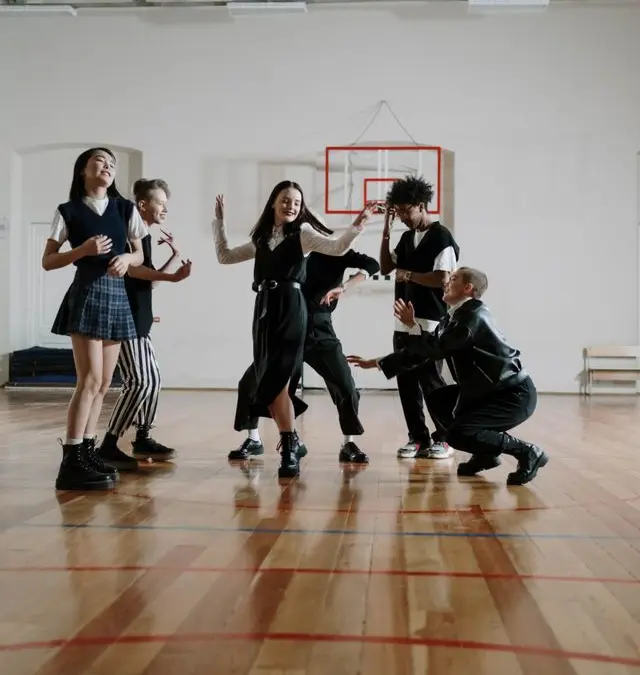
Inside the gym, there were paper streamers in pink and white and silver hanging from the basketball hoops and across the ceiling. String lights ran along the bleachers and up past the scoreboard. A disco ball spun slowly from the middle of the ceiling, scattering little dots of light across the hardwood floor.
There was a DJ on the stage. Mr. Hertel, the PE teacher, in a bow tie, with a laptop and two speakers. He was playing “Butterfly Kisses.”
Of course he was.
The gym was full of dads.
Dads in suits. Dads in sport coats. Dads in flannel shirts and their good jeans. Dads in Wranglers and boots and big silver belt buckles. Dads holding little girls by the hand, swinging them around, letting them stand on their feet.
Girls in pink and purple and red and sparkles. In tiaras. With wrist corsages. With their hair curled.
When we walked in, every dad in that gym turned around.
I watched it happen.
The way a wave goes through a crowd. One dad turned. Then the dad next to him. Then the whole side of the gym.
They looked at five grain men in work coats with corn dust on their boots.
And at Addie.
Some of them knew. It’s a small town. Some of them had been at Jesse’s funeral. Some of them knew exactly who these men were and why they were here.
Some of them didn’t.
But they all turned around.
Dutch didn’t care.
He walked Addie right out into the middle of the floor. Under the disco ball. In his tan Carhartt jacket.
He stopped.
He looked down at her.
And he held up his hand.
Palm up. High. Over her head.
Addie looked at his hand.
Then she reached up and took it.
And she twirled.
Under Dutch Kessinger’s big, rough, sixty-one-year-old hand. Around and around. Her light blue dress flaring out. The tulle spinning. The white bow in the back fluttering like a little flag.
She was beaming.
The other four men lined up at the edge of the dance floor.
Side by side. Ignacio. Luis. Ray. Hoss.
Grinning.
Waiting their turn.
I stood by the gym door.
I put my hand over my mouth.
Brenda Schmidt came up next to me from the card table.
She didn’t say anything.
She just put her arm around my shoulders.
Then I saw Clint.
He was over by the punch table. Against the far wall, under the scoreboard. Next to the big plastic bowl of red punch and a tray of Oreos.
He was wearing a blue tie.
The bluest tie in Kansas.
He was holding a paper cup.
Next to him, a little blond girl in a lavender dress was eating an Oreo. Kenzie Brenner. Her dress was a little too big. It looked like a hand-me-down. Her hair was in a ponytail with a plain black elastic.
Clint saw Addie.
I watched his face.
I watched him see her twirling under Dutch’s hand. In the light blue dress. The one she bought with her own birthday money. The one she’d wanted him to match.
His face went white.
He set the paper cup down on the punch table.
He didn’t look at it. He just set it down, so fast it tipped over. Red punch spilled across the white paper tablecloth.
He didn’t notice.
And he started across the floor.
Toward my daughter.
My whole body went tight.
I didn’t know what he was going to do.
Make a scene. Try to take her. Say something to the grain men. Say something to Addie that would break her heart all over again.
I started to move.
Brenda’s hand tightened on my shoulder.
“Wait,” she whispered.
Clint walked across the middle of the gym.
Past dads and daughters. Past Mr. Hertel’s speakers. Past the disco ball.
People moved out of his way. He’s a big man. When he walks fast, people move.
Dutch saw him coming.
He stopped twirling Addie.
He didn’t let go of her hand.
He just turned, very slowly, so that he was standing a little bit in front of her.
The other four men stepped forward from the edge of the floor.
Not much. Just a step.
Hoss on one side. Ignacio on the other. Ray and Luis behind.
Not threatening. Just there.
Clint stopped.
About five feet away.
He looked at Dutch.
Dutch looked at him.
“Clint,” Dutch said. Very calmly.
“Dutch,” Clint said.
They knew each other. Of course they did. Clint hauled grain to the elevator every harvest before he started driving long haul. He’d sat at the break room table with these men a hundred times. He’d been a pallbearer at Jesse’s funeral with Dutch and Ignacio.
Clint looked past Dutch.
At Addie.
Standing in her light blue dress. With the sparkly star clip in her hair.
“Hey, kiddo,” Clint said.
His voice cracked.
Addie didn’t say anything.
She was holding Dutch’s hand with both of hers now.
“I’m sorry,” Clint said. “Addie. I’m so sorry. I should have called you. I should have told you myself. I just…”
He stopped.
He looked down at the floor.
“I didn’t know what to do,” he said. “Kenzie’s never had anybody. Her dad’s never even been to a school thing. Not once. Tasha told me she cried every night for a week when the flyer came home. She said she was going to stay home and pretend she was sick.”
He looked up at Addie.
“And I thought, Addie’s got her mom. Addie’s got Grandma June. Addie’s got this whole town that loved her dad. And Kenzie’s got nobody.”
His face crumpled.
“But I made you a promise,” he said. “At the funeral. I made you a promise. And I broke it. And I didn’t even have the guts to tell you to your face.”
He knelt down.
Right there in the middle of the gym floor. Under the disco ball. In his blue tie.
The same way he’d knelt down by her chair at the funeral lunch four years ago.
So his face was level with hers.
“Can I have a dance?” he said quietly. “Please? Just one? I’ll go back to Kenzie after. I just… I need to dance with you. Just one.”
The whole gym had gone quiet.
Mr. Hertel had stopped the music. I don’t know when. I didn’t notice.
Every dad was watching. Every little girl.
Addie looked at Clint for a long time.
Then she looked past him.
Across the gym.
At the punch table.
Kenzie Brenner was standing there alone.
By the spilled punch. Holding a half-eaten Oreo. In her too-big lavender dress with the plain black elastic in her hair.
She was looking at the floor.
Her shoulders were up by her ears.
She looked exactly like Addie had looked at our front window an hour ago.
Like a girl waiting for headlights that weren’t going to come.
Addie looked at her for a long moment.
Then she looked back at Clint.
“No,” Addie said.
Clint flinched.
Like she’d hit him.
“You can’t dance with me tonight, Uncle Clint,” Addie said.
Her voice was very small. But it carried. In that quiet gym, everybody heard it.
“You’re Kenzie’s tonight,” she said. “You brought her. You promised her too. Didn’t you?”
Clint stared at her.
“I…” He stopped. “Yeah. I guess I did.”
“Then you can’t leave her by herself,” Addie said. “That’s not fair. She’ll think nobody came.”
Clint didn’t say anything.
He knelt there on the gym floor with his mouth open.
Then Addie let go of Dutch’s hand.
She walked past Clint.
Right past him. Across the gym floor. In her light blue dress. Through the crowd of dads and daughters.
Straight to the punch table.
She stopped in front of Kenzie Brenner.
Kenzie looked up. She looked scared. Like she thought Addie was going to yell at her.
“Hi,” Addie said. “I’m Addie. I’m in fourth grade. Mrs. Dreiling’s class.”
Kenzie stared at her.
“I know,” she whispered.
“I like your dress,” Addie said.
Kenzie looked down at her lavender dress. Too big. Faded a little at the hem.
“It was my cousin’s,” she said.
“It’s pretty,” Addie said. “Purple’s my second favorite color.”
She held out her hand.
“Do you want to come meet my friends?” she said. “They work at the elevator. They’re really good dancers. Well. Dutch is. Hoss steps on your feet. But he’s really nice about it.”
Kenzie looked at Addie’s hand.
She looked across the gym. At five grain men in work coats standing in the middle of the dance floor.
At Clint, still kneeling.
Then she put her Oreo down on the punch table.
And she took Addie’s hand.
Addie walked her back across the gym.
Past the dads. Past Mr. Hertel. Under the disco ball.
She stopped in front of Dutch.
“Dutch,” she said. “This is Kenzie. She needs somebody to dance with too.”
Dutch looked down at Kenzie Brenner.
Nine years old. Skinny. Blond ponytail with a plain black elastic. Lavender dress two sizes too big.
He took off his reading glasses. I didn’t even know he was wearing them. He folded them and put them in his shirt pocket.
He knelt down.
Sixty-one years old, with knees that have been climbing grain bins for thirty-eight years. I heard them pop.
He held out his hand.
“Miss Kenzie,” he said. “It would be my honor.”
Kenzie looked at his hand.
She looked at Addie.
Addie nodded.
Kenzie put her hand in Dutch’s.
He stood up.
He held his hand up high over her head.
And Kenzie Brenner twirled.
Mr. Hertel started the music again.
I don’t remember what song. Something by Taylor Swift. All the girls screamed.
And for the next hour and a half, Addie Hollister and Kenzie Brenner danced with five grain men from the night crew at the Central Prairie Co-op.
Hoss stepped on both their feet. Repeatedly. He apologized every single time, very seriously, and both girls laughed so hard they had to sit down on the floor.
Luis taught them a TikTok dance. He was surprisingly good at it. Several other little girls came over to learn it too. By the end, Luis had about fifteen fourth-graders lined up behind him doing the same dance.
Ray Albers, who never says more than six words in a row, did the Cotton-Eyed Joe with Kenzie. When it was over, he bowed to her. Like a gentleman in an old movie.
“Thank you, Miss Kenzie,” he said.
That’s four words.
Kenzie curtsied. She didn’t know how. She did it anyway.
Ignacio danced with Addie to “Amarillo by Morning.”
George Strait.
Jesse’s song. The one he sang to her every night. Terribly off-key.
I don’t know if Ignacio knew. I’ve never asked him.
But halfway through the song, Addie put her head down against Ignacio’s chest. In his brown Carhartt jacket. And she held on.
And Ignacio held her. And swayed. Very slowly. Back and forth. Under the disco ball.
I had to go outside.
Clint found me in the parking lot.
I was sitting on the tailgate of Ignacio’s Silverado, by the dumpsters, under the one floodlight that works. It was cold. October cold. My breath was coming out in clouds.
He sat down next to me.
The truck sank under his weight.
He didn’t say anything for a long time.
“She told me no,” he said finally.
“I heard.”
“She told me no, Renae. In front of everybody. And then she went and got Kenzie.”
He shook his head.
“She’s ten,” he said.
“I know.”
“I had it all wrong,” Clint said quietly. “Didn’t I?”
I didn’t answer right away.
I looked at the elevator lights on the horizon. Twelve miles away. Still burning. Still running. Thirty trucks in line. Gary Schremmer in coveralls running the dump pit.
“You didn’t have it all wrong,” I said finally. “You saw a little girl who had nobody. And you wanted to help her. That’s not wrong, Clint. That’s the best thing about you.”
He looked at me.
“But you didn’t have to pick,” I said. “That’s what you got wrong. You thought it was Addie or Kenzie. One or the other. You thought Addie could spare it because she has me.”
My voice cracked.
“She doesn’t have a daddy, Clint,” I said. “Neither does Kenzie. They’re the same. And you made one of them stand at a window for twenty minutes waiting for headlights so you could make the other one happy.”
Clint put his face in his hands.
“You could have called me,” I said. “At noon. At three. When you came by and took that ticket off my refrigerator. You could have said, ‘Renae, Kenzie doesn’t have anybody. What do we do?’ And we’d have figured it out. We’d have taken them both. You’d have walked in with a girl on each arm.”
I wiped my eyes.
“You could have bought another ticket for thirty dollars,” I said. “Thirty dollars, Clint.”
He didn’t say anything for a long time.
“I took her ticket,” he said finally. “Didn’t I? I literally took it off the refrigerator.”
“You did.”
“Under the tractor magnet.”
“Under the tractor magnet.”
He laughed. It was a terrible, broken laugh.
“I’m the worst uncle in Kansas,” he said.
“No,” I said. “You’re not.”
He looked at me.
“You drove four hours from Oklahoma City in a borrowed sport coat when she was eight,” I said. “You wore a tie with cartoon cats on it when she was nine. You bought the bluest tie in Kansas for tonight.”
I nudged his shoulder.
“You just got scared,” I said. “That’s all. You saw a kid who needed somebody and you panicked. And you broke a promise to somebody you knew would forgive you, so you wouldn’t have to break one to somebody you didn’t think would.”
Clint looked at me for a long time.
“How’d you get so smart?” he said.
“I’ve been a widow for four years,” I said. “You learn things.”
“Why didn’t you call me?” Clint said. “When you got my text. Why didn’t you call and yell at me?”
I thought about it.
“Because she was standing at the window,” I said. “And I didn’t have time to be angry at you. I only had time to fix it.”
Clint nodded slowly.
“So you called the elevator,” he said.
“I called Ignacio.”
“And five guys walked off the line in the middle of harvest.”
“Gary’s running the dump pit.”
Clint laughed. A real one this time.
“Gary Schremmer,” he said. “In coveralls.”
“In coveralls.”
He looked back at the gym.
Through the open door, you could see the lights. The disco ball. Hoss Pfannenstiel spinning a little girl in a purple dress around and around while she shrieked with laughter.
“Jesse would’ve loved this,” Clint said quietly.
“He would have.”
“He’d have been right out there with them. Stepping on her feet.”
“He’d have stepped on everybody’s feet.”
Clint was quiet for a long time.
“I miss him,” he said. “Every day. I see that elevator from the highway every time I come home, and I miss him so much I have to pull over sometimes.”
He looked down at his blue tie.
“I think that’s why I made her that promise,” he said. “At the funeral. Because I couldn’t fix anything else. I couldn’t bring him back. But I could take her to a dance.”
I put my hand on his arm.
“You still can,” I said.
We went back inside.
The dance was almost over. Mr. Hertel was playing slow songs. The lights were down. The disco ball was the only thing lit.
Addie was dancing with Dutch.
Kenzie was dancing with Hoss. Standing on his giant boots. He was swaying very carefully, very slowly, like he was afraid he might break her.
Clint stood by the door for a long time.
Then he walked out onto the floor.
He went to Hoss first.
“Mind if I cut in?” he said.
Hoss looked at him. Then at Kenzie, standing on his boots.
“Ask her,” Hoss said.
Clint knelt down.
“Kenzie,” he said. “Can I have the last dance?”
Kenzie looked up at Hoss.
Hoss nodded.
She stepped off Hoss’s boots and onto Clint’s.
Then Clint looked across the floor at Addie.
Still dancing with Dutch.
He didn’t ask.
He didn’t go over.
He just caught her eye. Across the gym. Under the disco ball.
And he held up his pinky.
Addie looked at it.
She looked at it for a long time.
Then she held up her pinky too.
Across the gym. Without letting go of Dutch’s hand.
That was all.
That was enough.
The last song was “I Hope You Dance.”
Lee Ann Womack. Every father-daughter dance in Kansas ends with that song. I think it’s a state law.
Dutch danced with Addie.
Clint danced with Kenzie.
And the other four men stood at the edge of the floor, side by side, in their work coats and their corn dust, with their arms crossed, watching.
Hoss was crying.
He didn’t even try to hide it.
Afterward, in the parking lot, Tasha Brenner came running up from her car.
She’d been waiting outside. In her Dollar General vest. On her break. She’d driven over to pick up Kenzie.
She’d heard.
Somebody had texted her. In a town of three thousand people, somebody always texts you.
She stopped in front of me.
She looked at Addie, holding Dutch’s hand. At Kenzie, holding Clint’s.
At the five grain men.
At me.
“I’m sorry,” Tasha said. Her voice was shaking. “Renae. I’m so sorry. I didn’t know. I didn’t know he’d promised her. He didn’t tell me. He just said he had a ticket.”
She was crying.
“I would never have let him,” she said. “Never. If I’d known. Kenzie and I would have stayed home.”
I looked at her.
Thirty-two years old. Working a night shift at the Dollar General. Raising a little girl alone while her daddy sat in Lansing Correctional.
I knew that look.
I’d seen it in my own mirror every morning for four years.
“Tasha,” I said. “It’s okay.”
“It’s not okay.”
“It is,” I said. “Look at them.”
Tasha turned around.
Addie and Kenzie were standing together by Dutch’s truck. Comparing their hand stamps. Both little stars. They were holding their hands up side by side under the floodlight.
They were laughing.
“Kenzie doesn’t laugh,” Tasha said quietly. “Not like that. Not since her daddy went away.”
She wiped her eyes.
“She’s never had a friend come up to her,” she said. “At school. Never. The other kids know about her dad. Nobody plays with her.”
I watched the girls.
Addie was showing Kenzie her sparkly star clip. She took it out of her hair. She held it up to the light.
Then she clipped it into Kenzie’s ponytail. Right over the plain black elastic.
Kenzie touched it with her fingers.
Then she threw her arms around Addie’s neck.
“Well,” I said. “She has one now.”
Monday morning, Clint came to my house at seven a.m.
Before Addie left for school.
He was holding an envelope.
He handed it to me.
Inside was sixty dollars. Three twenties. And a note in his messy handwriting.
For the ticket. I’m sorry I took it off your fridge. — C.
Then he knelt down in front of Addie at the kitchen table, where she was eating Cheerios.
“Kiddo,” he said. “I need to tell you something.”
She looked at him.
“I broke my promise,” he said. “And I’m sorry. And I know sorry doesn’t fix it.”
Addie didn’t say anything.
“So here’s a new promise,” Clint said. “Next year. Fifth grade. I’m taking you to the dance. And I’m taking Kenzie too. Both of you. One on each arm. And I’m buying both tickets myself. And I’m wearing the bluest tie in Kansas. And if anybody in that gym looks at us funny, Hoss Pfannenstiel is going to step on their feet.”
Addie looked at him for a long time.
Then she held out her pinky.
The guys from the night crew didn’t stop.
The next Friday, Dutch Kessinger came to the house at 4:30, before his shift, with a bag of kettle corn from the farmers market in Great Bend. He said he was just passing by.
Our house is not on the way to anything.
Hoss came the week after that and fixed the porch step that had been loose since Jesse died. He didn’t ask. He just showed up on a Saturday with a toolbox and fixed it. And the gutter. And the latch on the back gate.
Luis taught Addie three more TikTok dances. She does them in the kitchen while I make dinner. They’re very bad. She thinks they’re amazing.
Ray Albers left a box on my porch in November. No note. Inside was a framed photograph somebody had taken at the dance and posted on Facebook. Addie twirling under Dutch’s hand. Her light blue dress flaring. The disco ball scattering light across her face.
On the back, in pencil, in very careful block letters:
FOR JESSE’S GIRL.
That’s three words.
And Ignacio Robles started something at the elevator.
He put a coffee can in the break room. An old Folgers can with a slot cut in the plastic lid. And a piece of masking tape across the front that said:
DANCE FUND.
Every payday, the guys on the night crew put something in it. A dollar. Five. Twenty, sometimes, when the harvest bonuses come in.
And every year, Ignacio takes the money to the PTA at Roosevelt Elementary.
And he buys tickets for the father-daughter dance.
For any girl who doesn’t have anybody to take her.
The first year, there were three.
Addie. Kenzie. And a little girl named Paisley whose father was deployed in Kuwait.
The second year, there were seven.
This year, there were eleven.
The night crew at the Central Prairie Co-op takes them.
Every year. In the middle of corn harvest. Thirty trucks in line on the frontage road.
The day crew stays late to cover. Gary Schremmer runs the dump pit in his coveralls. He says it’s the best night of his year.
They wash up at the big metal sink in the break room. They put on their clean work coats. Hoss wears his father’s too-small sport coat. Ray wears his bolo tie. Luis buys a new shirt every year from the Dollar General, where Tasha always gives him the employee discount.
Dutch takes off his seed cap at the gym door and sticks it in his back pocket.
And they walk in together.
Eleven little girls in their best dresses. And eight grain men in clean work coats with corn dust on their boots.
Every dad in the gym turns around.
They don’t stare anymore.
They clap.
Addie is twelve now. In sixth grade. At the middle school.
The middle school doesn’t have a father-daughter dance. It’s too old for that.
But every year, she still goes to the one at Roosevelt.
She helps.
She stands at the card table with Brenda Schmidt and stamps little girls’ hands with the star stamp. She helps the little ones with their hair. She keeps a box of sparkly clips under the table for anybody who doesn’t have one.
Kenzie goes with her.
They’re best friends. They’ve been inseparable for two years. Kenzie sleeps over at our house every Friday. They paint each other’s toenails and watch movies and stay up too late and laugh at things that aren’t funny.
Kenzie’s daddy gets out of Lansing next spring.
She doesn’t know if he’ll come to anything.
She says it doesn’t matter.
“I have Uncle Clint,” she says. “And Dutch. And Hoss. And Ignacio. And Ray. And Luis.”
She counts them on her fingers.
“I have six,” she says.
Clint and Tasha got married last June.
In the backyard of my house. Under the big cottonwood tree Jesse planted the year Addie was born.
Addie and Kenzie were the flower girls. They wore matching light blue dresses.
Addie picked them.
Clint wore the bluest tie in Kansas.
And at the reception, after the toasts, Mr. Hertel, who’d agreed to DJ, played “Amarillo by Morning.”
And Clint walked across the grass.
And knelt down in front of Addie.
And held out his pinky.
She took it.
And he danced with his niece under the cottonwood tree. While the sun went down. While Kenzie danced with Dutch. While Hoss stood at the edge of the lawn, crying again, not even trying to hide it.
I sat at the picnic table and watched them.
I looked up through the cottonwood branches at the evening sky.
And I said, very quietly, so nobody would hear:
“You see that, Jess? You see that?”
People still ask me sometimes.
Why didn’t you call him that night? Why didn’t you yell at him? Why didn’t you give him what for?
And I tell them the truth.
There’s no law about a promise.
At 6:30 on a Friday night, there was a ten-year-old at my front window in a light blue dress she’d bought with her own birthday money, waiting for headlights that weren’t coming.
I didn’t have time to be angry.
I only had time to find somebody who’d come.
And it turns out that if you’re lucky, if you live in the right kind of place, you don’t have to look very far.
Sometimes they’re twelve miles away. In a glass booth by a grain elevator. With thirty trucks in line and corn dust in their beards.
And all you have to do is ask.
They’ll ask you one question.
How old is she?
And then they’ll say, Give me thirty minutes.
And at 7:02, there’ll be a knock at the door.