The first thing my son’s friends saw when they opened my front door was a calf.
He weighed about sixty pounds and was standing on spindly legs in the middle of my living room rug, in a little pen made of hay bales and an old baby gate. He was black, with a white face and white socks, and he had a coat of milk foam around his mouth that made him look like a very small, very confused Santa Claus.
When the door swung open and ten strangers in designer sunglasses walked in dragging rolling suitcases, the calf looked straight at them, took a deep breath, and let out the loudest bawl I have ever heard come out of an animal.
My daughter-in-law screamed.
One of her sisters dropped her phone.
And my son, who is forty-one years old and works on the fourteenth floor of a glass tower in downtown Denver, took two full steps backward onto the porch.
But I should start a little earlier than that.
My name is Marian Holt. I’m sixty-seven.
For forty years I was an accountant in Chicago. Corporate tax. Twenty-six floors up in a building on Wacker Drive, with a view of the river and a desk that faced a wall. I rode the Metra in from Oak Park every morning at 6:42, and rode it home every night at 6:15. I fell asleep to sirens and car alarms and the neighbor’s teenagers playing basketball in the alley at midnight.
I was good at my job. Nobody would ever have called it a dream.
My husband, Gene, was a high school shop teacher at Oak Park and River Forest High School for thirty-four years. He could fix anything with a screwdriver and a roll of duct tape. He whistled Johnny Cash songs while he worked. He was the kind of man who stopped to help strangers change tires in the rain.
And every Sunday morning for thirty years, Gene and I sat at our kitchen table with our coffee and a stack of real estate magazines from the newsstand on Lake Street.
We weren’t looking at houses in Chicago.
We were looking at ranches.
Montana. Wyoming. Idaho. Little farms with red barns and white fences and mountains in the background.
“That one,” Gene would say, tapping a picture with his finger. “Look at that porch, Marian. Look at those mountains. Can you imagine waking up to that?”
“We’d freeze to death the first winter,” I’d say.
“We’d buy a good woodstove.”
“We don’t know anything about horses.”
“You grew up on a dairy farm,” he’d say. “You know more than you think.”
He was right about that.
I grew up on a dairy farm outside Viroqua, Wisconsin. Eighty cows. I milked before school every morning from the time I was eight. I could drive a tractor before I could ride a bike. I pulled my first calf when I was eleven, in a snowstorm, with my father holding the flashlight.
I left at seventeen for the University of Wisconsin and swore I’d never smell manure again.
I didn’t, for forty-five years.
Then Gene died.
It was three years ago. A heart attack, in the garage, while he was building a birdhouse for our neighbor’s granddaughter. He was sixty-six. He’d been retired for eight months.
We’d been planning to start looking at land that spring.
He had a list. A real one. On a yellow legal pad in his handwriting, taped to the refrigerator.
MONTANA LIST
— At least 40 acres
— Barn (red if possible)
— Porch facing mountains
— Creek or water
— Horses (Marian says 2. I say 3.)
— A flag by the door
I didn’t take that list down for two years.
Every morning, I’d make my coffee and stand in the kitchen and read it.
Then one morning last spring, I took it off the refrigerator.
I folded it up and put it in my purse.
And I went to see a real estate agent.
I bought the farm in June.
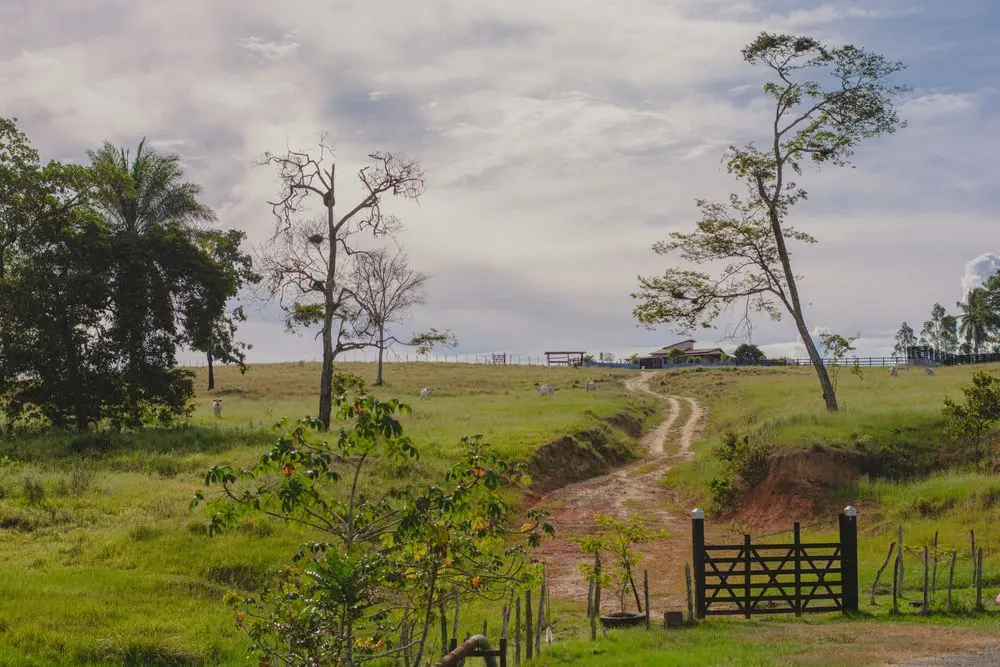
Sixty acres in the Bitterroot Valley, south of Missoula, outside a little town called Corvallis. A red barn. Three horses that came with the property, because the previous owner, an old widower named Lyle Fenwick, was moving to Arizona to live with his daughter and couldn’t take them.
A white farmhouse with a wraparound porch.
Facing the mountains.
A creek running along the back fence line. Willows. Cottonwoods.
And by the front door, a little faded American flag on a bracket that Lyle had left behind.
I checked off every single thing on Gene’s list.
Three horses.
Gene would have been unbearable about that.
The horses are named Duke, Pepper, and Sarge. Duke is a big bay gelding who’s terrified of plastic bags. Pepper is a little gray mare who bites. Sarge is twenty-six years old, swaybacked and half-blind, and the sweetest animal I’ve ever met.
None of them listen to me.
I love them anyway.
For the first time in forty years, I woke up to roosters instead of sirens.
To coyotes yipping in the hills at dawn. To meadowlarks. To tractors rolling down the county road.
To the sun coming up over the Sapphire Mountains and lighting up the Bitterroots across the valley, pink and gold, like somebody had turned on a lamp.
I sat on my porch every morning with my coffee.
And every morning, I said, “You’d love this, Gene.”
And every morning, I could almost hear him say, “Told you.”
My son didn’t love it.
Kyle is forty-one. He lives in a high-rise condo in Denver’s Union Station neighborhood with his wife, Brooke. He works in private equity, which as far as I can tell means he moves other people’s money around and gets paid a lot for it. He has a Peloton, a Tesla, a membership at a rooftop bar where a drink costs twenty-two dollars, and a watch that costs more than my first house.
He’s a good man underneath it. I know that. He was a sweet, funny boy. He used to follow Gene around the garage handing him tools. He cried at the end of Old Yeller until he threw up.
But somewhere in his thirties, Kyle became someone who thinks of everything in terms of what it’s worth.
When I told him I’d bought the farm, there was a long pause on the phone.
“Montana,” he said.
“Montana.”
“Mom. You’re sixty-seven.”
“I’m aware.”
“You’ve never lived anywhere but Chicago.”
“I lived in Wisconsin until I was seventeen.”
“That was fifty years ago.”
He called the farm “a cute retirement project.”
He said it to me on the phone. He said it at Thanksgiving, when he and Brooke flew to Missoula and stayed exactly one night at a hotel in town and came out to the farm for four hours. He said it to Brooke when he thought I couldn’t hear him in the kitchen.
“She’ll be back in Chicago in a year,” he said. “She’ll get tired of it. Watch.”
I didn’t say anything.
I just sliced the pie.
He called on a Tuesday in late April.
I was in the barn. Pepper had thrown a shoe and I was waiting for the farrier. I had hay in my hair and mud on my jeans and I was trying to get Duke to stop looking at a plastic bag that had blown against the fence.
“Mom,” Kyle said. “Big news. We’re coming up for the weekend.”
“Oh. That’s nice. When?”
“This weekend. Friday. We’re flying into Missoula Friday morning.”
I stopped.
“This Friday? Kyle, that’s three days.”
“I know, I know. Last minute. But Brooke’s sisters wanted to see it. And Trevor and Josh. And a couple of our friends. Devin and his girlfriend, Kendall. And Liam and Priya. They’ve never been to Montana.”
I counted in my head.
Kyle. Brooke. Brooke’s sisters, Taylor and Madison. Their husbands, Trevor and Josh. Devin. Kendall. Liam. Priya.
“That’s ten people,” I said.
“Is it?” Kyle said. He sounded like he was walking somewhere. I could hear traffic. “I guess so. Yeah.”
“Kyle. I have three bedrooms. One of them is mine.”
“There’s the guest wing, right? Over the garage? You showed us at Thanksgiving.”
“There are two beds in the guest wing.”
“So we’ll make it work. People can double up. Some of us can sleep on the couch.”
“Ten people, Kyle.”
There was a pause.
Then he said it.
He said it lightly. Almost laughing. Like it was a joke.
“Mom,” he said. “It’s just a weekend. If you don’t like it, then go back to the city.”
I stood in my barn with the phone against my ear.
Duke was snorting at the plastic bag. Sarge was dozing in his stall. Somewhere outside, a meadowlark was singing.
I almost said something.
I almost reminded him whose name was on the deed. Whose name was on the mailbox at the end of that long dusty road, under the faded flag Lyle Fenwick left behind.
MARIAN HOLT. 4417 BACK FORTY ROAD.
I almost reminded him that I had raised him. That I’d sat up with him through chicken pox and strep throat and his first breakup. That I’d paid for his MBA at Northwestern when his scholarship fell through. That I’d co-signed the loan on his first apartment in Denver, and covered his rent for six months in 2009, when the market crashed and he lost his first job and was too embarrassed to tell his father.
I almost said, Don’t you talk to me like I’m a child.
Instead, I said, “Of course, honey.”
And I hung up.
Living out here teaches you that arguing with a storm won’t stop it.
You decide what’s going to be waiting when it arrives.
I stood in the barn for a long time after that phone call.
Then I took out my phone again and called my neighbors.
Hank and Dolores Haugen own the ranch next to mine. Twelve hundred acres. Three hundred head of Black Angus. They’ve been on that land since Hank’s great-grandfather homesteaded it in 1889.
Hank is seventy-four. Tall and thin and weathered as an old fence post. He says about fourteen words a day, and eleven of them are about the weather.
Dolores is seventy-two. Short and round and fierce. She’s the one who showed up on my porch the day I moved in with a casserole and a loaded .22, and said, “The casserole’s for you. The rifle’s for the rattlesnakes under your porch. Lyle never could get rid of them.”
They’d been good to me.
Better than I deserved.
When the pipes froze in January, Hank was in my crawlspace at six in the morning with a heat gun. When Pepper got colic in February, Dolores sat up with me in the barn all night, walking her in circles. When I got the flu in March, Dolores fed my horses for a week and wouldn’t take a dime.
I’d been trying to pay them back ever since.
Dolores picked up on the first ring.
“Marian. You okay?”
“I’m fine. Dolores, are you still moving the herd up to summer pasture this weekend?”
“Saturday morning. Five a.m. If the weather holds. Why?”
“How many riders do you have?”
“Hank, me, our grandson Travis, and the Whitaker boys from down the road. Five. We could use more. It’s a long drive up to the Forest Service lease. Eleven miles.”
“How would you feel,” I said, “about ten more?”
There was a long pause on the line.
“Ten more what?” Dolores said.
“Ten more hands.”
“Marian. Who on earth do you have that’s going to ride eleven miles on a cattle drive?”
I told her.
When I got to the part about If you don’t like it, then go back to the city, Dolores made a sound I’ve only heard her make once before. When a coyote got into her chicken coop.
“Oh, honey,” she said. “Oh, I see.”
“I’m not trying to be cruel,” I said. “I’m really not. I just want him to see it. What this place is. What it takes. I don’t want him walking in here thinking it’s a hotel.”
Dolores was quiet for a second.
“Well,” she said. “It’s a lot easier to look down on a place when you’ve never had to work it.”
She thought for a moment.
“We’ll be there Friday,” she said. “Hank and me and Travis. We’ll come for supper.”
“Thank you, Dolores.”
“And Marian?”
“Yes?”
“You still got that calf?”
I looked across the barn.
In the back corner, in a pen I’d built out of straw bales, was a calf.
A black baldy. White face. White socks. Born three weeks early in a late snowstorm on the Haugen place in April. His mother had rejected him. Wouldn’t let him nurse. Kicked him every time he tried.
Dolores had brought him to me in the back of her truck, wrapped in an old horse blanket.
“You grew up on a dairy,” she said. “You know how to bottle-feed. I’ve got three hundred cows calving. I can’t do it. Will you?”
So I’d been bottle-feeding him every four hours for three weeks.
Day and night. In the barn mostly. But when it got cold, I brought him inside. Into the mudroom. Then, when he got sick with scours in the second week, into the living room, next to the woodstove, where I could keep an eye on him all night.
I’d named him Johnny.
After Johnny Cash.
Gene would have liked that.
“I still have him,” I said.
“Is he still in the house?”
“He’s doing better. I was going to move him back out to the barn this weekend.”
Dolores laughed.
“Don’t,” she said.
So I made a few adjustments.
I walked through my peaceful farmhouse on Wednesday afternoon.
The good bedding came off the beds in the guest rooms. The Egyptian cotton sheets I’d bought at Nordstrom before I left Chicago. The down comforter. The four decorative pillows that serve no purpose except to be thrown on the floor every night.
I folded them up and put them in my closet.
I went to the mudroom and got the spare blankets. The scratchy wool ones Lyle left behind. Army surplus. Gray. Smelling faintly of horse.
I put those on the beds instead.
I adjusted the thermostat in the guest wing over the garage.
Just slightly.
From seventy-two down to sixty-two. In late April in western Montana, the nights still drop to the low thirties.
It’s character-building.
I took the soft towels out of the guest bathrooms. The fluffy white ones from Crate and Barrel. I folded them and stacked them on the top shelf of my closet, next to the Egyptian cotton.
I went out to the garage and opened the camping bin. The one with the tents and the sleeping bags and the cooking pots from the year Gene and I tried to camp in the Boundary Waters and it rained for six days straight.
I took out the camping towels. Thin. Gray. About the size of a dishrag. The kind that dry fast because there’s almost nothing to them.
I folded them neatly and hung them on the racks.
I called the feed store in Hamilton and ordered six more bales of hay and a fifty-pound bag of calf milk replacer.
I called the tack shop in Stevensville and asked if they had any used cowboy boots. In a range of sizes.
They did.
I bought eleven pairs.
I put up two cameras. One at the end of the driveway, by the mailbox. One on the porch, by the front door. A man from the hardware store in Corvallis came out and installed them for sixty dollars.
I wanted to see their faces when they arrived.
I’m not proud of that.
But I wanted to see.
And then, on Thursday night, I sat down at my kitchen table with a piece of white poster board and a black Sharpie.
And I made a sign.
By Friday afternoon, the gravel road out front was shimmering in the Montana sun.
It was seventy-one degrees. Clear and blue. The Bitterroots still had snow on their peaks. The cottonwoods along the creek were just starting to leaf out, that bright new green you only see for about two weeks in spring.
I was sitting on the porch.
In my rocking chair. Boots up on the railing. A mug of coffee in my hands.
Waiting.
At 3:42, my phone buzzed.
The mailbox camera.
I opened the app.
A convoy was coming down Back Forty Road. Two polished white SUVs. A Range Rover and a BMW. Both rentals from the Missoula airport. And behind them, a huge black Chevy Suburban with tinted windows.
They were driving too fast for a gravel road. The dust was billowing up behind them in a cloud so big I could see it from the porch, a mile away.
They passed the mailbox.
I watched them on the camera. I could see faces through the windshields. Somebody in the Range Rover was filming the mountains with a phone out the window.
Four minutes later, they pulled into my yard.
They parked right in front of the barn. Right where I’d told Kyle on the phone not to park, because that’s where the horses come in from the pasture.
The doors opened.
High heels stepped into the dirt.
That was the first thing I saw. A pair of tan suede stilettos sinking into the soft spring mud by the barn door.
They belonged to Taylor, Brooke’s older sister. A real estate agent in Scottsdale. She looked down at her feet like the ground had personally insulted her.
Designer sunglasses came off.
Brooke got out of the BMW. Pretty. Blond. In white jeans and a cream-colored cashmere sweater. She pushed her sunglasses up on her head and looked around the yard.
At the barn. At the fence. At the horses in the pasture.
At Sarge, who was standing by the fence about twenty feet away, peeing.
I could practically see their perfume losing the battle against dust, horses, and hay.
They gathered at the bottom of my porch steps.
All ten of them.
Kyle and Brooke. Taylor in her stilettos and her husband, Trevor, a tall guy with a quarter-zip pullover and a very expensive haircut. Madison, the younger sister, in a white sundress and a big floppy hat, and her husband, Josh, holding about four bags.
A couple I didn’t know. Liam and Priya. Thirties. Friendly-looking. Liam was wearing a fleece vest and Priya had a camera around her neck.
And a man who looked a little older than the others. Forty-five, maybe. Tanned. Very white teeth. Aviator sunglasses. A navy blazer over a white shirt with no tie. A Patek Philippe on his wrist.
Next to him, a young woman in a leather jacket, scrolling on her phone.
That had to be Devin and Kendall.
They stood at the bottom of the steps and stared up at my farmhouse.
It looks like a Hallmark movie set in photographs. White siding. Green shutters. Two rocking chairs on the porch. Hanging baskets of petunias. The little American flag by the front door.
“Oh my God,” Madison said. “It’s so cute.”
“It’s so… rustic,” Taylor said.
She was trying to pull her stiletto out of the mud.
But the porch camera showed me what their photos never would.
Brooke wrinkled her nose.
Just a little. The smell of the barn. The horses. Manure. Hay. The faint sweet stink of the calf milk replacer I’d spilled on the porch that morning.
Madison stepped back sharply from something on the walkway.
She pulled her rolling suitcase away from it like it was on fire.
It was a pile of horse manure. Fresh. From Duke, who’d gotten out of the pasture that morning and wandered up to the porch looking for apples.
And Kyle.
My son.
He was standing at the bottom of the steps in a quarter-zip and a pair of brand-new hiking boots that had clearly never touched dirt.
He was smiling. Waving up at me.
“Mom! We made it!”
Then his smile disappeared.
He was looking past me. Through the big front window. Into the living room.
He’d seen something move.
By the time they dragged their luggage up those steps, before anyone even touched the doorknob, they already understood that this weekend in the country wasn’t going to be the free luxury vacation they’d imagined.
“Mom,” Kyle said slowly. “What’s in the living room?”
I stood up from my rocking chair.
I set down my coffee.
“Come on in,” I said. “I’ll introduce you.”
I opened the front door.
Johnny was standing in his straw-bale pen in the middle of my living room rug.
Sixty pounds. Black with a white face. Four white socks. A crust of milk foam around his mouth from his three o’clock bottle.
He looked at the ten strangers crowding in the doorway.
He took a deep breath.
And he bawled.
MAAAAAAAAAAWWWWWWWW.
It echoed off the ceiling. It rattled the windows. It’s the loudest sound I’ve ever heard come out of anything that small.
Brooke screamed.
Madison dropped her phone. It bounced off the hardwood floor.
Taylor’s stiletto finally came free from the mud she’d tracked in, and she nearly fell over backward.
Kyle took two full steps back onto the porch.
“What,” Kyle said. “Is that.”
“That’s Johnny,” I said.
“Johnny.”
“He’s a bottle calf. His mother rejected him. I’ve been raising him for the Haugens next door. He was sick last week, so he’s been sleeping by the woodstove.”
Johnny bawled again.
Then he walked to the edge of his pen, stuck his white face over the baby gate, and licked Trevor’s expensive quarter-zip from the hem to the collar.
Trevor made a noise like a teakettle.
And that’s when the kitchen door opened.
Dolores Haugen came out of my kitchen wiping her hands on a dish towel.
Behind her came Hank, in his canvas jacket and his sweat-stained cowboy hat, carrying a cup of coffee.
Behind him came their grandson, Travis. Nineteen. Six-foot-two. Shoulders like a refrigerator. A rodeo belt buckle the size of a dinner plate.
And behind Travis came the Whitaker brothers. Cody and Wyatt. Twenty-four and twenty-two. Their father runs the ranch on the other side of the Haugens. They’d been riding since before they could walk.
And behind them came Blue.
Hank’s cattle dog. A blue heeler. Speckled gray. One ear up and one ear down.
Blue walked into the living room. He looked at the ten people in the doorway.
He sat down. Very calmly.
And he stared at them.
There was a long silence.
“Afternoon,” Hank said.
That was it. That was one of his fourteen words for the day.
Dolores looked at the crowd in my doorway. At the stilettos. At the sundress. At the Patek Philippe.
She smiled.
“Well,” she said. “You must be Kyle. Marian’s told us so much about you.”
“Mom,” Kyle said. He’d come back inside. He was standing just inside the door. Very carefully not touching anything. “What’s going on?”
I walked over to the wall by the fireplace.
I took down the bedsheet I’d hung over it that morning.
Underneath was the poster board.
The sign I’d made on Thursday night. In big black Sharpie letters.
WELCOME TO THE HOLT PLACE
House Rules:
- Everyone works. No exceptions.
- Chores start at 5:00 a.m.
- Boots by the door. Real boots. (See porch.)
- Johnny eats every 4 hours. Sign up below.
- No complaining about the towels.
- If you don’t like it, the city is 2,000 miles that way. →
And underneath that, a chore list.
FRIDAY
— 6:00 p.m. Feed horses (2 volunteers)
— 7:00 p.m. Supper (everyone helps cook)
— 9:00 p.m. Johnny’s bottle (1 volunteer)
SATURDAY
— 4:30 a.m. Coffee
— 5:00 a.m. Help the Haugens move 300 head of cattle 11 miles to summer pasture. On horseback. Riders and walkers needed.
— 5:00 p.m. Back by supper (if weather holds)
SUNDAY
— 5:00 a.m. Muck stalls
— 7:00 a.m. Pancakes (Marian’s making them. You’re making the bacon.)
— 9:00 a.m. Church in Corvallis (optional)
— 10:30 a.m. Fix the north fence (not optional)
Below that, a column of blank lines. With a pen hanging off a string.
JOHNNY’S BOTTLE SIGN-UP.
Nobody said anything for a long time.
Johnny bawled again.
Blue didn’t blink.
“You can’t be serious,” Taylor said.
She said it to Kyle. Not to me.
“Kyle. Is she serious?”
Kyle was staring at the sign.
“Mom,” he said. “Is this a joke?”
“No.”
“A cattle drive.”
“Eleven miles,” I said. “Up to the Forest Service lease in the foothills. The Haugens do it every spring. They need riders. I told them you’d all love to help.”
“We’re not cowboys, Mom.”
“You don’t have to be cowboys,” Dolores said. “You just have to be able to sit on a horse and holler when a cow goes the wrong way.”
“I’ve never been on a horse,” Madison said. Her voice was very small.
“Then you can walk,” Dolores said. “With Travis. On the flanks. It’s good exercise.”
“Eleven miles?”
“Bring water,” Hank said.
That was two more of his fourteen words.
Kyle pulled me out onto the porch.
He closed the front door behind us. Johnny bawled through it.
“Mom,” he said. “What are you doing?”
His face was red. His jaw was tight.
“I’m hosting,” I said.
“This isn’t hosting. This is… this is some kind of boot camp. You’re humiliating me in front of my friends. In front of Devin.”
“Who is Devin?” I said.
Kyle stopped.
“What?”
“Devin,” I said. “The man in the blazer. With the watch. Who is he?”
Kyle looked away.
“He’s a friend,” he said. “From work. Kind of.”
“Kind of?”
“He’s a client. Of the firm. He does real estate. Investment properties.”
“In Montana?”
Kyle didn’t answer.
I looked through the front window.
Devin was standing in my living room. Not looking at the calf. Not looking at the sign.
He was standing at the big window on the other side of the room. The one that faces the back pasture and the creek and the cottonwoods and the Bitterroot Mountains.
He was looking at my land.
He took out his phone.
He was taking pictures.
Not of the mountains.
Of the property line. Of the fence. Of the creek.
I turned back to my son.
“Kyle,” I said quietly. “Why did you really come up here this weekend?”
He didn’t answer.
“You told me if I didn’t like it,” I said, “I could go back to the city.”
He flinched.
“I’m not going back to the city, Kyle,” I said. “I want you to understand that. This is my home. Your father and I dreamed about this place for thirty years. I’m not going anywhere.”
He looked at me.
For a second, I saw something in his face. The little boy who used to hand his father tools in the garage. Who cried at the end of Old Yeller.
Then it was gone.
“We’ll talk about it later,” he said.
He went back inside.
Supper was something.
Dolores had made a pot roast. Three pot roasts, actually. And a mountain of mashed potatoes. And biscuits. And green beans from her freezer. And a huckleberry pie.
Everybody had to help.
Taylor peeled potatoes. She did it like she was defusing a bomb. Trevor set the table. Madison stirred the gravy and burned herself twice. Josh carried firewood in from the woodpile. He got a splinter and made a big deal out of it.
Liam and Priya were actually great. Liam chopped onions like a professional. Priya asked Dolores about a hundred questions about the ranch. How many cows. How many calves. What they ate. How you could tell which ones were pregnant.
Dolores told her.
Priya wrote it all down in a little notebook.
Brooke surprised me most.
She didn’t say anything for the first hour. She just stood in the kitchen doorway looking uncomfortable.
Then Johnny started bawling for his bottle. Six o’clock. Right on time.
And Brooke said, “Can I do it?”
I looked at her.
“Do you know how?”
“No,” she said. “Will you show me?”
So I showed her.
I mixed the milk replacer in a big plastic bottle with a red rubber nipple. Warm, not hot. I tested it on my wrist, the way my mother taught me in 1966.
Brooke knelt down on the living room floor next to Johnny’s pen in her white jeans and her cashmere sweater.
She held out the bottle.
Johnny grabbed it so hard he nearly yanked it out of her hands. He sucked so fast milk foamed out the sides of his mouth. His tail went around and around like a propeller.
He butted his head against the bottle. Hard. The way calves butt their mothers’ udders to make the milk come down.
Brooke almost fell over.
And she laughed.
She laughed so hard she had to sit down on the floor. Right there in my living room. In her white jeans. In the straw.
Johnny finished the bottle and licked her face.
She didn’t even wipe it off.
“He’s so strong,” she said. “I didn’t know they were so strong.”
“They have to be,” I said. “They have to stand up within an hour of being born, or the coyotes get them.”
Brooke looked at Johnny for a long time.
“His mom really didn’t want him?” she said quietly.
“No.”
“Why?”
“Sometimes it happens,” I said. “First-time mothers. Sometimes they get scared. They don’t know what to do. So they walk away.”
Brooke didn’t say anything.
She reached through the baby gate and scratched Johnny behind the ears.
I found out later why that mattered so much to her.
Brooke and Kyle had been trying to have a baby for four years. Two rounds of IVF. One miscarriage last fall. They hadn’t told anybody.
Not even me.
After supper, I went out to the barn to check on the horses.
It was dark. Cold. The stars were out. So many stars. You never see stars like that in Chicago. The whole sky looked like somebody had spilled sugar across it.
I was in Sarge’s stall, checking his water, when I heard voices on the porch.
Kyle’s voice.
And Devin’s.
I stood very still in the dark barn.
“I’m telling you, Kyle,” Devin said. “This is a gold mine. Look at it. Sixty acres. Creek frontage. Mountain views. Twenty minutes from Missoula. You know what twenty-acre ranchettes are going for in the Bitterroot right now? Eight hundred, nine hundred grand. Each.”
“I know.”
“Subdivide it into three lots. Keep the farmhouse on one. Sell the other two. That’s two million, easy. Maybe more. My firm can handle all of it.”
There was a long pause.
“She won’t sell,” Kyle said.
“Everybody sells,” Devin said. “Eventually. She’s sixty-seven. She lives alone. In the middle of nowhere. With a heart condition.”
I put my hand on Sarge’s neck.
I don’t have a heart condition.
I had a stent put in two years ago. After Gene died. A minor blockage. My cardiologist in Chicago said I was in better shape than most fifty-year-olds.
But Kyle had been there for it. At Northwestern Memorial. Sitting in the waiting room for four hours.
He’d been terrified.
“Give it a year,” Devin said. “Maybe two. One bad winter. One fall on the ice. One hospital stay. She’ll come around. And when she does, you’ll be the one standing there with the paperwork.”
Kyle didn’t say anything for a long time.
Then he said something I’ll never forget.
“I just want her somewhere safe,” he said quietly. “Dad died alone in a garage. I don’t want her to die alone out here.”
I closed my eyes.
“And you need the money,” Devin said.
Another pause.
“Yeah,” Kyle said. “And I need the money.”
I didn’t sleep much that night.
At 4:15 a.m., I got up and made coffee.
Two big pots. Then a third.
At 4:30, I knocked on every bedroom door in the house. And the guest wing over the garage, where it was sixty-two degrees and four people were sleeping under scratchy gray Army blankets.
“Coffee’s on,” I said. “Boots are on the porch. Find your size.”
I didn’t think anybody would come down.
At 4:52, Brooke came down the stairs.
In a pair of borrowed jeans and one of my old flannel shirts. Her hair in a ponytail. No makeup. Carrying a pair of used cowboy boots from the porch.
“Do these go on with socks?” she said.
At 4:55, Liam and Priya came down. Priya had her notebook.
At 4:58, Josh. Yawning. He’d put on two pairs of socks under his boots.
At 5:03, Madison. Still in her floppy hat. But in jeans now. And sneakers. “I’m walking,” she announced. “I’m not getting on a horse. I’m walking.”
At 5:10, Trevor and Taylor. Taylor had found a pair of my rubber muck boots in the mudroom. She was wearing them over a pair of Lululemon leggings. She looked furious.
But she was there.
Kendall didn’t come down.
Devin didn’t come down.
At 5:14, Kyle came down the stairs.
He was wearing the brand-new hiking boots that had never touched dirt.
He looked at me in the kitchen. Then at the coffee pots. Then at Brooke, already pulling on her cowboy boots on the porch.
“You’re actually doing this?” he said to her.
“Yes,” Brooke said.
“Why?”
She looked at him.
“Because your mom asked us to,” she said. “And because I want to.”
Kyle stood there for a long time.
Then he went out to the porch and sat down on the bench and pulled off his hiking boots.
He picked up a pair of old cowboy boots. Size eleven.
They were Gene’s.
I’d brought them from Chicago. I couldn’t throw them away. They’d been sitting in the back of my closet for three years.
I’d put them out on the porch with the others on Thursday night.
I didn’t think anybody would pick them.
Kyle turned them over in his hands.
He knew. He’d seen his father wear them every weekend of his childhood. Brown leather. Scuffed toes. A burn mark on the left heel from when Gene stood too close to the grill at a Fourth of July party in 1994.
Kyle touched the burn mark with his thumb.
Then he pulled them on.
They fit.
The sun came up over the Sapphires at 5:58.
Pink and gold.
And three hundred head of Black Angus cattle started moving up the valley.
I’m not going to pretend it went smoothly.
Hank put Kyle on Duke. Duke spooked at a plastic bag before they’d gone a hundred yards. Kyle nearly went off over the side. He grabbed the saddle horn with both hands and yelled a word I’d never heard him say in front of me.
Hank rode up next to him.
“Heels down,” Hank said. “Look where you want to go. Not where you’re scared of.”
Five words. Then six more.
I counted.
Taylor rode Sarge. Sarge is twenty-six and half blind and moves at roughly the speed of a glacier. Taylor spent the first two miles yelling, “Go faster! Why won’t he go faster?”
Dolores yelled back, “Because he’s smarter than you!”
Taylor laughed.
I didn’t know she could.
Madison and Josh walked the flanks with Travis and Blue. Madison kept the floppy hat on. By the fourth mile, she’d stopped complaining. By the sixth, she was hollering at stray cows like she’d been born to it.
“HUP! HUP! GET BACK THERE!”
Travis gave her a thumbs-up.
Liam and Priya rode double on Pepper. Pepper bit Liam twice. He took it like a gentleman.
Priya took pictures the whole way. The cows. The mountains. The dust. The sun coming through the cottonwoods. Brooke on a borrowed horse named Biscuit, riding next to me, laughing.
Around one in the afternoon, the weather turned.
That’s how it goes in the Bitterroot in spring. One minute it’s sunny and sixty. The next, a black cloud comes over the ridge from the west, and the temperature drops twenty degrees in ten minutes.
The wind picked up. The sky went dark.
Then the hail started.
It wasn’t big. Pea-sized. But it stung. And the cattle didn’t like it. The whole herd started moving faster. Bunching up. Bawling.
“We need to get them across the creek,” Hank said. “Before it gets worse.”
That was the most words I’d ever heard him say in a row.
The creek was Willow Creek. It crosses the trail at mile eight. Usually it’s ankle deep. But it was late April. The snow was melting off the mountains. It was running high and fast and brown.
We got most of the herd across.
Then Travis yelled from the back.
“We’ve got a calf down! In the water! Grandpa!”
I turned in the saddle.
A calf. Maybe a week old. Had slipped on the rocks at the edge of the creek and gone in. The current had pushed it against a fallen cottonwood about fifteen feet from the bank. It was pinned against the log. Its head barely above the water. Bawling.
Its mother was standing on the bank. Frantic. Bellowing.
Hank swung off his horse.
He’s seventy-four years old.
He started wading into the creek.
“Hank!” Dolores yelled. “Hank, don’t you dare!”
And then somebody went past me.
On foot.
Running.
In a pair of old brown cowboy boots with a burn mark on the left heel.
Kyle.
He’d jumped off Duke. He ran past me and past Dolores and into the creek after Hank. The water hit him at the knees. Then the thighs. Then the waist. It was snowmelt. Ice cold. I saw him gasp.
He kept going.
He got to the log a few seconds after Hank.
Together, they got their arms under the calf. Hank on one side. Kyle on the other.
“On three,” Hank said. “One. Two. Three.”
They lifted.
The calf came up out of the water. Sixty pounds of wet, terrified, kicking baby cow.
Kyle staggered. The current nearly took his feet out from under him.
Hank grabbed his jacket.
They held on.
They waded back to the bank. Slowly. Leaning on each other. Holding the calf between them.
When they got to shore, they set it down on the grass.
The calf lay there for a second. Shivering.
Then it stood up.
Wobbly. Soaked. But standing.
And it walked straight to its mother, who licked it from head to tail, bawling the whole time.
Kyle collapsed on the creek bank.
Soaked to the chest. Shaking. Mud up to his elbows. Hail bouncing off his head.
He was laughing.
Hank stood over him.
He looked down at my son for a long moment.
Then he held out his hand.
Kyle took it. Hank pulled him up.
“Good hands,” Hank said.
Two words.
Kyle stared at him.
Then he looked down at his own hands. Covered in mud. Shaking. Bleeding a little from a scratch on the knuckles.
He looked up at me.
I was still on Biscuit. Fifteen feet away.
I’ll never forget his face.
“Mom,” he said. “Dad would’ve done that. Wouldn’t he?”
My throat closed.
“Every time,” I said.
We got the herd up to the summer lease by five o’clock.
The hail stopped. The sun came back out. A double rainbow came up over the Bitterroots, so bright and clear it didn’t look real.
Priya cried when she saw it.
Taylor took a picture of it from Sarge’s back.
“Nobody in Scottsdale is going to believe this,” she said.
Dolores drove the ranch truck up the Forest Service road to pick up the walkers. Madison climbed into the back seat and fell asleep in about four seconds, still wearing her floppy hat.
The rest of us rode back down.
Slowly. In the evening light.
Kyle rode next to me the whole way.
He didn’t say much.
Halfway down, he said, “My legs are never going to work again.”
“Probably not,” I said.
“I think I broke my butt.”
“That’s normal.”
He laughed.
Then he was quiet for a long time.
“Mom,” he said finally. “Can I ask you something?”
“Of course.”
“Is this what it was like? On Grandpa’s farm? In Wisconsin?”
I thought about it.
“Every day,” I said. “Every single day. Up at four-thirty. Milking. Feeding. Mucking. Fixing whatever broke. My father never took a day off in his life. Not Christmas. Not when my mother was sick. Not when his own father died.”
“Why’d you leave?”
“Because I thought there was something better,” I said. “In the city. I thought money and a nice office and a nice apartment were better than being tired and covered in mud.”
“And now?” Kyle said.
I looked out at the valley. At the mountains turning pink in the sunset. At the river winding through the cottonwoods. At the red barn and the white farmhouse in the distance, small as toys.
“Now I know they’re just different kinds of tired,” I said.
That night, after supper, after everybody had showered with gray camping towels and nobody complained, I found Kyle in the living room.
He was sitting on the floor next to Johnny’s pen.
Feeding him his nine o’clock bottle.
He’d signed up for it on the sheet. In pen. The only name on the list besides Brooke’s.
I sat down in Gene’s chair.
I waited until Johnny finished.
“I heard you last night,” I said. “On the porch. With Devin.”
Kyle didn’t look up.
He kept his hand on Johnny’s head. Scratching between his ears.
“I figured you might have,” he said quietly.
“I don’t have a heart condition, Kyle.”
“You had a stent.”
“I had a stent. My cardiologist said I’m in better shape than most fifty-year-olds. I ride a horse every day. I haul hay bales. I’m not dying.”
Kyle didn’t say anything.
“And you need money,” I said.
He closed his eyes.
“Yeah,” he said.
“How much?”
He didn’t answer for a long time.
“We bought the condo at the top of the market,” he said finally. “In 2022. Then interest rates went up. Then my bonus got cut in half. Then the IVF. Two rounds. Forty-two thousand dollars.”
He looked up at me.
“Brooke told you,” he said. “Didn’t she? About the IVF.”
“She told me this morning. On the trail.”
He nodded slowly.
“We lost one,” he said. “In October. We didn’t tell anybody.”
I got out of Gene’s chair.
I got down on the floor next to my son. In the straw. Next to the calf.
I put my arm around him.
He leaned against me.
He hasn’t done that since he was about twelve.
“Why didn’t you tell me?” I said.
“Because you’d have helped,” Kyle said. “And I didn’t want you to help. I wanted to be the one who had it together. I’m forty-one, Mom. I’m supposed to be the one taking care of you.”
“So you were going to take care of me,” I said, “by selling my farm.”
He flinched.
“I was going to take care of you,” he said, “by getting you somewhere safe. Somewhere with a hospital nearby. Somewhere I could get to in an hour instead of a two-hour flight and an hour drive.”
His voice cracked.
“Dad died alone in the garage, Mom,” he said. “And I was in Denver. And by the time I got to Chicago, he was already gone. I didn’t get to say anything.”
He was crying now.
“I can’t do that again,” he said. “I can’t get another phone call and be too far away.”
I held him.
Johnny licked his ear.
Neither of us laughed.
“I need to show you something,” I said.
I got up. I went to the desk in the corner of the living room. Gene’s old rolltop desk, which I’d had shipped from Chicago.
I opened the bottom drawer.
I took out a folder.
I sat back down on the floor next to Kyle and handed it to him.
He opened it.
It was a legal document. Forty-two pages. With a seal from the Ravalli County Clerk and Recorder’s office.
DEED OF CONSERVATION EASEMENT.
Between Marian E. Holt and Bitter Root Land Trust.
Recorded March 14, 2026.
Kyle read the first page.
Then the second.
Then he looked up at me.
“What is this?” he said.
“It’s a conservation easement,” I said. “I signed it in March. With the land trust in Hamilton. It means this land can never be subdivided. Not by me. Not by you. Not by anybody who ever owns it. Ever. It stays sixty acres of open land. Forever. With the barn and the house and the creek and the cottonwoods.”
Kyle stared at me.
“Forever?”
“It runs with the land,” I said. “Permanently. It’s in the deed. Anybody who buys it is bound by it.”
He looked back down at the document.
“Devin,” he said slowly.
“Devin can take all the pictures of my property line he wants,” I said. “He can’t put a single house on it.”
Kyle looked at me for a long time.
Then he started laughing.
He laughed so hard he had to put the folder down. He laughed until he was crying again. He laughed until Johnny started bawling, and then he laughed harder.
“You did this in March,” he said. “Before I even called.”
“I did.”
“Why?”
I looked out the big window at the dark pasture. At the mountains, black against the stars.
“Because your father and I spent thirty years looking at pictures of places like this,” I said. “And every single one of them got sold and cut up and paved over before we could get there. I promised him. After he died. I promised him that if I ever found one, nobody would ever cut it up.”
Kyle wiped his eyes.
“You knew,” he said. “When I called. When I said if you don’t like it, go back to the city. You already knew.”
“I already knew.”
He shook his head.
“You could’ve just told me,” he said.
“I could have,” I said. “But you wouldn’t have understood. Not until you’d been in that creek.”
Devin and Kendall left early Sunday morning.
They didn’t come down for pancakes.
At six a.m., I heard the black Suburban start up in the yard. By the time I looked out the window, they were already halfway to the mailbox. The dust cloud behind them was even bigger than the one they’d come in with.
Kyle came downstairs at six-fifteen.
He was wearing Gene’s boots.
“Devin texted me,” he said. “He said the deal’s off. He said I wasted his weekend.”
“Did you?”
Kyle thought about it.
“No,” he said. “I don’t think I did.”
He went out to the barn.
When I went out there twenty minutes later, he was mucking Sarge’s stall.
By himself.
Badly.
But he was doing it.
Everybody else stayed.
Taylor made the bacon. She burned the first batch. She made a second one. It was perfect.
Madison and Josh went to church with Dolores and Hank in Corvallis. Madison came back and said it was the best sermon she’d ever heard, which made Dolores laugh so hard she had to sit down. The pastor had preached for eleven minutes about fences.
Liam and Priya spent the whole morning in the barn with Travis, learning how to clean hooves.
Trevor fixed the north fence with Hank. Hank said seven words to him the entire time. Trevor said later that it was the most meaningful conversation he’d ever had.
And Brooke fed Johnny.
Every bottle. All day. She wouldn’t let anybody else do it.
At three o’clock, it was time for them to go. Their flight out of Missoula was at six.
They loaded up the Range Rover and the BMW. Dirtier now. Mud on the tires. Hay in the back seats.
Everybody hugged everybody.
Taylor hugged Sarge. Madison hugged Blue, who allowed it with great dignity. Trevor shook Hank’s hand for a long time.
Priya handed me an envelope.
“I printed some of the pictures,” she said. “At the Walgreens in Hamilton this morning. I wanted you to have them.”
I opened it later.
There were dozens. The sunrise over the Sapphires. Three hundred black cows moving up the valley in the dust. Taylor on Sarge, laughing. Madison hollering at a stray steer. The double rainbow.
And one more.
Kyle and Hank, standing on the bank of Willow Creek in the hail. Soaked to the chest. Mud to the elbows. Holding a calf between them.
Kyle was looking down at the calf.
He was smiling.
He looked exactly like his father.
Brooke was the last one to the car.
She stopped in front of Johnny’s pen. He’d moved back out to the barn that morning, into the big stall next to Sarge.
She reached through the gate. She scratched his ears.
“Bye, buddy,” she said.
Johnny butted his head against her hand.
She turned to me.
“Marian,” she said. “Can I ask you something?”
“Of course.”
“Can we come back? In the fall? Just Kyle and me?”
She glanced at Kyle, who was loading the last suitcase into the BMW.
“For real, I mean,” she said. “Not a vacation. To help. Whatever you need. Dolores said the weaning is in October. She said they need hands.”
I looked at her.
At my old flannel shirt, which she’d never taken off. At the borrowed cowboy boots. At the mud on her white jeans.
“I’d like that,” I said.
She hugged me.
Both arms. Tight.
“Thank you,” she said into my shoulder. “For Johnny. For letting me feed him.”
I held her for a long moment.
“His mother didn’t want him,” I said quietly. “But he turned out fine. Somebody else stepped in. That happens, you know.”
Brooke pulled back.
She looked at me with wet eyes.
She knew what I meant.
Kyle came last.
He stood at the bottom of the porch steps in his father’s cowboy boots.
He looked up at me.
“Mom,” he said. “I’m sorry.”
“For what?”
“For what I said on the phone,” he said. “If you don’t like it, go back to the city.”
He looked down at his boots.
“I said that to you like you were a kid,” he said. “Like this was some phase. Some hobby.”
He looked up again.
“It’s not a hobby,” he said. “It’s your home.”
I came down the steps.
I stood in front of my son.
“You can keep the boots,” I said.
He stared at me.
“These are Dad’s.”
“I know.”
“Mom, I can’t—”
“He’d want you to have them,” I said. “He’d want them to see some creek water again. They’ve been sitting in a closet for three years.”
Kyle looked down at the boots.
At the burn mark on the left heel.
He didn’t say anything.
He just pulled me into a hug.
And held on.
They came back in October.
Just Kyle and Brooke.
They flew into Missoula on a Thursday. They rented a Toyota pickup instead of a BMW. They brought their own work gloves.
Kyle wore Gene’s boots.
They helped the Haugens wean three hundred calves. Five days. Up at four-thirty every morning. Mud and dust and noise and bawling cows. Brooke learned to drive a tractor. Kyle learned to rope. Badly. Hank said nine words to him over five days, and three of them were “You’re getting better.”
Johnny was six months old by then. Four hundred pounds. He lived in the pasture with the Haugens’ heifers.
But when Brooke walked out to the fence on the first morning and called his name, he came running across the whole field.
He put his big white face over the fence.
And he licked her from her chin to her forehead.
She cried.
On the last night, we sat on the porch.
The three of us. With coffee. Watching the sun go down behind the Bitterroots.
“Mom,” Kyle said. “I have to tell you something.”
“Okay.”
“We sold the condo.”
I looked at him.
“Last month,” he said. “We moved into a rental. In Golden. Twenty minutes from the office. Half the payment. And I quit.”
“You quit?”
“The firm,” he said. “I’m starting something smaller. With Liam. We’re going to help ranchers. Family operations. With their finances. Estate planning. Conservation easements.”
He grinned.
“Turns out,” he said, “there’s a lot of old ranchers out here who don’t want to sell to people like Devin.”
I couldn’t say anything.
Brooke reached over and took Kyle’s hand.
“And we have something else to tell you,” she said.
She was smiling. Crying. Both.
“I’m pregnant,” she said. “Twelve weeks. No IVF. It just… happened.”
She laughed.
“In July,” she said. “Right after we got back from Montana.”
I put down my coffee.
I put both hands over my mouth.
“Due in April,” Kyle said. “Calving season.”
My grandson was born on April 19th.
Eight pounds, two ounces. In Denver. At St. Joseph Hospital.
I flew down. Hank drove me to the airport in Missoula. He said four words the whole drive.
“Tell Kyle. Good hands.”
They named him Eugene.
After his grandfather.
Gene, for short.
It’s May now.
I’m sitting on my porch.
The sun is coming up over the Sapphire Mountains. Pink and gold. The cottonwoods along Willow Creek are that bright new green you only see for about two weeks in spring.
Duke is standing at the fence, staring suspiciously at a plastic bag.
Sarge is dozing in the sun.
Pepper is trying to bite somebody.
The guest rooms are made up with the good sheets again. The Egyptian cotton. The down comforter. The four pointless decorative pillows.
The soft towels are back on the racks.
The thermostat in the guest wing is set at seventy-two.
Kyle and Brooke are driving up next week. With baby Gene.
They’ll stay ten days.
They’ve already signed up for chores.
On the kitchen wall, the poster board sign is still up. I never took it down.
But I added something to it last week. At the bottom. In black Sharpie.
- Everybody’s welcome. As long as you remember whose name is on the mailbox.
And under that, in smaller letters, one more:
- Gene was right. Three horses.