The first thing I remember is the noise.
Five babies crying at once doesn’t sound like five babies. It sounds like a whole room full of them, and it sounded like music to me. I was lying in a hospital bed at St. Vincent’s in Hartford, Connecticut, so tired I couldn’t feel my legs, and I was smiling so hard my face hurt.
Five of them. All alive. All breathing. All yelling at the world like it owed them something.
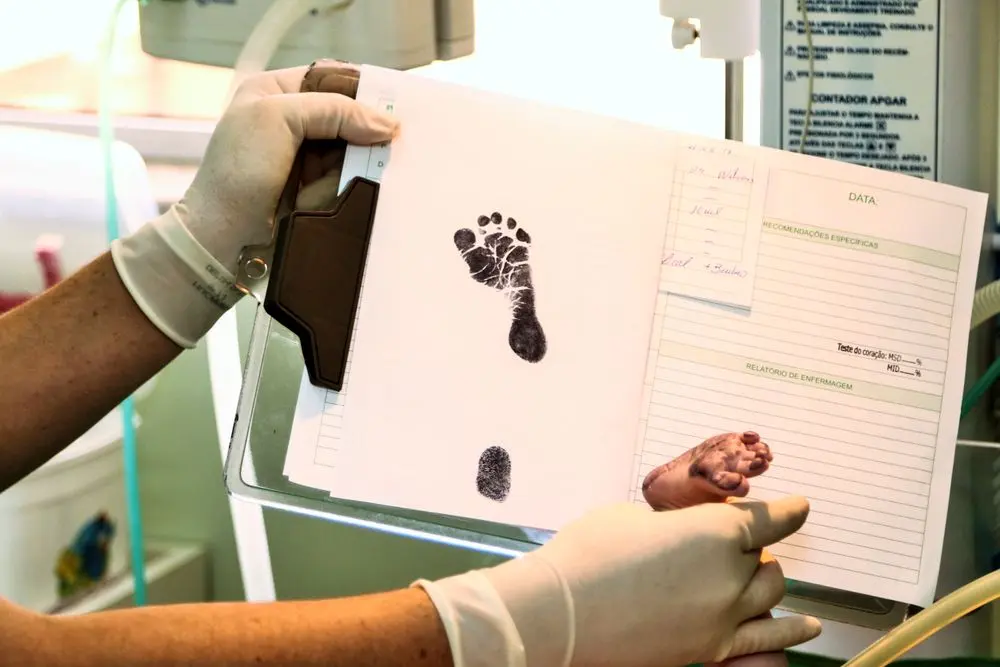
The nurses had lined up the bassinets beside my bed. Two boys and three girls. Little pink wristbands and little blue wristbands. One of them, the smallest girl, had a full head of dark curls already. The biggest boy had his fist jammed in his mouth and was sucking on it like it was his job.
“They’re perfect,” the nurse said. Her name was Doreen. She’d been with me through all eleven hours. “Every single one, Emily. Perfect.”
“Where’s Richard?”
“Parking the car, I think. Or he went down for coffee. He’ll be right up.”
I looked at the door.
He’d been with me for most of the labor. Then the doctors decided on the C-section, and they made him wait outside, and I hadn’t seen him since. He’d missed the first cries.
I wanted him to hear them. I wanted to watch his face when he saw what we’d made.
When he finally came in, he was smiling.
That’s what I want you to know first. Richard came into that room smiling. He had a bouquet of yellow roses from the gift shop, the cellophane still crackling. His tie was loose. His hair was messed up from running his hands through it, which he always did when he was nervous.
“Em,” he said. “Em, are you okay? They said you lost a lot of blood. They wouldn’t let me—”
“I’m okay. I’m okay. Look at them, Richard. Look.”
He put the roses on the tray table.
He turned toward the bassinets.
And I watched his face change.
Not all at once. It went in stages. First confusion. His eyebrows pulled together, like he was trying to read something in bad light. Then he leaned closer to the first bassinet. Then the second. Then he stood up straight and looked at all five of them in a row.
The smile was gone.
“They’re…” he said. His voice came out strange and quiet. “They’re Black.”
I looked at him.
I honestly didn’t understand what he meant at first. I was so tired. I’d lost so much blood. I looked at my babies, at their soft brown skin and dark hair, and I’d already noticed, of course I’d noticed, but in my head it had just been another thing about them. Like the curls. Like the big one sucking his fist.
“Yes, Richard,” I said. “They’re our babies. All five of them. They’re yours.”
“No.”
“Richard.”
“No.” He took a step back from the bassinets. Like they were hot. “You’ve been unfaithful to me.”
Doreen, the nurse, went very still by the window.
“What?” I said. “What are you talking about?”
“Look at them, Emily!” He was shouting now. He’d never shouted at me in four years of marriage. “Look at them! I’m not an idiot! Who is he?”
“There’s nobody! Richard, there’s nobody. I swear to you on my life.”
“Then explain it.”
I tried. I really did. I was crying by then, and my stitches were pulling, and I could barely sit up, but I tried. I said that babies don’t always look like their parents. That families have history nobody talks about. That my grandmother used to say her people came from all over and nobody kept good records. That you couldn’t tell who a baby’s father was by looking at its skin. That there were tests. Blood tests. We could do one. Right now, today.
“Please,” I said. “Just listen to me. Just do the test.”
He wasn’t listening. I could see it. He was looking at the door. He was already gone in his head.
“My mother warned me about you,” he said.
That was the last thing he said to me in that room.
He turned around and walked out. He left the yellow roses on the tray table.
The door swung shut behind him, and five babies kept on crying, and I sat there with my hands over my mouth.
Doreen came over after a while.
She didn’t say anything at first. She just picked up the smallest girl, the one with the curls, and laid her on my chest. Then she pulled the curtain around my bed so nobody walking past could see me.
“You need to feed her,” she said quietly. “That’s what you need to do right now. Just that. Okay? Just the next thing.”
“He left,” I said.
“I know, honey.”
“He just left.”
“I know.”
She held my hand while I fed my daughter. Then she brought me the next one. And the next.
That night, after the nurses took the babies back to the nursery and then brought them back again for the two a.m. feeding, I sat in the dark with all five of them around me in their little plastic beds. The hallway light came in under the door. The heart monitor beeped somewhere down the hall.
I put my hand on each of them. One at a time.
“Whatever happens,” I whispered, “I promise you’ll never have to face this world alone. I’ll always be here for you. Always. Do you hear me? Always.”
The biggest boy got his fist out of his mouth long enough to yawn at me.
I took that as a yes.
That was March of 1995.
I was twenty-six. Richard Whitmore was twenty-nine.
I’d met him at a fundraiser in West Hartford, where I was working the coat check, of all things. I was a seamstress by trade. My mother taught me, and her mother taught her. I did alterations for a bridal shop on Farmington Avenue during the day, and coat checks and catering jobs at night for extra money. I was the kind of girl who could hem your pants while you stood there in your socks.
Richard was the kind of man who’d never had his pants hemmed by anyone but a tailor his family had used for forty years.
He came back to the coat check three times that night. The third time, he didn’t even have a coat. He just stood at the counter and asked me what I was reading. It was a paperback mystery with a broken spine. He asked if it was any good. I said the butler did it. He laughed so hard people turned around.
He was funny. People don’t believe that when I tell them now, but he was. Funny and a little shy and so polite it was almost old-fashioned. He opened doors. He stood up when I came back to a table. He called my mother “Mrs. Kowalski” until the day she told him to stop.
The Whitmores had money. Old money, the kind that doesn’t talk about itself. Richard’s father, Harold Whitmore, owned a company that made precision parts for aircraft, and his father before him had owned it, and they had a big white house on a hill in Avon with a gravel drive and a gardener and a woman named Odette who’d been cooking for them since before Richard was born.
And they had Eleanor.
Eleanor Whitmore was Richard’s mother.
She was tall and thin and always perfectly put together. Silver-blond hair in a smooth twist. Pearls. Cream-colored suits. She had pale gray eyes and a way of looking at you that made you check whether you had something on your face.
The first time Richard brought me to that house for Sunday dinner, she shook my hand and held it a second too long and looked down at my fingers. They had needle pricks on them. They always did.
“Richard tells me you sew,” she said.
“Yes, ma’am. Alterations, mostly. Some dressmaking.”
“How useful,” she said.
Then she let go of my hand and turned away to talk to someone else.
I spent the rest of that dinner trying to figure out which fork to use and getting it wrong.
Eleanor never liked me. She never pretended to.
When Richard told his parents we were getting engaged, Harold shook his hand and hugged me and said, “Well, good. About time this house had somebody in it who laughs.” Harold was a big, warm, rumpled man who smoked a pipe on the back porch and didn’t care about forks.
Eleanor didn’t say anything for a long time. Then she said, “Richard, may I speak with you privately?”
They went into the library and closed the door. They were in there for almost an hour. I sat in the front room with Harold, who kept offering me peppermints from a glass dish and pretending not to hear the raised voices.
When Richard came out, his face was red. He took my hand. “Let’s go,” he said.
In the car, I asked him what she’d said.
He was quiet for a long time.
“She asked about your family,” he said finally. “She asked where your people come from. A lot of questions. Strange questions.”
“What kind of questions?”
“She wanted to know about your grandparents. Your great-grandparents. Where they were born.” He shook his head. “I told her you were Polish, from New Britain, and your dad drove a bread truck, and that was all she needed to know.”
“Why would she care where my great-grandparents were born?”
“I don’t know, Em. That’s just how she is. She’s like that about everything. Bloodlines. Like we’re racehorses.”
He laughed. I laughed too.
I’ve thought about that conversation a thousand times since.
We got married in June of 1991, in a small church in New Britain, because that’s what my mother wanted and because Eleanor said she wouldn’t come anyway. She came. She sat in the back row in a gray suit and left before the reception.
We tried for a baby for almost three years.
Nothing happened. Month after month. I cried in the bathroom a lot. Richard held me and said it would happen. Finally, we went to a fertility clinic. The doctor put me on medication.
“There’s a chance of multiples,” he said. “Twins, maybe. Rarely more.”
Six weeks later, I was lying on a table looking at an ultrasound screen, and the technician kept moving the wand and counting, and her face kept changing.
“Well,” she said. “Mrs. Whitmore. I’m going to go get the doctor.”
Five heartbeats.
Richard fainted. Right there in the room. He hit his head on the counter on the way down and needed two stitches over his eyebrow.
When he woke up, he started laughing. He couldn’t stop.
“Five,” he kept saying. “Five, Em. Five.”
He was happy. I need you to understand that. He was so happy. He painted the nursery himself. He bought five of everything. He read every book on multiple births in the Hartford library. He talked to my belly every night before bed. He named them all, in secret, a different name every week, and made me guess.
Eleanor called once when she heard. She said, “Five. Well. I suppose that’s one way to make sure you stay.” And hung up.
So that’s who left that hospital room in March of 1995.
Not a monster. Not some villain in a movie. A man who’d painted the nursery himself and fainted in the ultrasound room and talked to my belly every night.
That’s what made it so hard.
If he’d always been cruel, I could have understood it. But he wasn’t. He loved me. I know he did.
He just loved something else more.
I found out two days later what that something else was.
I was still in the hospital. They’d kept me because of the blood loss. The babies were in the nursery, and two of them, the smallest girl and the second boy, were under the lights for jaundice.
Eleanor came to see me.
She didn’t bring flowers. She didn’t go to the nursery. She came into my room in a camel-colored coat with a leather folder under her arm, and she sat down in the chair by my bed, and she crossed her legs at the ankle.
“Emily,” she said.
“Where’s Richard?”
“Richard is at home. He’s very upset, as you can imagine.”
“I want to talk to him.”
“He doesn’t wish to talk to you.”
She opened the folder. She took out some papers.
“I’ve taken the liberty of speaking with our attorney,” she said. “Given the circumstances, Richard will be filing for divorce. You’ll need to sign these acknowledging that the children are not his and that you have no claim on the Whitmore family.”
I stared at her.
“They are his.”
“Emily. Please. Let’s not do this.”
“They are his. I’ve never been with anyone else. Not once. Not ever. Do a test. I’m asking for a test. I’ll do it today. Right now. Bring the doctor.”
Eleanor’s face didn’t change.
But something happened in her eyes. Something I didn’t understand then. A flicker. Just for a second.
“That won’t be necessary,” she said.
“Why not? If you’re so sure?”
She put the papers on my tray table, next to Richard’s yellow roses, which were starting to droop.
“Sign them, or don’t,” she said. “It won’t change anything. Richard won’t be coming back.”
She stood up. At the door, she stopped. She didn’t turn around.
“For what it’s worth,” she said, “I’m not doing this to hurt you.”
Then she was gone.
I didn’t sign the papers.
It didn’t matter. Three weeks later, Richard’s lawyer filed for divorce anyway. And attached to the filing was a paternity test.
A DNA test, done at a private lab in Boston. On blood samples from Richard and from all five babies. Samples I never knew were taken. Samples that must have come from the hospital, from the heel sticks they did on every newborn.
The test said Richard Whitmore was excluded as the biological father of all five children.
Probability of paternity: zero percent.
I read it sitting on the floor of my mother’s kitchen in New Britain, where I was living with five three-week-old babies in a two-bedroom apartment above a hardware store. I read it four times.
Then I threw up in the sink.
I didn’t have money for a lawyer who could fight the Whitmores. I didn’t have money for anything. My lawyer was a nice man named Mr. Abrams who did wills and real estate closings out of a storefront office. He looked at the test and shook his head slowly.
“Mrs. Whitmore,” he said. “I believe you. I want you to know I believe you. But this is a DNA test from an accredited lab. We’d need to do our own. And they’d need to agree to give samples. And they won’t.”
“Can’t we make them?”
“We could try. It would cost money. Years, maybe.” He looked at me over his glasses. “Do you want to spend the next five years fighting them in court? Or do you want to spend it raising your kids?”
I went home and looked at my babies.
Five of them. In two cribs pushed together and a laundry basket lined with towels. My mother asleep in the armchair with the biggest boy on her chest.
I signed the divorce papers the next week.
I asked for nothing. I got nothing.
I changed my name back to Kowalski. I gave the children my name too.
I told myself I’d stopped caring whether Richard Whitmore believed me.
That was a lie. But it was the kind of lie that gets you through.
I named them myself.
Isaiah, the big one with the fist. Grace, the smallest girl with the curls. Naomi, the loud one, who screamed louder than the other four put together. Daniel, the quiet boy, who only cried when he was hungry and never for any other reason. And Joy, the last one out, the one who almost didn’t make it, the one the doctor had to rub with a towel for a long scary minute before she breathed.
I named her Joy because I didn’t have any left. I figured somebody in the family should.
The next few years were the hardest of my life.
People think raising quintuplets is like raising one baby five times. It isn’t. It’s like trying to hold water in your hands. There’s no system that works for more than two days. Somebody is always crying. Somebody is always hungry. Somebody is always sick, and then everybody is sick.
We went through three hundred diapers a week. I know that because I counted. I had a chart on the refrigerator.
My mother helped until her heart gave out in 1997. She died in her sleep in the armchair, with Daniel asleep on her lap. He was two. He didn’t wake up until I lifted him off her.
After that, it was just me.
People talked. Of course they did.
A white woman with five Black babies in a small Polish neighborhood in 1995. I heard it in church. I heard it in the grocery store. I heard it from women I’d known since I was in kindergarten.
“Well, she always did think she was too good for New Britain.”
“Married money and look what she did with it.”
“You know he threw her out. You’d throw her out too.”
One woman at the laundromat, a woman I’d gone to school with, actually asked me while I was folding onesies, “So who’s the father, Emily? Somebody you met at one of those fancy parties?”
I folded the onesie in half. Then in half again.
“Richard Whitmore,” I said. “Same as it always was.”
She laughed. Right in my face.
I picked up my laundry basket and walked out with half of it still wet.
Landlords were worse.
When the apartment over the hardware store got sold in 1998, I went looking for a new place. I couldn’t afford much. I could afford less with five kids.
The first man I called said the apartment was available. When I showed up with the stroller, two kids walking and three in a triple stroller, he looked at us and said it had just been rented.
The second one said no kids. The third one said no more than two kids. The fourth one looked at the babies, then at me, then back at the babies, and said, “Where’s their father?”
“Not in the picture.”
“Which one?” he said. And smirked.
I didn’t answer him. I turned the stroller around.
The fifth landlord was an old man named Mr. Ferraro who owned a duplex on Hart Street. He looked at the kids. Isaiah was trying to climb the porch railing. Naomi was screaming because Grace had her shoe.
Mr. Ferraro scratched his chin.
“My mother had seven,” he said. “In two rooms. In Sicily. You’ll be fine.”
He rented us the downstairs for less than he was asking. He never raised the rent the whole time we lived there. When he died in 2009, his daughter told me he’d put a note in his will asking her not to raise it either.
I worked every job I could find.
I cleaned offices at night downtown. Insurance companies, law firms. I’d put the kids to bed at eight, and Mrs. Alvarez from upstairs would come down and sleep on my couch, and I’d drive to Hartford and vacuum carpets and empty wastebaskets until two in the morning. Then I’d come home and sleep three hours and get up and make five lunches.
During the day, I did alterations. In our living room. I had an old Singer machine set up by the window. People brought me prom dresses and wedding dresses and suits for funerals. I took in waists and let out hems and fixed zippers while the kids played on the floor around my feet.
I got good at sewing one-handed. With a baby on my hip.
Some nights, I barely slept at all.
Some weeks, I didn’t know how I’d buy groceries.
One winter, the heat broke in January, and Mr. Ferraro was in the hospital, and I couldn’t afford a repairman. I put all five kids in one bed in their snowsuits and lay down in front of them like a wall and told them stories until they stopped shivering and fell asleep.
I made up a story that night about five little birds who lived in a nest on top of a tall building. The wind kept trying to blow the nest down. The mother bird spread her wings over them every night.
“What happened to the daddy bird?” Naomi asked. She was four.
I was quiet for a second.
“He flew away,” I said.
“Why?”
“He got scared.”
“Of what?”
I looked at the five of them. Their faces in a row on the pillow. Their breath making little clouds in the cold.
“I don’t know, baby,” I said. “I really don’t know.”
But I never let them think they weren’t wanted.
That was the one thing. The only thing I was sure of.
Our house was small and loud and messy. The furniture was secondhand. The kitchen table had one leg shorter than the others, and we kept a folded church bulletin under it for eleven years.
But there was a lot of laughing in that house. There were Friday night pancake dinners. There were birthday cakes, five on the same day, each one different because each of them picked their own. There were bedtime stories every night, even when I was so tired the words came out in the wrong order.
And every night, before I turned out the light, I said it.
“Who loves you?”
“You do!” Five voices.
“How much?”
“More than all the stars!”
“And what are you never going to be?”
“Alone!”
They said it every night until they were twelve. Then they started rolling their eyes. But they still said it.
The questions started when they were six.
Isaiah came home from first grade with his jaw set tight.
“Tommy Kowalczyk says you’re not our real mom,” he said. “He says you can’t be, because you’re white and we’re Black.”
I put down the dress I was hemming.
“Come here,” I said.
I pulled all five of them onto the couch with me. I told them the truth. Not all of it. They were six. But the truth.
I told them that I was their mom, their real mom. That they’d grown inside my body, all five at once, and I had the scar to prove it. I showed them. Joy traced it with her finger.
I told them their father was a man named Richard. That he’d looked at them when they were born and gotten confused and angry and decided to believe something that wasn’t true. And that he’d left.
“Did we do something bad?” Grace asked.
“No. No, baby. You were one day old. You didn’t do anything except cry and eat.”
“Then why’d he leave?”
I didn’t have a good answer. So I told them the only one I had.
“Some grown-ups,” I said, “care more about what other people think than about what’s true. That’s a sickness. It’s not your fault. You can’t catch it from him. And you’re never going to have it, because I’m never going to let you.”
Daniel, my quiet one, who almost never said anything, looked up at me.
“Do we look like him?” he asked.
I looked at Daniel’s face. At his long eyelashes. At the dimple in his left cheek, the one that showed up when he was trying not to smile.
Richard had that dimple. The exact same one. Same side.
“A little,” I said. “You’ve got his dimple.”
Daniel touched his own cheek.
“I don’t want it,” he said.
“It’s yours now,” I said. “Not his. You get to decide what it means.”
They grew up.
That’s the short version, and it’s the one that skips everything. The broken arms and the chicken pox, all five at once. The parent-teacher conferences where teachers looked at me and then at my kids and then at me again, and I watched them do math in their heads. The time Naomi got suspended for punching a boy who called Grace a name I won’t write down. The time Isaiah got pulled over at seventeen for driving his friend’s car, and the officer wouldn’t believe the white woman who showed up was his mother until I showed him a birth certificate.
I kept those birth certificates in my purse for years. All five of them. In a plastic sleeve.
But they grew up.
And they turned into five of the most remarkable people I’ve ever known. I’m their mother, so I’m supposed to say that. But it’s true anyway.
Isaiah became a lawyer. He went to UConn on a scholarship and then to law school in Boston, and he works now for a firm in Hartford that does civil rights cases. He’s big and loud and laughs with his whole body. He still sucks his thumb when he’s asleep. His wife told me that. He’d be mortified that I’m telling you.
Grace teaches second grade in Bridgeport. She still has those curls. Her kids adore her. Every year at Christmas, she sends me a photo of her classroom door, which she decorates herself, and every year it’s more ridiculous than the last.
Naomi became a doctor. A pediatric resident at Yale-New Haven. She’s still the loudest. She talks too fast and works too hard and calls me at midnight from the hospital to tell me about a kid with a weird rash. She chose pediatrics, she says, because she wanted to be there when families get scary news.
“Somebody should be in the room who doesn’t leave,” she said.
Daniel became a firefighter in Hartford. Still quiet. Still the dimple. He has a husband named Theo and a rescue dog named Biscuit. He calls me every Sunday at four o’clock. Not three fifty-nine. Not four oh one. Four o’clock.
And Joy. My last one. The one who almost didn’t breathe.
Joy became a genetic counselor.
I’ll come back to that.
In 2001, I read in the Hartford Courant that Harold Whitmore had died.
Heart attack. Seventy-one years old. On the back porch, with his pipe.
The obituary said he was survived by his loving wife, Eleanor, and his son, Richard, and Richard’s wife, Candace.
Candace.
So he’d remarried. I hadn’t known.
The obituary didn’t say anything about grandchildren.
I sat at the kitchen table with the newspaper and cried for Harold, who’d offered me peppermints and hugged me and said the house needed somebody who laughs. Who never called. Who never once came to see the children.
I wondered if he’d believed it. The test. I wondered if he’d ever had doubts.
I’ll never know.
I saw Richard once more, before all this. Just once.
It was 2008. The kids were thirteen. I’d taken them to a hockey game in Hartford because Isaiah had won tickets in a raffle at school. We were in the concourse between periods, and the kids were arguing over pretzels, and I looked up, and there he was.
He was standing by a concession stand with a blond woman in a white coat. Candace, I guessed. He’d gotten heavier. His hair was going gray at the temples.
He looked up.
He saw me.
Then he looked past me, at the five kids behind me, arguing over pretzels.
I watched his face. I’d know that face anywhere. I watched him look at Daniel, at the dimple. I watched him look at Isaiah, who was already six feet tall and had his exact shoulders. I watched him look at Grace, who had his mother’s long thin hands.
He went pale.
For a second, I thought he was going to walk over.
Then Candace said something to him. He turned away. He took her arm. And they walked off into the crowd.
Naomi was standing next to me. She’d seen me looking.
“Mom? Who was that?”
I watched the back of his gray head disappear around a corner.
“Nobody,” I said. “Just somebody I used to know.”
I didn’t tell them for years that it was him.
I told them in 2015, when they were twenty. We were at Daniel’s apartment for Thanksgiving, and somebody brought it up, and I told them the hockey game story.
Isaiah put his fork down.
“He saw us,” he said. “He looked right at us. And he walked away.”
“Yes.”
“Twice,” Isaiah said. “He did it twice.”
Nobody said anything for a while.
Then Joy, who was twenty and studying biology at Wesleyan, said, very quietly:
“Mom. That paternity test. The one that said he wasn’t our dad. Do you still have it?”
“Somewhere. Why?”
She was turning her water glass around and around on the table.
“Because it doesn’t make sense,” she said. “None of it makes sense. If he’s not our father, then who is? And if you’re telling the truth, which you are, then the test is wrong. And labs don’t just get five kids wrong. Not like that.”
Everybody looked at her.
“I mean,” Joy said. “Somebody would have to make it wrong.”
That was ten years before everything came apart.
Joy kept thinking about it. I know she did. She never said much. She’s like Daniel that way. But she kept that question somewhere in her head and turned it over and over for a decade.
And in the end, she was the one who found the answer.
Well. She found half of it.
The other half came in the mail.
In January of this year, 2025, Eleanor Whitmore died.
She was ninety-one. She’d been in a nursing facility in Farmington for two years. Dementia, I found out later.
I didn’t know she’d died. I didn’t read obituaries anymore. I didn’t know anything until the second week of February, when a thick cream-colored envelope came to my house in New Britain.
It was from a law firm in Hartford. Whitcomb, Hale and Pryor. The fancy kind of firm with three names.
It was addressed to Emily Kowalski. And underneath, in smaller type:
And to Isaiah, Grace, Naomi, Daniel, and Joy Kowalski.
I opened it standing at the mailbox in the snow.
It was a letter from an attorney named Frances Pryor. It said that she was the executor of the estate of Eleanor Whitmore. It said that Mrs. Whitmore’s estate included assets held in trust under the will of her late husband, Harold Whitmore. It said that, under the terms of that trust, certain parties had been identified as potential beneficiaries. It said a meeting had been scheduled at the Whitmore residence in Avon on the first of March, and that the presence of all six of us was “strongly requested.”
And at the bottom, it said:
Mrs. Whitmore left a sealed letter addressed to Emily Kowalski, with instructions that it be delivered in person, and only in the presence of her son, Richard Whitmore.
I read that line about ten times.
Then I went inside, sat down at the kitchen table with my coat still on, and called Isaiah.
“Don’t go,” Isaiah said.
“I have to.”
“You don’t have to do anything. They threw you out, Mom. They threw us out. They don’t get to summon us thirty years later like we’re the help.”
“She left me a letter.”
“So she can mail it.”
“She said in person. With Richard there.”
Isaiah was quiet on the phone.
“I’m a lawyer,” he said finally. “Let me read the letter from the firm. Don’t sign anything. Don’t agree to anything. Just send it to me.”
I sent it to him. He called me back an hour later.
“Mom,” he said. And his voice was different. “Do you know how much Harold Whitmore’s estate was worth?”
“No.”
“Neither do I,” Isaiah said. “But the company sold in 2004. Did you know that? To a defense contractor. It was in the business pages. I just looked it up.”
He told me the number.
I sat down.
“Mom?”
“I’m here.”
“I think,” Isaiah said slowly, “this is about the trust. I think Harold wrote something in his will. And I think somebody’s afraid of what it says.”
Joy called that same night.
She was crying. Joy doesn’t cry. Not since she was a little girl.
“Mom,” she said. “I have to tell you something. And I need you not to be mad at me.”
“Honey, what is it?”
“Two years ago,” she said, “I did a DNA test. The kind you spit in a tube. Through one of those ancestry sites. I did it at work, as part of a training. I didn’t tell anybody. I didn’t even look at the matches for a long time.”
My heart started going fast.
“And I looked last year,” Joy said. “And there was nobody. Nobody from Dad’s side. I mean, Richard’s side. No Whitmores. I figured they’d never spit in a tube in their lives.”
“Okay.”
“But there were other matches,” she said. “Lots of them. From Louisiana. New Orleans and around there. A family named Baptiste. Second cousins. Third cousins. A whole branch.”
“Baptiste? We don’t have any family in Louisiana.”
“I know,” Joy said. “That’s the thing, Mom. We don’t. Not on your side. I checked. I built the whole tree. Your side is Polish all the way back to the 1800s. Every single line.”
She took a breath.
“So the Baptistes,” Joy said, “have to be on his side.”
I didn’t say anything for a long time.
“And Mom,” Joy said. “This morning, after you called Isaiah, I went back and looked at the site again. Because of the letter. And there’s a new match. From three weeks ago.”
“Who?”
“A woman named Odette Baptiste-Laurent,” Joy said. “She lives in Hartford. She’s eighty-four years old. And the site says she’s my great-great-aunt.”
I knew that name.
Odette. The cook. The woman who’d been in the Whitmore kitchen since before Richard was born.
I called the number Joy found. A woman’s voice answered. Old and thin, with an accent I couldn’t place. Something soft. Something southern, but not quite.
“Mrs. Laurent? My name is Emily Kowalski. I used to be married to Richard Whitmore. I think you might know who I am.”
There was a long, long silence.
“Lord,” the woman said quietly. “Lord, I been waiting thirty years for this phone to ring.”
She asked me to come see her. Just me first.
She lived in a small senior apartment in Hartford’s South End. She opened the door leaning on a cane. She was tiny. Smaller than I remembered. Her hair was white and cut short. Her skin was light brown, and she had pale gray eyes.
Gray eyes. Like Eleanor’s.
She saw me notice.
“Come in, Miss Emily,” she said. “Sit down. I made coffee. You’re going to want it.”
We sat at her little kitchen table.
She took a long time getting her cup the way she wanted it. Two sugars. A splash of milk. She stirred it for a long time.
“I knew when the babies were born,” she said. “I knew before anybody. Mr. Richard came home from that hospital white as a sheet, and Miss Eleanor took him in the library, and I heard him crying through that door. Grown man. Crying. Saying, ‘They’re Black, Mother. All of them. She cheated on me.’”
She looked up at me.
“And I heard her,” Odette said, “not say a word. Not one word. She let him think it.”
“Why?” I said. “Why would she do that?”
Odette set down her spoon.
“Because Eleanor Whitmore,” she said, “was born Eleanor Baptiste. In New Orleans. In 1933. And she was my sister.”
I’ve thought about how to explain what I felt in that moment.
There isn’t a good word for it. It was like falling. Like the floor of that little kitchen dropped out from under my chair.
Odette kept talking. Slowly. Like she’d practiced it. Like she’d said it out loud to herself many times, alone, in that small apartment.
Their mother was a Creole woman. Their father was a white man who’d never married her. Eleanor was the oldest. She came out with skin so light, eyes so gray, hair so straight, that people on the street thought she was white. Odette came out three years later, a little darker. Not much. But enough.
“In New Orleans back then,” Odette said, “that little bit was everything. It was which water fountain. Which school. Which door you came in.”
When Eleanor was nineteen, she got on a train to New York. She changed her name. She told people she was from a good family in Baton Rouge, that her parents were dead. She got a job as a receptionist at a fancy hotel. She met Harold Whitmore there, at a business dinner, in 1955.
“She never told him,” Odette said. “Not ever. Not one word in forty-five years of marriage.”
“But you were in their kitchen,” I said. “Your whole life.”
Odette smiled. A small, sad smile.
“Our mama died in 1959,” she said. “I was twenty-three. No money. Nobody. I wrote Eleanor a letter. She sent me a train ticket. When I got to that big white house, she met me at the back door. Not the front. The back. And she said, ‘You can stay. You can work here. But you are the cook. You are not my sister. If you ever tell anybody, I’ll put you out on the street.’”
“And you stayed?”
“Where was I going to go?” Odette said. “She was all I had. And I loved her. God help me, I loved her. She was my big sister.”
She looked out the window for a long time.
“I raised Mr. Richard, really,” she said. “Fed him, put him to bed. He was a sweet boy. He never knew I was his auntie. Never once. He called me Miss Odette his whole life.”
“So the babies,” I said. My voice was shaking. “My babies. They came out Black because of Eleanor.”
“Because of our mama,” Odette said. “And her mama. And all of them, all the way back. It skipped Eleanor. It skipped Mr. Richard, mostly. You notice he gets real dark in the summer? Always said it was the sailing.” She shook her head. “It didn’t skip those babies. It came back. All five of them. All at once.”
“And she knew.”
“The minute she heard,” Odette said. “The minute. She knew exactly what it meant. And she knew if anybody looked too close, if anybody did a real test, if anybody started asking about grandparents and great-grandparents, it’d all come out. Who she was. Where she came from. Forty years of lies. And Harold would know. And everybody at that country club would know. And she’d be nothing.”
Odette’s voice cracked.
“So she let you be the liar,” she said. “To save herself. She let her own son throw away his own children. And I stood in that kitchen and I didn’t say nothing.”
She was crying now. Quietly. Her hands were shaking around the coffee cup.
“I’m sorry, Miss Emily,” she said. “I’m so sorry. I should have said something. I should have walked out that door and found you. Every day, I thought about those babies. Every single day for thirty years.”
I sat there.
I thought about the night with the broken heat. Five kids in snowsuits in one bed. About the landlord who smirked and said “Which one?” About Isaiah at the side of the road at seventeen with a police officer who didn’t believe I was his mother. About the woman at the laundromat who laughed in my face.
I thought about Joy at six asking, “Did we do something bad?”
I should have been furious with Odette. Part of me was.
But mostly I just looked at her. This tiny old woman with gray eyes like her sister’s, who’d spent her whole life cooking in the back of a house where she couldn’t use the front door.
“What about the test?” I said. “The paternity test. It said Richard wasn’t their father.”
Odette wiped her face with a paper napkin.
“That,” she said, “is in the letter.”
The meeting was on the first of March.
All six of us drove to Avon together in Isaiah’s SUV. Nobody talked much. Grace held my hand in the back seat the whole way. Naomi kept checking her phone and then putting it away. Daniel sat in the very back and looked out the window. Joy had a folder on her lap that she kept opening and closing.
When we turned up the gravel drive, I felt sick.
The house looked exactly the same. White. Huge. The same columns. The same black shutters. The same hill.
Thirty years.
“You okay, Mom?” Isaiah said.
“No,” I said. “But let’s go in.”
Frances Pryor met us at the door. She was a sharp-looking woman in her sixties with short gray hair and a navy suit. She shook each of our hands.
“Thank you for coming,” she said. “I know this can’t be easy.”
She led us into the library.
The same room. The same dark wood, the same leather chairs, the same smell of old books and furniture polish. The room where Eleanor had taken Richard thirty-four years ago to ask him about my great-grandparents. The room where Odette had heard him crying.
There were two people already sitting there.
One was a blond woman in her fifties, very thin, in a cream sweater. Candace, I guessed.
The other was Richard.
He was sixty years old.
His hair was all gray now, and thinner. He wore glasses. He’d gotten heavy around the middle and then thin again, the way people do when they’re sick or sad. His face was lined.
He stood up when we came in.
He was still polite. He still stood up when someone came into a room.
He looked at me.
Then he looked at them. All five of them, filing in behind me. Isaiah, six foot three. Grace with her curls. Naomi in her hospital fleece, because she’d come straight from a shift. Daniel with his hands in his pockets and his jaw set. Joy with her folder.
Richard’s mouth opened. Nothing came out.
He looked at Daniel the longest. At his face. At his left cheek.
Daniel looked right back at him. And didn’t smile.
“Please,” Frances Pryor said. “Everyone. Sit down.”
We sat. My kids sat in a row on the long leather sofa, shoulder to shoulder, like they used to sit on our couch on Hart Street. I sat in a chair at the end.
Richard sat down slowly.
“I’m going to start with the will,” Frances said. “And then the letter.”
She explained it carefully. Isaiah asked questions. I didn’t understand all of it.
What I understood was this.
When Harold Whitmore died in 2001, he left almost everything in a trust. Eleanor got to live off the income until she died. When she died, the whole trust, the house, the investments, everything from the sale of the company, was supposed to pass to Harold’s “lineal descendants of blood.”
His grandchildren.
“And if there were no grandchildren?” Isaiah asked.
“Then to Richard,” Frances said. “And then to a list of charities.”
“Does Mr. Whitmore have any other children?”
Candace looked down at her hands.
“No,” Richard said. His voice was rough. “We couldn’t.”
Frances nodded.
“Then,” she said, “the question of whether these five people are Harold Whitmore’s biological grandchildren is the only question that matters.”
She looked at Joy.
“Ms. Kowalski,” she said. “I understand you’ve done some testing.”
Joy opened her folder.
Her hands were shaking a little. But her voice wasn’t. She talked like she was at work. Clear. Simple. Like she was explaining something hard to a scared family.
“Six weeks ago,” she said, “Mr. Whitmore’s attorney, through Ms. Pryor, agreed to provide a DNA sample from Mr. Whitmore. For the purpose of settling the estate.”
Richard nodded slightly.
“I didn’t run the test myself,” Joy said. “That would be a conflict. It was run by an independent accredited lab in New Jersey. All five of us gave samples. So did my mother.”
She took out a sheet of paper.
“The probability that Richard Whitmore is the biological father of all five of us,” Joy said, “is 99.99 percent.”
Nobody said anything.
Richard didn’t move. He was staring at the paper in Joy’s hand like it was on fire.
“That’s not possible,” Candace said. “There was a test. In 1995. Richard showed me. It said—”
“I know what it said,” I said.
Everyone looked at me.
Frances Pryor picked up a sealed envelope from the desk. Thick, cream-colored. My name on the front in shaky handwriting.
“This,” she said, “was written by Eleanor Whitmore in 2019. Before her illness. It’s been in our firm’s safe since then. Her instructions were that it be read aloud, in this room, to Emily Kowalski and Richard Whitmore together.”
She held it out to me.
“Mrs. Kowalski. Would you like to read it? Or would you prefer I did?”
I looked at the envelope.
“You read it,” I said. “I don’t think I can.”
Frances opened it. She put on her reading glasses.
She read.
Emily,
If you’re hearing this, I’m dead, and Richard is sitting in the room with you, and the children are there too. I hope they are. I hope they’re all there.
I’ve started this letter eleven times. I don’t know how to say it. So I’m going to say it plainly, the way I should have said it thirty years ago.
The children are Richard’s. They were always Richard’s. You never lied to him. I did.
My name was Eleanor Baptiste. I was born in New Orleans in 1933 to a Black mother. My sister Odette has worked in my kitchen for sixty years. She is not my cook. She is my blood. She is Richard’s aunt.
When the children were born, I knew what had happened, and I knew why. I was terrified. Not of them. Of what they would mean. Of what Harold would say if he knew who I really was. Of what everyone would say.
So I did something unforgivable.
Frances paused. She looked up.
Richard had put his face in his hands.
She kept reading.
I paid a man named Dr. Martin Kessler, who ran a private laboratory in Boston and owed my husband a great deal of money, to falsify the paternity results. I gave him the babies’ heel-stick samples, which I obtained from a nurse at St. Vincent’s for five hundred dollars. I gave him a sample of Richard’s blood from his last physical. I told Dr. Kessler what the results had to say. He made them say it.
I kept the real results. They’re in the safe deposit box at Farmington Savings, box 114. Odette has the second key. They have been there since April 1995.
I told myself I was protecting Richard. I told myself I was protecting the family. I was protecting myself. Only myself. I want that to be clear. Richard believed the test because I told him to believe it. He was twenty-nine years old and heartbroken, and I was his mother, and he trusted me. This was my sin, not his. But he will have to carry his part, which is that he left before he ever asked a question.
Richard made a sound. I’d never heard a man make a sound like that. Low. Broken. Like something tearing.
Candace put her hand on his back. He didn’t seem to feel it.
Frances kept reading.
Emily, I watched you from a distance for thirty years. I want you to know that. I had a man look in on you once a year. I knew about the duplex on Hart Street. I knew about the cleaning jobs. I knew when your mother died. I knew when the heat broke one winter, because Mr. Ferraro’s daughter told my man at church. I sat in this library and I knew you were cold, and I did nothing.
I knew Isaiah went to law school. I knew Naomi became a doctor. I knew Grace teaches little children, and Daniel runs into burning buildings, and Joy studies genes. I knew every one of their names. I said them to myself at night.
I never went to see them. I was too afraid. I’m still afraid, writing this. Even now. Isn’t that strange? I’m eighty-six years old, and I’m still afraid of a lie I told when I was nineteen.
I can’t give back what I took from you. Or from them. I can’t give Richard back his children. I can only make sure that what Harold left goes where Harold would have wanted it to go. To his grandchildren. All five of them. Equally.
I’ve instructed Frances to release the documents from box 114 to Joy, because I understand she will know what they mean.
I’m not asking you to forgive me. I’m only asking you to tell them the truth, all of it, including who I was. Including where they come from. Including their great-grandmother, whose name was Celestine Baptiste. She made the best gumbo in the Seventh Ward. She sang in the kitchen. Odette will tell them about her. I should have.
I’m sorry. It isn’t enough. It never will be.
Eleanor.
Frances folded the letter.
She took off her reading glasses.
The library was silent. I could hear a clock ticking somewhere. A big one. Grandfather clock in the hall.
Then Richard stood up.
He didn’t look at Frances. He didn’t look at Candace. He looked at me.
“Emily,” he said.
I didn’t say anything.
“Emily, I—”
He stopped. He swayed a little. Candace stood up and took his arm, and he shook her off, gently, and stepped toward me.
“You asked me,” he said. “In the hospital. You begged me. You said do a test. You said just listen.”
“Yes,” I said.
“And I left.”
“Yes.”
“I didn’t even wait for the test. Mother came to me with it three weeks later, but I’d already decided. I’d decided before I got to the elevator.” He was crying now. He didn’t wipe his face. “I’ve told myself for thirty years that I left because the test proved it. But that’s not true. I left because I looked at them, and I was ashamed. Of how they looked. Of what people would say. At the club. At work. In this house.”
He looked at the five of them on the sofa.
“I was ashamed of my own children,” he said. “Because they were Black. That’s the truth. That’s all it ever was. Mother lied. But I wanted to believe her. God help me, I wanted to.”
Nobody said anything.
Then Naomi stood up.
Loud Naomi. The one who’d punched a boy for Grace. The one who talks too fast and works too hard.
She didn’t talk fast now. She talked very slowly.
“Do you know,” she said, “what our mother did for thirty years?”
Richard looked at her.
“She cleaned toilets in office buildings at two in the morning,” Naomi said. “She sewed prom dresses with one of us on her hip. She slept in front of us like a wall one winter when the heat broke, so we wouldn’t freeze. She carried our birth certificates in her purse for ten years so cops would believe she was our mother. She lost her own mother and didn’t even have time to grieve, because she had five kids to feed.”
Her voice was shaking now.
“And every single night,” she said, “every night, she asked us who loved us. And she made us say we were never going to be alone.”
She stopped. She swallowed.
“You should know that,” she said. “You should know what she did while you were at the club.”
Richard nodded.
He didn’t argue. He didn’t explain. He just nodded, over and over, with tears running down his face.
“I know,” he whispered. “I know.”
He looked at me.
“Emily,” he said. “I don’t expect anything. I don’t deserve anything. I just want to say it. I’m sorry. I’m so sorry. I was a coward. I threw away the best thing that ever happened to me because I was afraid of what people at a country club would think.”
I’ve imagined that moment for thirty years.
I imagined it a lot when they were little. In the middle of the night, at the office buildings, pushing a vacuum across some lawyer’s carpet. I’d imagine Richard showing up. Begging. Crying. I’d imagine all the things I’d say.
I had speeches. Whole speeches. I’d practiced them.
Now he was standing right there, crying, and I couldn’t remember any of them.
I looked at him for a long time.
“You missed it all, Richard,” I said finally.
He nodded.
“Their first steps. Their first words. Isaiah’s was ‘no,’ by the way. Naomi’s was ‘mine.’ Joy didn’t talk until she was almost three, and then she talked in whole sentences, like she’d been saving up.”
He laughed. A wet, broken laugh. Then he covered his mouth.
“You missed Grace’s ballet recital where she fell off the stage. You missed Daniel’s first fire. You missed Naomi’s white coat ceremony. You missed all of it.”
“I know.”
“I’m not going to tell you it’s okay,” I said. “It’s not. I’m not going to tell you I forgive you. I don’t know if I ever will.”
He nodded.
“But I’m not going to stand here and hate you, either,” I said. “I spent too many years being tired. I don’t have the energy left to hate anybody.”
Isaiah stood up next to Naomi.
Then Grace. Then Joy.
Daniel stayed sitting for a long moment. Then he stood up too.
The five of them, in a row. Like they were when they were babies, in their bassinets beside my hospital bed.
“Here’s what’s going to happen,” Isaiah said. His lawyer voice. Calm. “We’ll talk to Ms. Pryor about the trust. We’ll take what our grandfather left us. We’re not stupid. We’re not going to say no to it out of pride.”
Richard nodded.
“But you don’t get to be our father,” Isaiah said. “Not because of this. Not because of a letter. If that ever happens, it’s going to take a long time, and it’s going to be our decision. All five of us. Not yours.”
“I understand,” Richard said.
“Do you?”
Richard looked at him. At his son. Six foot three, with his own shoulders.
“No,” Richard said honestly. “Not yet. But I’ll try.”
Then Daniel spoke.
Daniel, who never talks. Daniel, who called me every Sunday at four o’clock.
“Do you have it too?” he said.
Richard looked confused. “What?”
Daniel touched his own left cheek.
“The dimple,” he said.
Richard looked at him. Slowly, he touched his own face. His left cheek.
“Yes,” he said quietly. “My father had it too.”
Daniel nodded.
“Mom told me when I was six that I could decide what it meant,” Daniel said. “I decided a long time ago it meant nothing. That it was just mine.”
He looked at Richard for a long moment.
“I’m still deciding,” he said.
We went to see Odette afterward. All six of us.
She’d made gumbo. Her mother’s recipe. Celestine’s recipe. She’d been cooking it since six in the morning, she said, because she couldn’t sleep.
Her little apartment was too small for all of us. We sat on the couch and the floor and the arms of chairs. Isaiah sat on the kitchen counter. Odette sat in her armchair with her cane across her knees and looked at them.
She looked at them for a long time without saying anything.
Then she started crying.
“Look at you,” she said. “Look at you all. You look like Mama. Every one of you. Grace, you have her hands. Naomi, you got her mouth. Lord, you got her mouth. She never shut up either.”
Naomi laughed so hard she choked on her gumbo.
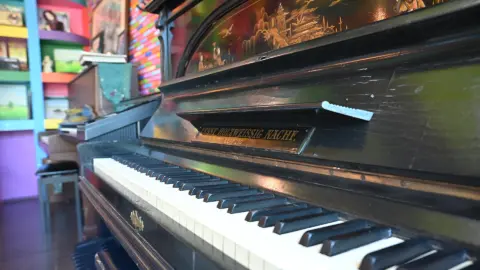
Odette told them about Celestine Baptiste that night. About the little shotgun house in the Seventh Ward. About Sunday dinners and second-line parades and the old upright piano in the front room that only had three keys that worked. About how Celestine used to sing while she cooked, the same three hymns over and over, and how Eleanor used to sing them too, when she was little, before she got on that train.
“Did she ever sing them later?” Joy asked. “In the big house?”
Odette was quiet.
“One time,” she said. “Christmas, 1987. Mr. Harold was asleep. I was cleaning up in the kitchen. And I heard her in the library. Singing. Real low. ‘His Eye Is on the Sparrow.’ Mama’s favorite.”
She shook her head slowly.
“I went to the door,” she said. “And she saw me. And she stopped. And she said, ‘That’ll be all, Odette.’”
Joy went to the bank the next week, with Odette’s key.
Box 114 at Farmington Savings.
Inside were the real test results from 1995. Five pages. Richard Whitmore, probability of paternity, 99.98 percent. All five of them.
There was a photograph, too. Black and white. A woman in an apron standing in front of a small wooden house, squinting into the sun, with two little girls beside her. One light. One a little darker. Holding hands.
On the back, in faded pencil: Mama, Ellie, Dettie. 1939.
And there was a hospital bracelet. A tiny one. Pink. From St. Vincent’s, March 1995. BABY GIRL WHITMORE #5.
Joy’s bracelet. The one that went missing the day after she was born. The nurses had to make a new one.
Eleanor had kept it. Thirty years.
Joy brought all of it to my house. She laid it out on my kitchen table, the same one with the short leg, which I still have. She didn’t say anything. She just laid it out, piece by piece. The test. The photograph. The bracelet.
Then she sat down and put her head on the table and cried.
I sat down next to her and put my hand on her back.
“She stole my bracelet,” Joy said into the table. “She stole it. And she kept it.”
“I know, baby.”
“Why would she keep it? Why would she keep it if she didn’t want us?”
I looked at the tiny pink bracelet.
“I think she did want you,” I said. “I think she wanted you so bad she couldn’t stand it. I think she just wanted herself more.”
Richard called me three weeks later.
I almost didn’t answer. Then I did.
“I went to see Odette,” he said. “My aunt. My aunt.” He laughed a little. “I’m sixty years old, and I just found out I have an aunt.”
“How was it?”
“She made me sit at her kitchen table,” he said. “She made me eat gumbo. And then she hit me on the arm with her cane, hard, and told me I was the dumbest boy she ever raised.”
I laughed. I couldn’t help it.
“She’s right,” I said.
“I know.”
He was quiet for a moment.
“Candace and I are getting a divorce,” he said. “Not because of this. Well. Partly because of this. She said some things after that meeting. About the kids. About Mother. About what people would think.” He took a breath. “And I heard myself in her. In 1995. And I couldn’t do it anymore.”
I didn’t say anything.
“I’m not telling you this for any reason,” he said. “I don’t want anything from you. I just wanted somebody to know. Somebody who’d understand what it meant.”
“I understand,” I said.
“Emily,” he said. “Would they ever… do you think they’d ever let me…”
“I don’t know, Richard,” I said. “You have to ask them. Not me.”
He asked them.
He wrote each of them a letter. A real letter, on paper, with a stamp. Five letters, each one different. I didn’t read them. They didn’t show me. That was theirs.
Isaiah didn’t answer for two months.
Grace answered in a week. She sent him a photo of her classroom door. It was decorated for spring, with paper butterflies and every kid’s name on a butterfly. She didn’t write anything else.
Naomi answered with one line: Not yet. Maybe later. Don’t push.
Joy answered with a long email that she let me read. It was mostly about genetics. About Celestine. About the Baptiste family tree she was building, over three hundred people now, all the way back to 1840. She asked him if he wanted to see it. He said yes.
Daniel didn’t answer at all.
Then, in July, on a Sunday, my phone rang at four o’clock.
“Hi, Mom,” Daniel said.
“Hi, baby.”
“I’m at the fire station,” he said. “We’re having a barbecue. For the families. Theo’s here, and Biscuit.”
“That sounds nice.”
“Richard’s here too,” Daniel said.
I sat down.
“I invited him,” Daniel said. “I don’t know why. I just did. He’s sitting at the end of the picnic table. He doesn’t know anybody. He’s eating a hot dog. He’s kind of bad at it.”
I laughed.
“He brought Biscuit a bone,” Daniel said. “Biscuit likes him. Biscuit likes everybody, so that doesn’t mean much.”
“No,” I said. “It doesn’t.”
“He asked me about my first fire,” Daniel said. “And I told him. The whole thing. And he just listened. He didn’t say anything. He just listened, and when I got to the part about the kid in the closet, he got all teary.”
Daniel was quiet for a moment.
“I’m not saying it’s anything,” he said. “It’s just a barbecue.”
“I know, baby.”
“I’m still deciding,” Daniel said.
“I know.”
He was quiet again. I could hear the barbecue in the background. Laughing. A dog barking. Somebody calling for more ketchup.
“Mom,” Daniel said. “He smiled at something Theo said. And it was the dimple. The exact same one.”
“I know,” I said. “I’ve seen it.”
“It’s weird,” Daniel said.
“It is weird.”
“I think,” Daniel said slowly, “maybe it can mean more than one thing.”
The trust settled in the fall.
Isaiah handled most of it. He made sure it was split five ways, exactly, the way Eleanor said in her letter. He made sure Richard didn’t contest it. Richard didn’t. He signed every paper Frances Pryor put in front of him without even reading them.
It’s a lot of money. More money than any of us will ever need. More money than I made in my entire life cleaning offices and hemming pants.
I won’t tell you exactly what they did with it. It’s theirs. But I’ll tell you a few things.
Isaiah used part of his to start a fund at his law firm for families fighting housing discrimination. He named it after Mr. Ferraro. Salvatore Ferraro Fund. He sent me a picture of the plaque.
Grace bought her classroom new books. Every kid in her school got a library card and a book of their own to keep. Then she bought herself a car that doesn’t make a grinding noise when she turns left. She says that was the most luxurious thing she’s ever done.
Naomi paid off her medical school loans in one afternoon. She called me from the bank parking lot screaming.
Daniel and Theo are adopting. A sibling group. Three brothers, ages four, six and nine, who’ve been in foster care for two years because nobody wanted to take all three. They come home in February.
“Somebody should keep them together,” Daniel told me. “Nobody should have to be split up.”
And Joy took Odette to New Orleans.
They went in October. Just the two of them.
Odette hadn’t been back since 1959. Sixty-six years.
Joy sent me pictures every day. Odette in a wheelchair in front of a little wooden house in the Seventh Ward, painted bright yellow now, with a new family living in it. Odette at the cemetery, at Celestine’s grave, with her hand on the stone. Odette at a church where somebody she’d known as a child, a woman ninety-two years old, recognized her from across the room and screamed.
On the last day, Joy sent me a video.
They were at a little restaurant on a corner. There was a piano in the back. Somebody was playing.
Odette had pulled herself up out of the wheelchair. She was leaning on her cane, and on Joy’s arm.
And she was singing.
His eye is on the sparrow, and I know He watches me.
Her voice was thin and old and cracked on the high parts. The whole restaurant had gone quiet. Some people had their phones up. One woman at the bar was crying.
Joy was holding her up. And Joy was singing too. Quietly. Just under her great-aunt’s voice. She didn’t know the words very well. She’d only learned them that week.
I watched that video thirty times.
And me?
I’m still in New Britain. I still have the Singer by the window. I still do alterations. Not because I need the money now. The kids have made sure of that, whether I like it or not. But because I like it. Because it’s what I do. Because there’s something about taking in a wedding dress for a nervous girl and watching her face in the mirror that I’ll never get tired of.
I still have the kitchen table with the short leg. The kids keep trying to buy me a new one. I keep telling them no.
There’s no church bulletin under the leg anymore. There’s a photograph. A black and white one, from 1939. Mama, Ellie, Dettie.
Joy made me a copy. The original’s in a frame on her wall. But I put the copy under the table leg, folded up, the first night she gave it to me. I didn’t plan to. I just reached for something, and that was what was there.
Joy saw it the next time she came over. She got down on her knees on my kitchen floor and looked at it.
“Mom,” she said. “That’s our great-great-grandmother you’ve got propping up a table.”
“I know,” I said. “She’s holding things up. Seems like the right job for her.”
Joy looked at me for a long time.
Then she laughed. And she left it there.
Richard comes to Thanksgiving now.
Not to my house. I’m not ready for that. Maybe I never will be. But Daniel and Theo host now, in their new house with the big yard for the boys who are coming. And this year Daniel invited him.
Richard brought a pie. Store-bought. He apologized for it twice.
He sat at the far end of the table. He didn’t talk much. He watched them. All five of them. Isaiah telling a long story about a judge with a toupee. Grace correcting everybody’s grammar. Naomi talking too fast. Joy showing everybody pictures of New Orleans. Daniel at the head of the table carving the turkey, the dimple showing every time Theo made him laugh.
Odette was there too. In the good chair by the window. She’d made the gumbo. She told everybody it was better than the turkey. She was right.
At one point, Richard looked down the table at me.
He didn’t say anything. He just looked.
I knew what that look was. I’d seen it before. In a hospital room, when he first walked in, before he turned to the bassinets. When he was still holding yellow roses and smiling.
I looked back at him for a second.
Then I looked away and asked Naomi to pass the potatoes.
After dinner, while everybody was cleaning up, I went out on Daniel’s back porch for some air.
It was cold. November cold. The sky was full of stars.
After a minute, the door opened behind me. I thought it would be one of the kids.
It was Odette, with her cane, moving slow.
She came and stood next to me at the railing.
“They’re good,” she said. “You did good, Miss Emily.”
“Just Emily,” I said. “Please.”
She smiled.
“Emily,” she said. She looked up at the stars. “You know, Ellie used to look up at the sky like this. When we were little. On the porch in New Orleans. She’d say, ‘Dettie, one of these days I’m going to get out of here and nobody’s ever going to know where I came from.’”
“She did it,” I said.
“She did,” Odette said. “And look what it cost her.”
We stood there for a while.
“I used to make them say it every night,” I said. “When they were little. ‘Who loves you? How much? What are you never going to be?’”
“Alone,” Odette said softly.
I looked at her. “How did you know?”
“Joy told me,” she said. “In New Orleans. She said it to me in the hotel room, the last night. She asked me who loved me.” Odette’s voice broke a little. “And I didn’t know what to say. Nobody ever asked me that in my whole life.”
“What did she do?”
Odette wiped her eyes with the back of her hand.
“She told me the answer,” she said. “She said, ‘We do, Aunt Odette. More than all the stars. And you’re never going to be alone again.’”
Inside, somebody started laughing. Then somebody else. Isaiah’s big laugh, that shakes the walls. Naomi saying something loud. A dog barking. Grace yelling, “Who put the pie in the refrigerator? You don’t refrigerate pie!” And Richard’s voice, small and apologetic: “I’m sorry, that was me.”
Odette laughed.
I laughed too.
Thirty years ago, in a hospital room in Hartford, I made five babies a promise.
I didn’t know, back then, that I was keeping it for somebody else too. For an old woman who used the back door for sixty years. For a great-grandmother named Celestine who sang in her kitchen. For a girl named Ellie Baptiste who got on a train at nineteen and spent the rest of her life afraid.
I didn’t know the promise was bigger than me.
I just knew I had to keep it.
Odette took my arm. Her hand was cold and thin and strong.
“Come on,” she said. “Let’s go inside. It’s freezing out here.”
We went in through the back door together.
Then I stopped, and I turned her around, and we walked back out and around the side of the house, slow, with her cane crunching on the frozen grass, all the way to the front.
Daniel opened the door for us before we could knock.
“What are you two doing?” he asked.
“Coming in the front,” Odette said.
She lifted her chin, and she walked through it.