The total was $61.40. I remember it exactly because I’ve looked at it on that receipt more times than I can count.
It was a Tuesday in February, a few minutes after 11 at night, at the only grocery store in town that stayed open that late. My daughter, Nora, was two and had an ear infection, and I had been awake for most of three days. The pharmacy had closed before I got there with the prescription, so I’d come for the basics instead: children’s pain reliever, diapers, milk, a box of crackers, and a frozen lasagna I was going to eat standing up.
The card machine beeped. The cashier, a kid named Tyler with a nose ring and very kind eyes, looked at the screen and then at me.
“It says declined,” he said quietly. “Want to try it again?”
The Longest Thirty Seconds in Aisle Four
I tried it again. Declined. I tried my other card, the one I already knew was maxed out, just to have something to do with my hands.
Nora was on my hip, red-faced and wailing, pulling at her ear. There was one person behind me in line, a woman in navy scrubs with a hospital badge flipped around backward on its lanyard. She had a basket with a bag of apples and a single yogurt in it.
I started taking things out of the bag. The lasagna first. Then the crackers. I was trying to work out whether we could do without the diapers until Friday when the woman behind me stepped up and put her card on the reader.
“I’ve got it,” she said.
I said no. I said it a few times, actually, and badly. She just waited until the machine beeped and said to Tyler, “Put the lasagna back in, please. He looks like he needs the lasagna.”
The Only Thing She Asked For
Outside, in the cold, I tried to get her name so I could pay her back. She laughed and shook her head.
“I just came off a twelve-hour shift in pediatrics,” she said. “I know exactly what that ear sounds like. Go home.”
“At least let me get your number.”
“Here’s the deal,” she said, already walking to her car. “Someday you’ll be standing behind somebody having a night like this. Pay it to them.”
Then she was gone. I sat in my car with Nora asleep in the back for the first time in two days and cried a little, because I was very tired and because nobody had been that kind to me in a long time.
I folded the receipt in half and put it in my wallet. I didn’t decide to keep it. I just never took it out.
Six Years of Small Paybacks
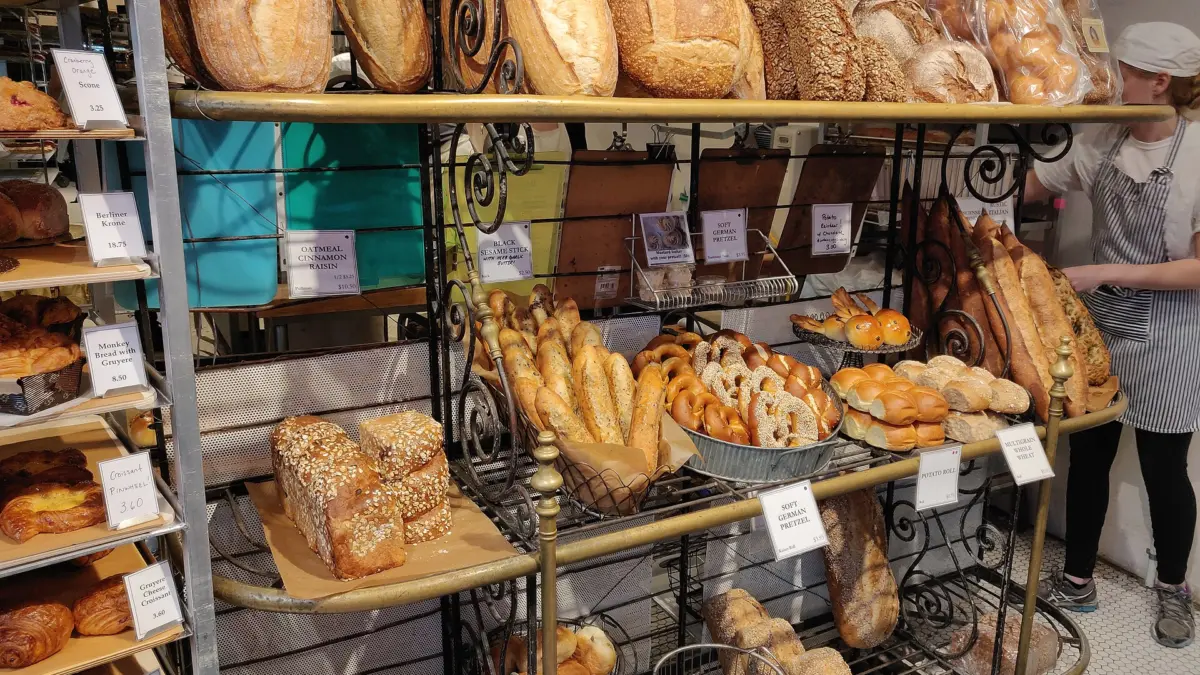
That was the worst winter of my life. It was also, though I didn’t know it yet, the start of a better one. I had been laid off from a warehouse job the month before. That spring I started working early mornings at a bakery on Main Street, mostly because the owner, Mrs. Petrakis, didn’t mind that I had to bring Nora in some days and let her sit at the back table with a roll and a coloring book.
I turned out to be good at bread. Better than good, according to Mrs. Petrakis, who was not generous with compliments. When she retired four years later, she sold me the shop on terms I could actually manage, and she still comes in every Saturday to tell me my baklava needs more honey.
I never forgot what the woman in scrubs told me. I paid it forward the way you’d expect: covering a coffee here, a birthday cake there, slipping an extra loaf into the bag of an older man who always counted out his change in nickels. None of it felt like enough. The receipt stayed in my wallet, getting softer at the folds.
The Woman at the Counter
Last Thursday, a little after six in the evening, the bell over the door rang and a woman came in looking frazzled. She was older than I remembered, with gray coming in at her temples, but the first thing I noticed was the navy scrubs. The second thing was the hospital badge, flipped around backward on its lanyard.
She ordered a dozen cupcakes for her grandson’s class party the next morning. She’d forgotten, she said, and every grocery store bakery was sold out. When I rang her up, she tapped her card, and the machine beeped that particular beep.
Declined.
“Oh, for heaven’s sake,” she said. “They changed my card last week and I never activated the new one. Let me find it, it’s here somewhere.” She started digging through her bag, and I could see her doing the math on whether she had time to go home and come back.
I’m not sure what my face looked like. Nora, who is eight now and was doing her homework at the same back table she sat at when she was two, told me later that I looked “like I saw a ghost, but a nice one.”
“It’s covered,” I said.
She looked up. “No, no. You don’t have to do that.”
“I do, actually,” I said. “I’ve been waiting six years to do it.”
The Receipt
She didn’t remember me. Of course she didn’t. To her I was one tired dad on one late night out of thousands of late nights.
So I took out my wallet and unfolded the receipt and set it on the counter between us. The ink had faded to a pale gray, but you could still read it. The store name. The date. $61.40.
She picked it up and read it twice. Then she put her hand over her mouth.
“The lasagna,” she said. “You’re the lasagna guy.”
“I’m the lasagna guy.”
I called Nora over and introduced them. I told the woman, whose name it turned out is Denise, that the toddler with the ear infection was now the third-grader standing in front of her. Nora shook her hand very seriously and said, “Thank you for my diapers,” which made all three of us laugh until Denise had to sit down.
She told me she’d retired from pediatrics two years ago and now volunteers at the hospital on Thursday evenings, which is why she still had the scrubs. She said she’d done the same thing in that grocery line maybe a dozen times over the years and never once heard what happened afterward.
“You don’t do it to find out,” she said. “But it’s nice to find out.”
What’s on the Wall Now
Denise comes in every Thursday after her volunteer shift. She pays for her coffee, and I let her, because she made it very clear that if I tried to comp it she’d take her business to the chain place by the highway.
The receipt is in a small frame on the wall behind the register, next to my business license and a crayon drawing of a cupcake Nora made when she was five. Under it there’s a little sign in my handwriting.
It says: “Someday you’ll be standing behind somebody having a night like this. Pay it to them.”
People ask about it all the time. I tell them the story. Last month, a teenager who’d heard it from a friend came in and quietly paid for the order of the woman in front of her, then left before anyone could say thank you.
I didn’t know the girl. I don’t need to. I know exactly where she learned it.
This story is fiction. The characters and events are invented, and any resemblance to real people is coincidental.