Like Father
Part 1: The Delivery Room
My daughter was born at 4:52 on a Thursday morning in March, after nineteen hours of labor. She came out screaming, red-faced and furious, with her tiny fists balled up like she was ready to fight the whole world.
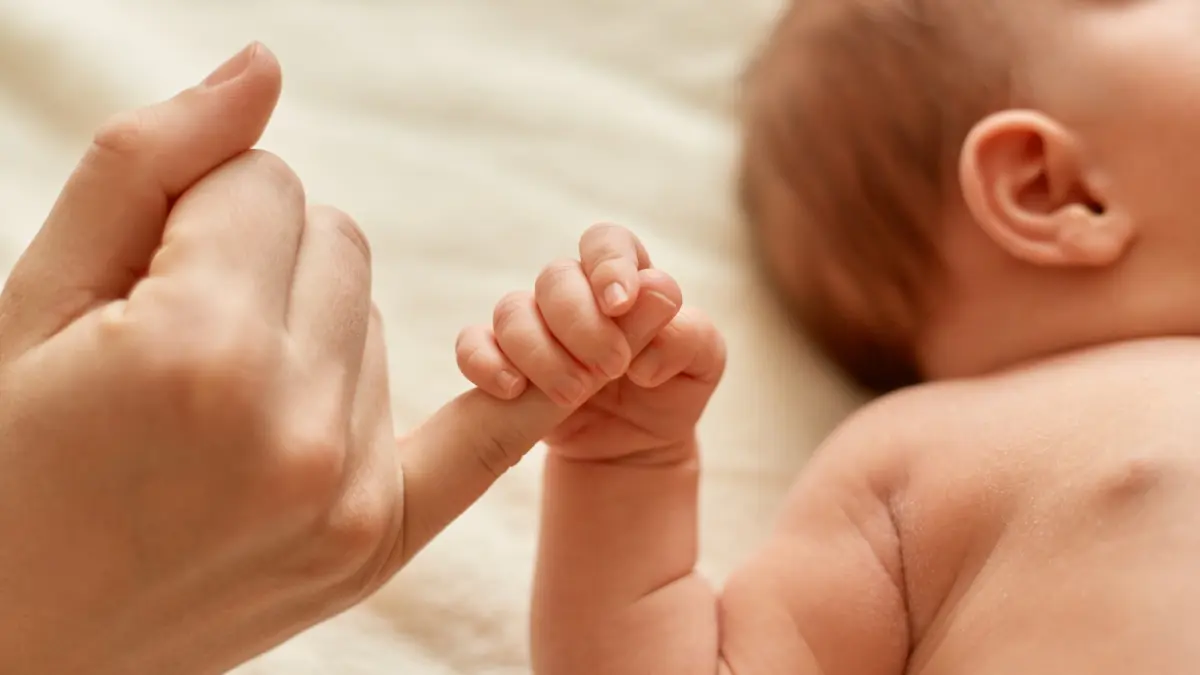
The nurse laid her on my chest. She was warm and wet and impossibly small.
I looked down at her, and I started to cry.
“Hi, baby,” I whispered. “Hi, Milana. I’m your mama.”
I didn’t notice the birthmark right away. I didn’t notice anything except her. Her little scrunched-up nose. Her mouth, open and wailing. Her tiny fingers, which wrapped around my thumb and squeezed.
She was the most beautiful thing I’d ever seen.
Then I heard my husband’s voice from the foot of the bed.
“What the hell is that on her head?”
I looked up. Mark was standing next to the nurse, staring down at our daughter. His face had changed. All the excitement, all the nervous joy he’d had for nineteen hours, was gone.
He looked horrified.
I looked down at Milana again. And then I saw it.
On the left side of her forehead, right at her hairline, there was a dark patch of skin. Deep brown, almost black. It was about the size of a quarter, oval-shaped, slightly raised. And growing out of it was a thick tuft of black hair, much darker and coarser than the soft wisps on the rest of her head.
“It’s a birthmark,” the nurse said gently. She was an older woman named Rhonda, with gray curls and reading glasses on a chain. “A congenital nevus. A mole she was born with. They’re pretty common. The doctor will take a look at it.”
“Is it dangerous?” I asked.
“Usually not,” Rhonda said. “The pediatrician will check it out. Dermatology may want to see her in a few weeks. But she’s healthy. Look at those lungs.”
Milana screamed again, right on cue.
I laughed through my tears. I didn’t care about the birthmark. Not even a little. She was here. She was healthy. She was ours.
But Mark didn’t laugh.
He was still staring at the dark patch on our daughter’s forehead. His jaw was tight. His hands were shaking.
“Mark?” I said. “Honey? Do you want to hold her?”
He didn’t move.
“No,” he said. “I don’t want to hold her.”
Part 2: “Can’t Be Mine”
My name is Anya Sutter. I’m thirty-four years old, and I’m a pharmacist at a hospital in Sacramento, California. I’ve been married to Mark for almost eight years.
We met at a friend’s wedding in Napa. He was charming and funny and handsome, with a big white smile and perfect hair and a tailored suit. He worked in commercial real estate sales. He knew how to make people like him. He made me like him in about ten minutes.
He also cared a lot about how things looked. I noticed that early. His car was always spotless. His clothes were always pressed. He went to the gym every morning at five. He got his hair cut every two weeks.
I thought it was just discipline. I thought he liked nice things.
I didn’t know yet that it was something else.
We tried to have a baby for three years. Three years of tests and doctor’s appointments and disappointment. Two miscarriages. Mark wanted a child as much as I did. More, maybe. He’d cry with me every time a test came back negative.
When I finally got pregnant with Milana, he was over the moon. He painted the nursery himself. Pale yellow, because we didn’t want to know if it was a boy or a girl. He put the crib together at two in the morning. He read pregnancy books. He talked to my belly every night.
“Hey, little one,” he’d say. “It’s Daddy. I can’t wait to meet you.”
And now he was standing at the foot of my hospital bed, refusing to touch her.
The nurse took Milana to the warming table to clean her up and weigh her. As soon as she was out of earshot, Mark leaned close to me.
“Anya,” he said quietly. His voice was cold. “That baby is unattractive.”
I stared at him.
“What did you just say?”
“Look at her,” he said. “That thing on her head. The hair. She looks—” He stopped. “A baby this unattractive can’t be mine.”
I felt like he’d slapped me.
“How can you say that?” I said. “She’s ten minutes old. She’s our daughter. Who cares what kind of birthmark she has?”
“I care,” Mark said. “Everyone’s going to care. What are people going to say? Everyone’s going to stare at me whenever they see me with her. My clients. My boss. The guys at the gym.”
“Mark—”
“I want a DNA test,” he said.
The room went very quiet. Across the room, Rhonda the nurse looked up from the warming table. She’d heard.
“A DNA test,” I repeated.
“You must have cheated on me,” Mark said. “That’s the only explanation. Nobody in my family has anything like that. Nobody. How else do you explain us having a daughter who looks like this?”
I couldn’t speak. I couldn’t breathe.
Eight years of marriage. Three years of trying. Two miscarriages. Nineteen hours of labor. And the first thing my husband said about our daughter was that she couldn’t be his because she wasn’t pretty enough.
“Mark,” I said. My voice was shaking. “I’m not agreeing to a DNA test. This is ridiculous. I can’t believe you’re questioning whether Milana is your daughter.”
He looked at me for a long moment.
“Then don’t expect me to come home,” he said.
He picked up his jacket from the chair by the window. He walked out of the delivery room. He didn’t look at Milana once.
The door swung shut behind him.
Rhonda came over and put her hand on my shoulder.
“Honey,” she said quietly. “Do you want me to call someone for you?”
Part 3: Alone
He wasn’t joking.
While I was still in the hospital, Mark went back to our house in East Sacramento and packed his things. I know because my best friend, Priya, went by to pick up my going-home bag, and his closet was empty. His toothbrush was gone. His gym bag was gone. His fancy espresso machine was gone.
He’d left the crib. And the pale yellow nursery. And a little stuffed giraffe he’d bought the week before, still with the tag on it.
He didn’t come to pick us up when we were discharged two days later.
Priya drove us home instead. She buckled the car seat into the back of her Honda with shaking hands and kept looking at me in the rearview mirror like she wanted to say something and didn’t know what.
When we got home, I carried Milana into the nursery. I sat down in the rocking chair Mark had assembled. I held her against my chest and rocked her, and I cried so hard she started crying too.
He didn’t call. He didn’t text to ask how we were. He didn’t ask how Milana was eating, or sleeping, or whether she was okay.
Three days after we got home, I finally got a text from him.
“Don’t send pictures of that baby to the family group chat until I know whether she’s mine. And honestly, the whole family is going to be shocked that the baby has such a horrible birthmark.”
I read it four times.
That baby.
Not Milana. Not my daughter. Not our girl.
That baby.
For weeks, I called him. I left voicemails. I sent texts. I begged him to come home, to just look at her, to hold her for five minutes.
“She has your eyes,” I texted him once. “Your exact eyes. Please just come see her.”
He didn’t respond.
The only time he answered was when I asked him where he was staying. He said he was at his friend Derek’s condo in midtown. He said he wouldn’t come home until I agreed to the DNA test.
“Prove she’s mine,” he wrote. “Then we can talk.”
I was so tired.
I wasn’t sleeping. Milana woke up every two hours to eat. I was healing from nineteen hours of labor and a second-degree tear. I was alone. My mom lives in Seattle and couldn’t come down until April. Priya came over every day after work. But at three in the morning, with a screaming newborn and no husband, I was alone.
And somewhere in those long, sleepless nights, something changed in me.
I stopped wanting Mark to come home.
I’d sit in the rocking chair at three in the morning with Milana asleep on my chest, and I’d look down at her little face. At the dark birthmark on her forehead, with its tuft of soft black hair. I’d touch it with one finger, very gently.
It was soft. Like velvet.
And I’d think about the man who’d stood at the foot of my bed and called her unattractive. Who’d walked out of the delivery room without looking at her. Who’d called her “that baby.”
After almost eight years of marriage, I realized I had never truly known Mark.
I didn’t need a DNA test anymore. I knew Milana was his. I’d always known.
What I didn’t know was who he really was.
Part 4: The Dermatologist
When Milana was four weeks old, I took her to see a pediatric dermatologist at UC Davis Children’s Hospital. The pediatrician had referred us.
Her name was Dr. Eleanor Hennessy. She was in her sixties, small and brisk, with short white hair and kind blue eyes behind red-framed glasses. She’d been treating children’s skin conditions for thirty years.
She looked at Milana’s birthmark very carefully. With a magnifying lens. Then with a special light. She measured it. She took photographs.
“This is a congenital melanocytic nevus,” she said. “A medium-sized one. With hypertrichosis, which is just a fancy word for the extra hair. It’s very common. About one in a hundred babies is born with some kind of congenital mole.”
“Is it dangerous?”
“For a nevus this size, the risk of anything serious is very low,” Dr. Hennessy said. “We’ll monitor it. Check it every six months or so. Take pictures. Make sure it’s not changing in any worrying way.” She smiled. “But for now, she’s perfectly healthy. And she’s perfectly beautiful.”
“What about removing it?” I asked. My voice was quiet. “Her father wants it removed. And the hair cut off.”
Dr. Hennessy looked at me over her red glasses.
“Removal is an option,” she said carefully. “Later. If there’s a medical reason, or if Milana herself wants it removed when she’s older. It’s surgery. It leaves a scar. For a baby this age, with a nevus this size, in this location, I wouldn’t recommend it unless something changed medically.”
“So it’s not necessary?”
“Not medically,” Dr. Hennessy said. “No.”
She looked down at Milana, who was lying on the exam table kicking her legs and staring at the ceiling light.
“Can I ask you something?” Dr. Hennessy said. “Is the father’s family from around here?”
“His mom lives in Roseville. Why?”
“Congenital nevi can run in families,” Dr. Hennessy said. “Not always. But sometimes. Has anyone in your husband’s family ever had one?”
“No,” I said. “Mark said nobody in his family has anything like it.”
Dr. Hennessy nodded slowly. She didn’t say anything else.
But I remembered that question. I thought about it all the way home.
Part 5: Lydia
Mark’s mother, Lydia Sutter, lives in a small yellow house in Roseville, about twenty minutes from us. She’s sixty-two, a retired elementary school librarian. She’s quiet and gentle, with gray hair she wears in a long braid and reading glasses she’s always losing.
Mark’s father, Gary, died six years ago. Heart attack. I only met him a handful of times before that. He was a big, loud man who’d been a high school football coach. He made jokes about everybody’s appearance. My weight. Mark’s hair. Lydia’s cooking. Everybody laughed, because you laughed when Gary made a joke.
I didn’t like him much. I never told Mark that.
Lydia didn’t know about any of it. Mark had told her the baby was born, and that I was “being difficult,” and that he was staying with Derek “for a little while.” That was all.
She’d sent flowers to the hospital. She’d called me twice and gotten my voicemail, because I was too exhausted and too ashamed to pick up.
When Milana was five weeks old, Lydia showed up at my front door with a casserole dish wrapped in foil.
“I’m sorry to just come by,” she said. “Mark said you didn’t want visitors. But I haven’t even seen my granddaughter yet. And I made you lasagna.”
I stood in the doorway in my sweatpants and my milk-stained T-shirt and burst into tears.
Lydia came inside. She put the lasagna in the fridge. She made me a cup of tea. Then she sat down next to me on the couch and asked, very gently, “Anya, honey, what’s going on?”
So I told her.
The delivery room. “A baby this unattractive can’t be mine.” The DNA test. The empty closet. The text about the family group chat. “That baby.”
Lydia didn’t say anything the whole time. She just listened, with her hand over her mouth.
When I finished, she asked, very quietly, “Can I see her?”
I went into the nursery and picked up Milana from her crib. She was awake, looking around with her big dark eyes. I carried her into the living room and put her in Lydia’s arms.
Lydia looked down at her granddaughter.
At her little face. At her dark eyes, which were exactly the shape of Mark’s. At the birthmark on her forehead, with the soft tuft of black hair.
And Lydia Sutter started to cry.
Not little tears. Big, shaking sobs. She held Milana against her chest and rocked her and cried so hard her whole body shook.
“Oh, sweetheart,” she kept saying. “Oh, my sweet girl. Oh, my God.”
I didn’t understand.
“Lydia? What’s wrong?”
She looked up at me. Her face was wet.
“She looks just like him,” Lydia whispered. “She looks exactly like Mark did. When he was born.”
I stared at her.
“What do you mean?”
Lydia didn’t answer right away. She just kept looking at Milana’s forehead. At the birthmark. At the little tuft of hair.
“Anya,” she said finally. “Mark had one too.”
Part 6: The Scar
The room went silent.
“What?” I said.
“Mark had a birthmark,” Lydia said. “Just like this one. In the same place. Left side of his forehead, right at the hairline. With the dark hair growing out of it.” She swallowed hard. “Almost exactly the same size.”
“That’s impossible,” I said. “He told me nobody in his family had anything like it. He said it in the delivery room.”
“He doesn’t know,” Lydia said quietly. “He doesn’t remember. He was two and a half when they took it off.”
I sat down hard on the couch next to her.
“They took it off?”
Lydia nodded. She was still holding Milana. She was still crying.
“Gary made me,” she said. “Mark’s father. He hated it. From the day Mark was born. He said it made his son look like a freak. He said kids would make fun of him. He said it was embarrassing to take him out in public.” She wiped her eyes. “He wouldn’t let me take Mark to church. Or to the grocery store. Not without a hat. A little blue knit hat, pulled down over the birthmark. Even in the summer.”
“Oh my God.”
“When Mark was two and a half,” Lydia said, “Gary found a plastic surgeon in San Francisco who would remove it. The doctor said it wasn’t medically necessary. He said it would leave a scar. Gary didn’t care. He paid cash.”
She closed her eyes.
“Mark was in the hospital for two days. He had stitches across his forehead for three weeks. He cried every night. He didn’t understand why his head hurt.”
I thought about my husband.
About the thin white scar right at his hairline, on the left side of his forehead. The one I’d seen a thousand times. The one I’d kissed. The one he always covered with his hair, styled just right, every single morning.
“Mark told me that scar was from falling off a swing,” I said slowly. “When he was little.”
“That’s what Gary told him,” Lydia said. “When Mark was five and asked about it. Gary said he fell off the swing set at the park and hit his head. And I let him believe it.” She looked down at Milana. “I let him believe it his whole life.”
“Why?” I asked. “Why didn’t you ever tell him?”
Lydia was quiet for a long time.
“Because I was ashamed,” she said finally. “I should have stopped Gary. I should have said no. Mark was my baby, and he was perfect, and I let his father cut him open because his father didn’t like how he looked.”
She held Milana closer.
“And then Mark grew up,” she said, “and he was so handsome, and so careful about how he looked. The gym every morning. The haircuts. The clothes. The car. Everything had to be perfect. And I watched him become exactly like his father. Worrying about what people would think. Worrying about being stared at.” She shook her head. “And I knew where it came from. I knew. And I never told him.”
Part 7: The Photographs
Lydia came back the next day with a shoebox.
It was old and faded, the kind that used to hold winter boots. She set it on my kitchen table and opened it.
Inside were photographs. Dozens of them. Old ones, from the early nineties, with the faded colors and white borders of drugstore prints.
They were all of Mark. As a baby.
I picked one up. It was a photo of Lydia in a hospital bed, much younger, with dark hair and no glasses, holding a tiny newborn wrapped in a blue blanket.
The baby had dark eyes. A little scrunched-up nose. A mouth open in a wail.
And on the left side of his forehead, right at the hairline, a dark oval birthmark with a tuft of thick black hair.
I put the photo down on the table. Then I went and got Milana from her bassinet and held her up next to it.
They were identical. The same birthmark. The same spot. The same size. The same little patch of dark hair.
The same eyes.
“I hid these,” Lydia said quietly. “Gary wanted me to throw them away. After the surgery. He said he didn’t want any pictures of Mark ‘looking like that.’ I told him I burned them.” She touched the edge of the shoebox. “I kept them in the back of my closet for thirty-two years.”
There were more. Mark at three months, in a bouncy seat, wearing the little blue knit hat. Mark at six months, at Christmas, with the hat pulled low over his forehead. Mark at one year, at his birthday party, with the hat on even though it was July.
Mark at two and a half, in a hospital bed, with a white bandage wrapped around his head. Crying.
I couldn’t look at that one for very long.
At the bottom of the shoebox was a folded piece of paper.
It was a medical record. Photocopied, faded. From a pediatric hospital in San Francisco, dated 1994.
“Patient: Mark Gary Sutter. Age: 2 years, 7 months. Diagnosis: Congenital melanocytic nevus, medium, left frontal scalp, with hypertrichosis. Procedure: Surgical excision with primary closure. Indication: Cosmetic, at parental request. Note: Surgeon advised parents that excision is not medically indicated. Parents elected to proceed.”
At parental request.
Not medically indicated.
I sat at my kitchen table for a long time, holding that piece of paper. Milana was asleep in my arms. Lydia was crying quietly across from me.
“Anya,” Lydia said finally. “What are you going to do?”
I looked down at my daughter. At her birthmark. At her tuft of black hair.
“I’m going to agree to the DNA test,” I said.
Lydia stared at me. “Why? You know she’s his. Look at her. Look at these pictures.”
“I know she’s his,” I said. “But he doesn’t. And he’s not going to believe me. He’s not going to believe you either. Not unless it’s on paper. From a lab.”
I looked at the medical record in my hand.
“So I’m going to give him paper,” I said. “All of it.”
Part 8: The Test
I texted Mark that night.
“Fine. I’ll do the DNA test. But you have to do it properly. Through a real lab. Not some at-home kit. And when the results come, you have to come home to open them.”
He texted back in less than a minute.
“Deal.”
We used an accredited lab in Sacramento. I took Milana in for a cheek swab on a Tuesday morning. Mark went separately on Wednesday. We didn’t see each other. The lab said the results would be mailed to the address on file in about a week.
The address on file was our house. I made sure of that.
While we waited, I made some phone calls.
The first one was to a family law attorney. Her name was Carmen Ibarra. She had an office downtown near the Capitol, and Priya’s sister had used her for her divorce.
I told Carmen everything. The delivery room. The empty closet. “That baby.” The DNA test. The birthmark. The photographs.
Carmen listened. When I finished, she said, “Anya, what do you want?”
I’d thought about that question for six weeks. At three in the morning, in the rocking chair, with Milana on my chest.
“I want a divorce,” I said. “And I want to make sure he can never, ever have her birthmark removed without my consent. Or hers.”
Carmen was quiet for a moment.
“We can do both of those things,” she said. “California is a no-fault state. Either spouse can file. And for custody, we can ask the court to give you sole legal custody for medical decisions. Given what he’s said, and given that he hasn’t seen the child since the day she was born, I think a judge would be very interested in that.”
“How long will it take?”
“The divorce itself takes at least six months in California,” Carmen said. “But I can have the petition drafted and filed this week. And I can ask for temporary orders right away.”
“Do it,” I said.
The second phone call was to Dr. Hennessy, the dermatologist.
I asked her if she would write a letter. A short one. Explaining what Milana’s birthmark was. That it was common. That it was not dangerous. That removal was not medically necessary.
And that congenital nevi can run in families.
“Of course,” Dr. Hennessy said. “I’ll have it to you by Friday.”
The third phone call was to Lydia.
“Will you write something too?” I asked. “Just a letter. To Mark. You don’t have to. But I think he needs to hear it from you.”
Lydia didn’t answer for a long time.
“I’ve been writing it in my head for thirty-two years,” she said finally. “I’ll have it by Friday too.”
Part 9: The Envelope
The DNA results arrived the following Thursday. A thick white envelope from the lab, addressed to both of us.
I didn’t open it. I didn’t need to.
Instead, I opened it very carefully with a kitchen knife, slid out the results, and put them back. Then I added three more things.
Dr. Hennessy’s letter, on UC Davis Children’s Hospital letterhead.
The faded photocopy of Mark’s medical record from 1994.
And a sealed envelope from Lydia, with “Mark” written on the front in her careful librarian’s handwriting.
Then I put the divorce petition on top. Carmen had filed it that morning. It had a court stamp in the corner.
I sealed it all back up in a big manila envelope. On the front, I wrote: “DNA Results.”
I called Mark that afternoon.
“The results came,” I said. “They’re here. At the house. In an envelope.”
“What do they say?”
“I don’t know,” I lied. “I didn’t open it. You said you wanted to open it yourself.”
There was a pause on the line.
“I’ll be there at seven,” he said.
At six-thirty, Lydia came over. She didn’t come inside. She sat in her car across the street, in front of our neighbor Bonnie’s house. Bonnie, who was seventy-one and had lived on our street for forty years, came out and sat in the passenger seat of Lydia’s car with her.
“Just in case,” Lydia told me on the phone. “In case you need me.”
I put Milana in her crib in the nursery. She was asleep, wearing a pale pink onesie with little ducks on it. Her birthmark was right there on her forehead, with its soft black tuft of hair.
I didn’t cover it. I didn’t put a hat on her.
Part 10: Mark
He came at 7:04.
He knocked. On the door of his own house. He’d left his key on the kitchen counter when he moved out.
I opened it.
He looked good. That was the first thing I noticed. He looked like he’d been sleeping. Like he’d been going to the gym. His hair was cut and styled. His shirt was pressed. He looked like nothing at all had happened.
I looked like a woman with a seven-week-old baby who hadn’t slept more than three hours in a row since March.
“Anya,” he said.
“Mark.”
He walked into the living room. He didn’t ask about Milana. He didn’t look toward the nursery. He didn’t even glance down the hallway where her door was half open.
He didn’t want to look at her.
“Where is it?” he asked.
I handed him the big manila envelope.
He tore it open. He pulled out the stack of papers. On top was the divorce petition. But it was folded, so he didn’t see it at first. He shuffled through the pile until he found the lab results.
He read them. Twice.
“Probability of paternity: 99.9998%.”
He let out a long breath. I watched his shoulders drop.
“So she really is mine,” he said.
He didn’t sound happy. He didn’t sound relieved. He sounded annoyed. Like he’d been hoping for a different answer that would let him off the hook.
Then he glanced down the hallway toward the nursery. Just for a second.
“Okay,” he said. “So she’s mine. Then we need to cut off that hair. And get the birthmark removed. As soon as possible.”
I stared at him.
“I’m not letting her grow up looking like that,” Mark said. “People are going to stare at me all the time. I’ve already looked it up. There’s a guy in San Francisco who does it. Plastic surgeon. He can do it before she’s a year old. She won’t even remember.”
I couldn’t believe my ears.
Even after he knew. Even after a lab had confirmed in black and white that Milana was his daughter, the very first thing he wanted was to cut her open. To take away the thing that made her look like her.
So that people wouldn’t stare at him.
I didn’t say anything for a long moment. I just looked at my husband. At his perfect hair, styled carefully to the left. Covering the thin white scar at his hairline.
Then I smiled.
“There’s something else in the envelope,” I said. “Look inside again.”
Part 11: What Was in the Envelope
He frowned. He looked down at the stack of papers in his hands. He shuffled through them.
The first thing he pulled out was Dr. Hennessy’s letter. He scanned it fast.
“Congenital melanocytic nevus… common… low risk… surgical removal not medically indicated…” He looked up at me. “So? A doctor says it’s not dangerous. That doesn’t mean she has to keep it.”
“Keep looking,” I said.
The next thing he pulled out was the photocopy. The faded medical record from 1994.
I watched him read the first line.
“Patient: Mark Gary Sutter.”
He stopped. He looked up at me. Then back down at the paper.
“Age: 2 years, 7 months. Diagnosis: Congenital melanocytic nevus, medium, left frontal scalp, with hypertrichosis.”
I watched all the color drain out of his face.
“Procedure: Surgical excision with primary closure. Indication: Cosmetic, at parental request. Note: Surgeon advised parents that excision is not medically indicated. Parents elected to proceed.”
His hand went up to his forehead. To the left side. To the scar at his hairline.
He didn’t even seem to realize he was doing it. His fingers just found the thin white line under his hair, the way they’d probably found it ten thousand times in his life without his thinking about it.
“What is this?” he said. His voice was very quiet. “What is this, Anya?”
“Keep looking,” I said.
He pulled out the photographs.
I’d picked three of them from Lydia’s shoebox. The one of Lydia in the hospital bed, holding newborn Mark in his blue blanket. The one of baby Mark at six months, at Christmas, in his little blue knit hat. And the one of two-and-a-half-year-old Mark in a hospital bed, with a white bandage around his head, crying.
He looked at the first one for a long time. At the baby in the blanket. At the dark birthmark on the left side of his tiny forehead. At the tuft of black hair.
His hands started to shake.
Then he pulled out the divorce petition. He unfolded it. He saw his name. My name. The court stamp in the corner.
“Petition for Dissolution of Marriage. Petitioner: Anya Sutter. Respondent: Mark Sutter.”
And below it, the request for temporary orders. Sole legal custody of the minor child. Including all medical decisions.
“What the hell did you do?!” Mark screamed.
He screamed so loud the windows rattled. So loud that Milana woke up in the nursery and started crying. So loud that, ten seconds later, there was a frantic knocking on our front door.
It was Bonnie, our seventy-one-year-old neighbor. She’d heard him all the way across the street. She was standing on the porch in her cardigan with her phone in her hand.
“Anya?” she called through the door. “Anya, honey, are you all right? Do you need me to call someone?”
Part 12: Lydia
“I’m okay, Bonnie,” I called back. “Thank you. I’m okay.”
But Bonnie didn’t leave. And behind her, coming up the front walk, was Lydia.
I opened the door. Lydia walked past Bonnie into the house. She stood in the doorway of the living room in her long gray braid and her cardigan, and she looked at her son.
Mark stared at her. He was still holding the photographs. His face was white.
“Mom,” he said. “What is this? What is all this?”
“It’s the truth, Mark,” Lydia said quietly. “It’s what I should have told you thirty-two years ago.”
“What are you talking about?”
“You had a birthmark,” Lydia said. “Just like Milana’s. In the same place. With the same hair. You were born with it. You had it for two and a half years.”
Mark shook his head.
“No,” he said. “No. That’s not— I fell off a swing. When I was little. That’s what Dad said. That’s where the scar came from.”
“Your father lied to you,” Lydia said. “And I let him.”
She came into the room. She sat down on the edge of the couch, across from Mark.
“Your father hated it,” she said. “That birthmark. From the day you were born. He said it made you look like a freak. He made me put a hat on you every time we left the house. He wouldn’t let me take you to church. Or to the park. Or to the grocery store. Not without the hat.”
Mark was staring at the photograph of himself at six months. In the little blue knit hat.
“He said people would stare,” Lydia said. “He said people would stare at him. Because of you.”
Mark looked up at her. His eyes were wide.
That was exactly what he’d said. In the delivery room. And again, five minutes ago, in our living room.
People are going to stare at me.
“When you were two and a half,” Lydia said, “he found a surgeon in San Francisco. And he paid cash. And they cut it off. You were in the hospital for two days. You cried every night for three weeks. You kept touching the stitches and asking me why your head hurt.”
She picked up the last photograph. The one of little Mark in the hospital bed, with the bandage around his head.
“I’ve never forgiven myself,” she said. “For letting him do that to you. For not saying no. You were perfect, Mark. You were my beautiful baby, and there was nothing wrong with you, and I let him cut you open because he was embarrassed.”
Mark didn’t say anything. He just sat there, holding the photographs.
Lydia reached into the envelope on the coffee table and pulled out the last thing inside. The sealed letter with “Mark” on the front in her handwriting.
She held it out to him.
“I wrote this for you,” she said. “You don’t have to read it now. But I need you to have it.”
He took it. His hands were shaking so badly he almost dropped it.
Part 13: The Nursery
Milana was still crying in the nursery.
I went and got her. I picked her up out of the crib and held her against my shoulder and patted her back until she calmed down. She was wearing her pink duck onesie. Her birthmark was right there on her forehead.
I carried her back into the living room.
Mark looked up when I came in. He looked at Milana. Really looked at her. For the first time since the delivery room.
At her dark eyes, which were his eyes. At her little scrunched-up nose. At the dark oval birthmark on the left side of her forehead, with its soft tuft of black hair.
At the same spot where his own scar was.
He stood up. He walked toward me very slowly. He stopped about two feet away.
“Can I—” His voice cracked. “Can I hold her?”
I looked at him for a long time.
I thought about saying no. I thought about all those nights at three in the morning, alone in the rocking chair. “That baby.” “A baby this unattractive can’t be mine.” “We need to cut off that hair.”
But then I looked at Lydia, sitting on the couch with tears running down her face. And I thought about a two-and-a-half-year-old boy in a hospital bed in San Francisco, with a bandage around his head, crying because he didn’t understand why it hurt.
“You can hold her,” I said. “Sit down first.”
He sat down on the couch. I put Milana in his arms.
He held her awkwardly at first. Stiff. Like he was afraid she’d break. Milana looked up at him with her big dark eyes. She squirmed a little. Then she settled.
Mark looked down at her face for a long time.
Then, very slowly, he reached up with one finger. And he touched her birthmark.
Gently. The way I did at three in the morning. He ran his fingertip over the soft dark skin and the tuft of black hair.
“It’s soft,” he whispered. “I didn’t know it would be soft.”
Then his other hand went up to his own forehead. To his scar. To the place where his own birthmark used to be.
He sat there on the couch, touching his daughter’s birthmark with one hand and his own scar with the other.
And my husband, who cared so much about how things looked, who went to the gym every morning at five and got his hair cut every two weeks and never once let anyone see him cry, started to sob.
He cried so hard his shoulders shook. He cried so hard Milana started crying too. He held her against his chest and rocked back and forth on our couch and cried like a little boy.
“I’m sorry,” he kept saying. “I’m sorry. I’m sorry. I’m so sorry.”
I don’t know who he was saying it to. Me. Milana. Lydia. The little boy in the blue knit hat.
Maybe all of us.
Part 14: What Came After
I want to tell you that Mark moved back home that night. That we hugged and forgave each other and became a happy family.
That’s not what happened.
He left that night. He went back to Derek’s condo. He took Lydia’s letter with him, still sealed.
But before he left, he stood in the doorway of the nursery for a long time and watched Milana sleep. And then he turned to me and said something I didn’t expect.
“Don’t let anyone cut it off,” he said. “Not ever. Not unless she wants it gone. Promise me.”
I looked at him.
“I already filed for that,” I said. “It’s in the papers.”
He nodded slowly. “Good,” he said. “Good.”
I didn’t drop the divorce.
People sometimes ask me why. They say, he cried, he apologized, he was clearly traumatized as a child. Doesn’t that change things?
It does change things. It explains things. It helps me understand him.
But it doesn’t undo what he did.
He walked out of the delivery room without looking at his daughter. He left me alone with a newborn for seven weeks. He called her “that baby.” He said she was too unattractive to be his. And the very first thing he said when he found out she was his was that he wanted to cut her open.
I can understand all of that. I can even forgive some of it, someday.
But I can’t be married to it.
The divorce was finalized in October. Seven months after Milana was born.
I got sole legal custody, including all medical decisions. Mark got visitation. At first, it was supervised. Two hours on Saturdays, at Lydia’s house in Roseville, with Lydia there.
Carmen said the judge was moved by the photographs. And by Dr. Hennessy’s letter. And by Lydia, who testified at the hearing about the little blue hat and the surgeon in San Francisco.
“I’ve never seen a grandmother testify against her own son that way,” Carmen told me afterward. “She was protecting her granddaughter. From what happened to him.”
Part 15: The Letter
Mark started seeing a therapist that summer. A man named Dr. Felix Osei, who specialized in childhood trauma and body image.
He went every week. He told me later that he didn’t open Lydia’s letter for two months. He kept it in his car, in the glove box. He’d take it out at red lights and stare at it and put it back.
Dr. Osei finally asked him to bring it to a session. To open it there. Together.
So he did.
He showed it to me, months later. On a Saturday afternoon at Lydia’s house, while Milana napped in a portable crib in the living room. He took it out of his wallet, where he kept it now, folded into a small square.
“You can read it,” he said. “If you want.”
It was short. Lydia’s handwriting, small and careful.
“Mark,
You were born on a Tuesday in April at 6:14 in the morning. You weighed seven pounds and four ounces. You had a dark birthmark on your forehead with a little patch of black hair, and the first time I saw it, I thought it was the most beautiful thing I’d ever seen. It looked like a tiny star.
Your father didn’t see a star. He saw something to be ashamed of. And I let him convince me that he was right.
I’m sorry for the hat. I’m sorry for the surgery. I’m sorry for the lie about the swing. I’m sorry that you grew up believing there was something wrong with your face, and that people would stare, and that you had to look perfect to be loved.
There was never anything wrong with your face. Not before the surgery and not after. You were always my beautiful boy.
Your daughter has your star. Please don’t let anyone take it from her the way they took it from you.
All my love,
Mom”
I handed it back to him. He folded it up very carefully and put it back in his wallet.
“I read it every day,” he said quietly. “Every morning. Before the gym.”
“Do you still go to the gym every morning?”
He laughed a little. “Three times a week now,” he said. “Dr. Osei says I don’t have to look perfect. He says I’m allowed to have a bad hair day.”
“Have you had one?”
“Not yet,” Mark said. “But I’m working on it.”
Part 16: The Star
Milana is five now.
Her birthmark is still there, on the left side of her forehead, right at her hairline. It’s grown a little as she’s grown. The tuft of hair is longer now, dark and thick. Usually, I braid it into the rest of her hair. Sometimes she wears it in a little pigtail of its own, sticking up on the side of her head, and she says it’s her antenna.
Dr. Hennessy still checks it every year. It’s never changed. It’s never been a problem.
Milana calls it her star.
She started calling it that when she was three. Lydia told her the story. About Daddy’s star, when he was a baby. About how it looked like a tiny star, and how Grandma thought it was the most beautiful thing she’d ever seen.
“I have a star,” Milana told her preschool class on the first day. She stood up in front of everybody and pointed at her forehead. “Right here. My daddy had one too. Before.”
“Before what?” one of the kids asked.
“Before somebody took it,” Milana said. “But nobody’s going to take mine.”
Some kids stare. I won’t pretend they don’t.
When she was four, a boy at the park pointed at her and said, “Ew, what’s that on your head?”
I started to walk over. But Milana didn’t need me.
She put her hands on her hips. She looked right at that boy.
“It’s my star,” she said. “It’s special. My daddy had one. And my grandma says it’s the most beautiful thing she ever saw.”
The boy stared at her for a second. Then he shrugged.
“Cool,” he said. “Can I touch it?”
“No,” Milana said. “But you can look at it.”
Mark sees her every other weekend now. No more supervision. Not for three years.
He’s a good dad. Better than I ever expected. He takes her to the zoo and the park and the library. He reads her stories at bedtime. He lets her brush his hair and put clips in it.
On her fifth birthday, last March, we had a party at Lydia’s house in Roseville. A big backyard party with balloons and a bouncy castle and a cake shaped like a star.
After the cake, Milana climbed into her father’s lap.
“Daddy,” she said. “Can I see your star?”
Mark looked at me across the backyard. I nodded.
He lifted his hair off his forehead with one hand. The thin white scar was right there, at his hairline, on the left side. The same spot as Milana’s birthmark.
Milana reached up and touched it. Very gently. With one finger.
“It’s gone,” she said.
“Yeah, baby,” Mark said quietly. “Mine’s gone.”
“Does it make you sad?”
He thought about it for a long time.
“It used to,” he said. “Before you were born, I didn’t even know it was there. I didn’t know I used to have a star.” He looked down at her. “And then you came. And I saw yours. And I got really scared, because I didn’t understand why. And I said some really bad things.”
“I know,” Milana said. “Grandma told me.”
Mark swallowed hard.
“I’m sorry I said those things,” he said. “I’m sorry I wanted to take your star. That was wrong. That was the most wrong thing I’ve ever done.”
Milana looked at him very seriously. Then she reached up and touched her own birthmark. Then she touched his scar again.
“It’s okay, Daddy,” she said. “You can share mine.”
Mark didn’t say anything. He couldn’t. He just pulled his daughter against his chest and held her, in the middle of the backyard, with the balloons and the bouncy castle and the half-eaten star cake.
Across the yard, Lydia was crying. Bonnie, who’d driven over from our old street for the party, was handing her tissues.
I stood by the cake table and watched them. My daughter, with her star on her forehead. My ex-husband, with his scar at his hairline. The same spot. The same face.
Like father, like daughter.
People ask me sometimes what lesson I taught Mark. That night, with the envelope.
I always tell them the truth.
I didn’t teach him a lesson. I just gave him the truth he’d been missing his whole life. The truth his father took from him when he was two and a half years old, and his mother was too afraid to give back.
He’d been taught that there was something wrong with his face. That people would stare. That he had to be perfect to be loved.
The day his daughter was born, he looked at her and saw everything he’d been taught to be ashamed of.
He didn’t know he was looking in a mirror.
Now, every morning, before Milana goes to school, she stands in front of the bathroom mirror while I braid her hair.
And every morning, she asks me the same thing.
“Mama, is my star still there?”
And every morning, I look at it, right there at her hairline, dark and soft and beautiful, with its little tuft of black hair.
“It’s still there, baby,” I tell her. “It’ll always be there.”
“Good,” she says. And she smiles at herself in the mirror.
Nobody’s ever going to take it from her.
Not ever.