The rental car was a white Nissan Altima that smelled like pine air freshener and somebody else’s cigarettes, and I drove it out of the Boise airport at 10:40 on a Tuesday morning with the heater on high and my seabag in the back seat. It was nineteen degrees out. There was old snow piled along the edges of the parking lot, gray with exhaust. I’d been living on a ship off the coast of Central America for seven months, where the coldest it ever got was seventy-eight degrees in the operating room, and I sat at the first red light shivering in my Navy jacket and grinning like an idiot.
Nine days early. Nobody knew.
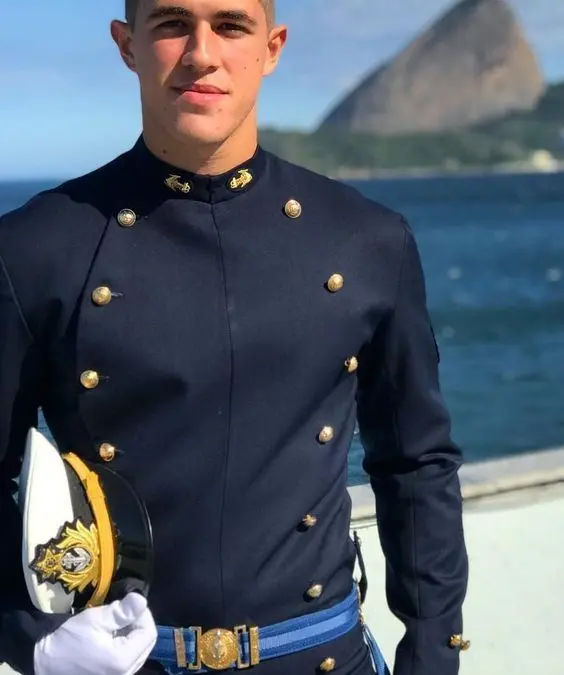
My name is Granger Holm. I’m forty years old. I’m a chief hospital corpsman in the United States Navy. I’ve been in for twenty-one years. My home duty station is Naval Hospital Bremerton, in Washington, on the Puget Sound, where I run a section of the emergency department. But for the last seven months I’d been deployed on the USNS Mercy, the Navy’s hospital ship, on a humanitarian mission. We went down through Guatemala and Honduras, then on to Colombia, setting up clinics in port towns, doing surgeries for people who’d waited ten years for a doctor. I’d seen kids with cleft palates walk off that ship smiling for the first time in their lives. It was the best work I’ve ever done.
We were supposed to come home on December 28th. Then the schedule moved up, the way Navy schedules do, for reasons nobody below the rank of admiral is ever told. We pulled into San Diego on the 15th. I got my leave papers signed by noon and got on a flight to Boise the next morning, with a layover in Salt Lake City, and I didn’t call anybody. I wanted to see my kids’ faces when I walked in the door.
My ex-wife’s name is Henrika. We were married eleven years. We met in Norfolk, Virginia, when I was a second-class corpsman and she was a waitress at a seafood place by the base. She was funny and quick and she had no patience for anybody’s nonsense, including mine. We divorced four years ago. There wasn’t any big betrayal. I was gone too much, and she was tired of raising two kids alone while I was on ships and in Afghanistan and on training rotations in places she couldn’t pronounce. She moved back to her hometown of Nampa, Idaho, about twenty minutes west of Boise, to be near her mother. The court gave her primary custody. I didn’t fight it. I couldn’t take care of two kids from a ship.
Our son, Teodor, is twelve. We named him after my grandfather, who came over from Norway in 1951 and worked the shipyards in Tacoma. Everybody calls him Teo. He’s tall for his age, skinny, with my dark hair and his mother’s green eyes, and he’s the kind of kid who reads the instruction manual before he opens the box. Our daughter, Tessie, is six. She’s small and loud and has white-blond curls and opinions about everything. Her favorite color is pink. Her second favorite color is also pink.
I see them every time I get leave. I fly out to Idaho two or three times a year and stay at the Hampton Inn on Garrity Boulevard, and I take them to the movies and to the Boise River Greenbelt and to this pancake place in Caldwell that Tessie says has the best syrup in the world. I call them every Sunday night at seven o’clock their time, wherever I am in the world. Even on the Mercy, I’d go up to the comms office on Sunday evenings and wait in line with forty other sailors for fifteen minutes on a satellite phone.
And I send money. I send $1,800 a month in child support. It comes out of every paycheck automatically through a military allotment, before I ever see it, straight into Henrika’s checking account. The court only ordered $1,340. I send the extra because Tessie needed glasses last year and Teo needed braces, and because I’m their father, and because I’m never there. I’d rather send too much than not enough.
Last year, Henrika’s boyfriend moved in.
His name is Thatcher Vance. He’s about forty-five. I’d met him once, the previous Easter, for about four minutes in Henrika’s driveway when I dropped the kids off. He was tall, with a blond goatee and expensive-looking sunglasses pushed up on his head, wearing a quarter-zip pullover. He shook my hand too hard and called me “brother.” He told me he was a professional poker player. He said it like it was a career, like dentist.
I’m not a judgmental man. I’ve worked with every kind of person there is. But in twenty-one years, I’ve met a lot of men who called themselves professional gamblers. Every one of them was broke, and every one of them was in debt to somebody.
The kids didn’t talk about him much on the phone. When I asked, Tessie said he was “kind of loud.” Teo just said, “He’s okay, I guess.” Then he changed the subject.
But over the fall, while I was on the Mercy, Teo’s voice started to change on those Sunday calls. It wasn’t puberty, though that was coming too. He started sounding older. Tired. He’d always been a talker on the phone. He’d go on for twenty minutes about Minecraft or a book he was reading or some kid at school who could burp the alphabet. Now he’d answer my questions with one or two words. He stopped asking me for video games for Christmas. He’d always asked me for video games for Christmas, every year since he was five.
And he started asking strange questions.
“Dad, how much does a gallon of milk cost?”
This was in October. I was in the comms office on the ship, with the satellite delay making everything echo.
“I don’t know, buddy. Three, four bucks? Why?”
“Just wondering.”
Two weeks later: “Dad, can you get in trouble for selling stuff if you’re a kid? Like, is it against the law?”
“Selling what kind of stuff?”
“I don’t know. Just stuff. Like your own stuff.”
“I don’t think so. Why? Are you trying to start a business?”
There was a long pause on the line. “Kind of,” he said.
Another time, in November: “Dad, if somebody’s heat doesn’t work, how cold does it have to get before it’s dangerous?”
That one made me sit up. I’m a corpsman. I’ve treated hypothermia in Afghanistan, at nine thousand feet in the Hindu Kush.
“Teo, is your heat not working?”
“No, it’s fine. I was just asking. For a school thing.”
I called Henrika after that call. She didn’t answer. I texted. She called me back two days later, sounding exhausted.
“Everything’s fine, Granger,” she said. “He’s twelve. He’s going through a phase. He’s into all these weird survival videos on YouTube. He watches them all night.”
“He sounds tired, Rika.”
“He’s twelve,” she said again. “They’re all tired. I’m tired. I’ve got to go, I’m on my break.”
She was working at a hotel by the interstate in Nampa, the Holiday Inn Express, at the front desk. She said she’d picked up extra shifts for the holidays.
I let it go. I’m not proud of that. I was four thousand miles away on a ship. I told myself she was their mother and she was there and I wasn’t, and if she said everything was fine, then everything was fine.
In early November, before the ship left Cartagena, I’d ordered Christmas presents online and had them shipped straight to Henrika’s house. I sent two big boxes. In one box there was a new tablet for Teo, a Samsung Galaxy Tab, $329, with a case and a gift card for books. In the other there was a big wooden dollhouse for Tessie, three stories with tiny furniture, $280, a pink winter coat from L.L.Bean with a fur-trimmed hood in a size seven so she’d have room to grow, $119, and a pair of matching pink snow boots. Plus a few smaller things. Candy, books, a stuffed seal. All in, it was a little over $900. I’d written “DO NOT OPEN UNTIL CHRISTMAS — LOVE, DAD” in black Sharpie on the top of each box, and drawn a lopsided Christmas tree next to it. My handwriting is terrible. Every corpsman’s handwriting is terrible.
Henrika texted me a photo on November 20th of the two boxes sitting in her front hall. “They came,” she wrote. That was all.
So that Tuesday in December, I drove west out of Boise on I-84 in the white Altima with the heater blasting, past the snow-covered sagebrush and the outlet mall and the billboards for personal injury lawyers. It took about twenty-five minutes. I took the Garrity exit into Nampa. I’d decided I should bring something for Henrika. We’d been divorced four years, and we weren’t close, but we’d made two kids together and she was raising them, and I wanted to walk in the door polite.
So I pulled into a strip mall on 12th Avenue that I’d passed a hundred times. It had a nail salon, a Little Caesars, a vape shop, and a flower shop called Petals & Stems. I parked out front. I could see buckets of red roses and white carnations in the window.
Next to the flower shop, on the end of the strip, there was a pawn shop. It was called Gold Rush Pawn & Loan. It had a big yellow sign and bars on the windows and a display of guitars and chainsaws and a leaf blower in the front window.
I was walking past it toward the flower shop when I glanced in through the window.
There was a boy standing at the counter inside, in a thin gray hoodie with the hood down. Jeans with a hole in one knee. Sneakers, no coat, in nineteen degrees. He was holding a small pink bicycle by the handlebars. It was a little kid’s bike with training wheel brackets still on the back and pink and white plastic streamers coming out of the ends of the handle grips. I knew those streamers. I’d put them on myself, two summers ago, in Henrika’s driveway, while Tessie stood there clapping.
It was my son.
I stopped walking. I stood on the sidewalk in front of that pawn shop window and I couldn’t move. For about three seconds, I honestly thought I was seeing things. Seven months on a ship, too little sleep, too much coffee.
Then Teo turned his head a little toward the counter, and I saw his face in profile. It was definitely him.
I pulled open the door and walked in. A little brass bell over the door jingled.
The shop smelled like dust and old electronics and gun oil. There were rows of glass cases full of jewelry and watches, walls of power tools, a rack of DVDs, a row of TVs on a shelf all showing the same daytime talk show. Behind the counter there was an old man in a red flannel shirt and reading glasses. He was holding a clipboard. He was looking at the little pink bike and shaking his head slowly.
“Teo?” I said.
My son spun around.
When he saw me, his face went completely white. I’ve seen men go into shock. I know exactly what it looks like when the blood drains out of someone’s face. His mouth opened. The bike started to tip over and he grabbed it.
“Dad?” he said.
Then he started to cry.
He tried to hide it. He’s twelve. At twelve, crying in front of anybody is the worst thing that can happen to you. He turned his face away and put his arm up over his eyes, and his shoulders started shaking, and he made a little choking sound like he was trying to swallow it back down.
The old man behind the counter looked at me. Then he looked at my Navy jacket, the dark blue one with CHIEF HOLM stitched on the chest. Then he looked at my son. He set the clipboard down on the glass very slowly.
I walked over and knelt down in front of Teo on the dirty linoleum floor of that pawn shop. My knees cracked.
“Hey,” I said quietly. “Hey, buddy. Hey. It’s okay. It’s me.”
He kept his arm over his face.
“Buddy,” I said, “what are you doing?”
“Selling Tessie’s bike,” he whispered, through his sleeve. “For groceries. She outgrew it anyway. It’s too small for her now. Her knees hit the handlebars.”
My chest went tight.
“Where’s your mom?”
“Working. She’s working double shifts at the hotel. She’s never home. She leaves at six in the morning and she gets home at like eleven at night.”
“And Thatcher?”
Teo lowered his arm slowly. He looked down at the floor, at the pink bike’s front tire.
“Teo. Look at me. Where’s Thatcher?”
“He takes the money you send,” Teo said. It came out in a rush, like a dam breaking. “Every month. He makes Mom give him her debit card. He says it’s for the bills, he says he’s handling the bills so Mom doesn’t have to worry. But he doesn’t pay them, Dad. He goes to the casino. Out by the freeway. He goes like four nights a week. He comes home at four in the morning, and sometimes he’s happy and sometimes he punches the wall. There’s a hole by the fridge.”
“Okay,” I said. My voice sounded very calm. I don’t know how. “What else?”
“The heat’s been off for a week,” he said. “Since last Wednesday. The gas company put a paper on the door. Mom doesn’t know. She thinks the furnace is broken. Thatcher told her the furnace is broken and he’s getting a guy to come fix it. But I saw the paper. It said shutoff for nonpayment. I took a picture of it on my phone before he threw it away.” He wiped his nose on his hoodie sleeve. “We sleep in our coats. Me and Tessie. In my bed, so we can stay warm. Mom works so late she just falls asleep on the couch with the space heater. There’s only one space heater.”
“Tessie,” I said.
“Tessie got sick,” Teo whispered. “She’s been coughing. Like for four days. It’s a bad cough. It sounds like a seal. She threw up last night. I gave her some of the cough medicine but it’s almost gone. That’s why I need the money. For more medicine. And milk, and bread, and peanut butter. There’s no food, Dad. There’s like ketchup and a box of Saltines.”
I knelt there on that floor for a long moment.
“Why didn’t you tell me?” I said. “On the phone. Every Sunday. Why didn’t you tell me, buddy?”
He started crying again. Really crying this time, with his whole face.
“Because he said,” Teo choked out. “Thatcher said if I told you, you’d call the police. And then Mom would get in trouble. And they’d come and take us away and put us in foster care. Me and Tessie. In different houses. And we’d never see Mom again. And it would be my fault. He said it would all be my fault because I couldn’t keep my mouth shut.”
I reached out and pulled my son against my chest. Right there in the middle of Gold Rush Pawn & Loan, between a rack of DVDs and a glass case of wedding rings. He let me. He grabbed onto my jacket with both hands and pushed his face into my shoulder and sobbed. He was so thin. I could feel his ribs through the hoodie. He smelled like he hadn’t had a hot shower in days.
I didn’t yell. I didn’t break anything. I’ve spent twenty-one years learning how not to do those things when the worst thing in the world is happening right in front of you. You don’t panic in a trauma bay. You can’t. Panic is a luxury for people who don’t have to do anything.
“Okay,” I said quietly, into his hair. “Okay, buddy. I’m here now. I’m here.”
I held him until he stopped shaking.
And while I held him, I was already thinking. It wasn’t anger. Anger would come later, and it would come hard. Right then I was making a plan, the way I’d been trained to.
What Thatcher Vance didn’t know about me was this. Every single one of my child support payments for four years had gone through a military allotment. Every dollar was recorded, with a date, an amount, and a routing number on my Leave and Earning Statement, every two weeks, on the Defense Finance and Accounting Service’s website. Fifty months of it. That’s ninety thousand dollars, give or take.
And as a chief corpsman, I’d spent fifteen years of my career documenting injuries and neglect for Navy families. I’ve done intake at Bremerton for kids who came into the ER with broken arms that didn’t match the story. I’ve sat in rooms with Child Protective Services caseworkers and Navy Family Advocacy Program counselors and NCIS agents. I’ve written the reports. I’ve testified at the hearings. I know what a CPS caseworker needs to open an investigation and what a family court judge needs to sign an emergency order. I knew exactly what paperwork was going to matter, and in what order.
The old man behind the counter cleared his throat.
I looked up at him over Teo’s head.
“Chief,” he said. He had a voice like gravel in a bucket. “I was Navy too. Thirty years. Boatswain’s mate. Retired as a master chief out of Bangor in ’96.” He took his reading glasses off and folded them. “That boy’s been in here four times this month.”
I stared at him.
“First time, he brought a skateboard,” the old man said. “Then a Nintendo Switch. Then last week, he sold me his own tablet. An old iPad. I paid him forty bucks more than it was worth because I could see he needed it. I asked him where his folks were, and he said his mom was at work. I didn’t know who to call.” He shook his head. “I’ve been sitting here every night thinking about that kid. I should’ve called somebody. I’m sorry.”
“What’s your name, Master Chief?” I asked.
“Walt,” he said. “Walt Ferreira.”
“Thank you, Walt,” I said. “Thank you.”
He nodded. Then he looked down at the pink bike and pushed it gently back toward Teo across the floor with his foot.
“That’s not for sale,” Walt said. “Not today.”
That’s when the brass bell over the door jingled.
A man walked in out of the cold carrying two big cardboard boxes, one stacked on top of the other, so tall he had to look around the side of them to see where he was going.
My handwriting was on the shipping labels. “DO NOT OPEN UNTIL CHRISTMAS — LOVE, DAD.” There was the lopsided Christmas tree I’d drawn in Sharpie in my bunk on the Mercy.
My Christmas presents. Still taped shut.
He walked right past us without looking down. He went up to the counter and set the boxes down on the glass with a grunt.
“How much for these?” he said to Walt. “Brand new. Still sealed. There’s a Samsung tablet in this one, and a bunch of girl stuff in this one. Dollhouse, coat, whatever. Retail’s like a grand. I’ll take four hundred cash.”
Then he turned around, and he saw me.
It was Thatcher Vance. He had the blond goatee and the sunglasses pushed up on his head, even though it was December in Idaho. He was in a black puffer jacket that looked new, with the tags maybe just cut off. He had a big gold watch on his wrist.
He saw me kneeling on the floor with my arms around his girlfriend’s son.
He saw the pink bike next to us.
I watched him put it together. I watched it happen the same way I’d watched it happen on Teo’s face a few minutes earlier. The blood drained right out of him. His mouth opened. He looked at the boxes on the counter, with my name on them in Sharpie. He looked back at me.
“Granger,” he said. “Hey. Brother. What are you… you’re not supposed to be back till…”
I stood up slowly. I kept one hand on Teo’s shoulder. Teo had gone stiff as a board next to me and was trying to get behind me.
“Till the twenty-eighth,” I said. “I know. I came home early.”
“Hey, man, this isn’t…” Thatcher held up his hands. “This isn’t what it looks like.”
“What does it look like, Thatcher?”
He opened his mouth. Nothing came out.
Walt Ferreira reached across the counter and very calmly pulled both boxes toward himself, off Thatcher’s side of the glass and onto his own. Then he set them down on the floor behind the counter, out of reach.
“Hey,” Thatcher said. “Those are mine.”
“Those have the Chief’s name on them,” Walt said. “And the kids’ names. You want to show me a receipt, I’ll take a look.”
“I’m not showing you anything, old man. Give me the boxes.”
“No,” Walt said.
Thatcher turned back to me. His voice got higher, faster. I’ve heard that voice in a hundred ER rooms, from men who know they’re about to be in trouble. “Look, Granger. Listen. Things have been tight, okay? Rika’s hours got cut in October. I’ve been carrying the whole house. I was going to get the kids something better. Something they actually want. I was going to flip this stuff and turn it into…”
“Into what? Chips?”
He stopped talking.
“My son says the heat’s been off for a week,” I said. My voice was very quiet. I’ve learned that the quieter you are, the more people listen. “He says there’s a shutoff notice from the gas company. He says my daughter’s been coughing for four days. He says there’s no food in the house. He says you’ve been taking the eighteen hundred dollars I send every month and spending it at the casino. And he says you told him that if he told me, he’d be the reason his mother lost her kids.”
“That’s not true,” Thatcher said. “He’s a kid. He makes stuff up. He’s always…”
“I took a picture,” Teo said. He said it from behind my back, very small. “Of the paper on the door. I have it.”
Thatcher looked at him. For a second, the look on his face made my blood go cold. It was the look of a man calculating how much trouble he was in, and who he could blame for it.
I stepped between them. All the way.
“Don’t look at him,” I said. “You don’t look at him. You look at me.”
Thatcher looked at me. He was taller than me by a couple of inches. He was younger, and he’d clearly spent a lot of time at a gym. But I’ve been carrying wounded Marines down mountains since I was twenty. I’m not afraid of men who need to stand up straight to feel big.
“Here’s what’s going to happen now,” I said. “I’m going to call the Nampa Police Department. You can stay, or you can leave. If you leave, I’m going to give them your name and your license plate and tell them you were trying to pawn property that was mailed to my children. If you stay, you can tell them your side yourself. Either way, you’re not taking those boxes, and you’re not going back to that house tonight.”
“You can’t tell me where I can go. That’s my house.”
“Whose name is on the lease?” I asked.
He didn’t answer. I knew the answer. Henrika had signed the lease two years before he ever moved in. I’d cosigned it, because her credit wasn’t good enough after the divorce. My name was on that lease too.
Thatcher looked at the door. He looked at Walt. Walt had picked up an old landline phone from behind the counter, the kind with a curly cord, and was holding it in his hand, waiting.
“You know what,” Thatcher said. “This is insane. I don’t need this.”
He turned around and walked out. The bell jingled. I watched him through the window. He got into a silver Dodge Charger parked crooked across two spaces in front of the vape shop and backed out so fast he almost hit a minivan, and he peeled out onto 12th Avenue and was gone.
I took out my phone and wrote down the license plate number from memory before I forgot it. I’d been looking at it through the window the whole time we were talking.
Then I called the Nampa Police non-emergency line, and while it was ringing I turned to Walt.
“Master Chief,” I said. “Can you hold those boxes for me? And the bike? I’ll come back for them.”
“I’ll hold them till hell freezes over,” Walt said. “Go get your girl.”
Officer Danielle Osei met me at the house on Lone Star Road twenty minutes later. I’d asked the dispatcher to send someone for a welfare check on a sick child with no heat. I’d told her I was the father and a Navy corpsman and that I’d meet them there.
It was a little tan rental house in a neighborhood of little tan rental houses, with a chain-link fence and a dead lawn under the snow. I’d been there a dozen times to pick up the kids. Henrika’s ten-year-old Kia wasn’t in the driveway. She was at work.
There was a hole in the screen door. On the front window, I could see a strip of tape where something had been stuck and then torn away. The shutoff notice, I figured.
Teo let us in with a key on a shoelace around his neck.
It was cold inside. I mean really cold. I could see my breath in the living room. The thermostat on the wall said 41 degrees. There were blankets piled on the couch, and a little space heater, turned off, plugged into the wall with an orange extension cord. Dirty dishes were stacked in the kitchen sink. There was a fist-sized hole in the drywall next to the refrigerator, just like Teo said, at about the height of a grown man’s shoulder.
I opened the refrigerator. There was a bottle of ketchup, a jar of pickles with two pickles left in it, a can of Bud Light, and half a stick of butter.
“Where’s Tessie?” I asked.
“In my room,” Teo said. “She’s sleeping. She’s been sleeping a lot.”
I walked down the hall and opened his bedroom door.
My daughter was curled up in the middle of Teo’s twin bed under three blankets and a sleeping bag. She was wearing her old purple winter coat, zipped up to her chin, and a knit hat, and mittens. Her face was pale and flushed at the same time, with bright red spots on her cheeks. Her lips were dry and cracked. She was breathing fast. I could hear it from the doorway. It was a wet, rattling breath, and every few breaths she’d cough, a deep barking cough that shook her whole little body.
I went into corpsman mode. I didn’t even think about it. Twenty-one years does that.
I knelt down by the bed and pulled off one of my gloves and put my hand on her forehead. She was burning up. I’d have guessed a hundred and two, maybe higher. I counted her breaths against my watch. Thirty-eight a minute. Too fast for a six-year-old. I pulled down the collar of her coat and watched the little dip at the base of her throat. It was pulling in with every breath. That’s called retractions. It means a kid is working hard to breathe.
“Tessie,” I said softly. “Tessie, baby. It’s Daddy.”
She opened her eyes. They were glassy and unfocused. She looked at me for a long time.
“Daddy?” she whispered. Her voice was a croak. “You’re on the boat.”
“I came home early,” I said. “I came home to see you.”
“Did you bring presents?”
I almost laughed. Almost.
“I did,” I said. “But first we’re going to go see a doctor. Okay? You’re pretty sick, baby.”
“I don’t want a shot.”
“We’ll see,” I said. “I’ll hold your hand.”
I turned around. Officer Osei was standing in the bedroom doorway. She was about thirty, with her hair pulled back tight under her uniform hat. She’d been very quiet the whole time she was walking through the house. She’d taken photos on her phone. The thermostat. The refrigerator. The hole in the wall. The space heater.
“She needs to go to the hospital,” I said. “Now. Not urgent care. The ER. I think she’s got pneumonia.”
Officer Osei nodded once. “Saint Al’s in Nampa is closest,” she said. “I’ll follow you. And Chief? I’m going to have to call Health and Welfare. I don’t have a choice. A sick six-year-old in a house at forty-one degrees. I have to make a report.”
“I know,” I said. “I’d make it myself. I’ll give them everything they need.”
I wrapped Tessie up in the sleeping bag, coat and all, and carried her out to the rental car. She weighed almost nothing. Teo grabbed his backpack and followed me out. He didn’t ask where we were going. He just got in the back seat next to his sister and put his arm around her and held her head on his shoulder, very carefully, like he’d been doing it for a week. Which he had.
On the way to the hospital, I called Henrika. It went to voicemail. I called the front desk of the Holiday Inn Express.
“Holiday Inn Express Nampa, this is Kristen.”
“I need to speak to Henrika Holm. It’s an emergency. This is her ex-husband. Her daughter is going to the hospital.”
There was a pause. Then Henrika’s voice came on the line, sharp and scared. “Granger? What? What hospital? You’re in Colombia.”
“I’m in Nampa,” I said. “I’m taking Tessie to Saint Alphonsus. She’s got a fever and she’s struggling to breathe. Meet us there.”
“What are you… how did you…”
“Just come, Rika,” I said. “Just come.”
Tessie had pneumonia in her right lung. The ER doctor, a young woman named Dr. Patel, listened to her chest for about ten seconds and ordered a chest X-ray, and the X-ray showed a white patch in the bottom of her right lung the size of a small fist. Her temperature was 103.4. Her blood oxygen was 89 percent, which is low enough to worry about. They put her on oxygen through a little tube under her nose, and started an IV for fluids and antibiotics, and admitted her to the pediatric floor for at least two nights.
“Another couple of days without treatment,” Dr. Patel told me in the hallway, in a low voice, “and we’d be having a very different conversation. Good catch, Chief.”
“I didn’t catch it,” I said. “My son did. He’s been taking care of her for a week.”
Dr. Patel looked through the doorway at Teo. He was sitting in the plastic chair next to his sister’s hospital bed in his thin gray hoodie, holding her hand. Tessie was asleep with the oxygen tube under her nose. Teo was asleep too, sitting straight up, his head tipped against the wall.
“He’s twelve?” she said.
“Twelve.”
She shook her head and walked off down the hall.
Henrika got there forty minutes later. She came running down the pediatric hallway in her black hotel uniform with her name tag still pinned on, her hair coming out of its bun, her face gray. She saw me standing outside Tessie’s room and stopped dead.
“What happened? What happened to her?”
“She has pneumonia,” I said. “She’s going to be okay. They’ve got her on antibiotics and oxygen. They’re keeping her a couple of nights.”
Henrika pushed past me into the room. She saw Tessie in the bed with the tubes, and she made a sound I’ve never heard her make, not even when her father died. She went to the bed and put her face down next to Tessie’s on the pillow and cried.
Teo woke up. He looked at his mother. He didn’t say anything. He just looked at her.
I gave her a few minutes. Then I asked her to come out in the hall with me.
We stood by the window at the end of the corridor, looking out over the parking lot. It had started snowing again, little dry flakes.
“Rika,” I said. “When’s the last time you were home before eleven at night?”
She wiped her face with the heel of her hand. “I don’t know. Thanksgiving? I’ve been doing doubles since October. They cut my hours in September and then they offered extra shifts for the holidays, and Thatcher said we needed the money, so…”
“Do you know the gas was shut off?”
She stared at me. “What? No. The furnace is broken. Thatcher’s been trying to get a repair guy out. It’s the holidays, nobody can come…”
“The furnace isn’t broken,” I said. “The gas company shut it off for nonpayment last Wednesday. There was a notice on the door. Thatcher took it down. Teo took a picture of it before he did.”
I took out my phone and showed her. Teo had texted it to me in the car. It was a yellow paper notice from Intermountain Gas, taped to the front door, a little blurry. “SERVICE DISCONNECTED — NONPAYMENT.” And underneath that, a past-due balance. $1,147.82.
Henrika looked at it for a long time. Her hand started shaking.
“He told me he paid it,” she whispered. “He told me every month. He has my debit card. He said he’d handle the bills so I didn’t have to think about it while I was working so much. He said he had a system.”
“Where’s the support money going, Rika?”
“Into my checking. Like always. The first and the fifteenth.”
“And who’s been taking it out?”
She looked at me. I watched her understand. It’s a terrible thing to watch somebody you used to love understand something like that.
“He said he was paying the rent,” she said. “And the gas. And the power. And groceries. And he gave me a little cash for gas money for my car. He said he was making extra at the tables, too, on top of that. He’d come home and show me a stack of chips…”
“Teo says he’s at the casino four nights a week.”
“He says it’s his job.”
“Is it?”
She put her hand over her mouth.
“He told Teo,” I said, “that if Teo ever told me what was going on, the police would take him and Tessie away from you. And that it would be Teo’s fault. Teo’s been carrying that around for months. He’s been selling his own things at the pawn shop on 12th to buy groceries and cough medicine. His skateboard. His Switch. His iPad. He was selling Tessie’s bike this morning when I walked in.”
Henrika slid down the wall until she was sitting on the hospital floor in her hotel uniform. She put her face in her knees.
“I didn’t know,” she said. “Granger, I swear to God I didn’t know. I was so tired. I was just so tired. I’d come home and they’d be asleep, and the house would be cold, and he’d say the furnace guy was coming Monday, and I’d just…I’d just fall asleep on the couch. I didn’t look. I didn’t look at anything.”
I sat down on the floor next to her. I didn’t touch her.
“I know,” I said. “I believe you. But there’s a police report now. Officer Osei made a call to Health and Welfare. There’s going to be a caseworker. They’re going to want to talk to you, and to me, and to the kids.”
She looked up at me with her face wet.
“Are they going to take them?” she whispered. “Is Thatcher right?”
“No,” I said. “Not if I can help it. Not into foster care. That’s what I’m here for.”
I spent the rest of that week doing what I know how to do. Paperwork.
That first night, from the hospital cafeteria, I logged into my myPay account on my phone and downloaded fifty months of Leave and Earning Statements. Every allotment, every date, every dollar. $1,800 on the first and the fifteenth, in two payments of $900, going back four years. I emailed them to myself as PDFs.
The next morning, I called the Navy’s legal assistance office at Bremerton. I got a JAG attorney named Lieutenant Commander Reyes on the phone, who’d helped me with my divorce paperwork four years ago. She told me what she could and couldn’t do from Washington. Then she gave me the name of a family law attorney in Boise she trusted, a woman named Carol Lindgren, who’d represented a lot of military parents at Mountain Home Air Force Base.
I called Carol Lindgren at eight that morning. By noon, I was sitting in her office on Front Street in downtown Boise with a manila folder of printouts. She was in her sixties, with white hair cut very short and big red glasses, and she read through everything I brought without saying a word. The LES statements. Teo’s photo of the shutoff notice. Officer Osei’s incident report number. Tessie’s admitting diagnosis from Saint Alphonsus. My written statement of what Teo had told me, typed up in the hospital cafeteria at two in the morning, with times.
When she was done, she took off her glasses.
“Chief,” she said, “you’ve done my job for me.”
“I’ve done it before,” I said. “On the other side.”
She filed an emergency motion that afternoon in Canyon County family court for temporary custody of both children, pending a full hearing. She also requested a protection order keeping Thatcher Vance away from the kids and the house. A magistrate judge named Judge Hargrove signed the temporary order the next morning, Thursday. Tessie was still in the hospital. It gave me temporary physical custody of both children through January 15th, with Henrika to have supervised visits, and it ordered Thatcher Vance not to come within five hundred feet of either child or the residence on Lone Star Road.
“It’s temporary,” Carol told me on the phone. “That’s all it is. There’ll be a full hearing in January. The caseworker’s report will matter. Your ex’s cooperation will matter. And Chief, you’re active duty. You’re stationed in Washington. The judge is going to ask how you plan to take care of two kids from Bremerton, when the Navy could send you anywhere.”
“I know,” I said. “I’m working on that.”
On Wednesday, I’d called my command at Bremerton and talked to my department head, a commander named Lisa Okafor. I told her everything. She was quiet for a long time. Then she said, “Take what you need, Chief. I’ll get you emergency leave extended through the middle of January. We’ll figure out the rest when you’re back. And Granger? Talk to the Family Advocacy people when you get home. And talk to the detailer. There are options.”
On Thursday afternoon, I drove back out to Lone Star Road with the protection order in an envelope on the passenger seat. Officer Osei met me there again. She’d been assigned to follow up. Henrika’s Kia was in the driveway. Thatcher’s Charger wasn’t.
Henrika opened the door. She’d been crying. The house was still freezing.
“He’s gone,” she said, before I could say anything. “He came back last night. I told him to get out. I told him I saw the gas bill, and I logged into my bank account on my phone for the first time in a year, and I saw everything.” She laughed, a horrible little laugh. “Granger, there’s forty-one dollars in my checking account. Forty-one dollars. He’s been taking out cash at the casino ATM. Six hundred, eight hundred at a time. Every week. Since June. There’s almost nineteen thousand dollars in withdrawals at the Tri-Valley Casino.” She held up her phone with the bank app open. Her hand was shaking. “Nineteen thousand dollars. Your money. The kids’ money.”
“Where is he now?”
“I don’t know. He packed a bag and left. He said I’d be sorry. He said I’d come crawling back. He took the TV.” She looked at the empty spot on the living room wall where the TV had been, with the cables hanging down. “He took the TV, Granger. I bought that TV.”
Officer Osei asked Henrika if she wanted to make a report about the money and the TV. Henrika said yes. Osei took down everything. She told us the money was a complicated question, because Henrika had given Thatcher her debit card herself. She said a detective would look at it, and at the packages he’d tried to sell at Gold Rush Pawn, which had been mailed to the children and were clearly not his property, and that she couldn’t promise what the prosecutor would do with any of it. She said guys like Thatcher Vance often moved on to another town and another woman before anybody could catch up with them.
“So he might just get away with it,” Henrika said.
Osei looked at her with a very tired kindness.
“He might,” she said. “I’m sorry. I’ll do what I can.”
That afternoon, I called Intermountain Gas from Henrika’s kitchen table. I paid the past-due balance, $1,147.82, with my own credit card, plus a reconnection fee of $65. They sent a technician out at six that evening, a young guy in a blue coat named Marcus. He turned the gas back on at the meter and came inside and relit the pilot on the furnace. The furnace kicked on with a whoomp and a smell of burning dust, and warm air started blowing out of the vents in the floor.
Teo stood over the vent in the hallway in his socks with his eyes closed and his arms out, letting the warm air blow up into his hoodie. He stood there for ten minutes.
Then I took him to WinCo and let him push the cart.
I want to tell you about that trip to the grocery store, because I think about it more than almost anything else from that week. He pushed the cart up and down every aisle very slowly, looking at everything. At first he wouldn’t put anything in. He kept looking at the price tags. He’d pick up a box of cereal and look at the sticker on the shelf and put it back. He picked up a package of chicken thighs and did math in his head, moving his lips, and put it back.
“Teo,” I said. “Buddy. Put it in the cart.”
“It’s $8.49,” he said.
“That’s okay.”
“It’s expensive.”
“That’s okay,” I said. “Put it in the cart.”
He looked at me for a long moment. Then he put it in the cart.
After that, I didn’t say anything. I just walked next to him. He got milk, a whole gallon, and bread, and eggs, and peanut butter, the good kind, Jif, and apples and bananas and a big bag of oranges for Tessie, because she likes oranges. He got Cheerios and chicken noodle soup and a box of Kraft macaroni, and juice boxes, and pancake mix. When he got to the dairy aisle, he stopped and stood in front of the milk for a minute and looked at the price.
“$3.29,” he said quietly.
“What?”
“A gallon of milk,” Teo said. “It’s $3.29 here. At the gas station by our house it’s $4.59. I asked you once. You said three or four bucks. You were right.”
I had to turn away and look at the yogurt for a while.
Tessie came home from the hospital on Saturday, the 20th. Her fever had broken Friday morning. Her oxygen was back up to 97 percent. Dr. Patel sent her home with a bottle of pink amoxicillin and instructions to rest and drink a lot of fluids. She ate two orange slices in the car and fell asleep before we got out of the hospital parking lot.
The kids and I stayed at the house on Lone Star Road through Christmas. That was Carol Lindgren’s suggestion, and the caseworker’s, a quiet woman from Health and Welfare named Mrs. Delgado who came out on Monday and spent two hours talking to everybody. Mrs. Delgado thought it would be less disruptive for the kids to stay in their own house and their own beds, with the heat on, with me there, than to move them into a hotel room. Henrika moved in with her mother, across town in Caldwell, for the time being. She came over every afternoon from three to six. Mrs. Delgado called that “supervised.” It meant I was in the house.
Those afternoons were hard at first. Henrika would come in and hug the kids and cry, and Teo would stand there stiff and let her hug him and not hug her back. Tessie didn’t understand any of it. She just wanted her mom to braid her hair. By Christmas Eve, Teo had started talking to his mother again a little bit. He showed her the photo of the shutoff notice on his phone, and told her about Walt at the pawn shop, and she sat at the kitchen table and listened and cried, and at the end she said, “I’m so sorry, baby. I’m so sorry I didn’t look.” And he said, “It’s okay, Mom.” I don’t think it was okay. I don’t think it will be for a long time. But he said it, and she heard him say it.
On the 22nd, I went back to Gold Rush Pawn & Loan.
Walt Ferreira was sitting behind the counter in the same red flannel shirt, eating a sandwich out of wax paper. He saw me come in and put the sandwich down and stood up.
“How’s your girl?”
“Home,” I said. “Pneumonia. She’s going to be fine.”
He closed his eyes for a second. “Good. Good.” He went into the back and came out carrying the two big cardboard boxes, one at a time, and set them on the counter. My handwriting was still on top. The tape hadn’t been touched. Then he went back again and wheeled out Tessie’s little pink bike, with the streamers.
I took out my wallet.
“How much do I owe you?” I said. “For the skateboard and the Switch and the iPad. I want to buy them back. All of it. I know you paid him extra.”
Walt looked at me over his reading glasses.
“Chief,” he said. “I sold the skateboard to a kid from Kuna last week. I’m sorry about that. But the Switch and the iPad are still in the back. I didn’t put them out. I don’t know why. I think I had a feeling.”
He went into the back again and came out with a cardboard box with the Nintendo Switch and the old iPad and their chargers, all wrapped up in a plastic Albertsons bag.
“What do I owe you?” I asked again.
“What I paid him,” Walt said. “Not a penny more. I’m not running a charity, but I’m not running whatever that other fella’s running either.”
He’d paid Teo $190 for the Switch and $120 for the iPad. I gave him $310 in cash. He counted it, put it in the register, and then reached under the counter and took out a candy cane, one of those big ones, and handed it to me.
“For your boy,” he said. “Tell him the Master Chief says he did good. Tell him he’s the bravest sailor I’ve met in twenty years.”
“I’ll tell him,” I said.
On Christmas morning, the house on Lone Star Road was warm. It was sixty-nine degrees on the thermostat. I’d checked three times before I went to bed on Christmas Eve, like a crazy person. We didn’t have a TV anymore, so I’d bought a little four-foot artificial tree at Walmart for $29 and the kids had decorated it with paper chains and a box of cheap red ornaments. It was crooked. It was perfect.
Tessie woke up at 5:45 a.m. and ran down the hall in her pink pajamas yelling “Daddy! Daddy! Santa came!” and coughing a little, but only a little. Teo came out of his room a few minutes later, rubbing his eyes, trying to look like he was too old to be excited, and failing.
The two big boxes from the pawn shop were sitting under the little crooked tree. “DO NOT OPEN UNTIL CHRISTMAS — LOVE, DAD.”
“Can we open them?” Tessie asked. “Is it Christmas yet? It’s Christmas, right?”
“It’s Christmas,” I said.
She tore into hers with both hands. She pulled out the pink coat with the fur hood and put it on right over her pajamas and wouldn’t take it off for the rest of the day. She pulled out the pink boots and put them on too. Then she found the dollhouse, in pieces, in a flat box with a picture on the front, and she screamed so loud Henrika’s neighbor’s dog started barking.
“You have to put it together,” she told me seriously. “Right now.”
“After breakfast.”
“Right now, Daddy.”
“After pancakes.”
She thought about it. “Okay,” she said. “After pancakes.”
Teo opened his box slowly. He took out the tablet box and turned it over in his hands, and read the back, all of it, every word, the way he always does. Then he looked up at me.
“This is a Galaxy Tab,” he said. “This is like three hundred dollars.”
“Three twenty-nine,” I said.
He looked at it for a long time.
“I can’t believe he was going to sell this,” he said quietly.
“He didn’t, though,” I said.
At the bottom of his box, under the tablet, there was something I hadn’t packed. It was a plastic Albertsons bag, wrapped up with Scotch tape and a red bow I’d bought at Walgreens. Teo pulled it out and unwrapped it. It was his Nintendo Switch, and his old iPad, and their chargers, and a big candy cane, and a note on a piece of Gold Rush Pawn & Loan receipt paper, in shaky old man’s handwriting.
“BRAVO ZULU, SAILOR. — MASTER CHIEF W. FERREIRA, USN (RET.)”
Teo read it twice. He didn’t know what Bravo Zulu meant. I told him it’s what the Navy says when you’ve done something right. It means well done.
He didn’t say anything. He just put the note in the pocket of his pajama pants and kept it there all day.
Henrika came over at ten, with her mother, and a big tin of the cinnamon rolls her mother makes every Christmas. Mrs. Delgado had said it was fine for her to come for Christmas morning, supervised. We all sat on the floor in the warm living room and ate cinnamon rolls off paper towels while Tessie modeled her coat and boots up and down the hall. Then I got out the screwdriver and sat down on the carpet with the dollhouse instructions, and Tessie sat next to me handing me pieces, mostly the wrong ones.
The full custody hearing is set for January 14th. Carol Lindgren says it’ll probably be a temporary arrangement, for now. The kids would come with me to Bremerton for the rest of the school year, while Henrika finds a better job and a place of her own, and goes through a parenting class the caseworker recommended, and gets her finances straightened out. Then there’d be another hearing in the summer. Henrika says she won’t fight it. She says she just wants to be able to see them. I’ve talked to the Navy’s detailer about shore duty orders that would keep me at Bremerton for at least three more years, no deployments. He says it’s possible. Not guaranteed, but possible. Nothing in the Navy is guaranteed.
Nobody’s heard from Thatcher Vance. The detective from the Nampa Police called Henrika once, on the 23rd, and asked a lot of questions, and said he’d be in touch. He hasn’t been. Henrika’s bank says they can’t do anything about the casino withdrawals, because she gave him the card. Nineteen thousand dollars, gone. Carol Lindgren says we might be able to go after him in small claims court, or civil court, if anybody can ever find him. I don’t know if anybody ever will. Some days I think about him a lot. Most days now, I don’t.
I finished the dollhouse around two in the afternoon on Christmas Day. It took me four hours. One of the little staircases went in upside down and I didn’t notice until the very end, and I couldn’t get it back out without breaking something, so it’s still upside down. Tessie says that’s the secret staircase and only the dolls who know the password can use it.
That evening, after Henrika and her mother had gone home, Teo asked if we could go for a drive. Just the two of us. Tessie was asleep on the couch in her new coat with the stuffed seal.
I asked where he wanted to go.
“Can we go to the store?” he said. “WinCo? I want to get stuff for breakfast. For tomorrow. I want to make Tessie pancakes.”
“We’ve got pancake mix,” I said.
“We need more milk,” he said. “And she likes the blueberries.”
So we drove to WinCo on Christmas night. It was open till eight. The parking lot was almost empty and the snow was coming down orange in the lights. Inside there was Christmas music playing from the ceiling and a bored teenager mopping the floor by the produce. Teo got a cart and pushed it straight to the dairy aisle and took down a gallon of milk without looking at the price.
Then he pushed the cart over to the berries and stood there in front of them for a while, frowning.
“Which ones are better?” he asked. “The big box or the little box?”
“The big box is cheaper per ounce,” I said. “But they go bad faster. Depends how many pancakes you’re planning to make.”
He thought about it for a long time, very seriously, with his hands on the cart handle.
“A lot,” he said, and put the big box in.