The chair was sitting at the end of my driveway when I came out for the newspaper. It was the morning after Thanksgiving, a little before eight, and there’d been a frost overnight, so the grass was white and the chair was white too, all across the top of the headrest. Somebody had taped a piece of printer paper to the footrest. FREE, it said, in black marker. Underneath, in smaller letters, it said WORKS GOOD.
It was my husband’s recliner. The brown corduroy one. Walt sat in that chair every evening for twenty-two years, from the day we bought it at the furniture store on Main Street in Fairborn until the week before he died. The arms were worn shiny where he rested his hands. There was a dark spot on the right side where he always set his coffee cup on the armrest even though I told him a thousand times to use a coaster.
I stood there on the driveway in my robe and slippers with the newspaper under my arm, and I just looked at it.
Then I went back in the house. Jenna was in the kitchen, loading the dishwasher with the Thanksgiving dishes, and she had the radio going. She had her hair up in a clip and she was wearing one of those matching sweat suits, gray, the kind that cost more than a real suit.
“Jenna,” I said. “Walt’s chair is out at the curb.”
“I know,” she said. She didn’t turn around. “The junk guy’s coming at nine. I called him yesterday. He picks up the day after holidays, isn’t that nice? Everybody’s cleaning out.”
“You didn’t ask me.”
“Bev.” Now she turned around, with a plate in her hand and that patient smile on her face, the one she uses on me like I’m a child who doesn’t understand why she can’t have candy before supper. “We talked about this. We talked about this in September. The living room needs to breathe. You can’t live in a museum.”
“We didn’t talk about the chair.”
“We talked about all of Walt’s things. You said you understood.”
I don’t remember saying I understood. But I’ve stopped being sure what I remember around Jenna. That’s the trick of it. You start out sure, and she says something calm and reasonable, and you start to wonder.
My son Kevin came down the stairs then in his socks. Kevin is forty-six years old. He used to be a manager at a printing company in Dayton until it closed in the spring, and he hasn’t found anything since. He and Jenna sold their house in Beavercreek in May, before they lost it, and moved in with me in June. That was the arrangement. They’d help me out, since I was alone now, and I’d help them out while Kevin got back on his feet. It was supposed to be for a few months.
“Morning, Mom,” he said, and kissed my cheek, and went for the coffee.
“Kevin, your dad’s chair is at the curb.”
He stopped with the coffee pot in his hand. He looked at Jenna. Jenna looked at him. I’ve been married, and I know that look. It was the look of two people who’d already talked about something and decided how it was going to go.
“Mom,” he said. “It’s just a chair.”
I went back outside.
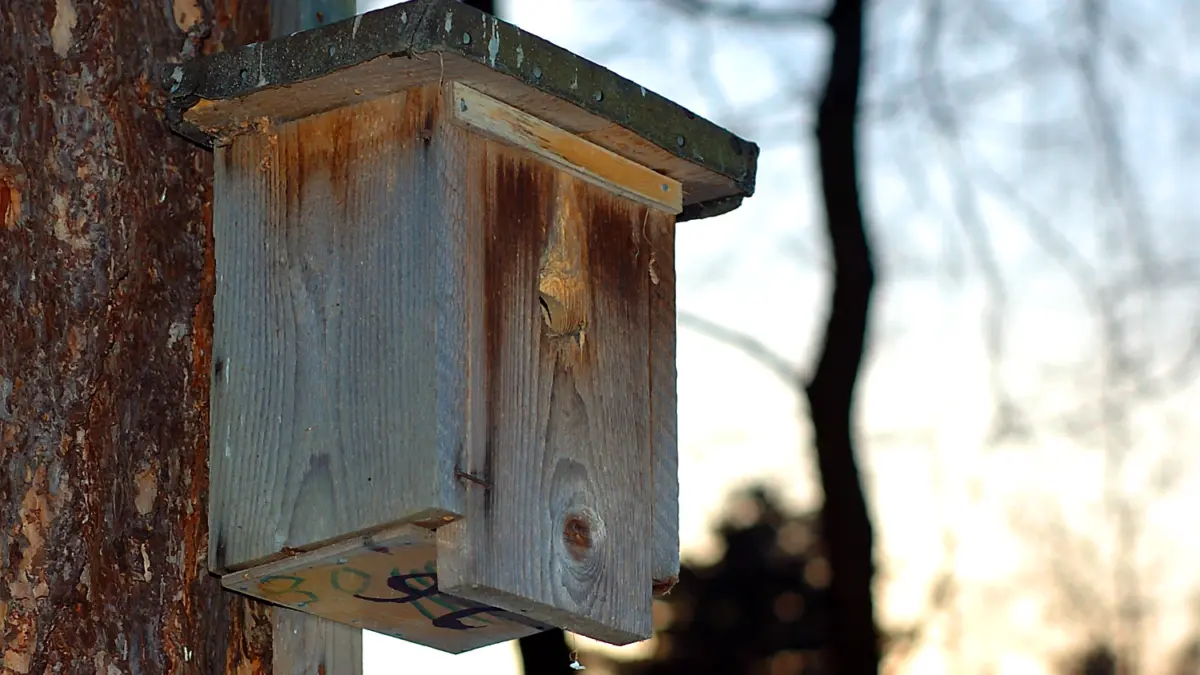
I want to tell you a little about Walt before I go on, because otherwise none of this makes sense. Walt Hollister was a machinist at Wright-Patterson for thirty-one years. He was a quiet man. He liked his coffee black and his eggs over hard and his baseball on the radio instead of the TV, because he said the radio men painted a better picture. In his retirement he built birdhouses and little jewelry boxes out of walnut in the garage, and he sold them at the craft fair at the fairgrounds every fall. He never charged enough for them. People would offer him forty dollars and he’d say twenty-five was plenty.
He had his first heart attack in 2019. He got through it, but he was different after that. He started doing things. Getting things in order, he called it. He went to the lawyer and had wills done for both of us. He took me to the credit union and put my name on everything. He made me learn how to pay the bills online, which I hated, because I’d never done it, and he’d always done it, and I didn’t see why I should have to learn now.
“Because I’m not going to be here forever, Bev,” he said. “I want you to be able to take care of yourself.”
The second heart attack was last March. He was in the hospital at Kettering for eleven days. The last few days he was on a lot of morphine, and he’d drift in and out. He talked about his mother, who’d been dead since 1988. He talked about a dog he had as a boy. Once he asked me if the Reds had won, and I said yes, even though it was March and there wasn’t any baseball.
The night before he died, he woke up around two in the morning and grabbed my hand. His grip was strong. Stronger than it had been in days.
“Bev,” he said. “If anything happens. If anybody gives you trouble. You look in my chair.”
“What chair, honey?”
“My chair.” He squeezed harder. “You look in my chair.”
“Okay, Walt. I will.”
Then he drifted off again, and he never really woke up after that. He died the next afternoon with me holding that same hand.
I thought it was the morphine. I honestly did. I thought he meant something from a long time ago, or nothing at all. I went home after the funeral and I sat in his chair myself, that first night, and I cried into the arm of it until I fell asleep. I never thought about what he said again. I’m ashamed to say it, but I didn’t. Not once in eight months.
Until I was standing at the end of my driveway looking at that chair with a FREE sign on it.
I could hear him. Clear as anything. You look in my chair.
So I went back inside and put on my church coat, the long navy wool one, and my good shoes, and I went back out and sat down in Walt’s recliner at the end of the driveway in the frost.
Mrs. Kowalski across the street was getting her paper. She stopped and stared at me. I waved. She waved back, slowly, the way you’d wave at somebody standing on a ledge.
I sat there for a few minutes before anything happened. The corduroy was cold and a little damp, and it smelled the way it always smelled, like Walt’s aftershave and coffee and a little bit of sawdust from the garage. I put my hands on the arms where his hands had worn the fabric smooth. And I tried to think about what he meant.
Before I tell you what was in that chair, I have to tell you about the summer. Because that chair didn’t land at the curb by accident.
When Kevin and Jenna moved in, I was grateful. I was. The house was too quiet with Walt gone. I wasn’t sleeping. I’d wake up at three in the morning and walk through the rooms turning lights on. It was nice having people in the house again, and their daughter Abby, my granddaughter, was sixteen and she’d come sit with me in the evenings and watch Wheel of Fortune and guess the puzzles before I could. She’s a smart girl. She’s the only one who ever really talked to me about her grandpa.
Jenna took over the kitchen first. That was fine. I didn’t care about cooking anymore. Then she took over the mail. She said she’d sort it for me, since I seemed overwhelmed, and it was easier if she just put the bills in one pile. Then she took over the bills. She said she’d noticed I’d paid the water bill twice in July, which I had, I’ll admit that, I was a mess in July. So she said she’d handle the online banking for me. I gave her my password. It seemed easier than arguing.
In August I left a burner on. I’d made myself a fried egg and forgot to turn the stove off, and I went out to the garden, and when I came back the kitchen was full of smoke and Jenna was standing there with the window open and the pan in the sink. Nobody was hurt. The egg was a lump of charcoal. But after that, everything changed.
“Kevin,” I heard her say that night, through the bedroom wall. “She could have burned the house down with all of us in it.”
“She’s just tired.”
“She’s seventy-four. This is how it starts. My grandmother was exactly like this.”
In September, a brochure showed up on the kitchen table. Brookside Senior Living, in Xenia. There was a picture of an old woman laughing on a bench by a pond with a young woman in scrubs. Independent living suites starting at $4,800 a month. Jenna said she’d just picked it up because it was on the counter at the doctor’s office. She said we didn’t have to talk about it now.
In October, a woman came to look at the house. Jenna said she was a friend from her old neighborhood who was interested in interior design and wanted to see the house because it had good bones. Her name was Tammy. She walked through every room with a clipboard and took pictures on her phone. She asked how old the furnace was and whether the roof had been replaced. A week later, I found a folded paper in the recycling bin under the sink. It was a comparative market analysis, on letterhead from a real estate office in Beavercreek. The address was my address. The number at the bottom was $289,000.
I didn’t say anything. I put it back in the recycling. I don’t know why I didn’t say anything. I think I was afraid of what I’d hear if I asked.
Then, two weeks before Thanksgiving, Jenna sat me down at the dining room table with a cup of tea and a folder.
“Bev,” she said. “Kevin and I have been talking. We just want to make sure that if anything ever happens to you, if you get sick, or you have a fall, we can take care of things for you without any trouble. So we had this drawn up.” She opened the folder and slid a paper across to me. “It’s just a power of attorney. It’s very standard. Everybody has one. It just means Kevin can sign things for you if you can’t.”
I read the first page. It said durable general power of attorney. It said Kevin could buy and sell real estate on my behalf, open and close accounts, make gifts, and change beneficiaries. There were little yellow sticky tabs that said SIGN HERE.
“Walt and I had these done at the lawyer,” I said. “In 2019.”
“Those are old. Things are different now. Walt’s gone.” She put a pen on top of the paper. “It’s just a formality, Bev.”
“I’d like to read it more carefully.”
“Of course. Take your time.” She smiled. “But the notary’s coming on Saturday. The Saturday after Thanksgiving. So that’s the deadline, okay? We’ll just get it all done at once.”
That was the Saturday after Thanksgiving. Tomorrow, from where I was sitting in that chair.
Thanksgiving itself had been strange. Jenna cooked everything, and it was good, I’ll give her that. She did a turkey breast instead of a whole bird because she said a whole bird was wasteful for five people, and green bean casserole with the fancy fried shallots instead of the onions from the can, and a sweet potato thing with pecans. My job was the rolls. I’ve made the same Parker House rolls every Thanksgiving since 1971, from my mother’s recipe card, and nobody’s ever been allowed to touch that job.
Abby set the table. When she was done, I counted six plates.
“Abby, honey,” Jenna said. “There’s only five of us.”
“I know,” Abby said. “That one’s Grandpa’s.”
Nobody said anything for a second. Kevin looked at his plate. Then Jenna smiled her patient smile and picked up the sixth plate and put it back in the cupboard.
“That’s very sweet, sweetheart,” she said. “But we have to look forward now, not backward. That’s what Thanksgiving is about. New beginnings.”
Abby looked at me across the table. I shook my head just a little. Let it go. She let it go, but she didn’t eat much.
When we sat down, Jenna raised her wine glass and made a toast. She said she was grateful for family, and grateful for this house, and grateful that we were all going to be taking care of each other in the year ahead. She said it was going to be a year of big changes and fresh starts. She looked right at me when she said fresh starts. Then she said, “Cheers,” and everybody clinked glasses, and I clinked mine too, because what else do you do.
After dinner, while Kevin and Abby did the dishes, I went into the living room to sit down in Walt’s chair like I always did after a big meal. And Jenna was standing beside it with a roll of blue painter’s tape and a tape measure.
“What are you measuring?”
“Just the space,” she said. “For a new sofa. Something lighter. This room’s so dark, Bev.” She wrote something on her phone and smiled at me. “Sit, sit. Enjoy it.”
I sat. I remember thinking, enjoy it, like she knew something I didn’t. I suppose she did.
So you understand now. The chair at the curb wasn’t about the living room needing to breathe.
The junk truck came around the corner at about ten after eight. It was a big white pickup with a flatbed trailer behind it, and on the door it said HANSEN HAULING in blue letters, with a phone number. The man who got out was maybe sixty, with a gray beard and a Carhartt coat and a ball cap that said Ohio State. He looked at me sitting in the chair. He looked at the sign. He scratched his beard.
“Morning, ma’am,” he said. “I’m here for a chair?”
“Good morning,” I said. “I’m sitting in it.”
“I see that.” He smiled a little. He had a kind face. “The lady who called said it was free.”
“I’m sure she did.”
“You want me to come back?”
“Could you wait just a minute?” I said. “There’s something I need to check first.”
He leaned on his trailer and folded his arms and said, “Ma’am, I’ve got all the time in the world. I’ve been doing this nineteen years. You would not believe the things people leave in furniture.”
I got up and turned around and looked at the chair. I didn’t know what I was looking for. I ran my hands down between the seat cushion and the arms, where you find coins and pens and TV remotes. Nothing but a peppermint wrapper. I pulled the footrest up and looked underneath. Nothing. I felt along the back.
And then I took the seat cushion out and turned it over.
There was a zipper along the back edge of the cushion, the way there is on most of them, so you can take the cover off to clean it. I’d never once unzipped it. I don’t think anybody ever does. But when I turned it over, I saw that the zipper pull had a twist tie on it. A green bread-bag twist tie, wrapped twice around the pull and the little metal tab at the end of the zipper, so it couldn’t slide open by itself.
Walt saved twist ties. He kept a whole coffee can of them on the workbench in the garage.
My hands started shaking.
That’s when the front door opened.
“Bev!” It was Jenna, coming down the driveway fast in her gray sweat suit and a pair of Kevin’s slippers. “Bev, what are you doing? It’s freezing. Get out of that chair, the man’s here to take it.” She saw the junk man and put on her nice voice. “I’m so sorry, she gets confused sometimes. It’s fine, you can take it, I’m the one who called.”
“Ma’am,” the junk man said, “I believe she’s the one sitting in it.”
Kevin came out behind her in his socks, holding his coffee.
“Mom, come on. Come inside.”
“Your father told me to look in his chair,” I said.
“What?”
“The night before he died. He grabbed my hand and he said, if anybody gives you trouble, you look in my chair.”
Jenna laughed. It was a short, sharp little laugh. “Bev, he was on morphine. He didn’t know what he was saying. He thought the Reds were playing in March.”
“Then it won’t matter if I look.”
I untwisted the twist tie. It took me a minute because my fingers were cold and shaking. Then I unzipped the cushion cover, all the way along the back, and I put my hand inside between the cover and the foam.
There was something in there. Flat and stiff, pressed against the bottom of the foam. I pulled it out.
It was a big manila envelope, the kind with the little metal clasp, folded over once to fit and sealed shut with clear packing tape. On the front, in Walt’s square machinist printing, in black marker, it said: FOR BEV. NOBODY ELSE.
Jenna saw it. She saw the writing on the front.
And all the color went out of her face.
“Kevin,” she said. Very quietly. “What is that?”
Kevin didn’t answer her. He was looking at his father’s handwriting.
The junk man said, “I’ll just be in the truck.”
I sat back down in the chair. I put the envelope on my lap and I peeled off the tape. It was stiff with age, and it came off in pieces, and I could feel all three of them standing over me watching every piece. I bent the little metal clasp up and opened the flap.
The first thing that came out was a letter. One sheet of yellow legal pad paper, folded in thirds. I knew before I opened it that it would be in Walt’s printing, because Walt never wrote in cursive in his life. He said nobody could read his cursive, including him.
It was dated July 14, 2019. Three weeks after his first heart attack.
Bev, it said.
If you’re reading this, I’m gone, and somebody’s giving you trouble. I’m sorry I’m not there to deal with it. I know you hate this kind of thing. But I’ve taken care of it, so don’t you worry.
The house is yours. Only yours. I went to Harold Behnke and had him put my half over to you, and he recorded it at the courthouse in Xenia on July 9th. The deed is in here. Nobody can sell this house but you. Not the kids, not anybody. If anybody tells you different, you call Harold. His card is in here too.
Also in here is your mad money. I been putting the craft fair money and some other money in the credit union in your name since 1996. You never asked where all those birdhouses went. Now you know. It’s yours and nobody else’s. Spend it on something stupid.
I love you. I’m sorry about the coffee rings on the chair.
Walt.
I read it twice. The second time, I couldn’t see the words very well.
Under the letter was a copy of a deed. A quitclaim deed, it said at the top, from Walter J. Hollister to Beverly A. Hollister, for the property at 412 Maple Court, and at the top right corner there was a stamp from the Greene County Recorder with the date and a file number. Behind that was a business card. Harold Behnke, Attorney at Law, with an office on Detroit Street in Xenia. And behind that was a credit union passbook. One of those little old-fashioned savings books with the blue cover, the kind they don’t even make anymore. My name was on the inside cover. Beverly A. Hollister. Sole owner.
The last entry was from February, a month before Walt went into the hospital. A deposit of $340. The balance underneath it was $38,412.17.
I closed the passbook and held it in both hands. I thought about all those birdhouses. All those craft fairs. Twenty-five dollars, he’d say. Twenty-five is plenty.
“Mom,” Kevin said. His voice cracked. “Mom, what is it?”
I held up the deed so he could see it.
“Your father put the house in my name,” I said. “In 2019. It’s recorded at the courthouse. Nobody can sell it but me.”
Kevin took the paper from my hand. He read it. I watched him read it all the way down to the stamp.
“I didn’t know,” he said.
“I know you didn’t.”
Jenna had her arms crossed over her chest. She’d gotten her color back, and some extra besides.
“Well, that doesn’t change anything,” she said. “Of course it’s your house, Bev. Nobody was trying to sell your house.”
“Tammy was,” I said.
She stopped.
“Your friend with the clipboard, who liked the good bones. She works at a real estate office in Beavercreek. I found her paper in the recycling. Two hundred and eighty-nine thousand dollars.”
Kevin turned and looked at his wife.
“Jenna.”
“That was just to know what it was worth. For planning. For her care, Kevin. Do you know what Brookside costs? Somebody has to plan for that. You certainly weren’t going to.”
“And the power of attorney,” I said. “With the little yellow tabs. The one that lets Kevin sell real estate and change beneficiaries. With the notary coming tomorrow.”
“It’s a standard form!”
“Then why did you put my husband’s chair at the curb the day before I was supposed to sign it?”
She didn’t have an answer for that. She opened her mouth and nothing came out. I don’t think I’d ever seen Jenna without something to say.
Across the street, Mrs. Kowalski was still standing at the end of her driveway with her newspaper. She’d been there the whole time. I suppose by noon the whole of Maple Court knew everything.
Kevin was still holding the deed. He looked at it for a long time. Then he looked at the chair.
“Dad told you to look in the chair,” he said.
“He did.”
“And you didn’t.”
“I thought it was the morphine,” I said. “I thought he was confused.”
Kevin made a sound, half a laugh and half something else, and he put his hand over his eyes. “He was never confused a day in his life,” he said. “Not one day.”
He went over to the truck and knocked on the window, and the junk man rolled it down.
“I’m sorry for your trouble,” Kevin said. “We’re keeping the chair.”
“Yes, sir,” the junk man said. “I figured you might.” He looked over at me. “Ma’am? My dad left his old Bible to my sister and she threw it in a dumpster. Had a stack of savings bonds in the back cover. She found out three years later when the dump guy’s wife called the bank.” He shook his head. “You hang on to that chair.”
Then he drove off. He never did get anything that morning. I wished afterward that I’d given him twenty dollars for his trouble.
Kevin carried the recliner back inside by himself. Jenna didn’t help. She went upstairs and shut the bedroom door. Kevin set the chair back down in the living room in its spot by the window, on the same four dents in the carpet where it had sat for twenty-two years. Then he sat in it. He’d never sat in it before. Nobody sat in Walt’s chair but Walt.
He sat there for a long time with his elbows on his knees. I made him a fresh cup of coffee, because his had gone cold out in the driveway. When I brought it to him, he put it on the right armrest without a coaster, right on the dark spot.
I didn’t say anything about it.
The notary didn’t come on Saturday. Jenna called and canceled.
On Monday morning, I called Harold Behnke. His secretary said he was retired, mostly, but he still came in on Mondays and Wednesdays to see old clients, and she put me right through. He remembered Walt. He said, “Oh, Walt. The birdhouse man. He made me a jewelry box for my wife, wouldn’t take a dime for it.”
He told me the deed was good. He’d recorded it himself. He said the house had been mine alone since July 9, 2019, and there wasn’t any question about it. He asked me if anybody was pressuring me to sign anything. I told him about the power of attorney with the yellow tabs. He asked me to bring it in.
I went down to his office on Wednesday. Kevin drove me. That was his idea. Harold Behnke was eighty-one years old, with white hair and half-glasses and a cardigan with leather patches on the elbows, and his office smelled like pipe tobacco even though he told me he’d quit in 1994. He read Jenna’s power of attorney all the way through without saying a word. Then he took his glasses off and rubbed his eyes.
“Mrs. Hollister,” he said. “Do you feel you’re having trouble managing your own affairs?”
“I left a burner on in August.”
“I’ve left more burners on than I can count. That’s not what I asked.”
“No,” I said. “I don’t think I am. I think I was sad. I’m still sad. But I’m not confused.”
He nodded. “Then you don’t need this.” He slid it back across the desk to me. “If you want a power of attorney someday, and you might, I’ll draw you one up myself. One where you pick who it goes to and what they can do. Not one somebody else picks for you.” He looked over at Kevin. “No offense, son.”
“None taken,” Kevin said quietly. “I didn’t read it either. She just told me it was standard.”
“Well,” Harold said. “Most things are standard until they’re not.”
Then he did one more thing I didn’t expect. He asked me to give him the password to my online banking, right there, and he had his secretary sit with me while I changed it to something new. A word only I knew. Then he had her write it on an index card for me and told me to put it someplace safe. I asked him where. He smiled and said, “I hear a recliner cushion works pretty well.”
Kevin and I didn’t talk much on the drive home. Halfway there, at the stoplight by the Dairy Queen in Fairborn, he said, “Mom, I’m sorry.”
“I know, honey.”
“We were behind,” he said. “Way behind. Credit cards, the car, all of it. Sixty-some thousand. Jenna said if we could just get the house sold and get you settled at Brookside, there’d be enough left over to clear it all and start over. She said it was what Dad would’ve wanted. For you to be taken care of.”
“Your dad wanted me to be taken care of,” I said. “He took care of it.”
The light turned green. Kevin drove on.
They moved out at the end of January. I told them they could stay through Christmas, for Abby’s sake, and then I’d like to have my house back. I didn’t yell. I’m not a yeller. I just said it at the dinner table one night in December, plain, and Jenna put her fork down and went upstairs, and Kevin nodded and said, “That’s fair, Mom.”
They found an apartment in Beavercreek, near Abby’s school. Kevin got a job in February driving for a parts supplier, which isn’t what he used to do but it pays the bills, and he says he likes being on the road. He calls me every Sunday afternoon. Some Sundays he brings Abby by and the three of us watch the Reds on TV. Well, Kevin and Abby watch on TV. I listen on the radio in the kitchen, because the radio men paint a better picture.
Jenna doesn’t come. She’s never apologized. I don’t expect she ever will. Abby told me once that her mother still says I turned Kevin against her, and that she still says Brookside would have been the best thing for me. I said that was her right to think so. Abby said, “Grandma, you’re way too nice.” I said I wasn’t nice, I was just old, and there’s a difference.
I don’t know if Kevin and Jenna will make it. That’s their business. I hope they do, for Abby.
The mad money is still in the credit union, mostly. I used some of it to put a new roof on the house in April, because the old one was twenty-eight years old and Tammy was right about that much. And I used some of it to have Walt’s recliner reupholstered. I took it to a little shop in Yellow Springs, run by a woman named Darlene who’s been doing it for forty years. She asked what fabric I wanted. I said the same brown corduroy, exactly the same, if she could find it. She found it. It took her six weeks. When she brought it back, it looked just the way it did when we bought it, except for the arms. I told her to leave the arms alone. She left the dark spot on the right armrest too, where the coffee cups went. I’d told her to leave that alone as well.
I asked her to put the zipper back with a twist tie on it. She looked at me like I was crazy. I told her it was a long story.
The rest of the money, I haven’t decided. Walt said to spend it on something stupid. I’ve been thinking about that. Abby says I should go to Hawaii. Mrs. Kowalski says I should buy a little dog. I keep thinking maybe I’ll take up woodworking. There’s a whole garage full of Walt’s tools out there, and a coffee can full of twist ties, and nobody using any of it.
I sit in his chair in the evenings now. I put my hands on the arms where his hands wore them smooth. I put my coffee on the right armrest without a coaster.
Every once in a while, I unzip the cushion and check. There’s nothing in there anymore except an index card with a password on it. But I check anyway.