The snow started at about three in the afternoon on the eleventh of November last year. It came in sideways off the Crazy Mountains the way it does, with no warning to speak of, just a gray wall sliding down the ridges and then the whole world going white. By four o’clock you couldn’t see the barn from my kitchen window. By five it was dark.
My son-in-law had gone up the mountain that morning at six to hunt elk. Alone. He hadn’t come back.
I’m going to tell you how it went that night, but I have to back up some, because otherwise you won’t understand why I did what I did, or why I almost didn’t.
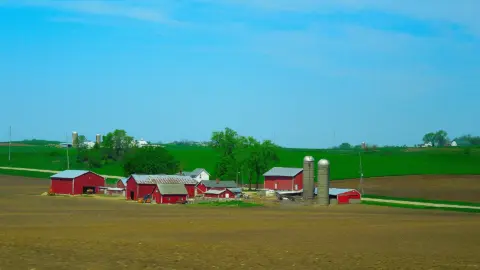
My name is Clay Ostrander. I’m seventy-two years old. I was a brand inspector for the Montana Department of Livestock for thirty-four years, out of Big Timber, and before that I cowboyed on half the ranches between here and Harlowton. My wife Bonnie and I bought our place on Big Elk Creek in 1981. Eighteen hundred acres, mostly grass, with the timber running up the back side into the national forest and the Crazies standing over all of it. We ran a couple hundred mother cows on it for thirty-some years. Bonnie passed in 2020. I sold the cows in 2022, because I couldn’t do it alone anymore and wouldn’t admit it until I fell off a stack of hay bales and broke three ribs.
Now it’s me and a couple of old horses and a bunch of deer that eat my wife’s lilacs. And Smoke.
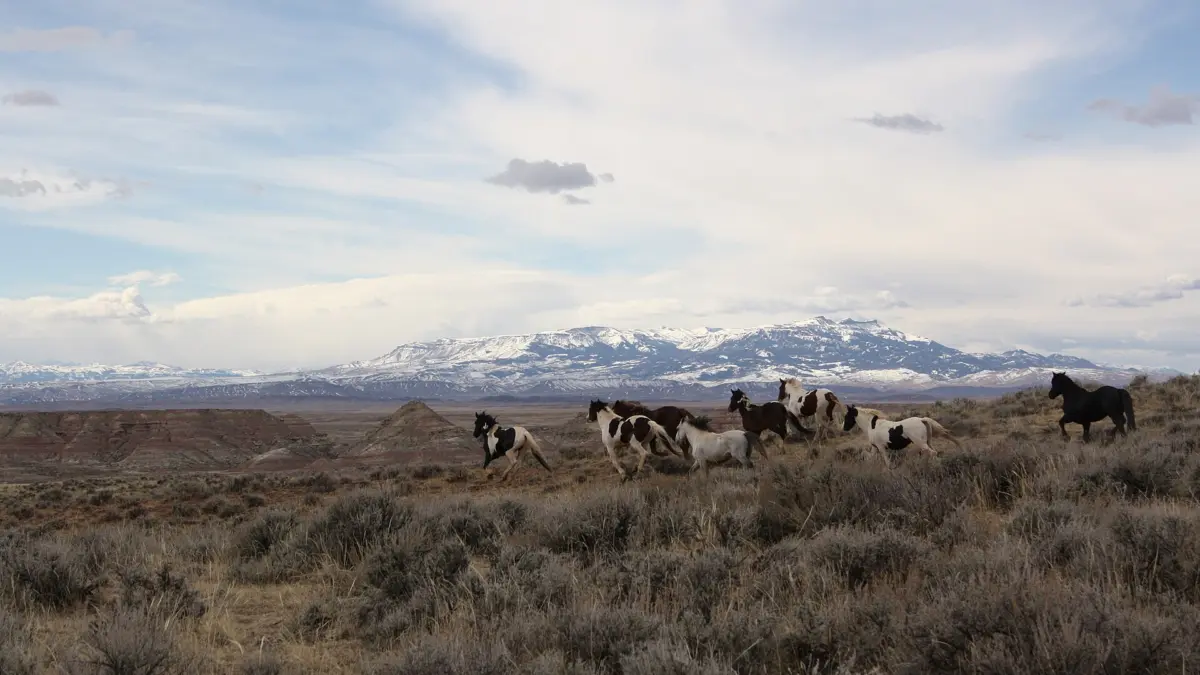
Smoke is a mustang. A wild horse. I adopted him from the Bureau of Land Management in 2019, at one of those adoption events they hold at the fairgrounds in Billings. He came off the McCullough Peaks range down by Cody, Wyoming. He was a four-year-old gray gelding, the color of wood ash, with a black mane and tail and a dorsal stripe down his back like a mule deer. He’d been running free his whole life until the helicopter roundup that spring. He stood in the back corner of a pipe pen at the fairgrounds with his head high, watching every person who came near him, and he wouldn’t let anybody within thirty feet.
The adoption fee was a hundred and twenty-five dollars. That’s what the government charges. Nobody else bid. I wrote the check.
Bonnie thought I’d lost my mind. She said, “Clay, you’re sixty-five years old and you just bought a wild horse.” I said I knew it. She said, “What are you going to do with it?” I said I didn’t know yet.
It took me a whole year to gentle him. I’d sit on an overturned bucket in his pen every evening with a cup of coffee and not look at him. Just sit there. After a month he’d come stand ten feet from me. After two months he’d take an apple out of my hand. After six months I could brush him. It was a year before I got on him. By then Bonnie was sick, and those evenings in Smoke’s pen were about the only time I wasn’t thinking about the cancer.
Once I was on him, though, I’ll tell you what. I’ve ridden a lot of horses in seventy-two years. Good ones. Ranch horses and rope horses and a cutting horse that won some money in Denver. I never rode anything like Smoke in the mountains. A mustang grows up on rough ground. Rock and sagebrush and steep slopes, and in the winter, snow to his belly with nobody to feed him. He knows where to put his feet without being told. He can see in the dark better than any horse I ever owned. And he knows his way home. You can ride him ten miles up into country he’s never seen, and turn him loose in the dark, and he’ll bring you straight back to the barn like he was on a rail.
I’ve hunted elk off Smoke every fall since 2021. Up the back side of my place into the forest, along the old sheep trail toward Sweet Grass Creek. I know that country like I know my own kitchen. So does he.
My daughter Molly lives in Denver. She’s forty. She married a man named Grant Whitfield three years ago. He’s a lawyer. Real estate law, he says, which as far as I can tell means helping people buy land they’re going to cover with houses. He’s a good-looking fellow, tall, with very white teeth, and expensive boots that have never seen manure. He’s polite to me. He calls me sir. And from the first day I met him, I knew he looked at my place and saw a number.
The Thanksgiving before last, they came up from Denver for the long weekend. That was when it started.
We were at the dining room table, the three of us, with the turkey Molly cooked and the pies she brought from a bakery in Denver. And after the pie, Grant took out a folder.
“Clay,” he said. “I want to run something by you. Just as information.”
He slid the folder across the table. Inside was a letter from a development company out of Bozeman. They wanted to buy my place. All eighteen hundred acres. They wanted to divide it up into forty-acre ranchettes. Mountain views, creek frontage, access to national forest. They had a map with the lots drawn on it in red. The house and barn were going to be a clubhouse. The offer was two point four million dollars.
“That’s a very strong number,” Grant said. “I had a friend look at it. Very strong. You’d never have to worry about money again, Clay. You could get a nice condo in Bozeman, close to the hospital. Close to Molly when she visits.”
I looked at Molly. Molly was looking at her pie.
“I don’t worry about money now,” I said.
“Sure. Sure.” He smiled. “But you’re seventy, Clay. You live alone out here, twenty miles from town, with no neighbors. You already broke your ribs once. What happens next time? What happens when you can’t get out of bed? What happens when the snow comes and you’re stuck?”
“I’ve been stuck before.”
“And you’ve got what, two old horses and that—” He laughed a little. He’d had some wine. “That wild horse. The government horse.”
“Smoke.”
“Smoke. Right. Molly told me you paid a hundred and twenty-five dollars for him.” He shook his head, smiling, like it was the funniest thing in the world. “Clay, with respect. That’s not a horse. That’s a dog food horse. That’s what they do with those, you know. When nobody adopts them. You’re out here riding around the mountains on a hundred-and-twenty-five-dollar dog food horse at seventy years old. Somebody’s got to say it.”
Molly said, “Grant.”
“I’m just saying what everybody’s thinking, babe.”
I didn’t say anything. I got up and took my plate to the kitchen and stood at the sink for a while, looking out the window at the barn. Through the window I could see Smoke standing in the corral in the snow, head down, the ash-gray of him against all that white. He lifted his head and looked toward the house. I swear he did.
Grant left the folder on my desk when they went back to Denver. I didn’t throw it away. I didn’t call the development company either.
What I did, in January, was drive to Bozeman to see a lawyer of my own. A woman named Ellen Haugland, who works with a land trust there. She told me about something called a conservation easement. It’s a legal agreement you can put on your land, and it goes with the deed forever, no matter who owns the place. It says the land can’t be subdivided. It can stay a ranch, and it can be sold, and it can be passed down, but it can never be cut up into ranchettes or covered with houses. The land trust holds the easement and makes sure. In some cases, they even pay you for it, since you’re giving up the right to develop.
I asked her a lot of questions. I asked her what Bonnie would’ve thought, which wasn’t a fair question to put to a lawyer, but she answered it anyway. She said most of the ranchers she worked with did it for their wives or their parents or their grandkids. She said she’d never had anybody do it for a horse, but there was a first time for everything.
I signed the papers in September of last year. They’re recorded at the courthouse in Big Timber. I didn’t tell Molly. I didn’t tell Grant. I figured I’d tell them when the time was right. I’m a brand inspector. I’m used to waiting for the right time.
So that was where things stood when Molly and Grant came up from Denver last November. Grant had bought an elk tag. It was going to be his first elk hunt. He’d bought about four thousand dollars’ worth of gear from a catalog. A rifle with a scope as long as my arm, a backpack with a water bladder, a pair of insulated boots, a jacket that was supposed to be good to forty below, and an app on his phone with maps of every inch of the Crazy Mountains.
“Want to come along, Grant?” I said, the night they got there. “I’ll take you up on the horses tomorrow. I know where the elk are this time of year.”
“On the horses?” He laughed. “On your dog food horse? No thanks, Clay. I’ll walk. I’ve got the app. I’ve done the Colorado Trail. I know what I’m doing.”
“It’s different up here. The weather comes in fast.”
“I checked the forecast. Clear until Thursday.”
“The forecast doesn’t live here.”
He smiled at me the way you’d smile at an old man who doesn’t understand computers. Molly asked him to take me with him. He said he’d be fine. He said he’d be back by noon with an elk, and he’d buy me a beer.
He left at six the next morning, in the dark, walking up the two-track behind the barn toward the forest. I watched his headlamp bobbing up the hill until it disappeared into the timber.
That was the eleventh of November.
The forecast was wrong. The snow started at three.
By five o’clock, Molly was standing at the kitchen window with her phone in her hand, calling him over and over. It went straight to voicemail. The last text she got from him was at 1:14 in the afternoon. It said: Seeing tracks everywhere, following a big bull east. Battery at 18%. Back by dark.
East. I looked at a map in my head. If he’d followed elk east from where he was likely to be, he’d have gone up and over the ridge into the head of the Sweet Grass drainage. A long way from the ranch. A long way from anything. And with the snow coming, the trail he walked in on would be buried by now.
At six, Molly called the sheriff.
The search and rescue people came out about eight-thirty. Two trucks and a dozen volunteers in orange coats, and a deputy named Jordan Kittle, who I’ve known since he was in diapers. They set up in my kitchen with a laptop and a big map and drank my coffee. Jordan said they’d been in touch with the helicopter out of Billings, but it couldn’t fly in this. The ceiling was too low and the snow was too heavy. Maybe tomorrow, if it cleared. They’d also called for a dog team from Bozeman, but the pass was closed. The highway department had shut down the interstate between Big Timber and Livingston at seven.
“So what are you going to do?” Molly said. She’d been crying for three hours.
“We’re going to stage the volunteers at the trailhead,” Jordan said. “We’ll start the ground search at first light. Grid it out. Start from where his last text pinged off the tower and work outward.”
“First light? That’s eight hours from now! It’s going to be ten below tonight!”
“Ma’am, I know.” Jordan looked tired. “But I can’t send people up there in the dark in this. I’d lose somebody. It’s too steep, and the snow’s too deep, and we can’t see. If he’s smart, he’ll find some shelter and hunker down and build a fire and wait for morning. A lot of them do. A lot of them make it.”
He didn’t say what happens to the ones who don’t. He didn’t have to. Every year in Montana you read about it in the paper in November. Some hunter from out of state, in a good jacket, who got turned around in the snow.
I’d been standing by the stove the whole time, not saying anything. Now I put my coffee down.
“I’m going up,” I said.
Everybody in the kitchen looked at me.
“Clay,” Jordan said. “No.”
“I know where he is. Or close enough. He went east after elk and he went up over the ridge into the Sweet Grass. That’s what they do. They follow the tracks uphill and don’t look behind them. When the snow came, he’d have tried to come back the way he came. He’d have lost the trail. He’d have gone downhill, because that’s what lost people do, they go down. And if he went down from the ridge on that side, he went down into the wrong drainage. He’s in the bottom of the Sweet Grass somewhere, walking the wrong way, getting farther from here every step.”
“You don’t know that.”
“I’ve been finding lost cows in that country for forty years, Jordan. Lost people aren’t any different. They go downhill and they go the easy way and they think they know where they are.”
“Clay, you’re seventy-one.”
“I know how old I am.”
“You can’t go up there on foot. You’ll be the second person I have to go looking for in the morning.”
“I’m not going on foot,” I said.
Molly understood before anybody else. She looked out the window toward the barn. You couldn’t see it through the snow, but she looked anyway.
“Dad,” she said. “You can’t. Not on Smoke.”
“Smoke grew up in country like this,” I said. “He spent four winters on the McCullough Peaks with no barn and no hay and nobody to tell him where to go. He can see in the dark. He can walk through snow up to his chest. And he knows the way home from anywhere on that mountain. If I find Grant, Smoke’ll bring us both back. He’s done it a hundred times.”
“Grant called that horse—” she started, and stopped.
“I know what Grant called him.”
Jordan argued with me for another ten minutes. He said he’d have to put it in his report that I went against his advice. I said put it in. He said the county wouldn’t be responsible. I said I didn’t expect them to be. Finally he went out to his truck and came back with a handheld radio and a satellite beacon, one of those little orange units you push a button on and it sends your location to a satellite, and he made me put both in my coat pocket.
“You push that button, we’ll know where you are,” he said. “If you get in trouble, you push it. You promise me.”
“I promise.”
“And you’re back by six a.m. whether you find him or not.”
“I’ll be back.”
Molly followed me out to the barn. The snow was so heavy I had to hold onto the fence to find the gate. Inside the barn it was quiet and warm and smelled like hay, and Smoke was standing in his stall with his head up, ears pointed at the door. Like he’d been waiting for me.
I saddled him by the light of a headlamp. My good saddle, the one Bonnie bought me for our twenty-fifth anniversary. I tied on a saddlebag with a thermos of coffee and some sandwiches Molly made, and a sleeping bag rolled up behind the cantle, and two space blankets, and a box of chemical hand warmers. I put my rifle in the scabbard. Not for elk.
Molly stood in the barn aisle in her parka with her arms wrapped around herself.
“Dad,” she said. “I’m sorry.”
“For what?”
“For Thanksgiving. For not saying anything. When he called Smoke a dog food horse. When he brought that folder. I should have said something. I didn’t.”
“You said his name.”
“That’s not enough.”
“It’s enough for now.” I put my hand on her shoulder. “Molly. I’m going to find him. You believe that?”
She looked at Smoke. She looked at me. She nodded.
“Go get him, Dad.”
I led Smoke out into the snow. I got on. It took me two tries, because I was seventy-one and the snow was slick and Smoke is sixteen hands. Then I turned him up the two-track behind the barn toward the black timber, the way Grant had walked that morning, and I let him go.
I’ll tell you how you ride a horse at night in a snowstorm in the mountains. You don’t. You let the horse ride you. I turned off my headlamp after the first half mile, because all it did was light up the snow falling in front of my face and blind me. In the dark, after a while, your eyes adjust and you can see a little. The shapes of the trees. The white of the snow. But you can’t see the trail. You can’t see the ground. You put your reins on the horse’s neck and you sit quiet and you trust him.
Smoke went up that mountain like he was walking down Main Street.
He put his head down and plowed through drifts up to his chest. He found the old sheep trail under two feet of fresh snow without me ever touching the reins. When we got to the steep pitch below the ridge, where the trail switches back through a rock slide, he slowed down and picked his way through, one foot at a time, testing every step before he put his weight on it. I could feel him thinking. Twice he stopped dead and wouldn’t go forward, and both times when I put my headlamp on, there was a drop-off right in front of us, hidden under the snow.
It took us three hours to get to the top of the ridge. It was a little after midnight. The wind up there was something terrible. It blew the snow straight sideways and froze my eyebrows and my mustache. I couldn’t feel my feet. I’d have given anything for a cup of that coffee, but I couldn’t get my gloves off to open the thermos.
I stopped Smoke on the ridge and listened. I turned on my headlamp and swung it back and forth, east, down into the Sweet Grass. I yelled Grant’s name as loud as I could. The wind tore it right out of my mouth. I yelled again. Nothing.
Then I turned Smoke down the other side. East. Into the Sweet Grass. Downhill. The way a lost man would go.
The far side of the ridge is steep timber. Lodgepole pine, so thick in places you can’t get a horse through, with deadfall everywhere, buried under the snow. It’s terrible country at night. I’d only been down it a few times in daylight. Smoke had never been down it at all.
We’d gone about a mile down when Smoke stopped.
He stopped dead in the trail, all at once, so hard I nearly went over his neck. He lifted his head high. He swung it to the left, toward a dark stand of timber at the edge of a little opening. And his ears went straight forward. Both of them. Pointed at that timber like the needles on a compass.
I sat very still. I couldn’t hear anything but the wind.
Then Smoke nickered.
A low, rumbling sound down in his chest. The sound he makes in the evening when he hears my truck coming up the drive.
I turned on my headlamp and pointed it where his ears were pointing.
There was a little orange in the trees. Just a little. A patch of something orange, half buried in the snow at the base of a big spruce, maybe forty yards away. Hunter orange.
“Grant!” I yelled. “Grant!”
The orange didn’t move.
I got off Smoke so fast I fell down in the snow. I got up and floundered through drifts to my waist to that spruce tree.
He was curled up at the base of it, under the low branches, where the snow wasn’t as deep. His four-thousand-dollar jacket was soaked through. He’d lost his hat. His rifle was gone. His backpack was lying open in the snow beside him with the water bladder frozen solid. His phone was in his hand, the screen black. His eyes were closed.
I got down on my knees and grabbed him by the collar and shook him.
“Grant! Grant, wake up!”
His eyes opened. Barely. He looked at me without seeing me. His lips were blue. When he tried to talk, nothing came out but a little croak.
Then his eyes moved past me, past my shoulder. To Smoke, standing at the edge of the trees in the snow, ash-gray and black, with his head up and his ears still pointed straight at us.
And Grant started to cry.
I don’t remember everything I did after that. I remember I got him out from under the tree and wrapped him in both space blankets and the sleeping bag. I remember stuffing hand warmers inside his shirt, against his chest and under his arms, the way they taught us in the first aid class at the Department of Livestock in 1991. I remember I got the thermos open finally and made him drink some of the coffee, and most of it ran down his chin, but some went in. I remember pushing the button on Jordan’s satellite beacon and the little green light blinking. And I remember trying to get Grant up on Smoke.
That took the longest. He couldn’t stand. His feet were frozen and his legs wouldn’t work. He’s a big man, six-foot-three, and I’m not big, and I was seventy-one. I got him up on his knees. Then I got him leaning against Smoke’s shoulder. Then I said, “Grant, you have to help me. You have to get your foot in that stirrup. I can’t lift you.”
“I can’t,” he said. His voice was a whisper. “I can’t, Clay.”
“You can. Grab the horn.”
He grabbed the horn. I got his left foot in the stirrup with both of my hands. I got my shoulder under his backside and pushed with everything I had, and Smoke stood there through all of it like a statue. Not one step. Not one twitch. Even when Grant’s frozen boot raked across his flank. Even when Grant fell back the first time and grabbed a handful of his mane to catch himself. He just stood there in the snow and waited.
The third try, Grant got up. He lay over the saddle more than he sat in it, with his arms around Smoke’s neck and his face in that black mane. I tied him on with my lariat, around his waist and under Smoke’s belly, the way you’d tie on a pack. Then I took the reins and stood in front of Smoke in the dark and the snow.
I didn’t know the way back. Not in that dark, in that timber, on that side of the ridge. I’m not ashamed to say it. I’d been following Smoke all night. I’d lost track somewhere in the deadfall.
So I put the reins up on his neck. I stood beside his shoulder and put my hand on his mane.
“Okay, buddy,” I said. “Take us home.”
And he did.
It took us five hours. Back up through the timber and over the ridge, in the dark and the wind, with me walking beside Smoke holding onto his mane and Grant tied on his back. Smoke broke the trail through every drift. He found the switchbacks through the rock slide. He found the sheep trail on the other side, under three feet of snow by then. He never hesitated once. He walked like he could see the barn from the top of the mountain.
We came out of the timber above the ranch a little after five in the morning. It had quit snowing. The sky was clearing in the east, and you could see the stars, and the whole valley below us was white and still and perfect. And there, down at the bottom of the hill, were my barn lights. And the search and rescue trucks with their lights going. And headlamps, a dozen of them, coming up the two-track toward us, because they’d been watching the beacon on Jordan’s laptop all night.
Molly got to us first. She was running uphill through the snow, falling down and getting up, screaming Grant’s name. She got to Smoke and reached up and grabbed Grant’s frozen hand, and Grant opened his eyes and looked at her and said, “Babe,” and that was all.
The ambulance took him to the hospital in Livingston once the pass opened. He had hypothermia and frostbite on both feet. He lost the tips of two toes on his left foot. The doctor said another two hours under that tree and he’d have lost a lot more than that. The doctor said that to me in the hallway, with Molly standing there, and Molly put her face against my coat and cried.
They found Grant’s rifle in the spring, when the snow melted. It was leaning against a tree about a mile from where I found him. He’d set it down to try to make a fire and then couldn’t find it again in the dark. His phone had died at 4:20 that afternoon. His fancy map app was no use to him after that.
I went to see him in the hospital on the third day. He was sitting up in bed with both feet bandaged and propped up on pillows. He looked like a different man. Not the fellow at my Thanksgiving table with the folder and the very white teeth. He looked young, and scared, and humble, the way men look after the mountain has had its say with them.
I sat down in the chair by his bed. We didn’t say anything for a while.
“I heard him,” Grant said finally. “Before I saw your light. I heard him. That noise he makes. Like a—a rumble. I thought I was dreaming. I thought I was dying and I was dreaming about a horse.”
“He found you,” I said. “Not me. I’d have ridden right past you. He stopped and pointed his ears at you and told me where you were.”
Grant looked down at his bandaged feet.
“I called him a dog food horse,” he said. “At your table. In front of Molly.”
“You did.”
“I’m sorry, Clay.”
“Tell him, not me.”
He thought I was joking. I wasn’t.
There’s one more thing. While he was in that hospital bed, I told him about the easement. I figured the time was right. I told him the land can never be subdivided, and that it had been recorded at the courthouse in September, and that the folder from the development company was in my woodstove now. I told him Molly will get the place someday, the whole eighteen hundred acres, and she can ranch it or lease it or sell it to somebody who wants to ranch it. But nobody’s ever going to put forty-acre ranchettes on it. Not while there’s a land trust in Bozeman with a lawyer named Ellen Haugland.
Grant was quiet for a long time. Then he laughed. Not a happy laugh, exactly. A tired one.
“Two point four million dollars,” he said. “For a hundred-and-twenty-five-dollar horse.”
“That’s about the size of it.”
He shook his head. And I couldn’t tell you, even now, whether he was angry or not. Maybe a little. He’s a real estate lawyer. That was a lot of money walking out the door. I don’t think he’ll ever entirely understand why I did it. I don’t need him to.
Molly understood. She came out to the house after he was discharged and sat at my kitchen table and read the easement papers all the way through, every page. Then she went out to the barn and stood in Smoke’s stall with her arms around his neck for a long time. When she came back in, she said, “Mom would’ve loved this, Dad.” I told her I thought so too.
Grant and Molly came back up for Thanksgiving this year. Grant still limps a little, and he walks with a cane in the snow. He didn’t bring a folder. After the pie, he asked me if he could go out to the barn. I said sure.
I watched him from the kitchen window. He walked down to the barn slowly, on his cane, through the snow, and went into Smoke’s stall. He had something in his hand. It was an apple. He held it out, flat on his palm, the way you’re supposed to.
Smoke looked at him for a long time. Then he stretched his neck out and took the apple.
Grant stood there in that stall for maybe twenty minutes. I don’t know what he said. That’s between him and the horse.
He’s going elk hunting with me next fall. He asked. His foot wasn’t ready this year. On horseback, this time. I told him I’d put him on one of my old geldings, a quiet sorrel named Buck who’s twenty-two and doesn’t care about anything. Grant said that was fine. Then he asked if, someday, when he got better at riding, maybe he could ride Smoke.
I told him we’d see.
Smoke is eleven now. He’s still ash-gray, still with that black stripe down his back, still standing in his corral in the snow every evening with his head up, watching the house. When I bring his grain, he nickers at me from the gate. That low rumble down in his chest.
I hear it different now.