“Pinochle at the VFW,” Len said, and kissed me on the forehead, and took his good jacket off the hook by the back door.
It was a Tuesday afternoon in November, a quarter after three. He’d said the exact same thing every Tuesday afternoon at a quarter after three since the second week of January. Pinochle at the VFW. Back by six. Don’t wait supper.
I was standing at the kitchen sink with my hands in the dishwater. I watched him through the window over the sink as he walked out to his truck, a 2004 Silverado with a dent in the tailgate from when our grandson backed it into the mailbox. He’s eighty-one. He still walks like he’s late for something. He climbed in, backed out of the driveway, and turned left toward town.
The VFW is to the right.
I stood there with the water going cold around my wrists and watched the street where his truck had been.
Here is what I knew by then. My husband of fifty-nine years, Leonard Ellis, who had never in his life kept a secret from me longer than it took to wrap a birthday present, had been leaving the house every Tuesday for ten months. He came home every Tuesday a little after six with sawdust in his hair and on the shoulders of his jacket and in the cuffs of his pants. He smelled like pine and sweat and something sharp, like varnish. When I asked him about it the first time, back in February, he said they’d been “fixing a table at the post.” When I asked the second time, he said Bud Harmon had taken up woodworking and the boys were helping him clean up his garage after cards.
I called the VFW in October. I didn’t plan to. I just picked up the phone one Tuesday at four o’clock while he was gone and dialed the number from the little magnet on our refrigerator.
Gus Pruitt answered. He’s run the bar at Post 2591 for thirty years.
“Gus, it’s Dorothy Ellis. Is Len there? I need him to pick up milk on his way home.”
There was a little silence on the line.
“Dorothy, honey,” Gus said, “Len hasn’t played pinochle here since 2019. Since before the virus. I haven’t seen him in here in, oh, two years at least.”
I said thank you and hung up and sat down at the kitchen table, and I didn’t get up again until I heard his truck in the driveway at ten after six.
He came in with sawdust on his shoulders. He kissed me on the forehead. He asked what was for supper.
I said pot roast. I didn’t say anything else.
I wish I could tell you I asked him straight out that night. I didn’t. I was seventy-nine years old and I was scared, and when you’re scared at seventy-nine you don’t always do the brave thing. You do the quiet thing and hope it goes away.
It didn’t go away. And by Thanksgiving, it wasn’t just mine to worry about anymore.
Our son Brian and his wife Tiffany came for Thanksgiving dinner, the way they do every year, with their kids. Caleb is sixteen and Lily is twelve. They live forty minutes away in Warrensburg. Brian sells commercial insurance. Tiffany does the books for a chain of dental offices, and she is very good at it, and she likes for everybody to know she is very good at it.
I’d made the turkey and the dressing and the sweet potatoes with the little marshmallows on top that Lily likes. Tiffany brought a store-bought pumpkin pie and set it on the counter next to my two homemade ones like it was a challenge.
We’d barely said grace when Tiffany set down her fork.
“Len,” she said, “I need to ask you something, and I don’t want you to get upset.”
Len looked up from his plate. “That’s usually how people start when they’re about to upset somebody.”
“Brian and I were looking at the statements,” Tiffany said.
I looked at Brian. Brian looked at his sweet potatoes.
Two years ago, after Len had a little scare with his heart, we’d put Brian on our checking account at the bank in Sedalia as a joint holder, just in case something happened and somebody needed to pay a bill. It had seemed like the sensible thing to do. I’d forgotten he could see everything.
“There are cash withdrawals,” Tiffany went on. “Three hundred dollars, every month, since January. Like clockwork. That’s thirty-three hundred dollars, Len.” She folded her hands on the tablecloth. “In cash. With no explanation.”
The whole table went quiet. Lily stopped chewing. Caleb, who’d been looking at his phone under the table the way he always does, put it down. He went very still. I noticed that, but I didn’t think anything about it at the time.
“That’s my money,” Len said. “From my pension. I’ll spend it how I please.”
“Of course it’s your money,” Tiffany said, in that voice. “Nobody’s saying it isn’t. But Len, you’re eighty-one. Men your age get targeted. There are women who find older men, lonely men, and they…”
“Tiffany,” Brian said quietly.
“No, Brian, somebody has to say it. Dorothy, you know he’s been sneaking off every week. Don’t you? You know.”
Everybody looked at me.
I didn’t say anything. I couldn’t. My throat had closed up.
“See?” Tiffany said. “She knows. Some woman is bleeding him dry, and he’s too proud to see it. Brian, I really think we need to talk about getting you power of attorney. Before she cleans him out.”
Len set his fork down so hard it rang against the plate.
“I am not senile, Tiffany.”
“I didn’t say senile.”
“You said I’m being bled dry by some floozy and I’m too dumb to notice. In my own dining room. On Thanksgiving.” He pushed back his chair. “I’m going to go sit on the porch.”
“Len,” I said.
He didn’t look at me. He went out the front door and sat on the old metal glider on our front porch, in the cold, in his good Thanksgiving sweater, and he didn’t come back in until Brian and Tiffany had packed up their pie and gone home.
When I went out with his coat, he was looking down the street.
“You think it too, don’t you, Dot,” he said. It wasn’t a question.
I put the coat around his shoulders. I didn’t answer him. That was answer enough, and we both knew it.
Tiffany called me on the Monday after Thanksgiving. Len was out at the hardware store. I almost let it ring, but I’d raised Brian to answer the phone when his mother called, and I suppose I had to set the example.
“Dorothy, I’m just going to be honest with you, because somebody has to be,” Tiffany said. She didn’t say hello. “I emailed you something. Did you get it?”
I had gotten it. It was a link to an article from some website called “Ten Warning Signs Your Elderly Parent Is Being Targeted by a Romance Scammer.” Under the link she’d attached a power of attorney form she’d downloaded from one of those online legal sites, with Brian’s name already typed in the blank where it said “Agent.”
“I got it,” I said.
“Number four is secretive behavior. Number six is unexplained cash withdrawals. Number nine is defensiveness when questioned.” She said it like she was reading a grocery list. “Dorothy, he’s checking every box.”
“Tiffany, he’s my husband.”
“And Brian’s his son. I’m just saying, if something happens to that money, it doesn’t only affect you. It’s Brian’s inheritance too. It’s Caleb’s and Lily’s. Somebody has to protect it.”
There it was. I’d been married fifty-nine years and raised two children and buried both my parents, and I knew exactly what I’d just heard. She wasn’t worried about Len. She was worried about the house and the savings account and the little bit of land we have out by Smithton, and who was going to end up with them.
“I’ll think about it,” I said, which is what I say when I mean no and don’t have the energy for the fight.
“Don’t think too long,” Tiffany said. “These women move fast.”
After she hung up I sat at the kitchen table and looked at that power of attorney form on the screen of my iPad for a long time. Then I deleted it. Then I went to the trash folder and deleted it again, because Caleb showed me once that things don’t really go away the first time.
My sister Marge lives in Green Ridge, twenty minutes south. I drove down that Wednesday and sat at her kitchen table and told her everything. The Tuesdays, the sawdust, the VFW, the three hundred dollars, Tiffany and her ten warning signs. Marge is seventy-six and has buried two husbands and doesn’t believe in wasting time on feelings.
“Well,” she said, when I was done. “Either he’s got a girlfriend or he doesn’t. Sitting here crying into my coffee isn’t going to tell you which.”
“What am I supposed to do, Marge?”
“Follow him.” She shrugged. “Next Tuesday. Get in your car and follow him. Then you’ll know, and you can quit making yourself sick.”
“I can’t follow my own husband around town like some private detective.”
“Then you can keep wondering for the rest of your life.” She pushed the plate of lemon bars toward me. “Eat. You’ve lost weight. I can see it in your face.”
Leonard Ellis asked me to marry him on my parents’ front porch on the Fourth of July, 1965. We were sitting on the porch swing my daddy built out of white oak the year I was born. Len had a ring in his shirt pocket that he’d bought with three months of pay from the lumberyard. His hands were shaking so hard he dropped it through the slats of the swing, and we had to crawl around under the porch with a flashlight in our good clothes to find it. We were married at First Baptist on December 18th, 1966. Fifty-nine years ago this December.
My parents’ house burned in 1979. Electrical fire, in the middle of the night. My folks got out with their lives and the clothes they had on. The porch swing burned with everything else. I cried harder about that swing than about anything else in the house, and I’ve never been able to explain to anybody why.
We raised two children. Brian, and our daughter Ann, who lives in Oregon and calls on Sundays. Len worked at the lumberyard for thirty-eight years and then at the hardware store for ten more after he retired, because he got bored. He can build anything. He built our kitchen cabinets and Brian’s crib and Ann’s dollhouse, which is now Lily’s dollhouse. He built the bird feeders on every tree in our yard. He never once in fifty-nine years gave me a reason to doubt him.
So I’ll tell you how bad it got, after Thanksgiving. I went through his jacket.
I’m not proud of it. It was the Saturday after. He was out in the yard raking leaves, and his good jacket was hanging on the hook by the back door, and I stood there looking at it for a long time. Then I put my hand in the pocket.
There was a receipt from the Lowe’s in Sedalia. Four hundred and twelve dollars. White oak boards, a box of wood screws, a quart of spar varnish, sandpaper, and something called “eye bolts, galvanized, 5/8 inch, 4 count.”
And folded up inside the receipt was a little square of yellow paper, the kind that sticks. Written on it, in a woman’s handwriting, round and neat, it said: “Tues — 3:30 — don’t be late, they’ll start without you! — R.”
I sat down on the bench by the back door. I held that yellow paper in my hand for so long that Len finished the leaves and came in and found me there.
I put it back in his pocket before he saw. I don’t know why. I think I wanted one more week of not knowing.
That night, after he was asleep, I did something worse. I picked up his phone off the nightstand. He’s never had a password on it. He can barely work the thing. I opened his text messages with my heart pounding so loud I was sure it would wake him.
Most of them were from me, and from Brian, and from Ann in Oregon. But there was one from a number I didn’t know, saved under just the letter R. The last message was from that Tuesday afternoon.
“Thank you for today. The boys loved the donuts. M. asked if you’d come early Thursday too. You’re a blessing, Len.”
The boys. I lay there in the dark with his phone in my hand and tried to make that word mean something that made sense, and I couldn’t. Her boys? Her sons? Did she have children? Was my husband paying for some woman’s children? I put the phone back on the nightstand and turned over and looked at the wall until it got light.
The next Tuesday, he left at a quarter after three. Pinochle at the VFW. He kissed me on the forehead. He took his jacket.
I waited until his truck was at the end of the block. Then I got my car keys and my purse and my winter coat, and I followed him.
I don’t drive much anymore. I don’t like the highway, and my eyes aren’t what they were. But it was the middle of the afternoon on a sunny day, and it’s only four miles into Sedalia, and I’d have driven to Kansas City if I had to.
He didn’t go to the VFW. He drove straight downtown, down Ohio Avenue past the courthouse, and turned onto Second Street. Second Street is the old part of town, by the railroad tracks, where the buildings are brick and most of them have been empty since the Walmart came in. He parked behind the old Kemper Feed and Seed. It closed in 1998. I bought chicken feed there when Brian was a baby. I’d figured it was a pile of rubble by now.
There were lights on inside.
I parked across the street, behind a dumpster, and I sat there with the engine running and my heart going like a hammer.
Len got out of the truck. He took a long, flat cardboard box out of the truck bed and carried it up to the side door of the old feed store. Before he got there, the door opened.
A woman came out.
She was maybe forty-five. Dark hair pulled back in a ponytail. Jeans, a flannel shirt with the sleeves rolled up, safety glasses pushed up on top of her head. She was laughing at something. She took one end of the box from him, and then, with her free arm, she hugged him.
My husband hugged her back.
Then they both went inside, and the door shut behind them.
I sat in my car for twenty minutes. I couldn’t make my hands work. I thought about driving home. I thought about calling Brian. I thought about the receipt, and the yellow note, and the round, neat handwriting. “Don’t be late, they’ll start without you.”
They.
I don’t know what made me get out of the car. I think it was that word. They. I turned off the engine and got out and walked across Second Street in my winter coat and my church shoes. I could hear a sound coming from inside the old feed store, a whining, buzzing sound, like a saw, and under it something that sounded like music, and voices. A lot of voices.
I walked up to the side door. There was a piece of paper taped to it, laminated, with a cartoon of a hammer on it. It said “Second Street Workshop. Tuesdays and Thursdays, 3:30 to 6. All Welcome.”
I raised my hand to knock. I stopped. My hand was shaking so badly.
Then I knocked, three times, hard.
The saw stopped. The music stopped. The voices stopped.
The door opened, and it was her. The woman with the ponytail. She was taller than me. She had sawdust on her flannel shirt and a smudge of something dark on her cheek. She looked at me, and something went across her face, like she was surprised and not surprised at the same time.
Then she smiled.
“You must be Dorothy,” she said. “He told me you’d come eventually.”
She stepped back and opened the door all the way.
And I saw what was standing in the middle of the room.
It was a porch swing.
A full-size porch swing, made of white oak, the color of honey, with curved slats on the back and long arms with rounded ends. It was hanging by chains from a big frame of four-by-fours, swaying just a little, like somebody had just gotten up from it. Somebody had carved letters into the top rail of the back, deep and careful, and filled them in with dark stain so they stood out. It said “DOROTHY & LEONARD — DECEMBER 18, 1966.”
All around it, there were boys.
Eleven of them. Teenagers, fourteen and fifteen and sixteen years old, in safety glasses and dust masks and canvas aprons, holding sandpaper and drills and paintbrushes. Every one of them had turned around to look at me. A couple of them had their mouths open.
And standing behind the swing, with sawdust on his glasses and a chisel in his hand, was my husband.
He looked at me. I looked at him. Neither of us said anything for a very long time.
“Well, Dot,” Len said finally. His voice cracked. “I guess the cat’s out of the bag.”
I sat down. Right there in the doorway, on an overturned five-gallon bucket somebody pushed toward me. My legs just quit.
The woman with the ponytail was Rosa Delgado. She told me the whole thing while Len stood there turning the chisel over and over in his hands and looking at the floor.
Second Street Workshop is a program for kids on juvenile probation in Pettis County. The judge sends them there instead of to detention, two afternoons a week, to learn a trade. Rosa started it three years ago in her own garage, with a grant from the state and some donated tools. The county let her use the old Kemper building for a dollar a year. She has one paid employee, which is herself, and a dozen volunteers.
Len had been coming every Tuesday since January. He taught the boys to measure twice and cut once. He taught them to use a hand plane and a chisel and a router, and how to read a board for the grain, and how to sharpen a blade on a whetstone. He brought them donuts. He told them about the lumberyard and about the hardware store and about how he built his first table at twelve years old out of an apple crate.
“Some of these boys,” Rosa said quietly, “nobody has ever shown them how to make anything. Nobody’s ever had the patience. Your husband has more patience than any man I’ve ever met.”
The three hundred dollars every month was lumber. Len had been buying it himself, out of his pension, because the grant didn’t cover materials and Rosa had been buying them out of her own pocket and couldn’t keep it up.
And sometime in the spring, Len had told the boys about a porch swing. About my daddy’s porch swing, and a ring falling through the slats, and a house fire in 1979. And one of the boys, a big quiet kid named Marcus, had said, “Well, why don’t we just build her another one?”
So they had. For eight months. Every Tuesday, after the regular lessons, they’d worked on my swing. They’d cut and planed and sanded every slat by hand. They’d made it exactly like the one in the photograph Len brought in, a black-and-white snapshot of my parents sitting on the original swing in 1955. Marcus had done the carving on the back rail himself, practicing for two months on scrap wood before he tried it on the real thing.
“It’s for our anniversary,” Len said, from behind the swing. “Fifty-nine years on the eighteenth. They were going to bring it out and hang it on the porch while you were at your sister’s. I was going to surprise you.”
“You let me think you had a girlfriend,” I said. My voice was shaking. “For ten months. You let our son think you were being robbed.”
“I know.” He put the chisel down. “I know, Dot. I’m sorry. I was going to tell you after the eighteenth. It was only another three weeks.”
“Tiffany wants Brian to take power of attorney over you.”
He looked tired, all of a sudden. Every one of his eighty-one years.
“I know that too,” he said.
Then one of the boys pulled down his dust mask.
He was tall and skinny, with his father’s ears and his mother’s jaw. He’d been standing in the back, by the drill press, the whole time. I hadn’t really looked at him.
“Hi, Grandma,” Caleb said.
I stared at my grandson.
“Caleb? What are you…” I looked at Len. “What is he doing here?”
Len took a long breath. He looked at Rosa, and Rosa nodded at him.
“Last December,” Len said, “Caleb and two of his buddies got caught spray-painting the back of the middle school in Warrensburg. Did about four thousand dollars in damage. The judge gave him a year of probation and sent him here.” He looked at our grandson. “Brian and Tiffany didn’t want anybody to know. Tiffany was afraid of what people at church would think. They told the judge they’d drive him here every week. They made it twice.”
“Twice?” I said.
“Brian had a work thing. Tiffany had a work thing. Caleb was going to violate his probation and end up in detention in Sedalia over Christmas.” Len shrugged. “So I started driving him. Every Tuesday and Thursday. I pick him up at the high school at three, and I bring him back to Warrensburg after six. I told Brian I’d handle it. I told him I wouldn’t tell you, because Tiffany didn’t want anybody to know. I signed the paper as his responsible adult.”
I looked at Caleb. He looked at the floor, and then he looked at me.
“Grandpa didn’t do anything wrong, Grandma,” he said. “He just didn’t tell on me.”
Before I left the shop that afternoon, the big quiet boy, Marcus, came over to me. He was maybe sixteen, a head taller than Len, with big hands covered in little nicks and cuts.
“Ma’am,” he said. “I’m sorry about the letters. On the back. The second R in Leonard isn’t as straight as the first one. My hand slipped.”
I looked at the back rail of the swing. I couldn’t see anything wrong with it at all.
“It’s perfect,” I told him.
“Mr. Ellis said you’d say that.” He looked down at his shoes. “My grandma had a swing. On her porch, in Kansas City. She used to sit out there with me when my mom was gone. They sold the house when she died.” He shrugged. “I just wanted somebody’s grandma to have one again.”
I stood up off that bucket and hugged him. He was stiff as a board at first, like nobody had hugged him in a long time. Then he wasn’t.
That night, at home, we sat at the kitchen table across from each other the way we’ve sat for fifty-nine years, with two cups of decaf going cold between us.
“Why didn’t you just tell me, Len?” I said. “About Caleb. About any of it.”
He turned his cup around and around on the oilcloth.
“Because Brian asked me not to. And because I knew if I told you about Caleb, you’d tell me to make Brian do it himself. And you’d have been right.” He looked up at me. “But Brian wasn’t going to do it, Dot. And that boy was two weeks from sitting in detention over Christmas. I figured I’d rather be wrong with you for a little while than let that happen.”
“You let me think you didn’t love me anymore.”
“I know.” His eyes filled up. I’ve seen my husband cry four times in fifty-nine years. That was the fifth. “That was the worst part. Every Tuesday I’d come home and you’d look at me like you were waiting for the other shoe. I almost told you a hundred times. I’d get right up to it, and I’d think about that swing, and I’d think, just a few more weeks.”
I reached across the table and took his hand. It was rough and dry and there was a splinter in the side of his thumb. I got the tweezers out of the drawer and took it out for him, the way I’ve done a thousand times.
“Next time,” I said, “you tell me.”
“Next time,” he said, “I’ll build you something smaller.”
I want to tell you about the eighteenth of December.
It was a Thursday. Rosa and the boys came out to our house in two pickup trucks right after school let out, at three-thirty. I wasn’t at my sister’s. I was standing on the front porch in my good coat with a pot of coffee and two dozen of my chocolate chip cookies, because there was no point in pretending anymore.
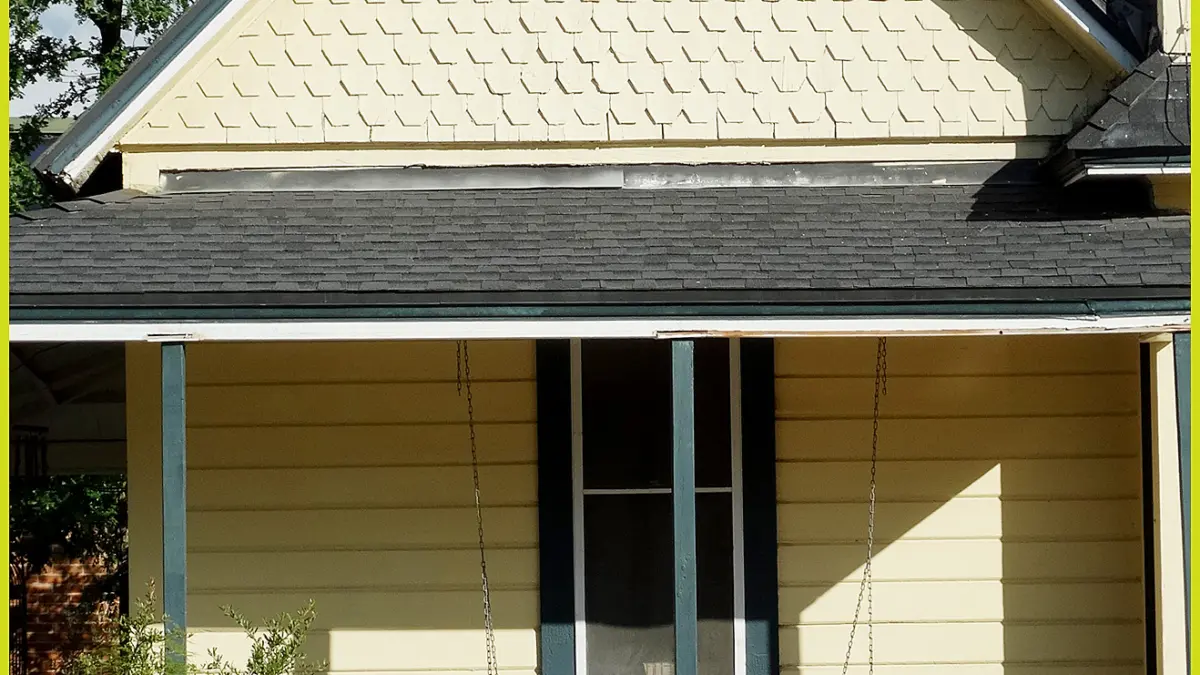
They hung the swing on our front porch from four galvanized eye bolts that Len had already screwed into the ceiling joists in October. He’d told me they were for a hanging plant.
Marcus tested the chains himself. He sat on the swing, and bounced, and pronounced it good.
Then Len took my hand and helped me sit down on it, and he sat down next to me. And the eleven boys from Second Street Workshop, and Rosa Delgado, stood in our front yard in the cold and clapped.
That’s when Brian’s car pulled into the driveway. And then Tiffany’s, right behind it.
Caleb had called his father. I found out later. He’d called him from the school bathroom at lunch and said, “Dad, you need to come to Grandma and Grandpa’s at four. Bring Mom. Please. It’s important.”
Brian got out of the car and stood at the end of the driveway, looking at the boys, and the trucks, and the porch swing. He looked at his son standing in the front yard in a canvas apron, holding a drill.
Tiffany got out of the other car. She looked at all of it. Then she looked at Rosa.
“Who are you?” she said.
“Rosa Delgado. I run the Second Street Workshop.” Rosa smiled at her. She held out her hand. “Your son’s been in my program since January. He’s one of the best kids I’ve got. You must be Tiffany. I’ve left you some voicemails.”
Tiffany didn’t take her hand. Her face had gone white. She looked at Caleb, and then at Len, and then at me.
“Len has been driving him,” Rosa went on, very pleasantly. “Twice a week. For eleven months. He hasn’t missed a single day. Not one. Even in that ice storm in February.”
Nobody said anything.
Brian walked up the porch steps very slowly. He stood in front of his father on the swing. He opened his mouth, and closed it, and opened it again.
“Dad,” he said. “The money. The three hundred.”
“Lumber,” Len said.
Brian’s face crumpled up. He put his hand over his eyes. My son is forty-eight years old and has a mortgage and a boat and a corner office, and he stood on my front porch and cried like he was nine.
“I’m sorry, Dad,” he said. “I’m so sorry. I should have told Mom about Caleb. I should’ve driven him myself. I let Tiffany…” He stopped. “No. I let myself. I’m sorry.”
Len reached up and put his hand on his son’s arm.
“You’re here now,” he said. “Sit down. Try the swing. The boy did a nice job on it.”
Tiffany never came up on the porch. She stood at the bottom of the steps with her purse clutched in front of her, and after a while she said something about the dog needing to be let out, and she got back in her car and drove away. She left Lily with us. Lily ate eleven cookies and sat on the swing with her grandpa until it got dark.
Nobody has said another word about power of attorney. Brian took his name off our checking account the following week, on his own, without anybody asking him to. He called the bank himself.
Tiffany and I are polite at church. That’s about as far as it’s gone. She sent me a Christmas card with a picture of the family on the front, all of them in matching sweaters, Caleb included. Inside, under the printed greeting, she’d written “Thank you for everything with Caleb” in that round, careful handwriting of hers. That was all. I put it on the refrigerator anyway.
Caleb’s probation ended in the second week of January. He didn’t stop going to the workshop. He goes every Tuesday and Thursday, the same as always. Len still drives him. Brian drives him on Thursdays now, actually, when he can get off work, and he’s started staying to help. Rosa says he’s terrible with a chisel but good at organizing the lumber.
Caleb wants to be a carpenter. He told me so on the swing on Christmas Eve. He said Mr. Ellis says a good carpenter can always find work, and a good carpenter can always find his way home.
I asked him who Mr. Ellis was. He looked at me like I was crazy.
“Grandpa,” he said. “That’s what everybody calls him at the shop.”
Len still leaves every Tuesday at a quarter after three. He still kisses me on the forehead and takes his good jacket off the hook. He doesn’t say pinochle at the VFW anymore. He says, “Going to the shop, Dot,” and I say, “Don’t be late, they’ll start without you,” and he laughs every single time.
Every evening when the weather’s decent, we sit on the swing after supper. Fifty-nine years. The chains creak a little at the top of every swing, and Len says he needs to put some oil on them, and he never does. I’ve told him not to.
My daddy’s swing used to creak too.