“Sir, I’m going to need you to move to 31B. These seats are for our premium customers. You’ll be more comfortable in the back with the regular folks.”
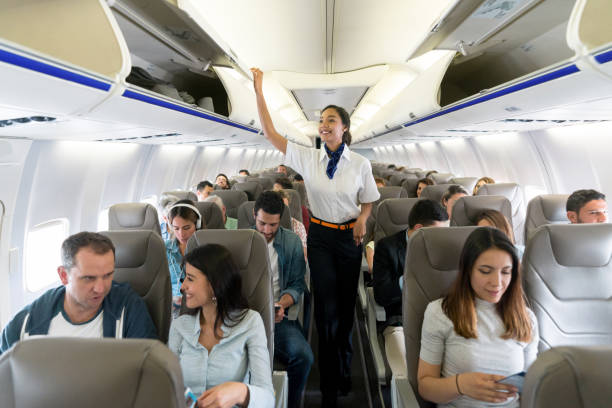
The flight attendant said it with a smile that didn’t go anywhere near her eyes. She said it standing over me in the first-class cabin, with my boarding pass in her hand, while the rest of the passengers filed past us down the aisle, and every one of them heard it.
I was sitting in 2A. I’d been sitting in 2A for about four minutes. I had my coat folded in my lap and my old leather logbook on top of it, and a little bag of the warm cashews they bring you in first class, which I’d never had before in my life, sitting on the armrest. I’d eaten two.
“Ma’am,” I said. “That’s my seat. It says so right on the pass.”
“I know what it says.” She was a tall woman, maybe forty, with very straight blond hair pulled back tight and a gold name pin on her uniform that said COURTNEY. “It’s an award seat. Award seats are subject to reassignment for operational reasons. We have a crew member who needs to get to Seattle, and 2A is the seat we need.”
A young man in a pilot’s uniform was standing behind her in the aisle, holding a rolling bag. He was maybe thirty. He looked a little embarrassed. He was looking at the floor.
“Jace, give me one second,” Courtney said over her shoulder, warm as anything. Then she turned back to me, and the warmth went out like somebody shut a door. “Sir. 31B. Please. We need to close the door on time.”
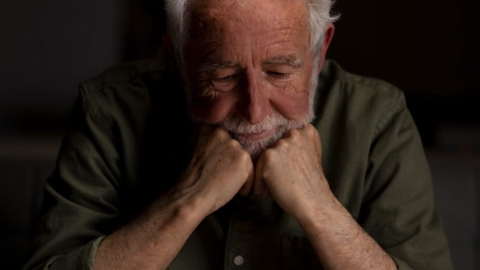
I’m seventy-nine years old. I don’t like to make a fuss. But that seat had cost me four years.
I should tell you about the seat, before I tell you about anything else.
My name is Harlan Price. I live in Marietta, Georgia, in a brick ranch house that my wife Dorothy and I bought in 1981. Dorothy died two years ago this February. We were married fifty-three years. We had one son, Tommy, who lives in Atlanta and sells commercial insurance, and one granddaughter, Rachel, who moved to Seattle six years ago for a job at a hospital and married a nice young man named Ben who builds boats.
Rachel had a baby boy on November nineteenth. My first great-grandchild. They named him Harlan.
I found out on the phone. Rachel called me from the hospital bed, and I could hear the baby crying in the background, and she said, “Grandpa, we named him after you,” and I had to sit down on the kitchen floor because my legs quit. I sat there on the linoleum with the phone and cried like a fool. Dorothy would have laughed at me. Then she would have cried too.
Dorothy always wanted to fly first class. One time. Just once, she said. Just to see what all the fuss was about. Every time we flew to see Rachel in Seattle, we’d walk past those big leather seats and she’d look at them like a kid looking in a bakery window. I always said, next time. It costs too much. Next time.
There wasn’t a next time.
After she died, I started saving my miles. I’d been flying that airline my whole working life, and some of the miles were still on my account from way back. I put everything on the airline credit card. Groceries, gas, my prescriptions, the plumber. I flew to my brother’s funeral in Tulsa on the cheapest seats I could find so the miles would pile up. It took me four years to get a hundred and eighty thousand miles. That’s what it costs to fly first class from Atlanta to Seattle the day before Thanksgiving.
I booked 2A in March. The window. Because Dorothy always wanted the window.
My son Tommy thought I was crazy. He called me the night before the flight while I was packing.
“Dad, a hundred and eighty thousand miles? For one flight? You know you can turn those into gift cards. That’s like two thousand dollars at Home Depot. You could redo the bathroom.”
“I don’t want to redo the bathroom.”
“Mom wouldn’t want you blowing it on a seat.”
“Your mother,” I said, “would have wanted exactly this seat. She told me so about forty times.”
He was quiet for a second. Then he said, “Okay, Dad. Send me a picture from up there.” He’s a good boy. He just thinks in numbers. Insurance people do.
At the airport that morning, the gate agent scanned my boarding pass and her machine made a happy little chime, and she smiled and said, “Welcome aboard, Mr. Price. Group one.” I’d never been group one in my life. I’d always been group five or group six, standing around with the families and their car seats. I walked down that jet bridge first, ahead of everybody, with my logbook under my arm, and I felt about eight feet tall.
A young flight attendant at the door, not Courtney, a short girl with freckles, showed me to 2A and asked could she hang my coat. I said no thank you. She brought me a little warm towel. I didn’t know what to do with it, so I held it until it got cold. Then she brought the cashews.
I took Dorothy’s picture out of my wallet and propped it against the window for about a minute. Then I put it back, because I didn’t want anybody to think I was strange. I figured I’d take it out again over Colorado.
I’d eaten two cashews when Courtney showed up.
I want to be clear. I didn’t book it for myself. I booked it for her. I’d brought her picture in my wallet, and I was going to take it out somewhere over Colorado and show her the clouds.
And now a flight attendant named Courtney was standing over me with my boarding pass, telling me to go sit in the back with the regular folks.
“Ma’am,” I said. “I paid for this seat with a hundred and eighty thousand miles. It took me four years.”
“And you’ll get those miles refunded, sir. Minus the difference for the economy seat. It’s all automatic.” She held out my new boarding pass. 31B. Middle seat. Back of the plane, right by the lavatories. “Please.”
“Can’t the young man sit in 31B?”
Courtney laughed. A short little laugh, like I’d said something charming.
“He’s a pilot, sir. He’s working.”
“He’s deadheading,” I said. “He’s not flying this plane. He’s riding to Seattle to pick up a trip tomorrow. That’s not working. That’s riding.”
Courtney’s eyebrows went up. The young pilot, Jace, looked up from the floor at me, a little startled.
“How do you know what deadheading is?” Courtney said.
“I’ve done it,” I said.
She looked at me, and then she looked down at my coat on my lap, and the jacket I was wearing.
The jacket. I should tell you about the jacket.
It’s an A-2 leather flight jacket. Brown horsehide, with knit cuffs and a knit waistband, the kind the Army Air Corps issued in World War II and the Air Force kept issuing for years after. The leather’s cracked at the elbows and gone soft as a glove. There’s a patch on the left breast, faded almost to nothing, that used to say 774th TACTICAL AIRLIFT SQUADRON. There’s a name tag over the right breast, also faded. PRICE. Dorothy sewed new stitching on it twice. I wore it every time I flew. Habit. Superstition, maybe. It had kept me alive once.
Courtney looked at that jacket. Then she looked at my face. And she smiled again.
“Okay, Top Gun,” she said. “Nice costume. Let’s go.”
Behind her, a couple of the first-class passengers laughed. A businessman in 1C with his laptop open. A woman in 3D with a little dog in a carrier. They laughed the way people laugh when somebody else is being embarrassed and they’re glad it’s not them.
A little boy across the aisle in 4A, maybe six years old, in a sweatshirt with a dinosaur on it, tugged on his mother’s sleeve. He said it loud, the way kids say everything.
“Mom, did the grandpa do something bad?”
“Shh. Eat your pretzels.”
That one got me. More than the costume. I hadn’t done anything bad. I’d just gotten old in a nice seat.
The young pilot, Jace, said quietly, “Courtney. Maybe I should just sit in the back.”
“Jace, it’s fine,” she said. “We do this all the time.” She looked down at me. “Sir. I’ve asked you three times. If I have to ask you again, I’ll have to get the captain involved, and then we’re talking about a delay, and then we’re talking about you being removed from the aircraft. Nobody wants that. Least of all you. It’s the day before Thanksgiving.”
She held out the boarding pass one more time.
I looked at that pass. 31B. I looked out the window at the ground crew loading bags in the cold November rain. I thought about Dorothy, and the clouds over Colorado, and her picture in my wallet.
Then I looked up at the young pilot. Jace. He was a nice-looking boy, a little nervous, with a first officer’s three stripes on his sleeves. Couldn’t have had more than a few years on the line. He reminded me of somebody.
“Son,” I said. “How long have you been with the airline?”
He blinked. “Three years, sir. In January.”
“Who did your initial operating experience?”
“Uh— Captain Okafor, sir. Denise Okafor. Out of Atlanta.”
I sat very still for a second.
“Is that right,” I said.
“Yes, sir. She’s— she’s actually flying this trip. She’s the captain today. She’s up front.”
“Sir,” Courtney said. Her voice was sharp now. “I’m not asking again.”
I looked at her for a long moment. I’ve been looked down on before. Plenty of times. I grew up poor in Oklahoma, the son of a man who drove a cattle truck. I’ve been looked down on by colonels and generals and airline executives and once by a congressman. You learn, after a while, that the people who look down on you mostly can’t see very far.
I put Dorothy’s picture back in my wallet. I put my logbook on top of my coat.
“Understood,” I said.
I got up. My knees cracked. I picked up my coat and my logbook and my little bag of cashews, and I took the boarding pass out of her hand, and I walked down the aisle to the back of that airplane.
Everybody watched me go. Some of them looked sorry. Most of them looked at their phones.
31B was between a teenager with big headphones and a man in a Falcons jersey who was already asleep with his mouth open. The lavatory door was about eighteen inches from my left elbow. Every time someone opened it, the smell came out. I sat down and put my logbook on my knees.
Up front, Courtney was settling Jace into 2A. She brought him a warm towel. She brought him a glass of champagne before we’d even pushed back. I could see her laughing with him. He wasn’t laughing. He kept looking back down the aisle toward me.
The teenager next to me had her headphones down around her neck by then. She was maybe sixteen, with braces and a hoodie that said BUFORD WOLVES SOFTBALL.
“That lady was really rude to you,” she said.
“She’s having a hard day, I expect,” I said.
“My mom says people who are mean to old people get it back.” She thought about that. “Sorry. I didn’t mean old.”
“I’m seventy-nine,” I said. “You can say old.”
She grinned at me with all those braces. Then she offered me half of a granola bar, and I took it, because it seemed rude not to, and it was a lot worse than the cashews.
I opened my logbook.
It’s an old logbook. Leather, with my name embossed on the front in gold letters that have mostly worn off. Inside are forty-one years of flying. Every flight I ever made, in my own handwriting. It starts in 1968 at pilot training at Vance Air Force Base in Enid, Oklahoma, in a T-37 that was so loud they called it the Tweet. Then C-130s. Then thirteen months in Vietnam, in 1970 and 1971, flying in and out of places like Khe Sanh and Dak To and An Loc with bullet holes in the wings. Then twenty-eight years with this airline.
This airline. The one I was sitting in the back of.
I joined in 1977, as a flight engineer, sitting sideways in the cockpit of a 727 watching the gauges. I made first officer in 1982. Captain in 1990. In 1996, they made me a check airman. That’s the pilot who trains the new pilots. Who rides with them on their first trips and decides whether they’re good enough to keep. I did that for fourteen years, until I retired in 2010 at sixty-five, which is when the government says you’re too old to fly an airliner.
I trained something like three hundred pilots for this airline. I have every one of their names in this logbook. Every one of their first trips.
I turned to a page near the back. I knew exactly which one. I’ve looked at it a hundred times.
March 11, 1999. Atlanta to Dallas–Fort Worth. MD-88. Initial operating experience, first officer. D. OKAFOR.
And under it, in my handwriting, a note. I’d written it that night in a hotel room in Dallas.
Good hands. Better head. They’ll try to wash her out. Don’t let them.
I sat in 31B with my logbook on my knees and looked at those words for a long time.
I remember Denise Okafor. I remember her better than I remember most of them.
She was twenty-six years old. A Black woman from a little town in south Alabama, the daughter of a Nigerian father and a mother who cleaned houses. She’d flown cargo in Alaska for three years, in weather that would make most pilots wet their pants, to build up her hours. She was the first Black woman they’d hired as a pilot in that base. Some of the captains didn’t want to fly with her. They said so, out loud, in the crew room. Some of them called in sick when they saw her name on their trip.
I was assigned to do her first trips. I’ll be honest; I didn’t know what to expect. But on the first leg to Dallas, we got a thunderstorm on the approach. Bad one. Wind shear. And that twenty-six-year-old girl flew that airplane through it like she was sitting in her living room. She didn’t panic. She didn’t freeze. She did every callout perfect. When we got to the gate, I looked over at her, and her hands were shaking a little, and she said, “Was that okay, Captain Price?”
I said, “That was better than okay.”
The other check airmen wanted to fail her anyway. I found out about it later. There was a meeting. Three captains said she wasn’t “a good fit.” One of them said she was “too emotional,” because she’d thanked a flight attendant for bringing her coffee. I went to that meeting. I’d never gone to one before. I put my logbook on the table and I read them every leg I’d flown with her, and every note I’d made, and I told them that if they washed her out, I’d resign my check airman position and tell the union why.
They didn’t wash her out.
She made captain in 2008. I flew with her once more, in 2009, when she was a brand-new captain and I was a year from retirement and needed to fill out my hours. I sat in the right seat. She called me Captain Price the whole trip, even though she was the one in command. When we landed, she took my hand and held it and didn’t say anything.
I hadn’t seen her since. I’d heard she was doing well. I heard she was a check airman herself now. I’d thought about calling her when Dorothy died. I didn’t. I didn’t want to be a bother.
And now she was sitting in the left seat of this airplane, about a hundred feet in front of me, running her checklist, getting ready to push back.
And I was in 31B, next to the lavatory.
I want to tell you I planned what happened next. I didn’t. I want to tell you I sent her a message, or asked somebody to tell her I was aboard. I didn’t do that either. I’m seventy-nine years old and I don’t know how to send a message to the cockpit of an airplane from 31B, and I wouldn’t have done it if I did. It wasn’t her business. It was mine.
I just sat there with my logbook on my knees, and the cashews on my lap, and Dorothy’s picture in my wallet, and I looked out the little window past the teenager with the headphones at the rain coming down on the ramp.
The forward door closed. The jet bridge pulled away. Courtney did the safety demonstration in the first-class cabin. A different flight attendant, an older woman named Gail with reading glasses on a chain, did it in the back. When she got to my row and saw me, she stopped for half a second and looked at my jacket. Then she looked at my face. Then she finished the demonstration.
We sat at the gate. The engines were running but we didn’t move. A minute went by. Two.
Then the PA clicked on. The voice was a woman’s voice. Low and calm and a little bit Alabama, after all these years. I’d have known it anywhere.
“Ladies and gentlemen, good afternoon, this is your captain, Denise Okafor, welcoming you aboard our flight to Seattle. We’re just waiting on our final paperwork and we’ll be pushing back in a couple of minutes. Flying time today is four hours and forty minutes. The weather in Seattle is, well, it’s Seattle.”
People laughed a little. She waited for it.
“Before we go,” she said, “I need to ask something. Our gate agent just brought down the final passenger manifest, and I see a name on it that I want to make sure I’m reading right.” There was a pause. “Is there a Mr. Harlan Price aboard? Captain Harlan Price?”
The whole plane went quiet.
“If there is,” she said, “would he please ring his call button? I’d like to come back and say hello.”
I sat very still in 31B.
The man in the Falcons jersey woke up. The teenager took off her headphones.
Up in the first-class cabin, Courtney had been sitting down in her jump seat for takeoff. I saw her head come up. I saw her turn and look back down the long aisle toward the back of the plane.
Toward me.
Toward the old man in the cracked leather jacket with PRICE on the name tag.
In 2A, the young pilot Jace turned around in his seat and looked at me, and his mouth fell open.
I didn’t ring the call button.
I didn’t have to. Gail, the older flight attendant with the reading glasses, was already walking up the aisle toward the cockpit, fast, and she had the interphone off its hook before she even got to the front galley.
I could see her talking into it. I could see Courtney standing up from her jump seat, white as the bulkhead behind her.
The cockpit door opened.
Denise Okafor came out. She was fifty-three years old now, with silver coming in at her temples and four stripes on her sleeves. She stood at the front of the aisle and looked down the whole length of that airplane, past a hundred and sixty passengers, all the way to the back.
She found me in 31B.
I saw her see me. I saw her see where I was sitting. I saw her see the lavatory door eighteen inches from my elbow. And I saw her look, slowly, at the young first officer sitting in 2A with a glass of champagne in his hand.
Then she looked at Courtney.
Courtney didn’t move.
Captain Okafor didn’t say a word to her. She walked down that aisle. All the way. Row by row. People were turning in their seats to watch her. She didn’t hurry. She walked the way you walk when you’re carrying something you don’t want to spill.
When she got to row 31, she stopped. She looked at me.
“Captain Price,” she said.
“Captain Okafor,” I said.
She put out her hand. I took it. She held onto it, the way she held it in 2009, and didn’t say anything for a while.
“Why are you back here?” she said finally. Quietly.
“They needed my seat,” I said.
“Who did?”
I didn’t answer. I didn’t need to. She turned and looked back up the aisle at the first-class cabin. At Jace in 2A. At Courtney standing in the galley with her hand over her mouth.
When she turned back to me, her eyes were wet, and her jaw was very tight.
“Captain Price,” she said. “Would you do me the honor of coming up front?”
What happened after that, I’ll tell you plain, because I’m not one to dress things up.
Captain Okafor walked me up the aisle to the first-class cabin. People clapped. I don’t know who started it. A soldier in uniform in row 22 stood up and saluted me when I went by, because he’d seen the squadron patch, and I saluted him back.
When we got to row 2, Jace was already standing up in the aisle with his rolling bag. His face was red.
“Sir,” he said. “I’m so sorry. I didn’t— I told her I’d sit in the back. I’m sorry.”
“I know you did, son,” I said. “I heard you.”
He went to 31B. I watched him go. He walked fast, with his head down.
Captain Okafor sat me down in 2A herself. She got my coat into the overhead bin. Then she turned to Courtney, who was still standing in the galley, and said, in a low voice that nobody heard but me and Courtney and maybe the businessman in 1C, “We’ll talk in Seattle.”
Then she squatted down in the aisle next to my seat so she was eye level with me, in her uniform, with her four stripes.
“You read them your logbook,” she said. “In 1999. At the meeting. I found out about it years later. One of the captains who wanted me gone told me at his retirement party. He said you put it on the table and read every single leg.”
“You flew every single leg,” I said. “I just read them.”
“I wouldn’t have a career without you.” Her voice broke a little. “I’ve got two girls. One’s at Embry-Riddle right now. She wants to fly. She wouldn’t want that if I’d washed out.”
I didn’t know what to say. So I took out my wallet, and I took out Dorothy’s picture, and I showed it to her.
“This is my wife,” I said. “She always wanted to sit up here. One time. I saved four years of miles. She passed two years ago. I was going to show her the clouds over Colorado.”
Captain Okafor looked at that picture for a long time.
Then she stood up, and went to the front galley, and got on the PA, and I’ll tell you what she said, because the whole airplane heard it.
“Ladies and gentlemen, this is your captain again. Sorry for the delay. We’ll be pushing back in just a moment. I want to tell you something first. The gentleman in seat 2A, Captain Harlan Price, trained me to fly airplanes for this company twenty-seven years ago. He also flew C-130s in Vietnam. Some of you may have just seen him walk up the aisle.” She paused. “He’s flying to Seattle today to meet his first great-grandson, who was born last week. The baby’s name is Harlan. And he’s flying in this seat because his late wife, Dorothy, always wanted to sit up here, and never got to.”
The whole plane was quiet.
“So when we cross over Colorado,” Captain Okafor said, “I’m going to give you a heads up. And if you’re sitting by a window, I’d appreciate it if you’d take a minute and look at the clouds. For Dorothy.”
She hung up the PA. The first-class cabin was silent. Then the woman in 3D with the little dog started to cry. And then I did too.
Courtney didn’t come back to my seat for the whole flight. Gail took care of first class. She brought me warm cashews and a turkey sandwich and a cup of coffee, black, and she said, “My daddy flew C-130s. Out of Pope Field. 1969.” I asked her his name. I didn’t know him. But I knew his squadron, and I told her about it, and she sat down in the empty jump seat across from me for twenty minutes and listened.
Over Colorado, the captain came on the PA again. She said, “Folks, we’re over the Rockies now. Look out your windows.”
I took Dorothy’s picture out of my wallet. I held it up to the window.
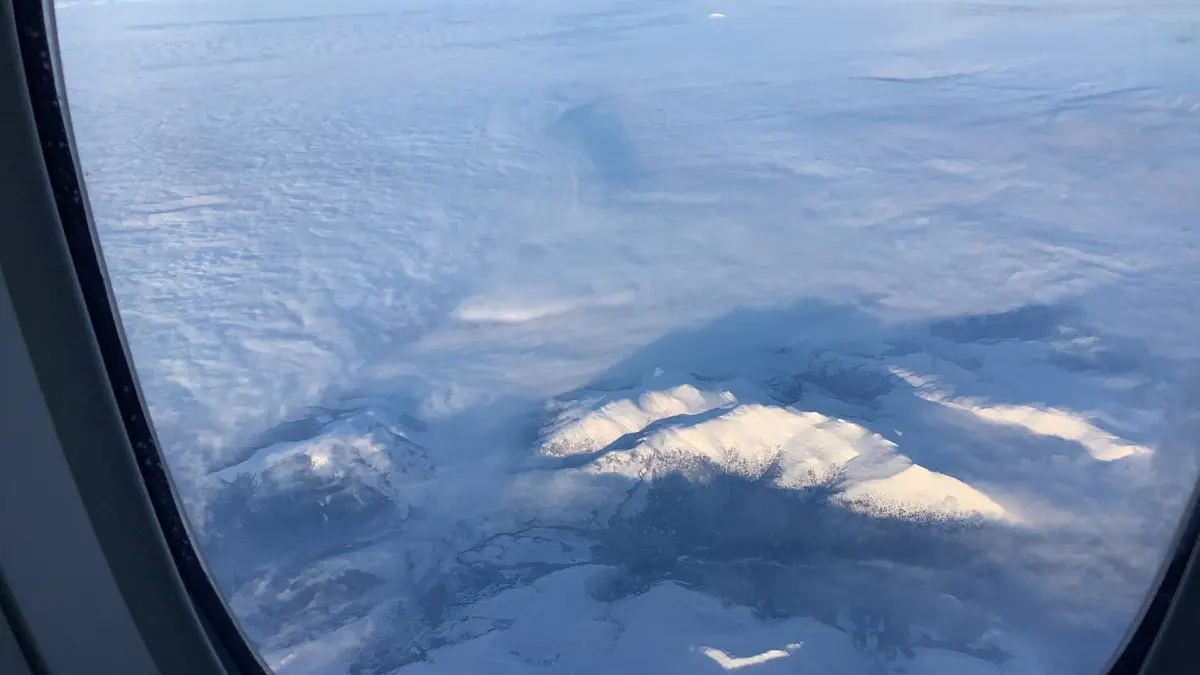
The clouds were piled up white over the mountains, with the snowy peaks sticking up through them in the late afternoon sun, all pink and gold. It was the most beautiful thing I’ve ever seen from an airplane, and I’ve seen a lot from airplanes.
“There you go, Dot,” I said. “That’s what the fuss is about.”
Somewhere over Idaho, the businessman in 1C closed his laptop and leaned across the aisle. He was about fifty, in a gray quarter-zip with a bank logo on it.
“Sir,” he said. “I laughed back there. When she said the thing about the costume. I’m sorry. That was a lousy thing to do.”
“It’s all right,” I said.
“It’s not, really.” He rubbed his face. “My father was in the Navy. Korea. He’d have smacked me upside the head.” He handed me a business card. Some regional bank in Bellevue, VICE PRESIDENT, COMMERCIAL LENDING. “If your granddaughter’s husband ever needs a loan for that boat shop, you tell him to call me. I’ll take care of him.”
I put the card in my logbook. Ben did call him, as it turned out, in the spring. But that’s Ben’s story.
When we landed in Seattle, Captain Okafor met me at the cockpit door. She hugged me. In front of everybody getting off the plane. She held on a long time.
“Captain Price,” she said. “You put me in your logbook. Can I put you in mine?”
She took out her own logbook. A newer one. And right there in the jet bridge, she wrote it in. The date, the flight number, the route. And under PASSENGERS OF NOTE, in her careful hand: CAPT. H. PRICE (RET.). MY CHECK AIRMAN. GOOD HANDS. BETTER HEAD.
I don’t know what happened to Courtney. Captain Okafor said she’d filed a report, and that the airline would handle it, and that it wasn’t my concern. I got a letter from the airline in December, with an apology and my hundred and eighty thousand miles refunded in full, and a voucher for another first-class trip. I’ve asked them to transfer the voucher to my granddaughter Rachel, so she can bring the baby to Georgia in the spring.
Jace found me in the baggage claim in Seattle. He’d run all the way from the back of the plane. He was out of breath. He asked if he could shake my hand. Then he asked if he could get a picture with me, and his hands were shaking taking it, and he said his grandfather had flown in Vietnam too, and never talked about it. I told him maybe he should ask.
He sends me a Christmas card now. Last year he made captain.
Rachel and Ben were waiting at the bottom of the escalator. Rachel had the baby in one of those carriers on her chest. He was asleep. He had a little knit hat on, blue, with a pom-pom.
Rachel unbuckled him and put him in my arms.
He weighed about as much as a bag of sugar. He opened his eyes and looked up at me. Gray-blue. Dorothy’s eyes.
“Hey there, Harlan,” I said. “I’m Harlan too.”
He grabbed onto the zipper of my old leather jacket with his whole fist and wouldn’t let go. Rachel laughed and said he must like it.
I let him keep holding on.
Thanksgiving was at Rachel and Ben’s little house in Ballard, with a view of the water if you leaned out the kitchen window far enough. Ben’s parents came, and Ben’s sister and her two boys, and Tommy flew in that morning on a cheap seat in the back, row 34. He said he thought about me the whole way.
Rachel made Dorothy’s cornbread dressing from the recipe card in Dorothy’s handwriting, which I’d mailed her years ago. It had a grease spot on one corner. She’d laminated it. Ben fried a turkey in the driveway in the rain and nearly set his eyebrows on fire. The baby slept through the whole meal on my chest, under the jacket, because I’d gotten cold and Rachel said leave it on, Grandpa, he likes it.
When it came time to go around the table and say what we were thankful for, Tommy went last. He held up his phone. Somebody on the plane had taken a video of Captain Okafor walking down that aisle, and it had gone around the internet overnight. Tommy said it had two million views. I said I didn’t know what that meant. He said it meant two million people watched his father get walked up to first class by a captain.
“I’m thankful you didn’t redo the bathroom, Dad,” he said.
Everybody laughed. I laughed too. Then I had to go out on the back step for a minute by myself, in the rain, and Rachel let me.
The jacket’s his now, by the way. I put it in my will. Dorothy would’ve wanted somebody to wear it who’d go places.