I turned eighty on the second Tuesday in March, and my children took me to dinner at the steakhouse out on the bypass, the one with the peanut shells on the floor that Hank always liked. There were eleven of us at two tables pushed together in the back room. My three kids and their spouses, four of the grandkids, and me. My oldest great-grandchild was supposed to come but she had the flu.
I wore my good blue blouse and the pearl earrings Hank gave me for our fortieth. I’d had my hair done that morning at the place on Sycamore Street, and the girl put a little extra curl in it because she said eighty deserved a little extra. I felt pretty. I don’t mind saying it. You don’t feel pretty that often at eighty, so when it happens you notice.
My oldest daughter Denise organized the whole thing. Denise organizes everything. She’s fifty-four, and she has organized every birthday, Thanksgiving, Christmas, Easter, and funeral in this family since she was about twelve. When Hank died two years ago, she had the funeral planned before I’d finished filling out the paperwork at the hospital. I was grateful. I was. But it does something to you, having someone plan everything for you. After a while you stop planning anything yourself.
We had the cheese bread, and the salads, and the waitress brought out my steak, which was too big, and everybody sang Happy Birthday and a young man with a guitar came over and sang it again in a cowboy voice. My grandson Josh took about four hundred pictures. Then the cake came, a little chocolate one with a candle shaped like an eight and a candle shaped like a zero, and I blew them out on the first try. Denise tapped her water glass with a fork.
“Okay, everybody,” she said. “Before presents. Mark and Tom and I have something we want to give Mom. It’s a family present. From all of us.”
My son Mark nodded and looked at the tablecloth. My son Tom wasn’t there in person. He lives in Phoenix and couldn’t get away, so Josh had him propped up on a phone against the ketchup bottle on a video call. Tom waved at me from the little screen. He looked tired. It was four o’clock his time.
Denise handed me a big white envelope tied with a curly gold ribbon.
I opened it. Inside was a brochure, the glossy kind, folded in thirds. On the front was a picture of a brick building with white columns and a fountain, and a woman about my age in a pink cardigan laughing with a young nurse. Willow Creek Senior Living, it said in gold letters across the top. Independent Living. Assisted Living. Memory Care. Where Every Day Is a New Beginning.
Behind the brochure was a receipt. It said deposit received, two thousand five hundred dollars, for a one-bedroom independent living suite, move-in date January 15th. Under that, there was a floor plan of a little apartment, with a kitchenette in the corner and a bathroom with grab bars by the toilet, and somebody had drawn a smiley face on it in blue pen.
“Surprise,” Denise said. “Happy birthday, Mom.”
Everybody was quiet. Even the grandkids. Even the young man with the guitar, who’d stopped at the next table and was pretending not to listen.
“It’s a really nice place,” Denise said. She’d prepared for this. I could tell. She had her hands folded on the table the way she does when she’s giving a presentation at her church committee. “We toured it. Mark and I. They have three meals a day, and a beauty shop, and a chapel, and a van that takes you to Walmart on Tuesdays. They have bingo. They have a library. You’d have your own apartment, Mom. Your own front door. And somebody there twenty-four hours a day if anything happens.”
“Nothing’s happening,” I said.
“Not yet.” She reached across and put her hand over mine. “But Mom, you’re eighty. You live alone in that big house with those stairs. You fell in October.”
“I tripped on the garden hose.”
“You were on the ground for twenty minutes before Mrs. Hadley found you.”
“I was looking at the clouds. I told you that.”
Josh laughed and then stopped laughing when his mother looked at him.
“We already talked to a realtor,” Denise went on. “About the house. Just to get an idea. She says with the market the way it is, it would sell in a week. Two hundred and ten thousand, maybe more. That covers Willow Creek for years. Years, Mom. And you wouldn’t have to worry about the furnace, or the gutters, or the snow, or any of it ever again.”
“You talked to a realtor about my house.”
“Just to get an idea.”
I looked at Mark. Mark was still looking at the tablecloth.
“Mark?”
“It’s a nice place, Mom,” he said quietly. “Really. It’s nice.”
I looked at the phone propped on the ketchup bottle. “Tom?”
Tom’s face on the little screen was very still. “I told them we should ask you first, Mom,” he said. “I want you to know that. I told them.”
“Tom,” Denise said sharply.
“Well, I did.”
Denise took a breath and smiled at me again. She has her father’s smile, and she knows how to use it. “Mom. The deposit’s paid. The room’s being held. It’s done. All you have to do is say yes.”
I sat there with that brochure in my hands. Where Every Day Is a New Beginning. And I thought about Hank.
Hank Kowalczyk and I were married fifty-four years. We had the hardware store on Main Street in Kokomo for forty-one of them. Kowalczyk Hardware. Nuts and bolts sold by the pound, keys made while you wait, paint mixed to order. We worked six days a week, and on Sundays we went to church and then Hank did the books at the kitchen table. We never took a vacation longer than a long weekend in our lives. There was always a reason. The store. The kids. Money. The store again.
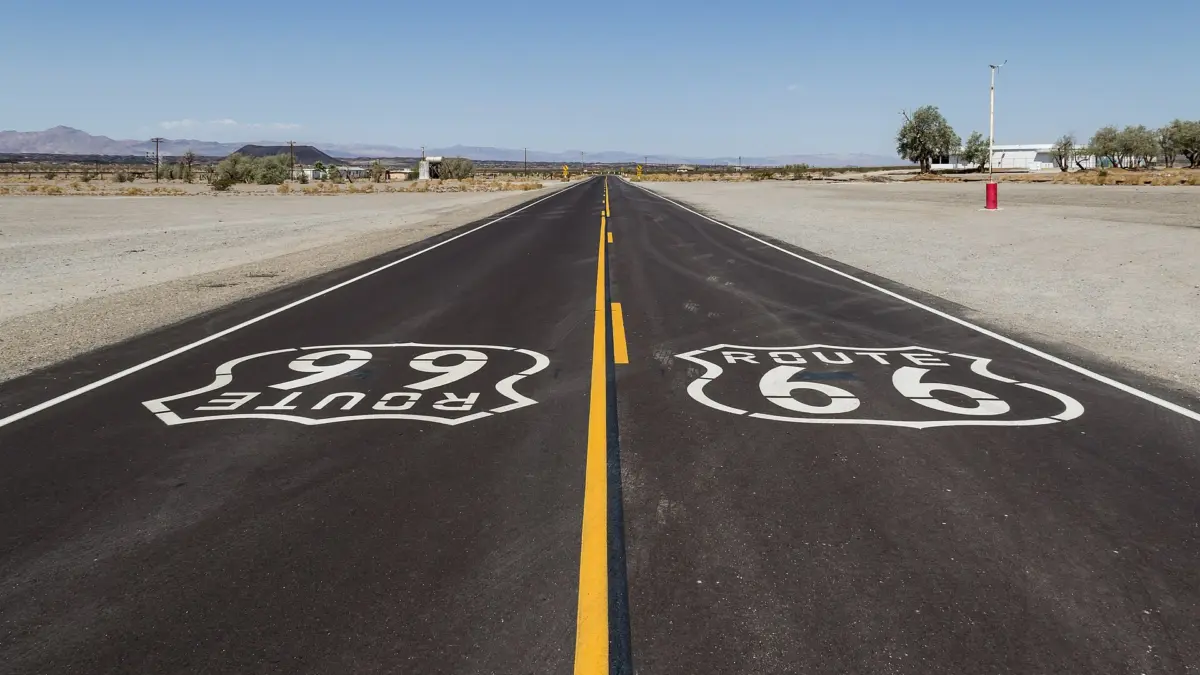
We had a map. That’s the thing. Hank kept a Rand McNally road atlas in the drawer under the cash register, and on slow afternoons he’d take it out and spread it on the counter and plan the trip we were going to take when we retired. Route 66. Chicago to Los Angeles. He had it all marked in pencil. The motels he wanted to stay in. The diners. The Cadillacs buried nose-down in a field in Texas. And the Grand Canyon. He wanted to see the Grand Canyon more than anything. He’d never been west of Saint Louis.
We sold the store in 2016. We were going to go in the spring of 2017. Then Hank’s knee went bad, and he had the surgery. Then his heart. Then the pandemic. Then he got the diagnosis, and that was that. He died in March two years ago, the week after my seventy-eighth birthday.
The last week, at home in our bedroom with the hospice nurse, he made me get the atlas out of the drawer where I’d put it when we sold the store. He held it on his chest. He was so thin by then that it covered most of him.
“Lorraine,” he said. “You go. Promise me. You take me with you and you go.”
I promised him. I’d have promised him anything that week.
He’s been sitting on my mantel for two years in a bronze urn with a little brass nameplate. Henry J. Kowalczyk, 1943 to 2024. The atlas is on the mantel next to him. Every morning I dust them both.
So there I was, eighty years old, at the steakhouse with the peanut shells on the floor, holding a brochure for a place with bingo and a van to Walmart. And everybody at that table was waiting for me to say yes.
I set the brochure down on the table, very carefully, next to my plate.
“Thank you, Denise,” I said. “That’s very thoughtful.”
She let out a breath like she’d been holding it for a week. “Oh, Mom. I knew you’d—”
“I have a present too,” I said.
“What?”
“For all of you. I have a present.”
I picked up my purse from where it was hanging on the back of my chair. It’s a big brown leather purse, the kind with about six compartments, and Hank used to say I could have packed a lunch for the whole store in it. I unzipped the middle compartment. I reached in.
And I took out a set of keys and set them on the tablecloth in front of Denise.
They were big keys. Three of them on a ring, with a black rubber fob, and a little plastic tag that said 31 FT in black marker, and a keychain from the Indiana State Fair shaped like an ear of corn.
Denise looked at the keys.
Then she looked up, out the big window behind me, at the parking lot across the street. At what was parked there, taking up six spaces in the back corner of the Kroger lot, where I’d left it two hours before.
And she dropped her fork.
It clattered on her plate and bounced onto the floor into the peanut shells. Nobody picked it up.
“Mom,” she said. “What is that?”
“That’s a 1999 Winnebago Brave,” I said. “Thirty-one feet. White with a blue stripe. It has a queen bed in the back and a little dinette that turns into another bed, and a bathroom with a shower, and an oven that works, and a generator. It has a hundred and twelve thousand miles on it, and the engine was rebuilt in 2021. I bought it from a retired Methodist pastor in Muncie named Reverend Earl Thompson. He and his wife drove it to all forty-eight states before her hips went.” I picked up my coffee. “Thirty-eight thousand five hundred dollars. Cash.”
You never heard a back room in a steakhouse so quiet.
Then my granddaughter Brianna, who is nineteen and goes to Ball State, said, “Oh my God, Grandma,” and started laughing so hard she had to put her head down on the table.
“How did you get here?” Denise said. Her voice had gone very high. “Mom. How did that get here?”
“I drove it.”
“You drove it? You drove that? On the bypass?”
“It’s not hard. It’s an automatic. You just have to swing wide on the turns. Reverend Thompson took me out in it four times in the church parking lot and twice on the highway before I bought it. He said I was a natural.” I sipped my coffee. “I’ve been driving it around town for two weeks now. I keep it out at Bernice’s farm. She’s got that big pole barn.”
“Bernice Mueller? Bernice is eighty-two years old!”
“Eighty-three in May. She drove a school bus for thirty-one years, Denise. She can back that thing into a space better than I can. She’s coming with me.”
“Coming with you where?”
I reached into my purse again, into the side pocket this time, and took out Hank’s road atlas. The old Rand McNally from the store, with the cover torn off one corner and the pages soft from handling. I opened it to the page I had marked with a paper clip, and I laid it on the table next to the keys. Route 66, in Hank’s pencil lines, all the way across the country. Chicago to Santa Monica, with a little side trip drawn up into northern Arizona, and a star.
“The Grand Canyon,” I said. “Your father wanted to see it. So he’s going to see it.”
Mark made a sound. I looked over at him and he had his hand over his mouth and his eyes were wet. On the phone against the ketchup bottle, Tom had leaned in so close to his camera that all I could see was his nose.
But Denise just stared at me.
“You can’t do this,” she said.
“I can, actually.”
“Mom, you’re eighty years old. You can’t drive a—a thing like that across the country. You fell in October! What if something happens? What if you break down in the middle of the desert? What if you get confused?”
“I don’t get confused.”
“You don’t know that!”
“I do, actually,” I said. “I went to see Dr. Patel in February. I told her what I was planning. She gave me the whole workup. Memory tests, eyes, heart, the works. She said I have the blood pressure of a fifty-year-old and I scored better on the memory test than she did. She wrote me a letter saying I’m fit to drive.” I tapped my purse. “It’s in here, if you want to see it. And I went to the license branch and took the driving test again. Voluntarily. The lady at the counter said in thirty years nobody had ever come in and asked to take it when they didn’t have to. I got a ninety-four.”
“Mom—”
“I missed one about the following distance in fog.”
Brianna was crying now, she was laughing so hard. Josh had his phone up and was filming the whole thing, and his mother didn’t even notice.
Denise put both of her hands flat on the table. When she spoke again, her voice was very quiet and very hard. It was the voice she used when the kids were little and she meant business.
“Mom. I already paid the deposit. Two thousand five hundred dollars. The room’s being held.”
“I know,” I said. “That’s my other present.”
And I took one more thing out of my purse. A piece of paper, folded in half. I unfolded it and laid it on the table on top of the brochure from Willow Creek.
It was my bank statement. From February. From the checking account at the bank downtown where Hank and I banked for fifty years. The account Denise had asked to be put on after Hank died, as a joint owner, just for emergencies, Mom, just in case something happens and somebody needs to pay the bills.
I’d highlighted one line in yellow. A check, number 4417, dated February 3rd, payable to Willow Creek Senior Living LLC. Two thousand five hundred dollars.
“You paid the deposit,” I said, “out of my account.”
Denise’s face went red. Then white. Then red again.
Mark turned and looked at his sister. “Denise. You said we were splitting it.”
“I was going to pay her back!”
“You said we were splitting it three ways. I gave you eight hundred dollars.”
“So did I,” said Tom, from the phone.
Now it was Denise’s turn to be quiet. She looked at the bank statement. She looked at her brothers. She looked at the keys with the corn-cob keychain. She opened her mouth and nothing came out.
I want to be honest here. I don’t think my daughter is a bad person. I think she was scared. I think she watched her father die, and then she watched me fall in the yard, and she thought she was next to lose. I think she thought if she could just get me into a place with grab bars and a nurse, she’d never have to get that phone call. And I think the money just seemed like a detail, because it was all family money anyway, and she was going to put it right later. People tell themselves that a lot. Later.
But she spent my money without asking me. She put my house in front of a realtor without asking me. And she wrapped it all up in a gold ribbon and handed it to me at my birthday dinner in front of my grandchildren, so that I’d be too embarrassed to say no.
I wasn’t too embarrassed.
“Here’s what’s going to happen,” I said. “On Monday I’m going to the bank and I’m taking you off my account, Denise. Not because I’m angry. Because it’s my account. Then I’m calling Willow Creek and asking for my deposit back. Mark and Tom, I’ll pay you each your eight hundred. And on April first, Bernice and I are leaving for Chicago in that Winnebago, and we’re going to drive to the Pacific Ocean, and on the way we’re going to take your father to the Grand Canyon. And if you want to come along for any part of it, you’re welcome. There’s a dinette that turns into a bed.”
“And the house?” Denise said. Her voice was very small.
“The house isn’t going anywhere. Brianna’s going to live in it while I’m gone.”
Brianna stopped laughing. “I am?”
“You are. You said you hate your dorm. You can stay there through the summer and water my tomatoes and get the mail, and you can pay me a hundred dollars a month so you learn what rent is.”
“Grandma, oh my God, yes.”
Denise picked her fork up off the floor, slowly, and wiped it on her napkin, and set it down on her plate. She didn’t say anything. She didn’t look at me.
The young man with the guitar, who had been standing at the next table this whole time pretending to tune his strings, suddenly started playing. It was “Route 66.” The old Nat King Cole song. I don’t know if he did it on purpose. He told Josh later he did. Then the whole back room started clapping along, and the waitress came in with the check and stopped in the doorway and started clapping too, and I sat there in my good blue blouse with my pearl earrings and cried like a baby.
Denise didn’t clap. But she didn’t leave either. That counts for something.
I should tell you how I came to own a Winnebago, because people always ask, and the truth is it happened by accident.
It started with that bank statement. It came in the mail the second week of February, and I opened it at the kitchen table with my coffee the way I always do. I’m not a computer person. I still get paper statements and I still balance my checkbook with a pencil, the way Hank taught me at the store. And there was check number 4417, for twenty-five hundred dollars, to a company I’d never heard of. Willow Creek Senior Living LLC. In Denise’s handwriting.
I sat there a long time. Then I looked the place up on the computer at the library, because I don’t have the internet at home, and the librarian, a nice young woman with purple hair, helped me find the website. Where Every Day Is a New Beginning. A one-bedroom suite, starting at four thousand nine hundred dollars a month.
I didn’t call Denise. I didn’t call anybody. I went home and I got Hank’s atlas down off the mantel and I sat on the couch with it on my lap, the way he held it on his chest that last week. And I thought, if I don’t go now, they’re going to put me somewhere I can’t go from.
That Sunday at church, Reverend Thompson’s wife was in the bulletin. Not him, her. Under prayer requests. Pray for Earl and Dottie Thompson as they sell their beloved motorhome after Dottie’s hip replacement. Their traveling days are over, but their memories will last forever. And a phone number.
I’m not a superstitious woman. But I called that number from the church parking lot before I even started my car.
Reverend Thompson met me in his driveway in Muncie the next Saturday. He was eighty-five and bent over like a question mark, and he loved that motorhome the way some men love their dogs. He walked me through every inch of it. He showed me where the water went in and where it came out, and how to light the furnace, and which cupboard stuck in the summer. Dottie sat in a lawn chair in the garage with her walker beside her and told me which campgrounds had the cleanest showers.
“Where are you going to take her?” Reverend Thompson asked me.
“Route 66,” I said. “And the Grand Canyon. My husband’s ashes.”
He was quiet for a minute. Then he went in the house and came back with a manila folder, and inside the folder were forty years of campground receipts and maps and postcards. He’d kept every one. He found a map of the Grand Canyon from 1991, with a spot circled on it in red pen.
“Mather Point,” he said. “At sunrise. That’s where Dottie and I renewed our vows. You take him there.”
He knocked two thousand dollars off the price. I tried to argue. He said it was the Lord’s discount and I should take it up with Him.
I paid him with a cashier’s check from my savings, the money Hank and I had put away from selling the store. Bernice drove me home behind the wheel of that Winnebago, the first time, because I was too nervous. By the second week I was driving it myself. By the third week I was parallel parking it, sort of.
So when people ask me how I came to own a Winnebago, I tell them I found it in the church bulletin. That’s the truth.
I’d like to tell you she came around that night. She didn’t. She drove home without saying goodbye. She didn’t call me for nine days. Mark told me she cried in the car all the way home and her husband Rick had to pull over at the gas station on Markland Avenue so she could calm down. I felt bad about that. I did. But I didn’t call her either. I figured she needed to get there on her own.
On Monday I went to the bank. The young man at the desk, who said his grandmother had banked with Hank and me for years, took Denise off the account in about ten minutes. He asked if I wanted to set up a power of attorney for someone else instead, someone I trusted, in case I ever did need help. I said I’d think about it. I’m still thinking about it. When I decide, it’ll be my decision.
Willow Creek refunded two thousand dollars. They kept five hundred as a cancellation fee. It said so in the contract, the one Denise signed. I didn’t fight it. I figured five hundred dollars was a cheap lesson for everybody.
Then I called Denise. It was the ninth day.
“I’m leaving in two weeks,” I said. “I’d like you to come see the motorhome before I go.”
There was a long silence on the phone.
“Why?”
“Because you’re my daughter. And because you’re the most organized person I’ve ever known, and Bernice and I have no idea how to pack a thirty-one-foot Winnebago.”
She came over the next Saturday. She brought a label maker. I knew she would.
She didn’t say she was sorry, and I didn’t make her. She went through that motorhome like a drill sergeant. She organized every cupboard. She put the canned goods in a bin with dividers so they wouldn’t roll, and she labeled the bins, SOUP and VEGETABLES and HANK’S PEANUTS. She made a binder with every campground on Route 66, with phone numbers and the hours the office was open. She put a first aid kit under the sink and a second one in the glove box. She made Bernice and me each wear one of those buttons you push if you fall down. She bought us a GPS, even though I told her I had Hank’s atlas. And on the last day, before she left, she put the bronze urn in the passenger seat herself and buckled the seat belt around it.
“So he doesn’t slide around,” she said.
“Thank you, honey.”
She stood there a minute with her hand on the door. Then she said, “Text me every night. Where you are. Every single night, Mom.”
“I will.”
“Promise me.”
“I promise.”
She got in her car and drove away, and I didn’t see her cry, but her husband told me later that she did.
Bernice and I left on April first. We drove to Chicago and found the sign at the start of Route 66, on Adams Street across from the Art Institute, and a young man from Germany took our picture under it. Then we drove west.
I won’t tell you all of it. It would take a book. We ate pie in Missouri and fried catfish in Oklahoma. We stayed in a motel in Tucumcari, New Mexico, with a neon sign Hank had circled in pencil, and the woman at the desk gave us the room for half price when I showed her the atlas. We saw those Cadillacs in the field in Amarillo, painted every color you can imagine, and Bernice spray-painted her initials on one, and I painted Hank’s. We got a flat tire outside of Gallup, and two cowboys in a truck stopped and changed it and wouldn’t take any money, and one of them called me ma’am about forty times.
There was one bad day. I should tell you about it, because I don’t want you to think it was all pie and neon signs.
It was in Oklahoma, west of Tulsa. A storm came up in the afternoon, the kind they have out there, with a green sky and wind that pushed that big motorhome around like a shoebox. I couldn’t see the road. Bernice was holding onto the dashboard and praying out loud. I pulled off at a truck stop and we sat there in the parking lot with the rain coming sideways and the whole Winnebago rocking, and the radio was saying tornado warning for the next county over.
I’ll be honest. I thought about Denise. I thought, she was right. I’m eighty years old and I’m going to die in a truck stop parking lot in Oklahoma in a motorhome I bought out of a church bulletin, and she’s going to have to plan one more funeral.
Then a trucker knocked on our door. A big man with a beard down to his belt buckle. He said there was a storm shelter in the basement of the truck stop and we ought to come in. So we did. We sat down there for an hour and a half with about forty truckers and a family from Kansas and a woman with three cats in carriers, and somebody had a radio, and somebody had a deck of cards, and Bernice won eleven dollars playing rummy with a man named Frank who drove for a frozen food company.
When we came out, the sky was clear and the sun was going down, and the Winnebago was standing right where I left it, wet and shining. Not a scratch on it.
I texted Denise that night. I didn’t tell her about the tornado warning until we got home. Some things a daughter doesn’t need to know until afterward.
I texted Denise every night. Where we were, what we ate, a picture. She texted back every night. Usually it was just “OK” or “Be careful.” Once, from Oklahoma, she sent a picture of herself holding up the brochure from Willow Creek, and she’d drawn a big red X across the front of it with a marker. I laughed so hard I had to pull over.
We got to the Grand Canyon on April nineteenth. You have to get a permit from the park to scatter ashes there. I didn’t know that, but Denise did, because of course she did, and she’d filled out the form online before we left and put the permit in the binder. We drove out to Mather Point, the way Reverend Thompson told me to, early in the morning, before the tour buses came. It was cold, and windy, and the sun was just coming up over the far side, and the whole canyon was turning pink and orange and gold, layer by layer, all the way down.
I’ve never seen anything like it. Nothing in my life. I stood there at the railing and couldn’t say a word.
Bernice held the atlas. I held Hank. I said a prayer, and I said, “Well, Hank, here you are,” and I opened the urn and let the wind take him out over the edge.
It took him right away. Up and out over the canyon, and then down into all that color, and he was gone.
I texted Denise a picture of the canyon. Just the canyon, with the sun coming up. I didn’t write anything.
She texted back three minutes later. It was six in the morning in Indiana, so she must have been up waiting.
“He would have loved it,” she wrote.
And then a minute later: “I’m sorry, Mom.”
That was the first time. I sat down on a bench at Mather Point and read it about ten times.
Bernice and I drove on to the ocean after that. We got to the Santa Monica Pier on April twenty-sixth and walked out to the end of it and put our feet in the Pacific. It was freezing cold. Bernice said it was the stupidest thing she’d ever done and she wouldn’t have missed it for the world.
I’m home now. The Winnebago is parked in Bernice’s pole barn. Brianna moved back to her dorm in August, but she left my tomatoes in better shape than I’ve ever had them, and she left the hundred dollars a month I’d collected from her in an envelope on the kitchen table, every penny of it, with a note that said “for gas, for next time.”
Next time. That’s what I keep thinking about. Bernice wants to do the Blue Ridge Parkway this fall. Tom wants us to come out to Phoenix. My grandson Josh put the video of my birthday dinner on the internet and three million people watched it, which I still don’t understand, and now strangers stop me at Kroger to ask about the Winnebago.
Denise and I are all right. Not perfect. She still thinks I should sell the house someday, and maybe she’s right. She still calls every morning at eight-fifteen to make sure I’m alive. She still organizes every holiday. But she asks me first now. That’s new.
Hank’s atlas is back on the mantel where the urn used to be. I’ve started marking it up myself in pencil. Little lines going places Hank never drew. I’m eighty, and I’ve got a lot of country left to see, and a thirty-one-foot motorhome, and a best friend who can back it into anywhere.
Willow Creek sends me a brochure in the mail every few months. Where Every Day Is a New Beginning. I put them in the drawer under the atlas.
Someday, maybe. Not yet.