Patricia was standing on my front step holding an old shoebox against her chest like it might try to get away.
It was a little after seven in the evening. Elora had left that afternoon. Her son’s friend had come in a van, loaded her walker and her suitcase and the big bag of library books I’d been bringing her for four weeks, and driven her home. I’d stood in the driveway and waved until the van turned the corner. Then I’d come inside and stripped the sheets in the spare room and opened the windows and stood in the quiet for a while, not sure whether I felt relieved or lonely.
Then the doorbell rang.
“Mara,” Patricia said. “There’s something you should know.”
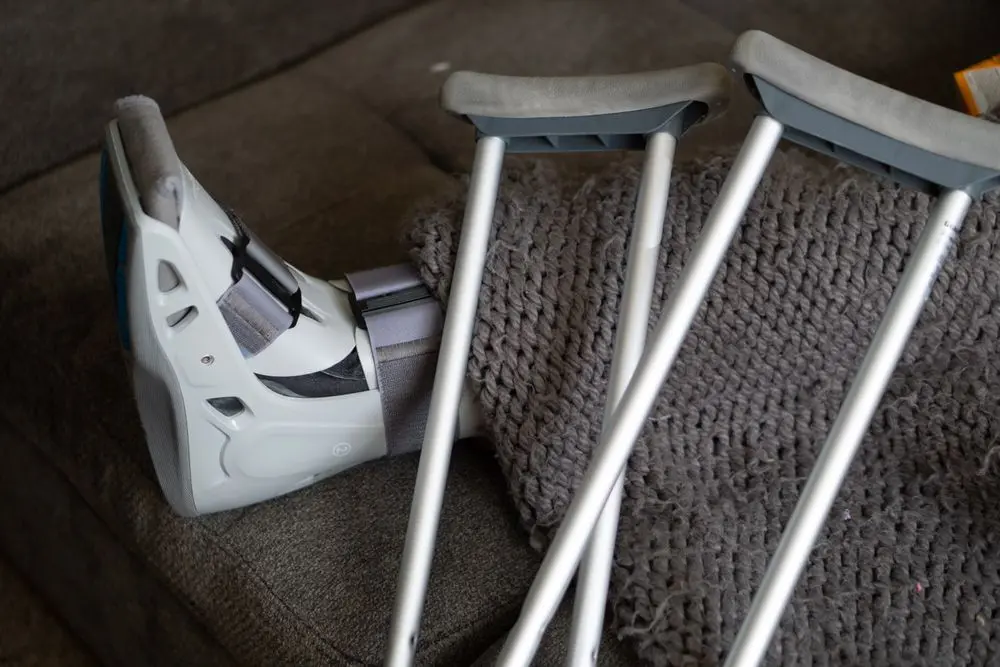
She glanced past me into the hallway. Toward the spare bedroom. As if she expected Elora to come out of it on her crutches.
“Elora had a reason for staying here,” she whispered. “And she planned it from the beginning.”
For a few seconds I just stood there with my hand on the open door.
“What do you mean, she planned it?”
Patricia looked down at the shoebox.
“Can we sit down?”
That scared me more than anything else she’d said.
Patricia Bell isn’t dramatic. She’s seventy-one. She was the secretary at Lincoln Elementary for twenty-eight years. She spends her mornings with her roses and her evenings on her porch with a detective novel and a glass of iced tea. In the nine years I’ve lived next to her, I’ve never once heard her gossip. When the man across the street got arrested for unpaid parking tickets, she said, “That’s his business,” and went back to her book.
She came in. She sat on my couch. She put the shoebox on the coffee table between us.
It was a plain blue box. Women’s size eight. The cardboard had gone soft at the corners.
“She gave it to me on her second day here,” Patricia said. “While you were at work. She called me over and asked me to keep it. She said, ‘Don’t give it to Mara until the day I leave. Not before. Promise me.’”
“Why you?”
“I asked her that.” Patricia folded her hands. “She said because I was the only person on this street who wouldn’t open it.”
“Did you?”
Patricia looked offended.
“Of course not.”
I looked at the box for a long time.
Then I took the lid off.
Let me back up.
Elora Mercer was my mother-in-law for eight years.
Then I caught her son with a woman named Brooke from his office, and I wasn’t married to her son anymore. That was five years ago.
The strange thing is that Elora and I stayed close. Closer, almost. She called me on my birthday. She sent me articles she thought I’d like. Once or twice a year we had lunch at a little place downtown with good soup and bad coffee, and she never once said a word in Shane’s defense. She never asked me to forgive him. She just asked about my work, and my garden, and whether I was eating.
I think I loved her more than I’d ever loved my own mother. That’s not saying much. My mother was a lot of things. Warm wasn’t one of them.
In September, Elora fell on her basement stairs and broke her leg in two places.
She was seventy-four. She needed surgery and a metal plate and six weeks of not putting weight on it. The hospital said she couldn’t go home alone. Her house is a split-level with stairs everywhere.
She had three children. Daniel, her oldest, had died eighteen months before. A heart attack at fifty-one. That left Shane and Claire.
Shane said his apartment was a third-floor walk-up and he worked long hours. Claire lived two states away and said she was in the middle of something at work and couldn’t possibly get away.
Elora called me from her hospital bed.
She didn’t ask. She just said, “Mara, I don’t know what to do.” And then she started to cry, which I had never in thirteen years heard her do.
So I said, “Come stay with me.”
She stayed four weeks.
I set her up in the spare bedroom on the first floor, next to the bathroom. I moved my desk out of there and put in a recliner. I drove her to her follow-up appointments and her physical therapy. I made her soup. She taught me to play gin rummy and beat me every single night.
She was easy to have around. That’s the truth. She read in the recliner most of the day. She did the crossword. She talked to Patricia over the fence when the weather was nice, sitting on a lawn chair I carried out for her.
I never suspected anything.
Not once.
Looking back, there were little things. She asked a lot of questions about the pantry renovation I’d done in the spring. She asked whether I’d moved the shelves. She asked twice if I’d ever had trouble with the pantry wall, any cracks, any damp. I thought she was just making conversation.
One afternoon I came home early and found her sitting on the kitchen floor. Right in front of the pantry. Her crutches were lying next to her.
“Elora! Did you fall?”
“No, no,” she said. “I dropped my pills. I’m just resting.”
I helped her up. She was sweating. Her hands were dusty.
I didn’t think about it again.
Now I sat on my couch with Patricia, and I took the lid off the shoebox.
On top was an envelope with my name on it in Elora’s handwriting.
Under that was a stack of photocopied papers held together with a binder clip. Under that, a photograph. And at the very bottom, rattling around loose, a small brass key with a paper tag tied to it with string. The tag said B-17.
I opened the envelope first.
Mara,
I am a coward. You should know that before you read anything else.
I came to your house because I needed a place to stay. That part was true. But I also came because six years ago, when you and Shane were still married and you went away that weekend to your cousin’s wedding, I hid something in your pantry wall.
Daniel gave me papers. He said they were about a man named Victor Hale and a company called Westbridge, and that they mattered, and that I should keep them somewhere no one would look. I couldn’t keep them in my house. Victor knew my house.
You were replacing the pantry shelves that summer. The drywall was already open. I put the folder inside and patched it myself. I’m good with a putty knife. My father was a builder.
When I came to stay with you, I meant to take the folder back out. Daniel is gone. I didn’t want it in your house anymore.
It wasn’t there.
Someone took it out before I came. I don’t know who.
What I have left are the copies in this box. Read them. I couldn’t tell you to your face. I tried every night for four weeks. Every night I lost my nerve and dealt you another hand of cards.
I’m so sorry.
— Elora
I read it twice.
Then I picked up the papers.
They were bank records. Wire transfers from a company called Westbridge Consulting to an account in Shane’s name. Small amounts at first. Then bigger. Over two years, it added up to almost ninety thousand dollars.
We’d been married then. We’d had a joint account. Or I’d thought we did.
I’d never seen a penny of it.
Under the bank records was something worse.
A loan guarantee. A personal guarantee on a commercial loan to a company I’d never heard of. Four hundred and twenty thousand dollars. Secured by real property.
My house.
And at the bottom of the page, on the line marked GUARANTOR, was my signature.
I hadn’t signed it.
I knew that the way you know your own handwriting. It was close. Very close. But my M was wrong. I make the middle point of my M sharp, like a little mountain. This one was rounded.
Somebody had forged my name to put my house up as collateral for nearly half a million dollars.
The photograph was from Daniel’s wedding. Fifteen years ago. A group of men in tuxedos standing on a country club terrace. Daniel in the middle, grinning. Shane next to him, young and handsome and, I could see now, already a little too pleased with himself.
At the end of the row stood a tall man with dark hair and an expensive watch who I didn’t recognize at all.
Someone had circled his face in blue pen.
My phone rang.
It was Elora.
I almost didn’t answer. Then I did.
“Patricia gave it to you,” she said. Not a question.
“Elora, what is this?”
“I know. I know.” Her voice was shaking. “Mara, listen to me. Someone sent me a picture six days ago. While I was still at your house. Of your house. From outside. I could see myself in the window, in the recliner.”
I went cold.
“Who sent it?”
“I don’t know. It came to my phone with no name. Just the picture. I’m texting it to you now.”
My phone buzzed. I opened it.
It was my house, at night. The front window lit up. Elora’s shape in the recliner, reading. And in the glass of something nearby, a faint reflection. A person in a brown canvas jacket holding up a phone.
Somebody had stood outside my house in the dark and taken a picture of my former mother-in-law.
“Elora—”
Somebody knocked on my front door.
Three knocks. Hard.
Patricia and I both froze.
When I looked back at my phone, the call had dropped.
I didn’t open the door right away.
I went to the front window and moved the curtain an inch.
Shane was standing on my porch.
Five years is long enough for a face to be familiar and foreign at the same time.
His hair was shorter. There was gray at his temples now. He was thinner. Not sick, exactly. Just worn down, in a way I didn’t expect.
I’d imagined seeing him again a hundred times. I’d expected rage, or some buried ache. What I actually felt was mostly surprise. Like seeing a man who belonged to an old version of my life standing in the middle of the new one.
“Do you want me to stay?” Patricia whispered behind me.
“Yes.”
I opened the door. I left the chain on.
“Hi, Mara.”
“Don’t.”
His face tightened.
“Fair enough.”
“Why are you here?”
“You talked to Mom.”
“How do you know?”
“She called me ten minutes ago. She said Patricia gave you the box.”
Patricia folded her arms. Shane saw her over my shoulder.
“Hello, Mrs. Bell.”
“Shane.”
Her tone could have frozen soup.
“Can I come in?” he said.
“No.”
“Then take this.”
He slid an envelope through the gap the chain allowed. I took it. The handwriting on the front wasn’t his.
“I don’t expect you to trust me,” he said.
“That’s convenient.”
“I deserve that.”
“I didn’t say it to make you feel better.”
“I know.”
That threw me.
The Shane I’d been married to never gave an inch. Every little disagreement turned into a court case where he had to prove reasonable doubt. You said seven. I thought you meant around seven. I didn’t forget the reservation, I thought you were confirming it. Even when I found the texts from Brooke, his first instinct was to explain. To argue.
This Shane just stood there and took it.
“What is this?” I held up the envelope.
“A copy of a letter Daniel wrote. To you. Five years ago.”
“Why do you have it?”
“Because I found it last year. After he died. Leah asked me to help clear out his office. There was a sealed file box with my name on it. This was inside, with records and notes and copies of contracts.”
“Westbridge.”
His eyes flickered.
“So you’ve seen them.”
“I’ve seen a loan guarantee with my forged signature on it,” I said. “Did you forge my signature, Shane?”
His whole face changed.
“No.”
“Did you know someone had?”
“No. Not until I read Daniel’s papers.”
“You expect me to believe that?”
“I expect you to believe nothing I say until you see proof,” he said. “That’s why I brought the letter.”
“And the ninety thousand dollars Westbridge paid you?”
His jaw tightened.
“I was getting referral fees.”
“From who?”
He hesitated. Then he said a name I didn’t know.
“Victor Hale.”
“Who’s that?”
“Daniel’s business partner. The man in the wedding picture. The one circled.”
“I’ve never met him.”
“You did. At Daniel’s wedding. He introduced himself as Vic. You talked to him by the bar for five minutes.”
Nothing came. Weddings are full of strangers.
“Victor helped Daniel start Westbridge,” Shane said. “It was legitimate at first. Construction consulting. Then Victor started using it to set up private loans between investors and contractors. Some were fine. Some weren’t.”
“And where did you fit?”
“I had clients through my sales job who needed short-term money. I sent them to Victor. He paid me.”
“Without telling me.”
“Yes.”
“Why?”
“Because you’d have asked questions.”
I stared at him through the gap.
“That’s your explanation?”
“It’s the truth.”
“And Brooke?”
He looked down.
“Also the truth,” he said. “I was selfish. I lied because lying made my life easier. There isn’t a better reason than that.”
Patricia stood up.
“I’m making tea,” she announced, and went into my kitchen.
Neither of us stopped her.
I held up my phone and showed him the photograph of my house through the storm door glass.
“Someone took this six days ago. Elora’s in the window. Somebody’s in the reflection. Wearing your jacket.”
He leaned close and squinted.
All the color left his face.
“That’s not me,” he said. “That jacket was mine. I gave it to a charity shop three years ago.”
“How convenient.”
“I know how it sounds.” He leaned closer. “Mara. Look at the reflection again. Look at the angle.”
I looked.
He was right. I’d assumed it was the window of a car parked across the street. It wasn’t. The angle was wrong. The reflection was in the side window of Patricia’s SUV, parked in her driveway.
Whoever took it had been standing much closer than I thought.
Between our two houses.
In the strip of grass under my kitchen window.
I unhooked the chain.
Patricia came out of the kitchen with three cups.
“Mara?”
“I’m not inviting him to stay,” I said. “Just long enough to read this.”
Shane stepped inside. I watched him notice the new floors. The different furniture. The landscape painting hanging where our wedding photo used to be.
He didn’t say anything.
We sat at my dining table, and I opened Daniel’s letter.
Mara,
If you’re reading this, things got more complicated than I hoped.
First: Shane did not forge your signature. I saw the original guarantee before the signature was added. Victor added it later. He got samples of your signature from refinancing paperwork Shane gave me when I was helping him price out a loan. Shane had no idea what Victor planned to do with it.
That doesn’t make my brother innocent. Shane hid money from you. He worked with a man he should never have trusted. But the forgery was Victor’s.
I found it before the loan went through, and I stopped it.
Then Victor found out about Shane’s affair. He told Shane that if Shane said anything about Westbridge, Victor would make sure you found out everything. The affair and the money.
Shane chose to stay quiet.
I put the letter down.
“You knew Victor was threatening you.”
“Yes.”
“You knew he was dirty.”
“Yes.”
“And you let me divorce you thinking Brooke was the whole story.”
“I did.”
“Why?”
“Because once you found out about Brooke, you were leaving anyway.”
“That wasn’t your decision to make.”
“I know.”
“You keep saying that.”
“Because I’ve run out of excuses.”
The old anger finally showed up. Not hot. Cold. The kind that settles in your stomach.
I picked the letter back up.
I gave copies of everything to Mom, because I was afraid Victor would find out what I was doing. If anything happens to me, the full records are in the place Mom knows about.
— Daniel
The place Mom knows about.
My pantry wall.
Except it was empty.
I got up and walked to the pantry. I didn’t know what I was looking for. I just needed to look.
It looked normal. New white shelves. Fresh paint. I’d redone it all six months ago.
I ran my fingers along the wall. Nothing.
Then I saw a scrape near the floor. Right at the baseboard. Fresh. Pale wood showing through the white paint.
I’d painted that baseboard myself. I’d filled the screw holes and painted over them. These screw heads were bare.
Somebody had taken the baseboard off. Recently.
“Shane.”
He came and crouched. Patricia stood in the kitchen doorway.
“Could Elora have done that?” she said. “With a broken leg?”
I thought about Elora sitting on my kitchen floor with dusty hands.
“I don’t know,” I said.
Shane took out the screws with my screwdriver. The board came loose.
Behind it was a narrow gap. And in the gap, a single folded sheet of paper.
I reached for it. Shane caught my wrist.
“Gloves,” he said.
I almost laughed at him. Then I went and got my yellow dish gloves.
It was a photocopy. At the top, in bold type:
TRANSFER OF BENEFICIAL INTEREST
My name was halfway down the page. So was Shane’s. So was Victor Hale’s.
The fourth name made no sense at all.
Patricia Bell.
I turned around.
Patricia had gone white.
“I’ve never seen that before,” she whispered.
Then something changed in her face. Something deep, coming up from a long way down.
“Oh, no.”
“What?”
She sat down hard on a kitchen chair.
“Mara,” she said. “I think I know where I’ve seen Victor Hale.”
She looked out my kitchen window at her own house.
“He came to see George,” she said. “The week before George died.”
I’d known Patricia nine years. I knew almost nothing about her husband.
His name was George. He was an accountant. He’d had a stroke nine years ago, about four months after Shane and I moved in. I’d brought a casserole to the funeral house and didn’t know what to say.
That was nearly all she’d ever told me.
“He worked on his own at the end,” she said now, at my dining table. “Small businesses, mostly. One night a man came to the house. George hated clients coming to the house. They went into his study and shut the door. I heard them shouting.”
“What did they say?”
She closed her eyes.
“George said, ‘I won’t put Patricia’s name on something she hasn’t seen.’”
Nobody said anything.
“I asked him about it after,” she said. “He said it was a client problem and not to worry. A week later, he was gone.”
Her eyes filled. She didn’t look away.
“At the hospital they said it could have happened to anyone. His blood pressure. His age. Stress.”
“There’s no reason to think Victor had anything to do with that,” Shane said quietly.
“I know,” Patricia said. “I know that.”
And that mattered. It would have been easy to turn every coincidence into a monster in the dark. But real life is usually messier than that. People die. Papers get hidden. Bad choices pile up next to ordinary sadness. The hard part is telling one from the other.
“Do you still have George’s files?” I asked.
“In my attic.”
Shane and I looked at each other.
“I’m not going up in my attic tonight,” Patricia said.
“Tomorrow,” I said. “In daylight.”
“You’re assuming you’re invited,” I told Shane.
He nodded.
“Fair.”
The next morning, the three of us climbed into Patricia’s attic.
Dust floated in the stripes of sunlight coming through the vents. George’s office files were stacked in the far corner. Twelve boxes.
It took us two hours. Tax returns. Invoices. Payroll records for a dry cleaner and two dentists.
Then Shane found a ledger in a box labeled HOUSEHOLD.
It wasn’t bookkeeping. It was George’s private notebook. Dates. Names. Questions to himself in small, careful handwriting.
On a page dated nine years earlier:
V. Hale — refuses to explain. Wants P. listed as contingent beneficiary on the Linden Ave. trust. Why?
Linden Avenue.
My street.
Three days later:
D. Mercer called. Young. Nervous. Says V.H. has been using duplicate agreements. Need to verify.
Daniel. Daniel had known George.
Patricia put her hand over her mouth.
The last entry, two days before George died, was underlined twice.
If anything happens, copies are not here. Box 317. Key with P.
We all looked at Patricia.
“I don’t have any key,” she said.
Then I remembered the shoebox.
We went back to my house. I took out the little brass key and peeled back the paper tag that said B-17.
Underneath, stamped faintly into the metal, was a number.
It took us most of the afternoon to figure out where the box was. Not any of George’s banks. Then Patricia remembered a private records storage company George used to keep client files. Briar Document Storage. Their old location had been in a business park. Building B.
The company had changed names, but they still kept the old boxes. Patricia showed her ID and George’s death certificate. The manager disappeared into the back and came out with a long, narrow metal box.
Number 317.
Patricia’s hand shook so badly she couldn’t get the key in the first time.
“Do you want me to?” I asked.
“No.”
She did it herself.
Inside were envelopes, a flash drive, several contracts with notary stamps, and a letter.
My dear Pat,
If you ever have reason to open this, then a work problem became more personal than I expected.
I’m sorry I didn’t tell you. You would have worried, and I convinced myself I could fix it quietly. That was pride, not protection.
Patricia stopped reading. She pressed the paper against her chest for a moment.
Then she kept going.
George had been hired to review investment agreements for Victor Hale. He found two versions of everything. Investors signed one set. Borrowers signed another. Names got added afterward. Ownership got moved around.
One agreement involved a small trust that held title to a house on Linden Avenue. George was the trustee. An elderly couple lived there and had the right to live in it and sell it someday. Victor wanted a quiet clause added that would let his investors take an interest in the property later. He wanted Patricia’s name on it as a “contingent beneficiary,” so it would look like a family arrangement.
George refused. He called Daniel Mercer, whose company was on some of the paperwork. Daniel was horrified. They started gathering proof together.
Then George died.
“George was trustee of my house?” I said. “The Kowalskis owned it. We bought it from them.”
“They lived in it,” Patricia said slowly, reading. “The trust owned it. George was the trustee.”
She looked up at me.
“I never knew. I lived next door to it for thirty years and I never knew.”
The flash drive had emails between Daniel and Victor from six years ago.
Victor had come back to the Linden Avenue house. By then Shane and I owned it. Victor used my signature from Shane’s refinance paperwork and tried to slip my house into a loan.
Daniel caught it. One email from Daniel said:
You used my brother’s wife because you thought Shane would be too ashamed to tell her what he was doing. You were right about him. You were wrong about me.
Shane read that sentence for a long time.
I didn’t comfort him.
But I understood what hurt. His brother had seen him clearly. Maybe more clearly than he’d ever seen himself.
The last email was from Victor.
Destroy the copies. Your mother doesn’t need to know what her sons have done.
And Daniel’s answer:
She already knows.
“I need to talk to Elora,” I said.
“I’ll drive you,” Shane said.
“No. I need to talk to her without you.”
He didn’t argue.
Patricia came with me.
Elora opened her front door on her crutches.
The second she saw the brass key in my hand, her shoulders dropped.
“You found George’s box.”
“You knew George?”
“A little. Through Daniel.”
“Why didn’t you tell us about the key?”
“Because I didn’t know if it still worked.”
“That’s not an answer.”
“No,” she said. “It isn’t.”
She let us in. She looked at Patricia.
“I’m sorry, Patricia.”
“My husband was trying to stop Victor,” Patricia said. “You knew that?”
“Daniel told me. After George died.”
“And you said nothing to me for nine years.”
“I was afraid telling you would pull you into something dangerous.”
Patricia didn’t shout. She just said, very quietly:
“People keep deciding what I can survive without asking me.”
Elora flinched.
So did I.
Because that sentence wasn’t only about Patricia. It was about all of us. Shane deciding I didn’t need to know about the money. Daniel deciding his mother should carry the evidence. Elora deciding my wall was a better place for the truth than my own ears. George deciding Patricia shouldn’t worry.
Every one of those secrets was called protection.
Every one of them took somebody’s choice away.
“Elora,” I said. “The baseboard in my pantry. Someone took it off and put a paper behind it. Was that you?”
She was quiet for a long time.
“Yes,” she said.
“With a broken leg?”
“I sat on the floor. It took me an hour and a half. I’m stronger than people think.”
“Where did the paper come from?”
“It was in the wall,” she said. “When I opened my old patch. The folder was gone. That one page was all that was left. Lying in the bottom, like it fell. I didn’t understand it. Patricia’s name on it frightened me.”
“So you hid it again.”
“I put it where you’d find it. After I was gone. After Patricia gave you the box.” She looked at her hands. “I couldn’t say it to your face. I thought if you found it yourself, you’d at least be choosing to look.”
I stared at her.
“You planned the whole thing.”
“From the second day,” she said. “Yes.”
“Who else knew about the wall?” I asked.
“Only Daniel.”
She hesitated.
“And Leah.”
Daniel’s widow.
“I asked her about it two months ago,” Elora said. “She said she knew nothing. I didn’t believe her.”
“Why?”
“Because after Daniel died, she got seven hundred and fifty thousand dollars,” Elora said. “From a company Victor controlled. She said it was payment for Daniel’s share of Westbridge.”
She handed me two papers from a folder by her chair. The first was Daniel’s original partnership agreement. Daniel owned eighty percent. Victor twenty.
The second was a later amendment. Daniel ten percent. Victor ninety. Daniel’s signature at the bottom.
In the margin, in Elora’s handwriting: Daniel said he never signed this.
A car door slammed in the driveway.
Then another.
Patricia went to the window.
“Someone’s here.”
A woman was coming up the walk. Gray wool coat. Dark hair pinned up. I knew her from old family pictures.
Leah.
She knocked once.
“Elora, I know Mara’s in there.”
Nobody moved.
“I didn’t take the folder out of the wall,” Leah said through the door. “Daniel did. Three days before he died.”
I opened the door.
Leah looked straight at me.
“He took it because he found out someone else had been helping Victor from the beginning,” she said.
“Who?”
Her eyes filled.
She looked past me at Elora.
“Your daughter,” she said.
Claire.
The youngest. The one who lived two states away and sent Christmas cards instead of coming to Christmas. The one who worked in commercial real estate, though I’d never really understood what that meant.
I understood now.
Leah had a folder. Unlike Elora’s shoebox, hers was perfect. Tabbed. Dated. A timeline in neat columns.
“I’ve spent a year on this,” she said.
“Why didn’t you tell anyone?”
“Because I didn’t know who to trust.”
I almost laughed. It had become the family motto.
Shane showed up twenty minutes later. Patricia had texted him. He stopped in the doorway when he saw Leah.
“What’s going on?”
“We’re finally telling the truth,” Leah said.
It wasn’t a grand conspiracy. That was the worst part, somehow. It was all so ordinary.
Victor found houses that would be worth more someday. Claire, in real estate, knew which neighborhoods developers were eyeing. Daniel’s company made everything look legitimate. Shane sent borrowers. Each of them saw only their own little piece. Each of them told themselves it was fine.
Then Daniel started asking questions. Claire told him he was being paranoid. Shane ignored the warning signs because the money was good. And Victor kept pushing.
That’s how my name ended up on a loan.
“Why me?” I said.
Shane answered.
“Because I told Victor I was in trouble.”
“What trouble?”
“Debt. About forty thousand. Credit cards and a bad investment.”
We’d had joint accounts. Or I’d believed we did.
“I kept separate ones,” he said.
The affair had stopped hurting years ago. This felt different. Not because of the amount. Because I suddenly understood how little I’d known about the man sleeping next to me every night.
“Why?” I said.
“Pride.”
One word. Probably the right one.
Leah pulled out one more email. From Claire to Victor, six years ago.
Mara won’t question the appraisal. Shane handles the finances. If you need the house documents, I’ll get them through Mom.
Elora covered her mouth.
“She asked me for a copy of your appraisal once,” she whispered. “She said Shane needed it. I gave it to her. I forgot I ever did.”
Claire had used everybody’s weak spots. Shane’s secrecy. Daniel’s trust. Elora’s instinct to help her children. My habit of letting Shane handle the paperwork because I thought that’s what marriage was.
No villain twirling a mustache. Just a lot of small weaknesses lined up in exactly the wrong row.
“Where’s Claire now?” Shane asked.
Elora swallowed.
“She flew in yesterday. She said she wanted to see me. Because of my leg.”
“After four weeks of refusing to help you,” Shane said.
“Yes.”
That afternoon, I called a lawyer.
Not my divorce lawyer. A financial fraud attorney a colleague recommended. Nina Park. She listened to all of it for forty minutes without interrupting once.
Then she said, “First. Nobody contacts Victor Hale.”
Nobody argued.
“Second. Preserve everything. Every paper, every file, every photo. Third, you’re filing a police report about the photo outside your house and the possible fraud. Fourth, I’m ordering a full title search on your property tonight.”
The title search came back the next morning.
No mortgage I didn’t know about. No secret transfer. Nothing hanging over my house right now.
I breathed out for what felt like the first time in a week.
Then Nina pointed to an old filing.
A memorandum of option on my property. Recorded six years ago. Released four years ago. Held by a company called Vantage Urban Partners.
The original manager of Vantage was Victor Hale.
The current manager was Claire Mercer.
And the signature on the option, giving them the right to buy my house someday, wasn’t mine.
It was Shane’s.
“I’ve never seen this,” Shane said. He looked sick. “But that’s my signature.”
“Did you sign anything that could’ve been reused?” Nina asked.
“I signed so much for Victor. I don’t know.”
“Then we treat it as unauthorized.”
That was the pattern. Victor didn’t just forge signatures. He reused real ones. He moved pages around. He counted on everyone being too ashamed, or too busy, or too trusting to compare notes.
For years, nobody had.
That evening, Elora called her daughter.
“Come over,” she said. “We need to talk about Victor.”
That was all it took.
Claire came in with a travel mug and the face of a woman who’d been mildly inconvenienced.
Then she saw all of us around her mother’s dining table.
“What is this?”
“Sit down,” Elora said.
“Mom—”
“Sit.”
Claire sat.
She looked at Leah’s folder. At the shoebox. At the brass key. She went very still.
“How long?” Shane said.
Claire didn’t pretend to misunderstand.
“A long time.”
“You helped Victor use Mara’s house,” Elora said. Her voice broke on my name.
“There was never supposed to be a forged loan.”
“That’s not much of a defense,” I said.
“I’m not defending it.” Claire looked at me. For years she’d been a distant sister-in-law with good hair. Now she just looked tired. “I gave Victor information about your property. I didn’t know about your signature until Daniel found it.”
“And then what did you do?”
She looked down at the table.
“Nothing.”
“Why?”
“Because Victor said the loan was canceled and the papers were destroyed.”
“And you believed him?”
“I wanted to.”
Elora closed her eyes.
I understood that too. Wanting to believe something is harmless can turn into its own way of taking part.
“Did you make money?” I asked.
“Yes.”
“How much?”
“Enough that admitting I was wrong would have cost me almost everything.”
There it was. Not evil. Fear. Greed. Pride. The same old bag of things everybody in this story had been carrying.
“Where’s Victor now?” Shane asked.
Claire looked around the table.
“You don’t know? He’s gone. He left the country three years ago, after investors started suing him. Nobody’s heard from him since. I took over what was left of Vantage because I thought I could clean it up quietly. I released the option on Mara’s house myself. Four years ago. It was the first thing I did.”
“Then who sent me this?” Shane held up his phone.
An email from a blank address. One sentence.
Your mother is searching the wrong house.
With a photo of my pantry wall, years ago, before my renovation. The square of patched plaster clearly visible.
Claire read it twice.
“That’s not Victor,” she said. “Victor wouldn’t know Mom was searching anything.”
It took Nina’s investigator nine days to find out who sent the emails.
The prepaid phone used to send them had been bought at a pharmacy downtown. The store had cameras.
It was Leah.
We met in Nina’s office. Leah sat across from us with her hands folded on the table. She didn’t deny anything.
“The pantry picture was Daniel’s,” she said. “From years ago. I found it in his files. The picture of your house with Elora in the window was mine. I stood between your house and Patricia’s. I’m sorry.”
“And the jacket?” I said.
She looked embarrassed.
“I bought it at a charity shop. I didn’t know it was Shane’s.”
Shane laughed. One short, unhappy breath.
“Why?” Elora asked. “Why frighten us?”
Leah’s calm finally cracked.
“Because Daniel carried this alone for years,” she said. “Every time I told him to tell someone, he had a reason not to. Shane would lose everything. Claire would lose her career. You’d blame yourself. Patricia would have to relive George’s death. Mara had already been hurt enough.”
She looked at me.
“He kept finding reasons everyone else shouldn’t know. And then he died. And I found the pieces. And I was so angry. I wanted all of you to feel what I felt. Shut out. Lost. Hunting for answers nobody would give you.”
“So you made us look,” Elora said.
“Yes.”
“Why tell Shane I was searching the wrong house?”
Leah looked at Patricia.
“Because you were,” she said. “I found a note in Daniel’s calendar. Three days before he died. Recipe box — P. Bell. Put it back where it belongs.”
Patricia sat up straight.
We drove to Patricia’s house. All of us.
She went straight to a cabinet under her staircase and pulled out an old wooden recipe chest. Oak, with brass corners.
“Daniel brought this after George’s funeral,” she said. “He said George had ordered it for me before he died. A gift. Then, four years ago or so, Daniel came by and asked to borrow it. He said Elora wanted to copy my pound cake recipe. He brought it back the next week.”
She opened it. Recipe cards filled the front, in George’s handwriting and her own.
The bottom was too thick.
Shane saw it right away.
“False floor.”
We lifted it out.
Underneath was a sealed plastic pouch. George’s handwriting was on the front.
For Pat — if Daniel says it’s time, open this.
And tucked in with George’s papers was a thick manila folder with a strip of old drywall dust still clinging to one corner.
Elora made a sound.
“That’s it,” she whispered. “That’s the folder from the wall.”
Daniel had taken it out of my pantry and hidden it next door, inside George’s gift, with George’s evidence. In the one house on the street Victor had never cared about.
And he’d never told Patricia it was time.
Maybe he thought the danger was over. Maybe he lost his nerve. Maybe people are just rarely brave all the way through.
“It’s been here the whole time,” Patricia said. “Nine years. In my kitchen.”
“You could have knocked,” she said to Leah. Softly. Not angry.
Leah looked down.
“Yes,” she said.
Nina handled what came next. Slowly. Through paperwork and phone calls, not handcuffs.
Some of what Victor did was too old to charge. Some of it wasn’t. The forged filings became part of a bigger financial crimes investigation into Victor’s old companies. He was eventually found living in Portugal, through his own lawyers, who were trying to settle the civil suits. The lawyers took it from there.
Claire hired an attorney and turned over everything she had. She settled with three families who’d lost money on Victor’s deals. She lost her real estate license. She moved into a smaller apartment. There was no dramatic arrest. No cameras. Just consequences arriving one envelope at a time.
The seven hundred and fifty thousand dollars Leah received turned out to be Victor’s way of buying Daniel’s share cheap with a forged amendment. Leah gave the investigators every record. The money was frozen while the courts sorted out who it really belonged to.
As for my house, nothing was wrong with it. Nothing had ever been finished. Every attempt Victor made had been stopped by someone. George. Then Daniel. Then Claire, too late, but she did it.
I stopped checking the cars parked on my street.
I stopped flinching at envelopes.
Shane and I finally had the conversation we’d avoided for five years.
It was on my porch, one evening after everybody else had gone. The sky was turning purple behind the maple.
“I owe you more apologies than I know how to give,” he said.
“Probably.”
He almost smiled.
“I used to think the worst thing I did was cheat.”
“It was pretty bad.”
“I know.”
“But that’s not what bothered me most this time,” I said.
“What was?”
“Finding out how many decisions you made for me.”
His face fell.
“I thought hiding the mess would keep you from worrying.”
“You thought not knowing was the same thing as not being hurt.”
“Yes,” he said. “I was wrong.”
“I don’t need you to keep apologizing.”
“What do you need?”
“Nothing.”
He looked surprised. So was I.
For five years, I’d thought closure was something another person handed you. An explanation. The right apology. A confession.
Sitting on that porch, I understood it differently. Sometimes it’s just the moment the old question stops running your life.
“I need you to stop treating my forgiveness like a place you’re owed a ticket to,” I said.
He thought about that. Then he nodded.
“Fair.”
“I may forgive you someday. I may have already forgiven parts of it. That doesn’t mean I want you back.”
“I know,” he said.
And for once, I believed him.
Elora came over two days later.
She knocked this time. No suitcase. No walker. Just a cane, and a loaf of banana bread wrapped in foil.
I made coffee. We sat at my kitchen table.
“I’m sorry,” she said. “I used your home. I told myself I was protecting you. I should have trusted you with your own life.”
That was the apology I needed. Not big. Exact.
“Yes,” I said.
Her eyes filled.
“I was terrified you’d never speak to me again.”
“I thought about it.”
She laughed through her tears.
“Then why did you let me in?”
“Because caring about somebody doesn’t stop just because they let you down.”
She reached across the table. She didn’t take my hand. She just set hers down near it.
Leaving it up to me.
After a moment, I put mine on top.
That should have been the end.
I honestly thought it was.
I repainted the pantry one Saturday in November. Patricia brought brushes. Elora brought sandwiches. Shane dropped off a folder Nina had borrowed and stood on the porch until I told him he could come in. For half an hour the four of us stood awkwardly in my kitchen. People who had been family once. Who’d lied to each other and protected each other and misunderstood each other.
No big reconciliation. Claire wasn’t there. Leah wasn’t ready to face Elora. Some things stayed broken.
That was all right. Not everything broken needs to go back to its old shape.
When the shelves came down, there was the rectangle of old plaster where Elora had hidden the folder six years before. I painted around it carefully first. Then over it. By the second coat, you couldn’t see it at all.
Three weeks later, Nina called.
“Mara, there’s something you need to see.”
My stomach tightened from habit.
“What now?”
“Don’t panic.”
“Everyone says that right before they say something terrible.”
“It isn’t terrible,” she said. “Daniel left one more letter. With his estate attorney. Sealed, with instructions not to open it unless your house was sold. The attorney retired last month. He went through his old files and recognized Daniel’s name from the investigation.”
“I’m not selling my house.”
“I know,” Nina said. “He called me anyway. He said he thought this had waited long enough.”
“Is it about Victor?”
“No.”
“Claire?”
“No.”
“Then what?”
Nina paused.
“It’s about Elora,” she said. “And it isn’t about money.”
An hour later I sat in her office holding Daniel’s last letter.
The first two pages were about Victor and Claire. Things we already knew.
The last paragraph was different.
If Mara ever learns the truth about Westbridge, she may also learn what Mom has kept from her. I don’t know if I have the right to tell it. It has nothing to do with money or the house. It began before Mara ever met Shane.
Mom knew Mara’s father.
My father died when I was fourteen. Pancreatic cancer. Eleven weeks from the diagnosis to the funeral.
Elora had never once mentioned knowing him. Not in thirteen years.
Behind the letter was a photocopy of a photograph. Two people standing on a dock by a lake. My father, young, maybe twenty-five, laughing at whoever held the camera. And next to him, holding his arm, a young woman with dark hair and a big straw hat.
Elora.
On the back, in my father’s handwriting, which I would have known anywhere:
Elora — keep this until Mara is ready.
Paper-clipped to the photo was a key. Modern. Silver. With a numbered tag and a printed label.
ELLISON FAMILY TRUST.
Ellison. My maiden name.
My phone rang.
Elora.
I watched her name light up the screen. Once. Twice. Three times.
I answered.
Neither of us said anything for a moment.
“Mara,” she whispered. “Daniel’s lawyer called me.”
“So you know.”
“Yes.”
“Did you know my father?”
A long silence.
“I knew him before I ever had children,” she said.
And then she started to cry.
“Not on the phone,” I said. “Where are you?”
“Home.”
“Stay there. I’m coming.”
She was sitting on her front porch steps when I pulled in, with her cane across her knees and a shoebox in her lap.
Another shoebox. Older. Gray. Tied with kitchen string.
I sat down next to her on the cold concrete.
“Tell me,” I said. “All of it. Don’t decide which parts I can handle.”
She nodded. She’d heard Patricia’s words too.
“His name was Tom Ellison,” she said. “But you know that. Everybody called him Tommy. We grew up three streets apart in Harlan. His father ran the hardware store. Mine built houses.”
She untied the string slowly.
“We were together from sixteen to twenty-four,” she said. “We were engaged. He gave me a ring with a garnet in it, because that’s what he could afford. We were going to be married the summer I turned twenty-five. That’s the picture. Lake Cumberland. The week we set the date.”
“What happened?”
“He got a job offer. Out of state. A good one, with a big engineering firm. He wanted me to come. I didn’t want to leave my mother. She was sick, and my father had already gone.” Elora looked at the yard. “I told him to choose. Me or the job. He said that wasn’t fair. He was right. I gave him back the ring anyway.”
She was quiet.
“I married Robert Mercer fourteen months later. Tommy married your mother two years after that. We didn’t speak for almost twenty years.”
“Then how—”
“He called me,” Elora said. “When you were thirteen. Out of nowhere. He’d found my number through an old friend. He said he was sick. He said he didn’t have very long.”
She handed me the first thing out of the gray box. A letter. My father’s handwriting on yellow legal paper.
“He needed someone to trust,” she said. “With you.”
I read it on her porch steps with my hands shaking.
Ellie,
I know I have no right to ask you anything. But I don’t have many people left, and I don’t have much time.
I’ve put everything I have into a trust for Mara. The life insurance. The house money. It’s not a fortune, but it’s enough to make sure she can go to college and have a start at something. Joanne can’t know about it. You remember how things were with her father and the cards. It’s worse with her than I ever told anyone. If she knows the money exists, it’ll be gone in a year.
I need a trustee. Someone who isn’t family, who Joanne doesn’t know, who’ll do what’s right for Mara even when it’s hard.
You’re the most stubborn honest person I’ve ever known. You proved that the day you gave back my ring.
Will you watch over my girl?
— Tommy
I couldn’t see the page anymore.
My mother gambled. I knew that. I’d grown up with it. The phone calls from collectors. The rent money that disappeared. The car that got repossessed out of our driveway when I was sixteen while the neighbors watched. I’d spent half my teenage years hiding my babysitting money in a tampon box because it was the one place she’d never look.
I’d never known my father knew how bad it was.
I’d never known he’d done anything about it.
“I said yes,” Elora said. “I went to see him twice before he died. He showed me a picture of you in a softball uniform. You’d hit a double. He was so proud he could hardly talk.”
“I remember that game,” I said. My voice didn’t sound like mine. “He was in the hospital. He couldn’t come.”
“I know. He told me.”
“Your scholarship,” Elora said gently. “The Harlan Community Foundation award. The one that paid your tuition all four years.”
I went still.
“That was the trust,” she said. “I set it up through the foundation so the money would look like a scholarship. Your mother couldn’t touch a scholarship. I wrote the award letter myself. I signed it with a made-up committee name.”
The Harlan Community Foundation.
I’d framed that letter. It still hung in my office. I’d told the story at job interviews. How a scholarship from strangers had changed my life when I had nothing.
They weren’t strangers.
It was her.
“I didn’t plan the rest,” Elora said quickly. “You have to believe that. When Shane brought you home that first Thanksgiving and said your name, Mara Ellison, from Harlan, I almost dropped the pie. I went into the pantry and stood there for ten minutes. I thought it was a sign. That Tommy had sent you to me somehow.”
“Why didn’t you tell me?”
“I meant to. I was going to tell you at your wedding. Then I was going to tell you when you bought the house.” She shut her eyes. “And then I found out about Shane’s money. His debts. His separate accounts. Daniel told me what he’d been doing with Victor. And I thought, if Shane knows there’s a trust in Mara’s name, he’ll find a way to it. He’ll talk her into it. Victor will find a way to it.”
“So you kept it from me.”
“I kept it from both of you. And then after the divorce, I was ashamed. I’d hidden papers in your wall. I’d kept my son’s secrets. I’d kept your father’s. Every year it got harder to say.”
She looked at me. Her eyes were red.
“I came to stay with you to get the folder out of the wall,” she said. “That’s true. But I also brought this box. It was in my suitcase the whole four weeks. Every night I sat with it on my lap in your spare room and told myself, tomorrow. Tomorrow I’ll tell her.”
“And you dealt another hand of rummy.”
“And I dealt another hand of rummy,” she said.
I sat there on her cold steps for a long time.
People keep deciding what I can survive without asking me.
My father had decided for me. Elora had decided for me. Out of love, both of them. Out of fear, too. The same mistake as everyone else in this whole story. Silence dressed up as protection.
But my father had done one thing the others hadn’t.
He’d written on the back of the photo. Keep this until Mara is ready.
Until. Not forever.
He’d meant for me to know someday.
“What’s left in the trust?” I asked.
“About two hundred and ten thousand dollars,” Elora said. “I invested what wasn’t used for school. Carefully. Your father said you’d get the rest when I thought you were ready. He trusted me to decide.”
She looked down.
“I decided wrong for a very long time.”
There was more in the gray box.
Letters. A whole stack of them, in envelopes with my name on the front. Each one with a number written in the corner.
“He wrote them in the hospital,” Elora said. “One for each big birthday he wouldn’t see. He made me promise to give them to you.”
I’m thirty-eight.
“You never gave me any of them,” I said.
“I know.”
“Not even eighteen?”
“You were eighteen and living with your mother. I was afraid she’d find it. I was afraid it would lead her to the money.” Elora’s voice was barely there. “Then you were twenty-one and you’d just met Shane. Then you were twenty-five and married to my son, and I didn’t know how to explain why I had letters from your father. Then thirty. Then thirty-five, and the divorce.”
She pressed her fingers against her mouth.
“Every year I didn’t, it got worse.”
I picked up the envelope marked 18.
The paper was yellow. The glue on the flap had dried and cracked a long time ago. It opened as soon as I touched it.
Mara Bear,
You’re eighteen. I can’t believe it. I’m sitting in this hospital bed trying to picture you grown up and I can’t do it. In my head you’re still thirteen with a scab on your knee.
I’m sorry I’m not there. I’m sorry for a lot of things. I’m sorry you had to grow up fast. I know your mother isn’t easy. I know you’ve had to be the grown-up more than you should have.
I want you to know one thing. Whatever anybody tells you about who you are, you are not the things that happened to you. You’re the things you do about them.
There’s a woman named Elora who’s going to look out for you. You won’t know her. That’s my fault, not hers. Trust her. She’s the most stubborn honest person I’ve ever known.
Love you to the moon and back,
Dad
The most stubborn honest person.
I looked at Elora sitting next to me, with her cane across her knees and her face wet, who had lied to me about almost everything for thirteen years.
And who had also paid for my education, quietly, from a box she kept in her closet. Who’d called me on my birthday every year since the divorce. Who’d never once asked me to forgive her son. Who’d sat in my spare room for four weeks with my father’s letters in her suitcase, trying to find the courage.
Both things were true. That was the hard part. Both things were completely true.
“I’m angry at you,” I said.
“I know.”
“I’m going to be angry for a while.”
“You should be.”
“You don’t get to decide when I’m ready anymore,” I said. “Not about anything. Not ever again.”
“No,” she said. “I don’t.”
I took the silver key off the paper clip and held it in my palm.
“Where is it?”
“First National, on Main. Box 211. It’s in both our names. Your father insisted.”
“What’s in it?”
“The trust papers. Your father’s watch. His wedding ring.” She hesitated. “And mine. The garnet. He kept it. He told me in the hospital he’d kept it in a drawer for thirty years and never told your mother. He asked me to put it in the box. He said he didn’t want it buried with him because it didn’t belong to him. It belonged to the girl who gave it back.”
I didn’t go to the bank that day.
I went home. I sat at my kitchen table with the box of letters for a long time. I didn’t open any more of them. I wanted to save them. Read them one at a time, slowly, the way he’d meant them to be read. Not all at once in a flood.
Patricia saw my light on and came over at nine with a thermos of tea. She didn’t ask any questions. She just sat with me.
At eleven, I told her everything.
She listened. When I finished, she was quiet for a while.
“George used to say there are two kinds of secrets,” she said finally. “The ones you keep to protect yourself, and the ones you keep because you love someone and you’re scared. The first kind rots everything. The second kind—” She stopped. “The second kind rots things too. Just slower. And it’s harder to be angry about.”
“So what do I do?”
“You let yourself be angry,” she said. “And you let yourself be grateful. At the same time. Like a grown woman.”
“That’s very wise.”
“I read mysteries,” Patricia said. “We’re insufferable.”
I went to the bank the next week.
I asked Elora to come with me. Not because I’d forgiven her. Because my father had put both our names on that box, and I thought he’d want us to open it together.
She drove. She didn’t talk the whole way.
In the little private room at First National, with its beige carpet and box of tissues on the table, I turned the key.
The trust papers were on top, in a heavy folder. Under that, my father’s watch. A plain steel Timex with a cracked leather band. It had stopped at 4:10, some year long ago.
His wedding ring. Thin gold. Worn smooth on one side.
And a tiny velvet box.
I opened it.
A small garnet in an old gold setting. Dark red, almost black under the bank lights.
Elora made a sound I’d never heard from anyone.
I held it out to her.
She shook her head.
“He gave it to you,” she said. “In the box. It’s yours now.”
“He gave it to you first.”
“And I gave it back.”
I looked at her for a long time.
Then I took her hand, the one without the cane, and I put the velvet box in it, and I closed her fingers over it.
“You don’t get to decide what I’m ready for anymore,” I said. “And I get to decide what you are.”
It’s been a year now.
Most of the trust went into two places.
Part of it went to Patricia, who refused it at first and then let me put it toward the roof George had always meant to fix. A new one went on in April. She stood on her lawn and watched the crew all morning in a sun hat, crying a little, and said she was crying because of the noise.
The rest, I gave to the Harlan Community Foundation. Real money this time, for a real scholarship. For kids whose parents can’t be trusted with it. The committee name on the award letters is the one Elora made up all those years ago, because I asked them to keep it.
The Ellison Award.
The first one went to a girl from Harlan whose mother is in prison. She wrote me a thank-you letter with three exclamation points in every sentence. I keep it on my fridge.
Claire wrote to me in the spring. She didn’t ask to be forgiven. She explained. The first shortcut. The money. The moment she knew Victor was changing papers. The fear.
Near the end she wrote:
The strange thing about secrets is that you think you’re protecting your life by keeping them. Really, you’re just protecting the exact moment you got scared. Everything else grows around it.
I kept that letter too. Not because I forgave her. Because it was true.
Shane lives across town. He’s in a program for people with debt. He sends Elora flowers every Sunday. He and I aren’t friends, but when we run into each other at the grocery store, we say hello, and it doesn’t cost me anything anymore.
He’s part of my past now. Not unfinished business.
There’s a difference.
Leah and Elora had lunch in June. The first time since Daniel’s funeral. Elora told me it was terrible and awkward and they both cried into their soup. They’re having lunch again next month.
And Elora and I.
We’re different now. I won’t pretend we’re the same as before. There are still days I’m angry. Days I think about the letters marked 21 and 25 and 30, and the birthdays I spent believing nobody from my childhood had loved me enough to stay, and I can’t call her.
But on the other days, I do.
We have lunch once a month at the place downtown with the good soup and the bad coffee. She still beats me at gin rummy. She wears the garnet on her right hand now, on a thin gold band she had a jeweler add. She touches it when she’s nervous.
She’s never once tried to decide something for me since that day at the bank.
I’ve watched her start to. I’ve watched her open her mouth to tell me what I can handle. And then close it again, and ask instead.
In August, on the anniversary of the day my father and Elora set their wedding date, we drove to Lake Cumberland.
Neither of us had been back in more than forty years.
We found the dock. It isn’t the same one. The old one rotted away long ago. But it’s in the same place, at the end of the same gravel road, with the same hills on the other side of the water.
Elora stood at the end of it in a straw hat.
“He was laughing at me,” she said. “In the picture. Because I’d just fallen in. In my good dress. He had to pull me out.”
I laughed.
“I didn’t know that.”
“There’s a lot you don’t know,” she said. “About him. About me. About the two of us, before.”
She looked at me.
“I’ll tell you all of it,” she said. “Every bit. But only when you ask. And only what you want.”
I stood next to her at the end of the dock with the sun on the water and my father’s letter marked 40 in my coat pocket. I’m saving that one. I’ll be forty in two years.
“Tell me about the dress,” I said.
And she did.