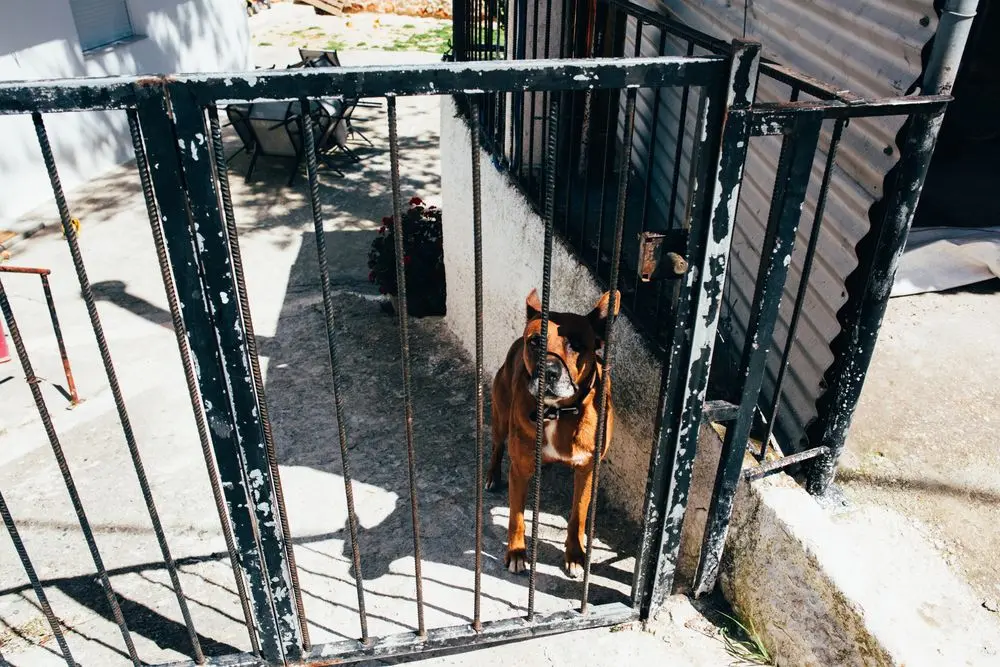
“Paige, open this gate. We’ve been on the road for three hours, and the kids are tired.”
My mother didn’t say hello. She didn’t say my name like a question, the way people do when they haven’t seen someone in twelve years. She said it like I was late for something.
Her voice came out of the little speaker on my desk and cut straight through the payroll report I’d been checking. Twelve employees. Twelve direct deposits going out Friday morning. I’d just found a mistake in Dez’s overtime and was fixing it when the intercom buzzed.
I looked at the security screen.
Diane Whitaker was standing at the iron gate at the bottom of my driveway. Arms folded. Chin up. Big sunglasses pushed back on her head. That impatient, lip-pressed look she used to give cashiers who were too slow.
Beside her stood my twin sister, Mallory. Then Mallory’s husband, Grant. Then three kids. A boy about eleven with his hands jammed in his hoodie pocket. A girl around seven holding a stuffed rabbit by one ear. A little one, maybe three, asleep on Grant’s shoulder.
Behind them, a rented moving truck was parked crooked across the end of my driveway.
The back door was rolled up. A dozen boxes were already stacked on the grass by my mailbox. A floor lamp. A booster seat. A big TV still in its cardboard.
Apparently, they’d decided to move in.
Nobody had asked me.
I didn’t move.
My office is in the loft of the old barn I turned into a workshop. From the window I could see the whole driveway, the gate, the road, and Lorraine Hatch’s hay field across the fence. I could have stood up and looked at them with my own eyes.
I stayed in my chair and watched the screen.
Mallory stepped up to the intercom box on the gate post. She leaned in close, like she was ordering at a drive-through.
“We’ll take the downstairs suite,” she said. “The bedrooms across from it should be fine for the kids.”
She’d never been here. She must have found the old real estate listing online. Four bedrooms. First-floor primary suite. Fourteen acres. Detached workshop with heat.
Grant shifted the sleeping toddler to his other shoulder and pointed up the hill at my workshop. At the big sliding doors and the painted sign over them. SECOND GRAIN RESTORATION.
“Does that building have heat?” he said. “I could start a furniture business in there.”
I sat there and listened to them divide up my life like it was a pizza.
The suite. The kids’ rooms. The workshop.
Everything I’d built with my own hands, one board at a time, for twelve years. And they were claiming it in the time it took to unload a lamp.
My mother glanced toward Lorraine’s field. Lorraine was out by her fence with her two border collies, pretending to check a post.
Mom turned back to the camera. Her voice dropped low and hard.
“Stop embarrassing me, Paige. Open the gate.”
For twelve years, I had imagined this exact moment.
What I would say if they ever showed up needing something. I’d written whole speeches in my head. In the shower. Driving to estate sales at five in the morning. Lying awake at three a.m. with the ceiling fan turning. I had angry versions. Crying versions. Calm, cold, perfect versions where every word landed like a hammer.
Now they were actually standing at my gate.
And I realized I didn’t need a speech at all.
I only needed a few words. They were words I’d been handed a long time ago.
Mallory was born seven minutes before me.
You’d think seven minutes wouldn’t matter. To my mother, it was everything. Mallory was “my firstborn.” I was “the other one.” Mallory was the one who came first, and somehow that meant she came first in everything after that too.
She got the bigger bedroom, the one with the window seat that looked out on the street.
She got new coats every fall. I got last year’s coat, the one she’d decided she was tired of. The cuffs were always shiny from her wrists.
She got dance classes three nights a week. Recitals in sequins. I sat in the audience and held Mom’s purse and clapped when I was told to.
She got birthday parties. Real ones. A princess theme when we were six. A pool party when we were ten. A limo to the mall when we were thirteen. Same birthday as me, of course. I got to come.
And every time Mallory wanted something that was mine, Mom said the same thing.
“Let her have it, Paige. You’re the independent one.”
My library books. My bike. My half of the closet. The front seat. The last slice of pizza. The bracelet Grandma gave me for my twelfth birthday.
“You’re the independent one. You don’t need things the way your sister does.”
When I was little, I thought it was praise. I’d walk around school feeling proud. I’m the independent one.
It took me a long time to understand.
Independent was just the nice word they used so they wouldn’t have to say neglected.
Grandma Elaine was the only one who saw it.
She was Dad’s mother. Dad left when Mallory and I were five, and he never really came back. Grandma Elaine never left. She lived on the edge of Ridge Hollow in a little white house with green shutters and a detached garage full of old furniture.
She bought and sold antiques. She’d been doing it for forty years. She said it was a hobby, but it paid for her car and her property taxes and a trip to Ireland every spring.
Every Saturday morning, she picked me up in her old brown station wagon and took me to estate sales.
Mallory never wanted to come. Estate sales smelled like mothballs and dead people. That was fine with me. It meant Grandma was mine.
She taught me how to tell walnut from mahogany. How to pull out a drawer and check the dovetails. How hand-cut dovetails are a little uneven and machine-cut ones are perfect, and how the uneven ones are worth more because a person made them.
“Imperfect means human,” she used to say. “Remember that, Paigey.”
The summer I was twelve, we found a little cherry drop-leaf table at a sale out past the reservoir. It had a crack running right across the top. Long and dark. Somebody had filled it with wood putty and stained over it, badly.
“It’s ruined,” I said.
Grandma ran her thumb along the crack.
“No,” she said. “Somebody just lied about it.”
She looked at me over her glasses.
“A crack isn’t something to hide,” she said. “Find out what caused it.”
We took it home. We dug out the putty. We found out the table had been stored next to a woodstove for years. One half of the top had dried out faster than the other. The wood pulled itself apart.
“See?” Grandma said. “If you just fill it and paint over it, it’ll crack again. Same place. Every time. Because you never fixed the reason.”
We fixed it together that summer. It became her kitchen table.
At that kitchen table, I could say anything.
At home, if I said Mallory took my sweater, I was being petty. If I said it wasn’t fair that she had dance and I didn’t, I was jealous. If I cried, I was being dramatic. If I got upset at all, I was “causing problems.”
At Grandma’s table, with a glass of sweet tea and a plate of her oatmeal cookies, I could say, “It’s not fair, Grandma.”
And she’d say, “No. It’s not.”
She never tried to fix it. She couldn’t. But she said it out loud. It’s not fair. And somehow, hearing one person say it got me through another week.
Grandma Elaine died in March of my senior year.
Her heart. In her sleep. Her neighbor found her when she didn’t come out for the newspaper.
After the funeral, home got worse.
There was no more kitchen table to run to. No more Saturdays. Mallory stopped pretending to share anything. Mom stopped pretending we were equal.
We were living in a rented duplex on Locust Street by then. Two small bedrooms upstairs. One bathroom. A living room. A damp, half-finished basement that smelled like the washing machine.
I worked at the Save-A-Lot on Route 9 after school and on weekends. Bagging. Stocking. Pushing carts. I was saving everything for community college. I wanted to study business. I wanted to open an antique shop someday, like Grandma might have if she hadn’t been so busy taking care of everybody else.
By graduation, I had nine hundred and sixty dollars in an envelope taped under my dresser drawer.
A few months after graduation, Mallory announced she was pregnant.
She told us at dinner. Mom screamed. The happy kind. She jumped up and hugged Mallory so hard she knocked over the ketchup.
“My baby’s having a baby!”
I sat there holding my fork.
“Who’s the dad?” I said.
That’s how I met Grant.
Grant moved into our duplex the next week.
He came with two laundry baskets of clothes, an enormous television, and no steady job. He was twenty-three. He’d been “figuring things out” for a while. He said he was going to start a business. He said that a lot. He never said what kind.
He set the TV up in the living room. It covered almost the whole wall. He spent most of every day on the couch in front of it, playing video games with the sound up.
Mom thought he was wonderful.
Mom thought anyone Mallory picked was wonderful.
Then Mom decided my bedroom would be the nursery.
She told me on a Sunday afternoon in August. Three weeks before community college started.
“We’ll need your room for the baby,” she said. “Mallory and Grant are taking Mallory’s room. The baby needs to be close.”
“Okay,” I said. “Where do I go?”
She blinked at me. Like she hadn’t thought about it. Like it hadn’t occurred to her that I’d need to be somewhere.
“Could I stay on the couch?” I said. “Just until school starts. I’ll figure something out.”
“Grant has back problems,” Mom said. “He might need the living room. He can’t always sleep in a bed.”
“Could I sleep in the basement?”
“That’s where we’re keeping the baby’s things.”
Then she crossed her arms.
“You’re nineteen, Paige,” she said. “I can’t be responsible for you forever.”
Mallory was standing behind her in the kitchen doorway with one hand resting on her stomach. She wasn’t showing yet. She just liked to stand like that.
“You’re always talking about being independent,” she said. “You’ll manage.”
You’ll manage.
I remember exactly how she said it. Light. Bored. Like she was telling me to grab milk on the way home.
You’ll manage.
I stuffed everything I owned into two black garbage bags while they sat in the living room watching TV.
Clothes. Shoes. My toothbrush. My Save-A-Lot name tag. A shoebox of photos of me and Grandma. My envelope of nine hundred and sixty dollars.
Grandma’s little wooden toolbox, the one she’d left me in her will. Her scrapers and chisels and a jar of paste wax. That one I carried separately, under my arm.
Nobody got up from the couch.
At the front door, Mom handed me a plastic grocery bag.
Inside were two cans of tomato soup and a sleeve of saltines.
“Here,” she said. “So you’ve got something.”
I stood on the front step with my garbage bags and my toolbox and my soup.
Mom leaned on the doorframe.
“If anyone asks,” she said, “tell them moving out was your decision. It’ll sound better.”
She closed the door.
I heard the lock turn.
For a few weeks, I slept on friends’ floors.
Tasha from Save-A-Lot let me have her couch for eight days, until her boyfriend got annoyed. Then a girl from my old algebra class. Then a guy from the deli counter, whose roommate made it very clear I wasn’t welcome.
I started community college in September. I made it four weeks. You can’t take a quiz on accounting when you don’t know where you’re sleeping that night.
My nine hundred and sixty dollars went faster than I could have imagined. A few nights at the Budget Inn when I had nowhere else to go. Food. Bus fare.
Eventually, I ran out of options.
I bought a tent at the Dollar General. Twenty-nine dollars. A little two-person dome, blue and gray.
I hid it behind the storage buildings at the roadside flea market out on Route 9, near Ridge Hollow. It’s a big gravel lot, with rows of little wooden sheds vendors rent on weekends. Behind the last row there’s a strip of scrubby woods and a drainage ditch. During the week, nobody goes back there.
I set the tent up in the trees.
I lived in it for almost five months.
Every morning before work, I washed up in the bathroom at the Marathon station across the road. Sink baths. Paper towels. I learned to wash my hair in four minutes flat. The morning clerk, a quiet older woman named Bernice, never said a word about it. Some mornings, she left a wrapped honey bun on the counter by the door. Nobody ever rang it up.
I kept my clean work shirt in a plastic grocery bag. Wrapped twice, knotted at the top, so the damp wouldn’t get to it. Fall in Ohio is wet. Everything in that tent was always a little bit damp. My socks. My sleeping bag. My hair.
At night, I lay in the dark with Grandma’s toolbox against my chest and listened to the trucks on Route 9 and tried not to think.
One rainy afternoon in late October, I was pushing carts in the Save-A-Lot parking lot.
It was coming down hard. Cold, sideways rain. I had on the orange vest they gave us, and my sneakers were soaked through, and water was running off my hair down the back of my neck.
That’s when I saw Mom’s car.
Her white Malibu with the cracked taillight. Pulling out of a space about thirty feet away.
She was driving.
Mallory was in the passenger seat.
Our eyes met through the windshield.
My mother looked right at me. I know she did. I saw her see me.
I stopped. I stood there in the rain holding a line of carts.
Mallory was laughing at something on her phone. She never looked up.
Mom saw me standing there.
She didn’t stop.
She didn’t roll down the window. She didn’t wave. She didn’t even slow down.
She put on her blinker and pulled out onto Route 9 and drove away.
That night, I sat in my tent holding my prepaid phone.
Rain hammered the nylon. A drip came through the seam in one corner. I’d set a saltine sleeve under it, which didn’t help.
Her number was on the screen. My thumb was on the green button.
I sat there almost an hour.
I thought about what I’d say. Mom, it’s me. Mom, I’m sleeping in a tent. Mom, please. I’ll sleep on the bathroom floor. I’ll sleep in the basement with the baby things. Please.
I thought about her blinker.
Finally, I put the phone down.
And I made a promise.
Out loud. In the tent. With the rain coming down.
Two promises, really.
“I will never ask them for anything again,” I said. “Never. Whatever I need, I’ll build it myself.”
And then, because I was thinking about Bernice and her honey buns, and about how many other people might be sleeping in the woods behind places like this one:
“And someday,” I said, “nobody in this town is going to have to do this. Not if I can help it.”
I said it to Grandma.
Then I wrapped my arms around her toolbox and lay down on the damp sleeping bag and didn’t cry.
I was done crying.
The person who found me wasn’t a cop. It was the woman who ran the flea market.
Her name was Odessa Burke.
She was sixty-eight, tiny and tough, with a gray braid down her back and reading glasses on a beaded chain. She owned the whole lot. She had for thirty years. She also ran an upholstery shop out of the biggest shed, the one at the end of the last row.
She found my tent on a Tuesday in November. She’d come back to check a leaky roof.
I heard her boots in the leaves. I froze.
“I know you’re in there,” she said. “I’ve seen your shirt in that bag. You can come out or I can come in. Your choice.”
I came out.
She looked at me. At the tent. At the soggy saltines under the leak.
Then she looked at Grandma’s toolbox sitting open by my sleeping bag.
“Those are Buck Brothers chisels,” she said. “Old ones. Where’d you get them?”
“They were my grandma’s.”
“Who was your grandma?”
“Elaine Whitaker.”
Odessa was quiet for a long moment.
“Elaine Whitaker,” she said, “beat me to a Victorian fainting couch at the Hendricks estate sale in 2003, and I have never once forgiven her.”
She pulled her coat tighter.
“Get your things,” she said. “You’re not sleeping out here one more night.”
She put me on a cot in the back of her upholstery shed that night, next to a space heater.
The next week, she gave me a job.
Eight dollars an hour. Cash. Cleaning and repairing furniture during the week for the dealers who rented her sheds. Stripping old finish. Regluing chair joints. Waxing tables so they’d look good under the lights on Saturday morning.
The first day, she handed me a chair and said, “Tell me what’s wrong with it.”
I turned it over. I looked at the joints.
“The back legs were replaced,” I said. “Not original. Somebody glued the stretchers with Gorilla Glue. It’s going to fail. And the finish is shellac over polyurethane, which is backward.”
Odessa looked at me over her glasses for a long time.
“Your grandmother taught you that.”
“She taught me everything.”
“Not everything,” Odessa said. “But she gave you a head start. I’ll take it from here.”
In January, she rented me the apartment over her garage in town for two hundred dollars a month. One room. A bed, a little kitchenette, a shower that ran cold after five minutes. A window that looked out on her backyard.
I lay on that bed the first night and cried for an hour. I didn’t mean to. It just came out.
Odessa heard me through the floor. She didn’t come up. In the morning, there was a thermos of coffee on my top step with a note.
Rent’s due on the first. Breakfast is free. —O.
I worked for Odessa for six years.
She taught me upholstery. She taught me how to price things and how to talk to customers who thought they knew more than you. She taught me how to file taxes and how to read a lease and how to tell when somebody was trying to cheat you.
“Everybody lies about old furniture,” she’d say. “The wood doesn’t. Listen to the wood.”
I took business classes at night. Online at first, then at the community college, one course at a time. It took me five years to finish a two-year degree. I didn’t care. I finished it.
When I was twenty-four, Odessa let me rent my own shed at the flea market. Half price. I painted my own sign.
SECOND GRAIN.
Because that’s what I was. Wood that had been cut down and thrown out, getting a second life.
Odessa retired to Florida when I was twenty-six. She sold the flea market to a developer.
Before she left, she sold me her tools and her client list for a dollar.
“I’m not giving them to you,” she said. “I’m selling them. There’s a difference. You earned them.”
She calls me every Sunday from Sarasota. She still complains about Grandma and the fainting couch.
I rented a small warehouse in Ridge Hollow after that. Then a bigger one. I started selling restored furniture online and shipping it all over the country. Then I started doing restoration work. Family heirlooms. Historic homes. Two churches. The county courthouse, once, which got my name in the paper.
At twenty-eight, I had five employees.
At thirty, I had twelve.
And three years ago, I bought this place.
Fourteen acres outside Ridge Hollow. A white farmhouse from 1908 with a deep front porch. A big old bank barn I turned into my workshop. A gravel driveway with an iron gate at the bottom.
I put the gate in the first month. People asked why, way out here.
I said it was for the inventory.
That was part of it.
The other part was that I’d never had a door I could close and know it would stay closed.
And the other promise?
The one I made to the rain?
That one, I kept too.
Two years ago, I gave the first big check to Harbor House, the little family shelter on Mill Street in Ridge Hollow. It had six beds and a leaky roof and a director named Renata Ellis who ran it on donations and stubbornness.
Last year, I paid for a new wing. Eight family rooms. Each with its own door that locks from the inside, and a bathroom with a real shower that doesn’t run cold. A kitchen. A laundry room. A job-training office where people learn how to write a résumé and open a bank account and read a lease.
There’s a plaque by the front door.
THE ELAINE WHITAKER FAMILY WING
Nobody in Ridge Hollow has to sleep behind the flea market anymore. Not if they come to Mill Street.
I sit on the board. I go to the meetings on the second Tuesday of every month.
My mother had no idea.
So there they were. At my gate.
Mallory pressed the button again. She held it down this time, so it buzzed and buzzed.
“Paige? Hello? I know you can hear us.”
Grant had set the sleeping toddler down in the cab of the truck. He was carrying another box up toward the gate, like he could just keep stacking them until it opened.
The seven-year-old was sitting on the bumper, whispering to her rabbit.
The eleven-year-old boy was standing a little way off, by himself, looking up at the barn. At my window. He had his hood up. He had that look kids get when they’ve already figured out the grown-ups are lying.
I knew that look. I used to see it in the mirror.
I pressed the intercom.
“Hello, Mom.”
She spun toward the gate post.
“Finally. Paige. Open the gate. We’ll talk inside.”
“Why are you here?”
“Why do you think? Open the gate.”
“Tell me why you’re here.”
Mom glanced at Lorraine Hatch again. Lorraine had given up pretending to check her fence. She was just standing there with her dogs, watching.
“Not out here,” Mom hissed. “Not in front of the neighbors.”
Mallory pushed in front of her.
“Okay. Okay, look. We’re in a rough spot. Grant’s job fell through. The landlord was being totally unfair about a couple months of rent. And Mom—”
“What about Mom?”
Mallory looked at our mother. Mom looked at the gravel.
“Mom co-signed on a loan,” Mallory said. “For Grant’s business. The landscaping thing. It didn’t work out. The bank took her condo.”
I sat back.
Mom’s condo. She’d bought it with the money from selling Grandma’s house. A two-bedroom in a complex outside Columbus with a pool and a fake lake. I’d seen pictures on Facebook years ago, back when I still let myself look.
She’d lost it.
For Grant.
“How did you find me?” I said.
“There was an article,” Mallory said. “In the Columbus paper. About you restoring the courthouse benches. It had a picture of your house. It said you started out at a flea market.” She paused. “It said you bought this place for cash.”
She said cash the way some people say vacation.
“So we figured,” Mallory said, “since you’ve got all this room. And you live alone. And it’s just you—”
“How long were you planning to stay?”
“I don’t know. A while.”
“How long is a while?”
“Paige, I don’t know! Until we’re on our feet. Grant’s going to start his furniture business in the barn, and once that takes off—”
“Grant doesn’t know anything about furniture.”
Grant dropped the box he was carrying. It hit the gravel with a thud.
“I can learn,” he said. “How hard can it be? You figured it out.”
You figured it out.
Like I’d found it lying in a ditch. Like it fell on me.
I looked down at my hands on the desk. The scar across my left palm from a slipped carving knife when I was twenty-two. The calluses. The faint brown stain around my fingernails that never comes out no matter how much I scrub.
How hard can it be.
“We’re family, Paige,” my mother said. “Family takes care of each other. That’s what family does.”
And there it was.
The line I’d been waiting twelve years to hear. The one I’d written a hundred answers for.
Family takes care of each other.
I thought about the duplex on Locust Street. My two garbage bags. The lock turning behind me.
I thought about the tent. The drip in the corner. Bernice’s honey buns.
I thought about the parking lot. The rain running down my neck. My mother’s face through the windshield. Her blinker.
You’re the independent one.
I pressed the button.
“Mallory,” I said. “Do you remember what you said to me? The day Mom told me my room was going to be the nursery?”
Mallory went still.
“You were standing in the kitchen doorway,” I said. “With your hand on your stomach. Do you remember?”
She didn’t answer.
“You said, ‘You’re always talking about being independent.’”
I let a second go by.
“‘You’ll manage.’”
The driveway went silent.
Grant stopped moving. Mom’s mouth fell open a little. The seven-year-old looked up from her rabbit.
The eleven-year-old boy pushed his hood back.
“So that’s my answer,” I said.
“You’ll manage.”
Nobody spoke for a few seconds.
Then my mother lost it.
“How DARE you! How dare you throw that back at us! She was nineteen! She was pregnant! She didn’t know what she was saying!”
She grabbed the gate bars with both hands and shook them. They didn’t budge. I’d had them set in concrete by a man who builds gates for horse farms.
“I raised you! I fed you! I gave you a roof over your head for nineteen years!”
“For eighteen years and eleven months,” I said. “Then you gave me soup.”
Mallory was crying. The easy crying she’d been doing since we were five, whenever she wanted something and Mom wasn’t moving fast enough.
“Paige, please. Please. We don’t have anywhere to go. The kids, Paige. Think about the kids. You’re going to make your own nieces and nephew sleep in a truck?”
That one landed. I’m not going to pretend it didn’t.
I looked at the screen. At the seven-year-old on the bumper. At the toddler asleep in the cab. At the eleven-year-old, who was looking right up at my window now.
“Mallory,” I said. “Where did you stay last night?”
She sniffed.
“A motel in Zanesville.”
“Then you know how to find a place to stay.”
“We can’t afford another night! We spent everything on the truck!”
“That was a choice,” I said. “You made it before you asked me.”
Grant came storming up to the gate.
“This is insane,” he said. “You’ve got a whole farm. Fourteen acres. Four bedrooms. You live here alone. You’re seriously going to—”
“Grant,” I said. “How many years have you been married to my sister?”
“Eleven. So?”
“How many of them have you had a job?”
His face went red.
“That’s none of your business.”
“You just said you were moving your business into my barn,” I said. “That makes it a little bit my business.”
He put both hands on the top bar of the gate.
“You know what? I’m just coming in. Call the cops on your own family. Go ahead. See how that looks.”
He started to climb.
I pushed a different button.
The floodlights on the gate posts snapped on. They’re bright even in daylight. Grant flinched and almost lost his grip.
“Grant,” I said. “There are fourteen cameras on this property. They all record. If you come over that gate, you’re trespassing. I’ll call the sheriff, and I’ll give him every second of this afternoon.”
Grant hung there.
Across the fence, Lorraine Hatch said something to her dogs. Both border collies sat down at the fence line, side by side, and stared at him. Not barking. Just staring.
Grant climbed down.
My mother turned and glared at Lorraine.
“Do you mind? This is a private family matter.”
Lorraine is seventy-nine. She’s been farming that land since 1971. She’s buried two husbands and one son and doesn’t scare.
“I don’t mind at all, ma’am,” Lorraine said pleasantly. “That young lady fixed my late husband’s rocking chair for free. Because she said a man’s chair ought to outlast him. She drove it back over herself in a snowstorm.”
She leaned on her fence post.
“So I’ll just stand here,” she said. “If it’s all the same to you.”
They stayed at the gate for most of the next hour.
Mom and Mallory took turns at the intercom. Begging. Yelling. Crying. Mom said I’d always been cold. She said I was ungrateful. She said Grandma had poisoned me against her. She said she’d known I was selfish from the day I was born, seven minutes late, like I couldn’t even be bothered to show up on time.
Mallory said she loved me. She said she was sorry about the room. She said Mom made her. She said she’d been nineteen too.
I listened.
I didn’t answer.
At one point, I muted the intercom and put my forehead down on my desk.
Dez came up the loft stairs. Dez Morales is my shop foreman. He’s fifty-three. He spent most of his twenties homeless in Cleveland before he got sober and learned to make cabinets. He doesn’t talk about it much. He’s the best craftsman I’ve ever worked with.
He stood in the doorway.
“Jefa,” he said. “You okay?”
“No.”
“You want me to go down there?”
“No.”
He nodded. He came over and set a cup of coffee by my elbow. From the break room machine. Too strong. Too hot.
“Odessa would say you’re doing it right,” he said.
“I’m leaving three kids at the end of a driveway, Dez.”
He looked out the window at the truck.
“No,” he said. “Their parents drove three kids to a gate without calling first. That’s not you. That’s them.”
He went back downstairs.
I sat there a long time after he left.
Then I opened my desk drawer.
I took out a business card. White, with a little blue house drawn on it.
HARBOR HOUSE — RIDGE HOLLOW
FAMILY SHELTER & HOUSING SUPPORT
Mill Street. Open 24 hours.
There’s a stack of them in my drawer. I hand them out more often than you’d think. To people who come by the workshop looking for day work. To a teenager I once found sleeping in his car behind the hardware store.
I took one.
I walked down the stairs and out the barn doors and down the long gravel driveway, by myself.
They all went quiet when they saw me coming.
I stopped on my side of the gate.
Twelve years.
Mom looked older up close. Smaller. The honey-blond hair was thin at the part. There were deep lines around her mouth.
Mallory looked tired in a way that went all the way to the bone.
We looked at each other through the iron bars.
“Paige,” Mom said. Softer now. Almost sweet. The voice she used to use on landlords. “Honey. I knew you’d come down. Open the gate. We’ll go inside and talk.”
I held the card out through the bars.
Mom looked at it.
She didn’t take it.
“What is this?”
“It’s a family shelter,” I said. “In town. Six miles. They have rooms with doors that lock. Real beds. Hot showers. Three meals a day. They’ll help Grant find work. They’ll help you find an apartment. They’ll help you with the kids’ school.”
Mom stared at me like I’d slapped her.
“A shelter?” she said. “A homeless shelter? You’re sending your own mother to a homeless shelter?”
“I’m sending you to the same place I’d send anybody,” I said. “Anybody who showed up at my gate with nowhere to go. I don’t turn anybody away without a place to sleep. Not anymore.”
I held the card out farther.
“You get exactly what I’d give a stranger,” I said. “No more. No less.”
Mallory took the card.
Her hand was shaking. She looked at the little blue house.
“Harbor House,” she read.
“Ask for Renata,” I said. “She’ll be there tonight. I’ll call ahead and tell her a family’s coming.”
“Will you tell her who we are?”
“No,” I said. “I’ll tell her you’re a family who needs help. That’s all she needs to know.”
Mom slapped the gate with her open palm.
“I am not taking my grandchildren to a shelter! I’d rather sleep in the truck!”
“Then that’s your decision,” I said.
I looked at her.
“If anybody asks,” I said, “tell them it was your choice. It’ll sound better.”
I watched her face.
I watched her hear it. Her own words, handed back to her, twelve years late.
Something in her face broke a little. Just at the corners.
She didn’t say anything.
The eleven-year-old boy had come up to the gate. He was standing next to Mallory now, looking at the card in her hand. Then at me.
“Are you Aunt Paige?” he said.
“I am.”
“Mom said you didn’t want us.”
“What’s your name?”
“Tyler.”
“Tyler,” I said. “I didn’t know you existed until twenty minutes ago.”
He thought about that.
“Nobody told you about us?”
“Nobody’s told me anything in twelve years.”
He looked at his grandmother. Then at his mother. Then back at me.
“Is that place okay?” he said. “The shelter?”
“I’ve seen every room,” I said. “The beds are good. The showers are hot. The cook makes pancakes on Saturdays. And there’s a library room with a whole shelf of graphic novels.”
Something moved in his face.
“Okay,” he said.
They left at 5:50.
Grant loaded the boxes back into the truck. He threw every one of them. The TV box hit the floor of the truck with a crunch.
Mallory buckled the kids into the minivan.
Mom stood at the gate one last time. She didn’t press the button. She just looked at me through the bars. I was still standing there.
“You’ll regret this,” she said. “One day I’ll be gone and you’ll regret this.”
“Maybe,” I said. “But I’ll know I didn’t lie about it.”
The truck backed out. Mom’s car followed. The minivan last.
Tyler was looking out the back window.
At the stop sign at the bottom of the hill, the minivan’s blinker came on. Left. Toward town. Toward Mill Street.
I stood there until it was gone.
Then I walked back up to the barn and called Renata.
“I’ve got a family coming,” I said. “Three kids. Two adults. And a grandmother.”
“We’ll find room,” Renata said. “We always do. Anything I should know?”
I thought about it.
“The oldest boy,” I said. “Tyler. Show him the graphic novels.”
“Done.”
“Renata,” I said. “They’re my family.”
There was a pause on the line.
“Okay,” she said slowly. “Do you want me to do anything different?”
“No,” I said. “That’s the whole point.”
I didn’t sleep that night.
I sat on my porch with a blanket and a cup of tea and stared out at the dark field and listened to Lorraine’s cows.
I thought about the tent. The drip in the corner.
I thought about the three kids in a room on Mill Street, with a door that locked from the inside.
I thought about my mother, too proud to say thank you, sleeping in a bed I’d paid for without knowing it.
I don’t know what I felt.
Something between grief and relief. There’s no word for it. If there is, I’ve never heard it.
Renata called me the next morning at seven.
“They came,” she said. “Around six-thirty. All six of them. Your mother didn’t want to get out of the car. Your sister did. The kids did. Your mother sat in the parking lot for almost two hours.”
“Did she come in?”
“At about nine. When it got cold.” Renata paused. “She asked who paid for the new wing.”
“Did you tell her?”
“I didn’t have to,” Renata said. “She read the plaque.”
The rules at Harbor House are simple.
You stay up to ninety days. Every adult meets with a caseworker twice a week. Every adult who can work spends twenty hours a week looking for a job or doing job training. No alcohol. No screaming at staff. Kids go to school. Chores are shared. Lights out at ten.
Grant lasted eleven days.
He told the caseworker the job search requirements were demeaning. He said he was an entrepreneur. He said he wasn’t going to fill out applications at the Tractor Supply like some kid.
On the twelfth day, he packed his laundry baskets and his cracked TV and drove back to Columbus to stay with a buddy.
He didn’t take the kids.
He didn’t take Mallory.
Mom lasted three weeks in the family wing.
Then her caseworker helped her apply for a senior apartment in a subsidized building in Zanesville. It took a month to get in. She moved there in December. One bedroom. A kitchenette. A window over the parking lot.
She hasn’t called me.
I didn’t expect her to.
Mallory stayed.
She stayed the full ninety days.
She went to every caseworker meeting. She did the job training. She learned how to write a résumé, which she’d never done in her life. She learned how to open a checking account in her own name, which she’d also never done. Mom had always “handled” it.
She got a job at the Kroger on Route 9. Stocking shelves. Overnight shift. Twelve-fifty an hour.
Renata told me Mallory cried at her first paycheck.
“Not because of the amount,” Renata said. “Because her name was on it.”
I didn’t see her for most of those three months.
I wanted to. Some nights, I sat in my truck in the Harbor House parking lot after the board meeting and looked at the lit windows of the family wing. Wondering which one was hers.
I didn’t go in.
She needed to do it without me.
I’d needed to do it without them. It was the only way it ever stuck.
In February, there was a knock on the workshop door.
It was a Saturday. Snowing. The crew was off. I was alone in the shop, refinishing a set of oak church pews.
I opened the big sliding door.
Mallory was standing there in the snow.
She’d walked up the driveway. The gate was open. I leave the pedestrian side gate open on Saturdays now for customers.
She was wearing a Kroger fleece and a knit hat and somebody else’s boots, from the Harbor House donation closet. Her nose was red from the cold.
“Hi,” she said.
“Hi.”
“Can I come in?”
I looked at her for a long moment.
Then I stepped aside.
She stood in the middle of my workshop and turned around slowly. Looking at everything. The workbenches. The clamps hanging on the walls. The church pews. The big old windows with the snow coming down outside.
“You did all this,” she said.
“Twelve years.”
“From a tent.”
I didn’t answer.
“Renata told me,” she said. “Not on purpose. I was in her office, and she had your picture on her wall. From the ribbon cutting. You and her and the mayor, with those big scissors. I asked her how she knew you.”
She looked at me.
“She told me about the flea market,” she said. “About the tent. About Odessa. She said you told the whole story at the fundraiser. In front of three hundred people.”
“I did.”
“Did you tell them about us?”
“I told them my family asked me to leave,” I said. “I didn’t say your names.”
Mallory sat down on an overturned bucket. Slowly. Like her legs had given out.
“I didn’t know,” she said. “About the tent. I swear to God, Paige. Mom said you were staying with friends. She said you got an apartment in town. She said you were fine.”
“I wasn’t fine.”
“I know that now.”
“I washed my hair in a gas station sink, Mallory. For five months. In the winter.”
She put her face in her hands.
“There’s something I have to tell you,” she said into her hands. “Something I’ve never told anybody.”
I waited.
She lifted her head.
“Mom didn’t come up with it,” she said. “The nursery. Your room. It was my idea.”
The workshop was very quiet. I could hear the snow ticking against the windows.
“Grant was going to leave,” Mallory said. “When I found out I was pregnant. He said our place was too small. He said he wasn’t going to live in a duplex with my mom and my sister and a baby. He said if there wasn’t room for him, he’d go.”
She swallowed.
“So I told Mom we needed your room,” she said. “I told her you’d be fine. You were always fine. You were the independent one. I said it to her before she ever said it to you.”
She looked at me.
“I wanted him to stay,” she said. “So I made you go.”
I stood there with a rag full of stain in my hand.
I didn’t know what to say.
I’d spent twelve years thinking it was all Mom. Mom choosing. Mom favoring. Mom locking the door.
And Mallory had been standing in that doorway with her hand on her stomach because she’d asked for it.
You’ll manage.
“And then he left anyway,” Mallory said. “Eleven years later. With the TV.”
She laughed. It wasn’t a happy laugh.
“I traded my sister for a man who left with a television,” she said.
I put down the rag.
I walked over to the workbench by the window and leaned against it.
“Why are you telling me this now?”
“Because my caseworker said I had to stop lying about things,” Mallory said. “To get better. She said I’d been telling the nice version of my life for so long that I didn’t know what was true anymore.”
She wiped her nose on her Kroger sleeve.
“And because of Tyler,” she said.
“What about Tyler?”
“He asked me why you didn’t want us,” she said. “That night. In our room at Harbor House. And I started to tell him the nice version. That you’d left. That you didn’t care. And he looked at me—”
She stopped.
“He looked at me like he already knew I was lying,” she said. “And I thought, I can’t do this to him. I can’t make my kid grow up on the nice version.”
“So what did you tell him?”
“The truth,” she said. “That I asked Grandma to give your room away. That you left with two garbage bags. That we didn’t stop when we saw you in the rain.”
She looked at me.
“I didn’t see you,” she said. “In the parking lot. I really didn’t. I was on my phone. But Mom did. She told me, years later. She said, ‘I saw your sister in the Save-A-Lot lot once, in the rain, and I just kept driving.’ And she laughed. Like it was a funny story.”
I turned around and looked out the window at the snow for a long time.
A crack isn’t something to hide. Find out what caused it.
I’d always thought I knew what caused mine.
I hadn’t known all of it. Not until now.
“I’m not asking you for anything,” Mallory said behind me. “I’m not here to ask for anything. I swear. I don’t want a room. I don’t want money. I have a job. I’m signing a lease next week. A two-bedroom on Pine Street. With my own name on it.”
“Good,” I said.
“I just wanted to say it,” Mallory said. “Out loud. To you. I’m sorry, Paige. I’m sorry I made you go. I’m sorry I said you’ll manage. I’m sorry it took me twelve years and a homeless shelter to figure out what I did.”
I turned back around.
My twin sister was sitting on an overturned paint bucket in my workshop in a donated coat. With snow melting off her borrowed boots.
Seven minutes older.
She’d never looked younger.
“It’s not fair,” I said. “What you did.”
“No,” Mallory said. “It’s not.”
We looked at each other.
It was the first time she’d ever agreed with me.
My mother came to the workshop in May.
She drove herself. In a little secondhand Corolla she’d bought with her Social Security. She parked at the gate and walked up the driveway the way Mallory had. The side gate was open. It was a Saturday.
I was in the yard, loading a dresser into a delivery van.
She stopped about twenty feet from me.
She looked older still. Thinner. She’d let the honey-blond grow out. It was gray now, almost white, cut short.
“Paige,” she said.
“Mom.”
She stood there with her purse in both hands.
“I have something of yours,” she said. “In the car. I need help with it. It’s heavy.”
I followed her down to the gate.
She opened the hatchback of the Corolla.
Inside, wrapped in two moving blankets and an old bedsheet, was a table.
A little cherry drop-leaf table.
I knew it before she pulled the blanket back. I knew it by the shape of the legs. By the curve of the leaves.
Grandma’s kitchen table.
The one we fixed together, the summer I was twelve.
“I thought you sold everything,” I said. My voice didn’t sound like mine. “When she died. I thought you sold it all.”
“I sold everything else,” Mom said. “Not this.”
She ran her hand along the edge of the top.
“I don’t know why,” she said. “I kept telling myself I’d sell it. I moved it to the condo. Then to storage. It was in the back of the moving truck. That day. At your gate.”
She looked at me.
“I was going to put it in your kitchen,” she said. “As if I was doing you a favor.”
I pulled the bedsheet the rest of the way off.
There was a crack across the top. Right where the old one had been. Where Grandma and I had dug out the putty and fixed it.
It had opened up again.
Not all the way. But it was there. A thin, dark line, splitting the top almost in half.
“It cracked,” Mom said. “In the condo. I had it by the heating vent. I didn’t know.”
I stood there and looked at it for a long time.
If you just fill it and paint over it, it’ll crack again. Same place. Every time. Because you never fixed the reason.
“Mom,” I said. “Why did you keep it?”
She didn’t answer right away.
“Because she loved you more than me,” she said finally.
I looked up.
“Elaine,” Mom said. “Your father’s mother. She never liked me. From the day he brought me home. I was eighteen. Pregnant. With twins. My own mother had already thrown me out of the house. Did you know that? She put my clothes on the porch in a trash bag.”
I stared at her.
“I didn’t know that,” I said.
“No,” Mom said. “Nobody did. I never told anybody.”
She looked at the crack in the table.
“And then your father left,” she said. “And Elaine was still there. Every Saturday. Taking you. Not Mallory. Not me. You.”
“Mallory didn’t want to go.”
“I know,” Mom said. “But I didn’t see it that way. I saw her picking you. And I thought, Fine. Then I’ll pick the other one.”
I didn’t say anything.
I couldn’t.
“That’s not an excuse,” Mom said quickly. “I know it’s not. I’m not saying it’s a reason. My caseworker at Harbor House said I should figure out where it came from. So I’ve been figuring.”
She looked at her hands.
“I put you out with a bag of soup,” she said. “Same as my mother did to me. I swore my whole life I’d never be her. And then I was.”
“I saw you,” she said. “In the parking lot. In the rain.”
“I know you did.”
“I kept driving.”
“I know.”
“I told myself you’d be fine,” she said. “You were always fine. That’s what I told myself, every day, for twelve years. That you were the independent one.”
She finally looked at me. Her eyes were wet.
“You weren’t independent,” she said. “You were abandoned. I abandoned you. And I called it something nicer so I could sleep at night.”
I’d waited twelve years for her to say that.
I’d thought, when it finally came, I’d feel something enormous. Relief. Victory. Like a weight coming off.
I just felt tired.
And something else. Something I didn’t expect. Something like sorry for her. For the eighteen-year-old on the porch with her clothes in a trash bag.
That’s the thing about finding out what caused the crack.
Sometimes it goes back further than you thought.
“I’m not going to say it’s okay,” I said.
“I know,” Mom said. “I’m not asking you to.”
“And I’m not going to pretend it didn’t happen.”
“I don’t want you to,” she said. “I’ve had enough pretending to last me.”
We stood there at the back of her little Corolla with Grandma’s cracked table between us.
“Will you fix it?” she asked. “The table?”
I looked at the crack.
“Not like before,” I said. “Not by myself.”
We fixed it together.
That summer. Saturdays. In the workshop.
Not just me and Mom.
Mallory came. Tyler came, with his hood down. The seven-year-old, Rose, came with her rabbit, and I gave her a little sanding block and let her sand a scrap of pine for three hours, and she was the happiest person in Ohio. The toddler, Jack, mostly ate Cheerios on a moving blanket and tried to eat a clamp.
Dez came in on his day off to show Tyler how to use a card scraper.
We dug out the crack. We found the reason, the same reason as before. Heat on one side. Dry air. Wood pulling itself apart.
We didn’t just fill it.
We cut a thin strip of cherry from a board I’d salvaged out of an old barn in Muskingum County. Dez showed Tyler how to plane it down until it fit the gap perfectly. We glued it in. We clamped it. We let it sit.
Then we sanded it, all of us, by hand. Taking turns. Mom’s hands were shaking a little. She’d never done anything like it before. She kept apologizing.
“I’m doing it wrong.”
“There’s no wrong,” I said. “Just slow.”
“Your grandmother would say I’m doing it wrong.”
“Grandma would say imperfect means human,” I said.
Mom stopped sanding. She looked at me.
“She said that?”
“All the time.”
Mom looked down at the table. At the pale strip of new cherry running through the old dark wood.
“I wish she’d said it to me,” she said quietly.
When it was done, you could still see the line.
That was on purpose. I didn’t stain the new strip to match. I let it stay a little lighter than the rest. A thin pale stripe running across the dark top.
“Why didn’t you hide it?” Tyler asked.
“Because a crack isn’t something to hide,” I said. “It’s something to understand.”
He thought about that.
“So everybody can see where it broke?”
“So everybody can see where it got fixed,” I said.
That was a year ago.
Mallory still works at Kroger. She got moved to day shift in October. She’s an assistant department manager now. Produce. She says she can tell a bruised peach from across the store. She says she gets it from me.
“From me?”
“You and Grandma,” she says. “Looking at things really closely. Finding out what’s wrong.”
She lives on Pine Street with the kids. Two bedrooms. Her name on the lease. She paid every month on time. She showed me her bank app once, like a kid showing a report card. I told her I was proud of her. She cried in the parking lot of the hardware store.
She’s taking a night class at the community college. Accounting. One class at a time.
“It’s going to take me five years,” she said.
“It took me five years too,” I said.
Grant pays child support. Sometimes. The court made him.
Mom still lives in her senior apartment in Zanesville. She volunteers at Harbor House on Tuesdays now. In the kitchen. She makes the pancakes on Saturdays too. Renata says they’re the best pancakes the place has ever had. Mom never made pancakes when we were kids. I don’t know where she learned.
She and I aren’t close. I want to be honest about that. We have lunch once a month at a diner halfway between Zanesville and Ridge Hollow. Neutral ground. We talk about the kids. About the weather. Sometimes, not often, about her mother. About mine. About Grandma.
It’s not much.
But it’s true. Every word of it. And that’s more than we ever had before.
Grandma’s table is in my kitchen now.
Right where I can see it from the stove. With the pale stripe running across the top.
On Sunday nights, Mallory brings the kids over for dinner. We sit around that table. It’s too small for all of us. Rose sits on Mallory’s lap. Jack sits in a booster seat on a dining chair I pulled up to the end. Tyler sits right next to me.
Last Sunday, Tyler was quiet through most of dinner. He’s twelve now. He gets quiet sometimes.
When everybody else had gone into the living room to watch a movie, he stayed at the table with me. He ran his finger along the pale stripe in the cherry.
“Aunt Paige,” he said. “Can I tell you something?”
“Always.”
“Dad didn’t come to my birthday,” he said. “He said he would. He didn’t even call.”
I didn’t try to fix it. I couldn’t. I just put down my dish towel and sat down across from him.
“It’s not fair,” Tyler said.
I looked at him. At my sister’s son. At his finger on Grandma’s table, tracing the place where it broke and got fixed.
I thought about a twelve-year-old girl at a different kitchen table a long time ago, with a glass of sweet tea and a plate of oatmeal cookies, saying the same thing.
“No,” I said. “It’s not.”
He looked up at me.
And something in his face let go a little. The way mine used to.
That’s all he needed. Somebody to say it out loud.
I went and got the cookies.