Firehouse Plates
Part 1: The Last Thirty Dollars
“You have no idea what your son has done!”
Linda was screaming into the phone so loud I had to pull it away from my ear. I was standing in my kitchen with one shoe on and one shoe in my hand, and my heart stopped.
“Linda? Linda, slow down. Is it Ellie? Is Ellie okay?”
“It’s Noah!” she shouted. Then her voice broke into something that sounded like a sob. “Jenny, just get over here. Please. Right now.”
She hung up.
I stood there in the middle of my kitchen, staring at the phone. Then I shoved my foot into the other shoe without untying it and ran out the door.
But I need to back up. Because you can’t understand what happened that morning unless you understand what that thirty dollars meant.
My name is Jenny Callahan. I’m thirty-nine years old, and I live in a narrow brick row house on Tilghman Street in Allentown, Pennsylvania. I clean houses for a living. I’ve been doing it for six years.
Before that, I was a firefighter’s wife.
My husband, Sean, worked at Station 9 on Hamilton Street for fourteen years. He was big and loud and freckled, with red hair he kept buzzed short and a laugh you could hear from a block away. He used to say he became a firefighter because it was the only job where they’d pay him to run toward the scary thing.
Four years ago, a warehouse on the east side caught fire on a Tuesday night in March. Sean went in to find a night security guard who was trapped on the second floor.
He found him. He got him out.
Then the roof came down.
Noah was eight. He doesn’t remember much about the funeral. He remembers the bagpipes. He remembers the fire trucks lined up down Hamilton Street with black ribbons on them. He remembers his dad’s captain, Ray Dominguez, kneeling in front of him in a dress uniform and pinning a little gold firefighter badge on his jacket.
He still has that badge. It’s on his dresser, next to a photo of Sean in his turnout gear, grinning, with a cup of coffee in his hand.
After the funeral, the department gave us a check. The union helped. People from church brought casseroles for two months. And then, slowly, everybody went back to their lives.
And it was just me and Noah.
The thing about Sean was that Thanksgiving was his holiday. Not Christmas. Thanksgiving.
He usually had to work it. Somebody had to, and Sean always volunteered so the guys with little kids could stay home. So the whole family would go down to Station 9 at noon, and the firefighters would cook this enormous dinner in the station kitchen. Three turkeys. Mountains of mashed potatoes. Big Mike Sorensen’s famous sweet potato casserole with the little marshmallows burned black on top.
And then, after everybody ate, Sean would pile leftovers onto paper plates and wrap them in foil. He’d load them into the back of his pickup truck, and he and Noah would drive around the neighborhood delivering them.
To old Mr. Fenwick, whose wife had died. To the lady on Ninth Street who lived alone with six cats. To the family whose apartment had burned in October. To anybody, really, who might be alone or struggling on Thanksgiving.
Sean called them firehouse plates.
“Somebody’s always got it worse, buddy,” he’d tell Noah, handing him a foil-covered plate. “You go find them. That’s the whole job.”
Noah still talked about firehouse plates. Every single year.
Even four years after losing his father, Noah looked forward to Thanksgiving more than Christmas. More than his birthday. In early November, he’d start asking me what we were going to make. He’d look up recipes on my phone. He’d practice saying grace the way his dad used to, short and loud: “Thanks for the food, thanks for the people, let’s eat.”
So that year, when the money started getting tight, I couldn’t bear the idea of taking Thanksgiving away from him too.
Part 2: Coupons and Pride
That fall was the worst one since Sean died.
I clean houses. Mostly for older people and busy families on the West End, the nice part of Allentown with the big stone houses and the tall trees. I had eight regular clients. That was enough to pay the bills, mostly, as long as nothing broke.
Then in September, Mrs. Abernathy moved to Florida to live with her daughter. In October, the Kaufmans got transferred to Ohio. Two clients gone. Almost a third of my income, just like that.
I put up flyers at the library and the laundromat. I posted on the neighborhood Facebook page. I got one call, from a man who wanted me to clean his entire four-bedroom house for forty dollars.
By November, I was choosing between bills.
The gas company sent a pink notice. I paid half and called to beg for more time on the rest. I stopped buying meat. I learned how to make a pound of ground turkey last a week. I cut coupons out of the Sunday paper at the kitchen table after Noah went to bed and lined them up in a little envelope.
I skipped lunch so Noah could have his. I told him I’d eaten at a client’s house. I don’t think he believed me.
The department would have helped. I knew that. Captain Dominguez called me every few months, and every time he asked, “Jenny, you need anything? Anything at all?”
And every time I said, “We’re fine, Ray. Really. We’re doing great.”
I don’t know why I couldn’t ask.
Maybe it was pride. My mother raised me to stand on my own two feet. Maybe it was that taking help from Station 9 felt like taking it from Sean. Like admitting I couldn’t do what he’d trusted me to do.
Or maybe it was just that if I said it out loud, if I said, “Ray, we’re not fine, I’m scared, I don’t know how I’m going to keep the heat on,” then it would be real.
So I kept saying we were fine.
Thanksgiving morning, I counted the money in my wallet at the kitchen table. Thirty dollars. A twenty and two fives.
That was it. That was everything until my next client paid me on Monday.
I sat there looking at it for a long time. Noah was in the living room watching the parade on TV, eating dry cereal out of the box because we were out of milk.
“Noah,” I called. “Come here a sec.”
He came into the kitchen. He was twelve that year, all elbows and knees, with Sean’s freckles and Sean’s red hair, which he kept long and shaggy because he said buzz cuts made his head look like a potato.
I held out the money.
“Get us a small turkey, sweetheart. Whatever they have that’s cheap. And maybe a couple of sweet potatoes, if there’s enough.”
Noah looked at the money. Then he looked at my face. I saw him doing the math. He’s a smart kid. He knew what thirty dollars meant in our house.
“Is this all of it?” he asked.
“It’s plenty,” I said. “Go on. They close at noon.”
He took it and folded it very carefully, the way his dad used to fold the flag on Memorial Day. He put it in the front pocket of his jeans and patted it twice.
Then he grinned at me. That big lopsided Sean grin.
“Leave it to me, Mom! I’ll pick the best one!”
He kissed my cheek, grabbed his jacket off the hook by the door, and ran out.
The grocery store was Brennan’s Market, four blocks down on Tilghman Street. It’s a little family-owned place with creaky wooden floors and a butcher counter in the back. Noah had been walking there by himself since he was nine.
I watched him from the front window. He jogged down the sidewalk in his too-small jacket, hands shoved in his pockets, and turned the corner.
Then I started cleaning the kitchen. Getting the roasting pan down from the top cabinet. Finding the meat thermometer Sean used to use. Laying out the old tablecloth with the orange leaves on it.
Twenty minutes passed. That was normal.
Thirty minutes passed. Maybe there was a line.
At forty minutes, I called his phone. It rang five times and went to voicemail.
I called again. Voicemail.
I called a third time. Voicemail.
I was sitting on the stairs, putting on my shoes to go look for him, when my phone rang. I grabbed it so fast I almost dropped it.
“Noah? Why haven’t you been answering your phone?”
But it wasn’t Noah.
It was Linda.
Part 3: Linda and Ellie
Linda Pryor lives in the row house two doors down from us. Her daughter, Ellie, is eight.
Ellie has leukemia. Acute lymphoblastic leukemia, the kind that happens most often in little kids. She was diagnosed in May, after she kept getting bruises on her legs that wouldn’t go away and was too tired to climb the stairs.
Since then, she’d been in and out of Lehigh Valley Children’s Hospital. Chemo. Spinal taps. Blood transfusions. Her hair fell out in July. She wore a pink knit hat that Noah had picked out for her at the dollar store, with a pom-pom on top.
Linda’s husband, Tom, left in August.
He just packed a bag one day and drove off. He said he couldn’t watch his daughter die. Ellie wasn’t dying. The doctors said her odds were good, really good. But Tom left anyway.
So Linda was alone. She’d worked as a receptionist at a dental office before Ellie got sick. She’d had to take unpaid leave to take care of her. Her savings were gone by September. Her credit cards were maxed out.
She never told me any of this directly. I knew because I’d seen the same look in her eyes that I saw in my own mirror.
Noah went over to Linda’s house almost every day after school.
Ellie couldn’t go to school anymore because her immune system was too weak. She couldn’t play with other kids. She couldn’t go to the park or the movies. Sometimes she couldn’t even get off the couch.
So Noah went to her.
He’d wash his hands for a full minute at Linda’s kitchen sink, the way the nurses had taught them. He’d put on a paper mask. And then he’d sit on the living room floor and play board games with Ellie for hours.
Candy Land. Sorry. Trouble, with the little bubble you pop to roll the dice. Uno, over and over, because Ellie loved Uno more than anything in the world.
Noah let her win. Every single time.
“She’s sick, Mom,” he said when I asked him about it. “She doesn’t get to win anything else.”
So when Linda called me screaming that Thanksgiving morning, my first thought was Ellie.
Something had happened to Ellie. She’d gotten an infection. She’d stopped breathing. Something terrible.
And then Linda said, “It’s Noah.”
And I thought something had happened to my son.
I ran the two doors down so fast I didn’t even close my own front door behind me.
Part 4: The Kitchen Table
Linda’s front door was standing wide open. I ran up the steps and burst into the hallway.
“Linda? Noah?”
“Kitchen!” Linda called.
I ran through the living room. The TV was on, playing the parade with the sound off. Ellie’s blanket was on the couch, and a half-finished game of Uno was spread out on the coffee table.
I came into the kitchen and stopped.
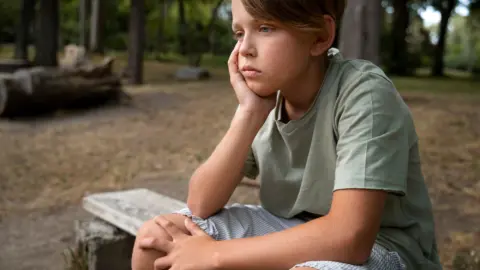
Noah was sitting at Linda’s kitchen table in his jacket and his paper mask. He looked fine. He looked perfectly fine. He was holding a small white paper pharmacy bag in both hands.
Ellie was sitting next to him in her pink hat with the pom-pom, wrapped in a fleece blanket, her face pale and puffy from the steroids. She was holding Noah’s arm with both of her tiny hands.
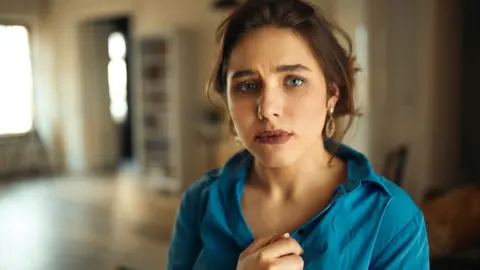
And Linda was standing at the counter with her back to me, both hands pressed over her face, crying so hard her shoulders were shaking.
There was no turkey anywhere.
“What happened?” I said. “What’s going on? Noah, are you hurt?”
Noah looked up at me. Above the paper mask, his eyes were scared.
“I’m okay, Mom,” he said. “I’m sorry. I’m really sorry.”
“Sorry for what?”
Linda turned around.
Her face was red and wet, and her mascara had run down both cheeks. She looked at me for a long moment. Then she held up a receipt.
“Your son,” she said, and her voice cracked right down the middle, “paid for Ellie’s medicine.”
I didn’t understand at first. I took the receipt out of her hand and looked at it.
It was from the pharmacy counter at Brennan’s Market. A prescription for Ondansetron, eight-milligram tablets, thirty count. The total, after a discount coupon, was $27.84.
Paid in cash.
I looked at Noah.
“I’m sorry, Mom,” he said again. His voice was small. “I didn’t get the turkey.”
Part 5: What Happened at Brennan’s
Linda told me the whole story, sitting at her kitchen table with a box of tissues, while Noah stared at his hands and Ellie held onto his arm.
She’d gone to Brennan’s that morning to pick up Ellie’s anti-nausea medicine. Ellie had chemo two days before, and she’d been throwing up all night. She couldn’t keep down water. The medicine was the only thing that helped.
But when Linda got to the pharmacy counter, the pharmacist told her there was a problem.
Her insurance had changed in November. The new plan didn’t cover that medicine anymore without some kind of special approval from the doctor. And the doctor’s office was closed for Thanksgiving until Monday.
“So it’s twenty-seven eighty-four,” the pharmacist had said. “Even with the store coupon. I’m so sorry, Mrs. Pryor.”
Linda had eleven dollars in her purse.
She’d stood at the pharmacy counter at Brennan’s Market on Thanksgiving morning and counted her eleven dollars over and over, like the number might change.
“I asked if I could pay half,” Linda told me. “I asked if they could give me just a few pills. Just enough for the weekend. The pharmacist wanted to. I could see she wanted to. But she couldn’t. It’s against the rules.”
Linda’s voice broke.
“So I stood there. And I started crying. In front of everybody. In the middle of Brennan’s. I just stood there crying with my eleven dollars, and I couldn’t stop.”
Noah had been in the produce section, looking at sweet potatoes. He’d heard someone crying. He’d looked up and seen Linda at the pharmacy counter.
He went over. He asked what was wrong.
“I told him it was nothing,” Linda said. “I told him to go home. I didn’t want him to see me like that.”
But Noah didn’t go home. He stood there and listened while the pharmacist explained it again, quietly. Ellie’s medicine. Twenty-seven eighty-four. Eleven dollars.
Then he reached into the front pocket of his jeans, took out the folded thirty dollars, and put it on the counter.
“I said no,” Linda said. She was crying again now. “I said, Noah, absolutely not, put that back in your pocket right now. That’s your mother’s money. That’s your Thanksgiving.”
“What did he say?” I asked.
Linda looked at Noah. Noah looked at the table.
“He said,” Linda whispered, “‘Ellie needs it more than we need a turkey. My dad would’ve done it.'”
I couldn’t say anything. I just stood there in Linda’s kitchen with the receipt in my hand.
“And then,” Linda said, “he picked up the bag. And he said, ‘I’ll walk you home, Mrs. Pryor, so you don’t have to carry it.’ Like it was nothing. Like he was carrying my groceries.”
She pressed a tissue against her eyes.
“And when we got here, Ellie had been sick again. All over the couch. And I was so upset, and so embarrassed, and I just— I couldn’t think. So Noah cleaned it up. He got the towels and the spray and he cleaned up the couch while I gave Ellie her medicine. And then he sat with her and played Uno so I could take a shower and stop crying.”
“His phone died,” Ellie said in her small, raspy voice. “He showed me. It went black.”
“I’m sorry, Mom,” Noah said again. “I know it was all our money. I know we don’t have a turkey now. I just—”
His voice cracked. He stopped. He pulled the paper mask down off his face, and I saw that his chin was shaking.
“I just kept thinking about Dad,” he said. “About firehouse plates. He always said somebody’s got it worse. You go find them. And I found her. She was right there. And I didn’t know what else to do.”
He looked up at me with his father’s eyes.
“Are you mad?”
Part 6: The Answer
I’ve thought a lot about that moment since. About what I wanted to say, and what I almost said, and what I actually said.
Because the honest truth is that for one second, standing in that kitchen, I was mad.
Not at Noah. Not really. I was mad at the whole world. At the insurance company that changed the rules in November. At Tom Pryor, who drove away from his sick daughter. At the warehouse fire and the roof that fell and the Kaufmans for moving to Ohio.
I was mad that my twelve-year-old son had to choose between a turkey and a sick little girl’s medicine. I was mad that he even had to know what that choice felt like.
And under all of that, I was scared. Because the thirty dollars was gone, and it was Thanksgiving, and the stores were closing at noon, and I didn’t have anything else.
But then I looked at Ellie.
She was holding Noah’s arm with both of her little hands. Her face was swollen from the steroids, and her eyes had dark circles under them, and her lips were cracked. But she wasn’t throwing up anymore. For the first time in two days, Linda told me later, she’d kept down a whole glass of apple juice.
Because of my son. Because of thirty dollars.
I put the receipt down on the table. I walked around to Noah’s chair. I knelt down on Linda’s kitchen floor, right next to him, so we were eye to eye.
“Noah,” I said. “Look at me.”
He looked at me.
“I’m not mad,” I said. “I’m so proud of you I can’t breathe.”
His face crumpled.
He threw his arms around my neck so hard he nearly knocked me over. He was crying into my shoulder, big ugly sobs, the kind he hadn’t cried since the funeral.
“I thought you’d be mad,” he kept saying. “I thought you’d be mad. I thought I ruined Thanksgiving.”
“You didn’t ruin anything,” I told him. I was crying too now. “Your dad would’ve done the exact same thing. The exact same thing, baby. He would’ve been so proud of you.”
Over his shoulder, I saw Linda put her hand over her mouth.
And Ellie, very quietly, said, “Noah’s the best.”
When we finally let go of each other, Linda grabbed her purse off the counter. Her hands were shaking.
“I’m paying you back,” she said. “Right now. I have eleven dollars. Take it. I’ll get the rest on—”
“Linda,” I said. “Put it away.”
“Jenny, that was your Thanksgiving.”
“And this is your daughter,” I said. “Put it away.”
She stared at me. Then she sat down hard at the kitchen table and put her face in her hands.
“I don’t even have a turkey either,” she said into her hands. “I was going to make boxed macaroni. That was the plan. Boxed macaroni and canned green beans.”
I looked at Noah. Noah looked at me.
And for some reason, I started to laugh. I don’t know why. It just came out of me, this big crazy laugh, right there in Linda’s kitchen.
“Well,” I said. “I’ve got half a bag of egg noodles and a can of cranberry sauce from last year. Let’s combine forces.”
Linda looked up at me through her fingers. Then she started laughing too.
Part 7: The Store Manager
We didn’t know it yet, but somebody else had seen what Noah did at the pharmacy counter.
His name was Hal Brennan. He’s the owner of Brennan’s Market. He’s seventy-two years old, with white hair and bifocals, and he’s worked behind that butcher counter every day since 1979.
Hal had been stocking the pumpkin pie filling on the end of aisle three. He heard Linda crying. He looked over, and he saw a twelve-year-old boy with red hair and a too-small jacket put three bills down on the pharmacy counter.
He heard what Noah said. “My dad would’ve done it.”
And he recognized him.
Six years earlier, in the winter, there was a grease fire in the back kitchen of Brennan’s Market. It was two in the morning. Hal was asleep in the apartment upstairs, where he’d lived alone since his wife passed.
Station 9 got the call. The first firefighter up the back stairs and through the smoke was a big red-haired guy named Sean Callahan. He carried Hal Brennan out over his shoulder in his pajamas.
Hal never forgot that face. He came to Sean’s funeral four years later and sat in the back row and cried.
And now, six years after that fire, he was standing in aisle three of his own store, watching Sean Callahan’s son give away his last thirty dollars to a stranger.
Hal didn’t say anything at the store. He told me later he was too choked up to talk.
But after Noah and Linda left, he went into his little office in the back of the store, closed the door, and picked up the phone.
He called Station 9.
Part 8: The Knock
We were in Linda’s kitchen around one o’clock that afternoon, trying to figure out what we could make out of egg noodles, cranberry sauce, boxed macaroni, and canned green beans, when there was a knock on the front door.
It was loud. Three heavy knocks.
Linda went to answer it. I heard the door open. Then I heard her say, “Oh. Oh my God.”
I went into the hallway to see what was wrong.
There was a fire truck parked in the middle of Tilghman Street.
A real one. Big and red and shining in the gray November light, with ENGINE 9 painted in gold on the side. Its lights weren’t flashing. It was just sitting there, idling, blocking the whole street.
And standing on Linda’s front steps were four firefighters in their dark blue station uniforms.
Captain Ray Dominguez was in the front. He’s in his late fifties now, with gray hair and a gray mustache. Behind him stood Big Mike Sorensen, who’s six foot five and built like a refrigerator, holding an enormous foil-covered roasting pan in both arms.
Behind Big Mike were two younger firefighters I didn’t know, carrying grocery bags. Lots of them. They were stacked up to their chins.
Ray Dominguez took off his cap.
“Hi, Jenny,” he said quietly. “I think we’re a little overdue.”
I just stood there. I couldn’t say anything.
“Hal Brennan called us,” Ray said. “He told us what Noah did. At the pharmacy counter.”
He looked past me, down the hall, where Noah was standing in the kitchen doorway in his paper mask.
“He told us,” Ray said, “that Noah said his dad would’ve done it.”
His voice got thick. He cleared his throat.
“He’s right,” Ray said. “Sean would have. And Sean would’ve wanted us to do this.”
Big Mike stepped forward with the roasting pan.
“This is a twenty-two-pound turkey,” he said. “Brined overnight. Cooked at the station this morning. There’s another one in the truck for your house, Jenny.”
He tipped his head at the two young firefighters.
“And that’s mashed potatoes, stuffing, green beans, rolls, gravy, cranberry sauce, the real kind, not the can, and three pumpkin pies. Hal Brennan threw in the pies himself. Wouldn’t let us pay.”
“And,” Big Mike added, “my sweet potato casserole. With the marshmallows. I burned them black just for Noah.”
Noah came down the hallway slowly. He stopped in front of Big Mike and stared up at him.
“You remembered,” Noah said.
“Remember?” Big Mike said. “Kid, you used to eat the burnt marshmallows off the top before anybody else got any. Your dad had to pull you away from the pan.”
Noah laughed. Then he started crying again.
Big Mike handed the roasting pan to one of the young firefighters. Then he got down on one knee, right there on Linda’s front steps, and wrapped his giant arms around my son.
I turned to Ray. I was crying too hard to talk properly.
“Ray,” I said. “I can’t— we can’t take all this—”
He held up one hand.
“Jenny,” he said. “For four years, every time I called you, you told me you were fine.” He looked at me steadily. “Were you fine?”
I opened my mouth to say yes. The word was right there, the way it always was.
Then I looked at my son, kneeling on Linda’s steps in Big Mike’s arms. I looked at the fire truck in the street. I looked at Linda, standing in her doorway with her hand over her heart.
“No,” I said. “No, Ray. We weren’t fine. We haven’t been fine for a long time.”
Ray nodded slowly, like he’d been waiting four years to hear it.
“Okay,” he said. “Then let us help.”
Part 9: The Table
They didn’t just drop off the food. They stayed.
Ray said Station 9 had a skeleton crew covering calls until four, and the rest of them had volunteered to spend their afternoon on Tilghman Street. Big Mike took over Linda’s tiny kitchen like a general taking command. The two younger firefighters, whose names were Danny Okafor and Chris Weller, went down the block to my house to get my kitchen table and chairs.
Because Linda’s table only sat four. And we needed a lot more than four.
They carried my table two doors down and set it up end-to-end with Linda’s in her narrow living room. They covered both tables with my old orange-leaf tablecloth and a white sheet from Linda’s closet. They brought over every chair from both houses, plus two folding chairs from the fire truck.
Ellie sat at the head of the table in her pink pom-pom hat, wrapped in her fleece blanket, wearing a paper mask. Big Mike had made her a special plate with tiny portions of everything, cut up small, because the medicine made her stomach sensitive.
“Doctor’s orders,” Big Mike told her. “You eat what you can, and nobody’s mad about what you can’t.”
Ellie looked at him very seriously.
“Are you a real firefighter?” she asked.
“Yes, ma’am.”
“Like Noah’s dad?”
Big Mike’s face did something complicated.
“Yeah,” he said. “Like Noah’s dad. He was my best friend.”
At two o’clock, Hal Brennan showed up at the door in a corduroy jacket and a tie. He was holding a bouquet of grocery-store flowers and looking embarrassed.
“I closed up early,” he said. “Ray said there might be an extra seat.”
Noah got up from the table and walked over to him.
“Mr. Brennan,” Noah said. “You called the firehouse?”
“I did.”
“Why?”
Hal Brennan looked down at my son for a long moment. His eyes behind his bifocals were wet.
“Because six years ago,” he said, “your father carried me out of a burning building in my pajamas. And I never got to thank him properly.” He swallowed hard. “So I figured I’d start with you.”
Then Ray Dominguez stood up at the end of the table and said, “Noah. Your dad always said grace at the station. Would you do it?”
Noah looked at me. I nodded.
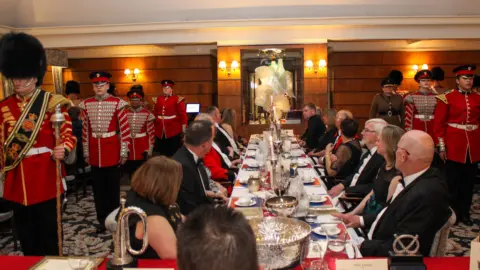
He stood up. He looked around at all of us. Four firefighters, a seventy-two-year-old grocery store owner, a single mom who’d been crying all morning, a little girl with leukemia in a pink pom-pom hat, and me.
He bowed his head. He took a deep breath. And he said it, short and loud, exactly the way his father used to.
“Thanks for the food. Thanks for the people. Let’s eat.”
Big Mike laughed so hard he had to wipe his eyes with his napkin.
We ate for two hours.
Big Mike told stories about Sean. The time Sean got his head stuck in the railings at the station during a bet. The time Sean drove the fire truck through a car wash because the captain said it needed washing and didn’t say how. The time Sean carried a terrified old dog out of a burning house and then sat in the street with it in his lap for an hour until its owner came home.
Noah listened to every story like they were treasure. Like he was trying to memorize each one.
Ellie ate three bites of mashed potatoes and half a roll and one burnt marshmallow off the top of Big Mike’s casserole. Linda cried every time she took a bite. Hal Brennan told a long, rambling story about the grocery business in the 1980s that nobody really followed, but everybody laughed at the end anyway.
And for two hours, I didn’t think about the gas bill, or the pink notice, or the clients who’d moved away.
For two hours, it was Thanksgiving.
Part 10: Firehouse Plates
There was a lot of food left over. Big Mike had cooked for an army.
Around four o’clock, Ray’s radio crackled, and he and the younger firefighters had to head back to the station. Big Mike stayed behind to help clean up. He was standing at Linda’s sink with his sleeves rolled up, washing the roasting pan, when Noah came into the kitchen.
“Mr. Sorensen?”
“Big Mike, kid. You know that.”
“Big Mike,” Noah said. “Do you have any foil?”
Big Mike turned around and looked at him. Something passed between them, something I didn’t understand until a second later.
“Paper plates too?” Big Mike asked.
Noah nodded.
Big Mike dried his hands slowly on a dish towel.
“Truck’s got both,” he said. “Your dad made sure we always kept them stocked.”
So that’s what they did.
Big Mike and Noah piled the leftovers onto paper plates. Turkey and stuffing and mashed potatoes and green beans. A roll on every plate. A big scoop of sweet potato casserole with the burnt marshmallows. A slice of pumpkin pie wrapped separately in plastic wrap. They covered each plate in foil.
Fourteen plates.
Then Big Mike went out and brought the fire truck back around, and he and Noah loaded the plates into the cab.
“Where are we going?” I asked.
Noah looked at me like it was obvious.
“Firehouse plates, Mom,” he said. “We have to find them.”
So I went with them. I climbed up into the cab of Engine 9 next to my son, and Big Mike drove us slowly through the streets of Allentown in the gray November dusk.
We went to old Mr. Fenwick, who was ninety-one now and still lived alone. We went to the lady on Ninth Street with the six cats, who’d adopted two more. We went to a family Big Mike knew about on Sixth Street whose father had been laid off from the cement plant. We went to the apartment building on Union Street where the station had pulled a whole family out of a kitchen fire in October.
At every stop, Noah carried the plate up to the door himself. He knocked. And when they answered, he said the same thing every time.
“Happy Thanksgiving. This is from Station 9. My dad used to bring these.”
At the last stop, an old woman named Mrs. Delgado answered the door in her bathrobe. She was alone. Her son lived in Texas, she told us, and couldn’t come home this year.
Noah held out the plate. She took it with shaking hands and looked down at the foil.
“Your dad,” she said. “Was he the big one? With the red hair?”
Noah nodded.
“He came to my door every Thanksgiving for six years,” she said. “And then he stopped coming. I thought maybe he’d moved away.”
Noah didn’t say anything. He just stood there on her front step.
Then Mrs. Delgado reached out and touched his face, very gently, the way you’d touch something you were afraid might break.
“You look just like him,” she said. “You have his eyes.”
On the drive home in the fire truck, Noah was quiet. He sat next to me with his head against my shoulder, watching the streetlights go by.
“Mom?” he said.
“Yeah, baby.”
“I think Dad would like this.”
“I know he would.”
“I think he’s still doing it,” Noah said. “Firehouse plates. I think he’s still doing it through us.”
I put my arm around him and held on tight. In the driver’s seat, Big Mike made a noise like he was clearing his throat, and then he didn’t say anything for a long time.
Part 11: After
That night, after Big Mike dropped us off and Noah went to bed, I sat at my own kitchen table, which was back in my own kitchen, and I cried for an hour.
But it was a different kind of crying. Not the scared kind. Not the kind I’d been doing alone after Noah fell asleep for four years.
It was the kind that comes when you finally put down something you’ve been carrying too long.
The next week, things started happening.
Hal Brennan’s daughter-in-law, a woman named Kathleen who ran a real estate office on the West End, called me on Monday morning.
“Hal told me what your son did,” she said. “And then he told me you clean houses. Do you have room for one more client? I’ve got a four-bedroom and two kids and a golden retriever, and I’m drowning.”
“I— yes,” I said. “Yes, I do.”
“Great. And Jenny? I’m on the board of the realtors’ association. Every time we sell a house, the sellers need it cleaned for showings. Every single time. Can I give them your number?”
By Christmas, I had eleven regular clients. By spring, I had so many calls I had to start turning people away.
Big Mike’s wife, Theresa, who did the bookkeeping for half the small businesses on Hamilton Street, sat down with me at my kitchen table one Saturday and showed me how to set up a real business. A name, a license, insurance, an invoice system.
“You’re not a cleaning lady, Jenny,” she told me. “You’re a small business owner. Start acting like one.”
So I did. I called it Callahan Clean. Theresa designed me a little logo with a firefighter’s helmet on it, because she said Sean would’ve liked that.
By the following summer, I had two employees. One of them was Linda.
Linda went back to work in March, when Ellie’s treatment moved into the maintenance phase and she didn’t have to be at the hospital every week. She didn’t want to go back to the dental office. She said she couldn’t sit at a desk all day anymore and smile at people while her daughter was sick at home.
So she came to work with me. Part-time at first, while Ellie was still recovering. We cleaned houses together on the West End, and we talked the whole time, about everything. About Tom, who’d never once called. About Sean. About being scared all the time and pretending we weren’t.
“You know what I figured out?” Linda said one afternoon, while we were scrubbing a bathtub in a big stone house on Twenty-Fourth Street. “When Noah put that money on the counter, I was so ashamed. I thought, I’m a grown woman and a twelve-year-old has to pay for my daughter’s medicine.”
She sat back on her heels and wiped her forehead with her wrist.
“But then I realized,” she said. “That’s not shame. That’s just what it feels like to be helped. I’d forgotten. It’s been so long since anybody helped me that I didn’t recognize it.”
I knew exactly what she meant.
The insurance company approved Ellie’s medicine the Monday after Thanksgiving. Her doctor called them herself and yelled at somebody on the phone for twenty minutes, Linda said.
It turned out the new plan had a hardship program for children in active cancer treatment. Nobody had told Linda about it. The pharmacist at Brennan’s helped her fill out the paperwork, and they refunded the full $27.84.
Linda tried to give it to Noah.
He wouldn’t take it.
“Put it in a jar,” he told her. “For the next person.”
So she did. There’s a mason jar on the pharmacy counter at Brennan’s Market now. Hal Brennan put it there himself. It has a hand-lettered sign taped to the front, in Noah’s handwriting.
“FOR SOMEBODY WHO NEEDS THEIR MEDICINE. FROM ELLIE AND NOAH. FIREHOUSE RULES.”
People drop their change in it every day. Last I heard, it had paid for eleven prescriptions.
Part 12: The Bell
The next Thanksgiving, a year after the thirty dollars, Ellie rang the bell.
At Lehigh Valley Children’s Hospital, there’s a brass bell mounted on the wall at the end of the oncology hallway. When kids finish their last round of intensive treatment, they get to ring it as hard as they want. Everybody on the floor comes out to cheer.
Ellie wasn’t completely done. She still had maintenance treatment, little pills and monthly checkups that would go on for another year or two. But the hardest part was over. Her doctors said she was in remission.
She rang the bell two days before Thanksgiving.
We were all there. Linda and me. Hal Brennan in his corduroy jacket. Big Mike and Theresa. Captain Dominguez. Half the nurses on the floor.
And Noah, thirteen now, two inches taller, his red hair still long and shaggy.
Ellie walked down the hallway in her pink pom-pom hat. Her hair had started growing back underneath, short and curly and dark. She walked on her own, without a wheelchair, holding her mother’s hand.
When she got to the bell, she stopped and looked back at all of us.
“Noah,” she said. “Will you ring it with me?”
Noah’s face went red. He looked at Linda. Linda nodded, crying already.
So he walked up next to Ellie. They both grabbed the rope. And together, they rang that brass bell so hard the sound echoed all the way down the hall.
That Thanksgiving, we did it at Station 9.
Ray Dominguez invited all of us. Both families, plus Hal Brennan, plus Mrs. Delgado, who Big Mike had driven over in the truck. The firefighters cooked three turkeys in the station kitchen, and Big Mike made his sweet potato casserole, and he let Noah burn the marshmallows himself with a kitchen torch.
Ellie sat at the long table without a paper mask for the first time in eighteen months. She ate a whole plate of turkey and mashed potatoes and two rolls and a slice of pumpkin pie. Linda watched her eat every bite like it was a miracle.
It was.
After dinner, Noah stood up from the table.
He didn’t say anything. He just went into the station kitchen and came back with a roll of foil and a stack of paper plates.
Big Mike looked at him. Then he stood up too. Then Ray. Then Danny Okafor and Chris Weller and every firefighter on shift that afternoon.
And then Ellie climbed down off her chair, still holding a roll in one hand, and said, “Can I come too?”
Noah looked at Linda. Linda looked at me.
“Firehouse rules,” I said. “Everybody helps.”
That year, we made thirty-one plates.
Big Mike drove the truck. Noah sat up front, the way his father used to. Ellie sat in the middle in her pink pom-pom hat, holding a stack of plates in her lap, and every time we stopped, she carried one up to the door herself.
“Happy Thanksgiving,” she’d say. “This is from Station 9. And from Noah’s dad.”
On the last stop, we pulled up outside Mrs. Delgado’s house on Union Street. She was home this time. Her son had flown in from Texas, and he answered the door with her standing behind him.
Noah handed him the plate. The man looked at it, confused.
“My mom said a firefighter’s son brought her dinner last year,” he said slowly. “On Thanksgiving. When I couldn’t come.”
“That was me,” Noah said.
The man stared at him for a long moment. Then he reached out and shook Noah’s hand. He held it for a long time.
“Thank you,” he said. “I’ve been wanting to say that for a whole year.”
On the drive back to the station, it was dark and cold and starting to snow. The streetlights glowed orange on the wet streets. Ellie had fallen asleep against Noah’s shoulder in the cab, still holding the last roll.
I sat in the back seat and watched them. My son, thirteen years old, with his father’s red hair and his father’s freckles, looking out the windshield at the snow.
“Mom?” Noah said quietly, so he wouldn’t wake Ellie.
“Yeah, baby.”
“Do you ever think about the thirty dollars?”
I thought about it. About standing in my kitchen with one shoe on. About Linda screaming into the phone. About my son sitting at her table in his paper mask, saying he was sorry he didn’t get the turkey.
“All the time,” I said.
“Was it worth it?”
I looked at Ellie, asleep on his shoulder with her new curls coming in under the pink hat. I looked at Big Mike in the driver’s seat, and at the snow falling past the windows of Engine 9, and at the empty space in the back where thirty-one paper plates had been.
“Noah,” I said. “It was the best thirty dollars I ever spent.”
He smiled at me in the rearview mirror. That big lopsided Sean grin.
And I swear, just for a second, sitting in the back of that fire truck in the snow, I could hear his father laughing. That big loud laugh you could hear from a block away.
Somebody’s always got it worse, buddy. You go find them. That’s the whole job.
We found them, Sean.
We’re still finding them.