The Fourth of July picnic in our town is held in the city park by the creek, under the big cottonwoods, and everybody brings a covered dish and a lawn chair. It’s been that way since before I was born. The Lions Club grills hamburgers and the Methodist women sell pie by the slice, and at three o’clock there’s a horseshoe tournament and at dusk there are fireworks over the football field. I’ve gone every year of my life except two, and one of those I was having my son.
I was standing in the pie line with my paper plate when my sister Connie found me. She had her husband Gary with her, and a couple of the Holloway boys who’d hired on with them for the summer, and a woman from the Wool Growers I didn’t know. Connie is three years older than me. She’s been bigger than me and louder than me and righter than me since the day I was born, and she’s never let me forget it.
“There she is,” Connie said. “Peg. Tell everybody about your llama.”
“There’s nothing to tell.”
“Oh, there’s plenty.” She turned to the woman from the Wool Growers. “My sister bought a llama at the sale barn. Four hundred dollars. She’s going to guard her thirty ewes with it. Thirty! I’ve got twelve hundred and I’ve got five Akbash dogs that’d eat a coyote for breakfast, and she’s got a sheep in a fur coat.”
The Holloway boys laughed. Gary laughed, because Gary always laughs when Connie wants him to. The woman from the Wool Growers smiled politely and looked at her pie.
“Dolly does fine,” I said.
“Dolly.” Connie hooted. “She named it Dolly. Peg, honey, you were a school cook for thirty-four years. You know how to make tater tot casserole for three hundred kids. You don’t know the first thing about sheep.”
“I grew up on the same place you did, Connie.”
“You grew up in the kitchen with Mom. I grew up on a horse with Dad.”
That was true, mostly. And I didn’t have anything to say back that wouldn’t start a fight in the middle of the Methodist pie line. So I bought my slice of rhubarb and went and sat with my grandson by the creek and ate it and watched the horseshoes. But I could hear her for a long time after that, telling the story again to whoever would listen. A sheep in a fur coat. Four hundred dollars.
I suppose I should explain about the llama. And about Connie. And about Dad, because it all goes back to Dad.
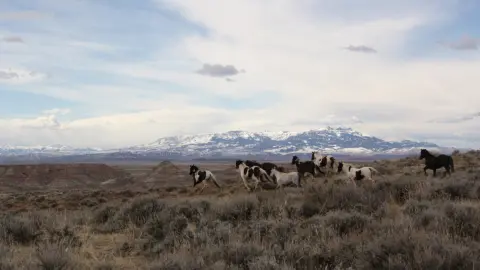
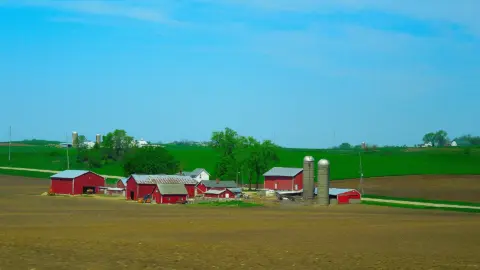
Our father ran sheep in Johnson County, Wyoming, for fifty-one years. His father did it before him. The home place sits at the foot of the Big Horns, on a creek about twelve miles out of town, and in the summer they’d trail the bands up into the mountains to graze on the Forest Service allotment, and in the fall they’d trail them back down. When I was a girl, there were sheepwagons and Basque herders and dogs everywhere, and my sister rode out with Dad every chance she got. I stayed with Mom. Connie’s right about that. I liked the kitchen. I liked feeding people. I suppose that’s why I ended up cooking at the school.
Dad died in 2016. He was eighty-seven, and he’d been sick a long time. He left the ranch to the two of us, half and half. Connie and Gary had been running it with him for twenty years by then, and everybody understood that they’d keep it going. So Connie offered to buy me out. She had an appraisal done, and she offered me a hundred and eighty thousand dollars for my half of the deeded ground, plus the old house on the home place and the forty acres around it, which I wanted anyway because it was Mom’s house.
I signed. I didn’t look at it too hard. I was grieving and I trusted my sister and a hundred and eighty thousand dollars seemed like a lot of money to a school cook.
Two years later, I was at the courthouse paying my property taxes, and the clerk, who used to be one of my lunch kids, mentioned the Lindahl place had been valued for the county at a good deal more than that. I asked her how much more. She looked it up and told me. I went home and sat in Mom’s kitchen for a long time. Then I called the man who’d done the appraisal for Connie. He was retired and living in Sheridan. He told me he’d never done an appraisal on our place in 2016. He’d done one in 1998, for a bank loan, and that was the only time.
Connie had used a nineteen-year-old appraisal to buy me out.
I never said a word to her about it. I want you to understand that. I could have. I thought about getting a lawyer. But she was my sister, and Dad was barely in the ground, and the papers were signed. And a part of me thought that maybe she deserved it more than I did, because she was the one who’d stayed on the horse. So I kept the forty acres and Mom’s house and a hundred and eighty thousand dollars, and I kept my mouth shut. But it sat in me like a stone. It’s been sitting there ever since.
When I retired from the school, I got lonely in that house. My husband Lyle passed the year after that, and my son lives in Casper. So I bought thirty bred ewes from a neighbor. I wanted something to take care of. Something to feed. I’d forgotten how much I liked the sound of sheep in the morning, that racket of bawling when they hear the feed bucket.
The coyotes found them the first spring. I lost four lambs in April. I sat up nights with a flashlight and Lyle’s old shotgun and never saw a thing, and every morning there’d be another little carcass by the fence.
A woman at the Farm Bureau meeting told me about llamas. She said they’re natural guards. They don’t like dogs or coyotes, and they’ll run at them and scream and kick, and a coyote will usually turn tail. And she said sheep take to them. A llama will bond with a flock and stand watch over it like a big woolly sentry.
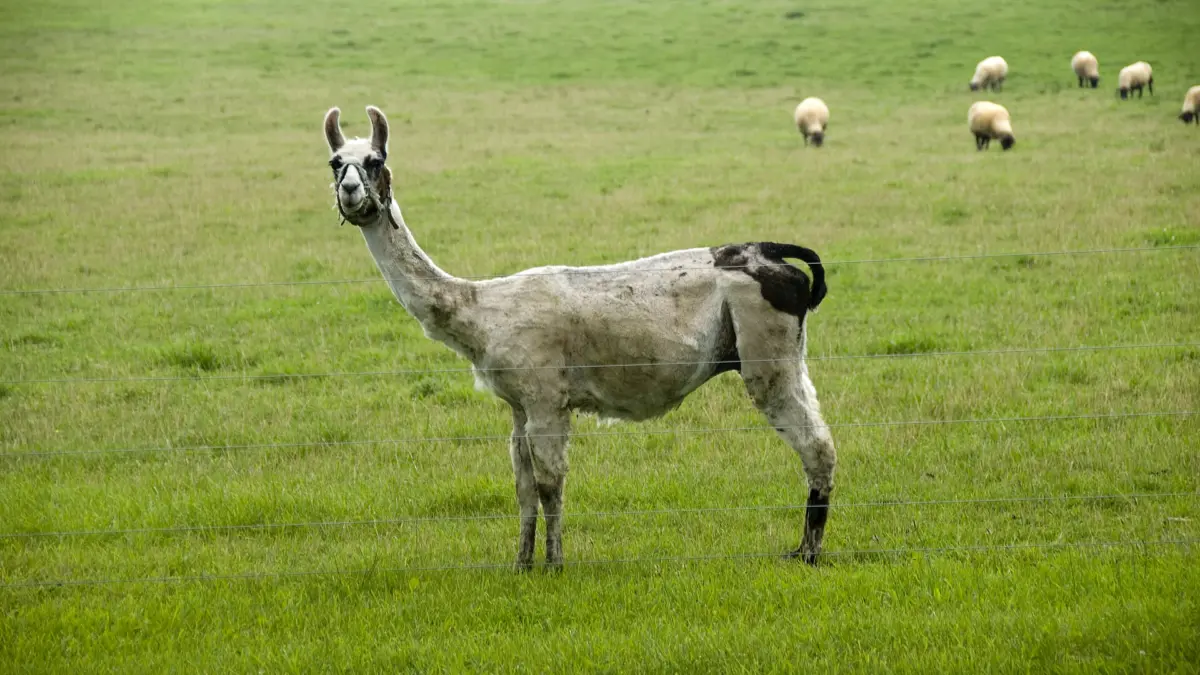
So in May, I went to the livestock auction in Buffalo, and at the end of the sale they ran through a white llama with brown spots on her neck and one ear that flopped over sideways. The auctioneer called her a guard llama, four years old, and nobody bid. I bid two hundred. A man from Kaycee bid three. I bid four. That was the end of it.
I named her Dolly, because of the hair. I’m not ashamed of that.
She was the strangest animal I ever owned. She’d hum. Llamas hum, did you know that? A low little noise in her throat when she was thinking. She’d stand at the gate in the mornings and hum at me until I came out with her grain. And she took to my ewes right away, just like the Farm Bureau woman said. She’d graze in the middle of them, head up, looking around every few bites. If a dog came down the road, she’d walk straight at it with her ears pinned back and let out a sound like a car alarm. I didn’t lose another lamb all summer.
The other thing about Dolly is she’d follow me anywhere. If I whistled, she came. I whistled the same two notes my dad used to whistle for his dogs, high-low, and she’d come running across the pasture with her neck stuck out, and all my ewes would come running behind her, because wherever Dolly went, they went.
That spring, my pasture was short. It was a dry year. Connie offered to run my thirty ewes with her bands on the Forest allotment for the summer. She said she’d charge me fourteen dollars a head a month, which was fair, I’ll say that. When I asked if Dolly could go too, she laughed and said fine, but the llama would cost me a hundred dollars extra for the season, for the trouble of having to look at it.
I paid it. Then, the morning they trailed up the mountain in June, I did one more thing. I took Dad’s old sheep bell down off the nail in Mom’s kitchen. It’s a brass bell about the size of a coffee mug, worn smooth on one side, with a leather strap. Dad used to hang it on his bellwether, the old castrated ram who led the band on the trail. Every sheep in the band knew that bell. When I was a little girl I could hear it coming down the mountain in the fall from two miles away, and I’d run out to the road and wait.
I buckled it onto Dolly’s halter, so the herders could find her in the timber.
Connie saw me do it. “Oh, for heaven’s sake, Peg,” she said. “Dad’s bell? On a llama?” And she rode off up the trail shaking her head.
That was June. The Fourth of July was a couple of weeks later, and the pie line, and the sheep in a fur coat. And then it was August, and the fire.
At the end of July, Connie’s grazing bill came in the mail. She always did her billing on the last day of the month, on the same yellow carbon forms Dad used, in her big square handwriting. Thirty head at fourteen dollars, two months, eight hundred and forty dollars. And under that, one more line. Llama, season. One hundred dollars. And next to it, in parentheses, she’d written: for the trouble of looking at it.
I drove over to her place with my checkbook. I don’t know why I didn’t just mail it. I think I wanted her to see me write it.
Connie and Gary were on the porch, Gary in a lawn chair with his cane across his knees and Connie doing the books at a card table. One of their Basque herders, an old man named Mateo who’d worked for Dad back in the seventies, was down off the mountain for the day for supplies, and he was sitting on the porch steps eating a sandwich.
I wrote the check at the card table, all nine hundred and forty dollars of it, and tore it out and handed it to her.
“You didn’t have to write that on the bill, Connie.”
“Write what?”
“For the trouble of looking at it.”
She laughed. “Oh, Peg. It was a joke. You’ve always been so sensitive.”
Mateo looked up from his sandwich. “The llama?” he said. “The white one with the ear?”
“That’s her,” I said.
“She is a good one.” He nodded slowly. “Every night, the ewes bed down around her. All of them. Not just your thirty, señora. All of the band. Like she is the mother. In the morning, when she gets up to walk to the water, they get up and follow.” He took another bite of sandwich and chewed. “And the bell. When they hear the bell, they come. I never see sheep come to a bell like that since your father.”
Connie stopped writing in her ledger.
“They’re sheep, Mateo,” she said. “They follow anything that moves.”
“Sí,” Mateo said. He shrugged. “But they follow her.”
Connie went back to her ledger and didn’t look up again until I left. But Gary caught my eye from his lawn chair, and he winked. Gary’s not a bad man. He’s just married to my sister.
I drove home with that in my head. They follow her. I didn’t think anything of it at the time. I thought it was a nice thing for an old man to say.
The fire started on August 9th, a Saturday, from a lightning strike up on the north side of the mountain. Dry lightning, the worst kind, with no rain behind it. It was a little fire at first. The Forest Service said it was fifty acres and they had a crew on it, and nobody worried too much. We get fires every summer. You see the smoke on the mountain and you say a prayer for the crews and you go about your business.
On Tuesday the wind came up.
I was hanging laundry in Mom’s yard about one in the afternoon when I felt it. A hot wind out of the southwest, gusting so hard it pulled a pillowcase right off the line and sent it across the yard. I looked up at the mountain. The smoke that had been a thin gray column for three days had turned into something else. It was a wall. Brown and orange at the bottom, black at the top, boiling up over the ridge like a thunderstorm. You could see it moving.
I went inside and turned on the scanner radio Lyle used to keep in the kitchen. It was all fire traffic. The Forest Service was evacuating the campgrounds. They were closing the highway. And then I heard them say the name of Connie’s allotment, and the words “livestock on the allotment, owner has been notified, crews cannot assist.”
I called Gary. Gary was home, because Gary had a new hip in April and couldn’t ride. He was scared out of his mind.
“She’s up there,” he said. “She went up this morning with the Holloway boys to move the bands down off the north side because of the smoke. She called me an hour ago. The fire jumped the ridge, Peg. It’s coming down the north side right at them. The Forest Service told her to get out and leave the sheep.”
“Is she leaving them?”
“You know your sister.”
I did know my sister.
“Where are they?”
“She’s got the bands bunched in the big park below Elk Lake. That’s where the trail comes out. But they won’t move, Peg. She said they’re all just standing there. The smoke’s so thick they can’t see where to go, and they’re bunching up and freezing. The dogs can’t move them. The boys can’t move them. She’s got twelve hundred ewes and their lambs standing in a meadow, and the fire’s coming down the hill.”
“Is Dolly with them?”
There was a silence on the line.
“I guess she would be,” Gary said. “Why?”
I didn’t answer him. I was already looking at the halter hanging by the back door.
It’s eleven miles from the home place to the forest boundary, and then another nine up the Forest Service road to the trailhead below Elk Lake. The road was closed at the boundary. There was a young fellow from the Forest Service sitting in a green truck across it with his lights going, and a sawhorse with a ROAD CLOSED sign.
I pulled up next to him and rolled down my window.
“Ma’am, I can’t let you through. There’s an active fire.”
“My sister’s up there with twelve hundred sheep.”
“Yes, ma’am, we know. She’s been told to evacuate. We’ve got a crew on the way up to bring her and her people out. The animals—” He stopped.
“The animals what?”
“Ma’am, there’s nothing we can do for the animals.”
“Is she coming out?”
“She says she’s not leaving without them.”
“Then I need to go up.”
He looked at me. A sixty-six-year-old woman in a flowered blouse and gardening jeans in a twenty-year-old Ford pickup, with a llama halter on the seat beside her and a sack of cut-up apples.
“Ma’am,” he said. “With respect. What are you going to do up there?”
I told him. He listened to the whole thing without saying a word. When I was done, he looked up at the mountain, where the smoke was coming down now, rolling down the canyon like fog off a lake. Then he got on his radio and said something I didn’t catch. He waited. Somebody answered. He said something else.
Then he moved the sawhorse.
“Fire crew’s going up behind you in ten minutes,” he said. “They’ll bring you out whether you’re done or not. You understand? Whether you’re done or not.”
“I understand.”
“What’s your sister’s name?”
“Connie. Connie Pruett.”
He wrote it on his hand with a ballpoint pen. “God help you both,” he said.
The road up was the longest nine miles of my life. The smoke got thicker with every switchback. By the time I got to the trailhead, it was like driving at night. The sun was a little orange coin in the sky and everything was brown, and ash was falling like snow on my windshield. I had the headlights on and the wipers going and I still couldn’t see thirty feet.
Connie’s pickup and stock trailer were parked at the trailhead. So were the Holloway boys’ four-wheelers. I left my truck and took the halter and the apples and walked up the trail to the park.
It was a quarter mile. I heard them before I saw them. Twelve hundred sheep and their lambs bawling, all at once, a sound like the end of the world. And dogs barking. And somebody yelling, hoarse.
Then the trail opened out into the meadow, and I saw them.
They were packed together in the middle of the park in one huge gray mass. So tight they were standing on each other. The lambs were trying to get underneath their mothers. The whole bunch was turning, slowly, around and around, the way sheep do when they’re terrified and don’t know which way to go. The Akbash dogs were running circles around the outside, barking, and every time a dog came close, the bunch just tightened up harder. The Holloway boys were on foot with sorting sticks, waving and hollering, and getting nowhere. And above the far edge of the meadow, up on the north slope, I could see the fire.
I could see it. Actual flame, in the timber, maybe a mile off. Red and orange through the smoke. The tops of the trees going up one after another like matches.
Connie was standing at the edge of the bunch with a handkerchief tied over her face. She saw me coming across the meadow and she pulled the handkerchief down.
“Peg?” she said. “What are you doing here?”
“I came for Dolly.”
“For your llama? Now? Are you out of your mind? Go home! Get out of here!”
“Connie, listen to me—”
“No, you listen to me.” She grabbed my arm. Her eyes were red and streaming from the smoke and her voice was nearly gone. “This is no place for you. You don’t know anything about this. The fire’s coming down that hill, and these sheep won’t move, and I’ve been trying for two hours. Two hours, Peg! The Forest Service says leave them. I’m not leaving them. They’re Dad’s sheep. They’re Dad’s bloodlines, all of them. And I am not going to stand here and have you drag your four-hundred-dollar pet out of the middle of them like it matters.”
“They follow her,” I said.
“What?”
“Connie. They follow her. Your sheep have been grazing with my llama for two months. Mateo told you himself, on your own porch. They bed down around her every night. They follow her to water. They follow her everywhere.”
“They can’t see her! Look at this! They can’t see anything!”
“They don’t need to see her,” I said. “They can hear her.”
And I pointed at the bunch.
Because there, in the middle of all that gray wool, standing head and shoulders above everything else, was Dolly. White with brown spots on her neck, and that one floppy ear. She was standing perfectly still while the sheep packed in around her, with her head up and her ears forward, looking at the fire. And every time she moved her head, even just a little, I could hear it over all the bawling.
Dad’s bell.
Connie heard it too. I watched her hear it. She turned her head toward the sound like she was ten years old again, standing out by the road in the fall, waiting for Dad to come down the mountain.
“Oh,” she said.
That was all she said.
I didn’t wait for her to say anything else. I walked straight into that bunch of sheep. They were packed so tight I had to push them aside with my knees, one at a time, and they bawled at me and stepped on my feet and I kept going. It took me five minutes to get to Dolly. When I got there, she put her nose down against my face and hummed, that low little sound in her throat. Her wool was full of ash. I put my arms around her neck for just a second. Then I buckled on the halter.
“Okay, girl,” I said. “Let’s go home.”
The fire crew was coming up the trail behind us. I could hear their trucks at the trailhead and men shouting. Somebody was yelling Connie’s name. The smoke was so thick now I couldn’t see the edge of the meadow.
I turned Dolly toward the trail. Downhill. Toward the wind, toward the smoke, toward the trucks. Every instinct those sheep had told them not to go that way.
I didn’t pull her. I just walked. And Dolly walked with me, her head swinging a little with every step, and that bell went clank, clank, clank, the same slow sound it had made on Dad’s old bellwether fifty years ago coming down this same trail.
I didn’t look back. I was afraid to look back. I whistled, Dad’s two notes, high and low, and I kept walking, and I listened.
For a long few seconds there was nothing behind us but bawling.
And then, out of the smoke behind us, I heard the first ewe answer.
Then another. Then the sound of hooves on the trail, a few at first, then more, then a sound like water rushing, like a river coming down the mountain.
I didn’t turn around until we got to the trailhead. When I did, there they were, coming out of the smoke in a long gray line behind Dolly, four and five abreast, with the lambs tucked in against their mothers’ sides. The dogs were running along the outside of the line, keeping them tight, and for once the sheep weren’t fighting them. The Holloway boys came at the back, waving their sorting sticks and crying like babies. And at the very end of the line, walking with her handkerchief over her face and her hand on the rump of the last old ewe, was my sister.
The fire crew had a dozer at the trailhead, cutting a line across the bottom of the meadow. A crew boss in a yellow shirt saw us come out of the smoke and just stood there with his radio in his hand. He didn’t say anything. He just stared.
We didn’t stop. We couldn’t. The fire was still coming. I walked Dolly down that Forest Service road with twelve hundred sheep behind us for six miles, all the way to the old Forest Service corrals at the bottom of the canyon, and it took us until almost dark. The fire crew drove behind us with their lights going the whole way. Two of the crew got out and walked with the Holloway boys to help keep the tail end moving. A couple of the lambs gave out and the crew boss put them in his truck. I’ll never forget him with a lamb on his lap in the front seat of a Forest Service pickup, steering with one hand.
The fire burned the whole north side of the allotment that night. It burned right through the meadow below Elk Lake where the sheep had been standing. The crew boss told me later that they’d had about forty minutes to spare.
Connie lost forty-one ewes. Some got separated in the timber before I ever got there, and some of the old ones just gave out on the road down. She lost a dog, too, the youngest of the Akbash pups, who ran back up the mountain after strays and didn’t come back. She took that harder than the ewes. But eleven hundred and some sheep came down that mountain alive, and Dad’s bloodlines came with them.
I didn’t see much of Connie that night. She was at the corrals until midnight with the vet, going through the sheep. I went home and took a bath and threw my clothes away because I couldn’t get the smoke out of them, and I went to bed with my hair still wet and slept for eleven hours.
The next afternoon, Connie came to Mom’s house.
She knocked. She’s never knocked at that house in her life. She always just walked in. She stood on the back step in a clean shirt with her hat in her hands, and she looked older than I’d ever seen her look.
“Can I come in?”
“It’s Mom’s kitchen, Connie. You don’t have to ask.”
She came in and sat at the table. I poured her coffee. She looked at the nail by the door where Dad’s bell used to hang.
“You hung his bell on her in June,” she said.
“I did.”
“So the herders could find her in the timber, you said.”
“That’s what I said.”
“Did you know?” she said. “When you did it? Did you know they’d follow it?”
I thought about that for a minute. I thought about lying to her. I thought about telling her I’d planned the whole thing, that I was smarter than she ever gave me credit for. It would have felt good.
“No,” I said. “I just wanted Dad’s bell on the mountain. It seemed like it belonged up there.”
Connie put her face in her hands. She didn’t cry. Connie doesn’t cry. She just sat there like that for a long time, breathing.
“Dad would’ve known,” she said finally, through her hands. “He’d have known the second he heard it.”
“Maybe.”
“I’ve been so mean to you, Peg.”
I didn’t say anything. I’d been waiting forty years for her to say that, and now that she had, I didn’t know what to do with it.
“About the llama. About the school. About all of it.” She took her hands down. “The Fourth of July. I said those things in front of everybody.”
“You did.”
“I’m sorry.”
“Okay,” I said.
She looked at me like she was waiting for something else. Like she knew there was something else. And I could have said it right then. I could have told her about the courthouse, and the appraiser in Sheridan, and the nineteen-year-old appraisal, and the hundred and eighty thousand dollars. It was right there in my throat.
I didn’t. I’m still not sure why. I think I wanted her apology to be about what it was about. I didn’t want to turn it into a bill.
So I asked her if she wanted pie.
Two weeks later was the county fair. The sheep producers have a lunch every year in the exhibit hall before the 4-H market sale, with ham sandwiches and potato salad, and the Wool Growers give out their awards. Connie’s been the president of the county Wool Growers twice. She stood up at that lunch in front of two hundred ranchers and their families, and she told them the whole story. She told them about the Fourth of July, and the pie line, and the sheep in a fur coat. She didn’t leave out a word of what she’d said. And then she told them about the fire, and the bell, and her little sister walking into the middle of twelve hundred terrified sheep.
When she was done, the whole hall stood up. I sat there with my ham sandwich and wished I could crawl under the table.
Afterward, Connie came and sat down next to me.
“I want to buy her,” she said.
“Who?”
“Dolly. I’ll give you five thousand dollars for her.”
I laughed. I couldn’t help it. “Five thousand dollars? For a sheep in a fur coat?”
“I deserve that.”
“She’s not for sale, Connie.”
“I figured.” She nodded. “Then I’m going to get my own.”
And she did. The next week she went to a llama breeder outside Gillette and came home with two of them, a gray gelding and a brown one, for eleven hundred dollars apiece. She named them Ike and Mamie. They’re terrible guards. They’re scared of the dogs. They stand in the corner of the lot together and hum at each other and won’t go near the sheep. Gary says they’re the most expensive lawn ornaments in Johnson County.
I haven’t said a word.
Dolly’s back on my forty acres now, with my thirty ewes and the ones Connie gave me after the fire. She gave me twenty of Dad’s old bloodline ewes and wouldn’t take a dime for them. She said it was the llama’s commission. I wear Dad’s bell around Dolly’s neck all the time now. I can hear it from the kitchen when she walks across the pasture, clank, clank, clank, slow and easy, and every single time I stop whatever I’m doing and listen for a second.
My grandson asked me this summer why I never told Aunt Connie about the old appraisal. He’s twenty-two and he’s taking a law class at the college in Sheridan and he thinks I should still do something about it. He says there’s a lot of money in that question. He’s probably right.
I told him I’d think about it. I’m still thinking. Some days I think I’ll call a lawyer. Some days I sit at Mom’s table and listen to that bell and I think I’ve got everything I need right here.
Connie comes for coffee on Thursdays now. She knocks every time. I’ve told her she doesn’t have to. She does it anyway.