The house phone rang in the seventh inning of the Braves game, and I almost didn’t answer it. Nobody calls the house phone anymore except the pharmacy and people trying to sell me an extended warranty on a car I don’t own. Margaret was out in the garden with her tomato cages, so I muted the TV, pushed myself up out of the recliner, and picked up the receiver on the fourth ring.
“Hollis residence.”
“Yes sir. Is this Mr. Earl Hollis?” It was a man’s voice, older, with a little gravel in it. Somewhere from around here, by the sound of it.
“Speaking.”
“Mr. Hollis, my name is Dale Kessler. I live over in Pike County. I’m sorry to bother you on a Sunday.” He cleared his throat. “This is going to sound strange. I’m buying your Ford.”
I looked out the front window at the driveway, where my truck wasn’t. It hadn’t been there for five weeks.
“Say that again.”
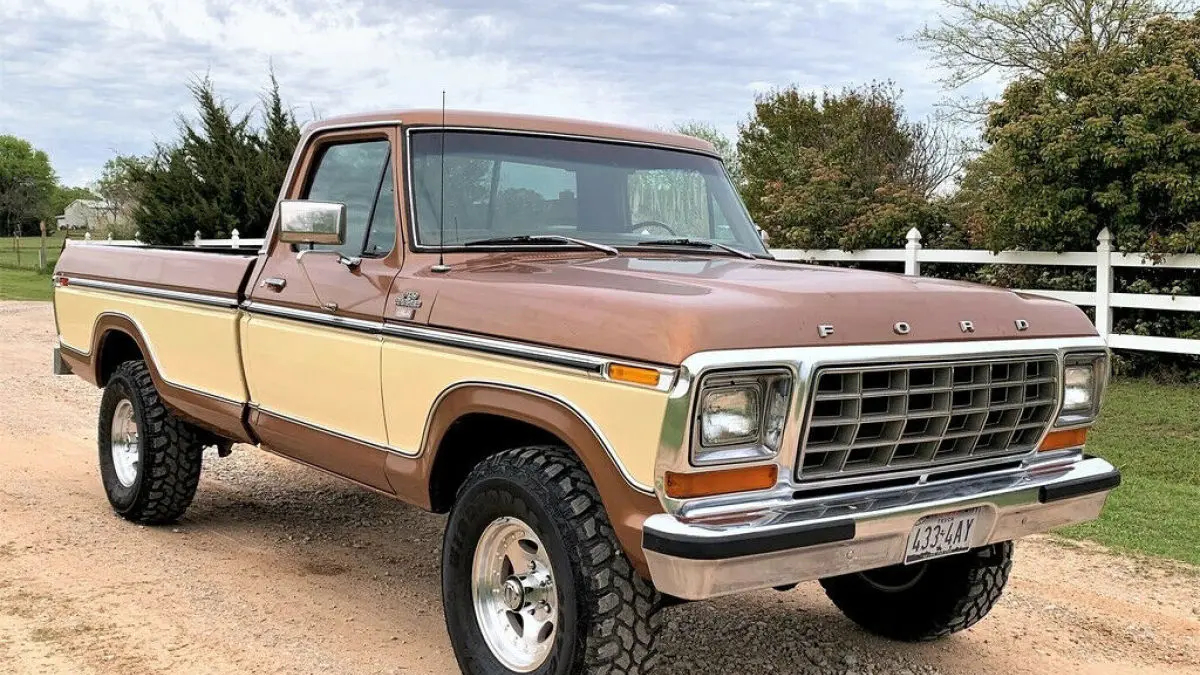
“Your ’78 F-100. Two-tone, blue over white. I’m buying it off a young man named Travis. He says he’s your nephew.” Dale paused. “I sent him a two-thousand-dollar deposit a week ago Friday. He’s supposed to hand over the truck and the title on the fifth of July, and I’m supposed to pay him the other twelve-five then. Only I’ve been buying and selling old Fords for forty years, Mr. Hollis, and something about this one doesn’t sit right with me. So I thought I’d better call the number I found.”
I sat down on the arm of the couch. My legs didn’t want to hold me.
“What number did you find?”
“When I went to look at the truck, he let me take it around the block. I opened the glove box to check for the owner’s manual, and there was an old VFW card in there. Post 4127. Earl R. Hollis, with this phone number written on the back in pen. And a registration from 1994 with the same name.” Dale’s voice got a little softer. “The young man told me the truck was his. He said his uncle was going into a nursing home and signed it over before he went. He said the title was down at the DMV getting a duplicate because the original got lost.”
I want to tell you I said something smart. I didn’t. I sat there with my mouth open like a fish.
“Mr. Hollis? Are you all right?”
“I’m not in a nursing home,” I said finally.
“No sir. I didn’t figure you were.”
“And the title isn’t lost. It’s in my fireproof box in the bedroom closet, about fifteen feet from where I’m sitting.”
There was a long silence on the line.
“Well,” Dale Kessler said. “Well, damn.”
That’s when Margaret came in the back door with dirt on her knees and her straw hat pushed back, and she saw my face and stopped dead in the kitchen doorway.
“Earl? What is it? Is it one of the boys?”
I held the phone out to her. I couldn’t explain it. I didn’t have the words yet.
She took off one gardening glove, took the receiver, and put it to her ear.
“This is Margaret Hollis. Who am I speaking with?”
I listened to her side of it. She asked short questions. “When?” and “How much?” and “Did he say that? Those exact words?” Her face got tighter and tighter. My wife is seventy-eight years old and five foot one in her church shoes, and she taught third grade at Lincoln Elementary for thirty-four years. I have seen grown men take a step back from that face.
Then she did something I didn’t expect. Her voice changed. It got warm and sweet, the voice she uses on the phone with her sister.
“Dale, honey,” she said, “do you have plans for the Fourth of July?”
I should tell you about the truck first, because otherwise none of this makes sense.
I came home from Vietnam in March of 1970. I’d been with the 25th Infantry, up near Cu Chi, for thirteen months. I’m not going to talk about that part. I don’t talk about it much, even with Margaret. What I’ll say is that when I got home, I couldn’t sit still in a room. I couldn’t sleep inside a house. For about the first year, I slept on the back porch of my mother’s place in a sleeping bag, even in the cold, because walls made me feel like I couldn’t breathe.
Margaret married me anyway, in 1971. God knows why.
I worked at the Goodyear plant for thirty-one years. In 1978, after eight years of saving and Margaret clipping coupons, I walked into Hendricks Ford on Route 30 and bought a brand-new F-100 Ranger, two-tone, Wedgewood blue over white. It cost $5,900. I paid $1,500 down and financed the rest through the credit union at the plant, and I paid off every dime of it in three years.
I used to drive that truck out to the reservoir on Sunday mornings when the sun was coming up. I’d sit in the cab with a thermos of coffee and the windows down and just listen to it idle. It was the only place that felt quiet inside my head. Margaret understood. She never once asked me where I was going.
I taught both our sons to drive in that truck. Mike in 1989 and Steven in 1992. Mike backed it into the mailbox the first day, and the dent is still in the rear bumper on the passenger side. I never fixed it. I rebuilt the engine twice, once in ’96 and once in 2011. I replaced the bench seat. I’ve put new floor pans in it and a new tailgate and more brake lines than I could count. It’s got 287,000 miles on it, and it starts every single time.
I’ve been offered money for it more times than I can remember. A man at a car show in Gatlinburg offered me $18,000 cash once, right there in the parking lot. I told him no thank you, and Margaret elbowed me in the ribs on the way back to the motel and said “Eighteen thousand dollars, Earl,” and I said “It’s not for sale, Maggie,” and she laughed and said she knew.
So that’s the truck.
Travis is my sister Linda’s boy.
Linda was three years younger than me. She was the smart one in our family, the pretty one, the one who was going places. She married a man named Roy Sutter in 1984, which was the worst decision she ever made. Roy drank and he hit her and he left when Travis was four years old, and Linda raised that boy by herself on a cashier’s paycheck from the Winn-Dixie.
Margaret and I helped where we could. Travis spent a lot of his growing up at our house. He went fishing with me and the boys. He sat in the cab of that truck and pretended to drive it when his feet couldn’t touch the pedals. When he was twelve, he asked me what Vietnam was like, and I told him a little bit, more than I’d told my own sons, because he didn’t have a father to ask about anything.
Linda got sick in 2017. It went fast. Before she died, she held my hand in the hospital bed at St. Joseph’s and said, “Earl, watch out for Travis. He’s not bad. He just doesn’t know how to be good yet.”
I promised her I would.
Travis is thirty-nine now. He’s had about fifteen jobs since high school. He’s worked at the tire shop, the car wash, the meat-packing plant, the Dollar General warehouse. He drove for one of those delivery apps for a while. Every job ends the same way. He’s late too many times, or he gets in an argument with the manager, or he just stops showing up. He’s borrowed money from us more times than Margaret and I could count. Some of it he paid back. Most of it he didn’t.
Margaret keeps a little notebook in the kitchen drawer. Every time we loaned Travis money, she wrote it down with the date. I found it once, a couple of years ago. The total at the bottom was $8,430. Below it, in her handwriting, it said: “For Linda.”
In April, Travis got a new girlfriend. Her name is Tiffany. She’s thirty-four, she sells some kind of leggings on the internet, and the first time Travis brought her to our house, she walked up our gravel driveway in high heels and spent the whole visit looking at her phone. When Margaret served pound cake, Tiffany said she didn’t eat sugar. Then she ate two pieces.
“She seems nice,” Margaret said afterward, the way she says it about people she doesn’t like.
In the middle of May, Travis came by on a Saturday morning. He was alone that time. He had his hands in his pockets, and he stood in the garage watching me change the oil in the lawn mower.
“Uncle Earl,” he said, “can I borrow the truck for the weekend? I’m moving some stuff. Tiffany’s got a bunch of furniture from her old place.”
I didn’t think twice. Travis had borrowed the truck before, three or four times over the years, and he’d always brought it back. Once with an empty gas tank and once with a crack in the side mirror, but he’d always brought it back.
“Bring it back Sunday night,” I said. “And fill it up.”
“You got it.” He grinned at me, that big, easy grin he’s had since he was a little boy. “Thanks, Uncle Earl. You’re the best.”
He drove off with it at ten o’clock that morning. I stood in the driveway and watched it go down the road, and something in my chest felt a little funny. I told myself I was being an old fool.
Sunday night came, and the truck didn’t.
Monday, I called him. He didn’t pick up. Tuesday, he sent me a text. Margaret had to read it to me because I can’t see those little letters without my good glasses. “Sorry Uncle Earl still moving stuff will bring it back this weekend promise.”
The weekend came and went.
The next week it was “Tiffany’s car broke down, can I keep it a few more days so she can get to work?” The week after that it was “Truck’s making a weird noise, I’m getting it looked at, don’t want to bring it back broke.” The week after that, he didn’t answer at all.
By the middle of June, I’d stopped asking. I’ll be honest with you, part of me didn’t want to know. I’d made Linda a promise, and as long as I didn’t go over there and see what was going on, I didn’t have to decide whether I was keeping it.
Then Dale Kessler called.
After Margaret hung up the phone that Sunday, she came and sat next to me on the couch. She didn’t say anything at first. She just took my hand and held it.
“He’s selling it, Maggie,” I said.
“I know.”
“For fourteen thousand five hundred dollars. He told the man I was going into a nursing home.”
“I know, Earl.”
I got up. It took me two tries, because my knees have been bad since about 2015. I walked down the hall to our bedroom and opened the closet and got down on the floor, which is not a thing I do easily anymore, and pulled out the gray metal fireproof box from behind Margaret’s winter boots.
I opened it on the bed. Everything was right where it belonged. Our marriage license from 1971. My DD-214 discharge papers from the Army. The deed to the house, recorded in 1983. The life insurance policy we took out with Prudential when the boys were small, $50,000, with Margaret as the beneficiary. A copy of our wills, drawn up by Lyle Benton in 2019.
And the title to the truck. Commonwealth of Kentucky Certificate of Title, issued to Earl Raymond Hollis, with the VIN number printed across the top. The back of it, where you sign it over to somebody else, was completely blank. I’d never signed it for anybody in forty-seven years.
I sat on the edge of the bed with the title in one hand. Then, without really meaning to, I picked up the copy of the will.
I knew what it said. I’d sat in Lyle’s office when we made it. But I read it again anyway, page by page, until I found the part I was looking for.
“I give and bequeath my 1978 Ford F-100 pickup truck, together with all tools in my garage, to my nephew, Travis Allen Sutter, son of my late sister Linda Hollis Sutter.”
Margaret came and stood in the doorway.
“Earl,” she said softly. “What are you reading?”
“I left it to him,” I said. “The truck. It’s in the will. He was going to get it anyway, Maggie. Someday. All he had to do was wait for me to die.”
Margaret sat down on the bed beside me. She took the will out of my hands and put it back in the box, and she put the title on top of it, and she closed the lid.
“Well,” she said, “it looks like he couldn’t wait.”
That night I wanted to drive straight over to Travis’s apartment and take my truck back. I had my keys in my hand. Margaret’s spare car keys. I was going to drive her Buick over there and find my truck and take it home.
Margaret stood in front of the door.
“And then what?” she said.
“Then I have my truck.”
“And then Travis tells Dale Kessler you gave it to him and you’re senile. And Dale is out two thousand dollars. And Travis has two thousand dollars in his pocket, and you’re the crazy old uncle who stole back his own gift.” She folded her arms. “You know that’s how he’ll tell it, Earl. You know it.”
I did know it. That’s what hurt the most. I knew exactly how Travis would tell it, because I’d heard him tell stories like that his whole life. The teacher had it in for him. The manager was jealous. The landlord was lying. It was never Travis.
“So what do you want to do?” I said.
“I want you to sit down,” Margaret said. “And I want you to call Lyle Benton in the morning.”
Lyle Benton has been our lawyer since 1983, when he helped us close on the house. He’s seventy-four now and mostly retired, but he still keeps a little office above the Farmers Bank on Main Street, and he still answers his own phone.
We went to see him on Tuesday. Dale Kessler drove over from Pike County to meet us there, which I thought was mighty decent of him, considering. He turned out to be a big, broad man of about sixty-five with white hair cut close and hands like baseball mitts. He shook my hand very firmly and held on for a second.
“Mr. Hollis,” he said. “Saw the 25th Infantry patch on the VFW card. My daddy was with the 1st Cav, ’67 to ’68.”
“Then I’m sorry for whatever he saw,” I said.
“So am I,” Dale said, and that was all either of us needed to say about it.
Lyle had us all sit down around his desk. Dale took out his phone and showed us the Facebook Marketplace listing. It was still up. There was a picture of my truck parked in front of some apartment building with a dumpster in the background.
“1978 Ford F-100. Two-tone. Runs great, 287K miles, engine rebuilt. Family truck, uncle going into care and signed it over to me, need to sell fast, moving to Florida. $14,500 OBO. Serious buyers only, no lowballers.”
Then Dale showed us the text messages between him and Travis. Lyle read every one of them slowly through his bifocals, scrolling with one finger. Then he stopped.
“Mr. Kessler,” he said. “What’s this attachment?”
Dale turned the phone around. It was a photograph of a piece of paper. At the top it said BILL OF SALE in big letters. It listed my truck, the year and the VIN number, and a sale price of $14,500. The seller was listed as Travis Sutter. And at the bottom, under “Previous Owner Consent,” there was a signature.
Earl R. Hollis.
It looked a little bit like my handwriting, the way a child’s drawing of a horse looks a little bit like a horse.
“He sent me that,” Dale said. “He said it proved the truck was transferred to him legal, and the title would follow.”
I sat very still in Lyle’s leather chair.
“I never signed that,” I said.
“I know you didn’t, Earl,” Lyle said quietly. He set the phone down on his desk. Then he took off his bifocals and rubbed the bridge of his nose. “I’m going to be straight with you. This changes things. Selling something that isn’t yours is bad enough. Signing another man’s name to a document is a different kind of trouble. If Mr. Kessler wanted to take this to the sheriff’s office, he’d have every right to.”
We all looked at Dale.
Dale looked at me for a long time.
“I want my two thousand dollars back,” he said finally. “That’s what I want. I’m not looking to put anybody’s nephew in jail. But that was money I saved, Mr. Hollis. My wife and I have been putting a little aside every month for a truck like this for three years.”
“You’ll get it back,” I said. “One way or another, you’ll get it.”
Lyle nodded slowly. He leaned back in his chair and looked out his window at Main Street, where they were already hanging the red-white-and-blue bunting on the lampposts for the Fourth.
“When’s he supposed to hand over the truck?” he asked Dale.
“The fifth. Saturday.”
“And Earl, you’re having your cookout on the Fourth? Same as always?”
“Same as always,” Margaret said. “We’ve had it every year since 1979.”
Lyle Benton smiled. I’d known him for forty years, and I’d only seen that particular smile a couple of times. It’s the smile of a man who’s about to enjoy himself.
“Mr. Kessler,” he said, “would you mind calling Travis and asking if you could pick up the truck a day early? Say you’ve got family coming in on the fifth. Tell him you’ll bring the rest of the cash on the Fourth. And ask if he can meet you somewhere convenient.” He turned to Margaret. “Like his uncle’s place, maybe, since he’ll be there for the cookout anyway.”
Margaret’s eyes lit up. “Oh, Lyle.”
“I’ll bring the paperwork,” Lyle said. “And I’ll bring Earl’s title. And we’ll see what the boy has to say for himself in front of his family.”
Dale called Travis from Lyle’s office, on speakerphone. We all sat there holding our breath.
Travis picked up on the second ring. He sounded happy. I could hear music in the background and a woman laughing.
“Hey, Dale! What’s up, man?”
“Hey, Travis. Listen, I’ve got a change of plans. My wife’s family is coming in on the fifth, so I can’t do Saturday. Any chance I could pick up the truck on the Fourth instead? I’ll have the rest of the cash.”
There was a pause. Then: “Yeah, sure, that works. Actually, perfect. I’m going to my uncle’s cookout that afternoon. I can meet you there. It’s out on Fairview Road. I’ll text you the address.”
Margaret pressed both hands over her mouth. I’ll never forget the look on Lyle’s face.
“Your uncle’s place,” Dale said slowly. “The uncle who’s going into the nursing home?”
Another pause. A shorter one.
“Uh, yeah, he’s still there for now. He’s moving after the holiday. He’s real out of it, though, so if he says anything weird, don’t worry about it. He gets confused.”
Dale looked straight at me across Lyle’s desk.
“Sure thing, Travis,” he said. “I won’t worry about it.”
The next ten days were the longest of my life.
Margaret got busy the way she always does when she’s upset. She cleaned the whole house top to bottom, including the inside of the oven. She planned the cookout menu like it was a military operation. Three racks of ribs, two dozen hamburgers, two dozen hot dogs, her potato salad, corn on the cob from the Amish stand out on Route 7, baked beans with brown sugar and bacon, and two peach cobblers. She made a list and taped it to the refrigerator door.
I spent most of my time in the garage, cleaning tools that didn’t need cleaning.
My boys came over that week. Mike drove down from Louisville on Wednesday, and Steven came by after work on Thursday. I told them both. Steven, who’s always had a temper, got up and walked out into the backyard and stood there for ten minutes kicking at the grass. Mike, who’s quieter, just sat with me at the kitchen table.
“Dad,” he said, “why didn’t you ever tell us you left the truck to Travis?”
“Didn’t think it mattered.”
“It doesn’t.” He turned his coffee cup around in his hands. “I mean, it’s your truck. You can leave it to whoever you want. I just always figured…” He stopped.
“Figured what?”
“I don’t know. I learned to drive in it.” He gave a little laugh. “I dented the bumper.”
“I know you did, son. I never fixed it.”
He looked up at me. “Why not?”
“Because every time I look at it, I see you at sixteen with your face as white as a sheet saying, ‘Daddy, I’m sorry, I’m so sorry.'” I shrugged. “I didn’t want to lose that.”
Mike didn’t say anything for a while. Then he reached over and put his hand on my shoulder, and we sat like that until Margaret came in and asked who wanted pie.
The night before the Fourth, I couldn’t sleep. Around two in the morning I got up and went out on the back porch and sat in the old glider in the dark. The crickets were loud. You could see the stars over the cornfield across the road.
Margaret came out after a while in her nightgown and sat down next to me. She didn’t say anything. She just leaned her head on my shoulder.
“Linda would be so ashamed,” I said.
“Linda would be heartbroken,” Margaret said. “That’s different.”
“I promised her I’d watch out for him.”
“You have, Earl. For twenty-two years, you have.”
“Then how did it come to this?”
Margaret was quiet for a long time.
“I don’t think watching out for somebody means catching them every time they fall,” she said finally. “I think sometimes it means letting them hit the ground.”
We sat there until the sky started getting light over the corn.
The Fourth of July was hot. By ten in the morning it was already eighty-eight degrees, with the air so heavy you felt like you were breathing through a wet towel. I had the smoker going by seven. Mike and Steven set up the folding tables under the big oak tree in the side yard. Margaret’s sister Ruby came over at eleven with a red, white, and blue Jell-O salad that nobody ever eats but everybody’s glad to see.
My buddy Hank Pruitt from the VFW came at noon. He’s eighty-three and was a Marine in ’67. He knew about Travis. I’d told him on Tuesday at the post, and he’d said, “Earl, you want me to bring my shotgun?” and I’d said, “No, Hank,” and he’d said, “I’ll bring it anyway, I’ll leave it in the car,” and I’d said, “Hank, for God’s sake.”
He didn’t bring the shotgun. He brought a case of Budweiser and a bag of ice.
By two o’clock there were twenty-six people in our yard. Grandkids running through the sprinkler. Ruby’s husband Gerald explaining to anybody who’d listen why the Reds were going to lose. The smell of ribs and charcoal and cut grass. Flags on the porch and flags in the flowerbeds. It looked like every Fourth of July we’d had for forty-seven years.
Lyle Benton arrived at two-thirty in a seersucker suit, the only man in the county who’d wear a suit to a cookout in ninety-degree heat. He was carrying a brown leather briefcase. He shook my hand, kissed Margaret on the cheek, accepted a glass of sweet tea, and went and sat in a lawn chair in the shade near the porch like he’d been invited for the ribs.
“You get it all ready?” I asked him quietly.
He patted the briefcase. “Everything’s in here, Earl.”
At three-fifteen, I heard it coming down the road.
I’d know that engine anywhere. Forty-seven years of listening to it on Sunday mornings at the reservoir. There’s a little tick in it at idle, about every fourth stroke, that I’ve never been able to fix and never really wanted to. I heard that tick before I saw the truck, and my chest got so tight I had to put my hand on the porch rail.
It pulled into our gravel driveway and stopped right where it always used to park, next to the mailbox. Travis was driving. He had on a backwards baseball cap and a pair of mirrored sunglasses. The truck had been washed. I’ll give him that. It shone in the sun, blue and white, as pretty as the day I drove it off the lot.
The passenger door opened, and Tiffany climbed out.
She was wearing a tight white sundress covered in little American flags. It was short, with thin straps, and she had a pair of enormous sunglasses pushed up on top of her blonde head. She was wearing white sandals with heels, and the first thing she did when her feet hit our gravel driveway was wobble.
“Hi, everybody!” She waved with both hands like she was riding on a parade float. “Happy Fourth!”
Travis came around the front of the truck, grinning. He had the keys in his hand, twirling them on one finger. He came up the porch steps and gave me a hug.
“Uncle Earl! Happy Fourth, man. You look good.”
“I’m feeling good,” I said. “Thanks for bringing the truck back.”
His grin flickered for just a second. Then it came back, bigger.
“Oh, yeah. About that. We’ll talk about it later, okay? I’ve got some good news.” He took off his sunglasses and winked at me. “I finally found a buyer for some of my stuff. Some big stuff. Things are really turning around for me.”
“That’s wonderful, son,” I said. “I’m proud of you.”
He clapped me on the shoulder and went off to grab a beer out of Hank’s cooler. Hank watched him take it and didn’t say a word, which for Hank was a miracle.
Margaret came out of the kitchen with a tray of deviled eggs. She saw Tiffany and put on her best Sunday school smile.
“Tiffany, honey. Don’t you look festive.”
“Thank you, Mrs. Hollis! I found it on Amazon. It was only twenty-nine dollars.” Tiffany took a deviled egg off the tray without asking and ate it in one bite. “Oh my God, these are so good. Travis says you’re like the best cook in the whole county.”
“Travis is too kind,” Margaret said.
I watched Travis move through the yard. He shook hands with Gerald. He picked up Steven’s little girl and swung her around. He said hello to Lyle Benton, who smiled up at him from his lawn chair and said “Afternoon, Travis” in a perfectly friendly voice. He didn’t think anything of it. Why would he? Lyle had been at every Fourth of July cookout at our house for twenty years.
Every few minutes, Travis pulled out his phone and looked at it.
At three-forty, his phone buzzed. He looked at it, and he grinned, and he leaned over and whispered something in Tiffany’s ear. She squealed and clapped her hands.
“He’s here!” she said, too loud. “Babe, he’s here!”
Down at the end of Fairview Road, a gray Chevy Silverado was turning the corner and coming toward our house.
Travis set down his beer and fished the truck keys out of his pocket. He jingled them. He turned to me.
“Uncle Earl, I’ll be right back. Just got to take care of a quick thing.”
“Take your time,” I said.
He walked down the porch steps and across the yard toward the driveway with Tiffany right behind him, her heels sinking into the grass. The Silverado pulled up in front of the mailbox and stopped beside my truck. Travis waved both arms over his head like he was flagging down a plane.
“Dale! Hey, man! Right here!”
The driver’s door opened, and Dale Kessler got out. He was wearing a short-sleeved button-up shirt and a John Deere cap. He didn’t smile. He stood beside his truck and looked at Travis.
“Afternoon, Travis.”
“Hey, man, glad you found it okay. So here she is.” Travis turned and patted the hood of my truck. “Clean as a whistle. I washed her this morning. So, you got the rest?”
“I’ve got something,” Dale said.
Then the passenger door of the Silverado opened.
That was the moment I’d been waiting for. I’d been standing on the porch the whole time with a glass of iced tea in my hand. I didn’t move. I just watched Travis’s face.
I’d told Lyle he didn’t have to ride with Dale. Lyle had said, “Earl, I’ve been practicing law for fifty years, and I’ve never once had the chance to make an entrance like this. Let an old man have his fun.” So that morning, he’d driven over to Pike County, left his Buick in Dale’s driveway, and ridden back with Dale. The man sitting in the lawn chair under our oak tree in the seersucker suit, the one who’d said “Afternoon, Travis,” had gotten up while everyone was watching the driveway, walked around the side of the house, and climbed into the passenger seat of the Silverado where it was waiting around the bend.
He’d planned it that way. Lyle has always had a flair for the dramatic. I think that’s why he went into law.
Lyle Benton climbed out of the Silverado, stood up straight in his seersucker suit, and walked around the front of the truck with his brown leather briefcase in his hand.
Travis stopped talking.
Tiffany grabbed his arm.
Lyle set the briefcase on the hood of the Silverado and opened it with two clicks. He took out a single sheet of paper in a clear plastic sleeve. He held it up so Travis could see it.
“Travis,” he said pleasantly, “I believe this is what you’ve been telling Mr. Kessler is at the DMV.”
It was the title, Commonwealth of Kentucky, issued to Earl Raymond Hollis, with the back still blank after forty-seven years.
The keys slipped out of Travis’s hand. They hit the gravel with a little jingle. In the sudden quiet, it sounded as loud as a dropped dinner plate.
The whole backyard had gone silent. Twenty-six people stood under the oak tree holding paper plates and plastic cups. Even the grandkids had stopped running through the sprinkler. Ruby had a deviled egg halfway to her mouth.
Travis turned around slowly and looked up at the porch, where I was standing.
I took a sip of my iced tea.
“Uncle Earl,” he said. His voice cracked in the middle. “Uncle Earl, it’s not… This isn’t what it looks like.”
“What does it look like, Travis?” I said.
“I was just… I was going to tell you. I was going to…”
“Tell me what? That I was going into a nursing home?” I set my glass down on the porch rail. “That I was real out of it? That I get confused?”
His face went white under his sunburn.
“I’ve been sitting on this porch for forty-seven years, son,” I said. “I’ve never been less confused in my life.”
Tiffany let go of Travis’s arm. She took a step back and pulled her big sunglasses down off the top of her head and onto her face, as if that would help.
“Okay, wait,” she said. “Wait, wait, wait. This is so messed up. Travis told me you gave him the truck. He said you said he could have it.”
“I said he could borrow it,” I said. “For a weekend. To move your furniture.”
“But it’s in the will!” Tiffany said. Her voice went up high. “He showed me! He said it was in your will that he gets the truck! So it’s basically his anyway!”
The yard was so quiet you could hear the corn rustling across the road.
I looked at Travis. He wouldn’t look at me.
There was only one way Travis could have seen my will. Linda had a copy. I’d sent it to her when we first made it, before she got sick, because I wanted her to know her boy would be taken care of. After she died, Travis cleaned out her apartment. He must have found it in her papers.
He’d known for six years.
“Someday,” I said quietly. “It’s yours someday, Travis. That’s what a will means. It means after I’m dead.”
Travis finally looked up at me. His eyes were wet.
“I needed the money, Uncle Earl. I’m three months behind on rent. They’re going to evict us. Tiffany’s got a friend in Panama City Beach, she said we could stay with her, she said I could get a job on a fishing boat. We just needed enough to get down there and get started. I was going to pay you back. I swear to God.”
“With what?” Steven called out from under the oak tree. He’d been holding it in for ten days, and it came out like a gunshot. “With what, Travis? With the money from Dad’s truck?”
“Steven,” Margaret said sharply. Steven shut his mouth, but his jaw was working.
Lyle reached into his briefcase again. He took out a second sheet of paper and held it up next to the title.
“Travis,” he said, “do you recognize this?”
It was the bill of sale, printed out big. Earl R. Hollis, in that wobbly fake signature.
“Mr. Kessler showed this to me,” Lyle said. “You sent it to him as proof that your uncle had signed the truck over to you. Your uncle tells me he’s never seen it before in his life.”
Travis didn’t say anything. His shoulders started to shake.
“I want to be very clear with you, son,” Lyle said, and his voice wasn’t pleasant anymore. It was quiet and serious. “Putting another man’s name on a legal document without his permission is a crime. Taking money for a vehicle you don’t own is another one. Mr. Kessler here has every right to go down to the sheriff’s office this afternoon and file a report. The only reason he hasn’t is that your uncle asked him to wait.”
Travis turned and looked at Dale.
Dale crossed his arms over his chest.
“I want my two thousand dollars back, Travis,” he said. “That’s all I want. Where is it?”
Travis wiped his nose on the back of his hand.
“I don’t have it,” he said.
“Where is it?”
“I spent it. Some of it on back rent. And Tiffany… we put a deposit down on a place in Florida. And some of it on…” He stopped.
“On what?” Dale said.
Travis looked at Tiffany. Tiffany looked at the ground.
“On this dress?” Margaret asked, very softly, from the top of the porch steps. “The twenty-nine-dollar one?”
Tiffany looked up at her. Her face went bright red under her makeup, almost the exact color of the little flags on her dress.
“You know what? I don’t have to stand here and listen to this,” Tiffany said. “This is crazy. This is like a crazy family. Travis, I’m leaving.”
“Tiff…”
“I’m serious. I’m leaving.” She looked around the yard, at twenty-six people staring at her, and seemed to realize she didn’t have a car. “Can somebody… does anybody have an Uber thing?”
Nobody said anything.
She pulled out her phone and started jabbing at it. Then she turned around and started walking down Fairview Road toward the highway in her white heels, holding her phone up in the air like she was trying to get a better signal. We watched her go. She stopped twice to pull her heels out of the soft shoulder of the road. The second time, one of them came off entirely, and she had to hop back and get it.
Hank Pruitt, standing by the cooler, said, “Well, I’ll be damned,” to nobody in particular.
It took about twenty minutes for the yard to start moving again. Margaret went around with the deviled eggs as if nothing had happened, because that’s Margaret. Ruby put the Jell-O salad in the shade. Gerald went back to talking about the Reds, a little quieter than before.
I walked down off the porch, slow, with one hand on the rail. I crossed the yard and the gravel and bent down, which hurt, and picked up the truck keys out of the dirt. They were warm from the sun.
Travis was sitting on the bumper of Dale’s Silverado with his head in his hands.
“Get up, son,” I said.
He got up.
“Come sit on the porch.”
We sat on the porch, the four of us, me and Travis and Dale and Lyle. Margaret brought out four glasses of iced tea and set them on the little table and went back inside without a word. Lyle opened his briefcase again and took out a third piece of paper. He’d written it up on Wednesday, after we’d talked it all through. It was short, a page and a half.
“This is a repayment agreement,” Lyle said. “Your uncle is going to pay Mr. Kessler back the two thousand dollars today, from his own checking account. Then you’re going to owe the money to your uncle instead. A hundred dollars a month, starting August first. If you miss three payments in a row, Mr. Kessler’s free to go to the sheriff with everything he has, and your uncle won’t stand in his way.” Lyle set the paper on the table between us. “Mr. Kessler has agreed to that. You need to agree to it too. And you need to sign it in front of a notary, which, as it happens, I am.”
Travis looked at the paper. Then he looked at me.
“Why are you doing this?” he said. “Why are you paying him back? It’s not your fault.”
I took out my checkbook. I’d had it in my shirt pocket all afternoon. It was from the Farmers Bank, the same bank I’d had since 1971. I wrote out the check slowly, the way I write everything now. Pay to the order of Dale Kessler. Two thousand and 00/100 dollars. In the memo line, I wrote “Truck deposit refund.” I tore it out and handed it across the table to Dale.
Dale looked at it for a long moment. Then he folded it in half and put it in his shirt pocket.
“Thank you, Mr. Hollis.”
“Earl,” I said. “Call me Earl.”
I turned back to Travis.
“I’m doing it because I made your mother a promise,” I said. “And I’m doing it because Dale here shouldn’t have to wait on you to get his money back. He didn’t do anything wrong.”
Travis started to cry again. Not loud. He just sat there on my porch with tears running down his face.
“I’m sorry, Uncle Earl. I’m so sorry.”
“I know you are,” I said. “Sign the paper.”
He signed it. Lyle stamped it with his notary seal, which he’d brought in his briefcase. Lyle and Dale signed as witnesses. Lyle put the original back in his briefcase and handed Travis a copy.
“Keep that somewhere safe,” Lyle told him. “Somewhere better than a glove box.”
My son Mike drove Travis home that evening. He told me later that Travis didn’t say a word the whole way. When they pulled up at the apartment, Tiffany’s things were already gone. A friend had picked her up on the highway. Travis stood in the empty living room for a long time, Mike said, and then he said, “Tell Uncle Earl I’ll make the payments,” and Mike said, “Tell him yourself.”
Tiffany went to Florida. Travis didn’t go with her. Somebody told Margaret she’d posted pictures from a beach bar in Panama City in August, wearing a different flag dress. Margaret said, “Good for her,” in a voice that meant the opposite, and went back to her crossword.
Travis’s landlord evicted him at the end of July. He moved into a room above the bait shop out by the reservoir, which rents by the week. He got a job at the tire shop again, the same one he’d been fired from in 2016. The manager, a man named Curtis, told Mike that he’d only hired him back because Earl Hollis’s nephew had walked in and said, “I messed up real bad, and I need a job, and I’ll take whatever you’ve got.” Curtis said that was the first time in thirty years anybody had asked him for a job like that.
The first payment came on August 3rd. It was a money order for $100 in a plain envelope, with no letter. The second came on September 6th, also $100. In October, it was $60, with a scrap of paper folded around it that said “Sorry, short this month. Will make it up.” In November, nothing came at all. In December, it was $140.
Margaret writes every payment down in her little notebook in the kitchen drawer, under the old total. She doesn’t say anything about it. She just writes it down.
In September, I went to see Lyle about the will.
I sat in his office for a long time. Lyle didn’t rush me. He just poured us both some coffee and waited.
“I don’t know what to do, Lyle,” I said finally.
“You don’t have to do anything right now, Earl.”
“Mike learned to drive in that truck. He’s the one who dented the bumper.”
“I know.”
“But I promised Linda.”
“I know that too.”
I sat there a while longer. Then I set down my coffee cup.
“Leave it like it is for now,” I said. “I’ll come back.”
“Whenever you want,” Lyle said, and he walked me down the stairs.
I haven’t been back yet. It’s still on my list.
Dale Kessler comes by most Saturday mornings now. It started in August, when he called to ask if I’d ever had trouble with the carburetor on the ’78s, because he’d found another one down in Tennessee and was thinking about buying it. I told him to come on over and I’d show him. He’s been coming ever since.
We work on my truck in the garage with the radio on and the big door open. Dale’s better with the electrical stuff, and I’m better with the engine, and between us we’ve finally figured out that little tick in the idle. It turns out it’s a valve lifter that’s been going bad since about 1996. Dale says he can fix it.
I told him to leave it.
“Leave it?” Dale said, holding up a socket wrench. “Earl, it’ll go out on you eventually.”
“I know,” I said. “Leave it anyway.”
He looked at me for a long time. Then he shrugged and put the wrench back in the toolbox.
Margaret brings us iced tea around eleven. She sets it on the workbench and stands in the doorway with her arms crossed, watching us with our heads under the hood.
“You two,” she says.
“What about us?” Dale says.
“Nothing,” Margaret says, and goes back inside.
On Sunday mornings, I still drive out to the reservoir. I take a thermos of coffee and park in the same spot where I’ve been parking since 1978, and I roll the windows down and listen to the engine idle. The tick is still there, every fourth stroke. Last Sunday, there was a light on above the bait shop, and I saw somebody standing in the upstairs window. I couldn’t tell for sure from that distance if it was Travis.
I sat there for a while. Then I finished my coffee and started up the truck and drove home.