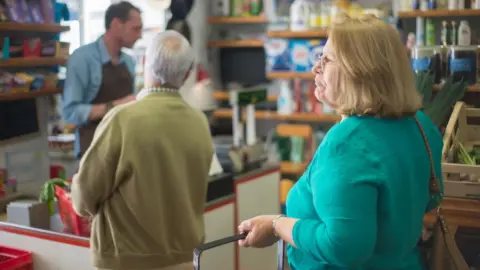
Dennis Hale had been my pharmacist for twenty-two years, and in all that time I had never once seen him come out from behind the counter.
That Tuesday he did. I was standing in line at the Kroger pharmacy with a box of Christmas cards and a jug of milk, waiting to pick up Gene’s blood pressure pills. Dennis saw me, set down whatever he was counting, lifted the little hinged section of the counter, and walked right around to where I was standing. He took both of my hands in his.
“Mrs. Patterson,” he said. “I’m so sorry. I had no idea.”
I looked down at his hands and then up at his face. Dennis is a tall, serious man with a gray mustache, and his eyes were wet.
“Sorry about what, Dennis?”
“Your diagnosis.” He squeezed my hands. “I saw the page. I donated fifty dollars. It’s not much, but I wanted to do something. You’ve always been so kind to everybody in here.”
The lady behind me in line had gone quiet. I could feel her listening.
“Dennis,” I said, “what diagnosis?”
He blinked at me. Then he let go of my hands, took his phone out of the pocket of his white coat, and tapped it a few times. He turned the screen around so I could see.
At the top of the page there was a photograph of me. It was from my eightieth birthday party two years ago, at the Elks hall. I remembered that day well. I’d worn my blue dress with the white collar, and I’d been laughing at something my brother-in-law said. But somebody had cropped the picture down tight, so that it was just my face, and in that small, close-up square I didn’t look like I was laughing. I looked tired. I looked old.
Underneath the photo, in big letters, it said: “Please Help Grandma Ruth in Her Fight.”
And under that: “$6,300 raised of $10,000 goal.”
I read the first few lines with Dennis holding the phone steady for me.
“My grandmother Ruth is the strongest woman I know. This fall she received news that has turned our family’s world upside down. She is now facing months of treatment, and the medical bills are piling up faster than we can handle. Grandma has always taken care of everyone else. Now it’s our turn to take care of her. Every dollar helps. Please keep her in your prayers. — Danielle”
I had to put my hand on the counter.
“Mrs. Patterson? Are you all right? Do you need to sit down?”
“I’m fine, Dennis,” I said. My voice sounded very far away. “I’m perfectly fine. That’s the trouble.”
I am eighty-two years old. I walk two miles every morning, rain or shine, on the loop around Cedar Park. I drive myself to the store. I still mow the front lawn because Gene’s knees won’t let him, and I don’t trust the neighbor boy to do the edges. At my last checkup in September, Dr. Abernathy listened to my heart for a long time and then said, “Ruth, you’re going to outlive me,” and I said, “Well, you’d better start eating better then,” and we both laughed.
I’ve never had a serious illness in my life. I had my gallbladder out in 1991. That’s the whole list.
Dennis looked at me for a long moment. Then he slowly put his phone away.
“Oh,” he said quietly. “Oh, Ruth.”
I picked up Gene’s pills. I paid for my milk and my Christmas cards. I don’t remember the drive home. I remember pulling into our driveway and sitting there with the engine running, and seeing Gene’s face in the front window, watching for me the way he’s watched for me for sixty-one years.
Gene came out onto the porch in his slippers. He’s eighty-five, a retired mail carrier, and he walks with a cane now, but he still meets me at the door every time I come home, as if I’ve been gone a month.
“You were gone a while,” he said. “Long line?”
“Gene,” I said, “go put your shoes on. We need to talk, and I don’t want you catching cold.”
We sat at the kitchen table with the computer between us. Our grandson Mark set it up for us three Christmases ago, and mostly we use it to look at pictures of the great-grandbabies and to play solitaire. It took me four tries to spell “GoFundMe” right in the search box. Gene sat beside me with his reading glasses on, and when the page came up, he leaned in close and read every word with his lips moving the way they do when he’s concentrating.
When he got to the bottom, he took his glasses off and set them on the table.
“Danielle,” he said.
“Danielle,” I agreed.
Danielle is our granddaughter. She’s thirty-five years old, the only child of our daughter Sharon. She was a beautiful little girl with big brown eyes and a laugh you could hear from across the house. She used to spend every summer with us when she was small. I taught her to make biscuits and to play gin rummy and to say her prayers before bed, and she used to fall asleep on Gene’s lap during the evening news.
Somewhere along the way, she grew up into a woman who liked nice things and didn’t like paying for them.
She’d had a string of jobs. Real estate for a while, then a salon, then something with nutrition shakes that she sold to her friends. She had a car she couldn’t afford, a white Lexus she’d leased in 2022, and she posted a lot of pictures of herself in restaurants. Sharon was always making excuses for her. Danielle was “finding herself.” Danielle was “between things.” Danielle had “a lot of bad luck.”
Gene scrolled down to the part of the page that showed who had given money. There was a long list of names and amounts, and the longer he scrolled, the quieter he got.
Edna Thornburg, $100. She’s in my Tuesday quilting group.
Pastor Mike and Linda Shaw, $250.
Bud and Carol Lindgren, $50. Our neighbors across the street for thirty years.
Ray Dunbar, $500.
Gene stopped scrolling.
“Ray,” he said.
Ray Dunbar was in the Army with Gene in Korea, after the war, in 1956. They were stationed together in a place so cold that Gene still won’t eat ice cream in winter. Ray lives in Tucson now with his second wife, and he’s eighty-seven, and he lives on his Social Security and a small pension from the phone company. He and Gene write each other letters, actual paper letters, four or five times a year.
Underneath Ray’s name, he had written a comment: “Ruthie, Gene’s the luckiest man I ever knew because of you. Keep fighting, sweetheart. Praying every night.”
Gene put his hand over his eyes.
I’d only seen my husband cry three times in sixty-one years. Once when our son Paul was born, once when Paul died in 2008, and once when our old dog Biscuit had to be put down. That afternoon at our kitchen table was the fourth.
“Five hundred dollars,” he said, behind his hand. “Ruthie, Ray doesn’t have five hundred dollars.”
I didn’t sleep much that night. Around two in the morning I got up, put on my robe, and went back to the computer. I’d seen something at the bottom of the page that I hadn’t read yet. It was a section called “Updates.”
There were eleven of them. Danielle had been posting them since the end of September, about once a week.
“Update: Grandma started her first round of treatment today. She was so brave. She held my hand the whole time. ❤️”
“Update: Rough week. Grandma’s been very sick and tired. Insurance is fighting us on some of the bills. Thank you to everyone who has given. You have no idea what this means.”
“Update: Grandma had a really hard night after treatment. We were up until 3 a.m. Please pray.”
I sat there in the blue light of the screen and read that last one three times. The date at the top said October 17th.
On October 17th, I was at the Moose Lodge playing bingo with Edna and her sister. I won forty dollars on a blackout card and spent ten of it on a slice of coconut cream pie. I was home by nine and asleep by ten.
Edna Thornburg had given a hundred dollars to help me through a night when she’d been sitting right next to me, dabbing my bingo card.
I got up from the table and went to the hall closet and took out the green metal box where we keep our important papers. Our wills, the deed to the house, Gene’s Army discharge papers, our Medicare cards, the life insurance policy we took out in 1975 from Mutual of Omaha. And all my Medicare summary notices, the statements that come every few months telling you what’s been billed.
I’m a saver of paper. Gene teases me about it. But I sat at the kitchen table at two-thirty in the morning and went through every one of those statements from the whole year. My annual physical in September, billed and paid. A flu shot. Gene’s knee injections. Gene’s eye doctor. My supplement plan through Blue Cross had picked up the rest, the way it’s supposed to. I hadn’t paid a copay since April, and that was eighteen dollars for a tetanus shot after I scraped my arm on the rose trellis.
There was no treatment. There were no bills. There was nothing.
Gene found me there at six, asleep with my head on my arms on top of a pile of Medicare statements.
“Ruthie,” he said gently, shaking my shoulder. “Come on. Come to bed for a while.”
“I have to walk,” I said.
“You don’t have to walk today.”
“I have to walk, Gene. If I don’t walk, I’m going to drive over to that girl’s apartment and do something I’ll have to confess on Sunday.”
So I walked. It was nineteen degrees out, and the park was empty except for a man with a beagle. I did my two miles in thirty-one minutes, which was my fastest time in a year. When I got back, my face was red and my nose was running, and Gene had a pot of coffee ready and two pieces of toast with peanut butter, the way I like them.
“Feel better?” he asked.
“No.”
“Didn’t think so.”
We sat and ate our toast. Outside the kitchen window, the bird feeder was busy with chickadees. Gene keeps it full all winter.
“What do we do?” I said. “Do we call Sharon?”
Gene chewed slowly. He has always been a slow chewer and a slow thinker, and in sixty-one years I’ve learned that the slow thinking is usually worth waiting for.
“If we call Sharon,” he said, “Sharon calls Danielle. Danielle takes the page down tonight and tells everybody Grandma’s in remission, praise the Lord. And she keeps the money.”
I hadn’t thought of that.
“And if we call Danielle?”
“Same thing. Only she cries first.”
He was right. Danielle has been crying her way out of trouble since she was four years old. When she backed Sharon’s car into the mailbox at sixteen, she cried. When she borrowed $2,000 from us for “a medical thing” in 2019 and we later found out it was a cruise to Cozumel, she cried. We forgave her both times. We forgave her every time.
“Christmas Eve is in eight days,” Gene said. “She’ll be here. Sharon and Tom will be here. Your sister. Everybody.”
“Gene.”
“I’m just saying.” He wiped his mouth with his napkin. “Danielle loves an audience.”
I looked at my husband across the table. The morning light was coming through the window behind him and lighting up the little bit of white hair he has left, so it looked like a halo, which is the funniest thing I’ve ever seen, considering what was going through his head.
“You want me to let her do it in front of everybody,” I said.
“I want you to let her tell the story she’s been telling,” Gene said. “She’s told it to Edna and the pastor and Dennis at the pharmacy and Ray. Let’s see if she can tell it to your face.”
Over the next eight days, we got ready.
The first thing I did was go to the bank. We’ve banked at Farmers & Merchants since 1964, back when Gene’s whole paycheck from the post office was $87 a week and we deposited it every other Friday at the window. The branch manager now is a woman named Teresa Vance, who went to high school with our son Paul. I asked if I could speak with her privately, and she took me into her office and shut the door.
“Teresa,” I said, “I want you to make sure nobody has been messing with our accounts.”
She looked at me carefully. “Has something happened, Mrs. Patterson?”
I told her about the GoFundMe. I watched her face change as I talked.
When I was done, she turned to her computer and typed for a long time. Then she sat back.
“Your checking and savings both look fine,” she said. “No unusual activity. Nothing’s been withdrawn that shouldn’t have been.” She paused. “But I’m going to tell you something, and I want you to hear it calmly.”
“I’m always calm,” I said, which made her smile a little.
“In October, someone called our customer service line claiming to be your caregiver. A woman. She said you were ill and she needed to know your account balances so she could help you manage your bills. She had your address and your date of birth. Our representative didn’t give out anything, because she wasn’t on the account and didn’t have a power of attorney. But the call was logged.”
I sat very still.
“October what?”
Teresa checked. “October 9th.”
That was the week of the first GoFundMe update. “Grandma started her first round of treatment today.”
I remembered something else, too, sitting there in Teresa’s office. Back in August, Danielle had come over for Sunday dinner and brought a folder of papers. She said she’d printed them off the internet. It was a power of attorney form. She said it was just smart planning, that at our age we really needed somebody who could step in “if something happened,” and that she’d be happy to be that person since she lived the closest. Gene had looked at the papers for about five seconds, then slid them back across the table and said, “Thank you, honey, but your grandmother and I have that taken care of with Mr. Cobb.”
Mr. Cobb is our attorney. He’s handled our wills since the seventies. Danielle had smiled and said, “Of course, Grandpa,” and put the folder back in her big purse, and I hadn’t thought about it again.
“Mrs. Patterson?” Teresa said. “Would you like us to put a note on your accounts? An extra security alert, so no one can make changes without you and Mr. Patterson coming in person?”
“Yes,” I said. “I’d like that very much.”
She did the paperwork right there. I signed it, and so did Gene when he came in the next afternoon with his cane. Teresa walked us both out to the car.
“For what it’s worth,” she said, standing in the cold with her arms crossed, “I’m so sorry. You’d be surprised how often it’s family.”
“No,” Gene said, opening my door for me. “I don’t think I would.”
That evening, I called Mr. Cobb at his home. He’s eighty now himself and mostly retired, but he still takes calls from his old clients, and his wife Jean answered and put him on.
I told him everything. He listened without interrupting, the way he always has.
“Ruth,” he said when I finished, “you have options. Taking money under false pretenses is a serious matter, and the amount here isn’t small. The campaign site has its own process for reporting fraud, and I’d want to look into that with you. And you could involve the authorities if you chose to. But none of that has to be decided this week.”
“I don’t want my granddaughter in jail, Frank.”
“I didn’t say you had to. I said you have options.” He was quiet for a moment. “What do you want, Ruth?”
I thought about it.
“I want Ray Dunbar to get his five hundred dollars back,” I said. “And Edna. And Dennis. And everybody. And I want Danielle to look me in the eye.”
“Well,” Frank Cobb said, “the first part we can work on after the holidays. The second part sounds like a job for you.”
I made a list. That’s my way. Gene is the slow thinker, and I’m the list maker, and between the two of us we’ve managed to get most things done in sixty-one years.
On the list, I wrote down every single name on the donation page and the amount next to it. There were forty-three names. Some I didn’t know at all, friends of Danielle’s, I supposed, and people from her old salon. But most I knew. Twenty-eight of them were people from our church, our street, our town. Gene’s Army buddy. My quilting group. My hairdresser, Pam, who had given $40 and written “Love you Miss Ruth, see you when you’re better.”
I hadn’t been to see Pam since before Thanksgiving. I’d been meaning to make an appointment. Now I understood why she’d sounded so strange on the phone when I called to book my Christmas set and why she’d said “Are you sure you’re up for it, hon?”
I went to Pam’s anyway. Two days before Christmas Eve, I sat in her chair and she put the cape around my shoulders. I watched her in the mirror. Her hands were very gentle in my hair, as if it might fall out.
“Pam,” I said, “I need to tell you something, and I need you to keep it between us until after Christmas.”
She stopped with the comb in the air.
“I’m not sick. I’ve never been sick. That page is a lie.”
Pam’s mouth fell open. Then she set the comb down on the counter very carefully, as if it was made of glass, and sat down hard in the empty chair next to me.
“Ruth Patterson,” she said. “I cried in my car for twenty minutes.”
“I know, honey. I’m sorry.”
“Don’t you apologize.” Her face had gone red. “Don’t you dare apologize. That little…” She stopped. She looked at the other ladies under the dryers, who had all gone very quiet. Then she lowered her voice. “What are you going to do?”
“I’m going to let her finish her story,” I said. “Now, can you give me some volume on top? I want to look good on Christmas Eve.”
Pam started to laugh. She laughed until she had to wipe her eyes with the end of a towel. Then she picked up the comb again.
“Oh, I’ll give you volume,” she said. “Sweetheart, you’re going to look like Dolly Parton.”
The night before Christmas Eve, Gene went to the public library with me, which he hadn’t done since about 1987. The young man at the front desk showed us how to print things from the computer. It cost ten cents a page. I printed the front of the GoFundMe page, the photo and the title and the big “$6,300 raised” across the top. I printed every one of Danielle’s eleven updates. I printed the whole list of donors. I printed my September checkup summary from Dr. Abernathy’s patient portal, which said in plain black letters “Patient is in excellent health for her age.” And I printed one more thing that Gene had found.
He’d been looking at Danielle’s Facebook page. He doesn’t have Facebook, but our grandson Mark had shown him how to look at hers through his own account. There, from November 22nd, was a photograph of Danielle on a beach somewhere, in a white bathing suit, holding up a drink with a little umbrella in it. The caption said: “Needed this so bad. Self-care isn’t selfish. 🌴☀️ #Cancun #blessed.”
On November 22nd, according to the GoFundMe, I was “having a hard week after the second round of treatment.”
It came to fourteen pages, a dollar forty. Gene paid the young man with two singles and told him to keep the change.
At home, I folded the pages in half and then in half again, and put them in the right-hand pocket of my cream-colored Christmas cardigan. It’s the one with the little embroidered holly leaves around the buttons that Sharon gave me in 2011. It has deep pockets. I’ve carried a lot of things in those pockets over the years, including tissues, peppermints, and a grandbaby’s pacifier. I had never carried anything as heavy as those fourteen pages.
On Christmas Eve, I cooked all day.
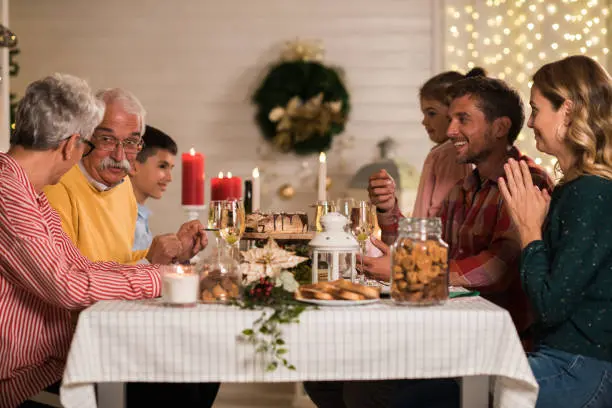
We do the same dinner every year. A glazed ham with pineapple and cloves, scalloped potatoes, green beans with bacon, my mother’s yeast rolls, and three pies: pecan, cherry, and chocolate cream. I started at seven in the morning. By two o’clock the whole house smelled like brown sugar and butter.
At three, my sister Doris came over early to help set the table. She’s seventy-nine, a widow, and she lives two streets over in the house we grew up in. I’d told her everything a week earlier. She’d wanted to drive straight over to Danielle’s apartment and “give her a piece of my mind,” and I’d had to make her promise on our mother’s Bible that she wouldn’t.
“I don’t know how you’re doing this,” Doris said, folding red plaid napkins into little triangles. “I’d have screamed the house down by now.”
“I’ve had plenty of time to scream,” I said. “I did my screaming in the car.”
“Does Sharon know?”
“No.”
Doris set a napkin down. “Ruthie. She’s going to be hurt that you didn’t tell her first.”
“I know she is.”
That was the part that kept me up at night, more than Danielle. My daughter Sharon is sixty years old. She’s a good woman and a good nurse, and she’s spent thirty-five years thinking her only child can do no wrong. I didn’t know what Sharon knew, and I was afraid to find out. If she’d known about the page, I didn’t think I could stand it. If she hadn’t, she was about to have the worst Christmas Eve of her life at my dinner table.
Gene came into the dining room with the good wine glasses on a tray. His hands shook a little, but he set them down without spilling. He put his hand on my back.
“You ready, Ruthie?”
“No,” I said. “Pour me a little of that wine.”
Sharon and her husband Tom got there at five, with presents. Our grandson Mark came with his wife Jenna and their two little boys, who immediately went to find the candy dish. Gene’s nephew Rick and his wife came. My brother-in-law Leonard came, the one who’d made me laugh in the birthday picture, now ninety-one and still telling the same jokes. By five-thirty there were sixteen of us in the house.
Danielle got there at five-forty-five.
She came through the front door in a red velvet dress that fit her like it was painted on, with her hair done in big waves and gold earrings shaped like little stars. She had a bottle of wine under her arm and a gift bag in her hand. She was beautiful. She’s always been beautiful.
She saw me standing by the Christmas tree and stopped. Her face changed, softened, the way you’d look at someone in a hospital bed.
“Grandma,” she said, and came across the room and put her arms around me very carefully, very gently, as if I might break in half.
“Hello, sweetheart,” I said into her shoulder. She smelled like vanilla perfume and the cold outside.
She pulled back and held me at arm’s length and looked into my face.
“How are you feeling?” she whispered. But it wasn’t really a whisper. It was the kind of whisper that was meant to be heard across the room. I saw Doris, by the fireplace, turn her face away.
“Never better,” I said. “I walked two miles this morning.”
Danielle’s smile flickered. Just for a second. Then it came back, bigger.
“That’s amazing, Grandma. That’s so amazing. You’re so strong.” She squeezed my arms. “Don’t overdo it, okay?”
“I’ll try not to.”
She went off to say hello to everybody else. I watched her go around the room. Every time she hugged someone, she said something quiet and glanced back toward me. Sharon’s husband Tom put his hand on her shoulder at one point and said something, and she nodded with her eyes closed and pressed her lips together like she was holding back tears.
Gene came and stood beside me with his cane. He didn’t say anything. He just stood there, close, so our arms touched.
We sat down to dinner at six-fifteen. Gene said the blessing, the same one he’s said for sixty Christmases. “Lord, thank you for this food, and for this family, and for bringing us all together one more year.” His voice caught a little on “one more year,” and I saw Danielle reach over and squeeze Sharon’s hand.
The dinner was good. I’ll say that for it. The ham was the best I’ve made in years, and Leonard told his joke about the Lutheran and the goat, and the little boys spilled cranberry juice on the tablecloth. For about an hour, it was just Christmas Eve, and I almost forgot what was folded up in my pocket.
But I could feel the pages there against my hip the whole time. Every time I reached for the rolls, they crinkled.
Danielle didn’t eat much. She drank. She’d poured herself a big glass of the red wine she’d brought, and then another. She kept looking over at me, and every time she caught me looking back, she gave me that soft, sad smile.
When the pies came out, she stood up.
She picked up her knife and tapped it against her wine glass. Ding, ding, ding. The table went quiet. Leonard, who’s hard of hearing, said “What? What’s happening?” and his wife shushed him.
“I just want to say a few words,” Danielle said. “Before dessert. If that’s okay.”
“Go ahead, honey,” Sharon said, smiling up at her.
Danielle took a breath. She held her glass up a little. The candlelight was shining through the red wine and through her gold star earrings, and for a second she looked like a picture on a Christmas card.
“This year,” she said, “has been really, really hard for our family.”
Her voice wobbled. Across the table, I saw Jenna, Mark’s wife, put her hand on her chest.
“Some of you know what Grandma’s been going through. And some of you…” She looked at Leonard, who was frowning in confusion. “Some of you she didn’t want to worry. Because that’s just who she is. She’s always worried about everybody else.”
She turned toward me. Her eyes were full of tears now, real ones, rolling down her cheeks and making little tracks in her makeup.
“Grandma, I just want you to know how proud I am of you. For being so strong this year. For fighting so hard. You’re the bravest person I know, and I’m just…” She pressed her fingers to her lips. “I’m just so grateful we get one more Christmas with you.”
Doris made a sound across the table. It might have been a cough.
Sharon was crying now too. She reached for a tissue from the box on the sideboard. “Mom,” she said, turning to me, “is there something going on? What is she talking about? Why didn’t you tell me?”
And there it was.
Sharon didn’t know. My daughter didn’t know.
I’ve thought about that moment a lot since. I don’t think I’ve ever felt so many things at once. Relief that Sharon wasn’t part of it. Grief for what was about to happen to her. And a kind of cold, clear anger I hadn’t felt since 1979, when a man at the Ford dealership tried to sell Gene a car with a rolled-back odometer.
I pushed my chair back from the table. The legs scraped on the hardwood. It was very loud in that quiet room.
I stood up. My knees cracked, the way they always do. Gene put his hand on the table beside my plate, flat, steady, so I’d know he was there.
“Thank you, Danielle,” I said. “That was beautiful.”
Danielle smiled through her tears.
“Now I’d like to say a few words of my own.”
I reached into the right-hand pocket of my cardigan.
I watched Danielle’s face as my hand went in. She was still smiling. Then the smile stopped moving, and her eyes went to my pocket, and I saw her understand that something was wrong before she understood what it was. The wine glass in her hand started to shake. A little drop of red slid down the outside of the glass and onto her fingers.
I pulled the papers out and unfolded them. Fourteen pages, folded in quarters. I held up the first one so the whole table could see.
The photograph of me from my eightieth birthday, cropped tight. “Please Help Grandma Ruth in Her Fight.” “$6,300 raised.”
Nobody said anything for a long moment. Then Leonard, squinting across the table, said loudly, “Is that you, Ruthie? What fight?”
“That’s the question, Leonard,” I said.
Danielle’s mouth was open. She didn’t say anything. She just stood there with her glass, and the wine was tipping now, spilling over the rim and running down her wrist and dripping onto my good white tablecloth.
“Danielle started this page in September,” I said. I kept my voice even. It’s a voice I used to use on our children when they were teenagers and came home past curfew. “It says I’m very sick. It says I’m going through treatment, and that the bills are more than our family can handle. It has raised six thousand three hundred dollars.”
Sharon had gone white. “Mom?”
“I’m not sick, Sharon. I’ve never been sick. I have my checkup right here.” I held up the page from Dr. Abernathy. “‘Patient is in excellent health for her age.’ He wrote that in September, the same week Danielle started this.”
I turned to the next page.
“This is an update. October 17th. ‘Grandma had a really hard night after treatment. We were up until 3 a.m. Please pray.'” I looked up. “On October 17th I was at the Moose Lodge playing bingo with Edna Thornburg. I won forty dollars. Edna gave Danielle a hundred dollars to pray for me that night.”
Doris made the sound again. This time it was definitely not a cough. Mark’s little boy, who’s five, asked very loudly, “Is Grandma Ruthie going to die?” and Jenna whispered, “No, baby, Grandma’s fine,” and pulled him into her lap.
I turned the page again.
“These are the people who gave money,” I said. “Pastor Mike gave two hundred fifty dollars. Bud and Carol across the street. Pam, who does my hair. Dennis Hale at the Kroger pharmacy, who came out from behind his counter and held my hands.” I paused. “And Ray Dunbar. Gene’s friend from the Army. He’s eighty-seven years old and lives on Social Security in Tucson, and he gave five hundred dollars.”
Gene, beside me, didn’t move. But I heard him breathe in.
I held up the last page. The beach. The white bathing suit. The drink with the umbrella.
“November 22nd,” I said. “The page says I was having a hard week after my second round. Danielle was in Cancun.”
The wine glass slipped out of Danielle’s hand and fell onto the table. It didn’t break. It bounced on the tablecloth, rolled into the green beans, and lay there on its side, the last of the red wine soaking into the white cloth like a stain spreading on a bandage.
Danielle’s face crumpled.
“Grandma,” she said. “Grandma, I can explain.”
“Then explain, sweetheart,” I said. “We’re all listening.”
She looked around the table. Every face was turned toward her. Tom had his arm around Sharon, who had both hands over her mouth. Mark had stood up. Doris had her arms folded so tight across her chest I thought she might crack a rib.
“I was going to pay it back,” Danielle said. Her voice was high and thin. “I swear to God. I was going to pay everybody back.”
“With what?” Gene said quietly. It was the first thing he’d said.
Danielle turned to him. “Grandpa…”
“With what money, Danielle?”
She sat down. All at once, like her legs had been cut out from under her. She put her face in her hands, and her shoulders started shaking.
“I’m drowning,” she said through her fingers. “Okay? I’m drowning. I owe fourteen thousand dollars on my credit cards. They’re calling me every day. Collections. They call my work. They’re going to take my car. I’m three months behind on the lease, and the finance company sent a letter, and I just…” She looked up, and her mascara was running down her face in black streaks. “I didn’t know what to do. I didn’t know who to ask. I couldn’t ask you again. Not after the last time.”
“So you told forty-three people your grandmother was dying,” Doris said, from across the table. Her voice was like a knife.
“Aunt Doris…”
“Don’t you ‘Aunt Doris’ me.”
“Doris,” I said. Doris closed her mouth, but I could see it cost her.
Sharon stood up. Her chair fell over behind her, and Tom caught it.
“Danielle,” Sharon said. “Danielle, look at me. Tell me this isn’t true.”
Danielle looked at her mother. She didn’t say anything.
“You told Pastor Mike?” Sharon said. “You told the church? You told people at my hospital, Danielle. Two of the nurses on my floor asked me last month how my mother was doing. I didn’t know what they were talking about. I thought they had me confused with somebody else.”
“Mom, please…”
“You used your grandmother.” Sharon’s voice broke. “You used my mother.”
Then Sharon did something I’ll never forget. She turned to me, and her face was crumpled up and wet, and she said, “Mom, why didn’t you tell me?”
“Because I didn’t know if you knew,” I said.
It was the truest thing I said that whole night, and it hit her hard. I watched it hit her. She looked at me like I’d slapped her. Then she looked at her daughter. Then she turned around and walked out of the dining room and into the kitchen, and we all heard the back door open and close.
Tom went after her.
Danielle sat at the table and cried. Nobody went to her. I’ll tell you honestly, it was the hardest thing I’ve ever done not to go to her. Thirty-five years of habit pulled at me. She was my granddaughter, and she was crying, and every bone in my body wanted to put my arms around her and say there, there, it’ll be all right.
Gene put his hand on my arm. Just that. I stayed where I was.
After a while, Danielle got up. She picked up her purse from the hall bench and her coat from the hook. She didn’t look at anybody. At the front door she stopped, with her hand on the knob, and turned around.
“I’m sorry, Grandma,” she said. “I really am.”
“I know you are, honey,” I said. “But you didn’t say it to Ray.”
She looked at me for a long moment. Then she opened the door and went out into the cold, and we heard her white Lexus start up and pull away.
We had pie.
I don’t know what else to tell you. We had pie. Doris cut the pecan, and Leonard said it was the best pecan pie he’d ever eaten in his life, which he says every year, and Mark’s little boys got chocolate cream all over their faces. Sharon and Tom came back in after about twenty minutes. Sharon’s eyes were red and swollen, and she didn’t look at me. She sat down and ate a sliver of cherry pie without saying a word, and when it was time to go, she hugged her father goodbye and walked past me to the door.
At the last second, she stopped. She turned around, came back, and put her arms around me. We stood there in the front hall for a long time.
“I’m sorry, Mama,” she said into my hair.
“Me too,” I said.
She left without saying anything else.
After everyone had gone, Gene and I cleaned up the kitchen. We didn’t say much. I washed and he dried, the way we’ve done it for sixty-one years. The red wine stain on the tablecloth wouldn’t come out. I soaked it in cold water and salt overnight, and it still wouldn’t come out. I kept that tablecloth anyway. It’s in the linen closet now with a faint pink spot near the middle, and I use it at Easter with a bowl of eggs over the place.
Around eleven, we sat down in the living room with the Christmas tree lights on and nothing else. Gene put his feet up on the ottoman.
“Well,” he said.
“Well,” I said.
“You did good, Ruthie.”
“I don’t feel like I did good.”
“I know.” He reached over and took my hand. “That’s how you know you did.”
The week after Christmas, our grandson Mark came over and helped me report the GoFundMe page through the website. It took us about an hour. We had to fill out a form explaining what was wrong and upload proof. I sent them the letter from Dr. Abernathy and a copy of my Medicare statements, and Frank Cobb wrote a short letter on his office stationery explaining that he was our attorney and confirming the facts. The page came down a few days later. I don’t know exactly how it all worked on their end, and I’m not going to pretend I do. What I know is that over the next few weeks, people started telling me they’d gotten their money back.
Ray Dunbar called the house in the middle of January. Gene answered, and I could hear Ray’s voice booming out of the receiver from across the kitchen.
“Gene! Gene, they sent me a notice. My five hundred came back to my account.”
“That’s good, Ray.”
“Is she okay? Is Ruthie really okay?”
Gene handed me the phone.
“Ray,” I said, “I’m fine. I’m absolutely fine. I’m so sorry you got pulled into this.”
There was a silence on the line. Then Ray Dunbar, eighty-seven years old in Tucson, Arizona, started to laugh.
“Ruthie,” he said, “I’d have given a thousand if it was true. Thank God it wasn’t. Now put Gene back on, I want to tell him about my new hip.”
Not everybody was so gracious. A few people from church avoided my eyes for a couple of Sundays, as if I was the one who’d done something embarrassing. One woman in my quilting group, not Edna, told somebody that I should have “handled it privately” and that it “wasn’t Christian” to humiliate my own granddaughter at Christmas. Edna told me about it on the phone. She was furious.
“I set her straight,” Edna said. “I said, Margaret, Ruth handled it the way it was done to her. Danielle did it in front of the whole town. Ruth did it in front of sixteen people and a ham.”
I laughed so hard I had to sit down.
Danielle didn’t call for almost a month. Sharon told me she’d moved out of her apartment and was staying in Sharon’s guest room. The finance company had taken back the Lexus the second week of January. They came for it in the middle of the night, Sharon said, and Danielle stood in the driveway in her pajamas and watched them hook it up to the truck.
Sharon and I talked on the phone twice a week during that month, but it was stiff. There was something sitting between us that neither of us knew how to move. Once she said, “You could have told me, Mom. You could have trusted me,” and I said, “I know that now,” and she said, “But you didn’t know it then,” and neither of us had anything to say after that.
On a Thursday in early February, there was a knock on my front door.
It was snowing. Danielle stood on the porch in an old puffy coat that I recognized as Sharon’s. Her hair was pulled back in a plain ponytail, and she wasn’t wearing any makeup at all. She looked younger. She looked about sixteen.
She was holding a manila folder.
“Hi, Grandma,” she said.
“Hello, Danielle.”
“Can I come in?”
I thought about it. I won’t lie to you. I stood there in the doorway with the cold coming in around my ankles and thought about it for longer than I’ve ever thought about letting anyone into my house.
“Your grandfather’s taking a nap,” I said finally. “Keep your voice down.”
We sat at the kitchen table. I made coffee because I didn’t know what else to do with my hands. Danielle sat with the folder in front of her and didn’t open it.
“I’m not here to ask for money,” she said.
“All right.”
“I know that’s what you’re thinking.”
“I’m not thinking anything, honey. I’m making coffee.”
She almost smiled. Then she opened the folder. Inside were papers, a lot of them. Credit card statements from three different banks. A letter from a collection agency with a red stamp on it that said FINAL NOTICE. A paper from the finance company about the Lexus, showing a balance still owed even after they’d taken it back. A paystub from a job at the Hobby Lobby out on Route 9, where she’d started two weeks earlier, at $14.50 an hour.
“I don’t know how to do this,” she said. “I don’t know how to fix it. Mom tried to help me look at it, and we just ended up yelling. And you’re the only person I know who’s ever had their life all in order. You and Grandpa.”
I set the coffee in front of her and sat down.
“Our life wasn’t all in order, Danielle,” I said. “In 1971 your grandfather got laid off for six months, and we had two babies and a mortgage at the Farmers & Merchants Bank and forty-one dollars in savings. I sold my mother’s piano. You didn’t know that.”
She shook her head.
“We paid everything back. It took us four years. We ate a lot of beans.” I picked up the first credit card statement and looked at it. The balance was $6,212.47. The interest rate made me want to lie down. “Do you have a pencil?”
She did. She’d brought one. I don’t know why that got me, but it did, a little.
We sat at that kitchen table for three hours. I showed her how I’d kept the household books for sixty years, in a green ledger, with every penny written down. We made a list of every single thing she owed and who she owed it to. We made another list of everything she earned and everything she spent. When we got to the line for “eating out,” she looked at the number for a long time and then crossed it out without my saying a word.
Around four, Gene came shuffling into the kitchen in his slippers, rubbing his eyes. He stopped in the doorway when he saw her.
Danielle stood up.
“Hi, Grandpa.”
Gene looked at her. Then he looked at me. Then he looked at the papers spread across the table.
“Is there any more coffee?” he said.
“In the pot,” I said.
He poured himself a cup, slowly, with his hand shaking a little. Then he sat down at the end of the table, put on his reading glasses, and picked up the letter from the collection agency.
“This one first,” he said, tapping it. “These people are the worst. Call them Monday.”
Danielle comes over every other Thursday now, after her shift. We go over the numbers. She’s paid off one of the three credit cards. It’s taken her almost a year, and some months she pays twenty dollars and some months she pays two hundred. She doesn’t go out to eat much anymore. She still wears too much perfume.
She’s never said anything about the forty-three people, and I’ve never brought them up. Frank Cobb asked me once, in the spring, whether I’d ever want to take things further, legally. I told him no. He said that was my right and closed his folder, and we talked about his grandson’s baseball team instead.
Sharon and I are better than we were, but I wouldn’t say we’re all the way back. Some Sundays she comes for dinner and some Sundays she doesn’t. She still hasn’t really forgiven me for not telling her first, and I’m not sure I’d forgive me either, if I were her.
I still walk my two miles every morning. Gene still meets me at the door.
Last week, at the Kroger, Dennis Hale saw me in line again. He didn’t come out from behind the counter this time. He just raised his hand and waved, and I waved back. When I got up to the register, he handed me Gene’s pills in their little white bag and said, “Merry Christmas, Mrs. Patterson. You look well.”
“I am well, Dennis,” I said. “I always was.”
He laughed and wrote something on a sticky note and slipped it into the bag. When I got home and unpacked the groceries, I found it stuck to the side of Gene’s prescription. It said: “Got my fifty back. Spent it on flowers for my wife. Thought you’d want to know.”
I put it on the refrigerator under the magnet shaped like a cardinal. It’s still there.