Five kids on a plastic bench.
That’s what I kept looking at. Sitting in the hallway of the Marlow County Family Court building, on a cold Tuesday morning in November, with my hands sweating in my lap and my one good shirt sticking to my back.
Five kids, all under seven, pressed together so tight on that orange plastic bench that you couldn’t tell where one ended and the next one started.
The oldest was Eli. Six. Skinny, with a buzz cut and big ears and a Spider-Man T-shirt somebody at the shelter had given him. He sat on the end, closest to the hallway, like a guard.
Next to him was Maya. Five. Dark curls. A pink sweatshirt two sizes too big. She was holding the edge of Eli’s shirt in her fist and she hadn’t let go of it all morning.
Then the twins. Noah and Nora. Three years old. They were sharing one bag of Goldfish crackers and passing it back and forth without a word.
And on the foster mom’s lap at the far end of the bench, the baby. June. Thirteen months. Asleep, with her thumb in her mouth and her cheek squashed against the foster mom’s arm.
In less than an hour, a judge could sign the papers that would split them up.
Three homes. Three counties. Three different cars driving away from this building in three different directions.
The paperwork called it “placement allocation.”
I called it something else.
I’m Carter Dunn. I was twenty-nine.
I’m single. I don’t have a wife or a girlfriend. I don’t have a big savings account, not anymore. I don’t have a big house. I have a two-bedroom ranch on the edge of town with a detached garage I’d been using as a woodshop, and a ten-year-old pickup, and a job building custom cabinets for a man named Walt Brenner who’s been in the business forty years.
That’s it. That’s everything.
The state’s attorney walked past us in the hallway. A man named Douglas Haskell. Gray suit, gray hair, a briefcase with brass corners. He looked at the kids on the bench. Then he looked at me.
He didn’t say anything.
He didn’t have to.
My lawyer came out of the courtroom and sat down next to me. Lena Ortiz. Forty-something. Black blazer, reading glasses on a chain, a coffee cup with lipstick on the lid.
“They’re running about ten minutes behind,” she said.
“Okay.”
She looked at me.
“Carter,” she said. “Breathe.”
“I’m breathing.”
“You’re holding your breath. I can see it.”
I let it out.
She looked at the kids.
“You know what Haskell’s going to say in there,” she said quietly.
“Yeah.”
“He’s going to say you’re young. That you’re single. That you’ve never raised a child, let alone five. That you work full-time. That you don’t have family to help. That you’re being emotional and unrealistic.”
“I know.”
“And honestly?” Lena said. “He’s not completely wrong.”
I looked at her.
“I know that too,” I said.
She was quiet for a second.
“Judge Miller’s going to ask you why,” she said. “He always does. On a case like this. He’s going to look at you and ask you why you’re doing it.”
“I know.”
“Are you going to tell him?”
I didn’t answer.
I looked at the bench.
Maya had started to cry. Quietly. The way kids cry when they’ve already learned crying doesn’t fix anything. Her face just crumpled and the tears ran down and she didn’t make a sound.
Eli turned and saw her.
He didn’t say anything. He just reached over and wiped her face with the bottom of his Spider-Man shirt. Gently. Under one eye, then the other. The way you’d do it for a baby.
Then he put his arm around her shoulders and looked straight ahead down the hallway. Like he was daring anybody to come near her.
My throat closed up.
I’d seen that before.
I’d done that before.
On a bench like that one. In a hallway like that one.
Twenty-two years ago.
“Yeah,” I said to Lena. “I’m going to tell him.”
Three weeks earlier, I didn’t know any of them existed.
It was a Thursday night. I was in my shop sanding a cherry tabletop. The radio was on. The local news out of Rochester.
There was a story about a car crash on Route 19. Black ice. A Honda Civic slid across the center line into a gravel truck.
The driver was a twenty-seven-year-old woman named Danielle Hayes. She was coming home from her overnight shift at a nursing home in Warsaw.
She died at the scene.
The reporter said she was a single mother of five.
I turned the sander off.
I stood there in the sawdust and listened to the rest of it.
The children weren’t in the car, the reporter said. They were at a neighbor’s house. The neighbor watched them every night while Danielle worked.
There was no father in the picture. There was a grandmother, but she was in a nursing home with Alzheimer’s. The same nursing home where Danielle worked.
The children had been placed in emergency foster care.
I don’t know why that story got me. There are a lot of sad stories on the news. I usually turn them off.
I didn’t turn this one off.
I stood there in my shop until the news went to weather. Then I stood there through the weather. Then the sports.
That night, I couldn’t sleep.
At two in the morning, I got up and went to my kitchen table and opened my laptop.
I’m a licensed foster parent in New York State. I want to say that now, because people always assume I just walked in off the street.
I’m not. I got licensed two years earlier. I did the training. Thirty hours of classes in a church basement in Batavia, on Tuesday nights, with a bunch of married couples who all looked at me like I was lost. I did the home study. The fingerprints. The background check. The fire inspection. The interviews where a social worker sat at my kitchen table and asked me about my childhood for three hours.
I passed everything.
And then I never took a single placement.
They called me four times that first year. A teenage boy. A baby. Two brothers. A girl with a heart condition.
I said no every time.
I told them I wasn’t ready. I told them I was waiting.
They didn’t know what I was waiting for.
I didn’t really know either.
At two in the morning, I logged into the county’s foster care portal. The one licensed families can see. It has the emergency placement registry. Kids who need homes. First names, ages, a short description.
I scrolled.
And there they were.
Sibling group of 5. Ages 6, 5, 3, 3, 13 months. Two boys, three girls. Recent loss of parent. Currently in temporary emergency placement (shelter home). Seeking permanent placement. Agency plan: separate placement in three pre-adoptive homes due to size of sibling group.
Separate placement.
I read it about ten times.
There was a picture. They don’t usually put pictures on there, but this one had one. Five kids sitting on a couch in somebody’s living room. The oldest boy with his arm around the girl next to him. The twins holding hands. The baby on the boy’s lap.
None of them were smiling.
I closed the laptop.
I sat in my dark kitchen for a long time.
Then I opened it again and I called the after-hours number for the county Department of Social Services.
“You can’t be serious.”
The caseworker’s name was Rhonda Pierce. Fifties. Short gray hair. A lanyard full of keys. She’d been doing this job twenty-four years. She told me that in the first five minutes. I think she wanted me to know she’d seen everything.
She was sitting across from me at a table in a little conference room at DSS. The next morning. Nine a.m. I’d taken the day off work. Walt had looked at me like I was crazy when I told him why.
“You want all five,” Rhonda said.
“Yes.”
“You’re a single man.”
“Yes.”
“You’re twenty-nine.”
“Yes.”
“You’ve never had a placement.”
“No.”
She took off her reading glasses. She rubbed her eyes.
“Mr. Dunn,” she said. “Carter. Look. I appreciate the thought. I really do. I’ve been in this job a long time. I’ve seen a lot of people come in here wanting to do something good after they see something on the news. And it’s nice. It is.”
She put her glasses back on.
“But you can’t raise five small children,” she said. “Alone. With a full-time job. Nobody can. I’ve got married couples with two incomes and grandparents down the street who can barely handle two.”
“Your license is for two children,” she said. “Under ten. That’s what your home study approved.”
“I can apply to increase it.”
“That takes time. Another home study. Another inspection. Months.”
“I’ll do it.”
“And your house,” she said. “Two bedrooms. You’d need a bedroom for yourself. Where would five children sleep? In one room?”
“I have a workshop,” I said. “A detached garage. Twenty-four by thirty. Insulated. Heated. I can convert it. Build it out. Bunk beds. A real bedroom. Two, even, with a partition. I build things for a living. I can do it in three weeks.”
She stared at me.
“Carter,” she said. “We already have homes lined up. Three good families. Pre-adoptive. Fully licensed. One in Wyoming County wants the baby. A couple in Livingston County wants the twins. And there’s a family in Genesee County, here, that’s willing to take the two older ones.”
She folded her hands.
“They’ll still get to see each other,” she said. “We’ll set up sibling visits. Once a month. Holidays.”
Once a month.
Holidays.
“For how long?” I said.
Rhonda didn’t answer.
“For how long, Ms. Pierce? How long do sibling visits last after an adoption is finalized? When the new parents have new names for them, and new lives, and they live forty miles apart?”
She looked at me for a long time.
She’d been doing this job twenty-four years. She knew the answer.
So did I.
“There’s a hearing in three weeks,” she said finally. “A permanency hearing. Judge Miller. The agency’s going to present the plan. If you want to be considered, you’d need to file a petition. You’d need a lawyer.”
She looked at me.
“And you’d need to convince Judge Miller,” she said, “that a single twenty-nine-year-old cabinetmaker who’s never raised a child is a better option for these kids than three established families.”
“Okay,” I said.
She didn’t say anything.
Then, after a long time, she reached across the table and slid a business card toward me.
LENA ORTIZ, ATTORNEY AT LAW. FAMILY & JUVENILE.
“She’s good,” Rhonda said quietly. “She’s expensive. But she’s good.”
She looked at me over her glasses.
“And Carter?” she said. “I didn’t give you that.”
Lena Ortiz charged me eight thousand dollars.
A retainer. Up front.
I had eleven thousand four hundred dollars in savings. Every penny I’d saved since I was eighteen. I’d been putting it away for a down payment on a bigger shop. My own business someday. CARTER DUNN WOODWORKS. I had the sign drawn out on a napkin in my glove box.
I wrote her a check for eight thousand.
With the rest, I bought five car seats.
Do you know how much car seats cost? I didn’t. Two infant seats were a hundred and eighty each, but the twins were too big for those, so convertible seats were two-twenty each, and the baby needed an infant seat, and the older two needed boosters. Seven hundred and forty dollars at the Walmart in Batavia. The cashier asked me if I was opening a daycare.
They didn’t fit in my truck. Not five of them.
I traded the truck in at a used car lot on Route 63. For a twelve-year-old Honda Odyssey with a hundred and sixty thousand miles and a sliding door that only opened from the inside.
Then I went home and started tearing apart my workshop.
Walt came over the first weekend.
He’s sixty-eight. My boss. He’s been building cabinets since 1976. He has hands like baseball mitts and he hardly ever talks.
He stood in the doorway of my garage and looked at the mess. Workbenches pushed against the wall. Lumber stacked to the ceiling. The table saw unplugged in the corner.
“You’re really doing this,” he said.
“I’m really doing this.”
He looked at me for a long time.
Then he went back out to his truck and came back with his toolbox.
We worked every night for three weeks.
Walt didn’t ask me why. Not once. He just showed up at six o’clock every night after work with a thermos of coffee and a bag of sandwiches from the deli and worked until midnight.
We framed a partition wall down the middle. Two rooms. One for the boys. One for the girls.
We hung drywall. We put down laminate flooring. I wired new outlets with child-safety covers. Walt ran a new heating duct from the house.
I built the beds myself.
Two sets of bunk beds. Maple. With rails on the top bunks so nobody could roll off. A toddler bed for Nora. A crib for June. Hardwood. Sanded so smooth you could run your hand down it with your eyes closed and not catch a single splinter.
My neighbor came over too. Mrs. Halvorsen. Seventy-four. A widow. She lives across the street with three cats and a garden she talks to.
She stood in the driveway one night in her bathrobe, watching us carry in the bunk beds.
“Carter,” she said. “What on earth are you doing?”
I told her.
She didn’t say anything for a long time.
Then she went back across the street.
The next morning, there was a box on my front porch. Five quilts. Handmade. Folded in a stack. A note on top in shaky cursive.
My mother made these. They’ve been in my cedar chest fifty years doing nothing. Let them do something.
— Ingrid H.
My best friend, Marcus, drove up from Buffalo.
We’ve known each other since we were fourteen. We met in a group home in Rochester. He was the only person there who didn’t steal my stuff.
He stood in the middle of the converted garage and turned around in a slow circle. At the bunk beds. At the quilts. At the little crib I’d built.
“Five, Carter?” he said. “Five?”
“Five.”
He shook his head.
“You know you’re insane, right?”
“I know.”
He looked at me for a long time.
“This is about Emma,” he said.
I didn’t answer.
He was the only person alive who knew about Emma.
He didn’t push. He just picked up a screwdriver and started putting the hardware on the dresser.
Now we were standing in front of Judge Miller.
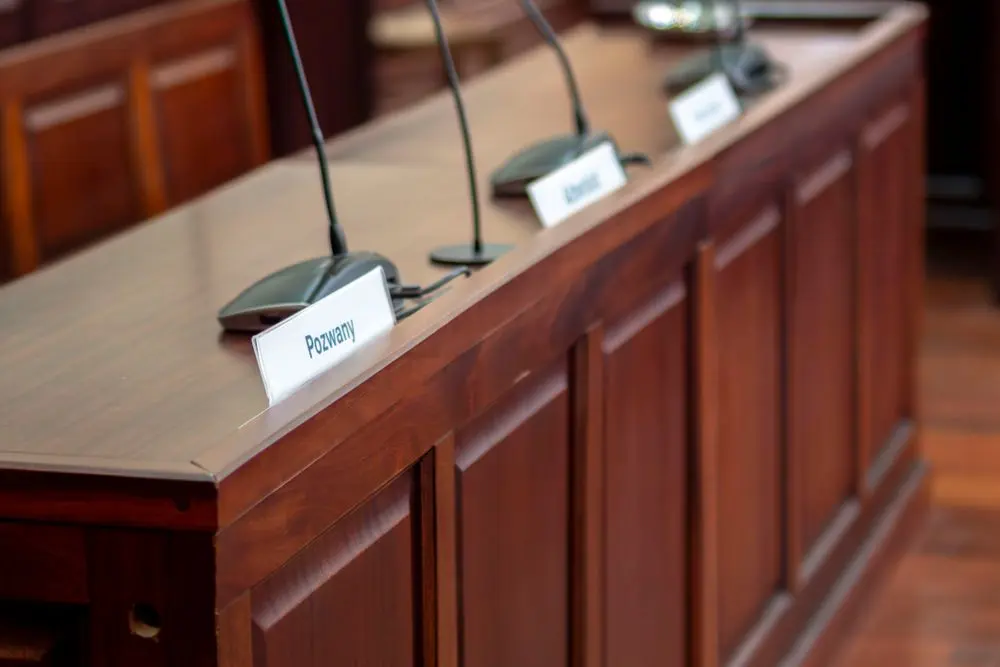
The courtroom was smaller than I’d expected. Wood paneling. Fluorescent lights. An American flag and a New York State flag behind the bench. Maybe forty chairs, mostly empty.
The kids weren’t in the courtroom. They stayed in the hallway with the foster mom and a court officer. Lena said it was better that way. Kids shouldn’t have to sit through this.
Judge Robert Miller was in his sixties. Silver hair. Wire-rimmed glasses. A long, tired face. He’d been on the family court bench for twenty-eight years. Lena said he was fair. Strict, but fair.
He looked at me over his glasses for a long time when I stood up.
I couldn’t tell what he was thinking.
Douglas Haskell went first.
He stood at the podium with his brass-cornered briefcase open on the table behind him and laid it all out. Calm. Reasonable. Like he was reading a grocery list.
“Your Honor,” he said. “The agency’s position is simple. These five children have suffered a devastating loss. They need stability. They need experienced caregivers. They need homes that are already established.”
He gestured at me without looking at me.
“Mr. Dunn is twenty-nine years old,” he said. “He’s unmarried. He works full-time. He has no prior experience raising children. None. His foster care license is approved for two children. He’s asking this court to give him five. Including an infant and two toddlers.”
He paused.
“He has no family support,” Haskell said. “His parents are not in the picture. He has no siblings who live nearby. No spouse. No partner. If he gets sick, if he gets hurt, if he loses his job, there is nobody. These five children would have nobody.”
He turned and looked at me.
For the first time.
“I don’t doubt Mr. Dunn’s sincerity,” he said. “I’m sure his heart is in the right place. But this court doesn’t decide placements based on good intentions. It decides them based on what’s best for the children.”
He turned back to the judge.
“And what’s best for these children,” he said, “is three established, experienced, two-parent homes. Not one inexperienced young man with a converted garage.”
He sat down.
I sat there with my hands clenched in my lap.
He wasn’t wrong.
That was the worst part. Everything he said was true.
Then the attorney for the children stood up.
In New York, kids in foster care have their own lawyer. The Attorney for the Child, they call it. Their job is to tell the court what the kids want.
Her name was Grace Adeyemi. Young. Thirty, maybe. Braids pulled back in a bun. A notebook covered in sticky notes.
“Your Honor,” she said. “I’ve met with Eli and Maya. The two older children. Twice. They’re old enough to express a preference.”
She looked at her notes.
“Eli told me,” she said, “and I’m quoting him exactly, ‘I don’t care where we go. I just want us to go together. I promised my mom I’d take care of them.’”
She looked up.
“Maya didn’t say much,” she said. “She asked me if June would still be her sister if June lived in a different house. I told her yes. She asked me if June would remember her.”
Grace paused.
“I didn’t have an answer for that,” she said.
The courtroom was quiet.
“Your Honor,” Grace said, “the law in this state has a strong preference for keeping siblings together. Social Services Law section 384-a. When it’s in the children’s best interest. My clients have told me clearly what they want. I support Mr. Dunn’s petition.”
She sat down.
Then Lena stood up.
She talked about my license. My training. My home study. The converted workshop. The inspection that passed three days before. Walt, who’d agreed to give me flexible hours. Mrs. Halvorsen, who’d agreed in writing to watch the kids after school. The church daycare on Main Street that had five slots open, and had agreed to take them all, and had waived the deposit after hearing the story.
She talked about the research. About how kids who are separated from their siblings in foster care do worse. In school. In mental health. In everything. She had studies. She had numbers.
She was good. Rhonda was right.
When she sat down, Judge Miller didn’t say anything for a long time.
He was looking at me.
“Mr. Dunn,” he said finally. “Stand up, please.”
I stood up.
My legs were shaking. I hoped nobody could see.
“I’ve read your petition,” Judge Miller said. “I’ve read your home study. Your license file. Your attorney’s brief. I’ve read the agency’s report.”
He took off his glasses. He set them on the bench in front of him.
“I’ve been doing this twenty-eight years,” he said. “I’ve seen a lot of petitions. A lot of people who want to help. Some of them are wonderful. Some of them are fooling themselves. And a few of them want something from these children that has nothing to do with the children.”
He looked at me.
“So I’m going to ask you directly,” he said. “And I want an honest answer.”
He leaned forward.
“Why?” he said. “Why would a young man like you give up your time, your money, your freedom, your whole future, for five children you’re not even related to? Children you’d never met three weeks ago?”
He paused.
“What’s your real motive, Mr. Dunn?”
The whole courtroom went silent.
I looked at Lena.
She nodded. Just slightly.
I looked at the back of the courtroom. At the door. The little window in it.
Through that window, I could see the hallway. The orange plastic bench.
Eli was sitting on the end, still guarding his sisters. Maya’s head was on his shoulder now.
I took a breath.
“Your Honor,” I said. “There’s something I didn’t put in the paperwork.”
“When I was seven years old,” I said, “I sat on a bench just like that one.”
I pointed at the door.
“In the Monroe County Family Court building,” I said. “In Rochester. In the hallway outside a courtroom just like this one.”
Judge Miller didn’t move.
“I had a little sister,” I said. “Her name was Emma. She was four. And a baby brother. Caleb. He was eight months old.”
My voice cracked on Caleb’s name. I stopped. I started again.
“Our mother was sick,” I said. “She was an addict. Heroin. She’d been sick for a long time. One morning in March, she didn’t wake up. I found her. I called 911. I knew how. She’d taught me.”
I didn’t look at Haskell. I didn’t look at Lena. I looked at the judge.
“They took us to an emergency foster home,” I said. “All three of us. For about a month. I took care of Emma and Caleb there. I fed Caleb his bottle. I changed his diapers. I’d been doing it for a long time already. Since he was born, really.”
I swallowed.
“Then there was a hearing,” I said. “Like this one.”
“They put the three of us on a bench in the hallway,” I said. “And they told us to wait. And Emma started crying. She cried a lot. She was scared all the time. And I wiped her face. With my shirt. I didn’t have anything else.”
I looked through the window at Eli.
“Like he’s doing right now,” I said.
The courtroom was so quiet I could hear the fluorescent lights buzzing.
“After the hearing,” I said, “a lady came out. A social worker. She had a clipboard. She said, ‘Okay, kids. Time to go to your new homes.’”
“Homes,” I said. “With an S.”
“There were three cars in the parking lot,” I said. “Three cars. One for each of us.”
My hands were shaking. I put them on the table in front of me so I’d stop.
“They took Caleb first,” I said. “He was asleep. They just picked him up out of my lap. I didn’t even get to say goodbye. He didn’t wake up.”
I took a breath.
“Then they came for Emma,” I said.
“She wouldn’t let go of me,” I said. “She had her arms around my neck. She was screaming. She was screaming my name. Carter, Carter, Carter. Over and over.”
I closed my eyes.
“It took two of them to pull her off me,” I said. “A man and a woman. They pulled her arms off my neck. She was kicking. She lost one of her shoes.”
“I ran after the car,” I said. “Across the parking lot. In my socks. I’d taken my shoes off on the bench. I don’t know why. I ran after the car and I banged on the window and I could see her in there. In the back seat. In her car seat. Screaming. With her face pressed against the glass.”
I opened my eyes.
“And then the car drove away,” I said.
“I never saw her again,” I said.
Somebody in the courtroom made a sound. A small, choked sound. I think it was the court reporter.
“I had one thing of hers,” I said.
I reached into the pocket of my good shirt.
I took it out.
A yellow hair ribbon. Faded almost white now. Frayed at the ends. A little plastic barrette still clipped to one end, shaped like a daisy.
“It fell out of her hair,” I said. “When they pulled her off me. It was on the bench.”
I held it up.
“I’ve carried it every day for twenty-two years,” I said.
Judge Miller was looking at the ribbon.
“I went into foster care,” I said. “Eleven homes in eleven years. Two group homes. I aged out at eighteen with a garbage bag of clothes and three hundred dollars.”
I looked at Haskell.
“Mr. Haskell’s right,” I said. “I don’t have any family. Not a single person. He’s right about that.”
I looked back at the judge.
“That’s my point, Your Honor,” I said.
“I spent five years looking for them,” I said. “After I aged out. Every spare dollar. I filed every form there is. I registered with the New York State Adoption Registry. I hired a guy online who said he could find anybody.”
I swallowed.
“I found Caleb,” I said. “Three years ago. He’s twenty-three. He’s in the Navy. In San Diego. His name’s different now. He was adopted by a nice family in Syracuse.”
My voice cracked.
“He doesn’t remember me,” I said. “At all. He was eight months old. I sent him a letter. He wrote back. He was nice about it. Polite. He said he was glad I was okay. He said maybe we could meet someday. When he’s on leave.”
I looked at the floor.
“He signed it ‘Best wishes,’” I said.
“I never found Emma,” I said. “Her adoption records are sealed. I don’t know her name. I don’t know where she lives. I don’t know if she’s alive. I don’t know if she remembers me.”
I held up the ribbon.
“I don’t know if she remembers the bench,” I said.
I put the ribbon down on the table in front of me.
“Three weeks ago,” I said, “I saw their picture on the registry. Those five kids. On a couch. The oldest boy holding the baby. And under it, it said: separate placement.”
I looked at the judge.
“And I knew exactly what that meant,” I said. “Because I’ve lived it. I know what the parking lot looks like. I know what it sounds like when they pull a little girl’s arms off your neck. I know what it’s like to run after a car in your socks.”
“Mr. Haskell’s right about everything,” I said. “I’m young. I’m single. I’ve never raised a kid. I don’t have family. I don’t have money. Not anymore.”
I took a breath.
“But I know one thing nobody else in this room knows,” I said. “Not the agency. Not the three families. Not even you, Your Honor, with respect.”
“I know what it does to a kid,” I said. “To be the one left on the bench.”
“That boy out there,” I said. “Eli. He’s six years old. He promised his mom he’d take care of them. Grace told you. I believe him. I made the same promise.”
My voice broke.
“If you send them to three homes,” I said, “he’s going to spend the rest of his life thinking he broke it. That he failed. That if he’d just held on tighter, if he’d just been bigger, if he’d just been better, they’d still be together.”
“I’ve thought that every single day for twenty-two years,” I said.
“So that’s my motive, Your Honor,” I said. “That’s the real reason. I’m not trying to be a hero. I’m terrified. I don’t know if I can do this. I’m going to make a lot of mistakes.”
I looked at the door. At the little window. At the bench.
“But I’m not going to let that boy run across a parking lot in his socks,” I said.
I sat down.
Nobody said anything for a long time.
Lena reached over and put her hand on my arm.
Grace Adeyemi was wiping her eyes with a sticky note.
Douglas Haskell was looking down at the table in front of him. He’d closed his briefcase.
Judge Miller was sitting very still.
His glasses were still on the bench in front of him. He was looking at the yellow ribbon on my table.
Then he picked up his glasses.
He didn’t put them on. He just held them.
I watched him blink. Once. Twice. Then he put his hand over his eyes.
He sat like that for a while.
When he took his hand away, his eyes were wet.
He cleared his throat.
“We’ll take a fifteen-minute recess,” he said. His voice was rough.
He stood up and went through the door behind the bench.
Those were the longest fifteen minutes of my life.
I went out into the hallway. I didn’t mean to. My legs just took me there.
The kids were still on the bench.
Eli looked up at me. He didn’t know who I was. Not really. I’d met them twice. Supervised visits at DSS. An hour each. In a playroom with a social worker watching. I’d brought a box of wooden blocks I’d made. They were the only toys they hadn’t fought over.
“Are you the block man?” Eli said.
“Yeah,” I said. “I’m the block man.”
He looked at me suspiciously.
“Are they taking us away?” he said.
I crouched down in front of the bench. So we were eye to eye.
“I don’t know yet,” I said honestly. “The judge is deciding.”
“Are they taking us to different places?”
“I hope not.”
“What if they do?”
I looked at him.
Six years old. Big ears. A Spider-Man shirt. His arm around his sister.
“Then I’m going to keep trying,” I said. “I’m not going to stop.”
He looked at me for a long time.
Then he looked down at my hand.
I was still holding the yellow ribbon. I hadn’t even noticed.
“What’s that?” he said.
“It was my sister’s.”
“Where’s your sister?”
I didn’t answer right away.
“I don’t know,” I said. “They took her to a different house. When I was your age.”
Eli stared at the ribbon.
Then he looked up at me.
Something changed in his face. Something old. Too old for a six-year-old.
He understood.
He didn’t say anything.
He just reached over and took Maya’s hand. And held it.
Judge Miller came back eighteen minutes later.
He’d washed his face. I could tell. His hair was wet at the temples.
He sat down. He put his glasses on.
“I’m going to say a few things,” he said. “And then I’m going to make a ruling.”
He looked at Haskell.
“Mr. Haskell,” he said. “Your concerns are legitimate. All of them. I share them. This young man has never raised a child. He’s asking to raise five. Alone. That’s not a small thing. I’d be lying if I said I wasn’t worried.”
Haskell nodded.
Then the judge looked at me.
“Mr. Dunn,” he said. “Twenty-eight years. That’s how long I’ve been on this bench.”
He paused.
“I’ve signed a lot of separation orders,” he said. “More than I can count. Siblings in different homes. I always told myself it was the best we could do. That it was better than nothing. That they’d have visits.”
He looked down at his hands.
“I’ve never once,” he said, “thought about the parking lot.”
The courtroom was silent.
“Here’s my ruling,” Judge Miller said.
“The agency’s plan for separate placement is denied,” he said.
I stopped breathing.
“The five Hayes children,” he said, “are placed together in the foster home of Carter Dunn. Effective immediately. On a trial basis.”
He held up a finger.
“With conditions,” he said. “Weekly caseworker visits for the first three months. Not monthly. Weekly. Mr. Dunn will complete an additional parenting course for large sibling groups. The agency will expedite the review of his license for an increased capacity. And there will be a review hearing in ninety days. In this courtroom.”
He looked at me.
“If you can’t do it, Mr. Dunn,” he said, “I need you to tell us. Before it gets bad. Not after. Asking for help is not failing. Do you understand me?”
“Yes, sir.”
“Do you understand me?”
“Yes, Your Honor.”
He looked at me a moment longer.
Then he said, quietly, so only the front of the courtroom could hear:
“I hope you find her, son.”
He banged the gavel.
I don’t remember walking out to the hallway.
I just remember Lena squeezing my arm so hard it left a bruise. And Grace Adeyemi hugging me. And Rhonda Pierce, who’d been sitting in the back row the whole time, standing by the door with her lanyard and her keys, wiping her eyes behind her glasses.
“Don’t tell anybody I cried,” she said.
Grace went out first. To tell the kids.
I stood in the doorway and watched.
She knelt down in front of the bench. She said something to Eli. I couldn’t hear what.
Eli looked at her.
Then he looked at me, standing in the doorway.
He didn’t smile.
He just said something to Maya. And then he stood up, and he picked up Nora, who’s almost as big as he is, and he took Noah’s hand, and he walked toward me.
Maya followed, still holding the edge of his shirt.
The foster mom followed with June.
Eli stopped in front of me.
“Are we going together?” he said.
“We’re going together,” I said.
He looked at me for a long time.
“In one car?”
“In one car,” I said. “It’s a minivan. It’s really ugly. The sliding door only opens from the inside.”
He thought about this.
“Okay,” he said.
I’d like to tell you the first night was beautiful.
It wasn’t.
June screamed for three hours straight. She didn’t know me. She didn’t know the house. She wanted her mother.
Noah wet the bed. Then he wet the second set of sheets. Then he wet my bed, when he crawled into it at two in the morning.
Nora wouldn’t eat anything but Goldfish crackers. I’d bought chicken nuggets and macaroni and applesauce and bananas. She threw all of it on the floor.
Maya didn’t say a single word. Not one. She sat on the edge of the bottom bunk in the girls’ room in her too-big pink sweatshirt and stared at the wall.
And Eli didn’t sleep.
At all.
At three in the morning, I found him sitting on the floor of the hallway between the two bedrooms in the converted garage. With his back against the partition wall. Wide awake. Watching both doors.
“Hey, buddy,” I said. “You should be in bed.”
“I’m guarding,” he said.
“Guarding what?”
“Them.”
I sat down on the floor next to him.
I didn’t tell him to go to bed.
I just sat there.
After a while, I said, “Do you want me to guard with you?”
He looked at me.
“You don’t know how,” he said.
“Show me.”
He showed me.
You sit where you can see both doors. You listen for crying. If somebody cries, you go in and you pat their back until they stop. If June cries, you sing the song. The song Mom sang. “You Are My Sunshine.” Only the first verse, because the second verse is sad.
“Okay,” I said. “I can do that.”
We sat there until the sun came up.
Around five-thirty, he fell asleep against my arm.
The first month was the hardest thing I’ve ever done.
I lost eleven pounds. I was sleeping maybe four hours a night. I burned the grilled cheese so many times the smoke detector went off every single day, and the twins started cheering every time it beeped.
Walt let me work six a.m. to two p.m. so I could pick them up from the church daycare on Main Street. He never said anything about it. He just changed the schedule and left it taped to the shop door.
Mrs. Halvorsen came over every afternoon at three with something in a casserole dish. Tuna noodle. Swedish meatballs. Some kind of hotdish with potato chips on top that Noah ate four helpings of.
She taught me how to braid hair.
“You’re going to have three girls,” she said. “You’d better learn.”
My first braid looked like a tangled rope. Maya looked at it in the mirror and, for the first time since she came home, she laughed.
Marcus drove up from Buffalo every other weekend. He’s terrible with kids. He’s scared of them. He showed up the first weekend with five Nerf guns and absolutely no plan.
The house was a war zone by noon.
It was the best day we’d had.
Rhonda Pierce came every Thursday. With her clipboard and her lanyard and her reading glasses.
She checked everything. The smoke detectors. The outlet covers. The baby gate. The car seats. The refrigerator.
The first week, she wrote down “concerns” on four pages.
The fourth week, she wrote down two lines.
The sixth week, she sat at my kitchen table with June on her lap and didn’t write anything at all.
The worst night came in January.
Six weeks in.
Noah pulled a pot of boiling water off the stove.
I’d turned around for ten seconds. Ten seconds. To grab June, who’d climbed onto the kitchen table. I heard the crash. Then the scream.
The water got his left hand and part of his forearm.
I don’t remember driving to the ER. I just remember Noah screaming in his car seat in the back of the ugly minivan, and Eli in the passenger seat holding Noah’s other hand over the seat, and the other three crying in the back, and me running every red light on Route 63.
It was a second-degree burn. Painful. Not life-threatening. The ER doctor said he’d heal. A scar on the back of his hand, maybe. He’d be fine.
But the hospital had to report it.
That’s the law. A burn on a three-year-old in foster care. They have to call DSS.
Rhonda came to the hospital at eleven o’clock at night.
She stood in the doorway of the little ER room. Noah was asleep on the bed with his hand wrapped in white gauze. The other four were asleep on the floor on a blanket a nurse gave us. I was sitting in the chair next to the bed.
I hadn’t stopped shaking.
“Carter,” Rhonda said quietly.
I looked up at her.
“I know,” I said. “I know. I turned around. Ten seconds. I know.”
“I have to file a report.”
“I know.”
“There’ll be an investigation. Haskell’s office will see it. They might ask for an early review hearing.”
“I know.”
I put my face in my hands.
“Maybe he was right,” I said. “Haskell. Maybe I can’t do this. Maybe it’s too much. Maybe they’d be better off—”
I couldn’t finish.
Rhonda came in. She sat down on the edge of the bed. Carefully, so she wouldn’t wake Noah.
She didn’t say anything for a while.
“Twenty-four years,” she said finally. “I’ve been doing this twenty-four years.”
She looked at Noah’s bandaged hand.
“You know how many kids I’ve seen come into this ER with burns?” she said. “From stoves? From bathwater? From curling irons? From biological parents. Adoptive parents. Grandparents. Married couples with two incomes and a nanny.”
She looked at me.
“Kids get hurt, Carter,” she said. “That’s what kids do. The question isn’t whether they get hurt. The question is what you do when they get hurt.”
She looked down at the four sleeping on the blanket on the floor.
“You drove all five of them here,” she said. “At nine o’clock at night. You didn’t leave a single one at home. You didn’t call a neighbor. You brought them all.”
“I couldn’t leave them,” I said. “Eli wouldn’t let me. He said, ‘We go together.’”
Rhonda was quiet for a long time.
“I’m going to write it up,” she said. “Accurately. What happened. What you did.”
She stood up.
“And then I’m going to write what I’ve seen every Thursday for six weeks,” she said. “In my own words.”
Haskell asked for an early review hearing.
Of course he did.
It was in February. Judge Miller. Same courtroom.
This time, I wasn’t alone.
Walt came. In a suit I didn’t know he owned. Mrs. Halvorsen came, in a church dress and a hat with a feather on it. Marcus drove up from Buffalo. Rhonda sat in the second row with her clipboard. The director of the church daycare came. The pediatrician came. Dr. Vasquez, who’d seen all five kids three times since November.
Haskell stood up and read the ER report.
Then Rhonda stood up and read hers.
She read all of it.
Six weeks of Thursday visits. Every concern she’d written down. Every concern that got fixed. The braid that looked like a rope. The night she came for a surprise visit at eight p.m. and found me asleep on the floor of the hallway between the bedrooms, with Eli asleep against my arm.
She read the part about the ER.
You drove all five of them here.
Then she put the paper down and looked at the judge.
“Your Honor,” she said. “I’ve been doing this twenty-four years. I recommended against this placement in November. I was wrong.”
Judge Miller looked at her for a long time.
Then he looked at me.
“Mr. Dunn,” he said. “How’s the boy’s hand?”
“Healing, Your Honor. He’s got a scar. He says it looks like a lightning bolt. He’s very proud of it.”
The judge almost smiled.
“Review denied,” he said. “Placement continues.”
He banged the gavel.
The adoption was finalized on National Adoption Day.
The Saturday before Thanksgiving. One year and four days after the first hearing.
Judge Miller does a special session every year. Families come in and finalize their adoptions together. There are balloons. A cake. A photographer. The judge lets the kids bang the gavel.
There were eleven families that year.
We were last.
I’d bought the kids new clothes. Matching. Lena’s idea. White shirts and blue pants for the boys. Blue dresses for the girls. June was almost two now. Walking. Talking. She mostly said “no” and “Eli” and “mine.”
Noah’s lightning bolt scar showed on the back of his hand. He kept holding it up so people could see it.
Maya held my hand.
She talks now. All the time. She wants to be a veterinarian. Or a ballerina. Or a pizza. It changes daily.
Eli stood next to me in front of the bench.
He’d grown two inches. He had a gap where his front teeth used to be. He sleeps through the night now. Mostly. Some nights I still find him in the hallway, sitting against the partition wall.
When I do, I sit down next to him.
We guard together.
Judge Miller looked down at us.
“Carter Dunn,” he said. “Do you understand that by adopting these children, you are taking on all the rights and responsibilities of a parent? Permanently?”
“Yes, Your Honor.”
“For all five of them?”
“For all five of them.”
He turned to Eli.
“Eli,” he said. “You’re seven now. Old enough to have a say. Do you want Carter to be your dad?”
Eli looked up at me.
He didn’t answer right away. He never does. He thinks things through. I think he got that from his mom. I like to think he got a little of it from me.
“Can I ask him something first?” he said.
Judge Miller nodded.
Eli turned to me.
“If we’re adopted,” he said, “can they still take us to different houses?”
The whole courtroom went quiet.
I knelt down in front of him.
“No,” I said. “Never. Nobody can. Not ever. After today, we’re a family. For good. Forever. Nobody can split us up.”
“Promise?”
“I promise.”
He looked at me for a long time.
Then he turned back to the judge.
“Yes,” he said. “I want him to be my dad.”
Judge Miller signed the papers.
He let Eli bang the gavel.
Then Maya. Then Noah, with his lightning bolt hand. Then Nora. Then June, sitting on my hip, who missed the gavel completely and hit the judge’s coffee cup.
Everybody laughed.
Even Haskell, who’d come. He sat in the back row. He didn’t say anything to me. But when we walked out, he nodded once. Just once.
But that’s not the end of the story.
After the hearing, there was cake.
The courthouse lobby was full. Eleven families. Balloons. Kids running everywhere. A photographer trying to get everybody to stand still.
I was cutting cake for the twins when Lena came up to me.
She had a strange look on her face.
“Carter,” she said quietly. “Can you come with me for a minute?”
“What’s wrong?”
“Nothing’s wrong,” she said. “Just. Come with me.”
I gave the cake knife to Mrs. Halvorsen. I followed Lena to the hallway outside the courtroom.
The hallway with the orange plastic bench.
There was a woman sitting on it.
She was about twenty-six. Brown hair, pulled back. A green coat. She was holding a folded newspaper in her lap.
She stood up when she saw me.
She looked at me for a long time.
“Are you Carter?” she said.
“Yes.”
She held out the newspaper.
It was the Batavia Daily News. From last November. A year ago. There’d been a small story about the hearing. Somebody in the courtroom must have told a reporter. I’d never talked to them. The article was short. Three paragraphs.
Local man fights to keep five siblings together. Single cabinetmaker, 29, tells judge of his own separation from siblings in foster care at age 7.
And the last line:
He told the court he still carries his younger sister’s yellow hair ribbon.
“My mom found it,” the woman said. “Last month. Cleaning out a box in the garage. She’d saved it because it was about adoption. She saves everything about adoption.”
Her voice was shaking.
“She showed it to me,” she said. “She said, ‘Didn’t you say something once, when you were little? About a yellow ribbon?’”
I couldn’t breathe.
“I was adopted when I was four,” she said. “In Rochester. My parents never knew much about my biological family. The records were sealed. They told me I had brothers. That’s all.”
She looked down at the newspaper.
“I don’t remember much,” she said. “Hardly anything. I remember a bench. A long hallway. I remember screaming.”
She looked up at me.
“And I remember somebody wiping my face,” she said. “With his shirt.”
I reached into the pocket of my good shirt.
I took out the ribbon.
Yellow. Faded almost white. Frayed. A little plastic barrette clipped to one end. Shaped like a daisy.
She looked at it.
She put her hand over her mouth.
“I registered with the state adoption registry,” she said through her fingers. “Last month. After my mom showed me the paper. They matched us. Last week. They said there was a sibling who’d registered eleven years ago. They gave me your lawyer’s name.”
She was crying now.
“I wanted to come,” she said. “Today. I read it in the paper. That you were finalizing today. I didn’t know if I should. I didn’t know if you’d want—”
“Emma,” I said.
She stopped.
“It’s Claire now,” she said. “They changed it. Claire Whitfield.”
She wiped her face.
“But my middle name is Emma,” she said. “My mom said the social worker told her my name was Emma. She didn’t want to take it away from me completely.”
I stood there in the hallway.
I couldn’t move. I couldn’t talk.
I just held out the ribbon.
She took it.
She looked at it in her hand for a long time.
She ran her thumb over the little plastic daisy.
“I had shoes,” she said slowly. “Little white shoes. With daisies on them. To match.”
“You lost one,” I said. My voice came out broken. “In the parking lot. When they carried you to the car.”
She looked up at me.
And then she was crying, and I was crying, and she stepped forward and put her arms around my neck.
The way she did when she was four.
And this time nobody pulled her away.
I don’t know how long we stood there.
When I finally opened my eyes, there were five kids standing in the hallway, watching us.
Eli in front. Maya holding his shirt. The twins holding hands. June on Mrs. Halvorsen’s hip.
Eli was staring at the ribbon in Claire’s hand.
“Is that her?” he said quietly. “Your sister? From the bench?”
“Yeah, buddy,” I said. “That’s her.”
Eli looked at Claire for a long time.
Then he walked over.
He looked up at her. Seven years old. Gap in his teeth. White shirt and blue pants.
“He looked for you,” Eli said. “For a really long time.”
Claire knelt down in front of him.
“I know,” she said. “I’m sorry it took me so long.”
Eli thought about this.
Then he said, very seriously, “That’s okay. You found him. That’s the important part.”
Claire stayed for the cake.
She met all five of them. Maya showed her the braid Mrs. Halvorsen did. Noah showed her his lightning bolt. Nora gave her a piece of cake she’d already licked the frosting off of.
June said “no” to her eleven times and then fell asleep on her lap.
She lives in Rochester. An hour away. She’s a nurse at Strong Memorial. In the pediatric ICU.
“I always wanted to work with kids,” she said. “I never really knew why.”
She comes on Sundays now.
Every Sunday. She brings donuts from a place in Pittsford. She lets the twins put sprinkles on everything.
In March, we flew to San Diego.
All seven of us. Claire paid for half the tickets. I don’t know how she afforded it. She wouldn’t tell me.
Caleb met us at the airport.
Twenty-four years old. Navy uniform. He’s tall. Taller than me. He has our mother’s eyes.
He didn’t say anything when he saw us.
He just stood there in the arrivals area looking at Claire. Then at me. Then at five kids in matching T-shirts that said DUNN FAMILY ROAD TRIP that Maya had picked out.
“I don’t remember you,” he said to me finally. Quietly. “I’m sorry. I really don’t.”
“That’s okay,” I said. “You were eight months old.”
“But I remember being held,” he said. “Somebody holding me. All the time. Feeding me. Singing. I’ve always remembered that. My mom said it couldn’t be real. I was too little.”
He looked at me.
“Was that you?” he said.
I couldn’t answer.
Claire did.
“Yeah,” she said. “That was him.”
It’s been three years now.
Eli is ten. He plays soccer. He’s good. He still guards the hallway sometimes. Not every night. Just when there’s a thunderstorm. Or when somebody’s sick.
When he does, I still sit down next to him.
Maya is eight. She still wants to be a veterinarian. Or a ballerina. She’s given up on being a pizza.
The twins are six. In kindergarten. Noah’s lightning bolt scar has faded to a thin white line. He’s disappointed about it. He asked me if I could make it darker. I said no.
June is four.
She still says “no” to almost everything.
Except Claire.
She’ll do anything for Claire.
I opened my shop last spring.
CARTER DUNN WOODWORKS. A little storefront on Main Street. Next to the church daycare. Walt helped me build out the space. He comes in three days a week now. He says he’s retired. He’s not.
The sign over the door is maple. I carved it myself.
Under the name, in smaller letters, it says: Built to Hold Together.
Judge Miller retired last year.
He sent me a letter. On his personal stationery. Handwritten.
Mr. Dunn,
I thought you might like to know. After your hearing, I asked the county to pull every sibling separation order I’d signed in twenty-eight years. There were 214.
I can’t undo them. But for the last two years of my career, I didn’t sign a single one without asking the agency to show me they’d looked for a home that could take them all.
Sometimes they found one. Not always. But sometimes.
I’ve thought about the parking lot every day since.
Thank you for telling me.
— R. Miller
I framed it.
It’s hanging in the hallway of the converted garage. Between the two bedrooms. Right next to the partition wall where Eli and I sit on stormy nights.
And next to it, in a small wooden frame I made from a scrap of the maple I used for the bunk beds, there’s a yellow hair ribbon.
Faded almost white.
With a little plastic daisy clipped to one end.
Claire gave it back to me. The Sunday after we found each other.
“You carried it for twenty-two years,” she said. “You should keep it.”
“It’s yours.”
“It was mine,” she said. “Then it was yours. Now it should be theirs.”
She looked down the hallway at the five bedroom doors.
“So they know,” she said, “that somebody kept a promise.”