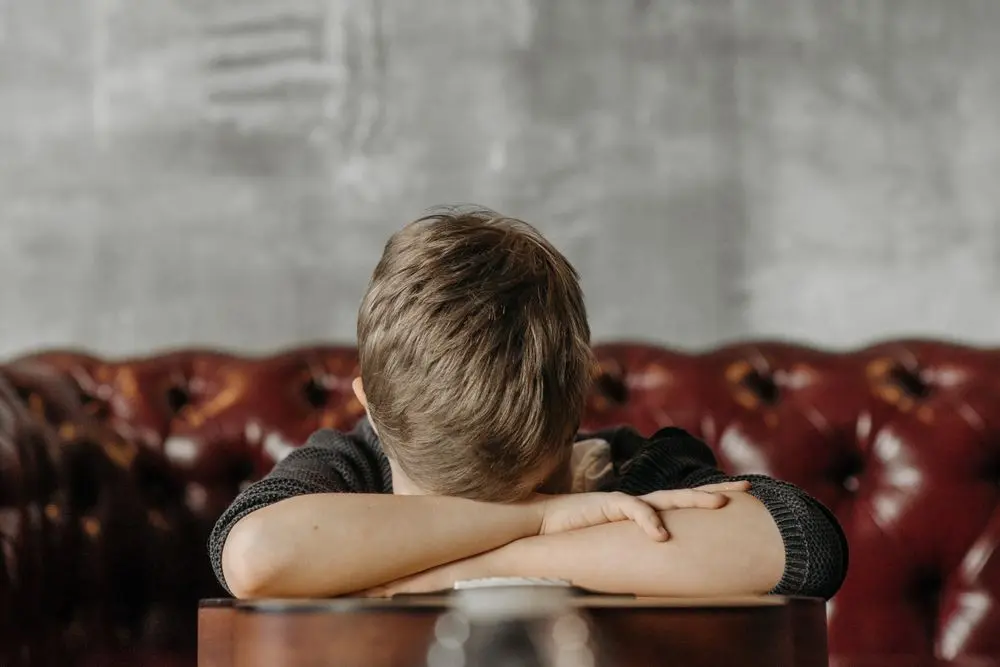
“Please don’t go into my room.”
My son said it with his arms still wrapped around my waist. He’d thrown the front door open before I could even get my key out of my purse. He’d grabbed me so hard my suitcase tipped over on the porch.
For one second, everything felt normal.
Then he looked up at me, and his smile was gone.
“Mom,” he said. His voice was shaking. “Please. Don’t go into my room.”
I’d been gone four days.
Four days in Denver at a medical sales conference. Four nights in a hotel room that smelled like carpet cleaner. Four bedtime stories I’d read to him over FaceTime, holding my phone up to the hotel lamp so he could see the pictures.
Every night, he asked the same thing.
“When are you coming home, Mom?”
“Saturday, buddy. Four more sleeps.”
“Can it be three?”
On Friday afternoon, my last meeting got canceled. I changed my flight. I didn’t tell anyone.
I wanted to surprise him.
I’d pictured it the whole flight home. Walking in the front door. Bennett looking up from his Legos. Shouting “MOM!” Running at me full speed the way he does, like a little linebacker.
I’d pictured my sister, Lauren, in the kitchen making mac and cheese, saying, “You’re early! Why didn’t you call?”
I hadn’t pictured this.
I laughed. I thought he’d made some huge mess while I was gone.
“What happened?” I said. “Did you draw on the walls again?”
Last spring, he’d drawn a three-foot dinosaur on his bedroom wall in permanent marker. A T-rex. With a speech bubble that said ROAR I AM HUNGRY. It took me two coats of primer to cover it.
He shook his head. Hard. So fast his hair flopped. His eyes were filling up with tears.
“No.”
“Then what is it?”
He looked over his shoulder. Down the hallway.
“I promised I wouldn’t let anyone in,” he whispered.
I frowned.
“Promised who?”
He didn’t answer.
He just held on to my coat with both hands.
“Lauren?” I called.
My sister had been staying at the house with Bennett all week. She’d done it before. Twice last year. She’s thirty-one. She’s the fun aunt. The one who lets him have ice cream for dinner and stay up to watch movies he’s too young for. Bennett adores her.
“Lauren! I’m home early!”
Nothing.
The house was quiet.
Not normal quiet. Not the quiet of a TV turned down low and someone reading on the couch.
The kind of quiet that makes the back of your neck prickle.
I left my suitcase on the porch.
I walked into the kitchen. Bennett came with me, still holding my coat.
The kitchen was empty. There was a pot on the stove with cold macaroni in it. Two plates on the counter. One clean. One with half a sandwich on it.
I checked the backyard through the sliding glass door. Empty. Bennett’s soccer ball sitting in the grass.
I went back to the front window and looked out.
Lauren’s little blue Honda was sitting in the driveway. Right where it had been when I left on Monday.
My pulse started to speed up.
“Bennett,” I said carefully. I crouched down so we were eye to eye. “Where’s Aunt Lauren?”
He stared at the floor.
“I… I don’t know.”
That didn’t make any sense.
Lauren would never leave him home alone. Never. She’s careless about a lot of things. Bedtimes. Vegetables. Screen time. But not that. She’d never, ever leave a seven-year-old alone in a house.
That’s when I noticed the light.
A thin yellow line, shining out from under Bennett’s bedroom door at the end of the hall.
I knew I’d turned everything off before I left on Monday. I always do. I go through the whole house. Every light. Every outlet. It’s a thing I do.
Then I heard something.
So quiet I almost missed it.
Not footsteps. Not the TV.
A whisper.
Low. Steady. A voice, talking very softly. I couldn’t make out the words.
Then a sound like something heavy being dragged across the floor. A long, slow scrape. Wood on wood.
Bennett grabbed my sleeve.
His little fingers were shaking.
“Mom,” he said. “Please.”
I looked down at him.
He swallowed.
“They said you’d be angry,” he said. “If you found out.”
My heart started pounding.
“They?”
He didn’t answer. He just held on tighter.
I stepped toward the hallway.
Slowly. One step. Then another.
The whispering stopped.
The scraping stopped too.
Everything behind that door went completely silent.
Whoever was in there knew I was standing outside.
“Bennett,” I said. “Stay behind me.”
“Mom, don’t—”
I put my hand on the doorknob.
I turned it.
It was locked.
My stomach dropped.
Bennett never locks his door. He doesn’t even close it at night. He sleeps with it wide open and the hall light on, because he’s scared of the dark. Has been since his dad left.
I twisted the knob harder.
Then something clicked on the other side.
The lock turned.
By itself.
I pushed the door open a few inches.
And I froze.
The first thing I saw wasn’t Bennett’s bed.
It was Lauren’s purse. Lying open on the floor. Her wallet and keys and lipstick spilled out across the carpet.
Then her phone. Face up. The screen cracked in a spiderweb from one corner to the other.
And next to the phone, lying on its side on the blue carpet with the dinosaur rug, was something that absolutely did not belong in my seven-year-old son’s bedroom.
A bottle.
A big one. Clear glass. Almost empty. The label turned toward me.
Vodka.
Before I could make sense of it, a voice came from behind the door.
“You’re home early.”
I knew that voice.
I’d know it anywhere. I’d heard it say I love you. I’d heard it say I do. I’d heard it slurring on the phone at two in the morning. I’d heard it crying in a police station in a holding cell.
My ex-husband stepped out from behind the door.
And suddenly I understood why Bennett had been so terrified to let me in.
“Get away from him,” I said.
It came out of me before I could think. I grabbed Bennett by the arm and pulled him behind me so hard he stumbled.
“Natalie—”
“Get away from my son, Ryan.”
He held up both hands.
He looked older than the last time I’d seen him. That was almost two years ago, in a courtroom. He was thinner. His hair was cut short. He was wearing a gray hoodie and jeans.
His hands were steady.
That’s what I noticed, even then. Even in that moment. His hands weren’t shaking.
“Natalie,” he said. Quiet. Calm. “Listen to me. I know what this looks like.”
“I know exactly what this looks like,” I said.
I pointed at the bottle on the floor. My hand was trembling.
“You’re not allowed in this house. You’re not allowed near him without supervision. You know that. There’s a court order. And you’re in my son’s bedroom. With a bottle of vodka.”
“It’s not mine,” Ryan said.
“Of course it’s not,” I said.
I could hear my own voice getting louder. Higher. Out of control.
“It’s never yours, is it? It wasn’t yours the night you put him in the car, either, was it? The night you drove him into a mailbox at forty miles an hour?”
Behind me, Bennett started crying.
“Mom, stop. Mom. Stop. Please stop.”
“Natalie,” Ryan said again.
He didn’t raise his voice.
He just stepped to the side.
Away from the door. So I could see the rest of the room.
“It’s Lauren’s,” he said.
My sister was on the floor.
Between Bennett’s bed and his dresser. On the dinosaur rug. Half sitting, half lying, propped up against the side of the bed with two of Bennett’s pillows behind her back.
Her face was gray.
There was blood dried on her forehead. A cut above her left eyebrow. A big purple bruise spreading down the side of her face toward her eye.
She was holding her right wrist against her chest. It was swollen. Bent wrong.
And Bennett’s dresser, the tall white one with five drawers that I’d bought at IKEA when he was three, was lying on its side next to her. The drawers had spilled out. T-shirts and socks and pajamas everywhere.
That was the scraping sound.
Ryan had been dragging the dresser off of her.
Lauren looked up at me.
Her eyes were wet and red. She couldn’t focus on me right. Her eyes kept sliding a little to the side.
“Nat,” she said.
Her voice was thick. Slurred.
“Nat. Don’t be mad.”
I don’t really remember the next minute.
I remember dropping to my knees on the carpet next to her. I remember touching her face. It was cold and clammy.
I remember the smell. Sour. Sharp. I knew that smell. I’d lived with that smell for eight years.
“Lauren,” I said. “Lauren, look at me. What happened? What happened?”
“I fell,” she said.
“When?”
She didn’t answer. She closed her eyes.
“Lauren. Stay awake. Look at me.”
“About forty minutes ago,” Ryan said behind me.
He was standing in the doorway. Not coming closer.
“Bennett called me,” he said. “On the iPad. At three-thirty. He said Aunt Lauren fell down and the dresser fell on her and she wasn’t waking up right.”
I turned around and stared at him.
“Bennett called you?”
“He has my number,” Ryan said. “He knows it by heart.”
I looked at Bennett.
He was standing behind Ryan in the hallway. His face was red and wet. He was holding the bottom of his dinosaur T-shirt in both fists.
“Bennett,” I said. “How do you know Daddy’s number?”
He looked at Ryan.
Then at Lauren.
Then at the floor.
“Aunt Lauren taught me,” he whispered.
I’ll tell you the rest of the story in a minute.
But first, I need to tell you about Ryan.
Because if you don’t know about Ryan, you won’t understand why I stood in that bedroom and screamed at the only person who’d come when my son called.
I met Ryan Calloway when I was twenty-five.
At a friend’s wedding in Lawrence. He was a groomsman. I was a bridesmaid. We got paired up to walk down the aisle together, and he tripped on the runner and almost took me down with him.
“Sorry,” he whispered, grabbing my elbow. “I’ve been practicing that all week.”
I laughed so hard I cried through the whole ceremony.
He was funny. That was the first thing. He was warm and goofy and good with people. He was a high school history teacher. His students loved him. He did impressions of presidents. He could do a perfect Abraham Lincoln.
We got married two years later.
He drank. I knew he drank. Everybody drank. Beers on the weekend. Wine at dinner. A few too many at the Super Bowl party.
It didn’t seem like a problem.
Until it was.
It got worse after Bennett was born. Slowly. So slowly I didn’t notice at first.
Two beers became four. Four became six. Wine at dinner became the whole bottle. Then a second bottle after I went to bed.
He’d hide them. In the garage. In the trunk of his car. Behind the paint cans in the basement.
He’d swear he was cutting back. He’d swear he was done.
He was never done.
He lost his job when Bennett was four. The principal found a flask in his desk drawer.
He got a new job. Lost that one too.
He’d go to AA meetings for a week, two weeks. Then stop.
I’d find him passed out on the couch at four in the afternoon with Bennett watching cartoons on the floor next to him.
I begged him. I threatened him. I poured bottles down the sink.
I stayed.
I stayed because I loved him. Because Bennett loved him. Because when he was sober, he was still the funniest, kindest man I’d ever met. Because he still did Abraham Lincoln voices at bedtime and Bennett laughed until he got the hiccups.
I stayed too long.
The night it ended was a Tuesday.
Bennett was five. I was working late. Ryan was supposed to pick him up from my mother’s house at six.
He picked him up at six-forty.
He’d been drinking since noon.
He put our son in the back seat. He didn’t buckle him in. He drove four blocks.
Then he hit a mailbox on Maple Street at forty miles an hour. Went up over the curb. Across somebody’s front yard. Stopped six inches from a big oak tree.
Bennett hit his head on the back of the passenger seat.
He was okay. A concussion. A cut on his lip that needed three stitches. A bruise on his forehead the size of a plum.
He was okay.
I tell myself that every day. He was okay.
I got the call from the police at 7:15.
I drove to the hospital going eighty-five miles an hour. I don’t remember the drive.
Bennett was sitting on a bed in the emergency room. Holding an ice pack against his face. When he saw me, he started crying.
“Daddy was being silly,” he said. “Daddy said he wasn’t sleepy. But he was sleepy.”
Ryan was arrested in the hospital parking lot.
Child endangerment. Driving under the influence with a minor in the vehicle. His blood alcohol was 0.19.
More than twice the legal limit.
I filed for divorce two weeks later.
The judge gave me full custody. Ryan got supervised visitation only. Two hours, every other Saturday. At a family center downtown. With a social worker in the room.
He went twice.
Then he stopped coming.
He sent a letter, once. Six months later.
I’m sorry. I’m so sorry. I can’t stand to see him in that room with a stranger watching me like I’m a criminal. Because I am one. I don’t deserve to see him. I’m going to get better first. I promise.
I threw it away.
I’d heard I promise too many times.
That was almost two years ago.
Bennett stopped asking about him after a while. Mostly. Sometimes he’d ask at bedtime. Where’s Daddy? Is he still sick? Does he still remember me?
I’d say, “Daddy loves you very much. He’s just not able to be with us right now.”
I didn’t know what else to say.
So that’s who I saw when I pushed open my son’s bedroom door.
The man who put our son in a car drunk.
Standing in his bedroom. Next to a bottle of vodka.
You can understand why I screamed.
“I need to call 911,” I said.
“I know,” Ryan said.
“Why didn’t you already call 911?”
He didn’t answer.
He looked at Lauren on the floor.
“Why didn’t you call 911, Ryan?” I said again. Louder. “She’s got a head injury. She’s been drinking. Her wrist is broken. She can’t focus her eyes. You’ve been here forty minutes.”
“She begged me not to,” Ryan said quietly.
I looked at my sister.
Her eyes were closed. Her lips were moving.
“Don’t,” she was mumbling. “Don’t, don’t. Nat’s going to find out. Nat’s going to know.”
I was already dialing.
“911, what’s your emergency?”
“My sister fell,” I said. “She hit her head. A dresser fell on her. She’s been drinking. She’s confused. Her wrist is broken. I think she has a concussion.”
“Is she breathing?”
“Yes.”
“Is she conscious?”
“Mostly. She’s going in and out.”
“What’s your address, ma’am?”
I told her.
She told me to keep Lauren still. Keep her talking. Don’t let her fall asleep. Don’t give her anything to eat or drink. They’d be there in eight minutes.
I hung up.
I knelt next to Lauren. I took her good hand. Her left one.
“Lauren,” I said. “Stay with me. The ambulance is coming.”
She opened her eyes.
“I’m sorry,” she said. “I’m so sorry, Nat.”
“Shh. It’s okay. Just stay awake.”
Behind me, I heard Ryan say quietly, “Bennett. Come here, buddy.”
I turned around.
Ryan was kneeling in the hallway. Bennett had his face buried in his father’s shoulder. Ryan had both arms around him. He was rocking him a little. Back and forth.
“It’s okay,” Ryan was saying. “It’s okay. You did everything right. You did so good, buddy. You called me. You did everything right.”
Bennett was sobbing.
“I let you in,” he said. “I wasn’t supposed to let anybody in. I promised.”
“I know,” Ryan said. “It’s okay. You did the right thing.”
I watched them.
My son. In his father’s arms. For the first time in almost two years.
I didn’t know what to feel.
So I turned back to my sister. And I held her hand. And I waited for the sirens.
The ambulance came in seven minutes.
Two paramedics. A big bald man named Curtis and a young woman with a blond ponytail named Mia. They came in fast with a stretcher and a big orange bag.
They checked Lauren’s eyes with a flashlight. They put a collar on her neck in case of spinal injury. They splinted her wrist.
“How much has she had to drink?” Curtis asked.
I looked at the bottle on the floor.
“I don’t know,” I said. “I wasn’t here.”
“Most of that,” Ryan said from the doorway. “I think. It was about two-thirds full when I got here. She’d already had some before that.”
He paused.
“And there’s another bottle under the bathroom sink,” he said. “Empty.”
I stared at him.
“How do you know that?”
“I looked,” he said. “When I got here. I needed to know how much.”
He looked at the floor.
“I know where people hide bottles,” he said quietly. “I used to hide them too.”
They took Lauren to Overland Park Regional. I followed in my car. Ryan followed in his.
I didn’t want him to come.
Bennett wouldn’t let go of his hand.
In the emergency room, they took Lauren back right away. A CT scan. X-rays. Blood work.
Bennett and I sat in the waiting room. In those orange plastic chairs that are always too hard.
Ryan sat across from us.
Not next to us. Across. With an empty chair between him and the aisle.
Bennett fell asleep on my lap after twenty minutes. He’d been crying so hard he wore himself out.
I sat there stroking his hair.
I looked at Ryan.
He was sitting with his elbows on his knees and his hands clasped together. Looking at the floor.
“How long?” I said.
He looked up.
“How long have you been talking to him?”
He didn’t lie.
That surprised me. The old Ryan would have lied. The old Ryan always lied. About the bottles. About the drinking. About where he’d been.
“Eight months,” he said.
My stomach went cold.
“Eight months.”
“Lauren reached out to me,” he said. “Last February. She found me on Facebook. She said Bennett had been asking about me. A lot. At bedtime. She said he’d asked her if I was dead.”
He swallowed.
“She asked if I’d want to FaceTime with him,” he said. “Just for a few minutes. When she was watching him. She said she wouldn’t tell you. She said you wouldn’t understand.”
“Wouldn’t understand,” I said.
“Her words. Not mine.”
“So you went behind my back.”
“Yes.”
“For eight months.”
“Yes,” Ryan said. “I did. I’m not going to pretend I didn’t.”
I wanted to scream at him.
I wanted to throw my purse at him.
I sat there with my son asleep in my lap and my sister in a CT scanner and I didn’t do either of those things.
“How often?” I said.
“Every time Lauren babysat,” Ryan said. “Every Tuesday when you had your late meetings. Ten minutes. Fifteen. Sometimes half an hour.”
He looked at Bennett.
“I read him stories,” he said. “He’d hold the iPad up to his pillow. I did the Lincoln voice.”
I closed my eyes.
Bennett had been sleeping better on Tuesdays. I’d noticed. I’d thought it was Lauren. The fun aunt. Ice cream for dinner.
“He asked me once,” Ryan said quietly, “why we had to keep it a secret. And I didn’t know what to tell him. So Lauren told him. She said, ‘Your mom will be angry if she finds out.’”
He looked at me.
“That’s on me too,” he said. “I let her say it. I should have stopped it. I didn’t.”
“Why did he have your number?” I said.
Ryan didn’t answer right away.
“Because I gave it to him,” he said finally. “Last month. On a FaceTime. He was upset. He said Aunt Lauren was acting weird. She’d fallen asleep on the couch at seven o’clock and he couldn’t wake her up for a long time.”
He took a breath.
“I knew what that meant,” he said. “I knew exactly what that meant. So I said, ‘Buddy, if you’re ever scared, if anything ever happens, you call me. Here’s my number. Say it back to me.’ And we practiced until he knew it.”
I stared at him.
“You knew Lauren was drinking.”
“I suspected.”
“For a month.”
“Yes.”
“And you didn’t tell me.”
He didn’t flinch.
“No,” he said.
“Why not?”
He looked at me for a long time.
“Because I’m not allowed to call you,” he said. “Remember? There’s a no-contact order. Through lawyers only. Except about the visitation, which I stopped going to. And what was I going to say? ‘Hi, Nat, it’s your drunk ex-husband who you haven’t heard from in two years. By the way, I’ve been secretly video-chatting with our son behind your back for seven months, and I think your sister’s drinking’?”
He shook his head.
“You would have hung up,” he said. “Then you’d have called your lawyer. Then you’d have cut Lauren off. Then Bennett would’ve lost his aunt and his father in the same week.”
He was right.
I hated that he was right.
“So instead,” I said, “you gave a seven-year-old your phone number and hoped for the best.”
He closed his eyes.
“Yeah,” he said. “I did. It wasn’t enough. I know it wasn’t enough.”
“Why didn’t you call 911?” I said. “Today. When you got there.”
He didn’t answer for a long time.
“I was going to,” he said finally.
“Were you?”
He looked at me.
Then he looked down.
“I don’t know,” he said honestly.
“Lauren begged me not to,” he said. “She grabbed my arm. She said, ‘If they come, Nat’s going to find out I’ve been drinking. She’ll never let me watch Bennett again. She’ll never trust me again.’ She was crying. She was so scared.”
He rubbed his face with both hands.
“And I was scared too,” he said. “I’m not supposed to be within a hundred feet of that house without a social worker. If the paramedics came, and the police came, and they found me there? In Bennett’s room? With a bottle of vodka on the floor?”
He laughed. Short. Not a real laugh.
“Who are they going to believe, Nat? The guy with the DUI and the child endangerment charge? Or the nice aunt with the clean record?”
I didn’t say anything.
“I got the dresser off her,” he said. “I checked her pupils. I checked her breathing. I put the pillows behind her so she wouldn’t choke. I locked the door so Bennett wouldn’t see her like that. I told him to go stand by the front door and not let anybody in.”
He looked at me.
“And then I sat there for twenty minutes,” he said, “trying to decide which one of us was going to lose everything.”
His voice cracked.
“I had my phone in my hand,” he said. “I had 9-1-1 dialed. My thumb was on the button.”
He shook his head.
“Then I heard your car in the driveway.”
A doctor came out at seven-fifteen.
Dr. Reyes. A short woman with tired eyes and a stethoscope around her neck.
“Natalie Brooks?”
I stood up. Bennett woke up and rubbed his eyes.
“How is she?”
“She’s going to be okay,” Dr. Reyes said. “She has a concussion. A moderate one. No bleeding in the brain, which is good. Her right wrist is broken in two places. She’ll need surgery. Probably tomorrow. She has a cut above her eye that needed eight stitches.”
She paused.
“Her blood alcohol was point-two-four,” she said.
I sat back down.
Point-two-four.
Three times the legal limit.
With my son.
“We’re going to keep her overnight,” Dr. Reyes said. “For observation. With the concussion and the alcohol, we want to monitor her. She’s awake now. She’s asking for you.”
She looked at Ryan.
“Both of you,” she said.
Lauren was lying in a bed in a curtained room in the ER.
She had a white bandage over her left eye. Her right arm was in a temporary cast up to her elbow. An IV in her left hand. Her face was swollen and purple.
She looked so small.
My little sister. Thirty-one years old. Who used to follow me around everywhere when we were kids. Who cried when I left for college. Who stood next to me at my wedding and at my divorce hearing and held my hand at both.
She saw me and started crying.
“I’m sorry,” she said. “Nat. I’m so sorry. I’m so sorry. I’m so sorry.”
I sat down on the edge of the bed.
I didn’t say anything.
I just took her good hand.
Ryan stood by the curtain with Bennett.
“How long, Lauren?” I said quietly.
She looked at the ceiling.
“Since Christmas,” she said. “Really bad since Christmas.”
“And before that?”
She didn’t answer.
“Lauren.”
“Since Josh,” she said.
Josh was her ex-boyfriend. They’d been together four years. Engaged. He’d left her last fall. For a woman he worked with. Two months before the wedding.
Then she lost her job. She was a dental assistant. The office closed in November. She’d been looking for work ever since.
She’d told me she was fine.
She’d told me she was looking for jobs every day. That she had interviews lined up. That she was getting over Josh.
“Every night,” she said. “Just a little at first. A glass of wine to sleep. Then two. Then a bottle. Then the wine wasn’t enough.”
She closed her eyes.
“I thought I could handle it,” she said. “I thought, it’s just till I get a job. Just till I stop thinking about him. Just till things get better.”
“And you watched Bennett,” I said. “Like that.”
Her face crumpled.
“I didn’t drink when I was watching him,” she said. “Not at first. I swear. Not the first two times. Not last year.”
She swallowed.
“This time I did,” she said. “This week. Every night. After he went to bed. I’d tell myself, just one, he’s asleep, it’s fine. And then it was the whole bottle.”
“Today was the worst,” she said. “I started at lunch. I don’t know why. I just felt so bad. Josh posted pictures. With her. On a beach. They’re engaged now.”
She laughed. A broken little laugh.
“I was trying to get something out of Bennett’s top drawer,” she said. “His pajamas. I don’t know why I was getting his pajamas at three in the afternoon. I was dizzy. I grabbed the top of the dresser to steady myself. And it came down on me.”
I closed my eyes.
That dresser.
I’d been meaning to anchor it to the wall for four years. They tell you to. Every parenting book. Every safety website. Anchor heavy furniture so it can’t tip over on a child.
I had the anti-tip strap in a drawer in the kitchen. Still in the package.
I’d been meaning to do it.
I just never had.
“It wasn’t your fault, Nat,” Lauren said. Like she’d read my mind. “The dresser. It was mine. I pulled it down.”
“I should have anchored it.”
“I should have been sober.”
We sat there.
Both of us crying.
“Bennett called Ryan,” Lauren said. “Didn’t he?”
“Yes.”
She looked over at Ryan. Standing by the curtain. Holding Bennett’s hand.
“I’m glad,” she said. “I’m glad he called somebody. I told him not to call you. I told him you’d be angry. That was so wrong. That was the worst thing I’ve ever done.”
She started crying again.
“He’s seven, Nat. And I made him promise to keep a secret that big. From his own mother.”
Bennett came over to the bed.
He’d been standing so quietly. Holding his dad’s hand. Listening.
He climbed up on the edge of the bed next to me. Very carefully, so he wouldn’t bump Lauren’s arm.
He looked at her bandage.
“Does it hurt?” he said.
“A little, bud.”
“Did the dresser hurt you?”
“Yeah. A little.”
He looked at her for a long time.
“Aunt Lauren,” he said. “Were you sick? Like Daddy was sick?”
Nobody said anything.
Lauren looked at me.
I looked at Ryan.
Ryan came over to the bed. He crouched down next to Bennett.
“Yeah, buddy,” he said gently. “Aunt Lauren’s sick. The same kind of sick I was. Where you drink something that makes you feel better for a little while, and then it makes you feel a lot worse. And it makes you do things you don’t want to do.”
Bennett thought about this.
“Did you get better?” he said. “Daddy?”
Ryan looked at me.
Then he reached into the pocket of his hoodie.
He took out a coin. A little bronze coin. About the size of a half dollar. It had a triangle on it and the number 18.
He put it in Bennett’s hand.
“This means eighteen months,” Ryan said. “Eighteen months without drinking. Not one sip.”
He looked at me.
“I got it two weeks ago,” he said. “At a meeting. In a church basement on Metcalf. Every Tuesday and Thursday and Saturday night.”
I stared at the coin in my son’s hand.
Eighteen months.
The accident was two years ago.
“I went to rehab,” Ryan said quietly. To me. “After the second visitation. After I sat in that room at the family center with the social worker watching me and Bennett asked me why the lady was there. And I didn’t know what to say.”
He swallowed.
“I went home and drank a whole bottle of whiskey,” he said. “And then I woke up on the bathroom floor the next morning and called my sister and said, ‘I need help.’ She drove me to a place in Topeka. Twenty-eight days. Then outpatient. Then meetings. Every week since.”
He looked at the floor.
“I have a sponsor. His name’s Frank. He’s seventy-one. He’s been sober thirty years. He calls me every morning at six-thirty. You can talk to him. He’ll tell you.”
“Why didn’t you tell me?” I said.
He looked at me.
“I wanted to have a year first,” he said. “A whole year. So you’d believe me. And then a year came, and I thought, she won’t believe a year. Two years. I’ll wait for two years. And then I’ll call her lawyer.”
He shook his head.
“I kept waiting,” he said. “For it to be enough. For me to be enough.”
Bennett was holding the coin up to the fluorescent light. Turning it over and over.
“It’s like a medal,” he said.
“Kind of,” Ryan said.
“Can I keep it?”
Ryan looked at me.
I didn’t say anything.
“For tonight,” Ryan said. “You can keep it tonight. Then I need it back. I need to carry it with me. It helps me remember.”
Bennett nodded seriously.
He closed his fist around the coin.
We left the hospital at ten o’clock.
Lauren was asleep. They’d moved her to a room on the fourth floor. Surgery on her wrist was scheduled for the morning.
Ryan walked us out to the parking lot.
Bennett was asleep again. I was carrying him. He was too big to carry, really. Fifty-two pounds. My arms were shaking.
“Let me,” Ryan said.
I looked at him.
I thought about the night on Maple Street. The mailbox. The oak tree. My son in the back seat with no seatbelt on.
I thought about Ryan in the hallway this afternoon with Bennett’s face buried in his shoulder. Rocking him. You did everything right, buddy.
I thought about the coin.
I handed him our son.
Ryan held him like he was made of glass.
He carried him across the parking lot to my car. He opened the back door. He laid Bennett down in his booster seat. He buckled him in. Both straps. He checked them twice.
Then he stood there with his hand on the top of the car door.
Looking at our son asleep in the back seat.
“Natalie,” he said.
“Yeah.”
“I know I broke the court order today. I know you can call your lawyer. I know you can call the police. I know you can have me arrested for being there.”
He looked at me.
“I’m not going to fight it,” he said. “Whatever you decide. I came because he called. I’d come again.”
I didn’t say anything.
I got in the driver’s seat. I closed the door.
I sat there with my hands on the wheel.
Then I rolled down the window.
“Ryan,” I said.
He looked at me.
“Thank you,” I said. “For coming.”
He nodded.
He didn’t say anything.
He stood there in the parking lot and watched us drive away.
I didn’t call my lawyer that night.
I didn’t sleep either.
I sat on the floor of Bennett’s room after I put him to bed. In my own bed. I wasn’t letting him sleep in his room that night.
I sat on the dinosaur rug, where Lauren had been lying.
The dresser was still on its side. The drawers still spilled out. Socks and T-shirts and pajamas everywhere.
The vodka bottle was gone. Ryan had taken it. And the one from under the bathroom sink. I found out later he’d poured them both out in the kitchen and put the empty bottles in his car so Bennett wouldn’t find them in the recycling.
Lauren’s purse was still there. Her phone with the cracked screen.
I picked up her phone.
I didn’t mean to snoop. I just picked it up to plug it in.
The screen lit up.
There was a text conversation open. From that afternoon. 2:47 p.m.
From Ryan.
Lauren. Bennett told me on our call last night that you fell asleep during the movie again and he couldn’t wake you up. I know what that means. I’ve been there. Please. I’m begging you. Please talk to someone. Please tell Natalie. If you won’t, I’ll have to. I’m not going to let anything happen to him.
And then Lauren’s answer. 2:51 p.m.
Mind your own business. You don’t get to lecture me about drinking around Bennett. You of all people.
And then Ryan, 2:53 p.m.
You’re right. I don’t. That’s exactly why I’m telling you. Because I know what’s coming if you don’t stop. I already lived it.
She never answered.
Forty minutes later, she pulled the dresser down on top of herself.
I sat there on the floor of my son’s bedroom and read those texts about ten times.
Then I put my face in my hands and cried until the sun came up.
The next few weeks were hard.
Lauren had surgery on her wrist. A plate and four screws. She stayed at my house for a week afterward, sleeping on the couch. She could barely look at me.
On the third night, I found her sitting in the kitchen at two in the morning, staring at the cabinet where I keep wine.
There wasn’t any wine in it anymore. I’d poured it all out the day she came home.
She was just staring at it.
I sat down across from her.
“I want some,” she said quietly. “I want it so bad, Nat. I can feel it in my teeth.”
“I know.”
“How do you know?”
“I was married to Ryan for eight years,” I said.
She looked at me.
Then she said, “Will you take me?”
“Where?”
“To one of those meetings,” she said. “Ryan’s. The church basement. On Metcalf.”
I drove her there the next night.
Thursday. Seven o’clock.
I sat in the car in the parking lot while she went in.
Through the basement windows, I could see a circle of folding chairs. Twenty people, maybe. Coffee in Styrofoam cups. An old man with white hair and suspenders standing at the front.
And Ryan. Sitting in a folding chair next to the door.
He saw Lauren come in. He stood up. He pulled out the chair next to him.
She sat down.
She’s been going ever since. Three times a week. She’s got a sponsor of her own now. A retired nurse named Patricia.
She has ninety-one days.
She showed me the coin last week. A little one. Bronze, with a triangle.
She cried when she showed it to me.
I called Ryan’s sponsor.
Frank Kowalski. Seventy-one years old. Sober thirty years. A retired union electrician with a voice like a gravel road.
“Your ex-husband,” he said, “is the most stubborn son of a gun I’ve ever sponsored. And I’ve sponsored a lot of stubborn sons of guns.”
“Is he really sober?”
“Eighteen months and change,” Frank said. “I’d bet my life on it. I call him every morning at six-thirty. He’s never missed a call. Not once. Not even on Christmas.”
He paused.
“He talks about that boy every single day,” he said. “Every day. He keeps a picture of him in his wallet. He takes it out at meetings. The kid’s holding a fish.”
I knew that picture.
I took it.
Lake Perry. Bennett’s fourth birthday. Before the bad year. Before Maple Street.
“He told me once,” Frank said, “that he’s not doing it to get the boy back. He said if he never gets to see him again, that’s what he deserves. He said he’s doing it so that if the boy ever needs him, he’ll be somebody worth calling.”
I didn’t say anything for a long time.
“Ma’am?” Frank said. “You still there?”
“I’m here.”
“For what it’s worth,” Frank said, “I think he finally is.”
I talked to my lawyer.
Not to have Ryan arrested.
To change the custody arrangement.
It took four months.
Mediation. Paperwork. A new evaluation by a social worker. Drug and alcohol testing. Ryan took every single one. Random ones, too. They’d call him at any hour, and he’d have to drive to a lab within four hours.
Every single test came back clean.
The first new visit was in March.
At my house. Not at the family center. I was the supervisor. Me. Not a stranger with a clipboard.
Ryan came on Saturday at ten in the morning. He knocked on the front door. He didn’t ring the bell.
Bennett opened it.
He didn’t run at his dad full speed. He didn’t throw his arms around him.
He stood in the doorway and looked at Ryan for a long time.
“Hi, Daddy,” he said.
“Hi, buddy.”
Then Bennett reached into his pocket.
He took out a little piece of paper. Folded up very small.
He handed it to Ryan.
Ryan unfolded it.
It was a drawing. In crayon. A stick figure man with a big smile, holding up a gold circle. Above him, in wobbly seven-year-old letters, Bennett had written:
DADDY. 20 MUNTHS. NOT ONE SIP.
Ryan stood in the doorway holding that drawing.
He didn’t say anything.
He couldn’t.
Bennett looked up at him.
“Mommy helped me count,” he said.
Ryan looked at me over Bennett’s head.
I just nodded.
They spent two hours building Legos on the living room floor.
I sat on the couch and pretended to read a book.
I didn’t turn a single page.
When it was time for Ryan to leave, Bennett walked him to the door.
“Daddy,” he said. “Can you do the Lincoln voice? One time? Before you go?”
Ryan crouched down.
He did the Lincoln voice.
“Four score and seven years ago,” he said, in this deep, slow, ridiculous voice, “our fathers brought forth upon this continent a boy named Bennett, who is very, very bad at Legos.”
Bennett laughed so hard he got the hiccups.
In the spring, Ryan came over one Saturday with a toolbox.
“I want to do something,” he said. “If that’s okay. Bennett’s room.”
I looked at him.
“The dresser,” he said.
I’d set it back upright the week after Lauren’s accident. Put all the drawers back. Folded the clothes.
But I hadn’t anchored it.
I still had the strap. Still in the package. Still in the kitchen drawer.
I couldn’t make myself do it. Every time I took it out, I thought about Lauren on the floor. Pinned. Bleeding. Gray.
I’d put it back.
“I’ll do it,” Ryan said quietly. “If you want.”
I went to the kitchen drawer. I got the package.
I handed it to him.
He went into Bennett’s room. Bennett followed him. I stood in the doorway and watched.
He showed Bennett how to find the stud in the wall with a little magnet. How to mark it with a pencil. How to drill a pilot hole. How to screw in the bracket.
He let Bennett hold the drill. With both hands. With his own hands over Bennett’s.
“Easy,” he said. “Slow. Let the drill do the work.”
When it was done, Ryan tugged on the top of the dresser.
It didn’t move.
Not even a little.
“There,” he said. “Now it can’t fall on anybody.”
Bennett looked at the dresser.
Then he did something I didn’t expect.
He went to his desk. He got a black marker. He came back.
He looked at me.
“Mom,” he said. “Can I draw on the wall? Just a little? Right here? Next to the strap?”
I thought about the T-rex. ROAR I AM HUNGRY. Two coats of primer.
“Just a little,” I said.
Bennett knelt down by the dresser.
He drew something on the wall. Very carefully. Right next to the white bracket. About the size of a playing card.
When he was done, he stood back.
It was a little triangle.
Like the one on Daddy’s coin.
Like the one on Aunt Lauren’s.
“So I remember,” he said.
Ryan put his hand on Bennett’s shoulder.
He didn’t say anything.
He didn’t need to.
That was a year ago.
Ryan sees Bennett every other weekend now. Unsupervised. Saturday mornings to Sunday evenings. At his apartment in Lenexa. Two bedrooms. One of them has a bunk bed and a dinosaur rug and a dresser that’s anchored to the wall.
He’s teaching again. Social studies. At a middle school in Olathe. His principal knows everything. He told her himself, in his interview.
He’s at twenty-nine months.
Bennett keeps count on a calendar on the refrigerator. He draws a little triangle on the first of every month.
Lauren has a year.
Three hundred and sixty-six days. Leap year. She says she’s going to count the extra one twice.
She got a job at a pediatric dental office in Mission. She’s good with the kids. They love her. She tells me the scared ones are her favorite.
She babysits Bennett again. Not overnight yet. That was her choice, not mine. She says she’s not ready. She says she wants to be sure.
On Tuesday nights, when I have my late meetings, she comes over at five and makes mac and cheese. Real mac and cheese. From a box, but with real butter.
At seven-thirty, she puts Bennett in his pajamas.
And at eight, the iPad rings.
It’s Ryan.
He reads a story. Over FaceTime. Bennett holds the iPad up to his pillow.
He does the Lincoln voice.
Lauren sits on the edge of the bed and listens.
Nobody keeps it a secret anymore.
Last month, I came home early from another work trip.
St. Louis this time. Two days.
I didn’t tell anyone. I wanted to surprise him.
I pulled into the driveway at four-thirty. Lauren’s car was there. Her new one. A gray Toyota.
The front door flew open before I could get my key out.
Bennett ran at me full speed. Like a little linebacker. He’s eight now. He hit me so hard I almost fell backward off the porch.
“MOM!” he yelled. “You’re home early!”
“I wanted to surprise you.”
“You did!”
He let go of my waist.
He looked up at me.
He was grinning.
“Mom,” he said. “Don’t go into my room.”
My heart stopped.
Just for a second.
Then he burst out laughing.
“I’m kidding!” he said. “I’m kidding, I’m kidding! You should see your face!”
He grabbed my hand.
“Come on,” he said. “You can come into my room. You can always come into my room. Aunt Lauren and me made you something. Come see.”
He dragged me down the hallway.
The door was wide open. The light was on.
Lauren was sitting on the dinosaur rug, cross-legged, with a big piece of poster board in her lap. She was covered in glitter. Her scar above her eyebrow had faded to a thin white line.
She looked up at me and smiled.
“Welcome home, Nat,” she said.
On the poster board, in Bennett’s wobbly handwriting, in purple glitter glue, it said:
WELCOM HOME MOM. WE MISSD YOU. NO SECRETS.
And underneath, in smaller letters, three little triangles.
I stood in the doorway and looked at it for a long time.
At my sister on the floor. At my son next to her with glitter in his hair. At the white dresser, anchored to the wall. At the little black triangle drawn in marker beside the bracket.
Bennett tugged my hand.
“Do you like it?”
“I love it, bud.”
“Are you crying?”
“A little.”
“Good crying or bad crying?”
I looked at him.
I knelt down on the dinosaur rug. Right where Lauren had been lying a year before. And I pulled both of them into my arms.
“Good crying,” I said. “The best kind.”