My Stepdaughter Tore My Passport in Half at the Airport So I’d Stay Home With Her Cats. I Had Paid for the Whole Trip.
I had the whole trip on one spreadsheet. It took me eighteen months to plan, and by the end the file had four tabs. There were six plane tickets from Chicago to Hawaii and two oceanfront rooms for seven nights. There was a snorkeling excursion, and a dinner reservation at a little place a colleague had told me about years ago. The total at the bottom was $11,860, and every dollar of it came out of my account.
It was supposed to be my retirement trip. I’m sixty-four. I spent thirty years as a corporate accountant, the last twelve as a senior one, and I retired in the spring. My husband, Robert, died of a heart attack three years ago. I wanted to float in warm water and eat fish that had been caught that morning. I also wanted my grandchildren to see the Pacific Ocean. So I invited the family.
That meant my daughter, Emily, and her husband, Derek, and their two children. Lucas is ten and Sophie is eight. It also meant Vanessa. Vanessa is Robert’s daughter from his first marriage, which makes her my stepdaughter. She’s thirty-six, and she has two cats and a great many opinions.
We met at O’Hare on a Saturday morning in June. I had a coral suitcase I’d bought for the occasion. Over my shoulder was the brown leather planner I’ve carried for three decades. It has been through audits, acquisitions and layoffs, and one fraud investigation. In it were my emergency numbers and my insurance cards, and a printed copy of the spreadsheet. My passport was in the front pocket.
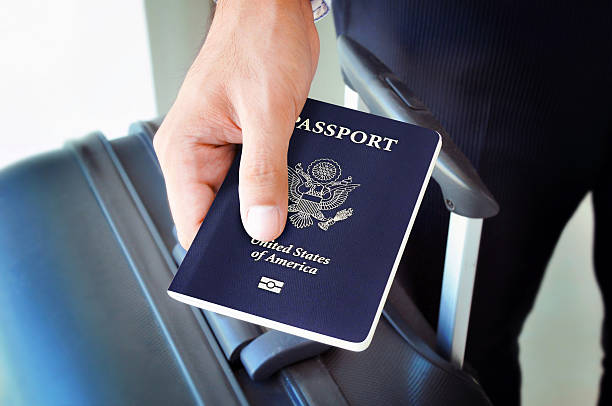
I should explain the passport, because people ask. Hawaii is a domestic flight. But my driver’s license was the old kind, without the gold star, and I’d never gotten around to updating it. The airlines won’t take those anymore. My passport was the only ID I had that would get me through security.
Vanessa knew that. I had mentioned it at dinner two weeks earlier, when she asked why I was carrying it.
We were in the check-in line, about four parties from the counter. The terminal smelled of burnt coffee and floor cleaner. Vanessa had offered to “hold everyone’s documents so we can do this fast.” I handed her my passport along with the others. I have asked myself since why I did that. I think I was simply happy, and I wasn’t paying attention.
She slid the boarding passes into her designer tote. She kept my passport in her hand. She looked at me and smiled.
Then she tore it in half.
It made a sharp, ugly sound, louder than I would have believed. She put the two halves together and tore them again. The blue pieces hung from her manicured fingers for a second. Then she dropped them into the trash bin beside the stanchion, as if she were throwing away a gum wrapper.
“You’re not going to Hawaii, Maggie,” she said.
She was still smiling. It was a small, glossy smile, and she looked satisfied with herself. I remember that better than the passport.
“You’re staying home to watch my cats,” she went on. “Someone has to.”
For a moment I could not move. The line shuffled forward around us. A little girl dragged a stuffed rabbit by the ears. A businessman argued into a headset. Behind me a woman said, “Oh my God,” under her breath.
Vanessa heard her. She lifted her chin.
Emily was standing three feet away. She had gone pale, and she was clutching her purse against her stomach with both hands. She did not look at me.
Derek checked his watch. I had bought him that watch. It cost $3,200. Emily had cried on the phone after his third business failed, and told me he needed a win. He gave a low chuckle and patted my shoulder.
“Come on, Maggie,” he said. “It’s for the best. You’d slow us down anyway.”
Lucas was staring at the floor. At ten he was old enough to know something cruel had happened and too young to know what to do about it. Sophie looked from Vanessa to me with huge eyes. She opened her mouth. Vanessa put a hand on her shoulder and squeezed, and Sophie closed it again.
I could feel people watching. My heart was pounding, and heat was climbing my neck.
I didn’t cry or scream. I didn’t dive for the trash bin either, though some part of me wanted to rescue those four pieces. I adjusted the strap of my planner on my shoulder. Then I stood still and said nothing.
I learned to do that in conference rooms. If you stay quiet long enough, the other person starts to hear what they’ve just said.
Vanessa’s smile slipped first.
“What?” she said. “Don’t look at me like that. It’s just practical. The cats need their special food twice a day. Princess gets stressed if her litter box isn’t scooped religiously. You know that.”
The agent at the counter called, “Next party, please.”
Vanessa turned her back on me, as though the matter were closed, and stepped forward with the tote. Derek followed her. Emily hesitated. Her eyes met mine for half a second.
“Mom,” she whispered.
She didn’t say she was sorry, and she didn’t ask Vanessa what on earth she had done. She only said “Mom,” as if the word ought to cover it.
Vanessa snapped her fingers. “Emily. Come on.”
Emily went.
I had expected to be furious, and I wasn’t. A coldness came over me. I had spent three years wondering whether I was imagining it. Maybe I was too sensitive, or too slow to forgive, or grief had bent my view of the people Robert left behind. Now I had my answer, and I felt almost calm.
Robert had seen it. He used to squeeze my hand under the table when Vanessa made one of her little remarks, the kind that sound like jokes until you replay them at two in the morning. He would say, “You don’t have to carry all of it, Maggie. Let them figure something out for themselves.” I didn’t listen to him as well as I should have. I’m an accountant, and I should have known better. I had been counting everything they took from me as an investment.
I’ll tell you something else. I had half expected trouble on this trip. I didn’t expect that, exactly. But I’d expected something. When I picked up my suitcase that morning, Vanessa had said, “It’s a shame about the cats, though.” She’d said it twice. So when she offered to hold the documents, some old habit made me take out my phone and hold it down by my hip with the camera running. I record things. I’ve done it for thirty years.
I opened my planner. Inside the front cover was a laminated card with the airline’s customer service number, the passport agency’s emergency line, and my attorney’s direct extension. I had made that card for delays and lost luggage. I hadn’t made it for this, but the numbers were the right ones.
I walked to the customer service counter at the far end of the hall. The woman behind it was in her fifties, with reading glasses pushed up into her hair. Her name tag said CAROL.
She looked at me and at the planner. I think she looked at the set of my chin. Something in her face sharpened.
“How can I help you today?”
“My passport was just destroyed on purpose by another passenger in your check-in line,” I said. “I have it on video. I’d like to speak with your supervisor and with airport police, please. And then I need to make some changes to a reservation.”
Carol looked at me for two full seconds. Then she picked up her phone.
Things moved quickly after that. Two airport police officers were at the counter inside of five minutes. A TSA supervisor came behind them, a serious young man with a tablet. I showed them my phone.
It was all there. You could see Vanessa’s hand and her face. You could hear the tearing and see the pieces fall. “You’re staying home to watch my cats.” The smile was on it too.
One of the officers stepped away and spoke into his radio.
“Ma’am, a passport is a federal document,” the TSA supervisor said. “Deliberately destroying someone else’s is not a small thing.”
“I’m aware,” I said. I was. I’d read the notice printed inside the back cover more than once over the years. I read everything I sign for.
It took them eleven minutes to walk Vanessa out of the line.
I watched from across the hall. I didn’t need to go closer. I could see the exact moment she understood that the morning was no longer going the way she’d planned it. Her shoulders went stiff and her chin came up. Emily’s mouth fell open. Derek stopped looking at his watch.
One officer went to the trash bin with a pair of gloves and an evidence bag.
Lucas turned his head and found me standing there. He raised one hand. I raised mine back. It was a small thing, and I’m still grateful for it.
The officer who stayed beside me was a tall woman named Ramos, with close-cropped hair and steady eyes. She explained it plainly. Vanessa would be questioned. The pieces of the passport would be held as evidence, and a report would be written. Whether there would be charges was not hers to decide.
“I’m sorry this happened to you,” she said.
“Thank you,” I said. “I’m not sure I am.”
She studied me for a moment. “You recorded it.”
“I did.”
“Before she finished?”
“I started when she offered to hold my documents.”
Officer Ramos nodded slowly. “Smart.”
Then I turned back to Carol. I took the spreadsheet out of my planner and laid it on her counter.
“All six tickets on this itinerary were purchased on my card, under my account,” I said. “I can’t fly today. I’d like to know my options.”
Carol typed for a while. She looked up over her glasses. “You’re the purchaser on all of them. Given the circumstances, and I’m going to note the police report number here, I can refund yours in full. The other five haven’t been used yet. If you cancel them now, they’d come back to your card as well, less a fee on the adult fares.”
I thought about my grandchildren. Then I thought about Derek chuckling, and Emily walking away when Vanessa snapped her fingers.
“Cancel them,” I said.
While she worked, I stepped aside and called the resort. The two rooms were in my name. The woman at the front desk was sympathetic and efficient. I lost the first night’s deposit on each room, which came to $978. The rest was released back to my card.
I wrote the new figures in the margin of the spreadsheet.
It was Derek who came across the hall first, about forty minutes later. Emily was behind him with the children. Vanessa was still in a room somewhere with two officers.
“Okay, Maggie, you’ve made your point,” he said. He had his hands up as though he were calming a dog. “Tell them it was a misunderstanding. If they let her go in the next half hour, we can still make the 3:40. I checked.”
“There’s no 3:40 for you, Derek.”
“Sure there is. They can rebook us.”
“I bought those tickets,” I said. “All six. I bought the hotel rooms too. I cancelled everything twenty minutes ago.”
He stared at me. He hadn’t known. Emily made the reservations sound like a family effort when she talked about them, and I had let her. I’d thought it was kinder.
“You can’t do that,” he said.
“I’ve done it. Carol can print you the confirmation.”
Emily pushed past him. Her eyes were red. “Mom, the kids. You’re punishing the kids.”
“Your sister-in-law tore up my passport so I could scoop her litter boxes while the rest of you sat on a beach I paid for,” I said. I kept my voice low because of Lucas and Sophie. “You watched her do it. Then you got in line.”
“I didn’t know what to do!”
“I know you didn’t. That’s what frightens me.”
Sophie had slipped around her mother. She pressed her face into my coat. “I wanted to say something, Grandma,” she whispered. “I was going to.”
I bent down and held her. “I know you were, sweetheart. I saw.”
I told both children that this trip was off, and that it wasn’t their doing. I told them I would take them to see the ocean myself someday, just the three of us. Lucas nodded and looked hard at his shoes.
No charges were filed that day. Vanessa was questioned for two hours. A report was written, and she was told, in language she couldn’t wave away, that what she’d done was on record and that I could still pursue it. Emily and Derek waited for her. I’m told the five of them rode home in one cab, and that nobody spoke.
I didn’t see them go. I’d moved to a chair by a window overlooking the tarmac.
Vanessa called me four times in the next hour. I watched the phone light up and go dark again. Emily texted, “Mom, please. Can we talk about this?” I turned the phone face down on my knee.
I called my attorney’s office. His name is Alan Feldman, and he has handled my affairs since before I married Robert. His paralegal took the details, and he called back himself inside of forty minutes.
“You have the video?” he asked.
“And the names of two officers and one very capable airline agent.”
“And the notes?”
“Three years of them.”
The notes are in the planner. After Robert’s funeral, I began writing things down, with dates. It started as a habit and turned into a record. I wrote down the Christmas when Vanessa took the watercolor Robert had left me in his will and hung it in her apartment. When I asked about it she said there’d been “a mix-up with the movers.” I wrote down the birthday dinner when Emily told me, in front of her friends, that my gift was a bit modest this year. And there were the emergencies. There was $22,000 for Derek’s last business. There was $16,000 to “bridge” them through a bad winter. Nobody ever called those loans. They acted as if the money had simply come loose from me.
“All right,” Alan said. “I’ll send a letter Monday. In the meantime, don’t answer her calls.”
“I wasn’t planning to.”
There were other things I had already done, quietly, in the weeks before the trip. I had moved most of my savings into an account with only my name on it. Emily had a card on the old one “for emergencies,” and the emergencies had become monthly. I had sat in Alan’s office and gone over a new will. I had also written a letter and given it, sealed, to my neighbor Joyce. She was to open it if she didn’t hear from me for thirty days. I’m not a dramatic person. I just like things in order.
I made one more call from that chair.
Patricia was my college roommate. She has lived on Maui for eleven years, and we talk every few weeks. I had thought about adding a few days with her to the trip and had decided against it, to keep things simple for the family. I told her everything that had happened and didn’t soften any of it.
There was a long silence on her end.
“Where are you right now?” she said.
“Still at the airport.”
“Book a new flight. Come straight to me. I have a guest room with a better view than any resort would give you, and I’ve been waiting eleven years for you to use it properly.”
I laughed. I hadn’t laughed in hours, and the sound startled me.
“I don’t have a passport, Pat. I can’t get on a plane.”
“How fast can you get one?”
I opened the planner. I’d already looked it up. “If I go to the passport agency downtown in person on Monday morning with a ticket in hand, about three business days.”
“Then you come Thursday,” she said. “I’ll have the room ready.”
I stayed in that chair another hour after we hung up. A child dropped a toy and wailed and was picked up. A man in a wrinkled suit slept across three seats. I let myself be sad about the trip I’d planned. I had read hotel reviews for eleven evenings before I chose that resort. I’d signed up for the snorkeling with a kind of private delight, because it was a thing I was doing only for myself. I had earned that week, and I let myself mind losing it.
Then I picked up my coral suitcase and took a cab home.
I did stop at Vanessa’s apartment that evening, because I had a key and the cats hadn’t done anything to anybody. I fed them and scooped the box. The watercolor was hanging over her sofa. It’s a small harbor scene Robert bought on our honeymoon. I looked at it for a while. Then I left the key on her kitchen counter with a note that said, “You’ll need to make other arrangements.”
On Monday morning I was at the passport agency by seven, before the doors opened. I was third in line. I had my forms, my photographs, my birth certificate, and a copy of the police report. I had a new plane ticket for Thursday. The agent who took my application was a thorough, kind woman with a lanyard full of pins.
“Headed somewhere exciting?” she asked.
“Maui.”
“Lucky you,” she said, and stamped the form.
Alan’s letter went to Vanessa that same day. It laid out, in two pages, the trouble she had made for herself. It asked her to pay for the replacement passport and the expedite fee and the two hotel deposits I’d lost. That came to a little under $1,400. He added a paragraph about the watercolor and a copy of the page from Robert’s will.
The money was never the point. For three years I’d let things go without saying anything, and I wanted it down on paper that I had stopped.
Emily called eleven times in the days before I left. I answered three. Each time she talked fast, to fill any silence before it could settle. She has done that since she was small, whenever she’s frightened.
“Vanessa didn’t mean it the way it looked,” she said on the first call.
“She tore it four ways, Emily. Then she smiled.”
On the second call she told me Derek was going through a hard time. On the third she cried and said she didn’t know what to do, and that she loved me.
I believed some of it. I love her too. I can still see her at six, riding in the front seat on Saturday errands and narrating everything out the window as if the world had been arranged for her. I love the woman she is still trying to turn into.
“I know you love me,” I told her. “I need you to understand that it doesn’t make what happened acceptable. It’s a reason to do better. When you’re ready to do that, I’m here.”
She cried harder. I stayed on the line until she stopped. Then I told her I’d see her when I got back, and that there would be some papers.
The passport came on Wednesday afternoon, stiff and new, with a photograph in which I look like a woman about to audit someone. On Thursday I flew to Maui by myself. I had a window seat. I’d assumed I would spend nine hours second-guessing every decision of the past week. I fell asleep over Nebraska and woke up over water.
Patricia was waiting at the curb in Kahului with a hand-lettered sign. It said MARGARET, RETIRED AND FINALLY HERE. She was tanned and silver-haired, in a linen shirt, and she looked like a woman who had arranged her life to suit herself a long time ago. She hugged me for a good while without saying a word.
Her house sits on a hillside above Paia. There’s a lanai across the back that looks out over the water to a long band of deep blue. We sat out there the first evening with a bottle of white wine. The air smelled of plumeria and salt. Down the hill, the lights of the town were coming on.
“How are you really?” Patricia asked.
I took my time answering. I don’t hurry my answers anymore just to make somebody else comfortable.
“Better than I expected,” I said. “I thought I’d feel guilty. I thought I’d spend the whole flight going over it.”
“Did you?”
“No. I slept.”
She smiled. She reached over and touched the back of my hand once, and then she raised her glass. “Good,” she said.
The snorkeling wasn’t the excursion I had booked. It was better. Patricia knew a man with a small boat, and a cove that isn’t in the brochures. We went out early, six of us. I floated face down in water so clear it hardly seemed like water. The reef went about its business below me. A sea turtle came up from the blue and passed under me at arm’s length. It was enormous and very old, and it took no notice of me at all. I hung there and watched it until it was gone. I may have cried a little into the mask.
I kept the dinner reservation too. The restaurant is outside Kailua, on Oahu, so Patricia and I took the short flight over for one night. She has a cousin there and went to see her. I went to dinner alone. There was no printed menu. The chef cooked what had come off the boat that morning, and it was one of the best meals I have ever eaten. I had a single glass of wine at a corner table and watched the room fill up.
Two women about my age were at the next table. They seemed to be traveling together. They laughed loudly at things I couldn’t hear, and they didn’t look around to see who minded.
I thought, I want to be those women. I wrote it in the planner that night so I wouldn’t lose it.
I made a few other notes that week. I wrote down a restaurant in Paia and a book Patricia pressed on me. I wrote down the name of a woman I’d met on the beach who runs a financial literacy program for new widows. She had asked whether I might come and teach a session. And on my last morning, with coffee on the lanai, I wrote one line that had nothing to do with logistics.
“You were not the hired help. Act accordingly.”
I’m not sure yet that I believe it all the way through. I mean to practice until I do.
I flew home the following Thursday. My apartment was quiet and orderly, and every room of it was mine. No one else’s emergency was waiting on the counter. I unpacked the coral suitcase slowly. I shook sand out of a sandal and found the receipt from the dinner in a pocket. One of my cotton shirts still smelled of salt. I made tea and drank it standing in the kitchen while the late sun came across the floor.
The following week, Emily and Derek came to Alan’s office. I had asked for the meeting. There were two promissory notes on the conference table, one for $22,000 and one for $16,000. Each had a repayment schedule of $400 a month and a line for signatures.
Derek read his with his jaw working. “This is insulting,” he said. “We’re family.”
“We are,” I said. “That’s why there’s no interest.”
Emily signed first. Her hand shook a little. Derek signed after a long minute, and he pressed so hard the pen went through to the second page. He hasn’t spoken to me since, beyond hello. The first payment arrived on the first of the month. It was eleven days late, and it was the full amount.
I closed the old joint account that same afternoon. It was the one Robert and I had opened the week we married. I had kept it going because closing it felt too final. The teller asked if I was sure. I said I was. Then I sat in my car in the bank parking lot for a few minutes before I could drive.
I signed the new will on Friday. I went next door afterward and asked Joyce for my sealed letter back. She handed it over and asked how Hawaii was, and I stayed for two hours telling her.
Vanessa has not called since the airport. A check for $1,400 came from her through Alan’s office with no note. The watercolor is still hanging over her sofa. Alan says that will take longer and may take a judge. I’ve told him to keep at it. I’d like to say I’m at peace about that painting. I’m not. I think about it most evenings.
Emily and I have had lunch twice. It’s awkward. She talks too fast and I listen. At the second lunch she told me she’d said something sharp to Vanessa at a family dinner, and that Vanessa had left early. She watched my face when she said it, the way a child holds up a drawing. I told her I was glad. I didn’t tell her it fixed anything.
The evening I got home from Maui, my phone buzzed on the kitchen counter. It was a text from Lucas. He’d sent a photograph of a heron standing at the edge of the pond near his school. Underneath he had written, “I saw this and thought of you, Grandma. You always look like you know exactly what you’re about to do next.”
I read it twice. I saved the picture to the folder where I keep things that matter. Then I wrote back, “That’s the best compliment I’ve ever received. I love you.”
He sent a yellow sun. From a ten-year-old boy, I consider that a great deal.
I’ve called the woman from the beach, and I’m teaching my first session for her program in September, by video. I have signed up for a watercolor class on Tuesday mornings. I’d been putting that off for seven years for no reason I can defend. And I’ve priced three tickets to Maui for next June. One is an adult fare and the other two are for children.
I finished my tea that first evening and opened the planner to a clean page. I wrote the date at the top. Under it I wrote, “Hawaii, again. Sooner.” Then I closed it, washed my cup, and went to bed.