I was twelve years old when my mother left for Afghanistan.
I remember the morning she went. It was a gray Tuesday in March, and the air outside Fort Bliss smelled like dust and jet fuel. She was wearing her uniform with her hair pulled back so tight it made her eyebrows go up. She knelt down in front of me in the parking lot, even though I was almost as tall as she was by then, and she held my face in both of her hands.
“Nine months,” she said. “That’s all. You won’t even notice I’m gone.”
“I’ll notice,” I said.
She smiled. “Okay. You’ll notice a little.”
Then she kissed my forehead, picked up her duffel bag, and walked toward the bus with the other soldiers.
She turned around once and waved.
That was the last time I saw my mother alive.
My name is Avery Moran. My mother was Sergeant First Class Theresa Moran, a combat medic in the United States Army. Everybody called her Tess.
She raised me by herself. There was never a husband, a boyfriend, or anybody else. It was just the two of us in a little stucco house on the east side of El Paso, Texas, with a lemon tree in the backyard that never once grew a lemon.
I never knew who my father was.
When I was little, I asked her about it all the time. She’d always give me the same answer.
“It’s just you and me, kiddo. That’s all we’ve ever needed.”
When I was eight, I asked whether he was dead.
She was quiet for a long moment.
“No, baby,” she said. “There’s just no father in our story. Our story’s a little different.”
I didn’t understand what that meant. I figured he’d left. I figured he was a bad man she didn’t want to talk about. After a while, I stopped asking.
It really was just the two of us, and most of the time that felt like enough.
While she was deployed, I lived with my grandmother.
Grandma Bernie had a yellow house on Montana Avenue with plastic covers on the good couch and a ceramic rooster on every flat surface in the kitchen. She’d retired from the post office. She watched Wheel of Fortune every night at six-thirty and shouted the answers at the TV before anybody on the show could.
She was wonderful. But she wasn’t my mother.
Mom called home whenever she could.
The calls were never long. Ten minutes, sometimes fifteen. There was always a delay on the line, so we’d talk over each other and then both stop and both start again. Sometimes the connection dropped right in the middle of a sentence and I’d sit there holding the phone, waiting, hoping she’d call back.
Sometimes she did. Sometimes she didn’t.
I tried not to cry on those calls.
I knew it made her sad. I knew she was somewhere dangerous and scary, taking care of soldiers who’d been hurt, and she didn’t need her twelve-year-old crying into the phone.
But sometimes I couldn’t help it.
And whenever she heard me crying, she’d do the same thing every time. Her voice would get bright and silly and loud.
“Hey. Hey. Don’t be sad, honey. I’ll be back before you know it.”
“You always say that.”
“Because it’s always true. And guess what? When you get married someday, I’m going to wear the brightest red dress I can find. Bright red. Fire-truck red. You’ll be able to spot me anywhere.”
I’d laugh through my tears.
“You hate dresses, Mom.”
“I’ll make an exception. For you. One red dress. One day only.”
“Promise?”
“I promise, kiddo. Front row. Red dress. Crying like a baby.”
I held onto that promise like it was a rope.
On the bad nights at Grandma’s house, when I couldn’t sleep and the ceramic roosters looked creepy in the dark, I’d lie in bed and picture it. My wedding, way off in the future. Me in a white dress. And there in the front row, my mother in bright red, waving at me like a crazy person.
It made me feel like the future was a real place, and like she’d definitely be there.
But Mom never came home.
On September 14th, 2012, two officers in dress uniforms knocked on Grandma Bernie’s front door.
I was in the kitchen doing math homework. I heard the doorbell. I heard Grandma open the door. I heard her say, “Oh. Oh, no.” Very quietly.
Then I heard her fall.
My mother had been killed in Kandahar Province.
Her unit was out on a patrol. A soldier stepped on an IED. My mother ran toward him, the way medics do. A second device went off while she was working on him.
The soldier she was treating survived.
She didn’t.
I don’t remember much about the weeks after that.
I remember the flag-draped casket coming off the plane. I remember the funeral at Fort Bliss National Cemetery, with the rifles firing and the bugle playing taps and Grandma Bernie holding my hand so hard it hurt. I remember a general handing me a folded flag and saying something about a grateful nation.
I remember thinking that I didn’t want a grateful nation. I wanted my mom.
And I remember a woman.
She was standing far back, behind all the soldiers and the family and the people from Mom’s church. A woman by herself, near a row of headstones about fifty yards away. She had dark hair and was wearing a red coat.
In September, in El Paso, where it was ninety-one degrees, she was wearing a bright red wool coat.
She didn’t come any closer. When the service ended and everyone started walking back to the cars, I turned around to look for her.
She was gone.
I thought about her sometimes over the years. I figured she was just some stranger who’d lost someone too.
I didn’t know I’d see that red coat again.
A few weeks after the funeral, a man named Daniel came to Grandma’s house.
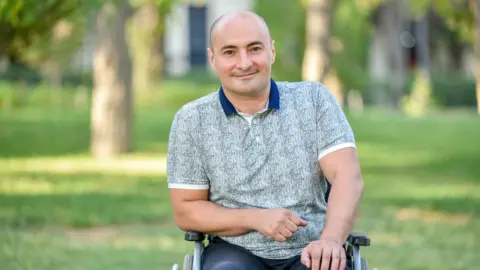
He knocked on the front door on a Saturday morning in October. He was a tall man, about thirty, with short sandy hair and a Texas A&M baseball cap. He was walking with a cane, and his left leg was stiff.
Grandma opened the door. She looked at him for a long time. Then she put her hand over her mouth.
“You’re Daniel,” she said.
He nodded. He couldn’t seem to talk.
Grandma pulled him into a hug right there on the front porch, cane and all.
I’d heard about Daniel Pike my whole life.
He’d served with my mother for six years. Two deployments to Iraq before this one. He was a staff sergeant, a medic like her. Mom talked about him all the time.
“Daniel’s the little brother I never had,” she’d say. “He’s a pain in my butt. He’s the funniest person I know. He once got an entire platoon to sing Dolly Parton during a sandstorm.”
She told me he could make anyone laugh, even in the worst moments. Even when people were bleeding and scared, Daniel would crack a joke and somehow make the room breathe again.
And she told me about the day in Iraq in 2008 when Daniel was badly hurt.
His Humvee hit a roadside bomb outside Baqubah. He was thrown out of the vehicle. His left leg was crushed. He was losing blood fast.
My mother crawled forty feet across open ground under fire to reach him. She put a tourniquet on his leg with her bare hands. She held him and talked to him the whole time until the helicopter came.
“I told him if he died on me, I’d kill him,” Mom said, laughing, when she told me the story. “He said that didn’t make any sense. I said, ‘Try me.’”
After that, they were closer than ever. She said they were family.
Daniel stood in Grandma’s living room that October morning, leaning on his cane, looking at all the pictures of my mother on the wall.
Then he looked at me.
“You’re Avery,” he said.
“Yes.”
“She talked about you every single day,” he said. “Every day. You know that, right? Every single day.”
He swallowed.
“She showed everybody your school picture,” he said. “The one with the purple shirt. She had it taped inside her helmet.”
I didn’t know what to say.
So I didn’t say anything.
I just stood there in the living room and cried.
And Daniel, who I’d never met, who could barely stand up, got down on one knee on Grandma Bernie’s carpet and put his arms around me.
After that, Daniel started coming by regularly.
He’d been medically discharged after Afghanistan. His leg was hurt again, the same one my mother had saved. He moved back to El Paso and got a job as a physician assistant at the VA hospital on Fred Wilson Avenue.
He lived twelve minutes from Grandma’s house.
He came over every Saturday.
He fixed my broken bicycle. A purple Schwinn with a bent wheel that had been sitting in Grandma’s garage since my mother left. He spent a whole Saturday on it, cursing under his breath at the spokes, and when he was done, it was better than new.
He made pancakes for breakfast. Huge ones. Shaped like animals. A bear. A rabbit. A thing he said was a dinosaur that looked more like a potato with legs.
He sat with me through hard homework assignments. Algebra. Chemistry. A book report on To Kill a Mockingbird that I stayed up until midnight finishing.
He showed up for my school performances. Every single one. The sixth-grade choir concert where I had a solo and my voice cracked on the high note. The eighth-grade play where I was the third witch in Macbeth. He sat in the front row and clapped louder than anyone.
And whenever Grandma needed help with something, he never hesitated.
He fixed her leaky faucet. He drove her to her doctor appointments. He put up her Christmas lights every December, even though his leg made climbing a ladder really hard.
When Grandma got sick in 2022, Daniel was the one who sat with her in the hospital at night so I could go home and sleep.
When she died in the spring of 2024, Daniel was the one who held my hand at the funeral.
Little by little, he became the closest thing I’d ever had to a father.
I never called him Dad. It didn’t feel right. That word belonged to somebody I didn’t know.
I called him Uncle Daniel.
He never asked me to call him anything else.
The years went by.
I grew up. I finished high school at Coronado. I went to the University of Texas at El Paso and studied nursing.
I don’t think I have to explain why.
I graduated in 2022. I got a job in the emergency department at University Medical Center. I worked night shifts. I loved it.
And in 2023, I met Jonah Ellis.
He was a firefighter with El Paso Fire Department, Station 14. He came into the ER one night in October, bringing in a man who’d been pulled out of a house fire. Jonah had smoke all over his face and a burn on his forearm he didn’t even know about.
I cleaned the burn. He made a joke about how I was very gentle for someone who looked so scary.
“I’m not scary.”
“You’re terrifying,” he said. “In a good way.”
Two years later, he proposed on top of the Franklin Mountains at sunset, with the whole city spread out below us like a pile of lights.
I said yes before he even finished the question.
We set the wedding for October 18th, 2026. At a little chapel on the grounds of an old adobe hacienda in the Upper Valley, with cottonwood trees and a courtyard full of string lights.
Daniel cried when I told him.
“I’m so happy for you, kiddo,” he said. He was the only person besides my mother who ever called me that.
“Will you walk me down the aisle?” I said.
He stared at me.
“Avery,” he said. “Are you sure?”
“There’s nobody else I’d want.”
He had to sit down.
On the morning of the wedding, I stood in front of the mirror in the bridal suite in my wedding gown.
It was simple. Ivory satin. Long sleeves made of lace. A row of little buttons down the back. My friend Priya from the ER had spent fifteen minutes doing them all up.
My hair was pinned up. My makeup was done. I looked like a bride.
And I couldn’t stop crying.
All I could think about was Mom.
I kept looking at the door of the bridal suite. And picturing it.
The door opening. My mother walking in. Forty-nine years old now. A little gray at the temples. Smiling that big, goofy smile she had. Wearing a bright red dress. Fire-truck red.
“Look at you,” she’d say. “Look at my baby.”
I knew it couldn’t happen.
I knew that.
But a part of me still wished it would.
A part of me had been wishing it since I was twelve years old.
Priya handed me a tissue.
“You okay?” she said.
“I’m fine.”
“You’re ruining your mascara.”
“I know.”
She sat down next to me on the little velvet bench in front of the mirror.
“Is it your mom?” she said quietly.
I nodded.
Priya didn’t say anything. She just put her arm around me.
Then, about fifteen minutes before the ceremony was supposed to start, there was a knock on the door.
“It’s me,” Daniel said from the hallway. “Can I come in?”
“Come in,” I said.
I turned around on the bench.
And I froze.
Daniel was standing in the doorway.
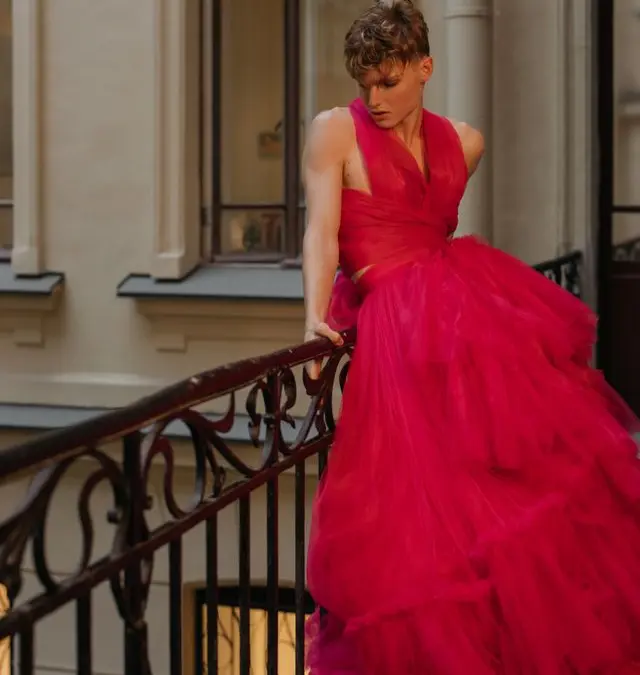
He was wearing a bright red dress.
Not a costume. Not a joke. A real dress. Floor-length. Fire-truck red. With long sleeves and a high neck and a little red sash around the waist. It was enormous on him in some places and much too tight in others. It stopped about three inches above his black dress shoes.
He’d shaved. He’d combed his hair. He was leaning on his cane, which he’d wrapped in red ribbon.
For a moment, I couldn’t understand what I was seeing.
Priya made a sound. Like a gasp and a laugh and a sob all at once.
“Uncle Daniel,” I said slowly. “Why are you dressed like that?”
He looked at me.
His eyes filled with tears right away.
“Your mother made you a promise,” he said softly. “She said she’d wear red to your wedding.”
His voice broke.
“I couldn’t let that promise disappear with her,” he said.
That was all it took.
I broke down crying.
Not the polite crying I’d been doing all morning. Deep, ugly crying, the kind that comes from your stomach and makes it hard to breathe.
Daniel came across the room. Slowly, with his cane. His red dress rustled.
He wrapped his arms around me.
I held him tightly.
And I remembered my mother’s voice on the phone, all those years ago. Bright and silly and loud.
Front row. Red dress. Crying like a baby.
I remembered the way she always made me feel safe.
For one brief moment, standing in that bridal suite, with my face buried in the shoulder of a red dress, it felt like a piece of her had come back to be with me.
“Where did you even find this?” I said into his shoulder, when I could talk again.
Daniel laughed. A wet, shaky laugh.
“A plus-size formal shop on Mesa Street,” he said. “I told the lady it was for my sister. She looked at me like I was crazy.”
“What did you say?”
“I said my sister was very tall and very broad and had a bad leg.”
I laughed so hard I had to sit back down.
“It took them two weeks to alter it,” Daniel said. “And it still doesn’t fit. I can’t raise my arms. If I have to catch you on the way down the aisle, we’re both going down.”
Priya was crying so hard she had to go fix her own makeup.
When it was time for the ceremony, Daniel offered me his arm.
The music started. The double doors to the chapel opened.
And we walked down the aisle together.
Me, in my ivory satin gown, holding white roses.
Daniel, in his fire-truck red dress, leaning on his cane wrapped in red ribbon.
Nobody laughed at his dress.
Nobody made an unkind comment.
Nobody whispered.
The people who knew our story understood right away. Half the room had known my mother. Soldiers she’d served with. Nurses from the VA. People from her church. Jonah’s whole fire station, who’d heard the story a hundred times.
A big, bald man in the third row, a retired sergeant major named Ortiz who’d been my mother’s commander in Iraq, stood up as we went by.
He saluted.
Then the man next to him stood up and saluted too. Then another. Then the whole row.
By the time we got to the front of the chapel, every single veteran in that room was on their feet, saluting a man in a red dress walking a bride down the aisle.
Daniel didn’t look at them.
He kept his eyes straight ahead. His jaw was tight. His arm was shaking under my hand.
At the front, Jonah was waiting.
He looked at me. Then he looked at Daniel. Then he looked at the red dress.
He started to cry.
Daniel put my hand in Jonah’s hand.
He leaned over and said something to him that I couldn’t hear.
Later, Jonah told me what it was.
“She’d want you to know,” Daniel said. “Tess would have liked you. A lot. But she’d also want you to know that if you ever hurt this girl, she would come back from the dead and kill you.”
I couldn’t have been more grateful.
The ceremony was beautiful.
Father Mike from St. Raphael’s did it. Short and sweet. Jonah’s voice cracked during his vows. Mine didn’t, which surprised everybody. Especially me.
When the priest said, “You may kiss the bride,” Daniel was the first one on his feet, clapping.
The reception went by in a blur of hugs and photographs and happy tears.
Jonah’s fire station had decorated the courtyard of the hacienda with a thousand string lights. There were tables with white tablecloths under the cottonwood trees. A mariachi band. A taco truck.
Daniel and I danced to “Wind Beneath My Wings.” It was my mother’s favorite song. She used to sing it in the car at the top of her lungs, completely off-key.
Daniel couldn’t really dance. His leg wouldn’t let him. So we just swayed back and forth in the middle of the dance floor under the string lights. Him in his red dress, me in my white one.
Everybody watched.
I didn’t care.
But even during those wonderful moments, I kept thinking about the woman who should have been there.
At one point during the reception, I walked over to the dessert table to get a piece of cake and looked out past the courtyard, toward the parking lot.
There was a woman standing by the gate.
Dark hair, streaked with gray. Fifty, maybe.
She was wearing a red coat.
I stopped.
My heart did something strange.
I put down the cake plate. I started to walk toward the gate.
But by the time I got there, she was gone.
I stood at the gate for a long time, looking out at the parking lot.
Then I told myself I was imagining things. It had been an emotional day. It was a red coat. Lots of people have red coats.
I went back to the party.
After the celebration ended and the last guests had left, Daniel came over to me again.
It was almost midnight. The mariachis had packed up. The taco truck was gone. Jonah was helping his buddies from the fire station stack chairs. The string lights were still on, swaying a little in the warm October wind.
I was sitting on a bench under the biggest cottonwood tree with my shoes off and my feet aching.
Daniel sat down next to me.
He’d changed out of the red dress. He was wearing jeans and an old Army T-shirt now. The dress was folded carefully over his arm.
His face was different now.
He looked nervous.
I’d known Daniel for fourteen years. I’d seen him happy and sad, tired and angry and silly. I’d seen him cry at my graduation and at Grandma’s funeral.
I’d never seen him look nervous.
“Sweetheart,” he said. “There’s something else I need to give you.”
He reached into the back pocket of his jeans.
He pulled out an old envelope.
The paper was wrinkled and worn. Yellowed at the edges. Soft, like it had been folded and unfolded and carried in a pocket for a very long time.
On the front, in my mother’s handwriting, it said:
Avery. On your wedding day.
He placed it carefully in my hands.
“Your mom gave me this before she died,” Daniel said. “The night before the patrol. In Kandahar. She came into my tent around two in the morning and woke me up and handed it to me.”
He swallowed.
“She said, ‘If anything happens to me, give this to Avery. But not until her wedding day. Not one day sooner. Promise me.’”
“And I said, ‘Nothing’s going to happen to you, Tess.’ And she said, ‘Promise me anyway.’”
Daniel looked down at the envelope in my hands.
“So I promised,” he said.
I stared down at the envelope.
My mother’s handwriting. The big round A. The little loop on the y.
I hadn’t seen her handwriting in fourteen years. Not new handwriting. Not something I’d never read before.
Daniel swallowed hard.
“There’s something about your mother you’ve never known,” he said. “Something she wanted you to find out today.”
My hands began trembling.
“Does Jonah know?” I said.
“No. Nobody knows. Just me. And your grandma knew. Bernie knew.”
“Grandma knew?”
“She promised your mom too,” Daniel said. “She promised to let Tess tell you herself.”
I looked down at the envelope.
I carefully opened it.
Inside, there were four things.
A letter. Four pages. Folded in thirds. In my mother’s handwriting.
A photograph. A Polaroid. Faded.
An official-looking document. Stiff paper. A seal stamped in the corner.
And a second envelope. Smaller. Sealed. With a different name on the front, in handwriting I didn’t recognize.
For Avery. From Ellie.
I took out the photograph first.
It was a newborn baby.
Tiny. Red-faced. Eyes squeezed shut. A little tuft of dark hair.
The baby was wrapped in a shirt. A man’s flannel shirt. Bright red. Rolled up around her like a blanket.
Behind the baby, you could see part of a room. A cheap motel bathroom. Peeling wallpaper. A dirty tile floor.
On the white strip at the bottom of the Polaroid, in my mother’s handwriting:
Avery. 3:14 a.m. May 2, 2000. The first time I held you.
Then I unfolded the document.
DECREE OF ADOPTION.
District Court of El Paso County, Texas. In the matter of the adoption of a minor child.
Granted to Theresa Anne Moran.
Dated February 11, 2002.
I felt like my heart had stopped.
I read it three times. The words didn’t change.
Then I looked at Daniel.
He was crying.
“Read the letter, kiddo,” he said softly.
I unfolded my mother’s letter.
My hands were shaking so much that the paper rattled.
Avery,
If you’re reading this, it’s your wedding day. And I’m not there. I’m so sorry, baby. I’m so, so sorry. I wanted to be there more than anything in the world. I want you to know that.
I hope Daniel kept his promise. I know he did. He always does. He’s the most stubborn man I’ve ever met, and I’ve met a lot of soldiers.
I hope somebody wore red.
I had to stop reading.
I put my hand over my mouth.
Daniel put his hand on my back.
After a minute, I kept going.
Now I need to tell you something. I should have told you a long time ago. I’ve started to tell you a hundred times. At the kitchen table. In the car. At bedtime. I always chickened out.
I’m writing it now, in a tent in Afghanistan, at two in the morning, because tomorrow we’re going somewhere dangerous, and I’m not going to chicken out anymore.
You asked me so many times about your father. And I always said there was no father in our story. That our story was a little different.
That was true, baby. But it wasn’t the whole truth.
The whole truth is that I didn’t give birth to you.
I looked up.
Daniel was watching me. His eyes were red.
I looked back down at the letter.
In the spring of 2000, before the Army, I was an EMT with El Paso Fire. I was twenty-six. I worked nights on Ambulance 22, out of the station on Montana.
At 2:51 in the morning on May 2nd, we got a call to a motel on Dyer Street. A woman screaming in a bathroom. The night manager had called it in.
When we got there, there was a girl on the bathroom floor. Sixteen years old. By herself. In labor. Bleeding. She’d hidden the pregnancy from everyone. Her parents. Her school. Her friends. She’d taken a bus to that motel with forty dollars and a backpack, because she didn’t know where else to go.
Her name was Ellie.
There wasn’t time to get her to the hospital. The baby was coming right then.
So I delivered you on the floor of Room 11 of the Desert Star Motel. At 3:14 in the morning.
You came out screaming. Furious. Like you had a lot of opinions already.
The ambulance had blankets. But my partner was out at the rig getting the stretcher, and you were cold and wet and screaming, and I didn’t want to wait. So I took off my flannel shirt. The red one. The one you always made fun of because I wore it every single weekend.
I wrapped you in it.
That was the first thing you ever wore, baby. Red.
I put the letter down on my lap.
I picked up the Polaroid again.
The red flannel shirt.
I knew that shirt. I’d made fun of it my whole childhood. She wore it every Saturday morning to make pancakes and work in the yard. Old, faded, with a hole in one elbow.
We’d buried her in her uniform. The shirt went into a box in Grandma’s closet. I’d taken it when Grandma died.
It was hanging in my closet at home right now.
I kept reading.
Ellie held you for about ten minutes. In the ambulance. On the way to Thomason Hospital. She cried the whole time. She kept saying, “I’m sorry. I’m sorry. I’m sorry.” To you. Not to me.
At the hospital, she told the social worker she couldn’t keep you. She was sixteen. Her parents had kicked her out when they found out she was pregnant. She was living in a car with a friend. She had nothing.
She asked the social worker one question. She asked if the woman from the ambulance could visit you.
The social worker said that was unusual.
Ellie said, “She’s the only person who’s ever held my baby. I want her to be able to see her.”
So I visited you.
Every day. In the NICU at Thomason. You were early. Four pounds, eleven ounces. They kept you for three weeks. I came every single day after my shift. I sat by your incubator and talked to you. About nothing. About the weather. About the Spurs. About the lemon tree in my backyard that never grows any lemons.
When you went into foster care, I asked the social worker if I could keep visiting.
She said no.
So I asked how to become a foster parent.
It took me eighteen months, Avery. Eighteen months of classes and home studies and background checks and paperwork. Of people telling me a single EMT working nights couldn’t raise a baby. Of my mother telling me I’d lost my mind.
But I got you. In October of 2001. You were seventeen months old. You came to my house with a garbage bag full of clothes and a stuffed giraffe with one ear.
The adoption was final four months later.
I never left the house that night. I sat on the kitchen floor holding you until the sun came up.
I couldn’t see the words anymore.
I was crying too hard.
Daniel took the letter gently out of my hands. He waited until I could breathe.
Then he gave it back.
I need you to know something, baby. Something important.
I didn’t tell you because I was ashamed. I’ve never been ashamed of anything about you. Not one single thing.
I didn’t tell you because you were mine. From that first second on the bathroom floor. Completely mine. And I was scared that if you knew, part of you would always wonder. Always look somewhere else. Always feel like something was missing.
I was selfish, I guess. I wanted to be the only story you had.
That wasn’t fair to you. I know that now.
Ellie wrote you a letter. When you were three weeks old. Before she signed the papers. She gave it to the social worker and the social worker gave it to me.
I’ve never opened it. It isn’t mine to open.
It’s in this envelope with my letter.
She asked me to give it to you when you were grown. When you had your own life. When you’d be okay, no matter what it said.
I figured your wedding day was as grown as it gets.
I don’t know where Ellie is now. I know she finished high school. She sent me a card the year you turned five. Just a card. No return address. It said, “Thank you for keeping her warm.”
I don’t know if she wants to meet you. I don’t know if you’ll want to meet her. That’s your choice, baby. Not mine. It’s never been mine.
But whatever you decide, I want you to know this.
There were two people who loved you before you were even one hour old.
One of them gave you life.
The other one gave you a red shirt.
I hope that’s enough. It was always enough for me.
And then, at the very bottom of the last page, in handwriting that got smaller and shakier as it went:
Front row, kiddo. Red dress. Crying like a baby.
I’m there. I promise you. I’m there.
Love,
Mom
I sat on that bench under the cottonwood tree for a long time.
The string lights swayed. The chairs clattered in the distance where Jonah and his friends were stacking them. A dog barked somewhere out in the dark.
I didn’t say anything.
Daniel didn’t say anything either.
He just sat next to me with the red dress folded over his arm.
“Did you know?” I said finally. “Before she gave you this?”
“She told me in Iraq,” Daniel said. “The first deployment. 2006. We were sitting on top of a Humvee at three in the morning because we couldn’t sleep. And she told me the whole story. The motel. The red shirt. The NICU. All of it.”
He looked down at his hands.
“She said, ‘Don’t you dare tell her, Pike. That’s mine to tell.’”
“Why didn’t she?” I said. “In all those years? Why didn’t she just tell me?”
Daniel was quiet.
“I think she was waiting for the right time,” he said. “And then she ran out of time.”
I looked down at the second envelope.
The smaller one.
For Avery. From Ellie.
It was sealed. The glue on the flap had yellowed and cracked, but the flap was still closed.
Twenty-six years.
Nobody had ever opened it.
“Do you want me to stay?” Daniel said quietly. “While you read it?”
I looked at him.
Fourteen years. Every Saturday. Pancakes shaped like potatoes. A purple bike with a fixed wheel. The front row at every school concert. Grandma’s hospital bed. A red dress from a formal shop on Mesa Street that didn’t fit.
“Yes,” I said. “Please.”
I opened Ellie’s letter.
It was short. One page. Lined notebook paper, torn out of a spiral notebook. Written in pencil. A sixteen-year-old’s handwriting. Round and careful.
Dear Baby,
I don’t know your name yet. The nurses call you Baby Girl Navarro. I hope somebody gives you a pretty name.
I’m sorry I can’t keep you. I want to. I want to so much. But I’m sixteen and I don’t have anywhere to live and I don’t have any money and I don’t know how to take care of anybody. I can’t even take care of me.
I want you to have a mom who knows how to keep you warm.
The lady from the ambulance kept you warm. She took off her own shirt and wrapped you in it. It was red. I’ll never forget it.
I asked the nurses if she can visit you. I hope they say yes.
I hope she’s the one.
I’ll think about you every day. I promise. Every single day. On your birthday I’ll wear something red so you’ll know.
I love you.
Ellie
I read it twice.
Then I put it down on my lap.
And I looked up at the parking lot.
At the gate.
Where a woman in a red coat had been standing during my reception.
“Daniel,” I said slowly. “There was a woman at Mom’s funeral. In a red coat. Standing way in the back. In ninety-degree weather.”
Daniel went very still.
“And there was a woman at the gate tonight,” I said. “During the reception. In a red coat.”
Daniel didn’t say anything for a long time.
Then he reached into his pocket again.
He took out his phone.
“Avery,” he said. “I need to tell you one more thing.”
“Two years ago,” Daniel said, “a woman called the VA hospital. The front desk. Asking for me. By name.”
I stared at him.
“She said her name was Elena Navarro,” he said. “Ellie. She said she’d seen my name in your mom’s obituary. That I’d served with Tess. She said she’d been trying to work up the courage to call for twelve years.”
He swallowed.
“She’s a nurse,” he said. “In Las Cruces. Labor and delivery. For nineteen years.”
I couldn’t breathe.
“She told me she came to the funeral,” Daniel said. “In 2012. She stood in the back. She said she wore red so that if you ever looked at her, some part of you might know.”
He looked down at his phone.
“She told me she’s driven past your apartment four times,” he said. “Never stopped. She told me she saw you once at the Barnes and Noble on Mesa. Fifteen feet away. She left the store and sat in her car for an hour.”
“Why didn’t you tell me?” I whispered.
“Because your mother made me promise,” Daniel said. “Wedding day. Not one day sooner.”
His voice cracked.
“And because Ellie didn’t want me to,” he said. “She said, ‘Tess was her mother. Tess gets to tell her first. Not me. I’ll wait.’”
He looked at me.
“I told her about the wedding,” he said. “Last month. I told her the date. The place. I told her I didn’t know what you’d want. I told her she could come, if she wanted. To the gate. Not inside. Just to see.”
“She came,” I said.
“She came.”
Daniel held out his phone.
On the screen, there was a contact.
Ellie Navarro.
And a phone number with a Las Cruces area code.
“She’s still here,” Daniel said quietly. “In the parking lot. In a silver Toyota. She texted me an hour ago. She said she couldn’t make herself leave.”
I don’t know how long I sat there.
Long enough for Jonah to come looking for me. He found me under the cottonwood tree, barefoot, in my wedding dress, holding two letters and a Polaroid of a newborn baby wrapped in a red flannel shirt.
He looked at my face.
He looked at Daniel.
He sat down on the bench on my other side and didn’t ask a single question. He just took my hand.
After a while, I told him.
All of it. The motel. The red shirt. The NICU. The adoption. Ellie. The red coat at the funeral. The silver Toyota in the parking lot.
Jonah listened without interrupting.
When I was done, he was quiet for a long moment.
“What do you want to do?” he said.
I looked at the Polaroid.
At the baby in the red shirt. At my mother’s handwriting at the bottom. The first time I held you.
I looked at Ellie’s letter. I hope she’s the one.
For fourteen years, I’d thought my mother’s story ended in Kandahar.
I’d thought the most important thing about her was how she died.
But it wasn’t.
The most important thing about my mother was a Tuesday night in May, twenty-six years ago, on the floor of a motel bathroom on Dyer Street, when she took off her own shirt to keep a stranger’s baby warm.
And then came back the next day.
And the next. And the next.
Every single day. For eighteen months. Until a judge finally let her keep me.
“I want to meet her,” I said.
Daniel walked with us.
Out of the courtyard. Under the string lights. Through the gate. Into the gravel parking lot, where the only car left besides ours was a silver Toyota Corolla parked under a streetlight at the far end.
The driver’s door opened as we got close.
A woman got out.
She was small. Smaller than me. Fifty-two years old. Dark hair with streaks of gray, pulled back in a ponytail. Hospital clogs. Jeans.
A red coat.
She stood next to the car with one hand on the door.
She didn’t move toward me. She didn’t say anything.
She just stood there, under the streetlight, shaking.
I stopped about ten feet away.
We looked at each other for a long time.
I could see it. In the shape of her face. In her chin. In the way her eyebrows went up in the middle.
I’d seen that face in the mirror every day of my life.
“Ellie?” I said.
She nodded.
She put her hand over her mouth.
“Daniel gave me your letter,” I said. “Tonight. The one you wrote at the hospital.”
She nodded again. Tears were running down her face.
“You wore red,” I said. “On my birthday. Every year. Like you promised.”
“Every year,” Ellie whispered. “Every May 2nd. Twenty-six years. I never missed one.”
“And at Mom’s funeral,” I said.
“I had to be there,” Ellie said. Her voice broke. “I had to. She kept you warm. She kept you warm your whole life. I had to say thank you. Even if nobody knew who I was.”
I took a step closer.
Then another.
“I’m not here to take her place,” Ellie said quickly. “I want you to know that. I’m not. Tess was your mother. She was always your mother. From that first second. I watched her. On that bathroom floor. The way she looked at you.”
She wiped her eyes.
“I just wanted to see you,” she said. “Once. In your wedding dress. That’s all. That’s all I ever wanted. To know you were okay.”
I looked at her.
This woman. Sixteen years old, alone on a motel bathroom floor. Who gave me up so somebody else could keep me warm. Who became a labor and delivery nurse. Who drove past my apartment four times and never stopped. Who stood at the back of my mother’s funeral in a wool coat in ninety-one degrees.
Who’d worn red on my birthday for twenty-six years without me ever knowing.
“I’m okay,” I said. “I’m more than okay. She made sure.”
Ellie started to sob.
And I closed the last few feet between us.
And I put my arms around her.
She held onto me like she’d been waiting her whole life to do it.
Because she had.
Over her shoulder, I could see Daniel standing in the gravel under the streetlight, leaning on his cane with the red ribbon still wrapped around it. Jonah was next to him with his hand on Daniel’s shoulder.
Daniel was crying so hard he had to look away.
That was a year ago.
Ellie and I talk every Sunday now. On the phone. Sometimes for two hours. She tells me about her patients in Las Cruces. About the babies she’s delivered. Over three thousand of them, she says. She tells me about her husband, Marco, and her two sons, my half-brothers, Diego and Mateo, who are nineteen and twenty-two. Mateo wants to be a paramedic.
I tell her about the ER. About Jonah. About Daniel’s pancakes, which are still terrible.
We don’t call each other anything special. She’s Ellie. I’m Avery.
She’s never once called me her daughter.
She says that word belongs to Tess.
She told me why she became a nurse.
“Because of that night,” she said. “Because of your mom. Because of the way she knelt down on that disgusting motel floor and held my hand and said, ‘You’re doing so good, honey. You’re doing so good. I’ve got you.’”
Ellie was quiet on the line for a moment.
“Nobody had ever said that to me before,” she said. “Not my parents. Not anybody. I’ve said it to every single woman I’ve delivered for nineteen years. Every single one. I’ve got you.”
This past May 2nd, on my twenty-seventh birthday, we drove out to Fort Bliss National Cemetery together.
Me and Jonah. Ellie and Marco. And Daniel.
It was a hot, bright morning. The sky was huge and blue. The Franklin Mountains were sitting on the horizon like they’ve always been.
We walked to my mother’s grave. Section 14. Row J. A white marble headstone like all the others.
THERESA ANNE MORAN. SFC. US ARMY. AFGHANISTAN. 1974 – 2012. BRONZE STAR. PURPLE HEART.
And underneath, the words Grandma Bernie chose:
SHE KEPT US WARM.
I’d never understood why Grandma picked those words.
I understand now.
We all wore red.
Ellie in her red coat, the same one from the funeral, the same one from the parking lot. In May, in El Paso, in ninety-four-degree heat.
Jonah in a red Station 14 T-shirt.
Marco in a red polo.
Daniel, in the red dress. He’d gotten it altered again so he could raise his arms. He said it was a special occasion.
And me in my mother’s red flannel shirt.
Faded. Soft. With a hole in one elbow.
The first thing I ever wore.
I knelt down in front of the headstone.
I laid two things at the base of it.
The Polaroid. A newborn baby wrapped in red flannel on the floor of a motel bathroom. Avery. 3:14 a.m. May 2, 2000. The first time I held you.
And a new photograph. Taken at my wedding, by Priya, on her phone, at the moment the chapel doors opened. A bride in ivory satin, holding white roses. And beside her, holding her arm, a man in a fire-truck red dress, with a cane wrapped in ribbon, his face crumpled with tears.
On the back, I’d written:
Front row, Mom. Red dress. Crying like a baby.
You were right. I could spot you anywhere.
Ellie knelt down next to me.
She didn’t say anything for a long time.
Then she put her hand flat on the warm marble.
“Thank you,” she whispered. “For keeping her warm.”
Daniel stood behind us in his red dress, leaning on his cane.
When Ellie stood back up, he put his arm around her shoulders. Then he held out his other arm to me.
The same way he did fourteen years ago, getting down on one knee on Grandma Bernie’s carpet. The same way he did at the chapel doors a year ago.
I stood up.
I took his arm.
And the five of us stood there together in the bright morning sun, all of us in red, in front of the woman who had once knelt on a motel floor, taken off her own shirt, and decided that a stranger’s baby was hers.
My mother promised she’d be at my wedding in the brightest red dress she could find.
For fourteen years, I believed that was a promise she couldn’t keep.
I was wrong.
She kept it the only way she could. Through the people she’d loved, and the people she’d saved, and the people who loved me because of her.
Through a man who wore a red dress so I wouldn’t walk down the aisle alone.
Through a woman who wore red on my birthday for twenty-six years so that someday, I might understand.
There were two people who loved me before I was even one hour old.
One gave me life.
The other gave me a red shirt.
It was always enough.