The night my phone blew up, I was sitting in a little café in Salzburg, Austria, with a mug of hot spiced wine in one hand and a gingerbread heart around my neck on a red ribbon.
It was Christmas Eve.
I’d posted three photos on Facebook about an hour earlier. They were my first posts in over a year. I’d almost forgotten how to do it, and it took me twenty minutes to figure out how to put more than one picture in.
The first was the Christmas market in Munich, all lit up at night. The second was a snowy mountain in the Alps, taken through the window of a tour bus. The third was me, standing in front of a giant Christmas tree in a stone square, laughing, with my cheeks red from the cold.
And next to me in that third picture, with his arm around my shoulders and a ridiculous knit hat on his head, was a tall man with silver hair.
Within ten minutes, the phone started buzzing.
Then it buzzed again. And again. It buzzed so many times that it slid across the café table and almost fell off the edge. The man with the silver hair caught it right before it went over.
He looked at the screen. Then he looked at me.
“Linda,” he said. “Your son is calling.”
“I know.”
“He’s called four times.”
“I know.”
“And somebody named Debbie Kowalczyk has commented eleven times. In all capital letters.”
I put my face in my hands and laughed until I cried.
But I’m getting ahead of myself.
My name is Linda Dawson. I’m sixty-seven years old.
I live by myself in a little brick ranch house in Kettering, Ohio, just south of Dayton. The same house Paul and I bought in 1984, the year Mark turned two. It has three bedrooms, one and a half baths, and a kitchen that hasn’t been updated since the first George Bush was president.
My husband, Paul, died eight years ago. A heart attack, in the garage, while he was changing the oil in my Buick. He was sixty-one.
He was a mailman for thirty-four years. He knew every dog on his route by name. He whistled Glenn Miller songs while he walked. When he died, his route put flowers in their mailboxes and left notes. Three hundred people came to his funeral. I didn’t know half of them.
Since Paul died, my son, Mark, and his wife, Hannah, have been the closest family I have.
Mark’s forty-four now. He’s a project manager at an engineering company near Wright-Patterson Air Force Base. He has Paul’s laugh, Paul’s terrible jokes, and Paul’s habit of jingling the change in his pocket when he’s nervous.
Hannah’s forty-one. She’s a dental hygienist. She’s organized, tidy, and very efficient. She keeps her pantry labeled. I have always liked her. I want to say that up front. I’ve always liked her, even when I didn’t understand her.
They have two kids. Emma’s fourteen. Owen’s eleven.
They live in a big gray two-story house in Centerville, about fifteen minutes from me. With a three-car garage and an island in the kitchen and a dining room table that seats ten.
Every Christmas since Paul died, I’ve gone to their house.
I’d get there at ten in the morning on Christmas Day, with my homemade pecan pie, my mother’s recipe, the one with the extra splash of bourbon. I’d bring presents for the kids. I’d help in the kitchen. I’d mash the potatoes. I’d set the table. I’d make the gravy, because Hannah says nobody makes gravy like I do.
I’d stay until about eight at night. Then I’d drive home in the dark, with the leftover pie on the passenger seat.
It made me feel like I still had a place there.
But this year was different.
A week before Christmas, I called to ask what time I should come over.
It was a Tuesday. I’d just pulled my pie pans down from the top shelf. I had the pecans on the counter. I’d bought them at Kroger the day before. Four pounds. On sale.
Hannah picked up.
“Hi, Linda.”
“Hi, honey. I just wanted to check what time you want me Christmas morning. Is ten still okay? I’m doing the pie Christmas Eve, like always.”
There was a pause on the line.
A little too long.
“Oh,” Hannah said. “Linda. I’m sorry. I thought Mark told you.”
“Told me what?”
“We’re spending Christmas at my mom’s this year,” she said. “In Columbus. It’ll be easier for everyone. You can stay home and relax.”
My heart sank.
I stood there in my kitchen, holding a pie pan.
“Oh,” I said. “I understand. That sounds nice.”
“It’s just… Mom really wants to host this year. And with the kids’ schedules and everything… it’s just easier.”
“Of course, honey. Of course.”
“Thank you for understanding,” Hannah said quickly. “I’ve got to go, Owen’s yelling about something. Merry Christmas, Linda.”
“Merry Christmas.”
She hung up.
I set the pie pan down on the counter.
I looked at the four pounds of pecans.
I sat down at my kitchen table.
All around me were the decorations I’d already put up. The little ceramic Christmas village on the windowsill. Paul built the shelf for it in 1991. The wreath on the back door. The poinsettia on the table. The stockings on the mantel in the living room, five of them, Mark’s and Hannah’s and the kids’ and mine. I still put out a stocking for every one of them, every year, even though they never come to my house on Christmas.
I’d done all of it for them.
Every year. For eight years.
Now the house just felt empty.
That night, I took out the old photo albums.
The big green ones from the hall closet. I sat on the living room couch with a cup of tea and went through them, one page at a time.
Mark at three, in his Superman pajamas, tearing open a box with a Tonka truck in it.
Mark at nine, with his front teeth missing, holding up a G.I. Joe.
Paul, every year, in the same ugly red sweater I gave him in 1986. He wore it every Christmas for thirty years. I buried him in it.
Mark and Hannah’s first Christmas together. 2006. She was so nervous. She brought me a poinsettia and a box of chocolates and called me Mrs. Dawson the whole day.
Emma’s first Christmas. Owen’s.
“It’s only one Christmas,” I kept telling myself.
Over and over.
It’s only one Christmas, Linda. Her mother wants to host. That’s fair. You’ve had eight years. It’s her mother’s turn.
But deep down, it wasn’t about Christmas.
It was about feeling forgotten.
It was about being sixty-seven years old and realizing that if I didn’t call, nobody would remember to invite me.
The next morning, Mark called.
“Mom? Hey. I hope you’re not upset.”
I was standing at the kitchen window, watching the snow come down. Big, slow flakes. The first real snow of the year.
“Upset about what, sweetheart?”
“About Christmas,” he said. “Hannah said she talked to you. I’m sorry. I meant to call you first. Things have just been crazy.”
“It’s fine.”
“Hannah’s mom loves hosting,” he said. “And it’s only one year. Next year we’ll be back at our place. I promise.”
“Of course, sweetheart. I’ll be fine.”
There was a pause.
I could hear him jingling the change in his pocket.
“Are you sure?” he said.
“I’m sure.”
“Okay,” he said. “Okay. Good. Love you, Mom.”
“Love you too.”
After he hung up, I stood at the window for a long time.
The snow kept falling. The street was white and quiet. Across the way, Mr. Henderson was out shoveling his driveway, in his orange hunting hat, like he does every snowfall.
I felt strangely disconnected from my own life.
Like I was watching it through glass.
That evening, I sat by the fireplace.
I’d made a fire. Paul taught me how to build one properly in 1985, after I almost smoked us out of the house. Newspaper. Kindling in a teepee. Two split logs on top.
I sat in Paul’s recliner with a blanket over my knees and watched the flames.
And I could almost hear him.
You spend your whole life taking care of everyone else, Linda.
When are you going to do something for yourself?
He used to say that.
All the time. When I stayed up until two in the morning sewing Mark’s Halloween costume. When I took care of my mother for three years after her stroke. When I volunteered for every church bake sale and every school fundraiser and every neighbor’s casserole.
When are you going to do something for yourself?
And I’d always laugh and say, “Someday.”
I couldn’t stop thinking about it.
Maybe I didn’t need to spend Christmas sitting by the phone, waiting for someone to include me.
Maybe it was finally time to do something for myself.
A few days later, Mark called again.
“Hey, Mom. You doing okay?”
“I’m fine. I’ve got my tree and a good book.”
“What book?”
“A mystery. Something about a dead body in a lighthouse. You’d hate it.”
He laughed. He sounded relieved.
“Okay,” he said. “Good. We’ll stop by after the holidays. Maybe the weekend after New Year’s. Bring the kids. They want to see you.”
In the background, I heard Hannah’s voice.
“Mark. Hurry up. We’re going to be late for the thing.”
“I gotta go, Mom,” he said. “Love you.”
And the call ended.
That evening, I went up into the attic.
I don’t go up there much. My knees don’t love the pull-down ladder. But I’d been thinking about something all day.
I found it in the back corner. Under a box of Mark’s old baseball trophies.
My old suitcase.
Navy blue. Hard-sided. With a little silver luggage tag that said P & L DAWSON in Paul’s handwriting.
It was the same suitcase Paul and I took on our only trip to Europe.
Our twenty-fifth anniversary. 2004. Ten days. London, Paris, Rome. We saved for six years. Paul had never been on an airplane until he was thirty. He was so nervous on the flight to London that he held my hand for eight hours straight.
In Paris, he got lost looking for the bathroom at the Louvre and ended up in a room full of Egyptian mummies.
In Rome, he threw a coin in the Trevi Fountain and said, “That means we’re coming back.”
We never did.
I sat on the attic floor with that suitcase in my lap.
I opened it.
Inside, folded in the corner, was a Paris Métro map. Paul’s. With his little pencil marks on it. Circles around the stations he wanted to see. And in the margin, in his handwriting:
Next time: Austria. Linda wants to see the Christmas markets.
I’d forgotten.
I’d said that once. In a café in Rome. Over cappuccino. I’d said, “Someday I want to see the Christmas markets in Germany and Austria. With the snow and the little wooden stalls and the lights.”
And Paul had written it down.
On a Métro map.
And he’d kept it.
I sat on the attic floor and cried for a long time.
Then I climbed down the ladder with the suitcase.
The next morning, I opened my laptop.
It’s old. Mark gave it to me five years ago when he got a new one. It takes about ten minutes to warm up.
I typed in: Christmas trips for seniors.
There were a lot of them.
River cruises down the Rhine. Bus tours of New England. A week in a cabin in the Smoky Mountains.
And one caught my eye right away.
CHRISTMAS MARKETS OF THE ALPS. Germany, Austria & Switzerland. 10 Days. Munich, Salzburg, Innsbruck, Lucerne, Zurich. Small group tour for travelers 60+. Christmas Eve in Salzburg, including a candlelight service at the Silent Night Chapel in Oberndorf.
It departed in three days.
December 20th. From Chicago O’Hare.
There were two spots left.
I sat there and stared at the screen.
The idea felt completely crazy.
I’m sixty-seven years old. I hadn’t been on an airplane since Paul’s sister’s funeral in Phoenix in 2019. I’d never traveled alone in my life. Not once.
I’d have to drive to the Dayton airport and fly to Chicago and then fly nine hours to Munich. By myself. In December.
It cost four thousand, two hundred dollars.
That’s a lot of money for a retired school secretary on a fixed income.
But Paul’s life insurance was sitting in a savings account at Fifth Third Bank. Untouched. For eight years. “For emergencies,” I always said.
I thought about the Métro map.
Next time: Austria. Linda wants to see the Christmas markets.
Something inside me whispered, Do it.
So I typed in my information.
My name. My address. My date of birth. My passport number, from the passport I’d renewed in 2022 for no reason at all, except that Paul’s sister told me I should always have a valid passport “just in case.”
I clicked BOOK NOW.
My hands were shaking.
But I couldn’t stop smiling.
For the first time in years, I wasn’t waiting for someone else to give me permission to enjoy my own life.
I told nobody.
Not my friend Joyce from church. Not my neighbor Mr. Henderson. Not even Mark.
I don’t know why exactly.
Maybe I was afraid they’d talk me out of it.
Maybe I just wanted something that was only mine.
I asked Mr. Henderson to pick up my mail. I told him I was visiting a friend.
I packed the navy blue suitcase. Long underwear. Two heavy sweaters. My good wool coat. A pair of snow boots I bought at Kohl’s. A scarf Paul gave me in 1998.
I put the Métro map in the inside pocket.
I didn’t make the pecan pie.
For the first time in forty-two years, I didn’t make it.
I put the four pounds of pecans in the freezer.
On departure day, I stood at the Dayton airport with my suitcase.
It was six-thirty in the morning. Still dark. Snowing again. I’d taken a cab because I didn’t want to leave my car in long-term parking for ten days.
I stood in line at security behind a family with three little kids and a man in a Bengals jersey.
My heart was pounding so hard I could hear it.
The flight to Chicago was short. Fifty minutes. I spent the whole time gripping the armrest.
At O’Hare, I found the international terminal. I found the tour group’s meeting point. There was a young woman with a clipboard and a red scarf. Greta. Our tour leader. German. Thirty-something. Very cheerful.
“You must be Linda!” she said. “Welcome! You’re the last one. Everyone else is already at the gate.”
There were twenty-two of us on the tour.
Retired teachers from Nebraska. Two sisters from Texas who’d been on eleven tours together. A couple from Vermont celebrating their fiftieth anniversary. A widow from Phoenix with a cane and bright purple hair.
And me.
I boarded the plane.
Lufthansa Flight 431. Chicago to Munich. Nine hours. Overnight.
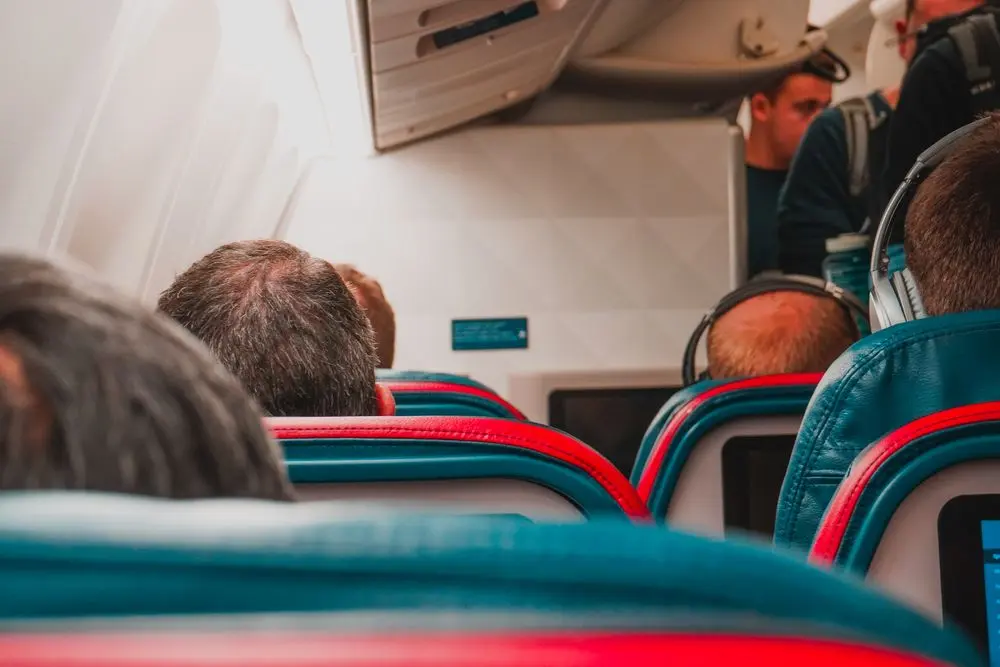
I found my seat. 32C. Aisle.
My seat was next to a tall man with silver hair and kind eyes.
He was already settled into 32B. The middle seat. He had a paperback book in his lap. A thick one. Something by Ken Follett.
He was wearing a gray fisherman’s sweater and reading glasses on a chain around his neck. His hands were big and freckled, with long fingers.
He looked up when I sat down.
He smiled warmly.
“Heading home or heading somewhere new?” he asked.
I didn’t know how to answer that.
I sat there with my purse in my lap and my coat half off.
“Somewhere new, I guess,” I said. “I’ve never been to Germany.”
“Neither have I,” he said. “I’ve been to England. And Ireland. But never Germany. I’m on the Christmas Markets tour. With Greta.”
“Me too.”
“Oh, good,” he said. He held out his hand. “Then we’re stuck with each other for ten days. I’m Arthur.”
I shook his hand.
“Linda,” I said.
The plane took off.
I gripped the armrest. My eyes were squeezed shut.
When I opened them, Arthur was looking at me.
“Not a flier?” he said.
“Not really. My husband used to hold my hand.”
He nodded slowly.
“Used to?”
“He passed away. Eight years ago.”
He was quiet for a moment.
“My wife passed four years ago,” he said. “Ellen. Ovarian cancer.”
“I’m sorry.”
“So am I,” he said. “About your husband.”
And then he did something I didn’t expect.
He held out his hand. Palm up. On the armrest between us.
“Only until we get to cruising altitude,” he said. “Then I’ll give it back. I promise.”
I looked at his hand.
I looked at him.
Then I put my hand in his.
He didn’t squeeze. He didn’t hold on too tight. He just let my hand rest in his until the plane leveled off and the seatbelt sign went off with a little chime.
Then he let go.
“There,” he said. “Cruising altitude.”
We talked for a long time.
The flight attendants brought dinner. Chicken or pasta. We both picked chicken. It was terrible. We both said so.
He told me he was seventy. A retired high school music teacher. He’d taught band and choir in Minneapolis for thirty-eight years. He played trumpet. He still played at his church every Sunday.
He had one daughter. Claire. She lived in Seattle. She was a lawyer. She worked a lot.
“She invited me for Christmas,” he said. “In an email. With a lot of exclamation points. And then a week later she sent another email saying she’d been assigned to a big case and she’d be working through the holidays, and maybe I should come in February instead.”
He smiled. But it wasn’t a happy smile.
“So here I am,” he said.
“My son’s spending Christmas with his wife’s mother,” I said. “In Columbus. They told me I could stay home and relax.”
Arthur raised his eyebrows.
“Stay home and relax,” he repeated.
“That’s what she said.”
“And instead you got on a plane to Germany.”
“I did.”
He laughed. A big laugh. From the belly. A couple of people turned around.
“Good for you,” he said.
“Where are you from originally?” I asked. “You don’t sound like Minnesota.”
“I’m not, really. I grew up in Ohio. Dayton area. Moved to Minneapolis after college.”
I stared at him.
“Dayton?” I said.
“Kettering, actually. Near Dayton.”
My heart did something strange.
“What high school?” I said.
He looked at me.
“Fairmont,” he said. “Class of ‘76.”
I put my hand over my mouth.
I looked at his face. Really looked. At the silver hair. At the kind eyes. At the little scar on his chin.
The little scar on his chin.
From when he fell off the back of a pickup truck at a Fourth of July party in 1976 and split it open on the tailgate.
I’d held a napkin to it.
“Artie?” I whispered.
He stared at me.
“Nobody’s called me Artie in fifty years,” he said slowly.
And then I watched his face change.
“Linda,” he said. “Linda Sorensen?”
Linda Sorensen.
My maiden name.
I was seventeen in the summer of 1976. Arthur Bell was eighteen. He’d just graduated. He played trumpet in the Fairmont marching band. He had long brown hair that he tied back with a rubber band, and a green Ford Pinto with a dent in the passenger door, and a laugh you could hear across a football field.
We dated for three months.
June, July, August.
He took me to the Dairy Queen on Wilmington Pike every Friday night. I always got a Dilly Bar. He always got a chocolate-dipped cone and got it all over his shirt.
He played me “Ain’t No Mountain High Enough” on his trumpet in my parents’ backyard. My father came out in his bathrobe and told him to knock it off.
On the Fourth of July, at Debbie Kowalczyk’s party, he fell off the back of a pickup truck and split his chin open, and I held a napkin to it while Debbie’s dad drove him to Kettering Hospital.
He needed four stitches.
In August, he left for college.
The University of Minnesota. On a music scholarship.
We wrote letters for a while. Every week. Then every other week. Then once a month.
By Christmas, the letters stopped.
Nobody broke up. We just… drifted. The way you do at eighteen. When the world is very big and very new and there are a thousand things pulling you in a thousand directions.
Three years later, I met Paul Dawson at a church picnic.
And that was that.
“Linda Sorensen,” Arthur said again.
He was staring at me like I was a ghost.
“You had a white bicycle,” he said. “With a basket. And you always wore that yellow headband.”
“You had a green Pinto.”
“It had a dent in the door.”
“You couldn’t open it from the inside. I had to roll down the window and open it from outside.”
He started to laugh.
He laughed so hard he had to take off his glasses and wipe his eyes.
“Dilly Bars,” he said. “You always got a Dilly Bar.”
“You always got chocolate on your shirt.”
“I still do,” he said. “Ellen used to say I was the only grown man she knew who needed a bib for ice cream.”
We sat there in seats 32B and 32C, somewhere over the Atlantic Ocean, laughing like teenagers.
The woman across the aisle from us, one of the Texas sisters, leaned over.
“Y’all know each other?” she said.
“We went to high school together,” Arthur said. “We dated in 1976.”
The Texas sister’s eyes went wide.
“Oh my Lord,” she said. She turned to her sister. “Barb. Barb. Wake up. You are not going to believe this.”
We talked all night.
Neither of us slept. We talked about everything. High school. Debbie Kowalczyk, who still lives in Kettering and runs the Fairmont alumni Facebook group like it’s the CIA. Mr. Fenwick, the chemistry teacher who blew up the lab in 1975.
He told me about Minnesota. About meeting Ellen in a choir practice in 1981. She was a soprano. He said she had the most beautiful voice he’d ever heard and the worst sense of direction. She got lost on the way to their own wedding.
I told him about Paul. About the mail route. The dogs. The Glenn Miller songs. The ugly red Christmas sweater.
I told him about the Métro map in my suitcase.
Next time: Austria. Linda wants to see the Christmas markets.
Arthur didn’t say anything for a long time after I told him that.
Then he said, “He wrote it down.”
“He wrote it down.”
“And he kept it.”
“For twenty years.”
Arthur nodded slowly.
“He sounds like a good man,” he said.
“He was,” I said. “He was the best man I ever knew.”
Arthur looked at me.
“Then he’d want you here,” he said.
We landed in Munich at eight in the morning.
It was snowing.
Real snow. The kind you see in movies. Big soft flakes falling straight down out of a gray sky. Everything white. The airport. The runways. The trees along the highway as the tour bus drove us into the city.
I pressed my face against the bus window like a child.
That night, Greta took us to the Christkindlmarkt in Marienplatz.
I’ll never forget it.
The square was enormous. Surrounded by old stone buildings with pointed roofs and clock towers. And it was full of little wooden stalls, hundreds of them, decorated with pine branches and red ribbons and white lights. Selling hand-carved ornaments. Wooden nutcrackers. Beeswax candles. Gingerbread hearts on ribbons, with words written on them in icing. Roasted almonds in paper cones.
There was a giant Christmas tree in the middle of the square. Taller than our house. Covered in thousands of lights.
A brass band was playing carols from a balcony on the town hall.
And it smelled like cinnamon and cloves and roasting chestnuts and pine.
I stood in the middle of it all with my mouth open.
Arthur stood next to me.
“Well,” he said. “Paul was right.”
He bought us two mugs of Glühwein. Hot spiced wine. In little ceramic mugs shaped like boots.
We stood by the Christmas tree and drank it.
And one of the Texas sisters, Barb, came over with her phone.
“Y’all get together,” she said. “I’m taking your picture. This is too cute.”
Arthur put his arm around my shoulders.
He was wearing a ridiculous knit hat he’d bought at one of the stalls. Red and white. With a big pom-pom on top and little reindeer knitted around the brim.
I was laughing so hard my cheeks hurt.
Barb took the picture.
For the next four days, we were together almost every minute.
Munich. Then the bus through the mountains to Salzburg. Snow on the peaks. Little villages with onion-domed churches. Cows in the fields, wearing bells.
We sat together on the bus. We ate together at every meal. We walked together at every market.
He bought me a gingerbread heart in Salzburg. It said Für Dich in white icing. For You.
I bought him a wooden nutcracker shaped like a trumpet player.
He laughed so hard he cried.
We didn’t talk about what it was.
Whatever it was.
I didn’t know.
I was sixty-seven years old. I’d been married to one man for thirty-seven years. I’d buried him in an ugly red sweater. I hadn’t so much as looked at another man in eight years.
I didn’t know what this was.
I just knew I was happy.
For the first time in a very long time, I was happy.
On the night of December 23rd, in our hotel in Salzburg, I called Joyce.
My friend from church. We’ve been friends for thirty years. She’s the only person I’d told, the night before I left, because somebody should know where I was in case the plane crashed.
“LINDA,” she said. “Where ARE you? It’s five in the afternoon here, what time is it there?”
“Eleven at night.”
“How is it? Is it beautiful? Tell me everything.”
I told her everything.
Including Arthur.
There was a long silence on the line.
“Artie Bell,” Joyce said finally. “Artie Bell. From Fairmont? With the trumpet?”
“That’s him.”
“Linda Dawson,” Joyce said. “Are you telling me you flew to Europe and sat down next to your high school boyfriend?”
“I’m telling you that.”
“Out of every seat on every plane in the whole world.”
“Out of every seat.”
Joyce was quiet again.
“Honey,” she said. “I don’t believe in coincidences. Neither do you.”
“I know.”
“Paul’s up there laughing his head off.”
I didn’t say anything.
I’d been thinking the same thing for four days.
“Linda,” Joyce said. “Does Mark know where you are?”
“No.”
“Are you going to tell him?”
I looked out the hotel window. At the snow falling on the river. At the castle lit up on the hill above the old town.
“I don’t know,” I said. “I don’t think he’ll notice I’m gone.”
On Christmas Eve, Greta took us to Oberndorf.
A tiny village about half an hour from Salzburg. On the Salzach River. With a little white chapel no bigger than my living room.
The Silent Night Chapel.
It’s built on the spot where an old church used to stand. Where, on Christmas Eve in 1818, a young priest named Joseph Mohr and a schoolteacher named Franz Gruber sang a new song for the very first time. With a guitar, because the church organ was broken.
“Stille Nacht.”
Silent Night.
Every Christmas Eve, hundreds of people come to stand outside that little chapel in the snow and sing it.
We stood in the crowd. In the cold. Holding candles.
There were people from everywhere. Germany. Austria. Japan. Brazil. Korea. A family from Nigeria in long colorful robes under their winter coats. A group of nuns from Poland.
At five o’clock, the bells started ringing.
And a man with a guitar stepped out onto the little porch of the chapel.
And everybody started to sing.
Stille Nacht, heilige Nacht.
In German. And then in English. And then in every language at once.
Hundreds of people. Hundreds of candles. Snow falling in the dark.
I couldn’t sing.
I was crying too hard.
Arthur sang.
He has a beautiful voice. A deep, warm baritone. A music teacher’s voice. He sang every word in German. He’d taught it to his high school choir for thirty-eight years.
Halfway through, he reached over and took my hand.
He didn’t say anything.
He just held it.
When the song ended, everybody stood very still for a moment.
Nobody talked. Nobody moved.
The snow kept falling. The candles flickered.
Then the bells started ringing again.
Afterward, on the bus back to Salzburg, I took out my phone.
I looked at the pictures from the last four days.
Munich at night. The mountains through the bus window. And the one Barb took by the Christmas tree. Me and Arthur. His arm around my shoulders. His ridiculous reindeer hat. My red cheeks. Both of us laughing.
I looked at it for a long time.
I hadn’t posted anything on Facebook in over a year.
The last thing I posted was a picture of my tomatoes in August. It got four likes. One was from Joyce. One was from Mr. Henderson.
Mark never liked it.
Hannah never liked it.
I don’t think either of them even saw it.
I thought about Mark saying, We’ll stop by after the holidays.
I thought about Hannah saying, You can stay home and relax.
I thought about sitting at my kitchen table surrounded by decorations, with four pounds of pecans in the freezer.
So I posted the pictures.
All three.
With a caption that took me ten minutes to type.
Merry Christmas from Salzburg, Austria! Spending the holidays seeing the Christmas markets. Paul always said I should. ❤️
Then I put the phone in my purse.
And I forgot about it.
Until an hour later.
In the café in Salzburg.
When it started buzzing.
The first comment was from Debbie Kowalczyk.
Debbie runs the Fairmont High School Class of 1977 Facebook group. She has two hundred and forty friends and she’s on Facebook every waking minute. She’s the reason everybody in Kettering knows everybody else’s business.
LINDA DAWSON!!!!!!
Then, two minutes later:
IS THAT ARTIE BELL????????
Then:
LINDA I KNOW THAT’S ARTIE BELL I’D RECOGNIZE THAT CHIN ANYWHERE HE HAS A SCAR FROM MY FOURTH OF JULY PARTY
Then:
I’M SHARING THIS IN THE CLASS GROUP
Within thirty minutes, there were eighty-seven comments.
Classmates I hadn’t talked to in forty years. People from church. People from the elementary school where I was the secretary for twenty-six years. Former students. Parents of former students.
Mrs. Dawson!!! Is that you?? You look AMAZING!
LINDA GO GIRL
Wait is this the Artie Bell from band??? The trumpet guy??
I remember them! They were SO CUTE in 1976!
Austria?! At Christmas?! I’m so jealous!
You deserve this Linda!!! Paul would be so happy!
And then the phone rang.
Mark.
I didn’t answer.
It rang again.
Mark.
I didn’t answer.
It rang a third time.
Then a fourth.
Arthur caught the phone right before it slid off the table.
“Linda,” he said. “Your son is calling.”
“I know.”
“He’s called four times.”
“I know.”
“And somebody named Debbie Kowalczyk has commented eleven times. In all capital letters.”
I put my face in my hands and laughed until I cried.
Then the phone buzzed again.
A text message.
From Hannah.
Linda, are you in AUSTRIA?????
Then another one.
From Mark.
Mom what is going on. Who is that man. Call me right now.
Then another.
Mom are you okay. Did you get scammed. Is that one of those guys from the internet. PLEASE CALL ME.
Arthur was reading over my shoulder.
“Scammed?” he said.
“He thinks you’re a con man,” I said.
“From the internet.”
“From the internet.”
Arthur looked deeply offended.
“I’m a retired band director,” he said. “I can barely work my phone.”
I called Mark back.
I stepped outside the café. Into the cold. Into the square. The snow was still falling. A choir was singing somewhere down the street.
He picked up on the first ring.
“MOM.”
“Hi, sweetheart. Merry Christmas.”
“Merry… Mom. What… Where are you? Are you really in Austria?”
“I’m in Salzburg.”
“Since WHEN?”
“Since the twenty-first. I flew to Munich on the twentieth.”
“You FLEW? To Germany? By YOURSELF?”
“I’m with a tour group. For seniors. Twenty-two of us.”
I could hear him breathing.
I could hear him jingling his change.
“Mom,” he said. “Why didn’t you tell me?”
I looked up at the snow falling past the streetlights.
“You didn’t ask,” I said.
There was a long silence on the line.
“What?” Mark said.
“You didn’t ask, honey,” I said. “You called me twice. You asked if I was okay. I said I was fine. You said good. You said you’d stop by after the holidays. And you hung up.”
I swallowed.
“You didn’t ask what I was doing for Christmas,” I said. “You didn’t ask if I’d be alone. You didn’t ask.”
Mark didn’t say anything.
“I’m not angry, sweetheart,” I said. “I’m not. I understand. You’re busy. Your life is busy. You have kids and a job and a wife and a mother-in-law. I understand.”
My voice cracked.
“But I’ve been sitting in that house for eight years,” I said. “Waiting for you to call. Waiting to be invited. Waiting to be included. And this year, when I wasn’t invited, I realized I could keep waiting. Or I could get on a plane.”
“Mom…”
“So I got on a plane,” I said.
There was another long silence.
“Who’s the man?” Mark said quietly.
I almost laughed.
“His name is Arthur Bell,” I said. “He’s seventy. He’s a retired band director from Minneapolis. His wife died four years ago. We went to Fairmont together. We dated the summer before he left for college. In 1976.”
“You dated him?”
“For three months. He had a green Pinto.”
“Mom.”
“We sat next to each other on the plane,” I said. “By accident. Seats 32B and 32C. Neither of us recognized each other at first. We figured it out over the Atlantic Ocean.”
Mark was quiet for a long time.
“That’s not possible,” he said.
“I know,” I said. “And yet.”
“Is he… are you two…” Mark couldn’t finish the sentence.
“We’re friends,” I said. “We’re two old people who went to high school together and happened to sit next to each other on a plane. And we’re having a wonderful time. That’s all I know right now.”
“Is he nice to you?”
I looked back through the café window.
Arthur was sitting at our little table. With his ridiculous reindeer hat on. He was talking to the waitress in very bad German, pointing at something on the menu. She was laughing at him.
He looked up and saw me watching. He waved.
“Yes,” I said. “He’s very nice to me.”
Mark let out a long breath.
“Okay,” he said. “Okay. I’m sorry I freaked out. I just… I saw the picture and I thought… I don’t know what I thought. I thought something was wrong.”
“Nothing’s wrong, sweetheart.”
“You look happy, Mom,” Mark said. His voice was strange. “In the picture. You look really happy. I haven’t seen you look like that since…”
He stopped.
“Since Dad,” he said.
I didn’t say anything.
I couldn’t.
Then I heard a voice in the background.
Hannah.
“Mark. Can I talk to her?”
There was a rustling sound.
Then Hannah’s voice. Close. Quiet.
“Linda?”
“Hi, Hannah.”
“Linda, I…”
She stopped.
I heard her take a deep breath.
“I need to tell you something,” she said. “I should have told you before. I’m so sorry I didn’t.”
I waited.
“My mom has Alzheimer’s,” Hannah said.
I stood very still in the middle of that square in Salzburg with the snow falling on me.
“She was diagnosed in October,” Hannah said. Her voice was shaking. “Early onset. Well. Not early. She’s seventy-two. But it’s moving fast. The doctor said…”
She stopped.
“The doctor said this might be the last Christmas she knows who I am,” Hannah said.
“Oh, honey,” I whispered.
“She asked me,” Hannah said. “In November. She said, ‘Hannah, I want one more Christmas. In my house. With just you and Mark and the kids. Like when you were little. Before I forget how.’”
Hannah was crying now.
“And I didn’t know how to tell you,” she said. “I didn’t want to tell anybody. I haven’t even told my friends. Mark only knows because I fell apart in the car after the appointment. I couldn’t say it out loud. I thought if I said it out loud, it would be real.”
“So I just said it would be easier,” Hannah said. “I said you could stay home and relax. And I hung up as fast as I could. Because I knew if I stayed on the phone, I’d start crying, and you’d ask what was wrong, and I’d have to tell you.”
She sniffled.
“And then I saw your picture tonight,” she said. “And I thought, oh my God. I left her alone on Christmas. I didn’t even explain. I just left her alone.”
I didn’t know what to say.
All those nights at my kitchen table. Feeling forgotten. Feeling like nobody wanted me.
And Hannah had been sitting in her own kitchen, fifteen minutes away, carrying something this heavy all by herself.
“Hannah,” I said. “Why didn’t you tell me?”
She was quiet for a long time.
“Because you always take care of everything,” she said finally. “Every Christmas. Every holiday. You come in with the pie and you make the gravy and you set the table and you do the dishes. And you’re wonderful. You are, Linda. But I’ve always felt like…”
She stopped.
“Like what, honey?”
“Like a guest,” Hannah said quietly. “In my own kitchen. Like you know how to do everything better than me. And I was afraid if I told you about Mom, you’d come up to Columbus and take over that too. And I’d lose the last Christmas I have with her.”
I closed my eyes.
I stood there in the snow and thought about every Christmas for eight years.
Me in Hannah’s kitchen. Mashing potatoes. Making the gravy. Rearranging her table settings. Telling her she should put the turkey in earlier. Moving her serving spoons. Redoing the centerpiece.
I’d thought I was helping.
I’d thought I was being useful.
I’d thought that was how I earned my place there.
“Oh, Hannah,” I said. “I’m so sorry.”
“No, I’m sorry. I should have just told you.”
“I should have asked,” I said. “Instead of just showing up with my pie and taking over. I should have asked what you wanted. I never once asked.”
We were both crying.
Five thousand miles apart. On Christmas Eve.
“Hannah,” I said. “Where are you right now?”
“At Mom’s. In Columbus. Everybody’s in the living room.”
“Is your mom awake?”
“Yes. Why?”
I looked over at the café window. At Arthur. In his reindeer hat.
I had an idea.
“Hannah,” I said. “What’s your mother’s favorite Christmas song?”
Hannah was quiet for a second.
“Silent Night,” she said. “Her mother was German. From Bavaria. She came over after the war. She used to sing it to Mom in German every Christmas Eve. Mom used to sing it to me.”
My heart did something strange.
“Can you put us on video?” I said. “Me and your mom? Right now?”
“Linda, she doesn’t really… she gets confused on the phone. She doesn’t always know who people are.”
“That’s okay,” I said. “She doesn’t need to know who I am. Just turn on the video. And point it at her. Please.”
I went back into the café.
I sat down across from Arthur.
“I need your help,” I said.
He looked at me.
“Okay,” he said. Without asking what for.
I told him.
He listened. He didn’t interrupt.
When I was done, he took off his reindeer hat. He set it on the table.
“Stille Nacht,” he said. “Do you know the German?”
“No.”
“That’s okay,” Arthur said. “I do.”
Hannah called back on FaceTime.
The screen showed a living room. A Christmas tree. A fireplace. Mark on the couch with Owen on his lap. Emma on the floor with a dog.
And in an armchair by the fire, a small woman with white hair in a red cardigan.
Joan Mitchell. Hannah’s mother.
I’d met her maybe a dozen times. At birthday parties. At Emma’s christening. At Mark and Hannah’s wedding. She was a sharp, funny woman. A retired librarian. She’d always beaten everybody at Scrabble.
She looked at the phone screen.
She looked confused.
“Who’s that?” she said to Hannah.
“It’s Linda, Mom. Mark’s mom. She’s in Austria.”
“Austria?” Joan said. “Why on earth is she in Austria?”
I laughed.
“Hi, Joan,” I said. “Merry Christmas.”
She squinted at me.
“Do I know you?”
“A little,” I said. “We’ve met. Joan, I’m in Salzburg. And I’ve got a friend here. He’s going to sing you something. Is that okay?”
Joan looked at Hannah.
Hannah nodded.
Joan looked back at the phone.
“All right,” she said.
I turned the phone around.
So it was pointing at Arthur.
Arthur set his coffee down.
He sat up very straight in his chair. The way he must have sat in front of a thousand choir concerts.
He took a breath.
And he started to sing.
Stille Nacht, heilige Nacht.
His voice filled the little café.
Deep. Warm. Gentle.
The waitress stopped wiping tables. The people at the next table stopped talking. An old man by the window put down his newspaper.
Alles schläft, einsam wacht.
I watched the phone screen over Arthur’s shoulder.
Joan was staring at it.
At first, her face didn’t change. Blank. Confused.
Then, very slowly, something moved in it.
Her lips started to move.
Nur das traute hochheilige Paar.
She was singing.
Joan Mitchell. Seventy-two years old. With Alzheimer’s. Who couldn’t remember who I was. Who sometimes didn’t recognize her own grandchildren.
She was singing every single word.
In German.
Holder Knabe im lockigen Haar.
Her voice was thin and shaky. But she didn’t miss a word. Not one.
Her eyes were closed.
She was swaying a little in her armchair. Back and forth. Like a mother rocking a baby.
On the screen, behind her, Hannah had her hand pressed over her mouth.
Mark had his arm around her.
Emma was crying.
Owen was staring at his grandmother with his mouth open.
Schlaf in himmlischer Ruh.
Arthur’s voice and Joan’s voice. Together. Five thousand miles apart.
Schlaf in himmlischer Ruh.
When the song ended, nobody said anything.
Not in the café in Salzburg. Not in the living room in Columbus.
Joan opened her eyes.
She looked at the phone.
And she smiled. A big, bright, clear smile.
“Mutti used to sing that,” she said. “My mother. Every Christmas Eve. In our kitchen. In Cincinnati. She’d sing it while she made the stollen.”
She looked up at Hannah.
“Hannah,” she said. “Honey. Do you remember? Grandma’s stollen?”
Hannah couldn’t answer.
She just nodded.
And knelt down next to her mother’s armchair. And put her head in her mother’s lap.
And Joan stroked her daughter’s hair.
“There, there,” Joan said softly. “There, there, Liebling.”
I hung up a few minutes later.
I sat in that café in Salzburg with the phone in my hand and cried for a long time.
Arthur didn’t say anything.
He just handed me a napkin.
Then another one.
Then the whole napkin dispenser.
When I could finally talk, I said, “Thank you.”
He shook his head.
“Thank you,” he said. “Do you know how long it’s been since I sang for somebody who really needed it?”
He looked down at the table.
“Ellen loved that song,” he said. “I sang it to her. At the hospice. The last Christmas.”
I reached across the table.
I took his hand.
We didn’t say anything else for a long time.
The phone buzzed again around midnight.
I was back at the hotel. Getting ready for bed.
It was a text from Hannah.
She remembered Grandma’s stollen recipe. She told me the whole thing. I wrote it all down. She hasn’t remembered a recipe in two months. Thank you, Linda. Thank you. I don’t know how to thank you.
Then another text.
Will you come over when you get home? Not to cook. Not to do anything. Just to sit with her. She keeps asking about the lady in Austria with the singing friend.
I typed back.
Of course I’ll come. I’ll bring a pie. Unless you’d rather I didn’t.
The answer came back right away.
Please bring the pie. But let me make the gravy this time. I’ve been practicing.
I laughed out loud in my hotel room.
We spent Christmas Day in Innsbruck.
Then Lucerne. Then Zurich.
Snow on the mountains. Lake Lucerne like a sheet of silver glass. A wooden bridge from the 1300s with paintings on the ceiling. Fondue in a restaurant where the waiter wore lederhosen and yodeled.
Arthur tried to yodel back.
It was terrible.
The whole restaurant applauded anyway.
On the last night, in Zurich, we walked along the river.
The city was lit up. The church bells were ringing. Our breath came out in clouds.
We stopped on a bridge.
Arthur leaned on the railing. He looked out at the water.
“Linda,” he said. “Can I ask you something?”
“Of course.”
“What happens when we go home?”
I didn’t answer right away.
I looked out at the water too.
“I don’t know,” I said honestly. “I live in Ohio. You live in Minnesota. We’re old. I’ve only ever been with one man in my whole life. I don’t know how to do this.”
“Neither do I,” Arthur said. “I was married to Ellen for forty years. I haven’t been on a date since 1981.”
“Is this a date?”
He laughed.
“I don’t know,” he said. “What do you want it to be?”
I thought about it.
I thought about Paul. About the ugly red sweater. About the Métro map. Next time: Austria. Linda wants to see the Christmas markets.
I thought about how Paul used to say, When are you going to do something for yourself?
“I want to be your friend,” I said. “For real. Not just on this trip. I want to call you on Sundays. I want to hear about your church choir. I want you to come to Ohio in the spring and meet my son and see my tomatoes.”
Arthur smiled.
“And after that?”
“After that,” I said, “I don’t know. I’m sixty-seven years old. I don’t have to know everything right now.”
He nodded.
“That sounds about right,” he said.
He held out his hand. Palm up. On the railing of the bridge.
Just like on the airplane.
“Only until we get home,” he said. “Then I’ll give it back. I promise.”
I put my hand in his.
I flew home on December 30th.
Arthur flew to Minneapolis. I flew to Dayton, through Chicago.
We said goodbye at the gate in Munich.
He hugged me for a long time.
“Call me when you land,” he said.
“I will.”
“Sunday?”
“Every Sunday.”
When I got to the Dayton airport, it was eleven o’clock at night.
I came out through the security doors with my navy blue suitcase.
And Mark was standing there.
He was holding a sign.
A big piece of white poster board. Hand-lettered in black marker.
WELCOME HOME MOM. HOW WAS AUSTRIA?
Owen had drawn a Christmas tree on it. And a man in a reindeer hat.
Hannah was standing next to him.
And Emma. And Owen.
At eleven o’clock at night.
I stopped walking.
Mark came over. He put his arms around me.
He held on for a long time.
“I’m sorry, Mom,” he said into my hair. “I’m so sorry. I should have asked.”
“It’s okay, sweetheart.”
“It’s not okay,” he said. “I’ve been thinking about it for a week. You’ve been alone for eight years. And I just… I thought you were fine. You always said you were fine.”
He pulled back. He looked at me.
“I didn’t ask,” he said. “Because I didn’t want to hear the answer.”
I put my hand on his cheek.
He looks so much like Paul.
“I’m asking now,” Mark said. “Are you okay, Mom? Really?”
I thought about it.
“I’m better than okay,” I said.
Hannah hugged me next.
She held on even longer than Mark did.
“Mom asks about you every day,” she said. “She calls you the Austria lady. She sings Silent Night to the nurses. In German. They don’t know what she’s saying. They think it’s beautiful.”
“It is beautiful.”
“She remembered three more of Grandma’s recipes,” Hannah said. “Since Christmas. I wrote them all down.”
She wiped her eyes.
“The doctor says music is like that sometimes,” she said. “With Alzheimer’s. It’s the last thing to go. It lives somewhere deeper than everything else.”
I went to see Joan in Columbus the first weekend of January.
I brought a pecan pie.
I sat with her in her living room by the fire. Hannah was in the kitchen.
I didn’t go in the kitchen.
Not once.
Joan didn’t remember me.
But she remembered the Austria lady.
“You had the friend,” she said. “The one who sings.”
“Arthur.”
“Arthur,” she said. “He has a lovely voice. Is he your husband?”
“No,” I said. “He’s my friend.”
Joan looked at me for a long time.
“He looked at you like a husband,” she said.
I didn’t know what to say to that.
So I just laughed.
Hannah made the gravy that day.
It was lumpy.
I didn’t say a word.
I had two helpings.
Arthur came to Ohio in April.
He drove. Twelve hours. From Minneapolis. In a blue Subaru with a trumpet case on the back seat.
He stayed at the Holiday Inn on Dorothy Lane. Because we’re sixty-seven and seventy and we’re doing this slowly.
I took him to the Dairy Queen on Wilmington Pike.
It’s still there. A little different. New sign. New paint.
I got a Dilly Bar.
He got a chocolate-dipped cone.
He got it all over his shirt.
He met Mark at my kitchen table on a Saturday.
Mark was suspicious at first. He asked a lot of questions. Where Arthur went to church. How long he’d been a widower. Whether he had any debts. What his intentions were.
“Mark,” I said. “He’s not a con man from the internet.”
“I’m just asking.”
Arthur laughed.
“It’s fine, Linda,” he said. “If my daughter’s mother sat down next to some old guy on a plane and came home with a gingerbread heart, I’d ask questions too.”
By the end of the afternoon, Mark and Arthur were in the garage, looking at Paul’s old tools.
Arthur picked up Paul’s socket wrench set. He turned it over in his hands.
“He took good care of these,” Arthur said.
“He did,” Mark said. “He took good care of everything.”
Arthur’s daughter, Claire, flew in from Seattle in May.
To meet me.
She sat at my kitchen table and looked at me for a long time over her coffee.
“Dad told me about Christmas,” she said. “About the email I sent. About having to work.”
“He mentioned it.”
Claire looked down.
“I didn’t have to work,” she said quietly. “Not really. I just didn’t want to go home. Mom’s not there anymore. And it’s just Dad, in that big house, with her piano that nobody plays. I couldn’t do it. I didn’t know how to sit with him at Christmas without her.”
She looked up at me.
“So I left him alone,” she said. “And he got on a plane. And he sat next to you.”
I reached across the table and patted her hand.
“Sometimes,” I said, “we leave people alone because we’re carrying something too heavy to share.”
Claire’s eyes filled with tears.
“Hannah told me that,” I said. “At Christmas. On the phone. She was carrying something too heavy too.”
It’s December again now.
A year.
Joan is in a memory care facility in Columbus now. Hannah visits her every day. Joan doesn’t always know who Hannah is anymore.
But she still sings Silent Night.
Every single night.
In German.
This year, we’re having Christmas at my house.
All of us.
Mark and Hannah and the kids. Arthur and Claire. And on Christmas Eve, we’re all driving up to Columbus to sing for Joan.
Arthur’s bringing his trumpet.
Hannah’s making the gravy.
I’m making the pie.
Hannah asked me last week if she could learn. The pecan pie. My mother’s recipe, with the extra splash of bourbon.
So last Saturday, she came over. And we stood in my kitchen together. And I showed her.
I didn’t take the spoon out of her hand once.
And in March, Arthur and I are going back.
To Europe.
Rome.
I found Paul’s Métro map in my suitcase when I unpacked.
Next time: Austria. Linda wants to see the Christmas markets.
I took a pen.
And under Paul’s handwriting, I wrote:
Done. December 2025. ❤️
And then, under that:
Next time: Trevi Fountain. Paul’s coin is still in there.
I’m writing this at my kitchen table.
The Christmas village is on the windowsill. The wreath is on the back door. The stockings are on the mantel.
There are seven of them this year.
Mark’s. Hannah’s. Emma’s. Owen’s. Mine.
Claire’s.
And one more.
Red and white. With little reindeer knitted around the top.
Arthur bought it at the Christkindlmarkt in Munich. He said it matched his hat.
Sometimes I think about that first moment on the plane.
Seat 32C.
A tall man with silver hair turning toward me and smiling.
Heading home, or heading somewhere new?
I didn’t know how to answer him then.
I do now.
Both.